Reissued for the very first time on vinyl here's Prince Alla's (aka Keith Blake) debut album, under the Ras Allah pseudonym, originally released on Tappa Zukie's Stars Records in 1978. Featuring a who's who of the roots reggae community with top notch contributions from the likes of Sly & Robbie, Earl ‘Chinna’ Smith, Don Drummond Jr., Bingy Bunny (Roots Radics) and more. Recorded at the almighty Black Ark and mixed at Tubby's. Produced and Arranged by Tappa Zukie.
quête:dr sly
- A1: Water Suite (Thirst)
- A2: Water Suite (Drown)
- A3: Water Suite (Sanctuary)
- A4: Water Suite (Renewal) Feat. Michael Jelani Brooks
- B1: Liberation
- B2: No, No, No Pt. 2 Feat. Jonathan Mones
- B3: Actin’ Whyte Feat. Kyle Rapps
- C1: Exodus
- C2: Proverbs
- C3: Monoxide Feat. Mononeon, Mackenzie & Peter Knudsen
- C4: Big Brother Feat. Daniel Wytanis (Bonus Tracks)
- D1: No, No, No Pt. 2 Feat. Jonathan Mones (Instrumental)
- D2: Actin’ Whyte (Instrumental)
- D3: Monoxide Feat. Mononeon, Mackenzie & Peter Knudsen (Instrumental)
Der in Brooklyn ansässige Komponist, Arrangeur, Produzent und Multiinstrumentalist Sly5thAve präsentiert "Liberation", eine 2LP mit Auswahl von Originalkompositionen und Reorchestrierungen, die die Schönheit und Gewandtheit der Jazzmusik feiern. Feat. MonoNeon, Roberto Verástegui, Robert “Sput” Searight, Nate Werth.
Liberation" ist das neue Album des Produzenten, Komponisten, Arrangeurs und Multiinstrumentalisten Sly5thAve. Sly5thAve überwand kreative Schwierigkeiten und konzentrierte sich darauf, sich selbst treu zu bleiben, und fühlte sich nach der Fertigstellung des Titeltracks "Liberation" befreit - ein Gefühl, das den Titel des Albums prägte.
Liberation" entstand aus einem Demo, das vor fünf Jahren während Sly5thAves erstem Versuch, das Album zu konzipieren, entstanden war, und ist inspiriert von geliebten Blaxploitation-Filmsoundtracks und ikonischen Künstlern wie Curtis Mayfield, Willie Hutch, Herbie Hancock, Gordon Parks & J. J Johnson.
Der Grammy-Preisträger Sylvester Uzoma Onyejiaka II alias Sly5thAve ist bekannt für seine ausgefeilten Kompositionen. Sein Sound ist geprägt von seinem Glauben an Hip-Hop und seinem tiefen Verständnis von Soul, R&B und Jazz. Er hat eine große Anhängerschaft im Underground und wurde von berühmten Musikern wie Jarobi White (A Tribe Called Quest), Dr. Dre, Questlove und The Roots sowie dem Schauspieler Martin Freeman unterstützt.
Großen Respekt hat er sich durch seine Arbeit mit einer Reihe von hochkarätigen Musikern erworben, darunter Prince (als Mitglied der New Power Generation Band), Stevie Wonder, Gladys Knight, das Dave Brubeck Quartet, Taylor Swift, Janelle Monae, Freddie Gibbs und Quantic. Sly5thAve ist als Mitglied von Ghost Note, Quantic und mit seinem eigenen Nebenprojekt IGBO auf Tournee gegangen und hat Alfa Mist auf seiner Nordamerikatournee unterstützt.
Vor allem seine orchestrale Hommage an Dr. Dre, "The Invisible Man", erntete viel Lob und Aufmerksamkeit und wurde sogar von Dr. Dre selbst bewundert.
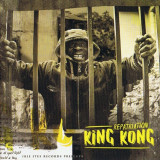
The critically acclaimed "Repatriation" album features 12 original tracks and boasts a dream team of legendary musicians, including Roots Radics, Mafia & Fluxy, Sly & Robbie, Dwight Pinkney, Bongo Herman, Russ D and Naram. With its fusion of genres between Digital and Rub A Dub, the album offers a nostalgic nod to the 80s while retaining a contemporary edge. King Kong, one of the pioneers of this era, shows the full extent of his musical prowess, making this a reference album for reggae aficionados and music lovers alike. for reggae aficionados and lovers of the iconic Jamaican soundscape.
Miles Davis' boundlessly influential On the Corner was so far ahead of its time upon release in 1972, the jazz cognoscenti rejected its groundbreaking concoction as middling in nature. Yet time has a way of righting wrongs and shifting views by adding needed context and perspective to visionary ideas, music, and approaches — the likes of which fill Davis' boldest and most controversial — undertaking. Designed to bring the focus back on the groove and bottom-end frequencies, the funk-loaded On the Corner revolutionized jazz. It also set new standards for record production, presaging remixing and electronica by more than a decade. And the work has never sounded more thrilling thanks to this very special pressing.
Sourced from the original master tapes and pressed on MoFi SuperVinyl, Mobile Fidelity's numbered-edition 180g 33RPM SuperVinyl LP of On the Corner exposes the internal mechanisms, free-associated playing, and then-unmatched studio techniques in vivid fashion. The low end, crucial to every composition here, is both heard and felt, with locked-in bass lines and low-range percussion conveyed as taut, solid, and visceral passages. You can discern the multiple layers of rhythm Davis employed on complex tracks such as "Black Satin," as On the Corner stands as his first effort to use overdubbing and multiple tape machines. As a pioneer, Davis likely would’ve loved MoFi’s groundbreaking SuperVinyl profile that features the lowest-possible analogue noise floor as well as pristine transparency, dead-quiet surfaces, and superb groove definition.
New degrees of spaciousness and airiness — equally important to the musique concrete arrangements — give the impression Davis and Co.'s creations float in space. Instruments are portrayed in three-dimensional manners, rhythmic loops retain tonal purity, and horn solos skitter across an extra-wide soundstage that takes listeners into Columbia's Studio E. Mobile Fidelity's SuperVinyl LP captures Teo Macero's innovative production — and the trumpeter's cutting-edge aural collages — in definitive fashion.
Heavily inspired by Sly and the Family Stone, On the Corner portrays street vibes and remains Davis' Blackest-sounding record. The conscious attempt to connect with youthful audiences tapped into rock and funk is evident not only on the colorful cartoon cover art depicting hot-pants and zoot-suit revelers, but in the music's emphasis of recurring drum and bass grooves. Distinct from Davis' earlier fusion experiments, the record's long-misunderstood set dials back improvisation in favor of beats, loops, and atmospherics that generate trance-like effects. While Davis utilizes his band for core duties — Chick Corea and Herbie Hancock prominently figure — he also relies on an all-star cast of side-men for concentrated soloing and additional support.
With rhythm providing the basic foundation, other notes fall into place, with their positioning steered by Macero and Davis' editing-room techniques. Looking to the manipulation-based work of Karlheinze Stockhausen and teaming with Stockhausen disciple Paul Buckmaster, Davis re-imagines what grooves constituted and could accomplish throughout On the Corner. The shapes of the songs become completely transformed as they progress. Faint melodies, spacey chords, chunky riffs, wah-wah fills, and repeated motifs bounce in and out of a sonic funhouse that wouldn't be out of place at a Harlem block party.
Exotic, intrepid, and filled with Davis' "jungle sound," On the Corner remains daringly hip more than four decades later.
- A1: You Already Know
- A2: Keep Me In Mind
- A3: One Call, That's All
- A4: The Simple Life
- A5: Coasting On Fumes (Feat. Jordana)
- A6: Kiss Me In The Rain
- B1: Heaven On Wheels
- B2: Time Flies When You're Having Fun (Feat. Pearl & The Oysters)
- B3: Cactus Flower
- B4: Don't Stop Doing What You're Doing
- B5: Singing For My Supper
- B6: Let's Take It From The Top (Feat. Jimmy Whispers)
Every morning when Dent May wakes up, the first thing he says is, “What’s for breakfast?” For the Los Angeles-based songwriter and pop auteur, this question is part inside joke with his girlfriend, part sitcom-style catchphrase, and part mantra about getting up every day and persevering in the face of good or bad is happening around you in your life. It’s also the title of his sixth album, which is out on March 29, 2024 via Carpark Records. What’s For Breakfast? is May’s most immediate, nostalgic, and rollicking LP yet, one that’s concerned with breaking daily routines and rediscovering the joys of songwriting.
Over the past 17 years, May has been a consistently adventurous and prolific bedroom pop pioneer and connoisseur of impeccably crafted melodies. Though his songs are always well-written and comfortable, with What’s For Breakfast?, May has freed himself up to more playfully experiment with new and vintage musical inspirations. “I’ve occupied a lot of different lanes over the years,” says May. “I’ve always been drawn to making kaleidoscopic pop inspired by old soul, disco, country, whatever. This time around, I was tapping into music from my childhood, like The Strokes, Weezer and Elephant 6 Collective bands.” By revisiting the music of his youth—energetic and infectious guitar rock—he found a vibrant palate to explore for this new LP.
Lead single “One Call, That’s All” kickstarts with frenetic guitar-driven intensity. While the track slyly takes its name from the slogan of an ambulance-chasing Mississippi lawyer, May sings of unrequited love and phone-based ennui. “It’s a fast tempo pop-rock song that isn’t like anything I’ve done before,” says May. Elsewhere, opener “You Already Know” showcases May’s goofball lyrical charm with lines about playing chess online and looking like a Dawson’s Creek character. Beyond the jokes in the song, there is a bittersweet recognition of time passing and a call to action when May sings, “Now you already know what time it is / It’s time to live your life / Cuz it’s flying by / No matter the day, week, month or year / It’s time to do a lot / Ready or not.”
What’s For Breakfast? marks another first for Dent in being his most collaborative LP yet. Alongside guest appearances from Jimmy Whispers and co-writes with Paul Cherry, are two standout singles with Jordana and Pearl & The Oysters respectively. Jordana assists on the wistful “Coasting on Fumes,” which captures the feeling of being stuck in a rut while the yearning “Time Flies When You’re Having Fun” guests Pearl and the Oysters. “My first album came out almost 15 years ago, so bringing in others to help out is crucial to keep things interesting,” says May. “I’m constantly falling back in love with music through the eyes of others. This album is about remembering why I like music.”
400 copies purple wax! Fold Out Poster, remastered & remixed by Eroc Welcome to the definitive Vortex. The LP you're holding has been on a journey, and no, not just shipping. Mouth's second after 2009's Rhizome, Vortex was mostly recorded in 2011 and 2012 over five sessions in a small space where the band rehearsed. Material was pieced together intermittently over a period of 11 months with Chris Koller handling guitar, keys and bass and Nick Mavridis on drums. That's where it started. Two construction projects: the studio and a recording that would help define the course of the band in classic and melodic progressive rock, happening almost simultaneously in a creative meta-narrative that could easily stand as analog for the depth of pieces like "Into the Light" or the sprawling "Vortex" itself, which opens the record (new and old editions) in an encompassing display of impulse and fluidity Through experiments in atmosphere like "March of the Cyclopes" and toward the finish of "Epilogue," Mouth married sounds that in other contexts would come up disparate, like finding a hidden magnetism between two north poles. Most of the Vortex songs were created on the spot in the studio.There would be no way to know it at the time, but this process would result in a collection of songs with a broad range, within as well as between the component tracks. "Parade" taps Sly Stone on the shoulder and asks if he wants to party (he does), while the penultimate "Soon After_" resonates with its smoky, mellow-jazz vibe. "Vortex" itself happens over six movements and was put together across different sessions, while "Epilogue" happened in a day. Dissatisfaction with the original mix - and when an album has as much put into its arrangements as Vortex, that balance matters - would lead Mouth to offer Out of the Vortex in 2020 as a collection of alternate versions of pieces like "Mountain" and "Parade," as well as the unreleased "Ready" and "Homagotago's Paddle Boat Trip," the latter an apparent successor to a cut from Floating. But sometimes a thing nestles itself into the back of your head and just won't leave, and Mouth's pursuit of a finished Vortex would lead them into the studio again. Koller handled the remix himself in Oct. 2023, and in addition to helming the new master, krautrock legend Eroc (who drummed in Grobschnitt) brought a gong to mark the beginning of "March of the Cyclopes." Like a lot of the finer touches on this Vortex, be it a hashed-out stretch in the title-track built on a drum/bass jam or just pulling the vocals and Hammond down a bit in "Epilogue," the result is a stylistic flourishing that was there all along throughout the journey and now can finally shine as the band intended. - JJ Koczan / Dec. 2023
Miles Davis' A Tribute to Jack Johnson is the best jazz-rock record ever made. Equally inspired by the leader's desire to assemble the "greatest rock and roll band you have ever heard,” his adoration of Johnson, and Black Power politics, Davis created a hard-hitting set that surges with excitement, intensity, majesty, and power. Bridging the electric fusion he'd pursued on earlier efforts with a funkier, dirtier rhythmic approach, Davis zeroes in on concepts of spontaneity, freedom, and identity seldom achieved in the studio — and just as infrequently accepted by the mainstream.
Sourced from the original analog master tapes, pressed on MoFi SuperVinyl, and housed in a Stoughton jacket, Mobile Fidelity's 180g LP reissue brings it all to fore with startling realism. Benefitting from SuperVinyl’s nearly inaudible noise floor, superb groove definition, and clean, ultra-quiet surfaces, this 180g LP showcases everything — from the bold tonality of the headliner's white-hot trumpet solos to the decay of crashing cymbals, carry of wiry guitar notes, and echoes of the studio — in reference fashion.
Bristling with exuberance, Davis' high-register passages explode with authority and commanding presence. Around him, a barrage of urgent backbeats, knifing riffs, and supple bass lines emerge amidst black backgrounds. One of the most prominent differences long-time fans will notice is how much more aggressive, immediate, and vibrant the music sounds, with those aspects central to the composer's original desires.
Utilizing wah-wah and distortion, the go-to instrumentalist of the performances— guitarist John McLaughlin — attacks with a nasty edge, slashing style, and vicious streak that allows A Tribute to Jack Johnson< cross the until-then-impenetrable divide between rock and jazz. Davis puts both feet in the former camp and erases any gap. The stories of the record’s creation are nearly as legendary as the sounds within: Two sessions, multiple jams, different sets of musicians (several uncredited), and near-miraculous production perfectionism that made it all appear cohesive.
The least-well-known masterpiece of Davis' career, the 1971 record — seamlessly assembled and spliced together by producer Teo Macero — was a victim of limited record-label promotion. Audiences also didn’t immediately know what to make of its original cover art — faithfully replicated here. In addition, the powers that be at Columbia Records were directing the public’s attention to Miles at Fillmore, a completely different kind of album guided by two keyboardists. A Tribute to Jack Johnson practically lives in a different universe, one from the future. To many listeners who did manage to hear it — among them critic/musician Robert Quine, Stooges leader Iggy Pop, and renowned critic Robert Christgau — it surpassed everything that came before.
Indeed, Davis treated it as a personal manifesto: An opportunity to salute the Black championship boxer admired for his threatening image to the establishment and impeccable taste in clothes, cars, women and music. Davis explains in the liner notes his affinity for Johnson — a stance mirrored by the defiant music, which hits with a prize fighter's force and reflects the graceful elegance with which a pugilist navigates the ring — and closes the album with a Johnson quote read by Brock Peters.
Inspired not only by Johnson but by Jimi Hendrix and Sly Stone, Davis changed his approach and his band. He surrounds himself with a cadre of musicians in their 20s and, in the case of bassist Michael Henderson, a 19-year-old fresh from touring with Stevie Wonder. Henderson gives Davis what he requested: boogie-based grooves that don’t lose shape or direction. Soprano saxophonist Steve Grossman, drummer Billy Cobham, and organist Herbie Hancock adhere to a similar aesthetic that prizes brazenness, innovation, and energy.
In that vein, during a portion of “Yesternow,” Davis segues into a separate performance (which became known in its entirety as “Willie Nelson”) played by guitarists McLaughlin and Sonny Sharrock, bass clarinetist Bernie Maupin, keyboardist Chick Corea, bassist Dave Holland, and drummer Jack DeJohnette. Dig it!
Talking with jazz scholar Bill Milkowski — who himself noted how McLaughlin’s unrestrained style, decibel-forward volumes, and rapid-fire power chords engendered himself to the rock crowd at the same time that his harmonics and syncopation still definitely made him a jazz player — guitarist Henry Kaiser summed up part of the appeal of A Tribute to Jack Johnson as well as anyone, saying: “It’s a jazz record that way way more open than other jazz records at the time, but still not free jazz. McLaughlin’s rhythm guitar playing on ‘Right Off’ — the use of different chords in a rock shuffle than what anybody had used before — was revolutionary.”
And to think that’s just one aspect of a record that contains multitudes. “Never let them forget it.” Indeed.
Der Modern Roots Classic ist wieder als Original US-LP Vinyl erhältlich! Der Longplayer wurde 1997 von Robert "Digital B" Dixon produziert und von Barry O'Hare, Benjy Myres, Bongo Herman, Dalton Browne, Dean Frazer, 'Dish', Donald Dennis, Ernie Wilks, Jazzwad, Melbourne Miller, Paul Crossdale, Paul Henton, Robbie Shakespeare, Ronald "Nambo" Robinson, 'Saxie' und Sly Dunbar eingespielt, die Backing Vocals übernahmen Dalton Browne and Marie Gittens. Als Riddims kamen u.a. diverse Klassiker von Coxone Dodd/Studio One Label, und/oder von Black Uhuru und The Abyssinians zum Einsatz: "Stars", "Drum Song", "Queen Of The Minstrel", "Leaving To Zion", "Satta", "He Prayed".
- Carolina's Theme
- Unlistening
- Power Drill
- Mr. Stark
- Centrefold
- Never Gonne Be A Dead Man
- I'll Be Mountains
- My Cup Overflows
- Leather Sky
Turquoise Vinyl[29,62 €]
The UK avant-garde’s rising star, Bristol-based multi-instrumentalist Bingo Fury is announcing his debut album ‘Bats Feet For A Widow’ due out 16 February via tastemaking label state51. Filled with noir elegance, ‘Bats Feet For A Widow’ is an album that revels in extremity. The album was recorded in a local church in Bristol, taking inspiration from the musician’s complex relationship with his strong religious upbringing. The influence of the church building resonates throughout the album.
‘Bats Feet For A Widow’ is full of strange experiments, obscure references, offbeat one-liners, heart-breaking sentimentality and surging creativity. At the heart of it all is Bingo Fury’s crooning bass vocal, lending a vivid and slyly humorous voice to universal themes of love and pain.
Alongside the album announcement, Bingo Fury is releasing new single ‘Leather Sky’, a tender piano ballad charged with real emotion and a heartbreaking cornet refrain played by band member Harry Furniss. In this cinematic track full of paralysing despair, the musician sings: “You know I’m trying to give you everything / It all gets in the way.”
Bingo Fury on the single: “Leather Sky is a difficult song to describe succinctly. It’s about being separated from someone against both of your will. Somebody close to me became very unwell and communication became restricted, almost non-existent. The song took shape during that period. A few of the surreal lines ended up becoming reality.”
Although very much a solo songwriter, Bingo Fury’s compositional process relies on contributions from his entire band - bassist Megan Jenkins and drummer Henry Terrett have been playing together since their teens. In one of their various incarnations, they recruited local avant-jazz legend, cornet player Harry ‘Iceman’ Furniss, with guitarist and percussionist Rafi Cohen later completing the line-up.
The album announcement follows the release of the cacophonous single ‘Power Drill’, which garnered praise from The Line Of Best Fit and DIY. This comes after Bingo Fury’s debut EP, ‘Mercy’s Cut’, that came out last year to an abundance of critical acclaim from the likes of BBC 6 Music, The Quietus, Loud & Quiet, Clash, as well as earning himself a spot on the NME Top 100. Filled with rich, cinematic allure, the EP is both beautiful and unsettling and underlines Bingo Fury’s complete abundance of compositional ideas.
The UK avant-garde’s rising star, Bristol-based multi-instrumentalist Bingo Fury is announcing his debut album ‘Bats Feet For A Widow’ due out 16 February via tastemaking label state51. Filled with noir elegance, ‘Bats Feet For A Widow’ is an album that revels in extremity. The album was recorded in a local church in Bristol, taking inspiration from the musician’s complex relationship with his strong religious upbringing. The influence of the church building resonates throughout the album.
‘Bats Feet For A Widow’ is full of strange experiments, obscure references, offbeat one-liners, heart-breaking sentimentality and surging creativity. At the heart of it all is Bingo Fury’s crooning bass vocal, lending a vivid and slyly humorous voice to universal themes of love and pain.
Alongside the album announcement, Bingo Fury is releasing new single ‘Leather Sky’, a tender piano ballad charged with real emotion and a heartbreaking cornet refrain played by band member Harry Furniss. In this cinematic track full of paralysing despair, the musician sings: “You know I’m trying to give you everything / It all gets in the way.”
Bingo Fury on the single: “Leather Sky is a difficult song to describe succinctly. It’s about being separated from someone against both of your will. Somebody close to me became very unwell and communication became restricted, almost non-existent. The song took shape during that period. A few of the surreal lines ended up becoming reality.”
Although very much a solo songwriter, Bingo Fury’s compositional process relies on contributions from his entire band - bassist Megan Jenkins and drummer Henry Terrett have been playing together since their teens. In one of their various incarnations, they recruited local avant-jazz legend, cornet player Harry ‘Iceman’ Furniss, with guitarist and percussionist Rafi Cohen later completing the line-up.
The album announcement follows the release of the cacophonous single ‘Power Drill’, which garnered praise from The Line Of Best Fit and DIY. This comes after Bingo Fury’s debut EP, ‘Mercy’s Cut’, that came out last year to an abundance of critical acclaim from the likes of BBC 6 Music, The Quietus, Loud & Quiet, Clash, as well as earning himself a spot on the NME Top 100. Filled with rich, cinematic allure, the EP is both beautiful and unsettling and underlines Bingo Fury’s complete abundance of compositional ideas.
Bella Brown & the Jealous Lovers Unveil "Soul Clap" LP: A Fusion of Retro Soul/Funk and Modern Grooves
Los Angeles-based retro soul/funk sensation Bella Brown & the Jealous Lovers are set to ignite the music scene with their highly anticipated LP, "Soul Clap." Born from the creative genius of Grammy Award-winning vocalist/songwriter Carol Hatchett, Bella Brown emerges as a diva with a fiery stage presence, drawing inspiration from the likes of Tina Turner and Sharon Jones, and channeling the empowered female leads of 70s Blaxploitation films. Led by producer/bassist/songwriter Daniel Pearson, The Jealous Lovers assemble an impressive ensemble of A-list musicians, boasting pedigrees that include names like Mick Jagger, Elton John, Whitney Houston, Prince, and Stevie Wonder. This musical collective is on a relentless quest to redefine the boundaries of music, infusing soul and funk with elements of jazz, rock, and Afro-Caribbean influences.
The essence of "Soul Clap" is derived from the cultural phenomena it is named after—a shared and improvised rhythm-making by a collective. The LP, spanning 40 minutes of pure musical bliss, invites the audience to immerse themselves in the groove and discover their individual truths in the music.
The title track, "Soul Clap," and the infectious "Living Proof" serve as funky dance bangers, echoing the spirit of Bohannan and The Tramps. These tracks, punctuated with jazzy improvisations and soulful horn arrangements, are simple yet joyful expressions of shared humanity and self-love.
"Coming For You" is Bella's audacious response to the soul/funk classic Apache, boldly announcing her and The Jealous Lovers' arrival on the modern soul landscape. "I Found You" takes a northern soul love song approach, reminiscent of Gloria Jones with a touch of modern influence, giving it a distinct Amy Winehouse feel.
Bella Brown seamlessly weaves social commentary into her art. "Bang Bang Bang," an uptempo, funky Motown groove, cleverly uses Curtis Mayfield's sense of sarcasm to reflect on American gun culture. "Lady Time" takes a driving afrobeat groove, employing brassy horns and reggae-like echoes to address the issue of homelessness.
However, the album is not without its lighthearted moments. "Fast As Lightning" celebrates a cleaner future by imagining Jimi Hendrix joining Ike and Tina Turner's band to create a classic Chuck Berry car song. "There Is Love" blends horns, strings, and vocals reminiscent of The Stylistics over a Chi-Lites style rhythm section, to create a lush message of support to those among us that may find the world a bit overwhelming at moments. Finally, "What Will You Leave Behind," is a revamped version of the group's sold-out vinyl 45 release. This track serves as a powerful call to action for a better future, delivered over a straight-up Motown groove with a funky Sly Stone finish.
Bella Brown & the Jealous Lovers have crafted an album that transcends genres, embracing the roots of soul and funk while pushing musical boundaries.
"Soul Clap" is a celebration of individual truths, shared experiences, and the timeless power of music.
Rated 5/5 in UK Music Republic Magazine
Wade "Jimmy" Dyce was an original member of Cultural Roots. He was a vocalist and played a key role in shaping the sound of the group. Cultural Roots emerged as a four-part harmony group for producer Donovan Germain in the late 1970s, releasing « Revolutionary Sounds » and « Mr Bossman » which counts among ‘Jah Shaka's favourite tunes’. Then they released « Hell A Go Pop », one of the Greensleeves label’s lesser-known classics.
In the early 80's, Wade Dyce produced alone three songs at Chris Stanley's famous Music Mountain studio. Wade Dayce surrounds himself with the best musicians of the time, namely the Revolutionaries, but does not remember the exact formation apart from Sly Dunbar on drums and Bongo Herman on percussion. « Humble », « Money Mare » and « Hide & Seek » are three forgotten songs that can be described as killer roots from the middle of the 80s and which you can (re)discover again through this reissue on the original Moving On label. For this release, Jamwax worked with Parade Studio for this original and unique Disco 45 cover graphic creation.
Today, Wade, now sixty-seven years old, is living in Salem, Massachusetts, where he graduated in 2010 as a mental-health specialist. Long live to the Cultural Roots !
The Ganjas Meets Nairobi. The Space Rock of the Chileans together with the Dub of the Argentines. First time on vinyl celebrating 10th anniversary. Sounding laid-back and incisive at once, crisp production and rock sensibilities. The Ganjas are one of the best exponents of Chilean Space Rock and a fundamental-must-listen to understand the new Chilean psychedelic scene of the last decade. They began 25 years ago with long jam -kind -of-playing, with steady drum beats and simple basslines, but adding innovative and colorful lyrics and synths, without never losing the song structure. On the other side of the Andes, the eclectic by nature Nairobi laid the groundwork for a new style in Dub. Since 2009 they had released 3 studio albums and worked with the best legendary Dub producers: Mad Professor, Lee “Scratch” Perry and Sly & Robbie. Touring the same year 2014 in Chile they coincided with The Ganjas at BYM Studios for an unforgettable session that brought this recording, that boasts an intricate rhythm, sumptuous keyboards, and soaring guitars offering elastic grooves, disembodied vocals, and deep bass lines. The album itself revisits the past while also looking to the future. The songs are particularly creative, with the Bob Marley & The Wailers cover ‘The Heathen’ totally revitalized and other passages like ‘Pastor’ and ‘Eagle & Snake’ that travel through an incredible mix of styles, brilliantly blending Trip-Hop, Dub FXs from soundboard, a Brian Jones-esque style slide guitar, and songs like ‘Soul Salvation’ that brings an steady reggae beat with genius saxophones lines from Ignacio Czornogas (King Krule). Mastered by Cem Oral at Jamming Masters (Berlin). AVAILABLE 300 BLACK VINYLS. For fans of: Primal Scream (Echo Dek), Sumo, Dub Syndicate-Murder Tone, Upsetters, Peaking Lights, Peter Tosh-Mama Africa.
Detroit music legend, Marcus Malone and Dan Smith of The Noisettes reveal their awesome new collaborative long player, ‘Interstate 75’, on Ramrock Red Records, loaded with 60’s style Rhythm and Blues, old school Soul and back to the future Funk. Across the album there’s 10 incredible songs loaded with finger snapping beats, hip swaying grooves, infectious brass and raw, soul-drenched vocals, all written and performed with the highest level of musicianship. From the empowering opening track, ‘Ain’t No Telling’ to the groovilicious album title ‘Interstate 75’, and the irresistibly funky ‘Other Side Of The River’, this stunning set of work joins the musical dots between 60’s Stax, Motown and Cadet, along with early 70’s Funk of Sly and The Family Stone and Eugene McDaniels, creating an instantaneous authentic classic vibe.
“I’ve got a future Blues classic on my hands with an indefinable time scale – it could’ve been recorded in the mid 70’s and feels like an instant crate diggers delight!” – Jo Wallace (Ramrock Records)
"Join us as we welcome back New York Underground Funk Band with two more unreleased funk tracks from the early 1970s, “Funk & Soul” and “Wanna Be Free” — a more psychedelic take on their funk sound.
Funk & Soul states, “I’ve got funk and soul...don’t have to worry about a doggone thing” — and we’d have to agree. Yet another excellent track from NYUFB, though a little more psyched-out this time: imagine Sly and the Family Stone getting Jimi Hendrix for a session, then asking him to drop a fuzzed-out guitar solo. You might then end up with “Funk & Soul” — the heaviest, fuzz-driven Sly track you’ve never heard. Though it’s also NYUFB from start to finish.
Now that you’re in the right frame of mind from side A, you’re ready for “Wanna Be Free” — the deep funk B-side that trades out the spirit of Jimi Hendrix for the spirit of Jim Morrison. With all the respect that is due to these greats, NYUFB crafts their own psychedelic sound in this raucous cut that features thunderous drums and alluring interplay between organ and guitar. This was certainly designed to free your mind, and we believe the group succeeds.
These two tracks comprise one of our most exciting releases yet, as that promising band from the New York or New Jersey area further displays their remarkable range. These songs simply cannot remain buried. They’ve finally found their way to you on PP007, and we hope you’ll get a hold of it while you can."
"Join us as we welcome back New York Underground Funk Band with “Funk & Soul”, “Wanna Be Free”, and a previoulsy unreleased EP-bonus track ""By The Time I Get To Phoenix"" from the early 1970s — all a more psychedelic take on their funk sound.
Funk & Soul states, “I’ve got funk and soul...don’t have to worry about a doggone thing” — and we’d have to agree. imagine Sly and the Family Stone getting Jimi Hendrix for a session, then asking him to drop a fuzzed-out guitar solo. You might then end up with “Funk & Soul” — the heaviest, fuzz-driven Sly track you’ve never heard. Though it’s also NYUFB from start to finish.
Now, you’re in the right frame of mind for “Wanna Be Free” — the deep funk B-side that trades out the spirit of Jimi Hendrix for the spirit of Jim Morrison. With all the respect that is due to these greats, NYUFB crafts their own psychedelic sound in this raucous cut that features thunderous drums and alluring interplay between organ and guitar. This was certainly designed to free your mind, and we believe the group succeeds.
The B Side holds a very special treat— dig New York Underground Funk Band’s version of “By the Time I Get to Phoenix,” the Jimmy Webb-penned classic that gets a heavy soul treatment on PP12007. While covered many times, this hyper-syncopated interpretation is a standout with its long rap intro, call-and-response style singing and shimmering vocal harmonies.
These three tracks comprise one of our most exciting releases yet, as that promising band from the New York or New Jersey area further displays their remarkable range. These songs simply cannot remain buried. They’ve finally found their way to you on PP12007, and we hope you’ll get a hold of it while you can."
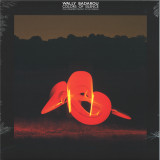
Synth pioneer and musical polymath, Wally Badarou is a genius. But you know that already. A vinyl version of his majestic Colors Of Silence has been craved by the Balearic cognoscenti ever since its low-key 2001 release. Indeed, when we first started work on Be With, we asked some pals with exquisite taste what their dream release would be. We asked Balearic legend Moonboots and, without hesitation, he said Colors Of Silence by Wally Badarou. We didn't know Wally had made this album. And most still don't. But that's about to change.
Colors Of Silence is ostensibly a new age album. As ever though, Wally's sophisticated synth textures and expressive keyboard runs are so full of character, so full of life, that this work of art transcends any easy genre categorisation. It's simply stunning, throughout. It sounds like A.r.t. Wilson or Suzanne Kraft, with traces of CFCF and Jonny Nash. But it was made a good decade earlier than the work of these modern giants. Sometimes, it doesn't seem far from some Larry Heard albums.
Island Records founder Chris Blackwell's friend Nathalie Delon asked Wally to provide music for the yoga DVD she was to release. Lack of time on both sides made them agree on using "quality demos" Wally had in his ideas bank. It's understandable why Colors Of Silence remains somewhat of a lost gem. As Wally explains: "Total lack of promotion made it an 'intimate' release, which was exactly what I was looking for: just a buzz-maker and time-buyer that would allow me to concentrate on the real thing as soon as I'd have time, which could also turn into a rare collecting item later, once the final versions made their way to success. You never know."
Over the years, Colors Of Silence has become a true cult record for the ambient/Balearic heads.
The beguiling but brief "Dance In The Dust" is the shuffling, hyper-percussive, hypnotic opener. It gives way to the deep serenity of "Amber Whispers". It's a gliding, divine, mini melodic masterpiece. It'll make you swoon in its extreme beauty. The bright and breezy "Where Were We" follows, a tropical, reggae-tinged bounce through the islands.
The uptempo groove is maintained on the keys-drizzled soca-funk of "The Lights Of Kinshasa" before Side A is rounded out with "Pictures Of You". It starts with stately, melancholic, unadorned piano and this alone would make for a beautiful song. But Wally always gives us that bit extra and he effortlessly introduces warm, dreamy pads and minimal, slo-mo percussion to augment a frankly stunning piece of work.
Ushering in Side B, Wally's mesmeric piano playing is to the fore again, in the intro to uber-chilled "Serendipity For Two". The playing becomes more mellifluous as the track progresses and adds warmth through exotic percussion, woodwind, sweeping synths and digi-drums. It has echoes of, er, Echoes. It segues seamlessly into the more propulsive, wavy "Smiles By The Millions". If you're not nodding and grinning along widely to the gently throbbing bassline underpinning this, we can't help you. The meditative "Higher Still" follows, cinematic in feel and ever so slightly sinister with the strings. It sounds particularly Badalamenti-esque, if you ask us.
That unmistakable, almost peculiar Badarou funk - so lyrical, so texturally rich and so rhythmically spacious - is all over "Oriental". Next up, "Days To Wonder" brings the serenity back, insistent yet melodic keys, as if played in a place of worship, coupled with birdsong, conjure a kind of instant nostalgia for halcyon days of youth. The contemplative "Dawn Of Europa" is a sombre, beatless, ambient journey whilst the glorious, too-brief "Crystal Falls" features soft percussion and sparkle before fully glistening with some gentle head-nod beats. Wally brings this incredible collection to a mellow, tender close with the graceful "Purple Lines".
There can be few artists more under-appreciated given their vast influence than Wally Badarou. His solo work practically defined the sound of the Balearic DJs of the 1980s, and thus the more sophisticated sound of dance culture thereafter. A synth specialist, Badarou was the long-time associate of Level 42. He was one of the Compass Point All Stars (with Sly and Robbie, Barry Reynolds, Mikey Chung and Uziah "Sticky" Thompson), the in-house recording team of Compass Point Studios responsible for a series of albums in the 1980s recorded by Grace Jones, Tom Tom Club, Mick Jagger, Black Uhuru, Gwen Guthrie, Jimmy Cliff and Gregory Isaacs. Badarou's keyboard playing could also be heard on albums by Robert Palmer, Marianne Faithfull, Herbie Hancock, M (Pop Muzik), Talking Heads, Manu Dibango and Miriam Makeba. He also produced Fela Kuti. Phew!
Meticulously remastered and cut by both Simon Francis and Cicely Balston respectively, it has been pressed to the highest possibly quality at Record Industry in Holland. Special thanks must go to Apiento from Test Pressing who first introduced us to Wally and facilitated all those early zoom meetings. It couldn't have happened without his help. Not least on pulling the art together, too, which features striking original photography by Mads Perch. Benji Roebuck of Roebuck Press did his thing brilliantly in art working the whole package to completion. All in all: essential.
- A1: The Its Way
- A2: Mindful Solutionism
- A3: Infinity Fill Goose Down
- A4: Living Curfew (Feat Billy Woods)
- A5: Pigeonometry
- B1: Kyanite Toothpick (Feat Hanni El Khatib)
- B2: 100 Feet Tall
- B3: Salt And Pepper Squid
- B4: Time Moves Differently Here
- C1: Agressive Steven
- C2: Bermuda (Feat Lealani Teano)
- C3: By The River
- C4: All City Nerve Map
- D1: Forward Compatibility Engine (Feat Rob Sonic)
- D2: On Failure
- D3: Solid Gold
- D4: Vititus
- D5: Black Snow (Feat Nikki Jean)
A tech company's "senior spirit guide" finally comes to the defense of the "financially unsuccessful" Vincent van Gogh; wonders of the natural world are reimagined as "muster points for brainstorming innovators"; the "artificial char lines" on fast-food burgers are cited as if signs of the apocalypse. For the better part of three decades, Aesop Rock has used the syntax of the moment to pinpoint the fault lines in that moment's supposedly solid foundation. With his tenth album, Integrated Tech Solutions, Aes wields insidious corporatespeak as a tool to pry that parasitic worldview away from the parts of life that truly matter. A concept album about an organization offering "lifestyle- and industry-specific applications designed to curate a desired multi-experience," Integrated Tech Solutions picks apart the charlatan language that hears app inventors put themselves on continuums starting with cavemen and continuing through da Vinci. On "Mindful Solutionism," the wheel evolves seamlessly into modern agriculture - and then into atomic bombs, Agent Orange, cigarettes, and surveillance cameras. In a rare moment of transparency, the engineers Aes give voice to sum up this spiral in just a few words: "We cannot be trusted with the stuff that we come up with." Appropriately, the album sounds like the past and future at once. Largely self-produced, Integrated Tech Solutions catches Aes at his leanest and most innovative, leveraging "SolutionismÖs careening bounce against the wistful "By the River" or the slow creep of "Salt and Pepper Squid." The effect is a record that sounds itself like an organism growing, mutating, hurtling toward profitability - and then destruction. As fans have come to expect, Aes is cuttingly funny and slyly profound at once, whether recounting a childhood restaurant run-in with Mr. T ("100 Feet Tall") or quipping, on "Pigeonometry," that "white dove is a pigeon - you motherfuckers is bigots." At the same time, Integrated Tech Solutions is working on another parallel project: tracing the sprawl of modernity and cutting directly to its core. "I've been doing laps of the lost worlds," he raps on "All City Nerve Map," sounding at once wearied and reinvigorated. "I can draw a map to the raw nerve."
A tech company's "senior spirit guide" finally comes to the defense of the "financially unsuccessful" Vincent van Gogh; wonders of the natural world are reimagined as "muster points for brainstorming innovators"; the "artificial char lines" on fast-food burgers are cited as if signs of the apocalypse. For the better part of three decades, Aesop Rock has used the syntax of the moment to pinpoint the fault lines in that moment's supposedly solid foundation. With his tenth album, Integrated Tech Solutions, Aes wields insidious corporatespeak as a tool to pry that parasitic worldview away from the parts of life that truly matter.
A concept album about an organization offering "lifestyle- and industry-specific applications designed to curate a desired multi-experience," Integrated Tech Solutions picks apart the charlatan language that hears app inventors put themselves on continuums starting with cavemen and continuing through da Vinci. On "Mindful Solutionism," the wheel evolves seamlessly into modern agriculture—and then into atomic bombs, Agent Orange, cigarettes, and surveillance cameras. In a rare moment of transparency, the engineers Aes give voice to sum up this spiral in just a few words: "We cannot be trusted with the stuff that we come up with."
Appropriately, the album sounds like the past and future at once. Largely self-produced, Integrated Tech Solutions catches Aes at his leanest and most innovative, leveraging "Solutionism"'s careening bounce against the wistful "By the River" or the slow creep of "Salt and Pepper Squid." The effect is a record that sounds itself like an organism growing, mutating, hurtling toward profitability-and then destruction. As fans have come to expect, Aes is cuttingly funny and slyly profound at once, whether recounting a childhood restaurant run-in with Mr. T ("100 Feet Tall") or quipping, on "Pigeonome- try," that "white dove is a pigeon-you motherfuckers is bigots." At the same time, Integrated Tech Solutions is working on another parallel project: tracing the sprawl of modernity and cutting directly to its core. "I've been doing laps of the lost worlds," he raps on "All City Nerve Map," sounding at once wearied and reinvigorated. "I can draw a map to the raw nerve."
[f] Kyanite Toothpick [feat. Hanni El Khatib]
[k] Bermuda [feat. Lealani Teano]
[n] Forward Compatibility Engine [feat. Rob Sonic]
[r] Black Snow [feat. Nikki Jean]