After a near decade spent in obscurity, Peter Cat Recording Co. or PCRC, emerged from the toxic winter smog of Delhi to enter the global Krishna consciousness with the release of 2019's "Bismillah", the culmination of years of refining their unique vision of 21st century pop music. Seeking a transcultural sound, centered around the song writing of Suryakant Sawhney, PCRC's music mines ideas from both time and space, across centuries and continents, extracting and transforming them into modern hymns and timeless folk, something you could perhaps imagine hearing in the holo-deck of a ship from Star Trek. As the name suggests, Peter Cat Recording Co. is less a band and more of a self-sufficient factory of music and art. With 3 potent song writers in Suryakant, Dhruv & Kartik, the group is building a legacy informed and echoing the spirit of groups like The Velvet Underground and The Beatles. The next chapter of this entity began with the announcement of their new album, "BETA", a name inspired by the birth of Karan Singh's son. PCRC is Suryakant Sawhney on vocals and guitars, Karan Singh on drums, Dhruv Bhola on bass and samples, Rohit Gupta on keys, horns and woodwind, and Kartik Sundareshan on guitars, horns and woodwind.
Buscar:drum factory
Dame Area's highly anticipated fourth studio album, "Toda la verdad sobre Dame Area" ("The Whole Truth about Dame Area"), a collaboration with the renowned labels Mannequin Records and Humo Records.
Formed in 2017 within the vibrant underground scene of Barcelona's Màgia Roja club, Dame Area comprises the Italian-Catalan duo Silvia Konstance and Viktor Lux Crux. They fuse industrial-tribal polyrhythms with minimalist synth basslines, drawing profound inspiration from avant-garde masters such as Esplendor Geometrico, Throbbing Gristle, Suicide, Einstürzende Neubauten, Can, Coil, Swans, Big Black, and Wolf Eyes.
This record represents a new phase in Dame Area's discography. It's a big step up in terms of sound, composition and ideas. This record it's the perfect representation of what they have been playing live the last three years and what most people know them for. Also it serves as a companion piece to 2022’s Toda la mentira sobre Dame Area ("All The Lies About Dame Area"), which had a stronger focus on melody, while this latest record is more aggressive and industrial-influenced, with a greater emphasis on percussion.
Tracks like the Suicide-influenced "Si no es hoy cuando es" and "Sempre Cambiare" are an onslaught of industrialism and experimentalism—formidable, volatile, and unpredictable avant-garde subversion. Silvia explains, "One of our biggest influences is doing what our influences wouldn't do. We're more into dynamics and structures atypical of electronic music, with changes in time signatures, starts and stops, and dynamics more typical of rock music. We use any musical idea from any genre. Some songs on the album are based on flamenco rhythms, others influenced by '60s experimental pop, heavy metal, or contemporary electronic music."
The confrontational "Vengo dall'aldilà" accelerates with heavy percussion, while "Tu me hiciste creer" builds into a rhythmic, transcendent noise of yelled vocals and hypnotic beats. Viktor adds, "This song took us more time to complete than any other we have recorded. It was a very organic process, evolving slowly from some instrumental percussive stuff we were doing live. Then we started using feedback as a rhythmic element (through a metallic sheet), and this was the first song where we incorporated this element, typical of noise-rock and experimental rock."
Elsewhere, "Esto Es Nuestro Ruido" represents a manic, eclectic form of contemporary industrial music, post-punk, and EBM. Silvia notes, "It's the first album we recorded outside a studio. Although we've been playing live with metallic percussion and floor tom from the very start, in the studio, with some exceptions, it was mostly sample-based until now. On Toda la verdad sobre Dame Area, all drums and almost all metallic percussion have been recorded live."
With a growing reputation as one of the best live bands around since their inception, Dame Area has toured extensively across Europe, performing at renowned festivals like Atonal, CTM, Nuits Sonores, Dour, and Fusion, as well as legendary clubs such as Berghain, Tresor, Apolo, and Spook Factory.
Recorded at Sol de Sants Studios and Estudio Hermetic between August and November 2023
Silvia Konstance: vocals, synths, percussions, electronics, production
Viktor L. Crux: synths, drums, percussions, electronics, production
Mixing and additional production by Guillermo Sánchez Rojo
Mastering by Paul Mac at Hardgroove Mastering
Designed by Leo Sousa
Photography by Fabio Calabretta
Photo concept by Dame Area
LTD. COL. VINYL[23,95 €]
France-based, prog-rock power trio LIZZARD are out to reclaim the creative, collaborative energy that has fueled them for over a decade. On `Mesh', the band's fifth full length album, LIZZARD capture the energetic, lightning-in-a-bottle optimism of the late `90s post-punk/art-rock scene and reinvigorate it as something empowering, inspiring and simmering with potential. Recorded by the band in the abandoned factory they use as their creative base and produced again by now long-time friend and collaborator Peter Junge, `Mesh' is LIZZARD unleashing the raw, spontaneous might of their pent up live sound through the production precision of their studio experience. As such, themes of duality and control, whether it's regaining it or letting it go, run right through the album. Resounding with Elwell's inimitable, thundering drums and a barrage of colossal riffs, `Black Sheep' explores the dichotomy of body and mind, of black and white, that we all wrestle with on a daily basis whilst the mellow polyrhythms and plaintive melodies of `Mad Hatters' ask pressing questions of the people who are supposedly in charge of society. Epic album closer `The Beholder' captures the reinvigorated LIZZARD at their bracing best; bittersweet guitar refrains are bolstered by Will Knox's signature driving basslines and crashing half-time grooves as frontman Ricou considers the great cycle of life from his own perspective. Testament to the band's formidable compositional prowess, `The Beholder' ends as it starts, a closed loop. With only Ricou's playful, pithy refrain of "What goes around, comes around" left ringing in our ears, LIZZARD masterfully frame `Mesh' as both a poignant conclusion to the last chapter and as a bright new beginning.
Black Vinyl[21,22 €]
France-based, prog-rock power trio LIZZARD are out to reclaim the creative, collaborative energy that has fueled them for over a decade. On `Mesh', the band's fifth full length album, LIZZARD capture the energetic, lightning-in-a-bottle optimism of the late `90s post-punk/art-rock scene and reinvigorate it as something empowering, inspiring and simmering with potential. Recorded by the band in the abandoned factory they use as their creative base and produced again by now long-time friend and collaborator Peter Junge, `Mesh' is LIZZARD unleashing the raw, spontaneous might of their pent up live sound through the production precision of their studio experience. As such, themes of duality and control, whether it's regaining it or letting it go, run right through the album. Resounding with Elwell's inimitable, thundering drums and a barrage of colossal riffs, `Black Sheep' explores the dichotomy of body and mind, of black and white, that we all wrestle with on a daily basis whilst the mellow polyrhythms and plaintive melodies of `Mad Hatters' ask pressing questions of the people who are supposedly in charge of society. Epic album closer `The Beholder' captures the reinvigorated LIZZARD at their bracing best; bittersweet guitar refrains are bolstered by Will Knox's signature driving basslines and crashing half-time grooves as frontman Ricou considers the great cycle of life from his own perspective. Testament to the band's formidable compositional prowess, `The Beholder' ends as it starts, a closed loop. With only Ricou's playful, pithy refrain of "What goes around, comes around" left ringing in our ears, LIZZARD masterfully frame `Mesh' as both a poignant conclusion to the last chapter and as a bright new beginning.
Originally released to a fan base and music press that were unprepared for the band to move on from the punk fury of "Crossing The Red Sea", The Adverts "Cast Of Thousands" has since been recognized as a lost classic of the time. TV Smith's cutting observational lyrics and sharp musical instincts saw his song writing grow and move in unexpected directions. The primal thumping was replaced by dynamic and driving drumming, acoustic guitars and probing solos emerged, and Tim Cross joined to add keyboards and fill out the overall sound. The one constant was the pounding throb of Gaye Advert's bass. Encouraged to experiment by surprise producer Tom Newman (Mike Oldfield "Tubular Bells") the band found themselves stretching creatively, both in song writing and recording techniques. They might agonize over the sound of recording a match being lit in the middle of one song, while doing a single take of a vocal via a microphone hung in the bathroom for another. Giant choirs were built meticulously over multiple tracks, while the sound of a rat running through the reverb room would be captured forever. The results wrapped some of TV's best songs in strange and inventive sounds to compliment his anti-pop smarts and rock and roll heart. They did not know it at the time, but the band was falling apart. Tensions would soon rise to the level that replacement players were called in to finish their final tour. Punk fans left them in droves. Critics skewered the singles from the album. Their record label had moved on to the next big thing. Feeling that they had reached a creative peak made the tumble even harder to swallow. Time has been very kind though, and fans discovering punk after the first wave have been able to hear "Cast" for what it is - a brilliant and biting collection of rock and roll. Still full of stomp and swagger even when stripped down on "My Place" or via the anthemic surge of "Television's Over", with TV's hook factory on full display on the anti-love song "Love Songs", and the band closing the album with the creeping ballad "I Will Walk You Home"; The Adverts had grown from a great punk rock band to a great rock band. Black vinyl.
2024 repress
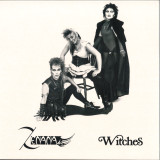
Rush Hour’s RSS series excels in unearthing buried treasure, offering a second chance for artists and releases that have long been overlooked. That’s certainly the case with ‘Witches’, the superb sole single by British 1980s wave trio Zenana.
Originally released on seven-inch by the tiny PRM label in 1986, ‘Witches’ was the product of a sister-brother songwriting team whose music was mostly recorded in the front room of a terraced house in Nanpean, a small industrial village in Cornwall, England’s most south-westerly county. While the single was infectious, impeccably produced and dancefloor-ready, it sold in limited quantities at the time.
Zenana’s story can be traced back to the early 1980s, when singer-songwriter Anita Tedder founded the all-female trio as a vehicle for her musical ambitions. To bring her songs to life, she joined voices with her brother Mike, an early adopter of electronic music who had built a studio – nicknamed MFR, short for ‘Mike’s Front Room’ – in his Cornish home.
Countless Zenana tracks were recorded at ‘MFR’ between 1984 and ’86, with the resultant demo cassette securing the band a management contract, a slew of live bookings, a video shoot and even a television appearance. Buoyed by this underground success, they headed to the remote Sawmills Studio in Cornwall – famously only accessible by boat – to re-record ‘Witches’, a song inspired by local folk tales of witches gathering near Mike’s home.
While this version of ‘Witches’ failed to make an impact at the time, it has become something of a cult classic following its’ rediscovery by crate digger Kiernan Abbott – and subsequent championing by other dusty-fingered DJs including Antal, Skyrager, Trevor Jackson and Luke Una – in early 2023. The buzz inspired Zenana to perform live again for the first time in decades, with the story of their surprise comeback being covered by British media outlets including the BBC and (more surprisingly) the Daily Mail.
Now presented in re-mastered form, ‘Witches’ is a genuinely slept-on gem. Propelled forwards by punchy drum machine beats, a killer synth bassline and fizzing keyboard sounds, the song benefits greatly from strong vocals and an extra-percussive middle eight layered with vocalisations, cosmic spoken word sections and swirling noises.
It comes backed by a brand-new extended ‘spell of love’ courtesy of Bristol duo Bedmo Disco, AKA music journalist Matt Anniss (author of Join The Future: Bleep Techno and the Birth of British Bass Music) and DJ/production partner Gareth Morgan. Anniss is a long-time friend of Mike and Anita Tedder who has fond memories of visiting Mike’s home studio with his family around the time that ‘Witches’ was recorded.
Working from Zenana’s original MFR eight-track recording (tapes of the single version were lost years ago), Anniss and Morgan have turned in the extended ‘dance mix’ the track never had first time around. More atmospheric, clandestine and dancefloor-focused, it offers authentic nods to New York proto-house, mid-80s Shep Pettibone dubs, and the pioneering synth-pop productions and dub mixes of Factory Records regular Martin Rushent.
Belarusian post-punk / synth pop group Molchat Doma have always exuded the kind of brutalist aesthetic of the architecture that adorns their album art. It's cold, gray, imposing, industrial and yet there are human hearts beating within those foundations. In the wake of their breakthrough success in 2020, the trio endured a polarity of experiences, from the nadir of an uprooted life and forced relocation away from their native Minsk to the apex of headlining massive shows across the world. It was in this headspace that the band settled into their new home of Los Angeles to finish writing their fourth album Belaya Polosa, a testament to change in difficult times, a love letter to the digital pulse of the `90s, and a technicolor reinvention of the band's somber dancefloor anthems. From the opening synth swell and drum machine throb of "Ty Zhe Ne Znaesh' Kto Ya," to the goth / post-punk austerity of "Son", to the swirling electronic textures mixed with reverb-drenched guitar flourishes, expansive space, and yearning vocals of title track "Belaya Polosa" - that suggests Depeche Mode at their most reflective or The Cure at their most downtrodden - to the sultry and seductive "Chernye Cvety"_ a track reminiscent of Duran Duran's early `90s output in its fusion of dreamy guitars and authoritative mechanized beats _ and the interwoven layers of instrumentation, soaring chorus, and melodic sophistication of "Ya Tak Ustal", it's clear that Molchat Doma are operating on another level. Molchat Doma gained following with earlier albums that sound like third-generation bootlegs of banned recordings from the Eastern Bloc made after a few key entries in the Factory Records catalog were smuggled in from the West. Belaya Polosa propels them into a new direction while retaining their cold minimalist delivery they're known for. The basement grime and dirty tape-head sound of their previous work are now making space for digital luster and shimmering production values. And while Molchat Doma's broadened aural spectrum adds a synesthetic power to Belaya Polosa, the mood remains rooted in stark and unflinching self-reflection. Molchat Doma retain the duality of being both cold and feverish in their delivery while pushing their music into expanded territories through an armory of new textures. The trio continue to harness the sound of harrowing beauty thriving under harsh realities.
The way you're saying it, "prolific" isn't the right word for The Bug Club. You've got to say it with the trademark Welsh lilt and pay due homage to this inimitable band's origins in the renowned hit factory of Caldicot, South Wales. Do that, and you're about right with how to summarize a group who've released ten singles, two albums, two EPs, three things nobody knew how to describe, and an album under a different band's name, all since 2021, and while playing 200+ gigs a year. Initially comprising the songwriting core of Sam Willmett (vocals/guitar) and Tilly Harris (vocals/bass) with Dan Matthew (drums), The Bug Club started plying their trade in 2016. They were signed by UK label Bingo Records in Autumn of 2020. BBC 6 Music's Marc Riley was an early champion, hammering the single, booking the band in for a session as soon as it was allowed, and rightfully praising songwriters capable of singing the whole alphabet in a two-minute song and making it work. Third LP On The Intricate Inner Workings Of The System - their first for Sub Pop - sees the band serve up a beefy slab of their speciality Modern-Lovers-meets-Nuggets garage rock. There's B-52's call-and-response fun mixed with AC/DC power chord grunt. Leaning towards fast-paced punk, opening double salvo "War Movies" and "Quality Pints" sets out the stall: duel vocal piss-taking, surreal takes on everyday topics that go full circle and become profound, riffs all day long and then all the next day too. "Quality Pints" deals with the pressing concerns of any conscientious touring outfit, taking to heart the rule of the three R's as penned by renowned fellow pints fan Mark E. Smith of The Fall. Repetition, repetition, repetition. If it's that important, which it is, it's worth saying again. "War Movies" dresses distorted chugging with a comprehensive 'best of' list for the genre, with Sam Willmett offering a solo casually chucked out in a way that will make your dad promptly give up any resurgent guitar playing ambitions. And "A Bit Like James Bond" tackles the UK's sleaziest undercover export at the same time as the embarrassing ego problem that besets much of its population - but it's only heavy(ish) in the fun, loads-of-riffs sense. So, that's what they've been finishing up during their massive month-long break from gigs. In a bid to avoid being branded layabouts, The Bug Club will support their upcoming Sub Pop release with a springtime tour of the UK and Europe beginning May 10, before heading out to the US in September.
Are you a mannequin in the eyes of your beloved? Does your partner compare your relationship to a factory that emits plumes of smoke? Are you in love with a seductive and destructive Credit Default Swap? Someone who sucks you in with skyrocketing short term erotic returns - only to ghost you until you crash so hard that you end up broke(n) in your own bed? Do you pay $300 an hour out of pocket to a psychiatrist who promises to help you strike a deal with a difcult parent - one that will produce more stable long term returns on your psychic investments? If so, then you, my friend, may be drowning in the sea of Love in the Time of Capital. It's where everyone would love to drown. It's a new album from John Davis of The Folk Implosion that fnds him backed with confdence by Eli Moore and Andrew Dorsett of the indie pop band Lake. It was recorded by Nich Wilbur at the Unknown, a cavernous recording studio in Anacortes, WA that has been a favorite destination for indie rockers around the nation. Ben Brodin recorded Megan Siebe playing strings on two tracks at his Hidden Branch studio in Omaha, and the album was mixed by Scott Solter in Durham NC. Arrangements are based on the classic power pop trio of drums, bass and electric guitar. Those elements are tastefully embellished with organs and pianos that call to mind records by classic rock bands like Tom Petty's Heartbreakers. That is, if the Heartbreakers were fltered through the Northwestern International Pop Underground tradition, and cast a critical eye on how commodity culture shapes the way we think of ourselves and our intimate relationships. The album also features four ballads, three drum and electric guitar free, for all you late night introspective heads.
2024 Reissue
Dark Entries celebrates its 15th anniversary by returning to where it all started, our initial darkest entry: Eleven Pond’s masterpiece Bas Relief, an ultra-obscure album from 1986 that would become a definitive dark pop holy grail. Eleven Pond was James Tabbi (vocals, acoustic guitar), Jeff Gallea (drum machine, synthesizer, vocals), Jack Schaeffer (guitar) and Dan Brumley (synthesizer, samples, vocoder, melodica). They met in Rochester, NY, while attending art school, brought together by their shared love of 4AD and Factory Records. Taking cues from acts like Joy Division, Fad Gadget, and For Against, Eleven Pond’s infectious basslines, churning guitar riffs, and atmospheric synths will charm all fans of moody music. But what really makes Bas Relief shine is the timeless songwriting on classics like “Tear and Cinnamon”, “Portugal”, and the anthemic “Watching Trees.”
With only 500 copies in it’s initial release, Bas Relief resurfaces with a fresh remaster that corrects a pitch shift from previous reissues. Each copy is housed in a screen printed jacket, like the 1986 edition, and includes a lyric sheet, two postcards and a bookmark. Bas Relief is a true lost relic of the cold 80’s and an essential piece Dark Entries history.
The album “Capuchin Swing” by Jackie McLean, released in 1960, is a seminal work in hard bop jazz. Recorded with renowned musicians such as Blue Mitchell on trumpet, Walter Bishop Jr. on piano, Paul Chambers on bass, and Art Taylor on drums, the album stands out for its intensity and inventiveness. Tracks like “Francisco” and “Capuchin Swing” showcase McLean’s exceptional talent for blending technique and emotion, making this album a must-have for jazz enthusiasts.
Bed Maker's origins date back to summer 2019, when bassist Arthur Noll (Light Beams, Kid Congo Powers) and drummer Vin Novara (The Crownhate Ruin, 1.6 Band), each having played in Alarms & Controls, invited guitarist Jeff Barsky (Insect Factory, Time Is Fire) to collaborate and see what might happen. By autumn, they invited Amanda MacKaye (Desiderata, Routineers) to join them, and the chemistry was immediate. In February 2020 at DC's Rhizome, Bed Maker played their first show and then paused their activities the follow- ing month, as did most people.
Due to the state of the world in 2020 and 2021, they continued writing music through sharing recordings. Mike Schleibaum assisted by assembling home recordings of their individual parts into working demos. This allowed them to keep momentum, and by the time in-person rehearsals resumed, a handful of songs and new ideas were close to fruition. Bed Maker resumed playing shows in November 2022.
Following a self-released digital single ("Miss Dickens") and an EP (Three on the Tree) -- each recorded with Schleibaum and Matt Michel at Viva Studios -- Bed Maker began work on their self-titled LP in May 2023 with Ian MacKaye and Don Zientara at the original Inner Ear Studio in his basement in Arlington, VA, and with Mike Schleibaum at his home studio in Maryland.
That their debut LP even exists is only possible thanks to the support of family and many friends, and also serves as an act of defiance to the horrors of the last four-plus years.
The fourth album by Love Battery, 'Straight Freak Ticket' (1994), now out for the first time on vinyl! Remastered by Jack Endino (Nirvana, Soundgarden, etc.) 'Straight Freak Ticket' is the 4th album by Seattle alternative rock band Love Battery. It was originally recorded in 1994 and released only in USA and on CD format - now it is being released on vinyl for the first time. The Seattle Post-Intelligencer called the album "a solid, well-produced album of guitar-based rock with catchy hooks and a strong dose of psychedelia." USA Today labeled the album "a psychedelic tour de force and dramatic leap forward," writing that "the antigrunge guitar riff-o-rama of Ron Nine and Kevin Whitworth propels the Seattle quartet's most adventurous and listenable tunes to date." The band, featuring members of Mother Love Bone, Green River, Skin Yard, The Presidents of the USA, is: Ron Nine - Vocals, Guitar Kevin Whitworth - Guitar Jason Finn - Drums Bruce Fairweather - Bass
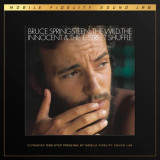
Released only eight months after his exhilarating debut, Bruce Springsteen's The Wild, the Innocent & the E Street Shuffle contains rousing dispatches from the boardwalk, the street, the beach, and the bedroom. It explodes with energy, dares to dream, teases with humour, crackles with tragedy, clings to hope, and overflows with discovery, youthfulness, and personality. It features an unforgettable cast of characters — corner boys, teenage hustlers, doomed lovers, jazz men, junk men, factory girls, fortune tellers, alley cats, pimps, escorts, and more — illuminated by vivid colour, breathtaking detail, and poetic action.
Musically, the heartfelt 1973 record is inhabited by sympathetic vignettes and cinematic arrangements steeped in rock 'n' roll, soul, jazz, and R&B. It finds the New Jersey native looking beyond the parameters of his preceding record and seeking to move on from environments he knows well (and chronicles here) by rushing headlong toward unknown territories, adventures, and people. Underpinned by the singer-guitarist's ambitious poetic enterprise and will to succeed, The Wild, the Innocent & the E Street Shuffle is the album on which Springsteen becomes the Boss.
Mastered on Mobile Fidelity's renowned mastering system, pressed at RTI on MoFi SuperVinyl, and strictly limited to 7,500 numbered copies, Mobile Fidelity's UltraDisc One-Step 180g 33RPM LP set is the definitive-sounding version of Springsteen's sophomore record. Benefitting from SuperVinyl’s nearly non-existent noise floor, superb groove definition, and dead-quiet surfaces, The Wild, the Innocent & the E Street Shuffle plays with a clarity, energy, presence, and openness that complement the expressiveness, dynamics, and scope of the seven restless songs that comprise a work Rolling Stone ranked the 345th Greatest Album of All Time.
Beyond the audiophile sonics that practically place you behind the console at 914 Sound Studios — listen to the separation between the instruments, natural decay of the notes, interplay within the widescreen soundstaging, and nothing-to-lose youthfulness of Springsteen’s voice — this reissue takes seriously this record’s influential merit by presenting it in packaging that underlines its status. Tucked in a beautiful slipcase, the LP is housed in a special foil-stamped jacket with faithful-to-the-original graphics. This reissue is made for listeners who prize sound quality and who want to engage themselves in everything involved with the invigorating set that busted Springsteen loose from the club circuit and landed him on the radio
Determined to liberate anyone within earshot and unafraid to come on strong, The Wild, the Innocent & the E Street Shuffle serves as the debut of the E Street Band — not only heard but seen for the first time by most of the public courtesy of the back-cover photograph. This is where saxophonist Clarence Clemons, organist-accordionist Danny Federici, and pianist David Sancious step out of the shadows — and drummer Vini Lopez and bassist Garry Tallent again stoke a fiery rhythmic engine that helps drive the untamed, reimagined big-band swing of “Kitty’s Back,” breathless R&B thrust of “Rosalita (Come Out Tonight),” and carefree dance steps of the funky “The E Street Shuffle.”
Of course, the main attraction remains a then-24-year-old visionary on the precipice of becoming a sensation and turning a then-bloated rock scene on its head. Recorded over three months while Springsteen and company were busy touring his debut LP, The Wild, the Innocent & the E Street Shuffle reflects the high-octane approach the vocalist embraced onstage and drifts away from the label-dictated acoustic-based frameworks of his debut. The set also witnesses Springsteen deepening his observational skills, with narratives such as the romantically tinged “4th of July, Asbury Park (Sandy)” and redemptive epic “Incident on 57th Street” mirroring changes taking place in the singer’s own life, small towns, and America at large.
A thrilling collision of memories, reflections, and composites — Sandy, Rosalita, and the latter’s parents are all based on actual people Springsteen knew, as is the community depicted in the opening track — the aptly titled The Wild, the Innocent & the E Street Shuffle resonates decades on due to its truths, authenticity, and spirit. Those characteristics — as well as the fact that many of its lengthy songs come on as the equivalent of sweaty, feverish soul revue that won’t stop until you’ve been exhausted — also explain how this now-iconic album triumphed over the reservations of industry “experts” that both demanded Springsteen re-record it and instructed deejays not to play it.
Yet there’d be no stopping a record that saw the past, present, and future, a band whose will would not be denied, and a phenomenon who was born to run. A never-ending invitation to act real cool and stay up all night, The Wild, the Innocent & the E Street Shuffle always feels alright.
The current lineup of New Haven's long running Mountain Movers (guitarist/vocalist Dan Greene, bassist Rick Omonte, guitarist Kr yssi Battalene, & drummer Ross Menze) have been playing together for over a decade now, making their recorded debut on a slew of singles released from 2011-2013, but it wasn't until 2015's "Death Magic" (released on New Haven label Safety Meeting) that the potential of that iteration of the group became clear; Mountain Movers are a force of nature. The camaraderie & sensitivity to each others playing has only grown over time, cr ystallizing on the group's trio of albums for Trouble In Mind; 2017's eponymous "Mountain Movers" served as a reintroduction of the group to a larger audience, while 2018's "Pink Skies" raged like a group confident in its strengths, and 2020's prescient "World What World" - written & recorded before the world shut down - slightly shifted focus away from the jams & back toward the weight of guitarist/songwriter Dan Greene's poetic tales of magical realism. The band's ninth album "Walking After Dark" finds a happy medium between both aspects of the band's strengths; Greene's lyrical compositions and the group's long-form improvised jams. To those that are tuned in, that feeling of communion is evident in the Movers' playing. The members swap & cycle effortlessly through instruments without missing a beat, utilizing the downtime of lockdown to write & record every jam in their practice space. Those piles of tapes would eventually get edited & sequenced into "Walking After Dark", a tour-de-force double-album that balances fried, stony brilliance with outré excursions of experimental serenity. Consider the opening track "Bodega On My Mind" that ambles in like a road-worn traveller, its lysergic folk strums peppered with acidic lead lines from Battalene's Telecaster, eventually giving way to "The Sun Shines On The Moon, where the group's sizzling guitars are buoyed by Omonte's pillowy bass & Menze's percussion. From there on out, tracks like "Factory Dream" give the listener a taste of The Movers' modus operandi here; a mixture of (more) traditional song craft interspersed between long-form, improvised pieces of modern psychedelia. The group shuffles through instruments; synths, drum machines, auto-harp, various forms of percussion (and whatever else was laying around) as well as the trad guitar/bass/drums configuration to craft a suite of songs that - while not necessarily similar in composition - feel unified in their overall sonic scope. Tracks like the 14-minute "Reclamation Yard", whose deep-space electronic pulse is juxtaposed against side C opener "See The City "s persistent acoustic strum that showcase similar ideas of the `spirituality ' of losing ones self in repetition, but executed differently. In many ways "Walking After Dark"s duality feels like a merger of "On The Beach"-era Neil Young & the collective freak-outs of Amon Düül, taking inspiration in the `incorporeality ' of free music and lacing it with Greene's hazy, haunting lyricism and is an exciting step forward for a band that's already a few steps ahead. "Walking After Dark" is released on black double-vinyl in a full color gatefold jacket & includes an insert with artwork & lyrics by member Dan Greene.
“A.T.’s Delight”is an iconic jazz album by drummer Art Taylor, released in 1960. Featuring a stellar lineup including musicians like Stanley Turrentine, Wynton Kelly, and Paul Chambers, the album offers an irresistible blend of hard bop and soul jazz. Virtuosic solos and dynamic interaction between the musicians make this album a cornerstone of the genre.
Svart Records release NYC crust punk band Nausea’s two legendary EP’s on one remastered 12” in March 2024! Crust punk originates from the misty moors and factory cities of the UK. Since the '80s, countless bands have been established to play their dirty apocalyptic ruckus in the vein of Amebix, Antisect, and Axegrinder. At the same time, across the ocean, in the squats of New York’s Lower East Side, bassist John John Jesse founded Nausea. Svart Records is releasing Nausea’s two legendary EPs in 12” format for the first time ever, including the Cybergod 7” from 1991 - with a bonus track, "Here Today," from the same recording sessions - and the Lie Cycle 7” from 1992. All tracks are remastered from the original, untouched studio tapes by Jack Control (Darkthrone, Kohti Tuhoa, Fear). Tribal and rocking apocalyptic crust for apocalyptic times. The Cybergod lineup might be the most legendary era of Nausea, where the tracks reach almost epic proportions. The EP is pretty much the blueprint of crust, where Vic Venom’s hypnotic and rocking guitar riffs meet the tribal drumming of Roy Mayorga. Al Hoon’s and Amy Miret’s dueling vocals spit out timeless issues dealing with consumerism and the hypocrisies of organized religions. Musically, the Lie Cycle EP rocks out more in the faster and straightforward style, where Discharge meets Motörhead, and lyrics reflect the times when war and nuclear destruction are still the plague of mankind. Nausea’s timeline lasted only seven years, but they managed to create a cult following with their true dedication to the punk scene and played shows in the squats of Europe and the eastern part of Europe. Their music is timeless, unpleasant music for unpleasant times, but hey! At least it’s more fun to rock out to the apocalypse!
The sophomore album from acclaimed US musician Vanderwolf and follow-up to 2022 debut '12 Little Killers' ("Soul, gospel, theatrical rock and more" Mojo), 'The Great Bewilderment' is a major rock record full of big emotions and adventurous songs. Whereas '12 Little Killers' was written and recorded during Vanderwolf's final years in London following the break-up of his semi-legendary band Last Man Standing, 'The Great Bewilderment' was mostly written during the pandemic, during which he relocated from New York to Los Angeles. For the recording, Vanderwolf reached out to an old friend, drummer Angie Scarpa, while a recommendation from John Cale's guitarist, Dusty Meadows, led to bassist H Chris Roy joining the band. Tim Sonnefeld contributes a variety of guitars, including beautiful crying feedback throughout album centrepiece "Gaza", which also features a guitar solo from Portishead's Adrian Utley. The album title itself is drawn from the mood of writing music during the pandemic. "I think we're still in that great bewilderment," insists Vanderwolf. "With threats to democracy, the division of opinion, plus this latest war on top of the war in Ukraine, and the climate crisis becoming acute, there's a looming sense that there's nothing we can do. 14 years of Tory corruption in an alleged democracy...that is bewildering. That a twice impeached President with 91 indictments against him can be the frontrunner in a presidential election...that is bewildering." As a music programmer and concert producer, Max Vanderwolf has worked for some of the worlds' most celebrated clubs and concert venues. These include New York's legendary Knitting Factory and London's internationally renowned Royal Festival Hall, where for 9 years he produced the Meltdown Festival working closely with artists including David Bowie, Patti Smith, Jarvis Cocker, Massive Attack and Ornette Coleman.