Action/Adventure (A/A) is a pop-punk band hailing from Chicago ready to shatter the decades-long stereotypes of the scene. As a band comprised solely of BIPOC, their mission is to create #PopPunkInColor and ensure pop punk is a genre where everyone is represented on and off stage. Playing collectively together since 2014, the band has gotten the attention of alt scene tastemakers like Alt. Press and Kerrang!, garnered nearly 20k monthly listeners on Spotify, over one million plays on TikTok, and even secured a slot at the final Vans Warped Tour in 2018. The band consists of Adrian Brown (drums), Blake Evaristo (lead vocals), Manny Avila (bass), Oren Trace (guitar), and Brompton Jackson (vocals/guitar). Pulling Focus will be the bands fourth EP joining Going Heal (2018), Last Minute Stuntman (2016), and Ruble Pak (2016). The dynamic five-piece collectively write music that slides along the vast spectrum of pop punk, typically landing in the area of melodic hardcore. Poppy lyrics and melodies bring an air of familiarity that are simultaneously bringing a fresh perspective through a new lens, and gripping riffs and trashing breakdowns that you can nod your head to. A/A has now successfully planted their flag into the national landscape of the pop-punk scene following the release of their powerful 60-second single, “Barricades,” which details the discrimination the band has faced while gigging at pop-punk shows across the country. On a whim at the suggestion of a friend, the band posted the impactful music video for “Barricades” onto TikTok one afternoon with their hashtag #PopPunkInColor, and uninstalled the ap shortly after. By the end of the day, they had over 60k plays #PopPunkInColor. Within three weeks, the guys had over one million plays and an email from their dream label in their inbox.
Поиск:drum nation
Все
Die Brüder Scott und Bryan Devendorf (The National), Ben Lanz (The National, Beirut) und Multi-Instrumentalist Aaron Arntz (Beirut, Grizzly Bear) sind mit Stirnlampen und Höhlenausrüstung ausgestattet und tauchen in einen somnambulen Raum ein. LNZNDRF's II wirkt wie eine trance-induzierende Massenhypnose. Aufgenommen in ausgedehnten, schamanistischen Jam-Sessions im Public Hi-Fi Studio in Austin, Texas im September 2019 und später bearbeitet, um dem Ganzen eine Form zu geben. Der Titelsong "Ringwoodite" mit seinen flinken, geschmeidigen und präzisen Drums ist ein sommerlicher Wunderkerzen-Song, der so schnell vorbeirauscht, dass einem schwindlig wird, wenn man seinen Spuren folgt. Es folgen das computerverliebte "Gaskiers" und die langsame Motorik-Hymne "Stowaway", die zwar klanglich nicht miteinander verbunden sind, aber LNZNDRF voll in den Kanon des seltsamen und unauslöschlichen Krautrocks einreihen. "II" scheint die Dystopie der Gegenwart ebenso zu beschwören wie das große Mysterium, das uns erwartet, wenn wir endlich die Barriere durchbrechen. Es wird keine Utopie sein, aber es wird zumindest etwas anderes sein. So heißt es im lysergischen Post-Punk-Stück "You Still Rip": "We'll live like fruitless trees towards endless breeze linked as we please, the burning bridges smolder in our wake."
Nonesuch Records releases an album of songs written and performed by Caroline Shaw and Sō Percussion, Let the Soil Play Its Simple Part. The musicians, who have known each other since their student days, were presented with three days of gratis studio time and decided to experiment with ideas they had begun putting to tape during the sessions for their January 2021 Nonesuch release Narrow Sea. With Shaw on vocals and Sō – Eric Cha-Beach, Josh Quillen, Adam Sliwinski, and Jason Treuting – filling out this new band, they developed songs in the studio, with lyrics inspired by their own wide-ranging interests: James Joyce, the Sacred Harp hymn book, a poem by Anne Carson, the Bible’s Book of Ruth, the American roots tune ‘I’ll Fly Away’, and the pop perfection of ABBA, among others. The album is co-produced by Shaw, Sō Percussion, and the Grammy Award–winning engineer Jonathan Low (The National, Taylor Swift).
Shaw, who won a Pulitzer Prize for her vocal composition Partita for 8 Voices, written for and performed with Roomful of Teeth, makes her solo vocal debut with Let the Soil Play Its Simple Part. The album’s first track, ‘To the Sky’, from the Sacred Harp, takes its lyrics from Anne Steele. “I love the songs about death, and going home, and looking toward a time that is better or brighter, which, if there’s one thing to think about in the world, maybe that’s the thing,” Shaw says. “This one I love in particular. There’s a line, ‘Frail solace of an hour / So soon our transient comforts fly / And pleasure blooms to die.’ It’s meditation on the ephemeral, and I love it.”
“I hadn’t written very many songs, but I have certainly loved many in my life. I’ve been thinking of making a solo album for seven or eight years, but it takes having the right friends and community in the room,” Shaw says. “The prompt for all of us was: What would we make in the room together with no one person in charge, like a band writes in the studio?”
Cha-Beach recalls of the early test run during the Narrow Sea session: “It had that capturing-lightning-in-a bottle feeling.” When the opportunity to have three days in their friends’ studio, Guilford Sound, came up, the five musicians decamped for Vermont with engineer/co-producer Jonathan Low. “Jon is an amazing editor,” Cha-Beach says. “He is so helpful in thinking about: ‘We have these ideas: how do we shrink those and make them come across on an album?’”
One such idea was for Shaw to do a duet with each member of Sō. She sings with Josh Quillen on steel drums on the title track, which she wrote in under an hour in a “free-writing zone, very inspired by James Joyce, taking on that brain space,” she says. Lyrically, the song is “related to some math bits that I love, but also memory, and love songs of somebody who’s gone or passed away, or that you’re no longer with: what is the sound of that kind of devastation or confusion or love?” They recorded the song only twice, and the first take is on the album. “It’s very spare. The playing is very Josh; it’s so sensitive,” Shaw says.
Adam Sliwinski’s marimba duet with Shaw is an interpretation of the ABBA song ‘Lay All Your Love On Me’. She explains, “It’s really a Bach chorale. Also, the idea of someone singing ‘Don’t go wasting your emotion / Lay all your love on me / Don’t go sharing your devotion / Lay all your love on me,’ over and over again very slowly, there’s a certain tragedy in it. And then Adam did some absolutely exquisite layering that built this stunning world from the marimba.”
Jason Treuting on the drum kit joined Shaw for ‘Long Ago We Counted’. She suggested, “Why don’t we start with the voice and the kit having a weird conversation, sort of like two babies talking to each other? And then we built this loop, and we go from this place that’s totally uncomfortable and nonsensical to something that’s rich and rolling and satisfying.” For ‘Some Bright Morning’, the duet with Cha-Beach – who here plays electronics, piano, and Hammond organ – Shaw drew upon a twelfth century liturgical hymn she had sung regularly in church during her college years: ‘Salve Regina’.
“Some songs on Let the Soil… were very specifically composed by Caroline,” Cha-Beach says. “But others were this assemblage of ideas: finding words, an idea for how a melody could work, a harmony, and then tossing it in a blender and trusting each other.” Shaw adds, “What I love about Sō is the curiosity about how objects make sounds and how they speak to each other. There was an underlying thread of thinking about what goes into soil, how we take care of it, how we allow it to be itself, how we contain it, and what can come out of it if you cultivate the right environment, which for me is always this wonderful metaphor for creativity and collaboration: let people be themselves and see what happens,” she concludes.
Caroline Shaw is a New York–based musician – vocalist, violinist, composer, and producer – who performs in solo and collaborative projects. She was the youngest recipient of the Pulitzer Prize for Music in 2013 for Partita for 8 Voices, written for the Grammy–winning Roomful of Teeth, of which she is a member. Shaw’s film scores include Erica Fae’s To Keep the Light and Josephine Decker’s Madeline’s Madeline as well as the upcoming short 8th Year of the Emergency by Maureen Towey. Hailed for ‘astonishing both the pop and classical music worlds’ (Guardian), she has produced for Kanye West (The Life of Pablo; Ye) and Nas (NASIR), and has contributed to records by The National and by Arcade Fire’s Richard Reed Parry. Shaw currently teaches at NYU and is a Creative Associate at The Juilliard School. Her 2019 Nonesuch/New Amsterdam album Orange won a Grammy Award.
Through its interpretations of modern classics, innovative multi-genre original productions, and ‘exhilarating blend of precision and anarchy, rigor and bedlam’ (New Yorker), Sō Percussion has redefined the scope and role of the modern percussion ensemble. Sō’s repertoire ranges from twentieth century works by John Cage, Steve Reich, and Iannis Xenakis, to commissioning and advocating works by contemporary composers such as David Lang, Julia Wolfe, and Steven Mackey, to collaborations with artists who work outside the classical concert hall, including Shara Nova, choreographer Susan Marshall, The National, Bryce Dessner, and many others. Sō has recorded more than twenty albums, including a performance of Reich’s Mallet Quartet on the Nonesuch record WTC 9/11; appeared at Carnegie Hall, Lincoln Center, Walt Disney Hall, the Barbican, the Eaux Claires Festival, MassMoCA, and TED 2016; and performed with Jad Abumrad, JACK Quartet, the Mostly Mozart Festival Orchestra, and the LA Phil and Gustavo Dudamel, among others.
Imperium Droop brings two mavericks of sweeping exploration together into new avenues of musical expression. Kid Millions and Jan St. Werner explore a liminal space between improvisation and composition, a fluid yet defined sound-space, founded on the unique chemistry of their friendship and pushing into the future. Kid Millions stands as one of the most sought after drummers and improvisers in NYC, known for his work as the drummer for Oneida, his expansive solo work as Man Forever, as well as collaborations and performances with the likes of Laurie Anderson, Philip Glass, Royal Trux, Boredoms, White Hills, and Spiritualized. Regardless of who he's working with Kid Millions radically redefines the drums as an instrument. Jan St. Werner has consistently remained at the vanguard of electronic music. In his work as one half of the visionary duo Mouse On Mars, as well as his acclaimed solo work both as a composer and sound artist, and in collaborations with The Fall's Mark E Smith, Oval's Markus Popp, Stereolab, and The National St. Werner constantly pushes the limits of recorded sound. Together, Millions and Werner have crafted a monument of unpredictable beauty built on breathless forays into the unknown. Werner's application of a seemingly infinite arsenal of textures unleashes colorful swaths of energy. Mats Gustaffson joins Werner on the maximalist "Color Bagpipes," unleashing torrents of swiveling melody and breathy clicks over the exponential thunder of Millions' drum kit. Pieces like "Dark Tetrad" and "Astral Stare" demonstrate the duo's mastery of space and surprise. Dark flutters flow in slow pulses across "Apotropaic" where erratic swirls of sound twist and mutate on "Sorrows and Compensations," unified as a single force by the overwhelming diversity of sounds. Millions' drums effortlessly rides each wave of Werner's prismatic deluges and channels their energy into dynamic movements. Through his singular prowess, Millions' tireless rhythms and subtle gestures mirror Werner's boundless textural palette and drive each piece towards transcendence. On Imperium Droop, Kid Millions and Jan St. Werner have combined their powers into an incomparable work of gripping and intrepid sonic fluctuations.
Reissued for the first time.
Double vinyl that includes their critically acclaimed and highly sought after debut album ‘Glasshouse’ from 1985 and the 1986 follow up ‘Simplicity’. Presented in a gatefold sleeve adorned with the artwork from the Glasshouse EP, which features in the Prints & Drawings collection at the Victoria & Albert Museum.
With printed inner sleeves and a download code for all 31 tracks on the double CD. Including all tracks from the singles and EP’s plus unreleased recordings
Pressed on colour vinyl. Disc 1 is Purple. Disc 2 is Gold.
Formed in Barnsley in 1981. Party Day, with their bass led rhythms and sharp powerful drums gigged extensively and released their debut single ‘Row The Boat Ashore’ in 1983.
Their brand of Post-Punk Indie Rock with Gothic overtones soon got the attention of DJ John Peel and sold out almost immediately.
The follow up single ‘Spider’ from 1984 again received extensive airplay from John Peel and received rave reviews from the national music press. “Mouthy pellets of malevolence” NME “Excellent punk junk howl” Sounds.
Their self released debut album ‘Glasshouse’ was released in 1985 to glowing reviews and has gained popularity over the years. Now very collectable, it exchanges hands for big money on the second hand market.
The Glasshouse EP followed later in 85 heralding a more commercial approach and widening appeal.
Their second album ‘Simplicity’ was released in 1986
“Proving that they’ve grasped more than an inspirational nettle, the recurrent throb finds their trousers igniting during the quite punctilious rawk of the title track, the urgent prodding of ‘Career’, which reminded me uncomfortably of early Killing Joke and the attractive, though slightly over-wrought black sheep, ‘Glorious Days’, which could have brought a lump to Mario Lanza’s trousers.”
Party Day Split in 1987.
Incredible Bongo Band was formed by MGM A&R Michael Viner in 1972 to record the soundtrack to a now virtually anonymous B-Movie entitled 'The Thing With Two Heads'. "The IBB" transformed from a loose studio collective to an instrumental pop covers consortium, interpreting classics of the day in their inimitable percussive fashion. Viner recorded them at MGM studios during downtime, assembling line-ups from whichever musicians were available at the time, leading to a unique blend of multi-talented musicians that included Jim Gordon, King Errisson, Jerry Scheff, and Perry Botkin Jr. The full bands' line-up is shrouded in mystery, but their legacy is undeniable. They spawned cult-classic records that would become a goldmine for hip hop breaks and attain sampling immortality.
'Apache', which was written and made famous by the British band The Shadows, is legendary in the worlds of dance music and hip hop. It was a staple for DJs such as Kool Herc and Grandmaster Flash as they invented their world-shaking take on the art of DJing at the Bronx block parties of the ‘70s. Over the years it has become a hip hop and breakers anthem and is revered as 'the break' of all time (at least in the top three) with the rhythms of this LP even helping to coin the term 'breakbeat'.
“Bongo Rock” is significant, for being one of the musical cornerstones of rap ... it is certainly one of the most sampled LP’s in history, if not the most sampled. Almost every history-minded hip-hop DJ has a copy, and the first few bars of “Apache,” can send crowds into overdrive.” According to Kool Herc, the stylistic pioneer many people consider to be the father of hip-hop music, the Bongo’s “Apache” is “the national anthem of hip-hop.” NY Times.
Sampled over 600 times, including... Nas, Beastie Boys, Moby, Mick Jagger, Kanye West, Sugarhill Gang, Jay-Z, Aphex Twin, DJ Shadow, Massive Attack, Ultramagnetic MC’s, Unkle, LL Cool J, 2 Live Crew, 4 Hero, Fatboy Slim, to name a few…
The real story of “The IBB” is far greater than the recordings themselves and ultimately shows how a distinctly powerful musical performance can get the recognition it deserves, no matter how anonymous its origins.
After getting a handful a couple of weeks back, we now have a good supply of this wonderful album coming in: in for 14th May release date.
With her ambidextrous and pedidextrous, multi-instrumental
techniques of her own making and influences ranging from video
games to West African griots subverting the predominantly
white male canon of fingerstyle guitar, Yasmin Williams is truly
a guitarist for the new century. So too is her stunning sophomore
release, Urban Driftwood, an album for and of these times.
Though the record is instrumental, its songs follow a narrative
arc of 2020, illustrating both a personal journey and a national
reckoning, through Williams’ evocative, lyrical compositions.
Williams, 24, began playing electric guitar in eighth grade,
after she beat the video game Guitar Hero 2 on expert level.
Initially inspired by Jimi Hendrix and other shredders she
was familiar with through the game, she quickly moved on to
acoustic guitar, finding that it allowed her to combine fingerstyle
techniques with the lap-tapping she had developed, as well as
perform as a solo artist. Deriving no lineage from “American
primitive” and rejecting the problematic connotations of the
term, Williams’ influences include the smooth jazz and R&B
she listened to growing up, Hendrix and Nirvana, go-go and
hip-hop. On Urban Driftwood, Williams references the music
of West African griots through the inclusion of kora and hand
drumming of 150th generation djeli Amadou Kouyate, on the
title track.
Yasmin Williams is virtuosic in her mastery of the guitar and
in the techniques of her own invention, but her playing never
sacrifices lyricism, melody, and rhythm for pure demonstration
of skill. Storytelling through sound is important to her too. As
detailed in the liner notes, the songs on Urban Driftwood were
completed during the COVID-19 pandemic and subsequent
lockdown, in the midst of a national uprising of Black Lives
Matter protests in response to the killings of George Floyd and
Breonna Taylor. But while Urban Driftwood illustrates current
struggle, can’t help but open-heartedly offer a timeless solace.
A new title in the series of full-album reissues that Vampisoul (co-produced in collaboration with Little Butterfly Records) is releasing as a valuable addition to the largely acclaimed compilation “América Invertida”, focusing on the obscure leftfield pop and experimental folk scene from ‘80s Uruguay, making some of these elusive and essential albums available again.
Hugo Jasa aimed to merge the glamour of the 80s (drum machines and Yamaha DX7 and Roland D50 synthesizers command the timbre of the album) with Uruguayan Afro-candombe sound in his songs. A deep bench of national talent, as Eduardo Mateo, Hugo Fattoruso, Jorge Galemire or Mariana Ingold, took part in these sessions. The album was originally released in 1990 with a single pressing of 300 copies, and then recently rediscovered by new generation of DJs, musicians and hardcore record collectors around the world thanks to the internet, reaching a cult status and becoming a top want.
Hugo Jasa’s “Estados de ánimo” is reissued here for the first time, in its original artwork with an extra OBI and including an insert with liner notes by Uruguayan music writer Andrés Torrón.
- 01: Il Vuoto - Seq. 1 (Night Jazz Per Vibrafono)
- 02: Il Vuoto - Seq. 2 (Night Jazz Per Sax Baritono)
- 03: Il Vuoto - Seq. 3 (Swing Per Sax Baritono)
- 04: Estasi
- 05: Il Vuoto - Seq. 4 (Cordovox In 6/8)
- 06: Evasione
- 07: Il Vuoto - Seq. 5 (Sud-America - Ritmico Per Voce Maschile)
- 08: Frenesia
- 09: Il Vuoto - Seq. 6 (Twist)
- 10: Il Vuoto - Seq. 7 (Blues Per Organo)
Four Flies is proud and excited to present the first full-album release of the long-forgotten soundtrack composed by Armando Trovajoli for Piero Vivarelli's 1964 movie Il Vuoto.
Rightly considered by many to be a key figure, if not the key figure, in the history of Italian jazz, Trovajoli was responsible for fostering an appreciation and understanding of jazz among the generation of music listeners and musicians raised under Mussolini and Fascist nationalism. His outstanding work as a pianist, composer and conductor contributed immensely to the popularization of the genre among the general public and to the reduction of institutional bias against it.
The collaboration between Trovajoli and Vivarelli did not happen by chance. The latter, now regarded as one of Italy's "kings of the B's" for his work in the 'exotic-erotic' genre (Il dio serpente, Codice d'amore orientale, etc.), was a great music expert, a skilled talent scout for the Italian music industry, and a true lover of jazz.
Most of Trovajoli's score for Il vuoto has a refined smoothness that is clearly reminiscent of cool jazz – many tracks on the soundtrack are performed by a sextet featuring Trovajoli himself on piano, Carlo Zoffoli on vibraphone, Gino Marinacci on baritone sax and flute, Enzo Grillini on electric guitar, Berto Pisano on double bass, and Sergio Conti on drums and percussion. At the same time, Trovajoli explores other jazz styles or sub-styles in faster, more rhythm-oriented tracks influenced by bossa nova, samba, and even rock'n'roll, where instruments like drums and percussion, electric guitar, or flute take center stage.
This stylistic variety demonstrates both the maestro's versatility as a composer and the fine skills of the musicians who performed on the soundtrack. Like Trovajoli, they were all pioneers of Italian jazz and played in Italy's very first 'institutional' jazz orchestra: the Orchestra di Musica Leggera of the RAI (the Italian public broadcasting company), formed under Trovajoli's leadership in 1956 and credited as "his orchestra" in public performances and in the album The Beat Generation (RCA Italiana, 1960).
By making available for the first time ever almost all of the music recorded by Trovajoli for Il vuoto, this LP fills an important gap in the maestro's discography. Most importantly, it offers further insight not only into the history of Italian jazz, but also into the penetration of the genre into Italian film music, which was possible thanks to Trovajoli's mastery as a composer and to the virtuosity of the pioneering musicians who performed in his orchestra.
LIMITED 180GM OPAQUE ORANGE VINYL.
BUFFET LUNCH are a Scottish group who make it their mission to craft satisfyingly imperfect pop songs filled with imagery and humour.The group’s elementary parts are Perry O’Bray (Vocals/Keys/Guitar), Neil Robinson (Bass), John Muir (Lead Guitar) & Luke Moran (Drums), united by a shared love of music on the ABBA-to-Beefheart axis.
These four ricochet between Glasgow and Edinburgh, creating music that bristles with DIY spirit and upbeat wonkiness. Their tracks are vigorous excursions, meandering into clattersome terrain as often as hiking up into the breezy, melodious foothills.The desire to lead the listener along a curious tale helps tie things together, showcasing a lyrical playfulness that pins down their puzzle of sound.
Having been an active band for a few years, playing regularly north of the border with like-minds such as Irma Vep, Robert Sotelo and Kaputt, Buffet Lunch spent early 2020 working on the follow-up to their two EPs on Permanent Slump.The fruits from such labour bore out as the band’s debut album ‘ThePower of Rocks’, out may 7th on UpsetTheRhythm.
‘ThePower of Rocks’ was recorded in a Crofters cottage/studio on the banks of Upper Loch Fyne in Argyll, over four nights and five days at the beginning of March 2020, before Covid-19 made itself such an ongoing concern. Back then four people could occupy the same space and make music, lunch and dinner together. Days fell into a pattern of long sessions and long meals.The album came together as a luminous mix of Buffet Lunch’s live chestnuts, some sparky recent songs and some new material entirely written and recorded in situ. All tracks were recorded by Neil Robinson acting as the in-house engineer.
As the seriousness of the virus and talk of national lockdowns developed - there was a feeling of anticipation more than fear in the air, but being holed up in cottage in a wild corner of Scotland surrounded by snowy mountains still took on an apocalyptic feel, albeit an apocalypse where the band were safe and overdubbing vocals. After leaving the cottage, reality (as it must) set in and finishing the album became a more remote task.
Over the following months, an extended period of listening awarded the recordings a deeper realisation, as they bounced between band members computers. Perry also started writing on his Casio keyboard and collaborated on a couple of songs (‘Ten Times’ & ‘Ashley’s New Haircut’) with Jayne Dent (of electronic music project Me Lost Me), drawing on her ethereal singing voice as a counterpoint to his own more ‘spoken’ vocals on the album. These gauzy, dreamlike tracks were then sent to other members of Buffet Lunch to add their respective parts, creating evocative new dimensions to close each half ofthealbum with.
The Power of Rocks’ rattles along like a short-story collection, exploring a variety of narratives. When it comes to the music itself, Perry describes their approach as “see what happens” but admits to a preference for simple synth melodies, plenty of percussion, and prickly guitar-parts. ‘Red Apple’ opens the album with a dizzy swagger, guitars and keyboard notes swirling in forays whilst its lyric tackles notions of social bravado. ‘Orange Peel’ follows equally serpentine with its blattering tune and jagged, yet jolly melodic twists.The themes across the album are wide-ranging and personal, from irritation with out of touch politicians (‘Pebbledash’), to love letters to seaside living (‘Bladderwrack’), to even the frailty and confusion of old age (‘Said Bernie’, ‘It Helps to Know’). Title track ‘ThePower of Rocks’ is an ode to the power of nature sunk within a rolling wave of cheery jangle. “Do you believe in the power of rocks when the sun is too hot on your face?” sings Perry as the song zigzags with consequence. ‘He Wore Two Hats’ sports similarly bop-worthy riffs and addictive nods as it deals with its story of savvy man who’d bitten off more than he could chew.
Buffet Lunch’s debut album accomplishes a lot in its brief 38 minutes. It stuns and startles, intrigues and entwines, drawing the listener further into its characterful world. When asked about any intent posed with this debut record Perry confides that “we hope people can hear the joy the band had making the album and the curiosity and frustration that went into the writing. There was no process or design, but there is detail, and deliberateness in our wish to explore and create.” It’s this attentive focus alongside a keen sense of humour that really sets Buffet Lunch apart, with ideas darting wilfully to and from the poignant truths at hand.
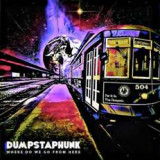
"Where Do We Go From Here" is Dumpstaphunk's first album in seven years. It will be released on April 23, 2021 on The Funk Garage, an imprint of Mascot Label Group.
Over its past 17 years, Dumpstaphunk has earned its reputation as the most well-regarded next-generation New Orleans live powerhouse, the type of band whose live shows attract sit-ins from legends like Carlos Santana, Bob Weir and Trombone Shorty. Alongside Hall, Daniels, Alex Wasily, Ryan Nyther and drummer Devin Trusclair, cousins Ivan and Ian Neville have built upon their family’s iconic NOLA legacy as they’ve transformed Dumpstaphunk into the city’s pre-eminent 21st-century funk-fusion export.
The band’s mix of classic and modern influences can be heard throughout the party-friendly mix of R&B, funk, rock, swamp-pop and blues of "Where Do We Go From Here," from the slap-bass rave "Make It After All" to the band's contemporary renderings of NOLA R&B rarities (the 1975 Blackmail gem "Let’s Get At It") and early Seventies classics (Sly and the Family Stone's "In Time”).
‘Where Do We Go From Here’ is perhaps the best evidence yet of Dumpstaphunk’s ability to strengthen and transform their singular NOLA roots in combination with the deeper outside musical and philosophical influences on which the band is founded.
Melvin Ukachi needs little introduction, the Lagos (Nigeria) based vocalist and bandleader is a living legend. Melvin is known for his fantastic solo albums, his vocals for the afrobeat star-groups M.F.B. and Ozzobia_but his biggest legacy is without a doubt him being the singer and bandleader of Ofege. Melvin formed Ofege in the early 1970s (when he and the other band members were all still a bunch of teenagers). Due to their vibrant combo of sweet harmonies, hooks & fuzz, Ofege would become one of the most legendary Nigerian groups of all time, with expressive sales and national stardom to follow. At the turn of the century (and because of tracks appearing on various compilations) Ofege would receive international acknowledgment for being the first of their kind and THE ultimate West-African psychedelic funk band! Melvin Ukachi recorded four milestone albums with Ofege: 'Try and Love' (1973) 'The Last of The Origins' (1976), 'Higher Plane Breeze' (1977) and 'How Do You Feel' (1978). When the Ofege story came to an end, Melvin recorded two astonishing solo albums: 'Evolution-Bring Back The Ofege Beat' (1981) and 'I am Ok' (1985). Both of his solo recordings have now become much sought-after holy grails for collectors and fans alike. On the album, we are presenting you today (Evolution-Bring Back The Ofege Beat) the listener is treated to the trademark Ofege sound (as the title of the record obviously suggests). Next to the rootsy and raw Ofege sound, we're shown a perfect glimpse of the late '70s afrobeat works combining soul, jazzy rhythms, William Onyeabor style synths & fluid boogie-danceability Expect some serious 'all-star' guest musicians as well_featured on the album are Chyke Madu (The Funkees) on drums, Berkley Jones (Ofege) on guitar_and many other local legends. To top things off the tracks were recorded and mixed at the legendary Abbey Road Studios in London_all slickly engineered by Rafiu Ayoade (The Apostles) and produced by the president of sound himself Odion Iruoje (known for his work with Manu Dibango, Fela Kuti_and many others). 'Evolution-Bring Back The Ofege Beat' was released on EMI Nigeria in 1981 and is a total Afro-psych-funk classic that begs for a special place in your record collection. It's tight, funky and Melvin's soulful vocals are to die for. This record is a monster! Tidal Waves Music now proudly presents the first-ever reissue (supervised by Melvin Ukachi himself) of this amazing Nigerian Afrobeat album. This RARE classic (original copies tend to go for large amounts on the secondary market) is now finally back available as a limited 180g vinyl edition (500 copies) complete with the original artwork made at Grafikad (who were responsible for designing landmark sleeves for renowned artists such as Fela Kuti).
The Pet Parade,” the title track to Fruit Bats’ newest album, might be a surprising opening track for longtime fans of Eric D. Johnson’s beloved indie folk-rock project. The six-and-a-half-minute tone poem smolders and drones over just two chords, inspired by the strange and silly community events that he saw growing up outside of Chicago, in La Grange, Illinois, in which people dressed up and showed off their pets. Decades later, The Pet Parade emerges in troubled times, living within what Johnson refers to as the beauty and absurdity of existence. While many of the songs on The Pet Parade were actually written before the pandemic, it’s impossible to disassociate the record from the times. As an example, producer Josh Kaufman (Bob Weir, The National, and Bonny Light Horseman, in which he plays with Johnson and Anaïs Mitchell) was brought in for his deep emotional touch and bandleading abilities. However, Johnson, Kaufman, and the other musicians on The Pet Parade drummers Joe Russo and Matt Barrick (The Walkmen, Fleet Foxes), singer-songwriter Johanna Samuels, pianist Thomas Bartlett (Nico Muhly, Sufjan Stevens), and fiddler Jim Becker (Califone, Iron & Wine) were forced to self-record their parts in bedrooms and home studios across America. Still, says Johnson, “The songs have enough intimacy that it doesn’t sound like it was made a million miles away.” Such tension and turmoil also impacted the lyrics of The Pet Parade. While “Cub Pilot” and “Here For Now, For You” began as more traditional love songs from a personal “I” to a specific “you” Johnson quickly realized that these songs needed to comfort broader audiences, changing the words to a more inclusive “we” and “us.” So too in “The Balcony,” a song ostensibly about a particular space in his grandmother’s apartment, but one that evolved into a metaphor on patience. At times upbeat and reassuring (“Eagles Below Us”) and at times quietly contemplative (“On the Avalon Stairs”), The Pet Parade marks a milestone for Johnson, who celebrates 20 years of Fruit Bats in 2021. In some ways still a cult band, in other ways a time-tested act, Fruit Bats has consistently earned enough small victories to carve out a career in a notoriously fickle scene. And Johnson himself who has played in The Shins, composed film scores, gone solo and returned back to the moniker that started it all, and most recently, earned two GRAMMY® nominations with Bonny Light Horseman doesn’t take this long route of life’s pet parade for granted. “I’m still really excited to make records,” he says. “Lucky and happy and maybe happier that things went slower for me. I’m savoring it a lot more.
'Open Door Policy' is The Hold Steady's 8th full length studio album and the follow up to 2019's 'Thrashing Thru The Passion'. Produced by Josh Kaufman (The National, Hiss Golden Messenger, Josh Ritter), this new release once again finds the 6-piece line up in peak form in what Craig Finn describes as "the best band we've ever been". The Hold Steady is: Bobby Drake (drums), Craig Finn (vocals), Tad Kubler (guitar, vocals), Franz Nicolay (keyboards), Galen Polivka (bass), and Steve Selvidge (guitar, vocals).
Leeds-based art-rock trio Mush release their feverish second
album, ‘Lines Redacted’, via Memphis Industries. The new
release, which finds the group recruiting Lee Smith (The Cribs,
Pulled Apart By Horses) on mixing duties, arrives just under a
year after their debut, ‘3D Routine’, capping off what has been
an obviously tumultuous but remarkably prolific year for the
band. With any prospect of live shows decimated, the group,
led by songwriter Dan Hyndman, have found the time to
release two EPs (‘Great Artisanal Formats’ and ‘Yellow Sticker
Hour’) and now a duo of full-length albums.
Tipped previously by the likes of 6 Music, Loud & Quiet, Uncut,
Q, Stereogum, DIY, The Line of Best Fit, Dork and more, Mush,
comprised of Hyndman (guitar/vox), Nick Grant (bass/vox) and
Phil Porter (drums), present their own sonic idiosyncrasy. It’s a
sound that blurs the lines of abstract surrealism, existentialism
and social commentary; utilising guitars as tools in 2020 to
stave off malaise whilst simultaneously commenting on the
nation’s ability to fall into such dire straits. It’s a sensory
overload of wiry tones that zig-zag between punk, prog and
sardonic-funk with a relentless ability to reflect society’s faults
and apathy in a unique and acerbic manner.
Whereas the band’s debut was very much a product of its time,
something part-inspired by the political atmosphere of mid-
2019 and a genuine moment of optimism when the prospect of
a socialist government in the UK was on the cards, this new
record uses tongue-in-cheek cynicism as a coping mechanism
for the environment that we now find ourselves in. From one
song to the next, ‘Lines Redacted’ introduces a string of
different narrators with each providing a different reflection on
the Armageddon scenario that we are slowly entering, whether
that’s bemoaning it or gleefully willing it along. ‘3D Routine’
presented a bed of scathing political jibes latching onto themes
and decisions of the time. ‘Lines Redacted’ mutates these ideas
into something slightly more sinister whilst maintaining all of
Hyndman’s razor-sharp wit that permeates the album.
It's tempting to think that you have all the answers, screaming your gospel every day with certainty and anger. Life isn't quite like that though, and the debut album from London four-piece TV Priest instead embraces the beautiful and terrifying unknowns that exist personally, politically, and culturally. Posing as many questions as it answers, Uppers is a thunderous opening statement that continues the UK's recent resurgence of grubby, furious post-punk music. It says something very different though - something completely its own. Four childhood friends who made music together as teenagers before drifting apart and then, somewhat inevitably, back together late in 2019, TV Priest was borne out of a need to create together once again, and brings with it a wealth of experience and exhaustion picked up in the band's years of pursuing 'real life' and 'real jobs', something those teenagers never had. Last November, the band - vocalist Charlie Drinkwater, guitarist Alex Sprogis, bass and keys player Nic Smith and drummer Ed Kelland - played their first show, to a smattering of friends in what they describe as an "industrial freezer" in the warehouse district of Hackney Wick. "It was like the pub in Peep Show with a washing machine just in the middle_" Charlie laughs, remembering how they dodged Star Wars memorabilia and deep fat fryers while making their first statement as a band. Unsurprisingly, there isn't a precedent for launching a band during a global pandemic, but among the general sense of anxiety and unease pervading everything at the moment, TV Priest's entrance in April with the release of debut single "House Of York" - a searing examination of the Monarchy set over wiry post-punk and fronted by a Mark E. Smith-like mouthpiece - served as a breath of fresh air among the chaos, its anger and confusion making some kind of twisted sense to the nation's fried brains. It's the same continued global sense of anxiety that will greet the release of Uppers, and it's an album that has a lot to say right now. Taking musical cues from post-punk stalwarts The Fall and Protomartyr as well as the mechanical, pulsating grooves of krautrock, it's a record that moves with an untamed energy. Over the top of this rumbling musical machine is vocalist Charlie, a cuttingly funny, angry, confused, real frontman. Uppers sees TV Priest explicitly and outwardly trying to avoid narrowmindedness. Uppers sees TV Priest taking musical and personal risks, reaching outside of themselves and trying to make sense of this increasingly messy world. It's a band and a record that couldn't arrive at a more perfect time.
-LTD. LOSER EDITION-
This LIMITED LOSER INDIES edition is on GREY MARBLED Vinyl! It's tempting to think that you have all the answers, screaming your gospel every day with certainty and anger. Life isn't quite like that though, and the debut album from London four-piece TV Priest instead embraces the beautiful and terrifying unknowns that exist personally, politically, and culturally. Posing as many questions as it answers, Uppers is a thunderous opening statement that continues the UK's recent resurgence of grubby, furious post-punk music. It says something very different though - something completely its own. Four childhood friends who made music together as teenagers before drifting apart and then, somewhat inevitably, back together late in 2019, TV Priest was borne out of a need to create together once again, and brings with it a wealth of experience and exhaustion picked up in the band's years of pursuing 'real life' and 'real jobs', something those teenagers never had. Last November, the band - vocalist Charlie Drinkwater, guitarist Alex Sprogis, bass and keys player Nic Smith and drummer Ed Kelland - played their first show, to a smattering of friends in what they describe as an "industrial freezer" in the warehouse district of Hackney Wick. "It was like the pub in Peep Show with a washing machine just in the middle_" Charlie laughs, remembering how they dodged Star Wars memorabilia and deep fat fryers while making their first statement as a band. Unsurprisingly, there isn't a precedent for launching a band during a global pandemic, but among the general sense of anxiety and unease pervading everything at the moment, TV Priest's entrance in April with the release of debut single "House Of York" - a searing examination of the Monarchy set over wiry post-punk and fronted by a Mark E. Smith-like mouthpiece - served as a breath of fresh air among the chaos, its anger and confusion making some kind of twisted sense to the nation's fried brains. It's the same continued global sense of anxiety that will greet the release of Uppers, and it's an album that has a lot to say right now. Taking musical cues from post-punk stalwarts The Fall and Protomartyr as well as the mechanical, pulsating grooves of krautrock, it's a record that moves with an untamed energy. Over the top of this rumbling musical machine is vocalist Charlie, a cuttingly funny, angry, confused, real frontman. Uppers sees TV Priest explicitly and outwardly trying to avoid narrowmindedness. Uppers sees TV Priest taking musical and personal risks, reaching outside of themselves and trying to make sense of this increasingly messy world. It's a band and a record that couldn't arrive at a more perfect time.
- A1: Noriko Miyamoto - Arrows & Eyes
- A2: Mishio Ogawa - Hikari No Ito Kin No Ito
- A3: Yoshio Ojima - Days Man
- B1: Mkwaju Ensemble - Tira-Rin
- B2: Rna-Organism - Weimar 22
- B3: Naoki Asai - Yakan Hikou
- B4: Takami Hasegawa - Koneko To Watashi
- C1: Mammy - Mizu No Naka No Himitsu
- C2: Dip In The Pool - Hasu No Enishi
- C3: Wha Ha Ha - Akatere
- D1: D-Day - Sweet Sultan
- D2: Perfect Mother - Dark Disco-Da Da Da Da Run
- D3: Neo Museum - Area
- D4: Sonoko - Wedding With God (A Nijinski) (A Nijinski)
Somewhere Between: Mutant Pop, Electronic Minimalism & Shadow Sounds of Japan 1980–1988 hovers vibe–wise between two distinct poles within Light In The Attic’s acclaimed Japan Archival Series—Kankyō Ongaku: Japanese Ambient, Environmental & New Age Music 1980–1990 and Pacific Breeze: Japanese City Pop, AOR & Boogie 1976–1986. All three albums showcase recordings produced during Japan’s soaring bubble economy of the 1980s, an era in which aesthetic visions and consumerism merged. Music echoed the nation’s prosperity and with financial abundance came the luxury to dream.
Sonically, Somewhere Between mines the midpoint between Kankyō Ongaku’s sparkling atmospherics and Pacific Breeze’s metropolitan boogie. The compilation encompasses ambient pop, underground electronics, liminal minimalism and shadow sounds—all descriptors emphasizing the hazy nature of the nebula. Out–of–focus rhythms wear ethereal accoutrements, ballads are shrouded in static, and angular drums snake skyward on transcendent tones. From the Avant–minimalism of Mkwaju Ensemble and Yoshio Ojima, to the leftfield techno-pop of Mishio Ogawa and Noriko Miyamoto (featuring members of YMO), and highlights from the groundbreaking Osaka underground label Vanity Records, these are blurry constellations defying collective categorization.
These tracks also exist in a space of transition when the major label grip on the Japanese recording market began to give way to the escalation of independents. Thanks to the idyllic economic climate and innovations in domestically–manufactured music gear, creators on the edges were empowered to focus on satisfying their artistic visions in the open headspace of home studios. While labels like Warner Music and Nippon Columbia explored new sounds through traditional channels, it was possible for Vanity, Balcony and other indie labels, not to mention self–released artists like Ojima and Naoki Asai, to publish their work via affordable media such as cassettes, 7" vinyl, and flexi–discs.
Expertly curated by Yosuke Kitazawa and Mark “Frosty” McNeill (dublab), Somewhere Between is a collection of music, much of it released for the first time outside Japan, that is bound more by energetic vibration than shared history, genre or scene. They are the sounds of transition and searching—a celebration of the freedom found in floating.
Note: The track “Days Man” by Yoshio Ojima is only available on the LP and Cassette versions.
Recorded in 2011 in a dusty, beloved barn, ‘Even Your Drums Will Die’ is a time machine, a real one, to a moment packed thick with Richard Swift’s singular, crackling liveliness. Where Swift’s studio recordings are marked by texture, tone and mood, ‘Even Your Drums Will Die’ puts a spotlight on Swift’s voice, his lyrics and his songwriting.
Running through all of Swift’s tunes is a certain agitation - a fidgetiness, a restlessness. It’s clearer than ever now, over two years after Swift’s passing, that he used his music to let a little pressure out of his tire. ‘A Song for Milton Feher’ nods to all this, its namesake coming from the professional dancer and director who taught his students to release their “habits of tension.” The song feels like a skeleton key to Swift’s oeuvre, a clear look into the wild wheels spinning inside his big old artist noggin.
On the flipside is ‘Lady Luck’. The classic. The revived ghost of a lost 45 that never existed, or maybe always did, but that only Richard Swift could make real.
If you know these songs, you will find them set alight here. If you don’t, ‘Even Your Drums Will Die’ is an incomparable snapshot of both art and artist. It is a genie, a real one, let loose from the lamp with Richard Swift’s explosive energy, imagination and mischief.
Recorded Live at Pickathon, 2011.
Swift was a celebrated recording artist, collaborator (The Black Keys, The Shins, the Arcs) and producer (Nathaniel Rateliff, Kevin Morby, Guster, Pretenders).
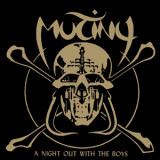
- Rare P-Funk album from 1983 - Funkadelic/Parliament All-Star Line-Up - First ever vinyl reissue - Comes with a repro of the original insert - 180g Black Vinyl Edition - Limited to 500 copies, comes with obi strip // Jerome "Bigfoot" Brailey is an American drummer who started performing in the early 1970s with several R&B groups from the likes of The Unifics, The Chambers Brothers and The Five Stairsteps where he developed his unique style and finesse on drums. Later in 1975 he joined George Clinton's P-Funk collective and has appeared on many of Parliament & Funkadelic's most popular recordings (some of which he also co-wrote). Brailey played on classic albums like `Mothership Connection' and `One Nation Under A Groove'. Samples from that body of work (and his drum arrangements) have since then appeared on hundreds of hip hop and contemporary R&B songs by renowned artists such as Kendrick Lamar and Childish Gambino. Jerome Brailey is a member of the Rock and Roll Hall of Fame (inducted in 1997) and part of their `50 greatest drummers in the Hall' list (stating that his drum style kept Parliament-Funkadelic rooted in the old-school `James Brown-style funk')_next to this achievement, he was proclaimed by Rolling Stone as one of the `100 Greatest Drummers of All Time' for his steady kick drum, shifty hi-hat action and intricately unpredictable snare patterns. Brailey earned numerous Gold and Platinum records with the P-Funk Organization and has worked as a session drummer for many talented artists such as Herbie Hancock, Buddy Miles, Snoop Dogg and Pharoah Sanders. George Clinton's funk empire was not without its disagreements and Jerome Brailey's `Mutiny' project was a direct result of just such a disagreement (as well as one of the more notable offshoots of the P-Funk axis). Mutiny performed in a style not far removed from the classic P-Funk style and with a lot of emphasis on the dual lead guitar work, but what makes them unique compared to their contemporaries is that at times their recordings also emit a darker, more sinister feeling. Besides Brailey on drums (and on most of the lead vocals) Mutiny featured a funk-alumni line-up and released three amazing and collectible albums: `Mutiny On The Mammaship' (CBS, 1979), `Funk Plus The One' (Columbia, 1980) and `A Night Out With the Boys' (J. Romeo, 1983)_these were followed by two comeback albums: `Aftershock' (Rykodisc 1995) and `Funk Road' (Catbone, 2013). The `Mutiny' album we are proudly presenting you today (A Night Out With The Boys) is an underrated gem made by musicians who defined the funk scene of the '70s and '80s! Featuring an all-star line-up that includes Rodney Curtis (Fred Wesley, Maceo Parker), Michael Hampton (Funkadelic-Parliament, Deee-Lite), Kenni Hairston (Cameo) and Maceo Bond of Osiris/Afrika Bambaataa fame! `A Night Out With The Boys' has it all: Jerome's trademark drumbeats, funky bass grooves, driving riffs accented by stinging synth parts, slow spacey (and prominently featured) guitars, top-notch lead vocals and chants that recall Sly Stone's "Loose Booty". The whole album is a hot dance jam with crisp percussion_an extremely infectious, locked-in-the-pocket bass-heavy monster-funk-bomb that any serious self-respecting funk fanatic must have in his/her collection!