Especial presents a 2 EP live concept collaboration with Berlin's Giraffi Dog. With live tours cancelled due the on-going changing world, the idea of bringing their live set to vinyl - an opera for your innerspace, while constrained from outerspace - was born.
Setting up Doom Chakra Tapes with DJ Deflektorschild in 2016, Max Webber's project first released the L'Existence Du Reve cassette album as a blueprint for the Giraffi Dog sound, with some tracks appearing on the acclaimed vinyl debut for Aiwo Recs, before a split 7" for the WARNING label series followed.
Teaming up with friend Max Heesen (Dessous, Poker Flat) to take the project live, their backgrounds in punk and hip-hop shine in their take on breakbeat driven club culture.
Recording live in the studio, as a different state of meditation, MCPs trigger drum machines, the duality of live synth and vocoder, while tape machines, reverb and FX looped, twisted and filtered for an inter-mind festival
Cut as a continuous mix, tracks like Concorida, Jam X and Multiverse, are a manifestation of their sets dropped from small basements in Berlin to fields in the outskirts of Paris, this first EP acts as a hypothesis for the parallel, the other, the alternate, the infinite.
quête:dual jam
Clear Vinyl
New Nordic jazz duo Svaneborg Kardyb sign to Gondwana Records and announce NPR Tiny Desk session and captivating third album Over Tage
Svaneborg Kardyb are Nikolaj Svaneborg - Wurlitzer, Juno, piano and Jonas Kardyb - drums, percussion a multi award winning duo from Denmark, where they won two "grammys" at the Danish Music Awards Jazz 2019: New artist of the year and Composer of the year. ?Drawing on Danish folk music and Scandinavian jazz influences, including Nils Frahm, Esbjörn Svennson and Jan Johansson's landmark recording Jazz På Svenska, their music is an exquisite and joyful melding of beautiful melodies, delicate minimalism, catchy grooves, subtle electronica vibes, Nordic atmospheres and organic interplay, all underwritten by the sheer joy of playing together. "We started in the earliest of mornings over the blackest of coffee, sometimes even without talking, just music.
Immediately we felt a connection between our personal style of playing and the compositions emerged like out of nowhere. The vibe from these early sessions is still the backbone of our little band".
Svaneborg Kardyb hail from Aalborg, in Jutland, in the north of Denmark where they first met in 2013 and discussed the possibility of creating a duo over late night talks. Six years went by as they both explored other projects before they eventually realised the idea of making music together. Like their new label mates, Vega Trails, Svaneborg Kardyb are a duo, a format that gives them a lot of space to occupy - or leave blank. "We enjoy the simplicity and focus it gives to the interplay. We come from very different musical backgrounds; Nikolaj from Scandinavian jazz, and Jonas from Roots, blues and folk, so the music is a sum of our personal contributions and doesn't thrive to be anything else than that. It's quite unique for us to have this shared musical tongue and friendship".
Their music is intentionally simple at first glance, but evolves and unfolds through listening over time, with plenty of room for exploration, reflection and improvisation. Their aim is to create music that is as honest and intimate as possible "with melodies and rhythms so strong that we are left as only the messengers". And their fast-developing music chemistry allowed them to give little thought to what their musical influences were. Giving their music a captivating charm. "We explored whatever sounds and musical structures our duality gave birth to and through long jam-sessions we found small seeds of ideas that turned into tunes. Danish traditional songs, community singing and hymns are a big inspiration too. Both the tonal language, the lyrical melodies and the way generations can gather around the music, is something that is close to our hearts".
Over Tage (over roofs) is their third album, following Knob (2019) and Haven (2020) and marks their debut for Gondwana Records a label noted for working with artists such as Mammal Hands, Portico Quartet and GoGo Penguin whose music, like that of Svaneborg Kardyb delights in exploring the fertile spaces between genres. For the duo it is their most serious and thoughtful record to date. "It may be our strongest and most honest record so far. Doubts and uncertainty were kind of the foundation for the sounds of the album but there is also hope and lots of uplifting moments and we're very pleased with how it came out." And it is that mixture of elevation and thoughtfulness, honesty and intimacy that makes the music of Svaneborg Kardyb so special and Over Tage such a joy to listen to. The world awaits.
- A1: Rock This Mother
- A2: Talk To Me Girl
- A3: You Can Find Me
- A4: Check This Out
- A5: Jesus Going To Clean House
- A6: Hope You Understood
- A7: Is It What You Want
- A8: Love Is Everlasting
- A9: This Is Hip-Hop Art
- A10: Opposite Of Love
- A11: Do You Know What I Mean
- B1: Saving All My Love For You
- B2: Look Out Here I Come
- B3: Girl You Always Talking
- B4: Have A Great Day
- B5: Take My Hand
- B6: I Need Your Love
- B7: Your Town
- B8: Talk Around Town
- B9: Booty Head/Take A Little Walk
- B10: I Love My Mama
- B11: I Never Found Anyone Like You
Vinyl LP[23,49 €]
As the sun sets on a quaint East Nashville house, a young man bares a piece of his soul. Facing the camera, sporting a silky suit jacket/shirt/slacks/fingerless gloves ensemble that announces "singer" before he's even opened his mouth, Lee Tracy Johnson settles onto his stage, the front yard. He sways to the dirge-like drum machine pulse of a synth-soaked slow jam, extends his arms as if gaining his balance, and croons in affecting, fragile earnest, "I need your love… oh baby…"
Dogs in the yard next door begin barking. A mysterious cardboard robot figure, beamed in from galaxies unknown and affixed to a tree, is less vocal. Lee doesn't acknowledge either's presence. He's busy feeling it, arms and hands gesticulating. His voice rises in falsetto over the now-quiet dogs, over the ambient noise from the street that seeps into the handheld camcorder's microphone, over the recording of his own voice played back from a boombox off-camera. After six minutes the single, continuous shot ends. In this intimate creative universe there are no re-takes. There are many more music videos to shoot, and as Lee later puts it, "The first time you do it is actually the best. Because you can never get that again. You expressing yourself from within."
"I Need Your Love" dates from a lost heyday. From some time in the '80s or early '90s, when Lee Tracy (as he was known in performance) and his music partner/producer/manager Isaac Manning committed hours upon hours of their sonic and visual ideas to tape. Embracing drum machines and synthesizers – electronics that made their personal futurism palpable – they recorded exclusively at home, live in a room into a simple cassette deck. Soul, funk, electro and new wave informed their songs, yet Lee and Isaac eschewed the confinement of conventional categories and genres, preferring to let experimentation guide them.
"Anytime somebody put out a new record they had the same instruments or the same sound," explains Isaac. "So I basically wanted to find something that's really gonna stand out away from all of the rest of 'em." Their ethos meant that every idea they came up with was at least worth trying: echoed out half-rapped exhortations over frantic techno-style beats, gospel synth soul, modal electro-funk, oddball pop reinterpretations, emo AOR balladry, nods to Prince and the Fat Boys, or arrangements that might collapse mid-song into a mess of arcade game-ish blips before rallying to reach the finish line. All of it conjoined by consistent tape hiss, and most vitally, Lee's chameleonic voice, which managed to wildly shape shift and still evoke something sincere – whether toggling between falsetto and tenor exalting Jesus's return, or punctuating a melismatic romantic adlib with a succinct, "We all know how it feels to be alone."
"People think we went to a studio," says Isaac derisively. "We never went to no studio. We didn't have the money to go to no studio! We did this stuff at home. I shot videos in my front yard with whatever we could to get things together." Sometimes Isaac would just put on an instrumental record, be it "Planet Rock" or "Don't Cry For Me Argentina" (from Evita), press "record," and let Lee improvise over it, yielding peculiar love songs, would-be patriotic anthems, or Elvis Presley or Marilyn Monroe tributes. Technical limitations and a lack of professional polish never dissuaded them. They believed they were onto something.
"That struggle," Isaac says, "made that sound sound good to me."
In the parlance of modern music criticism Lee and Isaac's dizzying DIY efforts would inevitably be described as "outsider." But "outsider" carries the burden of untold additional layers of meaning if you're Black and from the South, creating on a budget, and trying to get someone, anyone within the country music capital of the world to take your vision seriously. "What category should we put it in?" Isaac asks rhetorically. "I don't know. All I know is feeling. I ain't gonna name it nothing. It's music. If it grabs your soul and touch your heart that's what it basically is supposed to do."
=
Born in 1963, the baby boy of nine siblings, Lee Tracy spent his earliest years living amidst the shotgun houses on Nashville's south side. "We was poor, man!" he says, recalling the outhouse his family used for a bathroom and the blocks of ice they kept in the kitchen to chill perishables. "But I actually don't think I really realized I was in poverty until I got grown and started thinking about it." Lee's mom worked at the Holiday Inn; his dad did whatever he had to do, from selling fruit from a horse drawn cart to bootlegging. "We didn't have much," Lee continues, "but my mother and my father got us the things we needed, the clothes on our back." By the end of the decade with the city's urban renewal programs razing entire neighborhoods to accommodate construction of the Interstate, the family moved to Edgehill Projects. Lee remembers music and art as a constant source of inspiration for he and his brothers and sisters – especially after seeing the Jackson 5 perform on Ed Sullivan. "As a small child I just knew that was what I wanted to do."
His older brother Don began musically mentoring him, introducing Lee to a variety of instruments and sounds. "He would never play one particular type of music, like R&B," says Lee. "I was surrounded by jazz, hard rock and roll, easy listening, gospel, reggae, country music; I mean I was a sponge absorbing all of that." Lee taught himself to play drums by beating on cardboard boxes, gaining a rep around the way for his timekeeping, and his singing voice. Emulating his favorites, Earth Wind & Fire and Cameo, he formed groups with other kids with era-evocative band names like Concept and TNT Connection, and emerged as the leader of disciplined rehearsals. "I made them practice," says Lee. "We practiced and practiced and practiced. Because I wanted that perfection." By high school the most accomplished of these bands would take top prize in a prominent local talent show. It was a big moment for Lee, and he felt ready to take things to the next level. But his band-mates had other ideas.
"I don't know what happened," he says, still miffed at the memory. "It must have blew they mind after we won and people started showing notice, because it's like everybody quit! I was like, where the hell did everybody go?" Lee had always made a point of interrogating prospective musicians about their intentions before joining his groups: were they really serious or just looking for a way to pick up girls? Now he understood even more the importance of finding a collaborator just as committed to the music as he was.
=
Isaac Manning had spent much of his life immersed in music and the arts – singing in the church choir with his family on Nashville's north side, writing, painting, dancing, and working various gigs within the entertainment industry. After serving in the armed forces, in the early '70s he ran The Teenage Place, a music and performance venue that catered to the local youth. But he was forced out of town when word of one of his recreational routines created a stir beyond the safe haven of his bohemian circles.
"I was growing marijuana," Isaac explains. "It wasn't no business, I was smoking it myself… I would put marijuana in scrambled eggs, cornbread and stuff." His weed use originated as a form of self-medication to combat severe tooth pain. But when he began sharing it with some of the other young people he hung out with, some of who just so happened to be the kids of Nashville politicians, the cops came calling. "When I got busted," he remembers, "they were talking about how they were gonna get rid of me because they didn't want me saying nothing about they children because of the politics and stuff. So I got my family, took two raggedy cars, and left Nashville and went to Vegas."
Out in the desert, Isaac happened to meet Chubby Checker of "The Twist" fame while the singer was gigging at The Flamingo. Impressed by Isaac's zeal, Checker invited him to go on the road with him as his tour manager/roadie/valet. The experience gave Isaac a window into a part of the entertainment world he'd never encountered – a glimpse of what a true pop act's audience looked like. "Chubby Checker, none of his shows were played for Black folks," he remembers. "All his gigs were done at high-class white people areas." Returning home after a few years with Chubby, Isaac was properly motivated to make it in Music City. He began writing songs and scouting around Nashville for local talent anywhere he could find it with an expressed goal: "Find someone who can deliver your songs the way you want 'em delivered and make people feel what you want them to feel."
One day while walking through Edgehill Projects Isaac heard someone playing the drums in a way that made him stop and take notice. "The music was so tight, just the drums made me feel like, oh I'm-a find this person," he recalls. "So I circled through the projects until I found who it was.
"That's how I met him – Lee Tracy. When I found him and he started singing and stuff, I said, ohhh, this is somebody different."
=
Theirs was a true complementary partnership: young Lee possessed the raw talent, the older Isaac the belief. "He's really the only one besides my brother and my family that really seen the potential in me," says Lee. "He made me see that I could do it."
Isaac long being a night owl, his house also made for a fertile collaborative environment – a space where there always seemed to be a new piece of his visual art on display: paintings, illustrations, and dolls and figures (including an enigmatic cardboard robot). Lee and Issac would hang out together and talk, listen to music, conjure ideas, and smoke the herb Isaac had resumed growing in his yard. "It got to where I could trust him, he could trust me," Isaac says of their bond. They also worked together for hours on drawings, spreading larges rolls of paper on the walls and sketching faces with abstract patterns and imagery: alien-like beings, tri-horned horse heads, inverted Janus-like characters where one visage blurred into the other.
Soon it became apparent that they didn't need other collaborators; self-sufficiency was the natural way forward. At Isaac's behest Lee, already fed up with dealing with band musicians, began playing around with a poly-sonic Yamaha keyboard at the local music store. "It had everything on it – trumpet, bass, drums, organ," remembers Lee. "And that's when I started recording my own stuff."
The technology afforded Lee the flexibility and independence he craved, setting him on a path other bedroom musicians and producers around the world were simultaneously following through the '80s into the early '90s. Saving up money from day jobs, he eventually supplemented the Yamaha Isaac had gotten him with Roland and Casio drum machines and a Moog. Lee was living in an apartment in Hillside at that point caring for his dad, who'd been partially paralyzed since early in life. In the evenings up in his second floor room, the music put him in a zone where he could tune out everything and lose himself in his ideas.
"Oh I loved it," he recalls. "I would really experiment with the instruments and use a lot of different sound effects. I was looking for something nobody else had. I wanted something totally different. And once I found the sound I was looking for, I would just smoke me a good joint and just let it go, hit the record button." More potent a creative stimulant than even Isaac's weed was the holistic flow and spontaneity of recording. Between sessions at Isaac's place and Lee's apartment, their volume of output quickly ballooned.
"We was always recording," says Lee. "That's why we have so much music. Even when I went to Isaac's and we start creating, I get home, my mind is racing, I gotta start creating, creating, creating. I remember there were times when I took a 90-minute tape from front to back and just filled it up."
"We never practiced," says Isaac. "See, that was just so odd about the whole thing. I could relate to him, and tell him about the songs I had ideas for and everything and stuff. And then he would bring it back or whatever, and we'd get together and put it down." Once the taskmaster hell bent on rehearsing, Lee had flipped a full 180. Perfection was no longer an aspiration, but the enemy of inspiration.
"I seen where practicing and practicing got me," says Lee. "A lot of musicians you get to playing and they gotta stop, they have to analyze the music. But while you analyzing you losing a lot of the greatness of what you creating. Stop analyzing what you play, just play! And it'll all take shape."
=
"I hope you understood the beginning of the record because this was invented from a dream I had today… (You tell me, I'll tell you, we'll figure it out together)" – Lee Tracy and Isaac Manning, "Hope You Understand"
Lee lets loose a maniacal cackle when he acknowledges that the material that he and Isaac recorded was by anyone's estimation pretty out there. It's the same laugh that commences "Hope You Understand" – a chaotic transmission that encapsulates the duality at the heart of their music: a stated desire to reach people and a compulsion to go as leftfield as they saw fit.
"We just did it," says Lee. "We cut the music on and cut loose. I don't sit around and write. I do it by listening, get a feeling, play the music, and the lyrics and stuff just come out of me."
The approach proved adaptable to interpreting other artists' material. While recording a cover of Whitney Houston's pop ballad "Saving All My Love For You," Lee played Whitney's version in his headphones as he laid down his own vocals – partially following the lyrics, partially using them as a departure point. The end result is barely recognizable compared with the original, Lee and Isaac having switched up the time signature and reinvented the melody along the way towards morphing a slick mainstream radio standard into something that sounds solely their own.
"I really used that song to get me started," says Lee. "Then I said, well I need something else, something is missing. Something just came over me. That's when I came up with 'Is It What You Want.'"
The song would become the centerpiece of Lee and Isaac's repertoire. Pushed along by a percolating metronomic Rhythm King style beat somewhere between a military march and a samba, "Is It What You Want" finds Lee pleading the sincerity of his commitment to a potential love interest embellished by vocal tics and hiccups subtlely reminiscent of his childhood hero MJ. Absent chord changes, only synth riffs gliding in and out like apparitions, the song achieves a lingering lo-fi power that leaves you feeling like it's still playing, somewhere, even after the fade out.
"I don't know, it's like a real spiritual song," Lee reflects. "But it's not just spiritual. To me the more I listen to it it's like about everything that you do in your everyday life, period. Is it what you want? Do you want a car or you don't want a car? Do you want Jesus or do you want the Devil? It's basically asking you the question. Can't nobody answer the question but you yourself."
In 1989 Lee won a lawsuit stemming from injuries sustained from a fight he'd gotten into. He took part of the settlement money and with Isaac pressed up "Saving All My Love For You" b/w "Is It What You Want" as a 45 single. Isaac christened the label One Chance Records. "Because that's all we wanted," he says with a laugh, "one chance."
Isaac sent the record out to radio stations and major labels, hoping for it to make enough noise to get picked up nationally. But the response he and Lee were hoping for never materialized. According to Isaac the closest the single got to getting played on the radio is when a disk jock from a local station made a highly unusual announcement on air: "The dude said on the radio, 107.5 – 'We are not gonna play 'Is It What You Want.' We cracked up! Wow, that's deep.
"It was a whole racist thing that was going on," he reflects. "So we just looked over and kept on going. That was it. That was about the way it goes… If you were Black and you were living in Nashville and stuff, that's the way you got treated." Isaac already knew as much from all the times he'd brought he and Lee's tapes (even their cache of country music tunes) over to Music Row to try to drum up interest to no avail.
"Isaac, he really worked his ass off," says Lee. "He probably been to every record place down on Music Row." Nashville's famed recording and music business corridor wasn't but a few blocks from where Lee grew up. Close enough, he remembers, for him to ride his bike along its back alleys and stumble upon the occasional random treasure, like a discarded box of harmonicas. Getting in through the front door, however, still felt a world away.
"I just don't think at the time our music fell into a category for them," he concedes. "It was before its time."
=
Lee stopped making music some time in the latter part of the '90s, around the time his mom passed away and life became increasingly tough to manage. "When my mother died I had a nervous breakdown," he says, "So I shut down for a long time. I was in such a sadness frame of mind. That's why nobody seen me. I had just disappeared off the map." He fell out of touch with Isaac, and in an indication of just how bad things had gotten for him, lost track of all the recordings they'd made together. Music became a distant memory.
Fortunately, Isaac kept the faith. In a self-published collection of his poetry – paeans to some of his favorite entertainment and public figures entitled Friends and Dick Clark – he'd written that he believed "music has a life of its own." But his prescience and presence of mind were truly manifested in the fact that he kept an archive of he and Lee's work. As perfectly imperfect as "Is It What You Want" now sounds in a post-Personal Space world, Lee and Isaac's lone official release was in fact just a taste. The bulk of the Is It What You Want album is culled from the pair's essentially unheard home recordings – complete songs, half-realized experiments, Isaac's blue monologues and pronouncements et al – compiled, mixed and programmed in the loose and impulsive creative spirit of their regular get-togethers from decades ago. The rest of us, it seems, may have finally caught up to them.
On the prospect of at long last reaching a wider audience, Isaac says simply, "I been trying for a long time, it feels good." Ever the survivor, he adds, "The only way I know how to make it to the top is to keep climbing. If one leg break on the ladder, hey, you gotta fix it and keep on going… That's where I be at. I'll kill death to make it out there."
For Lee it all feels akin to a personal resurrection: "It's like I was in a tomb and the tomb was opened and I'm back… Man, it feels so great. I feel like I'm gonna jump out of my skin." Success at this stage of his life, he realizes, probably means something different than what it did back when he was singing and dancing in Isaac's front yard. "What I really mean by 'making it,'" he explains isn't just the music being heard but, "the story being told."
Occasionally Lee will pull up "Is It What You Want" on YouTube on his phone, put on his headphones, and listen. He remembers the first time he heard his recorded voice. How surreal it was, how he thought to himself, "Is that really me?" What would he say to that younger version of himself now?
"I would probably tell myself, hang in there, don't give up. Keep striving for the goal. And everything will work out."
Despite what's printed on the record label, sometimes you do get more than one chance.
- A1: Another Sketch
- A2: Be Cool (Feat Little Dragon)
- A3: Vera (Judah Speaks) (Judah Speaks)
- A4: Leave It (Feat Charlotte Day Wilson)
- A5: September
- A6: To The Floor (Feat Badbadnotgood)
- B1: Backwards (Feat Sampha)
- B2: What If? (Feat Skiifall)
- B3: Colours
- B4: About Us (Feat Elmiene)
- B5: Still (Feat Sampha & Ghetts)
- B6: Ends Now (Feat Serpentwithfeet)
One of the UK’s most consistently inventive production minds of recent times, Lil Silva has perhaps one of the most varied resumes in the world. Causing a seismic effect on the world of club music with smashes such as ‘Seasons’ and releases with the likes of Night Slugs, production credits for a diverse range of artists such as Adele, BANKS, Mark Ronson and serpentwithfeet, and a collaborative project with George FitzGerald as OTHERLiiNE even before factoring stellar solo releases under the Lil Silva moniker using his own vocal, he has continuously combined a broad range of influences to create a transformative, varied discography. After the release of ‘Backwards’ last month alongside Sampha, today Lil Silva announces his long awaited debut album, Yesterday Is Heavy.
Over 10 years in the making, ‘Yesterday Is Heavy’ is a cumulative product of an already remarkable career filled with highlights. An album about stepping out: outside of a comfort zone, and, for Lil Silva, outside of himself. It’s a debut album of heft and heart, but most of all hope – and trusting the process. Buoyed on by the encouragement of long-time collaborators like Jamie Woon and Sampha early in his career (they both implored him to commit his own voice to record), and bolstered by incomparable session experience working with Mark Ronson, Adele and more, the Lil Silva story that started aged 10 in Bedford is beginning full circle. Created primarily in the town he grew up in (and continues to live now), the pervading solace of home courses through the project, while providing the thrilling moments of sleight of hand that Silva has always been capable of.
As he so often does, Lil Silva shares the spotlight with an astonishing international cast of guests. He fuses well-versed modern legends in the shape of Sampha, Ghetts, and Little Dragon with rising stars serpentwithfeet, Charlotte Day Wilson and Skiifall to thrilling effect, the whole time never allowing his deftly dynamic yet considered touch to be outshone throughout. The album has also been created with musical direction from Louis Vuitton musical director and BBC Radio 1 tastemaker Benji B, as well as creative direction from award winning visual artist BAFIC. It’s with the opening track ‘Another Sketch’ however, where his singular talent introduces itself.
With a visual directed by UKMVA Award winner Fenn O’Meally, ‘Another Sketch’ is a prime example of the vast array of talents that Lil Silva possesses. A video that transcends generations of Black Britons (featuring Lil Silva’s own family as well as Sampha), ‘Another Sketch’ focuses on the subject of time. Looking at generations of black britons as monuments, the visual centres on the idea that despite time being able to wear down your appearance, what’s inside of you can never depreciate. The main centrepiece of this is heritage, with archive and newly recorded footage showing Silva’s family and friends enjoying the same activities they did generations ago, spliced with footage and voice notes from one of the lands of his dual heritage, Jamaica. The track itself focuses on a central theme of actions, their consequences and changing our inevitable future, with Lil Silva’s stunning falsetto shining alongside background vocals from serpentwithfeet and an instrumental that initially opens minimalistically before gradually unfurling to unveil elements of his electronic beginnings; a thumping hip hop infused beat and swelling melodic embellishments.
With ‘Yesterday Is Heavy’, Lil Silva reaps the rewards of over a decade of influence to create the debut album he’s always imagined. Simultaneously riding the line between pertinent storytelling and virtuosic production, ‘Yesterday Is Heavy’ charts the story of one of UK music’s unsung heroes taking his time to build something that is truly timeless. Yesterday Is Heavy, but tomorrow is forever.
- A1: Rock This Mother
- A2: Talk To Me Girl
- A3: You Can Find Me
- A4: Check This Out
- A5: Jesus Going To Clean House
- A6: Hope You Understood
- A7: Is It What You Want
- A8: Love Is Everlasting
- A9: This Is Hip-Hop Art
- A10: Opposite Of Love
- A11: Do You Know What I Mean
- B1: Saving All My Love For You
- B2: Look Out Here I Come
- B3: Girl You Always Talking
- B4: Have A Great Day
- B5: Take My Hand
- B6: I Need Your Love
- B7: Your Town
- B8: Talk Around Town
- B9: Booty Head/Take A Little Walk
- B10: I Love My Mama
- B11: I Never Found Anyone Like You
Cassette[11,72 €]
As the sun sets on a quaint East Nashville house, a young man bares a piece of his soul. Facing the camera, sporting a silky suit jacket/shirt/slacks/fingerless gloves ensemble that announces "singer" before he's even opened his mouth, Lee Tracy Johnson settles onto his stage, the front yard. He sways to the dirge-like drum machine pulse of a synth-soaked slow jam, extends his arms as if gaining his balance, and croons in affecting, fragile earnest, "I need your love… oh baby…"
Dogs in the yard next door begin barking. A mysterious cardboard robot figure, beamed in from galaxies unknown and affixed to a tree, is less vocal. Lee doesn't acknowledge either's presence. He's busy feeling it, arms and hands gesticulating. His voice rises in falsetto over the now-quiet dogs, over the ambient noise from the street that seeps into the handheld camcorder's microphone, over the recording of his own voice played back from a boombox off-camera. After six minutes the single, continuous shot ends. In this intimate creative universe there are no re-takes. There are many more music videos to shoot, and as Lee later puts it, "The first time you do it is actually the best. Because you can never get that again. You expressing yourself from within."
"I Need Your Love" dates from a lost heyday. From some time in the '80s or early '90s, when Lee Tracy (as he was known in performance) and his music partner/producer/manager Isaac Manning committed hours upon hours of their sonic and visual ideas to tape. Embracing drum machines and synthesizers – electronics that made their personal futurism palpable – they recorded exclusively at home, live in a room into a simple cassette deck. Soul, funk, electro and new wave informed their songs, yet Lee and Isaac eschewed the confinement of conventional categories and genres, preferring to let experimentation guide them.
"Anytime somebody put out a new record they had the same instruments or the same sound," explains Isaac. "So I basically wanted to find something that's really gonna stand out away from all of the rest of 'em." Their ethos meant that every idea they came up with was at least worth trying: echoed out half-rapped exhortations over frantic techno-style beats, gospel synth soul, modal electro-funk, oddball pop reinterpretations, emo AOR balladry, nods to Prince and the Fat Boys, or arrangements that might collapse mid-song into a mess of arcade game-ish blips before rallying to reach the finish line. All of it conjoined by consistent tape hiss, and most vitally, Lee's chameleonic voice, which managed to wildly shape shift and still evoke something sincere – whether toggling between falsetto and tenor exalting Jesus's return, or punctuating a melismatic romantic adlib with a succinct, "We all know how it feels to be alone."
"People think we went to a studio," says Isaac derisively. "We never went to no studio. We didn't have the money to go to no studio! We did this stuff at home. I shot videos in my front yard with whatever we could to get things together." Sometimes Isaac would just put on an instrumental record, be it "Planet Rock" or "Don't Cry For Me Argentina" (from Evita), press "record," and let Lee improvise over it, yielding peculiar love songs, would-be patriotic anthems, or Elvis Presley or Marilyn Monroe tributes. Technical limitations and a lack of professional polish never dissuaded them. They believed they were onto something.
"That struggle," Isaac says, "made that sound sound good to me."
In the parlance of modern music criticism Lee and Isaac's dizzying DIY efforts would inevitably be described as "outsider." But "outsider" carries the burden of untold additional layers of meaning if you're Black and from the South, creating on a budget, and trying to get someone, anyone within the country music capital of the world to take your vision seriously. "What category should we put it in?" Isaac asks rhetorically. "I don't know. All I know is feeling. I ain't gonna name it nothing. It's music. If it grabs your soul and touch your heart that's what it basically is supposed to do."
=
Born in 1963, the baby boy of nine siblings, Lee Tracy spent his earliest years living amidst the shotgun houses on Nashville's south side. "We was poor, man!" he says, recalling the outhouse his family used for a bathroom and the blocks of ice they kept in the kitchen to chill perishables. "But I actually don't think I really realized I was in poverty until I got grown and started thinking about it." Lee's mom worked at the Holiday Inn; his dad did whatever he had to do, from selling fruit from a horse drawn cart to bootlegging. "We didn't have much," Lee continues, "but my mother and my father got us the things we needed, the clothes on our back." By the end of the decade with the city's urban renewal programs razing entire neighborhoods to accommodate construction of the Interstate, the family moved to Edgehill Projects. Lee remembers music and art as a constant source of inspiration for he and his brothers and sisters – especially after seeing the Jackson 5 perform on Ed Sullivan. "As a small child I just knew that was what I wanted to do."
His older brother Don began musically mentoring him, introducing Lee to a variety of instruments and sounds. "He would never play one particular type of music, like R&B," says Lee. "I was surrounded by jazz, hard rock and roll, easy listening, gospel, reggae, country music; I mean I was a sponge absorbing all of that." Lee taught himself to play drums by beating on cardboard boxes, gaining a rep around the way for his timekeeping, and his singing voice. Emulating his favorites, Earth Wind & Fire and Cameo, he formed groups with other kids with era-evocative band names like Concept and TNT Connection, and emerged as the leader of disciplined rehearsals. "I made them practice," says Lee. "We practiced and practiced and practiced. Because I wanted that perfection." By high school the most accomplished of these bands would take top prize in a prominent local talent show. It was a big moment for Lee, and he felt ready to take things to the next level. But his band-mates had other ideas.
"I don't know what happened," he says, still miffed at the memory. "It must have blew they mind after we won and people started showing notice, because it's like everybody quit! I was like, where the hell did everybody go?" Lee had always made a point of interrogating prospective musicians about their intentions before joining his groups: were they really serious or just looking for a way to pick up girls? Now he understood even more the importance of finding a collaborator just as committed to the music as he was.
=
Isaac Manning had spent much of his life immersed in music and the arts – singing in the church choir with his family on Nashville's north side, writing, painting, dancing, and working various gigs within the entertainment industry. After serving in the armed forces, in the early '70s he ran The Teenage Place, a music and performance venue that catered to the local youth. But he was forced out of town when word of one of his recreational routines created a stir beyond the safe haven of his bohemian circles.
"I was growing marijuana," Isaac explains. "It wasn't no business, I was smoking it myself… I would put marijuana in scrambled eggs, cornbread and stuff." His weed use originated as a form of self-medication to combat severe tooth pain. But when he began sharing it with some of the other young people he hung out with, some of who just so happened to be the kids of Nashville politicians, the cops came calling. "When I got busted," he remembers, "they were talking about how they were gonna get rid of me because they didn't want me saying nothing about they children because of the politics and stuff. So I got my family, took two raggedy cars, and left Nashville and went to Vegas."
Out in the desert, Isaac happened to meet Chubby Checker of "The Twist" fame while the singer was gigging at The Flamingo. Impressed by Isaac's zeal, Checker invited him to go on the road with him as his tour manager/roadie/valet. The experience gave Isaac a window into a part of the entertainment world he'd never encountered – a glimpse of what a true pop act's audience looked like. "Chubby Checker, none of his shows were played for Black folks," he remembers. "All his gigs were done at high-class white people areas." Returning home after a few years with Chubby, Isaac was properly motivated to make it in Music City. He began writing songs and scouting around Nashville for local talent anywhere he could find it with an expressed goal: "Find someone who can deliver your songs the way you want 'em delivered and make people feel what you want them to feel."
One day while walking through Edgehill Projects Isaac heard someone playing the drums in a way that made him stop and take notice. "The music was so tight, just the drums made me feel like, oh I'm-a find this person," he recalls. "So I circled through the projects until I found who it was.
"That's how I met him – Lee Tracy. When I found him and he started singing and stuff, I said, ohhh, this is somebody different."
=
Theirs was a true complementary partnership: young Lee possessed the raw talent, the older Isaac the belief. "He's really the only one besides my brother and my family that really seen the potential in me," says Lee. "He made me see that I could do it."
Isaac long being a night owl, his house also made for a fertile collaborative environment – a space where there always seemed to be a new piece of his visual art on display: paintings, illustrations, and dolls and figures (including an enigmatic cardboard robot). Lee and Issac would hang out together and talk, listen to music, conjure ideas, and smoke the herb Isaac had resumed growing in his yard. "It got to where I could trust him, he could trust me," Isaac says of their bond. They also worked together for hours on drawings, spreading larges rolls of paper on the walls and sketching faces with abstract patterns and imagery: alien-like beings, tri-horned horse heads, inverted Janus-like characters where one visage blurred into the other.
Soon it became apparent that they didn't need other collaborators; self-sufficiency was the natural way forward. At Isaac's behest Lee, already fed up with dealing with band musicians, began playing around with a poly-sonic Yamaha keyboard at the local music store. "It had everything on it – trumpet, bass, drums, organ," remembers Lee. "And that's when I started recording my own stuff."
The technology afforded Lee the flexibility and independence he craved, setting him on a path other bedroom musicians and producers around the world were simultaneously following through the '80s into the early '90s. Saving up money from day jobs, he eventually supplemented the Yamaha Isaac had gotten him with Roland and Casio drum machines and a Moog. Lee was living in an apartment in Hillside at that point caring for his dad, who'd been partially paralyzed since early in life. In the evenings up in his second floor room, the music put him in a zone where he could tune out everything and lose himself in his ideas.
"Oh I loved it," he recalls. "I would really experiment with the instruments and use a lot of different sound effects. I was looking for something nobody else had. I wanted something totally different. And once I found the sound I was looking for, I would just smoke me a good joint and just let it go, hit the record button." More potent a creative stimulant than even Isaac's weed was the holistic flow and spontaneity of recording. Between sessions at Isaac's place and Lee's apartment, their volume of output quickly ballooned.
"We was always recording," says Lee. "That's why we have so much music. Even when I went to Isaac's and we start creating, I get home, my mind is racing, I gotta start creating, creating, creating. I remember there were times when I took a 90-minute tape from front to back and just filled it up."
"We never practiced," says Isaac. "See, that was just so odd about the whole thing. I could relate to him, and tell him about the songs I had ideas for and everything and stuff. And then he would bring it back or whatever, and we'd get together and put it down." Once the taskmaster hell bent on rehearsing, Lee had flipped a full 180. Perfection was no longer an aspiration, but the enemy of inspiration.
"I seen where practicing and practicing got me," says Lee. "A lot of musicians you get to playing and they gotta stop, they have to analyze the music. But while you analyzing you losing a lot of the greatness of what you creating. Stop analyzing what you play, just play! And it'll all take shape."
=
"I hope you understood the beginning of the record because this was invented from a dream I had today… (You tell me, I'll tell you, we'll figure it out together)" – Lee Tracy and Isaac Manning, "Hope You Understand"
Lee lets loose a maniacal cackle when he acknowledges that the material that he and Isaac recorded was by anyone's estimation pretty out there. It's the same laugh that commences "Hope You Understand" – a chaotic transmission that encapsulates the duality at the heart of their music: a stated desire to reach people and a compulsion to go as leftfield as they saw fit.
"We just did it," says Lee. "We cut the music on and cut loose. I don't sit around and write. I do it by listening, get a feeling, play the music, and the lyrics and stuff just come out of me."
The approach proved adaptable to interpreting other artists' material. While recording a cover of Whitney Houston's pop ballad "Saving All My Love For You," Lee played Whitney's version in his headphones as he laid down his own vocals – partially following the lyrics, partially using them as a departure point. The end result is barely recognizable compared with the original, Lee and Isaac having switched up the time signature and reinvented the melody along the way towards morphing a slick mainstream radio standard into something that sounds solely their own.
"I really used that song to get me started," says Lee. "Then I said, well I need something else, something is missing. Something just came over me. That's when I came up with 'Is It What You Want.'"
The song would become the centerpiece of Lee and Isaac's repertoire. Pushed along by a percolating metronomic Rhythm King style beat somewhere between a military march and a samba, "Is It What You Want" finds Lee pleading the sincerity of his commitment to a potential love interest embellished by vocal tics and hiccups subtlely reminiscent of his childhood hero MJ. Absent chord changes, only synth riffs gliding in and out like apparitions, the song achieves a lingering lo-fi power that leaves you feeling like it's still playing, somewhere, even after the fade out.
"I don't know, it's like a real spiritual song," Lee reflects. "But it's not just spiritual. To me the more I listen to it it's like about everything that you do in your everyday life, period. Is it what you want? Do you want a car or you don't want a car? Do you want Jesus or do you want the Devil? It's basically asking you the question. Can't nobody answer the question but you yourself."
In 1989 Lee won a lawsuit stemming from injuries sustained from a fight he'd gotten into. He took part of the settlement money and with Isaac pressed up "Saving All My Love For You" b/w "Is It What You Want" as a 45 single. Isaac christened the label One Chance Records. "Because that's all we wanted," he says with a laugh, "one chance."
Isaac sent the record out to radio stations and major labels, hoping for it to make enough noise to get picked up nationally. But the response he and Lee were hoping for never materialized. According to Isaac the closest the single got to getting played on the radio is when a disk jock from a local station made a highly unusual announcement on air: "The dude said on the radio, 107.5 – 'We are not gonna play 'Is It What You Want.' We cracked up! Wow, that's deep.
"It was a whole racist thing that was going on," he reflects. "So we just looked over and kept on going. That was it. That was about the way it goes… If you were Black and you were living in Nashville and stuff, that's the way you got treated." Isaac already knew as much from all the times he'd brought he and Lee's tapes (even their cache of country music tunes) over to Music Row to try to drum up interest to no avail.
"Isaac, he really worked his ass off," says Lee. "He probably been to every record place down on Music Row." Nashville's famed recording and music business corridor wasn't but a few blocks from where Lee grew up. Close enough, he remembers, for him to ride his bike along its back alleys and stumble upon the occasional random treasure, like a discarded box of harmonicas. Getting in through the front door, however, still felt a world away.
"I just don't think at the time our music fell into a category for them," he concedes. "It was before its time."
=
Lee stopped making music some time in the latter part of the '90s, around the time his mom passed away and life became increasingly tough to manage. "When my mother died I had a nervous breakdown," he says, "So I shut down for a long time. I was in such a sadness frame of mind. That's why nobody seen me. I had just disappeared off the map." He fell out of touch with Isaac, and in an indication of just how bad things had gotten for him, lost track of all the recordings they'd made together. Music became a distant memory.
Fortunately, Isaac kept the faith. In a self-published collection of his poetry – paeans to some of his favorite entertainment and public figures entitled Friends and Dick Clark – he'd written that he believed "music has a life of its own." But his prescience and presence of mind were truly manifested in the fact that he kept an archive of he and Lee's work. As perfectly imperfect as "Is It What You Want" now sounds in a post-Personal Space world, Lee and Isaac's lone official release was in fact just a taste. The bulk of the Is It What You Want album is culled from the pair's essentially unheard home recordings – complete songs, half-realized experiments, Isaac's blue monologues and pronouncements et al – compiled, mixed and programmed in the loose and impulsive creative spirit of their regular get-togethers from decades ago. The rest of us, it seems, may have finally caught up to them.
On the prospect of at long last reaching a wider audience, Isaac says simply, "I been trying for a long time, it feels good." Ever the survivor, he adds, "The only way I know how to make it to the top is to keep climbing. If one leg break on the ladder, hey, you gotta fix it and keep on going… That's where I be at. I'll kill death to make it out there."
For Lee it all feels akin to a personal resurrection: "It's like I was in a tomb and the tomb was opened and I'm back… Man, it feels so great. I feel like I'm gonna jump out of my skin." Success at this stage of his life, he realizes, probably means something different than what it did back when he was singing and dancing in Isaac's front yard. "What I really mean by 'making it,'" he explains isn't just the music being heard but, "the story being told."
Occasionally Lee will pull up "Is It What You Want" on YouTube on his phone, put on his headphones, and listen. He remembers the first time he heard his recorded voice. How surreal it was, how he thought to himself, "Is that really me?" What would he say to that younger version of himself now?
"I would probably tell myself, hang in there, don't give up. Keep striving for the goal. And everything will work out."
Despite what's printed on the record label, sometimes you do get more than one chance.
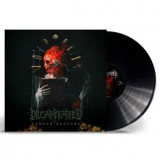
Across eight studio albums, DECAPITATED grew from the adolescent dream of teenagers from a small Central European town to one of the leaders of the metal genre. Each successive album further expands the band’s sound with genre-bending authenticity and integrity. As Metal Injection rightfully observed, “any self-respecting death metalhead knows the name well.”
DECAPITATED’s music is a weapon forged by four young men from a historic medieval-fortified town in Poland, which catapulted them to the top of a worldwide subculture. Like a rose in the devil’s garden, the DECAPITATED story builds triumph from tragedy. The gleeful grotesquery of extreme metal imagery and rifftastic bludgeoning beckons listeners to uncover broader truths.Upon the release of 2017’s Anticult, Metal Hammer declared DECAPITATED “a serious successor to the likes of Pantera and Lamb Of God – a band who can draw new legions into the metal world as its new champions.” Their diverse follow-up, 2022’s Cancer Culture, delivers on that promise.
Instantly recognizable devastation and deceptively sinister hooks abound. Freshly minted DECAPITATED anthems like “Last Supper,” “Hello Death,” “Just Cigarette,” “No Cure,” “Iconoclast,” and “Cancer Culture” shimmer with sonically sharp production and unrelenting bombast. There’s also a newly increased emphasis on melody, even venturing into darkly romantic territory. Wacław "Vogg" Kiełtyka (guitar), Rafał "Rasta" Piotrowski (vocals), Paweł Pasek (bass), and James Stewart (drums) are at the top of their game, delivering the goods at peak performance. Jinjer vocalist Tatiana Shmayluk and Machine Head frontman Robb Flynn make guest appearances.
Set on the descending plains of a mountain range amid a dense forest, Krosno boasts a 14th-century Gothic church, a Subcarpathian museum, and stunning artisan glassware. In this Polish town, teenage music student Wacław "Vogg" Kiełtyka discovered records from bands like Morbid Angel, Cannibal Corpse, Metallica, and Machine Head. The guitarist and his younger brother, drummer Witold “Vitek” Kiełtyka, cofounded DECAPITATED in 1996, inspired by a wide range of technical death, blackened thrash, and local heroes, like KAT and the world-renowned Vader. Death and black metal reigned supreme in the Polish scene of the 1990s, where Behemoth originated as well. In fact, a Vader song called “Decapitated Saints” inspired the band’s moniker.
The organic musical chemistry between the Kiełtykas was akin to the brotherly connectivity and vibe driving Pantera, Gojira, and the classic era of Sepultura. In 2006, Kerrang! praised the first three DECAPITATED albums - Winds of Creation (2000), Nihility (2002), and The Negation (2004) – as “superbly conceived and executed eruptions of technical brilliance and razor-sharp songwriting that turned these youthful Poles into one of the genre’s most widely respected bands.” That year’s Organic Hallucinosis further perfected Vogg’s penchant for blending extremity with catchy hooks.
The rule-breaking ferocity and invention of the first four albums reinvigorated death metal, as DECAPITATED inspired a new generation of bands who followed suit. Sadly, this era came to a shocking end in late 2007. While touring Russia, the band’s bus collided with a large truck near the border with Belarus. Both Vitak and then-singer Adrian “Covan” Kowanek sustained severe head injuries. Tragically, Vitak passed away in a Russian hospital a few days later. He was just 23.Vogg summoned the courage to continue, in honor of his brother and what they created, and returned with a new incarnation of DECAPITATED and the fiercely adventurous comeback album, Carnival is Forever (2011) featuring new vocalist Rafał "Rasta" Piotrowski. Blood Mantra (2014) introduced bassist, Paweł Pasek. Blabbermouth declared it “perhaps the most poised and gutsy” DECAPITATED album, adding “its courageous bends make it a turbulent but pleasurable ride.”
Cancer Culture sounds brilliant, modern, and tasty. “There is no place for any fake, plastic, bullshit drum machine or anything like that,” Vogg insists. “It’s all organic, pure, and clear, showing the true face of the band. Vogg and company entrusted the Cancer Culture mix to David Castillo at Sweden’s Fascination Street Studios / Studio Gröndahl (Sepultura, Carcass, Opeth, Katatonia), and legendary American producer Ted Jensen (Metallica, Slipknot, Pantera, Machine Head, Korn).
The devoted supporters who traveled to see DECAPITATED on international tours with the likes of Lamb Of God, Meshuggah, Soulfly, Fear Factory, and Suffocation over the years will recognize the ever-present pummeling backbone. Longtime fans and newcomers alike will connect to the variety of atmospheric depth throughout Cancer Culture’s ten boundlessly energetic and creative tracks.
“If you told me 25 years ago, in my neighborhood in the South of Poland, that I would be in Machine Head, sharing riffs with Robb Flynn,” Vogg marvels. “It’s simply incredible. It means that everything is possible in your life. That gives me the faith to believe that I can achieve even more in my career. The dreams we have when we are kids, things we can barely imagine, can happen.” Flynn contributes a hauntingly beautiful vocal to the Cancer Culture track “Iconoclast.” “Clean vocal singing is a really new thing in DECAPITATED,” Vogg notes. “It’s really unique and amazing.”
Driven by Vogg’s passion and integrity, the dual emphasis on creative invention and technical prowess maintains DECAPITATED’s stature as genre-leaders in 2022 and beyond. The band’s supporters continually demonstrate confidence and absolute certainty DECAPITATED will deliver.
Across eight studio albums, DECAPITATED grew from the adolescent dream of teenagers from a small Central European town to one of the leaders of the metal genre. Each successive album further expands the band’s sound with genre-bending authenticity and integrity. As Metal Injection rightfully observed, “any self-respecting death metalhead knows the name well.”
DECAPITATED’s music is a weapon forged by four young men from a historic medieval-fortified town in Poland, which catapulted them to the top of a worldwide subculture. Like a rose in the devil’s garden, the DECAPITATED story builds triumph from tragedy. The gleeful grotesquery of extreme metal imagery and rifftastic bludgeoning beckons listeners to uncover broader truths.Upon the release of 2017’s Anticult, Metal Hammer declared DECAPITATED “a serious successor to the likes of Pantera and Lamb Of God – a band who can draw new legions into the metal world as its new champions.” Their diverse follow-up, 2022’s Cancer Culture, delivers on that promise.
Instantly recognizable devastation and deceptively sinister hooks abound. Freshly minted DECAPITATED anthems like “Last Supper,” “Hello Death,” “Just Cigarette,” “No Cure,” “Iconoclast,” and “Cancer Culture” shimmer with sonically sharp production and unrelenting bombast. There’s also a newly increased emphasis on melody, even venturing into darkly romantic territory. Wacław "Vogg" Kiełtyka (guitar), Rafał "Rasta" Piotrowski (vocals), Paweł Pasek (bass), and James Stewart (drums) are at the top of their game, delivering the goods at peak performance. Jinjer vocalist Tatiana Shmayluk and Machine Head frontman Robb Flynn make guest appearances.
Set on the descending plains of a mountain range amid a dense forest, Krosno boasts a 14th-century Gothic church, a Subcarpathian museum, and stunning artisan glassware. In this Polish town, teenage music student Wacław "Vogg" Kiełtyka discovered records from bands like Morbid Angel, Cannibal Corpse, Metallica, and Machine Head. The guitarist and his younger brother, drummer Witold “Vitek” Kiełtyka, cofounded DECAPITATED in 1996, inspired by a wide range of technical death, blackened thrash, and local heroes, like KAT and the world-renowned Vader. Death and black metal reigned supreme in the Polish scene of the 1990s, where Behemoth originated as well. In fact, a Vader song called “Decapitated Saints” inspired the band’s moniker.
The organic musical chemistry between the Kiełtykas was akin to the brotherly connectivity and vibe driving Pantera, Gojira, and the classic era of Sepultura. In 2006, Kerrang! praised the first three DECAPITATED albums - Winds of Creation (2000), Nihility (2002), and The Negation (2004) – as “superbly conceived and executed eruptions of technical brilliance and razor-sharp songwriting that turned these youthful Poles into one of the genre’s most widely respected bands.” That year’s Organic Hallucinosis further perfected Vogg’s penchant for blending extremity with catchy hooks.
The rule-breaking ferocity and invention of the first four albums reinvigorated death metal, as DECAPITATED inspired a new generation of bands who followed suit. Sadly, this era came to a shocking end in late 2007. While touring Russia, the band’s bus collided with a large truck near the border with Belarus. Both Vitak and then-singer Adrian “Covan” Kowanek sustained severe head injuries. Tragically, Vitak passed away in a Russian hospital a few days later. He was just 23.Vogg summoned the courage to continue, in honor of his brother and what they created, and returned with a new incarnation of DECAPITATED and the fiercely adventurous comeback album, Carnival is Forever (2011) featuring new vocalist Rafał "Rasta" Piotrowski. Blood Mantra (2014) introduced bassist, Paweł Pasek. Blabbermouth declared it “perhaps the most poised and gutsy” DECAPITATED album, adding “its courageous bends make it a turbulent but pleasurable ride.”
Cancer Culture sounds brilliant, modern, and tasty. “There is no place for any fake, plastic, bullshit drum machine or anything like that,” Vogg insists. “It’s all organic, pure, and clear, showing the true face of the band. Vogg and company entrusted the Cancer Culture mix to David Castillo at Sweden’s Fascination Street Studios / Studio Gröndahl (Sepultura, Carcass, Opeth, Katatonia), and legendary American producer Ted Jensen (Metallica, Slipknot, Pantera, Machine Head, Korn).
The devoted supporters who traveled to see DECAPITATED on international tours with the likes of Lamb Of God, Meshuggah, Soulfly, Fear Factory, and Suffocation over the years will recognize the ever-present pummeling backbone. Longtime fans and newcomers alike will connect to the variety of atmospheric depth throughout Cancer Culture’s ten boundlessly energetic and creative tracks.
“If you told me 25 years ago, in my neighborhood in the South of Poland, that I would be in Machine Head, sharing riffs with Robb Flynn,” Vogg marvels. “It’s simply incredible. It means that everything is possible in your life. That gives me the faith to believe that I can achieve even more in my career. The dreams we have when we are kids, things we can barely imagine, can happen.” Flynn contributes a hauntingly beautiful vocal to the Cancer Culture track “Iconoclast.” “Clean vocal singing is a really new thing in DECAPITATED,” Vogg notes. “It’s really unique and amazing.”
Driven by Vogg’s passion and integrity, the dual emphasis on creative invention and technical prowess maintains DECAPITATED’s stature as genre-leaders in 2022 and beyond. The band’s supporters continually demonstrate confidence and absolute certainty DECAPITATED will deliver.
LNDFK (aka Linda Feki) presents her ground-breaking debut album, "Kuni" on Brooklyn-based Bastard Jazz Recordings. Undeniably on the rise after her 2019 breakout performance at Primavera Sound, LNDFK has already caught the attention of Pitchfork, Rolling Stone, Clash Magazine, Noisey, and Brooklyn Vegan (among many others) while being championed by the likes of Gilles Peterson, Tom Ravenscroft, and Jamz Supernova & landing spots on tastemaker playlists like Spotify's "Pollen" and "Fresh Finds."
"Kuni" is a spellbinding exploration of dichotomies: Love & Death (Eros & Thanatos), Flower & Fire, Delicacy & Violence, Poetry & Realism, Purification & Destruction. These opposites are reified in the 10-track LPs multifarious and multifaceted sounds, elegantly meandering through a variety of styles and genres, spearheaded by Linda and features the production wizardry of Darrio Bassolino who co-wrote the album.
"Kuni" opens with "Hana-bi," an ambient instrumental piece that sets the tone for the album. Inspired by the Takeshi Kitano 1997 film of the same name – particularly Joe Hisaishi's stunning soundtrack, as well as Kitano's paintings which appear in the film. "Hana-bi" expresses the dialoguing opposites of flowers and fire, the first of many dichotomous representations throughout the album. "Takeshi" acts as an extension and to "Hana-bi," albeit one of opposing sound, with its driving, highly syncopated drums (which reappear throughout "Kuni") – à la Karriem Riggins, Questlove, or Yussef Dayes – frenetic bass line, and jazz chords. Linda's sultry voice is interspersed, initially jumping around in scat fashion, being triggered as if a sample, before her lyrics come in; her vocals are used like an additional instrument, adding to the song's rich texture. "Kuni" truly hits its stride with the next song, "Smoke – a moon or a button" (its title lifted from the 1959 book by Ruth Krauss and Remy Charlip), which is structured like a jazz standard yet flows into neo-soul territory sonically with those prodigious drums a highlight once again.
LNDFK touches on experimental hip hop in two songs on the record (both of which were released as singles in 2021): "Don't Know I'm Dead or Not (feat. Chester Watson)" – track #4 – and "How Do We Know We're Alive (feat. Pink Siifu)" – track #9. Although they embrace a more hip hop-leaning sound, these songs by no means shy away from the exploratory theme, and feature two of the alt-rap scenes rising stars with Chester Watson and Pink Siifu who offer provocatively impressing verses, combining dense word play with unconventional flows. While these tracks may first appear to be outliers on the album, they are undeniably in tune with "Kuni's" message and sonic palette, acting as testaments to LNDFK's willingness to explore and experiment.
Meanwhile, "Ku" – the third and last single before the album release – furthers the pre-established future soul sound while meandering through nu jazz and left-field electronic. Inspired by the graphic novel and film, "Sin City," and its female assassin protagonist Miho, "Ku" is a musical interpretation of Miho's story, incorporating both her beauty – the first half of the song – and murderous tendencies – the second half – to create a stunning juxtaposition, culminating in an ambient finale that suggests the character's vulnerability and inner peace. The song gracefully bridges the gap between Hiatus Kaiyote-esque songwriting, Dilla's rhythmic syncopation, and Thundercat's instrumental prowess (LNDFK has shared a stage Brainfeeder labelmate Kamasi Washington).
Mixed in throughout "Kuni" are a series of instrumental pieces that function as something akin to an interlude. The aforementioned intro, "Hana-bi," and the album closer "se mi stacco da te, mi strappo tutto:" act as bookends, while "Om" indicates the half-way mark, and "Ktm" sees Jason Lindner add his sound the album. These tracks are the ambient foundation of "Kuni," representing the thematic duality of the work. Clocking in at only 24 minutes, "Kuni" packs an astonishingly diverse array of sounds, styles, and themes, all while showcasing virtuosic musicianship and instrumental prowess.
Appearing on "Hana-bi" and "Ktm," renowned international artists Asa-Chang and Jason Lindner add an additional perspective to "Kuni": Asa-Chang on "Hana-bi," and Jason Lindner on "Ktm." Asa-Chang - famously of the Japanese avant-garde group Asa-Chang & Junray - provides vocals and percussion to an alternate version of the instrumental opener, while the acclaimed keyboardist Jason Lindner offers his synth expertise on "Ktm." These features highlight the spirit of collaboration found in LNDFK's music, always willing to try out new ways of working.
LNDFK is a singer and songwriter, born of two cultures – an Italian mother and Arab father. She grew up in Naples, away from her father, the Sahara, her homeland and traditions, which has helped nourish the desire to rediscover – through art – an engagement to her roots. Her music melts with jazz, neo-soul and hip-hop influences, filtered through her experiences and sensibility.
Her first EP, "Lust Blue," was composed with the artistic production of Dario Bass and released by Feelin' Music; after that she released several singles that saw international radio support (BBC, NTS, Wordwide FM) and gained a massive audience on digital platforms. Together with her band, she toured around Europe, performing alongside such notable artists as Kamasi Washington and Mndsgn, among others. Most recently she toured Italy, and performed at Primavera Sound Festival 2019 in Barcelona.
"Kuni," is due out on NYC label Bastard Jazz Recordings in February, 2022, while the vinyl LP will follow shortly after.
anthéne, one of ambient drone’s most recognised names, presents ‘maritime’. A shift from his usual expansive, time-stretching soundscapes, maritime is something altogether more grounded, more present. It signals the call of the open ocean, of its vast possibilities and terrors, as a similitude for the night.
In both, one faces the peace, the limitlessness, the reverence, and the promise, while at the same time the uncertain, the uncontrollable, the danger and the fear of the unknown. In such a way, maritime is presented in two parts: Side A demonstrates the beauty and inspiration of ocean views and night time explorations, while Side B addresses the vulnerable nature of vast, boundless experience.
An artist with an astounding workrate, Brad Deschamps has worked with such artists as Ian Hawgood, James McDermid, Andrew Tasselmyer and Fossil Hunting Collective (as Still Harbours), and releases the likes of Hakobune, Moss Covered Technology and Forest Management on his own Polar Seas Recordings.
His patient style is clear throughout the album, shimmering guitar tones overlaying with warmth and stability, yet the addition of more troubled melodies and subtle vocal parts make for something far more poignant. The duality of awe and terror, of the two primary elements of the sublime, channel through as one in one of anthéne’s most thoughtful offerings to date.
- A1: Ghetto Priest - Hercules (North Street West 'Late Night Tales' Dub) *Exclusive Remix
- A2: Prince Fatty &Shniece Mcmenamin - Black Rabbit
- A3: Wrongtom Meets The Rockers - Dub In The Supermarket *Exclusive Remix
- A4: Gaudi Meets The Rebel Dread Ft. Emily Capell - E = Mc2 *Exclusive Track
- A5: Rude Boy - Superstylin' *Exclusive Remix
- B1: Capitol 1212 Ft. Earl 16 - Love Will Tear Us Apart (Full Vocal Dub) *Exclusive Remix
- B2: Quantic Presenta Flowering Inferno - All I Do Is Think About You (Far East Dub) *Exclusive Remix
- B3: Zoe Devlin Love Ft. Tim Hutton - Caroline No
- B4: John Holt - You'll Never Find Another Love Like Mine (Mad Professor 2021 Dub) *Exclusive Remix
- B5: Cornell Campbell - Ital City Dub *Exclusive Remix
- B6: Matumbi - (I Can't Get Enough Of) That Reggae Stuff (Dennis Bovell Remix) *Exclusive Remix
- C1: Gentleman's Dub Club Ft. Kiko Bun - Use Me (Ben Mckone Dub)
- C2: Black Box Recorder - Uptown Top Ranking
- C3: Obf - Sixteen Tons Of Dub
- C4: Yasushi Ide - Ain't No Sunshine (Space Dub Mix) *Exclusive Remix
- D1: The Tamlins - Baltimore
- D2: 15 16 17 - Emotion (Dennis Bovell Remix) *Exclusive Remix
- D3: Ash Walker - There's Nothing Like This *Exclusive Track
- D4: The Senior Allstars - Slipping Into Darkness
- D5: Easy Star All-Stars - Within You Without You
- D6: Khruangbin - Dern Kala (Khruangbin Dub Mix) *Exclusive Remix
Born in Brixton, a child of the Windrush Generation, Letts’ slippery and unorthodox career is somewhat hard to define, without taking a few detours around London, New York and Jamaica. He began his working life managing the dauntingly hip Acme Attractions on Chelsea’s Kings Road, where he made a mark with his attitude, dress and, especially, the pounding dub reggae that vibrated the shop’s walls. His first gig as a DJ at the short-lived Roxy in Neal Street, became mythical for turning a generation of punks on to reggae. They in turn hipped him to their DIY ethos resulting in his reinvention as a filmmaker. This led to a shed-load of music videos (Linton Kwesi Johnson, The Clash, Bob Marley) not
to mention documentaries on the likes of Gil Scott-Heron, George Clinton and Sun Ra.
In the ’80s, he was part of Mick Jones’ new venture, Big Audio Dynamite and his innovative use of samples were a core part of their sound. Listeners of his weekly 6 Music radio show are taken on a musical safari that moves seamlessly between time, space and genre. It’s not called Culture Clash Radio for nothing. So this latest bulletin from Letts HQ is merely one angle of a multifaceted personality, his take on the JA tradition of the cover version.
The history of Caribbean music owes a debt to R&B as many of the early island releases were cover versions of US 45s. Ska’s breakthrough commercially, Millie Small’s ‘My Boy Lollipop’, was originally recorded by Barbie Gaye in ’50s New York. Cover versions became quite a thing in Jamaica and Don, following in that tradition, has dug deep with a selection of interesting dubbed out covers including thirteen exclusives.
“A disciple of sound system, raised on reggae n’ bass culture my go to sound was dub. Besides being spacious and sonically adventurous at the same time, its most appealing aspect was the space it left to put yourself ‘in the mix’ underpinned by Jamaica’s gift to the world - bass. But that’s only half the story as the duality of my existence meant I was also checking what the Caucasian crew were up to not to mention the explosion of black music coming in from the States. That’s why this version excursion crosses time space and genre, from The Beach Boys to The Beatles, Nina Simone to Marvin Gaye, The Bee Gees to Kool & The Gang, The Clash to Joy Division and beyond. You’d think it impossible to draw a line between ‘em but not in my world. Fortunately, the ‘cover version’ has played an integral part in the evolution of Jamaican music and dub covers were just a natural extension.”
There’s a diverse mix of classic and new, with legendary figures like John Holt, The Tamlins and Cornell Campbell, mixed in with British veterans Mad Professor and the irrepressible Dennis Bovell, while (relatively) young striplings Kiko Bun, Emily Capell and Prince Fatty deliver the goods, with laidback Texan groovers Khruangbin also offering an exclusive bass heavy-delight.
The song choices are diverse, from French dubsters’ OBF’s renditions of ‘Sixteen Tons’, the miners’ paean popularised by Tennessee Ernie Ford in the 1950s, to Ash Walker’s refix of Omar’s ‘There’s Nothing Like This’ and ‘All I Do Is Think About You’, immortalised by the ill-fated Tammi Terrell and preserved here by Quantic (the latter two both exclusives). Being a Rebel Dread compilation, there’s a cover (by Wrongtom Meets The Rockers) of The Clash’s ‘Lost In The Supermarket’ while Don’s exclusive, naturally, is a rendition of Big Audio Dynamite’s debut hit, ‘E = MC2’.
“Truth be told I’ve wanted to work with the Late Night Tales crew from the get go. We’re talking nearly two decades such was the allure of their musical aesthetic typified by curators like Nightmares on Wax, The Flaming Lips, MGMT, Trentemoller, Khruangbin and countless others. Now being as old as rock n’ roll (born in ‘56) and having nearly 20 years of Culture Clash Radio under my belt I figured I was tooled up to musically juggle with the best of ‘em. But I wanted to carve out a space that was distinctly my own - something that reflected my musical journey and the culture clash that’s made me the man I am today.”
Global pop sensation Ava Max—who has already accumulated more than 4 billion career streams—has released her highly-anticipated debut album Heaven & Hell. The record features eight new tracks alongside her previously released hit singles “Sweet But Psycho,” “Who’s Laughing Now,” “So Am I,” “Salt” and “Kings & Queens,” the latter of which spent five weeks at #1 on European airplay and is currently #21 on Top 40 radio.
“Heaven & Hell represents light and dark, good and evil, and the devil and angel on your shoulder,” said Ava on the meaning behind the album. “I’m discussing the dualities of the challenges we face each day. Some songs have darkness; other songs are more positive. Heaven & Hell is the middle ground.”
Ava has also revealed the video for her track “Naked,” which was directed by Hannah Lux Davis (Ariana Grande, Halsey, Doja Cat).
“It’s about the real emotions we go through,” said Ava on the meaning behind the track. “If you don’t know my mind, soul, and heart, you’ll never know me by seeing me naked. We are more than our physical bodies. That’s what I wanted to show.”
A truly international artist, Ava sealed her pop superstar status with the blockbuster success of the RIAA 3x-platinum certified hit, “Sweet but Psycho.” Currently boasting over 2 billion global streams and counting, “Sweet But Psycho” was named among the New York Times’ “54 Best Songs of 2019,” spent three weeks in the top 10 of Billboard’s “Hot 100,” peaked at #3 at US Pop Radio and earned Ava her first-ever Teen Choice Awards nomination for “Choice Pop Song.” The song was joined by an official video that has more than 600 million views on YouTube.
Produced by GRAMMY® Award-winning super-producer Cirkut (Maroon 5, Miley Cyrus, The Weeknd) and co-written with Madison Love (Camila Cabello), “Sweet But Psycho” hit #1 on both Spotify’s “United States Viral 50” and Billboard’s “Dance Club Songs” while becoming one of “The Top Most-Shazamed Songs of 2019.” The song’s stateside success followed the track’s remarkable popularity abroad, including four consecutive weeks atop the UK Singles Chart and #1 rankings on charts in nearly 20 countries.
Dubbed an “Artist You Need to Know” by Rolling Stone, Ava has been feted with a wide range of media attention including high profile features in Vanity Fair, Billboard, FORBES, PAPER, and more. The pop star first took over TV with performances of “Sweet but Psycho” on CBS’s The Late Late Show with James Corden, NBC’s TODAY, and the Ellen DeGeneres Show, as well as a summer performance of her RIAA-certified gold single “So Am I,” on ABC’s Jimmy Kimmel Live. Ava became one of 2019’s most honored performers, including “Best New Artist” nominations at both the 2019 MTV Video Music Awards and the 2019 MTV Europe Music Awards. The latter was highlighted by both Ava’s first-ever win for “Best Push Artist” and show-stopping live performances of both “Torn” and “Sweet But Psycho,” streaming now.
LA-based producer, composer, songwriter and multi-instrumentalist James McAlister is a rare creator, and highly sought after collaborator. Perhaps best known for his work with Sufjan Stevens , McAlister has also appeared on record with Lorde amongst many others, and is a regular contributor to Aaron Dessner 's projects, including the latest albums from Taylor Swift, folklore and evermore . His regular work with film music includes The Two Popes, The Big Sick, and Ron Simonsen 's recent films. In 2018 he joined Stevens, Casey Foubert , St. Vincent and Moses Sumney for the Oscar performance for music from Call Me By Your Name, where he played piano and a bottle of cupcake sprinkles. With nearly countless projects to his name, it was in 2017 that his collaboration with Stevens, Nico Muhly, and Bryce Dessner entitled Planetarium was released by 4AD. Around the same time McAlister started a deep dive into a personal sonic realm that has manifested as an ambient project under his own name. 2018 saw the release of Three Breaths , the first offering from this exploration. 2021 will see the second installment, an album called Scissortail which vividly puts McAlister's evolving master craft on display. It is a collection of moving, meditative, immediately satisfying and quietly stunning work. It is the sound of an artist letting go entirely of pre-conceptions or expectations, instead mining the depths of that very real and abstract place of sound, texture, color and feeling. Some songs arrive almost intuitively, while others feel mechanically made, fed through the framework of synthesizers and the patchwork of recording gear. And with that comes a compelling duality to the work; a machine grace informing the on-going but subconscious dialogue between energy and material, sensitivity and asceticism.
- Rare P-Funk album from 1983 - Funkadelic/Parliament All-Star Line-Up - First ever vinyl reissue - Comes with a repro of the original insert - 180g Black Vinyl Edition - Limited to 500 copies, comes with obi strip // Jerome "Bigfoot" Brailey is an American drummer who started performing in the early 1970s with several R&B groups from the likes of The Unifics, The Chambers Brothers and The Five Stairsteps where he developed his unique style and finesse on drums. Later in 1975 he joined George Clinton's P-Funk collective and has appeared on many of Parliament & Funkadelic's most popular recordings (some of which he also co-wrote). Brailey played on classic albums like `Mothership Connection' and `One Nation Under A Groove'. Samples from that body of work (and his drum arrangements) have since then appeared on hundreds of hip hop and contemporary R&B songs by renowned artists such as Kendrick Lamar and Childish Gambino. Jerome Brailey is a member of the Rock and Roll Hall of Fame (inducted in 1997) and part of their `50 greatest drummers in the Hall' list (stating that his drum style kept Parliament-Funkadelic rooted in the old-school `James Brown-style funk')_next to this achievement, he was proclaimed by Rolling Stone as one of the `100 Greatest Drummers of All Time' for his steady kick drum, shifty hi-hat action and intricately unpredictable snare patterns. Brailey earned numerous Gold and Platinum records with the P-Funk Organization and has worked as a session drummer for many talented artists such as Herbie Hancock, Buddy Miles, Snoop Dogg and Pharoah Sanders. George Clinton's funk empire was not without its disagreements and Jerome Brailey's `Mutiny' project was a direct result of just such a disagreement (as well as one of the more notable offshoots of the P-Funk axis). Mutiny performed in a style not far removed from the classic P-Funk style and with a lot of emphasis on the dual lead guitar work, but what makes them unique compared to their contemporaries is that at times their recordings also emit a darker, more sinister feeling. Besides Brailey on drums (and on most of the lead vocals) Mutiny featured a funk-alumni line-up and released three amazing and collectible albums: `Mutiny On The Mammaship' (CBS, 1979), `Funk Plus The One' (Columbia, 1980) and `A Night Out With the Boys' (J. Romeo, 1983)_these were followed by two comeback albums: `Aftershock' (Rykodisc 1995) and `Funk Road' (Catbone, 2013). The `Mutiny' album we are proudly presenting you today (A Night Out With The Boys) is an underrated gem made by musicians who defined the funk scene of the '70s and '80s! Featuring an all-star line-up that includes Rodney Curtis (Fred Wesley, Maceo Parker), Michael Hampton (Funkadelic-Parliament, Deee-Lite), Kenni Hairston (Cameo) and Maceo Bond of Osiris/Afrika Bambaataa fame! `A Night Out With The Boys' has it all: Jerome's trademark drumbeats, funky bass grooves, driving riffs accented by stinging synth parts, slow spacey (and prominently featured) guitars, top-notch lead vocals and chants that recall Sly Stone's "Loose Booty". The whole album is a hot dance jam with crisp percussion_an extremely infectious, locked-in-the-pocket bass-heavy monster-funk-bomb that any serious self-respecting funk fanatic must have in his/her collection!
Emma-Jean Thackray, an outstanding figure in the UK jazz scene, releases Um Yang, her long-dreamed project dedicated to the Taoist philosophy of duality and harmony. Ahighly ambitious and personal record that sees Thackray leading a septet featuring
Soweto Kinch and Steam Down’s Wonky Logic, recorded straight to vinyl. An accomplished trumpeter, beat-maker, singer, composer and DJ, Thackray draws on far wider influences than jazz. Her sound is distinctive; in the words of The Guardian like “Bitches Brewera Miles entering the dub chamber with a New Orleans marching band – in a good way”. Since debuting in 2016, Thackray has directed the London Symphony Orchestra, performed at the NY Winter Jazz Fest, played Glastonbury five times in 2019 alone, and launched her own record
label, Movementt (in association with Warp). Championed by Gilles Peterson, Theo Parrish and Jamie Cullum, Thackray has firmly cemented her place among a new wave of exciting young
musicians, collaborating with Makaya McCraven, Junius Paul and Angel Bat Dawid, and still finds time to host her monthly radio show on Worldwide FM. Raised in Yorkshire, Thackray inherited a grounding in Taoism from her father, and approaches her music with the same pursuit of harmony between Um & Yang (the Korean Ying & Yang), balancing melody and rhythm, groove and free improvisation, cerebral and physical. For this one-off recording, Thackray has applied this ideology in every sense, even down to the ensemble itself featuring not one but two percussionists. Um commences with ethereal interplay between keys, percussion, and Thackray’s trumpet, recalling the spiritual jazz of Alice Coltrane’s classic records. As the piece builds, an earthy groove emerges. On both trumpet and vocals,
Thackray leads the ensemble further out until the piece peaks with an epic breakdown. On the flip, Yang starts on the same cacophonous note but progresses to a joyful groove before returning to a peaceful state again, balance restored.
Composer Tashi Wada has performed for years with his father Yoshi Wada—artist, composer, and early member of the Fluxus movement. However, they have rarely appeared together in studio settings. Nue, the fourteenth entry in RVNG Intl.'s intergenerational FRKWYS series, finally brings Tashi and Yoshi, along with an eclectic group of close friends and extended family, together on tape.
Nue draws on aspects of Tashi's background for his widest vision to date—among them the minimalist bagpipe music of Yoshi, who co-composed three of the tracks, the psychoacoustic and perceptual explorations of his mentor, composer James Tenney, and reimagined forms of ancient and devotional music. The album, however, is not a tribute to the past or a recapitulation of familiar sounds. Instead, Nue is an intertwining of people and ideas as a means of growing, of looking inward to move outward, and of looking back to move forward.
To achieve this growth, Tashi assembled a core group of fellow travelers, including Yoshi, composer Julia Holter, producer Cole MGN, and percussionist Corey Fogel, to give life to this multifaceted suite. As an experience, Nue subtly navigates the interactions, intimacy and spaciousness of this group.
The album's title itself is a nod to Tashi's abiding interest in duality and the unknown: nue is a mythological Japanese chimera with the face of a monkey, the legs of a tiger, and a snake for a tail, a composite form, at once disturbing and otherworldly. But, as the composer points out, nue is also French for naked—stripped of complexity, bare and exposed, but also raw and essential.
From the doubling of tones—and the world of harmonic nuances such an action produces—to the rich interplay between individual musicians, all baring their own personalities and experiences through shared performance, Tashi's compositions allow space for these elements to join and grow. The multipartite creature that is an ensemble melds in the simplicity and purity of the music itself.
As explained by Tashi, each part was written with an individual in mind, not simply an instrument. And each individual performer makes their mark, from Holter's vocal performances on the cresting, oceanic 'Mutable Signs' and 'Ondine' with guest vocalists Simone Forti, Jessika Kenney and Laura Steenberge, to Fogel's resonant, precise percussion on 'Bottom of the Sky.' Producer Cole MGN, who has worked extensively with artists like Beck and Ariel Pink, helped to create a world of sound with minimal yet multi-dimensional materials. Like many of its influences, Nue uses deceivingly simple means to create complex, coherent worlds and narratives.
Tashi notes the influence of legendary Brazilian writer Clarice Lispector, whose work looked inward, investigating memory and emotion and dream, to understand the often overwhelming world outside the self. Like Lispector's classic novel Near to the Wild Heart, Nue cleaves these archetypal dualities—world/self, old/new, complex/simple—to create a work that allows them to coalesce into something singular.
As Tashi states in his liner notes: 'My desire was to create something both old and new sounding—ancient and futuristic—and ultimately something of its own world and other. Nue is a vision, an endless night of dreams, and a personal history of sorts, full of joys and demons.'
Now presented in a shrink-wrapped 6 panel fold out card wallet on CD, on heavyweight double vinyl in a gatefold sleeve. Digitally re-mastered by John Rivers at Woodbine Studios, November 2017 August 1988, Spacemen 3 embark on one of the strangest events in the band's already strange history. Billed as "An Evening of Contemporary Sitar Music" (although consciously omitting the sitar), the group would play in the foyer of Watermans Arts Centre in Brentford, Middlesex to a largely unsuspecting and unsympathetic audience waiting to take their seats for Wim Wenders' film 'Wings of Desire'. Spacemen 3's proceeding set, forty-five minutes of repetitive drone-like guitar riffs, could be seen as the "Sweet Sister Ray" of '80s Britain. Their signature sound is at once recognizable and disorienting - pointing as much to the hypnotic minimalism of La Monte Young as to a future shoegaze constituency. On this double LP reissue, Dreamweapon is augmented by studio sessions and rehearsal tapes from 1987 that would lead up to the recording of Spacemen 3's classic 'Playing With Fire' album. 'Spacemen Jam,' featuring Sonic Boom and Jason Pierce on dual guitar, is a side-long mediation on delicate textures and psychedelic effects.
- A1: Black Gold
- A2: Warrior / Sankofa"Feat. Camp Lo, Deion & Mnyykk Shevy
- A3: Trust Me" Feat Sha'leah Nikole & Sir
- A4: Home" Feat Damani Nkosi
- B1: Almost There" Feat Sir
- B2: Live It Up" Feat Iman Omari
- B3: Fight On" Feat Preston Harris Damani Nkosi
- B4: Spider's Jam" Feat Georgia Anne Muldrow - Javonté
- C1: Slip Away" Feat Amaru
- C2: Again" Feat Fernando Pullum Community Arts Center, Ryck (Jane/ Marcus Zgarvey Elementary
- C3: Lighters
- C4: Still A Lady" Feat Tiffanie Cross, Shava'sha Dickerson & Wyann Vaughn
- D1: Duality" Interlude
- D2: São Paulo Feat Punch - Rose Gold
- D3: Few Days Feat Javonté & Marknoxx
- D4: Renewed
ll Camille, LA hip hop's female perspective.
Ill Camille has been a vital member of the LA music scene for some years. Kendrick Lamar used her vocals prominently for the 'good kid, m.A.A.d city' track 'Sing about me', she has been working with other TDE artists occasionally and spend a lot of time writing for different projects Terrance Martin was involved with.
At the same time Camille was developing her own material with her fellow peers such as MNDSGN, Iman Omari, DJ Battlecat, Like (Pac Div) Georgia Anne Muldrow & SIR who are all featured on her album 'Heirloom' just like TDE co-president Punch. 'Heirloom' productions range from smooth, g-funk esque west coast beats to live & organic soulful beats, working as the perfect backdrop for Camille's powerful, intelligent and thought thru lyrics
The album is deeply personal revolving around the issues that mater in her life from friends and family, her role as a woman and the heirloom of her and her surrounding: 'I feel like everyone are heirlooms of our mothers and fathers. An heirloom is just something that's passed down through a family. We get heirlooms in the form of game, encouragement or wise words. I know everyone has an aunt or uncle that's given them some bars about life in general. I have a village around me that have given me heirlooms in the form of conversations'.
The album was produced by John Congleton (Blondie, Sigur Ros), Greg Saunier of Deerhoof and Xiu Xiu's own Angela Seo.
It features guest appearances by fabled minimalist composer Charlemagne Palestine, L.A. Banjee Ball superstar commentator Enyce Smith, Swans guitar virtuoso Kristof Hahn and legendary drag artist and personal hero of Xiu Xiu, Vaginal Davis.
FORGET was recorded during a period of epic productivity for Xiu Xiu. While writing FORGET, they released the lauded Plays the Music of Twin Peaks, collaborated with Mitski on a song for an upcoming John Cameron Mitchell film, composed music for art installations by Danh Vo, recorded an album with Merzbow and scored an experimental reworking of the Mozart opera, The Magic Flute. All of this frantic, external activity lead to a softly damaged dreaminess and broadened intent that has not been heard before in other Xiu Xiu works.
Standout track, Wondering' is one of the catchiest boogie pop gems in the Xiu Xiu catalog, but like much of FORGET, it still bears an underlying tension that manifests differently in each piece. From the haunted guitar duet of "Petite", the hilariously fraught lyrics of "Get Up," the advanced industrial boxing match of "Jenny GoGo," or the experimental goth explosion of "Faith, Torn Apart", all the songs, in their own ways, build to a roiling boil of a fate in vanishing.
The calligraphy on the cover translates literally to "we forget." It bows to the universality of everything and everyone's inevitable decline and foggy disappearance. Regarding the album title, Xiu Xiu singer Jamie Stewart said, To forget uncontrollably embraces the duality of human frailty. It is a rebirth in blanked out renewal but it also drowns and mutilates our attempt to hold on to what is dear.' FORGET is both the palliative fade out of a traumatic's past but also the trampling pain of a beautiful one's decay.
Xiu Xiu is Shayna Dunkelman, Angela Seo and Jamie "Butch Jenny" Stewart.
Double 180 gram, half-speed vinyl re-release of the orchestral epic. Norwegian Grammy-nominated and critically acclaimed masterpiece «The Mechanical Fair» finally gets it's long awaited vinyl release
Jampacked with a wellspring of harmonic slingshots, pumping beats and melodic rollercoasters, critics called The Mechanical Fair «the best movie you'll never see» and drew comparisons to Igor Stravinsky's «The Rite of Spring» upon it's original release in 2014. It's apparent appeal to an surprisingly wide range of musical communities finally brought it right into DJ dance-wiz Todd Terje's hands. And make no mistake: the physicist hands doesn't settle for an iPad. It craves vinyl. His wholehearted endorsement led the captain of the Olsen Family to clear the rights, assemble his own killer remix and requisition Grammy-winning cutting engineer Matt Colton for a gorgeous double 180 gram, half-speed vinyl re-release of the orchestral epic.
Originally written for a quintet including heavily merited jazz cats Erik Nylander, Ole Morten Vågan, Petter Vågan and Even Helte Hermansen in 2013, The Mechanical Fair expanded at the initiative of the Trondheim Chamber Music Festival, growing bolder and more powerful with the addition of the adventurous and Grammy-winning chamber orchestra The Trondheim Soloists in 2014.
Having just spearheaded seven genre-blending shows in just six days as the «Artist in Residence» of this years prestigious Molde International Jazz Festival, the multi award-winning Norwegian violinist/multiinstrumentalist, composer and producer Ola Kvernberg (35) can look back at an already impressive recording- and performing career. The once 17 year old jazz manouche violin sensation quickly and impatiently moved beyond the jazz realm for inspiration - resulting in seven albums as a solo artist, eight feature films as a movie score composer and countless additional recordings as a sideman. His list of collaborators range from jazz legends Pat Metheny and Joshua Redman, via post/prog-rock act Motorpsycho, to collaborations with world renowned novelists Lars Saabye Christensen and Jo Nesbø. His fearless attitude and relentless drive towards the boundaries of genres has given him a well-earned high standing on the Scandinavian scene today.
Don't miss out on this rollercoasting, genre-twisting magnum opus as it finally hits is true potential on the Olsen label on November 11 this fall.
Vintage Electronica aware smart leftfield House jams & Ambient interludes