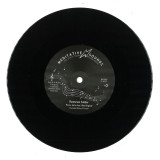
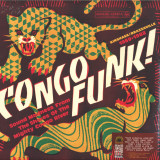
For decades, any sound system worth their salt headed to the dub cutters to get a piece of the “Late Night Blues” riddim. Acetate after acetate of the riddim rumbled through speakers from Brixton to the Bronx, making it a certified sound system classic. Now, Pressure Sounds comes with four exclusive cuts of the Late Night Blues rhythm. The first 2 cuts combine Diggory Kenrick’s always-in-demand flute with the legendary Matic Horns on Side A. The flipside takes the riddim into deep, dubbed-out territory with two dangerous cuts, one laden with dreamy chimes, the other snatches of vocal.
A welcome addition to the Late Night cult!
Cerca:dub one
REPRESS!!
4 new dub plates from the Lee Perry Upsetter cannon.
All are previously and all exclusive to Pressure Sounds!
Side one is taken up with two mouth watering cuts of 'Keep on moving' both cuts are bass heavy, echo drenched sound system friendly mixes.
The second cut was mixed at King Tubby's studio and features all the dynamics associated with his style... Sparse sounds over clattering drums.
With the passing of time, Tubby's mixes are actually better than ever.
The two cuts on the flip are further explorations of 'Mr Music' and 'Police and Thieves'. Stern stuff that takes it to the edge.
More genius from Mr. Perry!!!
We will have a limited amount of the 200 only silk screen printed sleeves!
Released in 1960, Giant Steps was a watershed album for John Coltrane, solidifying the saxophone legend's reputation as one of the most influential and innovative musicians in jazz history, as well as delivering jazz to an increasingly mainstream audience, while garnering significant critical acclaim.
Although this was John Coltrane's debut for Atlantic, he was concurrently performing and recording with Miles Davis. Within the space of less than three weeks, Coltrane would complete his work with Davis and company on another genre-defining disc, Kind of Blue, before commencing his efforts on this one.
Coltrane (tenor sax) is flanked here by essentially two different trios. Recording commenced in early May of 1959 with a pair of sessions that featured Tommy Flanagan (piano) and Art Taylor (drums), as well as Paul Chambers — who was the only bandmember other than Coltrane to have performed on every date. When recording resumed in December of that year, Wynton Kelly (piano) and Jimmy Cobb (drums) were instated — replicating the alternate non-Bill Evans lineup featured on "Freddie the Freeloader" on Kind of Blue, sans Miles Davis of course. At the heart of these recordings, however, is the laser-beam focus of Coltrane's tenor solos.
All seven pieces issued on the original Giant Steps are Coltrane compositions. He was, in essence, beginning to rewrite the jazz canon with material that would be centered on solos — enabling the solo to become infinitely more compelling. This would culminate in a frenetic performance style using melodic phrasing that noted jazz journalist Ira Gitler accurately dubbed "sheets of sound."
The Giant Steps chord progression consists of a distinctive set of chords that create key centers a major third apart. Jazz musicians ever since have used it as a practice piece, its difficult chord changes presenting a "kind of ultimate harmonic challenge", and serving as a gateway into modern jazz improvisation. Several pieces on this album went on to become jazz standards, most prominently "Naima" and "Giant Steps."
The Penguin Guide to Jazz selected this album as part of its suggested "Core Collection" calling it "Trane's first genuinely iconic record." In 2003, the album was ranked No. 102 on Rolling Stone magazine's list of The 500 Greatest Albums of All Time, 103 in a 2012 revised list, and 232 in a 2020 revised list.
Undeniable music perfection deserves definitive sound and top-notch packaging. This reissue was mastered directly from the original master tape by Ryan K. Smith at Sterling Sound and cut at 45 RPM. Pressed on 180-gram vinyl at Quality Record Pressings, and housed in tip-on old style gatefold double pocket jackets with film lamination by Stoughton Printing.
Overall, Giant Steps is not only a critical triumph but also a defining moment in John Coltrane's career. Its innovative compositions, masterful performances, and profound influence on jazz make it an essential entry in Coltrane's discography and a timeless masterpiece in the history of the genre.
Casino Classix is one of several aliases for legendary minimal man Baby Ford. Here it is also the name of a four-track EP that finds the long time UK underground operative working alongside fellow British techno luminary Mark Broom on a quartet of devastating cuts. 'Ringer' opens up with some dark and nimble baselines darting about beneath a dense layer of percussion and FX. 'Hoppa' is then a more precise and minimalist cut with wonky bass snaking down low beneath the icy hi-hats and jumbled toms. There is a warm dub depth to 'Hot Pot' to kick off the flip and 'Beach Club' shuts down with a restless mix of synth daubs and deft percussion over an ice cold groove.
Acclaimed Japan “minyo footwork” duo WaqWaq Kingdom - aka Shigeru Ishihara (DJ Scotch Egg / Seefeel) and Kiki Hitomi (ex-King Midas Sound) - return with feverishly joyous new album Hot Pot Totto, a bubbling hot pot of dance music that responds to ecological anxiety.
“Two words are conjoined: hot pot and ottotto,” vocalist Kiki Hitomi tells us. “Ottotto is the Japanese equivalent of “oops”, or said when someone nearly falls over but manages to get their balance back: “it was dangerous but now we are safe!” Combined with the heady brew of their musical styles (“like a psychedelic Nabe hot pot: melting traditional Japanese Minyo with Jamaican dancehall, footwork, dub, techno, tribal polyrhythms and Super Nintendo soundtracks”), producer Shige Ishihara’s time in East Africa working with local musicians, and the dayglo hallucinogen of the duo’s visual aesthetic, WaqWaq Kingdom’s thumping, thrilling, irresistible third release is a unique ride.
Thematically - despite its ostensibly celebratory impact - Hot Pot Totto addresses the world’s grave ecological state. “Now our earth is on the way to catastrophe, as global warming becomes a serious problem through humanity’s fault. We are on the edge,” Hitomi writes. “We need to get back on the right track.” The ottotto of the album title refers to this experience - the need to get back on track. However, this is not lamenting music: it is fiercely defiant, full of colour and rapture, maintaining an optimism that we can.
Opening single “Hakke Yoi” ties treated voice, a floor-shaking beat, and a dizzying, transforming colour palette to a heart-quickening BPM. The track is named after the traditional cry of a sumo wrestling match, shouted by the referee to maintain tempo, commonly translated as “put some spirit into it!” The lyrics refer to humanity’s sacrifice of our planet for our own material gains. Later, key track “Buri Buri” features Ugandan experimental dance producer Catu Diosis and centres around the lyric “Turn disaster to our advantage / good fortune and happiness will come to those who smile,” offering not regret but encouragement and empowerment with its neon alien sonics and relentless vibrancy.
Kiki Hitomi was formerly a member of Ninja Tune / Hyperdub’s King Midas Sound (along with The Bug and Roger Robinson), and co-founded iconic Japanese dubstep-noise duo Dokkebi Q. She is also a celebrated illustrator and designer, having created artwork for countless record sleeves (including this one) and brands. Shigeru Ishihara - aka DJ Scotch Egg - has been orbiting the dance music galaxy for over a decade, releasing radiantly unpredictable solo records through Lightning Bolt’s Load Records, as a member of Warp Records’ legendary Seefeel, and performing with both projects across the world. He recently undertook a residency at the Nyege Nyege Villa in Uganda, working with Phantom Limb alumnus MC Yallah. More recently, Ishihara has been releasing music under the guise of Scotch Rolex, collaborating with the likes of Shackleton, Swordman Kitala, Lord Spikeheart and more.
Hot Pot Totto is WaqWaq Kingdom’s third release for Phantom Limb, following the rapturously received album Essaka Hoisa in 2019 and follow-up EP Dokkoisho in 2020. The band recently performed at the label’s sold out 5th anniversary event in London, setting an ecstatic venue alight with energy.
f B1 Buri Buri feat. Catu Diosis
- A1: Theo Beckford – Easy Snapping
- A2: The Skatalites – Guns Of Navarone
- A3: Delroy Wilson – Dancing Mood
- A4: Michigan And Smiley – Nice Up The Dance
- B1: Heptones – Baby
- B2: The Abyssinians – Declaration Of Rights
- B3: Alton Ellis – I'm Still In Love With You
- B4: Tommy Mccook – Tunnel One
- C1: Sugar Minott – Jah Jah Children
- C2: The Skatalites – Man In The Street
- C3: Dub Specialist – Banana Walk
- C4: Dennis Alcapone – Run Run
- D1: Larry Marshall – Nanny Goat
- D2: Brentford Allstars – Throw Me Corn
- D3: Lone Ranger – Love Bump
- D4: Jackie Mittoo – Freak Out
Soul Jazz Records’ feature-length documentary/CD/Book ‘Studio One Story’ is being re-released on 1 August 2011, and is also available for the first time as a stand alone DVD. The DVD is being issued as a prelude to the forthcoming deluxe-hardback book ‘Original Cover Art of Studio One Records’ released this autumn by Soul Jazz Records as well as a new Studio One album compilation on Soul Jazz to coincide with the new book.
Studio One Story is a documentary this is both a staggering slice of musical history and a definitive guide to Studio One, Jamaica’s greatest ever record company, and its legendary founder, Clement ‘Coxsone’ Dodd. ‘Studio One Story’ was filmed in 2002, two years before the death of the legendary Clement ‘Sir Coxsone’ Dodd, a man famously reticent of being interviewed - until the making of this film. Described by Chris Blackwell as the Motown of Jamaica, or ‘The University of Reggae’, Studio One is where the careers of literally hundreds of reggae artists began: Bob Marley and the Wailers, Alton Ellis, The Heptones, Ken Boothe, The Skatalites, Burning Spear and Sugar Minott, to name but a few! Studio One is the ‘foundation’ label of Jamaican Reggae and Clement ‘Sir Coxsone’ Dodd is seen by many as its father.
One and a half years in the making, Studio One Story is a truly unique documentary in which the late Clement Dodd gave unprecedented personal access to tell the previously untold story of how he and the many artists and musicians at Studio One literally shaped the rise of Reggae music from the 1950s onwards through to the late 1970s. This is the true story of reggae music and its Jamaican roots told from the inside: From the rise of Kington’s sound systems in the 1940s and 1950s, through to the evolution of a Jamaican music industry (and Studio One’s dominance) in the 1960s and the worldwide success of reggae in the 1970s.
The 4 hour documentary (including over an hour of extras) was filmed on location in Kingston, Jamaica and features interviews with Horace Andy, Alton Ellis, Ken Boothe, Sugar Minott, Denis Alcapone, The Ethiopians, Sylvan Morris, Johnny Moore, Lone Ranger, King Stitt and many others. The DVD also includes rare footage of The Skatalites, Jackie Mittoo, Count Ossie, Marcia Griffiths and others. As well as the stand-alone DVD, Soul Jazz Records are reissuing the original (DVD +CD+Book) original box set.
IF YOU ARE ORDERING THIS PLEASE CHECK IF YOU NEED NTSC (AMERICA, JAPAN, ETC) OR PAL (EUROPE, AUSTRALIA, ETC).
THE DVD HAS FRENCH AND ENGLISH SUBTITLES.
NB.MP3 Release is for the audio CD only.
REVIEWS ‘Studio One was Jamaica’s Motown. This documentary brings it brilliantly to life.’ The Telegraph ‘The history of Clement ‘Coxsone’ Dodd’s legendary Jamaica studio is fantastically told through interviews, copious amounts of music and historical footage and more.’ Uncut ‘Studio One Story is no mere historical document; it is a map that will lead you directly to a massive seam, endlessly mineable, of musical gold’ The Observer ‘A fascinating documentary’ The Telegraph ‘Compulsive viewing for anyone with an interest in Reggae’ The Wire
- A1: Augustus Pablo - Rockers Rock
- A2: K.c. White - No No No
- A3: Tenor Saw - Ring The Alarm
- A4: Johnny Osbourne - Bewitched
- B1: Pinchers - Agony
- B2: The Abyssinians - Mandela
- B3: Sister Nancy - One, Two
- C1: King Tubby Meets Tommy Mccook And The Aggrovators - King Tubby Dub
- C2: Chaka Demus & Pliers - Murder She Wrote
- C3: Johnny Osbourne - Ready Or Not
- C4: Jackie Mittoo - Earthquake
- D1: Sandra Reid - Don't Tell Me Tell Her
- D2: The Skatalites Meet King Tubby - Herb Man Dub
- D3: Kim Harriott - Woman Of The Ghetto
Soul Jazz Records’ 200% Dynamite! set the benchmark for reggae meets funk compilations that has never been bettered. Out of print for over 15 years this new 2023 edition with new tracks and is being released in a one-off limited-edition heavyweight special-edition coloured vinyl pressing + download code exclusively for Record Store Day 2023.
Jam-packed with reggae tunes that crossed-over to become dancefloor hits such as Tenor Saw’s sound boy anthem ‘Ring the Alarm,’ K.C. White’s classic cut of the seminal ‘No, No, No’ and Augustus Pablo’s ‘Rockers Rock’, 200% Dynamite explores the links between reggae, jazz, funk and soul.
Carrying on perfectly from 100% Dynamite, this second compilation continues to trace the history of Jamaican reggae and the influence of American styles such as funk and jazz had on this music.
Featured here are serious funk and rocksteady tunes from the likes of The Skatalites and Johnny Osbourne through to Jamaican jazz from masters such as Tommy McCook and Byron Lee, as well as some serious dub from the likes of Augustus Pablo, King Tubby and Jackie Mittoo.
New bonus tracks on this new 2023 edition include seminal dancehall party cuts Sister Nancy’s ‘One Two’ and Chaka Demus and Pliers’ ‘Murder She Wrote’, alongside classic soul to reggae covers including cuts of Marlena Shaw’s ‘Women of the Ghetto’ and Odyssey’s ‘Don’t Tell Me Tell Her’.
‘Once again, Soul Jazz goes digging through the reggae vaults and produces another sterling compilation. If you’re looking for a primer on the music of the island, you could do worse than buying every one of the records in this superb compilation series.’ All Music
‘In Soul Jazz’s outstanding Dynamite! series 200% is the head-turner. The label has its finger on the pulse of the now just as surely as it does on that of the past.’ Pitchfork
‘Soul Jazz Records ‘Dynamite’ series has quickly become a
rewarding guide to reggae’s most infectious back pages. Every home
needs some Dynamite.’ Irish Times
‘Soul Jazz Records’ long-running series
of highly-regarded reggae albums.’
Rough Trade
Repress.
Studio One's music in the 1970's took the label to new heights. The new style of Disco Mix brought many areas of Reggae together Roots, Lovers, Disco and Dub all came together in extended form, re-versioning classic hits, experimenting with new studio technology, over-dubbing, syn-drums and more producing what many fans describe as the most creative and innovative phase in the history of the legendary Studio One Records.
This Studio One Disco Mix album includes many sought after classic tunes only ever released in very small quantities (on Studio One's very first 12" records as well as it's infamous Music Lab 10"s out of New York) and consequently many of these track s have been unavailable since their day of release. Studio One Disco Mix features many of the classic Studio One artists such as Alton Ellis, Sugar Minott, Jackie Mittoo and Willie Williams (with his classic re-versioning of his own "Armigideon Time") alongside less well artists such as Doreen Schaeffer, Judah Eskender Tafari and George Dudley and many more.
1973 Killer with 2 Dubs & 2 Clavinet Instrumentals
Hi-NRG synth pioneer Patrick Cowley moved away from his usual robotic steeliness on 1982’s “Primitive World,” drawing instead on the groove rock of early 1970s gay discos. It’s a percussion track influenced by Baba- tunde Olatunji’s 1959 hit “Jin-Go-Lo-Ba,” made more famous by Santana’s 1969 cover. Cowley updated the sound for the 1980s with electronics and drum machines but kept the playful attitude of the original. Two choirs of voices chant back and forth to each other, giving Cowley a chance to include many of his friends from the San Francisco dance music community.
This has been DJ Hifi Sean’s year, with a best-selling album with David McAlmont , count- less live gigs and high-profile remixes to his name. His interpretation of Cowley’s “Primitive World” can be counted among his best, bringing an intense TB-303 acid house vibe that perfectly complements Cowley’s weird electronic blips and bleeps. The effect is a disorienting mix of psychedelic 70’s groove, 80s synth pop, and 90s tacky house vibes. “Primitive World,” is one of the brilliant standouts on Cowley’s final record, Mind Warp, the so-called “death album” written as his health was rapidly sinking. Hifi Sean’s new remixes pay tribute to Cowley’s genius while fusing the track even more strongly to dance music’s electronic future.
Happy we can introduce a new addition to our catalog THINNER005, an EP called
“ & . . “
as the title tells, it’s a joint release by our friends, KOOLMFL, Sonic Weapon &. . Lemmi Ash
“& . . “ EP includes three club tracks, which been power played by Powder over these years in many different moment.
Each track can add a distinctive touch to the night, as like completing your cocktail with lemon and/or lime.
_
KOOLMFL, fka K-LINE and Sonic Weapon is our regular suspects from Nagoya, motor city of JAPAN.
Some may know them putting out a shared EP “G” before on Thinner Groove and now they back to it again.
atonbow by KOOLMFL features words of a space traveller in state of peaceful sorrow, seemingly communicating their honest thought to the loved one who might not be hearing, Can you hear me ? … Hi astronaut, at least we can :)
KOOL’s clicky drum work pass the words to the floor, and the party breaks down with sudden synth and take all of us home.
,
On track HOMIE, Sonic Weapon shows his signature fast boogie style again in a new approach with much dubbed out, ear pleasing, filtering, minimalistic, and stylistic way. The texture keeps changing but keeping the groove.
Feels like the beauty of watching a bridge getting slowly collapsing after somehow you made it to the other side.
& . .
We also want to introduce Lemmi Ash, a Swedish duo formed by Samo DJ and Martinou, newly joining the TG spectrum,
The duo previously had a release from ESP institute and each of them countless solo appearance on various releases . . .
Nonetheless, they a good long time friend and perfect fit for this release.
The duo features comfy calming ear tickling electronic sound with some kiddish, animalistic, or primitive humor in their own balance. This track Presence grooves with a leaning forward racing gamey phrase drifting around the mini synth explosion, feels like a joyful cruise during regardless the intense highway.
For more than 30 years, singer-songwriter and guitar hero Mary Timony has cut a distinctive path through the world of independent music, most recently as vocalist and guitarist of acclaimed garage-pop power trio Ex Hex (Merge) but also as a member of seminal postpunk band Autoclave (Dischord), celebrated leader of the deeply influential Helium (Matador), multifaceted solo artist (Matador, Lookout!, Kill Rock Stars), and a co-founder of supergroup Wild Flag (Merge). Described by Sleater-Kinney's Carrie Brownstein as "Mary Shelley with a guitar" and dubbed "a trailblazer and an innovator" by Lindsey Jordan a.k.a. Snail Mail, Timony has distinguished herself as one of her generation's most influential. Although she has remained a cult hero and critical favorite since the early '90s, Timony's many triumphs have long been counterbalanced by crippling doubt and self-nullification. Her fifth solo album, Untame the Tiger, approaches these emotions head on. Her first solo release in 15 years is a startling document of an artist fully coming into her own power during the fourth decade of her career. It is the product of lessons learned during life-altering struggle. The mystical, acoustic-driven Untame the Tiger emerged after the dissolution of a long-term relationship and was bookended by the deaths of Timony's father and mother. The album was recorded during a two-year period during which she was the primary caregiver for her ailing parents. The tectonic psychic shift Mary experienced due to this loss informs many of her lyrics. Standout track "No Thirds" "is a song about losing everything and having to keep on going," says Timony. "I wanted the verses to sound like a wide-open barren space, like driving across a desert, because that is what the song is about - losing people and the feeling that your future is a giant, wide-open blank space." The stripped-back acoustic instrumentation of "The Guest" conjures Sweetheart-era Byrds. Timony describes it as a song sung directly to loneliness: "I was imagining loneliness as a house guest who keeps knocking on your door. I thought it would be funny to say loneliness is the only one who always comes back." Untame the Tiger does not eschew Timony's guitar hero reputation; in fact, "Summer" relishes in it, a straight-up banger that you'd be half tempted to call "no frills" until its initial garage rock stomp breaks into the unexpected bliss of a twin guitar solo conclusion. "I wanted the recording to have the energy of the Kinks, early Dio and Elf, or Rory Gallagher," she explains. "I was also listening to a lot of Gerry Rafferty's first solo album and was inspired to have two simultaneous guitar solos." Untame the Tiger picks up the thread woven through Timony's freak-folk-anticipating solo albums of the early '00s. Basic tracks were recorded at Studio 606 in Los Angeles, with Timony backed by Dave Mattacks, drummer of legendary British folk-rock band Fairport Convention. "Mattacks is a hero of mine and one of my favorite musicians of all time. He is a true legend. I never in a million years thought he'd agree to play on my record," says Timony. "Before the session, I had a panic attack and had to go sit alone in the parking lot_ Once we started playing together, it felt so great that the fear subsided and turned into excitement. His playing felt instantly familiar, which makes sense because it's the foundation of many of my favorite records." Untame the Tiger was produced by Mary Timony, Joe Wong, and Dennis Kane. The album was recorded over the course of two years at Studio 606, Magpie Cage, 38North, and in Mary's basement Additional engineering by J. Robbins (Jawbox, Burning Airlines). Musicians include Chad Molter (Faraquet, Medications), David Christian (Karen O, Hospitality), and Brian Betancourt (Cass McCombs, Devendra Banhart, Hospitality). The album was mixed by Dave Fridmann (MGMT, The Flaming Lips, Mercury Rev), Dennis Kane, and John Agnello (Dinosaur Jr., Kurt Vile, Waxahatchee).
Malka Tuti is proud to present the solo debut EP by mister Andrei Rusu,
one half of Khidja.
After a series of stellar remixes in the past year to Cosmo Vitelli (on Im a Cliché), Dadalus & Bikarus, Santaka & Nic Arizona, Rusu is finally ready to present his own original solo materials to the world.
Ahead of a full LP planned on MT for later this year, Rusu is presenting us with 2 fresh new tracks. The A-side is a 120bpm dirty and distorted super- trippy banger for the biggest floors and the darkest rooms.
On the B-side Rusu collaborates with an artist known to the followers of the label - Decha, who contributes her signature expressive vocals on this half time industrial dub track. This time however, the vocals run through the hands of Rusu who soaks them with distortion and even more punk attitude, almost echoing the energies of the late Genesis P-Orridge.
The release includes 2 remixes by a couple of master remixers who also happen to be part of our extended family.
Remixing the title track, and off the success of his 2 incredible albums
released on 2023 (Music From Memory & Offen), Philipp Otterbach supplies a remix for the books, channeling the original track’s intensity through oceans of reverb, whimsical samples and addictive trippy rhythms.
For the Hedesch Remix we’ve asked one of our favourite remixers out there aka Black Merlin to contribute his cut and boy he didn’t disappoint (does he ever?)
Black Merlin supplied us with a long and addictive psychedelic synthetic and very dubby journey for the b-side.
Having been part of the family for quite some time now, Lauren Bush aka re:ni joins the Timedance roster with an incredibly potent quartet of Techno infused bass-bin weaponry.
« BeautySick » sees re:ni plunging into a world of intoxicating serpentine grooves. Spectral vocal slabs chime like echoes of a distant hallucinatory trance, while industrial drumworks find a mesmerizing counterpoint in eerie dubwise atmospheres.
These four compositions not only showcase re:ni's sonic evolution but also explore the transient moments where darkness converges with light. They stand as a testament to the sonic prowess of one or favorite dancefloor sorceress.
Picture Hakime Sorayama’s ‘Sexy Robot’ in front of an unreasonably large stack of speakers at a dimly lit sound-system dance; this is the soundtrack.
Press + Tour highlights :
DJ Mag, Resident Advisor, XLR8R, BBC6 Music (Sweatbox Mix for Sherelle), First Floor, The Quietus, Phonographe Corp + more TBA
Upcoming tour dates for Q1-Q2:UK, Switzerland, Netherlands, Germany, Sweden, Belgium, Slovenia, Ireland, Australia, Croatia, USA
Musique Infinie is the collaborative project of Manuel Oberholzer a.k.a. Feldermelder and Noémi Büchi.Their album »Earth«, released through the Hallow Ground label, is based on a spontaneously composed live score for Alexander Dovzhenko’s groundbreaking 1930 silent movie »Zemlya« (»Earth«) created for the 24th edition of the VIDEOEX festival for experimental film.
Frequently cited as a masterpiece of early 20th century filmmaking, the movie deals with the collectivisation of Ukraine’s agriculture. The Swiss duo complemented it with atmospherically rich electronic soundscapes that are both deeply immersive and highly evocative. As a stand-alone music release, the two-piece »Earth« album captures the essence of Büchi and Oberholzer’s collaboration that is marked by mutual trust and musical versatility that puts them in a state of »togetherness trance,« as they call it.
Oberholzer has been highly productive as a composer, musician, sound designer, and installation artist in recent years, releasing a slew of solo albums as well as a variety of collaboration records with artists such as Sara Oswald and Julian Sartorius. Büchi has recently debuted as a solo composer and sound artist working with electroacoustic techniques to create a »symphonic maximalism for the end of the world,« as she dubs it.
Both are prolific and versatile artists with a penchant for working conceptually, however their collaboration as Musique Infinie is an improvisational and thus by design an intuitive one.
Their sessions start with an exchange on emotions and thoughts rather than theoretical questions or aesthetic debates. When they get to work—often for several hours—they rarely talk.
They approached »Earth« the same way, improvising freely together and using only a few select samples from the film’s original score in the process. Their open-ended approach is marked by an aesthetic ambivalence that perfectly corresponds with the movie’s own inherent contradictions.
Dovzhenko approached his socio-political subject with poetic imagery and philosophical rigour, juxtaposing notions of traditionality with the depiction of modernity.
Büchi and Oberholzer accordingly work with motives that at o ce seem anthemic and elegiac, working with sounds and musical motives that evoke a sense of familiarity in one moment before transforming into something futuristic and uncanny in the next. Their score for »Zemlya« is not to be understood as a mere interpretation of the movie, but rather a re-narration or even re-negotiation of its aesthetic and emotional qualities under their very own terms. »Earth« is an album that concisely depicts what is at the core of the duo’s musical partnership
ASEC reveals the 'Group Dynamics' record, two hypnotic techno tracks and remixes from Inland and Kaiser.
"'Group Dynamics' is inspired by this kind of captivating energy you feel in a crowd--think sports fans, a packed dance floor, a mass of humans--people aren't themselves in crowds. I was interested in capturing that invisible social group dynamic that makes many people move as one." - ASEC
On the A-side of ASEC's 'Group Dynamics' EP, dropping via his eponymous imprint this February and following up a series of releases supported by the likes of Rodhad and Tommy Four Seven, as well as output on BPitch and MORD. The title track enters the fray with a mystifying energy, percussion clicking and shifting while cavernous synth hits echo across its evolving soundscape. 'Scala Naturae' then continues with rolling drums shot through with bleeps and squelch, the steady beat of weighty kicks footing its looming psychedelic sequences.
Side B invites Counterchange Recordings founder Inland and KSR boss Kaiser to remix the original tracks. First up, Ostgut Ton, Figure, and Nonplus+'s Inland remixes 'Group Dynamics' by adding scratchy textures and the thrum of long-forgotten machines before Kaiser reimagines 'Scala Naturae'. The Key Vinyl and Soma artist turns the track into a prime-time, tripped-out dancefloor cut.
Lastly, Inland provides a dub techno version of his contribution as a digital bonus, with ASEC dropping the excellent 'Enough Is Enough' on online platforms. In this track, typewriter-like hats skitter over imposing drums while warped melodics twist and turn on top, closing out yet another mind-melting techno offering from the Berlin producer.
Egil Kalman has levelled up on this one; we were stunned by his last solo opus, and on ‘Forest of Tines’, the bassist/synthesist has traded the EMS Synthi 100 for the Buchla Series 200, recording at Stockholm’s illustrious Elektronmusikstudion (EMS). Here, he builds on themes he explored on his debut with a generous 20 track double album that marks firmer lines between Scandinavian folk music and contemporary electro- acoustic minimalism.
Using woody, synthesised tones that gradually open into sawing wails, Kalman suggests harmonies that lie between the 17th century polska and earlier, pre-Renaissance sounds, mimicking the tonal and textural fluctuations of strings with advanced tuning and sequencing techniques. There are plenty of artists delving into the past to unravel their identity, but Kalman’s approach is refreshingly unadulterated. He recorded the entire set on the fly, using just spring reverb to add extra texture, without overdubs or modern DAW-style layering, the Buchla 200 played almost like an acoustic instrument.
There’s a glimmer of vintage acid on the lithe ‘Dub One’, a complex, rhythmic experiment that lashes its pulses together with willowy portamento slides. And on ‘Klystron’, he absorbs warehouse techno’s architectural oomph, splaying psychedelic, reverberating ascending sequences over jagged kicks; listen carefully, and there’s something else going on in the background too, as Kalman meets his stabs with flute-like echoes. It’s a peculiar cocktail of ideas and provocations: ‘Mbira’ finds the composer shaping his synth into dusty, fluttering hits that resemble the titular Zimbabwean finger harp, and on ‘Drums’, he pipes pre-recorded percussion through the system, triggering its oscillators and helping shape its rhythmic patterns. He’s most comfortable when he’s mines a hazier past, ‘Autumn Leaves’ is a mystickal, just intoned droner that harmonises with Mattias Petersson’s awesome ‘Triangular Progressions’, and ‘Subtines’ sounds as if Kalman has deployed his instrument in a subterranean crevice, resonating his rumbles around synthetic water droplets.
If it’s uncanny court music you’re particularly interested in, there’s plenty of that too. ‘Polska’ is another sublimely hauntological Swedish folk interpolation, while closing track ‘Ocquet’ appears to blur Kalman’s ideas more thoroughly, melting folk phrasing and peaceful, uneasy drones to draw us to a neat conclusion. Soft-hearted but animated, it’s modern electronic music that isn’t afraid of employing vintage techniques to suggest new directions.