Repress!
Echospace Detroit is the label launched by Rod Modell (Deepchord) and Soultek's Steven Hitchell, two leading lights of the minimal dub techno scene. And as with anything Deepchord, the entire release has an air of mystery to it. Previously, as a near-mythical vinyl pressing with minimal packaging and restricted pressings, everything about Vantage Isle was geared toward the underground, or 'those who know.' However, there's nothing but love of craft driving these grooves, and now a lot more people will finally be able to hear this absolutely brilliant collection of spacial dub wonder on CD. Vantage Isle Sessions consists of a whopping 13 takes of the title track, reworked by Modell and Hitchell in various guises (cv313, Deepchord, Echospace, Spacecho), as well as a guest spot (and first ever remix) from Gerard Hanson (Convextion). Across their 13 versions, Modell and Hitchell manage to take the Deepchord template (analog synths, deep bass, gently throbbing beats, bursts of static and noise, and deep, deep chords) into a surprising variety of directions, akin to looking at the same giant glacier from a helicopter from every angle possible: some are beatless and undulating, some are pulsing and dynamic, some are looking up from under the ice and some are towering overhead. The aforementioned Convextion version is revelatory. It's built on cascading and echoing pieces of the original that are layered like shifting sands, for a distinctly dark and shimmering journey to the bottom of the frozen ocean and back. It's remarkable enough to get all these takes on one basic template to sound somewhat different, given that the source material is really just a skeletal array of sound sheets. Vantage Isle Sessions is for anyone looking for the logical successors to the Basic Channel throne, or just looking for something mellow for those steamy late summer nights. A stone-cold classic of the genre. Don't miss it." -Todd Hutlock, Stylus Magazine/Beatz by the Pound
"Steeped in mystery, Detroit musicians Rod Modell and Mike Schommer (aka Deepchord) are legendary for their hard to find twelve-inch dub techno releases. Their sound is heavily influenced by Berlin dub techno producers like Maurizio, Basic Channel, Chain Reaction, Rhythm & Sound, Blue Train and Pole. While the German sound often has a futuristic metallic edge, Deepchord are known more for the rust and grease, which is part and parcel of those metal parts. Static, analog sounds, deep bass thumps and, of course, deep chords blend in a timeless minimal manner. However, the real gems on this disc are the drifty ambient cuts devoid of beats. This is an excellent album that is on par with the classics from a decade ago!" -Exclaim
"In terms of ambient dub, if Basic Channel is the Father (the source, remote and inaccessible and very powerful) and Pole is the Son (dazzling but ultimately stranded halfway between man and the divine), than Rod Modell’s Deepchord and his Echospace label he run with Steve Hitchell is definitely the Holy Spirit." -Popmatters
"Deepchord’s dub-techno stealthily peels away melody, leaving a bare chassis of beats to ghost-ride down Woodward Avenue. Vantage Isle Sessions, which collects remixes of a 2002 Detroit Electronic Music Festival performance, finds the duo swerving through empty, neon-smeared streets, and recalls Berlin’s Chain Reaction label, minus the anemic minimalism." -XLR8R
"The album scales a magnificent peak in “Spacecho Dub II - Extended Mix” when smeary chords ricochet over a massively deep, bass-heavy pulse, and Hanson's light-speed missile of vaporous propulsion (“Convextion Remix”) is beautiful too.
Long may they run." -Textura
‘Vantage Isle’ is a tremendous achievement that will most likely be held up as a high water mark of the genre for years to come." -Resident Advisor
"My favorite mix is by Convextion (his first remix for another artist). Reedy, distant synth tones sound like a science fiction soundtrack overheard rooms away. An undercurrent of echoes, many difficult to describe, drift in a sonic syrup." -Gridface
"Modell’s music always seems to be in this suspended animation, adrift and afloat in a majestic emptiness." -Dusted Mag
CREDITS:
Written & Produced by Deepchord. Redesigned and Reshaped by Convextion (Gerard Hanson) cv313 (Stephen Hitchell) echospace / spacecho (Rod Modell + Stephen Hitchell)
Additional Mastering, Mixing and Engineering by Ron Murphy @ NSC Mastering, Detroit, USA. Side E/F Remastering and Lacquer cutting by Dietrich @ Complete, NYC, USA. (2018)
Buscar:dusted
- 01: Find My Way
- 02: The Untold Story Of The Love Of The Brave
- 03: Hey Girl
- 04: Champ De L'amore
- 05: Dusted Off (Feat. Tony Burkill)
- 06: Infidel
- 07: Gustav
- 08: Heron (Feat. Tony Burkill)
Love Of The Brave are a psyche folk group, based in Leeds, West Yorkshire, at the time this album was recorded, back in 2010. The founder of the group Neil Innes still runs the recording studio, ATA Records, an extremely well maintained all analogue set up, used primarily to record jazz, funk and library music. The short-lived Love Of The Brave outfit was the first project recorded at the famed studio. It brought together some of the most versatile artists in the north, many of who still work on projects with ATA today, both these factors give this release a landmark aspect for the label. The "Love Of The Brave" consists of eight tracks and draws on inspiration from artists such as Pentangle, Rotary Connection, Richie Havens, the Kinks, David Bowie and Joni Mitchell. Vocalist Fuzzy Jones features on all tracks, as does Neil, in his case playing a variety of instruments. They are joined throughout the album by a variety of musicians, including jazz drummer Joost Hendrickx, Work Money...
- A1: Roots Bloody Roots
- A2: Attitude
- A3: Cut-Throat
- A4: Ratamahatta
- A5: Breed Apart
- A6: Straighthate
- B1: Spit
- B2: Lookaway
- B3: Dusted
- B4: Born Stubborn
- B5: Jasco
- B6: Itsári
- B7: Ambush
- C1: Endangered Species
- C2: Dictatorshit
- C3: Ratamahatta (2 Meter Sessions)
- C4: Roots Bloody Roots (2 Meter Sessions)
- C5: Attitude (2 Meter Sessions)
- C6: Kaiowas (Take 1, Previously Unreleased)
- D1: Procreation (Of The Wicked)
- D2: Roots Bloody Roots (Demo)
- D3: Attitude (Instrumental Rough Mix)
- D4: Cutthroat (Instrumental Rough Mix)
- D5: Dictatorshit (Instrumental Rough Mix)
- D8: Dusted (Demo)
- D6: Untitled (Demo)
- D7: R D.p. (Demo)
Studio, the influential project of Swedish musicians Dan Lissvik and Rasmus Hägg, presents their legendary 2006 debut in remastered form, in partnership with Ghostly International. Available in limited edition "Fog Machine Vinyl", CD, and cassette. "One of the finest pieces of electronic music you'll hear this year.” - The Guardian (2006). Included in year-end best-of write-ups by Pitchfork, FACT Magazine, and Rough Trade. Physical copies have long been out of print for West Coast, and the album has also been notably absent from most streaming services until now.
“Somehow, I knew I wanted to make a conceptual record that, although only imaginary at that point, could represent or define how our city sounded,” says Lissvik of Gothenburg's influence on West Coast. Some called Studio, the project of Swedish musicians Dan Lissvik and Rasmus Hägg, “the missing link between The Cure and Lindstrøm,” Pitchfork heard Durutti Column and Can, as the duo’s story became swept up in a loosely developing scene — adjacent first to the label Service (Jens Lekman, The Whitest Boy Alive) and later Sincerely Yours (The Tough Alliance, jj) — and a precursor to the 2010s boom at the axis of electronic and psychedelic music guided by indie greats like Caribou, Four Tet, and Darkside.
West Coast, their seminal 2006 debut, captured a faraway romanticism of Balearic brushed up against Krautrock, disco, dub, and afrobeat, with pop lyricism lifted from new wave, all made modern by two art school grads in Gothenburg. First pressed in a small vinyl-only run via their own Information label, the album has been notably absent from most streaming services, and the internet’s record of its initial impact is all but fossilized from a bygone blog era, while its sound is simply untraceable to any one moment in music.
Outside of three 7” releases, they’d keep the music to themselves for several more years. In 2005, Hägg remembers, “We got our degrees and were kicked out of our studio spaces so all these recordings were just piled up. A year later we dusted them off and started to deconstruct and assemble them in a more drawn-out fashion.” In the same breadth, they cite DJ Screw, J Dilla, and Joy Division, along with early ‘80s European live DJ sets from the likes of Beppe Loda, Dj Mozart, and Baldelli as reference points.
“The anything-goes mentality was very encouraging and was a big cornerstone to the Studio sound,” says Hägg. “But there’s so much more to the picture, we were not that young then and had lots of musical baggage in our suitcases, the new thing was that we finally let it all come through, not bound by any borders that was often the case with music identity in Sweden during the 90s.” In the afterglow of the record’s 2007 reception, Studio receded from view, clouded behind a mountain of remix requests (including one for Kylie Minogue that saw release) and label bureaucracy. “It’s easy to wish we would have done some proper recordings of our own instead,” Hägg reflects. But both artists, now well into respective careers beyond Studio, have come to peace with West Coast as their most enduring effort together. Lissvik adds, “It serves as a good reminder for me to keep to that decision and promise and to continue exploring and growing
Mac DeMarco, formerly Makeout Videotape, is the anti-thesis to your stereotypical singer-songwriter. Disregarding the seriously somber moments, he replaces them with whimsical and youthful spontaneity, whilst retaining the endearing and subtle commentaries that exude his familiarity. Promptly after leaving his Edmonton garage for Vancouver he embarked on a North American tour accompanying fellow Canadians Japandroids on a grand voyage of enlightenment and alcoholic debauchery. DeMarco's a weird cat cultivating an affinity for occult imagery, nudity and social satire. But his most impressive trait is his undeniable and instinctual ability to compose magical pop jangles, of which he'll likely refer to as "jizz jazz". His dusted jams have garnished him accolades that are as ever-increasing as his song writing abilities; his sound rendering comparisons, but in a nomadic fashion alluding no distinct origin. DeMarco's debut solo EP entitled "Rock And Roll Night Club" will ramble into the great unknown guided by Captured Tracks, DeMarco's inner Elvis a tow.
Lake Mary is the moniker of Chaz Prymek, a guitarist, composer, free improvisor and painter currently based in the US. Through spacious personal hymns exploring the wilderness of deep emotional narrative, Prymek’s long-form compositions and improvisations are boundless meditations on the landscapes, river ways, and wildlife, both external and personal. Perhaps most widely known as a founding member of the group Fuubutsushi, Prymek's work as Lake Mary leans sometimes more slow, open and pastoral, sometimes more visceral with prepared guitar and synthesizers, but can always be characterized by patience. A board member of Dismal Niche Arts, and founder of Yardwork Presents, Prymek's focus on curation and community for exploratory and expansive music and arts spills over into all his sonic works.
Daniel Wyche is a Chicago-based guitarist, composer, and improviser. Working with a wide range of physical preparations, extended techniques, and pedal instruments, his solo recordings and live performances are characterized by long-form structured improvisations and multichannel guitar. He has been a curator with the Elastic Arts Foundation in Chicago since 2013, where is work has been described as “crucial” by Dusted and “vital” by the Chicago Reader. In March of 2020, Daniel co-founded The Quarantine Concerts in collaboration with Chicago’s Experimental Sound Studio. The series has been widely praised as a model for online/streaming live music. Along with his solo guitar work, Daniel is involved in several ongoing collaborations, most notably the trio of Wyche, Mark Shippy (US Maple), and Ben Baker Billington, as well as new work with longtime collaborators like Patrick Shiroishi, Lake Mary, and many others.
Since first splashing on to the Southern California circuit in the mid-aughts, Geneva Jacuzzi (née Garvin) quickly cemented herself as the queen of the Los Angeles underground. Her immersive and unhinged multimedia performances are the stuff of legend, a psychotropic gallery of masks, costumes, confrontation, and massive art installations. Jacuzzi’s recordings are equally revered, catchy hooks and cryptic moods dusted in 4-track grit. The arrival of her third official full-length, and Dais Records debut, is cause for such celebration. Triple Fire vividly expands and crystallizes Jacuzzi’s signature fusion of midnight melody and mutant aerobics across a 12-track hit parade of wildcard synth-pop and sly post-apocalyptic camp. Her enthusiasm for the album is as bold as her body of work: “Halfway through, we started calling this the record of the prophecy, the record that’s going to save mankind.”
Opener “Laps of Luxury” sets the template – a strobe-lit dreamer’s delight of swaggering synth bass, Haçienda drum machinery, and sultry vocal spellcasting (“Tragic mysteries I’ve known for centuries / I burned all memories and turned to fantasy”). The collection burns through shades of sardonic strut (“Art Is Dangerous,” “Nu2U,” “Keep It Secret”), coldwave kiss off (“Speed Of Light,” co-produced by Andrew Clinco of Drab Majesty), retro-futurist body music (“Dry,” “Scene Ballerina,” “Bow Tie Eater”), and cheeky glitterball pop (“Take It Or Leave It,” “Heart Full Of Poison” co-produced by Roderick Edens and Andrew Briggs). She likens the eclectic spectrum of moods to the continuum of human emotions: “Funny, sexy, sad, scary, witty, hopeful, menacing. Eventually it deconstructs, turns into a party, and then ends sweet and soft.”
Taken as a whole, Triple Fire comes as close as any document yet to capturing Jacuzzi’s kaleidoscopic alchemy of pop sugar and chaos energy, flickering between icy and ironic, chic and surreal, hungry and heartsick. Hers is a muse as rare as it is regenerative, forever reborn at the precipice of the next chorus: “Someone said that Alcatraz had fallen into the sea / Almost sounded like an angel calling me in a dream / I felt an electric shock when I picked up the microphone.”
At once a spiritually-charged journey and a shit-kicking party record, American Cream Band comes to Quindi covering all the bases.
American Cream Band was formed by Twin-Cities musician Nathan Nelson around 10 years ago, taking the form of improvised live shows and albums Frankensteined from these sessions into exultant, fully-formed records you can sink your teeth into. The trick with improvised music is to start with intentions, however abstract they might be, and Nelson leads his rolling cast of collaborators into the creative fray with subtle guidance which drives the impulsive musical moment forward.
The band's previous records have manifested on labels like Moon Glyph and Medium Sound, and now Presents arrives in a freewheeling flash of snappy new wave, skronky sax, call and response sass and some krautrock-minded sonic cosmology. The album came together in December 2021, when Nelson took ten musicians to legendary studio Pachyderm in Cannon Falls, Minnesota. Living together, eating together, and with Nelson quietly setting up his low-key magick intentions around Jupiter's planetary frequency and the studio's abundance of elephant statues and carpets, they laid down some drum-heavy sessions that became the building blocks of the record.
'Taste What We Taste' is the perfect example of an exuberant groove pounded on skins as a vessel for a joyous get-down, with the singers and players free to freak out on top. Nelson remains at the centre of the melee, throwing half-sardonic, half-heartfelt calls out for connection. 'Banana' celebrates nonsense and holds down the most serious of beats - a disco-not-disco deadeye dripping in late night sleaze and lysergic potential. On 'Royal Tears', the jagged guitar chops call back to Gang Of Four, while the hot n' heavy sax from Cole Pulice baits James Chance and all the other angular New York un-jazz misfits.
Amongst his other implied intentions for the recordings, Nelson wanted to channel opposites, not least the distinct male-female energies in his vocal sparring with the girls on assistance duties. It wouldn't be right to call them backing singers as they shoot back at his punchy mantras, bringing a certain fierce femininity that tips its hat to The B-52's Cindy Wilson and Kate Pierson, not to mention iconic post-punk bands like Au Pairs, Delta 5 and Bush Tetras.
There's space for the dreamier kosmische which has crept into the American Cream oeuvre in the past, as 'Sirens' opens the album up in a swirling pond of rag tag percussion and molten synths. 'Words Would Handcuff Us' cools the whole riotous assembly down in unmoored perfection, a strung-out Bossa nova seance dusted with celestial drips from analogue spaceships.
Equally treading the line between light and dark, conscious and unconscious, the sacred and profane, Presents is a life-affirming, creep-under-the-skin listening experience - a joyously transient chapter in the evolution of American Cream Band.
- A1: Dreaming Of Mars
- A2: Deep Star Deception
- A3: Cryogenic Dream
- A4: Super Ultra Spaceman Theme
- A5: The Future 1995
- A6: Portal To A World Of Sand
- A7: Mysterious Forces From Beyond
- A8: Charting A Course To Elsewhere
- B1: My Zero G Love
- B2: Message From Planet Xs
- B3: Planet Of The Pterodactyls
- B4: Downtown Lost In The City Of Lizards
- B5: Electric Sheep
- B6: Theme From Constellation 7
- B7: Beyond The Known Universe
- B8: Secrets Of The Cosmos
The follow up album to 2019's Dusted Jazz Volume 3. Pressed on 180 gram, White & Orange Marbled Vinyl. Jenova 7 emerges once again as a beacon of auditory innovation with his latest opus, Lost Sci-Fi Movie Themes. Released under the banner of Cold Busted, this collection of 16 tracks serves as a time machine, whisking listeners away on a journey through dimensions both familiar and uncharted since his last foray with 2019's Dusted Jazz Vol. 3. Jenova 7 has meticulously crafted an album that resonates with the essence of ‘90s trip hop nostalgia while propelling us into the cosmos of futuristic soundscapes. The album's standout tracks—“The Future 1995,” “My Zero G Love,” and “Downtown Lost In The City Of Lizards”—are masterclasses in genre-blending and atmospheric storytelling. "The Future 1995" envelops one in a nebula of boom-bap beats, cosmic sound effects, and b-movie vibes, creating a sonic experience that feels like intercepting radio signals from a distant, funk-infused galaxy. Meanwhile, “My Zero G Love” floats the listener through the velvety darkness of space with its sexy lounge feel, portamento synth lines, and the undeniable funk that glimmers under starlight—evoking the sensation of grooving in weightlessness. Then, there's “Downtown Lost In The City Of Lizards,” a track that saunters through the urban jungle with sparkling keys, evocative guitar spurts, and strutting jazz bass, painting a picture as vivid and surreal as its title suggests. Jenova 7's skill lies in his ability to fuse moody, jazz-inflected samples with grooves that draw one into a distinctly atmospheric sound—a cinematic journey through time, space, and emotion. His tracks are experiences, wrapping the listener in a cocoon of vibrant soundscapes that are both introspective and expansive. Lost Sci-Fi Movie Themes is an invitation to explore the unknown, to lose oneself in the depths of imagination and emerge on the other side transformed. For DJs looking to transport their audience to another dimension and for music fans yearning for a taste of nostalgia wrapped in the allure of the future, Jenova 7's latest release is a must-discover treasure. Dive in and let the odyssey begin
Since first splashing on to the Southern California circuit in the mid-aughts, Geneva Jacuzzi (née Garvin) quickly cemented herself as the queen of the Los Angeles underground. Her immersive and unhinged multimedia performances are the stuff of legend, a psychotropic gallery of masks, costumes, confrontation, and massive art installations. Jacuzzi’s recordings are equally revered, catchy hooks and cryptic moods dusted in 4-track grit. The arrival of her third official full-length, and Dais Records debut, is cause for such celebration. Triple Fire vividly expands and crystallizes Jacuzzi’s signature fusion of midnight melody and mutant aerobics across a 12-track hit parade of wildcard synth-pop and sly post-apocalyptic camp. Her enthusiasm for the album is as bold as her body of work: “Halfway through, we started calling this the record of the prophecy, the record that’s going to save mankind.”
Opener “Laps of Luxury” sets the template – a strobe-lit dreamer’s delight of swaggering synth bass, Haçienda drum machinery, and sultry vocal spellcasting (“Tragic mysteries I’ve known for centuries / I burned all memories and turned to fantasy”). The collection burns through shades of sardonic strut (“Art Is Dangerous,” “Nu2U,” “Keep It Secret”), coldwave kiss off (“Speed Of Light,” co-produced by Andrew Clinco of Drab Majesty), retro-futurist body music (“Dry,” “Scene Ballerina,” “Bow Tie Eater”), and cheeky glitterball pop (“Take It Or Leave It,” “Heart Full Of Poison” co-produced by Roderick Edens and Andrew Briggs). She likens the eclectic spectrum of moods to the continuum of human emotions: “Funny, sexy, sad, scary, witty, hopeful, menacing. Eventually it deconstructs, turns into a party, and then ends sweet and soft.”
Taken as a whole, Triple Fire comes as close as any document yet to capturing Jacuzzi’s kaleidoscopic alchemy of pop sugar and chaos energy, flickering between icy and ironic, chic and surreal, hungry and heartsick. Hers is a muse as rare as it is regenerative, forever reborn at the precipice of the next chorus: “Someone said that Alcatraz had fallen into the sea / Almost sounded like an angel calling me in a dream / I felt an electric shock when I picked up the microphone.”
Done and dusted! That could have been the motto of the WPBH series back when it started as an offshoot for sample-based house experiments by the core We Play House Recordings crew.
However, according to Discogs WPBH is NOT a real label, so who are we to invent mottos for imaginary labels?
But as we digress the music hits us hard and straight up. Uit De Hoogte brings us rawness...and then some. A touch of Dance Mania, a hint of smoothness, a dose of drum machine magic and a whole lot of attitude. Five tracks to stir up your dancefloor, your body and your soul. On a label that does not exist... How underground can one get?!
Coming up on WPH & related further in the year will be new material by Red D on his Red Basics outlet, more WPH U.S. Series and possibly also some stuff they don’t yet know about themselves.
NAKID presents the first album in years from Max Loderbauer (Sun Electric) and Tobias Freund’s cult Non Standard Institute. Delving deep into the aether with a double LP - almost an hour and a half in length - featuring ruined, vaporous and engrossing ambient variations on a theme.
Planing axes between iridescent new age ambient, sublime folk and avant-classical, to miasmic drone and plangent shoegaze; ‘A Day or Two’ charts the Non Standard Institute’s first actions in 6 years and serves as a compelling reminder of their intuitive work in abundance. Expanding and contracting their sound across 18 parts, they arc from heaving, oddly-tuned drones to smoggy, surreal soundscapes, bringing a wealth of fine-tuned instincts to the table. With Max Loderbauer’s 35+ years as Berlin ambient pioneer with Sun Electric, jams with Villalobos, and roles in Vladislav Delay Quintet and the Moritz von Oswald Trio, he’s matched by Freund’s 40 years of deep engineering expertise embedded in the experimental industrial and techno trenches.
The melancholy, Satie-laced piano meditations that grounded 2018's '5863' are gone, and the human touch that's been present since their very first collaborations is placed under the microscope, enhanced by their use of the Haken Continuum Fingerboard, a gestural synth that was developed to open up new modes of playing. Loderbauer's experience with the piano helps him make the most of the instrument's touch-sensitive 3D surface, while Freund uses two multi-channel loopers, piping the sounds through his arsenal of pedals.
The 18 tracks are billed as "unplanned atmospheres" that arc from sombre, drone-heavy material to humid, tape-saturated imaginary-island jams such as 'Listening To Cells' and 'Are You One Of Them'. On the latter, the duo work patiently, letting dusted string plucks tumble across each other while warbling pads hum below, bending like flutes. On 'Unlikely Events', anxious didgeridoo-like wails are ruptured by environmental rattles, before ominous voices lead us into a pocket of industrialised resonance. In time, the skies open up and the sounds morph into pastoral song, the drone blurring into hopeful pads almost as lucid and eloquent as AFX's 'SAW Vol. II', with sonorous synths that float over formless strings. Reflective, cinematic arrangements for flute and silvery ambient give way to diffusions of denser, resonant polychromatics and pucker up in outernational, alien ambient impulses recalling Connor Camburn jamming with dirashe folk pipes.
- A1: Get Down • A2. The Cross • A3. Made You Look
- B1: Last Real Nigga Alive
- B2: Zone Out (Feat. Bravehearts)
- B3: Hey Nas (Feat. Claudette Ortiz & Kelis) • B4. I Can
- C1: Book Of Rhymes
- C2: Thugz Mansion (N.y.) (Feat. 2Pac & J. Phoenix)
- C3: Mastermind • C4. Warrior Song (Feat. Alicia Keys)
- D1: Revolutionary Warfare (Feat. Lake) • D2. Dance
- D3: Heaven (Feat. Jully Black)
Repress! PRESSED ON BLUE & WHITE SWIRL VINYL! Housed In A High Gloss Jacket With Each LP Tucked Into A Printed Inner Sleeve
Nasir "Nas" Jones' 2001 record Stillmatic was considered a major comeback for the 90s rap icon. It signalled a return to the gritty, urban chaos of his acclaimed debut album, after releasing record after record of gradually more mainstream material, and Nas' return to prominence in the highest echelons of hip-hop. In spite of this newfound critical clout, Stillmatic's release did nothing to squash his then ongoing feud with fellow New Yorker Jay-Z, who had gone so far as to challenge Nas to a pay-per-view rap battle. A challenge Nas rejected, stating "If Jay-Z wants to battle, he should drop his album the same day I do and let the people decide." Nas fans never would get the no-holds barred lyrical battle with Jay-Z many had speculated. What they got instead was one of Nas' most personal and introspective releases to date in 2002. Not long after Stillmatic's release, Nas spent much of his time away from the limelight to tend to his ill mother, who would pass on from breast cancer in 2002. His experiences with his mother's mortality as well as the fallout of his feud with Jay-Z, who continued to produce diss tracks as Nas tended to his mother, would inspire much of the lyrical material on his next record. God's Son was released in December of 2002, and like Stillmatic before it, was subject to major critical acclaim. On God's Son, Nas effectively took the battle-hardened demeanor he had cultivated and tore it down across 14 tracks that were emotionally insular, though still dusted in urban grit, and still finding time to shoot back at Jay-Z's potshots on tracks like "Last Real Nigga Alive" and "Mastermind." Assisting Nas was a slew of top-tier producers like The Alchemist, Eminem, Ron Browz, and Salaam Remi, over samples of James Brown, the Incredible Bongo Band, Fela Kuti, and Beethoven, and guest vocals from Alicia Keys, Kelis, Claudette Ortiz of City High, and even a posthumous 2Pac.
A punk classic, gloriously anthemic power pop from the cult UK outfit. On 17 March 1978, a mere six months after the release of their self-titled debut, The Boys second album “Alternative Chartbusters” was released (once again, produced by Dangerfield & Steel). As AllMusic recognises, “Alternative Chartbusters” was way ahead of its time, a buried treasure that only got dusted off much later: “Condemned at the time for offering up little more than a straight carbon copy of its predecessor, the second Boys’ album has since ascended to the pantheon of power pop greats, a combination of the band's own inestimable position at the forefront of what, by early 1978, was already a burgeoning movement, and their seemingly effortless grasp of the rudiments of, indeed, a great pop song.” Along with the Sex Pistols, Clash and the Damned, The Boys were part of the first wave of the mid-1970’s UK punk explosion. Armed with an arsenal of killer Steel/Dangerfield songs The Boys became the first UK punk band to sign an album deal in January 1977 and subsequently released two albums, their self-titled debut and the follow-up “Alternative Chartbusters” in quick succession. Highly regarded by the music press and their contemporaries, yet somehow criminally ignored by a wider punk audience, unable to grasp their heritage of vintage rock ‘n’ roll that went back to Chuck Berry courtesy of The Beatles. Their well-crafted songs, together with Steel and Dangerfield’s layered harmonies, even led to them being described as ‘The Beatles of Punk’
- Overture
- (Well) Dusted (For The Millenium)
- Punishing Sun
- X-Tra Wide
- 1972:
- Temptation Of Egg
- Raw
- Wolfy
- Shiver
- Dirty From The Rain
- Astonished (In Memphis)
- No Reply
- Satellite
- Bottom Line Man
- Way To End The Day
- Shrine
- Astonished (In Tucson) (Bonus)
- Dusted (In Tucson) (Bonus)
- Shiver (In Tucson) (Bonus)
- Punishing Sun (In Tucson) (Bonus)
- Bad (Not Good) (Bonus)
Giant Sand sind das wichtigste Ventil für die stilistischen Biegungen und die sonnengeschädigte Songkunst des Singer-Songwriters Howe Gelb. In mehr als vier Jahrzehnten ist es ihm gelungen, Rock, Country, Blues, Punk, Garage, Lo-Fi, Jazz, Gospel, Avantgarde-Noise und Flamenco-Gypsy-Musik mit seinen impressionistischen Bildern und weitreichenden Beobachtungen der Welt neu zu erfinden. Genau 25 Jahre nach der Veröffentlichung von Giant Sands legendärem "Chore Of Enchantment", dem panoramischen Meisterwerk, das den Wendepunkt für die klassische Besetzung mit dem erfahrenen Songwriter Howe Gelb und den späteren Calexico-Mitgliedern Joey Burns und John Convertino aus dem Jahr 1999 darstellte, kehrt das Album nun zurück. The Chore Of Enchantment" ist ein Songbook mit Howe Gelbs besten Liedern, gefüllt mit verblüffenden Einzeilern, der üblichen schrägen Instrumentierung, Echofeldern und nebligen Horizonten. Die hochkarätige Produktion des legendären Jim Dickinson, des PJ Harvey-Vertrautem John Parish und des gefeierten Singer/Songwriters/Produzenten Kevin Salem ist eine Tour-de-Force von Gelb's einzigartigem Oeuvre. Diese Wiederveröffentlichung zeigt die eklektische und esoterische Karriere der Band und feiert ihre großartige, lange und kurvenreiche Karriere. Die 2xLP Deluxe-Wiederveröffentlichung enthält ein restauriertes Artwork und neu verfasste Liner Notes von Dave Henderson von MOJO. "A beautiful, emotionally complex album." The Quietus. Klassisch schwarzes Doppel-Vinyl, original Coverart, Linernotes & DLC
VOL 2[88,19 €]
As the developers at Relic Entertainment busily crafted the grand space strategy of 1999’s Homeworld, series composer Paul Ruskay was left largely to his own devices in crafting the now iconic score. He took diverse inspiration from Vangelis’ score for Blade Runner, Brian Eno, the sampling of traditional instruments from all over the globe by Algerian DJ Cheb i Sabbah, and ambient electronica duo Delirium. Homeworld’s score was born of limitations thanks to Ruskay’s “primitive setup” of synthesiser, sampler and sequencer — at the time his Studio X Labs were being built around him — and this forced him to produce instinctive, live mixes.
During the Homeworld Remastered Collection restoration process, Ruskay dug out the original music DAT tapes out of a shoe box, dusted off decade-old Pro Tool Studio sessions, and had uncompressed versions made of all tracks. Subtle, faithful musical elements were added to help widen the mixes of the first Homeworld, before it was then mindfully remixed and sequenced.
Indie pop quartet Melenas hail from Pamplona, Spain, a picturesque region nestled just south of the Pyrenees. Such beauty can't help but inform the band's songwriting, but Melenas aren't content to just sit placidly & take in the scenery. Since they burst onto the scene in 2016, the band has hit the ground running, playing incessantly both locally & on the stages at national festivals like Primavera Sound & Eurosonic as well as releasing a debut full length (2018's "s/t" album) and a 7-inch single both triple-released on local labels Elsa, Nebula & Snap! Clap! Club. Trouble In Mind is honored to be releasing their new album Dias Raros and is the first label outside of Spain to release Melenas music to the world.Dias Raros hums right from the get-go, peppering their garage-pop punch with elements of lysergic dream pop, melancholic indie rock and strident guitar jangle. The album title translates to "Strange Days" an acknowledgement - according to the band - of "...those days where you spend more time inside than outside. Inside your own self, inside your bedroom and your own universe thinking about your wishes, dreams, memories, obsessions or fears." The lyrics - sung entirely in their native Spanish - reference "those interior dialogues where sometimes you fight to escape from a situation, you wonder what another person will be thinking about or feeling, you gotta say goodbye, or you just enjoy the time by yourself. Days that, for different reasons, you're feeling different, they are strange". Opener "Primer tiempo" buzzes with an urgent organ drone, unfolding into a yearning ballad of modern guitar-pop bolstered by the group's lush harmonies & sets the tone for the rest of Dias Raros. Songs like "No puedo pensar" "3 Segundos" and "Despertar" follow suit, with the rhythm section galloping headlong into an insistent guitar strum, while ballads like the tender "El Tiempo ha Padsado" rely on the band's melodious voices bolstered by a lilting guitar riff and gentle organ swells. Elsewhere mid tempo rockers like the stomping "Los alemanes", the simmering "Ciencia Ficción" and "Ya no es Verano"s insistent jangle recall underground greats like The Pastels, R.E.M. and Shop Assistants. "Vals" ("Waltz") closes the album in 3/4 time, named for the ballroom dance as well as the last name of a close friend - a dedication to her. Its dreamy sway alluding to classic Brill Building songwriting; dusted with melancholy, but lifted by cascading voices, and organ and guitar waves and guitars that twinkle and shimmer over a cracking backbeat. Dias Raros is the perfect introduction to a band bursting with promise, confidently inhabiting their own space built upon the foundation of their influences both geographically and culturally, as well as musically.
- A1: Dungtitled (In A Major)
- A2: Articulate Silences Part 1
- A3: Articulate Silences Part 2
- A4: The Evil That Never Arrived
- B1: Apreludes (In C Sharp Major)
- B2: Don't Bother They're Here
- B3: Dopamine Clouds Over Craven Cottage
- C1: Even If You're Never Awake (Deuxieme)
- C2: Even (Out) +
- C3: A Meaningful Moment Through A Meaning(Less) Process
- D1: Another Ballad For Heavy Lids
- D2: The Daughters Of Quiet Minds
- D3: Hiberner Toujours
- E1: That Finger On Your Temple Is The Barrel Of My Raygun
- E2: Humectez La Mouture
- E3: Tippy's Demise
- F1: The Mouthchew
- F2: December Hunting For Vegetarian Fuckface
2023 Repress
"I simply feel that they are making the most important music of the 21st century." Ivo Watts-Russell - 4AD label founder
"Crushingly sad, lightly melancholic, or even uplifting, depending on the state of mind of the hearer... a sound divorced from intention and its ambiguity is its strength." Pitchfork
"The sound of deep sea disintegration... a work of art." Tiny Mix Tapes
"Music of such quiet and devastating power it can silence a room in ve minutes without the volume knob on the stereo being manipulated. Deeply moving... virtually anyone who encounters it will be in some way moved by the impure music it contains." AllMusic
"Traces the uid contours of a void through diaphanous lines that reveal all of its miasmal abstraction." Dusted
"A two-hour juggernaut of careful dynamics and warm tones." XLR8R
Factory Benelux presents a special 35th anniversary edition of Here Comes Everybody, the highly-regarded second album by Scottish group The Wake, originally released by Factory Records in 1985. Just 800 copies will be made available for Record Store Day on 18 April 2020, pressed in crystal clear vinyl with a bonus 7-inch single + digital copy.
The Wake formed in Glasgow in 1981 after singer/guitarist Caesar left Altered Images. Joining Factory the following year, the group toured with New Order and released popular mini-album Harmony. Trailed by sprightly single Talk About the Past in 1984, second album Here Comes Everybody was eventually recorded as a trio, combining dreampop melodies and wistful lyricism typified by standout track O Pamela (later interpreted by artful French new wave covers project Nouvelle Vague).
Praise for Here Comes Everybody: “Holds up as a touchstone for aching, atmospheric synth-pop, all slinky guitars, crispy percussion, textured keyboards and limber bass" (Pitchfork); “The album stands as a pillar of moody synth pop, still bearing passing resemblance to New Order while retaining the bounce of the Postcard label bands and the cavernous production of Closer-era Joy Division, covering it all in some of the heaviest synth wash this side of Klaus Schulze" (Dusted)
Newly re-mastered for this special 35th anniversary edition, the original 8 track album is now augmented by companion singles Talk About the Past and Of the Matter, pressed on a bonus 7-inch single in a picture sleeve. Here Comes Everybody itself is pressed on clear vinyl, housed in a white reverse board sleeve with printed inner bag containing lyrics, images and liner notes by band members Carolyn Allen and Caesar.
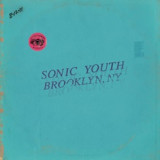
The final U.S. show, a triumphant and blistering bookend to the storied career of one of the most influential bands in rock music, featuring a unique and expansive eighty-five minute set list that spans Sonic Youth’s nearly three decade catalog. Mixed from multitrack by longtime live engineer Aaron Mullan and mastered and cut by Carl Saff. On August 12, 2011 Sonic Youth played their final US show on an outdoor stage overlooking the East River at the Williamsburg Waterfront in Brooklyn. Fitting that their storied career would bookend with a panoramic view of New York City where it all began 30 years before, having left in their wake one of one of the most powerfully influential careers in rock music. Following incredible sets from Kurt Vile and Wild Flag, the band took the stage. As the sun went down over the city, Sonic Youth ripped through a 17 song set that spanned from deep cuts off their first studio album and highlighting many other albums all the way through to their last, like a band with everything to prove. Or as Brooklyn Vegan’s Andrew Sacher said at the time: “While most bands who are thirty years into their career are either fading away or living off of the nostalgia of their older material, Sonic Youth continue to sound and perform as fresh as ever.” Steve Shelley explains the uniquely career spanning set list of Live in Brooklyn 2011 and how it came to be, as well as the importance of outdoor NYC summer shows in Sonic Youth’s legacy: “This show was a culmination of a run of really special outdoor summertime shows in New York City for us, starting in ’92 with Summerstage in Central Park when we played with Sun Ra. For the Williamsburg Waterfront show I wrote out the set list to present to the band and it was a lot of material we hadn’t played in a while, a lot of deep cuts, so I wasn’t sure if everybody would feel like doing it. After worrying about which songs the band might say yes or no to, I threw those concerns out the window and I just made a list of songs that I thought would be a great set. We practiced the week of the show at our space in Hoboken and put the set together. First we’d try and make sure we had a guitar in the song’s tuning, then we’d try to remember the arrangement and try and put it together, sometimes re-learning bar by bar. In the end I think the whole song list made it through. Even as early as ’86 and ’87 we stopped playing ‘Death Valley 69’ and ‘Brave Men Run’ with any regularity. We’d just get excited about new material coming into the set and songs would get ‘retired’ and wouldn’t get played again for years. So on this particular night in Brooklyn a lot of those retired songs and deep cuts got dusted off and played for this show. It turned out to be a pretty special event with a really special song list.” The band would go on to fulfill a contracted festival run in South America a few months later but, by then, the group’s center was severed beyond repair and the festival appearances didn’t hold the same kind of weight. “The stage was facing the East River from the Williamsburg, Brooklyn waterfront, and I recall the sun going down in the west during our set. It was a pretty magical, if kinda weird day. Fitting, somehow, that our ‘last show’ should be in New York City, our home and where it all began…” Lee Ranaldo The Williamsburg Waterfront show would fondly become referred to as ‘The Last Show’ by fans and band alike, equally for its triumphant high energy performance, its unique and expansive set list and locale. Newly remixed and remastered, Live in Brooklyn 2011 is presented for the first time on 2xLP, 2Xcd, August 18, 2023.
Following on from Melodic Motion, Martin Matiske returns to Bordello A Parigi with a track that first appeared over a decade ago. Released on his first album on Stilleben, “Dimension Phantasy” has been dusted down and given a new lease of life.
This extended version bubbles with the same energy as the original. Steady kicks give way to scaling chords as a racing piece of future gazing brilliance takes hold.
Melodies are addictive, yet cold, with a common ground between disco and electro being forged. Sharing the 12” real estate are two good friends, each offering their own remix. Captain Mustache is a musician who can turn his hand to any style.
Here the French producer remains true to the Matiske’s version, adding layers of warmth while maintaining the Springtime coolness of beats and harmonies. The flip is given over to Play Paul, a trailblazing figure in electronics. BPMs are reduced as sweetened lines take flight in the “Oh Lord! Remix”. Arpeggiators rumble before bold keys and heartfelt vocals enter in this emotive reinterpretation. The finale strips back lyrics to focus on those succulent synthesizer sounds. A celebration of past, present and future on one very special release.
unique cut, record plays inside/out and has big engraved grooves between the tracks
Rude 66 dusted off some of his vintage digital samplers and came up with probably one of the most anomalous releases of his discography. In these tracks you can hear influences of early 90s Meat Beat Manifesto and Coil weaving with the typical West-coast vocoder and synths, making "Fragmented Living" sound like it could have been produced anytime from the early days of industrial music to a few decades ahead from now. Another essential release on Pinkman.
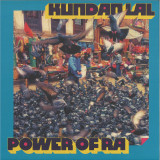
Kundan Lal is a highly understated artist. Little is known about his background, though some refer to him as Kunsaf Halil, his personal life remains largely a mystery.
Gathering a cult following amongst people like Den Sorte Skole or DJ Marcelle with his previous releases, he is now set to sail new shores. There is a sense of wanderlust as he opens his box of field recordings, collected on his many travels. From the buzzing streets of Alexandria, early sunday markets in Tafraoute or a crackling bonfire down by the banks of the river Ganges. Each track takes you places.
Kundan's second album is a captivating blend of dubby beats, collages, and exotic instrumentation. Drawing from classic tools like the Roland 808, SC7 and the famous Space Echo, Kundan has created a unique and minimalistic sound that is sure to captivate listeners. At once nostalgic and experimental, "Power of Ra" is a must-listen for both electronic music purists and fans of adventurous soundscapes.
Compelled to work from home on his computer during lockdown, Kundan dusted his pawnshop e-piano, downloaded some orchestral soundkits and started to digitize almost forgotten field recordings. The "Power of Ra“ came to him.
“Illgrimage” is a good example of his approach. Combining atmospheric soundscapes with swirling strings, trombones and pianos. Echoes of birds and children playing in the streets. A small town filled with life and a theremin leading the way while you hear the faint yet powerful words of Greta Thunberg saying: "Imagine...“
“Raqaqa,” a powerful orchestral journey with a hip-hop edge. Tinkling chimes add a groovy vibe, while lush layers of wind instruments weave a masterful soundscape. It’s the slow-burning intensity of this track that pulls you in.
"Nasi Chip" is a signature song that exemplifies Kundan Lal’s musical prowess. An engaging beat coupled with chopped up vocals, 8-bit synth melodies and an arpeggiated piano provide an energetic atmosphere that is both cunning and unique.
”Cen" lures you into the egyptian realm. A Harmonium slithers serpent like around a pounding beat.Horns gently swaying to the rhythm of the desert.
It is hard to put your finger on his style or genre. You can feel Kundan Lal‘s DIY spirit in his production, carving his own ethnic genre. For enthusiasts of Roberto Musci or Muslimgauze, this avant-garde album is one for your collection. Keep your senses open and let the Power of Ra pass you to another world.
Sacramento, CA duo Blank Gloss’s third album, Cornered, is an exquisite statement of pop ambient starkness, an album that oscillates between lush beauty and spare melancholy. It follows from their 2021 debut for Kompakt, Melt, an album that saw Morgan Fox (piano, synths) and Patrick Hills (guitar) aligned, loosely, with the cosmic pastorale of the ‘ambient Americana’ movement. Cornered feels like a significant step forward, though – by peeling back the layers of their music, they’ve revealed both its restful core and its solemn gravitas. It is unendingly lovely, but with something disquieting at its centre.
Cornered was recorded quickly, over two days in December 2020. There’s nothing rushed or haphazard about the album, though; everything has its place, with each sonic element contributing profoundly to these nine miniature dioramas. It signals change, quietly but perceptibly, through the way the duo sculpts their material, building out of loose improvisations that morphed into songs. While there was no plan in mind when Blank Gloss settled into the studio, Fox recalls that “right away we realised that things were sounding and feeling a bit different than any of the sessions we had previously.”
That difference can be heard in the increased amount of space Blank Gloss gift to their sound sources. Some of the most moving moments on Cornered come when Fox and Hills strip everything back – see, for example, “Crossing”, which sets pensive piano across a shyly humming drone and quiet arcs of guitar, recalling the driftworks of Roger Eno. Curiously, the album’s distinctive shape and mood develops, at least in part, from a change in instrumentation, with Hills using a MIDI pick-up on his guitar. “This resulted in making things happen a lot quicker,” Fox says. “It also helped create what I think is a bit more sombre, dark feeling to some of the songs.”
Elsewhere, on songs like “Salt”, the piano tussles with flecks of guitar, single tones sent out to mingle with the stars, like Morricone at 16 RPM, while Cornered’s centrepiece, the eleven-minute “No Appetite”, lets long arcs of electronic texture breathe and sigh, tangling together in a cat’s cradle of bliss. Throughout, it feels as though the music is blossoming as you hear it, like watching time-lapse footage of flora in bloom. But perhaps the most seductive thing about Cornered is the sense you get, listening, that the music was something unexpected, a visitation. “It almost felt like we weren’t dictating where the music went and how it sounded,” Fox agrees. “We were just there in a room together in December and these sounds were happening, and we were lucky enough to be recording the process.”
Cornered, das dritte Album des kalifornischen Duos Blank Gloss aus Sacramento, ist ein exquisites Statement von pop ambienter Krassheit, ein Album, das zwischen üppiger Schönheit und sparsamer Melancholie oszilliert. Es folgt ihrem 2021er Debüt für Kompakt, Melt, einem Album, auf dem sich Morgan Fox (Klavier, Synthesizer) und Patrick Hills (Gitarre) locker an der kosmischen Pastorale der „Ambient Americana“-Bewegung ausrichteten. Cornered fühlt sich jedoch wie ein bedeutender Schritt nach vorne an – indem sie die Schichten ihrer Musik abschälen, haben sie sowohl ihren ruhigen Kern als auch ihre feierliche Schwere offenbart. Es ist unendlich schön, aber mit etwas Beunruhigendem in seiner Mitte.
Cornered wurde relativ schnell aufgenommen, über zwei Tage im Dezember 2020. Es klingt jedoch nichts überstürzt oder willkürlich an diesem Album; alles hat seinen Platz, wobei jedes Klangelement einen wesentlichen Beitrag zu diesen neun Miniaturdioramen leistet. Es signalisiert Veränderung, leise, aber wahrnehmbar, durch die Art und Weise, wie das Duo sein Material formt und aus losen Improvisationen aufbaut, die sich in Songs verwandeln. Als Blank Gloss sich im Studio niederließen, gab es zwar keinen Plan, aber Fox erinnert sich: „Uns war sofort klar, dass sich die Dinge etwas anders anhörten und anfühlten als bei allen vorherigen Sessions.“
Dieser Unterschied ist in der größeren Menge an Raum zu hören, die Blank Gloss ihren Klangquellen bietet. Einige der bewegendsten Momente auf Cornered kommen, wenn Fox und Hills alles zurücknehmen – siehe zum Beispiel „Crossing“, wo ein nachdenkliches Klavier über einen schüchtern summenden Drone und leise Gitarrenloops setzt und an die Driftworks von Roger Eno erinnert. Seltsamerweise entwickelt sich die unverwechselbare Form und Stimmung des Albums zumindest teilweise aus einer Änderung der Instrumentierung, bei der Hills einen MIDI-Tonabnehmer an seiner Gitarre verwendet. „Dies führte dazu, dass die Dinge viel schneller abliefen“, sagt Fox. „Es hat auch dazu beigetragen, einigen der Songs ein etwas düstereres, dunkleres Gefühl zu verleihen.“ An anderer Stelle, bei Songs wie „Salt“, spielt das Klavier mit Gitarrenfetzen, einzelne Töne werden ausgesandt, um sich mit den Sternen zu vermischen, wie Morricone bei 16 U/min, während Cornereds Herzstück, das elfminütige „No Appetite“, lange Bögen schlägt, elektronische Texturen atmet und seufzt, um sich in einem Katzenkörbchen der Glückseligkeit zu verheddern. Während des Hörens fühlt es sich an, als ob die Musik blüht, als würde man sich Zeitrafferaufnahmen von blühenden Pflanzen ansehen. Aber das Verführerischste an Cornered ist vielleicht das Gefühl, das man beim Zuhören bekommt, dass die Musik etwas Unerwartetes war, eine Heimsuchung. „Es fühlte sich fast so an, als hätten WIR nicht diktiert, wohin die Musik geht und wie sie klingt“, stimmt Fox zu. „Wir waren just im Dezember zusammen in einem Raum, als diese Geräusche passierten, und wir hatten das Glück, dass die Aufnahme mitlief.”
Sublime Frequencies is honored to release the third LP from Baba Commandant and the Mandingo Band. Sonbonbela was recorded in the beginning of 2022 in the Republic of Burkina Faso. The group continue to hone their trademark fusion of Mandingue and afro-beat styles. The Mandingo Band are a hit machine, sculpting seven new tracks of near Beefheart/Magic Band dynamics, Fela inspired groovers dusted out in the Sahel zone, rather than the humidity and sweat of Lagos, creating one of the most original and propulsive musical statements to come from the contemporary West African cultural juggernaut. As with previous releases, the band features the legendary guitar pyrotechnics of Issouf Diabate, truly one of the greatest West African (or Earth for that matter) guitarists of the last forty years. The band is completed by a near bottomless barrel of artistry from the Ouagadougou and Bobo Dioulasso musical talent pool. On bass guitar, Wendeyida Ouedraogo, on drums Abbas Kabore, and on percussion and balafon, Nickie Dembele. Leading the charge again is the captain himself, Mamadou Sanou on the Doso Ngoni featuring one of the most distinctive voices of the modern era. The opposite of the banal trends of auto-tune that have pervaded most of West African popular music, Baba’s voice still impresses with its gravel and grit, showcasing a range that is ancient and defiant in equal measure. This LP is a non-stop hit parade of afro-beat bangers destined to light dance floors and living rooms ablaze!!! This album is dedicated to the memory of Massimbo Taragna, the bass player extraordinaire who was an integral part of the Mandingo Band’s trance stun musical power. He passed away in early 2022. RIP TRACKLIST: Side A: CHASSER LES SACHETS, KAMELEBA, AFRO MANDINGO, SEMAYALA Sida B: SEREJUGU, SONBANBELA, WARIKO
Pink Vinyl
Canadian producer Dylan Khotin-Foote has kept his Khotin alias going for the better part of a decade; the impressionistic electronic project shifts with the movements in his life. Sometimes it leads, like when the club-friendly grooves of 2014's Hello World immersed him in the heart of Vancouver's underground dance scene, and sometimes it follows, like 2018's Beautiful You, a downtempo salve for DJ fatigue His melodic sensibility and playful ear for atmosphere remain the rippling core of the project's fingerprint; whether beat-driven or ambient, a foggy smear or a dusted and pristine print, a Khotin track has a distinct and instantly recognizable swirl. During and after the 2020 release of Finds You Well, his second LP on Ghostly International, Khotin-Foote settled back into a slower vibe in his hometown of Ed- monton. Even before the pandemic, his pivots to softer production, and away from DJing, left him with fewer opportunities in Vancouver and club bookings overall, and as a self-identifying introvert, he was fine with that. But the change of pace did open space for Khotin-Foote to grapple with concepts of adulthood and career. At his lowest, he almost walked off this musical path altogether; instead, he doubled down on the craft _ the tone, pacing, and dynamism of new material _ arriving at a definitive full-length. With Release Spirit, Khotin releases himself from the pressure of expectation, fusing and refining everything we know about his music. The warmth and familiarity of Khotin's dreamy, dulcet style meet new ideas and frameworks, a natural progression, a modest revelation; Khotin confirms it is okay to move slowly and he's never sounded better doing it. The album title borrows from the "release spirit" mechanic in the video game World of Warcraft. When players die, they are prompted to release their spirit and return as ghosts to find their corpses and come back to life. Khotin sees it as a worthy metaphor for the impending change his return home presented and the resulting process of purging artistic expectations to find his creative self again. On this go- around, he is freer, more playful, and more intentional within his palette of warped synth, breakbeats, and piano sounds _ including the classic Casio SK-1 presets he's used since the start _ mingling with wistful samples, field recordings, and other abstract snippets. For the first time, he enlisted Nik Kozub to do the mix and assist with sequencing. Khotin-Foote has long worked with the Edmonton-based musician and engineer in the mastering phase, as well as their days co-running the label Normals Welcome, and this time was able to involve his ears earlier given their newfound proximity. "I think it's my best sounding record to date." We begin on "HV Road" or Happy Valley Road, where Khotin-Foote spent time during a family vacation in British Columbia's Okanagan Lake. His plans to record crickets at night are quickly foiled by his younger siblings; the cute exchange orients the listener to a core memory of sorts, setting the tone of universally understood warmth and wonder that has defined some of Khotin's most transportive tracks. Hazy percussion takes hold, and we are swept further into the wisp of "Lovely," a grooving, melodic standout built on the interplay between the beat and human voice-like hums. Khotin knows this zone well; equally suited for a reverie or a club warm-up. The bubbling atmosphere and absurdity of "3 pz" offer a cosmic/comic interlude and also speak to reflections on his family's move to Canada two generations ago, and the audio tutorials they used to learn English. "I can only imagine my grandpar- ents repeating some of the bizarre phrases." "Fountain, Growth" finds Khotin in collaboration with Montreal's Tess Roby (Dawn to Dawn) for the project's first-ever vocal track. Roby's soft cadence echoes atop spiraling air pockets of rhythmic production, lending a breezy, almost shoegaze pop feel. Throughout the single and the album, wind gusts between the compositional layers, akin to the roaming spirits of its namesake, curving around the birdsong of "Life Mask" and seamlessly reaching "Unlimited <3." The latter bumps in slow motion; disembodied whirrs from his Casio collide with 808 drums and sub-bass for a vibe that teeters on trap and instrumental hip-hop. Release Spirit rests in a dream sequence. Oscillating synth lines dance around the heartbeat of "Techno Creep," a hyperactive REM state before the digitized ambient sprawl of "My Same Size." In the final pass, Khotin imagines transcontinental travel from the glow of his screen. He recorded "Sound Gathering Trip" to soundtrack a genre of YouTube videos he's taken to that follows train routes through Europe and Japan. The scene is serene and moving; piano keys warble as static-filled sound design shimmers off the rails, from cityscapes to the countryside, an introspective ride through a world beyond his bedroom. It doubles as an apt parting image for Khotin's project as a whole: dreaming big but happiest when riffing on the details, shaping environments from the inside out. Over the last decade, he has stretched from his core in Edmonton, leaving a trace in Vancouver and beyond; but when all signs point home, he loops back to see it all from a different vantage, revitalized, refined, and free.
Canadian producer Dylan Khotin-Foote has kept his Khotin alias going for the better part of a decade; the impressionistic electronic project shifts with the movements in his life. Sometimes it leads, like when the club-friendly grooves of 2014's Hello World immersed him in the heart of Vancouver's underground dance scene, and sometimes it follows, like 2018's Beautiful You, a downtempo salve for DJ fatigue. His melodic sensibility and playful ear for atmosphere remain the rippling core of the project's fingerprint; whether beat-driven or ambient, a foggy smear or a dusted and pristine print, a Khotin track has a distinct and instantly recognizable swirl. During and after the 2020 release of Finds You Well, his second LP on Ghostly International, Khotin-Foote settled back into a slower vibe in his hometown of Ed- monton. Even before the pandemic, his pivots to softer production, and away from DJing, left him with fewer opportunities in Vancouver and club bookings overall, and as a self-identifying introvert, he was fine with that. But the change of pace did open space for Khotin-Foote to grapple with concepts of adulthood and career. At his lowest, he almost walked off this musical path altogether; instead, he doubled down on the craft _ the tone, pacing, and dynamism of new material _ arriving at a definitive full-length. With Release Spirit, Khotin releases himself from the pressure of expectation, fusing and refining everything we know about his music. The warmth and familiarity of Khotin's dreamy, dulcet style meet new ideas and frameworks, a natural progression, a modest revelation; Khotin confirms it is okay to move slowly and he's never sounded better doing it. The album title borrows from the "release spirit" mechanic in the video game World of Warcraft. When players die, they are prompted to release their spirit and return as ghosts to find their corpses and come back to life. Khotin sees it as a worthy metaphor for the impending change his return home presented and the resulting process of purging artistic expectations to find his creative self again. On this go- around, he is freer, more playful, and more intentional within his palette of warped synth, breakbeats, and piano sounds _ including the classic Casio SK-1 presets he's used since the start _ mingling with wistful samples, field recordings, and other abstract snippets. For the first time, he enlisted Nik Kozub to do the mix and assist with sequencing. Khotin-Foote has long worked with the Edmonton-based musician and engineer in the mastering phase, as well as their days co-running the label Normals Welcome, and this time was able to involve his ears earlier given their newfound proximity. "I think it's my best sounding record to date." We begin on "HV Road" or Happy Valley Road, where Khotin-Foote spent time during a family vacation in British Columbia's Okanagan Lake. His plans to record crickets at night are quickly foiled by his younger siblings; the cute exchange orients the listener to a core memory of sorts, setting the tone of universally understood warmth and wonder that has defined some of Khotin's most transportive tracks. Hazy percussion takes hold, and we are swept further into the wisp of "Lovely," a grooving, melodic standout built on the interplay between the beat and human voice-like hums. Khotin knows this zone well; equally suited for a reverie or a club warm-up. The bubbling atmosphere and absurdity of "3 pz" offer a cosmic/comic interlude and also speak to reflections on his family's move to Canada two generations ago, and the audio tutorials they used to learn English. "I can only imagine my grandpar- ents repeating some of the bizarre phrases." "Fountain, Growth" finds Khotin in collaboration with Montreal's Tess Roby (Dawn to Dawn) for the project's first-ever vocal track. Roby's soft cadence echoes atop spiraling air pockets of rhythmic production, lending a breezy, almost shoegaze pop feel. Throughout the single and the album, wind gusts between the compositional layers, akin to the roaming spirits of its namesake, curving around the birdsong of "Life Mask" and seamlessly reaching "Unlimited <3." The latter bumps in slow motion; disembodied whirrs from his Casio collide with 808 drums and sub-bass for a vibe that teeters on trap and instrumental hip-hop. Release Spirit rests in a dream sequence. Oscillating synth lines dance around the heartbeat of "Techno Creep," a hyperactive REM state before the digitized ambient sprawl of "My Same Size." In the final pass, Khotin imagines transcontinental travel from the glow of his screen. He recorded "Sound Gathering Trip" to soundtrack a genre of YouTube videos he's taken to that follows train routes through Europe and Japan. The scene is serene and moving; piano keys warble as static-filled sound design shimmers off the rails, from cityscapes to the countryside, an introspective ride through a world beyond his bedroom. It doubles as an apt parting image for Khotin's project as a whole: dreaming big but happiest when riffing on the details, shaping environments from the inside out. Over the last decade, he has stretched from his core in Edmonton, leaving a trace in Vancouver and beyond; but when all signs point home, he loops back to see it all from a different vantage, revitalized, refined, and free.
French pianist Melaine Dalibert, known for his releases on contemporary music labels such as Another Timbre and Elsewhere, his work with David Sylvian, Ensemble 0, Sylvain Chauveau, and world premieres from Gérard Pesson, Giuliano D'Angiolini, Michael-Vincent Waller, Tom Johnson, has signed with FLAU in Japan to release a new album Magic Square.
Across the album's eight tracks, the French pianist and composer takes listeners on a "fantasy journey". Travel is at the heart of Magic Square, but not of the physical kind. Instead, his emotive and intriguing piano pieces inspire inward travel and daydreaming, reflecting the past two years of pandemic and introspection.
Having received his training in Rennes and the conservatories of Paris, Dalibert has a musical background that is naturally entrenched in the technical aesthetic of classical music. However, experimenting with algorithmic ways of writing and other mathematical concepts such as fractals, Dalibert's music combines emotion and logic for captivating results. His music has been played on BBC Radio, Radio France and NTS Radio, among others.
“Melaine Dalibert, himself a composer whose works similarly deal in patience and space, is an ideal interpreter « As with his other releases, Dalibert breaks boundaries difficult to define but easy to hear, rendering and dissolving their polarities with a new iteration of his already luminous language. » (Mark Medwin, Dusted Magazine, juillet 2021) of such beguilingly modest music, and this sensitive recording lets every detail resound.”
Steve Smith — The New-Yorker
“compositions by French pianist Melaine Dalibert, is a warm stream of harmonious ripples that echoes the graceful postclassical music of Max Richter, Ólafur Arnalds, Jóhann Jóhannsson, etc, but the economy and precision, combined with Dalibert’s calm hands on the keys, put it on a whole other level of beauty.”
Derek Walmsley — the WIRE
“As with his other releases, Dalibert breaks boundaries difficult to define but easy to hear, rendering and dissolving their polarities with a new iteration of his already luminous language.”
Mark Medwin — Dusted Magazine
“Dalibert is one of the most effortlessly talented and subtlety creative pianists at work today”
Roger Batty — Musique Machine
“Au-delà des genres et au dessus de ce monde, le pianiste français Melaine Dalibert continue d’échafauder une œuvre d’un autre temps, d’un futur à construire avec une musique qui doit autant à Federico Mompou qu’à l’Acousmatique. Night Blossoms, son dernier disque en date (avec la participation de David Sylvian sur deux titres) est une pure merveille !”
Greg Bod — Benzine Mag
“La musique de Melaine Dalibert, héritière de cinquante ans d’expériences minimalistes, correspond à l’impérieux besoin du public d’aujourd’hui de cultiver un hors-temps et de se plonger au cœur du son. Elle y répond parfaitement”
Guillaume Kosmicki — Res Musica
“Comment des pièces reposant sur des constructions aussi abstraites et rigoureuses peuvent-elles susciter autant d’émotion à l’écoute ? La musique de Melaine Dalibert projette l’auditeur dans un univers où l’assommant temps quotidien n’a plus cours. Plus de mesure, plus de début ni de fin : pour qui accepte de se laisser prendre, Night Blossoms fait perdre tous les repères du commensurable”
Guillaume Kosmicki — Hémisphère Son
- A1: Supplier
- A2: Scarface
- A3: Deeper
- A4: High (Feat Danny Brown)
- A5: Harold's
- A6: Bomb (Feat Raekwon)
- A7: Shitsville
- A8: Thuggin
- A9: Real
- A10: Uno
- B1: Robes (Feat Domo Genesis & Earl Sweatshirt)
- B2: Broken (Feat Scarface)
- B3: Lakers (Feat Ab-Soul & Polyester The Saint)
- B4: Knicks
- B5: Shame (Feat Bj The Chicago Kid)
- B6: Watts (Feat Big Time Watts)
- B7: Pinata (Feat Domo Genesis, G-Wiz, Casey Veggies, Sulaiman, Meechy Darko & Mac Miller)
Single-LP edit of Piñata lacquered at half speed master by Metropolis Mastering in London for the highest fidelity.
After the original release Freddie Gibbs & Madlib's Piñata in 2014, cover artist Jeff Jank made a new sleeve for the album in the style of a 1964 Blue Note album.
Featuring Danny Brown, Mac Miller, Earl Sweatshirt, Raekwon, Scarface, Domo Genesis, Ab-Soul, Polyester the Saint, BJ The Chicago Kid, Big Time Watts, G-Wiz, Casey Veggies, Sulaiman, Meechy Darko & Freddie Kane.
Freddie Gibbs is the product of violent, drug-laden streets but unlike most rappers with similar resumes, he brings the block to the booth without inhibition or an exaggerated rap persona. Piñata, a 17 track collaboration with producer Madlib, is the best distillation yet of his transparent approach to making music, combining an at times stark honesty with electrifying talent as a lyricist and performer.
Piñata is a gangster Blaxploitation film on wax, says Gibbs, who came up on the streets of Gary, Indiana, the disregarded city previously best known for producing Michael Jackson. Here he is joined by Mac Miller, Earl Sweatshirt, Raekwon, Scarface, Domo Genesis, Ab-Soul and a host of others in setting his soliloquies of the streets alongside film snippets and dusted funk, soul and prog musical tapestries. While this is the latest in a series of single-artist collaborations for Madlib, after Jaylib (J Dilla), Madvillainy (MF Doom) and the street-centric O.J. Simpson with Detroits Guilty Simpson, the pairing is unique as it is the first time for Gibbs working with just one producer.
On Piñata, where Gibbs can shift from textbook lessons in robbing and drugging on trackslike Scarface and Knicks, to perhaps the albums most personal song, Broken, a collaboration with Scarface, who, along with Tupac, DMX and 50 Cent, make up the rappers own Mount Rushmore of MCs (Youre getting a hurricane of all those motherfuckers hitting you at once when you listen to Freddie Gibbs, he says). Deeper, a Gibbs favorite and the third single from the album after Thuggin (2012) and Shame, (2013) is an ode to hip-hop in the mold of Commons I Used to Love H.E.R.; High, featuring Danny Brown, is self-explanatory and just what you would expect from Gibbs, Madlib and one of Detroits finest; while on Real, Gibbs addresses an old score just as Michael Corleone settled all family business on baptism day.
As a producer, Madlib, quite simply, is music, and ten years into his career-a time when other artists become comfortable-Gibbs remains restless, focused, with an eye on the competition and their position relative to his ascent. This is because mentally, hes still on the corner hustling, which would be the downfall of the average rapper. With Piñata, Gibbs confirms that he is anything but average.
Over the last decade-and-a-half, C Joynes has ploughed a singular furrow through solo guitar, with a body of work incorporating English folk-tunes alongside North & West African music, and lifting proto-minimalist and improvised techniques from the European classical and avant-garde traditions.
His new release, ‘Poor Boy On The Wire’, is his first full album dedicated wholly to the electric guitar. Through a typically wide-ranging set, Joynes exploits the instrument’s potential by placing intricate parlour music alongside overdriven garage blues throw-downs, wiry electric folk and the brittle ringing tones of free improvisation. However, these explorations of the tones and timbres of close-mic’d guitars and amplification retain an overall coherence and unity through the deliberate use of a limited palette of budget instruments and vintage equipment.
With ‘Poor Boy On The Wire’, Joynes has released 9 albums to date, including ‘The Borametz Tree’ (2019), recorded with long-term fellow travellers Dead Rat Orchestra, and ‘The Wild Wild Berry’, a collaboration with singer Stephanie Hladowski (MOJO Top 5 Folk Albums 2012, fROOTS Editors Choice Album Of The Year 2012). He has played extensively across the UK, Europe and the USA, sharing bills with performers including: Shirley Collins, Martin Carthy, A Hawk And A Hacksaw, Marc Ribot, Alasdair Roberts, Richard Dawson, Jack Rose, Josephine Foster, Sir Richard Bishop, Six Organs Of Admittance and 75 Dollar Bill.
“As much Conlon Nancarrow and Ali Farka Toure as Blind Lemon Jefferson, the compositional mind at work here can take apparently disparate threads of modernism and ethnic tradition and treat them as though they were all archaic blues styles learnt from dusty 78s.”
BRUCE RUSSELL, THE WIRE
“An inheritor to Davy Graham; a lone operator prone to unexpected collaborations, with a repertoire that crosses continents and timezones with consummate ease, and dashed off with a phenomenal, yet lightly applied technique.”
ROB YOUNG, THE WIRE
“His epigrammatic re-castings and re-readings of widely-travelled folk melodies and rhythms from a variety of traditions suggest shared memories that might be intensely universal while seeming strangely out of reach.”
KEVIN MACNEIL BROWN, DUSTED MAGAZINE
On a first, careless, listen, Stockholm four-piece Melby might seem like a
charming, fun little jangle-pop band - Pay a little more attention however,
and you'll find their waters run a lot deeper than that
The band have all the flash and sparkle of your favourite indie band, but add an
ability to touch moods and feelings with a meaning beyond most of their peers.
Their guitars, drums and synths rattle, roll and flicker around each other, all held
together by the soul-shiver in Wiezell's vocals, to make immaculate little guitarpop gems, equally dusted with sadness and sugar.Finding comfort in a sea of
uncertainty might be a good way to describe Looks Like A Map, the bands second
album. The record captures Melby at a moment where they're growing as people
and as a band, expanding the reach of their sonic horizons, and taking in deeper
and heavier themes, trying to find a home in an often-alienating world. The music
they made around that has a little touch of sorcery around it, sometimes soft as
smoke, sometimes woozy and dream-blurred, sometimes crashing and explosive.
But even through all that evolution, the heart and the soul have remained the
same, and Looks Like A Map still has that Melby-feeling, of a band who put all of
themselves into everything they make and their own blend of indie, psych, pop,
rock and folk. It's a new high for the band that have toured Scandinavia, Germany
and the UK and have played festivals such as Eurosonic, Reeperbahn and
By:Larm, and one that hints at even bigger things to come.
Red Vinyl[24,58 €]
Sounding simultaneously from the past, the present, and the future, the debut album 'MLDE' by Marxist Love Disco Ensemble seeks to eradicate both the trite from disco and the sobriety from political music. Half poetic, half tongue-in-cheek, this stunning compact eight-track album is influenced by Eastern European and Mediterranean 70s disco records. In the words of band member Paolo, ''it was written in response to hearing 'I love America' by Patrick Juvet. The song prompted the question: why does disco, a genre originally created by oppressed minorities, eventually become synonymous with American capitalist excess?" MLDE seeks to break this connection.
Merging disco, post-disco 80s pop, and boogie into the fold, 'MLDE' was recorded using only analogue instruments, giving it warmth and space. Recorded on cassette, ¼ and ½ inch tape, this gives moments of lo-fi abstraction between the beats of an aggressive, tight drum kit. Instruments used for this recording range from saxophone, trumpet, harpsichord, guitar, and rare analogue synthesisers. The bass sound is shaped by early 80s boogie records, whilst the influence of artists such as Hamlet Minassian can be heard in some of MLDE's more driving-disco outings, such as 'Hues of Red'. In the tradition of Soviet vocal group records, which the band has studied, some songs are sung by a vocal quartet in homage to this tradition.
Tracks such as '1905' and 'Brumaire' have a greater pop aesthetic, with Paolo's vocal style on these more pop-driven songs evoking early 80s bands such as Orange Juice and Chas Jankel.
The format and message of pop and disco are commonly viewed just to entertain and move bodies around a dancefloor; however, lyrically, the subjects range from dialectical and historical materialism, class struggle, Marxist theory and praxis, as well as the concept of Marxist disco music.
Adding the icing to the cake, mastering don Joker aka Liam McLean dusted the album with his magic, giving the songs space where the room is needed, as well as the kick and punch demanded by the modern dancefloor.
Yes, this is a press release, and they are always full of hype, but we were blown away when we heard this album, and we hope it enriches you too.
Black Vinyl[25,42 €]
Sounding simultaneously from the past, the present, and the future, the debut album 'MLDE' by Marxist Love Disco Ensemble seeks to eradicate both the trite from disco and the sobriety from political music. Half poetic, half tongue-in-cheek, this stunning compact eight-track album is influenced by Eastern European and Mediterranean 70s disco records. In the words of band member Paolo, ''it was written in response to hearing 'I love America' by Patrick Juvet. The song prompted the question: why does disco, a genre originally created by oppressed minorities, eventually become synonymous with American capitalist excess?" MLDE seeks to break this connection.
Merging disco, post-disco 80s pop, and boogie into the fold, 'MLDE' was recorded using only analogue instruments, giving it warmth and space. Recorded on cassette, ¼ and ½ inch tape, this gives moments of lo-fi abstraction between the beats of an aggressive, tight drum kit. Instruments used for this recording range from saxophone, trumpet, harpsichord, guitar, and rare analogue synthesisers. The bass sound is shaped by early 80s boogie records, whilst the influence of artists such as Hamlet Minassian can be heard in some of MLDE's more driving-disco outings, such as 'Hues of Red'. In the tradition of Soviet vocal group records, which the band has studied, some songs are sung by a vocal quartet in homage to this tradition.
Tracks such as '1905' and 'Brumaire' have a greater pop aesthetic, with Paolo's vocal style on these more pop-driven songs evoking early 80s bands such as Orange Juice and Chas Jankel.
The format and message of pop and disco are commonly viewed just to entertain and move bodies around a dancefloor; however, lyrically, the subjects range from dialectical and historical materialism, class struggle, Marxist theory and praxis, as well as the concept of Marxist disco music.
Adding the icing to the cake, mastering don Joker aka Liam McLean dusted the album with his magic, giving the songs space where the room is needed, as well as the kick and punch demanded by the modern dancefloor.
Yes, this is a press release, and they are always full of hype, but we were blown away when we heard this album, and we hope it enriches you too.
- A1: Stephen Brown – Level Steps
- B1: Claude Vonstroke – Moody Fuse
- C1: Denis Horvat – Monomono
- D1: Daniel Avery – Your Future Looks Different In The Light
- E1: Jeroen Search – Subversive Elements
- F1: Marco Bailey – Kanai
- G1: Damiano Von Erckert – 500 People, 500 Hearts, 1 Love
- H1: Yokto – Vision99
- I1: Jonathan Kaspar – Ccc
- J1: The Emperor Machine – The Art Of Electronics
- K1: Carl Finlow – Surface Control
- L1: Defekt – Terraform
Cocoon Recordings presents: Cocoon Compilation T
Limited Vinyl Box Set including 6x blue vinyl & download code
Another year, another expertly curated compilation touches down courtesy of Cocoon Recordings. Somehow, the world keeps turning and with it the Cocoon universe keeps expanding, causing subtle yet persuasive shifts in the sonic soundscape that continue to
capture and captivate the imagination. In time-honored tradition the old guard and the new combine with devastating effect, to define the current state of play…
Veteran Techno producer Stephen Brown makes it clear the compilation series is back with a bang, opening things up in epic fashion with the lucid dreamscape ‘Level Steps’ - a true work of art. Another heavy-weight hitter steps straight up in the form of Claude von Stroke, who adds his own unique swagger to proceedings with those trademark shuffling beats and freaky, hypnotic bleeps scuffling for dominance on ‘Moody Fuse’. Denis Horvat then slows things down on ‘Monomono’, with post-raveNew Release Information
abstractions and disobedient synth-patches causing mayhem before the track finally unfolds in all its terrifying beauty.
Motoring on, the collection wastes no time reaching that familiar tipping point as we enter the techno phase of the journey. A very special appearance from Daniel Avery makes it all the more worthwhile amid a dense forest of chiming melodies and blistering electrical surges on ‘Your Future Looks Different In The Light’, before Jeroen Search’s aptly titled ‘Subversive Elements’ lead us deeper and
deeper, into the matrix.
Marco Bailey then kicks off a triptych of trance with some massive filtered piano action on ‘Kanai’ that’s destined to trigger a serotonin smile with everyone it touches. Revisiting the huge,
ever-growing pulsating brain of planet Orb, Damiano van Erckert continues the loved-up vibe on the gorgeously titled ‘500 People 500 Hearts 1 Love’, expertly complimenting the classic ambience with
some slick 909 snare and cymbal interplay. The melodic pull of ‘Vision99’ then signifies that the party is peaking at just the right moment as YOKTO concocts a glistening, psychedelic groove. The
emotional resonance climbs ever higher with brittle melodies endlessly circling a lush, throbbing bass drone to create the sense of something stirring out of reach.
Just when you think the acid sound is done and dusted, up pops a track like Jonathan Kaspar’s ‘CCC’ that somehow manages to offer an entirely new perspective. Riding in on a wave of expectant
arpeggios, the squelching bass and noise filter go toe to toe before Kaspar gets busy with a freaky tempo excursion that’ll be destroying dance floors all year long. ‘The Art of Electronics’ is, as the title
suggests, another superlative example of pure analogue fire, served up by UK legend, Andrew Meecham aka The Emperor Machine. The funk starts to flow as the bass drops, the machines cut loose and a swarm of cascading bleeps ride the trans-europa express to oblivion.
Electro overlord Carl Finlow, has come to define the UK take on the genre over the last couple of decades. Here, he makes his long overdue label debut, taking us into the closing straight with a
nervous sliver of dystopian futurism, complete with molten basslines and a fuzzy logic that underpins the tight, laser-guided groove on ‘Surface Control’. DeFeKT then draws this great adventure to a close
with the deliciously dark robo-disco overtones of ‘Terraform’ creating a dusky landscape that skillfully seduces the listener before the tension finally breaks in a wash of ecstatic chords.
All in all, it’s a supremely ambitious collection of tracks, generously featuring some of the most inspirational and durable artists of their respective generations. In fact, is this perhaps the best Cocoon
Compilation to date
Before 2 drew the world’s eyes to Canadian crooner Mac DeMarco, the spark was heard sooner on the debut EP Rock and Roll Night Club.
Demarco has been the antithesis to the stereotypical singer-songwriter for the past decade. Disregarding the seriously sombre moments on Rock and Roll Night Club, he refuels throughout with whimsical moments and youthful spontaneity whilst retaining the endearing and subtle commentaries that exude his familiarity.
His most impressive trait is his undeniable and instinctual ability to compose magical pop jangles. His dusted jams have garnished him accolades that are ever increasing alongside his discography; his sound rendering wide comparisons, but in a nomadic fashion, alluding no distinct origin except for Mac himself.
The 10th anniversary pressing of Rock and Roll Night Club compiles all 12 original recordings - including bonus tracks “Only You” and “Me and Mine” - pressed on limited edition Night Club vinyl, with brand new liners written by DeMarco reflecting on his time writing and recording what would become the world’s introduction to one of indie’s most influential songwriters.
- A1: Pigs
- B1: How I Could Just Kill A Man
- C1: Hand On The Pump
- D1: Hole In The Head
- E1: Ultraviolet Dreams
- E2: Light Another
- F1: The Phuncky Feel One
- G1: Break It Up
- G2: Real Estate
- H1: Stoned Is The Way Of The Walk
- I1: Psycobetabuckdown
- I2: Something For The Blunted
- J1: Latin Lingo
- K1: The Funky Cypress Hill Shit
- L1: Tres Equis
- L2: Born To Get Busy
CYPRESS HILL - 30th ANNIVERSARY CASE BOOK
To commemorate the 30 year Anniversary of Cypress Hill’s debut album Get On Down is proud to present the complete album on 7 inch vinyl singles for the rst time ever housed in a deluxe casebook. LIMITED TO 2000 UNITS WORLDWIDE! The debut album is presented as a set of six 7-Inch vinyl records presented in a Hardcover Casebook which holds all six records in built-in sleeves Full-color 80 page booklet with liner notes by journalist Chris Faraone, complete with photos and lyrics, and more Housed in a premium outer slipcase, debossed with the iconic Cypress Hill logo in metallic red foil. When Cypress Hill came with their debut self-titled album 30 years ago, they made an immediate spark that captivated the Hip Hop audience, critics, and then the world. Led by B-Real with his nasal, singsong delivery, and Sen Dog to play the perfect hypeman, Cypress’ debut fueled tales of revenge, revolution, recreational drug use, gangbanging, and cultural pride. Like Public Enemy before them, the production was also a key factor in what made this debut so groundbreaking. DJ Muggs was able to craft a blueprint that would change Hip Hop production with his innovative stoned-out beats. Records like "How I Could Just Kill a Man", "Pigs", "Stoned is the Way of the Walk" and "Hand on the Pump" made this album an instant classic. Since its release, the album has won acclaim as one of Rolling Stone's Essential Recordings of the 90s and Top 100 Best Rap Albums by The Source Magazine. Journalist and author Chris Faraone highlights the group's relationship in the reissue's liner notes saying, "By the late 80s the undisputed Cypress unit finally formed. B and Sen realized that their diametric styles - the latter's deep wrangle, the formers inimitable high notes - complemented one another righteously. By then Muggs had bangers in the bag, as well as industry experience from a jaunt with the New York duo 7A3. B and Sen waited while Muggs messed with 7A3, and in that time began to build the blueprint for their raucous and weeded no-holds-barred style. Besides getting schooled on industry pitfalls, Muggs had also grown into hip-hop's most formidable young producer, while straddling the bi-coastal gap." Faraone was able to dive in deep with the band for the liner notes, hearing story after story, including the particularly interesting tale of their unlikely 91 radio hit, "How I Could Just Kill A Man". In the B Side wins again story, the group recalls receiving resistance from the label in regards to which single should hit radio first. Initially, the label thought "How I Could Just Kill A Man" was too risky, and even though the single initially "The Phuncky Feel One", one of the album's strongest cuts, as the A-Side, college and commercial mix-show radio couldn't resist the dusted, heavy groove of Kill A Man. The song – which included a catchy, LA drive-by-inspired chorus – ended up as an unlikely, but powerful double A-sided single that even topped the Billboard Rap charts. More singles would follow, including "Hand On The Pump"; "Pigs"; and "Latin Lingo". And by the fall of 1991, the album was a full-blown critics darling. If you are a Cypress Hill fan and 45 collector this limited edition 30 year Anniversary 7” boxset is a must have!
A multicultural explosion of West African, French and Brighton sounds
Stranded Horse is a touring machine centered around composer, songwriter and
instrument maker Yann Tambour.Whilst he had developed his own kora playing
and teamed up with local player Boubacar Cissokho (cousin and protege of
erstwhile Tambour collaborator Ballake Sissoko) In terms of repertoire, there is
nothing to stop him from covering Joy Division, the Smiths or even Jackson C.
Frank and the moving "My Name is Carnival".Behind Yann Tambour and his band
Stranded Horse lies a faith in chance encounters, a belief that renewal is born out
of chaos. They strive to skirt conventions and labels and wed together
unexpected genres, rules and habits in an album of erratic wanderings, dance and
trance, at a time when more and more get walled off by reluctance and suspicion.
But a strange spell, it seems, was cast on our stranded horse since he chose to
hit the dancefloor for the first time the very year nobody could. Yann Tambour
was first known as Encre at the turn of the millennium. He was then whispering
and stacking orchestral samples into a kind of spoken word electronica with an
acoustic tinge. But in 2005, he decided to return to his early love for arpeggios
and dusted off his classical guitar, all the while growing a fascination for the kora,
an instrument symbolic of West-Africa.
But Stranded Horse doesn't forget to draw on the indie heritage that is still very
much present, as evidenced by "In A Sharper Fairway", which may remind the
most passionate folk fans of the folk- mindedness of Jackson C Franck. As for
the choice of English or French, it is a natural one, whether it is a question of
immersing oneself into the contemplative and poignant "Sparks Turn To Stone" or
entering the frenzied dance of the irresistible "Rumba du trépas", the richness of
the lyrics is reinforced by a voice stripped of all artifice, making each composition
sincere and authentic. The same is true when, with Youssou N'Dour's permission,
Stranded Horse adapts Star Band de Dakar's heady and vast "Thiely" from Wolof
to French.
A multicultural explosion of West African, French and Brighton sounds
Stranded Horse is a touring machine centered around composer, songwriter and
instrument maker Yann Tambour.Whilst he had developed his own kora playing
and teamed up with local player Boubacar Cissokho (cousin and protege of
erstwhile Tambour collaborator Ballake Sissoko) In terms of repertoire, there is
nothing to stop him from covering Joy Division, the Smiths or even Jackson C.
Frank and the moving "My Name is Carnival".Behind Yann Tambour and his band
Stranded Horse lies a faith in chance encounters, a belief that renewal is born out
of chaos. They strive to skirt conventions and labels and wed together
unexpected genres, rules and habits in an album of erratic wanderings, dance and
trance, at a time when more and more get walled off by reluctance and suspicion.
But a strange spell, it seems, was cast on our stranded horse since he chose to
hit the dancefloor for the first time the very year nobody could. Yann Tambour
was first known as Encre at the turn of the millennium. He was then whispering
and stacking orchestral samples into a kind of spoken word electronica with an
acoustic tinge. But in 2005, he decided to return to his early love for arpeggios
and dusted off his classical guitar, all the while growing a fascination for the kora,
an instrument symbolic of West-Africa.
But Stranded Horse doesn't forget to draw on the indie heritage that is still very
much present, as evidenced by "In A Sharper Fairway", which may remind the
most passionate folk fans of the folk- mindedness of Jackson C Franck. As for
the choice of English or French, it is a natural one, whether it is a question of
immersing oneself into the contemplative and poignant "Sparks Turn To Stone" or
entering the frenzied dance of the irresistible "Rumba du trépas", the richness of
the lyrics is reinforced by a voice stripped of all artifice, making each composition
sincere and authentic. The same is true when, with Youssou N'Dour's permission,
Stranded Horse adapts Star Band de Dakar's heady and vast "Thiely" from Wolof
to French.
Tinnitus Tonight is the latest & sneakiest full-measure serving from LARS FINBERG, world-class bon vivant and prolific Panic Rock artiste. Why so sneaky? Here’s the dirt: Finberg developed a nerve rash leading up his 2017 tootle, the TY SEGALL-assisted Moonlight Over Bakersfield. Rather than blindly leap from the comfy zone, he tip-toed in secret to a friendly but far-flung (cough*Sacramento*cough) studio to capture a reserve of slanted tunes with a proven-effective team of buds. Those comrades – the glorious LAUREN MARIE MIKUS on keys, frequent collaborator & forever-gent KAANAN TUPPER on drums and, at the controls and elsewhere, the indestructible CHRIS WOODHOUSE – all fostered a supportive framework that first allowed Finberg to “think” beyond THE INTELLIGENCE, gearing him up for a life in the spotlight (or moonlight, as it were). So yes indeed: what appears to be an adventurous follow-up also doubles as a prequel. Keep accurate score or you’re dusted. The core of Tinnitus Tonight centers on an assemblage of Finberg’s most golden riffs – trash-coustic but driftwood-smooth, naughty and infinite, all of ‘em bangers and/or buggers. Tunes sprout and move matador-like until an inevitable goring. The past-it grunt that kicks off “Burger Queen” prompts a mimed chef’s kiss. “My Prison” and “The Doors” are quintessential, truly distilled Finberg moments, compounding his trademark acerbic, out-for-blood wit with these absurdly cool, whip-crack guitars. The massively impressive “Public Admirer” is unequivocally the loudest, most damaged blurt from this doggie in at least a decade. In total, Tinnitus Tonight is a wonderful and welcome reminder that our guy is a very real rouser and a vital, unique purveyor of artful aggression, playful and powerful. Finberg beams really fuckin’ brightly under his own name, perhaps more so than with any group orchestration he happens to be braising with. Do these higher personal stakes call for a dastardlier delivery? Maybe this permeating 2020 End Times feeling prohibits the normal corralling of the subconscious mind? Whatever the answers are, you will find them here.
"The gift Lars Finberg has to disfigure rock riffs into minor chord marvels should serve as a glowing example for those who feel the need to pick up a guitar and make some noise to share with the world. Using the conventional tools of rock and roll flavored with a mix of garage punk, post punk, synth punk and mutant surf, Mr. Finberg, with seemingly effortless cool, has crafted or contributed to countless albums with bands like The Intelligence, Puberty, Rubber Blanket, A Frames and more, all with a magnetic pull and genius lyrics that stand out from the indie rock heap and reveal an exceptionally creative mind that’s actually done its homework." - Noise For Zeros