"Rock and metal music have always been a haven for those who have bigger stories to tell; who have grander emotions to convey. For more than thirty years, Finnish figureheads Amorphis have done their best to carve their very own niche in heartfelt yet aggressive, melancholic yet soothing tunes. On “Halo”, their staggering fourteenth studio effort, the Fins underline their trailblazing status as one of the most original, culturally relevant and rewarding acts ever to emerge from the land of the thousand lakes. In the past, mythology and legend took the role of today’s pop culture: Stories and a set of values uniting us by giving us a voice and a tapestry on which we can find each other and identify with something. By weaving the tales of Finnish national epos “Kalevala” into their songs and interpreting them in a timeless way, Amorphis combine the role of ancient minstrels and luminaries of the modern world, honouring tradition without getting stuck in the past. The vibrant, lively, and touching beauty that is “Halo” highlights their musical and storytelling mastership on a once again soaring level: It’s a progressive, melodic, and quintessentially melancholic heavy metal masterwork plucked from the fickle void of inspiration by original guitarists Esa Holopainen and Tomi Koivusaari, bassist Olli-Pekka Laine, drummer Jan Rechberger, longtime keyboardist Santeri Kallio and vocalist Tomi Joutsen, the band’s long-standing lyrical consciousness Pekka Kainulainen and a selected group of world class audio professionals led by
renowned Swedish producer Jens Bogren. Considering the band’s prolonged journey in the forefront of innovative metal music, it’s difficult to grasp how Amorphis manages to raise the proverbial bar time and time again, presenting a more than worthy finale to the trilogy begun with 2015’s “Under the Red Cloud” followed by 2018’s “Queen of Time.” “It really is a great feeling that we can still produce very decent music as a band,” says Holopainen, a founding member of the band. “Perhaps a certain kind of self-criticism and long experience culminate in these latest albums.” To the songwriter himself, “Halo” sounds both familiar and different. “It is thoroughly recognizable Amorphis from beginning to end but the general atmosphere is a little bit heavier and more progressive and also organic compared to its predecessor,” he elaborates. Tomi Joutsen, the man with vocal cords capable of unleashing colossal, bear-like growls as well as singing soothing, mesmerising lullabies, adds, “To me, ‘Halo’ sounds a little more stripped down compared to ‘Queen Of Time’ and ‘Under The Red Cloud.’ However, don’t get me wrong: when a certain song needs to sound big, then it sounds very big.” He’s right, of course: By stripping down some of the arrangements, the monumental moments become even more monumental. That’s of course also thanks to producing renaissance man Jens Bogren who harvested the thirteen final tracks from a batch of thirty songs Amorphis offered him. “Jens is very demanding, but I really like to work with him,” says Holopainen. “He takes care of the whole project from start to finish, and he allows the musician to focus on just playing. I may not be able to thank Jens enough. Everything we’ve done together has been really great, and this co-operation has carried Amorphis significantly forward.” Indeed. Setting off with the stormy grandeur of opener “Northwards,” Amorphis take us on an epic journey through the lands of the north, their rich cultural and historical heritage and musical traditions. This is not only an album for fans or metal connoisseurs. It’s a must for every imaginative mind out there with a soft spot for cinematic soundscapes, triumphant melodies and breathtaking dynamics measuring the borderlands of light and dark. However, no Amorphis album would be complete without the imaginative and poetic storytelling of renowned lyricist and “Kalevala” expert Pekka Kainulainen. “From day one, Pekka has always been an enthusiastic and prolific lyricist for Amorphis,” says Joutsen. “It is a slow process of translating archaic Finnish poetry into English and adapting it our progressive rhythms. Fortunately, Pekka does everything on time and with great care.” Since 2007’s “Silent Waters,” Kainulainen has been navigating the mythological waters of his homeland with great skill and respect. For “Halo,” he outdid himself once again. “‘Halo’ is a loose themed record filled with adventurous tales about the mythical North tens of thousands of years ago,” he explains. “The lyrics tell of an ancient time when man wandered to these abandoned boreal frontiers after the ice age. While describing the revival of a seminal culture in a world of new opportunities, I also try to reach the sempiternal forces of the human mind.” Thirty-one years after their inception, with uncounted global tours under their belt and fourteen albums deep in their career, Amorphis still proves to be the musical fountain of youth, an extraordinary band constantly reinventing itself without abandoning its mystical roots. With “Halo”, they deliver an astonishing album that deserves to be played everywhere, transcending the realms of metal and rock by its sheer profoundness and musicality."
quête:dy
"Rock and metal music have always been a haven for those who have bigger stories to tell; who have grander emotions to convey. For more than thirty years, Finnish figureheads Amorphis have done their best to carve their very own niche in heartfelt yet aggressive, melancholic yet soothing tunes. On “Halo”, their staggering fourteenth studio effort, the Fins underline their trailblazing status as one of the most original, culturally relevant and rewarding acts ever to emerge from the land of the thousand lakes. In the past, mythology and legend took the role of today’s pop culture: Stories and a set of values uniting us by giving us a voice and a tapestry on which we can find each other and identify with something. By weaving the tales of Finnish national epos “Kalevala” into their songs and interpreting them in a timeless way, Amorphis combine the role of ancient minstrels and luminaries of the modern world, honouring tradition without getting stuck in the past. The vibrant, lively, and touching beauty that is “Halo” highlights their musical and storytelling mastership on a once again soaring level: It’s a progressive, melodic, and quintessentially melancholic heavy metal masterwork plucked from the fickle void of inspiration by original guitarists Esa Holopainen and Tomi Koivusaari, bassist Olli-Pekka Laine, drummer Jan Rechberger, longtime keyboardist Santeri Kallio and vocalist Tomi Joutsen, the band’s long-standing lyrical consciousness Pekka Kainulainen and a selected group of world class audio professionals led by
renowned Swedish producer Jens Bogren. Considering the band’s prolonged journey in the forefront of innovative metal music, it’s difficult to grasp how Amorphis manages to raise the proverbial bar time and time again, presenting a more than worthy finale to the trilogy begun with 2015’s “Under the Red Cloud” followed by 2018’s “Queen of Time.” “It really is a great feeling that we can still produce very decent music as a band,” says Holopainen, a founding member of the band. “Perhaps a certain kind of self-criticism and long experience culminate in these latest albums.” To the songwriter himself, “Halo” sounds both familiar and different. “It is thoroughly recognizable Amorphis from beginning to end but the general atmosphere is a little bit heavier and more progressive and also organic compared to its predecessor,” he elaborates. Tomi Joutsen, the man with vocal cords capable of unleashing colossal, bear-like growls as well as singing soothing, mesmerising lullabies, adds, “To me, ‘Halo’ sounds a little more stripped down compared to ‘Queen Of Time’ and ‘Under The Red Cloud.’ However, don’t get me wrong: when a certain song needs to sound big, then it sounds very big.” He’s right, of course: By stripping down some of the arrangements, the monumental moments become even more monumental. That’s of course also thanks to producing renaissance man Jens Bogren who harvested the thirteen final tracks from a batch of thirty songs Amorphis offered him. “Jens is very demanding, but I really like to work with him,” says Holopainen. “He takes care of the whole project from start to finish, and he allows the musician to focus on just playing. I may not be able to thank Jens enough. Everything we’ve done together has been really great, and this co-operation has carried Amorphis significantly forward.” Indeed. Setting off with the stormy grandeur of opener “Northwards,” Amorphis take us on an epic journey through the lands of the north, their rich cultural and historical heritage and musical traditions. This is not only an album for fans or metal connoisseurs. It’s a must for every imaginative mind out there with a soft spot for cinematic soundscapes, triumphant melodies and breathtaking dynamics measuring the borderlands of light and dark. However, no Amorphis album would be complete without the imaginative and poetic storytelling of renowned lyricist and “Kalevala” expert Pekka Kainulainen. “From day one, Pekka has always been an enthusiastic and prolific lyricist for Amorphis,” says Joutsen. “It is a slow process of translating archaic Finnish poetry into English and adapting it our progressive rhythms. Fortunately, Pekka does everything on time and with great care.” Since 2007’s “Silent Waters,” Kainulainen has been navigating the mythological waters of his homeland with great skill and respect. For “Halo,” he outdid himself once again. “‘Halo’ is a loose themed record filled with adventurous tales about the mythical North tens of thousands of years ago,” he explains. “The lyrics tell of an ancient time when man wandered to these abandoned boreal frontiers after the ice age. While describing the revival of a seminal culture in a world of new opportunities, I also try to reach the sempiternal forces of the human mind.” Thirty-one years after their inception, with uncounted global tours under their belt and fourteen albums deep in their career, Amorphis still proves to be the musical fountain of youth, an extraordinary band constantly reinventing itself without abandoning its mystical roots. With “Halo”, they deliver an astonishing album that deserves to be played everywhere, transcending the realms of metal and rock by its sheer profoundness and musicality."
The development of the rock steady sound, late in 1966, enabled a new generation of young, dynamic music makers to make a mark upon Jamaica’s recording industry and of these, few proved more successful or influential than Clancy Eccles. In 1969 he scored his biggest hit, the rambunctious ‘Fattie Fattie’, which sold in huge amounts both at home and the UK. The single’s popularity prompted Trojan Records to issue Eccles’s debut long-player, Freedom, which gathered the best of his self-produced recordings as a singer. Freedom’s sleeve photo is one of the classic reggae music images, with Clancy riding a motorcycle through a rugged terrain absolutely screaming relaxed cool.
Available as a limited edition of 750 individually numbered copies on orange coloured vinyl.
- A1: Prelude To The Haze Of Sleeplessness
- A2: Orange Drops
- A3: Reality Box
- A4: Stranded At Red Ice Desert. Remember You Loved Ones (In Memory Of My Dear Mother)
- A5: Turbulence
- B1: Skyrocket Hotel
- B2: Nitro Valley
- C1: Prelude To The Haze Of Sleeplessness
- C2: Orange Drops
- C3: Reality Box
- C4: Stranded At Red Ice Desert. Remember You Loved Ones (In Memory Of My Dear Mother) (In Memory Of My Dear Mother)
- C5: Turbulence
- C6: Skyrocket Hotel
- C7: Nitro Valley
Retro-futurist cinematic synth-fest from Supersilent keyboardist and composer. Just as radio drama is said to provide the best pictures, so some music can make for a perfect film soundtrack without the need for a film to exist at all. ’The Haze of Sleeplessness’ is a case in point: as the album starts to play, the listener’s imagination kicks in and does the rest, supplying the necessary plot, character and setting until a full-scale narrative unspools behind one’s eyes. A suite of seven movements whose common musical material is continuously recycled into new shapes and sounds, while recurring leitmotifs create a connecting thread of continuity, ’The Haze of Sleeplessness’ operates on several levels simultaneously. Most obviously, perhaps, it’s an unapologetic synth-fest; a love poem to old-school electronica and analogue sound whose squelches, bleeps and blurts can’t help but recall the heroic era of Wendy Carlos, Vangelis and Tangerine Dream. It’s also a remarkably original and successful attempt at using by now antique instruments to form a true orchestral palette, building a symphony of sound through combining monophonic sources and their new digital variants into a densely populated audio landscape that is captured with astonishing sonic fidelity. The super-saturated surface of the music fairly crackles with raw electricity, as if the over-amped distortion was about to short-circuit itself, with a wobbly jack plug connection flickering dangerously before finally cutting out. That many of these sounds and their treatment can’t help but suggest the retro-futurist setting of a dystopian sci-fi thriller might make the cinematic analogy inevitable, but it doesn’t lessen the music’s power or cheapen its effect.
Carl Finlow keeps on keeping on. As the world changes around him, the veteran producer continues to do what he does best - craft top-quality electro tunes which invoke the sound's Drexciyan heyday, yet carry themselves with an assurance that is all of Finlow's own.
Finlow remains a prolific producer more than a quarter of a century on from his emergence. Still averaging several records a year across a variety of aliases, recent times have seen Finlow forge particularly strong links with the Central Processing Unit label. Now, after a run of EPs for the Sheffield imprint which began with 2018's 'Projections', Finlow's Silicon Scally project offers up CPU's first drop of 2022 in the form of the 'Field Lines' LP.
Silicon Scally productions have long been marked out by how they combine piston-precise beat programming with more textured synth play. 'Field Lines' runs with this formula to deliver some of Finlow's most atmospheric material to date. At once shadowy and expansive, listening to 'Field Lines' is the aural equivalent of taking a night-time drive around some futuristic metropolis.
The beats cruise sleekly here. Many of these burbling machine-funk numbers hover at mid-tempo, the crisp clip of their drum programming given shape and depth by all sorts of percussive tones fizzing around at the fringes of the mix. Even when 'Field Lines' seems to set its sights on the club - the Bunker Records-aping 'Amino', for instance, or the dystopian whizz-bang of 'Static Fire' - the tracks here strut sturdily rather than giving in to full-on freakouts.
However, from this sturdy base, Finlow moves outwards. Working with tones which range from rapid-fire machine-gun bass to keening, dawn chorus keyboard pads, Finlow leads us through the futurescape with the expertise of a seasoned guide. Cuts like 'Submerged' and 'Yield' are brilliantly cinematic, blooming from those reliable drum pulses into miniature masterpieces of nocturnal electronics. Elsewhere on 'Field Lines' there is a mechanical majesty to 'Inhibitor' and 'Altered Domain' which invokes the brave new worlds that Kraftwerk repeatedly conjured in their heyday.
Central Processing Unit's first release of 2022 is 'Field Lines', an LP of electro-funk explorations from Carl Finlow's Silicon Scally project which will thrill regardless of whether it's experienced through headphones or out on the dancefloor.
RIYL: Drexciya, Kraftwerk, Cygnus, Annie Hall
Words have a force of their own: a life generated by their meaning and by the imaginary world they refer to; a power increased by the dynamic interplay with other words. Just put 'Moon' and 'Apollo' together, and you'll be almost inevitably transported to mankind's greatest adventure: the Moon landing and, before that, the space race between the US and USSR, the early missions, and the incredible technological challenges faced at the time by astronauts and engineers.
It is against this imaginative background that beat-maker and bass player Moonbrew and organist and keyboardist Paolo Apollo Negri conceived The LEM Tales project. Their collaboration, too, is the coming together of 'Moon' and 'Apollo', and of their two worlds: a sonic universe where hip hop meets funk, pop merges with jazz, old school interacts with new possibilities, and urban and space blend into something new.
The LEM Tales - Chapter One narrates the space race from the American point of view. This vinyl edition, which includes two exclusive tracks (*) not on the digital release, takes us on a journey from "Project Gemini" - NASA's second human spaceflight program - to "Tranquillity Base" (*) (the site on the Moon where Armstrong and Aldrin landed and walked in July 1969) , through tracks titled "Capsule Communicator" (the individual in the mission control center who maintained communication with the astronauts in space), "EMU" (Extravehicular Mobility Unit, better known as the spacesuit), "Saturn V" (a threestage, liquid-fuelled rocket used between 1967 and 1973), and "Mercury Seven" (*) (the group of seven astronauts chosen for the Mercury Program in 1959).
Inspired by iconic images that are part of our collective visual memory, Moonbrew and Apollo's first collaborative effort tries to provide a contemporary sonic representation of what the past means to us today – and, perhaps, will mean to future generations. It does so through a feast of vintage synthesizers, transistor and tonewheel organs, string machines, electric pianos, tube amplifiers, obscure analogue devices, electric bass, and modern samplers.
An old-school hip hop approach was used in the first stages of writing the album: individual drums hits from old, dusty records were first sampled and then physically played on real instruments to create patterns and build up the rhythm section. Moonbrew then laid down the electric bass grooves and Apollo layered his dreamy, evocative vintage keyboards on top. The result is a combination of different styles, sounds and genres that is fresh, original and contemporary while being clearly influenced by many musical legends of the past.
The LEM Tales - Chapter One is released by Four Flies in partnership with Record Kicks.
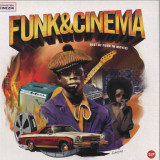
- A1: Isaac Hayes - The End Theme "Shaft
- A2: The Blackbyrds - The One-Eyed Two-Step
- A3: The Meters - Tippi-Toes
- A4: Melvin Van Peebles - Hoppin John
- A5: Joe Simon - Theme From "Cleopatra Jones" (Feat The Mainstreeters)
- B1: Lalo Schifrin - Bullitt (Main Title)
- B2: Don Julian - Lay It On Your Head
- B3: Isaac Hayes - Main Title "Truck Turner
- B4: Dyke & The Blazers - Let A Woman Be A Woman (& A Man Be A Man) (& A Man Be A Man)
- B5: Jerry Butler & Jerry Peters - Speak The Truth To The People (Frankie's Theme)
- C1: Dyke & The Blazers - We Got More Soul
- C2: Gil Scott Heron - Home Is Where The Hatred Is
- C3: Don Julian & The Larks - Shorty The Pimp
- C4: The Quantic Soul Orchestra - Pushin On (Feat Alice Russell)
- C5: George Benson - On Broadway
- D1: New Paradise - I Love Video
- D2: First Choice - Let No Man Put Asunder
- D3: Frankie Smith - Double Dutch Bus
- D4: The Sugarhill Gang - Rapper's Delight
- D5: Grandmaster Caz - South Bronx Subway Rap
After being out of print for years, we present the deluxe 10 year anniversary edition of Harm's Way - Isolation. Expanded over two LPs, packaged in a heavy weight tip-on gatefold LP jacket with UV spot varnish, printed inner sleeves and a gatefold insert. Disc one features a re-master of Isolation by Colin Jordan white Disc two features select tracks remixed & reimagined by Justin Broadrick (Godflesh, Jesu, JK Flesh), Andrew Nolan (Intensive Care, The Endless Blockade), Dylan Walker (Full of Hell, Sore Dream) and Petbrick (Igor Cavalera and Wayne Adams). Recorded in 2011 at Bricktop Studios by Andy Nelson and originally released the summer of that same year, Isolation acted as both a turning point in the sound of Harm’s Way and the foundation of their catalog to come. Elements of Industrial and Electronics expanded the vision of the group as they dove deeper into a metallic sound unheard on their prior releases. This gained the attention of many press outlets including Decibel Magazine, Revolver and Kerrang, as well as tour opportunities with acts such as Nails, Rise and Fall, The Acacia Strain, Terror, Foundation, and many more. After supporting the release of Isolation for two years, Harm’s Way signed to Deathwish Inc to release “Blinded” (2013) and “Rust” (2015) before moving forward to Metal Blade Records for the release of their most recent full length “Posthuman” (2018).
"Laurel Hell" ist ein Soundtrack zur Transformation. Eine Landkarte für den Ort, an dem Verletzlichkeit und Widerstandsfähigkeit, Trauer und Freude, Fehler und Transzendenz in unserer Menschlichkeit Platz finden und als würdig angesehen werden können - um letztendlich anerkannt und geliebt zu werden. "I accept it all," verspricht MITSKI. "I forgive it all." Auf "Laurel Hell" festigt MITSKI ihren Ruf als Künstlerin, die die Kraft besitzt, unsere wildesten und zwiespältigsten Erfahrungen in ein heilendes Elixier zu verwandeln. "I wrote what I needed to hear. As I've always done." Nach der Veröffentlichung von "Be The Cowboy", einem der meistgelobten Alben des Jahres 2018, das von Outlets wie Pitchfork (u.a.) zum Album des Jahres gekürt wurde, stieg MITSKI vom Kultliebling zum Indie-Star auf. Mit spürbaren Folgen: Die Schinderei des Tourlebens und die Fallstricke die mit der erhöhten Sichtbarkeit einhergingen, beeinflussten ihre Musik ebenso wie ihren Geist, die sich in der ersten Single "Working For The Knife" niederschlägt. Ein Song, wie ein Prüfstein für das Gesamtgefühl von "Laurel Hell": "I start the day lying and end with the truth / That I'm dying for the knife." "Be The Cowboy" wurde von weiblicher Stärke und Trotz angetrieben, lebte jedoch von seinem Spiel mit Masken. Wie der Berglorbeer bzw. die "laurel hell", nach dem das neue Album benannt ist, kann die öffentliche Wahrnehmung, wie das berauschende Prisma des Internets, eine verlockende Fassade bieten, hinter der sich eine tödliche Falle verbirgt. Die sich immer enger zieht, je mehr man sich anstrengt. "I got to a point, where I just knew that if I kept going this way, I would numb myself to completion." Erschöpft von diesem verzerrten Spiegel und unserer Sucht nach falschen Binaritäten, begann MITSKI, Songs zu schreiben, die die Masken abstreifen und die komplexen und oft widersprüchlichen Realitäten dahinter offenbaren. MITSKI dazu: "I needed love songs about real relationships that are not power struggles to be won or lost. I needed songs that could help me forgive both others and myself. I make mistakes all the time. I don't want to put on a front where I'm a role model, but I'm also not a bad person. I needed to create this space mostly for myself where I sat in that gray area." Die daraus entstanden Songs verkörpern genau diesen Raum. Wie die zweite Single des Albums, "The Only Heartbreaker", die gemeinsam mit Dan Wilson geschrieben wurde und der erste Song dieser Art in ihrer Diskografie ist. "The Only Heartbreaker" verbindet treibenden 80er-Pop mit einem trügerisch einfachen Text, dessen aufrichtiger Refrain ins Ironische kippt, sobald dieser "the person always messing up in the relationship, the designated Bad Guy who gets the blame," beschreibt und sich zugleich fragt, ob "the reason you're always the one making mistakes is because you're the only one trying." MITSKI schrieb viele Songs für "Laurel Hell" während und teilweise vor 2018. Das Album wurde allerdings erst im Mai 2021 final abgemischt. Es ist die längste Zeitspanne, die MITSKI jemals für ein Album gebraucht hat und für die Musikerin inmitten einer radikal veränderten Welt endete. MITSKI nahm "Laurel Hell" mit ihrem langjährigen Produzenten Patrick Hyland in der Zeit der Isolation während der Pandemie auf, als einige der Songs "slowly took on new forms and meanings, like seed to flower." Das Album als Ganzes entwickelte sich "to be more uptempo and dance-y. I needed to create something that was also a pep talk" erklärt MITSKI. Die Spannung, die zwischen ihren raffinierten, aber wehmütigen Texten und dem sprudelnden Pop-Sound der 1980er Jahre entsteht, ist eine dringend benötigte Infusion in Zeiten wie diesen und das Werk einer reifen wie unwiderstehlichen Künstlerin, die auch zu fröhlich ansteckenden Dance-Beats immer noch etwas Profundes beizutragen hat.
New Colombian Acid Techno/Funky Techno label 76B weighs in with it's first release which hits the ground running! Label boss Lior teams up with legendary London MC Tiddles for "United Are We", a funky Acid Techno call-to-arms with a blistering Chris Liberator and Sam DFL remix which claums A1 status with it's catchy refrain and its classic Acid Techno dynamics. "Back To Minimal" is another Chris Liberator & Sam DFL chugging funky Acid Techno offering, whilst fellow South American Acid Chochi delivers the final driving track, a slower thumping epic in "Those Were The Days".
Originally released in 1986, the debut album by My Dad
Is Dead is remarkable not only for its strong and varied
material, but also how the aesthetic of MDID’s music was
fully formed and instantly recognizable from the git-go.
Here are the open modal guitar tunings, the primitive
drum machine paired with live drums, the complete
rejection of the pentatonic scale and related 1970s guitar
techniques, and the dry, journalistic language that brings a
distanced, subdued pathos to the harrowing characters and
their situations.
Few artists who traffic in the darker realms of the human
condition do so without some degree of melodrama; Mark
Edwards’s penchant for understatement and distance
brings even more gravity and impact to these songs of lost
souls in a dying city. All these qualities would become
hallmarks of the My Dad Is Dead sound for years to come.
Like Edwards’s next few albums, ...And He’s Not Gonna
Take It Anymore was performed and written entirely by
himself, which only deepens the feeling of isolation that
permeates the album.
This 2021 reissue was remastered by John Golden Sr.
and is a huge sonic improvement over the original pressing
and early ’90s European editions. Best of all, it includes
an entire bonus LP of rare 1985 recordings that were only
issued on cassette at the time. These are raw, primitive
4-track recordings that ooze with post-industrial Cleveland
malaise. They include nine previously unnreleased songs,
and early versions of four songs that were re-recorded for
the album. Fans are certain to find some new favorites here.
Magnum II is the eponymous second studio album by English hard rock band Magnum. Originally released in 1979, the album highlights the band’s trademark harmonies and punchy instrumentals. Magnum II is a diverse record, as it features ballads and adult contemporary rock, but also hints of prog rock and heavy metal. A track like “Great Adventure” contains catchy vocals, dynamic guitar riffs and inspired keyboards, while the acoustic “Reborn” showcases a more mellow side of the band. Magnum II was produced by Ten Years After bass player Leo Lyons.
In my parents' living room stands an elaborately hand-forged copper kettle - my grandfather's masterpiece, hammered out of a single piece of copper. Growing up in a family of craftsmen, I have been familiar since early childhood with the attitude of perfecting a thing for its own sake.
The deepening concentration and slow maturing of execution, the craft shares with spiritual rituals, with arts, sports and the sciences. I am touched by the sight of almost ideal expressions of human activity, be it a forged piece, a perfectly build sentence or an athletic performance. I dedicate my album SKILLS to this fascination.
A branched succession of changing skills has brought mankind to the present day. The skills that were originally life-supporting grew into handy crafts and art. This development through the times reflects the enormous changes in ethics, aesthetics and morals. People describe this process in many shades, from culturally pessimistic dystopias to posthumanist utopias.
The music of SKILLS lives in this field - between hymn and melancholy.
clear vinyl[25,00 €]
'PULSE 01' is the first release in PITP's new series, which is an ongoing exploration of ambient tech, while offering a more structured display of beat-driven ambient music. Pulse 01 features brand new tracks by SYNE and Influx. SYNE is Dennis Huddleston from the UK, who is most recognized for his ambient work as 36. He returns to his SYNE alias for the first time in nearly 5 years, with only his second record since his 2017 self-titled debut LP. 'Dystalgia' is a 12 minute opus, spread over 3 movements. Soaring pads and razor sharp percussion combine for a dynamic, emotionally charged journey in sound. Showing love to the Detroit greats, but recognising the distinct UK influence which made him fall in love with Techno in the early 90's, it's a surprising pivot in Dennis' sound and one which all lovers of beautiful, melodic ambient techno should enjoy. Influx is James Bernard from the US, who is most recognized for his solo work in recent years. Influx was his trance/techno alias for much of the early to late 90's and released his work with well-respected UK and US labels.
yellow vinyl[25,00 €]
'PULSE 01' is the first release in PITP's new series, which is an ongoing exploration of ambient tech, while offering a more structured display of beat-driven ambient music. Pulse 01 features brand new tracks by SYNE and Influx. SYNE is Dennis Huddleston from the UK, who is most recognized for his ambient work as 36. He returns to his SYNE alias for the first time in nearly 5 years, with only his second record since his 2017 self-titled debut LP. 'Dystalgia' is a 12 minute opus, spread over 3 movements. Soaring pads and razor sharp percussion combine for a dynamic, emotionally charged journey in sound. Showing love to the Detroit greats, but recognising the distinct UK influence which made him fall in love with Techno in the early 90's, it's a surprising pivot in Dennis' sound and one which all lovers of beautiful, melodic ambient techno should enjoy. Influx is James Bernard from the US, who is most recognized for his solo work in recent years. Influx was his trance/techno alias for much of the early to late 90's and released his work with well-respected UK and US labels.
They have been active since 2005 and their new record, Where Myth Becomes
Memory, is their sixth full- length album. It is the follow up to their critically
acclaimed 2018 album, Time Will Die And Love Will Bury It. The group is known
for their sonic and energetic live performances, as well as their stark and
consistent artistic aesthetic.
Vocalist Eva Spence is one of the most dynamic and varied vocalists in the
progressive metal scene, her gorgeous cleans and guttural screams are truly
unique.
Their new record, Where Myth Becomes Memory, is a grand display of
immaculate musicianship, intricate songwriting, and raw emotion. There is a
consistent theme throughout the record which is accompanied by a hauntingly
beautiful grand piano. The attention to detail in the recording is astonishing, as
you can hear the individual cadence of each key being pressed in. The album
feels like a living, breathing work of art.
Throughout Where Myth Becomes Memory, you find Rolo Tomassi moving
through elements of mathcore, post- metal, prog, classical, ambient and
experimental.
The band can be broadly described as progressive metal, and specifically defined
as experimental mathcore.
They have been active since 2005 and their new record, Where Myth Becomes
Memory, is their sixth full- length album. It is the follow up to their critically
acclaimed 2018 album, Time Will Die And Love Will Bury It. The group is known
for their sonic and energetic live performances, as well as their stark and
consistent artistic aesthetic.
Vocalist Eva Spence is one of the most dynamic and varied vocalists in the
progressive metal scene, her gorgeous cleans and guttural screams are truly
unique.
Their new record, Where Myth Becomes Memory, is a grand display of
immaculate musicianship, intricate songwriting, and raw emotion. There is a
consistent theme throughout the record which is accompanied by a hauntingly
beautiful grand piano. The attention to detail in the recording is astonishing, as
you can hear the individual cadence of each key being pressed in. The album
feels like a living, breathing work of art.
Throughout Where Myth Becomes Memory, you find Rolo Tomassi moving
through elements of mathcore, post- metal, prog, classical, ambient and
experimental.
The band can be broadly described as progressive metal, and specifically defined
as experimental mathcore.
Vinyl version of the Swedish Death Metal classic - Entombed's first album
Remastered in 'FDR' - full dynamic range mastering - pressed from the original
master tapes