Furious debut from Kesa Getame. Precision drum programming and remorseless, uncompromising swing across four battle-ready tracks. It's music situated within dystopia, no doubt, but associations with only cataclysm and dread seem superficial. Vicious euphoria feels more appropriate, and it delivers this within a cutting-edge framework that manages to balance meticulous detail and raw expression whilst making it all sound effortless. Serious business.
Buscar:dy
When his mother brought Stanley Turrentine’s Salt Song LP back from a trip to Canada, Julien Lourau, then a teenager, was impressed by the scope of the sound and the groove of the saxophone. He was also charmed by the lush arrangements and funky sound of the record, typical of releases on the CTI label. Created by producer Creed Taylor, CTI left an imprint in the minds of 70s jazz fans much like Blue Note did in the 60s, and it even ended up releasing work by artists who started out on this mythical label such as Stanley Turrentine and Freddie Hubbard. The two even shared the same sound engineer, the great Rudy van Gelder.
Yet CTI, though highly prolific during its 15 years of activity, has not benefitted from the same aura as its predecessor. “To breathe life into this album, I listened to a wealth of CTI releases and discovered some I had never heard before. I noticed, oddly, that many of today’s musicians know very little about CTI - a label unfairly considered as minor.”
The choice of tracks was determined by Julien’s personal tastes, always keeping in mind a desire to help people discover them yet focusing on the joy of actually playing them too.
"The album is made up of 9 pieces. Mathieu Débordes got everything down to the nearest note before we even attempted to play them. CTI didn’t hold back in fuelling their compositions with brass and violins, but I erased this aspect and pared things down to a bass, drums and two keyboards."
English drummer Jim Hart, someone Julien worked with during his London years, propels the group - from hard-bop polyrhythms with “drum & bass” inflections to a reworking of classic Red Clay.
Sylvain Daniel on the bass and Arnaud Roulin on the analogue keys are two musicians close to the saxophonist, and that he met when they were students in 1999 while organising a master class at the Conservatoire de Nantes. Since then, they have become his esteemed companions.
The collaboration with young pianist Léo Jassef began on this recording, where he also plays the Prophet 5. The dynamic and overlap of the many keyboards played by Arnaud and Léo bring the record a richness of timbre and harmony that the strings and brass provided on the CTI recordings.
For the final track on the record, Julien called upon his friend of 30 years, guitarist Bojan Z, for a fresh, Gospel take on Love and Peace, a track recorded by Quincy Jones in 1969, which here, is dedicated to Bojan’s recently departed brother.
“When it comes down to it, this album really is as I had imagined it, with, luckily, a few unexpected turns. I created a playlist I then claimed as my own. But in the end, I must admit that I would have loved to have composed some of these tracks.”
- A1: The Dark Side Of The Moon
- A2: Space 1999 Main Titles
- A3: People Are Dying Up Here
- A4: Massive Nuclear Explosion
- A5: Human Decision Required
- A6: The Entity
- A7: We´re At War
- A8: A Plague Of Fear
- B1: Ultima Thule
- B2: The Ultra Probe
- B3: The Daria
- B4: Asteroid
- B5: Force Shield
- B6: The Survival Ship
- B7: Home
- C1: Welcome To Piri
- C2: Balor´s World
- C3: The Prodigal Husband
- C4: Too Good To Be True
- C5: Anti Matter World
- C6: Paradise Lost
- C7: Gwent
- D1: Up There Again
- D2: Regina´s World
- D5: Arkadia
- D6: Space 1999 End Titles
- D3: Santa Maria
- D4: Captives Of Triton
The latest release in the series exploring the musical worlds of Gerry Anderson is the most extensive yet. Space: 1999 ran for two series from 1976 to 1977 and depicted the occupants of Moonbase Alpha and their struggle for survival when, after the explosion of a nuclear waste dump, the Moon is hurtled into space.
The series was the most expensive produced for British television at that time and the most musically diverse of all the shows made by Anderson for ITC. Gerry Anderson’s long-time musical partner in all the previous adventures was Barry Gray and Space: 1999 proved to be the last of their collaborations.
Uncut Magazine referred to Series 1 music as “Pink Floyd without the mythology”. The first recording session for Space: 1999 took place on December 11th 1973 with a 52-piece orchestra performing the opening and closing title music. For the series’ incidental music between 32 and 38 instruments were utilised at any one session, all conducted by Barry Gray. The selections from Year 1 show Gray’s skills in creating a memorable opening theme as well as dramatically evocative cues highlighting the plight of the Alphans as they became known. The Year 1 album also showcases a selection of library cues which featured throughout the series.
Barry Gray was a classically trained composer and a versatile musician and was amongst the first composers to use electronic instruments in music for television. Best known for creating the music for most of the Gerry & Sylvia Anderson television series in the 1960's and 70's (Fireball XL5, Thunderbirds, UFO, Space:1999), Barry Gray’s complete musical opus is still not commercially available in its entirety. Fanderson, dedicated to the productions of Gerry Anderson, has gained access to all Barry Gray's original studio tapes and have undertaken a major re-issue project. Together with Fanderson, Silva Screen Records is championing Barry Gray’s incredible musical opus and is releasing the material in a series of physical and digital albums and vinyl records.
Tape
Pauline Oliveros' Tara's Room has long been a favorite in the Imprec office and it's a great honor to be able to release it on LP for the very first time. Tara's Room was cut by John Golden and pressed at RTI in order to achieve a quiet, dynamic pressing. Originally released on cassette in 1987 following the 1986 release of "Sounding / Way" with Guy Klucevsek which is also available on LP via Imprec.
"Both pieces are intended to aid the listener in times of spiritual change, but are just fine for 'everyday' use as well. Highly recommended." Charles S. Russell, Ear Magazine
This LP features two long sides of infinite depth and sensitivity. Oliveros performs these pieces using a Just Intonation accordion and her Expanded Instrument System in order to bend both time and pitch.
Pauline Oliveros, composer, performer and humanitarian is an important pioneer in American Music. Acclaimed internationally, for four decades she has explored sound - forging new ground for herself and others. Through improvisation, electronic music, ritual, teaching and meditation she has created a body of work with such breadth of vision that it profoundly effects those who experience it, and eludes many who try to write about it. Oliveros has been honored with awards, grants and concerts internationally. Whether performing at the John F. Kennedy Center in Washington D.C., in an underground cavern, or in the studios of West German Radio, Oliveros' commitment to interaction with the moment is unchanged. She can make the sound of a sweeping siren into another instrument of the ensemble.
"On some level, music, sound consciousness and religion are all one, and she would seem to be very close to that level." John Rockwell
"Through Pauline Oliveros and Deep Listening, I now know what harmony is. It's about the pleasure of making music." John Cage
How does a musical production in the world of entertainment evolve and materialize? What happens behind the scenes of designing a musical idea?
It's amazing how music plays a vital role in the lives of people who believe in it. In a historical moment like this and with the music scene losing its identity, Supercinema records welcomes ITNA an artist collective to its world, consisting of Ezio aka SWRD, Edoardo and Luca. The three started in 2016 and after three years of working on this project, they returned aiming to implement a collective of ideas coming from three different generations with different sounds while trying to adapt to the contexts of a world that has radically changed. The idea was to create a musical journey by combining multiple genres in order to unite diversity and create a balance that brings the people of music under a single social flag.
The goal of the project lays the foundations of a path that encompasses all those contents, interactions, and expectations of emerging artists who relate to the external world, tormented and deconstructed, which through musical, cinematographic, and exhibition productions, to then move on to tormented artistic scenographic dynamics of the fashion world. The artistic collaborations will be aimed at the production of sound samples, beats, audio packages, and unreleased songs that will be part of the ITNA collective.
The band aims to implement a collective of ideas, embrace the general culture, interactions and above all to be able to experience ephemeral emotions in our days.
In the fleeting moments between the state of being awake and reaching the doors of dreamworld lies a borderland whence comes the mood music of ancient stories told – the celestial unison of three creative souls known as AURI.
Originally born in 2011 from the special connection of Johanna Kurkela, Tuomas Holopainen and Troy Donockley, AURI was first introduced to the world as late as 2018. Now complemented by the dynamic percussive talents of Kai Hahto, the threesome carves fantastical worlds entirely their own.
Comprised by Tuomas’ keys and infinite imagination, Troy’s arsenal of flutes, other folk instruments and magical touch, and Kurkela’s youthful and tender voice full of childlike wonder – fragile and gossamer, yet powerful and moving beyond words – the flow of AURI’s celestial, uplifting mood music captures from the first notes and does not let go.
To its key members AURI is a creative outlet unconfined by the preconceptions caused by their other bands and their respective audiences. Leaning to Celtic folk and cinematic pop yet not shackled by any specific genre, AURI isn’t the kind of music that can be described by words alone. No, an equal effort of the enchanted three, AURI runs a lane of completely their own. Unburdened by anyone’s expectations but their own. This is the sort of music that taps directly into emotions.
Embrace the atmospheric auditory imagery of fantastical valleys of other fairytale dimensions and soon gone fireside bards. Dwell for just a moment in treasuries of dreamlands and ponderings that see mundane things turning into otherworldly miracles.Feel welcomed to embark on endless adventures on long roads untrodden and ships never sailed.
As if frozen in time, you’ll be captivated by heart-burstingly elating fare-thee-wells for those dearly departed.
Hear the soft words that empower those feeling inadequate and reassurance to others fearing death.AURI’s are the keys to a dimension of awe no one else sees. Only theirs to offer are the mystical, soundscapes and ethereal vocals.
Theirs to hold are the magical powers that can melt the steeliest of hearts and make grown men cry. AURI invites the listener along for journeys no other band can provide.
Come, my love – now it‘s calm enough to go.
"Ry Cooder" - Ry Cooder (voc, g, mand, b); Van Dyke Parks (p); Bobby Bruce (v); Chris Ethridge Roy Estrada, Max Bennett (b); John Barbata, Richie Hayward (dr); Milt Holland (dr, perc); Gloria Jones (backing voc)
By the time he was aged 22, Ry Cooder was already a veteran of the music business and in great demand as a studio musician and sideman. Shortly after signing a contract with Warner Music in 1969, he released his first album under his own name, placing his confidence in the musical talent he had developed since being a child and on the rare value of his favourite instrument, the steel guitar.
The present LP that carries his name is a fascinating blend of blues, folk, rock ’n’ roll and pop – a unique mixture, which combines superb songs, virtuosic playing and somewhat bizarre yet imaginative arrangements. For material, Cooder, the son of folklorist parents, dug out ten gems coming from over six decades, right back to the 1920s – by legends such as Woody Guthrie, Blind Blake, Sleepy John Estes and Leadbelly, as well as a more up-to-date Randy Newman composition. As magnificent as his choice might be, it is the exuberant charm of his own instrumental composition "Available Space" that almost steals the show here. Expansive and unbiased, Cooder plays an ironic game made up of wordless irregular phrases, which promise the listener something new and ultimately circle in an infinite loop.
Cooder’s need to prove himself, moderated by his veneration for the past, helps to create a completely original work that will prove rewarding for the adventurous listener.
This Speakers Corner LP was remastered using pure analogue components only, from the master tapes through to the cutting head. More information under pure-analogue
All royalties and mechanical rights have been paid.
Recording: 1970 at various studios by Bob Kovacs, Doug Botnick, Rudy Hill and Jim Lowe
Production: Lenny Waronker and Van Dyke Parks
Mannequin Records is elated to present for the first time on vinyl the reissue of Giovanotti Mondani Meccanici’s first video soundtrack, originally released in 1984 as an audiotape in less than one hundred copies. Giovanotti Mondani Meccanici (literally Mundane Mechanical Youth) or GMM was one of the most unclassifiable audiovisual experiences to emerge from Italy in the 1980s. Maurizio Dami a.k.a. Alexander Robotnick, a pivotal member of GMM, was responsible for the group’s music output.
Founded in 1984 by Antonio Glessi and Andrea Zingoni in Florence, GMM was an art collective whose production represents the quintessential expression of postmodern transmedia hybridity. GMM pioneered the genre of computer comics, created video installations, developed “multiple identity” performances, and was involved in fashion, media, and music productions, and later on produced cyberdelic environments, artificial reality projects, and proto-memes.
Alexander Robotnick’s first contribution to GMM was this soundtrack for the group’s eponymous first video, the animated version of a computer comics they coincidentally published on legendary Frigidaire magazine. Restored by Dami and reissued here for the first time by Mannequin Records, the composition was also split into two “suites” and released as an audiotape distributed by Materiali Sonori, also responsible for other releases by both Robotnick and GMM.
Determining in this work is Dami’s adoption of the alphaSyntauri, also known as the first affordable digital synth (priced less than $2000 when it was released in 1980), which was playable through its own software, “alphaPlus,” on the Apple II computer. The same computer was used by Glessi to “draw” the 3-bit strips scripted by Zingoni recounting the joyrides of the Giovanotti Mondani Meccanici, three merciless cyborgs in black suit and sunglasses dividing their time between nightclubs, rapes and murders.
As Robotnick, Dami developed an innovative formula of Italo disco that was attractive to the dance floor yet at the same time highlighted the expressive properties of the instruments he used, notably Roland drum machines and Korg synthesizers. For the soundtrack of GMM’s videos and installations, he left aside the danceable synth rhythmics in favor of ambient sounds that produced rarefied atmospheres, psychological tensions, and enhanced states of consciousness.
Dami’s scores for GMM’s artworks could be associated with Italian avant-garde music of the 1970s and 1980s, ranging from composers who adopted electronics flirting with pop and songwriting to minimalist musicians exploring seriality and drones, including Franco Battiato, Roberto Cacciapaglia, Francesco Messina, and Riccardo Sinigaglia. Analogies could also be traced with the playful and humanizing approach to personal computers that characterizes the music output of Marcello Giombini and Doris Norton.
The futuristic escapism of minimal synth and ambient music’s psychological nature is infiltrated by drifting harmonics typical of new age, as if in search of a spiritual dimension of technology. Characteristic of the postmodern ethos of GMM Suite, in line with the humanizing approach to technology that is at the base of GMM’s computer comics, is the melancholic take at speculative dystopias in which human beings would find themselves increasingly trapped into identity crises: a true cyborg’s melodrama.
The core tenets of Morgan Wright's music have long tested club music's context; the rituals and customs that define it, and how each of those genres change once removed from their traditional settings.
It's a space Morgan Wright feels at home in; one where he's constantly asking questions of the structure club music resides within, and what it means to create a new space for familiar sounds. And over the course of his debut album, Class Tourist, Morgan has found new ways to elevate those same questions - whether by way of intention, or a pandemic-induced coping mechanism.
In Class Tourist, Morgan again borrows from familiar strains of the subgenres which have come to form his musical identity. This time, he fuses sounds of post-punk, IDM and breakbeat, hopeful they converge to form a bastardised rendition of the latter, with "Australiana" at its core.
It's a sound that was made possible by a change to his songwriting approach, after pivoting from a loop-based production style - one which he has applied to a slew of other projects, for the better part of five years - to one which lends itself to a more standardised, contemporary format.
Moving through the record, Morgan toys with musical tropes of contrast with a calculated refinement unheard throughout his previous work. The coalescence of melodic optimism and bleak, mournful soundscapes feature on Class Tourist again, as you would expect. But this time, contemporary structure - with the exception of a few songs - along with the features of label-mate, Purient, and frequent collaborator, ENDL355, breathe new life, and even a new genre, into Morgan's work.
Dynamite Cuts 45s series is proud to release another double-pack; loaded with jazz funk 7” wonders. F.B.I. (Funk Band Inc) was the UK’s original Jazz-funk band. Four tracks from this timeless LP are now on 7” for the first time. Originally released in 1977, this LP is now massive with the collectors, and is in the ‘must-have’ category. The incredible ‘Bad Deal’ (my personal favorite), and, yes, the outstanding, “Talkin about love”, are both on there. This Dynamite Cuts release is a gatefold edition; with some previously unseen photos of the band. Unmissable
repress
Mono Junk's cult label DUM Records is back with a new five track Various Artists EP that again packs a vital punch. He appears himself along with some fellow legends of the scene.
First up, Morpholgy is a consistent performer who has continued to serve up quality electro since 2009 and here serves up a hot new piece. 'Vector Plant' is busy and industrial, slick and metallic as it unfolds and burrows deep into your veins. Then comes the A2, Irwin Berg featuring Freestyle Man (aka Finnish Moodmusic boss Sasse aka Klas Lindblad) with a track made in 1995 and never released before. This pair worked together and made a cult electro record for Sähkö Recordigs in 1998 and this one is just as impactful. It is frosty and frazzled, slow motion but high impact and full of distorted lines and heavy drums.
Next is Mr Velcro Fastener who were the first kings of electro to come out of Finland and between 1999 and 2006 were famous all over the world. Their brand new cut 'Almost There' is a deep one that is riddled with bleeping melodies and has smeared chords bringing a sci-fi feel. Then it is Mono Junk's turn to dive into the vaults with an unreleased track from 2005. 'Feeling or Destroy' is a physical number with crashing hits and snaking, gurgling bass that is dark and dystopian. Last of all comes Irwin Berg with Mono Junk as New York City Survivors. Says the DUM boss, Our unreleased track here was made after the New York City Survivors - Static Light CD 2002' and it is a turbo charged track with screwed up grinding bass, icy hi hat rhythms and menace in its grooves.
Runnner's Always Repeating yearns for a sense of place. The project of the now LA-based songwriter/multi-instrumentalist Noah Weinman, Runnner's poignant reflections on the isolation and anxiety caused by a sense of rootlessness radiate with wit and charm. Self-produced and recorded wherever he called home at the time, Always Repeating documents this cycle of looking back and moving forward, of alienation changing to reconciliation. For Weinman, Runnner is primarily a solo endeavor with an ever - expanding musical community of musicians collaborating on his albums and shows, which at times have been known to feature up to a 7-piece live band (he also has a burgeoning career as a producer, notably working on Skullcrusher's critically-acclaimed debut EP for Secretly Canadian). Weinman completed Always Repeating last fall in Western Massachusetts and Woodstock using a mobile studio set-up. He played the majority of the instruments himself, including guitar, bass, trumpet, banjo, piano and synth. The goal was to create the perfect balance of intimate and melancholy songwriting through the lens of hi-fi/lo-fi dynamics, inspired by his favorite artists like Bon Iver, the Microphones, and Julien Baker. The 10-track collection is composed of five re-recorded versions of songs that appeared on Runnner's 2017 debut, Awash, and 2020's One of One EP. Although the songs were written over the course of three years, all find Weinman grappling with the same thing: feelings of uncertainty about his life. Always Repeating ultimately tells the start of Weinman's journey as Runnner, and his cyclical feelings of being connected and then disconnected from the world over and over again.
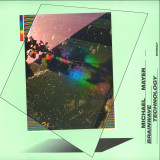
Michael Mayer’s latest EP, Brainwave Technology, comes at you purposeful, stealthy and sly. It’s a glorious left turn for the redoubtable producer, one that sees his typically lean and lithe productions buffed to a metallic, futurist sheen. There’s a gleam in the eyes of tracks like “Brainwave Technology” and “Alpha” that speaks of serious fun, of the intersection of the pleasure zone and the frontal lobe.
“Brainwave Technology” itself is informed by Mayer’s deep dive into the thorny terrain of artificial intelligence, transhumanism and posthumanism. Inspired by reading German philosopher Richard David Precht, Mayer found himself heading down the “proverbial rabbit hole,” as he describes it, “watching hours of YouTube material by self-proclaimed prophets of these ‘inevitable’ changes to come.” Never one to be taken in by the egotist’s dance, Mayer’s cynicism about the whole endeavour is tempered, a little, by the deeper questions that these figures gesture towards: “Is it really an evolutionary step that man and machine become one? Or is it rather a marketing plot by Silicon Valley billionaires?”
On “Brainwave Technology”, Mayer plays the charlatans at their own game, turning their logic against them by exposing the fruitiness of their ‘visions’. “I chose irony as my sword with which I chopped off some quotes from some of those batshit crazy prophets and self-promoters,” he explains of the drooling psychobabble he drops in the track’s lacuna. There’s a sense of humour here – how could you not laugh at these hungover egotists? – but there’s levity too, a sense that Mayer’s using sound to expose the contradictions and double-speak at the heart of these half-formed ideas. It’s a Burroughsian tactic, to slice into the heart of the voice to see what hidden truths surface.
It was Burroughs, too, who once said that “when you cut into the past, the future leaks out”; Brainwave Technology cuts into the logic of the futurologist to leak out the messiness of modern reality. On “Alpha” and “Gamma”, Mayer seems to conjure up the stark, ominous music that’d soundtrack a science fiction reinterpretation – or preinterpretation – of our modern malaise, all funereal wreaths of electronic noise and clatterboxing beats. As the EP resolves with “Device For The Young At Heart”, Mayer’s questions are piling up: “Do we want to become immortal and live on as a download? Do we really give up on Earth and put all our effort into colonising Mars?” There are no answers, of course, but plenty of imaginings-to-be. Brainwave Technology soundtracks both dystopian and utopian possibilities of what could come next.
This is music by four strong individual players with room for eruptive solo-parts, but always held together by intense communication and beautiful interwoven melodies. The quartet's second album A History of Nothing (Trost records/TR170) got a huge number of excited reviews: A superb quartet outing. The music is all improvised, but it's firmly rooted in jazz, with superb interaction between all of the players, both on ripping, high-velocity blowouts and more delicate forays. (Peter Margasak, Chicago Reader) Freedom is clearly a responsibility as well as a joy, and it's emphasized here by the group's shared commitment: each musician is constantly working in two directions, stretching further and creating cohesion. The music is improvised with such an ear to complementary detail that it's literally being collectively composed. (Stuart Broomer, Free Jazz Collective) Together, this quartet is dynamite. It's exciting to hear a European musician along with three Americans, and notice that they communicate so well. (Jan Granlie, Salt Peanuts) Recorded by Klaus Hedegaard Nielsen at Jazzhouse, Copenhagen, March 2nd, 2017 Mixed by Joaquim Monte and Rodrigo Amado, CD Master by Simon Wadsworth / LP Master by Martin Siewert
After the release of ‘Kuarahy’ concurred with the blast of the worldwide pandemic and all the consequences it has generated, WHITE STONES - Martín Mendez’s project (OPETH’s bass player) - are ready to launch their second record.
When WHITE STONES released ‘Kuarahy’ they became the first Spanish band signed to Nuclear Blast Records, cementing their first album as an unprecedented milestone. Now, with ‘Dancing Into Oblivion’, the band returns with a more compact sound, having been hard at work ensuring the utmost attention to every detail for a result that is even better than the first record.
The topics covered on this second album draw on the feelings that Martín himself affirms he has lived through during the lockdown imposed by the covid-19 pandemic. “I started it very calmed in March when »Kuarahy« was released and the lockdown started. I wrote the new record and it just flowed so well. It’s my point of view, of the feelings I had during the lockdown period, in this weird year. I took advantage of the moment and I feel excited about it”, reveals the musician.
The most outstanding musical elements on this new record are the disparate genres that manage to co-exist. There is an element of aggression, that can be seen rearing its head in an instrumental frenzy, as well as soft and delicate intricacies that develop an atmosphere which surrounds the listener. There are distinct dynamics among the songs, with interludes allowing the listening to take a breath and appreciate what they’re hearing.
The writing process of ‘Dancing Into Oblivion’ has been pretty similar to the previous ‘Kuarahy’ but with some clear changes. Martín composed all of the instrumentals for the album but, as he says, “I’ve left sections open to the interpretation of each of the other musicians, both in the drums and in the vocals. Eloi wrote the lyrics this time and we then workshopped them together whilst working out the vocal parts to get the final result in the studio”.
WHITE STONES once again recorded at Farm Of Sounds Studios (Barcelona), owned by their singer Eloi. They were satisfied with the sound of ‘Kuarahy’ and the experience of the recording of that album and the comfort of making everything with their own tools made it all easier. “Everything has been ‘homemade’ because it’s a way of working and a philosophy I like. You have more control and you can better enforce your ideas”, Méndez explains -who also created the cover for ‘Dancing Into Oblivion’ together with Sandra, his partner for many years.
The final mix and mastering of this second album was done by Jaime Gómez Arellano at Orgone Studios (UK) because the band were more than satisfied with the work he did on ‘Kuarahy’ and they wanted to repeat that great experience. Eloi, as the singer and also the guy who recorded the music sent to Orgone Studios, acknowledges “the recording had more experience and a better sound quality because we made better decisions during the pre-production thanks to a higher level of self-awareness of ourselves as a band. Jaime knew us better too, so that simplified the process and in turn helped to make »Dancing Into Oblivion« as good as it can be”.
The line-up has been enhanced with the participation of the multifaceted Joan Carles Marí Tur on drums (who also plays in other bands like FACE THE MAYBE). The guitar solos were the job of Joao Sassetti (who was already a member of the touring line-up of WHITE STONES). Sassetti lives in Portugal and he couldn’t be in the studio in Barcelona, so he recorded his solos and digitally sent them over for integration into the final songs. The recording of the instruments has been more organic and as Boucherie says. “The original sound has been retained as much as posible in each and every element” and it has brought a natural/raw touch for ‘Dancing Into Oblivion’ just as the band had hoped and expected.
- 1: Candy
- 2: Don’t Like Me (Feat. Don Toliver & Gucci Mane)
- 3: Check Me Out
- 4: Iphone
- 5: Stfu
- 6: Back & Forth (Feat. Amine)
- 7: Girl Scouts
- 8: Let It Out
- 9: Loser (Feat. Trippie Redd)
- 10: No Debate
- 11: Pussy Poppin
- 12: Ohfr?
- 13: 10Fo
- 14: Own It
- 15: Smack A Bitch (Feat. Ppcocaine, Sukihana & Rubi Rose)
- 16: Smack A Bitch (Bonus)
NIGHTMARE VACATION vinyl will be released on 27th August via Atlantic Records/Sugar Trap. The genre-defying album features 16 captivating tracks, each showcasing Rico’s out-of-this-world energy and rockstar delivery, complimented by production from the likes of CashMoneyAP, Buddah Bless, Dylan Brady (100 Gecs) and more.
“I feel like this album proved to me that no matter what I’m going through, I can still make powerful music. All of these songs that I ever made were always about power, always about making you feel powerful. Sometimes you give so much power you feel powerless…I just tried to put all the emotions, and the happiness, and the crazy feelings y’all make me feel in this music and give it right back to you to consume and get your power up. So this is a soundtrack to getting back on your shit!” – Rico Nasty
NIGHTMARE VACATION has already drawn early acclaim via a number of international and domestic press looks, ranging from NME, WAVE and CRACK to Rolling Stone, The New York Times, W Mag and more. The album – which includes features from such luminaries as Trippie Redd and Aminé and production also by Take A Daytrip (Lil Nas X, Sheck Wes, Kid Cudi), Avedon (Roddy Ricch, Chloe x Halle), GRAMMY® Award-nominee Tay Keith (Travis Scott, BlocBoy JB, Drake) and longtime collaborator Kenny Beats – is highlighted by the singles, “IPHONE,” “Own It,” “Don’t Like Me (Feat. Don Toliver & Gucci Mane),” and “OHFR?,”.
NIGHMARE VACTION further follows the release of ANGER MANAGEMENT, a collaborative project with longtime producer Kenny Beats which followed the duo’s work together on Rico’s breakthrough 2018 Atlantic Records/Sugar Trap label debut, NASTY.
[o] 15. Smack A Bitch (feat. ppcocaine, Sukihana & Rubi Rose) [Remix]
As GospelbeacH continues to work on the follow-up to their third and most successful studio album LET IT BURN (2019) they are back to raise the vibrations and celebrate the good times with a little
detour through the past.
With the founding of CURATION RECORDS Chief Curator and GospelbeacH leader Brent Rademaker found himself surrounded by a room of over 1,200 60s/70s Glam Rock/Bubble Gum/Sunshine and Power Pop 45s owned by his record label partners.
Back in Mono Deluxe studios with his GospelbeacH brother Jonny Niemann
at the production controls they enlisted the well-seasoned and in-demand
rhythm section of Bob Glaub and Don Heffington that had worked with their
dear departed guitarist Neal Casal on his solo albums as well as Los Angeles
heroes Warren Zevon, Jackson Browne, Don Henley, Lone Justice and even
Sprinsgteen and Dylan.
Adding the Sunshine harmonies once again Nelson Bragg from the Brian Wilson/BeacH Boys Band.
Runnner’s Always Repeating yearns for a sense of place. The project of the now LA-based songwriter/multi-instrumentalist Noah Weinman, Runnner’s poignant reflections on the isolation and anxiety caused by a sense of rootlessness radiate with wit and charm. Self-produced and recorded wherever he called home at the time, Always Repeating documents this cycle of looking back and moving forward, of alienation changing to reconciliation.
For Weinman, Runnner is primarily a solo endeavor with an ever-expanding musical community of musicians collaborating on his albums and shows, which at times have been known to feature up to a 7-piece live band (he also has a burgeoning career as a
producer, notably working on Skullcrusher’s critically-acclaimed debut EP for Secretly Canadian). Weinman completed Always Repeating last fall in Western Massachusetts and Woodstock using a mobile studio set-up. He played the majority of the instruments himself, including guitar, bass, trumpet, banjo, piano and synth. The goal was to create the perfect balance of intimate and melancholy songwriting through the lens of hi-fi/lo-fi dynamics, inspired by his favorite artists like Bon Iver, the Microphones, and Julien Baker.
The 10-track collection is composed of five re-recorded versions of songs that appeared on Runnner’s 2017 debut, Awash, and 2020’s One of One EP. Although the songs were written over the course of three years, all find Weinman grappling with the same thing: feelings of uncertainty about his life. Always Repeating ultimately tells the start of Weinman’s journey as Runnner, and his cyclical feelings of being connected and then disconnected from the world over and over again.
- A1: The Boys Are Back In Town
- A2: Jailbreak
- A3: Don't Believe A Word
- A4: Dancing In The Moonlight (It's Caught Me In Its Spotlight) (It's Caught Me In Its Spotlight)
- A5: Waiting For An Alibi
- A6: Rosalie/ Cowgirl's Song (Live)
- B1: Do Anything You Want To
- B2: Chinatown
- B3: Sarah (Version 3)
- B4: Fighting My Way Back
- B5: Killer On The Loose
- B6: Hollywood (Down On Your Luck) (Down On Your Luck)
- C1: Thunder & Lightning
- C2: Renegade
- C3: Still In Love With You
- C4: The Sun Goes Down
- D1: Whiskey In The Jar
- D2: Bad Reputation
- D3: The Rocker
- D4: Showdown
- D5: Cold Sweat
- D6: Wild One
Formed in Dublin in 1968 few would dispute that Thin Lizzy helped define the genre Hard Rock.
The band scored 8 top 20 hits over 8 years and place no less than 8 albums in the UK top 20, 3 of which would make the top 10 and 4 the top 5.
From the mid-70s onwards, they championed the use of two lead guitars, it gave them a unique sound which evolved down the years and influenced the likes of Def Leppard, Metallica and Iron Maiden
After numerous line-up changes, Thin Lizzy called time in 1983
With 1986 just 4 days young lead singer and main songwriter Phil Lynott died aged 36. All music’s John Dougan wrote, “As the band’s creative force, Lynott was a more insightful and intelligent writer than many of his ilk, preferring slice-of-life working-class dramas of love and hate influenced by Bob Dylan, Bruce Springsteen and virtually all of the Irish literary tradition.”
This 2-LP set contains all that is great about the band – the tracklisting overseen by Lizzy Expert Nick Sharp covers what is the best of the band’s output throughout the years.