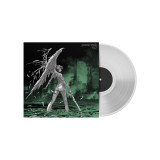
After the first casual meeting at Lessinia Psych Fest 2014 (Maxigross festival in the Lessini Mountains) Miles managed to come back in Italy during spring 2015 to work with the band. In march 2015 they went together in the studio house of the band in the small mountain village of Vaggimal (Verona) to improvise and record one month straight, interrupting the sessions only for a few shows between Verona and Roma. They put few microphones around a big room in the house to catch the general sound in a Daniel Lanois’s style, and they played in the dark of the night without any light to forget the individual sound of each member, focusing only on the main sound of the Music. Miles brought from LA some recordings he made with drummer Joe Westerlund (Megafaun, Califone…) and, starting from that material, they begin to play on that. After these magical musical encounter they became close friends, sharing an house in Verona (Casa Tega), many albums, shows and life experiences, forgetting about these Vaggimal Sessions, that bring inside of itself the magic and the purity of any first meeting. These naked recordings are the only witness of this session.
quête:e lan
GARDENIA is an existing land located at the Limpopo province of South Africa, right at the border with Botswana. The place's real name is Mmabolela and it's a private nature reserve covering 6500ha of subtropical savanna and part of Limpopo River.
In November 2019 I had a chance to visit the location and participate in an annual residency for composers and sound artists called 'Sonic Mmabolela', initiated and curated by Francisco López.
We lived in an isolated property in the middle of savanna having a unique opportunity to exist in undisturbed touch with the African wilderness.
For the past decade or so, Polish musician Michal Jacaszek has been exploring a new, resolutely modern chapter in Eastern Europe's long, storied love affair with classical music. His creations are painstakingly crafted collages of electronic textures and baroque instrumentation.
All the natural sounds later used to create Gardenia were captured there — during longtime recording sessions over the virgin interior of Mmabolela Reserve.
The album's field recording content was selected from several hours of birdsong, calls of frogs, insect noises, sounds of trees, bushes, grass as well as non-living natural elements like stones or shells.
These field recordings were later digitally processed and used as part of 9 musical arrangements.
However the recording sources and the location of Gardenia is defined, it was not my intention to document a South African natural soundscape nor create any other kind of strict concept album.
All I do in my work is an affirmation of beauty hidden in various aspects of the Creation. MJ
- Hollow Inside
- Light The Beacon
- Not Like I Was Doing Anything
- Note On The Table
- You Know It's True
- What Time Is It There?
- I Can't Sleep Thinking You Hate Me
- Smitten
- Portland, Oregon
- Let Me Brush The Hair From Your Face
- Stay
- Shoot The Moon
- Barney & Me
- Firefly
- La International Airport
- Crying
- If Things Had Been Different
- I Take It That We're Through
Repress
Songs ’94-’98 is a smart selection of material from The Cat’s Miaow, an Australian indie-pop group that gifted their decade with some of its finest songs. Released on World Of Echo, the album draws from the group’s string of excellent seven-inch singles, a small clutch of compilation contributions, and features one previously unreleased song, “I Take It That We’re Through”, recorded in 1998. Part of the burgeoning international pop underground of the nineties, The Cat’s Miaow’s legend has only built over subsequent decades, as more people discover this most quixotic and curious of groups: a recent appearance on A Colourful Storm’s compilation of Australian indie-pop, I Won’t Have To Think About You, is testament to their enduring influence. In part emulating the selection of tracks on the 1997 CD-only compilation, Songs For Girls To Sing, Songs ’94-’98 is also the group’s first ever full-length 12” vinyl collection. The Cat’s Miaow started out in 1992 as a home-recording duo, Bart Cummings (guitar, bass, vocals) and Andrew Withycombe (bass, guitar) taking time out from duties with Girl Of The World and The Ampersands (respectively), knocking out songs on Withycombe’s four-track. Soon joined by Kerrie Bolton (vocals) and Cam Smith (drums), the quartet spent the next five years quietly, slowly working away in the suburbs of Melbourne, recording gem after gem of independent pop. Like many of their Australian precursors or peers – The Particles, Even As We Speak, The Cannanes – The Cat’s Miaow were more successful overseas, a sadly typical phenomenon within the Australian musical landscape. The Cat’s Miaow were always worldly and stylish, anyway, each seven-inch single a refined artifact, each song a peaceable jewel. You could hear some relationships with other music – someone (if not everyone) in The Cat’s Miaow was a Galaxie 500 fan; there’s a minimalism to the playing and melodies that recalls Young Marble Giants, Marine Girls, Beat Happening – but the spirit in these songs is endearingly individualised, the result of a hermetic vision, an ideal of what a simple, unadorned pop song could be. They had a winning way with simplicity, songs like “Autumn”, “Crying” and “I Can’t Sleep Thinking You Hate Me” passing by in the blink of a moistened eye, and when they stretched out, as on “Firefly”, you can hear hints of the drifting ambience they’d perfect in their other band, Hydroplane. It’s not much of a surprise that The Cat’s Miaow found a receptive audience, and no small amount of support, from the networked communities of indie-pop labels and fanatics that developed in the nineties – they released records on imprints like Drive-In, Darla, Bus Stop and Quiddity, shared a flexi-disc with Stereolab, and appeared on countless compilations over the years. But they also understood the importance of the local: their first few cassettes reached the world’s mail routes via Wayne Davidson’s legendary Melbourne tape label, Toytown; they turned up on a split single with Davidson’s group, Stinky Fire Engine; they appeared on a tribute cassette for one of Australia’s finest, The Sugargliders, and indeed that’s Josh Meadows of said group playing wah guitar on “Stay”. The Cat’s Miaow also rarely played live – one launch gig, for the Munch video compilation, and a few parties – which is a great way to maintain mystique. Cosmopolitan yet homely, dedicated to their craft, The Cat’s Miaow always felt a little like a group moving in slow motion, using that pace and focus fully to embrace the art of the perfectly stated pop song – every element in place, no flash and no fuss, no excess, just the core of the thing. Few managed to tease such fierce poetry from such understated, elegant means. From Australia or anywhere.
Yours Truly melden sich mit der Ankündigung ihres zweiten Albums TOXIC zurück.
Die neue Single 'SOUR' ist der Nachfolger von "Call My Name", das im Januar 2024 veröffentlicht wurde und beim australischen Radiosender Triple J
in die Rotation aufgenommen wurde und dort den Spitzenplatz als meistgespielter Track des Senders erreichte.
TOXIC ist der Nachfolger des 2019 erschienenen Debütalbums Self Care der Band aus Sydney, das auf Platz 19 der ARIA-Album-Charts landete und bei
den ARIA Awards 2021 als "Best Hard Rock/Heavy Metal Album" nominiert war. Die Band wird im August auf dem britischen Reading + Leeds Festival
auftreten.
Schlechte Laune, schlechte Gewohnheiten und schlechter Atem kollidieren auf diesem Zehn-Song-Haufen auf dem Freeway nach Nirgendwo. "You Get What You Deserve" von 1985, das Neo-Grunge, Swamprock und Noise-Punk in einem Kessel drogengeschwängerter Psychosen verschmelzen lässt, setzt die australische Gefängnis-als-Land-Tradition des Wahnsinns im Angesicht der kulturellen Isolation fort. Atombomben-Nostalgie, Femme Fatale-Scharfschützen, Demolition Derbies und ein Urlaub am Hell Beach erwarten den Hörer.
Coke Bottle Green vinyl. Who were the first punks? Do The Damned have more of a shout than The Sex Pistols? The Stooges or Ramones? Gregg Deal, the acclaimed visual and performance artist behind his new project Dead Pioneers, is making a claim that Indigenous Americans were the first real punks. Deal suggests that the overarching theme of the album is "an introduction to the band itself". Created with a DIY disposition and the "love of a scene that saves lives", they reel off a roll call of marginalised groups and protected characteristics: "Indigenous rights, Black rights, Brown rights, Asian rights, Gay rights, Trans rights, Workers rights and beyond_". This is central to their identity and focus, saying that "with a North American Indigenous person as the vocalist, being unapologetically upfront on the social, political and cultural side of things doesn't seem necessary, but paramount to the overall tone of the band." This self-titled debut, coming in at a lithe 22 minutes with only one of the twelve tracks exceeding three minutes, is almost over before it begins, but covers a huge amount of ground in that time. Blistering opener 'Tired' sets out their stall; as with the whole album, it is passionate, but never preaching. Capitalised 'Political Music' can be hard to land without coming across as hectoring or earnest, but Deal's literary, humorous lyrics effortlessly cut through complex issues of marginalisation and colonialism.
Die atemberaubend schöne, aber auch manchmal etwas deprimierend miefige Idylle des schönen Bodensees ist die Kulisse für das kommende Sommerloch-Album von Schmutzki. In ihrer alten Heimat haben die drei Punkrocker aus Stuttgart 13 herz- und hirnerweichende Anekdoten aus dem mockenden Schlamm des ,Schwäbischen Meers" gezogen. Mal heiter, mal nachdenklich werden hier so einige Wurzeln ausgegraben, die man längst abgestorben glaubte. Doch als Kind vom See kannst du soweit wegrennen wie du willst, irgendwann holt er dich ein und es heißt: Bodensee Calling!
Blue and green split vinyl with black splatter. Thotcrime, the intercontinental commotion causers seem to have stuck the landing with their intensely non-conventional cybergrind style. Solid instrumentals, chiptunes, synths, and some absolutely furious vocals all come together create something beautiful under the blipping, glitching anger that's itching to scream out under the very chantable melody.
- Pretty Sister
- Crazy Town
- Copacetic
- Here Comes
- Pop Loser
- Living Well
- A Chang
- Audrey's Eyes
- Lisa Librarian
- 57: Waltz
- Candy Apples
- Catching Squirrels
- Warm/Crawl
- Creepy
- Stupid Thing
- Even Die
- Here Comes (Peel Session Version)
- Always (Peel Session Version)
- Crazy Town (Peel Session Version)
- 57: Waltz (Peel Session Version)
- Copacetic (Peel Session Version)
Doppel-LP auf rotem Vinyl, limitiert auf 2000 Stück. Das lange vergriffene Debütalbum der beliebten Indie-Rock-Band Velocity Girl aus dem Jahr 1993 ist wieder erhältlich, mit einem neuen, von der Band genehmigten Mix und einem kompletten Album mit Bonustracks, das Singles, Outtakes und die Peel Session der Band von 1993 enthält. Velocity Girl gründeten sich etwa 1989 an der Universität von Maryland außerhalb von Washington DC und setzten sich kurz darauf aus Gitarrist Archie Moore (Black Tambourine), Gitarrist Brian Nelson (Black Tambourine), Schlagzeuger Jim Spellman (Starry Eyes, Foxhall Stacks, High Back Chairs, Julie Ocean, Piper Club), Bassist Kelly Riles (Starry Eyes) und Sängerin Sarah Shannon (Starry Eyes, The Not Its) zusammen. Die Band kombinierte englisch inspirierten lärmenden Shoegaze-Fuzz mit rauem US-Indie-Rock und klassischem 60er-Jahre-Pop-Songwriting. Eine Killer-Single auf Slumberland und pausenloses Touren erregten die Aufmerksamkeit der damaligen Indie-Rock-Kenner, und nach einem hitzigen Werben, das sowohl Abendessen als auch Nachtisch beinhaltete, unterzeichneten Velocity Girl in Hoboken, New Jersey einen Vertrag auf einer Motorhaube, und machten Sub Pop zu ihrer Heimat. 1992 begann die Band mit der Arbeit an ihrem Debütalbum "Copacetic" in den Easley Studios in Memphis - einst Heimat der Bar-Kays und anderer klassischer Soul-Bands - unter der Leitung von Bob Weston (Volcano Suns, Shellac), und mischte das Album anschließend mit Weston in Chicago. Obwohl das Album starke Songs enthielt - Popsongs wie "Audrey's Eyes", "Pop Loser" und "Living Well" neben ehrgeizigen Erkundungen wie "Pretty Sister" und "Here Comes" - hatte die Band wenig Erfahrung mit der Produktion und es fehlte ihr an den Fähigkeiten, im Studio "das Boot zu steuern". Infolgedessen war das Album eine eher schlichte Angelegenheit, der es an der Üppigkeit der früheren Aufnahmen mangelte. In den Ohren der Band war das ein Schock, und sie merkten bald, dass dies nicht die Platte war, die sie zu machen hofften. Bob Weston hatte genau das getan, was von ihm verlangt wurde, und die Klänge eingefangen, aber die Band hatte nicht ihren Teil dazu beigetragen, eine klare Vision zu formulieren. Aber die Zeit der Band im Studio war vorbei, und Polvo war gerade aufgetaucht, um an ihrem Album zu arbeiten, also machten sich Velocity Girl auf, um das Video zu Audrey's Eyes" zu drehen. "Copacetic" kam 1993 auf den Markt und die Leute schienen es zu mögen, aber innerhalb der Band gab es ein Gefühl der Enttäuschung bis zu dem Punkt, an dem die meisten Mitglieder es nicht mehr ertragen konnten, die Platte zu hören. Seitdem hat die Band viel über Aufnahmen gelernt, und Archie Moore eine Karriere als Tontechniker eingeschlagen, so dass die Band schließlich beschloss, sich mit "Copacetic" nochmal auseinanderzusetzen. Nach umfangreichen Ausgrabungen tauchten die 2"-Bandspulen im Haus der Mutter von Jims Ex-Frau auf, und im Frühjahr 2023 begann Archie mit der Arbeit an einem Remix. Song für Song entstanden die neuen Abmischungen genau so, wie die Band sie sich vorgestellt hatte. Der erhabene Gesang von Sarah (die am College Oper studiert hat), die klingende Leadgitarre, die saftigen, verwaschenen Rhythmusgitarren und das klare, stampfende Schlagzeug. Die Popsongs sind viel poppiger. Der Klang ist kraftvoller, und die Platte ist ein zusammenhängendes Werk, das von Song zu Song fließt. Der Ansatz war nicht, ein Album zu machen, das nach 2024 klingt, sondern sich auf das Jahr 1992 zurückzubesinnen und das Album zu machen, das die Band damals hätte machen sollen. Das Ergebnis, "UltraCopacetic (Copacetic Remixed and Expanded)", ist eine spannende alternative Geschichte von "Copacetic". Und während sie dabei waren, hat die Band den Rest ihres Studiomaterials aus dieser Zeit ausgegraben und aufgefrischt: "Ultracopacetic" enthält "Warm/Crawl" von der Velocity Girl/Tsunami Split 7", ,Creepy' von der Crazy Town 7", "Stupid Thing" von der Audrey's Eyes 7" und die unveröffentlichte Albumauskopplung ,Even Die'. Abgerundet wird das Ganze durch die komplette John-Peel-Session der Band aus dem Jahr 1993 mit fünf Liedern, darunter zwei Tracks, die seit der ursprünglichen Sendung nicht mehr zu hören waren. "UltraCopacetic" ist wirklich die definitive Version von Velocity Girls erstem Album.
From 2019 to 2023 Lindsay Reamer worked as a field scientist. With a guitar and a bag of books in tow, she would leave her home in Philadelphia for the postcard scenes of the American landscape to gather data on visitation in National Parks. She counted cars and RVs, surveyed visitors, and made a temporary home for a few weeks at a time wherever she landed. All the while, she collected her own observations like specimens and slowly weaved the songs that would form her debut full-length, `Natural Science.' Recorded throughout 2023 by Lucas Knapp, `Natural Science' paints with a full spectrum. Humor rubs elbows with heartbreak. Acoustic guitars brush up against synthesizers, cradling Reamer as she sings about the American Chestnut tree extinction, employee gossip at a Day's Inn, fishing beside a power plant, turf grass farms, and waking up next to day-old take-out. The indifferent beauty of nature is held up next to the everyday as Reamer does her very best to find clues for navigating the latter by musing upon both. Following the release of her self-produced EP `Lucky' (Dear Life Records) in 2021, Reamer assembled a band with musicians from Philadelphia's vibrant music community and began working her once solo-acoustic songs into full band arrangements. After a brief flirtation with dance music which led to 2022's viral single "Touch Tank," Reamer settled into a sound that lies somewhere in the folkrock-pop matrix, explored with the humor and lightness of songwriters like Sheryl Crow or Melanie. Reamer reflects: "When I heard the songs with the band, I knew it was time to make the record. It felt like something I had been working towards my whole life. I grew up around musicians but I never thought I was good enough to be in a band or even to make my own music. My grandmother Joan gave me voice lessons after school, my mom was an opera singer, and my dad a guitar player. But it wasn't until a few years ago that I realized I could do it. It didn't matter if I could shred on the guitar or something. It was like some illusion shattered." Reamer is a sincere storyteller. The self-doubt and heartbreak expressed in songs like "Spring Song," "Sugar," or "Red Flowers" give way to the triumphant moments of self-acceptance and love in "Lucky," "Necessary," and "Figs and Peaches." `Natural Science' chronicles a path to confidence, an honest reflection of someone with the capacity to hold a deep well of emotion who also makes sure to not take it all too seriously. "Gardens on the land / Castles on the beaches / I trust my hand and / Pluck my figs and peaches," Reamer sings, as she works to reconcile the strange difficulty we have at finding happiness despite the obvious beauty all around us.
Dom Salvador, released in 1969, is a landmark album by Brazilian pianist and composer Dom Salvador. This instrumental jazz record showcases Salvador's mastery of blending Brazilian rhythms with American jazz influences. The album features a mix of samba, bossa nova, and hard bop, highlighting Salvador's innovative approach and technical prowess. Known for tracks like ""Samba do Malandrinho"" and ""Tio Macrô,"" the album stands out for its vibrant, sophisticated arrangements and improvisational flair. ""Dom Salvador"" is celebrated for its contribution to the evolution of Brazilian jazz and remains a significant work in Salvador's extensive discography. Dom Salvador is available as a limited edition of 500 copies on translucent magenta coloured vinyl.
Steve Marion, the critically acclaimed-and completely wordless-songwriter and guitarist known as Delicate Steve, has unveiled a new album called Delicate Steve Sings. Is the album title a reference to the instantly recognizable "voice" of his guitar? Does he actually sing this time? Has he not been singing all along? That"s the crux of Sings-Marion is the rare guitarist where you can put on any of his records and know exactly who"s playing. In an indie rock landscape stuffed end-to-end with guitars and amplifiers, nobody else sounds like this. That unique voice has kept Steve busy in an unpredictable variety of settings. The sheer spread of his work outside his own records-collaborating with Miley Cyrus and Paul Simon, playing in Amen Dunes and the Black Keys, and being sampled by Kanye - doesn"t mean Steve"s a chameleon. It means he"s singular. Delicate Steve Sings is a record centered on channeling iconic voices with his guitar. In doing so, Marion is casting himself in the role of iconic singers like Willie who make standards their own. In the process, he reveals just how singular (dare we say iconic) that voice is. The guitar sings these songs-smoothly, sweetly, boldly, and on its own terms. Recorded with Jonathan Rado on bass, Kosta Galanopolous on drums, Renata Zeiguer providing strings, and co-writer Elliot Bergman, the album features both original songs with titles that suggest they might be new recordings of classics. "I"ll Be There" is smooth like a lost Bill Withers track; "Easy for You" isn"t the Elvis song of the same name, but there"s a hint of the king in there, in addition to Marion"s own takes onclassics such as the Emersons" "Baby," The Beatles" "Yesterday" and Otis Redding"s "These Arms of Mine." "You"re tapping into something universal and in the consciousness of pop music," Steve says-tacit permission for his guitar to drift into vocal expressions he"s internalized through years of close, repeated listening. Just like all the great singers.
Ein Jazz-Trio ist eigentlich nicht mehr als ein Pianist, ein Bassist und ein Schlagzeuger. Im Falle von Bill Charlap ist ein Jazz-Trio viel mehr: eine ganze Welt aus Rhythmus, Melodie, Kontrapunkt, zupackendem
Drive und ausgefeilter Eleganz. Der mit dem GRAMMY ausgezeichnete Pianist gründete sein langjähriges Trio mit Bassist Peter Washington und Schlagzeuger Kenny Washington bereits 1997 und konnte es schon bald als eines der führenden Ensembles im Jazz etablieren.
Obwohl Bill Charlap und seine beiden Mitstreiter sich „nur“ im Kosmos aus bekannten Jazz Standards und Broadway Tunes bewegen, ist ihre Musik auch nach 27 Jahren und beinahe 20 Alben noch immer so spannend und erfrischend, als hätte man all diese Ohrwürmer noch nie zuvor gehört – besonders wenn man das Trio live erleben kann, so wie bei diesem energiesprühenden Mitschnitt aus dem New Yorker Village Vanguard.
2024 Repress
Die erste Staffel der Erfolgsserie verzeichnete rund neun Millionen Zuschauer pro Folge - das macht „Broadchurch“ zu einer der beliebtesten Fernsehserien im Vereinigten Königreich. Ólafur Arnalds wurde für seine
Musik mit dem prestigeträchtigen Bafta Award ausgezeichnet.
Die düstere und kühle Atmosphäre, die in dem verschlafenen englischen Küstenstädtchen Broadchurch
herrscht, wird von Arnalds auf musikalischer Ebene hervorragend umgesetzt. Der isländische Komponist
beweist einmal mehr, dass seine Musik zu den spannungsgeladenen Bewegtbildern mehr ist als nur ein
illustrativer Klangteppich.
Der Multiinstrumentalist verbindet elektronische Klänge mit Elementen aus Klassik, Jazz und Pop. Der
neue Song „So Far“, interpretiert von dem isländischen Sänger Arnór Dan, ist der musikalische rote Faden,
der sich durch alle Episoden der zweiten Staffel zieht. Gänsehaut pur!
Lange vergriffen und jetzt zum 16.08. wieder auf Vinyl erhältlich!
Since its founding back in 2014, Blume has carved a unique place in cultural landscape, issuing free-standing works, spanning the historical and contemporary, that represent singular gestures of creativity within the field of experimental sound. Joining their broad efforts in building networks of context and understanding that already includes the works by Werner Durand, Sarah Hennies, Bruce Nauman, John Butcher, Jocy de Oliveira, Mary Jane Leach, Valentina Magaletti, Alvin Curran, Julius Eastman, Alvin Lucier, and shortly after returning with the first ever vinyl release to attend to James Tenney’s legendary “Postal Pieces”, the label is now offering a brand new, ambitious work by the American composer Ben Vida, entitled “Vocal Trio”, conceived, performed, and recorded in Bremen, Germany, during the Spring of 2022. A truly stunning work of compositional conceptualism, combining the ideas of systems based synthesis with real-time vocal collaboration - issued in a highly limited vinyl edition of 200 copies mastered by Stephan Mathieu, featuring specially commissioned liner notes by Bradford Bailey and a leporello insert offering the piece visual score - it’s a landmark in contemporary experimental practice and arguably the most forward-thinking and exciting piece by one of the most exciting American artists working today.
Ben Vida first emerged during the mid 1990s within a loose constellation of experimental musicians, centred around a performance series of improvised workshops at the Myopic Bookstore in Chicago, alongside Jim O'Rourke, Kevin Drumm, Chad Taylor, and the other future members of Town and Country - Jim Dorling, Joshua Abrams, and Liz Payne - the band within which he would gain widespread recognition over the following years. Like many other members of that scene, Vida remains a restless product of a fleeting context - Chicago during the 1990s and early 2000s - continuously undermining concrete notions of idiom and signifier within a practice that witnessed him rendering bristling abstractions within Pillow, glacial melodies with Town and Country, the art-rock mayhem of Bird Show Band, and the angular, driving indie rock of Joan of Arc, before becoming immersed in a practice of systems based synthesis, beginning in the 2010s, that guided much of his first decade of output as a solo performer and composer.
As early as 2013, he began to incorporate acoustic sound sources - specifically the human voice - into his work. It was this shift, evolving and refining itself over the last decade, that underscores radically the leap in his practice represented by “Vocal Trio”, a work that encounters Vida composing for the human voice with the ideas that allow for synthesis - transferring the underlying concepts and structures of both subtractive and additive synthesis to the acoustic realm - without using a synthesiser.
During the Spring of 2022 Vida was in Bremen, Germany, collaborating on a dance piece with the choreographer Fay Driscoll, when the production fell into delays. Finding himself with time on his hands, a space at his disposal, and the company of two dancers - Amy Gernux and Lotte Rudhart - who were also singers, the idea for the piece - to utilising the larynx as audio paths (multi-harmonic or harmonically pure) while conceptualising each person’s mouth as a filter to sculpt the timbre and resonance of a given tone - began to take shape in his mind. Considering how typographical scores might be developed into a non-linguistic social framework, Vida drafted a single page of text - what became the score for “Vocal Trio” - accompanied by a set of harmonic suggestion and loose parameters, seeking a core meaning from each word's phonic make-up by each of the three singers (Vida, Gernux and Rudhart) singing as slowly as possible.
At the core of the pulsing vocal drones - intoxicating, harmonically rich long-tones - that make up the duration abstraction of “Vocal Trio”, is Vida’s regard for music as a social space. It is an experiment that seeks liberation through the act of collective music making, by challenging the terms through which the act of composing is perceived and then relinquishing control. The piece’s rehearsals were simply the three performers hanging out, allowing their knowing each other and natural dynamics to contribute to its form as the score, before recording during a single afternoon at the end of a number of days sharing company and space.
Creatively visionary and groundbreaking on numerous terms, as well as being intoxicatingly beautiful and remarkably listenable, Ben Vida’s “Vocal Trio” represents a striking step forward for one of the most ambitious and outstanding sonic artists working in the United States today. Issued by Blume in a highly limited vinyl edition of 200 copies mastered by Stephan Mathieu, featuring specially commissioned liner notes by Bradford Bailey and a leporello insert offering the piece visual score, this is hands down one of the most important contemporary records we’re likely to encounter in 2024.
- A1: I Thot There Was One Wound In This House, There's Two 02 19
- A2: Way Eye 01 18
- A3: Rectifiya 03 58
- A4: Hvnli 03 09
- A5: Hvnli (Reprise) 01 47
- A6: Do Yourself A Favor 04 27
- A7: A Mile, A Way 02 13
- A8: I Want My Things! 02 21
- A9: Change The Story (Interlude) 00 21
- B1: Every Nigga Is A Star 02 37
- B2: I! Gits! Weary! 02 06
- B3: Negus Poem 1 & 2 03 39
- B4: Forreal??? 02 38
- B5: F.w.u. 03 00
- B6: Nu World Burdens 03 24
- B7: Keep It Real 03 01
keiyaA ist eine in New York lebende Singer-Songwriterin, Produzentin und Multiinstrumentalistin. Aufgewachsen in Chicagos South Side, verbindet keiyaA ihre Jazz-Ausbildung, ihre R&B-Sensibilität und ihre Hip-Hop-Erziehung, um neue Soul-Sounds zu kreieren, die von ihrer kraftvollen, schwülen Stimme und ihrer dichten Lyrik überflutet werden. Ihr Ziel ist es, die Erzählung und den Intellekt der schwarzen Frau in der spätkapitalistischen Welt in den Mittelpunkt zu stellen. Forever, Ya Girl" fand großen Anklang und landete auf mehreren Best of the Year"-Listen, was sie an die kulturelle Spitze katapultierte und ihr das Lob von Künstlern wie Solange, Jay-Z, Earl Sweatshirt, Blood Orange und Moses Sumney einbrachte und die Aufmerksamkeit von Marken wie Apple, Nike und Chanel erregte, die alle in Kampagnen auf keiyaA und ihre Arbeit aufmerksam machten. Seit ihrer Veröffentlichung ist keiyaA zu einer gefragten Kollaborateurin geworden und hat mit MIKE, Armand Hammer, Loraine James, Nilüfer Yanya, Bartees Strange, Nick Hakim, Mount Kimbie, Nubya Garcia und vielen anderen zusammengearbeitet.
- A1: Everything Forgotten Flows
- A2: Silicate Tusks
- A3: Learn To Fly (Feat Sabola)
- A4: Segue
- B1: Ruins
- B2: Like It Shouldn’t
- B3: Thick Air
- B4: Eternal (Feat Ex-Terrestrial)
- C1: Wake (Feat James K)
- C2: Grimoire
- C3: Basalt Tones (Feat Jesse Osborne-Lanthier)
- C4: Moonstone (Feat Ben Bondy)
- D1: Frayed
- D2: To See Our Secret Die (Feat Sabola)
Acclaimed Canadian electronic producer Francis Latreille, known as Priori, unveils his new singles "Learn To Fly" and “Segue” today, marking the first releases from his upcoming third album, This But More. "Learn To Fly" offers a taste of the album's lush, dubby techno soundscapes, while "Segue" showcases the album's ambient side. Arriving May 24th via NAFF, This But More marks a sonic departure for the artist, exploring a richly textured landscape of electroacoustic compositions inspired by literature, cinema, and the transformative power of nature.
Priori delved into This But More from September 2023 to March 2024, drawing upon archival recordings and fresh ideas. "This album is about healing," Priori explains. "Not necessarily 'music that heals', but about the process in its ups and downs, its beauty and uncertainty." Themes of protection, healing, sleep, and decay naturally emerged during the creative journey.
To craft this immersive world, Priori collaborated extensively. Writer and musician Devon Hansen penned a series of "Suggested Stories" to accompany the album, adding depth to its lore. Musically, Priori teamed up with James K, Ben Bondy, Sabola, Adam Feingold, and Jesse Osborne-Lanthier, infusing the album with diverse instrumentation, including violin, guitar, software instruments, and field recordings.
This collaborative spirit extends to the album's striking visuals. Jesse Orsborne Lanthier designed the main and single artworks, while Ulysse De Lezenne crafted a unique jewel, both pieces seamlessly connected to the album's narrative.
The intricate world-building sets This But More apart. "It's the biggest collaborative project I have tackled so far," Priori notes. This spirit of exploration extends to the second single, “Wake”, featuring Priori's first vocal collaboration with close friend Jamie Krasner (James K).
Priori's artistic process is grounded in self-awareness and intuition, asking vital questions about how each element serves the greater purpose of the music. Swimming sessions between studio work provided clarity and focus throughout the album's creation. These meditative moments reflect in the music, inviting listeners into a contemplative, dreamlike state.
Beyond music, Priori draws inspiration from the literary worlds of Gene Wolfe, Ursula K LeGuin, China Mieville, Brian Caitlin, the evocative games of Hidetaka Miyazaki and Yoko Taro, as well as the ever-evolving beauty of myths and nature.