quête:e live

Genres
Tout
Evildead - The Underworld

Evildead

The Underworld

12inch244511
Steamhammer
27.03.2026
  • 1: Intro (Comshell 5)
  • 2: Global Warming
  • 3: Branded
  • 4: Welcome To Kuwait
  • 5: Critic / Cynic
  • 6: The 'Hood
  • 7: The Underworld
  • 8: He's A Woman / She's A Man
  • 9: Process Elimination
  • 10: Labyrinth Of The Mind
  • 11: Reap What You Sow
  • 12: Darkness (Live)
  • 13: The 'Hood (Live)

EvilDead fans, listen up: 27 March 2026 will see the re-release by the American thrash metal act of their cult album The Underworld’ including a number of bonus tracks. The original recordings date back to 1991 and have been remastered by Bill Metoyer (Slayer, Armored Saint). Remastered

pré-commande27.03.2026

il devrait être publié sur 27.03.2026

25,84
Heaven & Hell - Breaking Out Of Heaven (2007 - 2009)

Fast zwanzig Jahre nach ihrem einzigen Studioalbum veröffentlichen die britisch-amerikanischen HeavyMetal-Giganten Heaven & Hell – bestehend aus Tony Iommi und Geezer Butler von Black Sabbath sowie
den Ex-Sabbath-Größen Ronnie James Dio und Vinny Appice – 2025 eine neue Box mit ihrem legendären
Album „The Devil You Know“ und zwei bei den Fans beliebten Live-Aufnahmen aus der Radio City Music
Hall und vom Wacken Open Air Festival.
Die vier Mitglieder von Heaven & Hell tourten und nahmen von 1980 bis 1982 und von 1991 bis 1992
als Black Sabbath gemeinsam auf. Dio hatte damals den Black-Sabbath-Gründungssänger Ozzy Osbourne
und Appice den Gründungs-Schlagzeuger Bill Ward ersetzt. Der Bandname leitet sich vom gleichnamigen
Album „Heaven and Hell“ aus dem Jahr 1980 ab. Diese Deluxe-CD- und LP-Boxsets enthalten die komplette Diskografie von Heaven & Hell und die letzten Aufnahmen von Ronnie James Dio vor seinem Tod.
„Live From Radio City Music Hall“ erscheint erstmals vollständig auf Vinyl, und die einzelnen Konzertfilme
wurden in HD hochskaliert und erstmals auf einer hochauflösenden Blu-ray zusammengestellt. „The Devil
You Know“ enthält außerdem drei seltene Bonustracks, die bisher noch nie auf Vinyl erhältlich waren.

pré-commande27.03.2026

il devrait être publié sur 27.03.2026

205,84
OKGIORGIO - KO MIXTAPE

OKGIORGIO

KO MIXTAPE

12inch199806046012
DAI DAI DAI
27.03.2026

“ko mixtape” is okgiorgio’s personal vision of club culture: a 15-track journey where electronics,
acous c instruments, and samples coexist. Capturing two years of live performances across Italy
and Europe, it embodies the privilege of connec ng with so many people and bringing them
together on the dancefloor. The album is designed to be heard in one breath, much like a DJ set,
and is performed en rely in Italian—driven by the belief that even when traveling the world, it’s
vital to showcase where you come from.
okgiorgio is a musician and producer born in 1996. Based in Bergamo, he is a member of the band
ISIDE and has produced for major Italian ar sts such as Pinguini Ta0ci Nucleari, Loredana Bertè,
Carl Brave, Tancredi, and many others. His solo project—a blend of refined, powerful electronic
textures held together by an uncanny use of vocal manipula on—launched in 2022 with the track
"okokok" and a packed debut live show at the APE event in Milan.
His music has gained significant recogni on abroad. In December 2022, he was named one of
Rockit’s "CBCR" (Ar sts to Watch) for the following year.

pré-commande27.03.2026

il devrait être publié sur 27.03.2026

24,16
PRAED - Al Wahem LP

PRAED

Al Wahem LP

12inchRPTD073LP
Ruptured
27.03.2026

Al Wahem (“The Illusion”) is the new full-length release by PRAED, the Swiss–Lebanese duo of Raed Yassin and Paed Conca. Recorded between Beirut and Berlin, the album returns to the group’s central aesthetic: a rhythm-driven weave of Egyptian shaabi, electronics, improvisation and the gritty pulse of street-level sound. Nearly twenty years into the project, PRAED have distilled their approach into four pieces that subtly shift the listener’s bearings, reordering grooves and fragments until familiar elements take on new identities.
The twenty-minute title track sets the tone. A tightly interlocking two-drum foundation from Pascal Semerdjian and Ayman Zebdawi shapes a structure that expands steadily: synth figures branch outward, clarinet and bass lines act as internal guideposts, and brief vocal calls from Yassin and guest singer Mayssa Jallad sit inside the texture rather than leading it. PRAED’s shaabi keyboard language is present, but the duo stretch it outward, building tension and movement through patient accumulation.

“Al Hathayan,” at 4:46, tightens the focus. Conca’s clarinet moves between melodic arcs and clipped rhythmic gestures, threading through electronic loops that surface and disappear. Zebdawi’s percussion adds a raw, tactile quality, placing acoustic patterns and electronics in direct conversation. The piece acts as a bridge between the album’s two long-form compositions.
Side B begins with “Al Maraya,” a thirteen-minute piece that relies on electronic, bass and clarinet interplay. The atmosphere nods to the breadth of PRAED Orchestra!, but remains anchored in the duo’s rhythmic foundations. Rather than building mass, the layering creates a sense of depth, as if new spaces were opening inside the groove.
The album closes with “Assarab,” featuring keyboardist Amr Said. Semerdjian and Zebdawi again form a dual percussive axis, while synths hover between melody and pulse, and themes recur in widening circles rather than building vertically. The porous boundary between electronic and acoustic sources — processed clarinet mistaken for a sequencer, rhythmic figures springing from live drums — is where the album’s theme of “illusion” shows itself most clearly.

Al Wahem follows a long arc: early releases on Annihaya, a key appearance on Ruptured Sessions Vol. 5 – Live at Radio Lebanon (2013), later albums on Akuphone, and the large-scale PRAED Orchestra! documented on Morphine Records. This new Ruptured/Annihaya co-release brings the duo back to a concentrated format, reorganizing their familiar materials with renewed clarity and intent.

pré-commande27.03.2026

il devrait être publié sur 27.03.2026

23,49
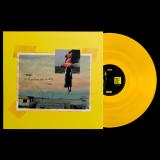
The Twilight Sad - IT'S THE LONG GOODBYE LP
également disponible

Yellow Vinyl[27,10 €]


Die gefeierte schottische Band The Twilight Sad kehrt mit IT’S THE LONG GOODBYE zurück, ihrem lang erwarteten sechsten Studioalbum, das über Rock Action Records erscheinen wird.
Das Album ist eine Erzählung von Verlust und persönlicher Krise, verwurzelt in konkreten Erfahrungen. Mit dringlichen, gitarrenreichen Arrangements von Andy MacFarlane und dem unverwechselbar rohen, leidenschaftlichen Gesang von James Graham markiert IT’S THE LONG GOODBYE einen weiteren Höhepunkt im Werk der Band und unterstreicht ihre Fähigkeit, gelebte Erfahrungen in tief empfundene Musik zu verwandeln.

Mit der furiosen Single „WAITING FOR THE PHONE CALL“ und einem Gastauftritt der legendären Robert Smith von The Cure wurde IT’S THE LONG GOODBYE in den Battery Studios in London mit Andy Savours (My Bloody Valentine) aufgenommen und von Chris Coady (Yeah Yeah Yeahs, Slowdive) gemischt.


Beloved Scottish band The Twilight Sad make their long-awaited return with IT’S THE LONG GOODBYE, their sixth studio album released via Rock Action Records. IT’S THE LONG GOODBYE is a cogent story of loss and personal crisis, rooted in specific experience. Set to urgent and guitar-rich arrangements from Andy MacFarlane, with James Graham’s distinct, raw and impassioned vocals, the result is a pinnacle for THE TWILIGHT SAD in a career of tremendous integrity and artistry, and a record that honours the band’s ability to turn lived experience into fully felt music.

Including the blistering single WAITING FOR THE PHONE CALL and featuring the legendary Robert Smith of The Cure, IT’S THE LONG GOODBYE was recorded in London’s Battery Studios with Andy Savours (My Bloody Valentine) and mixed by Chris Coady (Yeah Yeah Yeahs, Slowdive).

pré-commande27.03.2026

il devrait être publié sur 27.03.2026

27,10
The Twilight Sad - IT'S THE LONG GOODBYE LP
également disponible

Black Vinyl[27,10 €]


Die gefeierte schottische Band The Twilight Sad kehrt mit IT’S THE LONG GOODBYE zurück, ihrem lang erwarteten sechsten Studioalbum, das über Rock Action Records erscheinen wird.
Das Album ist eine Erzählung von Verlust und persönlicher Krise, verwurzelt in konkreten Erfahrungen. Mit dringlichen, gitarrenreichen Arrangements von Andy MacFarlane und dem unverwechselbar rohen, leidenschaftlichen Gesang von James Graham markiert IT’S THE LONG GOODBYE einen weiteren Höhepunkt im Werk der Band und unterstreicht ihre Fähigkeit, gelebte Erfahrungen in tief empfundene Musik zu verwandeln.

Mit der furiosen Single „WAITING FOR THE PHONE CALL“ und einem Gastauftritt der legendären Robert Smith von The Cure wurde IT’S THE LONG GOODBYE in den Battery Studios in London mit Andy Savours (My Bloody Valentine) aufgenommen und von Chris Coady (Yeah Yeah Yeahs, Slowdive) gemischt.


Beloved Scottish band The Twilight Sad make their long-awaited return with IT’S THE LONG GOODBYE, their sixth studio album released via Rock Action Records. IT’S THE LONG GOODBYE is a cogent story of loss and personal crisis, rooted in specific experience. Set to urgent and guitar-rich arrangements from Andy MacFarlane, with James Graham’s distinct, raw and impassioned vocals, the result is a pinnacle for THE TWILIGHT SAD in a career of tremendous integrity and artistry, and a record that honours the band’s ability to turn lived experience into fully felt music.

Including the blistering single WAITING FOR THE PHONE CALL and featuring the legendary Robert Smith of The Cure, IT’S THE LONG GOODBYE was recorded in London’s Battery Studios with Andy Savours (My Bloody Valentine) and mixed by Chris Coady (Yeah Yeah Yeahs, Slowdive).

pré-commande27.03.2026

il devrait être publié sur 27.03.2026

27,10
FRANCE - Good Thoughts, Bad Thoughts

“France absolutely engage the body... but the spectacle is one for your mind, especially as you start to wonder how much of what you’re hearing is really there.” The Quietus

Legendary hurdy-gurdy-powered kraut/psych/folk/drone band France have announced a new album ‘Good Thoughts. Bad Thoughts’ on The state51 Conspiracy label; capturing a wild performance at The state51 Factory in East London - part of their very first tour of England. They played Liverpool Psych Fest as a one off some years back.

Forming 20 years ago as a trio in Valence, France, for this performance, were Jeremie Sauvage on bass, Yann Gourdon on electrified hurdy-gurdy, and Cyril Bondi (of La Tene and Cyril Cyril on drums (stalwart Mathieu Tilly was taking some much needed time off).

This album sees the band plunge into the depths of the human psyche, backed up by Hugo Hyart’s deep, all-over cosmic doodles and an unhidden homage to the Parliafunkadelicment state of mind : Uniting, dancing, staying creative and open minded despite the tribulations of life. Dedicated to the feeling of good (and baby they’re good... at being good).

On the night France were recorded by Hot Chip’s in-house engineer James Crump who subsequently mixed the record at Hot Chip’s studio in East London. The album was mastered by Richy Hughes at Binary Feedback.

pré-commande27.03.2026

il devrait être publié sur 27.03.2026

27,94
THE FALL - FALL HEADS ROLL (2x12")

THE FALL

FALL HEADS ROLL (2x12")

2x12inchBRED2LP935
CHERRY RED
27.03.2026
  • A1: Ride Away
  • A2: Pacifying Joint
  • A3: What About Us?
  • B1: Midnight Aspen
  • B2: Assume
  • B3: Aspen Reprise
  • C1: Blindness
  • C2: I Can Hear The Grass Grow
  • C3: Bo Demmick
  • D1: Youwanner
  • D2: Clasp Hands
  • D3: Early Days Of Channel Führer
  • D4: Breaking The Rules
  • D5: Trust In Me

The Fall were an English post-punk band, formed in Manchester in 1976. The band existed in some form ever since, and was essentially built around its founder and only constant member Mark E. Smith. Initially associated with the punk movement of the late 1970s, the group's music went through several stylistic changes over the years, but is often characterised by an abrasive guitar-driven sound and frequent use of repetition, and was always underpinned by Smith's distinctive vocals and often cryptic lyrics. The band was noted for its prolific output: and released over 25 studio albums, and more than triple that counting live albums and other releases. They have never achieved widespread public success beyond a handful of minor hit singles in the late 1980s, but maintained a strong cult following. The band were long-associated with BBC disc jockey John Peel, who championed them from early on in their career and cited The Fall as his favourite band, famously explaining, "They are always different; they are always the same.

pré-commande27.03.2026

il devrait être publié sur 27.03.2026

35,50
CONNIE CONVERSE - HOW SAD, HOW LOVELY (TAPE)

Die Wiederveröffentlichung von Connie Converses How Sad, How Lovely auf Third Man Records erscheint fast 51 Jahre nach dem Verschwinden der Singer-Songwriterin und ist damit die erste Neuauflage dieses Albums seit beinahe zehn Jahren - und das in jedwedem Format. Die Veröffentlichung umfasst 20 Tracks (darunter eine Bonus-7"-Single mit dem bislang unveröffentlichten Stück ,House" sowie einem neuen Remix von ,Playboy of the Western World", beigesteuert von Dirick Cummins), die nichts von ihrer Eindringlichkeit und Kraft verloren haben. Sie präsentieren eine Künstlerin, die ihrer Zeit um Lichtjahre voraus war.

pré-commande27.03.2026

il devrait être publié sur 27.03.2026

10,04
CONNIE CONVERSE - HOW SAD, HOW LOVELY

Die Wiederveröffentlichung von Connie Converses How Sad, How Lovely auf Third Man Records erscheint fast 51 Jahre nach dem Verschwinden der Singer-Songwriterin und ist damit die erste Neuauflage dieses Albums seit beinahe zehn Jahren - und das in jedwedem Format. Die Veröffentlichung umfasst 20 Tracks (darunter eine Bonus-7"-Single mit dem bislang unveröffentlichten Stück ,House" sowie einem neuen Remix von ,Playboy of the Western World", beigesteuert von Dirick Cummins), die nichts von ihrer Eindringlichkeit und Kraft verloren haben. Sie präsentieren eine Künstlerin, die ihrer Zeit um Lichtjahre voraus war.

pré-commande27.03.2026

il devrait être publié sur 27.03.2026

23,49
Bergur Anderson - Around the Songsters Commune (TAPE)

Tape

Around the Songster's Commune was made quite quickly and purposefully without a lot of fuss -- made to preserve the spirit of its making -- at Diana Duta's generous Jambes studio in Brussels. It's a collection of meditations: compositional fragments, whimsy ditties, field recordings and (live/d) experiments with troubadour song-making methodologies. It's a sonic drift -- sonically drifts. Here, Bergur seems to be exploring the looseness of world-making. Or, maybe better said, exploring how loose he can get with world-making and the realization of sonic realities. Exploring how unconscious, how trusting of himself, as an artist/composer/sound-maker/human, he can be.

pré-commande

Cet article n'a pas encore été publié. Vous pouvez pré-commander le produit maintenant.

11,72
GRAND THEFT - GRAND THEFT
  • Scream (It's Eating Me Alive)
  • Closer To Herfy's
  • Log Rhythms / Meat Midgets
  • Depression City Rfd
  • Ohms / Closer To Hery's Reprise

Grand Theft war eine einmalige Explosion von Heavy-Rock-Wahnsinn aus Seattle im Jahr 1972. Was als augenzwinkernder Seitenhieb auf die Bombastik von Bands wie Grand Funk Railroad begann, entwickelte sich schnell zu etwas Rohes, Echtem und ganz Eigenem. Dave Barohs knurrende Gitarrenriffs, Kevin Marins donnernder Bass und Phil Klitgaards ursprüngliches, aber präzises Schlagzeugspiel schnitten wie eine knallende Peitsche in einer stürmischen Nacht durch die Luft. Ihre einzige LP, die in einer einzigen chaotischen Session aufgenommen wurde, fängt einen Moment ungefilterter Energie ein. Tracks wie ,Scream (It's Eating Me Alive)" und ,Closer to Herfy's" entstanden aus koffeinreichen langen Nächten, Insiderwitzen, scharfem Verstand und einer neuen Hingabe an die Aggressivität. Mit Radio-DJ/Manager Burl Barer, der das Chaos lenkte, erlangte das Album regionale Bekanntheit, einen ,Dream Date"-Promo-Wettbewerb und sogar Lob von Lester Bangs. Live-Auftritte waren selten - spontane, ohrenbetäubende Blitzauftritte -, aber die Legende von Grand Theft wuchs noch lange nach der Auflösung der Band weiter. Was als flüchtiger Scherz begann, wurde zu einer Proto-Metal-Kuriosität, einer Wildcard im Deck des frühen 70er-Jahre-Rock. Grand Theft bleibt ein Zeugnis des ungezähmten Geistes des Rock und ein Urschrei angesichts der Konvention.

pré-commande27.03.2026

il devrait être publié sur 27.03.2026

31,05
TRISTAN ALLEN - OSNI THE FLARE
  • Osni Opening
  • Act I: Garden
  • Act I: Loon
  • Act Ii: Dragon
  • Act Ii: Pyre
  • Act Iii: Umbra
  • Act Iii: Rite
  • Act Iv: Flood
  • Act Iv: Everglow
  • Osni Closing

In ,Osni the Flare", dem zweiten Teil von Tristan Allens mythischer Trilogie, zeigt der Komponist, Produzent und Puppenspieler, wie ein Sterblicher durch die Entdeckung des Feuers zu einer Gottheit wird. ,Osni the Flare" wurde über vier Jahre hinweg mit wortlosen Gesängen, Orgeln, Okarinas, einer Menge Spielzeuginstrumenten und einem ausgeklügelten Sounddesign aufgenommen und erzählt in vier akustisch und visuell beeindruckenden Akten von den Ursprüngen der Flamme und der Zeitlichkeit. Allen webt einen Schöpfungsmythos, der zwischen Schönheit, Schatten und wehmütiger Glut wechselt, und schafft so ein Portal zu einem sorgfältig gestalteten, emotional kraftvollen Klang und einer Geschichte, die durch ein fantastisches Reich hallen. Allen wurde in Saratoga Springs, New York, geboren und hat Kindheitserinnerungen an den Aufenthalt seiner Familie in Japan. Sein Weg führte ihn zu prägenden Begegnungen, darunter mit seinem Lehrer Andy Lorio, der das wachsende Interesse und Können des jungen Musikers am Klavier durch Improvisationstechniken förderte, und Amanda Palmer, die ihn mit 16 Jahren während eines Sommerprogramms am Berklee College entdeckte und seine erste Veröffentlichung durch Crowdfunding finanzierte. Nachdem er an der Berklee Klavier studiert, das Live-Elektronik-Kollektiv Nue mitbegründet, mit der Metal-Band Dent durch China getourt und zwei Solo-Klavier-EPs veröffentlicht hatte, zog Allen 2018 von Boston nach Brooklyn. Eine Anzeige auf Craigslist führte zu einer Puppenspielausbildung bei Mike Leach, der ihnen sechs Monate lang beibrachte, wie man eine Marionette richtig führt, was ihnen eine Stelle als Darsteller am renommierten Puppetworks Theater einbrachte. Diese harte Arbeit, zusammen mit dem Kontakt zu den Artefakten des Bread and Puppet Theater ihres Vaters und dem balinesischen Schattenspiel, brachte Allen zu ihrer kreativen Praxis: Komponieren für akustische Instrumente, elektronisches Arrangieren und Auftritte mit Puppenspiel. Osni the Flare erzählt einen Schöpfungsmythos, in dem die Titelfigur in einem Garten aufwacht und Äpfel von einem Baum pflückt. Von einem Loon herbeigerufen, macht sich Osni auf, den Baum vor der Kälte des Winters zu schützen. Als der Loon von einem Drachen verschlungen wird, wagt sich Osni in dessen Bauch und entdeckt dort Glut. Als er diese Glut dem Baum anbietet, entzündet sich dieser - der Ursprung des Feuers selbst. Iso, der Gott des Meeres, greift mit einer Flut ein, die Osnis Garten überschwemmt. Nach seinem Tod gelangt Osnis Seele in das Reich der Schatten, wo sie sich Tin und Iso anschließt und zur Gottheit des Feuers wird - Osni the Flare. Das Album klingt menschlicher und kindlicher als sein Vorgänger ,Tin Iso and The Dawn" und wechselt von der Perspektive der Götter als Beobachter zu der des ersten sterblichen Charakters in Allens Welt. Unterstützt durch neue Liebe, kanalisiert das Projekt Gefühle in Musik, die zu einem ganz eigenen Zauber wird. Wie Tin Iso beginnt und endet das Album mit Klavierklängen als Portal, das die Heimat repräsentiert, während Osni sich auf eine Reise durch drei Reiche begibt: das Land der Lebenden, das Zwischenreich und das Jenseits. Osni the Flare wurde fast komplett mit einem Aston-Kondensatormikrofon in Allens Wohnung in Brooklyn mit Blick auf den Cypress Hills Friedhof aufgenommen und besteht aus Spielzeugklavier und Flöten, Okarinas, Harmonium, Pumporgel, E-Bass und Kontrabass, Gadgets und einer umfangreichen Sammlung von Spieluhren und Glocken. Die Gesangsmelodie - inspiriert vom Summen seiner Partnerin Virginia Garcia Ruiz, das an Pans Labyrinth erinnert - war Allens erster Ausflug in den Gesangsbereich, wobei er eine Melodie ohne Worte verwendete, um den Zuhörern zu ermöglichen, die Protagonisten zu bleiben. Die Flöten wurden Note für Note akribisch aufgenommen, darunter balinesische Sulings, Fundstücke aus chinesischen Souvenirläden und vogelförmige Okarinas. Die Spieluhren wurden langsam aufgezogen, einzeln gesampelt und dann neu arrangiert und gestimmt, um Virginias Summen zu verdoppeln. Ein ausgedientes Casio SK-1 mit einem kaputten Lautsprecher wird mit einem Harmonium kombiniert, um Akkordtexturen zu erzeugen. Stundenlange Improvisationen, die durch Bastl Thyme und NanoVerb geleitet wurden, erzeugten lange, ausklingende Delays, wobei die besten Momente für Songs ausgewählt wurden. Feuergeräusche entstanden durch Fingernagelklicken auf Klaviertasten. Feldaufnahmen hielten das Zerlegen eines Klavieruntergestells, das Löschen von Kerzen und Geräusche aus einem Hospiz fest. Die Stimme des Drachen spricht Worte aus Allens erfundener Sprache. Die Melodie liegt oft im Bass - inspiriert von Goth und Gamelan - mit nach oben gerichteten Verzierungen. Der detailreiche Ansatz spiegelt eine Punktierung wider, die Allens Original-Artwork für das Albumcover ähnelt und durch ihre obsessive Arbeit kleine Teile zu einem großen Bild zusammenfügt - unter der Dusche, vor dem Einschlafen, mitten im Satz. Das Klavier wurde von der Toningenieurin Katie Von Schleicher bei Figure 8 Recording neu aufgenommen, gemischt wurde das Album von Paul Corley. Der technische Leiter Jim Freeman arbeitete vier Monate lang am Halsgelenk und fünf Monate lang an den Schultern der Basswood-Stabpuppe, die von Bruce Schwartz' Ballerina inspiriert ist. Freeman verbrachte Jahre damit, ein selbstgebautes LED-System zu entwickeln, um das Puppenspiel von der Bühne aus zu beleuchten, und sein unwillkürliches Pfeifen während der Arbeit wurde heimlich aufgenommen und ist im Schlussmoment zu hören. Die Herstellung der Puppen wurde von Miryam Moutillet und Lauder Weldon überwacht, die hybriden Köpfe wurden von Duygu Bayar Ekren entworfen. Seit der Veröffentlichung von Tin Iso im Jahr 2023 hat Allen in der experimentellen Puppenspiel-Community von New York City eine Heimat gefunden und wird von der Jim Henson Foundation und La MaMa unterstützt. ,Osni the Flare" steht für Tristan Allens kontinuierliche Weltgestaltung mit akribischer Kontinuität - viele bewegliche Teile, die in funkelnder Kohäsion präsentiert werden, wobei sich jede Komponente aus einer Idee entwickelt, wie eine Fantasy-Serie, die im selben Reich spielt. Das Album erreicht das, was sich Allens kindliches Ich beim Anschauen von Fantasy-Filmen vorgestellt hat: Musik, die nicht so klingt, als würden Menschen Instrumente spielen, sondern wie das Werk der fantastischen Welt selbst. Durch die Kunst des Puppenspielers, ,wahre Lügen zu erzählen", lädt Allen die Zuhörer ein, etwas Ursprüngliches und Unmittelbares zu erleben. Während Osni sich von einem Sterblichen zu einer Gottheit verwandelt, zeichnet das Album nicht nur den Ursprung des Feuers nach, sondern auch den Ursprung des Mythos selbst.

pré-commande27.03.2026

il devrait être publié sur 27.03.2026

22,27
Pume Orenge - Angel By Milo

Pume Orenge

Angel By Milo

12inchODA07M
ODDA Recordings
27.03.2026out soon

Bristol duo Pume Orenge unspool a world of spectral electronica from cassette loops and instrumental improvisation on their debut album Angel By Milo for Odda Recordings.

It is a world that opens draped in ferric hiss. A fog of sound, dense and yet not quite there, catching the light in strange shades and ambient drifts. Looping and receding, looping and receding, as pucks of static burst like faraway fireworks on a cold winter’s night. Sound sources obscured, ambiguous, not quite what they seem.

Angel By Milo takes its lead from the analogue process and textures by which it was made. Percussive and melodic loops were established, manipulated and responded to with instrumental improvisation, in a give-and-take with the materiality of the medium.

Across these seven intricately developed tracks, the sound fluctuates between the cinematic and the introspective, at times melancholy, at others verging on a kind of restrained anger, before the calm sets in once more. It is music for the small hours, awash with the grainy stuff of memory.

Embedded within Bristol’s independent scene, Pume Orenge’s quiet debut also speaks to the duo’s shared roots in the area, and like many of Odda’s previous releases, contains a sensitivity to place and atmosphere, even when these are no more than implied.

Angel By Milo builds on the DIY ethos of Pume Orenge's 2023 self-titled debut EP, whose tracks were recorded live in single takes, now honing a more intentional, purposeful approach to music making. It is one in which layers of meaning are allowed to reveal themselves, a way of composing that makes a virtue of its labour and the chance occurrences that can arise in the process.

This is music in praise of shadows. Of the things we can’t quite see, the feelings we can’t quite grasp. Heard through the haze, or maybe not at all.

pré-commande

Cet article n'a pas encore été publié. Vous pouvez pré-commander le produit maintenant.

24,79
Serpente - Visita do Fogo LP
  • A1: Ghidrah
  • A2: Partes Nada
  • A3: Nos Deixei
  • B1: Choros (Edit)
  • B2: Choros (Club)
  • B3: Sigilo (Megamix)

Bruno Silva, operating here under his restless Serpente alias, returns with Visita do Fogo — a sharp, stripped-back and incendiary counterpoint to the drifting, dream-jazz abstractions of Dias da Aranha. If that record floated like smoke, this one crackles and snaps like dry wood.

Visita do Fogo finds Silva stepping back into the heat of his beat-driven origins, embracing a raw, forward-leaning approach that feels closer to his live detonation than a studio construction. The record is built on stark materials — drum fragments, percussive jolts, scorched-earth loops — all manipulated with his unmistakable “screw” instincts: micro-cuts, sudden pivots, rhythmic false floors and the sense that the track might turn itself inside-out at any moment.
Rather than smoothing edges or leaning into atmospherics, Serpente doubles down on urgency. Each piece moves through the record with a chop-and-go physicality, a kind of ritual propulsion that never settles into comfort. Silva’s rhythmic language remains entirely his own: crooked but precise, feral yet meticulous, rooted in dance structures but constantly mutating away from them.

Visita do Fogo is less a sequel to Dias da Aranha than a flare shot into the same night sky — brighter, hotter, and designed to leave afterimages. It captures an artist burning forward, shedding everything unnecessary, trusting the flame.

pré-commande27.03.2026

il devrait être publié sur 27.03.2026

19,54
SEBASTIAN KRUMBIEGEL - KOMPASS
  • Halleluja
  • Egoist
  • Kompass
  • Ganz Normal
  • 2: +=5
  • Asoziale Leute
  • Elon Musk (Zahl Einfach Deine Steuern!)
  • Der Kleine Prinz
  • Richtig Gut
  • Keine Angst
  • Termine
  • Mehr Musik
  • Bessere Welt
  • Geöffnete Fenster

Um Jesus geht es auf KOMPASS, dem neuen Album von Prinzen-Frontmann Sebastian Krumbiegel, mal wieder nicht. Dafür etwa um Elon Musks Steuererklärung, den kleinen Prinzen, dass 2+2= 5 ist, warum man trotz allem keine Angst haben und lieber von einer besseren Welt träumen sollte, und es geht um Musik. Um mehr Musik. Knapp 70 Auftritte spielte Sebastian Krumbiegel in den letzten 12 Monaten, knapp 70 Songs schrieb er in der gleichen Zeit. Er testete die Lieder auf Herz und Nieren, arrangierte um, verwarf, erschuf. Das Ergebnis: Sein neues Album KOMPASS. Wie man sieht, liebt es Sebastian Krumbiegel, Songs zu schreiben und live zu spielen. Und er liebt es, vor, während und nach den Auftritten sein Publikum nicht nur zu unterhalten, sondern sich auch mit seinem Publikum zu unterhalten. Und nach und nach kristallisierte sich in seinen Gesprächen heraus, dass eben jenes Publikum in unseren schweren Zeiten nach positiven Liedern verlangte. KOMPASS enthält 14 Songs, in denen das Glas grundsätzlich halbvoll, das Gras grundsätzlich grün und das Licht am Ende des Tunnels grundsätzlich nicht von einer entgegenkommenden Lokomotive ist. Krumbiegel selber hatte, wie er sagt, keinen Bock auf traurige Lieder. Wer jetzt allerdings denkt, der Künstler würde in seichte Gefilde abdriften, irrt: Krumbiegel gelingt, wie wenigen sonst, der Spagat zwischen Unterhaltung und Reflexion, zwischen Kritik und Optimismus. Sebastian Krumbiegel ist einer, der glaubt. Er glaubt an die Kraft der Kunst, an die Möglichkeit der Veränderung zum Besseren, und seine Songs handeln genau von diesem Glauben. Er erinnert daran, den Traum von einer anderen, harmonischeren Welt nicht zu vergessen. Und das gelingt ihm ohne Kitsch. Dafür mit Humor, viel Humor. Auch musikalisch ist KOMPASS ein optimistisches Album, ein optimistisches Album, aber ohne Augenwischerei.

pré-commande27.03.2026

il devrait être publié sur 27.03.2026

23,49
Iivana Mišukka & Arja Kastinen - Iivana Mišukka (Tape)
  • 01: Maanitus &Amp; Tšiižik
  • 02: Markka
  • 03: Melkutus
  • 04: Letška
  • 05: Kuuen Parin Hoirola
  • 06: Brišatka
  • 07: Tšiižik
  • 08: Kirkonkellot
  • 09: Kirkonkellot Korkea
  • 10: Hoirola, 3 Parin
  • 11: Lippa
  • 12: Kyngäkiža
  • 13: Ristakondra
  • 14: Vanha Polkka
  • 15: Viistoista
  • 16: Vanha Valssi
  • 17: Kiberä
  • 18: Maanitus Kuokan Kanteleella
  • 19: Tuuti Lasta Nukkumahe
également disponible

Vinyl[22,65 €]


Death Is Not The End present a further volume of Arja Kastinen's eerie amalgamations of 110 year old wax cylinders with her own meticulously transcribed takes, this time focussing in on Armas Otto Väisänen's field recordings of kantele player Iivana Mišukka (b. 1861 d.1919).

"Ivana Mišukka (1861–1919) was one of the Karelian kantele players recorded by the folk music researcher Armas Otto Väisänen on wax cylinders in 1916 and 1917. In the early 20th century, the remote areas of Border Karelia were undergoing the final phase of a transformation in musical culture, with the ancient runo song tradition giving way to newer forms of music. This transition is reflected in Mišukka's repertoire and choice of instrument. The ancient small kantele, hollowed out of a single piece of wood, was already rare at the turn of the century. Mišukka's kantele was a new type of instrument with 26 strings, constructed of several parts, but he played it using the traditional plucking technique. Like other Border Karelian kantele players, his repertoire consisted of music rooted in runosong culture, as well as newer dances and songs from the east and west. Most of the recorded material falls into the latter category.

Ivan Bogdanov Mišukka was born out of wedlock in Suursara village, Suistamo, on 1 May 1861. He began playing the kantele at the age of five or six, quickly mastering the instrument. In adulthood, he was considered one of the area's best master players. Mišukka was landless for most of his life and lived in different parts of the Suistamo parish. His first wife, Tekla Markintytär, died in 1897 at the age of 40, and his second wife, Jevdokia Filipintytär Jeminen, died in 1907 at the age of 50. Seven children were born from the first marriage, two of whom died young. The third wife, Maria Ignatintytär Gurnan (Kuurnanen), was a well-known master of lamentations. Together with Maria, Iivana Mišukka worked as a tenant farmer in the village of Suursara. Mišukka suffered from rheumatism, which prevented him from participating in physical work like Maria. This was apparently partly the reason why Iivana Mišukka went to earn extra money by playing the kantele on gig trips. He often had other traditional artists from Suistamo as his travelling companions, such as the runosingers Konstantin Kuokka and Iivana Onoila. Iivana Mišukka died in Leppäsyrjä village, Suistamo, on 18 May 1919 at the age of 58, and his kantele was donated to Teppana Jänis.

Mišukka only used 14 of the 26 strings on his kantele, playing the same tunes either a fourth higher or lower. He tuned his kantele to the major scale using fifths, except for a low seventh scale degree on the upper strings, but not below the fundamental. Since he did not use the seventh note of the scale on the upper strings at all, he could use the major scale both lower and a fourth higher with this tuning. According to Mišukka, the sound of higher, or 'finer', strings is 'more beautiful', while that of lower ones is 'greater'. Among runosingers, the size of the thirds varied, ranging from major to minor to neutral. A similar phenomenon can be observed in kantele tunings, where the third, sixth and seventh scale degrees vary in a comparable way.

During a meeting, Väisänen suggested that Mišukka play the smaller kantele belonging to Konstantin Kuokka. The idea was to bring it closer to the horn to improve the recording quality. However, the kantele was completely out of tune, and now Mišukka tuned it to the Lydian scale (track 18).

Using the old plucking technique, Mišukka placed his right middle finger on the fundamental tone, his right index finger on the second scale degree, his left middle finger on the third scale degree and his left index finger on the fourth scale degree, and his right thumb on the fifth. The thumb also played the notes above the fifth note of the scale. As Mišukka remarked to Väisänen: 'Peigaloll' tuloo enemb ruadoa' (the thumb has to do more work). However, he did not use the seventh note of the scale on the upper strings at all. Below the fundamental note, he played the seventh and sixth notes of the scale with his right middle finger of and the fifth note of the scale with his right ring finger. This fifth scale degree below the fundamental is almost always used as a drone. Sometimes, when the melody required it, Mišukka, like other players, also varied the fingering. He would also occasionally strike the same string with the side of his fingernail after plucking it.

The wax cylinder recordings of Karelian kantele players are kept in the archives of the Finnish Literature Society in Helsinki, Finland. Copies were made of them onto reel-to-reel tapes in both the 1960s and 1980s. The 1960s copies are mono and the 1980s copies are stereo. However, not all kantele recordings from these decades have survived.

The sound of the kantele is difficult to hear in wax cylinder recordings due to its low volume, and it occasionally becomes completely obscured by noise. During the copying process, the cylinder sometimes rotates unevenly, resulting in breaks or jumps in the music. Additionally, the rotation speed of the cylinder in the copies does not correspond to the performance speed of the original music, which alters the pitch. However, since Väisänen's precise notes are available in the archive, it is possible to deduce the melodies, their speed, and the tuning level of the kantele in the recordings. Of the copies of the original recordings from the 1960s and 1980s, I have selected the one that best met the requirements of this publication and adjusted the speed of the recording to align with Väisänen's notes. To enhance the listening experience, I have replayed the songs, which now partly overlap the old recordings on this release."

— Arja Kastinen

pré-commande27.03.2026

il devrait être publié sur 27.03.2026

16,39
Iivana Mišukka & Arja Kastinen - Iivana Mišukka LP

Death Is Not The End present a further volume of Arja Kastinen's eerie amalgamations of 110 year old wax cylinders with her own meticulously transcribed takes, this time focussing in on Armas Otto Väisänen's field recordings of kantele player Iivana Mišukka (b. 1861 d.1919).

"Ivana Mišukka (1861–1919) was one of the Karelian kantele players recorded by the folk music researcher Armas Otto Väisänen on wax cylinders in 1916 and 1917. In the early 20th century, the remote areas of Border Karelia were undergoing the final phase of a transformation in musical culture, with the ancient runo song tradition giving way to newer forms of music. This transition is reflected in Mišukka's repertoire and choice of instrument. The ancient small kantele, hollowed out of a single piece of wood, was already rare at the turn of the century. Mišukka's kantele was a new type of instrument with 26 strings, constructed of several parts, but he played it using the traditional plucking technique. Like other Border Karelian kantele players, his repertoire consisted of music rooted in runosong culture, as well as newer dances and songs from the east and west. Most of the recorded material falls into the latter category.

Ivan Bogdanov Mišukka was born out of wedlock in Suursara village, Suistamo, on 1 May 1861. He began playing the kantele at the age of five or six, quickly mastering the instrument. In adulthood, he was considered one of the area's best master players. Mišukka was landless for most of his life and lived in different parts of the Suistamo parish. His first wife, Tekla Markintytär, died in 1897 at the age of 40, and his second wife, Jevdokia Filipintytär Jeminen, died in 1907 at the age of 50. Seven children were born from the first marriage, two of whom died young. The third wife, Maria Ignatintytär Gurnan (Kuurnanen), was a well-known master of lamentations. Together with Maria, Iivana Mišukka worked as a tenant farmer in the village of Suursara. Mišukka suffered from rheumatism, which prevented him from participating in physical work like Maria. This was apparently partly the reason why Iivana Mišukka went to earn extra money by playing the kantele on gig trips. He often had other traditional artists from Suistamo as his travelling companions, such as the runosingers Konstantin Kuokka and Iivana Onoila. Iivana Mišukka died in Leppäsyrjä village, Suistamo, on 18 May 1919 at the age of 58, and his kantele was donated to Teppana Jänis.

Mišukka only used 14 of the 26 strings on his kantele, playing the same tunes either a fourth higher or lower. He tuned his kantele to the major scale using fifths, except for a low seventh scale degree on the upper strings, but not below the fundamental. Since he did not use the seventh note of the scale on the upper strings at all, he could use the major scale both lower and a fourth higher with this tuning. According to Mišukka, the sound of higher, or 'finer', strings is 'more beautiful', while that of lower ones is 'greater'. Among runosingers, the size of the thirds varied, ranging from major to minor to neutral. A similar phenomenon can be observed in kantele tunings, where the third, sixth and seventh scale degrees vary in a comparable way.

During a meeting, Väisänen suggested that Mišukka play the smaller kantele belonging to Konstantin Kuokka. The idea was to bring it closer to the horn to improve the recording quality. However, the kantele was completely out of tune, and now Mišukka tuned it to the Lydian scale (track 18).

Using the old plucking technique, Mišukka placed his right middle finger on the fundamental tone, his right index finger on the second scale degree, his left middle finger on the third scale degree and his left index finger on the fourth scale degree, and his right thumb on the fifth. The thumb also played the notes above the fifth note of the scale. As Mišukka remarked to Väisänen: 'Peigaloll' tuloo enemb ruadoa' (the thumb has to do more work). However, he did not use the seventh note of the scale on the upper strings at all. Below the fundamental note, he played the seventh and sixth notes of the scale with his right middle finger of and the fifth note of the scale with his right ring finger. This fifth scale degree below the fundamental is almost always used as a drone. Sometimes, when the melody required it, Mišukka, like other players, also varied the fingering. He would also occasionally strike the same string with the side of his fingernail after plucking it.

The wax cylinder recordings of Karelian kantele players are kept in the archives of the Finnish Literature Society in Helsinki, Finland. Copies were made of them onto reel-to-reel tapes in both the 1960s and 1980s. The 1960s copies are mono and the 1980s copies are stereo. However, not all kantele recordings from these decades have survived.

The sound of the kantele is difficult to hear in wax cylinder recordings due to its low volume, and it occasionally becomes completely obscured by noise. During the copying process, the cylinder sometimes rotates unevenly, resulting in breaks or jumps in the music. Additionally, the rotation speed of the cylinder in the copies does not correspond to the performance speed of the original music, which alters the pitch. However, since Väisänen's precise notes are available in the archive, it is possible to deduce the melodies, their speed, and the tuning level of the kantele in the recordings. Of the copies of the original recordings from the 1960s and 1980s, I have selected the one that best met the requirements of this publication and adjusted the speed of the recording to align with Väisänen's notes. To enhance the listening experience, I have replayed the songs, which now partly overlap the old recordings on this release."

— Arja Kastinen

pré-commande27.03.2026

il devrait être publié sur 27.03.2026

22,65
PAPER CROWN - LETTERS

PAPER CROWN

LETTERS

12inchAPLP253
Apollon Records
27.03.2026
  • 1: Letters
  • 2: Four Leaf Clover
  • 3: Thorns
  • 4: Daisy Trains
  • 5: Knees Deep
  • 6: Oh, The Irony
  • 7: Parachute
  • 8: The Sign
  • 9: Ride Or Die
  • 10: Cocoon
  • 11: Another Life

Paper Crown release their third album Letters - an ambitious and playful record that marks a clear new chapter for the duo, brimming with confidence, nostalgia and new horizons. Letters is the result of a long and meticulous creative process, with guitarist, producer and songwriter Ornulv Snortheim and vocalist and lyricist Johanne Kippersund (MEER) working closely, patiently and with great attention to detail. The album was recorded and produced at Snortheim's own Dakkota Studio in Hamar, Norway. Drummer Borre Flyen contributes throughout the record, and violinist Aud Ingebjorg Barstad adds beautiful string textures on selected tracks. Musically, Letters draws inspiration from the organic warmth of 1970s recordings - featuring spacious arrangements and live, breathing instrumentation - while also clearly nodding to alternative 1990s pop- rock, with strong melodies, distinctive guitar lines, raw energy and a spirit of exploration. The result is a sound that feels both nostalgic and contemporary, making Letters the duo's most complete release to date.

pré-commande27.03.2026

il devrait être publié sur 27.03.2026

44,75
VOWWS - I’LL FILL YOUR HOUSE WITH AN ARMY LP

"Nachpressung als limitiertes gelbes Vinyl! Das in Australien gegründete und in LA ansässige Duo VOWWS meldet sich mit „I'll Fill Your House With an Army“ zurück, ihrem bisher ehrgeizigsten und am besten umgesetzten Album.

„I'll Fill Your House With an Army“ (2025) ist der Höhepunkt der kühnsten Ideen der Band und zeigt, wie VOWWS, bestehend aus Rizz und Matt James, ihre charakteristische „Death-Pop“-Ästhetik vertiefen: eine genreübergreifende Mischung aus industrieller Elektronik, alternativem Rock, cineastischer Nostalgie und melancholischer Pop-Sensibilität. Co-produziert von Billy Howerdel (A Perfect Circle) und mit Gastauftritten von Josh Freese (A Perfect Circle, NIN, Devo) und James „Munky“ Shaffer (KORN), ist das Album eine Reise durch Sehnsucht, Entfremdung und die surreale Schönheit des Chaos.

Dieses Album zeigt perfekt die dynamische Bandbreite des Duos: von verzerrter Intimität bis hin zu gewaltigen Klangattacken reflektieren VOWWS ein zerbrochenes Spiegelbild des modernen Zustands - romantisch, aber desillusioniert, viszeral und doch seltsam erhebend.

Nachdem sie sich durch Touren mit den Deftones, Twin Temple und Poppy bereits eine kultige Fangemeinde erspielt haben und gerade einen bahnbrechenden Live-Auftritt im Golden Gate Park neben System of a Down und The Mars Volta absolviert haben, sind VOWWS bereit, ihr Vermächtnis mit dieser Veröffentlichung zu zementieren. Ihr künstlerisches Ethos, unbeugsam in einer Ära der Wegwerfbarkeit, hat sie auch in die Welt der High Fashion geführt, wo sie mit Comme des Garçons, Givenchy und Byredo zusammenarbeiten.

pré-commande27.03.2026

il devrait être publié sur 27.03.2026

22,65
Articles par page:
N/ABPM
Vinyl