Katie Gavin's debut What A Relief taps into the unguarded self-possession and homespun pop sensibility of singers like Alanis Morissette, Fiona Apple and Ani DiFranco, and uses their tenacity as a north star for Gavin's own trek towards self-discovery. "This record spans a lot of my life - it's about having a really deep desire for connection, but also encountering all the obstacles that stood in my way to be able to achieve that, patterns of isolation or even boredom with the real work of love" they say. Written over the course of seven years, What A Relief comprises a set of songs that Gavin always loved but which "had something in them" that she and her bandmates felt didn't quite fit within the universe they were trying to cultivate with MUNA. Many of them were written on acoustic guitar, and are rooted in "a style of music that's very much in my blood, and natural for me," as typified by the Women & Songs CDs that Gavin loves, which compiled music by artists like Tracy Chapman, Tori Amos and Sarah McLachlan. That openness of spirit is the overwhelming character of What A Relief, an album that's refreshing in its willingness to accept people as they come, even as it remains in dogged pursuit of a life that's kinder, wiser and more loving. Gavin's explorations of desire and intimacy feel time-worn and necessary - songs that might teach a generation if not how to live, exactly, then at least how to look within oneself for guidance about how to move forward.
Search:e wan
Katie Gavin's debut What A Relief taps into the unguarded self-possession and homespun pop sensibility of singers like Alanis Morissette, Fiona Apple and Ani DiFranco, and uses their tenacity as a north star for Gavin's own trek towards self-discovery. "This record spans a lot of my life - it's about having a really deep desire for connection, but also encountering all the obstacles that stood in my way to be able to achieve that, patterns of isolation or even boredom with the real work of love" they say. Written over the course of seven years, What A Relief comprises a set of songs that Gavin always loved but which "had something in them" that she and her bandmates felt didn't quite fit within the universe they were trying to cultivate with MUNA. Many of them were written on acoustic guitar, and are rooted in "a style of music that's very much in my blood, and natural for me," as typified by the Women & Songs CDs that Gavin loves, which compiled music by artists like Tracy Chapman, Tori Amos and Sarah McLachlan. That openness of spirit is the overwhelming character of What A Relief, an album that's refreshing in its willingness to accept people as they come, even as it remains in dogged pursuit of a life that's kinder, wiser and more loving. Gavin's explorations of desire and intimacy feel time-worn and necessary - songs that might teach a generation if not how to live, exactly, then at least how to look within oneself for guidance about how to move forward.
Mint Green Vinyl.[22,27 €]
Since first bonding over Slowdive at a Texas karaoke bar six years ago, musicians Uriel Avila and Jonathan Perez have grown trauma ray into Fort Worth's foremost flag bearer of crushing shoegaze. A five-piece rounded out by bassist Darren Baun, drummer Nicholas Bobotas, and guitarist Coleman Pruitt, the band's debut album, Chameleon, captures their evolving sound at an apex of majestic devastation. A fusion of downer hooks, gauzy melancholia, and bulldozer riffs, the album heaves and crashes across 50 minutes of stacked amplifier alchemy. Lyrically the songs trace similarly lofty and brooding terrain; Avila says "The theme is death. And a chameleon, like death, can shape-shift in and out our lives in different forms." Chameleon opens with "Ember," dreamy and distant, alternately anthemic and apocalyptic, defeated and deafening. Lead single "Bishop" perfectly encapsulates trauma ray's depth and dimension, ripping out of the gate with "the biggest, baddest, saddest wall of sound." Lyrics about being burnt at the stake and "tossed in the flame" float above a stop-start assault of precision distortion, eventually expanding into a lush, heavy, sorrowful end coda. "Spectre" is a mysterious, introspective dirge, envisioned as a "mellow, slowcore, Duster-thing," all feeling and heavy fuzz chords (with no lead guitar). Avila wrote it, "to be a hymnal" from the perspective of someone who won't let go - a ghost, an ex, a shadow self. Although the album is rich with subtleties, graceful lulls, and "breaths of air," the band's three guitar attack is its defining force, a power flexed to its peak on "Bardo." Perez's intentions were blunt: "I wanted to write a riff that was hard as fuck." The result is alternately mean and eerie, veering between noisy one string bends and surging headbang, mapping a middle ground between Unwound and early-Deftones. One of trauma ray's greatest gifts is their ability to make doomy, sledgehammer heaviness sound like an earworm, without production tricks or gimmicks: "Riff, verse, chorus, three guitar parts - that's all you need." This quality is particularly apparent on the title track, a churning slab of amplifier worship, swirling chords, and heavenly, defeated vocals about not belonging, shape-shifting, and death ("A twisted face / Void of attention / An empty space / In your reflection"). "U.S.D.D.O.S" closes the album, swaying across seven minutes of grey skied guitar and haunted voice, subtly thickening as it deepens. Feedback and shrapnel gradually begin raining down, like a satellite disintegrating in the atmosphere. Titled as an acronym after a poem by Chilean writer Roberto Bolaño that loosely translates to "a dream within a dream," the melody softens, smears, and then disappears, slowly swallowed by the gravity of eternal descent. Chameleon is a masterpiece of craft, balance, melody, lyricism, and gravity, flexing a fresh vision of loud-quiet-loud architectures and the vertigo depths of blasted harmonics. From Slowdive to Nothing, to Hum and beyond, the band absorb and expand on their influences into a rare and dedicated alchemy. trauma ray's cinematic tempest is a gathering storm only just taking flight.
Black Vinyl[21,22 €]
Since first bonding over Slowdive at a Texas karaoke bar six years ago, musicians Uriel Avila and Jonathan Perez have grown trauma ray into Fort Worth's foremost flag bearer of crushing shoegaze. A five-piece rounded out by bassist Darren Baun, drummer Nicholas Bobotas, and guitarist Coleman Pruitt, the band's debut album, Chameleon, captures their evolving sound at an apex of majestic devastation. A fusion of downer hooks, gauzy melancholia, and bulldozer riffs, the album heaves and crashes across 50 minutes of stacked amplifier alchemy. Lyrically the songs trace similarly lofty and brooding terrain; Avila says "The theme is death. And a chameleon, like death, can shape-shift in and out our lives in different forms." Chameleon opens with "Ember," dreamy and distant, alternately anthemic and apocalyptic, defeated and deafening. Lead single "Bishop" perfectly encapsulates trauma ray's depth and dimension, ripping out of the gate with "the biggest, baddest, saddest wall of sound." Lyrics about being burnt at the stake and "tossed in the flame" float above a stop-start assault of precision distortion, eventually expanding into a lush, heavy, sorrowful end coda. "Spectre" is a mysterious, introspective dirge, envisioned as a "mellow, slowcore, Duster-thing," all feeling and heavy fuzz chords (with no lead guitar). Avila wrote it, "to be a hymnal" from the perspective of someone who won't let go - a ghost, an ex, a shadow self. Although the album is rich with subtleties, graceful lulls, and "breaths of air," the band's three guitar attack is its defining force, a power flexed to its peak on "Bardo." Perez's intentions were blunt: "I wanted to write a riff that was hard as fuck." The result is alternately mean and eerie, veering between noisy one string bends and surging headbang, mapping a middle ground between Unwound and early-Deftones. One of trauma ray's greatest gifts is their ability to make doomy, sledgehammer heaviness sound like an earworm, without production tricks or gimmicks: "Riff, verse, chorus, three guitar parts - that's all you need." This quality is particularly apparent on the title track, a churning slab of amplifier worship, swirling chords, and heavenly, defeated vocals about not belonging, shape-shifting, and death ("A twisted face / Void of attention / An empty space / In your reflection"). "U.S.D.D.O.S" closes the album, swaying across seven minutes of grey skied guitar and haunted voice, subtly thickening as it deepens. Feedback and shrapnel gradually begin raining down, like a satellite disintegrating in the atmosphere. Titled as an acronym after a poem by Chilean writer Roberto Bolaño that loosely translates to "a dream within a dream," the melody softens, smears, and then disappears, slowly swallowed by the gravity of eternal descent. Chameleon is a masterpiece of craft, balance, melody, lyricism, and gravity, flexing a fresh vision of loud-quiet-loud architectures and the vertigo depths of blasted harmonics. From Slowdive to Nothing, to Hum and beyond, the band absorb and expand on their influences into a rare and dedicated alchemy. trauma ray's cinematic tempest is a gathering storm only just taking flight.
Steve Leach's Balearic beach-funk beast Ocean Potion, recorded with the Crystal Grass Orchestra is an absolutely ace, Ned Doheny-adjacent funky AOR / blue-eyed soul BBQ classic from 1976.
Who is Steve Leach, you ask? None other than Seasick Steve in a previous life! A French-only release on Philips, it's a hugely immediate, pop-funk firecracker. It features a wonderfully lush, full orchestral sound throughout, underpinning Steve's gorgeous voice and an army of brilliant backing vocalists.
The supporting cast is phenomenal and is arguably the salient reason this is such a fantastic record. We're talking legendary players from the French scene (think Arpadys, Voyage, Kongas, CCPP, Giant, Swing Family) such as Don Ray with his arranger-conductor hat on as well as synths, Marc Chantereau on percussion, Slim Pezin on guitar, André Ceccarelli on drums, Christian Padovan on bass and Pierre Halation on flute.
With these snakes behind the scenes, it remains a mystery how Ocean Potion is so relatively unknown. Hopefully, this long overdue reissue rectifies this and puts a stop to people dropping $200 on it.
Triumphant, horn-forward opener "The Light Of The Mind" has that uniquely Ned Doheny fidgety funk feel with a fantastically irresistible chorus and great harmonies. Just magic. The insouciant, swaggering "Hey! Hey! What You Doin To Me" is straight up white-hot feel-good funk with by turns sweeping and stabbing strings and a neck-snapping break. Crucial. Coming off like something off The Beach Boy's Surf's Up or Holland (including a sneaky "reason to live" reference that surely nods to "The Trader") is the brilliantly ominous, driving wall of sound of "Take Strength". Cavernous drums, urgent strings and a staggeringly good vocal performance make this a real highlight amongst an album of highlights. The blissful folk-funk of "The Lady Of The Sea" is a real naked heartbreaker, melancholic vibes and a beautiful flute line complementing each other perfectly. Side A closes out with "All My Life", a groovy island-funk white-reggae-tinged lilter which just about lands the right side of acceptable.
Side B opens with the gorgeous "You're The Only One Girl" before the propulsive Philly soul of "At Least We Got Love" elegantly glides into focus. Pulsing beats and piano working with that irresistible orchestra of grass. Glacial ballad "All Love's Children" has a deep New Orleans soul feel that truly soars whilst the breezy "Get Out In The Sun" owes a debt to "Crocodile Rock". It's pure pop for now people and wouldn't have been out of place on a late 70s Nick Lowe effort. Deep late-period Beach Boys gem "Golden Hues" is another heavy melancholic down lifter that really beguiles before the real reason you're all here. Pastoral closer "I Meditate Each Day" is just beautiful, and likely the reason this reissue is giving you that special feeling. Another gorgeous flute-led, folk-funk groover, it featured in a memorable mix from the Creme2laCreme crew (Raphael Top-Secret, Jerome Qpchan and Antoine Kogut) live on Red Light Radio over a decade ago and has been top of many heads' wants list never since. Just mellow out.
As ever, the audio for Ocean Potion has been carefully remastered by Be With regular Simon Francis, ensuring it sounds better than ever. Cicely Balston's expert skills have made sure nothing is lost in the cut whilst the records have been pressed to the highest possible standard at Record Industry in Holland. The original, iconic sleeve featuring a topless Steve reclining next to his piano on a flatbed truck on the beach (of course?!) has been restored here at Be With HQ as the finishing touch to this long overdue re-issue.
Strange Power!, the fifth record from Durham, NC-based songwriter and poet Anne Malin Ringwalt, emerges from the darkest waters of the self into a world remade. Releasing in conjunction with her second book of poetry, What Floods (Inside the Castle, Oct. 2024), Strange Power! overflows with Ringwalt's teeming and sensuous personal symbolry: glowing lilacs and gentle queens, dolphins wild and girls who grew up brave _ T.S. Eliot sung by Cat Power, backed by Mount Eerie. She sings: "I rose up from water." Ringwalt writes and performs with the authority of a lifetime spent harnessing the alchemy of storytelling; her belief in the power of words to heal and transform is palpable in each achingly- delivered lyric. Made amidst profound inner and outer change, Strange Power! also sees Ringwalt taking up the role of self-producer for the first time, mirroring and supporting the record's Orphic quest by gathering contributions from a coterie of friends wielding an electric range of American instruments. Violins, vibraphones, drum machines, electric guitars dappled with spring reverb, wind-blown shells, and a host of other numinous sounds form an unfurling and shadowy world which was then carefully honed during the mixing process (shepherded by Michael Cormier-O'Leary and Lucas Knapp) _ settling the final record in an eerie meridian between spareness and verdancy. The result is a beguiling and darkly blooming realm: the sound of a personal cosmos being remade, piece by piece. Ringwalt is at the height of her spirit as both songwriter-poet and singer, her willowy voice by turns conjuring and keening as she reckons with her deep past and the stories told since. Opening track "The Pines" sets the stage for a record of truly life-long scope: "I was a child, now I hold her / I was asleep for many years." Some songs, like the gorgeous "North Carolina" and "The Saint," were written as early as 2013 but, Ringwalt says, "insisted upon being remembered" as the record took shape; in its final form, they serve as inciting moments of self-discovery before the journey to come. "The Visionary" recalls one of Ringwalt's earliest musical breakthroughs _ her re-rendering of an Emily Brontë poem into a song at age 15 _ and, she says, "`cites' the melody of that song in the context of this new one _ a holding of the past and present and every layer in between/beyond, in utter solitude _ a solitude that reflects certain aspects of abandon as a child and an adult..." This unusually lengthy time-scale lends Strange Power! a deeply moving sense of narrative fullness. Stretches of the record _ particularly the "Judgment Day" ? "River" ? "Lilac Bloom" trifecta that form the black heart of Side 1 _ may recall familiar wanderings of personal underworlds such as Mount Eerie's Lost Wisdom Pt. 2 or Neil Young's Ditch Trilogy. Yet this hollowed landscape is in turn exorcized by the a capella "I Know," in which Ringwalt sings "I won't be gutted by you / For giving and trying to heal / I won't be gutted, I am not a fool / I deserve a love that is new" before the song concludes with a piano passage that recalls hymnal music _ suggesting a faith in life itself to offer new beginnings. Side 2 features some of Ringwalt's most powerfully introspective writing to date, as the songwriter casts off myth after myth in her search for personal transformation. By the final song, "Stories," the energy that has been gathering all throughout the record breaks loose as Ringwalt reflects: "I wrote so many stories, not knowing what the end was." But at this stage in the journey, we know there is no such thing as an ending; if the healing process is never complete, the storyteller's strange power is what finally offers liberation.
Fat Freddy’s Drop hit the ground running with new studio album SLO MO, a bass-heavy blast of redemption and resolution. Described by Fitchie as 'afro rhythmic soul music, an exploration of Black music from Polynesia’, this heady mix creates the undefinable Freddy’s sound. Renowned worldwide for euphoric live shows, the Aotearoa band stepped inside their BAYS studio in Wellington, sunup to sundown, to craft a sixth studio album. SLO MO is the strongest studio representation yet of a Freddy’s live show’, says Chopper Reeds. 'Usually we take the stage to the studio and this time, we're excited about taking our studio creation on to the stage.'
Emerging with nine tunes, SLO MO will drop first on double vinyl, opening the door for the full length album to be experienced as a body of work curated as Freddys intended.
Chopper Reeds continues, 'Towards the latter part of the record, Joe Dukie’s vocal presence becomes quite spectral allowing listeners to inject themselves into the music.
The evocative cover art is by Dan Tippett, Aotearoa New Zealand Artist, who describes the image as ‘an ancient ngahere forest in a Jurassic Aotearoa dreamtime.’
Fat Freddy’s Drop hit the ground running with new studio album SLO MO, a bass-heavy blast of redemption and resolution. Described by Fitchie as 'afro rhythmic soul music, an exploration of Black music from Polynesia’, this heady mix creates the undefinable Freddy’s sound. Renowned worldwide for euphoric live shows, the Aotearoa band stepped inside their BAYS studio in Wellington, sunup to sundown, to craft a sixth studio album. SLO MO is the strongest studio representation yet of a Freddy’s live show’, says Chopper Reeds. 'Usually we take the stage to the studio and this time, we're excited about taking our studio creation on to the stage.'
Emerging with nine tunes, SLO MO will drop first on double vinyl, opening the door for the full length album to be experienced as a body of work curated as Freddys intended.
Chopper Reeds continues, 'Towards the latter part of the record, Joe Dukie’s vocal presence becomes quite spectral allowing listeners to inject themselves into the music.
The evocative cover art is by Dan Tippett, Aotearoa New Zealand Artist, who describes the image as ‘an ancient ngahere forest in a Jurassic Aotearoa dreamtime.’
DJ MAG:
"Spanning 10 tracks, 'The Fifth Chakra (Ambient Space Tea)' explores sound system culture, covering one of the British-Jamaican artist's biggest influences. The record is largely beatless and focuses on the power of sub-bass and other electronics, moving away from the percussive house energy of much of his past material."
909Originals:
"The largely ambient album is a departure from the thumping beats that Mr G has become famous for, but it also displays his personal, emotional side - tracks like Constant, Solar Eclipse NYC and The 5th Chakra encapsulate an artist allowing himself the freedom to roam through his influences."
Resident Advisor:
"Never did I think I'd get to a meditative place and learn restraint,' he said. "This is the album I've always wanted to make, never thinking I could. Also, after loving others' bass-heavy albums, it's a joy to put my own into the mix. But I always remember my thing is weight and tone in whatever I take on. Especially in this flat, compressed world."
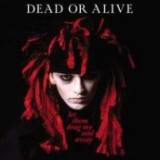
THE TWO CLASSIC EARLY SINGLES ORIGINALLY ON THE BLACK EYES LABEL. RE-PRESSED AND REISSUED ON RED AND BLACK SPLATTER VINYL. PLUS FIVE 1982 DEMOS FROM THE LEGENDARY PETE BURNS FRONTED BAND. CAPTURING DEAD OR ALIVE’S MUTATION FROM PROTO- GOTHIC ROCK BAND TO HI-NRG POP SUPERSTARS.
Having been ‘discovered’ working in Liverpool’s Probe Records during the punk rock explosion of the late 1970s, Pete Burns found himself fronting his own band, Nightmares In Wax who mutated into the more familiar Dead Or Alive, eventually bringing Pete into the UK pop mainstream, and a star was born.
Bringing together two-self-released 1982 singles and a collection of early versions of HiNRG tracks which would eventually find their way onto the band’s debut album, ‘Let Them Drag My Soul Away’ showcases the blossoming of one of the 80s pop scene’s most colourful characters.
Repressed on suitably atmospheric red and black vinyl and housed in a cover photograph by Dead Or Alive’s then manager Francesco Mellina, ‘Let Them Drag My Soul Away’ presents a last glimpse at a pre-stardom Pete, and a long overdue back story accompaniment for fans and collectors alike.
REISSUE of the Sun and Sail Club debut album with brand new artwork. Sun and Sail Club's debut album "Mannequin" embarks on territory that is both new and exciting. Not surprisingly, "Mannequin" spearheads the obvious future and progression of hard rock fury, bringing to the table the true professionalism and mastery, and dynamic musicianship that has been on full display from Fu Manchu, Kyuss and The Obsessed in years past, but also adds a completely new level of precision, technicality and accuracy to make an album that is almost completely flawless from start to finish. "Overall, this record is heavy and dark. It's Inspired by DEVO, VOIVOD, KRAFTWERK, TORCHE, SLAYER as much as it's inspired by ASWAD, JOE PASS and WES MONTGOMERY. I wanted a super heavy groove that would support angelic vocal harmonies. I think we achieved that." - Bob Balch New artwork made by Mirkow Gastow.
After a nine year hiatus SUN AND SAIL CLUB are back and they've come back swinging! This album is more aggressive than the previous album, as if that was even possible. Same line-up as before featuring Scott Reeder (FU MANCHU/SMILE) on drums, Scott Reeder (KYUSS/THE OBSESSED/FIREBALL MINISTRY) on bass, Bob Balch (FU MANCHU/SLOWER/BIG SCENIC NOWHERE/YAWNING BALCH) on guitar and Tony Adolescent (THE ADOLESCENTS) on vocals. The album starts with a mellow jazz guitar piece and then proceeds to rip your face off until the end of the album, which closes with another solo jazz guitar piece. "Shipwrecked" is their strongest album yet. Fully realized and to the point. Fast and dissonant. "This album is a compilation of riffs collected over a nine year period. Most of the songs were written last year but some of them have been floating around for a while. There is a general sense of unease throughout. I wanted to make an album that went one step further than "The Great White Dope." The songs are faster and more intense at times. It's basically the soundtrack of me beating the shit out of my guitar. Then you factor in Scott Reeder on drums, Scott Reeder on bass and Tony Adolescent on vocals and you've got something more than I could have imagined by myself. This album is raw and pummeling. If you're a glutton for punishment this might be your desert Island record." - Bob Balch Recorded at Jim Monroe's The Racket Room, Casa De Balch, and Scott Reeder's The Sanctuary
REISSUE of the Sun and Sail Club debut album with brand new artwork. Sun and Sail Club's debut album "Mannequin" embarks on territory that is both new and exciting. Not surprisingly, "Mannequin" spearheads the obvious future and progression of hard rock fury, bringing to the table the true professionalism and mastery, and dynamic musicianship that has been on full display from Fu Manchu, Kyuss and The Obsessed in years past, but also adds a completely new level of precision, technicality and accuracy to make an album that is almost completely flawless from start to finish. "Overall, this record is heavy and dark. It's Inspired by DEVO, VOIVOD, KRAFTWERK, TORCHE, SLAYER as much as it's inspired by ASWAD, JOE PASS and WES MONTGOMERY. I wanted a super heavy groove that would support angelic vocal harmonies. I think we achieved that." - Bob Balch New artwork made by Mirkow Gastow.
Red vinyl, limited to 300 copies. After a nine year hiatus SUN AND SAIL CLUB are back and they've come back swinging! This album is more aggressive than the previous album, as if that was even possible. Same line-up as before featuring Scott Reeder (FU MANCHU/SMILE) on drums, Scott Reeder (KYUSS/THE OBSESSED/FIREBALL MINISTRY) on bass, Bob Balch (FU MANCHU/SLOWER/BIG SCENIC NOWHERE/YAWNING BALCH) on guitar and Tony Adolescent (THE ADOLESCENTS) on vocals. The album starts with a mellow jazz guitar piece and then proceeds to rip your face off until the end of the album, which closes with another solo jazz guitar piece. "Shipwrecked" is their strongest album yet. Fully realized and to the point. Fast and dissonant. "This album is a compilation of riffs collected over a nine year period. Most of the songs were written last year but some of them have been floating around for a while. There is a general sense of unease throughout. I wanted to make an album that went one step further than "The Great White Dope." The songs are faster and more intense at times. It's basically the soundtrack of me beating the shit out of my guitar. Then you factor in Scott Reeder on drums, Scott Reeder on bass and Tony Adolescent on vocals and you've got something more than I could have imagined by myself. This album is raw and pummeling. If you're a glutton for punishment this might be your desert Island record." - Bob Balch Recorded at Jim Monroe's The Racket Room, Casa De Balch, and Scott Reeder's The Sanctuary
- A1: Dracula - The Beginning
- A2: Vampire Hunters
- A3: Mina’s Photo
- A4: Lucy’s Party
- A5: The Brides
- A6: The Storm
- B1: Love Remembered
- B2: The Hunt Builds
- B3: The Hunters Prelude
- B4: The Green Mist
- B5: Mina/Dracula
- B6: The Ring Of Fire
- B7: Love Eternal
- B8: Ascension
- B9: End Credits
- B10: Love Song For A Vampire (Performed By Annie Lennox)
The genesis of the film lay with actress Winona Ryder, who wished to make amends with director Francis Ford Coppola after her late withdrawal from The Godfather Part III. She brought him a script written by James V. Hart, which provided an adaptation of the famous 1897 novel Dracula by Irish author Bram Stoker. Coppola decided that he wanted a composer with classical eastern European sensibilities. After listening to a few pieces from fellow Pole Wojciech Kilar, Coppola was convinced that he had found his man. He called him and offered the assignment, which Kilar gladly accepted as he was very impressed with Coppola’s cinematic success. For his soundscape, Kilar chose to utilize traditional leitmotifs. Besides it features “Love Song For A Vampire” by Annie Lennox (Eurythmics).
Available as a limited edition of 2000 individually numbered copies on translucent red vinyl.
Something About Livingis an album of live recordings by experimental jazz composer/multi-instrumentalist Robert Stillman. The music was captured over the course of Stillman's time as the solo support act for The Smile (Thom Yorke, Jonny Greenwood, Tom Skinner). The album weaves excerpts from various theater and arena shows along the tour's North American routing into a seamless whole, creating a 40-minute program that represents an expanded version of Stillman's ever-transforming live set.
Something About Livingis the product of a steady, on-stage evolution that happened over the course of the nearly 60 shows opening for the Smile across the EU, UK, US, Canada and Mexico. However, the creative origins of the set began in relative isolation during the pandemic, through Stillman's work on projects like his multi-media installationUnseen Forcesand his monthly broadcast for Margate Radio, both of which drew upon solo improvisation using saxophone, cassettes, Yamaha DX7 synthesizer, and effects.
"At the time The Smile asked whether I'd like to open for them on their first tour, I felt like I'd already been preparing without really knowing it," says Stillman. "I'd been doing this music constantly, but always for a hypothetical audience" During the pandemic, Stillman's solo set-up served as the research lab where he worked on all the concepts he was interested in: solo improvisation, creating and manipulating cassettes, FM synthesis, analogue delays chains, no-input mixing, and non-metric rhythmic pulses. So when he was offered the first Smile tour, the idea was to bring "the lab" onto the stage.
What Stillman could not have prepared for was the experience of playing in venues with capacities of up to ten thousand listeners. "The first tour was in summer 2022, so not that long after the worst of the pandemic, when I had pretty much made peace with the idea that I might never be able to perform for an audience again. Then all of a sudden I found myself in front of huge numbers of people, and felt the massive responsibility of being with an audience, of this thing I'd done alone for so longactually being witnessed, and it was completely overwhelming!" On the flip-side, Stillman also recalls, was a new appreciation of how powerful the live performance was as a social phenomenon. "It's a cliche, but also true: the moment of making and hearing music in a shared time and space has a very specific meaning and power; there was a sense that everyone in the venue was necessary to make it real, regardless of what they were doing, or how they felt about it. There was an inevitability about it that I'd never fully appreciated."
Over the course of the tours that followed, Stillman transformed this appreciation of the shared moment into an ethic of spontaneity that guided the development of his live set. "An important reference for this set has always been an Animal Collective show I saw when I first moved to New York, probably in 2001 or so, that has always set the high-water mark for what I wanted to do live- they were improvising a lot, and out of what would seem to be absolute chaos they'd find their way to something structured, and then back out again into the unknown. It was so thrilling to witness".
ThoughSomething About Livingcompiles recordings from different dates along the tour, Stillman has edited and mixed them into a work that seeks to reflect the ebb and flow between 'chaos and control' that characterizes his live set. Among the compositions featured are some from previous album releases ("Time of Waves", "What I Owe", "What Does it Mean to Be American") as well as some new compositions ("The Dream of Waking", "Renaissance 2.0," and the title track, "Something About Living").
The album/track title "Something About Living" is a reference to a line from Stillman's favorite film,My Dinner With André: "André Gregory is explaining the value of life experiences that, as he says, are'to do with living'.That really struck me, the way he articulated it. I strongly believe live music situations can ask these kinds of questions, for performers and audiences. I hope that's reflected in this music."
[a] 01: Time of Waves (Live in Miami FL) [Live]
[b] 02: What Does It Mean to Be American (Live in Forest Hills NY) [Live]
[c] 03: The Dream of Waking (Live in St Augustine FL) [Live]
[d] 04: Something About Living (Live in Richmond VA) [Live]
[e] 05: What I Owe (Live in Chesterfield MO) [Live]
[f] 06: Renaissance 2.0 (Live in Chesterfield MO) [Live]
- Zombie Love
- U Can Call Me
- Taylor Swift = Us Soft Propaganda
- Dirty Luck
- Scared Of Nothing
- F.o.b.f
- Empire Service
- Cyclops
- Cool People
- April Ends
Razorlight were at the forefront of the indie-rock resurgence of the early 2000s, their biggest moments - ‘Golden Touch’, ‘Somewhere Else’, ‘In The Morning’, ‘America’ and ‘Wire To Wire’ - driving three Top 5 albums, nine Platinum album certifications, an NME Award, and live highlights including headlining the Reading Festival and performing at Live 8. After reuniting for live shows in 2021, the classic line-up - Johnny Borrell (vocals/guitar), Björn Ågren (guitar), Carl Dalemo (bass) and Andy Burrows (drums) - will release the new album ‘Planet Nowhere’ on October 25th, their first together since 2008. Razorlight preview the set by sharing its first single, ‘Scared Of Nothing’. Since reuniting, Razorlight have sold-out a headline tour which included a London show at the Eventim Apollo, and played shows as guests to Muse, Kaiser Chiefs and James. But as the ever ambitious Johnny challenged himself, “Who wants to be a greatest hits band?” So he hatched a plan, and late in 2023 booked a five-day session with the legendary producer Youth (The Verve, James) at his Space Mountain studio in Spain. Youth knew what they had to achieve, telling the band, “Razorlight’s quite simple isn’t it? Just a driving bassline, driving drums and a story.” For whatever reason, things weren’t that simple. After four days they had a stack of ideas, but nothing really worth pursuing. And then, as Johnny recalls, something remarkable emerged from out of nowhere. “I’d been down in the barranca, and came back up to find the studio empty. So I picked up this weird six-string bass/guitar hybrid I'd never seen before and wrote this thing. On our last night, I started playing it with the guys. The drums came in hard, the bass pounded. It sounded like shit. Absolute shit. But Youth was there, saying 'Can, Velvets, see where it takes you’ and 'Why don’t you try it like that?' But still, the track just wouldn't budge, locked in its own inertia. Youth says, 'You're getting there, just one more' and almost instantly the song came out, from nothing to something, like a statue coming up out of marble.” That song was ‘Scared of Nothing’ and listening back to the finished track, it’s easy to see why it resparked Razorlight’s mojo. Exuding taut, spiky post-punk energy in a way that’s instantly infectious - the very traits that attracted highfalutin praise from NME back when they started out (“More tunes than Franz, more spirit than The Strokes, and more balls than nearly every band out there”). And as ever, Johnny demonstrates the swaggering, high-intensity charisma that took him from being a figurehead of the Camden scene to rise to become a Vogue cover star. It was also the track which unlocked Razorlight’s creativity, leading the band to return to Spain with Youth for a second session earlier this year, during which they crafted an extensive catalogue of songs for the upcoming album. Other titles vying for inclusion include ‘Zombie Love’, ‘U Can Call Me’, ‘Dirty Luck’ and ‘Cool People’. Since returning, Razorlight have also looked back on their initial achievements, first releasing ‘Razorwhat? The Best of Razorlight’ (complete with the new song ‘You Are Entering The Human Heart’) and then last month issuing the 20th Anniversary Deluxe Edition of their breakthrough debut album ‘Up All Night’. Never a dull moment. Writing a new ending for themselves, Razorlight are back to cast out the boring in your life.
Teen Jesus and the Jean Teasers are a powerhouse, celebrated for their raw emotion and incisive social observations. Their talent has earned them nominations for Best Independent Punk Album or EP at the AIR Awards, Emerging Songwriter of the Year and Song of the Year at the APRA Awards, along with nods from the J Awards and Rolling Stone Awards. Recognised as Spotify's RADAR Artist, their rising global influence is undeniable. Following their award winning 2022 EP, Pretty Good For A Girl Band, their debut album I Love You charted at number 6 on the ARIA Albums Chart, marking a significant milestone.
The accompanying tour saw them sell out iconic venues like 170 Russell in Melbourne, the Metro Theatre in Sydney, and The Triffid in Brisbane. They capped off the year supporting the Foo Fighters at AAMI Park in Melbourne and launched into 2024 by supporting The Vaccines across the EU/UK. I Love You showcases the bands growth, with each member contributing to songwriting. It stands as a definitive statement of their sound—joy, rage, and euphoria, delivered with precision and heart. Teen Jesus and the Jean Teasers continue to make waves, solidifying their place in the music industry.
Dar Embarks, the hardware-based collaboration of Chicagoans Dan Jugle and Ken Zawacki, share four precious recordings of bouncing, highly-acidic machine funk and industrial ambiance. This is a posthumous release for Dan Jugle, who departed in 2018.
Dan was a multi-instrumentalist and a pillar of Chicago's techno scene who left an indelible mark on it with his distinctive sound. His infatuation with electronic music began in the mid-90s when he found his way to Midwest raves as soon as he was old enough to drive to them. He began working with analog gear to create his own expression of the music he heard there. Jugle, Zawacki, and Mike Broers started experimenting with a thrifted Roland TR-707, figuring out the controls through trial and error. They performed together as Ghost Arcade in the early 2000s.
Years later, Jugle and Zawacki reunited creatively, forming Dar Embarks and building the foundation for their project. Jugle gained a reputation for crafting washed-out, saturated club tracks as Juzer, a project formed with Beau Wanzer. Dar Embarks' debut EP Fleer (released on CLEAR USA) and Juzer's Horseplay (on Anthony Parasole's label The Corner) were both released in 2014, both elevated by Dan Jugle's live-action knob-twisting and button-pushing composition inspired by sci-fi and comic books. Despite his early passing, Jugle's legacy lives on through his work and his passion for Midwest techno that his friends and fans still remember and carry.
Lovingly wrapped up and presented to Acid Camp by Ken, these heaters are finally set free to move asses and minds.
2024 Reissue
"Ellipses dans l"harmonie - Lights in the dark" is the last work released by Teho Teardo on his imprint Specula Records. This work is entirely inspired by the music contained in the pages of one of the iconic texts of the 18th century, the Encyclopédie by Diderot and D"Alembert, the original copy of which is kept in the archives of the Giangiacomo Feltrinelli Foundation, which produced and commissioned the album. This is the first time the Foundation has produced a musical work. In "Ellipses dans l"harmonie", there is not only a homage to the Encyclopédie, but also a political connection to the spirit of the Enlightenment that guided the genesis of the work and the current need for light in the face of the new obscurantism. At the origins of the Encyclopaedia"s cultural enterprise are three roots: memory, reason and imagination. They are three dimensions that draw attention to three needs that still interrogate us today: to know the past in order to understand the origins of the problems we face today; to exercise rational criticism in order to orient ourselves in reality without taking refuge in bewilderment in the face of the complex challenges it poses to us; to continue to think about different balances in order to want to design a different world.