Mexico City based "street jazz" maestro Soni Orbita is on a spiritual quest in sound. Jazz is what he uses to communicate messages of love and freedom, and this new album for Departamento does just that across 8 magnificent new tracks. They are brilliantly complex in their arrangements but also hugely accessible thanks to their universal grooves and emotions. Elements of house, funk and disco all feature with piano anchoring each piece. The result is a deeply personal and meditative body of work that invites introspection while moving the body and soul with endlessly rich harmonies. This is bold, brilliant jazz for anyone seeking a path to higher consciousness.
Cerca:each
Motel d'amour - A Lost Electro-Funk Gem from the NDW Era Resurfaces
When we first collaborated with Collage member Markus Kammann on the EP project "Mit den Puppen tanzen" at the end of last year, we never imagined what would follow: Kammann approached us with a completely unreleased full-length album by his former band. Upon receiving the first three preview tracks, we were floored. One of them was "Nachtcafé" - a track that kicks off with a funky bassline layered over the punchy rhythm of a Roland TR-808. Add shimmering synths and Katrin A. Kunze's sharp, distinctive vocals, and we instantly knew we were hearing something special.
For a label dedicated to rediscovering lost treasures, this was exactly what we'd been searching for. The next two tracks - "Rendezvous" and "Casanova" - were just as compelling. When Kammann sent us the full album, we realized we were holding an electro-funk grail from the late golden days of the German Neue Deutsche Welle (NDW). We were listening to "Motel d'amour".
"Motel d'amour" is a concept album, offering a sharp, vibrant perspective from a confident, intelligent, and radiant young woman eager to experience nightlife, love, and music. Kunze's lyrics paint vivid scenes of flirtation ("Nachtcafé", "Rendezvous"), encounters with men ("Casanova"), the pulse of nightlife ("Die Nacht ist noch jung"), love ("Rotes Licht für rote Liebe"), one-night stands ("Motel d'amour"), and more. Rarely has a German album from that era captured emotional nuance and social dynamics so insightfully. Without veering into the overly personal, Kunze's direct, daring lyrical style was groundbreaking at the time - and remains refreshingly bold today.
While German listeners will fully appreciate the lyrical depth, the music speaks volumes on its own. Kunze's words are masterfully complemented by the production of Markus Kammann and Jürgen Grah. As heard on the in-demand "Mit den Puppen tanzen", their creativity seemed boundless. Each track is tightly composed, catchy, and full of character. While many German bands at the time leaned into rock, Kammann drew from the deep grooves of Earth, Wind & Fire, The Isley Brothers, Brothers Johnson, The Commodores, and the electro-futurism of Afrika Bambaataa's "Planet Rock" and "Looking for the Perfect Beat". The result: tracks with unmistakable electro-funk flair, powered by the classic 808 drum sound.
Though primarily rooted in funk and electro, the album retains flashes of NDW aesthetics - "Wir haben getanzt heut' Nacht" being a prime example. The instrumentation is a dream list for vintage gear lovers: Yamaha keyboards, Roland Juno-60, vocoder, Micromoog, Hohner D6 Clavinet, Fender bass, and a Telecaster guitar all feature prominently.
Recorded in 1985 at the high-profile Delta Studio by Richard Rossbach, the album attracted interest from Polydor. However, the label proposed using the compositions for a solo project with singer Inga Humpe (of Neonbabies), who was already signed to their roster. This would have required replacing Kunze as the vocalist, an idea the group firmly rejected. As a result, "Motel d'amour" was shelved, and Kammann, Grah, and Kunze moved on to form Cold End.
The album cover features a rare archival photo of Katrin A. Kunze - rediscovered by Kammann and now finally seeing the light of day, 40 years later.
We believe Motel d'amour deserves recognition alongside cult German classics like P!OFF?, 1. Futurologischer Congress' "Wer spricht?", Ami Marie's "Verrückt nach Glück", the funkier cuts of Cosa Rosa, or Piet Klocke's groove classic "Heute ist nicht sonst". It's a record that fits into adventurous DJ sets but also rewards a full, start-to-finish listen.
A note on audio quality: Sadly, the original master tapes were lost. The tracks were restored from a vintage TDK cassette. Thanks to modern digital tools, we were able to remaster them to a high standard - but in some songs light distortions remain. We appreciate your understanding and hope you enjoy this lost and undiscovered gem.
Motel d'amour - A Lost Electro-Funk Gem from the NDW Era Resurfaces
When we first collaborated with Collage member Markus Kammann on the EP project "Mit den Puppen tanzen" at the end of last year, we never imagined what would follow: Kammann approached us with a completely unreleased full-length album by his former band. Upon receiving the first three preview tracks, we were floored. One of them was "Nachtcafé" - a track that kicks off with a funky bassline layered over the punchy rhythm of a Roland TR-808. Add shimmering synths and Katrin A. Kunze's sharp, distinctive vocals, and we instantly knew we were hearing something special.
For a label dedicated to rediscovering lost treasures, this was exactly what we'd been searching for. The next two tracks - "Rendezvous" and "Casanova" - were just as compelling. When Kammann sent us the full album, we realized we were holding an electro-funk grail from the late golden days of the German Neue Deutsche Welle (NDW). We were listening to "Motel d'amour".
"Motel d'amour" is a concept album, offering a sharp, vibrant perspective from a confident, intelligent, and radiant young woman eager to experience nightlife, love, and music. Kunze's lyrics paint vivid scenes of flirtation ("Nachtcafé", "Rendezvous"), encounters with men ("Casanova"), the pulse of nightlife ("Die Nacht ist noch jung"), love ("Rotes Licht für rote Liebe"), one-night stands ("Motel d'amour"), and more. Rarely has a German album from that era captured emotional nuance and social dynamics so insightfully. Without veering into the overly personal, Kunze's direct, daring lyrical style was groundbreaking at the time - and remains refreshingly bold today.
While German listeners will fully appreciate the lyrical depth, the music speaks volumes on its own. Kunze's words are masterfully complemented by the production of Markus Kammann and Jürgen Grah. As heard on the in-demand "Mit den Puppen tanzen", their creativity seemed boundless. Each track is tightly composed, catchy, and full of character. While many German bands at the time leaned into rock, Kammann drew from the deep grooves of Earth, Wind & Fire, The Isley Brothers, Brothers Johnson, The Commodores, and the electro-futurism of Afrika Bambaataa's "Planet Rock" and "Looking for the Perfect Beat". The result: tracks with unmistakable electro-funk flair, powered by the classic 808 drum sound.
Though primarily rooted in funk and electro, the album retains flashes of NDW aesthetics - "Wir haben getanzt heut' Nacht" being a prime example. The instrumentation is a dream list for vintage gear lovers: Yamaha keyboards, Roland Juno-60, vocoder, Micromoog, Hohner D6 Clavinet, Fender bass, and a Telecaster guitar all feature prominently.
Recorded in 1985 at the high-profile Delta Studio by Richard Rossbach, the album attracted interest from Polydor. However, the label proposed using the compositions for a solo project with singer Inga Humpe (of Neonbabies), who was already signed to their roster. This would have required replacing Kunze as the vocalist, an idea the group firmly rejected. As a result, "Motel d'amour" was shelved, and Kammann, Grah, and Kunze moved on to form Cold End.
The album cover features a rare archival photo of Katrin A. Kunze - rediscovered by Kammann and now finally seeing the light of day, 40 years later.
We believe Motel d'amour deserves recognition alongside cult German classics like P!OFF?, 1. Futurologischer Congress' "Wer spricht?", Ami Marie's "Verrückt nach Glück", the funkier cuts of Cosa Rosa, or Piet Klocke's groove classic "Heute ist nicht sonst". It's a record that fits into adventurous DJ sets but also rewards a full, start-to-finish listen.
A note on audio quality: Sadly, the original master tapes were lost. The tracks were restored from a vintage TDK cassette. Thanks to modern digital tools, we were able to remaster them to a high standard - but in some songs light distortions remain. We appreciate your understanding and hope you enjoy this lost and undiscovered gem.
Pioneering British electronic musician Mark Van Hoen is set to release his latest solo album, The Eternal Present, on 23 May 2025 via Dell'Orso, a remarkable collection of tracks spanning nearly three decades of recordings from 1998 to 2024.
The Eternal Present embodies its philosophical title, inspired by Joseph Campbell's concept that "Eternity isn't some later time... Eternity is that dimension of here and now that all thinking in temporal terms cuts off." The album explores music as the ultimate expression of existing in the present moment, transcending time and creating a sonic experience that is simultaneously "spectral, ghostly, melodic, harmonic, and decayed."
An influential contemporary of Aphex Twin, Autechre, LFO and Boards of Canada, Van Hoen is best known for his solo work as Locust in the mid-'90s, which helped push post-rave electronic music into newly challenging realms. His extensive discography spans releases on influential labels including R&S, Touch, and Editions Mego. Van Hoen has worked on numerous collaborations throughout his career, including with Nick Holton and Neil Halstead of Slowdive under the moniker Black Hearted Brother—their album Stars Are Our Home was released in 2013.
The Eternal Present continues the lineage of Van Hoen's most significant works, with artwork by Ian Anderson (Designers Republic) reflecting the album's "eternal present" concept with a mysterious visual approach, allowing listeners to form their own imaginary landscapes. The mastering by Stefan Betke (Pole) enhances this document of the evolution of the artist over the years as he continues to hone his signature sound. Using a host of instruments including analogue synthesisers and employing various recording approaches, Van Hoen's equipment changed dramatically over the years—from early DSP processing used on his first solo record on Apollo ‘Playing With Time’ to various synthesisers, modular systems, tape machines, and digital workstations—contributing to the album's rich sonic diversity.
Throughout The Eternal Present, ideas are woven together through spoken word quotations and abstract vocals featuring notable collaborations from Rachel Goswell on the Slowdive cover "Shine" (from 1998), Megan Mitchell (Cruel Diagonals) on "Somewhere", and session vocalists Clare Dove and Dorothy Takev on "No-One Leave" and "It's Not You (In A Way)" respectively. The use of cleverly assembled vocal samples from an "undisclosed but very famous female vocalist" on "Multiplex" (2016) and the indistinct vocalisations on the Cabaret Voltaire-influenced "Only Me" (2017), constantly challenges and disorientates the listener through fluctuating, ever-changing musical elements.
The album was recorded across multiple locations including Somerset, London, Los Angeles, and New York—even beginning compositions during flights and in airport lounges—reflecting Van Hoen's changing personal circumstances, environments, and situations throughout the years.
Of Indian-Jamaican descent, Van Hoen was born and raised in England, absorbing diverse musical influences from his neighbors—African-Jamaican on one side and Punjabi Indian on the other. "Each family played their own music frequently, and I absorbed it." His musical foundations include Brian Eno, Kraftwerk, OMD, Tangerine Dream, Japan, Cabaret Voltaire, and Cocteau Twins, later finding inspiration in My Bloody Valentine, LFO, and '90s producers Robert Leiner and CJ Bolland.
These eclectic influences are evident on The Eternal Present, which contains snapshots of different periods in his life, with changing circumstances across decades creating a variety of textures and sounds. As Mark explains: "It holds the same sonic signature as many of my solo releases and early Locust albums. It's a natural development that has taken place in the last few decades. It's even related to the earliest music I made as a teenager, although perhaps more sophisticated."
“What a remarkably affecting, majestically broad and captivating work it is..what strikes you most is the album’s myriad diversity. Outstanding” (Electronic Sound)
“Whether channelling mid- 70’s Eno, early Aphex Twin or Neu! his vivid sounds shimmer with emotional weight” (Mojo 4*)
"Musically, Van Hoen belongs to a distinguished family tree. Originally influenced by the likes of Brian Eno and Tangerine Dream, and later presaging both Autechre's glitch and Boards of Canada's pastoral IDM." (Pitchfork)
- A1: 337
- A2: 337
- A3: 337
- B1: 337
- B2: 337
- B3: 337
Sublime private-press piano improvisations channeled from another world by Willem Nyland. Remastered from the original tapes and reissued for the first time, with in-depth liner notes by Matt Marble of the American Museum of Paramusicology. A Columbia-educated chemist by profession and a self-taught pianist by affinity, Willem Nyland (1890-1975) is known as a spiritual teacher in the tradition of Greek-Armenian mystic George Gurdjieff. In the mid/late 1960s, a split with Gurdjieff led Nyland to start his own group in upstate New York. There, after a Friday night lecture on 'The Work' and a shot of brandy, Nyland would launch into remarkable piano improvisations on a specially tuned baby grand, sometimes playing for over an hour. Each improvisation was meticulously recorded and cataloged, a major part of Nyland's teachings. 16 of these recordings were released as standalone LPs on Nyland's own Gauge Hill Press, with artwork by Hungarian American decorative artist Ilonka Karasz, Nyland's wife of over 50 years. These records, with their cascading, deeply emotional playing and beautiful cover art, have become highly coveted by collectors and "paramusicologists." Each contains depths of spiritual information and lyrical, almost visual instrumental storytelling. Nyland deftly and subtly shifts moods and tones throughout these truly inspired extended improvisations.
The debut album from Addy Weitzman, ‘Light Months Will Fly Over Us’ explores new-wave, romantic pop and art rock with elegance and ambition, drawing from Weitzman’s scattered network of collaborators, as well as a “frighteningly vast” personal archive of compositions. Sequenced by Seth Troxler and released on his Slacker 85 label, it represents a pivot in musical direction for the imprint, and a showcase for the songwriting craft Weitzman honed as a member of cult electro duo Footprintz, and Montreal synth-pop projects The Beat Escape and Dawn to Dawn.
The title Light Months Will Fly Over Us is derived from a line in a poem by the Russian writer Anna Ahkmatova. Weitzman was immediately struck by its “hopefulness, its mystery… it gives the feeling of being suspended, hanging in a dream-like state”. This interpretation has been translated to the album, rich in memorable songwriting that nonetheless invites the listener to lean in further. Delicately mixed by engineer Pierre Guerineau, known for his work alongside Marie Davidson, each of the eight tracks gently interrogates life’s greater mysteries; fear, love and salvation, each defining and revealing the human soul.
Opener ‘End of The Line’ invites us into an immediately lush space of lounge lizard existentialism, soft brass and piano helping Weitzman introduce “where the journey begins and the fantasy dies”. Across orchestral arrangements arranged by Adam Wilcox, whose sensitive, ambitious compositions are weaved throughout the album, ‘Beyond The Speed of Life’ brings to mind the laments of Scott Walker. Navigating vulnerability via grandeur, Weitzman’s earnest vocals flourish in wide-eyed call-and-response with the object of a transcendent love affair.
Alongside collaborator, Richard Lamb, the next chapter of the LP plunges into contrasting machine-driven moods; the wry, bubbling ‘Entertainment Is All I Wanted (And I Found It)’ is imbued with the playfulness and experimentation of 80s electronic pioneers such as Fad Gadget, while the tougher, icier ‘Stranger To Your Kind’ shifts in a more instrumental direction, recalling Weitzman’s dancefloor experience, as well as contemporaries such as Matthew Dear.
Album centerpiece and striking first single ‘Running & Returning’ is the first of a suite of three tracks in collaboration with Weitzman’s The Beat Escape and Dawn to Dawn bandmate, Patrick Boivin. Blending lush saxophones and angular guitars with a wistful melodic touch and lyrics, its irresistible art-rock rhythm provides the foundation for one of Weitzman’s most involving vocal performances.
It’s followed by an anthem for existential absurdity: ‘Ice Cream Candle’ provides a driving acceptance that “the more and more you learn, the less you understand”; Weitzman submits to this uncertainty with equal grace on ‘No Man’s Land’, as baroque invocations of “words swept through the fields” and meeting “where the water lilies grow” give way to a blistering guitar solo, humbly riding hypnotic percussion.
For the compassionate finale of Light Months Will Fly Over Us, Weitzman narrates the experience of ‘Gabrielle’, a woman slipping between rooms between shuttered blinds in the towering city, “where cigarettes and roses fill the air.”
As lyrically delicate as it is musically ambitious, Light Months Will Fly Over Us is a sublime debut album, enriched with care, love and much-needed enchantment.
Signing with FatCat Records in 2022, and having released four singles to date, Nottingham-based Midnight Rodeo have now delivered their debut album, “Chaos Era”.
Extensive, relentless touring (sold-out hometown shows,The Great Escape, Dot To Dot, and Kendall Calling) created a tight-knit family, their pleasure in playing as an ensemble is instantly evident on the album. When asked about this they’ll explain, “We want people to tap into why we are always smiling on stage.”
The songs are collaborative efforts. Their different musical backgrounds result in a genre criss-crossing and totally unique creative collisions. Bassist Harry says, “What we do is Dada-istic. The drums play hooks, the bass plays parts usually taken by brass, the guitar’s playing West Coast psyche over disco rhythms.”
Written over a prolonged period of time, the songs on the album can be viewed as a kind of coming-of-age “suite”, as the unit of 20-somethings wrestle with subjects such as relationships, shifting social dynamics, changing hopes and dreams. The LP’s title refers to tumultuous personal events they’ve helped each other through. Reinforcing their bonding. With no pointed political agenda, the album is about “escape”. “We want people to dance”, they say.
The band recorded the album with Samana’s Franklin Mockett. Making full use of the acclaimed duo’s residential studio, located deep in the Welsh countryside, during an Indian summer heatwave. The aim was to remove all distractions, and, with Mockett’s assistance, capture the group as live, and as analogue, as possible. For 10 days, in sometimes 16 hour sessions, music, incense, and whiskey flowed, while vintage amp valves glowed.
Just like the band’s live performances, “Chaos Era” is packed with a palpable joy. The exhilaration of creation in each others company. Its punchy production is most definitely meant to be played loud.
Repress!
The funky, atmospheric, evocative and sometimes downright weird output of companies such as DeWolfe, Cavendish, Burton and the ubiquitous KPM have always been a guiding inspiration for ATA Records, as evidenced in the spooky soundtrack works of The Sorcerers, the big band brass of The Yorkshire Film & Television Orchestra and even in the soul-jazz of The Lewis Express ('Theme From The Watcher').
It only seemed natural for the team at ATA Records to scratch their own Library itch and so last year's "The Library Archive Vol. 1" was born. Recorded over a series of sessions in the Alladins cave of vintage recording equipment that is ATA studios, it featured many of the stalwart musicians from the label who can also be found recording with The Sorcerers, Work Money Death and The Lewis Express.
Garnering praise from Library aficionado Shawn Lee("Holy F*$K this sounds great! ATA really smash the classic British Library sound. 10 out of 10") and the Don of British Library Music himsel fAlan Hawkshaw, "The Library Archive Vol. 1" was very well received and so a follow up was inevitable. Recorded during the Autumn of 2020, "The Library Archive Vol. 2" still has the golden age of European Library music squarely in it's sights, but this time the focus is drawn more to the wonky organ work of Italian quartet I Marc 4.
Each track has been lovingly crafted with a keen ear for authenticity and the same eye for detail shown on 'The Library Archive Vol. 1', recorded on the same instruments and equipment and with the same techniques as the music that inspired it.
The Library Archive is a labour of love for the label with more volumes planned.
Fresh from the lab, BLACK PRINT is finally here—a sonic formula meticulously crafted by Detroit’s SCAN 7 to awaken minds and ignite souls. This release delivers five distinct tracks, including a collaboration with acclaimed Detroit DJ/Producer AMX, aka The AM. Each track is a universe unto itself, bound together by rhythm and energy, guiding you toward a singular truth. To truly grasp the message, dive in. Listen deeply, surrender to the sound, and step into BLACK PRINT.
- Purple
- Green
- Blue
- Orange
- Red
Long overdue repress of 'Acid Guru Pond', the incredible collaboration between Bardo Pond, Japanese psych-experimentalists Acid Mother's Temple and cosmic kosmische legends Guru Guru. The fruits of an incredible collaboration, Acid Mothers Temple wrap their psych rock wizardry and cosmic space noise around Isobel Sollenberger's ethereal vocals and majestic flute playing, the collective brings out the best in one another, feasting on innovation and distortion while not losing the swirling lock groove. Classic rock riffs merge and morph into the surrounding world music influences to cook up an enchanting and meditative brew. The naming of each song after a colour only further reinforces the vibe heavy proceedings. Classic black vinyl
For her second full-length as Plume Girl, Sowmya Somanath crafts a space where boundaries of language, feeling, and sound start to dissolve. ‘Unnameable Glory’ ruminates on the limits of expression, and the luminous freedom that emerges when we let go of the need to name. Elaborating on the exploratory songs of her debut, Plume Girl continues to bring together Hindustani classical improvisation, ambient soundscapes, and experimental pop.
Somanath’s voice—from gentle murmur to radiant call—guides the listener through dreamlike arrangements: sunrise guitar arpeggios, humming choirs, heartbeat kickdrums, and synths tremble. Elsewhere field sounds and old family recordings are collaged, a woman’s giggle transposed into a piano melody, a sloshing body of water mirrored by synth bleeps. Plume Girl conjures moments of revelation, drawing from the natural beauty and intuition, that unnameable glory.
Is there a divinity or a wholeness that exists beyond language, belief, or tradition? Unnameable Glory both celebrates and gently challenges the notion: Can we honour the creative richness of culture while also seeing through the divisions it creates? Can we meet the world—and each other—without assumption, without fear, with eyes made new? In these songs, the sacred is found not in grand gestures, but in the anonymous freedom of simply being: the iridescence of oil and water on a street, the smile of a stranger, the hush that settles by a creek.
At the heart of the album is a sense of curiosity and surrender—a willingness to listen without judgment, to let the moment be unnameable, to allow wonder to arise and dissolve. And yet, as Somanath notes, there’s an impulse to capture that’s tough to ignore; a need to replicate and remember. Unnameable Glory dwells in this tension: between holding and letting go, between the urge to define and the beauty of what cannot be contained. There is a quiet, revolutionary joy in simply living and sensing together. Music becomes a meeting place for the whole, the holy, and the unnamable.
- 1: Delete Key
- 2: Don't Protest (Too Much)
- 3: Flower Dragon
- 4: The Last Night
- 5: Bend
- 6: Never Die
- 7: Only Death Is Real
- 8: Organ Delay
- 9: September Goths
- 10: Rickety Ride
Despite the outright denial in its title, death is present in every one of the songs on Never Die, the collaborative album from MIDWIFE’s Madeline Johnston and Matt Jencik (of Implodes, Don Caballero, and Slint’s live band). Jencik held the tenderest thought imaginable when he came up with that phrase—Never Die—the fact that the people he loves eventually would, a certainty that feels impossible and remote, until the day it absolutely doesn’t. Never Die represents Jencik’s desperate bid to hold onto everyone he loves, to keep them on Earth so fiercely that they might enter the grave with claw marks on their skin.
Johnston, who recognizes the grace of mortality (and who, as MIDWIFE once sang: “I don’t wanna live forever,” over and over) serves as the spiritual guide for the album, transmuting the fear of death into an incentive to live more keenly and dearly. Following a number of ambient drone instrumental albums, Jencik felt the need to set himself a new creative challenge: to write vocal-heavy songs. He worked on them alone in his basement, recording directly to a four-track cassette. He sent those demos to a different collaborator to tinker with before that partnership eventually dissolved. Then, he thought of Madeline: the way her voice tended to glower in her songs, as well as her commitment to minimalism, which fell squarely within the project’s aesthetic and spiritual impulses.
“I was immediately drawn to what she was doing,” Jencik says. In both of their work, Jencik and Johnston understand minimalism as a vehicle for enormous, desperate and universal emotions. Entire worlds come in and out of existence between each of their sparse notes; a great breadth of feeling is bedded into the simple structure of their songs. Never Die offers a calm confrontation with the dour inevitability that bookends our lives. When the fact of death looms over life, it tends to denature every experience we have and every relationship we know we’ll eventually have to forfeit back to the Earth. No one, no matter how hard we love, makes it out of this alive thing. But we feel anyway. And we love anyway. And we sing anyway. Here, Jencik and Johnston have sung ‘die’ over and over, snowglobing life in the process.
Juan Ramos is up to bat for the next Körperspannung release with the four-track stunner EP ‘Hard Bois’. Deeply connected to the ongoing pursuit of gay excellence and endeavors, Juan honors those who have come before us and touches us deeply in our soft spots at all the right moments. Across ‘Hard Bois EP’, the Berlin resident and behind the scenes operator (IYKYK) shows precisely why he’s one of dance music’s most exciting and dependable prospects. Opening the release, ‘Hard Bois’ combines snaking drums in a melange of samples with bff Kris Baha vocalizing sizzling and snaking lyrics winding around this propulsive club cut that could easily be a snapshot right out of a scene from Chicago’s iconic Medusa Club. ‘Saviour Sound’ is music that makes iron pipes sweat with hedonistic abandon. Exposed steel vibrates to a hardcore beat. Gears interlock to move the whole building into autonomous productivity. Conduits of electricity pulsate to the drama unfolding in a dim lit factory with dank corridors leading us on a path to a flowerbed growing and thriving in a subterranean hydroponic garden.
On the flip, the alarm strikes and it’s (shout it out): ‘Werk Day’! This is your call to get buttoned up and ready to make dreams reality. Head to the gym, pump those guns and then house your body. Technological funk winding through a sturdy and rock hard kick that helps you ride through the chasms of pleasure and pain. Rounding out the release is your ‘Acid BB’ rocking and roaring through the airspace of atomized acid matter, a perfect closer to a thoroughly exciting direction Juan Ramos takes with his newfound sound. Play it loud. Play it proud. Juan is one of our own and we do all we can to take care of each other.
- A1: Garry Johnson - United
- A2: Jj Allstars - Dambusters March
- A3: The Business - Suburban Rebels
- A4: Infa Riot - Each Dawn I Die
- A5: The Partisans - Arms Race
- A6: The Ejected - East End Kids
- A7: Peter & The Test Tube Babies - Transvestite
- A8: Blitz - Nation On Fire
- A9: Last Resort - King Of The Jungle
- B1: The Gonads - Tuckers Ruckers Ain’t No Suckers
- B2 4: Skins - Evil
- B3: The Business - Product
- B4: Red Alert - Spg
- B5: Oi! The Comrade - Guvnors Man
- B6: Peter & The Test Tube Babies - Maniac
- B7: The Ejected - What Am I Gonna Do
- B8: The Partisans - No U Turns
- B9: Blitz - Youth
- B10: Oi! The Choir - Walk On
Originally released in 1981 ‘Carry On Oi!!’ hit No.4 in the Independent Chart.
It “introduced” the likes of The Business, The Partisans, Blitz, Red Alert and The Ejected alongside ‘veterans’ such as The 4 Skins and Infa Riot
Now re-issued on vinyl complete with a gatefold sleeve and original inner bag, Previous vinyl re-issues of ‘Oi! The Album’ (AHOYLP 72)
and ‘Strength Thru Oi!’ (AHOYLP 230) have all proved strong sellers and we expect ‘Carry On Oi!’ to do the same.
- 1: Till There Was You
- 2: If You Go Away
- 3: It Takes So Little Time
- 4: Come Live With Me
- 5: Somebody
- 6: Problems, Problems
- 7: Where Was He
- 8: Louise
- 9: Everybody Sing
Come Live With Me represents a creative peak that sounds fresher in 2025 than it may have in 1974. The first album on his Crossover label, it lives up to the label’s name by showcasing the man’s singular ability to cross over to any audience by making songs from any time or genre undeniably his own.
Each side of Come Live With Me sets a seamless mood: Side 1 is a romantic suite of lush, latenight ballads, while a non-stop soul party is cooking on side 2. This two-sides-of-a-Saturday-night concept lets Ray Charles blend modern sounds and timeless traditions in ways no other artist ever could.
Removed from the trappings and tropes of the mid-’70s music scene, and fully restored and remastered in cooperation with the Ray Charles Foundation, Come Live With Me is finally ready to be appreciated as the masterpiece it always was.
- A1: (20:54)
- B1: (21:52)
‘With Time, We Learned To Ask Less’ is the first duo album by Giuseppe Ielasi and Riccardo D. Wanke after decades of friendship and the occasional artistic collaboration. Working with only electric guitar and electric piano as well as a gentle dose of reverb, these improvisation-based recordings showcase the rapprochement of two artists whose interests are perfectly aligned. Their carefulness, attention to detail, and shared desire to sculpt space through music instead of just occupying it create a unique harmony between these two exceptional musicians who consistently stay mindful of the old adage that music is the space between the notes. Following up on solo albums sees them seamlessly combining the sparse but lush aesthetics of those experiments throughout these 44 minutes. Having lived close to each other in Northern Italy, where the prolific mastering engineer Ielasi still resides to this day, he and Wanke were members of the group Medves together with Andrea Belfi, Renato Rinaldi and Stefano Pilia before Wanke relocated to Lisbon. When Ielasi, who had mastered Wanke’s recent solo albums including 2023’s »i« for electric pianos, was invited to play a concert in the Portuguese capital in the summer of that year, the two took the opportunity to go on stage together. Infatuated by the results of this fully improvised set, they organised a two-day session in Ielasi’s Monza studio shortly thereafter and edited the recordings over the course of the following months. The resulting album shows them moving slowly through sonic space and time, complementing and counterpointing each other’s playing. They leave each other room in which to unfold and let short moments of silence speak for themselves. ‘With Time, We Learned To Ask Less’ is the closest you will get to hearing the air sing.
- 2: X4'S
- Every Day
- Strange Mail
- Blank Eyed Devil
- The Electrocutioner
- Horrible Hour
- Selections From “A Fistful Of Dollars”
- The Kids Are In The Mud
- Wally And The Ghost
- San Remo
- Ed Sullivan
- Entoloma
- Electric Chair
- Flames Up Yours
- Outhouse Of The Pryeeeee
- Selections From “Rosemary's Baby”
- Sponge Dilrod
- Shiny Pig
- Who Are Parents
- Broken Bones
- Shiny Pig
- Who Are Parents
- Broken Bones
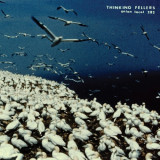
Bulbous Monocle focuses its lens further into the legacy and archives of the Thinking Fellers Union Local 282. These Things Remain Unassigned—a phrase coined by Brian Hageman, one of the band’s musical snake appendages emanating from its Medusa crown—is presented as a double LP (gatefold jacket with a twelve page libretto). It gathers together the band’s singles, compilation tracks, outtakes and never before released gems encompassing the arc of TFUL’s musical corpus. Every track has been surgically remastered by Mark Gergis (Porest / Sublime Frequencies / Mono Pause) with his signature craftsman approach. This collection is an auditory and visual feast. The extensive booklet included features band ephemera, concert flyers, photographs, and commentary about each track from Mark Davies. Beyond the rare singles and unreleased tracks from the TFUL archives, are cover versions from such disparate artists and composers as Ennio Morricone, Krzysztof Komeda, The Residents, The Shaggs, Caroliner Rainbow and Pérez Prado. “…In addition to these compilation one-offs, there were also a few studio recordings that were never quite completed or released. Throw in an alternate mix or two and the handful of singles that came out on various labels over the years, and you end up with what I feel works well as its own body of work, a bunch of adopted oddballs that somehow fit together as a family. I hope youʼll agree with me that these things are now no longer unassigned, but part of a somewhat cohesive whole, stitched together into something mysterious and glistening.” —Mark Davies (2023)
Electrodynamique is back with five tracks that fuse past and future into a single, electric pulse. Born in his early years and rediscovered with care, these songs are raw, vivid time machines — bursting with wonder, heart, and unrelenting rhythm.
Rooted in the sounds of early 2000s electro, synth-pop, and breakbeats, this release is a sonic flood of glistening synths, aching melodies, and driving drums. Each track carries its own weight — a story, a feeling, a frame of life caught in sound.
Proudly presenting Maravilhosamente Bem the powerful, female-centred third album by Brazilian singer, songwriter, actress, and creative director, Julia Mestre.
Alongside being a member of the Latin Grammy-winning Brazilian supergroup, Bala Desejo, Julia has been steadily building a solo career where her unique vision and alluring soft, sultry voice take centre stage. Drawing inspiration from ‘80s ballads, MPB, pop and disco productions, each song on this third album finds Julia creatively exploring different characters and tones.
A love-song-driven LP at its core, Maravilhosamente Bem holds a playful mirror up to blissful days gone by, artfully reimagined with Julia’s own modern twist. An album filled with love and nostalgia, it pays homage to her love of classic female disco divas such as Donna Summer, Sade, Alcione, Lady Zu, and the Brazilian rock queens Rita Lee and Marina Lima. Of that latter pairing, the late iconic Brazilian vocalist and musician Rita Lee (Os Mutantes) is referenced in the music video for the first single, ‘Sou Fera’, blessing Julia with a magical guitar. Marina Lima then provides guest vocals on the album’s closing track, ‘Marinou, Limou’, with her name transformed into a mantra by Julia.
Channelling a lo-fi ‘80s ballad aesthetic, Julia navigates a multitude of themes across the nine sublime tracks. From the sexy, whispered performances on vintage horror movie-inspired tunes ‘Vampira’ and ‘Pra Lua’ to the delicate, fragile love lullabies of ‘Sentimento Blues’ and ‘Cariñito’, and the seductive disco diva embodiment on dance tracks ‘Veneno de Serente’ and title track ‘Maravilhosamente Bem’. Another hidden highlight is the palette-cleansing mini-suite, ‘Interlúdio dos Amantes’. A luscious strings instrumental piece that lends to the beautiful Sade-esque ‘Seu Romance’.
Produced by Julia and longtime collaborators Gabriel Quirino, Gabriel Quinto, and João Moreira, Maravilhosamente Bem sees Julia embarking on a new era of her musical career. This sensational third album is a captivating showcase of the creative vision and versatility of one of Brazil’s finest stars.
Released on Mr. Bongo (ROW) and Altafonte (Brazil).
Brera Groove returns with its second vinyl release, Brera Groove 002, a various artists collection blending late ’70s disco with the early shimmer of Italodisco. Brera Groove, curated by Tamati and inspired by the artistic soul of Milan’s Brera district, expands here with contributions from Luksek & Lucio Balla, The Rejected, and Lillo Carillo, each bringing their own twist to the sound. Grooves, rhythms, and sparkling synths drive an EP made for the dancefloors, echoing the elegance of clubs, cocktail bars, and the neon charm of 'Milano da Bere'.