On his debut album kotokid walks you through meandering scenes of jazz fusion and hip-hop infused sonic cinema. While bass guitar is his bread and butter, the Amsterdam-based musician is a multi-instrumentalist in the truest sense of the word. Throughout this album he effortlessly blends together enchanting harmonies, expansive synth-scapes, intimate piano melodies, stanky bass grooves. With ‘ignite’ and ‘early spring’ he captures the emotions of rebirth, renewal, and hope. Energizing the spirit with ‘Fl00t’, ‘floating’ and ‘Titan’ he invites a sense of action, urgency and eventual triumph. Victory’s abound. Sonic meditations in their own right, ‘soil’ and ‘kotokin’ blend cinematic stylized melodies together eliciting introspection and clarity. And whether it's joy, nostalgia, discomfort, pain, grief, longing or happy remembrance - ‘family & death’ - conjures the plethora of these experiences in a life giving dance between piano and cello.
Buscar:ear dis
very dope.
With this EP an attempt is made at documenting the vibrant action happening during the late 1970s and early 1980s in the Pioneer Valley area of Western Massachusetts, US. The story is richer than the snapshot we present here, and a more detailed account is to be found in the accompanying book that can be purchased separately.
The Five Colleges in Hampshire County congregated a vast student population that inevitably interacted with the towns in the area. Bars, music and record stores, live music and a lot of experimentation and free thinking. Hampshire College, especially, promoted new approaches to teaching, subjects that might be considered radical by some even today, although a more favourable context would now surely exist for openly debating such topics as American Indians, Kayak Design, Black Oral Tradition, Food Management, etc. And the music? The immediate "punk effect" motivated the creation of numerous bands, many short lived, others evolving into New Wave / Power Pop territory, eventually crossing into Post-Punk experimentation. What is captured in "Noho EP" is a more electronic disposition, favoured by the existence of EMS gear and other equipment at Hampshire College and University of Massachusetts. We chose to focus on a group of musicians who, for a time, played together in different combinations under the loose umbrella of the Tekno Tunes label and the structure around it.
These musicians come from very different backgrounds and the nucleus portrayed here consisted of Christopher Vine, Elliott Sharp, James Whittemore and Nicholas Brown.
Of the several line-up changes The Scientific Americans went through, it was actually only the duo of Chris Vine and Jim Whittemore who recorded "Among Bodge Watt". Never before released, it is a companion piece to their track "El Salvador" available on the 1981 ROIR tape-album "Load & Go!". The Sci Ams were founders of the Tekno Tunes label and also created the Tekno Tours "concert promotion agency", under which name they exposed local audiences to bands such as The Stranglers, The Slits, Pylon, Pere Ubu, The Psychedelic Furs, The Bush Tetras, Steel Pulse, etc. Their own sound kept progressing but at its best there's a solid dub undercurrent, pretty obvious in "Among Bodge Watt".
Human Error was born out of a collective jam by Chris Vine, Elliott Sharp, Jim Whittemore and Nick Brown. Elliott Sharp had moved to Northampton in August of 1978 and naturally became involved in the local music scene, hooking up first with Whittemore at a hi-fi audio store where he worked at the time. Basement jams followed stimulating conversations, and other musicians joined the sessions. "Clandestinator" sounds gorgeously loose, an effortless groove coming from a quasi-dub set-up. Nothing here seems calculated, the music just flows, contagious and irregular as the handclaps in the mix.
The Higher Primates later evolved into a "proper" band but started as Nick Brown's solo project. The Primates only ever released a (now sought-after) 7" single in 1980 (on the Tekno Tunes label, precisely). Both tracks on "Noho EP" were recorded the following year and never released until now. "Auto Music in the Disco Dub Style" is self-explanatory, with a steady, mid-tempo TR808 beat running through, supporting synth squelches, echoes and reverbs, a fat bassline, dissonant melodic lines and odd vocal snippets. Kind of a DJ tool when the concept was barely in place. The more uptempo "Teresa Variations" adds a Fender Jazz bass and Selmer sax to the electronics. It actually sounds more "Disco", even with the robotic, unintelligible vocals. On top of this, the vibe is sealed by the overall Radiophonic Workshop analogue strangeness applied to a dance beat.
Turman first came onto the industrial scene in the late 70’s as the ominous ‘other half’ of legendary noise outfit NON. Shortly after recording the classic 1977 single Mode of Infection, Turman went on to pursue his own unique vision as a solo artist. Fusing every possible influence at his disposal while laying his ideas down on self-released cassettes like Flux (1981), Spirals of Everlasting Change (1987), Way Down (1987) and the massive Chapter Eleven cassette box set (1988). After a hiatus Turman resurfaced in 2005 to team up with seminal noise musician Aaron Dilloway. Since then, he has been gradually adding new titled to his already impressive discography.
For this archival release Turman selected 7 tracks that were recorded between 1980 and 1984. A welcome supplement to his library of avantgarde music that was released in the 80s. This album fits in nicely between the early industrial noise, the long-form minimalism of Flux and the rhythmic industrial of Way Down. Focusing on slowly shifting hypnotic loop-based layers of sound, it covers a specific side of Turman. It feels like there’s a direct link to his earliest works but it’s also a precursor to some pieces that were recorded much later. A missing link that finally gives us the opportunity of a complete overview of his early audio work.
All 7 tracks on this album have a connection to the written word in the form of a poem. Scans of the original typewriter poems are included together with collages and drawings from this specific time frame to create an essential and singular piece of art.
"Espontaneamente se Tenta: Aventuras Sonoras de Djalma Corrêa is an album of deeply exploratory pieces by legendary percussionist and composer Djalma Corrêa. This double-LP set features previously unreleased recordings that cover a wide range of sonic experiments, revealing an unknown side of the prolific and groundbreaking Brazilian artist. Most of the tracks on this album were digitized for the first time – directly from the original tapes – and were compiled in collaboration with Corrêa just before he passed.
The result is a wild and unsettling collage that shows us just how original and intense Corrêa could be: from the unorthodox electroacoustic piece Evolução (Para Fita e Filme), which channels ancestral African inspirations to create a sonic cosmogonical narrative, to the proto-mixtape Exemplo de Sintetizadores, in which he transitions from transcendental drones to astral cha-cha-chas.
While the compilation might seem disjointed at first listen, it is in fact the most accurate translation or representation of his central concept: spontaneous music. Djalma's relationship with sound was always guided by his fearless approach to listening, and by his audacious and dynamic interaction with both musicians and equipment, which enabled him to work across a wide array of genres: from jazz to completely abstract music, always through a personal DIY ethic.
Corrêa developed a strong bond with experimentalist and inventor Walter Smetak, with whom he shared a studio during his formative years at Universidade Federal da Bahia. Suite Contagotas, featured in this collection, is no less than a sonic materialization of that bond: an experiment revolving around dripping water and its randomness – a tentative exploration of the ideas and possibilities envisioned by Smetak for his audacious, albeit unrealized, Estúdio OVO.
Djalma, however, is best known for his studio work in historical albums, including many by Caetano Veloso, Gilberto Gil and Jorge Ben, and for his own polyrhythmic opus Baiafro. The last track is an early recording called Bossa 2000 dC, first performed by Djalma at the 1964 Nós, Por Exemplo concert, an event which is often cited as marking the beginning of the Tropicalia movement. At the time, he was the only artist in the lineup using electronic devices to create sounds, e.g. medical oscillators and contact mics to augment his percussive palette.
The artwork is an amalgamation of material found in the Djalma Corrêa Archive (currently managed by his son Caetano Corrêa) and other material created during the period in which the record was being put together. The intention is to guide the listeners through this possibly tempestuous soundscape, giving them additional resources so that they may draw their own meanings and make their own sense of this extremely immersive and original experience – which is like nothing we've ever heard before."
A sparsely documented yet iconic era for Ted Milton's psycho-funk afro punk fake no-wave pogo jazz group Blurt has been brought to life with an expansive collection of restored versions of live performances. Captured on early camcorders during the frenzy of counter-cultural activity that characterised Europe around the fall of the Iron Curtain, these recordings of Blurt, recently posted by fans on YouTube, are a visceral reminder of a scene whose influence is writ large on today's alternative music culture.
Ted Milton's trio have produced an impressive string of albums, not to mention his numerous solo recordings. Featuring 15 tracks spanning their extensive discography from their 1980 debut single – also the title of this collection – “My Mother Was A Friend Of An Enemy Of The People” to 1999’s “Eat Up Your House”, this live collection of performances have been digitised by whatever means available. The original sound captured by the inbuilt microphones of these camcorders and the videos concerned are in many cases the only documentation of an iconic era whose zeitgeist was so masterfully epitomised for many by Blurt.
Refurbished / restored/ repurposed using new AI tools there is a spectral roughness to them but surfing on these reconstructed waveforms, the inimitable machinations of Blurt ride out once again, emerging from a pixilated oblivion to put into perspective the peculiar absurdity of our human condition.
Introducing "Uprising Volume 2" by Zaratustra, the Highly Anticipated Second Installment of the Acclaimed Series on Skylax Records. Following the Groundbreaking Success of "Uprising Volume 1" in the Indie Dance Scene, Zaratustra Returns With a Collection of Tracks That Push the Boundaries of Genres, Inspired by Indie Dance, Italo Disco, Ebm, New Beat, Acid, and Ethnic Music. Prepare to Be Captivated by the Infectious Energy of "Uprising Volume 2." the Ep Opens With the Mesmerizing "Dark Clouds" (Club Mix), Reminiscent of the Futuristic Vibes of I-F's "Space Invaders Are Smoking Grass" and the Early 2000s Brilliance of Tiga. the Instrumental Version of "Amours Electroniques" Takes You on a Nostalgic Journey, Evoking the Spirit of Miss Kittin & the Hacker's Iconic Sound. Emilio Van Rijsel Delivers an Astounding Acid Trance Techno Remix of "Dark Clouds," Surpassing Expectations and Becoming an Undeniable Highlight of the Ep. for an Extra Treat, Those Who Purchase the Vinyl on Our Bandcamp Will Receive the Full Instrumental Version of "Dark Clouds," the Vocal Version of "Amours Electroniques" (Feat. Angst for Greta), and the Vocal Version of Naranja's Remix. Speaking of Naranja, the Ep Features a Dynamic and Uptempo Remix of "Amours Electroniques" (Instrumental) by the Talented Producer. Naranja's Remix Infuses the Track With a Pulsating Rhythm and Compelling Grooves, Elevating the Energy to New Heights While Maintaining the Essence of the Original. It's a Captivating Reinterpretation That Will Ignite Dancefloors and Leave Listeners Craving More. "Uprising Volume 2" Is a Powerful Testament to Zaratustra's Ability to Revive the Spirit of the Early 2000s New Wave and Electroclash Era. Each Track Encapsulates the Essence of That Time, Infusing It With a Modern Touch That Will Leave Listeners Craving More. Join the Uprising and Immerse Yourself in the Electrifying Soundscapes of Zaratustra. This Vinyl Release Is a Must-Have for Any Music Enthusiast Seeking a Sonic Adventure That Defies Genres and Rekindles the Spirit of a Bygone Era. Grab Your Copy of "Uprising Volume 2" and Witness the Evolution of Zaratustra's Artistic Prowess, as He Continues to Shape the Future of Electronic Music....
Luxury Apartments have spent long enough pondering in the orb of creative frustration as art charged city dwellers and have alchemised a jagged piece of guitar work that calls on the past for a quick catch up before cracking on with their day as a witty, energised and wiry punk band. Formed before your favourite East London neighbourhood became full of high rises, cockapoos and pubs with Madri & Beavertown on Draft, there’s a whole swath of words you could use to describe Luxury Apartments, but doing so might draw too many parallels to estate agent listings wo we’re gonna let their track record and new LP do the talking… LA played with the likes of TOY, TELEGRAM, Deep Tan, Es, The Chisel and Rifle before even having an LP. Mixing dry humour with a belting live show served them well while the guys were woodshedding and earnt them early fans such as Graham Coxon and Jamie Reynolds, who I can only gather shed a single tear of seeing where they came from with all the chaotic guitar-busting, skin-splitting, bottle-smashing madness of an early LA show. But we’re here talking about NOW and NOW is the time to get your pre-order for their first LP, a half hour of power smashing the atoms of 80s c86 indie on lead track ‘Energy’, 77 punk on ‘Wire’ and new garage rock explosions on ‘Taliban’ which morph in to a piece of black wax that’s 100% guaranteed to get the disenfranchised wiggling, the fed-up hurling half bricks through foxtons windows and the punk lifers flipping off yet another boss before carving out another fork in their paths of resistance.
Blue Record announces the re-awakening of Savannah’s rock giants BARONESS. Blue Record is an instant classic, with all the peaks and valleys, textures, and nuances that timeless records yield over repeated listens. Deep and dark, Blue Record overflows with gossamer melodies and striking, earnest riffs that have become the band’s signature. Blue Record is the most poignant moment in the BARONESS canon to date.
Diplomat and Beagle are old studio partners from the early 90’s and have recently started to record together again, fusing their musical talents to make some next level hardcore rave.
Their last release was all the way back in 1993 on the label Bogwoppa, an EP titled ‘Small Hours’ under their group name Narc. This EP went onto cult status due to its futuristic and unique take on the sub-genre, changing hands for vast amounts on Discogs.
Featured on this EP is a remix of ‘Equatorial Bass’, a track from the original 1993 EP revamped for 2022.
Hit the turbo!
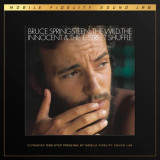
Released only eight months after his exhilarating debut, Bruce Springsteen's The Wild, the Innocent & the E Street Shuffle contains rousing dispatches from the boardwalk, the street, the beach, and the bedroom. It explodes with energy, dares to dream, teases with humour, crackles with tragedy, clings to hope, and overflows with discovery, youthfulness, and personality. It features an unforgettable cast of characters — corner boys, teenage hustlers, doomed lovers, jazz men, junk men, factory girls, fortune tellers, alley cats, pimps, escorts, and more — illuminated by vivid colour, breathtaking detail, and poetic action.
Musically, the heartfelt 1973 record is inhabited by sympathetic vignettes and cinematic arrangements steeped in rock 'n' roll, soul, jazz, and R&B. It finds the New Jersey native looking beyond the parameters of his preceding record and seeking to move on from environments he knows well (and chronicles here) by rushing headlong toward unknown territories, adventures, and people. Underpinned by the singer-guitarist's ambitious poetic enterprise and will to succeed, The Wild, the Innocent & the E Street Shuffle is the album on which Springsteen becomes the Boss.
Mastered on Mobile Fidelity's renowned mastering system, pressed at RTI on MoFi SuperVinyl, and strictly limited to 7,500 numbered copies, Mobile Fidelity's UltraDisc One-Step 180g 33RPM LP set is the definitive-sounding version of Springsteen's sophomore record. Benefitting from SuperVinyl’s nearly non-existent noise floor, superb groove definition, and dead-quiet surfaces, The Wild, the Innocent & the E Street Shuffle plays with a clarity, energy, presence, and openness that complement the expressiveness, dynamics, and scope of the seven restless songs that comprise a work Rolling Stone ranked the 345th Greatest Album of All Time.
Beyond the audiophile sonics that practically place you behind the console at 914 Sound Studios — listen to the separation between the instruments, natural decay of the notes, interplay within the widescreen soundstaging, and nothing-to-lose youthfulness of Springsteen’s voice — this reissue takes seriously this record’s influential merit by presenting it in packaging that underlines its status. Tucked in a beautiful slipcase, the LP is housed in a special foil-stamped jacket with faithful-to-the-original graphics. This reissue is made for listeners who prize sound quality and who want to engage themselves in everything involved with the invigorating set that busted Springsteen loose from the club circuit and landed him on the radio
Determined to liberate anyone within earshot and unafraid to come on strong, The Wild, the Innocent & the E Street Shuffle serves as the debut of the E Street Band — not only heard but seen for the first time by most of the public courtesy of the back-cover photograph. This is where saxophonist Clarence Clemons, organist-accordionist Danny Federici, and pianist David Sancious step out of the shadows — and drummer Vini Lopez and bassist Garry Tallent again stoke a fiery rhythmic engine that helps drive the untamed, reimagined big-band swing of “Kitty’s Back,” breathless R&B thrust of “Rosalita (Come Out Tonight),” and carefree dance steps of the funky “The E Street Shuffle.”
Of course, the main attraction remains a then-24-year-old visionary on the precipice of becoming a sensation and turning a then-bloated rock scene on its head. Recorded over three months while Springsteen and company were busy touring his debut LP, The Wild, the Innocent & the E Street Shuffle reflects the high-octane approach the vocalist embraced onstage and drifts away from the label-dictated acoustic-based frameworks of his debut. The set also witnesses Springsteen deepening his observational skills, with narratives such as the romantically tinged “4th of July, Asbury Park (Sandy)” and redemptive epic “Incident on 57th Street” mirroring changes taking place in the singer’s own life, small towns, and America at large.
A thrilling collision of memories, reflections, and composites — Sandy, Rosalita, and the latter’s parents are all based on actual people Springsteen knew, as is the community depicted in the opening track — the aptly titled The Wild, the Innocent & the E Street Shuffle resonates decades on due to its truths, authenticity, and spirit. Those characteristics — as well as the fact that many of its lengthy songs come on as the equivalent of sweaty, feverish soul revue that won’t stop until you’ve been exhausted — also explain how this now-iconic album triumphed over the reservations of industry “experts” that both demanded Springsteen re-record it and instructed deejays not to play it.
Yet there’d be no stopping a record that saw the past, present, and future, a band whose will would not be denied, and a phenomenon who was born to run. A never-ending invitation to act real cool and stay up all night, The Wild, the Innocent & the E Street Shuffle always feels alright.
Castle Face present Dan Rincon’s (OSEES, Wild Thing, Apache, Personal and the Pizzas) premier solo release Spotlight City.
Artificial landscapes and melodies comprised of Moog Grandmother, Mellotron and a kinky Modular system span from beautiful and lilting to haunting and etherial. The album was a years long learning experience of getting all components and ingredients to link arms and blend comfortably. Wrangling was part of the process. Strings soaring and sines weaving. Sometimes in the atmosphere, sometimes in the Earth’s core, sometimes flanked by neon blur as it hums & weave patterns through a world imagined in vintage sci-fi pulp.
“I was listening to a lot of solo Roedelius and Conrad Schnitzler records while writing this record and I’d say that both have been hugely inspirational on what I want to do as a solo recording artist. The way both of those of those artist pushed the early, chaotic electronic music into something more melodic is really inspiring to me, it’s not that dissimilar than trying to get melodies out of a modular synthesizer.”
An absolute necessary slab for anyone a fan of CF, OSEES, Popol Vuh soundtracks , 8 bit video game accompaniment & 80s Tangerine Dream. Burn one and burn out.
The Shadow Ring (1992-2002) presents a comprehensive overview of the work produced by British musicians Graham Lambkin, Darren Harris, and later Tim Goss over the course of a decade. Throughout their legendary ten-year run, this shambolic rock outfit, formed by a group of teenagers in the port town Folkestone, were an enigmatic force on the international musical sub-underground. The group have left behind a mighty run of eight LPs, a handful of 7-inches, and a spate of raucous live shows and cryptic zine appearances on both sides of the Atlantic. Collected here for the first time are The Shadow Ring's live cuts, rarities, and complete commercial releases, spread out across eleven CDs and a DVD, accompanied by an nearly five-hundred-page book that includes a monographic biographical survey, more than one hundred color photos, a comprehensive discography with transcribed lyrics, and a selection of zine appearances, fliers, postcards, and other miscellanea. In aggregate, this significant collection not only plums the depths of the band and its attendant lore, but reveals a vivid minor history of mail-order networks, bedroom recording sessions, cross-USA couch-surfing, and encounters with fellow travelers such The Dead C, Harry Pussy, Charalambides, Richard Youngs and the No-Neck Blues Band. Where is the connecting thread between Ralf Wehowsky and Squirrel Nut Zippers? Inquire within. The roughly 200 songs in this set trace the band from its earliest days recording in Lambkin's parents' house (SHP Studios), through its brooding mid-period, garnering word-of-mouth notoriety that peaked with the trio turning down an invitation to tour with Pavement, to a string of increasingly uncompromising experiments with electronics, voice, and tape. Although the band's sound morphs considerably during this time period, from spartan beginnings using pots and pans as a drum set to their ultra-deconstructed latter-day approach, certain core sensibilities are apparent throughout: brash youthful rawness, wry and morbid lyricism, stripped-down angularity, and a penchant for atmospherics. This boxset, featuring every record and single, and buttressed by twenty-nine rarely-heard recordings, including proto-Shadow Ring projects such as the Cat & Bells Club and Footprint cassettes, and their unearthed final CD-R Darren Harris Reads Graham Lambkin, presents the first opportunity to hear this arc in full. The ebbs and flows of the band_their schoolboy beginnings, initial successes, first shows and tours, life milestones, and Lambkin's gradual development as a solo artist_are painstakingly detailed in a sizable band history-cum-Künstlerroman by Blank Forms artistic director Lawrence Kumpf, illustrated with candid photos, sketches, letters, newspaper clippings, and other ephemera. The music and videos can speak for themselves, but taken as a mass, this collection makes sense of the group's utter uncanniness without comprising one iota of their mystique, bringing something new to the table for completionists and the uninitiated alike.
Co-founded by Detroit natives Rahill Jamalifard and Lenny Lynch, Habibi got its start in Brooklyn in 2011, earning early raves every- where from Pitchfork and NME to All Things Considered and The New Yorker, who praised the band for infusing “the Colgate-white glisten of sixties-girl-group pop with an uncensored edge.” Dreamachine, Habibi’s mesmerizing new record releasing on Kill Rock Stars, marks a major sonic evolution for the band, rising beyond the critically acclaimed five-piece’s garage rock roots to arrive at a singular swirl of analog and digital elements that underpin their search for spiritual and physical transcendence. Produced by Tyler Love and longtime collaborator Jay Heiselmann and featuring MGMT multi-instrumentalist James Richard-son, the collection draws on a mix of post-punk, experimental pop, and vintage disco, calling to mind Tom Verlaine, Diana Ross, Kate Bush, and Kim Deal, all filtered through the band’s shared love of Middle Eastern psych music. The songs here are their own distinct worlds, each an immersive quest in pursuit of something greater, and the band’s performances are relentless and hypnotic to match, driven by lush synthesizers, sinewy guitars, and a muscular rhythm section. The result is a record as fearless as it is enthralling, an alternatingly fierce and joyous work that ascends to new heights as it reckons with desire and escape, love and surrender, rebellion and reality.
Haust started in the city of Notodden in 2001 and redefined the borders between punk and black metal with their 2008 debut album “Ride The Relapse”. The album was the first album to be released on the Fysisk Format-label and went on to inspire a generation of bands. Members from Haust have also been prominent in bands like Okkultokrati and Outer Limit Lotus, and guitarist Ruben Willem’s production skills has made its mark on bands like Kvelertak, Bokassa, Djevel, Ondt Blod, NAG and Sibiir.
With their debut album Haust showed the world how negative forces could manifest into an album. Some songs were inspired by the destructive car-culture in Notodden with its intense local mentality and anti-sophistication, as well as old horror movies and trash films by John Waters. Three more albums appeared, with some other members here and there, but the band went on hiatus from 2015 for several years. Now the band is back, in their original line-up, to return to their dark horror-inspired landscape from the early days; dirty punkrock with a strong negative energy.
The album summarizes everything Haust has done and stood for in the last 23 years: negativity, death and corruption are recurring themes, and the music is more aggressive, noisy and catchy than ever before.
Yes' 90125 was a departure from their progressive style but it introduced the band to a new generation of fans, reaching No. 5 on the Billboard 200 and No. 16 on the U.K. albums chart. The 1983 album remains their best-selling album with more than 3 million copies sold in the U.S. "Cinema" earned the group a Grammy Award for Best Rock Instrumental Performance, while "Owner Of A Lonely Heart" was the band's first and only single to reach No. 1 on the Billboard Hot 100 chart.
Named for its Atco catalog number, 90125, the album — the band's 11th studio effort — it was born out of the band's self-reinvention. Begun as Cinema, a new band by Chris Squire and Alan White, the project grew to include the slick production of Trevor Horn, the new blood (and distinctly '80s guitar sound) of Trevor Rabin, and eventually the trademark vocals of returning founder Jon Anderson. His late entry insured that Rabin and Horn had a heavy influence on the sound. The album also marked the return of prodigal keyboardist Tony Kaye, whose crisp synth work on "Changes" marked the band's definitive break with its art rock roots.
"Owner Of A Lonely Heart" was a huge crossover hit, and its orchestral break has been relentlessly sampled by rappers ever since. The vocal harmonies of "Leave It" and the beautifully sprawling "Hearts" are additional high points,
90125 is a significant and well-regarded album in the Yes discography.
Analogue Productions is proud to offer the definitive reissue deluxe 180-gram 45 RPM 2LP of 90125. For Yes fans, this is a can't-miss addition to your album collection.
A landmark recording and masterful symphony of performance, composition, and execution, Miles Davis' E.S.P. established the template jazz would follow for the following decade. The 1965 record splits the gap between accessible hard-bop and the cutting-edge approach Davis increasingly pursued into the 1970s. Adventurous, sophisticated, and yet altogether cohesive, E.S.P. stands out not only due to its elastic compositions but via its chemistry, interplay, and feeling attained by the instrumentalists. The first album Davis' classic second quintet made together, it's also very arguably the group's best. Never before has the effort been experienced in such transformational sound.
Pressed at RTI, this 180g 45RPM 2LP set of E.S.P. renders the music's dynamics, pitch, colors, and textures with lifelike realism and proper scale. Reference-caliber separation, wall-to-wall soundstages, and distinct images magnify the intensity and beauty of Davis and Co.'s creations. Whether it's the distinctive snap of Tony Williams' drum sticks against the snare head, air moving through Davis' trumpet, acoustic thrum of Ron Carter's bass, or upper register of Herbie Hancock's piano, the sound is better than you'd even hear in the most intimate jazz clubs. Prepare to be swayed on every level.
For many, E.S.P. looms among the decade's best albums if only because of the significance of Davis' line-up. While Hancock, Williams, and Carter are holdovers that began playing with one another on 1963's Seven Steps to Heaven, Wayne Shorter functions as the secret weapon and key addition responsible for this ensemble hitting a new peak. Indeed, the saxophonist helped pen two of the seven compositions here – notably, E.S.P. is entirely comprised originals and clocked in as one of the longest-running jazz LPs issued at the time – and, more importantly, grants Davis the confidence and leeway necessary for the eruption of enigma, steadiness, and tension.
As he did with John Coltrane year earlier, Davis hangs back and picks his moments to solo, with Shorter stepping up to supply the churn. Their bandmates respond in kind, itching to take off into new stratospheres all the while keeping their improvisations grounded and connected to the piece at hand. Guided by Davis' visions and inspired by current boundary-pushing works by the likes of Ornette Coleman, Cecil Taylor, and Coltrane, the magnificent results spark with variation, harmony, emotion, energy, and brilliant movement.
Interlocking lines drive "Little One," alternating rhythms pulse through the funky "Eighty-One," melodies soar on the balladic "Iris," the aptly titled "Mood" broods over minor-key structures, and "Agitation" – goosed by a two-minute percussive introduction by Williams – delivers on its promise. No record – and no group of musicians – have ever balanced coherent themes and exploratory playing in better fashion than Davis' quintet on E.S.P. It's the avant-garde record even jazz traditionalists love, and essential on every level.
For fans of Duster, LSD and The Search for God, The Microphones. Double LP (NO BOOKS!) First official physical copy of fan-made compilation of alternate tracks and demos from cult phenomenon album Deathconsciousness. Freshly remastered. With the broader adoption of the internet around the turn of the century, how people would engage with and discover underground music would change forever. As a result of the new digital era, DIY was now worldwide, and no band embraced this new frontier better than Have A Nice Life. Formed in 2000 by duo Dan Barrett and Tim Macuga, the Middletown, CT-based pair would, throughout the 00s, self-release and share a number of demos and home recordings via early social media channels as well as establish its in-house label ENEMIES LIST HOME RECORDINGS. These first steps set in motion Have A Nice Life’s rise to renown as an icon of underground music in the internet age, culminating with the release of its pivotal 2008 debut album, Deathconsciousness. Through word of mouth and online discussion, Deathconsciousness became subject to viral praise thanks to its synthesis of bleak post-punk, lo-fi shoegaze, and carpets of hypnotic drone music. Eventually, this humble self-released project would attain the status of a post-internet cult classic, amassing Have A Nice Life a fervent online following that the band would interact with in kind. In an effort to thank and continue to engage with Have A Nice Life’s internet cult following, Barrett and Macuga would regularly share links to old demos, works in progress, and outtakes from the recording of Deathconsciousness. Over time, a group of fans would compile these demos into an unofficial release. Dubbed Voids, this fan-made compilation several alternate takes of tracks from Deathconsciousness, as well as a handful of early versions of songs that would appear on Have A Nice Life’s two following albums, The Unnatural World and Sea of Worry. While undeniably reminiscent of their final album version counterparts, the earlier versions of these tracks each feel distinct in a way that makes the moody, decidedly lo-fi aura of Voids an essential slice of the Have A Nice Life discography. Hungry for more from the enigmatic duo, fans swarmed around this compilation, accompanied by loud calls for it to receive a physical release. Seeing that demand and with the band’s blessing, a pair of fan-made tape pressings of Voids would be released via Music Ruins Lives, a DIY label run by Have A Nice Life superfan Thom Wasluck, also known for his band Planning for Burial. Between both instances of the tape swiftly selling out and the compilation’s long absence from streaming services, Voids has historically been an elusive release to track down, only available in the obscurest corners of the internet or physically on the secondary market at eye-wateringly high prices.
Over a decade since its initial, unofficial release in 2011, The Flenser is proud to reissue Have A Nice Life’s Voids for the first time ever in an official capacity in physical form. Originally released digitally in early 2023 and freshly remastered for the occasion, this reissue of the beloved compilation will receive its first-ever wide release on physical formats (CD/LP/Cassette). This release also marks the first time fan-favorite tracks from Voids “Sisyphus”, “I’m Doctor House”, and “Human Error” will be available on vinyl and CD. Like a symbolic passing of the torch, the physical versions of the 2023 Voids reissue come with a foreword essay written by Wasluck, the previous custodian of Voids during the Music Ruins Lives days.
It could be argued that Brained and Cooloorta are the definitive NWW E.Ps. Both classic and timeless fan favourites appear for the first time together on one single album. Both E.Ps marked a distinctive change in the NWW sound. Brained from 1984 showcases NWW at their mid 80's finest. The relentless churning and uncompromising music of Brained by Falling Masonry is complimented by the eccentric mania of JG Thirlwell's vocals. A Short Dip in Glory Hole takes us into the murky depths of a David Lynch influenced nightmare, a lysergic unhinged movie for the ears, which greatly influenced the Peter Strickland film Berberian Sound Studio. Cooloorta Moon from 1989 takes us in a whimsical direction and further highlights the boundless originality of NWW. The evolution of NWW utilising more traditional instrumentation and bordering on the verge of song structures started coming to the fore on this E.P. In addition to all the original songs from the Cooloorta and Brained EPs, the 2010 track, Sarah's Beloved Aunt perfectly closes this collection. Lovingly remastered by Andrew Liles. Agian, this arrives in a beautiful die-cut sleeve with Babs Santini artwork.
Nestled beside the sea and a cluster of palm trees, La Malvarrosa, the neighborhood in Valencia where Cooper resides, derives its name from a fusion of "Malva," meaning mauve, and "Rosa," meaning pink. Here, La Malvarrosa serves as the primary backdrop for the recordings, symbolizing two distinct colors and artistic approaches.
These hues become the emblematic colors of a fictitious flag from an imagined island located on a forgotten expanse of ocean. From this ethereal site, melodies emerge, seeking to unravel the essence of certain insular music while intertwining with Cooper's post-everything sensibilities and Kòlar's minimalist electronics. "Mauve/Pink" navigates the delicate balance between playfulness, intricacy, and simplicity, blurring boundaries between tradition and innovation, reality and imagination, change and repetition.
The album serves as a showcase for contrasting methodologies and viewpoints, acting as a sonic document of an ongoing conversation between generations, where Cooper and Kòlar's efforts illuminate a boundless creative process and timeless aesthetics.
An’archives presents the latest album by Japanese free saxophonist and vocalist Harutaka Mochizuki, Doppelgänger ga boku wo. Since the early 2000s, Harutaka has quietly, yet steadily, released a string of solo and collaborative releases that have allowed multiple perspectives on one of the most singular voices in modern music. In collaboration, he seems to prefer the duo format, and digging through his discography, you’ll find releases where he pairs with Tomoyuki Aoki (of Up-Tight), Michel Henritzi, and Hideaki Kondo. But Harutaka’s solo performances, with their lyricism and physicality, are where the magic truly happens.
If earlier albums, like Solo Document 2004 (Bishop, 2005) and Pas (no label, 2014), were raw documentations of solo alto saxophone performances, in recent years, Harutaka’s solo albums have become more complex, more mystifying. Most significantly, they’ve become more personal; there are few musicians extant whose albums feel quite so much like diaristic interventions, and Harutaka’s music now is deeply moving in its intimacy. Developing that thread of revelation, Doppelgänger ga boku wo offers a still richer exploration of many facets of Harutaka’s artistry.
The two double-tracked alto saxophone performances here feel consummate, with Harutaka shadowing himself, exploring the possibilities of the multiple self: Doppelgänger is me, indeed. The playing here is rich with affect, but still exploratory, voiced with rigour and intent. Two short pieces for keyboard and voice (about Giacometti and Genêt, respectively) are fragile miniatures, with clusters of chords, and passing phrases, wrapping around Harutaka’s untutored but lovely singing.
The ‘karaoke’ performance that closes the album, of “Woman ‘W no higeki’ yori”, speaks to the iterative aspects of Harutaka’s music. A cover of the Hiroki Yakushimaru song, the theme to Shinichirō Sawai’s 1984 film W’s Tragedy, he’s returned to this song several times, and here, his delivery perfectly captures the spirit of what Michel Henritzi, in his typically beautiful liner notes, evocatively details as “one of those sad love songs that accompany lonely sake drinkers in smoky night bars, sharing their spleen.”
Gorgeous, human, heartrending - Doppelgänger ga boku wo is Harutaka Mochizuki in element and in spirit.