After 20 years of living on the road in different places, Six Organs of Admittance had returned home to Humboldt County - a far country, to some, but still part of the world through which creatures of all kinds are moving through and contributing to. And some of them are human. Alone together - forming connection and exchange out of thought and expression - no different from the people on the other side of the Redwood Curtain. It was there, where Six Organs had long ago emerged, in the name of everything cycling, of circles that spiral concentrically and remain unbroken, the new music was conceived. In moments, it was as if the future had somehow wrapped around 360 degrees; elsewhere, the systems and patterns inside the writing and recording only became evident later - like a recognition that cumulus and nimbus clouds which passed through the sky the day before contained familiar shapes. Informing the songs accordingly as he went, Ben picked up on modes both musical and lyrical, threading backward through the time of Six Organs of Admittance. Almost marinating in it as a way of life. Working on the music and the vocals, then spending some time with them while stepping away from them. Walking the dog and coming back to them Time is Glass is made of that kind of time. Alone time. Recorded in the visceral environs of home, Time is Glass is sharply focused, even as misty impressionist mountains float through the background. Sweet and spiny, "The Mission" sings its purpose, before turning abruptly to the orchestral rumble of "Hephaestus": rural industrial psychedelia, ecosystem goth, synths arcing to lift a helplessly earthbound community into the firmament above. Winding almost imperceptibly back into song with "Slip Away", the time of the record becomes clear, moves fluidly, relaxed but aware, from event to event. People and things coming around again. The intuit, passing through wormholes and time, sounding deep then dissolving into the universal. The acoustic sounds ringing, layered suddenly, then clear again. Explosions of a new kind of distortion. Ecstatic melodies. Communing. The space of a day. The space of a season. Time is Glass, and Six Organs of Admittance is here and will be here, again.
quête:ear dis
Chasing dopamine in free fall through a burning world. Looks that make you want to go swimming, even though you know you're going to drown. Where is my value? Who do I want to be? And who do I definitely not want to be?
Mental health, body positivity, queerness, sexualized violence and self-determination: Elena Rud sings about these things, loud and wild. With a voice that sometimes seems on the verge of breaking and then hangs deep in the ear canal again. As raspy as after a handful of cigarettes. So distinctive that you will recognize them again and again from a big bunch of newcomer bands.
Because the songs go through the marrow and bone. Under the skin or into the heart. Maybe left in and right out, but it's good in between. Because you feel that you're no longer quite so alone with yourself and this shitty world.
Mental Health, Body Positivity, Queerness, sexualisierte Gewalt und Selbstbestimmung: Elena Rud singt von diesen Dingen, laut und wild. Mit einer Stimme, die mal kurz vorm Wegbrechen scheint und dann wieder ganz tief im Gehörgang hängt. So kratzig wie nach einer Handvoll Selbstgedrehten. So markant, dass man sie aus einem großen Haufen Newcomer-Bands immer und immer wieder erkennen wird.
Mittlerweile hat Elena ein Rudel aus vier Jungs dazu gewonnen. Ein Rudel, das seiner Frontfrau nicht nur den Rücken stärkt, sondern sich auch gegen die toxischen Ideale wehrt, an denen sie selbst gemessen werden - für mehr Schwäche, Unsicherheit und GlitzerMakeup statt Dominanz, Unterdrückung und Aggression. Auch in Sachen Sound. Die fünf Münchner:innen klingen ehrlich, tanzbar und wild. Nach Indie-Rock und Punk. Oder nach NDW
A new Toy Tonics EP. It’s the second by Venezuelan house DJ and producer Gee Lane. Including amazing remixes by NYC mainstay musclecars!
Gee Lane’s debut EP Metamorphosis (with remixes by Demi Riquísimo and Divorce From New York Remix & PIEK ) came out last October.
But as Virginie (her real name) is a steady name of tue Toy Tonics crew now and plays almost every weekend at one of the worldwide Toy Tonics Jams it makes sense to put out a follow up fast.
Gee Lane originally from Caracas now in Barcelona is a passionate DJ and vinyl digger with an extraordinary positive energy and attitude. A DJ diva in a positive way. A unique personality with a very strong style (in music but also as a person) and very elaborated ability to read and play with the dancers. Like the first EP also this one was recorded in Barcelona and Berlin with a little help by Robin Braum from Athlete Whippet. The music reflects well her roots and passion for everything what came out from New York’s dance culture. You can hear influences from the 80‘ promo disco scenes as well as the 1990 Body & Soul/ Francois Kervorkian / Joe Claussell universe. In fact Gee Lane after being raised in Caracas and musically educated by her father from a very early age, (a composer and musician) she moved to New York at a very young age in the late 90's where she fell in love with the HOUSE scene. And especially everything that happened at the famous and influential ’Body & Soul’ club.
This culture increased her curiosity to become a DJ (and vinyl digger herself) who is not just interested in house music but wants to explore other genres such as funk, Hip-Hop, jazz and Latin sounds and include these vibes into her DJ sets. A vinyl collector (and long time record shop employee) since then, she is known for her musical eclecticism that leads her to mix everything what she wants ...
Gee Lane now is a steady member of the Toy Tonics Krew and is already playing the Toy Tonics Jams all around Europe.
About 20 years ago, Carlos Giffoni quickly made a name for himself both as a noise guitarist and a laptop noisician upon arriving in New York (via Florida and Venezuela). His expertly curated annual No Fun Festival, as well as his No Fun label, further solidified him as a key figure in the international noise scene. The festival's success proved the formula for experimental and improvised music fests could work with the noise underground as well, but it also capitalized on the faster rate of connections being made between geographically disparate artists as a result of the (still relatively nascent) internet. Back then Carlos would play his laptop like a pinball machine, in contrast to the static stage presence of most laptop performers, and his solo music, like many others' at that time, expressed a less dark and dour vision of the implications of harsh noise. By the close of the 2000s, he had stopped doing the festival, switched gears musically to playing the lighter No Fun Acid sets, and moved to LA. Now he has re-emerged in a big way with Dream Walker, his first full-length since 2018's Vain (and only his second since 2010). Inspired by the masterful performances and diffusions he heard at the February 2023 GRM electronic music festival in Paris, particularly sets by old friends Lasse Marhaug, Jim O'Rourke, and Eiko Ishibashi, he began conceptualizing new music of his own in response, turning to synthesizers and other hardware to produce a work more firmly in the tradition of European electronic music than anything else he's done. Intended as a late night listen that evokes the edge of consciousness, with Carlos getting as close as possible to a trance state during the actual recording and mixing, each of the eleven tracks transition into one another rather than being standalone discrete pieces, forming two side-long suites that proceed like stages of a dream. Unabashedly tonal and repetitive, the glistening opener "Now Dream," the droning "Sleep Walker," and the closing triptych of "Lost in Descanso," "Sunrise," and "The Hidden Path" occupy a power electronics-ambient nexus that feels spiritually close to the Mego label. Elsewhere, "Ticking Clock" is reminiscent of Stereolab's non-easy listening vintage electronic side, while the two-part arpeggiated "Euphoria" recalls early Oneohtrix Point Never (which Carlos released on No Fun). The contrast between "One Breath"'s crackling opening and its remarkably fluid and soaring sustained synthesized chords is a distillation of the album's lingering tension between electronics' ability to project mechanical rupture as well as the organic and the infinite _or "walking between dreams," as Carlos himself puts it. Produced by Lasse Marhaug (who also mastered Carlos' first solo album, Welcome Home, back in 2005), released by Stephen O'Malley (who I remember DJing at the No Fun fest), with cover art and photos by personal friends, Carlos considers the album a family affair. But Dream Walker most of all heralds a maturation of the artist, and stands as a record that exists out of pure desire, rather than obligation or force of habit; a statement of reconnecting with music not by merely revisiting it, but by building on what's come before, both in his own work and in the music he loves. -Alan Licht, New York, December 2023
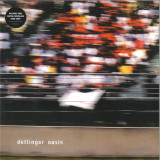
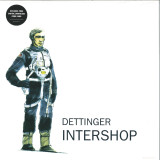
Dettinger’s Intershop and Oasis have long been held, by many fans of ambient and electronic music, to be some of the finest albums in their field. Produced by the mysterious Olaf Dettinger, about whom not much is publicly known, they were some of the earliest full-lengths released by the then-nascent Kompakt, and in many ways, they both articulated and defined the sound that would come to be known as Pop Ambient, while also existing, somehow, to the leftfield of any clearly recognisable genre.
Beautiful, sui generis works, it is a rare pleasure to see them being reissued on vinyl for a new generation of listeners to embrace. Originally released on CD only in 1999, Intershop was Kompakt’s first artist full-length. The music here simmers and broods, with opulent banks of tone marking out territory for rhythms that seem to be built from the clacking detritus of technology – hisses, thunks, knocks. Bass is deployed carefully, each drop a dubbed-out depth charge; drones spin and spiral, warping and weaving between the beats.
Oasis, released in 2000, refined the palette that Dettinger had explored on its predecessor. A blurred crusade of ambient texturology, its unassuming patterns, and subtle, incremental dynamics, admit to real beauty, and a kind of abstract sensuality that you don’t often experience with music that is, perhaps, similarly tooled, but not as poetic. Through seemingly simple gestures – whether lushly expansive repetitions, hyper-acute tremolo tones, or ear-tickling rhythms – it builds complex emotional resonance. It’s no surprise to discover Oasis is held in high esteem by artists like Panda Bear of Animal Collective, who once said of Dettinger, “For us, he was the dude.”
There is, of course, other music to know Dettinger by, too – his three excellent EPs for Kompakt, Blond (1998), Puma and Totentanz (1999), the latter of which, Michael Mayer once argued, “invented dubstep.” There is also a small, yet graceful run of compilation contributions, many of which can be found on Kompakt’s Total and Pop Ambient series. All this music has plenty to recommend it, sharing a clarity of purpose, and a rare, human warmth and depth. But Intershop and Oasis are the releases that distil Dettinger’s singular vision, and allow him, should he wish, to claim his place as a modern master of ambient and electronic music.
Dettingers Intershop und Oasis werden von vielen Fans von Ambient und elektronischer Musik seit langem als einige der besten Alben in diesem Bereich angesehen. Produziert von dem mysteriösen Olaf Dettinger, über den nicht viel bekannt ist, gehörten sie zu den ersten Alben, die von der damals aufstrebenden Plattenfirma Kompakt veröffentlicht wurden. In vielerlei Hinsicht formulierten und definierten sie den Sound, der später als Pop-Ambient bekannt werden sollte, während sie gleichzeitig irgendwie links von jedem klar erkennbaren Genre existierten.
Es ist eine seltene Freude zu sehen, dass diese wunderschönen Werke auf Vinyl wiederveröffentlicht werden, um sie einer neuen Generation von Hörern zugänglich zu machen. Ursprünglich wurde Intershop 1999 nur auf CD veröffentlicht und war Kompakts erstes komplettes Künstleralbum. Die Musik hier brodelt und brütet, mit opulenten Klangbänken, die das Territorium für Rhythmen abstecken, die aus dem klappernden Gerümpel der Technik gebaut zu sein scheinen – Zischen, Klopfen, Schaben. Der Bass wird sorgfältig eingesetzt, jeder Drop ist eine synchronisierte Tiefenladung; Drones drehen und winden sich spiralförmig und verflechten sich zwischen den Beats.
Oasis, das im Jahr 2000 erschien, verfeinerte die Palette, die Dettinger auf seinem Vorgänger erkundet hatte. Ein verschwommener Kreuzzug der Ambient-Texturologie, dessen unaufdringliche Muster und subtile, schrittweise Dynamik echte Schönheit und eine Art abstrakter Sinnlichkeit zulassen, die man nicht oft bei Musik erlebt, die vielleicht ähnlich ausgestattet, aber nicht so poetisch ist. Durch scheinbar einfache Gesten – seien es üppig ausladende Wiederholungen, hyperakute Tremolotöne oder ohrenbetäubende Rhythmen – baut sie eine komplexe emotionale Resonanz auf. Es ist keine Überraschung, dass Oasis von Künstlern wie Panda Bear von Animal Collective hoch geschätzt wird, der einmal über Dettinger sagte: “Für uns war er DER Typ”.
Es gibt natürlich auch noch andere Musik, die Dettinger bekannt macht – seine drei ausgezeichneten EPs für Kompakt, Blond (1998), Puma und Totentanz (1999), von denen letztere, wie Michael Mayer einmal kühn behauptete, “den Dubstep erfand”. Es gibt auch eine kleine, aber feine Reihe von Compilation-Beiträgen, von denen viele auf Kompakts Total- und Pop-Ambient-Serien zu finden sind. All diese Musik ist sehr empfehlenswert und zeichnet sich durch eine klare Zielsetzung und eine seltene, menschliche Wärme und Tiefe aus. Aber Intershop und Oasis sind die Veröffentlichungen, die Dettingers einzigartige Vision destillieren und es ihm ermöglichen, seinen Platz als moderner Meister der Ambient- und elektronischen Musik zu behaupten, sollte er dies wünschen.
Dettinger’s Intershop and Oasis have long been held, by many fans of ambient and electronic music, to be some of the finest albums in their field. Produced by the mysterious Olaf Dettinger, about whom not much is publicly known, they were some of the earliest full-lengths released by the then-nascent Kompakt, and in many ways, they both articulated and defined the sound that would come to be known as Pop Ambient, while also existing, somehow, to the leftfield of any clearly recognisable genre.
Beautiful, sui generis works, it is a rare pleasure to see them being reissued on vinyl for a new generation of listeners to embrace. Originally released on CD only in 1999, Intershop was Kompakt’s first artist full-length. The music here simmers and broods, with opulent banks of tone marking out territory for rhythms that seem to be built from the clacking detritus of technology – hisses, thunks, knocks. Bass is deployed carefully, each drop a dubbed-out depth charge; drones spin and spiral, warping and weaving between the beats.
Oasis, released in 2000, refined the palette that Dettinger had explored on its predecessor. A blurred crusade of ambient texturology, its unassuming patterns, and subtle, incremental dynamics, admit to real beauty, and a kind of abstract sensuality that you don’t often experience with music that is, perhaps, similarly tooled, but not as poetic. Through seemingly simple gestures – whether lushly expansive repetitions, hyper-acute tremolo tones, or ear-tickling rhythms – it builds complex emotional resonance. It’s no surprise to discover Oasis is held in high esteem by artists like Panda Bear of Animal Collective, who once said of Dettinger, “For us, he was the dude.”
There is, of course, other music to know Dettinger by, too – his three excellent EPs for Kompakt, Blond (1998), Puma and Totentanz (1999), the latter of which, Michael Mayer once argued, “invented dubstep.” There is also a small, yet graceful run of compilation contributions, many of which can be found on Kompakt’s Total and Pop Ambient series. All this music has plenty to recommend it, sharing a clarity of purpose, and a rare, human warmth and depth. But Intershop and Oasis are the releases that distil Dettinger’s singular vision, and allow him, should he wish, to claim his place as a modern master of ambient and electronic music.
Dettingers Intershop und Oasis werden von vielen Fans von Ambient und elektronischer Musik seit langem als einige der besten Alben in diesem Bereich angesehen. Produziert von dem mysteriösen Olaf Dettinger, über den nicht viel bekannt ist, gehörten sie zu den ersten Alben, die von der damals aufstrebenden Plattenfirma Kompakt veröffentlicht wurden. In vielerlei Hinsicht formulierten und definierten sie den Sound, der später als Pop-Ambient bekannt werden sollte, während sie gleichzeitig irgendwie links von jedem klar erkennbaren Genre existierten.
Es ist eine seltene Freude zu sehen, dass diese wunderschönen Werke auf Vinyl wiederveröffentlicht werden, um sie einer neuen Generation von Hörern zugänglich zu machen. Ursprünglich wurde Intershop 1999 nur auf CD veröffentlicht und war Kompakts erstes komplettes Künstleralbum. Die Musik hier brodelt und brütet, mit opulenten Klangbänken, die das Territorium für Rhythmen abstecken, die aus dem klappernden Gerümpel der Technik gebaut zu sein scheinen – Zischen, Klopfen, Schaben. Der Bass wird sorgfältig eingesetzt, jeder Drop ist eine synchronisierte Tiefenladung; Drones drehen und winden sich spiralförmig und verflechten sich zwischen den Beats.
Oasis, das im Jahr 2000 erschien, verfeinerte die Palette, die Dettinger auf seinem Vorgänger erkundet hatte. Ein verschwommener Kreuzzug der Ambient-Texturologie, dessen unaufdringliche Muster und subtile, schrittweise Dynamik echte Schönheit und eine Art abstrakter Sinnlichkeit zulassen, die man nicht oft bei Musik erlebt, die vielleicht ähnlich ausgestattet, aber nicht so poetisch ist. Durch scheinbar einfache Gesten – seien es üppig ausladende Wiederholungen, hyperakute Tremolotöne oder ohrenbetäubende Rhythmen – baut sie eine komplexe emotionale Resonanz auf. Es ist keine Überraschung, dass Oasis von Künstlern wie Panda Bear von Animal Collective hoch geschätzt wird, der einmal über Dettinger sagte: “Für uns war er DER Typ”.
Es gibt natürlich auch noch andere Musik, die Dettinger bekannt macht – seine drei ausgezeichneten EPs für Kompakt, Blond (1998), Puma und Totentanz (1999), von denen letztere, wie Michael Mayer einmal kühn behauptete, “den Dubstep erfand”. Es gibt auch eine kleine, aber feine Reihe von Compilation-Beiträgen, von denen viele auf Kompakts Total- und Pop-Ambient-Serien zu finden sind. All diese Musik ist sehr empfehlenswert und zeichnet sich durch eine klare Zielsetzung und eine seltene, menschliche Wärme und Tiefe aus. Aber Intershop und Oasis sind die Veröffentlichungen, die Dettingers einzigartige Vision destillieren und es ihm ermöglichen, seinen Platz als moderner Meister der Ambient- und elektronischen Musik zu behaupten, sollte er dies wünschen.

The sixth studio album, 'Matango!, its title referring to the 1963 Japanese psychological horror film of the same name (directed by Godzilla/kaiju maestro Ishiro Honda) by Australian band The Kill Devil Hills is out on Bang! Records! New album has ten songs, that - according to the band's own words - "entwined in the lyrics are inferences of global unrest and displacement, near future scenarios, climate catastrophe, pandemic vortices, the Simpsons, the grace of women, refugees and boat people, Cold War paranoia, the creative process itself, and of course Australia and its peculiar place in things". Cheery stuff, no? A strange and sinewy beast of an album, it's something of a departure from earlier KDH work: minimal, leering with glitching drums samples, synth swells, empty spaces, and a soup of fat bass tones to float it all in. From the opening ghost radio hums of Survivor Guilt, to the entrancing closing whispers of violin on Weigh of a Woman, this album goes on a pretty strange and serpentine journey. Enjoy listening, as much as we have enjoyed making it.
Musicians include Aston 'Family Man' Barrett, Carlton Barrett, Robbie Shakespeare, Sly Dunbar, Ansel Collins, Ossie Hibbert, Earl 'Chinna' Smith, Tommy McCook, Cornell Campbell, Jackie Mittoo. Both The Aggravators and The Revolutionaries were influential in creating the distinctive sound of reggae music during its formative years, contributing their talents as studio bands behind some of the most significant recordings in the history of Jamaican music. 'Guerilla Dub' provides an illustration and insight into the close working relationships between the many producers, musicians and mixing engineers who created so many of Jamaica's marvellous musical masterpieces during its golden age and how interwoven and interconnected they were during this period of intense musical creativity.
The music from LES TONTONS FLINGUEURS (aka Crooks in Clover aka Monsieur Gangster) is as instantaneously recognizable as the James Bond theme thanks to a short and recurring melodic motif that can still stick in the heads of 21th century kids. Monothematism is a word used by musicologists to refer to the use of stylistic variations based on a single musical theme as can be heard in the Tontons : on the banjo, during the nose punch sequences, played jazz, blues, gloria or Hully Gally style. Though the Tontons music may on first listen sound nothing different than a straightforward yet catchy soundtrack, it turns out to be a real exercise in style. When reading Michel Magne's autobiography " L'amour de vivre " it clearly appears that mixing folk music and sound experiments was a mindful artistic choice. In the movie, Antoine Delafoy (Claude Rich) who is engaged to Patricia (the Mexican's daughter) is merely a Michel Magne caricature. He embodies a contemporary music composer in search of the " absolute anti-chord " by using a water tap. " We don't really know what it is but it's amusing ". In reality and despite his classical musical education, Michel Magne has indeed had a venture into avant-garde music, going as far as organizing an infrasounds concert at the Salle Gaveau venue (Paris) on July 15th, 1954. Infrasonic frequencies which quickly made the audience run for the toilets. On December 3rd,² 1956 his low-frequency sounds contributed to an " empirique " show at the Théâtre des Trois Baudets (Paris) with Alexandro Jodorowsky, Jean Michel Rankovitch and Tinguely. At the same time he wrote music on words by Françoise Sagan for Mouloudji. Again with this desire to cross the boundaries of musical genres. He recorded in 1959 an album of " musiques tachistes " from which a show with dances was staged by Michel Descombey. His taste for provocation and avant-garde did not prevent Michel Magne from composing and arranging popular music. He hence wrote the music for six Georges Lautner movies including the famous Tontons Flingueurs in 1963.Being part of the avant-garde long-haired world what could Michel Magne think of Michel Audiard ? A most kind character who had nevertheless been burned by supporters of the " nouvelle vague " including journalist Henry Chapier who described Les Tontons Flingueurs as being " chansonnier " cinema (in Combat 1963), meant for disenchanted quinquagenarians. Audiard had responded to Truffaut, another of his dispisers : " Dad's movies filled theaters, son's movies empty them. We should have been warned : with its seaside sounding name the Nouvelle Vague (new wave) drove millions of viewers out on the countryside ". In between melodic effectiveness and daring arrangements and tonality, Michel Magne's work is worth being listened to with fresh ears, cleared of clichés !
This is somehting Kano's and die-hard italo-disco fans will definitely
appreciate. Kano's "Anothern Life" is finally remastered and repressed on limited-edition white vinyl for the first time since 1983 and out on FullTime Production.
This LP consecrated the fascination of italo-disco, which merged disco, funk and synth pop.
This is demonstrated by a song like "I Need Love", where we immediately recognize the classic elements of synth pop (thus merged with the rhythm and the funk voice of the charismatic voice of Glen White. So "Mad In Love" and "Dance School", where you can already recognize all the grooves that will one day be other followers who have taken, to recall the name, a direct lesson from this "school". Kano surely influenced a whole genre of new European dance acts.
"Another Life", a single now immortal for lovers of the genre, certainly
felt the influence of another genre, known as space disco, a short Eurodisco vein. So "Ikeya Seki", which is not a tribute to the East
like the later China Star (typical of the aesthetics of many bands of
this early 80's), but a very suggestive instrumental piece whose name
derives from a comet discovered by two astronomers Japanese in 1965, Seky and Ikeya in fact. This, is the sound that is also found in the 8-bit soundtracks of arcade videogames, in those contained in Commodore floppies, and it is the music that everyone would have liked to sweat every day.
Out on October 7th!
- A1: It Must Be Love (Souls Groove Mix) (4 10)
- A2: Scratchy (Souls Groove Mix) (5 46)
- A3: I'll Be Waiting For You (Souls Groove Mix) (3 52)
- B1: Cry For Me (Souls Groove Mix) (5 08)
- B2: Sad Lady (Souls Groove Mix) (3 59)
- B3: Run! (Souls Groove Orchestra Mix) (4 18)
- B4: Old Time Love (Souls Groove Mix) (3 38)
Nadyne Rush is a Italian-Haitian singer who begin her artistic career
very earlier in jazz musical range, it boasts multiple experiences
abroad and Italy and collaborations with the most important Italian
musicians.
She was the backing vocals of the Italian Funky Group Dirotta on Cuba and the Italian trapper Ghali and collaborate with many artist as Mario Biondi, Gegè Telesforo, Neri Per Caso, Bengi and Fabrizio Bosso.
Now on FullTime Production her new album 'RUN!' with seven tracks, this album was conceived following the great love for the '70-'80 music sounds, for played live music, for horns sections, for disco music, for funky and house, expertly mixed by the producer Alex Barattini.
An album full of strong emotions, passion, motivation, unconditional
love, is a collection designed to dance but to dream, to redeem and
reflect also, in a world that moves quickly and detaches itself more and more from the ability to perceive values as essentials for our
existence.
"Nothing and no one can extinguish this flame within you," sings Emilie Simon from the opening title of Polaris, her first true album in ten years. An apparent long eclipse that the French singer, musician, and producer has nevertheless used to explore new territories, open uncharted paths, and reinvent her musical vocabulary and narrative threads. Like Ariane in a dreamlike world, she stretches these threads along her journey, inviting us to blindly follow.
After composing music for the film "The Jesus Roll" with John Turturro, and a musical journey between Earth and Mars through a series of singles, in 2023, Emilie Simon chose to revisit her debut album, both in the studio and on stage, to definitively close a chapter begun twenty years earlier. She also published "Phoenix," a gothic tale with a "vampiric" theme, sung and spoken in alexandrines. The central character, Lily Mercier, is the same one found at the heart of the Polaris adventure. Clearly, Lily is a projection of Emilie, on a quest for the North Star that symbolizes the never-extinguished desire to find her way. The dazzlement too, when one is a musician always eager to ignite again for the infinite mysteries of sound and to translate its shivers into songs.
This album, sung in both French and English, succeeds in combining the clarity of melodies with the demands of production. It immediately captivates (the irresistible burn of the Sun) and enchants over repeated listens, like a lasting iridescence of a thousand sonic fragments. Recorded in New York (where Emilie lived for a long time), Los Angeles, Montreal, Rome, and Paris (where she returned to settle), Polaris has its own cartography. Its universe is the standard scale, its pulsation inspired by cosmic rhythms, and its unique poetry both disturbs and captivates. A sign that nothing and no one can extinguish this flame within her.
Phillip Washington (aka Cygnus) is an electronic musician based Dallas, Texas and is making
a name for himself since the early 2010's with releases on Central Processing Unit, Breakin' Records, Biosoft Records, Recondite and Icesea to name a few. Gentrified Underground is giving his first & sought after tape-longplayer "Cybercity Z-Ro" from 2012 a vinyl reissue and a total cover-art make-over by Walid El Barbir. These aquatic and futuristic compositions represent a seminal timestamp for Phillip's discography and electro in general.
Pressed on green-vinyl!
Until now, Art Feynman _ the eccentric alter ego of accomplished producer Luke Temple _ has strictly been a solo act, a way for the artist to explore surprising sonic landscapes without the burdens of identity. Slightly twisted takes on Kosmische Musik, worldbeat, and art pop can all be found scattered across the Art Feynman discography, but with his new album Be Good The Crazy Boys, Feynman fully immerses himself into pools of collective madness Unlike his first two albums, Crazy Boys was recorded live in the studio with a full band, a first for Feynman, capturing a spirit of restless anxiety that recalls the most frenetic work by Talking Heads, or Oingo Boingo at their darkest. Despite these callbacks, the collection remains firmly rooted in modern concerns, with songs about fearing the end of the world and struggling with FOMO _ narratives that would be relatable if they didn't sound so completely unhinged. With Be Good The Crazy Boys, Art Feynman proves to be more than just a character. He represents the part of the modern collective consciousness that's struggling to maintain balance in a toxic, chaotic world. In less skilled hands, that concept could result in a very somber listen. Fortunately, when Art Feynman gets his hands on the chaos of the modern age, it simply makes you want to dance.
My Proud Mountain is proud to announce third volume of the series "Songs of Townes Van Zandt", that was started in 2012 and features various artists covering Townes Van Zandt songs. Songs of Townes Van Zandt Vol. III featuring Amenra, Cave In & Marissa Nadler and will be released on April 22, 2022. Steve Brodsky of Cave In about being part of the record: "In the winter of 2010, I did a solo tour with Scott Kelly of Neurosis and Bob Wayne. It was the 3 of us and Ansgar Glade traveling in Bob's "green machine" van around the UK and Ireland. At every show, Scott played the song "Caroline" and each time I heard it, I found myself enraptured. This was my introduction to Townes Van Zandt. Pretty cool that 10 years later, Ansgar has given me and Cave In this great opportunity to show our love for TVZ's music." Lennart Bossu of Amenra says: "Being Belgians, the very American folk and country of Townes Van Zandt is not exactly the music we grew up listening to, but upon discovering his songs in our early twenties, they immediately struck a chord with us. Even people who do not understand the lyrics can probably tell that they are listening to someone who has lived and suffered, and, oddly enough, at the same time find deep comfort in his soothing voice. It is the kind of comfort that often defines great music or art in general, and it made the prospect of trying our own hand at a few of his songs no less daunting. Nonetheless, when we were asked to be part of this collection of Townes Van Zandt cover songs, we felt excited and compelled to be part of it, as, in a way, it offered us a chance to do something in return for the great songs he has given us, and also be a part of a series of albums that are almost exclusively comprised of artists we deeply respect." Marissa Nadler about Townes Van Zandt: "I've been a fan of Townes Van Zandt's music for nearly as long as I've been writing songs. When I was starting out, a friend introduced me to Townes's music and I pretty much instantly fell in love with both the rawness of his songs as well as the intense sense of longing expressed within them. His lyrics are haunting and evocative and have inspired me endlessly. These melodies will linger with you, year after year, and hopefully keep you company along the way." Ltd red vinyl LP!
black 12"[20,38 €]
Following on from his Mesh debut Jinjé returns with Escape from Luna, a four-track EP expanding further on the infinite sonic worlds of his solo production work.
Lead single and opening track ‘BBLO’ launches with a voyage into detailed textural layers, gliding through microscopic ambient-leaning compositions before dropping into a weighty electronic beat with touches of electro and dub.
As a founding member of the Leeds-based experimental band Vessels - an act acclaimed for their ability to defy categorisation - Lee Malcolm is no stranger to breaking the boundaries of genre. With his solo project, Jinjé, he delves into atypical sonic wanderings that navigate between acoustic and electronic, synthetic and organic, employing a learned ear for the fusion of seemingly disparate elements. For this latest release on Mesh, he hones in on these moments of coalescence, fusing various stylistic pieces together with an infectious sense of optimism and an open mind.
Jinjé steers his work across various genres not out of a desire to be referential, but out of a necessity to explore the peculiar spaces that sit between. Implementing this approach with a great understanding of musical production and spatial composition, ‘Escape from Luna’ stands as a crucial documentation of his craft.
Bite Down, the Merge Records debut of Rosali, finds acclaimed songwriter and guitarist Rosali Middleman in the midst of transition. Written after moving to North Carolina from her longtime home of Philadelphia, Bite Down is a searching, hungry record by an artist who is resolved to bite down on life, in all its horror and joy. She is joined here by Mowed Sound_David Nance (bass, guitar), James Schroeder (guitar, synth), Kevin Donahue (drums, percussion)_and in studio by Destroyer collaborator Ted Bois (keys). Bite Down is Rosali's second album working with Mowed Sound, and there is urgency and ambition in their collaboration_a band pushing each other not just to expand on what they've already done together, but to break through into altogether new territory. Among those joining Rosali and her band there is Dan Bejar of Destroyer, who waxes poetically on where she's been, where she's going, and how thrilling Bite Down is to experience: It's hard to talk about Rosali's music. Songs that reach outward like this, but then constantly disarm with their intimacy. What do you call such inner searching that is hellbent on rollicking? Songs that long for a sense of peace and songs that want romance, all on equal footing in the same plot of earth? Performed wild, but always centered around the incredible lyrical calm that is Rosali's voice. Bite Down makes me think about singers and bands that throw themselves hard into the storm, the way the Rosali quartet does. (Jim captures the tone of this perfectly, again!) The calm of her voice over top of the band's raging_it is the emblem of songs that live to put themselves in harm's way. But it's not harm. It's just that you have to play hard to get at these goods. The calm of Rosali's voice, the straight talk of her inner search vs. the wildness of the band, the sonic storm she rides in on. That's their sound. The Mowed Sound. It's hard to talk about these last couple Rosali albums without talking about them. They play free and wild and relentlessly melodious. They rip and create space and fill it up with what seems like reckless abandon, but listen carefully or listen for a while and you'll find them paying real close attention to each other and exactly what the song demands. Maybe Fairport did this, maybe VU. It's a strange telepathic brew. Breezier songs like "On Tonight" and "Rewind" sound like they've fought their way to get to that sense of ease. Maybe that's the Mowed Sound "sound"_hard-won ease. Then add to that Ted Bois' patented Rhodes sleaze (see sinuous title track "Bite Down") steering the record into late-night corners; the incredible "Hills on Fire" (maybe the centerpiece of the album), the guitar-ripping and the singing taking turns in reaching new levels of intimacy. It feels listened-in on, exposed and invented on the spot. It is also simply a staggeringly beautiful song. There are a few of those on the album. In contrast, "My Kind" is a raucous, hand-delivered classic; the band throws tables over. For the most part, this is a moodier record than No Medium. It has the same sound of "I've traveled through fire to deliver you these songs," but it is also quieter, more nocturnal. The quiet dread of staring down an open road, and the excitement of that. By the final track, "May It Be on Offer," it is the prayer uttered as you hand yourself over to the world.
Meaning ‘Hi’ in Uruguayan slang, Opa are a South American jazz-funk phenomenon. Fusing Uruguay’s native Candombe rhythms with North American jazz and pop music, Opa’s space-age synthesizers, boisterous grooves and compositional magic expressed a distinctive Afro-Uruguayan voice within the global jazz vernacular: a voice which remains as vital and unique today as when it was recorded, almost half a century ago.
Having migrated to New York from Montevideo in the early seventies, Opa were heard playing in a nightclub by renowned producer and label owner Larry Rosen. At Holly Place Studios between July and August 1975, Rosen oversaw Opa’s first recordings using a four track TEAC 3340. The album would become home to some of Opa’s hardest hitting funk jams, with moments of songwriting wonderment and soulful pop and rock progressions combining with the jazz-funk fusion Opa would become known for.
Mysteriously (for reasons unknown to the band), Opa’s debut was shelved and remained so until the mid-1990s. But the Back Home recordings were used as demos, gaining Opa a record deal with Milestone Records and the subsequent release of two cult-favourite albums: Goldenwings (1976) and Magic Time (1977).
Opa would also collaborate with North American titans including bassist Ron Carter, producer Creed Taylor and Brazilian icons Airto Moreira, Flora Purim, Hermeto Pascoal and Milton Nascimento. In more recent years Opa’s music has found new audiences after being sampled by Captain Murphy (aka Flying Lotus) and Madlib.
For fans of Azymuth, Weather Report, Cortex and The Headhunters, Opa’s Back Home will be released on Vinyl LP and CD on the 8th March 2024 via Far Out Recordings
Channeling a love affair with classic '90s hip-hop, an affinity for otherworldly themes and an ear for raw funk, Barclay Crenshaw uses his given birth name to bare his soul and deliver a slowed-down, emotive collection of collaborations and instrumentals. This self-titled debut album is a left-field departure from his better-known alias, Claude VonStroke, but the quality is undeniably the same. The themes of ancient alien abductions and exploration of time and space are discovered and brought to life over ten tracks that sound like a mixture of gold rope chains and new age enlightenment. Modern organic beats mixed with gorgeous melodic moments and underlying grittiness create an experience that is eclectic, expressive and expansive. Coded art furthers the sense of mystery and the unknown, harking back to the past while gazing into the future.
Available on ltd edition white vinyl, only 300 pressed. Includes extended album download.
Ivan The Tolerable is the alter ego solo project of Middlesbrough based musical wizard Oli Heffernan. Aside from his solo work as ITT, Oli has played in numerous bands over the years including Year Of Birds, King Champion Sounds with members of the Ex, Detective Instinct, and Shrug, and has collaborated with icons like Mike Watts of the Minutemen, and J Mascis of Dinosaur Jr.
On Black Water/Brown Earth, Heff called in the help of his Dutch friends Mees and Elsa in King Champion Sounds again and wrote the album in a long-distance session. The album feels like an excursion in nature, featuring bird song, flowing water, pots and pans percussion, and a genuine feel of wandering about and experiencing the outside world with eyes and ears wide open. It is a band effort too, with organic sounding drums, the characteristic saxophone, and droning synths.
‘Elsewhere, gentle intonations of morning with almost childlike embellishments and rhythmic beats, and more flute, might lull and comfort but nothing ever sits exactly in time which might make this Ivan The Tolerable’s most frustrating album at times but also one of his most interesting to really delve into aurally. ‘Sawdust’ is another sonic interlude, little more than a purge of effects and ideas but in a place where effects and ideas are plentiful. However, it’s centrepieces ‘Seaweed’ and ‘Signs’ that provide the pulsing, grooving dual that makes the second half of Black Water/Brown Earth a sheer delight. The former being simply kind of folky with a bit of sitar but utterly immersive, the latter oddly upbeat with eastern vibes and tubular rhythms, combined it is nearly twenty minutes of serene experimentalism.
The shorter tracks are perhaps designed to temper the mood or counter and reflect the passage of time on an album of mostly structured improvisation, and it may only be closer ‘Memory’ that is truly free to roam musically, its long jazzy segments skipping off into the farthest corners of the left field’.