Following their success in recent months with releases like ‘Let It Go’ and ‘Y’all Ready For Dis’ amongst their club-ready dubs, rising duo Y U QT now drop their highly anticipated ‘BABE?’ EP via LG105. Growing exponentially in the past year, Y U QT have earned support from names like Interplanetary Criminal, Prozak, Daffy, Notion, and more whilst expanding their fanbase across radio airwaves as well as club floors on their headline, six date ALL NYTE LONG sold-out UK tour, and a debut Boiler Room performance alongside DJ EZ, Jyoty, and p-rallel.
Cerca:ear dis
- A1: The Scabs – Isthis Life?
- A2: Nacht Und Nebel – Arabian Town
- A3: Arbeid Adelt – Pro Vita
- A4: Siglo Xx – The Art Of War
- A5: The Neon Judgement – Factory Walk
- A6: Kid Montana – Armoured Car
- B1: Men 2Nd – Transition
- B2: 1000 Ohm – The Station Hall
- B3: Tank Of Danzig – Tank Hymn
- B4: Company Of State - Venus In Furs
- B5: Poesie Noir – Hiroshima Mon Amour
- B6: A Split Second – Colonial Discharge
Vol. 1[29,37 €]
The legendary Belgian label Antler is coming back to life! Pioneering in the 80' and 90's and an absolute spearhead in the world of post-punk, cold and new wave, EBM, electro...
a series of albums and compilations from the extensive Antler archives are now being released again. The first compilation 'Early Years Vol. 1” was received with great enthusiasm and flew out the door. Now there is already Vol. 2 with again carefully chosen gems from the rich Antler archives with early recordings of influential bands such as The Scabs, Arbeid Adelt!, Nacht und Nebel, A Split Second, Neon Judgment... a fascinating sample of the Belgian alternative scene in the 1980s.
"Open Sesame is the fourth studio album by American hip hop group Whodini, originally released in 198Audio production was handled almost entirely by Larry Smith, except for two tracks that were both produced by Sinister and Whodini. Open Sesame peaked at #30 on the Billboard 200, at #8 on the Top R&B/Hip-Hop Albums and was certified gold by the Recording Industry Association of America. The album spawned the single ""Be Yourself"" featuring Millie Jackson, which peaked at #20 on the Hot R&B/Hip-Hop Songs. Open Sesame is available as a limited edition of 500 copies on translucent yellow coloured vinyl."
Open Sesame by Whodini, released 15 March 2024, includes the following tracks: "Cash Money ", "Early Mother's Day Card ", "You Brought It on Yourself ", "Remember Where You Came From " and more.
This version of Open Sesame comes as a 1xLP.
The vinyl is pressed as a yellow disc.
Immerse yourself into the psychedelic electronic pop of Talee, a rising Dutch artist weaving together the tapestry of contemporary indie dance with threads of early 90s British contaminated indie rock.
A multi-instrumentalist, previously championed by Disco Halal, Talee is set to unleash his debut EP “Waiting for Tomorrow” on the esteemed Californian label Underground Pacific, promising an unforgettable sonic journey.
Talee’s music transcends the boundaries of genre, seamlessly blending the warm rhythms and catchy melodies of Watherall’s Primal Scream and the lysergic groove of Happy Mondays with contemporary electronic textures.
This debut EP serves as a powerful statement of Talee’s artistic vision, showcasing his unique neo-romantic wave songwriting and great capturing riffs. The release also features an exciting collaboration with the acclaimed Irish Sullivan brothers SX2, who lend their signature touch to a captivating remix of “How High?” recalling the early irreverent and raving Underworld energy. Joining them is none other than Cantor, the musician and producer behind Underground Pacific himself, ensuring a Burning Man sunrise-inspired remix of “Be Here Now”.
The EP’s visual identity mirrors Talee’s artistic creativity with artwork conceptualized by the artist himself, complementing the music and offering a glimpse into Talee’s vibrant inner world.
Exactly two years after their debut album, the project formerly known as Weltschmerzen returns as Pain Palace. The project's new moniker resolves potential confusion with the eponymous record label, but it is a change in name only // the music remains ambiguous in genre but emotionally resolute, an amalgam of approaches bound by an awareness of the remorseful nature of the world.
This is a continuity in creed rather than sound. Apart from the occasional drums // peculiarly captivating in tempo and rhythm // Pain Palace do little to invoke their first album. Despite the similar setting of an intensive week-long recording session in rural Slovakia, the trio arrives at a place that is distinct even from all their earlier projects. From a viewpoint where the world's indifference is recognised as a landscape, the tracks are presented as seven distinct perspectives that range from brutalist chaos to tenderness but always remain compassionate.
This is best revealed in On the Height of Despair // the album's nearly ten-minute-long climax that seemingly borders on collage only to become an engulfing suite of severe movements. The music of Pain Palace stands apart from what Tomáš Pristiak, Matus Mordavsky and Dominik Suchy create either solo or in their respective bands (Tante Elze, Tittingur), and it is the 13th release by the wistful label Weltschmerzen.
Phantom Of The Paradise is a legendary 1974 American musical horror film written and directed by Brian De Palma, and starring Paul Williams, William Finley and Jessica Harper.
In the film, a disfigured composer writes his music for a woman he loves so that she will perform his music. However, a record producer betrays him and steals his music to open his rock palace, The Paradise. Betrayed, the composer dons a new appearance and exacts revenge on the producer.
Initially, the film was a box office failure and received negative reviews, however it earned praise for its music, receiving Academy Award and a Golden Globe nominations. Over the years, the film has become a true cult classic.
Stix Records, a sub-label of Favorite Recordings, presents the 3rd release from its new Mellow Reggae Series project. Following two stunning covers of Bobby Caldwell and Player alongside label mates Ethel Lindsey, Mato is now taking over the famous hit by Sylvia Striplin, this time inviting his longtime friend and singing partner, Lady Gatica.
Produced by Roy Ayers in the early 80s , “You Can’t Turn Me Away” belong to this kind of title recognized by everyone, while Sylvia Striplin remains a name known by just a few. Like always, Mato production skills perfectly fits with the original and his Reggae rendition sounds like coming out straight from Kingston.
While with her long experience singing Soul, Funk and Disco, Lady Gatica is also a perfect match for the vocals. Starting his reggae production career in 2006, Thomas Blanchot (aka Mato) has released music through various projects on EDR Records, Big Singles or Makasound... In the meantime, he developed a real trademark: taking over classic French, Hip-Hop, OST, Classical or Pop songs, into roots reggae-dub new versions. His 15 years collaboration with Stix Records and label honcho Pascal Rioux gave life to many masterpieces and the story seems far from the end…
- The Days Grew Longer For Love
- Sunday
- Lost A Number Found A King
- Man Without A Name
- Clockwork Man
- Cocaine
- Shades Of Grey
- High On A Mountain
- Andwella
- Midday Sun
- Take My Road
- Felix
- Goodbye
- Hold On To Your Mind
- Lady Love
- Michael Fitzhenry
- I'm Just Happy To See You Get Her
- Just How Long
- World's End Part I
- World's End Part Ii
- Back On The Road
- I Got A Woman
- Reason For Living
- Shadow Of The Night
- The World Of Angelique
- Mississippi Water
- I've Got My Own
- Are You Ready
- Four Days In September
- Lazy Days
- People's People
- Behind The Painted Screen
- All For You
- She Taught Me To Love
- Saint Bartholomew
Shade of Grey Vinyl[55,04 €]
Hold on to your mind! Led by Belfast- born phenom David Lewis, Andwella made three LPs circa 1970 for London's Reflection label, redolent with Cream-y rock workouts, soaring post-Sgt. Pepper psych experimentation, and earthbound laments The Band might've dreamt up at Big Pink. Barely heard back then, they now conjure a popular rock fantasia to challenge the most expertly composed and orchestrated songs of the era. This deluxe set includes meticulous reproductions of the band's 3-LP discography, plus an ephemera-packed booklet detailing Lewis's brief moment as a downbeat songwriting visionary at the height of his powers.
- The Days Grew Longer For Love
- Sunday
- Lost A Number Found A King
- Man Without A Name
- Clockwork Man
- Cocaine
- Shades Of Grey
- High On A Mountain
- Andwella
- Midday Sun
- Take My Road
- Felix
- Goodbye
- Hold On To Your Mind
- Lady Love
- Michael Fitzhenry
- I'm Just Happy To See You Get Her
- Just How Long
- World's End Part I
- World's End Part Ii
- Back On The Road
- I Got A Woman
- Reason For Living
- Shadow Of The Night
- The World Of Angelique
- Mississippi Water
- I've Got My Own
- Are You Ready
- Four Days In September
- Lazy Days
- People's People
- Behind The Painted Screen
- All For You
- She Taught Me To Love
- Saint Bartholomew
Black Vinyl[50,84 €]
Hold on to your mind! Led by Belfast- born phenom David Lewis, Andwella made three LPs circa 1970 for London's Reflection label, redolent with Cream-y rock workouts, soaring post-Sgt. Pepper psych experimentation, and earthbound laments The Band might've dreamt up at Big Pink. Barely heard back then, they now conjure a popular rock fantasia to challenge the most expertly composed and orchestrated songs of the era. This deluxe set includes meticulous reproductions of the band's 3-LP discography, plus an ephemera-packed booklet detailing Lewis's brief moment as a downbeat songwriting visionary at the height of his powers.
Los Angeles duo crushed announce their signing to Ghostly International and the first vinyl pressing of their 2023 debut EP, extra life. A love letter to `90s radio, the first collaboration from musicians Bre Morell and Shaun Durkan finds them tuning a shared taste for maximalist dream pop. Open-hearted hooks and melodic riffs move through a haze of breakbeats, spliced sound design, and distortion. Faithful yet fluid in its channeling of golden age alt-rock, Britpop, trip-hop, and electronica, there's a refreshing freedom to the sound, which quickly resonated with fans and critics upon initial release. Pitchfork called it "effortless, widescreen dream pop that's serene without being sentimental," and NPR cited its "deep sense of place and time." The music also struck Ghostly, and the first measure for crushed and their new label home is to give extra life a wider physical release paired with remixes from band favorites Real Lies and DJ Python. The story of crushed is written across midnight transmissions. In the early 2010s, Morell, who fronts the band Temple of Angels (Run For Cover Records), hosted a graveyard shift college radio show and used to play music from Durkan's former band Weekend (Slumberland Records). In 2020, Durkan, having focused on production work (Tamaryn, Young Prisms) following Weekend's run as a formidable shoegaze act, hosted a late-night program on a community radio station in San Francisco. Driving one day, he heard Temple of Angels by chance and was immediately drawn to Morell's voice. He added a song that night to his on-air tracklist. Morell saw it and reached out to thank him and point to that connection made a decade earlier. The exchange sparked a long-distance project. First, they filled an audible moodboard with `90s classics from the likes of Natalie Imbruglia, Sneaker Pimps, and The Sundays. Songs that transported them back to places of comfort and discovery; Morell's memories of a metallic, lavender boombox that dispatched past sounds from a world beyond her Houston suburbia, and Durkan, in his mom's car on the way to band practice. These touchpoints provided a palette for crushed to experiment without expectations, purely for the fun of it. A creative intimacy emerged; stepping outside the reverb walls of her full band, Morell embraced more clarity and a range of emotions in her vocals, while Durkan looked inward as a producer, collaging fragments from their everyday lives: voice memos, piano recordings, even the panting of Morell's late dog on "milksugar." The wistful ballad embodies extra life's feeling as a whole. "I am home again," sings Morell; her refrain cycles above a drum machine beat as Durkan colors their universe with star-lit strums, synth swells, and the crackle of fireworks in the distance. Elsewhere, the duo's uptempo mode is equally effective, like the super-charged duet "coil" or the propulsive opener "waterlily," which sets a cinematic tone for the set. Bold, bright, and replayable, extra life presents crushed as a project of immense promise, two artists unlocking something special within themselves, a space to hold both melancholy and bliss. Durkan adds, "To me, extra life is true and pure - in a way I haven't felt about music in a really really long time."
As a composer Martijn Comes has a special interest in timbral music and various musical traditions, with an emphasis on the electro-acoustic history. His works for the carillon were performed live at festivals like Le Guess Who and Rewire. He also released several solo-albums and collaborated with a wide range of contemporary artists like Frans de Waard, Lukas Simonis, Nicoleta Chatzopoulou and Hessel Veldman, with whom he co-produced the album EPoX, published by Bedouin Records in 2020.
Veldman is a veteran of the Dutch musical avant-garde and published several legendary cassettes on his label EXART in the early 80’s. His experimental soundscapes are laced with industrial elements, creating a hypnotic, dark undercurrent of sounds. Besides operating under his moniker Y Create, he was a member of the improvisation group Gorgonzola Legs and kept working intensively with Fluxus artist and Dutch underground cult-figure Willem de Ridder. The home-taping era shaped his free approach to music. His diverse musical practices have been traversing several decades by now and he continues to play music according to his own insights and intuitions.
Because of the emotional and poetic weight of the pieces, reverend Tom de Haan was consulted for this collaborative album. It was the start of a musical exploration and a search for peace, balance and above all freedom. Reaching out to a distant world, a place to come to terms with ourselves. A journey full of obstacles and setbacks. Sometimes persistently moving forward, sometimes doubtful. 'Are there Gods among us or inside us?' The music as a manifest, the expression of an inner struggle.
Throughout the chapters of this album layers of sound and distant voices arise and seem to float on the surface before they disappear again. Swaying on the gentle waves, running ashore, we find ourselves in unknown places. Manifest Exodus is an album for deep listening in the vein of Lustmord, Lawrence English or Rafael Anton Irisarri. It contains 4 rich, immersive pieces with austere drones, ambience, intense sonic textures and an incredible sense of detail to create a multi-layered escape to a better world.
Miles Davis' A Tribute to Jack Johnson is the best jazz-rock record ever made. Equally inspired by the leader's desire to assemble the "greatest rock and roll band you have ever heard,” his adoration of Johnson, and Black Power politics, Davis created a hard-hitting set that surges with excitement, intensity, majesty, and power. Bridging the electric fusion he'd pursued on earlier efforts with a funkier, dirtier rhythmic approach, Davis zeroes in on concepts of spontaneity, freedom, and identity seldom achieved in the studio — and just as infrequently accepted by the mainstream.
Sourced from the original analog master tapes, pressed on MoFi SuperVinyl, and housed in a Stoughton jacket, Mobile Fidelity's 180g LP reissue brings it all to fore with startling realism. Benefitting from SuperVinyl’s nearly inaudible noise floor, superb groove definition, and clean, ultra-quiet surfaces, this 180g LP showcases everything — from the bold tonality of the headliner's white-hot trumpet solos to the decay of crashing cymbals, carry of wiry guitar notes, and echoes of the studio — in reference fashion.
Bristling with exuberance, Davis' high-register passages explode with authority and commanding presence. Around him, a barrage of urgent backbeats, knifing riffs, and supple bass lines emerge amidst black backgrounds. One of the most prominent differences long-time fans will notice is how much more aggressive, immediate, and vibrant the music sounds, with those aspects central to the composer's original desires.
Utilizing wah-wah and distortion, the go-to instrumentalist of the performances— guitarist John McLaughlin — attacks with a nasty edge, slashing style, and vicious streak that allows A Tribute to Jack Johnson< cross the until-then-impenetrable divide between rock and jazz. Davis puts both feet in the former camp and erases any gap. The stories of the record’s creation are nearly as legendary as the sounds within: Two sessions, multiple jams, different sets of musicians (several uncredited), and near-miraculous production perfectionism that made it all appear cohesive.
The least-well-known masterpiece of Davis' career, the 1971 record — seamlessly assembled and spliced together by producer Teo Macero — was a victim of limited record-label promotion. Audiences also didn’t immediately know what to make of its original cover art — faithfully replicated here. In addition, the powers that be at Columbia Records were directing the public’s attention to Miles at Fillmore, a completely different kind of album guided by two keyboardists. A Tribute to Jack Johnson practically lives in a different universe, one from the future. To many listeners who did manage to hear it — among them critic/musician Robert Quine, Stooges leader Iggy Pop, and renowned critic Robert Christgau — it surpassed everything that came before.
Indeed, Davis treated it as a personal manifesto: An opportunity to salute the Black championship boxer admired for his threatening image to the establishment and impeccable taste in clothes, cars, women and music. Davis explains in the liner notes his affinity for Johnson — a stance mirrored by the defiant music, which hits with a prize fighter's force and reflects the graceful elegance with which a pugilist navigates the ring — and closes the album with a Johnson quote read by Brock Peters.
Inspired not only by Johnson but by Jimi Hendrix and Sly Stone, Davis changed his approach and his band. He surrounds himself with a cadre of musicians in their 20s and, in the case of bassist Michael Henderson, a 19-year-old fresh from touring with Stevie Wonder. Henderson gives Davis what he requested: boogie-based grooves that don’t lose shape or direction. Soprano saxophonist Steve Grossman, drummer Billy Cobham, and organist Herbie Hancock adhere to a similar aesthetic that prizes brazenness, innovation, and energy.
In that vein, during a portion of “Yesternow,” Davis segues into a separate performance (which became known in its entirety as “Willie Nelson”) played by guitarists McLaughlin and Sonny Sharrock, bass clarinetist Bernie Maupin, keyboardist Chick Corea, bassist Dave Holland, and drummer Jack DeJohnette. Dig it!
Talking with jazz scholar Bill Milkowski — who himself noted how McLaughlin’s unrestrained style, decibel-forward volumes, and rapid-fire power chords engendered himself to the rock crowd at the same time that his harmonics and syncopation still definitely made him a jazz player — guitarist Henry Kaiser summed up part of the appeal of A Tribute to Jack Johnson as well as anyone, saying: “It’s a jazz record that way way more open than other jazz records at the time, but still not free jazz. McLaughlin’s rhythm guitar playing on ‘Right Off’ — the use of different chords in a rock shuffle than what anybody had used before — was revolutionary.”
And to think that’s just one aspect of a record that contains multitudes. “Never let them forget it.” Indeed.
Over atmospheric instrumentation expanded by cinematic structure and pacing, Pearlty presents Knifeplay somewhere between dream-pop influenced shoegaze and lofty slowcore, never fully committing to one or the other in its insistence on creating an immersive, organic world. Originally released in 2019, Knifeplay’s vivid debut Pearlty documents songwriter Tj Strohmer’s expressions of early adulthood in what he describes as “the journey from innocence to experience.” Written during a time of immense inspiration, Strohmer was able to peel himself away from detached nihilism, uncovering the physicality and therapeutic powers of songwriting. Newly emboldened by this discovery and the talented community surrounding him, Strohmer channeled this revelation into his work, taking Knifeplay from a bedroom experiment that merely wrote songs to a more substantial project with a purpose. Pearlty’s various climactic passages, like those heard on the impressionist album opener “Tears”, envelop listeners in textured walls of distorted guitar and noisy breakdowns, a distinct hallmark of shoegaze – but Knifeplay’s compositions go far beyond such conventions. Also featured are downtempo compositions – such as the tribute track “Angel” – that call on a range of influences, from grunge to lofi pop, all the way back to slowcore. Layers of Strohmer’s falsetto lilt adorn the songs with another dimension of sentimentality, while rounding out the sonic vastness of the group’s emotionally enrapturing style, lending impressive depth to the band’s debut full-length.
The vinyl is pressed in pink.
Ltd. Pink Coloured 180g Vinyl ( )
- Mar Vista - Visions Part 1 Her Eyes Are Closed
- Kennlisch - Kennlisch
- Crystal Eyes - Crystalzed
- Warlus - Girl Like You
- Gerard Alfonsi - Fana Stickle
- Geoffroy - Viking
- Amphyrite - Symphonie Pour 3 Oeufs Brouilles
- Eole - Friendship
- Capucine - Les Elephants
- Rictus - Flashes
- Inscir Transit Express
- Polaris - Polaris
- Joel Boutolleau - Force
- Spotch Forcey - Frustre
- Demon Wizard - Black Witch
- Temple Sun - Voyage Sans Retour
- Chantal Weber - Ballade Aux Chataignes Tombees
- Jean-Claude Zemour - X Kmh
- Rhodes Co - Baoum
- Guidon Edmond Et Clafoutis - Stormy Sunday
"For a long time, I'd come across these discs without really understanding what connected them, apart from a button and that famous logo designed by René Dessirier. Then, with a little more digging, I discovered the "self-production" link. For choirs, schools, folk singers, young pop groups, popular homes and even great composers who engraved unique copies of certain recording sessions...
The French equivalent of the English "Derby Service", the Kiosque d'Orphée, formerly at 7 Rue Grégoire de Tours in the 6th arrondissement, was taken over by Georges Batard in 1967 and moved to 20 Rue des Tournelles in the 4th arrondissement of Paris. The adventure lasted until 1991. Georges Batard was a sound engineer who used a Neumann tube engraver to engrave acetates from the tapes he received, before printing the precious vinyls in the press factories of the day, where he was able to produce very small runs of between 50 and 500 copies.
Of course, there were other structures for releasing his records, such as Voxigrave or, later, FLVM, but none of them had so many records in their catalog. Le Kiosque d'Orphée was neither a label nor a publisher, but a structure that allowed you to press your own vinyl, at a time when it was quite an adventure to get your first 45 rpm or 33 rpm album released!
Georges Batard was described as passionate and conscientious. His son, bassist Didier Batard, wrote of him:
"Georges was passionate about recording and reproducing the stereo sound of his great passion, music. He paid close attention to distortion rates, signal-to-noise ratios, response curves, rise times and other damping factors in audio equipment. He was looking for the exact reproduction of concert hall sound in his living room (with the same sound level, if possible...). In the late '50s/early '60s, he found other sound enthusiasts in AFDERS (Association Française pour le Développement de l'Enregistrement et de la Reproduction Sonores). He became its honorary president. Every Saturday afternoon, its members met to test au- dio equipment. Their opinions were published in the monthly Revue du Son.
All you had to do was send in your tapes and choose the number of record copies you'd like to take home with you, so you could finally share your creations and, in a way, exist. You could opt for a generic sleeve, available in several colors, directly customizable with your name and credits, or you could design your dream sleeve yourself in your living room or at a printer's.
This "Do It Yourself" temple gave birth to some superb pouches. Stencilled, hand-written, illustrated with paintings, drawings, illustrations by friends or girlfriends of the time, photo prints hastily stuck in the middle of a blank, white sleeve, on which the traces of time would leave their imprints, so that collectors and the curious would come and buy them decades later, with the promise of a musical discovery, unfortunately not always fulfilled...
What most of these records have in common is the youth of their songwriters, whether or not they've had a career. Stories of buddies, of getting by and dreams of glory made up this catalog. Most of them were amateur productions, both in terms of the level of the musicians and the quality of the recordings, made on a two-track or, the ultimate luxury, a 4-track in a teenager's bedroom or parents' living room.
It was the beginning of the home studio, thanks to the advent of the Revox portable tape recorder. A bit of a shaky DIY system, but, in return, the luxury of setting no limits: one-sided tracks, no outside censorship, no artistic director, no manager, no Barclay or EMI/Pathé Marconi logos...
When you finally had your own record, you could give it away or sell it to friends, family or after concerts. You could also drop it off at the nearest record shop, with undisguised pride.
It was also a calling card that could be sent to radio stations or music labels, in the hope of launching a career...
Many of the protagonists in this story tried to sign with labels, but in those days, bridges were not so easy to build between one's hometown, or even one's village, and the major or more specialized label that might have released these records. At the time, the advertisements published in the press by the Kiosque d'Orphée opened up the field of possibilities for provincial composers. It was now possible to make their own record, without having to go through the process of signing with a label.
Some of the composers who have gone on to make a career have used this channel to release their first record or parallel projects (Claude Engel, Dominique A, Andy Emler, Michel Deneuve, Claude Mairet, Mick Piellard, Tristan Mu- rail...) and sometimes even single or very limited pressings of work or promotional copies (Bernard Parmegiani, Jef Gilson...).
This album is the conclusion of a long investigation, begun six years ago. It took a long time to find the records, scattered all over the place, in the homes of collectors and sometimes the musicians themselves, and then to listen to them, sometimes painstakingly, to unearth these moments of grace.
From this work, 23 tracks remain, but there are dozens of others that could have been included, so we had to choose, and the choice had to be as universal as possible. This selection is obviously not objective, but I hope you'll like it.
Today's music is raw, touching and powerful. "
Jean-Baptiste Guillot - Born Bad Records
For a few years Leo Robinson was the sort of hidden secret you sometimes come across in local music scenes. First in Manchester and now in Glasgow, he’d pop up regularly on DIY bills or as local support to a touring act, quietly blowing them off stage with his rich baritone vocal and homespun lo-fi tales of folklore and animism. With The Temple – his debut on PRAH Recordings – he looks set to cross over from being a cult concern.
“There's a spectrum within the album between fully mythologising or symbolising my lived experience, and just stating it in very matter of fact terms - that push and pull between the need to abstract and the need to break through the abstraction and have an honest moment with oneself” he explains. “This is one of the themes of the album as well as part of the process. The aim was to take all these anecdotal or symbolic elements and merge them into one narrative and one world, in a way that you can find your way through the record as if it were a landscape or language with its own logic.”
The record takes on a pastoral, slightly baroque nature that Robinson partly attributes to a friend screening a lot of ‘70s BBC material in his book shop that they used to hang out at. There are also elements of jazz, flickering to life in “The Spring”’s piano-led finale and coda.
Thematically, Robinson likens it to a Jungian ‘Hero's Journey’, his voice possessing a character who goes through several defined stages of consciousness. From conception and the beginning of an earthly life, the first half of the album recognises the development of the protagonist’s narrative and identity, before “The Pink Light”’s freeform departure from the hitherto more song-based suite devastatingly shatters this. The second half of the album then sees the protagonist witness “the uncontainable” water; learning that true divinity lies not in the individual self or lofty notions of gods and temples, but in the unremarkable nettles, insects and dogs on the roadside riverbank - referenced on tracks “The Cormorant” and “The Spring”.
Although now residing north of the border, The Temple was written while Robinson was finding his feet in Manchester, having moved there to go to art school as a teenager (as a visual artist, he has exhibited at the Tiwani Contemporary in London and Cardiff’s Chapter Arts Centre). As a result, many of the tracks bear out the shadows of his experiences in the northern city – at their most visible and explicit on the beautifully fragile storytelling of “The Pavement”. Written the day after the Manchester Arena Bombings, it recalls Robinson waking up to go to work on a hot summer’s day to discover that his street had been blocked off for terrorism investigations; it then progresses through the rest of his day, amidst the grimly surreal aftermath of the previous night.
Having written the chords, melodies and lyrics to the album, Robinson fleshed out the tunes by scoring out parts for the additional instrumentation, but it was only when a friend sent a demo to PRAH that he was able to fund its full recording. Guitars, vocals, piano and French Horn (the latter recorded by Lauren Reeve-Rawlings) were put down at Green Door Studios in Glasgow. Microphones were placed around the room and the sound of the musicians stepping on creaky floorboards and opening creaky doors were left audible to further the record’s live feel. The harpsichord heard on “The Serpent”, meanwhile, came from University of Glasgow lecturer David McGuinness. Strings were then recorded at PRAH Studios by Francesca Ter-Berg and Raven Bush, the Social Singing Choir adding their choral vocals to “Temple II”.
The result is an album that feels both luscious and yet intimately raw; as grand as Richard Dawson at his most panoramic but containing the rough edges and skeletal looseness of a Calvin Johnson work. At times Robinson lyrically moves towards the surreal, but ultimately this is a record grounded in reality; a true showcase of Robinson’s skill as a lyricist and songwriter.
Legendary Blondie drummer, Clem Burke , was joined by former Sex Pistol and punk pioneer, Glen Matlock on bass; broadcaster and Pet Shop Boys dancer, Katie Puckrik on vocals; Iggy Pop and David Bowie collaborator, Kevin Armstrong on guitar; Luis Correia , who's toured internationally with Earl Slick on second guitar together with classical pianist, composer, and touring member of Heaven 17, Florence Sabeva on keyboards.
Lust For Live , recorded live over two exhilaratingly riotous nights at London's Lexington on 11th and 12th March 2023, sees the band perform Iggy's Lust For Life album in full, as well as revisiting songs from across the individual band members' careers with legendary artists including Blondie, David Bowie, Iggy Pop and the Sex Pistols.
Lust For Live is available as a 19-track, limited edition, double- atefold, live album as well as being released digitally. One disc will be pressed in opaque white with the other in opaque yellow, in a limited-edition pressing of just 1,000 copies
Corax B.M.'s sound could best be characterized as a combination of black metal that owes a lot to early Rotting Christ , Necromantia and thrash metal or even hardcore influences that parade in many parts of their music. The Greek verse gives its own distinct moment. Agressive, rough and emotionally charged, "Pagana" oozes with energy from start to finish.
Over atmospheric instrumentation expanded by cinematic structure and pacing, Pearlty presents Knifeplay somewhere between dream-pop influenced shoegaze and lofty slowcore, never fully committing to one or the other in its insistence on creating an immersive, organic world. Originally released in 2019, Knifeplay’s vivid debut Pearlty documents songwriter Tj Strohmer’s expressions of early adulthood in what he describes as “the journey from innocence to experience.” Written during a time of immense inspiration, Strohmer was able to peel himself away from detached nihilism, uncovering the physicality and therapeutic powers of songwriting. Newly emboldened by this discovery and the talented community surrounding him, Strohmer channeled this revelation into his work, taking Knifeplay from a bedroom experiment that merely wrote songs to a more substantial project with a purpose. Pearlty’s various climactic passages, like those heard on the impressionist album opener “Tears”, envelop listeners in textured walls of distorted guitar and noisy breakdowns, a distinct hallmark of shoegaze – but Knifeplay’s compositions go far beyond such conventions. Also featured are downtempo compositions – such as the tribute track “Angel” – that call on a range of influences, from grunge to lofi pop, all the way back to slowcore. Layers of Strohmer’s falsetto lilt adorn the songs with another dimension of sentimentality, while rounding out the sonic vastness of the group’s emotionally enrapturing style, lending impressive depth to the band’s debut full-length.
"Pearlty" by Knifeplay includes the following tracks: "Feel U", "Mirage", "Held My Hand", "Lemonhead" and more.
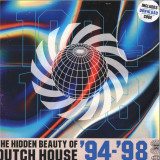
Chicago? Absolutely! Detroit? Definitely! For many, however, a significant chapter in the coming-of-age story of House music was also written in The Netherlands.
This 8-track compilation is the result of a nationwide search for lost Digital Audio Tapes (DAT’s), dusty home-studio recordings, and other relics from those early days. The distinctive "House" sound eventually evolved into a rainbow of local styles and grooves. Back then, DJ’s played their heart out and didn’t limit themselves to any particular musical genre. Following that spirit, this compilation contains everything that makes the Dutch sound so special, from energetic Breaks to atmospheric Deep House.
These are not your usual suspects, not even the most revered diggers have this collection at their fingertips. It's raw, pure material from the time when house parties were fresh and dirty at the same time. Back when the only dress code was a wide smile from ear to ear. Four sides with two tracks each, ensuring maximum DJ enjoyment. Now get out there and spread the Dutch 90's House vibes!
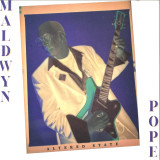
Starting his career with appearances on BBC Radio 1 and signing with Elton Johns label as a teenager, Maldwyn Pope's presence in music has been rich and productive from an early age eventually leading to working with people like Cliff Richards, Art Garfunkel and Bonnie Taylor. However, his presence in Italo-Disco has been quite scarce, but completely on point. "Altered State" is a masterpiece amongst enthusiasts and collectors of dancefloor sleaze and downtempo wellness. Heavy rock influence meets Rimini with this one off experiment from the seasoned multi instrumentalist. Original instrumental remix done by none other than Alessandro Novaga, the entity responsible behind one of Ron Hardy's favorite DJ tools (Faces Drums). B-side features an 11 minute excursion into a completely new altered state of dubby delayed trance, for special cosmic holes only. Re-issued with new full artwork.