“Mt. Hadamard National Park” is the Hallow Ground debut by composer, programmer, and instrument designer Matthias Puech. Informed by mathematical and artistic approaches that aim to both contemplate on and control complexity, the eponymous five-part composition explores natural and mystical forces through what he calls “audio-naturalist noise”. The composition is complemented by two further pieces that follow similar concepts: “Suspension” emulates the chemical phenomenon of the same name, while “Imperceptible Life” hinges on the musical possibilities of stridulation. Over the course of the entire album, Puech’s singular take on electro-acoustic and electronic music creates unique sonic spaces as much as it pays its dues to the unpredictability of the world that we inhabit. Jacques Hadamard was a pioneer among physicists and mathematicians who, in the early 20th century, were puzzled by processes that are deterministic but hard to predict. The sounds, arranged in sweeping and tense dynamics, serve as multiple agents within a complex system. The synthetic flora and fauna created through the use of the composer-performer’s instruments feels uncannily familiar or even disturbingly hostile at times... This process is mirrored in aquatic yet tangible sounds as well as dynamics that slowly converge towards density before the composition ends on a quiet note. The 14-minute-long “Imperceptible Life” is based on a 2019 live performance first conceived as a full-scale test drive of some new electronic equipment Puech was designing at that time. It explores the musical potential of stridulation, the act of creating sounds by rubbing together certain body parts—in the insect world, a common means of communication. Again, Puech’s approach is neither purely naturalistic nor only mimetic. Rather, “Imperceptible Life” offers yet another artistic reflection on the theme of chaos and order, and how human perception and emotion relate to it.As a whole, “Mt. Hadamard National Park” thus not merely mirrors natural phenomena but transforms them in ways that are emotionally evocative: the complexity and apparent arbitrariness of Puech’s compositions reveal an underlying beauty that is equal parts haunting and comforting.
Search:ear dis
- 1: Margaret Murie 02 46
- 2: Crux 04 07
- 3: Nameless 0 6
- 4: Eidetic 01 36
- 5: Thursday Night 03 09
- 6: Halve 03 12
- 7: Osco Drug 01 19
- 8: Lillian Isola 02 3
- 9: Safn 01 10
- 10: Maple Seed 02 21
- 11: Viridiana 03 29
- 12: Tet 01 51
- 13: God Innocent Controller 01 36
- 14: The Void 03 17
- 15: Alces 01 06
- 16: Pastel Dust 03 30
- 17: Where To 04 02
Dark Green Vinyl[24,33 €]
American singer-songwriter, poet, and photographer Thomas Meluch, known musically as Benoît Pioulard, returns with his most structured and vocal release to date. Titled »Eidetic,« a word denoting the ability to recall mental images with extraordinarily rich precision, the album presents unprecedented clarity and vitality for Benoît Pioulard. To access its thematic ground, Meluch looked inward with an affinity towards the people he loves during a period marked by his move from Seattle to Brooklyn in 2019. The resulting work engages with the universe's unflinching mortality and, as he says, »the ways it has modified and improved my relationships, especially with family.« Embodied by the creek, leaves, and ferns of the cover photography — taken in Michigan’s Burchfield Park, where he and his dad used to hike and »muse on existence« — the music glistens and unfurls with the flow of life he’s come to know. »Eidetic« is the culmination of Meluch's craft both as a producer and writer. An evocative sonic vocabulary meets deft lyrical introspection, articulated with the nuance, vulnerability, and confidence of a longtime artist hitting a stride.
Meluch has continually refined, redefined, and adjusted the focus of his gentle pop project over the last 20 years. Recorded primarily with guitar, tapes, and voice — and spanning labels with albums for Kranky, Morr Music, Beacon Sound, and Past Inside the Present — his catalog flows seamlessly between ambient improvisation and pop composition. Much like the analog photos that often accompany his releases, songs can feel dreamily softened and distant, and others beautifully vivid and detailed. 2021 full-length »Bloodless« found Meluch deep in droning decay, expressive yet wordless. With »Eidetic,« he swings back to sharpened forms. Lush banks of treated guitar and synth brush against hushed percussion; there is mist in the distance, but everything up close is intricately constructed and radiant. Meluch's voice is notably forward in the mix — a warm and calming tenor, a harmonic coo more than a whisper — ever-observant and actively processing.
To record much of the album, Meluch filled a cabin in rural Maine with his usual setup of simple percussion, a couple of Fender electrics, and a parlor guitar made by his friend who does bespoke luthier work. The modest utility is what he knows best, and here he pushes the output to its most pristine potential.
»Eidetic« opens in a swirl of familiar haze; »Margaret Murie« eases listeners in, as lush and verdant as the landscapes conserved by its famed namesake. With the setting established, Meluch, the narrator, enters the foreground with »Crux,« a tender piece written about finding new motivations in a new city. »We covet this rare green hue / Here at the farthest point from home,« he sings above a reassuring pattern of strums and percussion. Meluch's prose shines on the swiftly-moving »Nameless,« inspired by the neurological effects that came with the antiquated practice of manufacturing mercury mirrors; »folks would slowly go insane while looking into their own reflections every day,« he adds. The idea informs a series of surreal abstractions before everything drops out in the final minute, and we are left free-floating in eerie nothingness.
Across the album, labyrinthine lyrical ponderings scatter with dazzling imagery, artfully blurring scenes from world history with Meluch's more personal, present-day. The propulsive and earnest »Thursday Night« catches his mind overly active and too stoned, riffing on black holes and songwriting itself. »Halve« references the splitting of the atom, what he considers »the beginning of man's downfall,« and the unrealized initiative proposed by the US government that would have created 'nuclear refuges' in its national parks. Meluch's loved ones weave throughout; »Tet« holds his father's experience in Vietnam and its lasting effects. »Lillian Isola« touches on his maternal grandmother's spinal curvature, and »Pastel Dust« navigates the wake of his cat, who died on New Year's Eve 2020.
At first blush, Meluch's atmospheric and melodic sensibilities resonate purely in their own right. Upon closer meditation, his ability to render stories — many of which surround human tragedy, misfortune, and understanding — through the prism of his poetry makes »Eidetic« even more rewarding.
- 1: Margaret Murie 02 46
- 2: Crux 04 07
- 3: Nameless 0 6
- 4: Eidetic 01 36
- 5: Thursday Night 03 09
- 6: Halve 03 12
- 7: Osco Drug 01 19
- 8: Lillian Isola 02 3
- 9: Safn 01 10
- 10: Maple Seed 02 21
- 11: Viridiana 03 29
- 12: Tet 01 51
- 13: God Innocent Controller 01 36
- 14: The Void 03 17
- 15: Alces 01 06
- 16: Pastel Dust 03 30
- 17: Where To 04 02
Black Vinyl[24,33 €]
Dark Green Vinyl
American singer-songwriter, poet, and photographer Thomas Meluch, known musically as Benoît Pioulard, returns with his most structured and vocal release to date. Titled »Eidetic,« a word denoting the ability to recall mental images with extraordinarily rich precision, the album presents unprecedented clarity and vitality for Benoît Pioulard. To access its thematic ground, Meluch looked inward with an affinity towards the people he loves during a period marked by his move from Seattle to Brooklyn in 2019. The resulting work engages with the universe's unflinching mortality and, as he says, »the ways it has modified and improved my relationships, especially with family.« Embodied by the creek, leaves, and ferns of the cover photography — taken in Michigan’s Burchfield Park, where he and his dad used to hike and »muse on existence« — the music glistens and unfurls with the flow of life he’s come to know. »Eidetic« is the culmination of Meluch's craft both as a producer and writer. An evocative sonic vocabulary meets deft lyrical introspection, articulated with the nuance, vulnerability, and confidence of a longtime artist hitting a stride.
Meluch has continually refined, redefined, and adjusted the focus of his gentle pop project over the last 20 years. Recorded primarily with guitar, tapes, and voice — and spanning labels with albums for Kranky, Morr Music, Beacon Sound, and Past Inside the Present — his catalog flows seamlessly between ambient improvisation and pop composition. Much like the analog photos that often accompany his releases, songs can feel dreamily softened and distant, and others beautifully vivid and detailed. 2021 full-length »Bloodless« found Meluch deep in droning decay, expressive yet wordless. With »Eidetic,« he swings back to sharpened forms. Lush banks of treated guitar and synth brush against hushed percussion; there is mist in the distance, but everything up close is intricately constructed and radiant. Meluch's voice is notably forward in the mix — a warm and calming tenor, a harmonic coo more than a whisper — ever-observant and actively processing.
To record much of the album, Meluch filled a cabin in rural Maine with his usual setup of simple percussion, a couple of Fender electrics, and a parlor guitar made by his friend who does bespoke luthier work. The modest utility is what he knows best, and here he pushes the output to its most pristine potential.
»Eidetic« opens in a swirl of familiar haze; »Margaret Murie« eases listeners in, as lush and verdant as the landscapes conserved by its famed namesake. With the setting established, Meluch, the narrator, enters the foreground with »Crux,« a tender piece written about finding new motivations in a new city. »We covet this rare green hue / Here at the farthest point from home,« he sings above a reassuring pattern of strums and percussion. Meluch's prose shines on the swiftly-moving »Nameless,« inspired by the neurological effects that came with the antiquated practice of manufacturing mercury mirrors; »folks would slowly go insane while looking into their own reflections every day,« he adds. The idea informs a series of surreal abstractions before everything drops out in the final minute, and we are left free-floating in eerie nothingness.
Across the album, labyrinthine lyrical ponderings scatter with dazzling imagery, artfully blurring scenes from world history with Meluch's more personal, present-day. The propulsive and earnest »Thursday Night« catches his mind overly active and too stoned, riffing on black holes and songwriting itself. »Halve« references the splitting of the atom, what he considers »the beginning of man's downfall,« and the unrealized initiative proposed by the US government that would have created 'nuclear refuges' in its national parks. Meluch's loved ones weave throughout; »Tet« holds his father's experience in Vietnam and its lasting effects. »Lillian Isola« touches on his maternal grandmother's spinal curvature, and »Pastel Dust« navigates the wake of his cat, who died on New Year's Eve 2020.
At first blush, Meluch's atmospheric and melodic sensibilities resonate purely in their own right. Upon closer meditation, his ability to render stories — many of which surround human tragedy, misfortune, and understanding — through the prism of his poetry makes »Eidetic« even more rewarding.
“On this, their second LP, P16.D4 solicited tapes from several artists from Europe, England, the U.S., Canada, and Japan, and mixed that with their own material. Though in the current digital age collaborations from artists thousands of miles apart is quite normal, this was a quite radical approach back in 1982, when work on this LP began – an interesting concept that actually works quite well, since these artists, which include Bladder Flask, DDAA, the Haters, Merzbow, Nocturnal Emissions, Nurse With Wound, and several others – work in a similar free-ranging experimentalism as P16.D4, and their particular elements, usually just vocals or one instrument or noise implement, blend well without diluting P16.D4’s own peculiar brand of avant-garde post-industrialism, but merely give it another facet. One of the best tracks, “Aufmarsch, Heimlich,” consists of a choir submitted anonymously from Eastern Europe phasing in and out of static while a skronky alto sax bleats away. Most of the pieces exist somewhere just beyond the borders of free jazz, industrial, and even classical avant-garde, full of jarring noises and strange transitions and with a heavy overlay of electronics. What started out as an experiment yielded one of P16.D4’s best albums.” - Rolf Semprebon / AMG
“Distruct is organized around sounds provided by the cream of experimental musicians of the early ’80s, from Nurse With Wound to Nocturnal Emissions, via De Fabriek, Die Todliche Doris, The Haters, Merzbow, and others. Obviously, there is no question of remixing here, and at no time do P16.D4 seek to hide its sources, clearly identifying the contribution of each artist in the liner notes. It would be futile to try to find the paw of each artist, the trio operating vis-à-vis its collaborators the same methods as in their own work. Reworked, distorted by various effects, cut, edited, aggregated with other sounds, produced by P16.D4 themselves, reprocessed. Exchange, communication, two other data that will constantly recur in the work of P16.D4, rich in external contributions and encounters of all kinds. Musically, and despite the diversity of sources treated, Distruct escapes the heterogeneous character, which often marks this type of collaboration, to offer a coherent whole: fragments of opera, Soviet speeches, out-of-tune guitar, saxophone, tattered violins, overdriven and metallic noisy attacks, jackhammers, field recordings, battered choirs, and many other less identifiable sounds. In addition to the desired dialogue between the artists, Distruct also offers a real reflection on listening, and on the expectations of the listener.” - Dissolve
P16.D4 was a German electronic noise music collective, active primarily from 1980 to 1988. P16.D4 embraced tape cut-ups, musique concrète, endless recycling and transformation of previously published material, and many long-distance collaborations with like-minded artists such as DDAA, Vortex Campaign, Nurse With Wound, and Merzbow. Their active participation in the international industrial tape scene yielded collaborative output such as their release Distruct, where bands such as Nurse with Wound, Nocturnal Emissions, Die Tödliche Doris, and The Haters provided the source material. The longest-term collaboration was with the installation and conceptual artist Achim Wollscheid, who used P16.D4 sounds as the basis for LPs he recorded under the name SBOTHI. Ralf Wehowsky, the only constant member of the group, later released solo material under the alias RLW.
Members of P16.D4 were also involved with Selektion, a collective of people involved with sound as well as the visual arts. Selektion published LPs, CDs, books, visual art and design.
The collective worked in a strongly improvised, spontaneous and anti-professional way, using acoustic and electronic instruments, using existing sound fragments, duplicating and alienating them, using repetition, distortion, changes in speed and playing direction. For this they used not only sounds of other artists but also their own material from earlier productions. Late works of the collective are associated with musique concrete.
“This music is staggeringly original and innovative, and while it’s possible to locate it in a chain of circumstance that links it to ‘Industrial’ music, P16.D4 indulged in none of the empty cliches associated with the genre, worked incredibly hard, and seem to have been aiming at a form of sound art that was much more profound, varied, subversive, and potentially dangerous. Kuhe In 1/2 Trauer’s accompanying credits indicate their radical approach to making music: lots of improvisation, lots of live electronics, extensive use of tape-loops, some conventional instrumentation, and much that isn’t – like the milk churn on ‘Paris, Morgue’ or the use of baking tray and washing machine elsewhere. Even when guitars, drums or keyboards are used, they’re played very weirdly. It’s not even made clear who was doing what; the main credit is ‘Concept,’ which I assume means that one of the three devised the framework in which the noise would operate itself, and while RLW gets the lion’s share of these credits, a lot of the cuts are evenly divided among the team and I have no doubt that the group operated in a very democratic or libertarian manner. None of this prepares you for the insane and troubling sounds that reach your ears, composed with scant regard for conventional logic and following an exciting, absurdist path, especially in the matter of tape edits and juxtapositions of recordings.” - Ed Pinsent, The Sound Projector.
“Though this German group started out as a the new wave band P.D., by the time of Kuhe in 1/2 Trauer, their first LP under the P16.D4 name from 1984, they had developed far beyond into extremely experimental music similar to other post-industrial artists working with abstract avant-garde soundscapes. There’s a bleak industrial feel to the gritty, lo-fi electronics and tape loops, while the group throws in enough curve balls to keep it interesting. On some pieces, strange, looped choirs bubble out of throbbing pulses and drones of feedback, while others have clanging and clattering, and elements of musique concrète and improvisation blur the boundaries even further. The opening track, “Default Value,” is one of those disorienting pieces with noises flying everywhere, while “Paris Morgue” takes excerpts from one of their old P.D. tracks and messes it up with additional instruments, while the ungainly titled fourth track throws in a heavy texture of percussive noises to create an edgy ambience about to teeter off the edge, and the even darker and more ambient title track takes the tension even further. Arrhythmic and amorphous and capable at moments of becoming quite noisy and abrasive, while at others far more somber and quiet, Kuhe in 1/2 Trauer is quite a fascinating release.” - Rolf Semprebon / AMG
P16.D4 was a German electronic noise music collective, active primarily from 1980 to 1988. P16.D4 embraced tape cut-ups, musique concrète, endless recycling and transformation of previously published material, and many long-distance collaborations with like-minded artists such as DDAA, Vortex Campaign, Nurse With Wound, and Merzbow. Their active participation in the international industrial tape scene yielded collaborative output such as their release Distruct, where bands such as Nurse with Wound, Nocturnal Emissions, Die Tödliche Doris, and The Haters provided the source material. The longest-term collaboration was with the installation and conceptual artist Achim Wollscheid, who used P16.D4 sounds as the basis for LPs he recorded under the name SBOTHI. Ralf Wehowsky, the only constant member of the group, later released solo material under the alias RLW.
Members of P16.D4 were also involved with Selektion, a collective of people involved with sound as well as the visual arts. Selektion published LPs, CDs, books, visual art and design.
The collective worked in a strongly improvised, spontaneous and anti-professional way, using acoustic and electronic instruments, using existing sound fragments, duplicating and alienating them, using repetition, distortion, changes in speed and playing direction. For this they used not only sounds of other artists but also their own material from earlier productions. Late works of the collective are associated with musique concrete.
- 1: Jean-Jacques Perrey - E.v.a
- 1: 2 Janko Nilovic - Drug Song
- 1: 3 Vladimir Cosma - Exkalibur (O.s.t. "Sam Et Sally")
- 1: 4 Michel Magne & David Gilmour - I Must Tell You Why (O.s
- 1: 5 Syntaxe - L'anthropofemme (Chanson)
- 1: 6 Philippe Sarde - L'appartement (O.s.t. "Deux Hommes Dan
- 1: 7 Paul Martin & Jean-Pierre Castaldi - Le Troublant Témoi
- 1: 8 Bernard Lloret - Digen
- 1: 9 Jacques Arconte - Movie Town
- 1: 0 Cliff Cardwin - Work City
- 1: Janko Nilovic - Soul Impressions
- 1: 2 Jean-Claude Pierric - Move Man
- 2: 1 Edition Spéciale - Monsieur Business
- 2: Jean-Claude Petit - Skyway
- 2: 3 Christian Chevalier - Tecumseh
- 2: 4 Francis Lai - Somewhere In The Night (O.s.t. "Madly")
- 2: 5 Eden Rose - Reinyet Number
- 2: 6 Karl-Heinz Schäfer - Kidnapping (O.s.t. "Les Gants Blan
- 2: 7 Bruno Leys - Dans La Galaxie
- 2: 8 Francis Lai - Young Freedom
- 2: 9 Daniel Janin & Jean Luc Ferré - Dig Yourself Up
- 2: 10 Le Patchwork - Patchwork
- 2: 11 Roger Renaud - Turn Me On
Rare Groove Collection Explore the fusion of world music with soul, funk and disco through the Rare Groove Collection. With this new volume, discover unique groove tracks straight from Jamaica! Fully remastered original versions French RARE GROOVE This "French Rare Groove" volume offers us a oneâÇ`way ticket to France from the late 60"s to the early 80"s. From confidential releases to forgotten movie soundtracks, discover the grooviest tracks from the french scene. Have a good trip!
Matador
Gaz Coombes veröffentlicht die Neuauflage seines zweiten Soloalbums – ”Matador” - das 2015 erschien.
Ein Gefühl von Freiheit durchdringt jede Sekunde des Albums, das unter anderem die 2013er Single ”Buffalo” enthält. Von der astralen Pracht von ”The Girl Who Fell To Earth” bis zu den träumerischen Klängen von ”Oscillate” ist es der Sound eines Songwriters, der musikalische Grenzen wie Schnee zum Schmelzen bringt und Elemente von Neu!, Disney-Musicals, den schwedischen Psychedelikern Goat, Gyorgy Ligeti und Eno in einer eisigen Klanglandschaft vereint, die ebenso anspruchsvoll wie schön ist.
Das Ergebnis ist ein Album im klassischen Sinne. ”Matador” ist der Sound eines der größten britischen Songwriters, der mit Freude in die Zukunft blickt.
World’s Strongest Man
”World’s Strongest Man” ist die großartige Neuauflage des dritten Soloalbums von Gaz Coombes, das auf das 2015 erschienene ”Matador” folgte. Inspiriert von Grayson Perrys ”The Descent of Man”, Frank Oceans ”Blonde”, kalifornischem Gras, britischen Wäldern, unkontrollierter Männlichkeit, Neu! und HipHop (und vielem mehr), ist es eine wahrhaft bemerkenswerte Sammlung von elf zutiefst persönlichen Songs, die alle von einer raumfüllenden, fesselnden Melodie begleitet werden. Vom tiefgründigen Titeltrack bis
zum mitreißenden ”Deep Pockets”, über die wunderschöne rhythmische Ballade ”Slow Motion Life”, ist ”World’s Strongest Man” ein kühnes, ehrgeiziges, frei denkendes, zukunftsweisendes Rock’n’Roll-Album.
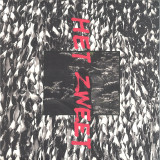
Modal Analysis proudly presents Het Zweet - Archives Volume 1: 1982-1988, a compilation of the Dutch outsider legend painstakingly picked from over 100 hours of unheard tape. An early electronic pioneer who deployed an array of homemade instruments alongside synths and a tape recorder to craft his searching sound, Marien Van Oers occupies a lonely branch on the tree of this music's early efforts, sliding between pounding industrial grooves, ambient fragments, and extended, entrancing compositions bridging this divide. Most closely akin to Muslimgauze, Test Dept. or Fad Gadget, who shared his outsider practice while remaining thoroughly entrenched in contemporary sounds, Het Zweet is striking for his diversity and for its meticulous composition, formed of carefully arranged layers of sonic detritus culled from his collection of homemade devices and electronic distortions. Finally rising to greater exposure since his death in 2013, Modal Analysis passionately continues this mission with our first volume of archives dedicated to the memory of this bold innovator gone before his time.
- A1: Signal
- A2: 2249
- A3: Inside
- A4: Intercept
- A5: The Box
- A6: Nephyr
- B1: Beacon
- B2: Hypersona
- B3: Juliet
- B4: Dream Window
- B5: Forever
- B6: Track 12
- C1: Point Of No Return
- C2: Movarian Fields
- C3: Two Doors
- C4: Vision
- D1: Point Of No Return
- D2: Sine Orphan
- D3: Fressa Fa (Slow Version)
- E1: Hollow
- E2: Find Me
- E3: Home
- F1: Tunnel
- F2: Geiga
- G4: Equassa
- H1: Freefall Peak
- H2: Arc
- H3: Lightout
- I1: Clear
- I2: Cocooni
- I3: Susurrus
- I4: Lithea
- J1: Deluge
- J2: Radio
- J3: Reunion
- J4: 1983
- J5: One
- K1: World After April
- K2: Seance
- K3: Dreamscape
- K4: Dayasan
- K5: Broken Toy
- K6: Leviatha
- L1: Levitate
- L2: Saphron
- L3: Another World
- F3: Ghostfields
- G1: Fiona's Room
- G2: Siren
- G3: Darkroom Distortion
Coloured[201,89 €]
UK producer Dennis Huddleston goes by the artist name of 36. He is a much-loved producer with a fine back catalogue which is investigated here with The Box, a new collection of his earliest and perhaps most admired works. They were all written between 2005 and 2012 and are drawn from albums such as 2009's Hypersona, 2010's Hollow and 2012's Lithea. The bumper six vinyl collection also features a bonus album, Orphans, of all new and previously unreleased tracks. There is a real depth of range and emotion to these tracks so it is no wonder the artist says they are some of the most personally cherished works he has written.
If you find the time, please come and stay a while in abracadabra’s beautiful neighbourhood; a magically wonky wonderland where strangers leave as friends to a block party soundtrack as eclectic as it is infectious. The California duo’s album shapes & colors is a dazzling collage of psych-fuelled synthscapes and contemporary Baroque-pop of anti-capitalist movements and escapism, precisely pieced around their own working lives in a blue-collar town.
In the heart of Oakland’s industrial Jingletown above a former auto-repair shop in what was once a mechanics’ break room where poker rounds ensued, Hannah Skelton (Vocals, Synthesizers) and Chris Niles, (Bass, Synthesizers) constructed the angular 80s-tinged anthems (think John Hughes montages to Talking Heads) of their new album, to positively offset the pandemic’s amplification of dysfunctional society. “It reflects our current reality: a huge mess that is systematically broken but isn’t entirely lost,” Hannah tells. “We’re inviting listeners to conjure up every drop of hope and willpower left inside them, pour that into the giant vat of anger and frustration bubbling inside us all, and with this potion collectively enact the necessary change to bring love and light into this dark space.”
When Covid forced Hannah from her salon in San Francisco to become a backyard mobile hairdresser, what she saw inspired them both and the lyrical foundations for their new record. “I’d drive to mansions and people would complain about how hard the pandemic had been next to their swimming pool and tennis courts.” First meeting after the album’s co-producer Jason Kick (Mild High Club, Sonny and the Sunsets) recruited the pair for a Halloween band covering Eurythmics’ art-rock debut ‘In The Garden,’ the pair hit it off and shapes & colors is a product of the years that followed. It combines Chris’ own rhythmic demos following years on the road touring and opening for Amon Tobin, Matthew Dear and Generationals in Maus Haus with Hannah’s lyrical musings honed from project Cassiopeia, so even when topics are as heavy as the beats, they’re met with luminously positive arrangements of hope and warmth.
The by-product of a psychedelic New Year’s Eve escaping a monotonous 2020 reality, the title track itself captures fireworks over East Oakland as viewed from the pair’s couch whilst listening to Mort Garson’s Plantasia for 6 hours straight. The daydream collage of ‘inyo county’ is “a little souvenir taking me back into the bottled-up essence of a slow lazy morning, waking up in bed far from home,” Hannah tells recalling those enforced stay-at-home days. “It fell out of me because I was craving that blissful flavour.” Meanwhile ‘dawn of the age of aquarius’s new parallel reality evolved from a happy accident when their demos had reset to a drone which Jason reworked into a Laurie Anderson-esque breathy vocoder effect. Even bloops and beeps from a forgotten recording session at the Vintage Synthesizer Museum in Emeryville can be heard, where the pair used Mini Moog, Fairlight EMI and ARP 2600 to arrange their sound into shapes whilst distortion and dirt from mixing on 1979 Neve 5313 Console added to the recordings’ color.
Casting a brighter rainbow still, in all its pastel-hued glory, Hannah, also illustrated a self-portrait of the band for the album artwork. “It reflects our makeshift recording studio to encapsulate all aspects of that time and space,” she shares of their abode where, over an intense two-week period and fuelled by the aroma of fermenting vino from the winery below, their single chord, bass and drum-heavy, groove-first momentum took them on an unexpected journey whilst the next-door couple would fire pizzas in their yard and a grandfather across the road would sweep the street clean. “We’d drink coffee and start the day, consistently working, without interruption,” Chris tells of finding their flow. “The loft is a cool space with skylights, tall ceilings and no shared walls so we could be as loud as we wanted to be.”
Just as well. Diving into decades of electronica and crunchy sound effects, field recordings and animal sounds, blended with an infectious Latin influence, shapes & colors is bolstered by live percussionists Greg Poneris (drums), K. Dylan Edrich (Vocals, Percussion: congas, bongos, chimes, cow bells and wood blocks, tone drum and tri-tone whistle) and Tom Smith (Guitar, Synthesizers, Vocals).
NIMBY crews grab those earplugs now. abracadabra is your new noisy neighbour, and there’s no turning this party down.
- A1: Intro
- A2: You're Love
- A3: Here With Me (Feat Swindail)
- A4: Kiki
- A5: Don't Stop (Feat Flamingosis)
- A6: Slam Jam! (Feat Luca Lush)
- B1: Party In Me
- B2: Come On Girl
- B3: Fall In Love With Me (Feat Flamingosis)
- B4: Ain't Nobody Like You (Feat Josh Pan)
- B5: Not A Single Question? (Feat Yung Aloha)
- B6: Blue Skies (Outro)
It may have snowed yesterday in New York, but summer is on the horizon. Yung Bae, whose real name is Dallas Cotton, wants to kick off the summer a little early with his new studio album: Bae 2.
Get ready for an explosion of disco, funk, hip-hop and soul with this album!
A session of electrifying and groovy hits. From track to track, it's a celebration of rhythm and dance. Tasteful samples that are blended into something new, and unique from their origin in this album.
From his studio retreat in the heart of the Norwegian forest, Raaja Bones astral projects to adistant paradise, glancing the frosty tips of Norwegian fir trees on his way to exotic locations. Trading the Scandinavian fjord for a beach in Miami, Raaja finds a bounce in his step, moonwalking his way across groovy keys and shuffling beats through Boardwalks . A sonic palette echoing with the reverberations of bygone days, playing on a collective nostalgia, a Kodak moment turned gif, frozen on a telephone screen. Hazy chords and playful melodies glisten against temperate rhythmical zones as they roll through the arrangement. Disembodied vocals float in a steamy fog above warm tones, as Raaja's voice passes through the record like a spectral dream. A rusty vignette forms within crystalline tones as bold synthesizers are coerced into reluctant musical forms, ambling through cheery earworms and rousing rubber bass-lines.
If we want to look into the future, we have to start considering the implications more holistically. All too often, science fiction is a dystopian projection of the current era's grimmest realities spiked with pragmatic historical hindsight - but what if instead it was able to reflect our needs, hopes, and dreams? On "SPINE", award-winning Danish composer SØS Gunver Ryberg considers a sustainable alternative, buoyed by interconnectedness, empowerment, and understanding. Channeling her dextrous sound design into advanced, time-bending music that fluctuates through techno, experimental ambient, and soundsystem-vibrating bass music, she maps out an artistic landscape that's futuristic and complex, but never oppressive.
Ryberg is an accomplished producer who's developed her sound over many years, playing concerts and working tirelessly on video game soundtracks, film scores, dance, performance, and multichannel installation pieces. Her first solo album "Entangled" appeared in 2019 on Berlin's esteemed Avian imprint, and was praised for its sensitive approach to noise and abstracted techno, while its EP-length followup "WHYT 030" was nominated for the Nordic Council's prestigious music prize this year. "SPINE" is the inaugural release on Ryberg's own label Arterial, and stands as a thematically dense statement of intent. The label provides a platform to extend Ryberg's artistic goals and reflect not just her world but a world she wants to see develop in the future: somewhere connected and creative, where exploration and free expression is prioritized over genre division and petty compromise.
This philosophy is central to the sounds on "SPINE", which have been carefully sculpted to accurately lay out Ryberg's worldview. Opening track 'Unfolding' presents a sonic ecosystem that flourishes as it spreads itself out, and quivering kick drums vibrate alongside unstable atmospherics. There's the faint fingerprint of Chain Reaction's notional dub techno in there somewhere, but Ryberg interrupts the thought before it can coagulate, assuring the listener that her vision isn't ponderous but playful and optimistic. This mood flickers into view again on the title track 'Spine', as fragmented breaks rumble beneath disorienting synths, faint images of a life we once knew refracted into cosmic beams of light. 'Mirrored Madness' meanwhile is warm, assertive, and optimistic, contrasting skittering cybernetic percussion with dense, enveloping harmonies.
When she pushes rhythm into the background, like on the cinematic 'We tumble on the edges', Ryberg's compositional skill is placed under the microscope. We're presented with the opportunity to examine another dimension of her work, the mystery beneath the stone, hearing saturated, alluring pads infused with hidden harmonies. In these moments, Ryberg implores all of us to consider the environment, asking us to think about the earth's essential nutrients on the dreamy 'Phosphorus Cycle', and what we might do to save ourselves on the delirious 'Where do we go from here'. Ryberg's concern isn't chastising, it's laid out in a warm embrace. The future could still be bright - there's something beautiful in the complexity if you just take the time to look closely.
- A1: Breezeplate (2022 Remaster) 03 44
- A2: Squarewave Colorwheel (2022 Remaster) 04 33
- A3: Toypieceplate (2022 Remaster) 03 33
- A4: Dodecatheon (2022 Remaster) 04 21
- A5: Sunsculpture One (2022 Remaster) 03 10
- B1: Sienna (2022 Remaster) 02 42
- B2: Kekker (2022 Remaster) 04 45
- B3: Gauss (2022 Remaster) 02 30
- B4: Billionwatt (2022 Remaster) 03 44
- B5: Continentsunderclouds (2022 Remaster) 03 08
- B6: Sunsculpture Two (2022 Remaster) 04 30
»Holo« by the US-American three-piece Kiln, first released in 1998, is one of those rare records that managed to carve out a niche of its own while also building bridges to variety of genres like Chicago-style post-rock, the ambient mysticism of projects like Rapoon or the music made at the intersection of shoegaze, and electronic music in the late 1990s. Lush textures, subtle rhythms, jazzy inflections and electronic experimentation seamlessly blend into each other over the course of the eleven tracks. This reissue through the German label Keplar makes the fully revised version, self-released by the group in 2007 under the name »Holo re/lux,« available on vinyl for the very first time. »Twenty-five years later this newly mastered vinyl edition is evidence that the sound of ›Holo‹ continues to attract like-minded listeners,« says member Clark Rehberg III. »Which on many levels means that our mission was successful.«
Rehberg had embarked on this mission together with Kevin Hayes and Kirk Marrison in 1993. They had first worked together under the name Fibreforms as a live trio that used treated guitars, kit drums, and tapes of found sound to explore the balance between band composition and recording experiments, while Marrison made heavy use of the Akai S612 sampler as a fabricating strategy with the project Waterwheel. »Kiln seemed to encapsulate the evolution and melding of those previous approaches to one that insisted on the continual opening up of the compositional process, allowing more of the mystery that can be discovered through studio experiments—and accidents—to become important elements of creating our music,« says Rehberg of the trio that is still going strong after three decades. »The word Kiln implies heat and transformation, an attitude that we apply to every sound we use—we begin with notes and performance and then mosaic with shape and colour.«
»Holo« followed up on the trio’s debut self-titled EP that had been recorded in the summer of 1996. »That same year, during a lull in our collabs, Kirk began building pieces on a low-memory Mac using an early 8-channel DAW,« explains Rehberg. Enchanted by the unprecedented fidelity and energy of those recordings, the three reconvened to build upon them and make more music in that manner. »I’d say our intention was no different than any other time: create something immersive and compelling: dense melodic blasts of uniquely constructed but ultimately accessible audio moments.« The group worked individually and in pairs for about 18 months while being spread across the United States. »We poured everything into it that we had at the time, working dead-end jobs by day and on audio in every other open moment. I remember the struggle of that process, but also the pure joy as we pulled down countless moments of magic while the pieces took shape.«
Rehberg says that he still hears »a time-stamp of those efforts and the belief that we were creating a special audio experience« when listening back to »Holo,« a record the band itself chose to revise almost a decade after its initial release. »Ultimately we just felt those pieces needed more impact and we had the tools and ability to make that happen,« he explains. 16 years after that and a quarter of a century after it first introduced Kiln as a force to be reckoned with, the remastered version feels indeed timeless. It is both a snapshot of the first extensive album project by a group whose bond is still »diamond strong,« as Rehberg puts it, and a record that continues to sound fresh, if not visionary also today.
All tracks composed and recorded by Kevin Hayes, Kirk Marrison, Clark Rehberg III.
Originally released on Thalassa in 1998.
Remaster by Stephan Mathieu. Vinyl cut by LUPO.
Cover art by Kirk Marrison & Clark Rehberg III.
Text by Kristoffer Cornils.
Bartosz Kruczyński, also known as artist Earth Trax, is arguably among the leading names in Poland’s current electronic music scene. Based in Warsaw, his music is deeply emotive and explores a wide-ranging sonic palette that is complemented by well-defined artistic concepts. He has already featured on labels including Phonica Records, Growing Bin, Into The Light and Shall Not Fade –with whom he released his acclaimed debut album in 2020–.
His Lapsus release 'Closer Now', takes a different trajectory to his previous album 'The Sensual World' Shall Not Fade, 2022, fundamentally an energetic and high tempo club record. In contrast, 'Closer Now' focuses on fresh and disparate ideas, with tracks that could typically be classified as more unrestrained B-sides that deconstruct sounds aimed at the dancefloor.
‘Closer Now' is influenced by liminal spaces and cultivates surreal and dreamlike qualities. Conversely it also possesses a sense of strength and grit, highlighted by moments where electronic distortion bares its teeth. It is an album that both refers both to IDM and chill out rooms.
Repress!
Spanish DJ and producer Indira Paganotto has unveiled her new EP ‘Lions Of God’ out on vinyl early 2023.
A four-track release, ‘Lions Of God’ kicks off with ‘Legend’, a pulsating, high-energy club cut that taps into Indira’s trademark ‘psytechno’ sound. Setting the tone for the rest of the record, it is followed by the slamming techno meets spiritual vocals of ‘Diabla’, hypnotic, highly emotive vibes of ‘Angels Never Die’, and finally the title track ‘Lions Of God’, a pumping techno cut laced with poignant breakdowns. She returns to KNTXT following last year’s ‘Himalaya’ EP.
“Indira is baaaaack!” says KNTXT label head Charlotte de Witte. “I’ve been playing these tracks for a while now and they’ve been slaying every single dance floor. In my opinion, this is her best work so far and I’m very excited to have her on board for another psytrance influenced EP on KNTXT. She’s been killing it worldwide the past couple of months and it’s been an honor to follow her journey from up close. Big things are coming!”
“‘Lions Of God’ EP is the perfect summary of these twelve years of experimentation with my own psytechno sound,” Indira adds. “You will enter the depths of my mind with these tracks, and you will experience four different stories but with the same beginning and end, the search for truth, hope and love. Low riding as if a horse were taking you running without stopping, you feel melancholic and hopeful, hidden messages that if you know me you will know why they are there! I hope you have a good trip with this EP! Thanks to my sister Charlotte and the whole KNTXT family for your support and sharing my music and my being!
One of Spain’s hottest young dance talents, Indira Paganotto’s sets are full of elegance and effusive danceability, with a quality selection that spans 90s disco to the most current underground techno music.
‘Lions Of God’ sees Indira Paganotto illustrate why she is one of the hottest names on the scene right now.
Started as a reggae band, Chequers were formed by the Matthias Brothers, John & Richard, in Aylesbury, Buckinghamshire in 1973. Inititally releasing in the early part of the 1970s (with their first single Rudi's In Love charting in the UK) their sound then developed to also incorporate Philly soul influences in the mid-70s, then releasing a rare but solid LP 'Check Us Out', in 1976. The group eventually evolved into a seven piece funk outfit in the late 70s, playing shows to larger and larger audiences and touring throughout the UK & Europe.
1980 saw the birth of the Matthias brothers' own small independent outlet for the group, Matthias Records. The press release of the new label's first single declared that their "roots in the reggae and soul music of the last mod era" were being brought up to date, now embracing "the music of today and tomorrow...". That 45 (the cheeky pop-punk meets ska cover version of Midnight Hour, backed with the uptempo instrumental funk of Move Up) didn't necessarily come good on that promise. 3 years would then pass until this 45 showcased the throughly-updated & stellar electro-boogie sound of Hard Times and it's equally strong b-side If You Want My Love.
Following this neither Matthias Records nor Chequers as a group ever released anything further - the record's scarcity (and hideously inflated prices on today's secondhand market) hint at low sales and potential distribution problems upon it's original release, perhaps leading to the label and the group calling it a day. Conjecture aside, there's really no denying this record slaps, and with discogs prices reaching beyond ridiculous levels there is only one option - get it before it's gone!
Mastered by Tohru Kotetsu and pressed at RTI, this 45rpm LP will live up to and surpass your most demanding judgments. Midnight Sugar is one of the most sough-after titles from the acclaimed Three Blind Mice catalogue.
On “Midnight Sugar” the Tsuyoshi Yamamoto Trio plays two of Tsuyoshi’s own blues improvisations followed by jazz ballads that became standards for the Trio. The combination of these titles is nothing but exceptional.
The Yamamoto Trio’s Midnight Sugar was recorded March 1, 1974 at Aoi Studio, Tokyo. It earned the Best Engineering Award and Jazz Disc Award of Swing Journal in 1974. It is Yamamoto’s unmistakable skill and his jazz feeling which adds that certain touch of liveliness and spontaneity and makes Midnight Sugar a unique experience. This Piano Trio will mesmerize you with this great collection of standards, superb musicianship and awesome sonics. You are sure to listen to this one over and over.
Mastered by Tohru Kotetsu and pressed at RTI, this 45rpm LP will live up to and surpass your most demanding judgments. Misty is one of the most sought-after titles from the acclaimed Three Blind Mice catalog.
Touring with the Micky Curtis Band, Tsuyoshi Yamamoto had the chance to explore several international experiences that he would later use on his 1974 album, Misty, as he worked with this band in France, England, and Switzerland.
The Yamamoto Trio’s Misty is a Stoned Cold Killer! A1 Reference Material!!! Misty earned both the “Best Engineering” Award and Jazz Disc Award of Swing Journal in 1974. Recorded at Aoi Studio, Tokyo, on August 7, 1974. Tsuyoshi Yamamoto is highly musical and his expressions natural, neither overly technical nor serious, his performance is relaxed and melodious.
Lifted From Hubbard's Lauded 1979 Lp 'the Love Connection', This Sublime Piece Of Melodic, Deep, Soul/Jazz Will Have Ears And Minds Open With It's Instantly Recognisable Opening String Sequence.
Used To Devastating Effect On Pepe Bradock's All-time 1999 Deep-house Classic 'deep Burnt', Those Sweeping Strings Capture Us And Lead Us Into A Epic Journey With The Wondrous Vocal Stylings Of The Legendary Singer Al Jarreau.
This Is Prime Early Morning Music, Pushing All The Right Buttons & Spreading Light Wherever It Is Played, A Beautiful Beautiful Record Indeed! What Is Essentially An Extended And Rearranged Version Of Hubbard's 1967 Original, The '79 Version Of 'little Sunflower' Boasts A Sumptuous Arrangement & Production From The Mighty Claus Ogerman (Ben E King, Mel Torme, Bill Evans, Antonio Carlos Jobim & More).
A Truly Wondrous Piece Of Music, Reissued On A Single Side In It's Full 12" Length Of 9+ Minutes From The Source Archive Audio. Fully Legit, Licensed And Reissued With Love By Above Board Distribution And Columbia Records/Sony Bmg For Record Store Day, 2019.