Search:earl band

Styles
All
DUSTED ANGEL - THIS SIDE OF THE DIRT

DUSTED ANGEL

THIS SIDE OF THE DIRT

12inchHPSLTD359
HEAVY PSYCH SOUNDS
19.09.2025

Transparent orange vinyl, limited to 300 copies. Dusted Angel is a band that likes to keep it in the family. Made up of a group of close friends that have known each since the early 80s, stemming from playing in various intertwined bands engraved in the extended Santa Cruz family of friends. Featuring Ed Gregor, guitar (hedgehog, no use for a name), Eric "Dog" Fieber, guitar (Mock, creature, fire sermon) Steve Ilse drums (creature, Herbert, Automatic Animal) Clifford Dinsmore vocals (Bl'ast!, Seized Up, Spaceboy) and Eliot Young (Lost in Line, Seance) on bass. Formed in 2009, Dusted Angel is a sleeping giant that awakens from time to time to enlighten people with their unique brand of heavy, heavy groove laden music. Now it's time for a new album via Heavy Psych Sounds Records!

pre-order now19.09.2025

expected to be published on 19.09.2025

24,58
LIV ANDRE HAUGE TRIO - DOGNVILLE

Liv Andre Hauge Trio

DOGNVILLE

12inchHUBROLP3670
HUBRO
19.09.2025
  • Strir
  • Natt Natt Natt
  • Vi Er
  • Karja
  • Sval
  • Rukla
  • Mange Av Oss

On Friday, September 5 Liv Andrea Hauge Trio releases its third album, Dognville, on Norwegian label Hubro. The record explores the feeling of being "dognvill" a Norwegian term describing the sensation of being out of sync with time and reality, like during jet lag or insomnia. The music inhabits this liminal space between structure and freedom, consciousness and dream. Half of the compositions were written while pianist and composer Liv Andrea Hauge was bedridden with a high fever in a semi lucid, dreamlike state. The other half emerged ahead of the trio's European tour in autumn 2024.The result is a fusion of fresh inspiration and songs shaped and seasoned through live performance a record rooted in both spontaneity and maturation.Since forming in 2022, the trio Liv Andrea Hauge (piano), Georgia Wartel Collins (bass) and August Glännestrand (drums) has become a compelling voice in modern acoustic jazz. With extensive touring across Norway and internationally, and two previous album releases, the band has cultivated a strong, intuitive musical chemistry.Dognvillereflects this presenting a sound that is more serious and contemplative than earlier works, echoing the uncertainty and introspection of our times.

pre-order now19.09.2025

expected to be published on 19.09.2025

28,53
Mr.  Theolonius - Clap Ya Hands /WEB Edits rework 7"

Give It Up Or Turnit a Loose (Edit) by James Brown b/w Web (Edit) by Hampton Hughes / Give It Up or Turnit a Loose (Bonus Breaks) by James Brown| Galaxy Sound Company — GSC45-044, test pressing | The long-running @galaxy_sound_company imprint has been responsible for some superb re-edits over the years, most of which are pleasingly purist in tone — meaning they are pro rearrangements with no added effects but & needless new beats or cheap trickery like so many out there— making any of their releases cop-on-site. & as you can hear from the test pressing, the 44th in the stellar series delivers yet again.

Side A is a masterclass in breakbeat editing of a b-boy classic sample source. Yes, there are many killer JB edits out in the universe, but when you see that the legendary Black Cash & Theo AKA Thelonious Beats take a turn, you know you gotta cop this mutha on site. Here the edit master bravely returns to one of the main sources of the dawn of hip-hop — JB’s comp “In The Jungle Groove” which was released in 1986 to capitalize on it’s popularity in the genre at the time. The comp is named for a breakdown section that appears in “Give It Up Or Turnit a Loose” which is the workout we have here. JB quiets the band down to handclaps, footstomps & congas played by Johnny Griggs. After he raps a little, JB cues legendary drummer Clyde Stubblefield back in, followed by bassist Bootsy Collins & the rest of the band. JB wasn’t intentionally trying to create a perfect batch of hip-hop samples in the late 60s & early 70s, but he couldn’t have succeeded any better if he had been. This edit may enter well-worn territory but he uniquely delivers an edit that showcases why it inspired so many & still delivers the goods to help you get your party started off right & quickly.

Next up on the flipside we are treated to an edit of “Web” by Hampton Hughes, from his 1974 David Axelrod produced & arranged album “Northern Windows”. Heads will recall it as the core sample for “Off the Record” by Hieroglyphics, from the 1998 LP “3rd Eye Vision”. This jazz-funk burner features a stellar line-up:
Piano/keyboards = Hawes
Trumpet = Allen DeRienzo, Snooky Young
Trombone = George Bohanon
Sax/flute = Jackie Kelso, Jay Migliori, William Green
Electric Bass = Carol Kaye
Drums = Spider Webb

But wait, GSC ain’t done yet! We get some bonus beats from the A-side. Another reason why doubles are highly recommended when you need assistance in your set.

out of Stock

Order now and we will order the item for you at our supplier.

10,50

Last In: 7 months ago
Spandau Ballet - Everything Is Now  Vol 1: 1978-1982 (Boxset)

Spandau Ballet, one of the most influential bands in British music, announce the release of their definitive early years collection, "Everything Is Now – Vol 1: 1978-1982" - a comprehensive 9-disc box set featuring their groundbreaking first two albums alongside a wealth of previously unavailable material. It includes a beautiful 44 page book with original photos from fellow Blitz Kid Graham Smith and new commentary from the whole band.

Released September 12th on Parlophone, this meticulously curated collection captures the band's origins and meteoric rise from Blitz Club favourites to chart-topping innovators. The set includes their seminal albums "Journeys To Glory" (1981) and "Diamond" (1982) on vinyl, plus six CDs of singles, remixes, BBC sessions, demos, and a Blu-ray of Dolby Atmos mixes, videos and rare live footage.

This collection showcases the band's evolution through their formative and revolutionary period, from the electronic-infused new wave of early singles like "To Cut A Long Story Short" and "The Freeze" to the funk-influenced sophistication of "Chant No. 1" and "Instinction." They were simply the most cutting edge, futuristic band in the world, at the centre of a creative scene that defined the 1980s.

This box set features all the band's early classics including "To Cut A Long Story Short," "Chant No. 1," "Muscle Bound," "Paint Me Down," “Instinction” and "She Loved Like Diamond," and presents multiple versions of tracks that trace their development from initial demos to extended 12" club mixes.

The Blu-ray component includes Dolby Atmos and stereo remixes by acclaimed producer Steven Wilson, alongside original music videos, BBC TV appearances and the complete 56-minute concert from New York's Underground Club in 1981.

"Everything Is Now – Vol 1: 1978-1982" stands as the definitive document of Spandau Ballet's revolutionary early period, when they helped define the sound and style of a generation.

CD1: Journeys To Glory Era Singles, Remixes & Versions
CD2: Diamond Era Singles, Remixes & Versions
CD3: Diamond – 12” Singles Box Set
CD4: BBC Session 1981 / BBC In Concert Bournemouth 1982
CD5: BBC In Concert Paris Theatre 1982
CD6: Demos
Blu-Ray (Disc 7): Dolby Atmos, Promos & Extras
LP1 (Disc 8): Journeys To Glory
LP2 (Disc 9): Diamond

pre-order now12.09.2025

expected to be published on 12.09.2025

167,86
THE KIDS - FLABBERGASTED LIVE AT AB 2001
  • A1: Intro 1’06”
  • A2: City Is Dead 1’58”
  • A3: Bloody Belgium ’1”22
  • A4: Do You Wanna Now 2’55”
  • A5: For The Fret 2’35”
  • A6: I’ll Get You 1’18”
  • A7: Rock Over Belgium 1’41”
  • A8: Fascist Cops 2’41
  • A9: I Wanna Get A Job In The City 3’33”
  • A10: I Feel Allright 1’41”
  • A11: No Monarchy 2’35
  • B1: Sex Queen 1’47”
  • B2: Baby That’s Alright 1’48”
  • B3: Dead Industry 2’48”
  • B4: Razor Blades For Sale 1’46”
  • B5: This Is Rock And Roll 2’21”
  • B6: Do You Love The Nazis 3’39”
  • B7: If The Kids Are United 4’47
  • B8: Blitzkrieg Bop 2’00”
  • B9: 12Xu 3’52”

The Belgian leading punk band The Kids, founded by Ludo Mariman, made their debut in 1978 with their landmark titleless album, surely deserving to be part of the global top list of great seventies punk albums. After another four studio albums, the band called it a day... only to resurface a good ten years later, at the end of the 1990s. Since then, The Kids have become an international cult punk band, much in demand in Belgium and abroad (USA, Germany, France, Italy, Japan…), mainly focusing on their initial seventies punk repertoire, with many classic songs that have effortlessly survived the ravages of time.

The Kids are still the most angry Belgian band, which says a lot about the eagerness and sharpness of Ludo Mariman and his mates. The Kids, for sure, still are an absolute top band!

"Flabbergasted" was recorded early 2001 at the AB Club in Brussels and released the following year on CD, which sold out quickly. Starman Records issued the album in 2015, making it available on vinyl for the very first time, with restored audio and entirely new artwork. Sold out long ago, it was followed by a second print run in 2023 on limited colored vinyl. An album you can’t miss—sharp as a razor blade and containing many of The Kids' classics, along with a couple of contemporary punk covers. The band still tours actively and will celebrate, in 2026, their 50th anniversary.

pre-order now12.09.2025

expected to be published on 12.09.2025

23,95
Al Karpenter - Greatest Heads LP

Released by Hegoa Records and Night School Records.
Greatest Heads is the fourth album by the radical Basque- Berlinesque group Al Karpenter. A deconstruction of structured “rock” music, here Al Karpenter re-imagine “the band” to explore the intersection between Free music, afro-beat, the avant garde and gonzo rock.
If Theodore Adorno wrote “To Write Poetry after Auschwitz is Barbaric” in 1949, Al Karpenter attempts to answer the difficult question today; what kind of music can be done in the face of a genocide? Álvaro Matilla, Marta Sainz, Enrique Zaccagnini & Mattin’s response to the planet’s slipping into a vortex of hate is to create a music ecstatic, a music of protest bursting with multiple musical languages and glossaries, full of overlapping histories and thrilling tensions.
Greatest Heads posits a plurality of musics both in opposition and intertwined: Al Karpenter play rock instruments pulled apart in the studio in post-production. Distorted rhythm chunks bit-crushed and dissipated, segments of freedom oppressed by waves of sound invading from every direction. The interplay between the chief instrumentalists and renowned, storied sound artist Mattin creates something akin to ESP freedom-seekers Cro Magnon playing in Miles Davis’ early 70s groups, The Los Angeles Free Music Society tightening up into a clenched fist of plunderphonics and runaway percussion.
We Are All Karpenters opens Greatest Heads with the most straight-forward song refrain of the record accompanied by a band that soon crash into eruption, imagining Sun City Girls in full free rock mode.
The modulating synth sound soon sucks the band into its wake to create a spine-chilling climax of distorted sound, made fully orgasmic with mastering engineer Rashad Becker’s attention to detail. On Izugarrizko Buruak (Greatest Heads), Matilla intones in Basque over a mangled distorto-beat. A Brand New Astraphobia creates a black space for a heavily processed guitar to blow up before falling to earth at night, a gentle figure serenading the coming end.
On Side B, the band begins by being masticated by a brutal phaser, squelching and stretching the music into new territories. The overt message of Stop The Genocide! is besieged by violence before Worm City aggressively samples the ghosts of soul music, mixing in noise bursts, prepared piano and swiping, abstracted sound. Epic closer Perfect Love feels like a beat poetry performance on a burnt world, still grasping for community, for home, for some sort of human love. A Mad love, then; an angry love fuelled by solidarity and collaboration.
The band’s cascading layers of references and polyglottal musics attempt to create the perfect lover, alive with rage and disorientating ecstasy: Al Karpenter.

pre-order now12.09.2025

expected to be published on 12.09.2025

30,46
The Hanging Stars - Over The Silvery Lake LP
  • A1: Floodbound
  • A2: Cure Your Ills
  • A3: ? | I'm No Good Without You
  • A4: For A While
  • A5: Golden Vanity
  • A6: Rainmaker, Sunseeker
  • B1: The House On The Hill
  • B2: Ruby Red
  • B3: She Never Sleeps
  • B4: The Hanging Stars
  • B5: Hang Me High
  • B6: Crippled Shining Blues
  • B7: Running Waters Wide

*Long overdue reissue of the first album by The Hanging Stars to coincide with their tour support slot with Edwyn Collins – initial 300 copies come with 12 x 12 print*

“In late-Sixties California, the Byrds and Flying Burrito Brothers combined traditional country music with hippy rock to great success. The influence lingered and whatever cultural relevance it has this is a delightful, transporting listen” – The Times 4/5

London-based psych-folk outfit The Hanging Stars re-release their much-loved debut album Over the Silvery Lake on Crimson Crow. Blending folk pastoralism with swampy 60s Americana, they sound like the missing link between the California desert sun and the grey skies of London Town. The album was recorded between LA, Nashville and Walthamstow, with each of these vastly different places leaving an indelible mark on the songs.

Now signed to the Loose Records label and fronted by London-based songwriter, singer and guitarist Richard Olson (The See See, Eighteenth Day of May), The Hanging Stars are essentially a loose collective of people who weave together a blissed-out psychedelic tapestry. The rest of the core band is made up of Sam Ferman on bass and Paulie Cobra on drums, Horse on pedal steel and Patrick Ralla on banjo, guitar. They jam rather than write and hang out rather than rehearse, harnessing a kind of tipsy euphoria resplendent with luscious arrangements and glorious vocal harmonies.

During 2015, prior to this album’s original release the band released two critically acclaimed singles via The Great Pop Supplement (both of which also appear on the album). “Golden Vanity” was premiered by The Line of Best Fit who said; “you'd be forgiven for thinking you'd just unearthed a rare deep cut from the late 60s/early 70s boom of psychedelia infused Americana” and “The House on The Hill” was described by The Guardian as; "a hazy, desert-dream of a song, nicely sharpened with steely-eyed guitars, Mersey-laced harmonies and just a whiff of the Gun Club”.

There are a number of allusions to nature and the weather on the album, borne in part out of the contrasting surroundings in which it was produced. The band’s fascination with Americana led them to record some of the material Stateside, laying down some of the parts at Battle Tapes Studios in Nashville (Lambchop, Paperhead), as well as at Vision Quest Studios in Los Angeles with Rob Campanella. His work with The Quarter After, The Brian Jonestown Massacre, Beachwood Sparks The Tyde, and GospelbeacH was a perfect match to capture their sound and they even had San Franciscan legend Chrystof Certik step in on lead guitar for a couple of tracks.

Following the LA recordings, a trip to the Californian desert provided the core notion of what they wanted to produce - a shard of light that they clung on to whilst recording the rest of the album in the significantly more rain-soaked atmosphere of Walthamstow, London, under the watchful eye of Brian O'Shaughnessy at Bark Studios (The Clientele, Comet Gain). As the band explained at the time: “Ultimately we hope you can hear both the sand and the rain in this record.”

The Hanging Stars place themselves firmly as part of a long folk tradition encompassing European and North American influences – as a continuation rather than a pastiche of these styles. This is the sound of a band really coming in to their own, fully formed and in no doubt of their vision. With Over the Silvery Lake they succeeded in producing a record, which has the country, blues and folk traditions at its heart.

pre-order now12.09.2025

expected to be published on 12.09.2025

14,96
STANLEY BRINKS - Happy New Year
  • 1: Happy New Year
  • 1: 2That's The World To Me
  • 1: 3Take Heart
  • 1: 4Humdrum
  • 1: 5Only With You
  • 1: 6To Play
  • 1: 7Everyone You Know Is Asleep
  • 1: 8Play With My Heart
  • 1: 9They Are Coming For Me
  • 1: 0Out Of My Heart

Singer-songwriter and cult anti-folk troubadour Stanley Brinks returns with Happy New Year, a 10-song collection of lo-fi gems recorded in Berlin. Happy New Year is a warm and celebratory record. Over simple rhythms and minimalist arrangements, Brinks delivers lyrics that oscillate between surreal humour, earnest wisdom, and playful melancholy. Happy New Year features contributions from longtime collaborator Clemence Freschard, plus appearances from Jyoti Sekhawat, Monica Kremidi, Rachel Lipson, Irma Ignataviciute, and Elisa Aseva, weaving together voices from across Brinks' musical community. Their harmonies lend the songs a communal intimacy. Stanley Brinks is renowned for his unique anti-folk style: both playful and suggestive, insightful and entertaining. Brinks was born in Paris, France, in 1973. He studied a bit of biology and worked as a nurse for a while. Half Swedish, half Moroccan, strongly inclined to travel the world, he soon began spending most of his life on the road and developed a strong relationship with New York. By the late 90s he'd become a full time singer-songwriter - Andre' Herman Düne - as part of three piece indie-rock band, Herman Düne. Several albums and Peel sessions later and after a decade of touring Europe, mostly with American songwriters such as Jeffrey Lewis, Calvin Johnson and early Arcade Fire he settled in Berlin. The early carnival music of Trinidad became a passion, and in the early 21st century he became the unquestioned master of European calypso, changing his name to Stanley Brinks. Under this moniker he has recorded considerably more than 100 albums, collaborated with the New York Antifolk scene on several occasions, recorded and toured with traditional Norwegian musicians, and played a lot with The Wave Pictures. The vinyl is of silvery color.

pre-order now12.09.2025

expected to be published on 12.09.2025

30,46
LAVVI EBBEL - GUNS AND CREPE FLAMBÉE (1977-2014) LP 2x12"
 
13

Lavvi Ebbel was without a doubt one of the most talked-about bands of the Belgian new wave scene. In the early eighties, the band achieved considerable success with singles such as “Give Me a Gun” and “Victoria.” This ten-piece band had a solid live reputation thanks to the original sound of the two guitarists (Marc de Wit and Chris Van Ransbeeck), pianist (Bea Van Ransbeeck), and the steady Eric de Wit on drums. Singer Luckas Vander Taelen and backing vocalist Kristien D’Haeger provided a strong stage presence, supported by the swinging horn section with Jan Weuts and Eric Sleichim, who was the driving force behind Maximalist and Bl!ndman some time later.

Lavvi Ebbel played about 200 times in Belgium and the Netherlands, both in small clubs and at prestigious festivals such as Seaside. On the compilation LP “Get Sprouts,” which is a true sample chart of the music of this period, we find Lavvi Ebbel's “No Place To Go,” a high point in their versatile collaboration with producer Jean-Marie Aerts. “Albü Meth” is arguably the best-known mini-LP, featuring the cult song “Le Cafard.” After the release of the album “Kiss Me Kate,” produced by the American producer David Avidor, the band called it a day in 1983. Following a couple of very successful performances in 2013, Lavvi Ebbel, 12 years later, is making a comeback with the original band members.

pre-order now12.09.2025

expected to be published on 12.09.2025

23,95
Krokus - Metal Rendezvous LP

Krokus

Metal Rendezvous LP

12inchMOVLP3912
Music On Vinyl
12.09.2025
  • A1: Heatstrokes
  • A2: Bedside Radio
  • A3: Come On
  • A4: Streamer
  • A5: Shy Kidside
  • B1: Tokyo Nights
  • B2: Lady Double Dealer
  • B3: Fire
  • B4: No Way
  • B5: Back Seat Rock'n Roll

Includes 4-page booklet
Featuring "Heartstrokes" and "Bedside Radio"
Quadruple platinum certified album
Limited edition of 666 numbered copies on blue coloured vinyl

Metal Rendez-Vous is the fourth studio album by Swiss hard rock/heavy metal band Krokus, originally released in 1980. It marked the debut of vocalist

Marc Storace and became the band's international breakthrough. The album features energetic, riff-driven songs such as “Heatstrokes,” “Bedside Radio,” and

“Tokyo Nights,” blending classic hard rock with the rising heavy metal sound of the early 80s.

The album was a commercial success, reaching four times platinum certiciation in Switzerland. “Heatstrokes” hit No. 1 on the British Heavy Metal Charts, while “Bedside Radio”

received international airplay, helping the band build a strong following across Europe and North America.

Metal Rendez-Vous is available as a limited edition of 666 numbered copies on blue coloured vinyl and includes an original 4-page booklet with lyrics.

pre-order now12.09.2025

expected to be published on 12.09.2025

35,08
Various - Roxy Music - Then Out Of The Blue.. 1971-1976 Book

Author: Mal-One & The Glam Collective
Title: ROXY MUSIC – Then Out Of The Blue – 1971-1976 A CHRONOLOGY
Format: A5 - 232 Page Hardback Book

Who? What? Why? Where? When?

Roxy Music - Then Out Of the Blue… tells the story of the bands career, giving dates and a timeline to their events. The birth of Roxy Music just before 1971 upto 1976 including Bryan Ferry's early solo career.

A Who? What? Why? Where? When? Chronology of all their dates, places and times.

“I’ve got a favourite songwriter and band in England called Roxy Music with a character called Bryan Ferry who I think is probably spearheading some of the best music that has come out of England in years.” David Bowie.

“That was a band that broke so many barriers. They were poncy, pontificating, absurd, over melodramatic and absolutely adorably excellent.” John Lydon - Sex Pistols / Public Image Limited.

pre-order now12.09.2025

expected to be published on 12.09.2025

18,45
YS - BURN

YS

BURN

12inchPERF000
Perf
12.09.2025

Sticking a dirty thumb in the eye of fate, our third collaboration sees this marrow deep family malarky turn official as Pace Yourself teams up with YS’s own imprint ERF REC for a split release. As if our status as minor celebrities and footnotes of the underground could level off no further: the unification no one asked for is here. Sticking it to the man, handing your arse to ya on plate; cauterising infected suburban minds world over.

Burn is the second YS album and written as a direct follow-up album to Brutal Flowers. If their first album was an exercise in the incremental, a construction of poise and patience, Burn, should be taken way the fuck at it’s word: it quite literally finds catharsis in twisted reverse. Birthed out the malignant kick found in deconstruction and chaos. Evil twin, psychotic younger sibling, call it what the hell you like. It might take you a moment to get the lay of the land in this darkly mutated world. Like a bug eye’d native first confronted with a zippo, the hit is radical and instant: a new way for the world to go up in smoke.

Splice the Seattle slacker scene with the spliffhead soundsystem culture of the 90s Bristol trip-hop scene, then cross-breed that with the DIY optimism and glee in creation found in the cut-and-paste worlds of skate, graffiti and hiphop, now run that through the skitzo basement mind of John.T. Gast and you’re close to the kind of scorched earth and spiked suburbia that birthed Burn.

Dunno quite what YS have been ingesting of late but this massively twisted LP touches on a host of gloriously fucked totemic underground sources while not sounding much like any of them. It has the ballsy swagger and hard flipping of the script as Massive Attack’s seminal Blue Lines. Indeed, the eponymous album tracks sound similar - the opener ‘Burn’ is like a hard nosed jammed out redux of ‘Blue Lines’. Getting into a kind of slow-spinning overdubbed maximal euphoria ending with mumbled downer vocals, struggling to conceal their tongues in their cheeks there’s an air of paranoia and proto-conspiracy theory. It’ll leave you scratching your head, feeling like you’ve stepped into a New World Order governed by a cacophony of drop outs, dope fiends and apocalyptic stoners. A cracked out world somewhere between Richard Linklater’s movie Slacker (1990) and Marc Singer’s Dark Days (2001).

The rest of the album parts like a tongue on a wine glass: Smith and Mighty, Bandulu, ambient Luke Slater records, Wah Wah Wino, Nurse with Wound, Land of the Loops, Placid Angels, Adrian Sherwood, Urban Tribe and DJ Shadow can all be heard in momentary splatters - but Burn like other works by YS, is its own ritual beast. ‘Moth’, a track which has been knocking about the underground deejai circuit for many moons, is a real raw chopped and screwed slice of stoner erotica that reeks of obsession and unrequited desire. Elsewhere, on tracks like ‘Switch’, ‘Trying’ and ‘Drift’ the throughline from Brutal Flowers can be heard. Underneath the driving heavy gravity the trademark emotional intimacies of YS linger: eternal recurrence, ghosts of static and shortwave, worn memories of the playful and painful sort. The brief moments where flashes of orchestral ambience get out from underneath the swagger are so pure, personal and unguarded that for a moment they leave you completely lonesome. In the album’s closer ‘End’, you can hear the fleeting promise and DIY possibilities of an analogue world and embers of ash that flutter in its wake: where it seemed, for a brief moment, that collective of DJs, engineers, rappers, graffiti artists and skate crews were emerging from the streets, giving the middle fingers to the system, before just as quickly disappearing back to the doldrums of obscurity. ‘End’ is a bittersweet ode to early soundsystem culture, MCs and pirate radio - an out of step time where for a moment the underdogs and weirdos seemed to be kicking on the door of something bigger.

A veritable teenage doof suite dosed with desire, claustrophobia and deviance. Burn is a good old howl at the moon: lonely, raw, and out for blood; basement style exegesis at its best. A thump to the gut, a stud through your blood. A dubbed-to-death classic straight out of the annals of nowhere. A perfect post card from oblivion. A bleak, bold and personally ferocious vision of tomorrow and tomorrow and tomorrow.

This is everything that record collectors skip dates for. Fuck the scene and keep that shit underground. That’s what it is all about. Know what I mean, if you do? You’re in…

out of Stock

Order now and we will order the item for you at our supplier.

23,32

Last In: 7 months ago
Various - Dolores: Salsa & Guaracha From 70's French West Indies

In Guadeloupe, many people think that jazz and ka music are like a ring and a finger. To some extent, the same could be said about so called Latin music and the music played in the French West Indies.

Both aesthetics were born in the Caribbean and bear so many connections that they can easily be considered cousins. In constant dialogue, there are lots of examples of their fruitful alliance and have been for a while. The English country dance that used to be practiced in European lounges came to be called kadrille in Martinique and contradanza in Cuba. They both featured additional percussion instruments inherited from the transatlantic deportation. Drawing from shared feelings about the same traumatized identity – later to be creolized – it would be hard not to assume that they were meant to inspire each other. The golden age of the orchestras that graced the Pigalle nights during the interwar period further proves the point. As soon as the 1930s, Havana-born Don Barreto naturally mixed danzón and biguine music in a combo based at Melody's Bar. In the following decade, Félix Valvert, a conductor who was born and raised in Basse-Terre in Guadelupe, also worked wonders in Montparnasse with La Coupole, which was an orchestra made up of eclectic musicians. Afro- Caribbean performers of various origins were often hired on rhythm and brass sections in jazz bands, which used to enliven the typical French balls of the capital. In the 1930s and onwards, Rico’s Creole Band was one of them.


Martinican violinist-clarinettist Ernest Léardée, who would become the king of biguine music as well as the main figure of French Uncle Ben's TV commercials (a dark stigma of post-colonial stereotypes), had musicians from the whole Caribbean sphere play at his Bal Blomet – and they all enchanted "ces Zazous-là" (according the words of Léardée's biguine-calypso piece). In les Antilles (French for French West Indies), music history started to speed up in the 1950s, when trade expanded and radio stations grew bigger. The Guadelupean and Martiniquais youth tuned in their old galena radio sets to South American and Caribbean music. As for the women traders, les pacotilleuses, they bought and sold goods across different islands (the "passing of items through various hands" was thought to be most pleasurable) and brought back countless sounds in their luggage. Such was the case of Madame Balthazar, who once returned from Puerto Rico with the first 45rpm and 33rpm to ever enter Martinique.

Out of this adventure was created the famous Martinican label La Maison des Merengues, a music business she opened and undertook with her husband and which proved to be a major landmark. At the end of the 1950s, in Puerto Rico, Marius Cultier competed in the Piano International Contest playing a version of Monk's Round 'Midnight. He won the first prize and this distinction foreshadowed everything that was to come. Cultier, the heretic Monk of jazz, was quickly praised for writing superb melodies, always tinged with a twist that conferred a unique sound to his music. It didn't take long for the gifted self-taught musician to get to play with Los Cubanos, making a name for himself thanks to his impressive maestria on merengues.

The rest is history. Besides, in the late 1950s, Frantz Charles-Denis, born into the upper middle class in Saint-Pierre and better known by his first name Francisco, went back home after working at La Cabane Cubaine – a club located rue Fontaine where he had caught the Latin fever. Francisco's music was therefore heavily marked by his Cuban cousins' influence, which gave the combos he led a specific style and also led to renewal. Things were swinging hard in La Savane, located in the main square in Fort-de-France. He set up the Shango club close by and tested out the biguine lélé there, a new music formula spiced up with Latin rhythms. Soon afterwards, fate had him fly to Puerto Rico and Venezuela.

As for percussionist Henri Guédon (percussions were only a part of his many talents), he was born in Fort-de-France in May 22nd 1944, the day marking the celebration of the abolition of slavery. As an old man, he could remember that in " his father's Teppaz, a lot of hectic 6/8 music was constantly playing...". In the opening lines of his Lettre à Dizzy, a small illustrated collection of writings published by Del Arco, he highlighted the huge impact that cubop had on him as a teenage boy, around 1960. He eventually turned out to be the lider maximo in La Contesta, a big band steeped in Latin jazz. He was also the one who originated the word zouk to describe music which brought the sound of the New York barrio to Paris. It was the culmination of a journey that started in Sainte-Marie: "a mythical place for bélé, the equivalent of Cuban guaguancó". In the early 1960s, the tertiary economy developed to the detriment of agriculture. Yet rural life was where roots music emerged in Martinique and in Guadeloupe.

Record companies played a major part in the process of Latin versions sweeping across the islands – before reaching everywhere else. Producer Célini, boss of the great Aux Ondes label, and Marcel Mavounzy, both the head of Émeraude records - a firm which was founded in 1953 - as well as the brother of famous saxophonist Robert Mavounzy, were big names to bear in mind. Although there were many of them - all of whom are featured on this record - Henri Debs was definitely the major figure in the recording adventure. He proved to be so influential that he even got compared to Berry Gordy. In the mid 1950s, when he acquired his first Teppaz, he worked on his first compositions: a bolero and a chachacha. Then, he became the one man who made people discover Caribbean music, from calypso to merengue. He was among the first ones to rush out to San Juan, Puerto Rico, to buy records and distribute them through a store run by one of his brothers in Fort-de-France. He had members of the Fania All Star come and perform there, which he was madly proud about. He was also the first one to pay attention to Haitian music, such as compas direct and various other rhythms which would soon flood the market. As a result, many of the combos hitting his legendary studio would end up boosted by widespread "Afro-Latin" rhythms. However, he never denied his identity: gwo ka drums were given a major role, although they were instruments which had long been banned from the "official" music spheres. The present selection bears witness to such a creative swarming. Here are fourteen tracks of untimely yet unprecedented cross-fertilization: all types of music rooted in the Creole archipelago have found their way, whatsoever, to the tracklisting. Whether originating from the city or being more rural, they all go back to what Edouard Glissant, in an interview about the place of West Indian music in the Afro-American scope, called "the trace of singing, the one which got erased by slavery." "It is so in jazz, but also in reggae, calypso, biguine, salsa... This trace also manifests through the drums, whether Guadelupean, Dominican, Jamaican or Cuban... None of them being quite the same. They all point to the idea of a trace, seeking it out and connecting to each other through it. This is the hallmark of the African diaspora: its ability to create something new, in relation to itself, out of a trace. It may be the memory of a rhythm, the crafting of a drum, a means of expression which doesn't resort to an old language but to the modalities of it." The opening track features one of the emblematic orchestras of this aesthetic identity, criscrossing many music types from the archipelago. The 1974 Ray Barretto guajira – Ray Barretto was a major New York drummer influenced by Charlie Parker and Chano Pozzo – is magnificently performed by Malavoi, a legendary Fayolais group (i.e from Fort-de-France). Additionally, the compilation ends on a piece by Los Martiniqueños de Francisco. It symbolically closes the circle as it is a genuine potomitan of Martinique culture which also functions as a tireless campaigner for Afro-Caribbean music. Practicing the danmyé rounds (a kind of capoeiria) to the rhythm of the bèlè drum, it delivers a terrific Caterete, a kind of champeta of Afro- Colombian obedience which was originally composed by Colombian Fabián Ramón Veloz Fernández for the group Wgenda Kenya. The icing on the cake is Brazilian Marku Ribas, who found refuge in Martinique in the early 1970s, bringing his singing to the last trance-inducing track. These two "versions" convey the whole tone of a selection composed of rarities and classics of the tropicalized genre, swarming with tonic accents and convoluted rhythms. It is the sort of cocktail that the West Indians never failed to spice up with their own ingredients. For instance, the Los Caraïbes cover of Dónde, a famous Cuban theme composed by producer Ernesto Duarte Brito, has a typical violin and features renowned Martinique singer Joby Valente and his piquant voice.


The track used to be – or so we think – their only existing 45rpm. The meaningful Amor en chachachá by L'Ensemble Tropicana, a band which included Haitian musicians among whom was composer and leader Michel Desgrotte, also recalls how Latin music was pervasive in the tropics in the mid-1960s. They were the ones keeping people dancing at Le Cocoteraie in Guadelupe and La Bananeraie in Martinique. Around the same time, another "foreign" band, Congolese Freddy Mars N'Kounkou's Ryco Jazz, achieved some success on both islands by covering Latin jazz classics – such as their adaptation of Wachi Wara, a "soul sauce" by Dizzy Gillespie and Chano Pozo whose interweaving of strings and percussions can have anyone hit the dancefloor. How can you resist Dap Pinian indeed, a powerful guaguancó by Eugene Balthazar, performed by the Tropicana Orchestra and published by the Martinique-founded La Maison des Merengues? It also acts as a symbol of the maelstrom at work. Going by the name Paco et L'orchestre Cachunga, Roger Jaffory used to play guaguancó too: his Fania-inspired Oye mi consejo is one example of his style. Baila!!!!! Dancing was also one of the Kings' focus points. Oriza is a Puerto Rican bomba and a "classic" originally composed by Nuevayorquino trumpeter Ernie Agosto, which reserves major space for brasses, giving it a special sheen.

Emerging from the New York barrios crucible was also La Perfecta, a Martinique group originating from Trinidad, whose name directly references the totemic Eddie Palmieri figure as well as his own band, also called La Perfecta. Here they borrow Toumbadora from Colombian producer and composer Efraín Lancheros and interpret it by emphasizing percussions, which set fire to the track even more than the wind instruments. The same goes for Martinique's Super Jaguars, who use Tatalibaba – a composition by Cuban guitarist Florencio "Picolo" Santana which was made famous by Celia Cruz & La Sonora Matencera – as a pretext for sending their cadences into a frenzy. In a more typically salsa vein, the Super Combo, a famous Guadelupean orchestra from Pointe-Noire that was formed around the Desplan family and had Roger Plonquitte and Elie Bianay on board, adapt Serana, a theme by Roberto Angleró Pepín, a Puerto Rican composer, singer and musician also known for his song Soy Boricua. Here again, their vision comes close to surpassing the original. In the 1970s, L'Ensemble Abricot provided a handful of tracks of different syles, hence reaching the pinnacle of the art of achieving variety and giving pleasure. They played boleros, biguines, compas direct, guaguancó and even a good old boogaloo - the type they wanted to keep close to their hearts for ever, "pour toujours", as they sang along together in one of their songs. Léon Bertide's Martinican ensemble excelled at the boogaloo which had been composed by Puerto Rican saxophonist Hector Santos for the legendary El Gran Combo.


Three years later, in 1972, Henri Guédon, with the help of Paul Rosine on the vibraphone, tackled the Bilongo made famous by Eddie Palmieri. Such a classic!!!!! And so were the Aiglons, the band from Guadelupe: choosing to execute Pensando en tí, a composition by Dominican Aniceto Batista, on a cooler tempo than the original, they noticeably used a wonderfully (un)tuned keyboard in place of the accordion. On the high-value collectible single – the first one released by Les Aiglons under the Duli Disc label – there is a sticker classifying the track under the generic name "Afro". Now that is what we call a symbol. Jacques Denis

out of Stock

Order now and we will order the item for you at our supplier.

21,43

Last In: 57 days ago
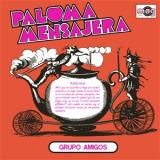
GRUPO AMIGOS - PALOMA MENSAJERA
  • No Sabes Que Me Siento Bien
  • Mujer
  • Dama
  • Son Las 5
  • En El Campo
  • Everybody Is Free Bonus Track
  • Ensueño
  • El Tren Del Señor Taylor
  • Atardecer De Un Verano
  • Buscando Un Hogar
  • Psiquiatra
  • Dirty Girl Bonus Track

"Paloma mensajera" (featuring members of New Juggler Sound / Laghonia) shows the shift that was taking place within Peruvian rock away from psych and hard rock which had predominated during the early 70s. The style adopted by Grupo Amigos (and other bands and artists during this period) highlights the influence of soft rock, UK, US and Latin American folk rock and, above all, the desire to keep the melodic greatness of The Beatles alive. This reissue includes bonus tracks and extensive liner notes. DESCRIPTION "Paloma mensajera" (featuring members of New Juggler Sound / Laghonia) shows the shift that was taking place within Peruvian rock away from psych and hard rock which had predominated during the early 70s. The style adopted by Grupo Amigos (and other bands and artists during this period) highlights the influence of soft rock, UK, US and Latin American folk rock and, above all, the desire to keep the melodic greatness of The Beatles alive. The positive reception albums by artists such as We All Together, Telegraph Avenue and Zulu garnered between 1972 and 1975, marked a change of paradigm and in preferences within the Peruvian rock scene. Eclecticism gained new ground, to the detriment of the sectarian and orthodox, while melody grew more present and visible, moving away from the progressive experimentation that typified underground Peruvian rock up to the beginning of the 70s. For their first single on MAG, included on this reissue, the band adopted a formula in which Beatles harmonies converged symmetrically with folk motifs. 'Dirty Girl' was a hit on the radio. A full album followed but only a fairly small number of copies of the album were pressed, which seems to have been the main reason for omitting it from the historical accounts of Peruvian rock music from the late 90s onwards. In "Paloma mensajera" all compositions were penned by the group, after several years during which cover versions were a staple. Some of the musical resources that the band had at their disposal in terms of composition and arrangements are striking and even surprising, considering that they were a debut band, whose members were under the age of 20. The arrangements included the clever use of a Moog synthesizer which had just arrived at the MAG studio. The success achieved by the Beatles tribute performances played by the members of Grupo Amigos for decades have eclipsed the songs that Edmundo, Andrés Da Ros and Simón Ames composed with youthful enthusiasm and energy between 1972 and 1973 to the point where they have almost been forgotten. This re-release of "Paloma mensajera" should help rectify this major injustice. It includes bonus tracks and extensive liner notes.

pre-order now05.09.2025

expected to be published on 05.09.2025

22,27
Naoki Zushi - III (LP 2x12")

Naoki Zushi

III (LP 2x12")

2x12inchWOE021LP
World Of Echo
05.09.2025

World Of Echo announces the reissue of two remastered albums by Japanese guitarist and songwriter Naoki Zushi, 1988’s Paradise, and 2005’s III. Two classics of Japanese psychedelia, both Paradise and III were originally released on Org Records, the imprint of Shinji Shibayama of acid-folk group Nagisa Ni Te, with whom Zushi has guested on second guitar for decades. Both intimate and expansive, rich with revelatory songwriting and blasted, sky-scouring guitar, these reissues return these albums to print for the first time since the 2000s. It’s the first time III has been officially released on vinyl, with an extra, previously unreleased track, “Under The June Moonlight.”

Recorded in Kyoto’s Townhouse Studios in mid 1987 and released in limited-to-500 vinyl pressing in 1988, Paradise emerged from a scene in Kansai, Japan that was embracing the idiosyncracies of 1970s singer-songwriters, the soaring solos of early seventies psychedelia, and the DIY impulse of 1980s post-punk. While Zushi’s musical history stretched back to the early eighties – he was a founding member of Jojo Hiroshige’s noise outfit Hijokaidan – he found his feet with groups like Hallelujahs, whose dream-pop collection Niku O Kuraite Chikai Wo Tateyo was recently reissued by Black Editions, and Idiot O’Clock.

Paradise appeared two years after that Hallelujahs album and share much the same membership – Zushi’s backing band on several of the songs includes Shibayama on drums and Ken-Ichi Takayama (aka Idiot) on electric guitar, though just as often, Zushi plays all the instruments himself. The coordinates here are wide-reaching – you can hear the volume and intensity of Neil Young & Crazy Horse (on “Hallelujah: Left Side” and “Paradise: Midday”), the slow-motion magic of Galaxie 500, the idiosyncratic spirit of The Only Ones, all mixed up with tender guitar miniatures and stumbling garage-psych-pop moves.

Seven years later, after the transitional album Phenomenal Luciferin, Zushi released III. Perhaps his masterpiece, it’s already been bootlegged on vinyl, but this reissue is the real deal. The album was recorded at Studio Nemu over seven years, and sees Zushi backed by Shibayama (bass) and Masako Takeda (drums), his erstwhile bandmates in Nagisa Ni Te. By this stage, Zushi had started to really stretch out, and many of the songs on III swoon languorously, taking their sweet time to say what they need to say. It’s rich with lovely, melancholy songs, in a similar realm to bandmates Nagisa Ni Te, of course, but you can also hear traces of everything from Syd Barrett’s The Madcap Laughs, through seventies private press loner folk, to the slow-burn meanderings of the likes of early Low or Damon & Naomi.

When interviewed by Shibayama in the mid-nineties, Zushi said of Paradise, “it was a sort of collection of songs that had meant something to me up to that point… it was my paradise. I wanted to create paradise.” That’s something Zushi achieves on both of these albums – visionary Japanese psychedelia, en route to paradise. - Jon Dale


g Under The June Moonlight vinyl only bonus track

pre-order now05.09.2025

expected to be published on 05.09.2025

30,04
Only Ones - Special View LP

Only Ones

Special View LP

12inchMOVLP3582C
Music On Vinyl
05.09.2025
  • A1: Another Girl, Another Planet
  • A2: Lovers Of Today
  • A3: Peter And The Pets
  • A4: The Beast
  • A5: City Of Fun
  • A6: The Whole Of The Law
  • B1: Out There In The Night
  • B2: Someone Who Cares
  • B3: You've Got To Pay
  • B4: Flaming Torch
  • B5: Curtains For You
  • B6: From Here To Eternity

A compilation of the finest moments from the British punk rock pioneers Featuring "Another Girl, Another Planet", "Lovers of Today" & "Out There in the Night" "Another Girl, Another Planet", described by AllMusic as "arguably the greatest rock single ever recorded" and landing on Q Magazine's 100 Greatest Guitar Tracks Limited edition of 750 numbered copies on translucent red coloured vinyl Special View by The Only Ones is a 1979 compilation album tailored for the U.S. market, showcasing the best of the British band's early work.

Known for blending punk energy with power pop melodies and poetic lyricism, The Only Ones gained cult status in the late 1970s.

This release features standout tracks such as "Another Girl, Another Planet", "The Whole of the Law", and "No Peace for the Wicked", highlighting Peter Perrett’s distinctive vocals and the band's sharp musicianship. Special View serves as an accessible introduction to the band's unique sound, melding punk rock with romantic and introspective songwriting. Its influence can still be felt in indie and alternative rock circles today. A must-hear for fans of late-70s British rock, Special View remains a defining release in The Only Ones’ catalog. Special View is available as a limited edition of 750 numbered copies on translucent red coloured vinyl.

pre-order now05.09.2025

expected to be published on 05.09.2025

31,30
LES DUNES - FROM ETNE TO THE EDGE OF SPACE
  • Pax
  • Lost Signals
  • From Utsira
  • Agf
  • Den Hopsack
  • Koen's Theme
  • Vangen
  • From Etne To The Edge Of Space

Les Dunes is an alternative band from Haugesund, Norway. Consisting of members from bands like The Low Frequency in Stereo, Undergrünnen, Lumen Drones, Helldorado and Action & Tension & Space. The band consists of Per Andreas Haftorsen on guitar, Morten Jackman on drums and Per Steinar Lie on bass. The result reminds of the fantastic slow-core era bands of the 90ies, like Codeine who create their own version of Explosions In The Sky songs or like Per Steinar Lie claims "it feels like the vibe of the early days of The Low Frequency in Stereo". The music is rooted in a thought of a long freeway drive at night where time stops and the mind flows.

pre-order now05.09.2025

expected to be published on 05.09.2025

21,81
Various - Nihon No Wave  2x12" + 7"

Japan’s electronic music scene has always stood out as uniquely distinctive. In the late 1970s and early 1980s, a wave of underground projects, bands, and independent labels—primarily based in Tokyo and Osaka—began crafting their own sound. Inspired by the post-punk, new wave, and experimental movements emerging from Europe and North America, these artists embraced a DIY ethic, using whatever technology they had access to in order to forge something entirely their own.

This movement, often referred to as the "Nippon-wave" scene, remained largely hidden from the outside world. Many of its releases—on cassette tapes, flexi-discs, and privately pressed vinyl—were never distributed beyond Japan’s borders, making them rare treasures for the few who managed to discover them. “Nihon No Wave” presents a selection of these long-overlooked recordings, making them accessible to listeners beyond Japan for the first time.

pre-order now05.09.2025

expected to be published on 05.09.2025

39,45
BASEMENT - I WISH I COULD STAY HERE
  • Fading
  • Plan To Be Surprised
  • Canada Square
  • Crickets Throw Their Voice
  • Earl Grey
  • Ellipses
  • Every Single Word
  • Yoke
  • Grayscale
  • March

Nestled away in the UKs quiet, picturesque east coast town of Ipswich, the lads in Basement are conflicted between the comfort of the beautiful familiar and the allure of escape. This duality pervades the band's existence. As frontman Andrew Fisher's gravelly yowl skips and stretches over driving rhythms and poignant guitar melodies, its clear Basement expertly walk the line between the contrasts of heartrending pop and gruff post-hardcore. When working through a slow-burning mid-tempo or pounding out driving punk, Basement has a quiet layer of jagged desperation weaving songs together under the smooth melodic surface. Much like a coming of age, the songs are toiling, torn and bursting at the seams.

pre-order now05.09.2025

expected to be published on 05.09.2025

22,65
Slomo - The Creep

Slomo

The Creep

12inchSOMA071LP
Ideologic Organ
05.09.2025

20th Anniversary Edition of «The Creep» by Slomo, this ambient doom masterwork is available on vinyl for the first time via Ideologic Organ. This is a storied album of verbal history, and emerged from a figurative long barrow deep within a virtual space of great depth and contemplation, an inverted framing of acoustic space with heavy floors ranging from the wake of COIL to the heaviest Japanese fire of psychedelia to the monuments of drone coagulating in the early ‘aughts. A first CDR edition in 2005 garnered focus of heavyweights like SUNN O))), Julian Cope, the esoteric legendary record store Aquarius, and the Wire.
Ideologic Organ are honoured to have been tasked to bring this to a limited LP for the very first time, and collaborated with mastering genius Rashad Becker to create a 61 minute single LP in a perfect cut.
Highly Ritualised Somnambulant Glumbient Downer band from Yorkshire, UK.
‘Slomo is a 2-piece made up of myself, Holy McGrail, and Howard «Iron Man» Marsden. Our debut album THE CREEP was released in a run of 100 copies on FUCK OFF & DI in 2005, after attracting a great buzz in its earlier promo form. THE CREEP is a single 1-hour-long track recorded live with minimal overdubs & zero eye-contact. Malnourished musical structures flourish, flounder and flag in virtual stasis.

pre-order now05.09.2025

expected to be published on 05.09.2025

28,36
Items per Page:
N/ABPM
Vinyl