HIGHLIGHTS Originally released in 1980, this was Stiv Bators' first solo album. Now reissued with 2 bonus tracks, not available on the original version, a slightly different picture on the cover (the actual unfiltered photo as used on the 1980 issue) and a booklet with extensive liner notes and photos. Bators was the man who destroyed Rocket from the Tombs, from which he hijacked half the members to found one of the most influential American punk bands to have existed, The Dead Boys. Stiv had turned in his broken teeth for a more power pop oriented solo career. This is not an album recorded by a has-been former punk idealist; instead it's a true step forward into another unknown arena packing all the glare and attitude that remained from the last. The music is more similar to 60's power pop than the vicious punk rock that Bators became known for originally, while a member of The Dead Boys. New generations continue to discover it. It still holds up very well and sounds as fresh and vibrant as ever. DESCRIPTION On August 11th of 1980, Stiv Bators, David Quinton Steinberg, George Cabaniss and Frank Secich flew to Vancouver, in British Columbia, Canada. They were there to do the West Coast leg of the "URGH! A Music War" tour. On the bill of the tour were Pere Ubu, Magazine, the Members, and they were billed as Stiv Bators and the Dead Boys or just the Dead Boys. After the tour they were supposed to embark on a 6-week tour of Australia, New Zealand, and the Far East. During the beginning of the Urgh Tour the Australian Tour was abruptly canceled. Greg Shaw who owned Bomp Records decided that since the band were already going to be in California that they should do Stiv's solo album which they had planned to do after returning from Down Under. So, Bators and the rest of the group set up camp at the infamous Tropicana Motel in West Hollywood and Greg booked them into Perspective Studios in Sun Valley, CA. Before going into Perspective, they went into Andy Chappel's Stone Fox rehearsal studio in North Hollywood, CA for a few days to rehearse the songs and arrange them for the album. "We had 'Evil Boy' (Zero-Secich), David Quinton's 'Make Up Your Mind' and my song 'A Million Miles Away'. We also rearranged mine and Stiv's 'The Last Year' changing the key from D to F# and making it much easier to sing in a power pop vein. In addition, we had 'Swinging A Go-Go' another great contribution by George Cabaniss. Stiv and I had written two more for the album 'Ready Anytime' and the album closer 'I Wanna Forget You (Just the Way You Are)'. We also had a moody dark instrumental (written by Cabaniss-Quinton-Secich) that we were playing around with for some time. Stiv was supposed to write lyrics for it, but he never got around to it, so we left it as an instrumental. It had a great vibe and reminded me of the John Cassavetes 1956 film "Crime in The Streets" and was thus christened that. The last song we picked for the LP was 'I Had Too Much To Dream (Last Night)' which was the one cover we did that suited Stiv's voice perfectly. After a few days of rehearsing at Stone Fox, we went into Perspective Studio in Sun Valley, California. Greg hired Thom Wilson (who would later become a famous punk rock producer of Offspring, Iggy Pop, Dead Kennedys, T.S.O.L., Bad Religion and many others). Stiv co-produced with Thom and Andy Chappel and Thom did the engineering." Frank Secich recalls. In September, after the "Disconnected" mixing sessions, Stiv went to Baltimore to film "Polyester" with Movie Director John Waters and actors Tab Hunter and Divine. Stiv then went to the UK to record with the Wanderers doing their LP "Only Lovers Left Alive". He wanted to have both bands going simultaneously but logistically and practically they all knew that could never work. The "Disconnected" Band would do one last tour to support the album release of "Disconnected". The LP was released by Bomp Records on Monday December 08th, 1980. Later that night, John Lennon was murdered in New York City. So many of the principal characters involved in the creation of "Disconnected" have passed on. Stiv Bators (June 3rd, 1990), Greg Shaw (October 2nd, 2004), Thom Wilson (February 8th, 2015), and George Cabaniss (July 17th, 2020). But "Disconnected" lives on and on and has left quite a legacy for itself. There have been over 100 cover versions internationally of the songs from "Disconnected" and it has been in print and reissued in various forms in many countries around the world. New generations continue to discover it. It still holds up very well and sounds as fresh and vibrant as ever.
quête:east 4
- A1: The Sonatas Going On Down The Road
- A2: The Bobbettes You Ain’t Seen Nothing Yet
- A3: The Georgia Prophets Don’t You Think It’s Time
- A4: Daisy Burris Four Strong Winds
- A5: Compliments Beware, Beware
- A6: Cashmeres Finally Waking Up (Bashful Man)
- A7: Thomas East Follow The Rainbow
- A8: Perk Lee The Docks
- B1: Lenny Mcdaniel & The New Era Something Out Of Nothing
- B2: The Delcos Just Ask
- B3: The Fabulettes If It Wasn’t For Girls
- B4: Lee Bates And Point Of View I’m Superman
- B5: Ray And Dave Wrong, Wrong, Wrong
- B6: Tiny Tim Harris Don’t Say
- B7: Frankie Newsome Taunting Love
- B8: Benny Spellman This Is For You My Love
2024 reissue
American jazz pianist and composer Weldon Irvine dropped his fourth and some say best album, In Harmony, in 1974. It came originally on the legendary spiritual jazz outlet Strata-East and now gets reissued by Japan's equally well regarded P-Vine. It has got a fresh mastering job for the occasion so sounds as good as possible with standout cuts like 'What Are Ou Doing For The Rest Of Your Life' and 'Pleasure, Pain & Me' exemplifying Irivine's unique conversational style and ability to lay down spiritual jazz sounds that energies and refresh mind, body and soul.
Color Vinyl[24,58 €]
Valley of Rain was Tucson’s Giant Sand’s debut album recorded in 1983, and eventually released by 1985. It included Howe Gelb on vocals, guitar and Winston Watson on drums for most of it, Tommy Larkins on drums for some of it and Scott Garber on fretless bass for all of it. At the time of the recording, Howe was unacquainted with the possibilities of tube (valve) amps and had recorded most of the album with a Roland JC120 at the miraculous 8 track facilities of The Control Center in Korea Town, Los Angeles by Ricky “Mix” Novak. This impromptu recording had occurred because the band refused to cancel their first Los Angeles live gig, at Madame Wong’s, when the band (Giant Sandworms) had broken up days before in Tucson. Instead, Howe headed out anyway with Scott, the newest member who’d only been in the band for about a year, after band mainstays Billy Sed and Dave Seger reasonably decided ‘enough was enough’ following a rough and tenuous year spent in the lower east side of NYC attempting to further the band circa 1981/82. Tucsonan Winston Watson, (who would go on to tour with Bob Dylan in the 90s, as well as Alice Cooper, Warren Zevon etc ) was already living in Los Angeles and was brave/kind enough to jump in for the live date with no rehearsal. The result was so sparked with adrenalin, that the trio set up an impromptu studio session the next day to attempt to capture the sonic thrust on tape. The total cost of the day and a half recording was $400 including one 1” reel of 30 minute tape. When Enigma Records offered to release the album they requested another 15 minutes of music to make it a full LP. Ron Goudie was then called in to oversee the extra recordings at a Venice, CA studio called Mad Dog with Eric Westfall engineering. Tommy Larkins, who had been on the previous country punk album of Howe’s “The Band of ... Blacky Ranchette” came in to drum for those last 3 songs. It was there when Howe borrowed an amp that had been stored at the studio did he discover the bolster of a tube amp and his world changed. The amp was a slightly modified Fender Twin Reverb owned by Robbie Krieger of The Doors. 30 some years later, now that the band had been put to sleep indefinitely, those very first songs had begun creeping into the last Giant Sand tours. It somehow seemed appropriate to give them another shot with the proper amp just to see what they could’ve been. What made the idea more approachable was the availability of both original drummers living back in Tucson. The first attempt came last summer with both Winston & Tommy and Thøger Lund on bass, as well as the 2 newest members, 29 year old Gabriel Sullivan and 23 year old Annie Dolan on double neck guitars. The sound was insane. The funny part was Gabriel, who engineered and mixed the session, gave it an intentional 80s production sound. Howe later explained to Gabe he had been at war with that production trend since those first original recordings. So they all tried it again at Christmas time, this time with a newly discovered Fender 30 amp that had only been in production from 1980 – 1983. This new re-recording of that first album now sounds like it should’ve sounded. It was re-done for $400 and the same day and a half session time as the original. Scott Garber even drove up from Austin TX with his fretless to play so that the album is literally the originally line up for at least half of the songs. And yes, no pedal boards were used too. The band intends to tour this summer playing only those Valley of Rain songs. Giant Sand Returns To Valley Of Rain.
To say that The Sinseers play oldies would be a misnomer. Fronted by bandleader and son of East Los Angeles Joey Quiniones, the group has quietly chipped away at the sounds of R&B and soul for the last half-decade. Quinones and his crew have continuously created a distinctive vibe that explores all aspects of a timeless genre, bringing together their interpretation of music through an unmistakable modern lens.With their most recent effort, the aptly titled Sinseerly Yours (Colemine 2023), the band recorded most of the album live in the studio. With Quinones on vocals and keys, vocalist Adriana Flores, Christopher Manjarrez on bass, Francisco Floreson on guitar, Bryan Ponce on guitar and vocals, Luis Carpio on drums and vocals, saxophonists Eric Johnson and Steve Surman, and Jose Luis Jimenez on trombone, The Sinseers achieves their most fully realized sound to date.All of the album's stunning tracks were recorded in a converted studio space in Rialto, California, known as Second Hand Sounds. The converted studio space, which used to be a dentist's office, allowed the group to experiment with their sound like never before - this time, the group managed to take a series of big swings, only to emerge with a fuller, more pronounced version of themselves. Despite those new strides, the band remains wholly committed to its sonic aesthetic while injecting its brand of vibrant 21st-century cool.Of course, the group has never been the type to shy away from their influences as they expertly toggle between 60s pop vis-à-vie early Beatles records to obscure dancehall Jamaican tunes - all fully extrapolated and reinterpreted through modern Chicano soul sound that the group has built their everlasting repertoire on.Quinones and bandmates have continued to apply what they've learned from their previous releases and their relentless touring schedule throughout the country. It's clear here that the work is paying off, putting to practice their musical chops thoroughly with all members expertly honing their sound. The melting pot of ideas is showcased with incredibly lush orchestrations and arrangements, married with pitch-perfect harmonies, allowing the group to further solidify themselves in the pantheon of the Southern Californian songbook.
"Androids may not yet dream of electric sheep, but maybe computers do sing sad songs."
In 2013, Tzoukmanis released ‘Hope Is The Sister Of Despair’, issued here for the first time on vinyl with 4 previously unreleased tracks.
The album was made following the end of a relationship and the happy/sad feeling is everywhere in this music. Sequences twinkle and nag, soft pads pour balm on tired ears and when drums do appear they provide an intimate framework rather than a call to the dance floor. The album taps into a rich vein of sequencer romanticism, from Tangerine Dream-obsessed-‘Berlin School’ daydreamers to the whole nebula of music inspired by Warp’s Artificial Intelligence series. It also looks forward, prefiguring the return today, in troubled times, to the comforting inner space of ‘90s-worshipping ambient techno.
The German word ‘weltschmerz’, roughly translating as ‘world sadness’, fits this music well. The melancholy it inspires feels collective, almost heartening. Sorrow might be said to infuse the technology’s basic building blocks – Leibniz’s binary ‘one’ bereft of its ‘zero’, its presence twinned with absence. But there is hope, too, in the network of actions and decisions that have been fashioned here into melody and rhythm.
Northampton, Massachusetts. The Five Colleges. Hampshire College. Forward-thinking education. Electronic Music studies. A vast student population created and sustained a vibrant cultural scene. This is but a snapshot of a fraction, but a fertile and significant one that impacted the lives of many who came in contact with it. The book follows a tight group of people who got together, made music, promoted and released it, created the conditions for others to record and release music, booked bands and then scattered throughout the Midwest and East Coast.
First person memories and memorabilia from Christopher Vine, Craig O'Donnell, Elliott Sharp, James Whittemore, Nicholas Brown, Sean Elias and others, patch up a story of joyous action, firm and enthusiastic DIY endeavours to make things happen as they would like them to happen. It is about a local scene and some key protagonists and it communicates values and methods that are still current — and probably will always be in some form or another among young people with a serious drive to act upon their artistic inclinations. This is also a depiction of what was in fact a model of a music scene. A complete ecosystem was in place during this period. Northampton, sure, but extended across the whole of Pioneer Valley in Western Massachusetts. Bars, music and record stores, live music, College radio, electronic music studios, written press and a lot of energy going into creative work. The immediate "punk effect" motivated the appearance of numerous bands, many short lived, others evolving into New Wave / Power Pop territory, eventually crossing into Post-Punk experimentation.
Turning The Crank is also a companion to an EP of the same title, including music played, produced and recorded in Northampton between decades (1970s going into the 1980s) by different combinations of individuals resulting in The Higher Primates, The Scientific Americans and Human Error. Music in turns mechanical and austere, gorgeously loose, in love with Dub.
FTB’s 1971 ‘Satori’ reissue: white vinyl edition, get it now!
Originally released in 1971, this album marked a significant milestone as the first Japanese artist's work intentionally tailored for international audiences. It made waves not only in Japan but also in the United States and Canada, where the single "SATORI PART 2" climbed to number 8 on the charts. The album's distinctiveness lies in its infusion of Eastern and Japanese musical elements, a reflection of the growing interest in Oriental philosophy across Europe and America during that time.
In the early '70s, Japan was transitioning from the pop-centric GS genre to a more folk-influenced sound, with rock still finding its niche. Despite this, FLOWER TRAVELLIN' BAND garnered support for their pioneering sound, both at home and abroad, maintaining their popularity over the years.
Through the folded sky to America
Ten albums in three years. That's still the cosmic mission of the Berlin post-kraut trio YELKA with Daniel Meteo, Christian Obermaier, and the namesake Yelka Wehmeier.
With the album "For," there was a Label change. After releasing three albums in 2023 with Maurice Summen, head of Fun In The Church they passed the label responsibilities to Karaoke Kalk. Karaoke Kalk is a friendly label founded in Cologne known for establishing the Berlin post-wende scene (fall of the wall scene).
The trio's fourth album was also created with Arne Berger at Popschutz Studio, and the team is definitely well-rehearsed. Instead of recording the planned tracks, the band decided to improvise the session, and all tracks, except for the krauty Doors cover "The Crystal Ship," were created in 5 days in the studio, mostly on the first or second take, but with significantly more overdubs - keyboards, backing vocals, second and third guitars, percussion, and piano. The sound of "For" has become warmer, and the album begins with a kind of 60s-Kinks feeling. Overall, the current record has become much more exuberant - like Alice in Wonderland, YELKA seem to want to restore innocence to things in the opener "Smile (Into Skies)," resulting in an uplifting hiking song for experimental outdoor bohemians.
The follow-up piece "The Boar" speaks to everyone from the north, south, west, and east and here YELKA encounter a horde of wild boars on their travels, before the vocals become hardly understandable and ghostly spooled in reverse, suddenly sounding like Damo Suzuki from CAN at the height of Tago-Mago times.
Finally, YELKA‘s "Crystal Ship," simply sails away with the wild boars into remote 4D worlds between the Cocteau Twins and X-Mal Deutschland.
In the first instrumental of the album "Is this enough?", the band reverse tracks like Jimi Hendrix in his Electric Ladyland, and we dive deeper and deeper into the endless sky until YELKA finally arrive on newly trodden sound paths with "MM" to their beginnings on their debut album "Nowhere Jive." At the popular intersection of post-rock and jazz, where guest singer Bela Hagel also likes to linger for a moment: "Sie wissen" (They know), he knows that too! Surely Rolf-Ulrich Kaiser would have had a lot of fun with his shamanistic singing on his "Kosmische Kuriere" label. The guitars sound like a desert, and the reverb reminds us of the expansive space in the opening track "Skies."
Finally, we land in Amerika, or rather, YELKA ponder the melancholic question of whether anyone still wants to travel to America with them, to the land of unlimited possibilities, the haven for artist souls all over the world. "Do you wanna dance?" Yelka Wehmeier finally asks, while a chorus in the best Sun Ra manner mantra-like repeats "Cold dogs, cool cats." The whole band sings. Everything sounds good.
June 11, 2024 — Today, techno titan Charlotte de Witte announces her latest electrifying single, “How You Move”. The dynamic production is the second revelation from her highly-anticipated “Roar” EP, set to be released on vinyl June 20th. In sync with her latest offering, de Witte will captivate New York City once again with a monumental takeover inclusive of an Extra Butter Merchandise pop-up and a massive KNTXT show at Brooklyn Storehouse, marking a significant moment as one of the first headliners to conquer the new venue.
“How You Move” is a testament to de Witte’s signature style of pushing boundaries and encapsulating the raw essence of the techno genre. The release boasts a fusion of pulsating acid and a mesmerizing energy that promises to resonate deeply with listeners, mirroring the intense, adrenaline-fueled experiences of her live performances.
From Charlotte de Witte:
"This has been such a fun track to make. It's a high energy track containing all of the ingredients that I love the most: straightforward, engaging vocals and a powerful acid line. Show me how you move, how you get down!"
It’s a sonic exploration of motion and intensity, syncing with the heartbeat of the city that never sleeps. Coinciding with the release, de Witte’s forthcoming KNTXT takeover at the Brooklyn Storehouse is poised to be a highlight of the summer, aligning with the visceral energy of the “Roar” EP. Situated in the heart of the Brooklyn Navy Yard, The Brooklyn Storehouse is the first US-based venture from Broadrick Live – Drumsheds, and former Printworks operator – brought to fruition in partnership with Teksupport. The venue has been designed to host up to 6,000 attendees, setting the stage for an unforgettable experience.
Following her takeover last year that electrified New York City, de Witte returns to the city that never sleeps with an even bigger spectacle. Last May, de Witte kicked off an electrifying campaign and tour for her “Overdrive” EP which featured a pop-up store at Extra Butter, two sold out shows at Brooklyn Mirage and a guerilla-style surprise performance that closed down Orchard Street in NYC. This June, de Witte will deliver a high-octane immersion for New Yorkers once again with her second consecutive KNTXT pop-up shop at Extra Butter. Opening on Friday, June 21, the KNTXT pop-up at Extra Butter Lower East Side will offer exclusive merchandise, limited-run apparel and unexpected live music experiences at every turn, uniting loyal fans and new audiences alike.
Repress!
With a rare combination of powerful vocals, honest song writing and dynamic live performances, Izo FitzRoy's music is a unique and captivating blend of soul, gospel and blues.
Album Promo feedback:
RADIO: 6Music Craig Charles Funk and Soul Show, KCRW (Garth Trinidad), NPR Radio, Robert Elms BBC Radio London live show and interview, Radio 1 (Holland), Jazz FM, Radio One Italy
Radio 1 Prague, Solar Radio, Radio Nova - Porto / Portugal, Kiss FM Ukraine, WCLK Atlanta 91.9 FM, KaneFm, Açik Radyo, WUTK-FM 90.3, WPRK 91.5 FM, Republic 100,3/Thessaloniki, eastside radio, THE MELTDOWN SHOW, Radio Z 95.8 Nuernberg, WBAI 99.5fm, WHCR 90.3 FM, Radio Kraków, Black Country Radio, Ibiza Sonica 95.2FM, Rado Tomek, Pioneer DJ Radio, Scanner FM, Juice FM
PRINT PRESS: Blues & Soul, Echoes, R2 Magazine, Music Republic, Blues In Britain, Uncut, Vents Magazine
ONLINE PRESS: Clash Magazine, DJBooth, Indie Shuffle, Eton Messy, La Belle Musique, Sound Control, Bear Toons, Monkeyboxing, elitemuzik, soulandjazz, Ok-Tho, Withguitars, The Listening Post, Rockstone Sessions, Backseat Mafia
Originally released in 1983 on Hessian.
Bryn Jones’ work was justly known for its excess—of tracks created, of rhetoric, of volume levels, of repetition, of length—and the sometimes indiscriminate way he produced material as Muslimgauze carried over into his approach to the part of the business that involved getting people to actually hear his music. Known for the deluge of DATs he’d share with the labels he worked with, Jones also didn’t necessarily restrict himself to just one outlet.
Very early in his career, in the same year the first two Muslimgauze LPs came out (1983), Jones released an obscure 7” single with completely blank black sleeve art on a label called Hessian. »Hammer & Sickle« is to date the only release on Hessian (which may have just been Jones himself?). Those two LPs, Kabul and Opaques, are fascinating in the context of the full swath of Jones’ work. They’re much spacier, more drifting, and notably less interested in using the kind of Middle Eastern percussion and other instrumentation that’s such a distinct element on many Muslimgauze releases. »Hammer & Sickle« operates in a similar territory, but if anything a little further out from the main body of Jones’ work.
The side-long title track and the three b-sides here are all cut from the same cloth, spacious productions that mainly play rounded synth percussion against echoing, ›bag of wire‹-style dub hits. After the lengthy examination of »Hammer & Sickle« itself, the other three cuts experiment with altering pitch, duration, tempo, and other elements as if testing the ways Jones could vary the effects of the title track without ever ditching its component parts. His sound was already quickly evolving (even the next year’s Buddhist on Fire is closer to what fans likely picture when they think of the »Muslimgauze sound«), leaving »Hammer & Sickle« an intriguing and valuable portrait of one of Jones’ early side investigations.
DJ Support: Disclosure, Ross From Friends, Eliza Rose, Floating Points, Emerald, Jaguar, Danny Rankin
3 years in the making, Peaky Beats debut 10 track LP 'Bloodlines' takes us on a spiritual journey through ancient and modern middle eastern sounds fused with the spectrum of UK Bass music. Heavy subs and intricate rhythms bring this listening experience to life from the hypnotic melodies to the samples only a well-trained ear can catch. As well as teaming up with some good friends on two collaborations, Peaky has delved into a diverse and new sound whilst staying true to his musical roots in late 90’/ early 00’s UK Garage / Dubstep.
*REMASTERED ROUGH TRADE 4 TRACK E.P LIMITED TO JUST 500 COPIES*
Everything on “Up Home!” is bigger, richer; the guitars are huge, as though they’re being played through the clouds, massive gusts of blue-green noise that move across the stereo spectrum like weather systems. “Baby Milk Snatcher” is built around face-flattening dub bass, with glinting piano and shards of guitar ricocheting through the song. “W.O.G.S.” is delirious to the point of expiration; “One Way Mirror” is their attempt at weird, lopsided ‘anti-funk’, the song’s melody crushed by avalanches of six-string interference. And the closing “Up” is AR Kane’s masterpiece, a disembodied thud pulsing at its heart as a six-note guitar melody spirals ever onward, Ayuli’s voice lost in its own reverie, hymning escapism via references to Jamaican political activist Marcus Garvey’s ‘black star line’.
• Jon Dale, lead review in Uncut Magazine
who grew up together in Stratford, East London. From the off the pair were outsiders in the culturally mixed (cockney/Irish/West Indian/Asian) milieu of the East End, with Alex and Rudy’s folks first generation immigrants from Nigeria and Malawi, respectively. The two of them quickly developed and fostered an innate and near-telepathic mutual understanding forged in musical, literary and
artistic exploration. Like a lot of second-generation immigrants, they were ferocious autodidacts in all kinds of areas, especially around music and literature. Diving deep into the music of afro-futurist luminaries such as Sun Ra, Miles Davis, Lee Perry and Hendrix, as well as devouring the explorations of lysergic noise and feedback from contemporaries like Sonic Youth and Butthole Surfers, they also thoroughly immersed themselves in the alternate literary realities of sci-fi and ancient history (the fascination with the arcane that gave the band their name), all to feed their voracious cultural thirsts and intellectual curiosity.
It was seeing the Cocteau Twins performing on Channel 4 show the Tube that spurred A.R. Kane into being - “They had no drummer. They used tapes and technology and Liz Fraser looked completely otherworldly with those big eyes. And the noise coming out of Robin’s guitar! That was the ‘Fuck! We could do that!
The duo debuted with the astonishing ‘When You’re Sad’ single for One Little Indian in
1986. Immediately dubbed a ‘black Jesus & Mary Chain’ by a press unsure of WHERE to put a black band clearly immersed in feedback and noise, what was immediately apparent for listeners was just how much more was going on here – a tapping of dub’s stealth and guile, a resonant umbilicus back to fusion and jazz, the music less a conjuration of past highs than a re-summoning of lost spirits.
The run of singles and EPs that followed picked up increasingly rapt reviews in the press, but it was the ‘Up Home EP’ released in 1988 on their new home, Rough Trade that really suggested something immense was about to break. SimonReynolds noted the EP was: Their most concentrated slab of iridescent awesomeness and a true pinnacle of an era that abounded with astounding
landmarks of guitar-reinvention, A.R. Kane at their most elixir-like.
If anything, the remastered ‘Up Home’ is even more dazzling, even more startling than it was when it first emerged, and listening now you again wonder not just about how many bands christened ‘shoegaze’ tried to emulate it, but how all of them fell so far short of its lambent, pellucid wonder. This
remains intrinsically experimental music but with none of the frowning orthodoxy those words imply. A.R. Kane, thanks to that second generation auto-didacticism were always supremely aware about the interstices of music and magic, but at the same time gloriously free in the way they explored that connection within their own sound, fascinated always with the creation of ‘perfect mistakes’ and the possibilities inherent in informed play.
Hailing from the always-vibrant Polish black metal scene, THROAT are miasmic morbidity personified. While so many of their domestic contemporaries honor the paradigmatic sounds of the Temple of the Fullmoon, THROAT instead mine a wider, wilder style of black metal that looks both east and south. Theirs is a clanging, crunching sound that various ly nods to Necromantia, Mortuary Drape, Hungary's Tormentor, early Samael, and fellow Polish iconoclasts Cultes des Ghoules: catacombed, ancient, unsettling.
To date, THROAT released the debut demo New Flesh Nectar in 2020 on the esteemed Fallen Temple label, and now conspire with PRIMITIVE REACTION to add that portentous recording with a new EP titled Blood Exaltation. Totaling four tracks in 33 minutes, the Blood Exaltation collection stands as a terrifying testament to THROAT's eldritch black metal horror: a bridge from the past to the present, scorched by fires unknown but reeking of delirium-inducing sulfur all the same. The potency of the two-song Blood Exaltation EP presents the trio in their current sonic incarnation, more gutted and (s-l-o-w-l-y) grinding, a protracted spelunk among shape shifting landscapes whereby throat, strings, and skin chafe together in a vulgar manner. The earlier New Flesh Nectar demo displays THROAT at
their most atmospheric; partially due to the distant recording, partially due to more wide- open spaces they were sowing, the two songs on this introductory recording nevertheless
retain a palpitating creepiness, particularly when they drop the tempo down to a tribal trudge - an element they'd explore further on this collection's namesake recording. Shed thy skin for this Blood Exaltation!"
Enjoy The Ride Records in conjunction with Morgan Creek Entertainment and Enjoy The Toons Records is proud to announce Ace Ventura: When Nature Calls. Composed and conducted by Robert Folk, the album is over 45 minutes of nostalgic adventure!
Housed in a 350gsm gatefold jacket featuring original artwork by Steven Wild, this release is a true companion piece to our Ace Ventura: Pet Detective release - not only are both chock full of easter eggs hidden past the locked grooves but there are also some hidden within the gatefold artwork!
- A1: Be Happy
- A2: There And Back
- A3: The Day Moon Died
- B1: Ikoreek
- B2: As X Is To Geff
- C1: The Hangman's Ball
- C2: Khun Cap Taxi
- D1: Distonto
- D2: Lowly Low
- E1: Cap Rot Taxi
- E2: So Young It Knows No Maturing
- E3: Mahil Athal Nadrach 05 55
- F1: Dirt Ride
- F2: Dark End Sparse
- F3: Moody Circles
- F4: Plink Plonk
- F5: Screaming Itch
The music released as Amulet (or The Amulet Edition) is Peter "Sleazy" Christopherson's semi-secret testament. Originally available in exceedingly limited quantities at live shows and via direct mail-order in 2008 as a hand-assembled 4 miniCDR set housed in a circular Thai Amulet case and never properly distributed, the material finally receives the wider re-release on vinyl and CD it so richly deserves.
Only the second and sadly already the final release in his post-Coil solo guise as The Threshold Houseboys Choir "Amulet" sees Christopherson in a more playful mood than ever, don't be fooled by reviews calling this suite of songs "incomplete" or "working stage", these are rough little diamonds, often imbued with a bittersweet melancholy joy, unsurprisingly reminiscent of some of the final Coil offerings, but additionally steeped in exotica, inspired by his new East Asian home and the ghostly voices of his digitally generated choir ("a vocalist that wouldn't crash", as he would say). At times these tracks sound like a warmer, less analytically complex counterpart to the work he created simultaneously with CoH's Ivan Pavlov in the celebrated Soisong project.
Bonus tracks feature rare earlier THBC compilation tracks and a few previously unreleased exclusive sketches. Let's be perfectly clear though, "Amulet" is not some half-finished cutting-room floor left-overs, it's a genuine but very little heard fully fledged album released by Christopherson with some of the tracks performed live on his last ever tour, the unforgettable intimate Evenings with Uncle Sleaz.
The Infinite Fog edition, presented as a 3LP in a triple heavy Gatefold sleeve and a 2CD Digipak, both including a poster of Peter Christopherson in his infamous Cruella Deville coat has been respectfully and expertly remastered by grammy-nominated Jessica Thompson. Artwork by Oleg Galay overseen and with additional guidance from "our man in Thailand" Peter Jenx.
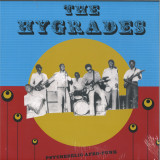
Sleeve Records & Dig This Way teamed back to bring to light the history and the tracks of this iconic early 70' Psychedelic Afro-funk East Nigeria group.
The Hygrades's album will include all 4 rare 45"s united in a single LP with an insert of their story told by a true Uchenna narrator.