Search:east man eastern code

Styles
All
  • 1
East Man - Eastern Code

East Man returns with a four track EP that explores his own Hi Tek take on Grime, stripping everything down to the raw, bare essentials.
Opening the EP is Fight For A Cause, a rough a fuzzy sub bass driven exercise in beat science that draws as much upon Dancehall as it does Grime. The second track, Selector, is a straight up DJ tool, utilising an alternating 32 bar pattern interspersed with splashes of pirate radio chatter.
The flip side opens with the storming Bandit Country.
The subdued intro lulling you into a false sense of security before the beats and bass are unleashed in full attack mode, the relentless onslaught pausing only briefly midway for you to catch your breath before continuing on it's devastating path.
The closing track, Darkage, is an ominous brooding affair that those of you familiar with East Man's sets will know well.

A real head nodding roller, it's definitely one for the technical DJ's.

out of Stock

Order now and we will order the item for you at our supplier.

10,80

Last In: 6 years ago
Eros - A Southern Code

Eros

A Southern Code

12inchDNLP100
Downwards
07.11.2022

Einstürzende Neubauten producer Boris Wilsdorf, Karl O’Connor aka Regis and MY DISCO's Liam Andrews assemble as EROS, bottling no-wave/industrial lightning with a tight set of pulverized, widescreen torched-songs that rasp, grate and throb somewhere between This Heat, The Cure, Cabaret Voltaire, Alva Noto x Pan Sonic.

An industrial fantasy of flesh and steel, ‘A Southern Code’ is the stunning continuation of the trio’s work at Wilsdorf’s pivotal Anderesbaustelle studio on Regis’ watershed album, ‘Hidden In This Is The Light That You Miss’. Rejoined by another key muse, Anni Hogan, and Einstürzende Neubauten’s Jochen Arbeit, they effectively galvanised a new band, EROS, during long days and nights in the studio across 2020 and into 2021. The sound they make is fiercely lean, shaped by Wilsdorf’s manacled mixing and anchored in the frankly sexy as f#ck swerve of Regis vocals and his snake-hipped rhythm section.

The first songs issued from those sessions form a lustrous new high point of contemporary industrial and dance music, one porous to Kurdish dabke as much as archetypal goth, pulsing with a metallic bloodlust and spatialized by Wilsdorf’s genre-forming tekkerz in a way that seriously rewards with proper amplification. Judged on its immediate merits, it’s the sort of record that could have feasibly come out at any point between the ‘80s and now, but closer inspection reveals a discreet framework of sculpted subbass and sleekly rolling traction that betrays the modernity of minimalist D&B physics and up-to-the-second sound design that places ‘A Southern Code’ in a timeless echelon.

Registering the venomous drums and over-the-shoulder whispers of its title track, plus the incendiary middle eastern horns of ‘The Crawling Man’ - a real parallel dimension take on The Cure’s ‘The Top’ - to the post-apocalyptic lounge lizard styles of ‘In This Place’, and the unheimlich creep to ‘Nature Unborn (From Sun to Sun)’, the band’s first album plants a vital stake in the ground for industrial musick at the crest of a new decade.

out of Stock

Order now and we will order the item for you at our supplier.

25,50

Last In: 3 years ago
French 79 - Joshua

French 79

Joshua

12inchAK129
ALTER K
05.08.2021

Joshua is the follow-up album to Olympic. While the second album, typically, often shows what critics call “maturity”, here Simon has released instead an album of adolescence. The musician opened up his own memory box to contemplate his childhood souvenirs, and dust them off of all nostalgia. At that time, he would VHS-record movies from TV and tape record soundtracks directly from the TV speaker, so he could listen to them in his bedroom. This is when he “discovered the power of music, the way it makes you enter another world, far from reality. I wanted to pay tribute to the era I shaped myself in – the ’80s and ’90s”. Tangerine Dream, Kraftwerk and Soft Machine. Logically, these are the sonic signatures that seem to haunt the album. The timeless pioneers of synthetic music constitute the sound references, without any established chronological timeline, that blend with the atmosphere of typically “French Touch” movie soundtracks – long before the term was even coined. “I use a musical palette that acts as a flashback to my favourite teenage movies: the synth sounds of Close Encounters of the Third Kind; the synth pads in Jean-Jacques Cousteau’s fascinating documentaries about the sea world; the melodies in the manner of François De Roubaix; the themes that evoke the soundtracks of late-night TV sessions (those by Verneuil, those with Belmondo, Depardieu, etc.); and the sci-fi ambiences like in Blade Runner.” In short, an aesthetic was decided on by Simon very early on: French analog synths instead of North American symphonic orchestras.

The name Joshua has two meanings for French 79: one is linked to the idea of nostalgia, the other to adventure. On the one hand, the computer in the 1983 movie Wargames, and on the other, the boat of French sailor Bernard Moitessier.

The track titled Joshua synthesizes the spirit of the album – an odyssey, a neverending crossing of the world in search of oneself, a spontaneous escape into the future, under the benevolent eye of the past. This epic invites everyone of us to a specific place in our imagination, which is also the source of an indescribable pleasure for French 79: a gust of wind, a sailboat ride, a skateboarding trick, the smell of freshly fallen snow, or the dull roar of an impatient audience.

The same aesthetic preferences are found in the videos that illustrate Joshua’s first tracks: for Hold On, the skateboarder chose to recall the cult ’90s skate videos that he would watch on repeat as a teenager, while Hometown hints at Close Encounters of the Third Kind. Although he now calls Marseille home, Simon continuously draws with passion from the anachronic contemporaneity of his childhood in the Eastern French region.

“I need escape to be able to create. A two or three-day sailing trip gives me enough inspiration to lock myself in the studio for a week when I’m back on dry land.” His boat takes him far away from everything, far from the Old Port where she moors, the rest of the time Simon would escape by walking the streets of his city or climbing the Alpine mountains.

Not only does the new version French 79 reveal a few biographical pieces of Simon henner's history, but it also inaugurates the first vocal track for the musician. One feels a guilty pleasure when hearing him take the lead on the first track, The Remedy. The electronic fugue that opens the album sets the tone: Simon has found the cure for his inner turmoil and wants us to discover our own treatment too. Hold On is a sonic explosion that celebrates the feeling of freedom - what's more of a teenage dream than this feeling - and it eventually command one to feel the same way too. Echoing Olympic, the electronic argonaut invites his muse again, singer Sarah Rebecca. On By Your Side and Touch The Stars, the native of Ocean Springs, Mississippi, now based in Paris, hoisted the mainsail of dream pop. First, though a dialogue that surfaced their unfailing attachment to the bonds of friendship, then through the light hearted atmosphere that leaves us with no choice but to believe in our own dreams and do anything possible to fulfill them. The quest for peace in the midst of the daily din is heard in both Code Zero and the title track Joshua, two majestic journeys in search of hedonism, combined with introspection.

out of Stock

Order now and we will order the item for you at our supplier.

18,87

Last In: 4 years ago
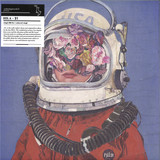
Hila (Artyom Manukian & Dawatile) - 21

"21" is the well-crafted, sharp and original first album by the duo HILA, composed by American cellist Artyom Manukyan (who already worked with Kamasi Washington, Daedalus, Flying Lotus, Run DMC, Gretchen Parlato, Raphael Saadiq, Clive Lowe Mark...) and french producer Dawatile.

The combination of jazz, Los Angeles beat-scene and the vibrations of 80s and 90s Soviet Armenia make it a striking and unprecedented fusion. These kind of nostalgic and unconventional references forcefully shake the codes of mainstream culture to create a sincere, raw and intimate expression.

"HILA" was born from a spontaneous and intense creative impulse between Artyom Manukyan, a Los Angeles-based Armenian celloist and his partner in crime, David Kiledjian aka Dawatile, a French multi-instrumentist of Armenian descent. This project is proving to be a true master stroke given that it only took 21 days for the duo to make it a reality.

"HILA" was made in less a moon cycle but captivates and electrifies audiences upon its first outings. "H.I.L.A" colors the warmth of the Californian "High" with Armenian vibes. The artists chose this name for their creation since both have a close and valuable connection to these locales. This journey began in 2007, on the day Dawatile went to Yerevan, the capital of this small country in the Caucasus mountain to realize a first fusion project centered around local folkloric music genres.

There he was introduced to local musicians including the Armenian Navy Band, one of the country's foremost groups in which Artyom played the bass and cello. In this context, he also met many musicians such as Tigran Hamasyan and Norayr Kartashyan. This will be the beginning of connections between Lyon, Yerevan and Los Angeles. The following year, the two artists will be be seen performing next to Taylor Mc Ferrin at the Jazz à Vienne festival. More recently, they partnered up again when the cellist, who had freshly relocated in California, invited Dawatile to produce his album. As soon as the studio’s threshold was crossed, they decided to postpone this record and create a joint project: Hay (as the Armenians call themselves) / High In Los Angeles. HILA was born at the end of these 21 days of intense creation. The association of Artyom Manukyan and Dawatile is the combination of two visions, two versions of Armenia, two personalities, the reunion of the Eastern and Western blocs.

One grew up nurtured by the sounds of hip-hop and jazz in Europe and the other by art music and Russian-influenced 1980s Armenian folkloric music before moving to L. A., Ca. The cornerstone of it all, the glue that unites everything : Armenia and music. They generate a new identity synthesizing two perceptions, their complicity transcending these cultural discrepencies. To achieve this, they will scour through images of Artyom’s childhood, within the popular culture of Soviet Armenia. Together, they revisit this decidedly retro vibe, based on the work of Caucasian groups inspired by African American music. This background is rehashed and fused with ancestral Armenian sounds. The DNA of the album "21" is molded by these dear influences.

We can also hear the ancestral sounds of Armenia, a country at the edges of both Europe and Asia. The presence on two tracks of Armenian music Master Norayr Kartashyan, infuses the languor of past melodies and traditions. These purposeful anachronistic sounds offer a fantastic depth to this powerful opus. Listening to the album, one can appreciate the successful fusion of styles and influences. Those combinations, however, manage to preserve individual identities only to enhance the art through an adamant musical dialogue.

Being driven by the urge to transpose Armenian musical traditions into a unique universe, the daring artists, offer an innovative combination by blending, for the first time, these ancestral sounds with the world of Los Angeles beat-scene and jazz. An invention largely fueled by the magic strings of Artyom and maestro Miguel Atwood-Ferguson, a pillar of the genre in Los Angeles combined. These associations resonate with a triumphant equilibrium. HILA is musical uncharted territory in which Artyom's cello strings intertwine to ignite the harmonies of keyboards, the machines, the vocals and electronic layers Dawatile pieced together. HILA plays the soundtrack of an adventure set between Armenia around the end of the Soviet era and a mysterious near future.

Artyom Manukyan grew up in Armenia in the 90s. At the time, he studied Russian classical music while learning jazz with assistance by his father, a music journalist. Being an unconditional music lover, he went on to sharpen his skills at the prestigious Berkelee College of Music. Subsequently, he’s been lucky enough to travel the world touring with numerous acts and mainly with the Armenian Navy Band. The group has fostered alacritous success honored by a BBC Award as a crowning achievement. He moved on 10 years ago and made his way to L.A. with his cello on his back. In the City of Angels, he quickly became a popular figure of the jazz and hip-hop scenes thanks to his first album "Citizen". He’s accompanied prestigious musicians such as Kamasi Washington, Melody Gardot, Daedalus, Flying Lotus, Run DMC, Gretchen Parlato, Raphael Saadiq, Clive Lowe Mark, or Vulfpeck. He released his solo album on the cello, "Alone" in October 2019.

Dawatile is a bold producer and multi-instrumentist as well as a passionate and resolute musician molded by jazz. As a versatile artist, he handles and juggles the saxophone, the keys, the bass and composition. Simultaneously, Dawatile produces cross-over projects and soundtracks for the movie industry. He, as well, has had the opportunity to be a part of many tours, including with his electro hip-hop band, Fowatile and more recently with the "Future Kreyol" trio, Dowdelin. Being the ever workaholic, he has under his belt a string of prestigious collaborations with the likes of Talib Kweli, Foreign Beggars, Roy Ayers, Tigran Hamasyan, Mathieu Boogaerts, Voodoo Game and Piers Faccini. His taste for developing new musical recipes and his know-how in production make him a much sought-after album producer. In concert, the HILA duo offers a sober, precise and rhythmic performance. "21" is an aerial and lively album taking the audience on an at times joyous and sometimes melancholic dreamlike journey. The magic of "HILA" operates at the speed of light and positions it already as an avoidable group.

out of Stock

Order now and we will order the item for you at our supplier.

18,19

Last In: 6 years ago
Jerusalem In My Heart - Daqa'iq Tudaiq

Genre: Electronic, World (Arabic). 180gram vinyl includes 12'x24' art print poster + 320kbps DL card. RIYL: Matar Mohammad, Pauline Oliveros, Nadah El Shazly, Lucrecia Dalt, Chino Amobi, Sote, Arca, Fatima Al Qadiri, Tacita Dean, Stan Brakhage. Jerusalem In My Heart (JIMH) returns with Daqa'iq Tudaiq, the third full-length album from the Montréal-Beirut contemporary Arabic audio-visual duo, following the acclaimed 2015 release If He Dies, If If I f If If If (ye ar-end li sts at The Wire (#39), The Quietus (#24) and A C loser Listen (Top 10), among other accolades).
Featuring voice, electronics, buzuk and other instrumentation from composer-producer Radwan Ghazi Moumneh (Matana Roberts, Suuns, Big Brave) and abetted by the 16mm analog film work of Charles-André Coderre in live performance, JIMH continues to expand the horizons of its profound conceptual and aesthetic engagement with Arabic/Middle-Eastern traditions. Daqa'i q Tudaiq translates as 'minutes that bother/oppress/harass'—which presumably needs no further explanation—and features two distinct album sides of music. Side One realizes a long-held dream of Moumneh's to record a modern orchestral version of the popular Egyptian classic 'Ya Garat Al Wadi' by the legendary composer Mohammad Abdel Wahab. JIMH assembled a 15-piece orchestra in Beirut, enlisting the celebrated Montréal-Cairo composer Sam Shalabi (Land Of Kush) as arranger and musical director for the session. Anchored by the stately hypnotic pace of mallet and percussion instruments (riq, santur, derbakeh, kanun), the piece unfolds with lush, languid, reverb-drenched manoeuvrings through virtuosic Maqam shifts (Oriental scales). Moumneh's melismatic lead vocals and electronic production sensibility pay homage to the genre's documented historical recording traditions, while pushing things subtly and respectfully into new territories of sonic distortion and noised, artefact-laden transmission.
The song's original title (with lyrics penned in 1928 by the poet Ahmad Shawqi) translates as 'Oh Neighbour Of The Valley', but JIMH takes a different line from the original lyric as the new title for its orchestral-electronic re-interpretation. 'Wa Ta'atalat Loughat Al Kalam' (' The Language Of Speech Has Broke Down') is an expression of wordless love and transcendent communication between two lovers' eyes in Shawqi's poem; JIMH re-titles the song with this line, exploding the sentiment with more complexity, tragedy and socio-political meaning - also prefiguring the formal aesthetic ruptures JIMH bring to the piece itself. Love in a time of politics, politics in a world conspiring against love, and the specificity of Arab diasporic experience in our brutish 21st century. Side Two comprises four tracks of non-ensemble 'solo' material by Moumneh which push rupture and decomposition/recomposition of tradition further into avant-garde territory - voice, buzuk and electronics take the lead on a suite of emotive and evocative songs, including the percussive loopdriven instrumental 'Bein Ithnein' ('Between Two' ) and the stunningly unsettling processed vocal track 'Thahab, Mish Roujou', Thahab' ('(The Act Of) Departing, Not Returning, Departing'). Daqa'iq Tudaiq is a masterful, mesmerizing artistic statement and confirms Jerusalem In My Heart as one of the most engaged and forward-looking avant-Arabic projects at work in contemporary music today. Thanks for listening.

out of Stock

Order now and we will order the item for you at our supplier.

22,40

Last In: 4 years ago
  • 1
Items per Page:
N/ABPM
Vinyl