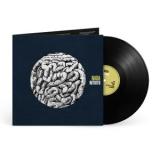
Artist and multi-instrumentalist Flaer looks to the landscape to explore pastoral melancholy on debut release, Preludes. It is released in a second edition black vinyl, with an alternate cover artwork.
Ensconced in his family home in rural Leicestershire in the early months of 2020, painter and musician Realf Heygate (b. 1994) picked up his childhood cello for the first time in several years and began to play. Setting himself parameters to only record onto 4-track tape with acoustic instruments – cello, piano and acoustic guitar – he assembled a suite of instrumental compositions that form the basis of Preludes, his debut album as Flaer and the inaugural release on Odda Recordings.
Channelling the tension and unease between the pastoral idyll of the English countryside and the darkness which lurks beneath the surface, the mini-album draws inspiration from the analogue aesthetic of 1970s folk horror films, weaving field recordings of birdsong, church bells and the natural environment into chimerical melodies that reflect on Heygate’s childhood experiences of rural England.
“It was really important not to isolate the sound from its environment,” he explains, describing the compositional and recording process as “site-specific”. Developed over a series of intuitive musical enquiries, the mini-album’s uncanny quality emerges from combining raw demo takes with overdubs of almost orchestral grandeur.
Heygate points to the final track as indicative of the work as a whole: “‘Follow’ really is the mantra for the release and embodies the practical approach I was taking to music making: not to force the music but see where it takes you.”
As a painter, Heygate’s practice takes artefacts through sequences of reproduction that embrace the fluctuating materiality of the copy. Since obtaining a degree in Fine Art from Central Saint Martins in 2017, he has exhibited solo at Peter von Kant and Springseason galleries in London, and has participated in group shows at Saatchi Gallery, Cob Gallery and Senesi Contemporanea.
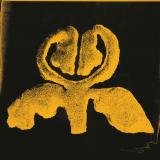
Describing his artistic practice as one of self-erasure, music instead provides Heygate with a more personal and autobiographical outlet. Where the two worlds combine is on Preludes’ striking artwork, which features paintings of 13th century stone carvings from the font of the church in the town where he grew up.
Speaking to a time where people were connected to the land in a more profound way, each symbol is assigned to a track on the album, which Heygate likens to giving them a title.
“To add that one juxtaposition might open a whole new interpretation or language that might be hard to find otherwise,” he explains.“Over time it might reveal itself to you, which is why I'm excited about it being released. To throw them out there and see what comes of it.”
quête:ed ed
NO WAY BACK MAGAZINE
BETTER WAYS FORWARD THROUGH MUSIC AND SUBCULTURE STORIES, 1979-1994 - LEARNING FROM, NOT LONGING FOR
After all of the fun had - and, if we may brag a bit - the acclaim for NWB001, we're back with a follow-up.
So here's NWB002. Our start and end points shift this time (1979–1997 vs 1977-1989) but again the focus is on revolutionary moments in music and subculture.
We've got pieces from The Face, i-D, Time Out, Village Voice, Rolling Stone, Mixmag, The Observer and - a particularly big pleasure - Collusion magazine. We've got brilliant photography, too, documenting seminal afterdark moments. And we've put it all together with much love, craft and attention to detail.
This is material that lets us experience culture in its rawest form. In-the-moment and before endless layers of post-rationalisation have kicked in. Breakthrough events in dance music, hip-hop and pop – and parallel shifts in art, design and fashion. Inspirational, ground-level creativity and enterprise that set the scene(s) for subsequent decades.
We hope you enjoy reading NWB002 as much as we enjoyed bringing it together.
Inside No Way Back 002
Behind The Groove - the epic 1983 feature by Steven Harvey in David Toop's Collusion magazine, charting the NYC disco underground
Photographer Steve Eichner documenting the club kids scene at The Limelight, Palladium, Tunnel and Club USA
Year zero reporting as The Face's Sheryl Garratt visits Chicago in 1986, witnessing the emergent house sound
The Mudd Club - 'disco for punks' as Rolling Stone put it; the Lower East Side party which arguably spawned a thousand indie discos
In the 'socialist city' of Sheffield, meanwhile, Jon Savage heads for a night of sharp clothes and even sharper moves at Jive Turkey
Paul Morley writing in Time Out in 1988 on the tension materialising between glossy style mags and the the monochrome music press
The House That Rap Built - Village Voice celebrates the short but sweet glory years of hip-house
Mixmag in 1992 on the 'return of sex' to clubs like Roxy and the Sound Factory
Images and commentary from Eddie Otchere, rewinding to jungle's halcyon days
Kodwo Eshun reporting on jungle's full-throttle ascent for i-D in 1994
+ Editor’s notes, supporting commentary, playlists, and covers, spreads and imagery from original titles
ISSN - 2977-8530
- 1: My Falling Sinks
- 2: Empyrean Flare
- 3: Tesselation
- 4: To Whoever Shall Inherit The Earth
- 5: Smoking Mother
- 6: Att Böja Själarna
- 7: This Will Be My Last Piece For Organ
- 8: Fault Lines
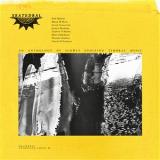
Die XKatedral Anthology Series III ist die dritte Ausgabe einer Reihe von Archivveröffentlichungen, die Musik von Komponisten zeigen, die sich mit langsam sich entwickelnder harmonischer und klanglicher Musik beschäftigen. Die hier vorgestellten Stücke konzentrieren sich auf die Verwendung von synthetischen und akustischen Klängen sowie auf algorithmische Komposition als Werkzeuge für präzises Arbeiten im Bereich der spektralen Erforschung. Dieses Doppel-Vinyl-Set erscheint anlässlich des zehnjährigen Jubiläums des Labels und enthält Werke aus den Jahren 2014 bis 2025. Es wird zusammen mit Neuauflagen der XKatedral Anthology Series I-II veröffentlicht. "My Falling Sinks" von Kali Malone ist eine sparsame, absteigende Melodie für justierte Orgel, Cello und Akustikgitarre mit Lucy Railton und Stephen OüfMalley. Das Stück ist eine kompositorische Skizze in septimaler reiner Stimmung, die 2021 während eines Aufenthalts in La Becque auf einer experimentellen Stimmorgel in La Temple de La Tour-de-Peilz entstanden ist. ,Empyrean Flare" von Maria W Horn wurde 2022 für ,The Dawn Chorus" der Choreografin Stina Nyberg komponiert. Dieses Stück nutzt die von Arvo Pärt entwickelte Tintinnabuli-Technik, um vier Supersaw-Oszillatoren in langsamen diatonischen Arpeggios zu animieren, die um eine Moll-Tonika-Dreiklang kreisen, und destabilisiert das harmonische Gerüst durch Glissandi und verstärkt die Summe seiner Teile durch analoge Bandsättigung. ,Tessellation" von David Granstrom wurde im Sommer 2017 mit generativen Synthesemethoden komponiert. Die musikalische Periodizität und harmonische Bewegung, die in dem Stück zu hören sind, entstehen durch feste synthetisierte Bandschleifen, die einen Raum zwischen gegensätzlichen Welten erkunden. "To Whoever Shall Inherit the Earth" ist das erste Solostück von Jessica Ekomane und entstand laut der Komponistin fast zufällig. Das Werk wurde vor einem Jahrzehnt spät in der Nacht aufgenommen und fängt einen flüchtigen, zerbrechlichen und unwiederholbaren Moment ein, der genau so festgehalten wurde, wie er sich ereignet hat. Smoking Mother von Stephen OüfMalley wurde für Gisele Vienneüfs Der Teich / LüfEtang von Robert Walser geschaffen. Es wurde 2018 während eines Aufenthalts im SMEM-Synthesearchiv in Freiburg komponiert und im August 2020 bei EMS produziert. Das Stück greift auf Werke von Zia Mohuiddin Dagar, Krzysztof Penderecki und Popol Vuh zurück und erkundet gleichzeitig die Wurzeln des Minimalismus. ,Att boja sjalarna" von Mats Erlandsson wurde 2018 komponiert und ist Teil von ,On Eternity", einer Sammlung von vier Texten und vier zehnminütigen Kassettenloops, die 2021 von Irrlicht Forlag als limitierte Box-Set-Edition veröffentlicht wurde. Dieses Werk enthält Darbietungen von Gaianeh Pilossian und Sara Fors, jeweils auf der Violine und mit Gesang. This will be my last piece for organ wurde 2025 von Theodor Kentros komponiert und nutzt Gruppen von Cluster-Oszillatoren durch resonante Rückkopplung, um die schwankenden Frequenzen zu synthetisieren, die beim Verstimmen einer Orgel im physischen Raum zu hören sind. "Fault Lines" wurde von Daniel M Karlsson mit generativen Methoden komponiert, wobei ein deterministischer und endlicher Output für diese Veröffentlichung festgelegt wurde. Dieses Stück enthält Gesangsdarbietungen von Sara Fors, Ansis B.ti. und Art.rs C.ukurs.
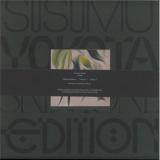
Sakura is without doubt the most loved and lauded entry in Susumu Yokota’s catalogue.
The music unravels like cascades of petals falling from the eponymous cherry blossom trees. Yokota intended to ‘express ki-do-ai-raku (the four emotions; joy, anger, sorrow, and happiness) through music’, and throughout Sakura, the effect fluctuates between profound tranquillity, hesitation, melancholy and joy with ease, addressing the fickle nature of human emotion, while transcending the inclination to label moods entirely.
Sakura became Yokota’s best selling album. It was greeted with universal acclaim, lauded by Philip Glass and Brian Eno and launched Yokota internationally.
‘A bittersweet beauty, heightened by the sadness that all things must one day end.’ - Martyn Pepperell
Superonda’s debut release, Aurora Spectralis, introduces the latest project from Mahatmos, a duo emerging from long-established practices in electronic music, sound design and composition for moving images. Released on 12” vinyl and digitally, the EP unfolds across four tracks of electronic ambient music shaped by atmosphere, con1nuity and restrained propulsion. Ambient textures open a broad emotional and spa1al field, while slow, insistent rhythms provide steady forward motion.
Superonda has created a space for Mahatmos to sharpen their focus on sound as material. Modular synthesis, analogue instruments and live processes techniques are balanced with precision and restraint, resulting in music that moves between progressive and hypnotic forms, informed as much by underground club culture as by cinematic composition.
Mahatmos is a Rome-based duo with complementary and deep-rooted practices. Gianluca Meloni brings a long-standing presence in techno and experimental music scene, with international releases and performances (as Laertes and as part of Modern Heads). Maurizio Loffredo contributes an extensive background in composition, production and sound engineering across popular music and film, with a refined sensitivity to timbre, structure and sonic narrative.
Superonda is a Rome-based label founded by artists engaged in deep sonic research and advanced technical exploration. Operating as an open platform, it connects collaborators working across recording, synthesis and composition, approaching music as a process-driven practice rather than a fixed genre. Each release stands as a distinct exploration, linked by shared sensibilities rather than formal constraints.
The physical edition of Aurora Spectralis is conceived as an extension of the work itself. Alongside a standard black vinyl pressing, a limited run of color and marbled copies has been produced, each one unique. Variability and tactility are embraced as part of the object’s identity, reinforcing the record as something to be experienced gradually, over time.
2026 Repress
Gaudi’s Jazz Gone Dub is a masterclass in genre fusion, seamlessly blending the improvisational essence of jazz with the heavy atmospheric grooves of dub. Known for his eclectic approach to music production, Gaudi pushes the boundaries yet again, creating a sonic landscape that feels both nostalgic and refreshingly innovative.
Four years in the making, from the opening track it’s clear that Jazz Gone Dub is more than just a mashup of styles—it's a thoughtful exploration of the intersections between two rich musical traditions.
Gaudi’s multi-instrumental talents are on full display, and the presence of reggae royalty is palpable, courtesy of rootsy melodies from David Hinds (Steel Pulse), Jah Wobble’s iconic bass grooves, Ernest Ranglin’s intricate guitar lines and Sly & Robbie’s rhythmic genius. Add Sardinia’s Train to Roots band, Manu Chao collaborator Roy Paci, veteran guitarist Marcus Upbeat, Mr Woodnote and Tim Hutton’s brass work, Gavin Tate-Lovery’s sultry sax and flute, Horseman’s percussive flair plus Colin Edwin and Vlastur’s serious basslines, and the
result is a rhythmic foundation that’s both solid and fluid, allowing the jazz elements to float freely above the dub undercurrents.
Despite this star-studded line-up, Gaudi remains the glue that holds this gem together: his production is meticulous yet organic, allowing each track to breathe and evolve naturally. The use of space, delays and reverb—a hallmark of dub music—is expertly handled, giving the album a dreamy, immersive quality. Tracks like Susceptible and Alabaster Moon showcase Gaudi’s ability to create mood and atmosphere without sacrificing melodic and rhythmic complexity.
In Jazz Gone Dub Gaudi has crafted an album that feels both timeless and forward-thinking, a celebration of musical synergy where the free-spirit of jazz meets the deep resonance of dub. Whether you’re a fan of either genre or simply appreciate masterful musicianship and innovative production, this album is a must-listen.
long content, you may need to expand row to see all... Begin Here features fan favorites “She’s Not There, “Summertime,” and “The Way I Feel Inside,” plus three US bonus tracks including “Tell Her No.”
This definitive new edition combines all 17 tracks from the UK and US versions of The Zombies’ 1965 debut album, remastered in its original mono mix. Begin Here (Mono Remastered) is the next chapter in the series of Zombies reissues via the band’s own label Beechwood Park Records, with the same team as Odessey and Oracle - again being overseen by Matthew and Jamie White, mastering by Reuben Cohen at Lurssen Mastering, and brand-new liner notes by the legendary David Fricke. The album will be housed in a single pocket jacket with poly-lined sleeves and an insert.
long content, you may need to expand row to see all... Karajans legendärer Dvořák auf recyceltem Vinyl
Die unverkennbare Kraft und Leidenschaft von Dvořáks Sinfonie Nr. 9 „Aus der Neuen Welt“, eingefangen in Karajans legendärer Aufnahme von 1977 mit den Berliner Philharmonikern, erscheint nun in einer limitierten Edition auf recyceltem Vinyl (ReVinyl / Farbe: Red Appeal) – ein beeindruckendes und nachhaltiges Format. Jede zu 100 % aus recyceltem PVC hergestellte Schallplatte besticht durch eine einzigartige, rot-marmorierte Optik, die sie zu einem echten Unikat macht. Hier trifft eine zeitlose Interpretation auf einen neuen Standard für umweltbewusste Audiophile. Diese Einspielung wird weithin für ihren lebendigen, dramatischen Schwung, ihre üppige emotionale Tiefe und ihre erstklassige orchestrale Präzision gefeiert und gilt als Meilenstein in der Geschichte der klassischen Musikaufzeichnung. Karajans Interpretation offenbart feinfühlig, wie Dvořák die musikalischen Eindrücke seiner amerikanischen Zeit in das unverwechselbare Gefüge seines mitteleuropäischen, romantischen Stils einwebt.
- A1: Me Pega
- A2: Tem Carnaval
- A3: Sexy Doce
- B1: Coeur
- B2: Então Tá Bem
- B3: Para Ser Feliz
- B4: Tô Nem Aí
Fresh from releasing projects on Method 808 and Future Classic, landing a huge collaboration with Chloé Caillet, and delivering an official remix for Fatboy Slim, PPJ are entering a new chapter in full force. Their expansive take on global street sounds, ranging from neoperreo to Miami bass, gets a cool re-coating.
Led by the magnetic vocalist Páula, with production from Povoa (individually supported by Four Tet, Ben UFO, and Barry Can't Swim, with recent releases on Live From Earth), the duo operates in maximalist mode: playful, sensual, and slightly unhinged.PPJ’s new era, JOKER, embraces a figure that appears everywhere from card decks to carnival culture as a symbol that mirrors their own DNA: funny, eerie, seductive, unpredictable. The EP leans further into club territory, but rather than polishing their edges, PPJ amplify them.
At the emotional core of the record sits “Coeur,” co-produced with Chloé Caillet. It begins with an MPB-tinged foundation flirting with bossa nova. It’s unmistakably Brazilian, bathed in sunset hues before being sped up and twisted into a dance-floor-ready electronic form. The groove shimmers with tension: warm percussion, elastic basslines, and Páula’s voice hovering between intimacy and tease. It feels like a remix of itself, romantic, but slightly untrustworthy.
If “Coeur” glows, “To Nem Ai” is a slow burner. A very deep and downtempo house cut, it unfolds slowly, almost luxuriously, guided by sensual vocals that feel whispered directly into the ear of the listener. A hypnotizing piano sample that feels like a late-night confession. It’s the kind of record that transforms a dancefloor into something tactile.
Elsewhere, “Me Pega” is a high-energy reinterpretation of the tech-house sounds from Santa Catarina, one of southern Brazil’s most feverish party states, twisted and accelerated for ferocious impact. Drawing direct inspiration from Sarro, a raw and vibrant Brazilian street dance, the track captures physical intensity in its purest form: sweat, bass pressure, collective release.
Its counterpart, “Tem Carnaval” channels Páula’s vivid storytelling into a thunderous ode to Rio’s carnival spirit, euphoric, chaotic, cinematic landed just in time for this year’s celebrations.
On “Sexy Doce,” rugged electroclash melodies collide with unexpected references. “It was inspired by Budots, which is dance music from the streets in the Philippines,” Povoa explains. “Then we mixed it with Páula’s Brazilian vocals. Baile funk is similarly from the streets, so there is a connection.” The result is raw yet futuristic, a cross-continental flirtation that feels both underground and explosive.
With this new EP, PPJ make music like they’re tuning into a dozen pirate frequencies at once. Pirate radio from Rio to Berlin to Manila intercepting fragments of street culture, sensuality, and chaos, and stitching them into something deliriously cohesive.
JOKER doesn’t just nod to club culture. It challenges it, twists expectation and leaves a lasting impression.
- 1: Area 54
- 2: Wild Mountain Honey
- 3: Take The Long Way
- 4: New Mexico '76
- 5: Just Passing Through
- 6: Glitter
- 7: Daniel's Disco
- 8: Catch Me
- 9: Lost To The Desert
- 10: Slow Train Fuego
- 11: Thunder Exchange
BLACK VINYL[22,65 €]
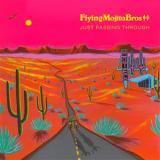
Das erste Album mit Originalmusik von den englischen Künstlern Flying Mojito Bros., die total auf Americana und Dance-Musik stehen. FMB hat dank seines einzigartigen Stils, der als Desert Disco und Outlaw House bezeichnet wird - ein neu definierter Americana-Sound, der von Poolside-Vibes bis zur Tanzfläche reicht -, eine wachsende Fangemeinde in den USA gewonnen. Das Album bietet eine hochkarätige Besetzung mit Künstlern wie Scott Hirsch, Will Worden und Rob Chaney (weitere werden noch bekannt gegeben!) und hat die Unterstützung von einflussreichen Persönlichkeiten wie Diplo, Phish, Pretty Lights, BBC 6 Music und KEXP erhalten. Just Passing Through zeigt die Entwicklung von FMB und kombiniert ihre charakteristischen Re-Edits und Remixe mit Live-Band-Aufnahmen. Es ist ein mutiger Schritt in ihrer Karriere, bei dem sie von den 1970er Jahren inspirierten Rock und elektronische Rhythmen mit Kollaborationen von Top-Musikern wie Shawn Lee (Young Gun Silver Fox), Joe Harvey-Whyte (The Hanging Stars) und Joe Stoddart (ABBA Voyage) verbinden. Dieses Album markiert ein neues Kapitel in der kreativen Reise von FMB und fängt ihre Erkundung der neu definierten Americana und den interkulturellen Rock-Austausch zwischen den USA und Großbritannien ein.
- 1: Standin At The Juke
- 2: Baby Jane
- 3: Mystically Yours
- 4: Streets Of Amsterdam
- 5: Funball
- 6: Power And Glory
- 7: The Most
- 8: Speechless
- 9: All Down The Line
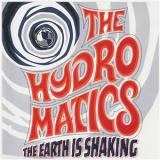
- 10: The Earth Is Shaking
- 11: Detroit Leaning
- 12: Monumental
First-ever vinyl edition of 2007 album "The Earth Is Shaking" by The Hydromatics featuring Kent Steedman (The Celibate Rifles) on guitar! Bang! Records brings you "The Earth Is Shaking", the THIRD album by The Hydromatics - a transatlantic high-energy rock 'n' roll unit powered by Detroit legend Scott Morgan (The Rationals / Sonic's Rendezvous Band) and Amsterdam cult-hero Tony "Slug" Leeuwenburgh (Loveslug). Originally released in 2007, this record captures the band leaner, rougher and fully locked-in: big riffs, street-level groove, zero filler, and that unmistakable Detroit soul-grit that Morgan owns like nobody else. And here's the headline for rock'n'roll die-hards: Kent Steedman (The Celibate Rifles) is on guitar - bringing bite, melody and attitude, plus extra sonic spice (yes: theremin) and production muscle. The result is The Hydromatics at maximum voltage, moving confidently into their own songs while still carrying the Motor City flame. Highlights include the swaggering "Streets Of Amsterdam", the barroom punch of "Standin' At The Juke", and the epic ride of "Detroit Leaning". Enjoy for the first time on vinyl!
- A1: Original
- B1: Spike Hellis Remix
File under Boy Harsher Jae Matthews lends her unmistakable voice to a striking reinterpretation of Buzz Kull’s cult classic “Man On The Beat.” Built for midnight drives and neon-lit highways, Matthews’ version transforms the track into a dark, hypnotic pulse of tension and atmosphere, carried by her haunting, commanding vocal. Released as a special limited-edition 12" by Heartworm Press, the single reimagines the underground favorite with a colder, more cinematic edge.
On the B-side, Los Angeles duo Spike Hellis deliver an extended remix, stretching the track into a dancefloor-ready transmission of ecstatic synth and rhythm. Matthews is widely known as the vocalist of the dark electronic project Boy Harsher, but here she steps into a different light, channeling the nocturnal spirit of the original while making the song unmistakably her own.
Total audio ruckus, a rush of Blu:sh returns to Step Ball Chain. Dopamine Riot is a sick, sexy six track EP designed to tap into the crucial neurotransmitter in the brain; releasing chemical delights that drip from head to toe with this signature steeze. Prepare to go undercover, underground and for layers to unfold with each new listen. Edging a dark, rough and ready atmosphere that is always pulled back to a central groove, Blu:sh remains flirtatious and free – don’t take it so seriously! Bass for days, drums that will make your neck snap (complimentary) and your presence requested2riot on a dancefloor ASAP.
- A1: Teenage Drug
- A2: Wake Up And Scratch Me
- A3: Teenage Punks
- A4: Curse
- A5: Michiko
- A6: Love And Understanding
- B1: Psychopath
- B2: Terrorist Angel
- B3: Teenage Rock And Roll Girl
- B4: Pussycat
- B5: Sisters
- B6: Pussycat (Reprise)
- B7: Telephone Lover
- B8: Red Cadillac And A Black Moustache
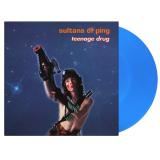
Teenage Drug is the second studio album by the Irish indie-punk band Sultans of Ping F.C, originally released in 1994. The album continues the band's established sound across its 14 tracks, focusing on tight song structures and arrangements.
The album builds on the band's energetic indie-punk style, with sharp guitar riffs and songs containing the band's playful approach to lyrics. It features the singles "Teenage Punks", "Michiko" and "Wake Up And Scratch Me" and established the band's presence in the mid-1990s Irish and UK indie scene.
Teenage Drug is available as a limited edition of 1000 individually numbered copies on translucent blue vinyl and includes an insert.
- 1: Mash It (Ft. Ranking Glad(Stone))
- 2: Freedom Inna Babylon
- 3: Don’t Cry (Never Gonna Run)
- 4: Free At Last
- 5: Come From Africa
- 6: Time Has Come
- 7: Free At Last Dub
- 8: Don’t Cry (Never Gonna Run) Dub
FOR THE FIRST TIME EVER: THE LONG-LOST RECORDINGS OF BIRMINGHAM ROOTS REGGAE PIONEERS NATRUS Mastered from the original tapes by Guy Davie at Electric Needle Mythology, the label founded by music writer, author and broadcaster Pete Paphides, is thrilled to announce the archival release of newly-discovered recordings by Birmingham reggae band Natrus. Comprising members of the same family – seven in total – Natrus were a ubiquitous presence of the live circuit within and beyond the West Midlands in the late 1970s. Used as an ad hoc “Wrecking Crew” by local producer and promoter Toney Owens, NATRUS frequently provided live accompaniment to visiting Jamaican artists such as Sugar Minott, Johnny Osbourne and Freddie McKay. With an age span ranging from 9 to 25, NATRUS’S live work had to be structured around the educational obligations of their younger members. But when they weren’t playing live, they would frequently hone their own compositions at Owens’ studio in Saltley, Birmingham.
During their collective lifetime, NATRUS released one very limited edition single Mash It, with a stellar guest vocal from deejay Ranking Glad(Stone). Featured alongside Mash It on this release are a selection of recordings previously thought lost by the group who laid them down. They were only discovered after Toney Owens’ alerted Needle Mythology’s Pete Paphides to the existence of some 60 quarter-inch reels featuring all the music recorded by Owens over a period of ten years or so. When Paphides finally tracked down NATRUS rhythm guitarist Owen Taylor, he was stunned to hear of their existence. After a meeting with Taylor and his siblings, Needle Mythology collaborated with NATRUS on the restoration and remastering of the tracks featured on this, their very belated debut album. As well as Mash It and its original flipside Come From Africa, highlights on ‘NATRUS’ include a superb version of Slim Smith’s The Time Has Come and the deep roots entreaties of Freedom Inna Babylon, both showcasing the soulful vocal of lead singer Fitzdonald “Fitz” English and the almost psychic sense of musical attunement that percolates right down the the formidable rhythm section of Beverley Stewart (bass) and Clinton Gordon (drums).
- 1: Monolith
- 2: Power
- 3: Out Of My Skin
- 4: Waiting To Know (Feat. Militarie Gun)
- 5: Drown
- 6: Am I A Drug To You?
- 7: Saints In The Panic Room
- 8: Off The Edge
- 9: Useless
- 10: Last Call
- 11: Pulling Teeth
- 12: Debt Collector
Los Angeles alt-punks Death Lens return with What"s Left Now?, an album that feels like a jolt of clarity after a year that never seemed to slow down. Fresh off touring with Militarie Gun, they dove into the studio with producer mixer Zach Tuch (Knocked Loose, Touché Amoré) to craft their first new music since 2024"s Cold World. The result is a set of songs that coil hooky guitar lines around lyrics about taking stock of what you have, what"s been taken from you, and confronting what remains without any sugar coating. Death Lens have always played with contrast: ferocity disguised by swagger, volatility wrapped in melody. Onstage, they transform that tension into something communal-cathartic enough to leave rooms wrecked, connective enough to leave people changed. Once a crew of partydriven garage punks, they"ve sharpened their voice into something broader and more urgent, speaking on life in heavily policed neighborhoods, immigration reform, and the responsibility to lift up the communities that raised them. What"s Left Now? pushes that vision forward, framing resilience not as a slogan but as a lived philosophy: one world, one community, one band refusing to stand still. Death Lens is comprised of Bryan Torres (vocals), Jhon Reyes (guitar, backing vocals), Tony Rangel (drums), and Ernie Gutierrez (guitar).
- 1: Bella Più Bella
- 2: Ghiaccio
- 3: Sempre Migliore
- 4: Un Giorno Da Regalare
- 5: Uovo
- 6: Primitiva
- 7: Primo
- 8: Una Notte Che Arriva
- 9: Che Giornata
YELLOW VINYL[29,20 €]
"Nitrito" is the new album by renowned Italian singer-songwriter Nada. The Italian word Nitrito refers both to the chemical compound and to the sound horses make to communicate, the album was released last June just in Italy and is now set to be released in other European countries such as Germany, Austria, Switzerland, France and in the UK. The album was recorded in Bristol in 2024, with Nada once again entrusting its production to John Parish (PJ Harvey, Eels, Aldous Harding, Tracy Chapman, Giant Sand, Sparklehorse), who also plays most of the instruments on the record. This continues the collaboration that began with "Tutto l"amore che mi manca" (All the Love I Miss) (2004), recently remastered and released for the first time on vinyl and in a new CD edition, and continued with "E un momento difficile tesoro" (It"s a Difficult Time, Darling) (2019) and "La paura va via da sé se i pensieri brillano" (Fear Goes Away on Its Own If Thoughts Shine) (2022). "Nitrito" received an excellent four star review from the influential British magazine Mojo.