Winston Hytwr is a co-release presented by K and Perennial. Born in Columbus, Ohio in March 1993, Winston Hightower is a prolific home recording artist with an expansive discography that crawls across space and genre. A staple in the Midwestern punk/DIY scene, his first work under the eponymous moniker was a self-released tape in January 2015. Since then, he has put out over 100 songs on tape, online and on video. The music defies easy categorization, and instead breezes through a landscape of synths that effortlessly blend pop, rock, rap and jazz. In doing so, Hightower continues to build a cohesive, ever-morphing experiment in pushing the boundaries of underground guitar music, all with his signature wit and charm. This body of work is almost entirely written and recorded alone in his room, causing many to refer to him as `the Black R Stevie Moore,' a fitting epithet as his influences likewise include modern "lo-fi" progenitors such as Guided by Voices and Vivian Girls. Hightower has released much of his own work and more on his tape label, the FAH-Q Catalog, which boasts over 12 releases He has also collaborated with numerous other Ohio legends such as members of Times New Viking, Slant 6, and Ron House. Both mysterious and effervescent, Winston shape shifts into roles that have also included pro skater (UNITY, Adidas) and touring hardcore guitarist/bassist (most recently with the groups Minority Threat and Twompsax). With such an extensive pedigree, and having toured ceaselessly since he was a teenager, it's shocking that Winston Hightower is largely unknown outside of the Midwest. K records is thus thrilled to be putting out his first ever record, "Winston Hytwr" KLP292/PRNL50 which will cull songs from his previous and impossible to find releases. Remixed by Capt. Tripps Ballsington and Remastered by Amy Dragon. This release continues the rich tradition of DIY bands crafting instant pop hits entirely on their own terms, which has long been the hallmark of the International Pop Underground. 1000 vinyl copies.
quête:effortless
SIMON AND GARFUNKEL’S SWAN SONG: BRIDGE OVER TROUBLED WATER FEATURES METICULOUS PRODUCTION, GORGEOUS SONGWRITING, AND HEALING SPIRIT
Sourced from the Original Master Tapes and Limited to 4,000 Numbered Copies: Mobile Fidelity’s 180s SuperVinyl 33RPM LP Plays with Staggering Detail, Clarity, and Definition
1/4" / 15 IPS analogue master to DSD 256 to analogue console to lathe
Unifying, soothing, comforting: Simon and Garfunkel's Bridge over Troubled Water quickly became the album of an era upon release in 1970, the benchmark set serving as a beacon of hope and hymn of reassurance during a time marked by polarizing changes, social unrest, uncertain politics, and the dawn of a new era. These uplifting reasons — to say nothing about the gorgeous songwriting, meticulous production, and watershed performances — attest to why it is more relevant than ever in our current climate. Music, Bridge over Troubled Water simultaneously suggests and proves, heals all wounds and lifts all boats.
The seminal effort Rolling Stone named the 51st Greatest Album of All Time reaches illustrious sonic and emotional heights on Mobile Fidelity’s 180g SuperVinyl 33RPM LP. Pressed on MoFi SuperVinyl and strictly limited to 4,000 numbered copies, this ultra-hi-fi collector's edition brings you closer to music that picks up where the duo's Bookends leaves off. You'll enjoy deep-black backgrounds and pointillist details. Seemingly every note, breath, and movement is reproduced with exquisite accuracy, clarity, and balance. Each rotation benefits from SuperVinyl’s ultra-low noise floor and superb groove definition.
The best-selling record in the U.S. for several years running and winner of six Grammy Awards — including nods for Record of the Year, Album of the Year, Song of the Year, and Best Engineered Recording — Bridge over Troubled Water endures as a staple of accessible sophistication, angelic elegance, effortless singing, unhinged ambition, and therapeutic spirit. While it would turn out to be the final studio set for a duo surrounded by creative and personal disagreement, Simon and Garfunkel's collaborative ethos and soaring harmonies — combined with reflective narratives centred on the American experience, friendship, romance, and farewells — combine to turn the 11-track work into a paean to resolution, reconciliation, calm, and balance.
Home to the legendary title track graced by Garfunkel's pacifying solo lead vocals as well as the equally famous folk ballad "The Boxer," Peruvian-based "El Condor Pasa," upbeat "Cecilia," and rock ’n’ rolling "Baby Driver,” Bridge over Troubled Water remains as renowned for its musical diversity as its lyrical poignancy. Moving beyond the templates they'd perfected on four prior albums, Simon and Garfunkel embrace a then-unimaginable swath of styles. Rock, pop, gospel, country, R&B, South American, and jazz strains course throughout the songs, each sparked with bold experiments yet grounded in a well-orchestrated melange of melody, rhythm, and classicism that makes everything personal, familiar, and warm.
Not for nothing is Bridge over Troubled Water one of the finest-sounding albums ever made. Featuring instrumentation helmed by members of Los Angeles' fabled Wrecking Crew as well as multiple choral and string sections, songs took hundreds of hours to complete and involved pioneering recording techniques. Evoking both Phil Spector's live"Wall of Sound" approach as well as inventive effects, Bridge over Troubled Water is a triumph of texture, atmosphere, and architecture. Our audiophile edition brings the record's unique traits to the fore.
Whether the reverberation generated by Garfunkel's cassette recorder on "Cecilia," echoing drums captured in a corridor heard throughout "The Boxer," automobile noises peppering "Baby Driver," layer upon layer of voices dotting "The Only Boy Living in New York," or echo-chamber percussion on the title track, details comes through with stunning accuracy, clarity, and dimensionality. In every regard, Bridge over Troubled Water exudes genius.
Unadorned with any post-production tricks or overdubs, Garcia/Grisman breathes with naturalism and presence. You will effortlessly detect the full body of the instruments, witness the woody grain textures, and get lost in the surprisingly velvety qualities of Garcia's lullaby-like singing. Our pressing also marks the first time this delightfully joyous affair has been issued in analogue form. You will never hear a better-sounding Americana-styled recording.
Pals since the mid-1960s, Garcia and Grisman bonded over their love for traditional folk and bluegrass. The two teamed up amidst what became a gold rush of top-notch productivity and creativity for Garcia. Partnering with bassist Jim Kerwin and percussionist/fiddler Joe Craven, the pair approaches every passage with innate ease, as if either musician could finish the others sentence. The affable chemistry and soothing interplay wash over a selection of songs as notable for their diversity as the way Garcia and "Dawg" turn them into the equivalent of old friends you haven't seen in years.
Exquisite melodies and jewel-shaped notes decorate the simple, convivial structures of tunes that hop, jump, skip, skitter, and bop. The atmosphere is reminiscent of the legendary gypsy-jazz exchanges between Django Reinhardt and Stephane Grappelli, and equally sharp. Swirling with Middle Eastern modality, the closing 16-minute-plus rendition of Grisman's rippling "Arabia" – complete with a section based on a Cuban fold theme - is alone enough worth the price of admission to this sensational session. But there's so much more.
The quartet delves into Celtic themes ("Two Soldiers"), jazz-grass ("Grateful Dawg"), old-world ballads ("Russian Lullaby"), and Appalachian flavours ("Walkin' Boss") with nonpareil skill and soulfulness. Garcia and Grisman's tandem picking throughout epitomize sublime. And for many listeners, the duo's revised version of the Grateful Dead staple "Friend of the Devil" ranks as the finest-ever recorded, the pace patient, the narrative vocals heartfelt, and the synchronous solos tailor-made for the enveloping progression. Better yet, it's all captured in astonishing fidelity.
- A1: We Need Freedom (Featuring Jermain Jackman)
- A2: Black Gold (Featuring Jermain Jackman)
- A3: Cut The Cheque (Featuring Percee P & Great Okosun)
- A4: Believe (Featuring Ugochi Nwaogwugwu & Toyin Agbetu)
- A5: Skull Tax (Featuring Anthony Joseph)
- A6: Indifference (Featuring Anthony Joseph)
- B1: Why Do They Fear Us? (Featuring Yolanda Lear)
- B2: Prison Of Skin (Featuring Ugochi Nwaogwugwu)
- B3: The Walls Of Jericho (Featuring Dylema)
- B4: Intensity In Five (Featuring Anthony Joseph)
Introducing "The Architecture of Oppression Part 2" - the highly anticipated follow-up to Jake Ferguson's critically acclaimed debut album - Part 1. Ferguson is recognised as the ‘other half’ of The Heliocentrics, producing his solo work under the moniker, The Brkn Record. Effortlessly merging the realms of music and activism, he has created a groundbreaking album, which is set to be one of the most important bodies of work that illustrate ongoing systemic racism this side of the millennium. Ferguson takes the listener to a world where artistry and social consciousness intersect. Crafting an array of captivating soundscapes and themes. This album showcases the vocal talents of both established artists and hidden gems discovered through Ferguson's day-job as a former charity CEO and community activist. While Part 1 served as a rallying cry to dismantle oppressive systems, Part 2 offers a compelling soundtrack of a Pro-Black world reclaiming its destiny. This thought-provoking art piece invites listeners to envision alternative paths while avoiding the pitfalls of past paradigms. Unlike a broken record, this The Brkn Record album keeps pushing boundaries— By enlisting the voices of The Global Majority, The Brkn Record creates a platform for genuine expression through sound. Renowned for his production skills, Ferguson has captured the admiration of industry heavyweights including Nas, Madlib and Kanye West. However, rather than seeking popular features, he chooses to amplify the authentic perspectives of the talented youth he collaborates with in Hackney. One such initiative supported by Ferguson, Account Hackney, introduced him to two gifted artists showcased on this album – Great Okosun and Yolanda Lear. ‘This album serves as a visceral demonstration of my anger at the racially founded status quo in this country and globally. The continued oppression of people on the basis of their race is beyond evil, its common place and needs to end. Simple as.’ The album also sees Ferguson joining forces with award winning laureate Anthony Joseph and legendary hip-hop MC Percee P - their dynamic and thought-provoking lyrics seamlessly intertwine with expertly produced musical landscapes. "The Architecture of Oppression Part 2" is not just an album; it is a transformative journey that challenges the listener and wants you to ‘feel’. It’s Art. A musical experience that inspires, compels, and empowers. Over to you!
COBRA THE IMPALER is now a well-oiled killing machine, ready to take on anything that comes on its path. Taking strong cues from the New Wave of American Heavy Metal, COBRA THE IMPALER forges together larger-than-life grooves and spirited guitar leads with enchanting clean vocal harmonies and razor-sharp screams. Effortlessly flowing from breakneck riffs to tasteful melodic breaks, the band makes strong use of stylistic elements from groove, thrash, and classic heavy metal. Like many legendary metal acts from the 90s, COBRA THE IMPALER marries brute force with meticulous attention to detail, amounting to an unstoppable advance and an enticing experience diverse in punishment. 'Karma Collision' is an exercise in empowerment as well as a show of subtle restraint. Defiant to the end, COBRA THE IMPALER deliver a blatantly guitar-powered album full of huge riffs and equally huge choruses that instantly nestle themselves in your mind. Proving themselves as masters of melody as well as destruction, COBRA THE IMPALER hits hard while forcing an inescapable headlock, delivering salvation to those who worship, but certain punishment for those who dare to stray. For fans of Mastodon, Gojira, Baroness, Megadeth
Dj Tsygan, an Integral Member of the Skylax Crew, Has Been Making Waves With His Latest Release, "Purple Dreams." He Ventures Into Uncharted Territory This Time, Infusing Elements From New Beat and Ebm, in Homage to the Late '80s Icons, Including Boytronic, Daf, and Visage. the Ep Opens With a Remarkable Track, the Exquisite "Putain," Which Effortlessly Transports Us Back to the Poetic Vibes Reminiscent of Belgian Legend Arno, All the While Seamlessly Intertwining the Aforementioned Influences. Following This, We Are Treated to a Starkly Different Yet Harmonious Piece, the House Anthem "Jestem Twoje," Evoking Memories of the Early '90s at Its Finest, Akin to the Iconic Latour Era (Sharon Stone, Anyone?). Concluding the First Side Is the Enchanting "Grey," a Barely Disguised Tribute to Visage's "Slow Is the New Fast." Flipping to Side B, We Are Greeted With the Aptly Named, Sultry, and Seductive "People Are Still Having Sex." It Instantaneously Conjures Images of Confetti (The Sound of C) but Without the Cheesy Undertones, Delivering a True, Vintage Banger. the Journey Concludes With the Deeply Personal and Profoundly Italian "Never Lost." This 12-Inch Record Is Nothing Short of Breathtaking, a Musical Odyssey That Resonates With Both the Nostalgic and the Contemporary, Promising an Unforgettable Auditory Experience....
The current lineup of New Haven's long running Mountain Movers (guitarist/vocalist Dan Greene, bassist Rick Omonte, guitarist Kr yssi Battalene, & drummer Ross Menze) have been playing together for over a decade now, making their recorded debut on a slew of singles released from 2011-2013, but it wasn't until 2015's "Death Magic" (released on New Haven label Safety Meeting) that the potential of that iteration of the group became clear; Mountain Movers are a force of nature. The camaraderie & sensitivity to each others playing has only grown over time, cr ystallizing on the group's trio of albums for Trouble In Mind; 2017's eponymous "Mountain Movers" served as a reintroduction of the group to a larger audience, while 2018's "Pink Skies" raged like a group confident in its strengths, and 2020's prescient "World What World" - written & recorded before the world shut down - slightly shifted focus away from the jams & back toward the weight of guitarist/songwriter Dan Greene's poetic tales of magical realism. The band's ninth album "Walking After Dark" finds a happy medium between both aspects of the band's strengths; Greene's lyrical compositions and the group's long-form improvised jams. To those that are tuned in, that feeling of communion is evident in the Movers' playing. The members swap & cycle effortlessly through instruments without missing a beat, utilizing the downtime of lockdown to write & record every jam in their practice space. Those piles of tapes would eventually get edited & sequenced into "Walking After Dark", a tour-de-force double-album that balances fried, stony brilliance with outré excursions of experimental serenity. Consider the opening track "Bodega On My Mind" that ambles in like a road-worn traveller, its lysergic folk strums peppered with acidic lead lines from Battalene's Telecaster, eventually giving way to "The Sun Shines On The Moon, where the group's sizzling guitars are buoyed by Omonte's pillowy bass & Menze's percussion. From there on out, tracks like "Factory Dream" give the listener a taste of The Movers' modus operandi here; a mixture of (more) traditional song craft interspersed between long-form, improvised pieces of modern psychedelia. The group shuffles through instruments; synths, drum machines, auto-harp, various forms of percussion (and whatever else was laying around) as well as the trad guitar/bass/drums configuration to craft a suite of songs that - while not necessarily similar in composition - feel unified in their overall sonic scope. Tracks like the 14-minute "Reclamation Yard", whose deep-space electronic pulse is juxtaposed against side C opener "See The City "s persistent acoustic strum that showcase similar ideas of the `spirituality ' of losing ones self in repetition, but executed differently. In many ways "Walking After Dark"s duality feels like a merger of "On The Beach"-era Neil Young & the collective freak-outs of Amon Düül, taking inspiration in the `incorporeality ' of free music and lacing it with Greene's hazy, haunting lyricism and is an exciting step forward for a band that's already a few steps ahead. "Walking After Dark" is released on black double-vinyl in a full color gatefold jacket & includes an insert with artwork & lyrics by member Dan Greene.
- A1: Samba 00 04:58
- A2: Panorama 00 04:39
- A3: Golfo Mistico 00 04:34
- A4: Open Sky With Tears Of Blue 00 04:56
- A5: Contemporary Lullaby 00 03:05
- A6: Requiem 00 02:55
- B1: Whispers 00 04:19
- B2: Modular Clouds In Rome 00 03:21
- B3: Piano Bells 00 03:30
- B4: Space Call From Mars 00 03:01
- B5: Tuning The Orchestra With Tears Of Blue 00 03:22
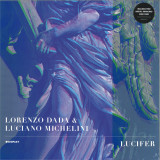
With Lucifer, Kompakt presents an album of rare beauty from two masters of modern music. A family affair, it’s a collaboration between the Italian father-and-son duo of Luciano Michelini and Lorenzo Dada, whose combined histories bring to Lucifer a depth of experience alongside clarity of vision and a finely tuned, neatly developed combined compositional voice. A lovely, beguiling suite of music that combines the electronic and the acoustic, the urban and the pastoral, its gorgeous night-eye vision and tender melancholy sits neatly within the Kompakt universe, while offering the curious listener some rich new perspectives.
There is already plenty to know both artists by. Lorenzo Dada creates across multiple fields – a techno producer and DJ who has already worked with the likes of Jay Haze, Fete, Leo Benassi, and Der, he’s released a small clutch of stylish, smartly designed EPs, and a solo album, Second Life (2018). His complementary background in classical music and composition informs his ensemble project, Tears Of Blue (who appear on Lucifer), where Dada paints with neo-classical tones for a quartet of violin, viola, cello and grand piano, supplemented by electronics for live performance.
Luciano Michelini’s history is yet richer. He may be best known, to many, for his piece “Frolic”, the theme to Larry David’s Curb Your Enthusiasm series; it was also sampled by Snoop Dogg for 2022’s “Crip Ya Enthusiasm”. But there’s much more to Michelini’s story. A successful soundtrack composer, Michelini both studied and taught at the Conservatoro di Santa Cecilia, and worked for RCA from the sixties to the eighties; his soundtracks from this period are gorgeous examples of the form, particularly his work for Il Decamerone Nero (1972), L’Isola Degli Uomini Pesce (1979), and the devastatingly gorgeous Dimensione Donna (1977).
In the eighties, Michelini and his wife Anna Gutling founded the Electronic Music Division studio and academy in Rome, which is where the majority of Lucifer was recorded. Dada reflects on the experience: “We never worked together before, so it was all new for both of us,” with Michelini adding, “I truly love this experience with my son. He’s a talented pianist and composer. I am not very familiar with electronic music nowadays, but we did it fluently.” There’s certainly a familial energy at play through Lucifer, and you can hear how Dada and Michelini, through exploration and experiment, find a shared language, balancing Dada’s tendency toward minimalism, and Michelini’s composerly voice.
Lucifer flows as a suite that interweaves electronic music with acoustic instruments: the lonely sigh of saxophone; Michelini’s lush, verdant piano; the weeping strings of Tears Of Blue (recorded at the studio of Michelini’s friend, the late Maestro, Ennio Morricone). These multiple voices are located within the electronic sighs and swarms from Dada’s kit; there are moments of propulsion, and passages of lambent drift, where the album revels in its tonal sweetness. If it flows so effortlessly, that’s because Lucifer was designed that way, as a suite or a sonata of sorts.
And the title? Dada reflects, “Lucifer was an angel who decided not to be one anymore. The miracle of life is that we can decide what we want to be, even if we are born as angels or vice versa.” This feels somehow apposite: there’s certainly something of the transformative, and the transportive, in Lucifer, a unique family collaboration of rare poetry and sensitivity, where two generations meet in the modern crucible that is the electronic music studio.
Contemporary classical composer Sophia Jani and violinist Teresa Allgaier announce their new collaborative work Six Pieces for Solo Violin on Squama Recordings. Characterized by its calmness and poise, each movement focuses on a particular technical aspect, bending the boundaries of the instrument while maintaining the illusion of simplicity.
Sometimes the most complicated thing anyone can do is to try to create something that feels uncomplicated. Arvo Pärt, ballet, a delicious meal we didn’t cook ourselves, Ella Fitzgerald, a safe place to lay our heads at night, a quiet pine forest – … In all these things, it takes a lot of effort to make us feel as if something is effortless.
– David Lang (from the liner notes)
- A1: Fink - Covering Your Tracks
- A2: Alfa Mist - Mulago
- A3: Charlotte Day Wilson - Mountains
- A4: Moreton - Count A Heart (Feat Jordan Rakei)
- B1: Puma Blue - Untitled 2
- B2: Connan Mockasin - Momo's
- B3: C Duncan - He Came From The Sun
- B4: Oso Leone - Virtual U
- B5: Joe Armon-Jones - Idiom (Feat Oscar Jerome)
- C1: Snowpoet - Eviternity
- C2: Maro - Forever & Always
- C3: Homay Schmitz - Speak Up
- C4: Bill Laurance - Singularity
- D1: Jordan Rakei - Lover, You Should've Come Over (Exclusive Jeff Buckley Cover Version)
- D2: Cubicolor - Counterpart
- D3: Jordan Rakei - Imagination (Exclusive Original Piece)
- D4: Alejandro Gonzalez Inarritu - Imagination (Exclusive Spoken Word Piece)
Original[27,69 €]
“I wanted to try and showcase as many people as I knew on this mix. My idea of Late Night Tales was to distil a series of relaxing moments; the whole conceptual sonic of relax- ation. So, I was trying to think of all the collaborators and friends that I knew, who’d recorded stuff with this horizontal vibe. Plus, I was also trying to help my friends' stuff get into the world. I know the story of Khruangbin blowing up after appearing on the series (in fact, I think that's how I discovered them). So, the main idea was to create a certain atmosphere, but also to help some of my favourite collaborators and bud- dies to give their songs a little push out into the world. Hope you like it” Jordan Rakei
Due for release on 9th April, Late Night Tales celebrate their 20th anniversary with the release of multi-instru- mentalist, vocalist and producer Jordan Rakei’s majestic compilation. The 28-year-old modern soul icon effortlessly stamps his own jazz and hip-hop driven sound all over this gorgeous array of handpicked tracks. A beautifully layered blend that is mirrored in the music he’s made, itcomes as no surprise that such a supremely gifted songwriter should deliver a mix that is all about the song.
Rakei, born in New Zealand, but raised in Australia, moved to the UK in 2015; he released his debut album, Cloak, with Oz label Soul Has No Tempo, but his two subsequentLPs, Wallflower and Origin, came out on Ninja Tune, the former#2 in Album Of The Year for Gilles Peterson’s Worldwide poll, while Origin was nominated for Best Album at the AIM Awards. Jordan had this to say on his upcoming mix:
As Jordan says,there’s so much more to the song selection on Late Night Tales’latest outing than a random collection of artists. Many have some sort of personal connection, so just as Bonobo provided a platform for the breakout of Khruangbin on a previous LNT, this may have the same ef- fect for Rakei’s friends. After a soothing opener from Fink, good friend and big influence Alfa Mist (part of the Are We Live collective) delivers ‘Mulago.’ “I want to champion their sound and show the world how good he is, and I thought it’d be fitting to start the mix with family,” says Jordan.
Next up is Charlotte Day Wilson with ‘Mountains,’ followed by ‘Count A Heart’ from Moreton, an exclusive collab- oration with Jordan, who grew up on the same street in Brisbane, Australia. “She was the first artist I ever collabo- rated with, and one of the first artists to be involved in mycareer,” he explains. Elsewhere we hear Scottish producer and multi-instrumentalist C Duncan’s haunting ‘He Came from the Sun,’ Barcelona collective Oso Leone deliver a dreamy ‘Virtual U’ and Bill Lauren’s ‘Singularity,’ which evokes a striking sense of time and place.
Snowpoet’s ethereal ‘Evitenity’ is a “long mediative nar- rative over a beautiful soundscape,” which at times seems chaotic, nicely juxtaposed with undeniable beauty, and Maro’s kooky songwriting shines on ‘Always And Forever.’ Long-time buddy Armon-Jones contributes ‘Idiom,’ and Jordan’s exclusive cover version is a two-for-one, Radio- head’s ‘Codex’ merging with ‘Lover, You Should’ve Come Home’ by Jeff Buckley and another exclusive,original com- position by Jordan, ‘Imagination.’ The latter works as a piece with the spoken (Spanish) word voiced by movie director Alejandro González Iñárritu (Babel, Birdman, and The Reve- nant,) who is a big fan of Jordan’s. “He messaged me when I went to L.A and asked to come to my show. I was in such shock and we hung out after. I thought it would be nice to get him to do this in his native tongue, because I don’t think that’s been done yet on the series.” It certainly is a familyaffair. Not theblood is thicker than water kind, but certainly musical kindred spirits.
Tulsa, Oklahoma's Unwed Sailor have been on a tear over the past few years. Following a quiet phase through much of the 2010s, they reëmerged with the aptly titled Heavy Age (2019), and two more full-lengths, Truth Or Consequences (2021) and Mute The Charm (2023), that chart a remarkable evolution of their bass-led, pop-leaning post rock. On Underwater Over There - their ninth LP overall - a current of 80s goth and jangle-pop runs beneath a litany of memorable hooks and compositional left turns, creating a propulsive and intricate world of sound. The band worked collectively on all elements of mixing and production to craft a meticulously layered environment, while maintaining an air of spontaneity and experimentation across the set. Early standout, "Final Feather", drifts through varying landscapes of airiness and haze on a high-neck bass hook, while the hum of voices adds a contrast of angelic comfort. Bearing influence from New Order and The Cure in particular, its balance of gravitas and shimmer is the result of founding member Johnathon Ford's intuitive writing method: the lead bass line comes first, followed by supporting melodies, drums, guitars, keys, and final detailing. "Dusty" is a prime example of this process, as Ford's powerful, low-end groove anchors a full-spectrum array of guitars, bells, and arpeggiations along with Matt Putman's energetic drum section. Its fluid pacing provides a perfect establishing shot, with shifting moods that gather into a coda guided by David Swatzell's harmonized, glittering guitar riffs - a sunrise after a moonless night. In quick succession, "Blue Tangier" widens the aperture with a pounding percussive refrain, vibrant bass tone and an unforgettable, fuzzed-out melodic motif. Sprawling centerpiece, "Junko", is a loose callback to 2003's The Marionette and The Music Box, its deliberate stride and interwoven melodies evoking the hands of a mechanical clock, and the anticipation of something long-awaited but nebulous. It drifts effortlessly from innocence to intrigue, expands into a mesmerizing howl, and vanishes abruptly into mist. While honoring their forebears in winks and nods, Unwed Sailor remain totally inimitable in their approach and style, twenty-five years into an acclaimed career. The band's clear vision for Underwater Over There has yielded some of their most indelible work, and their inventive, passionate approach gives a strong sense of plenty more beyond the horizon.
The musical Oroza bloodline just seems to keep pumping soul music from Finland for the world to hear. Now it's time for Franka to step to the stage and she comes out from the gate swinging with a sublime beat ballad "Indecision". Backed by the faithful Timmion Records house band Cold Diamond & Mink, Franka's folk jazzy vocal stylings seep into fertile ground. Building from the intro drum roll to the rootsy organ-led groove Franka jumps on the beat with a Joni Mitchell twist and it's immediately apparent that we're in for a treat. The vocal glides effortlessly between firm and delicate tones, perfectly underlining the lyrical content. Franka takes her time in setting the scene, holding a veil before the fact that we're actually listening to a love song. If all you're looking for is good songwriting with a soulful backbeat, with Franka Oroza you'll get a unique voice to boot. This is another sure shot for all fans of independent downtempo soul from the Timmion stable.
New Zealand's Marlon Williams has quite simply got one of the most extraordinary, effortlessly distinctive voices of his generation-a fact well known to fans of his first, self-titled solo album, and his captivating live shows. An otherworldly instrument with an affecting vibrato, it's a voice that's earned repeated comparisons to the great Roy Orbison, and even briefly had Williams, in his youth, consider a career in classical singing, before realizing his temperament was more Stratocaster than Stradivarius. But it's the art of songwriting that has bedeviled the artist, and into which he has grown exponentially on his second album, Make Way For Love, out in February of 2018. It's Marlon Williams like you've never heard him before-exploring new musical terrain and revealing himself in an unprecedented way, in the wake of a fractured relationship. In early December, Williams and his longtime girlfriend, musician Aldous (Hannah) Harding, broke up. While personally wrenching, the split seemed to open the floodgates for Williams as a writer. "_I wrote about fifteen songs in a month," he recalls. Sure enough, while Make Way For Love draws on Williams' own story, in remarkably universal terms it captures the vagaries of relationships that we've all been through: he bliss (opener "Come To Me"); ache ("Love Is a Terrible Thing"); nagging questions ("Can I Call You"); and bitterness ("The Fire Of Love", whose lyrics Williams says he "agonized over" more than any). And there's "Nobody Gets What They Want Anymore", a duet with Harding, recorded after the two broke up, with Williams directing Harding's recording via a late-night long distance phone call. "We finally got to talk it out," he adds. "We still love each other very much."If "breakup record" is a trope-and certainly it is-then Marlon Williams has done it proud. Like the best of the lot, Make Way For Love doesn't shy away from heartbreak, but rather stares it in the face, and mines beauty from it.
A punk classic, gloriously anthemic power pop from the cult UK outfit. On 17 March 1978, a mere six months after the release of their self-titled debut, The Boys second album “Alternative Chartbusters” was released (once again, produced by Dangerfield & Steel). As AllMusic recognises, “Alternative Chartbusters” was way ahead of its time, a buried treasure that only got dusted off much later: “Condemned at the time for offering up little more than a straight carbon copy of its predecessor, the second Boys’ album has since ascended to the pantheon of power pop greats, a combination of the band's own inestimable position at the forefront of what, by early 1978, was already a burgeoning movement, and their seemingly effortless grasp of the rudiments of, indeed, a great pop song.” Along with the Sex Pistols, Clash and the Damned, The Boys were part of the first wave of the mid-1970’s UK punk explosion. Armed with an arsenal of killer Steel/Dangerfield songs The Boys became the first UK punk band to sign an album deal in January 1977 and subsequently released two albums, their self-titled debut and the follow-up “Alternative Chartbusters” in quick succession. Highly regarded by the music press and their contemporaries, yet somehow criminally ignored by a wider punk audience, unable to grasp their heritage of vintage rock ‘n’ roll that went back to Chuck Berry courtesy of The Beatles. Their well-crafted songs, together with Steel and Dangerfield’s layered harmonies, even led to them being described as ‘The Beatles of Punk’
Razor-sharp production of the highest order from two of the masters of the early 80™s Rio de Janeiro boogie sound, Robson Jorge and Lincoln Olivetti. Both were highly acclaimed music producers of the time, starting around the mid-70™s. Over the course of his career Olivetti worked with artists including Rita Lee, Erasmo Carlos, Don Beto, Marcos Valle, Tim Maia, Gilberto Gil, Gal Costa, Sandra Sa, Painel de Controle and many more. The album takes in mid-tempo, AOR, boogie and even latin all way through the tempo™s to ultra-quick Prince style disco-funk workouts. Includes several standout tracks ˜Aleluia™ and ™Ginga™ being our two favourites. Synths, horns, claps, drum machines, guitars, keys and vocal harmonies combine effortlessly.
Blushing's unique brand of dreampop-infused indie rock hearkens back to the halcyon days of college radio. With a diverse array of influences including Elastica, Curve, Veruca Salt, Lush, The Breeders, and Smashing Pumpkins, Blushing manages a deftly executed eclecticism that recalls the best elements of alt rock's past while retaining a vitality and immediacy that tethers them firmly to the present. On their recently completed third LP, Sugarcoat, Blushing's dynamism is on full display, flitting effortlessly from spacey psychedelia to twee pop jangle with finesse and panache. Sugarcoat is a dense, reverb-laden exploration of alt rock's 40+ year history that conjures up concord from chaos. This album is where the band get to explore their love for expanding genres, from Post-punk (Seafoam), Psych-gaze (Slyce), Grunge pop (Silver Teeth), Indie Pop (Tamagotchi), Slowcore (Sugarcoat) and beyond. A huge highlight when making the album was the ability to collaborate with Jeff Schroeder on the track "Seafoam". The band had the opportunity to meet with him a few times over the years and asked him to see if he would be interested in lending lead guitar on the track as they were nearing the end of recording. He agreed right away and wrote a perfect accompanying lead while out on tour with the Smashing Pumpkins. The contribution elevated the song and the band are so grateful to have his influence captured on the album.
- A1: Oriana Ikomo - Never Forget
- A2: Moodprint - Eartha
- A3: Kin Gajo - Exit, Gajo!
- A4: Adja - Told You So
- A5: Bodies - Brioche
- B1: Orson Claeys - Conversations
- B2: Bodem - Kleine Mars
- B3: Honey - Bossa Dolce
- C1: Azmari - Sheep Party
- C2: Le Ministère - De L'amour
- C3: Ciao Kennedy - Parcifal Pt. I
- D1: Echofarmer - Beginning Would Have Been Outside
- D2: Kassius - Escapism
- D3: Bruno X Soet X Moene - Ott
Vol. 1[22,27 €]
Vol.2 Black Vinyl[24,79 €]
Vol.2 Limted Red Vinyl[26,01 €]
Vol. 3 Black Vinyl[24,16 €]
Limted version on 2LP transparent violet vinyl in gatefold sleeve, 300 copies! ‘Lefto presents Jazz Cats' is back with volume 3 and still doing what it does best: putting you in the front row of what the thriving Belgian jazz scene currently has to offer and revealing a melting pot of the musical talent.
'Lefto presents Jazz Cats' is back with volume 3 and still doing what it does best: putting you in the front row of what the thriving Belgian jazz scene currently has to offer and revealing a melting pot of the musical talent coming out one of the smallest countries in Europe. Never change a winning team they say, so we're happy to have Belgian DJ and eclectic connoisseur Lefto on board again.
Although you expect thecompilation to be talking jazz, volume 3 explores a broader array of styles, genres, and sounds than ever before, arriving at a point where the 'young cats' of today don't bother no more. It may focus on the Belgian scene, but let's face it, seeing the influences, this one could be compiled from all over the world. From the empowering and bittersweet voices of Oriana Ikomo and Adja, over the more acoustic-electronic productions of Moodprint, Ciao Kennedy, Kassius and echofarmer. It's even expanding the Jazz Cats universe to dub and bass-heavy tracks with Kin Gajo and Le Ministère, Ethio-jazz from Azmari, while sending you back to earth with bodies' swirling sax and drums. That saxophone still rings in your ears when you end up in the orbit of the march-like drums of Bodem, Orson Claeys' piano testing your ability to follow him, slamming the breaks to go smooth cruisin' with HONEY (Morricone meets Khruangbin, anyone?), to crashing in a raging tempo on that last track of Bruno x Soet x Moene. And there you are, back with us.
2018's 'Lefto presents Jazz Cats' included tracks from some of Belgium's biggest hitters, including Black Flower, STUFF. De Beren Gieren and Glass Museum who have all gone on to receive global acclaim. The album was given the accolade of 'Album of the Week' on Worldwide FM and also received further radio support from Jazz FM in addition to numerous glowing reviews. The 2022 follow-up 'Jazz Cats volume 2' paved the way for a new generation inspired by its peers, entering another era of very talented individuals and collectives. Maybe even more so than 4 years before. It uncovered a beautiful balance of more established but also obscure musicians and artists. Opening up to electronics and dance, enter bands like ECHT!, Stellar Legions and TUKAN. Thrilling innovative soundscape grooves and jazz fusion with Bandler Ching and L?p?GangGang, not to forget about the weaving musical odyssey that is M.CHUZI. In addition, there's the balanced unease of One Frame Movement, the laidback 'acoustic electronica' of Boombox Experiments, the classic funky jazz stylings of Cargo Mas and cinematic The Brums, all of these have set volume 2 on the map as an essential release for any jazzhead with a passion for new sounds.
Tastemaker, selector, curator, DJ and producer, these words often get mentioned when Lefto's name pops up in discussions. And rightly so. If you've ever had the pleasure to listen to one of his incredible Boiler Room sets or one of his many radio shows, you'll know why. Famed for his gloriously eclectic taste on the decks, he switches effortlessly between hip hop, funk, breaks, neck-snapping beats, future bass, South-American influences, bruk riddims, some wild African rhythms and of course, jazz.
Growing up as a child, his father would have the sounds of jazz flowing through the speakers. Which led him to bars around town to hear the latest jazz ensembles. Falling in love with the genre, he would later refine his knack for record digging and fine ear for music working at Belgium's legendary Music Mania record store in his hometown Brussels. Which makes that Lefto is consistently a couple steps ahead. He doesn't wait for the next thing to land in his lap, but actively seeking it out.
Lefto on Jazz Cats volume 3:
"Another release in less than two years! I am very impressed by the amount of creative "jazz" talent we've managed to compile over the last couple of years. Thanks to the internet, young musicians find inspiration from around the globe and incorporate diverse influences into their work. Given the history and heritage of jazz in this country, it has managed to create a healthy jazz scene supported by festivals, venues, press, and labels. Therefore, I am very proud to present to you the thirdinstallment of Jazz Cats. This compilation is dedicated to the young and hardworking musicians who are the present and the future of Belgium's jazz scene."
- 01: Make A Wish
- 02: Hollow Inside (Original Cassette Version)
- 03: Faded (Original Cassette Version)
- 04: Not Like I Was Doing Anything (Original Cassette Version)
- 05: Disappointed
- 06: I Wanted None Of This
- 07: Fire Damage
- 08: Halo
- 09: Aurora
- 10: It Might Never Happen
- 11: Nothing's Ever Quite That Simple
- 12: Brighter Star
- 13: The Phoebe I Know (Original Cassette Version)
- 14: Little And Small
- 15: Sleepyhead
- 16: Dust From A Memory
- 17: A 50S Ballad
- 18:
- 19: A Few Words
- 20:
- 21: From My Window
- 01: Third Floor Fire Escape View (Original Cassette Version)
- 02: You Left A Note On The Table (Original Cassette Version)
- 03: Short Sighted (Original Cassette Version)
- 06: Icecream
- 07: Saviours For The Hurrying Man
- 08: Ferry No. 6
- 09: Nothing New (Original Cassette Version)
- 10: Climb My Stairs (Original Cassette Version)
- 11: Autumn (Original Cassette Version)
- 12: I Really Don't Know (Original Cassette Version)
- 13: Sunday 14. Memphis 54
- 15: Walk On By
- 16: Georgie
- 04: I Hate Myself More Than You Do
- 05: Talking To Trees
The Cat's Miaow return to World Of Echo with Skipping Stones: The Cassette Years '92-'93, their second compilation for the imprint, and the fourth in a loosely defined series of reissues associated with the group (also including The Shapiros' Gone By Fall: The Collected Works of The Shapiros and Hydroplane's Selected Songs 1997-2003). It's a smart selection of songs by one of Australia's finest independent pop music groups, whose initial run, across the nineties, was as mysterious as it was bewitching. A generous double album featuring thirty-five songs drawn from The Cat's Miaow's history, Skipping Stones lets listeners in on a bunch more secrets. The four cassettes that Skipping Stones draws from - Little Baby Sour Puss, Pet Sounds (both 1992), From My Window, and How Did Everything Get So Fucked Up (both 1993) - were released or assisted by Toytown, a Melbourne cassette label of rare taste, savvy and intelligence. Diving into that two-year period, Skipping Stones is full of surprises, rich with unexpected and inspired detours, while reminding everyone just how clear and distinct The Cat's Miaow's music was from the very start. Looking in from the outside, they always felt like a group that knew just what they were doing, but intuitive as they are, they weren't forcing anything: these songs always sound exactly what they need to be, rough edges, playful moments and all. The Cat's Miaow may have been bedroom dreamers, but their songs were richly informed, with the sweetest of girl-pop moves sashaying into walls of tremolo-d and distorted guitar, jangling six strings tangling with melodic bass that's pure Peter Hook/Naomi Yang, while the gentle trickle of a drum machine or the earthy twitch of brushes on drum skins provided the spine for Kerrie's and Bart's lovely, unforced singing. This double LP on World Of Echo feels like the very core of the thing - some of the most heartbreakingly beautiful, effortlessly lush and deeply moving pop music you're likely to hear. RIYL: Hydroplane, The Cannanes, Magnetic Fields, Belle and Sebastian, Jesus and Mary Chain
Leading Danish trombonist Lis Wessberg is grounded by the concept that a strong melody, and a rich sound are the two most important elements in composition and performance.A continuation of the refined contemporary answer to the"Cool Jazz" sound she"s been cultivating for the past 30 years, her sophomore album"Twain Walking" is set to release on April 12th onApril Records. With more than50 album credits to her name, and having performed and toured with renowned artists including Marilyn Mazur, Fredrik Lundin, Joyce Moreno, Kid Creole & The Coconuts, Ernie Wilkins Almost Big Band feat. Randy Brecker, and more, 2021 saw the release of her debut album "Yellow Maps"to critical acclaim from all around Europe. Diving deep into the personal exploration of her creative roots, "Twain Walking"hails from the warm vitality of New Orleans jazz, to the reflective hum of the ECM sound, and the boundary pushing songwriting of Radiohead. With a respectful nod to her influences such as Miles Davis, Curtis Fuller, Danish Erling Kroner, and Palle Mikkelborg, Wessberg operates within thetraditions they established. However, resisting producing a mere echo of the past, she cultivates her owndistinctaesthetic inspired in equal parts by her heroes as well as contemporary zeitgeist. Led by Wessberg"s dynamic trombone playing, her breathlike approach to the instrument mimics a lamenting human voice singing intricately lyrical melodies. Rock inspired drum grooves, thick synth timbres, and cavernous reverbs craft an expansive and dream-like contemporary soundworld in which Wessberg"s thoughtfully crafted compositions can unfold. From spacious,Nordic ballads todance floor psychedelia, the ensemble tackle all ten varied compositions with confidence, maturity, and a dedicated sense of self-expression. Featuring Estonian rising star Karmen Roivassepp on vocals, her effortless soloisticcontributions explore lyrical themes of recognising the beauty in love in life, elevating the record"s melancholic and reflective tone.