
non in magazzino
Ordina ora e ordineremo l'articolo per te presso il nostro fornitore.
Last In: 16 months ago
13,66 €
Ordina ora e ordineremo l'articolo per te presso il nostro fornitore.
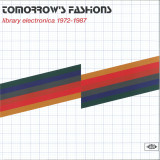
Nothing said new or modern or futuristic quite like a synthesiser in the 70s and 80s. If you were shooting an advert and you wanted your product or your company to appear forward-thinking and ahead of the game, then you would want something electronic, something out of the ordinary. When TV producers and advertising directors started searching for music that sounded like “Tubular Bells” – and then Tomita, and later Jean Michel Jarre – music libraries such De Wolfe, Bruton, Parry and Chappell had to have the tracks readily available.
Compiled by Bob Stanley, “Tomorrow’s Fashions” varies from advertising jingles and TV themes to space exploration and gorgeous, beatless ambience. Though it’s 40-to-50 years old there’s a real freshness to this music. Older jazz players Brian Bennett, John Cameron, Alan Hawkshaw and others seized the chance to operate a synth; younger pups including John Saunders and Monica Beale were simply intrigued by the new technology being wheeled into the studios. There’s a tangible sense of adventure.
“Tomorrow’s Fashions’” brand of electronica anticipated new age and ambient music. It also had both a direct and indirect influence on pop – the early Human League and the future sounds of Warp Records are all over this collection. Electronic library tracks have been sampled by everyone from MF Doom to Kendrick Lamar.
One person’s primitive and experimental is another person’s space-age lullaby. This was music made in the shadows – in Soho’s secretive music library studios – that has now become desirable and influential. The chances are chunks of it will be sampled and used on hit records that have yet to be written. If the musicians’ aim was to soundtrack tomorrow’s fashions, they couldn’t have got it more right.
Disponibile in Stock e pronto per la spedizione

Originally released on one of Bruton's extensive library albums but later used as the theme song to a UK drama series dealing with the intrigues of a family motor business and the world of rally driving from the 80s, "The Winning Streak" is another production by the now late library music maestro Alan Hawkshaw. A downtempo track with remarkably trippy use of percussion elements via electronics and drum machines with entertaining accents and "exotic" vocals. Another wonderful example of library music tickling the fancy of diggers and collectors with a dancefloor inclinations thanks to its highly distinct sound -- everybody loves a winner. 1 to 1 official re-issue, remastered.
Disponibile in Stock e pronto per la spedizione

Ordina ora e ordineremo l'articolo per te presso il nostro fornitore.

Moving Images is a collaborative album by composers Frank Maston and Greg Foat, and marks the inaugural release on Magic Hollow, the new imprint founded by Daniel O'Sullivan. Rooted firmly in the tradition of classic library music, the album draws from the deep, elegant end of the form: vintage keyboards, analogue synthesis, drum machines, and melodic economy, realised with clarity, warmth, and restraint. Recorded in February 2025 at Ritmo Studios in Leysin, Switzerland, high in the Alps, Moving Images unfolds as a suite of finely balanced cues, defined by restraint, texture, and a discerning sense of tone.Swiss bassist Elie Ghersinu features prominently throughout the album, his rich and fluid bass tone providing a continuous anchor. The record draws inspiration from the golden age of European library music, channeling the spirit of De Wolfe and Bruton releases such as Alan Hawkshaw's Frontiers Of Science, the Push Button albums by Karl Jenkins and Mike Ratledge, Edmondo Giuliani's refined orchestrations, and Alessandro Alessandroni's Romance and Drama for Coloursound. Rather than pastiche, Moving Images internalises the discipline and elegance of these recordings, translating their grammar into a contemporary context. Maston Frank Maston's work occupies a space where pop sophistication, orchestral writing, and library traditions intersect. His seminal album Tulips established a distinctive voice defined by melodic confidence and meticulous arrangement, while Panorama, composed for the KPM library, placed him firmly within the lineage of modern composers revitalising the classic library form.Maston's music is characterized by melodic generosity and meticulous arrangement, resulting in work that is elegant, florid, and richly detailed. Greg Foat Greg Foat is a central figure in the contemporary resurgence of library-influenced music, known for his prolific output and deep engagement with the form. A virtuoso pianist, his work bridges jazz, soundtrack composition, and classic library aesthetics, often favouring analogue warmth, strong melodic identities, and ensemble interplay. Foat approaches library music as both a craft and a living language, practical, expressive, and open ended. Moving Images Together, Maston and Foat treat Moving Images as a shared vocabulary rather than a showcase. The album prioritises mood, utility, and suggestion, music designed to serve images and narratives while remaining richly satisfying in isolation. Magic Hollow Magic Hollow is a London based record label founded by composer Daniel O'Sullivan. The imprint is dedicated to contemporary works that engage with library music as a creative practice rather than a fixed genre.Magic Hollow represents a parallel compositional practice in which the sonic self-portrait gives way to openness, economy, and concision.
dovrebbe essere pubblicato su 29.05.2026

Das zweite Album des Palace-Records-Gründers Andrei Nikolsky ist stark von Soundtrack- und Library-Musik der Vergangenheit beeinflusst, darunter auch von einem seiner Helden, John Cameron (Kes, KPM, Bruton), der auf dem Album mit dem Song "Swing Time" zu hören ist. Die Platte bietet eine Mischung aus ungewöhnlicher Elektronik, modalem Jazz und experimentellem Disco. Weitere Mitwirkende sind Mitglieder seiner Band The Kanpai Quartet (Charlie Searle, Euan McGinty, Dan Kabakov) sowie die Schlagzeuger Filippo Galli, Mike Bandoni (aka Funkshone) und Felix Weldon (Johnny Dankworth, Ian Shaw, Jean Toussaint, The La's).
- "Verdammt nochmal, Mann, was für ein Jazz!" - Sarah Evans (BBC6-Produzentin)
- "Ein wunderschönes Album! Perfekt für meine One Jazz-Show." - Dom Servini (Wah Wah 45s)
- "Schöne Soundsammlung." - Rory More (Les Hommes)
- "Die neuen Tracks klingen super! Ich mag die Anspielungen auf Disco und die verschiedenen musikalischen Richtungen." - Paul Osborne (Project Gemini)
Ordina ora e ordineremo l'articolo per te presso il nostro fornitore.
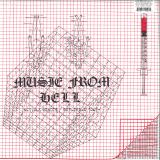
Nervous Gender’s legendary synthpunk LP Music From Hell burbles up from infernal depths to resurface on Dark Entries. Confrontational, unhinged, and unabashedly queer, Music from Hell is an unholy grail for fans of the strangest underbellies of post-punk, minimal synth, and early industrial music, and is presented here newly remastered and on expanded double LP.
Nervous Gender (de)formed in LA in 1978 at the hands of Phranc, Gerardo Velaquez, Edward Stapleton, and Michael Ochoa. Phranc, the androgynous embodiment of the band’s name, left in 1980. Following her departure, a wide cast of LA freaks would find themselves drawn into the band’s orbit, including Alice Bag of the Bags, Paul Roessler of the Screamers, the Germs’ Don Bolles, and an 8-year old drummer named Sven Pfeiffer. In 1980, Nervous Gender appeared on the seminal Live at Target compilation alongside Factrix, uns, and Flipper. With the band’s notoriety cemented, Music from Hell followed in 1981 on Subterranean Records (as no LA label would touch this material).
Side A, dubbed “Martyr Complex”, presents a more punk-forward sound with live drum salvos and slabs of aggressive synth. These twitchy, unsettling shockers ooze with the kind of snotty misanthropy that will endear them to fans of the Screamers or Crass.
Side B, known as “Beelzebub Youth”, is a live performance the band labeled "an electronic bruto-canto dissertation on the banality of spiritual transcendence." Mutant melodies cede way to synthesized clangs, whirs, bleeps, manipulated tapes, and howls of despair.
In addition to all the material from the original LP, we’re treated to a full disc of the band’s demos, the material from the Live at Target compilation, and early live recordings. Included are unrecognizable covers of Carly Simon and Lou Reed, and the Sex Pistols that are so despairingly skewed they fall into the void. This reissue of Music From Hell includes a 36 page lyric booklet, foldout poster, and gatefold sleeve with photos, flyers, and news-clippings designed by Eloise Leigh. Tackling taboo issues like sexual kinks, mental illness, drug use, and childhood molestation, Music From Hell is still surprising – even shocking - over 40 years after the album’s release. Nervous Gender stand as one of the most genuinely anti-establishment outfits in underground music, a colossal fuck you to social norms from religious strictures to gender essentialism.
Ordina ora e ordineremo l'articolo per te presso il nostro fornitore.

Rickets EP is the second 12” and tenth release from the label signed by the Valladolid artist Alf.
“The theme of this EP revolves around the hyperactivity that both the capitalist system and ourselves demand of us, thinking that this ultra-productivity will make us feel happy and fulfilled at some point, how we isolate ourselves in our small fortresses and see foreigners as viruses that must be eliminated or expelled.”
The 5 original tracks on this EP have been designed with few tracks but processed thoroughly to create a powerful atmosphere ready for the dance floor.
The technical side of this work is once again the work of Dan Böhler, who has mixed and mastered this album and has also given us a “house brand” remix of the title track of the EP. The visual work is by Marcos Abella.
Ordina ora e ordineremo l'articolo per te presso il nostro fornitore.

Music To Varnish Owls By. Does Geoff Bastow have a claim for the best album title of all time? It's certainly up there. It's also one of the hardest to find library funk records. But don't let the eye-catching name fool you into thinking this isn't serious business.
As a key member of Giorgio Moroder's team, the legendary Geoff Bastow shouldn't need any introduction. You'll be familiar with his singular brilliance as the brains behind the much-sampled boogie/disco classics "You Don't Like My Music (Hupendi Muziki Wangu?!)" and "Don't Stop", released by his group, K.I.D.
But 1975's Music To Varnish Owls By is where it all began for our hero.
It's packed with incredibly soulful, soothing music that - despite being utilised a few times by Knxwledge - remains still largely un-mined. So, beat-makers, get cracking. And instead of that hyper-rare original, spend that £300 on something else.
Born in 1949, Bastow was a Munich-based English songwriter and record producer. Originally working as a guitarist and pianist in dance bands around his home county of Yorkshire, he moved to London in the early 1970s and then Munich in around 1976. He was one of the main architects of the Munich disco sound of electronic innovator Giorgio Moroder and also released heaps of killer library records for legendary labels like Bruton (with brother Trevor), Impress, JW Music Library and the Munich-based Sonoton between the 1970s-2000s. Bastow died tragically young, in Berlin, Germany on 16 March 2007, at the age of just 57. But he left behind a truly incredible electronic music legacy. He deserves to be much better known and this reissue should bring him to a fair few more ears. Let's see why...
Light-hearted opener "The Rough With The Smooth" contains a killer open drum break and is basically guitar-drenched flute-laced piano-funk. However, the first genuine highlight, "Beautiful People", is just majestic. Reflective, pastoral and silky smooth - as the title suggests, it's just straight beautiful; a chiming, deeply soulful instrumental that has to be heard to be believed. Sampled by Knxwledge but nobody else of note, which is crazy. Slo-mo soul beat "Tumbleweed" is another stone cold track just desperate to be laced by a skilled MC. Laconic, lysergic funk with nostalgic overtones, the guitar is prominent but the flute and glock really elevate it to perfection.
"Bits And Bats" is clav-enhanced Blaxploitation-esque street-funk with tough bass and crunchy drums that, despite its hardness, manages to flirt with breeziness. All in all, sumptuous, pounding wah-wah brilliance. Another huge one, up next. The insistent piano-funk head-nodder "A Change Of Pace" is a total sleuth-funk jammer, with a wonderfully soft snare and more hypnotic, melancholic flute lines. Man, we'd love to hear Alchemist chop this up. It even sounds a bit like Bastow was keeping things thoro with this one. Closing out Side A, the bright and breezy Bossa of "Janelle" makes it a perfect run of six untouchable gems. As elegant as it is sleazy, it sounds like it could've been on the classic KPM greensleeve, Piano Viberations.
Side B opens with the Ramsey Lewis-inspired "Time And A Half", a deceptively simple bass, drums and piano workout, decorated with stylish percussion with some great chord changes and hints of drama via a great bass solo. The heavy "Supersplash" is a doped-out drama suite with fuzzy wah-wah guitars, electric piano and glock. "Fillet Of Soul" is a catchy wah-wah propelled shuffle with piano and vibes, super dynamic but also incredibly chill.
"Well Above Average" is exactly that, a funky instrumental that serves as a straight ahead guitar-soul workout. Oozing bass-driven class, it gets better with every listen. Some open drums for your delectation, too. The fuzzy clav-and-vibes funk of "The Clan" - also understandably sampled by Knxwledge - is a monster head-nod slow jam whilst, seeing us out, the uber-relaxed "Sing Song" rounds things off in bright fashion with its slow but insistent clav, electric piano and glock greatness. Swoon.
As ever, the audio for Music To Varnish Owls By has been carefully remastered by Be With regular Simon Francis, ensuring it sounds better than ever. Cicely Balston's expert skills have made sure nothing is lost in the cut whilst the records have been pressed to the highest possible standard at Record Industry in Holland. The original, iconic sleeve has been restored here at Be With HQ as the finishing touch to this long overdue re-issue.
Ordina ora e ordineremo l'articolo per te presso il nostro fornitore.

Nichts wirkte in den 70er und 80er Jahren so neu, modern oder futuristisch wie ein Synthesizer. Wenn ein Werbespot das Produkt oder sein Unternehmen zukunftsorientiert und der Zeit voraus erscheinen lassen sollte, wollte man etwas Elektronisches, etwas Außergewöhnliches. Als Fernsehproduzenten und Werbedirektoren nach Musik suchten, die wie 'Tubular Bells' und später nach Jean-Michel Jarre klang, mussten Musikbibliotheken wie De Wolfe, Bruton, Parry und Chappell die Titel sofort verfügbar haben. - 'Tomorrow's Fashions', zusammengestellt von Bob Stanley, reicht von Werbe-Jingles und TV-Themen bis hin zu herrlicher, beatloser Atmosphäre. Die Electronica-Marke 'Tomorrow's Fashions' nahm New Age- und Ambient-Musik vorweg. Sie hatte auch einen direkten und indirekten Einfluss auf Pop - die frühen Human League und die dann folgenden Sounds von Warp Records sind überall in dieser Compilation zu finden. Electronic Library-Tracks wurden von vielen Artists gesampelt, von MF Doom bis Kendrick Lamar. Was für den einen primitiv und experimentell ist, ist für den anderen ein Schlaflied aus dem Weltraumzeitalter. Dies war Musik, die im Verborgenen gemacht wurde, in Sohos geheimen Musikbibliothek-Studios, und die jetzt begehrt bei Sammlern und nicht zuletzt einflussreich geworden ist.
dovrebbe essere pubblicato su 12.07.2024
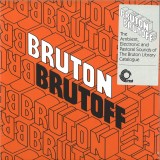
Rare musical magic from the Bruton library catalogue – ambient, spacey, pastoral and electronic. Music by John Cameron, Alan Hawkshaw, Fran-cis Monkman, Brian Bennett and more – all total masters of the scene. All very cool. All very now. All will sell very fast.
Over the last three decades Jonny Trunk has collected and written about library music. But he’s never had a great deal of luck with the Bruton catalogue. By this he means that he’s never stumbled across a massive stash, or lucked-out buying a huge run for practically nothing –that’s the kind of thing that used to happen in the 1990s and the early noughties if you were out there looking hard for library music. But he did manage to get about 25 in one hit about 20 years ago when the BBC shut down their “TV Training Department” near Lime Grove and also when a box of Brutons ended up being dumped at a hospital radio, and they didn’t want the records, so Jonny got a call.
There are lots of Bruton albums in existence – over 330 LPs in the vinyl catalogue, issued between 1978 and 1985. That’s a lot of music to wade through if you are looking for sublime modern day sounds. For many years now the “trophies” from the Bruton catalogue have been the beat or action driven LPs – the two Drama Montage albums (BRJ2 and BRJ8) have always been the big hitters, and others such as High Adventure (BRK2) too.
But Jonny has always found himself drawn to the lime green LPs, the pastoral, peaceful albums (The BRDs), which were full of the kind of gentle, lovely music that would turn up in Take Hart as Tony was paint-ing a woodpecker or a badger or an Autumn tree. The other Brutons he likes are the orange ones (The BRIs) simply because they are full of ex-perimental futuristic electronics and would remind him of 1980s ITV backgrounds. This LP series includes Brian Bennett’s cosmic classic Fantasia (BRI 10). Jonny has been knows to refer to this style of library music as “Krypton Factor library”, because it’s exactly what that strange but successful 1980s TV quiz show sounded like.
In recent years as interest in library music has expanded, we’ve watched
the price of a handful of Brutons really going through the roof - not the just the action and drama ones, but the more esoteric and experimental LPs too – like the BRDs and the BRIs. Jonny gets the vibe that people fi-nally want to hear this other more interesting and experimental side of the Bruton catalogue. So what better time than now to put together a compilation of such sublime period sounds.
Not only does this album bring together a set of fabulous cues that would cost the average man in the street a month’s wages (if the origi-nals were all wanted and if you could even track them all down), but it also chops out the need to listen to other tracks on library albums that are nowhere near as good.
The cues here all date from between 1978 and 1984. They come from the BRD, BRI, BRH, BRJ, BRM, BRR and BRs catalogues.
The composers are all legends within the genre, and here, were doing what great library composers do best – fulfilling a brief and utilising modern studio equipment to both commercial and beguiling effect.
Ordina ora e ordineremo l'articolo per te presso il nostro fornitore.
"For the final part of SchleiBen 5 - 8, Emotional Response welcomes two Scottish based artists to close out the series. In Jon Keliehor you have a world and music traveler with history from psychedelic rock to fourth world exposure, alongside one of the best electronic producers of the last decade, Lord Of The Isles. As the drummer of West Coast folk rock / psychedelic band The Daily Flash, Keleihor spent much of the mid-60 based in and out of Seattle and Los Angles, playing alongside the likes of Jefferson Airplane, Cream and The Doors, before an increasing interest in meditation and philosophies outside of the 'rock' realm led him to England in the early 70s where he become involved in dance theatre. Teaching Advanced Rhythmic Music Studies at the London Contemporary Dance School, his music composition style became influenced by his studies of world music. Finally settling in Glasgow for over 20 years, while running the Luminous Music label and Gamelan Naga Mas, his earlier recordings for labels like Indipop, Touch and Bruton have seen a recent revival, with music appearing recently on contemporaries Optimo Music and Invisible Inc. The wonderful recordings included here span over 3 decades, from sessions at the Luminous Studio at The Diorama Theatre, London in the early 80s, through to recent field-work based recordings in the Cairngorms. Reconfigured and updated, a common thread appears through the pieces - a sense of longing and appreciation - as Jon's knowledge of outer-national instrumentation alongside equally extensive travels around the globe gives the recordings a seamless blend of organic craft. The tonal consonances within unlikely combinations of instruments, with tuned glasses (tarang), tabla, jaw harps, clay flutes and ocarinas, Chinese instruments that include Xiao-Bo and Xiao-Ping, large Noah bells, small and larges gongs all employed, the recordings have been reconstructed, edited and updated via sampling and digital processing. Featuring the playing of John "Jhalib" Millar - the extraordinarily gifted musician and tabla player - who has appeared with an EP on sister label, Emotional Rescue (ERC029), sadly recently deceased, the contribution acts as a tribute and more. To close, the music of Lord Of The Isles is an excellent companion to Jon's work. Neil McDonald's list of club-based releases on labels CockTail D'Amor, Ene, Firecracker, Permanent Vacation, ESP Institute and Phonica is comprehensive and exemplary, however within his productions has often been an other-worldly element, a space between the beats and occasional fully ambient pieces. Approached originally for series one of SchleiBen, the 7 pieces included were worth the wait, a journey in themselves and the perfect completion. Spanning almost 5 years, the majority were written during an extended exile in the Cairngorms. The lifting, ethereal, but melodic nature of the music fits that aesthetic. Blue skies, snow, long walks, space to think, but with a longing and appreciation of family and friends. The solitary nature found in SchleiBen 8 and the geographical incidence of both artist's recordings including sessions in the Scottish Highlands fits the series ideals and is a nice closure. Enjoy and listen. "
Ordina ora e ordineremo l'articolo per te presso il nostro fornitore.
