With two critically acclaimed albums and a swathe of award-winning production turns under their belt, Ana Frango Elétrico present their most confident and accomplished work to date: Me Chama De Gato Que Eu Sou Sua / Call Me They That I’m Yours. Gesturing to a tradition of Brazilian boogie music, but bouncing with modern pop ebullience, the album sees the Rio artist evolve from a captivating upstart into a surefooted scene leader in full stride.
At just 25, the prolific artist and producer has already garnered worldwide admirers. Ana’s sophomore Little Electric Chicken Heart was nominated at the 2020 Latin Grammys. Since then, standalone singles have received the WME ‘Best Music Producer’ Award, recognising Ana’s deep passion for music production – a passion which has led to collaborations with nascent Brazilian stars Dora Morelenbaum, Illy and Sophia Chablau. Most recently, Ana was hailed for their co-production of Bala Desejo’s 2022 Latin Grammy-winning album Sim Sim Sim.
The new album finds Ana at their most assured and full voiced. Album opener “Electric Fish”, with funky bass and shimmering backing vocals, sets a buoyant tone. “Boy of Stranger Things” is its bombastic counterpart. It’s the grooviest Ana has ever sounded. And the most brazen. Lyrically, where Ana was once oblique on personal matters, they are now forthright – lucidly exploring their gender identity, citing accessible cultural references, and often singing in English.
“I started this album in 2021 with the intention of showing, in means of sound, understandings and feelings about queer love, subjectively exposing myself,” the non-binary artist states – before qualifying that though “feeling was its driving force, the album is really about musical production.”
“There’s so many references to different decades,” Ana explains. “Seventies drums with eighties processing … Going back, getting beyond … Testing the limits of organic sounds”. Characteristically playful, on Me Chama, Ana takes vivid and rewarding detours through funk-inflected R&B (“Dela”) and art pop (“Dr. Sabe Tudo”). “Nuvem Vermelha” is a cinematic chanson with lush strings that recalls Arthur Verocai. Then, “Coisa Maluca” loafs with the indie insouciance of Canadian slacker Mac Demarco. Later, “Let's Go Before Again”, is a full-on drum machine workout evocative of Stereolab.
Cerca:el mal
The bleak and foreboding landscape surrounding Keeley's North Yorkshire home seems to inhabit her third LP, 'The Hollow'. The moors, visible from her studio window, impact upon a music that feels made of these places: windswept, rain-soaked and blinking through the low-lit landscape. The album's title derives from discovering a long-abandoned mining shaft whilst out walking - the past lurking within and haunting the present we now occupy. A connection to time that places us within it, facing what is gone and what may come. But also, perhaps that time has no concern as to whether we're here or not.
Keeley's unique elemental voice again sits centrally within this world-building. Her cathartic reflections are exorcisms in song. We hear an artist making sense of her life, willing to expose vulnerability without ever appearing weak. Working again with producer Ross Downes, the LP features Matthew Bourne and Colin Stetson, Forsyth sought to expand both her voice and music. Taking aspects of sacred music, minimalist post-classical, dark ambient, film and theatre soundtracks, she layers her vocals into chamber choirs, applies pitch shifts and other digital processing, moves from clear articulate intention to mumbled numb utterances.
Composer Mihály Vig's score to Bela Tarr’s film 'The Turin Horse' is reimagined as a pressurised outpouring, recasting the everyday within a mythical light of survival and hope. On ‘A Shift’, Mal Finch's protest song ‘We Are Women, We Are Strong ‘, originally sung by wives and daughters in support of the '80s miner’s strikes, is recontextualised in solidarity for an experience of creative labour.
"Espontaneamente se Tenta: Aventuras Sonoras de Djalma Corrêa is an album of deeply exploratory pieces by legendary percussionist and composer Djalma Corrêa. This double-LP set features previously unreleased recordings that cover a wide range of sonic experiments, revealing an unknown side of the prolific and groundbreaking Brazilian artist. Most of the tracks on this album were digitized for the first time – directly from the original tapes – and were compiled in collaboration with Corrêa just before he passed.
The result is a wild and unsettling collage that shows us just how original and intense Corrêa could be: from the unorthodox electroacoustic piece Evolução (Para Fita e Filme), which channels ancestral African inspirations to create a sonic cosmogonical narrative, to the proto-mixtape Exemplo de Sintetizadores, in which he transitions from transcendental drones to astral cha-cha-chas.
While the compilation might seem disjointed at first listen, it is in fact the most accurate translation or representation of his central concept: spontaneous music. Djalma's relationship with sound was always guided by his fearless approach to listening, and by his audacious and dynamic interaction with both musicians and equipment, which enabled him to work across a wide array of genres: from jazz to completely abstract music, always through a personal DIY ethic.
Corrêa developed a strong bond with experimentalist and inventor Walter Smetak, with whom he shared a studio during his formative years at Universidade Federal da Bahia. Suite Contagotas, featured in this collection, is no less than a sonic materialization of that bond: an experiment revolving around dripping water and its randomness – a tentative exploration of the ideas and possibilities envisioned by Smetak for his audacious, albeit unrealized, Estúdio OVO.
Djalma, however, is best known for his studio work in historical albums, including many by Caetano Veloso, Gilberto Gil and Jorge Ben, and for his own polyrhythmic opus Baiafro. The last track is an early recording called Bossa 2000 dC, first performed by Djalma at the 1964 Nós, Por Exemplo concert, an event which is often cited as marking the beginning of the Tropicalia movement. At the time, he was the only artist in the lineup using electronic devices to create sounds, e.g. medical oscillators and contact mics to augment his percussive palette.
The artwork is an amalgamation of material found in the Djalma Corrêa Archive (currently managed by his son Caetano Corrêa) and other material created during the period in which the record was being put together. The intention is to guide the listeners through this possibly tempestuous soundscape, giving them additional resources so that they may draw their own meanings and make their own sense of this extremely immersive and original experience – which is like nothing we've ever heard before."
Artist and musician Gillies Adamson Semple explores the material resonance of drone
on new vinyl-only album Volumes.
In 2022, Gillies Adamson Semple made a pilgrimage to the Valère Basilica in the Swiss Alps to play the oldest functioning pipe organ in the world. Built in 1435, this unique instrument is the centrepiece of this sensitive and stirring 6-track release, tracing the elemental themes of spirituality, anatomy, ecological collapse, and the nature of listening in its glacial minimalist drones.
Drawing inspiration from the long-form compositions of Sarah Davachi and Kali Malone, Volumes was built from in-situ recordings Semple made in Switzerland, with the aim of capturing the physical qualities of the sound, from the stops and pedals to the air rushing through the organ’s ancient pipes. Treated like sculptural material and re-assembled at Semple’s London studio in the tradition of musique concrète, the tracks evoke a sense of exquisite timelessness, at once part of and floating free of their environment.
As Semple explains: “What I like about the organ is that you can make it feel very physical. It has all these mechanical parts that sound really beautiful. And the piece is never performed. It is something that is rooted in the site. The whole pilgrimage to see this organ in Switzerland ended up acting like that, where you’re going to this very sacred place to see this specific instrument, but all you’re taking back is recording.”
Released on vinyl via Fourth Sounds, Volumes was initially conceived as the soundtrack to Semple’s 2023 exhibition of the same name at Cedric Bardawil in London.
Edition of 200 with risograph insert, liner notes by Anton Spice. Fully remastered for vinyl.
Bank NYC is very excited to present the definitive statement of Collector, "No Prospects". Collector is the solo guise of Jason Campbell, resident of Newcastle, Australia. Since 2014, Campbell has been channelling the industrial malaise of his hometown through his unique take on heavy electronics. After a series of releases on global-spanning labels such Steel City Dance Discs (UK), Nice Music (AUS), Clan Destine (SCO) & Night People (US), the debut long-player for Bank NYC finds Collector embracing true album form for the first time in his discography. Across eight pieces, Collector delivers a bleak sonic narrative via a hardware-only approach to production: Analog drum machine patterns are intricately intertwined with menacing synth lines, and driving bass is met with the unrelenting clatter of tightly-sequenced field recordings taken straight from the heart of local industry.
Thematically, "No Prospects" navigates the downfall of Newcastle's BHP Steelworks at the end of the 20th century. Acknowledged widely as the largest de-industrialisation event in Australian history, the closure of the Steelworks in 1999 marked a dramatic cultural shift where blue-collar vocations were vanquished due to an economic slump, and were consumed by the trending cosmopolitanism seen in adjacent cities. "No Prospects" draws on Campbell's family lineage in the Newcastle's steelworks, providing a rich, personal context to an industry that both gives and takes away. The sharp intensity of the album is sustained by dramatic shifts in pace: the devestating slow burners of 'Two From Five' and 'Ricochet' are instinctually offset by the frenetic 'CFT' and 'Workers Club Collapse', which showcase Campbell's no-nonsense approach to shaping an almost club-ready breed of modern industrial techno. Although diverse across both sides, cohesion is found in Campbell's toolkit of samples that are unmistakably Collector. The album's eponymous track, 'No Prospects', serves as an introspective centrepoint - a largely arrhythmic excursion shrouded in familiar brooding, textural drones, and underpinned by the chug of machinery on the brink of collapse.
Although forever indebted to the spirit of local electronic outcasts, Bloody Fist Records, Collector's "No Prospects" is a remarkably distinct statement straight from the heart of Australia's Steel City. The complexity of arrangements speak to Campbell's long association in experimental music communities, whilst the persistent feeling of dread conveys a uniquely regional story of decay and futility. Pure Novocastrian industrial electronics.
There is something of Monsieur Rêve in this sweet tekno EP... Sounds is very loud on a system and very cool at home... A true Tekhouse record then... The mabiance is kind of tracy and a bit electro... Nice tunes that do not forget to give reward to the dancefloor. A good space techno record !
- A1: Big Swimmer (Vocal Harmonies By Sharon Van Etten)
- A2: New York, Let's Do Nothing
- A3: The Mattress
- A4: Milk Boy (I Love You)
- A5: Suddenly, Your Hand
- B6: Somewhere Near El Paso
- B7: Lily Pad
- B8: Davey Says
- B9: Scully
- B10: This Wasn't Intentional (Vocal Harmonies By Sharon Van Etten)
- B11: John Prine On The Radio
Black Vinyl[23,95 €]
Neues Album erscheint am 31. Mai 2024 bei City Slang inklusive der Single 'Big Swimmer' featuring Gesangsharmonien von Sharon Van Etten!
King Hannah entwirft einen musikalischen Wandteppich, der nahtlos zwischen den ruhigen Tiefen des meditativen Pops und den weitläufigen, klangvollen Landschaften voller Dunkelheit, Witz und schrägem Humor pendelt. Merricks Gesang, ein rauchiges Vergnügen, verleiht ihren Worten tiefes Gewicht und Kraft, ergänzt durch die bluesigen Leinwände, die Whittle meisterhaft unter ihnen malt. Ihr Sound wechselt mühelos von Momenten post-rockiger Weite zu dem Gefühl, dass Springsteen auf eine düstere Seitenstraße abseits seines Highways zur Freiheit gerät. In jüngster Zeit hat das Duo die Bühnen neben geschätzten Künstlern wie Kurt Vile, Thurston Moore, Kevin Morby und DIIV geziert und das Publikum auf Festivals in ganz Europa und Nordamerika, darunter End of the Road, Green Man, Primavera Sound und Fusion, in seinen Bann gezogen. King Hannah wurde unter anderem von Stereogum als "Band to Watch", von The Guardian als "Ones to Watch" und von Paste als "Best of What's Next" gefeiert und in der Rubrik "NEU" des DIY Magazins sowie als "Rising Artists" von SPIN vorgestellt.
The phenomenal three-piece band includes members of Oranssi Pazuzu, K-X-P, Grave Pleasures and Aavikko
Svart Records is proud to release the debut album, I, from Haunted Plasma, a powerhouse of futuristic synth in symbiosis with the super violent atmospherics of kosmische Black Metal. Haunted Plasma is “man meets machine” in a cybernetic wasteland, set to a conceptual backdrop of William Gibson and Phillip K. Dick style mind-melt. The highly evolved creatives at the heart of Haunted Plasma’s sound, cite Terry Riley, Massive Attack, a contemporary take on Krautrock hypnosis, psychedelic Black Metal and 90s Techno, resulting in an orgy of mutant sound.
The phantoms at the beating nucleus of this unearthly machine are Juho Vanhanen (Oranssi Pazuzu, Grave Pleasures), Timo Kaukolampi (K-X-P, Op:l Bastards) and Tomi Leppänen (Circle, Aavikko, K-X-P), transmitting a music form evolved from a life of redefining sonic boundaries in their respective projects. Also featuring guest vocals from Mat McNerney (Hexvessel, Carpenter Brut, Grave Pleasures/Beastmilk), Pauliina Lindell (Vuono, Dust Mountain) and Ringa Manner (Ruusut, The Hearing). Haunted Plasma promises an extraterrestrial experience from some of the foremost contemporary musicians at the heart of the Finnish heavy and avant-garde musical underworld.
Haunted Plasma reveals:
“We are liberated futurists, embracing free-form and natural composition, mirroring the merciless forces of cosmic creation. We have a motto to stay true to our feelings, to spawn a sound that’s never been heard before. Servants of music. Energizing, radical and pure”
The first single from Haunted Plasma’s cascading debut, Reverse Engineer, is a creepy, slowly erupting, synthetic nightmare, of a downloaded being waking up in the wrong future. Ghostly vocals demand the listener to “give us what we want” in an Orwellian glimpse into the current dystopia we live in, where information is controlled, and thoughts are bought and sold. As McNerney intones the words “technology of power” he describes the threat of a malevolent and omnipresent artificial intelligence, as much as describing the oppressive and electromagnetic sonar pulse of Haunted Plasma’s sound itself. Psychedelic guitar hypnosis from Vanhanen snakes around Kaukolampi’s molten and morphing synths, while Leppänen’s uncanny man/machine rhythms pull our strings and animate their other-worldly mechanisms. Have a look at the official visualiser of "Reverse Engineer" on the Svart YouTube channel here
Culminating in the full-blown fast Krautrock of the final self-titled track, oozing with blistering noise elements and enigmatic vocals from Ringa Manner, the album's journey reaches its zenith, taking you to unknown territories on a Kubrikian space trip. I is a rare record of talented musicians coming together to create a completely new sound, which is entirely their own, boldly glowing, where no light has shone before. From the dreamy psychedelia of Echoes to the discombobulated Spectral Embrace, Haunted Plasma is a willful force of deliberate sound contortion.
Whether you want to give in to Haunted Plasma’s sound or not, you are being watched, you are being recorded and your every move is monitored. Haunted Plasma will enter your system on the 31st of May 2024. Turn on your phantom circuits and be prepared for an interdimensional excursion into Haunted Plasma’s alien dreams.
The debut album from Haunted Plasma will be packaged in a beautiful tip-on sleeve, swirling fog artwork, complete with 12” booklet and pressed on 3 exclusive vinyl colours: 300 copies on Standard Black Wax, 500 copies in Amber + Black Smoke and 200 copies of Svart exclusive Turquoise/Black Marble. The album will also be available on CD and digital platforms.
Nach einer beeindruckenden Reihe von Alben in den 2010er Jahren, die ihm eine treue Fangemeinde, Auszeichnungen von Zeitungen wie der New York Times, Fresh Air und Pitchfork und einen Platz in der oberen Riege der modernen Americana-Singer-Songwriter eingebracht haben, hat John Moreland in diesem Jahrzehnt bereits zwei unerwartete Wendungen vollzogen, die beide seine starke künstlerische Unabhängigkeit unterstreichen.
Zunächst veröffentlichte er 2022 mit Birds In The Ceiling eine brillante und klanglich vielschichtige Folk-Electronica-Meditation über moderne Entfremdung, die einige seiner Fans überraschte. Nachdem er im November 2022 eine schwierige Tournee hinter sich gebracht hatte, stellte er seine Arbeit komplett ein. Er nahm sich ein ganzes Jahr Auszeit von Auftritten und benutzte 6 Monate lang kein Smartphone.
Nach fast einem Jahrzehnt im Rampenlicht, in dem er ständig von den Erwartungen seines Publikums bedrängt wurde, nahm er sich zum ersten Mal Zeit, sich auszuruhen, zu heilen und zu reflektieren. Das Ergebnis dieses Unplugged-Jahres zu Hause ist 2024 Visitor, ein Folk-Rock-Album, das intim, unmittelbar, zutiefst nachdenklich und verdammt eingängig ist.
Nach einer beeindruckenden Reihe von Alben in den 2010er Jahren, die ihm eine treue Fangemeinde, Auszeichnungen von Zeitungen wie der New York Times, Fresh Air und Pitchfork und einen Platz in der oberen Riege der modernen Americana-Singer-Songwriter eingebracht haben, hat John Moreland in diesem Jahrzehnt bereits zwei unerwartete Wendungen vollzogen, die beide seine starke künstlerische Unabhängigkeit unterstreichen.
Zunächst veröffentlichte er 2022 mit Birds In The Ceiling eine brillante und klanglich vielschichtige Folk-Electronica-Meditation über moderne Entfremdung, die einige seiner Fans überraschte. Nachdem er im November 2022 eine schwierige Tournee hinter sich gebracht hatte, stellte er seine Arbeit komplett ein. Er nahm sich ein ganzes Jahr Auszeit von Auftritten und benutzte 6 Monate lang kein Smartphone.
Nach fast einem Jahrzehnt im Rampenlicht, in dem er ständig von den Erwartungen seines Publikums bedrängt wurde, nahm er sich zum ersten Mal Zeit, sich auszuruhen, zu heilen und zu reflektieren. Das Ergebnis dieses Unplugged-Jahres zu Hause ist 2024 Visitor, ein Folk-Rock-Album, das intim, unmittelbar, zutiefst nachdenklich und verdammt eingängig ist.
BLUE VINYL[24,79 €]
SALTPIG is a bit of a mystery. The band just showed up seemingly out of nowhere, album in hand, with the music loudly speaking for itself. As it soon became known, SALTPIG is a two person band with Fabio Alessandrini (formerly of Annihilator) on drums and Mitch Davis handling vocals, guitar and all of the other layers of noise that can be heard on the record. The music that came out of this pairing has elements of doom/stoner/psych/occult metal and others, but they didn't go into it with anything that specific in mind. They just make the music they want to hear. Davis has been working with bands/artists including LA Guns, Damon Albarn, Billy Squier, Stephen Malkmus, Mark Lanegan, Sunbomb and U2, but SALTPIG is obviously a very different animal. For his own band, Mitch created a sound that is much darker. When he started writing the SALTPIG tracks, it pretty quickly turned into this debut album. Most of the tracking was done in their respective studios, with Fabio in Italy, and Mitch in New York where he'd do all of the final recording, production and mixing. It's melodic but embraces dissonance. It's noisy and dirty and evil sounding. Underproduced and real. It embraces imperfections as only a human can do.
Black Vinyl[21,64 €]
SALTPIG is a bit of a mystery. The band just showed up seemingly out of nowhere, album in hand, with the music loudly speaking for itself. As it soon became known, SALTPIG is a two person band with Fabio Alessandrini (formerly of Annihilator) on drums and Mitch Davis handling vocals, guitar and all of the other layers of noise that can be heard on the record. The music that came out of this pairing has elements of doom/stoner/psych/occult metal and others, but they didn't go into it with anything that specific in mind. They just make the music they want to hear. Davis has been working with bands/artists including LA Guns, Damon Albarn, Billy Squier, Stephen Malkmus, Mark Lanegan, Sunbomb and U2, but SALTPIG is obviously a very different animal. For his own band, Mitch created a sound that is much darker. When he started writing the SALTPIG tracks, it pretty quickly turned into this debut album. Most of the tracking was done in their respective studios, with Fabio in Italy, and Mitch in New York where he'd do all of the final recording, production and mixing. It's melodic but embraces dissonance. It's noisy and dirty and evil sounding. Underproduced and real. It embraces imperfections as only a human can do.
”Dafür bestimmt, als Jazz-Klassiker in die Geschichte einzugehen” – so das Urteil des Guardian bei der Veröffentlichung des Albums im Jahr 1997. Weiter meinte die Zeitung: ”Wheelers Kompositionen und vier der weltbesten Improvisatoren schaffen ein nachdenkliches Set, das es sich lohnt wieder und wieder zu hören. Dies ist wunderschöne, leuchtende Musik.” Angel Song gehört zu den Höhepunkten im Katalog des Labels und vereint vier Improvisationsgrößen – jeder mit einer einzigartigen künstlerischen Identität – in einer intimen, Schlagzeug-losen Quartett-Session. Kenny Wheeler ist der Komponist der neun eindringlich lyrischen Kammer-Jazzstücke und verleiht ihnen an Flügelhorn und Trompete im expressiv-melodischen Austausch mit Altsaxophonist Lee Konitz eine besonders eindringliche Atmosphäre. Das Bassfundament von Dave Holland ist so überzeugend wie eh und je und lässt Bill Frisell alle Freiheiten für harmonieumfassende Improvisation. Wie der Guardian jubelte 1997 auch die Times und sprach von einem: ”rührend schönen Album: Hollands wendige Zuverlässigkeit ist der Anker für die elegante Klangfülle von Konitz, die flimmernde Raffnesse von Frisell und die klangliche Zärtlichkeit von Wheeler selbst.” Das Album erscheint zum allerersten Mal auf Vinyl als Teil der Luminessence-Reihe und wird in einem Tip-on-Gatefold mit Session-Fotos präsentiert
Nestled beside the sea and a cluster of palm trees, La Malvarrosa, the neighborhood in Valencia where Cooper resides, derives its name from a fusion of "Malva," meaning mauve, and "Rosa," meaning pink. Here, La Malvarrosa serves as the primary backdrop for the recordings, symbolizing two distinct colors and artistic approaches.
These hues become the emblematic colors of a fictitious flag from an imagined island located on a forgotten expanse of ocean. From this ethereal site, melodies emerge, seeking to unravel the essence of certain insular music while intertwining with Cooper's post-everything sensibilities and Kòlar's minimalist electronics. "Mauve/Pink" navigates the delicate balance between playfulness, intricacy, and simplicity, blurring boundaries between tradition and innovation, reality and imagination, change and repetition.
The album serves as a showcase for contrasting methodologies and viewpoints, acting as a sonic document of an ongoing conversation between generations, where Cooper and Kòlar's efforts illuminate a boundless creative process and timeless aesthetics.
The self-titled debut album by Last Plane Out (S-Rock/Border) will be released worldwide on vinyl - The band: Last Plane Out is a duo consisting of Nils Erikson (music) and Anders Lundquist (lyrics) They describe their style as progressive pop: songs for those looking for some musical and lyrical chewing resistance, yet appealing to the casual listener.
Nils Erikson, based in Malmoo, Sweden, is a Swedish singer, composer and multi- instrumentalist. He has released a number of solo albums, one of which was nominated for two Swedish Grammys (Newcomer of the Year and Male Artist of the Year). He has also released several instrumental works that have been streamed millions of times.
In addition to that, Nils is the co-keyboardist and co-lead singer of the progressive rock band Karmakanic, led by longtime Steve Hackett bassist Jonas Reingold. Anders Lundquist, based in Stockholm, Sweden, is a lyricist, composer and bassist/guitarist, as well as a renowned music journalist. As the bassist and one of the two main songwriters of Swedish hard rock progsters band Future Elephants?, he released three acclaimed albums between 2016 and 2023.
Black Truffle is pleased to announce the first vinyl reissue of Trancedance, a wild slice of Swedish Afro-fusion from Christer Bothén, originally released in 1984. A major figure in Swedish jazz and improvised music since the 1970s, often heard on bass clarinet and tenor sax, Bothen studied doso n’koni (the large six-stringed ‘hunter’s harp’ of the Wasulu) in Mali in 1971-2 before turning to the guinbri (the three-stringed lute of the Gnawa/Gnauoua) in Marakesh later in the decade. In between, he performed extensively with Don Cherry during his Organic Music Society period and taught Cherry the doso n’koni. In the later 70s and 80s he worked with the most important figures in the distinctive Swedish jazz-rock-world fusion scene, joining Archimedes Badkar for their African-influenced Tre and participating in Bengt Berger’s legendary Bitter Funeral Beer Band. Many of the musicians who played on the Bitter Funeral Beer Band’s ECM LP (including Berger on drums, Anita Livstrand on voice and percussion and Tord Bengstsson on piano, violin and guitar) joined Bothén for one of the sessions that produced Trancedance, the first release under his own name, dedicated to his compositions. The other session introduced his seven-piece group Bolon Bata, heard on the second track of each side. The title track opens the album with the rubbery buzzing strings of the doso n’goni playing a hypnotic ten beat pattern, soon joined by bass and piano before the entire nine-piece group kicks in with a rollicking Afro-jazz workout, Berger’s drums driving an intricate, winding melodic line played by the horns with Mattias Helden’s cello throwing in pizzicato slides and smears. Bothén then takes centre stage on tenor sax, soloing with a wide, vibrating tone and moving seamlessly from soaring melodies to guttural stutters. After a return to the composed horn lines and a solo from Elsie Petrén on alto sax, the piece builds to an ecstatic conclusion of yelping voices and handclaps, gradually simmering down to return to the solo doso n’koni where it began.
The hypnotic sounds of the hunter’s harp carries over to ‘Mimouna’, where it is joined by Bothen’s overdubbed guinbri. The piece develops into a haunting whispered and sung invocation, gradually building momentum until the organic textures of strings, voices, and hand percussion are ruptured by Lennart Söderlund’s distorted guitar, which brings an unmistakable touch of 1984 to the otherwise timeless sound. Joined by chicken scratch guitar and increasingly dominated by the insistent clang of three of Bolon Bata’s members on karqab (a kind of cast-iron castanet), the grove develops frenetically.
The B side opens with the multi-part epic ‘9+10 Moving Pictures for the Ear’, at over 16 minutes the record’s longest piece. Though Bothen is heard only on horns on this piece, the hypnotic repeating bass line carries on the first side’s link to African musical traditions. Using an expanded 16-piece ensemble, the music balances untethered improvisation with carefully arranged passages of knotty ensemble playing that at points suggest Mingus, Moacir Santos or some of the ambitious post-free work being done in the same years by figures like David Murray or Henry Threadgill. The piece ends with a triumphant passage of looping unison melody reminiscent of the Scandinavian folk explorations of Arbete och Fritid (whose Kjell Westling is heard on bass clarinet and soprano sax here). The sound of Bjorn Lundqvist’s fretless bass introduces the odd left turn made by the record’s final track, a spaced-out expedition into bluesy horn lines and distant guitar atmospherics set to a semi-reggae beat, perfumed by the core Bolon Bata group and bearing the appropriate title of ‘The Horizon Stroller’. A must for fans of the Swedish scene around groups like Arbete och Fritid and Archimedes Badkar, as well as any listener who has been seduced by Louis Moholo’s Spirits Rejoice!, The Brotherhood of Breath, or, more recently, the guinbri grooves of Natural Information Society, Trancedance is a lost classic ripe for rediscovery.
2024 repress
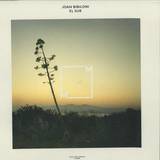
Staying on the Mediterranean coast for their third release, Music From Memory this time shift their attention to the work of Mallorcan musician Joan Bibiloni. TIP!
Primarily a guitarist, Bibiloni was creating music at an early age, releasing his first single at the tender age of 15. In his twenties he formed Spanish progrock outfits Zebra and Euterpe where he would meet Pepe Milan, the two of them becoming the bluesy folk duo 'Milan & Bibiloni'. Bibiloni himself would later go on to play with a number of luminary musicians such as Larry Coryell, Daevid Allen and John Cage to name but a few.
In 1982 Bibiloni set up his own label Blau in order to highlight the muchoverlooked work of musicians not only on his home island of Mallorca but across the Balearic Islands. In doing so he created a platform not only for
local talent but also for his own music to breathe a new life, much influenced by the landscape and life that surrounds the islands.
Whilst Bibiloni's first solo releases on his Blau imprint have stronger echoes of contemporary Jazz fusion of the time, it is on the album known as 'Una Vida Llarga I Tranquila' where Bibiloni really began to experiment with new sounds
and technologies; fusing tape loops, drum computers and synthesizers.
Taking these more electronic infused works as a departure point for the compilation and drawing on material from across his following five albums, 'El Sur' sets out to highlight Joan Bibiloni's unique ambient fusion and sun-drenched Mediterranean beach boogie.
"Du reitest über die Zwickauer Hügel nach Nordosten. Die Lederzügel schneiden sich in deine gefrorenen Hände, während sich heiss-saurer Sod nach oben brennt. Metaphysischer Katerschweiss sticht sich Pore für Pore durch deine Haut, durch ein verblasstes Sargtattoo auf dem Unterarm. Die müden Füße in den NVA-Stiefeln deines Vaters umklammern die Flanken eines dampfenden, grauen Appaloosa, oder ist es doch nur die frisierte Simson S51? Egal, denn eigentlich ist es deine ur-eigene Mind-Machine, in der du dem Ruf der Leere folgend durch die Ruinen der Selbsterkenntnis irrst. Nach Chemnitz - dem San Francisco des ganz kleinen Mannes. Erwarten wird dich dort allerdings nicht Bernd Spier's einfältige Flowertime, sondern Asbest, Eternit und vor allem die Risse, die sich durch ebendiesen ziehen. Genau da verdichten sich die Songs auf L'Appel du Vide's erstem Full-Length "Metro" jedem Leerstand trotzend zu einem 9 Stories hohen Monolithen aus Post-Punk, Death-Rock, Synth- und Darkwave, der einen - einmal erklommen - über jene Genregrenzen hinwegschauen lässt. Ein schwarz-schimmernder Jengaturm aus (East-)German Angst und kompromissloser Innenschau. So viel aufrichtiger wankend, als ein Campino im einstudierten Seitwärts-Taumeltanz der Mitte der Gesellschaft weismachen will, führt er dich weg von den tief hängenden Früchten des epigonalen (Post-)Punkswindles. Hin zu den aufgehenden Blüten echter Musikliebhaberei. Man hat sich festgebissen und ist drangeblieben, hat geschürft und sortiert, die Linernotes gelesen und vor allem eins: den vielen Platten zugehört. Die Schubladen aufgemacht und offen gelassen. Sänger René klagt sich ohne Allüren, zeigefingerfrei und immun gegen jedes Zeitgeistgeheische ins zunächst eigene Herz. Die Gitarre sägt, klirrt und kreischt vor Hunger und ist doch satt. Die Rhythm-Section knurrt und scheppert und bumst sich geradeaus in den Abyss, aus dem auch analoge Synths hier und da auftauchen um kurz Luft zu schnappen. Überhaupt kann man die Instrumente atmen hören, so ehrlich ist der Sound. Gitarrist Flatty hat die Band Anfang 2023 im Studio Gloom, Chemnitz aufgenommen. Doch da ist nicht nur Sachsen und die zu oft beschworenen, modrigen Wurzeln der Hängengebliebenen. Da ist Detroit, Frisco und Los Angeles. Manchester, New York und Portland. Und genau so wie Poison Idea's "Feel the Darkness" (um dann doch mal eine Reminiszenz zu bemühen) beginnt, endet "Metro" nach 37 Minuten Spielzeit - mit nacktem Piano. Dazwischen: eine Verwandtschaft in Wucht und Haltung, nur ohne Metal- und Gepose. Just Power and Void. Und in der Satteltasche ein altes Foto vom Meer, körnig, schwarz weiss und doch alle Farben widerspiegelnd.
Halocline - a visible layer of water that forms between saltwater and freshwater when there is a rapid change in salinity; they are found in colder oceans, caves, fjords and estuaries.
Malin Lewis is a queer bagpiper, fiddler, instrument maker and award winning composer. One of Scotland's most exciting innovators, Malin melds west coast tradition with a newly invented, self-made bagpipe. Hair tingling, philosophical and dance inducing melodies inspired by European folk traditions, humans, queerness and the universe. Having played in Canada, Europe and across the UK, Malin will release their long awaited debut album Halocline on the 3rd May 2024 with Hudson Records. Halocline began as a New Voices commission for Celtic Connections and was premiered to a sold out Strathclyde Suite, Glasgow Royal Concert Hall in 2023.
"I saw my first Halocline aged fourteen whilst swimming in an estuary in the Isle of Skye. I didn't know what it was at the time but the image has stayed with me ever since. Appearing like a hazy layer of cloud under the water; it floats between two worlds and provides an environment which is home to a unique microbial ecosystem. As a trans person I live in a space in between; this beautiful space between a binary with its own colourful and unique culture."
Malin's unique sound is born from the deep connection that comes with making and composing for their own instrument. Alongside whistle and fiddle, Malin plays a newly invented two octave bagpipe that, when combined with guitar FX pedals, creates a whole new world of sound which is as lively, thought provoking and sensitive.