180g virgin vinyl pressing, limited edition - the complete album
''Ella and Louis' is some of the most fascinating and commercially successful
jazz music ever produced. This was the first of the three LPs Ella Fitzgerald and
Louis Armstrong made for jazz producer Norman Granz between 1956 and 1957
(the other two were the sequel Ella & Louis Again and a selection of tunes from
George Gershwin's folk opera Porgy & Bess).
While the latter utilised a big orchestra conducted by Russell Garcia, the first two
albums were made in a small group format. And what an incredible small group!
The Oscar Peterson Trio, featuring Herb Ellis, Ray Brown (who had been Ella's
husband) and Buddy Rich (on the second album the drum chair was covered by
Louie Bellson).
Search:el tri
Limitierte Reissue zum 15-jährigen Jubiläum des legendären Albums der UK Mod-Jazz-Funk-Supergroup TRIO VALORE mit Steve White (Style Council), Damon Minchella (Ocean Color Scene) und Seamus Beaghen (Madness) auf kristallklarem Vinyl. Ursprünglich 2008 veröffentlicht, erreichten die 12 Tracks voller erschütternder Hammond-Grooves, heavy Deep-Funk und super Dancefloor-Mod-Jazz-Melodien schnell Kultstatus. Zu den Highlights zählen die hippen Versionen von 'Rehab' (Amy Winehouse), 'Fire' (Jimi Hendrix), 'Paint It Black' (The Rolling Stones) und groovige Eigenkompositionen wie die Boogaloo-Soul-Nummer 'Dam Square' oder der Dancefloor-Jazz-Titeltrack.
Stacey Kent is a classic jazz singer with a legion of fans, international honors and awards, sales in the
millions, and chart-topping albums spanning a 25 year career. As the title suggests, 1998’s Let
Yourself Go: Celebrating Fred Astaire, is a tribute to one of Kent’s heroes. The album features songs
from The Great American Songbook made famous by Astaire on film. Like Astaire, Kent seamlessly
and easily takes the audience along with her, creating an elegant intimacy in her performances.
Thanks to the tight arrangements, effortlessly executed by Kent's skilled section, the recording exudes
a remarkable sense of musical cohesion and sophistication. Kent's interpretation of the songs is
marked by her understanding of the lyrics, conveying their emotional depth and subtle nuances.
Produced by Kent’s long time companion and collaborator Jim Tomlinson and recorded at Curtis
Schwartz Studios, England, the album has been remastered and is available on vinyl for the first time
in over a decade as a 2xLP set. Remastered by Alex McCollough at True East Mastering. Vinyl cut by
Jeff Powell at Take Out Vinyl
Faitiche releases the album Improvisations And Edits, Tokyo 26.09.2001 on vinyl for the first time. For the original 2002 CD on Soup-Disk and Sub Rosa (Audiosphere), Jan Jelinek and the Japanese trio Computer Soup (Satoru Hori – trumpet, Osamu Okubo - toys & electronics, Kei Ikeda - toys & electronics) presented eight tracks all recorded one afternoon in the trio’s living room in Tokyo. They are excerpts from a joint group improvisation that subsequently underwent rudimentary editing, on which Jelinek and Computer Soup worked separately.
Jelinek met the three musicians at his first concert in Japan in 2001, at Tokyo’s Yellow club, where Computer Soup performed as the support act. Delighted by their free improvisation on pocket-sized electronic toys, trumpet and oscillators, he arranged to meet Hori, Okubo and Ikeda a few days later for a session at their apartment. The resulting three-hour recording, made on their living room floor, formed the basis for Improvisations and Edits. A few days later, Jelinek returned to Berlin. Over the following months, they separately chose passages from the recording that were then edited and assembled into an album.
Formed in Tokyo in 1996 as a quintet (including Shusaku Hariya and Daisuke Oishi), Computer Soup began by performing with acoustic instruments on the streets of Shibuya. Ikeda und Okubo soon switched instruments, and from then on the group’s minimalistic but densely woven sound was defined by electronic toys, oscillators and Satoru Hori’s trumpet. Their first album was released in 1997 on the Japanese label Soup Disk. Eight further releases followed.
From the reviews of Improvisations and Edits, Tokyo 26.09.2001 in 2003:
"The mind-blowing first track Straight Life is perhaps the best example of what the album has to offer. Jelinek's trademark smears and washes occupy the midrange, like ghosted images of Joe Zawinul's electric piano floating quietly in the wind. DSP jazz modes are set against a walking bassline (possibly computer generated) and a gently tooted trumpet complete with Harmon mute, a dead ringer for Miles Davis' Prestige-era ballads. The effect is something like a three-dimensional film, with different realities on each layer; images of what jazz was manage to interact with a real-time demonstration of all it could be."
pitchfork, 2003
"Improvisations and Edits is a warm and mellow Ambient release with beautiful glitch fragments, static noise bursts and real trumpet intersections. However, there are times where it is the exact opposite, mainly effect-laden, overdriven and bouncy with a lack of melodies and focus, so be aware of these specific tracks."
ambientexotica, 2003
"Often deliciously dreamy and hazy, Improvisations and Edits is like listening to an exceptional instrumental jazz performance while half-conscious or under some sort of chemical influence. Computerised blips and bleeps, loops and treatments and murky sonic skips curl up around desolate horn notes and scattered instrumental noises that culminate in elegant music."
exclaim.ca, 2003
- Derived From The Trout Mask In A Tentative Manner 04:55
- The Dissolution Of Time 08:57
- Abdication 05:02
- The Alphabet Of Steps 06:23
- Les Cycles Extatiques 06:52
- The Geometry Of Rhythmics 05:26
- At The Margin Of Moments 06:37
- Through The Deserts Of Postmodernity 09:36
- Stereometry Of Moving Bodies 06:27
- Suspecting Metaphysical Symbols 07:28
After two years, Carl and Andreas present their second album, and once again, it opens up a wide associative space for us. What strikes us initially is the uncommon instrumentation: a church organ, harpsichord, glass tubes, and more. Like their first album (The Aporias of Futurism), it is mysterious and dark. But it also carries a strong touch of rebellion and adrenaline, sometimes quite pointedly. The pieces are now shorter and feature intricate yet irresistible rhythms. The impact is immediate, yet it maintains a sense of solemnity and ceremony. The Apollonian complexity of the rhythms and subtle melodic interweavings is transformed into a Dionysian, ecstatic, hypnotic, and at times tribal context. "Music for Unknown Rituals" oscillates between primitive instincts and avant-garde intrigues.
The process began in Döblitz, a small village on the Saale river in Germany, inside an old church that houses an organ built in 1886 by Johann Adolph Ibach. Carl and Andreas gained access and secluded themselves there for a few days, accompanied by the organ, an instrument made of glass tubes, and a set of modular synthesizers. After recording the basic tracks in Döblitz, the work continued in Munich and Berlin. Carl played electric guitars, harpsichord, bass, metallophone, xylophone, Indian harmonium, and various percussive instruments. Andreas added layers of electronic sounds, noises, and atmospheric drones. He also created percussive structures extracted and derived from recorded material of technical and industrial noises, which contrasted with the acoustic drums played by Carl. The antithetical approach continues with the dichotomous arrangement of the instruments, often panned hard left and right in the stereo field, creating an antiphonic communication. Some parts, especially the use of the electric guitar, evoke memories of the psychedelic sixties. However, this is anything but a nostalgic album—these musical references are merely remnants, set pieces, and fragments used from a contemporary, post-modern, post-youth-cultural, and post-romantic perspective.
Although Andreas and Carl continue on their chosen path of composing music with an almost literary narrative structure, this album is conceptually and formally completely different from their first effort. If “The Aporias of Futurism” was a revolutionary manifesto (in a pataphysical sense), "Music for Unknown Rituals" is more like the implementation in action; it is the practical application of the previous statement. To put it another way, if "The Aporias of Futurism” was the conceptual manifesto of a dark utopia of modernity, "Music for Unknown Rituals" is the staging of free will surrendering to the myths and catharsis of a Greek tragedy. And in response to this, the artwork features a leitmotif of histrionics with hands, the hands being the first and intuitive part of the body to express something: a ritual, a prayer, a defeat...
— Andreas Gerth is one half of Driftmachine, and Carl Osterhelt is part of F.S.K and collaborates with Hans-Joachim Irmler of Faust. Both became connected through their participation in the Tied & Tickled Trio.
After a 3-year hiatus, Noerk is back with a spacey acidic three tracker plus a rolling peaktime remix from our good friend and really talented producer Lee Burton. Untitled_02 is an electrified, deep yet funky tribute to Vangelis (as we perceive it) with lush synthesizers and grooving 303s. Pending forties is reminding us of the 90s era when sample based breakbeat and acid realised they were made for each other like peanut butter and jelly. It's Over (original mix), on the other hand, follows a more straightforward 4 on the floor loop and lets the jazzy chords and the intergalactic melodies do all the work. Lee Burton's remix wraps up the EP nicely offering us a certified banger with 90s house elements that can destroy any dancefloor. We have entered the wormhole. Time and space are no longer relevant. Only feelings.
- A1: Le Marquis Du Néant - Commencer
- A2: Consistance - La Tête À Ça
- A3: Lagon Ouest - Narration
- A4: Buck Douanier - Festivals
- A5: Frikoppling - Bergtagen
- A6: Gencive - Bisou Magique
- B1: La Commanderie Pro-Tribal - Welcome To Mortebouse
- B2: Krystal Zealot - Interlude
- B3: Cyriak’s Oak - Pétrichor
- B4: Fur Pants - Fur On Fur
- B5: Krystal Zealot - Voyage Vers Inti
- B6: Le Marquis Du Néant - Terminer
The soundtrack to the comic strip "Lou! Sonata 2" will plunge you into the heart of Dead Dung Fest, the music festival organised by the heroine and her friends. The ten (fictional, created by the Krystal Zealot collective) bands who perform there are present on this record.
Existential bossa nova (Le Marquis du Néant), Swedish electronic folk (Frikoppling), steamy fusion (Cyriak's Oak) or relaxed disco pop (Fur Pants): each track reinterprets the themes of the story and the moods of the characters.
The vinyl edition includes several bonus tracks based on the world of "Lou! Sonata" and the Dead Dung Fest: a poster, a series of 10 illustrated album covers corresponding to the different groups, the flyer and the official festival woven bracelet.
- Unifactor - Dump
- Suspension Of Disbelief - Maxine Funke
- Spinnaker - A Happy Return
- Nei No Su - How To Count Planets
- Bad Luck Might Come - My Two Toms
- Mugwamp - Oro Swimming Hour
- Tail Grows - Jam Money
- Faunt - A Happy Return
- Chancelroy - Michael Tanner
- Torches - Jam Money
- Untitled 2 - Mouth Harp Ensemble
- A Lion - New North Wales
- Silfr Pocket - Jam Money
- Nriho - Tenniscoats
- Fuyu - Andersens
- Silly Season - The Gentlist
- Look At The East, Look At The West, Look At Where Your Mum Cooks - My Two Toms
- I Love You So - Benoît Pioulard
- An Arm For A Pillow - Matthew De Gennaro
Music compilation and art book. We open the GLITZERBOX again and look into a glittering kaleidoscope of music and illustration. Crossing genres, in handmade editions and with great attention to detail, Jimmy Draht fuses artistic ideas into a new whole.
The vinyl contains beautiful folk songs, experimental collages, field recordings and lo-fi pop. All tracks are exclusive or have never been released on vinyl before.
Featuring music by: Maxine Funke, Tenniscoats, Mouth Harp Ensemble, How to count planets, A Happy Return, Benoit Pioulard, New North Wales, Dump, My Two Toms, Oro Swimming Hour, Matthew de Gennaro, The Gentlist, Andersens, Jam Money, Michael Tanner.
The artists, whether they paint, draw, scribble or cut, whether analogue or digital, whether they are graphic artists, illustrators or visual artists: they combine image and sound, discover connections and show that music can create images and vice versa.
Art by Petra Péterffy, Laurent Impeduglia, Nadine Spengler, Michael Dumontier, Tomoko Mori and Nicholas Stevenson.
A limited and numbered edition of 300, with hand-printed 3 color silkscreen book. Compiled by Markus Acher (The Notwist) and Jimmy Draht.
Since the late 90s JIMMY DRAHT publishes elaborately designed music-graphic-comic-text hybrids, most of them handmade and screenprinted. Initiated by Marion Epp, often in cooperation with a music label, artists from various genres are invited to participate. Each release is accompanied by exhibitions and music events.
Bands such as Calexico, The Notwist, Lali Puna, Neoangin, Pram, Otomo Yoshihide, A Million Mercies, Ted Milton, MS John Soda, Schwermut Forrest, Tied & Tickled Trio have participated (to name a few).
In terms of design we were lucky to showcase the works of ATAK, Anna Sommer, Knust, CX Huth, Katz & Goldt, Judith Zaugg, Thomas Ott, Jochen Gerner, Martin tom Dieck, Jim Avignon, Le Denier Cri, Elvisstudio and many more.
ALIEN TRANSISTOR was founded in 2003 by Markus & Micha Acher of The Notwist. The concept of the label is to produce music that has a musical or personal reference to the Notwist microcosm: From electronic soundscapes to abstract hip-hop to laptop-treated contemporary, from processed oriental music to Nick Drake-inspired songwriting. Alien Transistor respects no musical boundaries.
- A1: Star (Ricardo Villalobos Master)
- A2: Custard Last Stand / Amo1 Ambient Version (Ricardo Villalobos Master)
- B1: Make My Love Grow (Ricardo Villalobos Mix Down)
- B2: Black Apple Pink Apple (Ricardo Villalobos Remix)
- C1: Make My Love Grow (Ricardo Villalobos Make My Love Groove Remix)
- C2: Softlanding (Ricardo Villalobos Remix)
- D1: Dealer (Ricardo Villalobos Remix)
tom Ravenscroft at 6music amongst others. And now, in true AMO1 creative fashion they are presenting an off-shoot release of that album, one completely reimagined by the man, the myth: Ricardo Villalobos.
Much has been written and talked about when it comes to producer/DJ Ricardo Villalobos over the years.
The mercurial Chilean-German artist has consistently redefined the boundaries of techno and electronica over the past 30-years as a producer, whilst also traversing the world and expanding minds as a DJ who can equally delight as he does challenge.Like a great jazz drummer (he was a percussionist before discovering mixing records), Villalobos has not so much as broken “the rules” of structure as just created his own unique approach. One that is often surprising, ever open-minded, and clearly lead by whatever happens to be inspiring him at any given moment. Watching him work or hearing him play music always feels live and free. He’s an artist. And that is exactly how this (perhaps unlikely) collaborative album has come to light – but then this is Ricardo, so maybe we should all know by now that anything is possible.
Villalobos explains, “In my scientific search for some electroacoustic musical landscapes, the offer of remixing ‘Black Apple Pink Apple’ was just perfect for me… In general, the song writing is so very good and particular, with all the instruments played into a sequencer, so it was very inspiring to strip down these pop songs into my dubby extensions, taking only the drums, bass, and vocals of the song.” Expanding further, “After delivering the first remix, Mo and myself came up with the idea of reimagining the whole album in a new way, mixed simple with other ears and my inspirations, with a new and different point of view of what instruments are important to hold the song to bare itself.”
It says a lot, and somehow captures the essence of Ricardo’s approach to music (and life), that one remix soon evolved into a whole plethora of reimagined works, driven by a creative slipstream and a clear connection to the songs created by A Mountain of One.
Mo Morris provides more insight into his own connection with Villalobos, “I lived in Berlin back in 2002-04 and used to religiously go to dance to Rici at the after (after) hours parties: little, tiny events. And he just used to blow my mind, I hadn’t heard anything like it before (or since). Ultra-modern and forward thinking.”
Mo continues, “A good friend connected to Ibiza happenings introduced me to Ricardo as it transpired that he was a fan of our early material, so I sent him some demo’s when we were in the studio creating ‘Stars Planets Dust Me’ and he loved ‘Black Apple Pink Apple’. The relationship and collaboration grew from there really, and I hope that this release is still at the start of what we can all create together.”
Focussing in on the album at hand – ‘Ricardo Villalobos reimagines: Stars Planets Dust Me’ – we are treated to a concept listen that guides us from dreamy daytime Balearic pop – staying very true to the original songs – all the way through to completely original deep dubby techno excursions. And to Villalobos fans, it will perhaps surprise (and hopefully delight) how light a touch he has provided to the opening tracks, focussing more on enhancing the sonics, and allowing the originals to shine brighter through remastering and mixing down. It’s in these moments that we see Ricardo as a pure music fan, needing not overly change or alter what’s already been created, but simply doing what he can to maximise what’s already there.
What will certainly delight Ricardo fans are the four full ‘klub’ remixes provided of ‘Black Apple Pink Apple’, ‘Make My Love Grow’, ‘Softlanding’ and ‘Dealer’ that each boldly explore the outer regions of the dancefloor in a way that only Villalobos can.
Mo rounds off, “From an electronic and sonics standpoint he’s kind of out there on his own. It’s such a unique sound. Weatherall also had this, and Harvey has that unique flavour, and also people like Nils Frahm and Max Richter have this gift. It’s not an easy thing to produce. Ricardo has his own personal cosmic trademark.”
Indeed he does. Take a trip with him around the stars and planets and see for yourself.
- A1 60: Feet Tall 5 : 33
- A2: Hang You From The Heavens 3 : 37
- A3: I Cut Like A Buffalo 3 : 28
- A4: So Far From Your Weapon 3 : 40
- B1: Treat Me Like Your Mother 4 : 10
- B2: Rocking Horse 2 : 59
- B3: New Pony 3 : 57
- C1: Bone House 3 : 27
- C2 3: Birds 3 : 44
- C3: No Hassle Night 2 : 51
- C4: Will There Be Enough Water? 6 : 18
Wenn kurz vor dem Ende einer Tour die Stimme des Sängers versagt, würden die meisten Musiker wohl abbrechen. Jack White bat auf der letzten Raconteurs-Tour lieber The Kills-Sängerin Alison Mosshart, für ihn einzuspringen. Diese provisorische Lösung kann heute mit Fug und Recht als die Geburtsstunde der First-Indie-All-Star-Super-Group The Dead Weather gesehen werden. Eigentlich wollten Jack und Alison gemeinsam mit Raconteurs-Bassist Jack Lawrence und Queens of the Stoneage-Gitarrist Dean Fertita nur eine gemeinsame Single aufnehmen. Nach nur drei Wochen war daraus ein ganzes Album geworden. Die elf Songs auf Horehound bieten mehr als nur die Summe der verschiedenen Bandmitglieder. Völlig ohne Zwang spielt jeder von ihnen das, wonach ihm ist. Hart, aggressiv, schmutzig und sexy trifft die Musik auf Alisons unterkühlte Stimme und Jack White hat endlich wieder die Gelegenheit genutzt, sich ans Schlagzeug zu setzen.
As the title suggests, the recording Tenorlee finds Lee Konitz, the great American saxophonist,
playing exclusively on tenor. It was a spontaneous decision, and a tribute to his dear friend,
Lighthouse All-Star saxophonist Richie Kamuca, who had passed away just days before Konitz
entered the studio for these sessions. Konitz classically trained on the clarinet, but switched to jazz
saxophone after being enamored by Lester Young. By 1945 the 18 year old Konitz was performing
professionally. He made a staggering 150 albums as a band leader over the course of his long and
storied career. He played and recorded with everyone from Dave Brubeck, Charles Mingus, Ornette
Colman, Elvin Jones, and Gerry Mulligan, to Elvis Costello, Brad Mehldau and Charlie Haden.
Between 1948 and 1950, he was a member of Miles Davis’ group, and participated in the recordings
that would eventually be collected and released as Birth of The Cool. With a trio featuring Lighthouse
All-Star alum Jimmy Rowles on piano and Michael Moore on bass, Kontiz called out old and familiar
songs. The intention was to “let the tunes happen” as only finely tuned jazz musicians of certain
experience can. Of note is “Lady Be Good” which finds Konitz and Rowles quoting Lester Young’s
solo from the 1936 recording with Count Basie. From 1978, originally on the Choice label, this album
has been remastered and is presented here as the artist intended, with its original title, track order and
album artwork, for the first time since its original release. Remastered by Alex McCollough at True
East Mastering. Vinyl cut by Jeff Powell at Take Out Vinyl.
Culled from half a decade of home four-tracking, Remote Echoes is a hissy, crumbly, and ungrounded expression of Clay Parton and Canaan Amber's ongoing Duster project. A mix of cassette only demos released under the banners Christmas Dust and On The Dodge, this 14 track album also includes a bevy of previously unissued stragglers. Duster's unique blend of fuzzy guitars, bargain synths, muffled percussion, and hushed vocals anticipated chillwave, mumblecore, and corecore, elegantly illustrating the holy trinity of slacker vices: cigarettes, coffee, and the weed supr eme.
Disciples bringt eine Neuauflage des modernen Detroit-Elektro-Klassikers des enigmatischen Projekts NRSB-11 heraus, das in erster Linie eine Zusammenarbeit zwischen Gerald Donald (Drexciya, Dooplereffekt, Arpanet, Japanese Telecom) und DJ Stingray 313 (Urban Tribe, offizieller Drexciya-Tour-DJ, gefeierter Solokünstler) ist. Ursprünglich 2013 als limitierte Auflage auf dem belgischen Label WéMè erschienen, war ihr einziges Album 'Commodified' schnell vergriffen und erfreut sich seitdem großer Beliebtheit, derzeit steht es auf 1.783 Discogs-Suchlisten. Die erste Reissue erscheint als CD mit 3 Bonustrack (NRSB-11 EP aus 2012) und als Clear-Vinyl-2LP-Edition, bei der das Original-Cover im Siebdruckverfahren auf eine PVC-Außenhülle gedruckt wurde, mit den beiden Vinyl-Discs in transparenten Poly-Innentaschen.
- A1: The Paradigm Shift (2023 Remaster)
- A2: Fools (2023 Remaster)
- A3: Beethoven (2023 Remaster)
- B1: The Impossible Dream (2023 Remaster)
- B2: Parade (2023 Remaster)
- B3: Ain't It Strange (2023 Remaster)
- B4: All In The Golden Afternoon (2023 Remaster)
- C1: Oh Patti (2023 Remaster)
- C2: Ivory Tower (2023 Remaster)
- C3: Faith (2023 Remaster)
- C4: Iron John (2023 Remaster)
- C5: The One Thing (2023 Remaster)
- D1: Some People (2023 Remaster)
- D2: Euphoria (2023 Remaster)
- D3: Apollo (2023 Remaster)
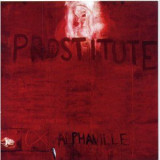
Ursprünglich 1994 veröffentlicht, ist Prostitute das vierte Album von Alphaville und war die erste Veröffentlichung seit fünf Jahren. Mit "einer großen Vielfalt an Stilen" enthält das Album elektronischen Jazz, New-Wave-Musik, Synthpop, Swing, Hip-Hop, klassische Balladen und Pink-Floyd-ähnliche elektronische Musik - es ist also eher ein theatralisches Album.
Die erste Singleauskopplung war "Fools", gefolgt von der zweiten Single aus dem Album, "The Impossible Dream". Das Album wird zum
ersten Mal auf Vinyl veröffentlicht. Die 2 CD Extended Version enthält mehrere Mixe und alternative Versionen.
- 2LP - remastered, Trifold-Hülle plus 24-seitiges Booklet,
- 2CD - mit der Original-CD und einer zusätzlichen Disc mit Tracks, die nur auf 12"-Vinyl erhältlich waren, und einer 5"-Maxi-CD mit Mixen, alternativen Versionen usw.
After the release of their highly successful self-titled album in summer 2021 (#1 in Germany and Spain etc.), HELLOWEEN -- one of the most respectable German metal exports and pioneers of German melodic speed metal -- are finally bringing their new anthems to the packed arenas, leading them all around the globe with their »United Forces« tour. The creators of the albums »Keeper Of The Seven Keys, Pt. I & II« (87‘/88‘), which are considered to be among the most successful German metal records of all time and are reckoned internationally as absolute milestones of power metal, haven’t only cemented but even expanded their status as giants of the scene. Caused by the pumpkinheads‘ aforementioned triumphant wave of success, the group’s back catalogue albums are also more in demand than ever which is why Atomic Fire are now set to release a series of brand new vinyl editions including the following hot HELLOWEEN records: »The Dark Ride« (2000), »Rabbit Don’t Come Easy« (2003), »Keeper Of The Seven Keys - The Legacy« (2005), »Gambling With The Devil« (2007), »Straight Out Of Hell« (2013), »My God-Given Right« (2015), and last but not least their latest offering »Helloween« (2021).
A Flor de Piel, the new album from singer-songwriter and composer Maria Monica Gutierrez (aka Montañera), is a meditative journey of self-discovery across oceans, time, and the traditional confines of genre. Originally from Bogota, Colombia, Gutierrez began the album as a way to explore her identity after a difficult move to London left her feeling untethered in a strange new place. The result is an examination of the immigrant's experience through a rich sonic lens of ambient pop textures, inspired by sources as disparate as Colombian traditional music, traditional Senegalese music, and whalesong from the depths of the Atlantic. The album begins with the title track "A Flor de Piel," Gutierrez's indelible vocals floating above a vast expanse before being joined by deep, silky bass and the plucks of a koto-like stringed instrument. "The song was inspired by traditional Japanese music," Gutierrez explains, "It's about making my heart a little lighter; I know that inside of me I can be as light as mist in heat, I can be fragile as the song of a sparrow." That sentiment perfectly encapsulates much of what makes A Flor de Piel so special. The album comes with a message of healing for all people, without forgetting the centuries of struggle and hurt that form the bedrock of modern society. The track "Santa Mar," for instance, is inspired by the musical traditions of afro-pacific women in Colombia, and the crucial role that they play as peacebuilders in the region. Backed by a hypnotic beat, the song features contributions from marimba player Cankita, alongside Las Cantadoras de Yerba Buena, an all-female vocal group that utilizes traditional Afro-Colombian music to preserve their history and promote peace. Standout track "Como Una Rama" is a futuristic take on bullerengue, a traditional style of music and dance originally developed by Maroon communities on Colombia's Caribbean coast. Deeply affecting, the song combines Gutierrez's indomitable voice with electronics that recall Steve Reich's rhythmic minimalism. "Cruzar," the final track on the album, feels almost like a lullaby, with a meditative harmonic style and trance-like vocal melody. "The lyrics," Gutierrez explains, "are a personal reminder of what is important to me: healing, letting go, breathing, evaporating, forgetting, changing, crystallizing." Across the 40-odd minutes of A Flor de Piel, Gutierrez triumphs at recontextualizing traditional sounds and sentiments into a modern form using synth-based and electronic textures. It's a fitting representation for the personal struggles that the artist endured during her move to London. Rather than dwelling solely on the past Guitierrez uses A Flor de Piel to summon the strength of past generations, and forge a new path forward. As she describes it, "The album has accompanied me through inner journeys of finding myself in a new territory _ of redefining myself, of remembering who I am _ in a strange place." As we drift towards an increasingly frightening and uncertain future, perhaps Montañera's A Flor de Piel is exactly what we need: something to give us strength, to bring us peace, and to accompany our journey into a strange new place.
'Racoons' ist das mittlerweile fünfte Soloalbum des außergewöhnlichen Schlagzeugers Erland Dahlen. Er hat auf mehr als 300 Alben mit einer Vielzahl von Künstlern unterschiedlicher Genres gespielt und tritt regelmäßig mit Bands und Künstlern wie der Nils Petter Molvær-Band, Stian Westerhus, Geir Sundstøl, Madrugada und Eivind Aarset auf, um nur einige zu nennen. Auf 'Racoons' spielt Dahlen diverse individuell angefertigte Instrumente - verschiedene Holztrommeln oder maßgeschneiderten Zitherbass. Dahlen verwendet auch chromatische Blütenglocken und verschiedene Metallgegenstände für seine spannenden Klang-Collagen. Erland Dahlens Soloprojekt entstand aus der Tatsache, dass er im Laufe der Jahre eine Vielzahl von Platten mit anderen Musikern gespielt hatte, und ein Projekt haben wollte, bei dem er eigenständig aufnehmen und live spielen konnte. Im Laufe der Zeit hatten sich zu viele musikalische Ideen angesammelt, die zu keinem anderen Projekt passten, sodass er beschloss, einige davon in einem Soloprojekt zu verwenden. Daraus wurden bislang fünf spannende, hochkreative Alben die zwischen Elektronik und Jazz pendeln.
Glen S debuts on Craigie Knowes with the Elation Station LP. 7 club-handy tracks shaped to elate minds and elevate dancefloors. A reflective trip glimmering with positivity and illumination.
b B1 Yeah 16x