Jerome Hill, Lukes Anger, Dark Vektor and Computer Madness deliver a no-nonsense 12 Inch strike between Electro, Detroit pressure and machine funk. Punchy drums, icy synth cuts, raw momentum, built for DJs, built for floors. Four producers, four angles, one shared language of body-ready electronics, driven by Detroit energy and sharp-edged Electro.
Cerca:elec
- A1: Your Selfish Wayss
- A2: Morning Light
- A3: Just Like You
- A4: One Way Or Another
- A5: Folie
- B1: No-One In The World
- B2: Clouds At My Feet
- B3: Summer Rain
- B4: Ancient Hometown
- B5: The Girl With The Fairytale Dream
- C1: All Your Own Way
- C2: Juke Box Heart
- C3: The Daydream Girl From Sealand
- C4: I Am The Murderer
- D1: Some Love Will Remain Unsaid
- D2: Shadow Play
- D3: On The Horizon
- D4: Just After Sunset
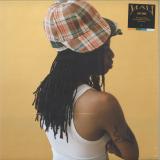
Apollo Records proudly present the vinyl reissue of ‘Morning Light’, the acclaimed 1997 album from Mark Van Hoen’s Locust project; a work that blurred the boundaries between ambient electronics, trip-hop, and dream-pop with an emotional precision few have matched since.
Originally issued during the label’s pioneering late-’90s era, ‘Morning Light’ marked a bold evolution for Van Hoen, best known at the time for his dark, abstract ambient work under Locust and as a member of Seefeel. Seeking to create something more human and melodic, Van Hoen assembled a rotating cast of collaborators, including Zoe Niblett, Craig Bethell, Neil Halstead (Slowdive/Mojave 3), and Wendy Roberts, blending fractured dance rhythms, live instrumentation, and intimate vocal performances into something both deeply personal and effortlessly cinematic.
From the haunting reimagining of The Carpenters’ ‘No-One In The World’ to the slow blooming emotional arcs of ‘All Your Own Way,’ ‘Folie’, and ‘The Girl With The Fairytale Dream’, the album’s 13 tracks form a widescreen narrative of melancholy and beauty. Reviewers at the time hailed it as “a subtle delight” and “sheer God-given genius”, comparing its mood and texture to Massive Attack, This Mortal Coil, and Portishead, yet noting its entirely singular voice.
This reissue restores Morning Light to vinyl for the first time in over two decades. A crucial artefact from the fertile intersection of experimental electronica and ethereal pop, ‘Morning Light’ stands today as one of the label’s most quietly influential releases.
Strut Records highlights a landmark in British jazz-rock with Second Wind, the 1972 album from keyboard visionary Brian Auger and his powerhouse group Oblivion Express. Capturing a fully matured lineup, the record finds Auger expanding his fusion language - bridging jazz sophistication, funk-driven rhythm, and soul-infused songwriting with the clarity and fire that defined his early ’70s work.
Though Auger’s roots lie in the lineage of hard-swinging jazz organ and the improvisational fire of the ’60s British scene, he has never been an artist content with tradition. With Second Wind, he moves further into a hybrid language that fuses rhythm with harmonic depth and groove, without sacrificing sophistication. His playing is expansive yet precise, translating the electricity of live performance into a studio work that breathes with immediacy.
At the heart of this era of Oblivion Express is the telepathic rapport among its members. Vocalist Alex Ligertwood (in one of his earliest major recordings before Santana fame) brings a soulful intensity that feels both grounded and forward- looking. Second Wind contains tracks that have become deeply significant in Auger’s discography - original compositions Second Wind, and Truth to name a few - but it was Auger's high octane revisioning of Eddie Harris' Freedom Jazz Dance, (adding new lyrics to the original instrumental) that genuinely broke barriers. The track became a DJ friendly classic and highlighted the groups deeply original approach.
The rhythm section of Barry Dean and Robbie McIntosh balances weight and fluidity, giving Auger the space to stretch across Hammond organ, Rhodes, and keys with characteristic boldness. Their collective sound is one of seamless motion: jazz-inflected lines swelling into rock-driven crescendos, funk-leaning grooves locking with vocal hooks, moments of quiet clarity emerging between bursts of improvisation.
Second Wind stands as a pivotal moment in Auger’s discography: a record that bridges the exploratory spirit of his earlier projects with the more groove-oriented approach that would soon bring international attention. More than five decades later, it remains a vivid document of a band carving out its own language. Music born of instinct, collaboration, and a restless desire to push beyond the expected.
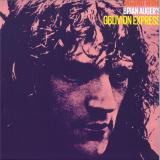
Strut Records presents a fresh look at Oblivion Express, the 1971 album that marked Brian Auger’s shift into a new musical frontier. After years spent shaping the sound of British jazz-soul with the Trinity, Auger stepped into the new decade with a leaner, electrified ensemble and a renewed sense of purpose. This record captures the moment that transformation took shape.
Oblivion Express introduced a sound that was distinctly Auger’s own. Rather than echoing the fusion emerging in the United States, Auger developed a language rooted in the UK’s jazz underground, culminating in a spaced out jazz- rock / prog-fusion album awash with larger than life drum fills and Auger’s virtuosic organ playing. Between bassist Barry Dean and drummer Robbie McIntosh the album moves effortlessly between tight, articulated phrases and broader, improvisational passages. The trio’s interplay forms the backbone of the album and sets the tone for the sound that would define the early years of the Express.
Album opener “Dragon Song” launches with a restless drive that immediately signals Auger’s new direction. Auger chose to record this version of John McLaughlin’s piece (his friend and former bandmate in 'The Niddy Griddys') after hearing McLaughlin’s album Devotion during its mix at New York’s Record Plant Studios. Auger was blown away, recalling, “Oh my god, this is amazing. I wanted to record that myself - and I did!”. Pieces like “Total Eclipse” demonstrate the Oblivion Express’ command of dynamic contrast, and title track “Oblivion Express” explores the cinematic and compositional prowess of the group through stripped back, building moments vs. explosive melodic breakdowns. Riff-heavy “The Sword” later became known through Madlib’s usage in 2014 tracks “Yeti Movie” and “Parodies”.
In retrospect, Oblivion Express stands as a jazz leaning, prog-rock masterpiece and foundational moment in Auger’s catalogue. It captures the starting point of a new sound that is more focused, more urgent, and fully committed to the possibilities of jazz-rock at the dawn of the seventies. The album remains a vivid document of a band discovering its identity and setting the stage for the further array of influential releases that would follow.
Two sides, each lasting 8 minutes and 50 seconds. A clash that resonates in friction, united by the materiality of vinyl - if only for a time. Or at best, a rapprochement, like in cinema. On side A, a MIDI composition by Xavier Robel for synthesized piano, based on La Monte Young's tuning system for The Well-Tuned Piano. Mouse clicks, boxing gloves, vibrancy, and mischief. On side B, a positively insistent On-U Sound-flavored rhythmic investigation, produced by Androo in response to Xavier Robel's composition (one he hadn't asked for). From sparse elements, a kaleidoscopic pulse unfolds - as dub seeps within a fog of electroacoustic fluctuations.
Often cited as the strongest Tribe 69db live recording, this cassette emerged from a tense and pivotal moment in the early 90s free party scene.
At the time, Techno Import was the largest electronic music shop in Paris, and arguably in France. The shop planned to release a CD compilation titled Sound Of Teknival, featuring Spiral Tribe. As the project progressed, disagreements over money, copyrights and control led Spiral Tribe to withdraw their approval.
Despite this, Shark Records, the label linked to Techno Import for the project, proceeded with the CD release without full artist consent. In response, 69db released a tape titled "Fuck Techno Import". This cassette stands as raw testimony to the clash between underground culture and commercial structures, capturing both the sound and spirit of an era when autonomy mattered more than compromise. Originally released in 1997, specially remastered for tape.
Musically, the album represents a range of compositional approaches. Murky, densely textured depths of sound are explored with subtle pulses and pings woven within, contrasted with composed or improvised moments of acoustic instrumentation making a move into the foreground. Certain tracks on Sea Island such as album opener Ahull make rhythm their focus by exploring subtle polyrhythms and investigating colliding moments of repetition and variation.
Though staunchly electronic at its core, instruments such as vibraphone and piano make appearances, and layers of live musicality, improvisation and detail appear in the looped and layered beds of manipulated sound recordings.
A varied cast of players appear in the loscil “ensemble”, some familiar collaborators from the past such as Jason Zumpano on rhodes and Josh Lindstrom on vibraphone, and others new to the mix such as Fieldheadʼs Elaine Reynolds who provides layered violin on Catalina 1943, and Ashley Pitre contributing vocals on Bleeding Ink. Seattle pianist Kelly Wyse, who collaborated with loscil on his 2013 edition of piano-centric reworks Intervalo, performs on the tracks Sea Island Murders and En Masse.
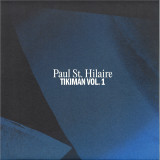
For the first time in more than a decade, Paul St. Hilaire (AKA Tikiman) presents a solo album – 100% Tiki.
Over his 30-plus year career, St. Hilaire has become one of dance music’s quietly legendary figures. Born and raised in Dominica, he moved to Berlin in 1994 and has lent both his voice and his musicianship to some of the most iconic electronic music from the German capital – and beyond. Renowned for his collaborations with Moritz von Oswald and Mark Ernestus (AKA Rhythm & Sound), he has also appeared on records with Deadbeat, Rhauder, Larry Heard aka Mr. Fingers and Stereotyp (G-Stone Recordings), amongst others.
However, few know the extent of St. Hilaire’s compositional and technical mastery. From his home studio in Kreuzberg, which includes an extensive collection of vintage hardware, self-built instruments and notebooks scribbled with endless lyrics, he has created a vast archive of material spanning ambient dub, avant-jazz, lush techno and lovers rock.
Tikiman Vol. 1 is a heady, downtempo tour de force of patois metaphors on education, displacement and personal vs. global histories, as is evident on slippy album opener “Bedroom in My Bag”: Mister, mister / Where are you going? / I’m heading for a faraway land / What are you having in the bag in your hand? / Help us to understand / He said, I’ve got my bedroom in my bag.
Overall, the album’s lyrics reflect on life between Berlin and Dominica, specifically St. Hilaire’s hometown of Grand Bay, where he has worked with various musicians famous for the island’s different genres of carnival music. St. Hilaire himself always favoured the island’s more “discrete” music, developing a sonic synergy between two different geographical strains of groove and minimalism, and combining them with foundational Caribbean mixing techniques, which provide the basis for his songwriting and distinct
baritone.
Tikiman Vol.1 offers a rare insight into St. Hilaire’s complex artistry, from the eyes-down grooves of “Little Way” and the guitar-heavy digi dancehall experiment “Keep Safe,” to the subtle hypnosis of “Ten to One” and the softly crashing synth waves of closer “Three And A Half”, evoking not only beaches but also coasts and borders. It’s a fitting expression of both the breadth of St. Hilaire’s work, as well as his history as one of the few black, Berlin-based artists who, despite remaining largely overlooked, has influenced the city’s electronic music culture since its beginnings.
Credits
Written & Produced by Paul St. Hilaire
Mastered by Stefan Betke
Artwork by Grant Gibson
Kynant Records was founded in 2015 by Richard Akingbehin, a British-Nigerian radio programmer (Refuge Worldwide), music writer and DJ. Originally specialising in deep techno and featuring artists such as Cio D’Or, Terrence Dixon and Donato Dozzy, Kynant has since launched a sub-label Kynant EX which focuses on ambient, dub and experimental electronics.
2026 Repress!
LIMITED EDITION SPLATTER VINYL
More Strictly Rhythm GOLD right here. An all-time, hands down, unstoppable CLASSIC record from way back - 1995 to be precise. If you don't know this record it's possible you've been in a coma, living in a cave with no electricity or have literally just arrived here on planet earth. Either way, once you hear 'Higher State Of Consciousness' you certainly won't forget it. Produced by Philly's legendary Josh Wink and released by the forward thinking A&R team at Strictly. At the time there was very little to nothing that even came close to this release. The 'Tweekin Acid Funk' mix being the highlight and the version that caught everyone's ears and captured minds worldwide across radio-waves with endless rewinds on MTV and in the clubs. Foreseeing the impending 'Breaks' boom that came around in the mid to late 90's 'Higher State...' was one of those rare moments where a record truly transcends genre boundaries and found it's way into DJ's boxes and bags on every scene. A mighty, evergreen slab of wigged out, acidic, breakbeat chaos. Essential. This one's a tasty 2017 reissue and remaster, featuring all 3 mixes, unedited, as per the original release way back when. Do not sleep.
Mammal Hands are pleased to announce the release of their highly anticipated fourth album 'Captured Spirits', released 11thSeptember via Manchester tastemaker record label, Gondwana Records.
Consisting of saxophonist Jordan Smart, pianist Nick Smart and drummer and tabla player Jesse Barrett, the trio have forged a growing reputation for their hypnotic fusion of jazz and electronica and have recieved glowing recommendations from the likes of The Guardian and Gilles Peterson. Drawing on their love of electronic, contemporary classical, world, folk and jazz music, Mammal Hands take in influences including Pharoah Sanders,Gétachèw Mekurya, Terry Riley, Steve Reich and Sirishkumar Manji.
Forming in Norwich in 2012, brothers Nick and Jordan along with Jesse, developed their distinctive and polished sound with their meteoric live shows and release of three critically acclaimed albums: 'Animalia' (2014), 'Floa' (2016) and 'Shadow Work (2017). Landmark live performances have included shows at The Roundhouse London, the main stage at Field Day Festival, La Cigale Paris, Montreal Jazz Festival, Hamburg Elb Jazz, Athens Technopolis and Unit Tokyo.
London-based sonic champion Shy One releases her long-awaited second album Mali on Errol and Alex Rita"s Touching Bass. So-called after her given name, Mali is a confident, future-facing ode to Black British electronic music and diasporic lineage. Informed by the full spectrum of London sound that she was raised on - with a vital cast of Black British collaborators including George Riley, Steve Spacek, James Massiah and Private Joy.
PAF stands for Pogo Amongst Flokati, Paranoia After Friday, Performative Awkward Feelings, Pop Against Formality, Pleasure And Fear, Post-Authentic Fantasy, People Acting Feral, Punk Agains Faschism, or whatever else you like.
PAF are a trio who overgrow punk, office disco, tiredness, fear, lethargy, tears, Baltic Sea beaches, mix-ups, crossroads, house-sitting, and Prosecco into electronic thickets that sometimes grow into danceable tracks, sometimes into intricate structures of electric bass, vocals, and synthesizers.
PAF are from Hamburg and consist of Anna G. on vocals and electronic percussion, Pia A. on the MS-20 synthesizer, and Felix R. on bass and vocals. Punk by other means—where the means break the form itself. Here now is the debut LP, following the legendary tape released on Happy Tapes from Leipzig. The cover was drawn by Raoul Dóre and printed in color. A printed inner sleeve offers the chance to read along with the lyrics. The whole thing will be available in spring 2026 on 200 well-pressed vinyl records.
Black Vinyl Repress
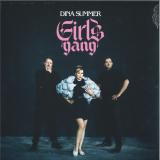
Das Berliner Indie-/Electro-Wave-Trio Dina Summer meldet sich mit einer ordentlichen Portion Synthpop auf ihrem zweiten Album ‘’Girls Gang’ zurück!
Dina Summer ist ein kollaboratives Projekt, das aus Kalipo, einer Hälfte der legendären Electro-Punk-Band Frittenbude, und dem griechisch-deutschem DJ & Produzenten Duo Local Suicide besteht, die das Label Iptamenos Discos betreiben. Ihre bisherigen Werke umfassen das von Kritikern gefeierte Album „Rimini“ aus dem Jahr 2022, das einen nostalgischen Einblick in Retro-Disco-Vibes bietet, sowie die EPs „Who Am I“ (2021) und „Hide & Seek“ (2024). Seit der Gründung der Band vor fünf Jahren hat Dina Summers Musik mit Millionen von Streams, weltweitem Radio-Airplay und zahlreichen Spotify- und Apple Music-Editorial-Playlists für Aufsehen gesorgt und wurde von DJs wie Charlotte De Witte, The Hacker, Âme, Dixon, Joris Voorn, DJ Hell, Joyce Muniz und Dubfire gespielt. Das neue Album umfasst 11 Songs die sich mit Themen wie Empowerment („No More Tears“ & „Girls Gang“), Außenseitertum („Alien“ & „Zombie“), Vergänglichkeit („Promise Me feat, Curses & Joshua Murphy“), Nostalgie („Halkidiki“) und Beziehungen („Nothing To Hide“ & „Hypnotized“) auseinandersetzen. Legte ihr Debütalbum seinen Fokus eher auf den Club zwischen Italo-Disco und 90ies Elektro, erkundet die neue Veröffentlichung eine größere Sound-Palette, die von New Wave & Post-Punk zu Electroclash und Synth- & Indie-Pop reicht. „Girls Gang“ ist ein gutes Stück songorientierter als das Debütalbum, die Band erweitert ihr Repertoire auf einigen Songs unter anderem um echte (!) Bässe und Gitarren, vorallem aber setzt Frontfrau Dina neben ihrem Markenzeichen - Spoken Word - immer öfter auf ihre Gesangsstimme. Trotzdem knüpft das Album nahtlos an das Erstlingswerk an, man hört wieder jene poppige Melodien und Hooks mit denen sich Dina Summer zuvor schon einen Namen gemacht hat, ausgebreitet auf einem Bett aus Indiepop-Hymnen und Club-Brechern.
Roman Khropko delivers four cuts balancing precision club mechanics with flashes of emotion. The record moves between stripped minimal techno and warmer electro, designed to unfold gradually.
The A side opens with Glimpse, a straight-forward roller driven by tight drums and a suspenseful build. Piece of Truth follows with a funkier swing, blending elastic basslines with subtle tech house inflections that keep things in motion.
On the B side, Fractum settles into a hypnotic minimal tech mood, laying steady groundwork for an extended club stretch. The closing track, Among The Machines, shifts into emotional electro territory, carrying melodic tension that leaves a melancholic aftertaste.
A concise and functional toolset for the dancefloor. This is one to stay in your bag for a long time.
- A1: Glimmerine
- A2: A Slow Collision
- A3: Gravity Test
- B1: Tilth (Apparat X Káryyn)
- B2: Hum Of Maybe
- B3: A Echo Skips A Name
- C1: Enough For Me
- C2: Lunes
- D1: Williamsburg
- D2: Pieces, Falling (Apparat X Bi Disc)
- D3: Recalibration
Ltd. Green Vinyl[28,53 €]
Six years after his Grammy-nominated LP5, Sascha Ring - aka Apparat - takes a bold dive into the complexities of life with his sixth studio album.
A Hum Of Maybe is detailed, finely crafted, and wonderfully unpredictable. At its core, the record is about love - for himself, his wife, and his daughter - and holding onto it, protecting it, and constantly recalibrating as it is in a constant state of flux. As the title suggests, the songs explore being stuck in between: not a clear yes or no, but A Hum Of Maybe.
Ring elegantly combines the perspectives of an electronic producer and a classical composer, working closely with long-time collaborators Philipp Johann Thimm (cello, piano, guitar) - who also co-wrote and co-produced the record - Christoph “Mäckie” Hamann (violin, keyboard, bass), Jörg Wähner (drums), and Christian Kohlhaas (trombone). The album also features Armenian-American artist KÁRYYN - Apparat’s Mute labelmate - on ‘Tilth’, and Berlin-and Rome-based musician Jan-Philipp Lorenz (aka Bi Disc) on ‘Pieces, Falling’.
A Hum Of Maybe is complex, deeply personal, and embraces a state of limbo, marking an exciting new chapter for Apparat.
Lanzieri, the Uruguayan hero, once again elevates the sound of his nation with a solid release in which he clearly manages to narrate a story that unfolds across the 4 tracks of the EP.
The narrative is dense with dark atmospheres and unexpected twists; the flow is steady and the storytelling clear. The sound is harsh yet mellow, the background broad and diverse, with traces of trance, electro, and even trip-hop. A solid release on the new Auto Crash Test.
Kalipo kündigt sein fünftes Solo-Album mit Titelsong ‚Alles' auf Iptamenos Discos an!
Der in Berlin-ansässige Multinstrumentalist Jakob Häglsperger ist seit fast zwei Jahrzehnten einer der umtriebigsten deutschen Produzenten. Neben unzähligen Hits, sechs Alben mit seiner Band Frittenbude und vier von der Presse gefeierten Solo-Alben als Kalipo gründete er nebenbei 2020 - gemeinsam mit Local Suicide - die Band Dina Summer, ein weiteres Nebenprojekt welches seit dem international Wellen macht.
Mit über 30 Millionen Streams und weltweitem Radio-Airplay, verbindet sein Soloprojekt elektronische Intensität mit emotionaler Tiefe irgendwo zwischen Clubkultur und Indie-Ästhetik. Geradlinige, treibende, im Krautrock verwurzelte Beats treffen auf markante, von Electroclash, House und Techno der 2000er und 2010er Jahre inspirierte Melodien.
Mit fünf Soloalben und einem breiten Katalog von Remixen und Singles auf renommierten Labels wie Ki Records, Get Physical, Audiolith Records, Iptamenos Discos und Heimlich hat sich Kalipo einen festen Platz in der Szene erarbeitet. Seine Veröffentlichungen wurden unter anderem von Medien wie TAZ, Spiegel Online, Rolling Stone, Musikexpress, DJ Mag, Mixmag, Tsugi und Resident Advisor gelobt.
Das neue Album kommt mit einer ordentlichen Portion Darkness, schwebenden Gitarren und einem stampfenden Beat daher. Darüber singt Kalipo mal auf deutsch mal auf englisch lässig über das Loslassen von inneren Ängsten, Beziehungen und alltägliche Lasten. Ohne seine Fans zu verschrecken schafft er auch auf ‚Alles' wieder einen stimmigen Spagat zwischen Clubmusik und klassischen Songstrukturen.