Veronica Electronica, eine acht Tracks umfassende Begleitung zu Ray of Light, wurde ursprünglich 1998 von Madonna als Remix-Album konzipiert. Das Projekt wurde jedoch durch den überwältigenden Erfolg des Original-Albums und die zahlreichen Hit-Singles, die über ein Jahr lang im Fokus des Interesses standen, zurückgestellt. Ray of Light verkaufte sich weltweit über 16 Millionen Mal und brachte Madonna vier GRAMMY® Awards ein, darunter den für das beste Pop-Album. Mehr als 25 Jahre später wird dieses lange kolportierte Konzept nun endlich Wirklichkeit. Die Sammlung enthält neu bearbeitete Versionen von Club-Remixen von Sasha, BT und Victor Calderone, zusammen mit dem Original-Demo von „Gone, Gone, Gone“ – einer bisher unveröffentlichten Aufnahme, produziert von Madonna und Rick Nowels. Veronica Electronica erscheint am 25. Juli als limitiertes Silver Vinyl und digital, und ist eine weitere hochwertige Ergänzung zu Madonnas Silver Collection.
Cerca:elec
Steve Hauschildt returns after 6 years with a new album titled Aeropsia. After a transcontinental relocation from the US to Tbilisi, Georgia, the electronic composer emerges from a personal and global transformation to explore themes of perceptual distortion, disconnection, and renewal.
Aeropsia (which roughly translates as “seeing the air”) refers to a visual phenomenon in which objects appear to float or shimmer, often due to changes in pressure, perception, atmospheric shifts or neurological disturbance. This becomes a metaphor for the liminality that informs the record: blurry visions, dreamlike displacements, and the fragile membrane separating what is seen from what is felt.
In the years since his last solo release, Hauschildt’s world has been marked by relocation and a growing sense of global turbulence. These experiences became the raw material for a work that navigates institutional haze and uncertainty itself. The result is music that employs decay as method, structure as entropy, and mutation as expression.
While Aeropsia remains subjective in its vision, Hauschildt invited two previous collaborators to expand the album’s gravitational pull. Cellist Lia Kohl, who previously performed on Nonlin, returns and brings a tactile warmth to select tracks, while guitarist Michael Vallera threads spectral harmonics into the mix. The album’s electronic foundation and its tactile elements meet in a state of luminous suspension to navigate the shifting in physical and psychological terrain.
“Electronic / Funk Yacht Rock testament to the carefree teen spirit of the 80s”
In 1985, a young and ambitious Britt Cobble, fresh out of school, ventured to Florida to have his debut solo album Maiden Voyage mastered by none other than reggae legend Touter Harvey, known for his work with Bob Marley. The result is Spinnaker – Maiden Voyage, an Electronic / Funk Yacht Rock album infused with the carefree teen spirit of the 80s.
Anchored by its central motto, “Love the coast, it’s there for you,” the album captures the essence of youthful exploration and the allure of the open sea. With slick production and an undeniable air of nostalgia, Spinnaker invites listeners to escape into a world of sun-soaked coastlines and endless horizons. Britt elevates yacht rock to new heights, serving as both a testament to youthful ambition and a celebration of the era’s smooth, coastal vibes.
With this album, Heleen Van Haegenborgh returns to her roots as a pianist.
In recent years, she has primarily composed works on commission for a diverse range of ensembles, from recorders to foghorns.
On this solo album, her entire journey of musical encounters and compositions comes together subtly.
Van Haegenborgh doesn't think in terms of stories or boxes, but rather in colours, energy, and texture - without drifting into the abstract.
She remains true to her personal inside piano world, including the use of wires she has been experimenting with since 2008. These are given a place here as fully-fledged musical elements, communicating on different levels, in various contexts and forms.
The electronics sometimes become completely one with the piano, but often follow an entirely different path: at times calm, subtle and refined; at other times nervous and under the surface. Always within specific atmospheres and with precise timing.
Van Haegenborgh took charge of every detail from start to finish - electronics, composition, and performance.
“Is all that we see or seem but a dream within a dream?” This quote from a poem by Edgar Allan Poe sums up the lamenting, primal work that is "All That We See or Seem"; a project conceived between Finland, England and Brazil. The self-titled album consists of two long-form pieces of droning mysticism hailing from the trio of Gruth (concept, production, electronics), Ellen Southern (vocals, field recordings, percussion) and Johanna Puuperä (violin, modular synthesizer, additional vocals).
The album opens straight into a thousand yard stare with “Myrskymielellä", adapted from a 1891 poem by the Finnish national poet, Eino Leino, who wrote it at the tender age of 13. Here a blank distant droning of synths and the sounds of flowing water hover underneath like a dark river observed from the air. This is a sound and feeling that will stay constant for the entirety of the piece´s thirty minute duration. It is a trance-inducing composition that slowly unfolds elements of pagan ancestry into its own life. At first, faint female vocals are introduced as distant spatial elements, which gradually advance into waves of cries and anguish as the piece progresses and moves further into the storm. The tranquility of the first half is slowly morphed into a full blown ceremony as driving ritualistic percussion and a foreboding witch-like presence shifts the piece into a Dead Can Dance-like territory. Here a constant enveloping mixture of violins, modular synths, field recordings and vocal screams creates the feeling of a grande finale. It is an astounding piece of music that develops like a drone symphony for the beginning of time.
With the second piece, “A Dream Within A Dream”, from Edgar Allan Poe´s 1849 poem, you are transported to the shores of an undisclosed island; a place where it´s only you, your thoughts and the endless emptiness. The continual sound of waves is soon brought together with a cloud of synths and mourning violins that will keep a steady dreamlike state during most of the piece´s duration. This time the wordless vocals feel almost angelic in their pageantry. The composition flows like a slow caress of the soul and feels like the spirit twin of Gavin Bryars' “The Sinking of the Titanic” with its lamenting slow movements towards the unknown.
Truly a ghost of a record, “All That We See or Seem” is an experience hard to shake and feels like entering sacred ground. We are in a place surrounded by earth, both ancient and present. "Let loose, Vanha, the rage of an earthly storm! Detach the elements, completely open the sky! In the Earth, let an incessant storm prevail, so that in my chest I would not feel the miserable pain” - Eino Leino
The Pitch is a quartet made up of Boris Baltschun, Koen Nutters, Michael Thieke and Morten Joh. Founded in Berlin in 2009, they play a hypnotic form of structured improvisation full of acoustic exploration and electronic intervention. On Neutral Star, The Pitch are joined by Australian guitarist/composer extraordinaire Julia Reidy for a record of star gazing electro-acoustic jazz.
Reidy's playing and compositional technique between Takoma-style fingerpicking and Glenn Branca'esque microtonality, perfectly complements the loose improvisational framework The Pitch is providing. Endless ≠ Limitless, a recent piece by Reidy and Joh, is transformed from a washed-out/obscured tape delay composition into a colorful, meandering ensemble piece with a swarming character - blooming with intrigue for the patient ear. The B-side strikes a more gentle tone: the 24-minute Neutral Star begins with a siren-like overtone whose drone-like flowing slowly morphs into a deterritorial modality with jazzy undertone. Accompanied by constant eruptions of vibraphone, clarinet, electronics and double bass punctuation – while permanently questioned by Reidy's drippingly pearly steel guitar work. Slowly evolving into new territories through the expansive instrumentation and keen listening between the players.
The fact that Neutral Star was recorded in one take (by Rabih Beaini in his Morphine Raum studio/venue) in front of a live audience and without overdubs is hard to believe, even for the trained ear. The recording appears to be too multilayered for a single snapshot, with its compositional structures constantly shifting and moving against themselves, counterintuitively and anti-cyclically. Reidy´s playing has been described as "unstable harmonic territory, and the collaboration with The Pitch interprets this concept brilliantly - adding further non-places to the territory. And the listener, however, is never left alone in the process of tectonic shifts - at least as long as their listening is attentive and contemplative at once.
“Oh damn I got fired suddenly, replaced by a hydraulic pump with life long guarantee”.
The undefinable Kaboom Karavan returns to the dusty Belgian roads with a total Fiasko! - or a full blown disaster if you will (seen from a minimalist perspective), although one that might be the antidote to the sterilised and scattered world that increasingly surrounds us. Fiasko! represents a musical chaos that feels both ecstatic, fun, as well as deeply melancholic. Like an overwhelming moment where the world seems to touch you on all senses. This is music for a new underground of black tie workers raising up to the dullness of societal norms by connecting to their inner child. It’s protest music towards the new normal, where the rules are thrown out of the window and unpredictable sense of joy prevails. Shortly said, Fiasko! Is contemporary exotica made by a madman with too much time on his hands.
As usual, Kaboom Karavan releases contains a conglomerate of strange, mostly home made instrumentation, which will be too long to list here. To shorten it down… Bram Bosteels himself, the captain of the ship, plays all kinds of acoustic instruments, guitars, electronics and uses his voice. Additionally we have Bart Maris on trumpet, tuba and trombone. Stefaan Smagghe plays violin and sarangi. Lastly we have Raphael de Cock on such typical instruments as igir, jadagan and uillean pipes. All that remains to be said is: Bring your neighbour, let yourself loose and have some fun. Listen to Fiasko!
Furthering the passionate exploration of cinema that has guided her two previous LPs - 2017’s ‘Fassbinder Wunderkammer’ and 2020’s ‘I Should Have Been a Gardener’ - the Milanese guitarist/composer, Alessandra Novaga, returns to Die Schachtel with ‘The Artistic Image Is Always a Miracle’, two sides off shimmering, tense compositions – culminating as one of her most creatively ambitious and conceptually rich outings to date – freely inspired by the life and work of the Russian director Andrej Tarkovsky and the music of Johann Sebastian Bach.
Classically trained at the Musik Akademie in Basel, Switzerland, over the last decade Alessandra Novaga has emerged as one of the leading figures within northern Italy’s thriving new, experimental, and improvised music scene, rendering striking solo efforts, in addition to collaborations with Loren Connors, Stefano Pilia, Elliott Sharp, Nicola Ratti, Paula Matthusen, Sandro Mussida, Kid Millions, Travis Just, Francesco Gagliardi, and others. Remarkably ambitious and forward thinking, her approach to the guitar embarks upon a relentless deconstruction and rethinking of her instrument’s unique properties through distinct applications of structure, resonance, space, and tone, creating in a deeply personal and emotive music, seeking narrative and meaning within the abstractions of sound.
In 2017, with the LP, ‘Fassbinder Wunderkammer’, issued by Setola Di Maiale, Novaga embarked upon the exploration of her love of film. Having begun with Rainer Werner Fassbinder, this was followed in 2020 by Die Schachtel’s release of ‘I Should Have Been a Gardener’, a deeply intimate mediation on the life and work of Derek Jarman. Rather than focusing on a fixed point of inspiration or a single film to work from, these pieces achieve a form of abstract portraiture, distilling elements drawn from these filmmaker’s life and work into ambient networks of texture and tonality. ‘The Artistic Image Is Always a Miracle”’ freely inspired by the Russian director Andrej Tarkovsky and the music of Johann Sebastian Bach, finds Novaga radically expanding her sonic palette within this approach.
The seeds of ‘The Artistic Image Is Always a Miracle’ can be traced to a conversation that Novaga had with Alan Licht (contained in the highly regarded Common Tones: Selected interviews with artists and musicians 1995–2020, Blank Forms, 2021), relating to the connections between music and cinema, which led her to consider Andrej Tarkovsky’s use of Bach's music within a symbiotic framework: how the music illuminates the imagism of the films, and the film illuminates new dimensions of the music. Slowly developing over the subsequent years, the resulting album comprises six individual works, some of which draw directly upon pieces of Bach’s music that Tarkovsky used in his films – specifically 'Erbarme dich, Mein Gott', 'Das alte Jahr vergangen ist', and 'Ich ruf zu dir, Herr Jesu Christ' - while others draw upon the sensibilities and moods evoked in the imagination by the director’s films.
As a point of departure and illumination into the process and spirit that underscored the creation of the album, Novaga points toward a passage in Tarkovsky’s "Sculpting in Time”:
“Art is born and takes hold wherever there is a timeless and insatiable longing for the spiritual, for the ideal: that longing which draws people to art. Modern art has taken a wrong turn in abandoning the search for the meaning of existence in order to affirm the value of the individual for its own sake. What purports to be art begins to look like an eccentric occupation for suspect characters who maintain that any personalized action is of intrinsic value simply as a display of self-will. But in artistic creation the personality does not assert itself, it serves another, higher and communal idea.”
‘The Artistic Image Is Always a Miracle’ can be understood as a realisation of the collectivism of which Tarkovsky speaks, in the service of something far beyond the expression of self. Encountering Novaga moving into fairly uncharted waters, three of the album’s pieces incorporate the human voice we encounter the voices of others: that of the poet Arsenij Tarkovsky, the director’s father; a singer from Bach’s ‘Erbarme dich, Mein Gott’, capturing a broadcast in an underground parking lot, and Novaga’s own, rendering the melody from Bach’s “Ich ruf zu dir, Herr Jesu Christ”. Roughly alternating between solo excursions on guitar and bristling electroacoustic pieces, over the course of the album’s two sides Novaga weaves one of her most abstract and ambitious bodies of recordings to date, shifting between the complex tonal mediations generated by the six strings of her instrument, and phycological densities activated by the expanded pallet of sonority made possible by the tactics and approaches of musique concrète.
An immersive, deeply engaging meeting of beauty and melancholy within a labyrinth of voices and ideas, ‘The Artistic Image Is Always a Miracle’ transfigures the life and work of Andrej Tarkovski – one of the greatest auteurs in the history of cinema – into a singular, experimental statement of collective truth. Belonging to recent, ambitious stream of contemporary new music releases on Die Schachtel that’s already included Novaga’s ‘I Should Have Been a Gardener’, Stefano Pilia’s ‘Spiralis Aurea’, Jim O'Rourke & Giovanni Di Domenico’ ‘Immanent In Nervous Activity’, Claudio Rocchetti’s ‘Labirinto Verticale’, and Damāvand’s ‘As Long As You Come To My Garden’, among others, ‘The Artistic Image Is Always a Miracle’ is available on as a limited edition of 300 dark turquoise vinyl LPs released on June 21, 2024. The LP, designed by Bruno Stucchi / dinamomilano, comes with an 8-pages insert illuminated by Alessandra’s text as well as the lovely and intense photographs of Matilde Piazzi.
Returning with its final instalments, Die Schachtel's Decay Music series extends its explorations of inspired contemporary experimental efforts of the ambient, ethereal, and emotively abstract with Luigi Turra and Elio Martusciello’s “Liminale” and Sergio Armaroli and David Toop’s “And I Entered Into Sleep”, two astounding electroacoustic gestures of blurred space and time, plumbing complexity of meaning bound to sonority. Creatively groundbreaking and inspired, radically rethinking the terms of what ambient music can be perceived to be, they stand among the most striking efforts to appear within the series to date.
Reconfiguring the notion of bridge building on a multitude of terms, it feels fitting that the tenth and final installment of Die Schachtel’s Decay Music series, Sergio Armaroli and David Toop’s “And I Entered Into Sleep”, was co-created by an artist whose work featured in the first suite of LPs issued by Brian Eno’s Obscure Records in 1975, the groundwork toward which Decay Music’s own efforts nod. Since that auspicious debut, “New and Rediscovered Musical Instruments” — his split with Max Eastley — David Toop has been regarded as a pioneer in British experimental and improvised music: a sonic voyager who has continuously challenged the sources and materiality of sound through rigorously thoughtful performances, a vast catalog of recordings, and a steady flow of highly influential texts. Be it as a member of Alterations, his group breaking group with Peter Cusack, Terry Day, and Steve Beresford that ran between 1977 to 1986, or through is noteworthy work with artists like Rie Nakajima, Thurston Moore, Paul Burwell, Rhodri Davies, Lee Patterson, Ryuichi Sakamoto, Akio Suzuki, Elaine Mitchener, and numerous others, collaboration has always played a central role within Toop’s singular practice, but few can claim the sprawling sense of beauty and intimacy that’s achieved by “And I Entered Into Sleep”, his first recorded outing with Sergio Armaroli.
A composer, percussionist, vibraphonist, and multidisciplinary artist, Armaroli has been issuing radical and forward-thinking musical gestures for decades, working as one of Italy’s most noteworthy interpreters of composer’s like Giacinto Scelsi, John Cage, Franco Evangelisti, Giancarlo Schiaffini, and Walter Branchi, as both a solo performer and member of the highly regarded Rib Trio, as well as forging a singular practice as a composer, intertwining his efforts as a painter, concrete percussionist, fragmentary poet and sound artist, within a total art, rooted “within the language of jazz and improvisation” as an “extension of the concept of art”. Like Toop, Armaroli’s career has been populated by many collaborators, notably with Riccardo Sinigaglia, Alvin Curran, and Walter Prati, among others, setting the stage for a remarkable meeting between the pair.
Featuring Armaroli on vibraphone and prepared vibraphone and Toop on electronics, “And I Entered Into Sleep” is “a sonic journey, a Proustian suggestion à la Recherche, into the unconscious between electronic and acoustic sounds”. Using a bell that sounds at the beginning of Proust’s “À la Recherché du Temps Perdu”, which reappears more than 3,000 pages later — signaling a transition of phases, as well an auditory trigger of memory — as a departure point, as an association to the percussive vibraphone pulses that thread the album’s two sides, the pair weave a striking interior world of immersive psychological depth. Feeling almost subaquatic at times, like captured glimpses of rumbling, shadowy ecosystems lost within murky ambiences, before washing ashore in a series of pointillistic, highly detailed alien landscapes of the mind, each artist’s markedly different sound-sources, and treatment of the subsequent material elements, dance in abstract grace, incorporating subtle nods to minimalism, free jazz, and musique concrète within its seamless total form of sparse texture and tone.
Easily one of the most striking and memorable releases by either artist to appear in recent years, Sergio Armaroli and David Toop’s “And I Entered Into Sleep” traverses uncharted realms at the borders of literary reference, sound art, ambience and abstraction through delicately musical sounds, revealing new depths at every turn. Issued as the tenth and final album in Die Schachtel’s Decay Music series, highlighting inspired contemporary experimental efforts of the ambient, ethereal, and emotively abstract.

- A1: You Can Never Tell
- A.your Imagination
- A3: Puzzled Into Pieces
- A4: Lattershed
- A5: When Things Come Falling
- B1: In Between And After
- B2: False From Above
- B3: Snowflake Eye
- B4: Emergency Turn Off
- B5: Paradigm Somehow
★Japanese obi-strip
★First time reissued on vinyl
Turning Into Small, the second album by shoegaze band All Natural Lemon & Lime Flavors from New Jersey, originally released in 1998 on local label Gern Blandsten,
is now being reissued on both CD and vinyl.
Formed in the mid-90s, All Natural Lemon & Lime Flavors were deeply influenced by UK shoegaze and alternative rock—most notably My Bloody Valentine—while
pursuing a uniquely experimental sound within the US emo and indie scenes. Their innovative spirit reached full bloom on Turning Into Small, which remains their
final album to date.
One of the standout tracks is the nearly eight-minute-long “Your Imagination,” a spacious sonic landscape that draws listeners into deep immersion.
It has become a signature song for the band, heralding a new wave of shoegaze that emerged in the late '90s and beyond. Even more noteworthy, however, are
tracks like “Puzzled Into Pieces” and “In Between And After,” which showcase the band's layered, synth-driven electronic textures, dynamic collage-like structures,
and occasionally buoyant melodies. These elements come together to create a strange and otherworldly sense of weightlessness—something rarely found even
within the shoegaze genre.
While resonating with the likes of My Bloody Valentine, Stereolab, and The Flaming Lips, the band's mutant-like blend of styles also draws parallels with acts like
Swirlies, Serena-Maneesh, and contemporary shoegaze innovators such as They Are Gutting a Body of Water.
This is a groundbreaking album in US shoegaze—one that still feels fresh and vital thanks to its timeless experimental spirit and originality. Now is the perfect time
to (re)discover it.
The thirteenth release on the Gladio Operations label bears the signature of the great Spanish producer Boris Divider. This artist needs no introduction, as he is considered one of the pioneering producers of the electro scene in Spain, and active since the 2000s, releasing mainly on his label Drivecom.
After betting in recent years on more experimental and hypnotic sounds close to IDM, Boris returns to the pulse of the rhythms more rooted to the dancefloor with this EP titled “In Fragments”. Undoubtedly, this work brings us back to the artist’s classic sound, which is reflected in “Content Location”, a track that envelops us with arpeggios and firm and forceful bass lines and well-developed masterful vocoders. The second cut we find is “In Fragments”, track that gives title to the EP and that lowers the pulsations to a softer and more emotional state.
The B-side opens with “Dynamic Algorithm”, where we get back to our dancing posture and enter dark territories, ready to explore a dynamic of sequences brimming with intrigue and suspense. We continue with “Fragmented”, where the Spanish artist delves into a journey of ambient sounds, with certain tensions in some passages. The EP closes with “Memories of Us”, where we discern his classic sound with subtle arpeggios and delicate sequences that flow in harmony with gloomy
- 1: Shy Girl
- 2: Ooh Baby
- 3: Rockaway
- 4: Night Night
- 5: Holding On
- 6: In The Pictures
- 7: Frontline
- 8: Take Me In Your Arms
- 9: Crying Wolf
- 10: River Runs Deep
- 11: Hello Operator
- 12: We Share Love
Orange Vinyl[27,10 €]
Almost fifteen years since the release of her self-titled debut LP on Mr Bongo, reggae’s orator of love Hollie Cook is returning to the label for Shy Girl, her fifth studio album and her most authentic yet. Woven with tight grooves, beautiful vocals and catchy melodies, Shy Girl hears singer and songwriter Hollie Cook revel in her contemporary lovers rock sound, more confident and open to vulnerability than ever before.
A sun-drenched exploration of love in all its guises, Shy Girl tells stories of the magical and the melancholy, the heart-lifting and heart-breaking, across 12 luscious, analogue reggae compositions - the culmination of a soft-hued and instantly recognisable “tropical pop” sound that Cook has made her own.
Put together across three years and four cities – from LA and NYC, to Vejer de la Frontera in Spain and Cook’s hometown London – Shy Girl was written with long-time collaborators, The General Roots Band, and features a contribution from legendary dub MC Horseman, who lends his voice to the album’s first single ‘Night Night’.
The album opens with the title track ‘Shy Girl’, a buoyant and elastic slice of lovers rock that was written in a moment of spontaneous intuition, and bubbles with a charisma and positivity that Cook radiates. “I’m not a natural show-off,” Cook explains. “The Shy Girl theme is me. It’s just about being my most vulnerable self and being as true to the music that Iove as possible.” It is this honesty which shines throughout, from the chugging deep dub of ‘Frontline’, complete with raking electric guitar lines, to the bittersweet roots ballad ‘We Share Love’, which closes out the album.
It's clear to see that Cook’s songwriting draws on a lifetime of musical influences and inspirations. From her father, Sex Pistols drummer Paul Cook’s record collection and touring with post-punk icon Ari Up’s The Slits, to her love for strong female-led pop music and the bassweight of London’s sound system culture. Enamoured with the music of Janet Kay and Phyllis Dillon, Shy Girl represents a homecoming and a coming-of-age for Hollie Cook, distilling and refining a shimmering reggae sound that will capture your heart, as it first captured hers.
Almost fifteen years since the release of her self-titled debut LP on Mr Bongo, reggae’s orator of love Hollie Cook is returning to the label for Shy Girl, her fifth studio album and her most authentic yet. Woven with tight grooves, beautiful vocals and catchy melodies, Shy Girl hears singer and songwriter Hollie Cook revel in her contemporary lovers rock sound, more confident and open to vulnerability than ever before.
A sun-drenched exploration of love in all its guises, Shy Girl tells stories of the magical and the melancholy, the heart-lifting and heart-breaking, across 12 luscious, analogue reggae compositions - the culmination of a soft-hued and instantly recognisable “tropical pop” sound that Cook has made her own.
Put together across three years and four cities – from LA and NYC, to Vejer de la Frontera in Spain and Cook’s hometown London – Shy Girl was written with long-time collaborators, The General Roots Band, and features a contribution from legendary dub MC Horseman, who lends his voice to the album’s first single ‘Night Night’.
The album opens with the title track ‘Shy Girl’, a buoyant and elastic slice of lovers rock that was written in a moment of spontaneous intuition, and bubbles with a charisma and positivity that Cook radiates. “I’m not a natural show-off,” Cook explains. “The Shy Girl theme is me. It’s just about being my most vulnerable self and being as true to the music that Iove as possible.” It is this honesty which shines throughout, from the chugging deep dub of ‘Frontline’, complete with raking electric guitar lines, to the bittersweet roots ballad ‘We Share Love’, which closes out the album.
It's clear to see that Cook’s songwriting draws on a lifetime of musical influences and inspirations. From her father, Sex Pistols drummer Paul Cook’s record collection and touring with post-punk icon Ari Up’s The Slits, to her love for strong female-led pop music and the bassweight of London’s sound system culture. Enamoured with the music of Janet Kay and Phyllis Dillon, Shy Girl represents a homecoming and a coming-of-age for Hollie Cook, distilling and refining a shimmering reggae sound that will capture your heart, as it first captured hers.
After bending boundaries on the acclaimed labels Optimo Music and Höga Nord, Rudolf Abramov resurfaces with a fierce new statement – inaugurating Aquasonic Records, the freshly minted label founded by one half of the duo.
They unveil a sweeping collection of rare recordings, drawn from the shadows of their enigmatic Berlin studio.
This debut full-length album unfolds like a sonic tapestry, threading krautrock, new wave, dub, psychedelia, experimental electronics, ambient, and jazz into a singular, genre-bending experience.
True to form, the duo assembles a diverse ensemble of guest collaborators, fusing layered musical worlds into a cohesive, concept-driven whole.
At its core, the album captures a dynamic interplay: acoustic instruments recorded with raw intimacy and spatial breath meet the hypnotic churn of modular synths, samplers, and analog machines. A vivid document of process, presence, and unfiltered sound, resisting definition, yet wholly their own.
A hill repeating its own name.
Ben Beinn — mountain mountain — an imagined summit, recursive and unstable.
Poole’s new album Ben Beinn follows 2024’s In a River Shadow, and deepens his exploration of environment, voice, and abstraction. If the previous record moved with flowing water and submerged hymns, Ben Beinn climbs into elemental instability: passing storms, coded skies, and sodden ground.
Across ten tracks, Poole entangles the Celtic New Age sound world — traditional instrumentation (flute, low whistle, bagpipe, piano, strings) — with synthesis, environmental recordings, and abstracted voice. The sound palette is tactile — marked by microtonal harmony, swelling dissonance, and a breathy naïvety. Voices in Gaelic, Norwegian, and English surface and dissolve, stretched beyond recognition — more weather than word.
The album’s title refers to a tautological hill — Ben Beinn, or “mountain mountain” — a recursive site where motifs surface, fracture, and re-emerge. On 365 Days of Rain, rainfall data becomes a rhythmic lattice that slips from metrical order. 1000 opens the record in cinematic emergence: mountain icicles and frozen streams swell into strings and breathy melodic weight. Pulling from the connective folktales of hill and mountain trolls — “Dance for a thousand years,” Poole writes, “for jeg har sovet tidlig så lenge.”
Recorded in Scotland between 2024–2025, Ben Beinn draws from environmental recordings of frozen hill passes, storm drains, and peat bogs using contact mics and hydrophones. Rather than simply reflecting place, these recordings press against it — layering the sonic materiality of landscape with synthesis and song. An inflection point between fabrication — folk music as performed identity, a carrier of story — and its obfuscation through digital networks, where tradition is refracted into plural forms.
Musical reference points include the emotionally saturated textures of Inoyama Land, the folk-electronic hybrids of Eli Storbekken, the hyperrealist collage practices of Noah Creshevsky, and the disquieting sonic simulations of James Ferraro. While Ferraro captures the uncanny surfaces of networked life, Ben Beinn turns inward — toward a located listening, shaped by weather, memory, and terrain.
The second in a triptych that began with In a River Shadow, Ben Beinn continues Poole’s excavation of environmental and folk material through contemporary methods. If the first record submerged itself in flowing water and submerged hymns, this one is shaped by the slow pressures of land and sky — a music of erosion, recurrence, and elemental presence.
- 1: Break A Leg
- 2: Burn
- 3: Under The Waves
- 4: Pestilence
- 5: Yeah, Right
- 6: Tomtom
The instrumentation returns to Cough’s two drums, bass, guitar and sax lineup, but adds some fresh elements. Live multichannel dubbing, now a standard of their shows, has been integrated into the performances, as have electronic drum triggers and samples as well as the occasional bass clarinet passage.
In the years since their initial dissolution, each member has pursued their own creative paths, including drone rock, avant techno, ambient, sonic collage, visual art, video work and more. In coming back together, the breadth of their collective practices are all integrated into the music.
The Argentine-born producer, now based in Munich, presents his long-awaited
debut album Bleeps Don't Cry, born out of a period of emotional upheaval in the
artist's life, and marks an immersive sonic journey through bw's evolving inner
world.
The record blends hypnotic, dub-infused rhythms with haunting atmospheres and
introspective ambient explorations. With this release, bw presents a raw, strippeddown aesthetic and a deeply personal approach to modern electronic music.
Both the artist and his self-titled label, bw, exist as a refined underground entity
with a keen ear for quality and contemporary techno. His tracks are crafted with
minimal yet vital elements, each sound added like a crucial ingredient, emotionally
expressive and essential to the whole.
“Warning! Night Time Listening Advised!”
In early spring 2023, with the end of COVID-19 in China, MK helped produce this album for Rubey. Focusing on the piano atmosphere and framework of the Night Piano Project, MK added some flowing sounds and textures to Rubey’s original tracks using a guitar, delay effects, and a synthesizer. At the same time, Ding Mao, another member of the band Hualun, contributed on two tracks. Of course, all production processes were completed at night; capturing the quiet atmosphere of traditional Eastern natural landscapes and transforming them with indoor amorous feelings. These melodies and notes wander and travel through different times and spaces, and ultimately converge in different rooms.
“In Different Rooms” is the second solo album by Rubey, a keyboardist from the band Hualun. It is also Rubey’s second album release since producing the soundtrack for the movie “Virgin Blue” in 2022. It includes 8 works created between 2020 and 2023. Rubey and MK are located in Beijing and Shenzhen respectively. Just like many of Hualun’s works, the original idea for “In Different Rooms” came from Rubey’s daily piano improvisation practice. Named the “Night Piano Project”, Rubey would spend his nights playing his YAMAHA electric piano.
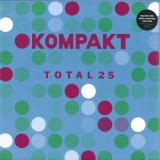
- A1: Pop Vampires Cologne - Karianne
- A2: Superpitcher - Pandora’s Box Feat. Alexis Taylor
- A3: Jürgen Paape - Grace (A Tale) Feat. Hella
- A4: Triola - Arcadia Feat. Irene Kalisvaart (The Modernist Mix)
- A5: Reinhard Voigt - Zahl An Einem Anderen Tag
- B1: Gui Boratto - Panorama X-Press
- B2: Robag Wruhme - Starsow Total
- B3: Michael Mayer - Brainwave Technology (Wassermann’s Brainwave Inferno Mix)
- B4: Michael Mayer - Erdbeermond
- B5: Hardt Antoine - Let Me Go
- B6: Wassermann - Sog
The latest boy band in town, POP VAMPIRES COLOGNE, opens the party with the enigmatic ‘Karianne’. SUPERPITCHER knows how to make a grand appearance, accompanied by high-calibre guests. His electro-pop treat ‘Pandora’s Box’ features Hot Chip’s ALEXIS TAYLOR on vocals. JÜRGEN PAAPE isn’t coming alone either, but with newcomer HELLA in tow. ‘Grace (A Tale)‘ once again shows our resident hit maker at his best. JÖRG BURGER also has a table companion, the extremely talented Irene Kalisvaart, and remixes himself on top of that. REINHARD VOIGT points out that money never sleeps and proceeds according to the motto: ’Zahl an einem anderen Tag (Pay another day)’. Our Brazilian whirlwind GUI BORATTO returns after a long absence with the banger ‘Panorama X-Press’. After careful consideration, ROBAG WRUHME has named his new track ‘Total’ and sings in the chorus with his family for the first time. WASSERMANN contributes an ultra-fat remix of Mayer’s ‘Brainwave Technology’, while MICHAEL MAYER himself marvels at the rare ‘Erdbeermond’. HARDT ANTOINE’s ‘Let Me Go’ really gets the party going again before WASSERMANN orders a large taxi and skips out on the bill.
See you again next year!
TOTAL 25… Schon wieder ein Jubiläum in einem an Jubiläen ohnehin nicht armen Jahr. Zum 25. mal versammelt sich die Kompakt Familie zum alljährlichen Stelldichein. Ohren angelegt, los geht’s!
Die neueste Boygroup in town, POP VAMPIRES COLOGNE eröffnet die Party mit dem enigmatischen ‘Karianne’. SUPERPITCHER weiss, wie man einen großen Auftritt hinlegt, und zwar in hochkarätiger Begleitung. Sein Elektropop-Leckerbissen ’Pandora’s Box’ featured Hot Chip’s ALEXIS TAYLOR an den Vocals. Auch JÜRGEN PAAPE kommt nicht allein, sondern mit der Neukommerin HELLA im Schlepptau. ‘Grace (A Tale)’ zeigt unseren Haus- und Hitlieferanten mal wieder in Bestform. JÖRG BURGER hat ebenfalls eine Tischdame im Gepäck, die überaus talentierte Irene Kalisvaart, und remixed sich obendrein selbst. REINHARD VOIGT gibt zu Bedenken, dass Geld niemals schläft und verfährt nach dem Motto: ‘Zahl an einem anderen Tag’. Unser brasilianischer Wirbelwind GUI BORATTO meldet sich nach längerer Abstinenz mit dem Banger ‘Panorama X-Press’ zurück. ROBAG WRUHME hat seinen neuen Track nach reiflicher Überlegung ‘Total’ genannt und singt darauf erstmals selbst im Chor mit seiner Familie. Der WASSERMANN steuert einen ultrafetten Remix von Mayers ‘Brainwave Technology’ bei, während MICHAEL MAYER selbst den seltenen ‘Erdbeermond’ bestaunt. HARDT ANTOINE’s ‘Let Me Go’ bringt die Party nochmal so richtig in Schwung, bevor der WASSERMANN ein Großraumtaxi bestellt und die Zeche prellt.
Wir sehen uns wieder im nächsten Jahr!
We are pleased to present the latest related from de Uruguayan label voice of tempo. this time, we celebrate their first physical related in 12 vinyl format, featuring Ildec, Spanish producer and dj, curator of the label time to panic, and Matole, Uruguayan producer and one of the pillars of voice of tempo, together, they deliver an ep composed of four powerful tracks that immense us in a dancefloor-driven atmosphere, rich in techno and acid nuances-perfect for clubs and crafted for lovers of raw and immersive sound traslate to spanish.