Wiederveröffentlichung von How to measure a planet? (Vinyl) auf eigenen Label 'Psychonaut Records'.
How to measure a planet? ist das fünfte Studioalbum der niederländischen Alternative Rock/Metal Band The Gathering, das am 9. November 1998 von Century Media Records veröffentlicht wurde. Das Album wurde aufgenommen
im Bauwhaus Studio in Amsterdam im Sommer 1998 unter der Leitung des Produzenten Attie Bauw aufgenommen. How to measure a planet? war ein großer Schritt weg von ihrem vorherigen Album Nighttime Birds, weil es aufgrund des experimentelleren und introvertierteren Songmaterials und der ProTools-Aufnahmetechnik.
Cerca:electric 6
- A1: Captain Clark Welcomes You Aboard
- A2: The Saints Go Marching Through All The Popular Tunes
- A3: Summer Will
- A4: Outside The Pier Prowed Like Electric Turtles
- A5: The Total Taste Is Here - News Cut-Up
- A6: Choral Section, Backwards
- A7: We See The Future Through The Binoculars Of The People
- A8: Just Checking Your Summer Recordings
- B1: Creepy Letter - Cut-Up At The Beat Hotel In Paris
- B2: Inching - Is This Machine Recording
- B3: Handkerchief Masks - News Cut-Up
- B4: Word Falling - Photo Falling
- B5: Throat Microphone Experiment
- B6: It's About Time To Identify Oven Area
- B7: Last Words Of Hassan Sabbah
Black Vinyl[26,01 €]
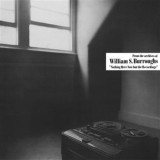
In 1980, Genesis P-Orridge and Peter 'Sleazy' Christopherson (then of Throbbing Gristle renown) travelled to New York City to meet up at the fortified apartment, known as The Bunker, of famed beat writer and cultural pioneer William S. Burroughs and his executor James Grauerholz to starting the daunting task to compile the experimental sounds works of Burroughs, which, up until that point, had never been heard. During those visits, Burroughs would play back his tape recorder experiments featuring his spoken word 'cut-ups', collaged field recordings from his travels and his flirtations with EVP recording techniques, pioneered by Latvian intellectual Konstantins Raudive. Throughout the next year, P-Orridge, Christopherson and Grauerholz would spent countless hours compiling various edits, each collection showcasing Burroughs sensitive ear and keen experimental prowess for audio anomaly within technical limitations. By the time 1981 came through, Burroughs had relocated to Lawrence, KS in which to escape the violence and mania of New York City life. It is in Lawrence that P-Orridge and Christopherson put the finishing touches on the record that would be known as 'Nothing Here Now but the Recordings'. The album would come out in the Spring of 1981 as the final release for the shuttering Industrial Records, brought about by the dissolution of Throbbing Gristle. The album remained out of print until 1998 when John Giorno and the Giorno Poetry Systems included the album on a multi-disc retrospective CD box set compiling the majority of Burroughs seminal recordings.
Portuguese techno figurehead Lewis Fautzi returns to Soma with the Properties Specifications EP. A mainstay on the Soma roster for 10 years, Fautzi has progressed through the global ranks to become one of techno's most recognisable acts. A consistent and competent producer, Fautzi's sound has evolved through the years yet remains modern and as on point as ever.
Density is a visceral yet hypnotic opener, its subtle drive is pushed via its instantly building, electric synth hook. Severity continues down a dark and hypnotic patch as polyrhythmic percussion guides a pulsating and incessant groove. Malleability once again displays Fautzi's control over specific elements, each grafting over the other to create new depths of rhythm throughout the track. Tension closes out the EP but does so in emphatic form. The most driving track on the release, thumping low end and crisp percussion are backed with twisted synths and dark atmospheres that swell throughout.
Fans of the innovations and originality that sprang from the L.A. underground of the late 1970s and ’80s often ask, “What’s Paul B. Cutler been up to?” A vital participant in the Los Angeles music scene of that period as bandleader, songwriter, musician and producer, Cutler’s work—in particular his guitar playing— with The Consumers, 45 Grave, Vox Pop and The Dream Syndicate is still admired by fans and an influence on anyone interested in that period and the styles that developed from it. In 2014, “Ryan Adams contacted me and wanted to form a band. He loved 45 Grave, he wanted to do some goth / punk, whatever you want to call it. That’s right up my alley. He’s amazingly talented and inspiring to work with. We did that for a while, and I wrote a bunch of songs.” Enthused about his new material, Cutler continued recording songs with just his signature electric guitar style and vocals. As this was developing, another vet of the early L.A. scene—Brad Laner of Medicine and Savage Republic—got in touch with Cutler. Soon Laner was mixing, co-producing, playing keyboards as well as adding the rhythm section. The overall process took some time, with songwriting beginning in 2014. When reflecting on the music that comprises Les Fleurs, “To me, and it does not sound like it, but because of the philosophy I had while producing it, it’s punk. I come from the original punk, before it was a genre. Before it was a ‘sound.’ When I got to LA in 1977 there were about twenty, maybe thirty bands and they all sounded very different. The Screamers, The Deadbeats, so many different takes on what music could be. There was no chance for commercial success so we all just did what we wanted. I never stopped. So philosophically I consider this punk rock, made in its original spirit although nobody would recognize it as such. I am a punk to this day.” So that, dear reader, is the basic story. Now it’s up to you to see what you recognize in Paul B. Cutler’s Les Fleurs.
Andrew Hargreaves’ Tape Loop Orchestra makes his first mark of the year with a post-rock deep dive that continues the themes of his ‘Liminal Live’ (2020) tape.
’Temporal In-Between’ is presented as a conceptual soundtrack to a metaphysical road trip, a journey through infinitely open space imbued with phantomatic energies”. Hand-in-hand with the cover art by collaborator Keith Ashcroft, the two-part record evokes its subject with a lesser- heard (as in, have we heard him do this before?) use of electric guitar and a patented grasp of liminal, hypnagogic atmosphere to summon sustained arcs of phased chords and an almost wind- played motorik momentum that makes it feel like gliding over unlit moors at night.
The spirits of Eno & Fripp colour proceedings as TLO’s elliptical tape loop system accretes and unfurls its information in slow motion from the shimmering keys and guitar strokes of ‘Upsurge’, and its gorgeous transition to heart-in-mouth sensations, and the soothing plangency of ’Situated Presence’, where signature choral motifs are found occluded by the atmosphere, parting thru the clouds occasionally, but more often pushed to the background, as though heard from a distance like phosphorescent city lights spied from its meridian. More simply; dream food for fans of Romance, The Caretaker, Eno.
Over the course of a 19-year career, Marshall Watson has released all manner of musical treats for a similarly wide array of labels, yet it’s the effortless beauty of his downtempo works – and particularly his ambient and Balearic excursions – that have often left a lasting impression.
It certainly caught the attention of NuNorthern Soul founder Phil Cooper, who brought the West Coast producer to the label in the summer of 2021. That EP, Sunsets on Larkin Parts 1 & 2, was undeniably special. The same can be said about his belated return to the label, Foothills, an EP packed to the rafters with slow-burn melodies, sustained chords, becalmed textures and gently unwinding grooves.
Watson’s distinctive take on Balearic naturally comes to the fore on EP opener ‘High Desert’, a soft-focus delight where languid electric guitars, starry electric piano lines, echoing chords and gently pulsing electronics stretch out across a shuffling groove. While tailor-made for watching the sun set off his beloved Pacific Coast – and over the Mediterranean Sea – ‘High Desert’ offers a dose of hazy sonic sunshine that can brighten up even the greyest of days.
Fittingly, the accompanying remix comes from long-time friends of the label Seahawks, whose textured, layered and atmospheric productions similarly blur boundaries between Balearic, ambient, pitched-down dancefloor grooves and glassy-eyed psychedelia. Employing opaque, shape-shifting pads, effects-laden guitars, subtle spoken word snippets and yearning, almost melancholic chords – all atop a crunchy, head-nodding beat and toasty bassline – the duo deliver a remix that’s as emotive and sonically stunning as Watson’s original mix.
The EP’s three other tracks amply demonstrate the subtle variety within Watson’s downtempo output. Vocalist Julie Childe makes her mark on ‘Sweet Sounds’, a brilliant blend of warming deep house and laidback Balearic nu-disco that sports subtle hints to his work as one half of synthwave duo Causeway, while ‘Open Sky’ brilliantly wraps undulating TB-303 acid lines and echoing Spanish guitars around a hypnotic, locked-in dancefloor groove.
Then there’s ‘The Landscape’, a deliciously saucer-eyed slab of breakbeat-powered, TB-303-sporting genius that evokes the immersive, early morning waviness of the ambient house era, the beach party psychedelia of San Francisco’s free party movement, and the bleeping wonder of turn-of-the-90s UK dance music. Like the rest of the EP, it’s an enveloping, head-soothing and mind-expanding treat.
e B2 High Desert Seahawks High Sky Remix
- A1: Off - Electrica Salsa (Maxi Version)
- A2: Two Of China - Los Ninos De Parque (Corrida Mix)
- A3: Torsten Stenzel Presents Recall Iv - Contrast (Boing Mix)
- A4: Interface - Plastic Age
- B1: Fantasy Ten - The Big Bang
- B2: Second Mission - Kyrieleison (For All Of Us) (For All Of Us)
- B3: Talla 2Xlc - The Eternal Mystery
First release on the new french label Disques de la Spirale, featuring an experimental motorik-kraut-dub infused, semi-improvised live act built by Tamara Goukassova, Axel Larsen & Théo Delaunay (Panoptique, Succhiamo, Violent Quand on Aime, Radiante Pourpre..) from Simple Music Experience ; featuring Maoupa Mazzocchetti, Fiesta en el Vacío, Ventre de Biche, Kyle Knapp (Deliluh) …
For fans of Faust, Tomaga, Tony Conrad...
French non-jazz trio overflowed by Simple Music Experience’s funders Tamara Goukassova, Théo Delaunay & Alexandre Larcier, offering a 40mn of non-simple music madness, and navigating between a dozen of etiquettes from undecided space rock to motorik-infused-dub, medieval folk, cartoon trance; everything under the seal of psychedelia and half-improvisation.
Built from drums, violin, springs, samples, reiterations, overdubs, trumpets, synths, distortions; and the appearances of L. Cedrón (Fiesta en el Vacío), L. Retraite (Ventre de Biche), K. Knapp (Deliluh), F. Mazzocchetti (Maoupa Mazzocchetti).
Chimera embraced by three members of the Simple Music Experience label, also (co-) liable at one point for the acts of Axel Larsen, (The) Simplists, Violent Quand On Aime, Constance Chlore, T. Goukassova, Radiante Pourpre, Succhiamo or Panoptique; Parasite Jazz emerged in 2016 in the smoke of a suspicious performance on Simple Music TV. An improvised and protean artifact at birth, the project settled down at the end of 2020 as a trio (Axel Larsen, Constance Chlore, Tamara Goukassova) in Marseille, then as a sextet during the Illusio festival in the summer of 2021. A series of concerts with a shifting line-up followed - Kyle Knapp, Luca Retraite and Luna Cedrón sometimes appeared and with them, spontaneous incandescences. This first series of collective hallucinations took the form of an album during a perilous recording at Grrrnd Zero (Lyon) in October 2021, and is completed by live recordings gleaned over the course of the summer episodes.
All tracks are composed and performed by Parasite Jazz:
Alexandre Larcier: bands, FX, springs
Tamara Goukassova: violin
Théo Delaunay: drums, percussion, synthesizer, tapes
Florent Mazzocchetti: trumpet on "Carton Jazz" and "Alarm Twist" (sampled)
Luca Retraite: bass on “Terciopelo” and guitar on “Alarm Twist”
Luna Cedron: vocals on “Terciopelo”
Kyle Knapp: lap steel on “Terciopelo” and “Untitled live at Gigors”
Around Function: Sketches, band lettering
Recorded and mixed by Théo Delaunay at Grrrnd Zero (Lyon) and l'Embobineuse (Marseille) except "Terciopelo" recorded at Illusio (Pradelles) and "Untitled live at Gigors" at La Sye Electric (Gigors-et-Lozeron).
Mastering: Rupert Clerveaux
Cover: Diane Malatesta
Design: Alan Briand
Parasite Jazz thanks: Quentin Mosko, the Groovedge/Illusio crew, Théo & Clyde, Maoupa Mazzocchetti, the 3 jokers Luna Luca and Kyle, Grrrnd & the Embobineuse.
Spatial & Co Vol. 2 may well be the best album in the Spatial & Co series. It's absolutely flawless. Again created by French disco lord and Arpadys maestro Sauveur Mallia for French library label Tele Music in 1979, it leans far more into the space disco sound than the clean cosmic funk of its predecessor. And it's all the more thrilling for it.
Wide-eyed opener "Discomax" is starts as pure piano-disco brilliance with a bassline to die for before heading off into wigged out territory, all acidic squelches and jaw-dropping percussive breakdowns. Perfection. "Space People" follows, an eerie, half-beatless sci-fi synth workout played out against a hauntingly metronomic pulse for the first half - proper slow-mo space disco business - before the beat kicks in, the electric guitar solo wails beautifully and the bassline that emerges at its conclusion rides in on some other shit.
Closing out the A-Side, the six minute long "Bass Power" is, unsurprisingly, a deep, low-end roller with head-nod drums, whizzing synths, blissed out ambient vibes and Mallia's otherworldly bass playing super high in the mix. It's white hot funk, make no mistake, and it sounds like a re-geared library version of Roxy Music. Yes, *that* good.
Side B is laced firstly by "Holidays Morning", an emotional disco-pop groover, all electric guitars, skipping drums and synthy bleeps with more than a few moments of pure driving funk.
One for the deep heads, longtime favourite "Electric Maneges" follows, a bleepy, haunted dancehall gem, uncut tropical balearic-funk from another dimension. The sophisticated digi-soul of "Loving Discovery" comes on like a weird, interplanetary Sade instrumental, all swelling synths, warm keys and syrupy guitar rhythms. Hearing is believing.
Arguably saving the best til last, the fierce, proto-techno of "Exotic Guide" closes out this extraordinary set. The intro genuinely sounds like Detroit would a good few years later - just wild - before it glides into a driving percussive funk break complete with both stabbing, insistent synths and those of a more winding, laconic variety. The one complaint? It's over far too soon. Remarkable.
Sauveur Mallia is a crucial figure in the history of electronic and dance music and a hugely underrated French library bass player and composer from the Arpadys / Voyage crew. This is just the beginning of Be With's Mallia - Tele Music reissue campaign!
The audio for Spatial & Co Vol. 2 has been remastered by Be With regular Simon Francis, ensuring the punch of Sauveur's bass and those sick drums come through to the fullest. Pete Norman’s expert skills has made sure nothing is lost in the cut whilst the original and iconic sleeve has been restored here at Be With HQ as the finishing touch to this long overdue re-issue.
The duo WILDES from the south of Germany, consisting of Jana Pantha and Jenny Tulipa, presents a musical mix of electro-synth-pop, post-punk and dark disco influences. After the release of their first EP “RAWWR” in 2021, their debut album entitled “KLISCHEE” will be released on 3 February 2023. Released via the Kommando 84 label, the album features 11 songs and a musical re-interpretation of German-language Neue Deutsche Welle sounds. The songs combine spoken word passages in which the singers combine a certain irony with word-playful rhymes. In addition to world-political, social issues, the songs revolve around the complexity of the new romance in love - between cosmos and stereo. The strong and experimentally avant-garde lyrics accompany the danceable pulse of the drum computer, melodic synth waves and the shimmering solos of the lead guitar.
The album “Klischee” begins with an electro-pop track that combines consistent grooves with atmo- spheric sound arrangements and a lead guitar that accompanies our journey to the moon. With the chorus’ high-pitched words, „Konsum - leg mich auf den Moon“ (“Consumption - put me on the Moon”), WILDES dryly yet humorously allude to a society that couldn’t fly “higher”.
The following cheeky song Leger in Schwarz combines impeccable post punk with influences from the NNDW scene. A short love story led by the electronic beat of the synthesizer makes the hearts of the night beat faster. With casual reduction, a guitar riff leads through the song. The guitar solo finally rounds off the plea about the longing for a good flirt.
Italo disco shimmers and pulsates on the driving song Capri. With lyrics like “Pack the boats - Vai a bordo”, Capri is a homage to the tried and tested Italo feeling with a cappucino on the terrazza, or indeed on the yacht with a view of the rocky walls of the island. An electric charge of sequencers and synth tracks acts here as a lightness of being in contrast to the porosity of the rock.
An electrifying electric guitar solo kicks off the fourth track with a mysterious invitation to Steig ein translated, get in. Hypnotised by the lights of the road, dazzled in the side mirror, a clearly repeating rhythm leads into the chorus and through the coming verses. English spoken-word lyrics add to the stoicism of the German language. The song’s great power ends with the line Lost in the dark, holding open the finale of the “Night Drive” encounter.
Digital and stereo on all channels, the distinctly tight and robust rhythm sounds in the song Apparat. A clear and simple synth melody is heard as a contrast and the electric bass gives the balance of the machine at points. Hiddenly, WILDES points here to the superior power that can control human action beyond all limits. A piece as a laudation to all the science fiction novels that play with the switching of the individual parts.
Side One of the vinyl is finalised by a song called La Grande Bellezza that motivates to dance and sing along. The punky pop craft lives through the recurring beat of the rhythm guitar. Here the focus is on the woman in all her facets. The great beauty, una donna, who can do everything as well as wanting everything and nothing...a strong woman who, however, also staggers and wants to jump off the cliff. Clearly and distinctly, the musical accompaniment of the drum machine and the accompanying synth melody reflect hidden parallel worlds and the ambiguity of character - of life? We get a desire for more and turn the round record.
The B side starts with a powerful guitar riff, complemented by a catchy and strong bassline that runs through the song. In this work, WILDES provocatively describes the West’s lust for the much-cov- eted Schwarzes Gold black gold. The song is reminiscent of the works of the band D.A.F. and thus ties in with the electronic punk sound spate.
The driving guitar riff joins in with the reduced synth bass sequence - the electro-pop song with the title Hitze (Heat) came onto the digital music market as the first single from the LP in the summer of 2022. Pulsatingly, the drum computer lets the beats vibrate to the rhythm of heated air. The duo po- etically describes heat with supercooled voices, a clarity in the sky that makes everything flow, that makes the breath dry. The work ends with a melodic synth solo.
Ich lad dich ein, I invite you - we have all said or heard this sentence before. A chance meeting of two people later leads to the altar in love. A far-reaching question that more or less arises in many love relationships at some point “Do you dare?” positions itself in lyrical contrast to the simple ques- tion in the refrain “Do you need sugar?”. WILDES plays with laconic poetry and, full of irony, makes the listeners think about living together. Krautrock contours are skilfully used in this piece. Reduced to the essentials, the chorus immediately sticks in the ear. A cheerful mix of steel drums and infec- tious solo.
Toccami - touch me! We sit on padded leather chairs - “you’re a rocket! Peng Puff Peng” - this song by the band WILDES joins experimental art-punk-pop, electronically with flowing synth waves we take off immediately. Melodically sung, lyrical layers of lyrics dance loosely light and gracefully in the ears of the viewer. The rhythmic beat visualises the feeling of floating in a spaceship. It’s love in the universe - “I love you, my darling” sounds tipsy in the beat-heavy disco refrain.
Hypnotically, WILDES launches into the final song of the entire LP. The title Zone takes us on a journey through time. Inspired by the film Stalker, we find ourselves in a science fiction setting that couldn’t be more present in today’s European events. The musicality of the electric guitar riffs ac- companied by simple new wave drums drives the listener into unknown realms.
Repetition and electronic synth sounds play a compositional role alongside rocking guitar riffs like their forerunners in the NDW scene. Lyrically, each song varies between pop-romantic and politically critical passages. Listeners start pondering about hedonistic life and its consequences. Sometimes it feels like listening to a Tarantino soundtrack in German, other times it feels like listening to an 80s track by a James Bond. Science fiction fantasies and reality add up in dadaistic theatricality to spir- ited synthpunk of the New German Wave from the South. Discoid beats and driving drums in digital are included.
- A1: B.e.f. Ident (0.34)
- A2: The Optimum Chant (4:11)
- A3: Uptown Apocalypse (3:11)
- A4: Wipe The Board Clean (3:47)
- A5: Groove Thang (4:07)
- A6: Music To Kill Your Parents By (1:26)
- B1: The Old At Rest (5:37)
- B2: Rise Of The East (2:53)
- B3: Decline Of The West (7:11)
- B4: A Baby Called Billy (4:02)
- B5: Honeymoon In New York (2:16)
- B6: B.e.f. Indent (0:36)
The first reissue of seminal early 1980's electronic recordings from the British Electric Foundation (B.E.F.), aka HEAVEN 17 / ex-THE HUMAN LEAGUE's Martyn Ware and Ian Craig Marsh, with Adi Newton (CLOCK DVA / THE FUTURE), and John Wilson (HEAVEN 17), originally a cassette-only release (1981).
Following two groundbreaking albums ('Reproduction' and 'Travelogue'), the original line-up of Sheffield-based The Human League split in half in late 1980. The two primary musicians in the group, Martyn Ware and Ian Craig Marsh, formed a new production company - the British Electric Foundation (B.E.F.) - and signed a deal with Virgin Records to write and produce up to six albums a year. The artists they were to produce would include Heaven 17, their own new band formed with vocalist Glenn Gregory.
B.E.F. would also release their own material, commencing with the music on this collection, which was issued in various permutations in 1981-82. Its initial release in March 1981 was a limited edition numbered eight song cassette entitled 'Music for Stowaways', with 'Stowaways' being a reference to the original name for the then-new Sony portable cassette player - later renamed the Walkman - of which B.E.F. were great fans. 'Music for Stowaways' was intended to be listened to on such a device. The cassette was followed by a seven song LP, 'Music For Listening To', which had a slightly different tracklisting, while other B.E.F. music was utilised for B-sides of early singles by Heaven 17.
This music was among the first recorded by Martyn and Ian directly after their departure from The Human League. Some tracks had evolved from other recordings they were working on at the time, such as 'Groove Thang' - an instrumental version of the debut single by Heaven 17 - and 'The Old At Rest', which derived from a version of 'Wichita Lineman' by Jimmy Webb, their very first recording with Glenn that would subsequently appear on B.E.F.'s 'Music of Quality and Distinction, Volume One' covers album in 1982.
Supporting musicians on 'Music For Stowaways' included Adi Newton of Clock DVA (who had been a member of The Future with Martyn and Ian pre-Human League) on the track 'Uptown Apocalyse', with John Wilson (who provided incredible guitar and bass for Heaven 17) appearing on Groove Thang.
The innovative sounds heard on 'Music For Stowaways' were an inspiration to many aspiring electronic artists. In 2015, Uncut magazine included it in a list of the '50 Greatest Lost Albums of All Time'.
Fat Albert Rotunda is the venture into jazz-funk by keyboardist Herbie Hancock. The record is centered around the music Hancock wrote the Fat Albert cartoon show. It's one of the records which appeared in the period between his landmark album Maiden Voyage of 1965 and his 1973 classic Head Hunters. Fat Albert Rotunda is a unique item in Herbie Hancock's long and diverse catalog, with funky tracks like 'Fat Mama' and modern jazz-oriented tunes like 'Tell Me A Bedtime Story'. The sextet which is backing Hancock consists of some of the most prominent musicians of that time, like Joe Henderson on tenor sax, Johnny Coles on trumpet and Buster Williams on the bass.
Herbie Hancock is one of the most prolific jazz pianists of the 20th century. A child prodigy, he played with the greats such as Donald Byrd and Miles Davis. As he was a bit of a geek, he enjoyed gadgets & buttons and he was one of the first to embrace and master the electric piano, but he always stayed true to the acoustic sound. In fact, he always bounced back and forth between his electronic and acoustic sound, touching upon almost every development in R&B, Funk and Jazz while retaining an original and distinctive voice.
Emotional Rescue can be relied on to dig up obscure, left of centre dance gems and serve them up to newer, wider audiences. Adu's reggae-pop cut 'Burkina Faso' is a great example, re-purposed for the dancefloor without any of its original flavour lost in the overhaul. A
South Saharan/West African emigre to Brixton, Rauf Adu would go on to fairly sizeable European fame with the Eddy Grant-esque 'Human To Human'. This, however, is his 1982 debut for Copasetic Records, another reggae-pop inspired, ludicrously catchy effort with scorched electric guitar and a Compass Point-style drum/bassline providing rhythmic rocksteadiness. As well as the buffed up original, there's a dub mix, which gives his beautiful guitar plenty of room to breathe, and an appearance from the Isle of Jura Sound System boss Kevin Griffiths , whose remix completes the trio of mixes.
Swing Family's Music Force is dramatic mid-80s synth-funk. From the maverick mind of Sauveur Mallia, it's a thrilling and uniquely brilliant album from start to finish. It's undoubtedly known and revered for its unbelievable standout track, "Mission Africa". Those that know, know. And if you don't know, get to know. It's the reason this record has been hugely sought-after for the best part of two decades. Originally released on Tele Music in France in 1985 but now tear-inducingly rare, this is the definition of "a welcome reissue."
Swing Family is basically a supergroup of French Funk royalty. Led by French disco lord and Arpadys maestro Sauveur Mallia, they were augmented by trombonist Alex Perdigon from legendary French funk rock collective Godchild, trumpeter Kako Bessot from funky fusion group Synthesis and saxophonist Pierre Holassian, a member of Giant, Janko Nilovic's French jazz orchestra. So, about as heavyweight as it gets for funky French goodness. Mallia handles, of course, bass duties throughout, as well as utilising his arsenal of synths including his E-mu, Yamaha Dx7, Roland MSQ 700, Mini Moog and Oberheimm.
The maximalist disco fusion of "Exorcistor" is perhaps a bit too 80s French cheese for most tastes, so either linger on its singular style or head straight to the soundtracky typo-funk of "Greewich Boulevard". A deep, swaggering powerhouse, it comes on like mid-80s Chic jamming on the set of Beverly Hills Cop with Kashif. Yes, *that* good. It's followed by the vital "Music Force", a synthy, sleazy instrumental full of sax and flute and those 80s drum fills. Just the right side of acceptable.
OR! You can even choose to forget all the rest and just stick "Mission Africa" straight on. A rumbling, strutting, afro-cosmic low-profile banger. The slick drums hit hard, the synth strings warm things up, overlapping horns add swagger whilst electric guitar flourishes and a chanted refrain sit in the mix quite perfectly. A track that's almost impossible to describe and do justice to. You just need to hear it. Preferably as you saunter into your favourite after-hours club, after spotting all your friends at once, as you cut a swathe to the bubbling dance floor. A track quite like no other, it makes you sit up within its first bars and, to us at least, sound like something you'd have heard on a Print Thomas mix from the mid 00s. Basically, it's cosmo-galactic.
The B Side opens with "Musical Stars", an oh-so-80s funk-lite track which, at times, sounds like something Daft Punk may have left on the cutting room floor during their Discovery sessions. Another unimpeachable favourite of ours is the druggy brilliance of "Gentleman & Musician". You can almost hear the white powder through the speakers, as soaring, acidy synths, slick, heavy beats and the irresistible interplay of the primo horn players create a real sleazy wonder. "Film Action" follows, a galloping horn-heavy synth romp with moments of extreme bass breakdown brilliance before the drama-synths of "Episode Double" take things up another notch as it oscillates between gorgeous funky horns and urgent bleepy magic. Super tense, super funky and super stylish. Just ace. The elctro-tinged horn workout "Fatal Lady" closes things out majestically.
The audio for Music Force has been remastered by Be With regular Simon Francis, ensuring the punch of Sauveur's bass and those sick drums come through to the fullest. Pete Norman’s expert skills has made sure nothing is lost in the cut whilst the original and iconic sleeve - complete with perky Liberty Belle - has been restored here at Be With HQ as the finishing touch to this long overdue re-issue.
POWER is—and has been the real deal for quite some time. This single serves not only as a testament to that fact, but showcases two of Power's best creations yet. Like thunder rips across the sky, the pounding drums on ‘The Fool’ signal the oncoming storm of slashing rock and roll. The single sees Power explore a side of band which has always been simmering beneath the surface—and it seems the time was right for them to unleash these raw new tunes without holding back. Pure electric guitar damage from this most formidable three-piece. With the ‘The Fool’ cutting a figure which could’ve been found backstage at a show headlined by Venom and The Stooges, the flip, 'Give It All To Me’ displays a range of heavier melodies intoned by 80’s cult groups such as Wicked Lady and Iron Claw. Power have stayed true to themselves and continued to ride towards to the storm.
The Hippo Sound System is a collective formed in 2018 by Bristol UK’s notorious ‘samba junglist’ DJ Hiphoppapotamus.
"Origins" is their long-awaited debut album!
Touring the festival scene across the UK and Europe their explosive live performances have earned them a well trusted reputation for blowing up dancefloors, moving feet and uplifting souls! Their tracks have been featured on BBC Radio 1, BBC Radio 1Xtra, BBC Radio 6 by Jeremiah Asiamiah, Don Letts and Craig Charles. Don Letts also included their track “Into The Jungle” on his “Best of 2020” round up.
Fusing their favourite elements of world music and sound system culture, they explore new possibilities between musical cultures, fusing ancestral rhythms with modern dance music.
Percussive rhythms and heavy bass drive this vibe train as this Hippo and his percussionist/production partner, Munki, draw influence from all over, Including Afro/Latin/world music, Jazz, Hip Hop, House, Breaks, Dub, Drum and Bass & Jungle for their productions. The result? A uniquely high energy and psychedelic global bass sound – complete with the flair of live musicians and the exciting builds and drops of bass music!
Passionate about collaboration with both their recordings and performances, they often call
upon guest features from artists such as K.O.G, Franz Von, Simo Lagnawi (Electric Jalaba), MC Spyda, Dr Syntax and many more. With almost no tempo untouched from 70-180BPM, they’re an extremely eclectic and versatile band that can customise sets for most stages and occasions.
Oceans flow through the center of Cinder Well's music and 'Cadence', the
new album from Amelia Baker's experimental folk project,drifts between
two far-flung seas: the hazy California coast where she grew up, and the
wind-torn swells of Western Ireland that she's come to love
Written soon after the release of 2020's acclaimed 'No Summer', Baker returned
to her hometown in central California to record at Harlan Steinberger's nearby
Hen House Studios in Venice Beach. Inspired by this new setting, Baker expanded
Cinder Well's sound to include percussion, provided by her old friend Phillip
Rogers (Haley Heynderickx), as well as trance electric guitar and expansive string
parts courtesy of Cormac MacDiarmada (Lankum). The doom folk and traditional
Irish influences of 'No Summer' are still present but often give way to a more
optimistic and relaxed atmosphere that nods to LA's mythical Laurel Canyon
years. Across nine epic tracks, Baker treads a sonic and lyrical path between the
two coastal towns she calls home, her transcendental voice given new wings by
the record's sweeping arrangements. "Overgrown" is the first major key Cinder
Well song in nearly a decade while the uneasy and pulsating title track is a love
letter to the self for our darkest days. Fittingly, Baker opens 'Cadence' with a song
about selkies-- seals that turn human on land. More than just a bit of folklore,
shapeshifting selkies are a metaphor for Baker herself: a songwriter tied to the
ebb and flow of the ocean (and humanity's) currents, whether they be half a world
away or a few steps from home.
Kevin McCormick's unreleased bedroom studio tape material (1982-1984). Moods similar to Durutti Column, Woo, Crosby’s spacey moments, and Boards Of Canada’s nostalgia.
Following the release of Light Patterns in 1982, Kevin recorded a series of songs onto tape that explored the sonic possibilities of a solitary guitarist. Shedding the acoustic sound of his previous effort, he adopted a swelling electric palette to apply his moods to. These recordings are a shift in direction to a sparse and ambient style, and their hazy, repetitive movements create room for evocative melodies.
Kevin fills a deficiency of guitar-forward music with his minimalistic approach that is somewhere in the space between ambient, rock, jazz, and avant-garde. On Sticklebacks, he casts away the morning elegance of Light Patterns and leans further into the introverted feelings of the small hours. It is a nascent springtime journey that shows just what Kevin is capable of with six strings.
LNS and DJ Sotofett return to Tresor Records with The Reformer EP. This new record moves forward with a crystal clear, direct and controlled output, leaving their debut album "Sputters" as an end-mark of a sonic era. Here they evolve into a topography full of contrasts, where harsh digital artefacts, scanner sounds, and vocoder voices cast melodic colors across cold landscapes of club-ready electro.
"Reform" plunges deep into an electro sound splintered by binary bits and submerged pads that beckon a serene melody, which echoes and loops to entangle with mutant voices, noises and buzzes. "Plexistorm" leads with synthesized strings and arpeggiated acidic bleeps until a thick bass emerges, sounding almost like a long-lost Analord record. Heavily shapeshifting with eects processing, it proves primitive movements in dubbing are the perfect counterpart to this precise electro sound.
With "Electric Terraforming", the duo uncover charged energy sources required for life on another planet, as broad synth pads
and memorable vocoder harmonies draw this earworm to a close. Mighty washes of dub rule on "909 The Controller" as a skipping beat invites a slow, rippling melody and percolating reverberated synths.
The vinyl record has significantly dierent sonics to the digital release, and, exclusively, each side ends in a locked groove produced by DJ Sotofett.