Man könnte meinen, das musikalische Erbe der 1960er-Jahre sei bis zur Erschöpfung gefeiert worden (und da hätte man recht), und dennoch, und was noch erstaunlicher ist, werden die Pretty Things unter all den großen bahnbrechenden britischen Bands dieser Zeit immer noch routinemäßig unterschätzt und unterschätzt oft übersehen.Mit ihrer einzigartig rauhen Interpretation des R&B-Repertoires legten die Pretties die Vorlage für einen Sound, der später als ,English Freakbeat" bezeichnet wurde, und gingen in einer Ära der beispiellosen Pop-R/Evolution hin zu Psychedelia und darüber hinaus immer an die sprichwörtlichen Grenzen, indem sie wohl die ersten schrieben und aufnahmen und möglicherweise die beste Rockoper in ihrem Meisterwerk S.F. Sorrow (and what about Parachutes then?).In diesem Jahr jährt sich ihr Debüt ,Rosalyn" zum 60. Mal, was ein guter Vorwand zu sein scheint, ihr Vermächtnis mit einer Tribute-EP zu feiern. Doch anstatt die Klassiker abzudecken, haben sich die vier hier versammelten Psych-Pop- und Mod-nahen Künstler, Bandkollegen und Gare du Nord-Mitarbeiter dafür entschieden, in die weniger bekannten Tiefen des Pretty Things-Katalogs einzutauchen:Der Produzent und Multiinstrumentalist Andy Lewis spielt ,Walking Down The Street" aus den Electric Banana-Sessions von 1967. Der Pariser Popmeister Popincourt übernimmt ,You Don't Believe Me" aus dem Pretties-Album "Get the Picture" aus dem Jahr 1965. Dann ist da noch Ian Buttons ,Papernut Cambridge", der sich der seltsamen Stop-and-Go-Seltsamkeit des Kult-Pop-Juwels ,Defecting Grey" stellt, während Canterburys eigener kontinentaler Pop-Korrespondent Robert Rotifer ,House of Ten"von der häufig vergessenen, aber allgemein glorreichen Kammerpop-LP "Emotions" von 1967 einen Besuch abstattet.,Das ist ein großes Kompliment an die Band", schrieb Dick Taylor, Gitarrist der Pretties, als er um Zustimmung zur Veröffentlichung gebeten wurde, was alle seine Fans bei Gare du Nord Records sehr glücklich machte.,House of Four" (VÖ: 23.08.24/Gare du Nord) wird in einer limitierten Auflage von 300 Exemplaren als 10" EP mit 45 U/min (und digital) erscheinen, mit einer zusätzlichen Postkarte mit dem von Robert Rotifer liebevoll gezeichneten Puppenhaus-Covermotiv. Es ist ein anglo-französisch-österreichisches Cross-Continental kulturelles Unterfangen zu Ehren einer großartigen britischen Band, die sechs Jahrzehnte später immer noch kein bekannter Name ist (außer in den besten Haushalten), es aber immer verdient hat.Schade nur, dass Phil May nicht mehr da ist, um es zu hören ...
Cerca:electric 6
- A1: Dreaming Of Mars
- A2: Deep Star Deception
- A3: Cryogenic Dream
- A4: Super Ultra Spaceman Theme
- A5: The Future 1995
- A6: Portal To A World Of Sand
- A7: Mysterious Forces From Beyond
- A8: Charting A Course To Elsewhere
- B1: My Zero G Love
- B2: Message From Planet Xs
- B3: Planet Of The Pterodactyls
- B4: Downtown Lost In The City Of Lizards
- B5: Electric Sheep
- B6: Theme From Constellation 7
- B7: Beyond The Known Universe
- B8: Secrets Of The Cosmos
The follow up album to 2019's Dusted Jazz Volume 3. Pressed on 180 gram, White & Orange Marbled Vinyl. Jenova 7 emerges once again as a beacon of auditory innovation with his latest opus, Lost Sci-Fi Movie Themes. Released under the banner of Cold Busted, this collection of 16 tracks serves as a time machine, whisking listeners away on a journey through dimensions both familiar and uncharted since his last foray with 2019's Dusted Jazz Vol. 3. Jenova 7 has meticulously crafted an album that resonates with the essence of ‘90s trip hop nostalgia while propelling us into the cosmos of futuristic soundscapes. The album's standout tracks—“The Future 1995,” “My Zero G Love,” and “Downtown Lost In The City Of Lizards”—are masterclasses in genre-blending and atmospheric storytelling. "The Future 1995" envelops one in a nebula of boom-bap beats, cosmic sound effects, and b-movie vibes, creating a sonic experience that feels like intercepting radio signals from a distant, funk-infused galaxy. Meanwhile, “My Zero G Love” floats the listener through the velvety darkness of space with its sexy lounge feel, portamento synth lines, and the undeniable funk that glimmers under starlight—evoking the sensation of grooving in weightlessness. Then, there's “Downtown Lost In The City Of Lizards,” a track that saunters through the urban jungle with sparkling keys, evocative guitar spurts, and strutting jazz bass, painting a picture as vivid and surreal as its title suggests. Jenova 7's skill lies in his ability to fuse moody, jazz-inflected samples with grooves that draw one into a distinctly atmospheric sound—a cinematic journey through time, space, and emotion. His tracks are experiences, wrapping the listener in a cocoon of vibrant soundscapes that are both introspective and expansive. Lost Sci-Fi Movie Themes is an invitation to explore the unknown, to lose oneself in the depths of imagination and emerge on the other side transformed. For DJs looking to transport their audience to another dimension and for music fans yearning for a taste of nostalgia wrapped in the allure of the future, Jenova 7's latest release is a must-discover treasure. Dive in and let the odyssey begin
Since first splashing on to the Southern California circuit in the mid-aughts, Geneva Jacuzzi (née Garvin) quickly cemented herself as the queen of the Los Angeles underground. Her immersive and unhinged multimedia performances are the stuff of legend, a psychotropic gallery of masks, costumes, confrontation, and massive art installations. Jacuzzi’s recordings are equally revered, catchy hooks and cryptic moods dusted in 4-track grit. The arrival of her third official full-length, and Dais Records debut, is cause for such celebration. Triple Fire vividly expands and crystallizes Jacuzzi’s signature fusion of midnight melody and mutant aerobics across a 12-track hit parade of wildcard synth-pop and sly post-apocalyptic camp. Her enthusiasm for the album is as bold as her body of work: “Halfway through, we started calling this the record of the prophecy, the record that’s going to save mankind.”
Opener “Laps of Luxury” sets the template – a strobe-lit dreamer’s delight of swaggering synth bass, Haçienda drum machinery, and sultry vocal spellcasting (“Tragic mysteries I’ve known for centuries / I burned all memories and turned to fantasy”). The collection burns through shades of sardonic strut (“Art Is Dangerous,” “Nu2U,” “Keep It Secret”), coldwave kiss off (“Speed Of Light,” co-produced by Andrew Clinco of Drab Majesty), retro-futurist body music (“Dry,” “Scene Ballerina,” “Bow Tie Eater”), and cheeky glitterball pop (“Take It Or Leave It,” “Heart Full Of Poison” co-produced by Roderick Edens and Andrew Briggs). She likens the eclectic spectrum of moods to the continuum of human emotions: “Funny, sexy, sad, scary, witty, hopeful, menacing. Eventually it deconstructs, turns into a party, and then ends sweet and soft.”
Taken as a whole, Triple Fire comes as close as any document yet to capturing Jacuzzi’s kaleidoscopic alchemy of pop sugar and chaos energy, flickering between icy and ironic, chic and surreal, hungry and heartsick. Hers is a muse as rare as it is regenerative, forever reborn at the precipice of the next chorus: “Someone said that Alcatraz had fallen into the sea / Almost sounded like an angel calling me in a dream / I felt an electric shock when I picked up the microphone.”
Wie eine Rauchwolke haben sich Stoned Jesus über die Karpaten erhoben und sind nicht nur die härteste, sondern vielleicht auch die wichtigste Rockband, die aus der Ukraine hervorgegangen ist.
Vor der Erstkommunion von Stoned Jesus war der sympathische Frontmann Igor Sydorenko nur ein weiteres bekanntes Gesicht unter den lokalen Progressive-Rockern. Doch nachdem er inmitten einer stürmischen Zeit in seinem Privatleben seine alte Flamme für den Metal wieder entfacht hatte, begaben sich Igor und seine beiden neuen Bandkollegen auf die Suche nach neuen, erdrückenden Höhepunkten.
Obwohl es erst ihr zweites Album ist, stellt Seven Thunders Roar einen frühen Meilenstein für Stoned Jesus dar. Die Riffs rollen immer noch mit der schlammigen Kraft einer Schlammlawine bergab, aber die Band hat knackige Akustikgitarren hinzugefügt, um ihre neu gefundene innere Stärke zu reflektieren.
Idle Race is the second studio album by British rock band Idle Race, released in 1969. This album follows their 1968 debut, The Birthday Party. Fronted by Jeff Lynne, who later became famous with Electric Light Orchestra (ELO), the album features a whimsical pop-rock style with psychedelic influences. Key tracks like ""Come With Me"" and ""Please No More Sad Songs"" showcase Lynne's melodic songwriting and playful lyrics. Despite critical acclaim, Lynn left shortly after the album release to join The Move. However, Idle Race is a cult classic, celebrated for its inventive arrangements and quirky charm. This album is a hidden gem in the late 1960s British rock scene, highlighting the band's unique blend of catchy tunes and imaginative storytelling. Idle Race is available as a limited edition of 750 individually numbered copies on crystal clear.
During autumn 2018, after moving to Germany, Aron Ottignon met Senegalese musician and percussionist Bakane Seck, founder and leader of the Jeri JeriBand, in his Berlin studio. This first meeting gave rise to a special connection between their instruments and the start of a musical adventurethat transcends borders, an instrumental conversation of profound simplicity nourished by the richness of jazz, electronic music and Wolof tradition. The brainchild of composer and producer Aron Ottignon and percussionist Sabar Bakane Seck, Aron & The Jeri Jeri Band (A&TJJB) was born at the crossroads between Berlin and Dakar and oscillates between the frenetic rhythm of mbalax, the strength of afrobeat, the warmth of afro funk and the eï¬Çervescence of jazz. Born in New Zealand, the pianist released a series of critically acclaimed jazz albums in the 2000s. As a composer, Aron Ottignonhas collaborated with Stromae, toured the world with Woodkid and worked with a host of artists including Electric Wire Hustle, Louane,Broken Back, Empire Of the Sun and Myele Manzanza. Senegalese musician and griot Bakane Seck"s mastery of the Sabar - "percussion instrument" in Wolof - has taken him all over the world alongsideAfrican music icons such asYoussou N"Dour and Baaba Maal.
But now it's official: this was no flash in the pan! Voodoo Kiss are back to stay. And their furious second album "Feel The Curse" is even more fun than their debut. With verve, vigor, punky grit and their typical sense of melodic heaviness, Voodoo Kiss blast, fabulate and groove their way through eight powerful examples of how this music of the eighties can be made exciting, original and rousing in the 21st century. Of course, the list of ingredients on "Feel The Curse" also reads like something straight out of the textbook of electric guitar music: the opening title track is a galloping banger with razor-sharp riffs and Pretty Maids flair, "Spellbound By Her Eyes" offers black romanticism and early Maiden vibes, "Dr. Evil" is the semi-acoustic intermezzo with Spanish guitars and eruptive thrash outbursts, "Lords Of Darkness" is a gripping semi-ballad with just the right amount of pathos and the closing "Dead Without A Grave" fires from all cylinders like Motörhead in their prime. Everything in, everything on.
- A1: Ora Di Punta (Ruscigan)
- A2: Sin Palabras (Ruscigan)
- A3: Sole Rosso (Ruscigan)
- A4: Il Giorno Dopo (Ruscigan)
- A5: Festa Al Quartiere (Ruscigan)
- A6: Ansiedad (Ruscigan)
- A7: Chemin De Fer (Selmoco)
- B1: Itinerario B. (Ruscigan)
- B2: Semplice E Bella (Ruscigan)
- B3: Fuoco Freddo (Ruscigan)
- B4: Parentesi (Ruscigan)
- B5: Corner (Ruscigan)
- B6: Verso Sud-Ovest (Ruscigan)
- B7: Spag E Spig (Selmoco)
Francesco Anselmo, also known as Lee Selmoco, Dorsey Dodd, Alex Brown, Arsenio Bracco or Tommy Ruff, is an Italian keyboardist that covered the role of of artistic director for Vedette Records, historical Italian imprint founded by director and violinist Armando Sciascia, and also recorded for its notorious Phase 6 Super Stereo, its sub-label focused on instrumental records and production music.
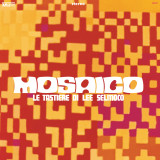
"Mosaico (Le Tastiere Di Lee Selmoco)" is an incredible display of his creative and composing skills, featuring 14 tracks of what could be classified as "happy music", with killer electric organ and rhythms alternating with fuzzy guitars and spacey / psychedelic hints thrown in for good measures, written alongside Guido Baggiani, alias Ruscigan. We are very happy to start a series of reissues from the Vedette Records catalog with the first ever reissue of this title after 50 years from its original release, and since the original pressing did not feature the correct track listing, it is reissued here for the first time in its correct version!
Version[36,93 €]
Midwestless is the fifth and newest album from St. Louis, Missouri rock failures The Conformists. Once again recorded with Steve Albini at the majestic Electrical Audio, this album marks their first recorded output as a trio. Formed in November of 1996 deep within a basement bedroom somewhere between the corn fields and strip malls of Southern Illinois, The Conformists began as four teenagers with a desire to create Ugly Rock Music. Eventually, they grew up and now dabble in moments which could even be described as quite beautiful and melodic. Elsewhere, elements of insistent repetition with an initial appearance of stasis reveal — with multiple listens — intricate details under the surface.
JIMI HENDRIX™ had an electrifying career highlighted by ground-breaking live performances! The latest 3.75” scale, articulated JIMI HENDRIX™ Festival ReAction Figure is inspired by the legendary guitarists’ iconic festival looks and features him in a blue-and-white fringed tunic and bell bottom blue jeans, and comes with an electric guitar accessory. Adding this JIMI HENDRIX™ ReAction Figure to your collection of rock and roll legends is as easy a decision as you’ll ever have to make!
Black Truffle is thrilled to announce a reissue of Chico Mello and Helinho Brandão’s self-titled release from 1984, the first return to vinyl of this classic of Brazilian experimental music with its original cover art and complete track listing. An under-recognised figure whose work inhabits a singular terrain where radical new music techniques and music theatre meet musica popular brasileira, Mello has lived and worked in Berlin since the late 1980s. A student of Dieter Schnebel, Mello played in the 90s iteration of Arnold Dreyblatt’s Orchestra of Excited Strings alongside compatriot Silvia Ocougne, with whom he produced a radical and hilarious deconstruction of MPB classics on Musica Brasileira De(s)composta (an early and rather atypical release on Edition Wandelweiser).
On this release, his only recording predating his move to Europe, Mello works with the alto saxophonist Helinho Brandão, who appears to be otherwise unknown outside Brazil. The record’s six tracks range from solo saxophone improvisation to densely layered ensemble works bridging minimalism, acoustic sound art and a plaintive melodic sensibility that calls up Edu Lobo or Milton Nascimento. Beginning with a dramatic, dissonant wind and string surge from which emerge ominously pounding piano chords, opener ‘Água’ slowly builds in intensity, a halo of clustered vocal harmonies gradually closing in on Brandão’s squealing sax until the piece opens up to reveal a gorgeous passage of melodic singing. The piano accompaniment reduces to tolling bass notes as the voice begins a repeated incantation, suggesting a ritualistic atmosphere reminiscent of parts of Xenakis’ setting of Oresteia. Dissonant, sawing tremolos on the strings climb to a crescendo before disappearing into the sounds of water being poured and splashed into metal vessels, presented not as a field recording but as a percussive element performed by the ensemble. A child’s voice then appears, singing to piano accompaniment the same melody heard earlier in the piece. After a brief solo alto improvisation from Brandão, working with the guttural pops and fleeting melodic gestures of Braxton or Roscoe Mitchell, the remainder of the first side is dedicated to the leisurely unfolding of ‘Baiando’ over the course of twelve minutes. A trio for Brandão on soprano saxophone, Mello on a very period-appropriate phased nylon string guitar and Edu Dequech on bongos, the performance eases its way hypnotically through subtle variations on a set of rhythmic and melodic patterns, almost derailed at points by Brandão’s wild forays into extended technique but held together by Mello’s droning guitar notes.
The second side opens with another multi-part epic for a larger ensemble, ‘Matraca’, which makes use of strings, electric guitars and a wide range of South American percussion instruments. Rasping violin harmonics hover as drum hits, repeated guitar notes and triangle accompany a slowly descending bass glissando. A sudden change in direction introduces a thrumming, incessantly repeated bowed bass tone, beginning a series of episodes of minimalist phasing and pattern variation, the combinations of electric guitars and orchestral instruments giving the ensemble an ad hoc charm like the early Penguin Café Orchestra but with more percussive drive. Eventually the piece is overrun by a cacophony of the titular matracas (a kind of ratchet/cog rattle). Following a lyrical trio improvisation by Mello, Brandão and Gerson Kornin on bass, the final ‘Danca’ focuses entirely on Mello’s layered acoustic guitars and vocals, using this restricted palette to build up a haunting piece of almost orchestral density, reminiscent of the 70s work of Egberto Gismonti in how it thickens a folkish ambience with harmonic sophistication.
Arriving in a starkly beautiful gatefold sleeve and sounding better than ever in its new remaster, one might call the stunning music contained on Chico Mello/Helinho Brandão ahead of its time. But what (other than some of Mello’s own work) produced in the years since its initial release has really touched the organic fusion of minimalism, free improvisation, radical instrumental technique and popular song achieved here? Forty years after its first release, Chico Mello/Helinho Brandão remains music of the future.
Are you a mannequin in the eyes of your beloved? Does your partner compare your relationship to a factory that emits plumes of smoke? Are you in love with a seductive and destructive Credit Default Swap? Someone who sucks you in with skyrocketing short term erotic returns - only to ghost you until you crash so hard that you end up broke(n) in your own bed? Do you pay $300 an hour out of pocket to a psychiatrist who promises to help you strike a deal with a difcult parent - one that will produce more stable long term returns on your psychic investments? If so, then you, my friend, may be drowning in the sea of Love in the Time of Capital. It's where everyone would love to drown. It's a new album from John Davis of The Folk Implosion that fnds him backed with confdence by Eli Moore and Andrew Dorsett of the indie pop band Lake. It was recorded by Nich Wilbur at the Unknown, a cavernous recording studio in Anacortes, WA that has been a favorite destination for indie rockers around the nation. Ben Brodin recorded Megan Siebe playing strings on two tracks at his Hidden Branch studio in Omaha, and the album was mixed by Scott Solter in Durham NC. Arrangements are based on the classic power pop trio of drums, bass and electric guitar. Those elements are tastefully embellished with organs and pianos that call to mind records by classic rock bands like Tom Petty's Heartbreakers. That is, if the Heartbreakers were fltered through the Northwestern International Pop Underground tradition, and cast a critical eye on how commodity culture shapes the way we think of ourselves and our intimate relationships. The album also features four ballads, three drum and electric guitar free, for all you late night introspective heads.
Born and raised in Richmond, Virginia, keyboard player Lonnie Liston Smith moved to New York in 1963 playing with the likes of Dakota Staton, Al Hibbler, Max Roach and Abbey Lincoln and Roland Kirk. He made his first recordings with Kirk and in 1968 entered into a mutually rewarding and instructive partnership with Pharoah Sanders and Leon Thomas. In 1971-2 he toured Europe with saxophonist Gato Barbieri appearing on his 1973 albums “Under Fire” and “Bolivia”. His growing reputation was also burnished by playing Fender Rhodes with Miles Davis electric band.
The second of these Barbieri LPs was released on Bob Thiele’s Flying Dutchman label. Thiele was quick to sign Smith and release Smith’s first album under his own name, “Astral Traveling”. Backed by his Cosmic Echoes band, Smith served up a beautiful spiritual and funky stew on tracks like ‘Let Us Go Into The House Of The Lord’, ‘Rejuvenation’, ‘I Mani (Faith)’ and ‘In Search Of Truth’.
Smith went on to record “Expansions” one of the greatest funky jazz albums of all time in 1975 but this debut really paved the way towards that musical milestone.
Ace are delighted to reissue “Astral Traveling” in a gatefold sleeve that, like the original pressing, has liner notes by legendary jazz critic Nat Hentoff.
Meghan Parnell (vocals) and Dave Barnes (guitar) are the founding
members of Bywater Call, a powerhouse seven-piece Southern soul,
roots rock band from Toronto, Canada
The band is completed by Bruce McCarthy on drums, Mike Meusel on Bass,
newest member, John Kervin on Keys, Stephen Dyte on Trumpet and Julian Nalli
on Tenor Sax. Bywater Call has received multiple Independent Blues and
Maple Blues Award nominations including Entertainer, Electric Act and Best
Female Vocalist for the 2024 Awards Season. They have toured extensively in
Europe where shows have been praised by Dutch, German and UK media, with
references to Meghan as one of the best female voices in blues and roots today.
In August 2023, the band participated in Joe Bonamassa's thirdKeeping the Blues
Alive at Sea Mediterranean Cruise alongside headliners Blackberry Smoke and
Christone "Kingfish" Ingram, and were invited to perform at the All-Star Jam on
the mainstage with Bonamassa himself. Guitarist Dave Barnes was also asked to
join legendary blues artist Jimmy Vivino (Conan O'Brien's Basic Cable Band) on
stage. On October 24, 2023, Bywater performed a live stream performance for the
famed German TV show and festival Rockpalast. The band's music is an
exploration of life's highs and lows. From intimate ballads that lay bare the
complexities of human emotion to electrifying anthems that demand to be played
at full volume, their catalogue is a journey through the human experience,
incorporating influences from the likes of The Band, The Wood Brothers, Tedeschi
Trucks Band, Otis Redding, Little Feat, Sly and the Family Stone, among others.
Video Link:
Damian Wilson and Adam Wakeman's 3rd full-length studio album 'Can
We Leave The Light On
Longer?' containing 10 new songs, features Damian on vocals and acoustic guitar
and Adam on piano, vocals, Hammond organ, acoustic & electric guitars, bass
and percussion. Additional drums and trumpet are provided by Pete Riley and
George Hogg and there's an 18-voices choir.
In line with, perhaps even more than on, their previous albums the songs have a
very personal depth and meaning to Adam and Damian.
Damian is a songwriter and vocalist who's known for his exploration into different
genres and is considered one of the most versatile singers in rock. Adam is best
known as the keyboard and guitar player with Ozzy Osbourne and Black Sabbath,
Adam has also released several albums with his father Rick Wakeman.
Debut standalone VHF album by the Elkhorn duo of Drew Gardner and Jesse Sheppard, a tight set of six studio recordings in a variety of moods and featuring a lot of new sound textures. Elkhorn’s prolific stream of releases since 2016 has highlighted their mastery of sprawling long-form, acoustic-driven hypno-jams, with an emphasis on live performance (including on their collaboration with Pelt’s Mike Gangloff on the Shackamaxon Concert album). The Red Valley is a more layered and composed-sounding set, with the duo overdubbing extensively on top of their own dual guitars. Leading off the LP, “Crystal Hummingbird” features one of their signature minor-modal vamps, with layers of fuzz bass, zither, and frame drum providing weight and psychedelic density. “Gray Salt Trail” continues the vibe, with thick fuzz vibraphone supplementing the cinematic palate, leading into the spare side-closer “Black Wind Of Kayenta,” where Sheppard plays electric 12-string and Gardner solos on acoustic guitar. Side two starts with “Road to Chaco Canyon,” a brooding duet that builds momentum with Gardner’s insistent frame drum cadence, dropping down into the quiet string pool of “Inside Spider Rock” (featuring Fern Knight’s Jesse Sparhawk on gloriously swirling lever harp) and the graceful finale “Jackrabbit Hops.”
To experience Justin R. Cruz Gallego's pulverizing Sub Pop debut is to get burned down to ashes and burst forth, born anew. Grim Iconic...(Sadistic Mantra), the Tacoma-based artist's second album, is driven by opposing forces: noisy abstractions and tightly structured beats, anguish and dissolution at the outside world and empowerment within, apathy and catharsis. Grim Iconic...(Sadistic Mantra) weds scouring electronics to hooky songs and Gallego's powerful drumming in a way that feels visceral and new. It's his most personal statement to date, at once playful and intent, driven and combustible, total fucking chaos mixed into glints of broken-glass beauty. Born in Tucson, Arizona, Gallego experienced culture shock as a child after relocating to the frigid climes of the Pacific Northwest. He found solace in the Seattle punk scene centered around Iron Lung Records and has since remained a fixture in the underground community. "I see this record as first and foremost a musical statement," Gallego says. "I grew up in punk and DIY subcultures, but before that I had Latin music playing in the background through my childhood and every phase of adolescence. It was surprisingly natural to incorporate. I realized I wanted to go deeper into these rhythms. I wanted to make a record that felt as experimental as much as it felt from the perspective of a Latino. When I got a glimmer of that possibility, it felt exciting." Lead single "Dogear" is a face-melting party starter that sounds like someone forced Talking Heads and Rudimentary Peni to share a practice space. "I wanted a song that felt playful in the way it attempted to be dissonant without taking itself too seriously," Gallego says. "Cholla Beat" is even more ambitious, an anthemic mix of WAR and Wire led by unruly synthesizers spiraling down a labyrinth of production. Gallego's influences for the album are vast, ranging from British documentary filmmaker Adam Curtis to electric Miles Davis to audio miscreants like Demdike Stare and Oneohtrix Point Never. But it's Gallego's assured sonic vision that resounds the loudest. And, while J.R.C.G. is a solo project, conceived and executed primarily in Gallego's home studio, he found strength in opening the project to others, starting with Seth Manchester as co-producer. Manchester's penchant for bone-rattling frequencies, as seen in his production work with The Body, Battles, and Mdou Moctar, made him a natural fit for Gallego. Together, they retained the intimacy of Gallego's home recordings while taking advantage of the hi-fi stylings of his Machines With Magnets Studio in Rhode Island. The closing song, "World i," offers a glimpse into the live experience of Grim Iconic...(Sadistic Mantra), with upwards of seven band members blasting off. The album features a fascinating mix of supporting players, many of whom cycle through J.R.C.G.'s live lineup: Morgan Henderson (The Blood Brothers, Fleet Foxes), Jason Clackley (Dreamdecay, The Exquisites), Jon Scheid (Dreamdecay, U Sco), Erica Miller (Casual Hex, Big Bite), Veronica Dye (Terminator) Phil Cleary (U Sco), and Alex Gaziano (Dreamdecay, Kidcrash, Science Amplification). Taken as a whole, G.I.S.M. is a whirlwind of sound, pummeling, and cleansing. It's a sweaty, thrilling aural adventure and, like a great basement show, it'll leave you breathless, exhausted, and wanting to repeat it all over again. As any good mantra should.
- A1: Ponta De Lança Africano (Umbabarauma) 3:58
- A2: Hermes Trismegisto Escreveu 3:04
- A3: O Filósofo 3:30
- A4: Meus Filhos, Meu Tesouro 3:53
- A5: O Plebeu 3:18
- A6: Taj Mahal 3:10
- B1: Xica Da Silva 4:00
- B2: A História De Jorge 3:53
- B3: Camisa 10 Da Gávea 4:18
- B4: Cavaleiro Do Cavalo Imaculado 4:43
- B5: África Brasil (Zumbi) 3:48
África Brasil is a 1976 release by Brazilian artist Jorge Ben. It was Ben's 14th studio album and a milestone in his career with a switch to electric guitar and funk music leaks. For África Brasil Ben reworked three of his earlier compositions: "A Princesa e o Plebeu" from Sacundin Ben Samba, "Taj Mahal" from Ben, and "Zumbi" from A Tábua de Esmeralda. The album's opening track "Ponta de Lança Africano (Umbabarauma)", a song about an African football striker, became a well known soccer-associated track and it was later included on David Byrne's 1989 compilation Brazil Classics Beleza Tropical, prompting rotation of a video for the track on VH-1
"Made by These Moments" is the second studio album from Mobile, Alabama natives The Red Clay Strays, and the band's debut album on RCA Records. This collection celebrates all the incredible moments that have defined the band's fast-rising success. Consisting of Brandon Coleman (lead vocals, guitar), Drew Nix (electric guitar, vocals, harmonica), Zach Rishel (electric guitar), Andrew Bishop (bass), and John Hall (drums), The Red Clay Strays made this record in Nashville with producer Dave Cobb at his studio, Georgia Mae. Standard LP Vinyl is Gold coloured. Indies only retail exclusive is Orange Smoke coloured. Standard x11 trk CD format. UK promo trip around release. Marketing activity across all media outlets.
- 01: Coined - Your House
- 02: Untitled (Halo) - Pedal Petal
- 03: Ety - This Town
- 04: Nourished By Time - I Guess I Got My Answer
- 05: Ms Ray - Signs
- 06: Pelin Pelin - Foamy
- 07: Olan Monk - Surf
- 08: Tony Bontana & Will Lister - A Long While
- 09: Adela Mede, Isa Otoya & María Catalina Jiménez - Pardo Plumetí
- 10: Max Winter - Don’t Live Inside
- 11: Canty - Alligator
- 12: Mark William Lewis - Lighter
- 13: Mary Jane Dunphe - Uriel
- 14: E-Prime - Somebody Else
- 15: Zoee Ft. Nourished By Time - Moth To A Flame
- 16: Nova Variable - Fountaine
- 17: Ma.moyo - Cave
- 18: Nukuluk - Shadowplay
- 19: Sy3 - Electric Puppy
- 20: Pig$ Ft. Paige Savahn - Last Call
‘Road Less Travelled vol.2’ once again brings together the imprints far-reaching community of artists spanning London, Los Angeles, Montreal, Budapest, Copenhagen, Barcelona & beyond. The compilation floats between shoegaze, moody electronics, and shimmering synths; featuring new and original music from the likes of Nourished By Time, Mark William Lewis, and Untitled (Halo). Road Less Travelled Vol.2 sees the label continue to amplify the voices of these singular artists who continue to sculpt their respective sounds. It’s a follow-up to 2022’s ‘Road Less Travelled vol.1’ which was celebrated by Resident Advisor, CRACK, The Wire, Dazed, Clash, NTS, Tom Ravenscroft, and Jamz Supernova.
Scenic Route continues to reaffirm its position as some of London’s premier tastemakers; building a grassroots following via their sell-out live shows featuring the likes of Chanel Beads, James Messiah, Mark William Lewis, Delilah Holiday, and more. Paired with ground-breaking releases including Nourished by Time’s debut album ‘Erotic Probiotic 2’ garnering the coveted Pitchfork’s 'Best New Music' and was widely regarded as one of the ‘Best Albums of 2023’ with features on Gorilla vs Bear (#1), Pitchfork (#5), The Guardian, The Fader, Paste and more. Most recently releasing Vanessa Bedoret’s (Astrid Sonne band mate) debut album ‘Eyes’ in the words of Boomkat ‘a timeless bouquet of raptures and ballads iced with shearing strings and shatterproof electronics’ having additional support from Vinyl Factory, Resident Advisor, Bleep, Nina, The Fader and more.