A hidden gem of Uruguayan music, Los Terapeutas's second album, released in 1990, is an original take on candombe and its hypnotic groove, blending pop songcraft with expansive soundscapes, never losing their rhythmic pulse. Los Terapeutas is a band of songs, where new wave, candombe beat, funk and rock were mixed in a unique way, with a strange frontman who had traces of Eduardo Mateo, Damo Suzuki, Frank Zappa and David Byrne. "Candombe del no sé quien soy" is related to what the group did live at that time: looking for a state of hypnotic hanging with their songs. The playing of the candombe drums was obviously an inspiration to look for that trance state, as was the music of Mateo and that of Opa, but influences can also be traced from the rhythmic experiments of German band Can of the 70s. The album was released in the late 1990s, a complicated time for Uruguayan music. The album was released on vinyl, a format that was losing weight compared to the CD. They would not release an album together again until 1997. In the 2000s, Los Terapeutas slowly expanded their audience, while also leaning towards a more electric sound. The new generation of Uruguayan musicians recognized the pioneering work of the band and Alberto Wolf was seen as a kind of godfather by several of the rock groups that were beginning to become massive.
quête:electric 6
Balmat co-founders Philip Sherburne and Albert Salinas have been fans of Shy Layers’ lilting, Balearic pop for years, so when Shy Layers’ JD Walsh asked us to listen to a set of demos he was working up with fellow Atlanta multi-instrumentalist Jeff Crompton, we jumped at the chance. And once we heard their work in progress, the decision was almost immediate: We have to release this.
Together, Walsh and Crompton are Anagrams, and their debut album together, Blue Voices, might initially seem like a departure from Balmat’s habitually electronic terrain. It’s not ambient music, but it’s also not not ambient music, at least to listeners in the right frame of mind. The two musicians, who met when Walsh moved from Brooklyn to Atlanta in 2016 and began collaborating a few years later, see the music in similarly ambiguous terms. “I like it because it’s not jazz,” jokes Crompton, a veteran and credentialed jazz player. “And JD likes it because it’s jazz.”
Crompton is a musician (and former high-school band teacher) with deep roots in Georgia’s improvised and experimental music scenes; his credits include shows with Eugene Chadbourne, a guest appearance with Godspeed You! Black Emperor, and a collaboration with Duet for Theremin and Lap Steel’s 12-hour drone performance at Knoxville’s Big Ears. On Blue Voices he plays alto and tenor saxophone, clarinet, electric piano, and organ. Walsh has been releasing music as Shy Layers since 2015, when he started self-releasing on Bandcamp; the following year, Germany’s Growing Bin packaged his first two EPs as a self-titled album, and in 2018, Tim Sweeney’s Beats in Space label put out Shy Layers’ sophomore album, Midnight Marker. Where those records channeled Walsh’s playful harmonic instincts into wistful songwriting with tropical overtones, on Blue Voices he lets his experimental tendencies take the lead. Playing acoustic and electric guitars, electric lap steel, bass, Moog Matriarch, modular synth, and programmed drums, he concentrates his energies on richly textural layers and abstract assemblages of tone color.
Across the album’s 11 tracks, there are faint echoes of familiar touchstones: the atmospheric twang of Daniel Lanois’ pedal steel on Apollo: Atmospheres and Soundtracks; the mercurial modal runs of Ethio- jazz; the late-summer calm of Fuubutsushi; the versatility of players and composers like Patrick Shiroishi and Sam Gendel, who are asking similar questions about where jazz ends and some other, nameless territory begins. Mostly, though, what Blue Voices captures is the quixotic sound of two restless musical imaginations making it up as they go along, two voices discovering a shared language in a hitherto unexplored shade of blue.
Dreyblatt"s minimalist conception - a rhythmic drone played on a double-bass strung with piano wire, playing in concert with other stringed instruments performing in 20 unequal microtones per octave and changing key but keeping the same fundamental pitch - dates back to the 1970s, while he studied under La Monte Young and Pauline Oliveros. Resolve acts in intermittent dialogue with the first Orchestra of Excited Strings release, 1982"s Nodal Excitation.
Since then, Dreyblatt has formed new orchestras across various countries and decades, with each phase of his music requiring several overlapping periods of gestation and arrangement.
The current Orchestra is formed by Konrad Sprenger, Joachim Schütz and Oren Ambarchi. On Resolve, each of the members" playing brings new angles to the compositions. Konrad Sprenger"s involves solenoids, sine waves and a computer-controlled multi-channel electric guitar (as well as a relentless style behind the drum kit and oversight of the album production), while Joachim Schütz"s individual conception of electronics and electric guitar and Oren Ambarchi"s undeniable innovations with signal path work together with Dreyblatt"s bass (still strung with piano wire) as magnetic component parts of Resolve.
These contributions lead to Resolve"s dialogue with the early Orchestra of Excited Strings canon - for instance, the track previewed here, "Flight Path" takes off at a pace not often found in the minimalist genre - a rolling lope! Yet the sense of play is palpable: the ensemble scale their microtonal keys with punkish brio, a stance sharing much with the original Orchestra"s downtown pulse, even as as the new Orchestra burn their own path through Dreyblatt"s music.
Approaching his 70th birthday, with over 40 years of work as a solo artist, collaborator, composer, educator and bandleader, Arnold Dreyblatt views Resolve as an important expression within the long story of The Orchestra of Excited Strings. The album title"s tendency to mean different things is an indicator of the dynamic qualities of his music in all its different phases - an evolution that continues to produce new dimensions in acoustic sound with every new release.
New York-based label Kindergarten Records is thrilled to unveil Ayesha’s debut album, ‘Rhythm is Memory’ – 10 boundary-pushing tracks, a shape-shifting percussive journey with electric moments.
While intended for maximum dancefloor impact, Ayesha’s first LP is also conceptually thought-provoking and playful, exploring how bodies store and channel creative knowledge.
A self-taught producer, Ayesha relies on her instincts to make music: sensing what her body wants to feel and hear. To her, essential to building a groove is channeling what is already inside us –
memories – whether they are based on lived experience or coded in the body: culturally, ancestrally, or intergenerationally. The result is this Indian-American producer’s distinct rhythmic voice, with its
many configurations boldly expressed across her debut album.
Kindergarten first released Ayesha’s material in 2020 with her ‘Natural Phenomena’ EP, a four-track journey which she described as “an undulating love letter to nature and the dancefloor, a space
where her biophilia collides with her yearning for the dancefloor.” Subsequently, she continued to build upon her luminous, scintillating sound with a contribution to ‘Fluo II’ titled “Aspara Dub”, followed
by “Varanasi” and “Downpour” on ‘Ether’, a split release with Sha Ru in 2021. With each release, Ayesha's sound evolved, adding shades, layers, and perpetual rhythmic nuance to a mind palace of
dancefloor possibilities.
That is why her and Kindergarten are a perfect match -- driven by their mutual fascination with exploratory sonics and a shared commitment to the community that inspires them. Kindergarten
Records has shaped itself into a trailblazing label, uniting a diverse and innovative collective of local and international producers, while embodying a strong familial atmosphere.This debut LP represents
a significant step-up for both the artist and the imprint, as they strive harmoniously towards a shared goal: delivering a sonic experience full of colorful, otherworldly bass-fueled expansion.
‘Rhythm is Memory’ captures Ayesha’s signature love for driving techno and organic percussion, while at moments veering into newer electro territory while keeping it psychedelic, spacious, dubby, and
always playful. This feels intuitively right for a producer at a crossroads in her career. All tracks intricately weave together pulsing drum grooves, slinky synths, nuanced melodies, and delightfully
unexpected twists. No single genre can do justice to describing this project as Ayesha delicately nods to many, reveling in the spaces between.
Undoubtedly, across A and B sides, 'Rhythm is Memory' imparts the joy of sonic experimentation to listeners and dancers. Ayesha invites us into her creative process and its steady evolution – rooted in
many days and nights of exploration, reflection, and repetition. "The ritual practice of cultivating and tending a garden is what comes to mind if I were to visualize this record. Beautiful things can emerge
from care and consistent attention," says Ayesha. While she refers to her specific experience making 'Rhythm is Memory,' this powerful album culminates a decade of working in nightlife for Ayesha – a
project slated to leave an indelible mark on the underground. To mark this impressive milestone in their catalog, Kindergarten Records is proud to return to pressing vinyl after a hiatus since 2020,
recognizing the significance of putting out a physical release to behold such a moment in both the label's and the artist's trajectory.
The latest album release by acclaimed Norwegian band Erlend Apneseth Trio is made in collaboration with renowned experimental composer and vocalist Maja Ratkje. Their impromptu concert together in 2022 was a glorious kick-off for a five-day festival and was luckily put on tape. After reworking and reimagining the recorded material with their steady collaborator Jorgen Træen, the result is a refreshing take on improvisations-turned-compositions. Featuring innovative soundscapes with archival material and an engaging transitory state. Listening to the album is akin to being on a voyage of discovery, in and out of the dream state. From the very beginning, the listener is met by ancient voices on tape, surrounded by distorted and dispersed sounds. Like stars on a moonless night, the sounds fall in and out of perceptibility, most twinkling, some falling. You suddenly wake up on a speeding train. As it enters a tunnel, ghostly voices sing a lullaby. The music gradually unfolds from mesmerizing melancholia to a ritualistic blowout. The music always takes the route of the unexpected and reaches momentums which shows why this is one of Norway's most unique constellations. Orbiting sounds gather around and assemble themselves into scenes, forming uncanny rooms collectively dreamed up by the artists. The album's first track Tre Vegar follows an enthralling pathway layered with field recordings and intensified by noise, suddenly plunging into a delightful stream of chords fleeting in mid-air. The variety of sounds that make up this glorious and aptly named 'Collage' is astounding. Elemental sounds range from the howling wind and soft-bright ringing of sheep-bells to the timeless trickling of a small stream of water. Strings of many timbres soar over animated croaks and quacks, assembling into a swampy symphony. The well-balanced diversity of acoustic and electric sounds has become the band's trademark. It is ever-present, complementing and creating new improvisatory trails to follow. Erlend Apneseth: Hardanger fiddle Stephan Meidell: baritone acoustic guitar, live sampling, modular synth Oyvind Hegg-Lunde: acoustic & electronic drums, percussion, timpani Maja S. K. Ratkje: voice, electronics
Off World presents the final album in its trilogy of surreal and spacious leftfield electronics. "A stellar project headed by Sandro Perri, one of the most singular producers in contemporary music" (Boomkat), this third volume is another distinctive collection of tracks constructed from semi-improvised ensemble recordings made over the past decade with a varied cast of coconspirators. Drew Brown, Matthew Cooper, Susumu Mukai and Andrew Zukerman join Perri again on a variety of synths and machines, along with violinist Jesse Zubot (Tanya Tagaq, Fond Of Tigers). Perri also continues to add organ and piano to the mix, while Volume 3 notably features first-time Off World contributors Nicole Rampersaud on trumpet and Martin Arnold on guitar, both mainstays of Toronto's vibrant improv and out-music scenes. The Quietus calls Off World "genuinely explorative_the musical equivalent of a Dali-esque landscape" which through all sorts of genre-defying twists and turns, at times evokes "offkilter, late Miles Davis ambience". Off World 3 doubles down on that jazz-adjacent trope in certain respects, while holding fast to Pitchfork's dictum that Perri "cultivates his own genreless brand of futurism." Marked by longer tracks than previous collections, three of the album's five songs clock in around the 10-minute mark, where overtly improvised instrumental playing wends its way across alternately bubbling and woozy electronic beds. "Impulse Controller" is a languidly skewed rhumba where ambling melodic undercurrents and dubby electronic pointillism provide a dulcet promenade for Rampersaud's Miles-esque trumpet excursions. "Ludic Loop" see-saws along in a slow synthy two-step, punctuated by Perri's restrained piano chords and Arnold's fried electric guitar. "Empasse" is perhaps most reminiscent of earlier Off World collections, though again slowed and stretched, with oozing synth bass ostinatos counterposed by ambient layers of viola and violin filigree from Zubot. These three centerpiece longform tracks each highlight one of the album's instrumental improvisers, and taken together, make for the most scintillating sedate and ruminant album in the trilogy. Off World 3 sounds as sui generis as ever, but in wrapping up the series, Perri sprinkles the project's emblematic alien surrealism with decidedly anthropic elements and temporalities. This final volume in the trilogy could also be seen as a re-statement of Perri's politico-aesthetic mission, as aptly celebrated by Pitchfork and its glowing 8.0+ reviews of Perri's 2018/2019 solo albums In Another Life and Soft Landing (released between Off World 2 and the present volume): a uniquely purposeful, subtly detailed cannon of songs "busy, vibrant, and bursting with life, but that aren't ever in a rush to get anywhere."
Neo Noir Swing! The modern Les Paul from the Dark Side! PO and his band catapult you right into a ball room filled with misfits and goons and smack you with 12 songs including the terrific cover version of Niagara's 80's disco hit L'amour a la plage Pierre Omer was born in London of an Indian father and a Swiss mother. He is a founder member of the legendary Swiss funeral Rock'n'Roll band The Dead Brothers (guitars and accordion). In 2009 he started several solo projects along with Robert Butler (the Shit, the Miracle Workers), Roland Bucher and Christian Aregger (Blind Butcher) in 2013 the Swing Revue was born, along with: Pierre Omer: vocals, guitar Julien Israelian: drums, Géraldine Schenkel: Fender Rhodes, Christoph Gantert: vocals, trumpet, and the one and only Lalla Morte: Sings Fakir and Dances. They played many shows and festivals such as: Binic Folk Blues Festival, Montreux Jazz Festival, Buskers Bern, Festival Les Athénéennes, Pod'Ring Biel, Vinelz, Le Cirque Electric Paris etc. This new album is recorded by the band itself in true DIY-style - Pierre already produced some Voodoo Rhythm Records (mama rosin) in the past - and was mixed in Berlin's Big Snuff Studio with Nene Baratto (movie star junkies, black lips, Heat, Jimi Tenor, King khan, Black Mass Rising. The whole album Stands out with Pierre's amazing song writing skills, the lazy laid back dark vocal and his irritating guitar playing, along with Christop Gantert's devil possessed trumpet playing. The Music of the swing era of the 30's and 40's, combined with a garage spirit and an eye for everything else make for a special album. Classic black vinyl with dlc and printed inlay, CD as gatefold wallet with 12page booklet.
Oblako Maranta is the collaboration between Radial Gaze and A-Tweed. The duo has already released several tracks in different compilations by Samo Records, Electric Shapes, Playground Records, as well as their debut EP “Maranta Kicks” on Duro.
In their new EP “Trance Beckenbauer”, the St-Petersburg-based Radial Gaze and Rome-based A-Tweed produced 4 original tracks that finely blend the sound of each artist, where slow tribal techno meets acid weird disco.
Starting off with the title track “Trance Beckenbauer”, Oblako Maranta brings us through a cinematic voyage, paced by percussive wonders and catchy bass lines, hypnotizing the listener from the first kick on. The atmosphere is dark, trippy, beautifully loved in an analog synth “duvet”. With that feeling of timelessness, “Trance Beckenbauer” sounds like the perfect fit for the next Blade Runner´ s soundtrack.
Next on the tracklisting is “Putos Mosquitos”, a tune that gives a feel of crossing a jungle full of wild life, with weird acid patterns on repeat, groovy percussions, and that sense of limitless adventure as the track plays on.
“Congarella di Luna” is a bewitching tune blending a mesmerizing melody with dreamy pads, finely arranged as the drop brings the energy down before reaching its paroxysm: an irresistible melodic pattern that will leave no one still on the dancefloor.
The fourth track “Analog Garbage” ´should bring any human being on the planet to an ecstatic state as it infuses that energy that makes you move fast and forward, without looking back. Indeed, “Analog Garbage” is driven by a fat bass riff and a kick-drum that tirelessly hammers the pace, while acid melodies are raining as the track unfolds. And there is that drop…
The EP is completed with first-in-class remixes by Inigo Vontier and Zillas on Acid, who reworked “Putos Mosquitos” and “Congarella di Luna”, respectively.
Artwork by Danish artist Christoffer Budtz.
Echolocation is the astonishing debut album from Mendoza Hoff Revels,
an electric & formidable new unit led by Ava Mendoza (electric guitar,
compositions) &Devin Hoff (electric bass, compositions) and featuring
James Brandon Lewis(tenor sax) & Ches Smith (drums)
A super-group of our time, all profound creative artists in their own right, rocking
mightily together, in their prime. 21st Century progressive rock played by punk
rockers with serious improv skills & jazz feel. And non-stop wicked catchy tunes,
riffs & grooves.
Strong sonic references are The Stooges' Funhouse, rendered by a band readily
adept at rapidly swinging rhythmic & harmonic shifts, (plus tenor sax on every
track!) and also Minutemen, both their whole body of music & their fundamental
egalitarian punk ethos.
- A.1. I Wanna Be Somebody
- A.2. L.o.v.e. Machine
- A.3. The Flame
- A.4. B.a.d
- A.5. School Daze
- B.1. Hellion
- B.2. Sleeping (In The Fire)
- B.3. On Your Knees
- B.4. Tormentor
- B.5. The Torture Never Stops
- C.1. Wild Child
- C.2. Ballcrusher
- C.3. Fistful Of Diamonds
- C.4. Jack Action
- C.5. Widowmaker
- D.1. Blind In Texas
- D.2. Cries In The Night
- D.3. The Last Command
- D.4. Running Wild In The Streets
- D.5. Sex Drive
- E.1. The Big Welcome
- E.2. Inside The Electric Circus
- E.3. I Don`t Need No Doctor
- E.4. 9.5. - N.a.s.t.y
- E.5. Restless Gypsy
- E.6. Shoot From The Hip
- F.1. I`m Alive
- F.2. Easy Living
- F.3. Sweet Cheetah
- F.4. Mantronic
- F.5. King Of Sodom And Gomorrah
- F.6. The Rock Rolls On
- G.1. The Heretic (The Lost Child)
- G.2. The Real Me
- G.3. The Headless Children
- G.4. Thunderhead
- H.1. Mean Man
- H.2. The Neutron Bomber
- H.3. Mephisto Waltz
- H.4. Forever Free
- H.5. Maneater
- H.6. Rebel In The F.d.g
- I.1. The Titanic Overture
- I.2. The Invisible Boy
- I.3. Arena Of Pleasure
- I.4. Chainsaw Charlie (Murders In The New Morgue)
- J.1. The Gypsy Meets The Boy
- J.2. Doctor Rockter
- J.3. I Am One
- K.1. The Idol
- K.2. Hold On To My Heart
- K.3. The Great Misconceptions Of Me
- L.1. The Story Of Jonathan (Prologue To The Crimson Idol)
- L.2. Phantoms In The Mirror
- M.1. Inside The Electric Circus (Live)
- M.2. I Don`t Need No Doctor (Live)
- M.3. L.o.v.e. Machine (Live)
- M.4. Wild Child (Live)
- M.5. 9.5. - N.a.s.t.y. (Live)
- M.6. Sleeping (In The Fire) (Live)
- N.1. The Manimal (Live)
- N.2. I Wanna Be Somebody (Live)
- N.3. Harder Faster (Live)
- N.4. Blind In Texas (Live)
- N.5. Scream Until You Like It (Theme From Ghoulies Ii)
- O.1. Animal (F**K Like A Beast)
- O.2. Show No Mercy
- O.3. Paint It Black
- O.4. Savage
- O.5. Mississippi Queen
- O.6. Flesh And Fire
- O.7. D.b. Blues
- P.1. Locomotive Breath
- P.2. For Whom The Bell Tolls
- P.3. Lake Of Fools
- P.4. War Cry
- P.5. When The Levee Breaks
DELUXE 8LP BOXSET FROM THEIR ‘CAPITOL YEARS’, WITH STUDIO ALBUM HALF-SPEED MASTERING, LP OF BONUS TRACKS, 60 PAGE BOOK, POSTERS & NUMBERED CERTIFICATE
Currently on the 40 Years Live World Tour and sounding better than ever, W.A.S.P. is one of the most consistent and reliable forces in rock music - unstoppable and unassailable, like a heavy metal juggernaut sent back in time from a long, distant galaxy. Frontman Blackie Lawless is undoubtedly one of rock’s everlasting figures – someone’s whose attitude and vision changed the musical landscape around him, in the process bearing fruit to some of the biggest anthems of their time.
Their first five studio albums (W.A.S.P., The Last Command, Inside the Electric Circus, The Headless Children & The Crimson Idol) contributed enough on their own for W.A.S.P. to be considered one of the greatest rock bands of all-time. Those LPs are all presented in this set, mastered half-speed at Air Studios, London, for a superior, sharper, more direct and engaging sound.
Packaged within a deluxe red leatherette effect double slipcase, The 7 Savage: 1984-1992 is completed on vinyl with two more LPs: 1987’s Live… in the Raw and new compilation Bonus Tracks & B-Sides featuring the controversial breakthrough anthem ‘Animal (F**k Like a Beast)’.
Compiled with the full cooperation of Blackie Lawless, the box set also includes a 60-page book with exclusive and rare pictures from legendary metal photographers (including Ross Halfin, Tony Mottram, David Plastik and Paul Natkin), along with extensive liner notes from Amit Sharma (Kerrang!, Planet Rock). Also included is an exclusive Blackie Lawless poster, plus an individually numbered circular saw shaped certificate.
The 7 Savage: 1984-1992 will be released Friday 27th October 2023 on Madfish and is strictly limited to 2000 copies worldwide.
[yb] L.2. Phantoms In The Mirror [04:36] D.3. The Eulogy
- A1: Eater Outside View
- A2: The Boys First Time (Alternative Version)
- A3: The Rezillos I Can’t Stand My Baby
- A4: The Valves Robot Love
- A5: Puncture Mucky Pup
- A6: The Zeros Hungry
- A7: The Outsiders One To Infinity
- A8: The Electric Chairs On The Crest
- B1: The Drones Just Want To Be Myself (Lp Version)
- B2: Maniacs Chelsea 77
- B3: ‘O’ Level Pseudo Punk
- B4: The Carpettes Radio Wunderbar
- B5: The Wasps Teenage Treats
- B6: V2 Speed Freak
- B7: Social Security I Don't Want My Heart To Rule My Head
- B8: Patrik Fitzgerald Safety-Pin Stuck In My Heart
- C1: Angelic Upstarts The Murder Of Liddle Towers
- C2: Alternative Tv Action Time Vision
- C3: The Tights Bad Hearts
- C4: Leyton Buzzards 19 And Mad
- C5: The Rowdies A.c.a.b
- C6: The Outcasts Just Another Teenage Rebel
- C7: U.k. Subs C.i.d
- C8: The Fall Psycho Mafia
- D3: Cockney Rejects Flares ‘N’ Slippers
- D4: Pure Hell These Boots Are Made For Walking
- D5: The Pack King Of Kings
- D6: 999 Found Out Too Late
- D7: The Adicts Easy Way Out
- D8: Spizzenergi Where's Captain Kirk?
- D1: The Ruts In A Rut
- D2: The Piranhas Jilly
When punk arrived in late 1976, the scene acted as a catalyst for an explosion of independent labels which swiftly sprung up around the UK. Named after a classic track by Manchester’s The Drones, ‘Just Want To Be Myself’ boasts classic sevens on imprints such as Small Wonder, The Label, Rough Trade, Dining Out, Deptford Fun City and Cherry Red (all London), Zoom (Glasgow), Attrix (Brighton), Heartbeat (Bristol), Good Vibrations (Belfast) and Bent (Manchester).
Many of the individuals and bands featured would later enjoy success in various incarnations – for example, The Pack mutated into Theature Of Hate, The Outsiders’ Adrian Borland attracted acclaim with his band The Sound, ‘O’ Level’s Edward Ball made an impact with various acts including The Times and Leyton Buzzards evolved into pop combo Modern Romance!
Pure Hell and The Electric Chairs’ Wayne County were American but eligible here because the tracks were recorded in the UK
Producer Tom Thiel has worked in the medium of electronic music since the 1980s, been active in the musical epicenter of Berlin since 1987 and with the Sun Electric duo, he was already at the forefront of live / “real time” electronica since the 1990s.
Incidentally, Sun Electric are set to release an archival live set from this period on Arjunamusic later this year.
Though not everyone becomes exceptional on the basis of “veteran” status alone, Thiel’s latest work shows that he has made good on one of the main promises held out by electronic music and sound synthesis: namely, that it would also provide unexpected, novel, highly individualized syntheses of different attitudes, atmospheres, and affects. This is happily the case with Thiel’s new Arjunamusic release (his first full solo outing since his eponymous 2011 album): it’s a series of colorful, self-contained vignettes that are perceptibly drawn from an eclectic pool of personal
Im Englischen gibt es den Ausdruck "to pull at one"s heartstrings". In der deutschen Sprache gibt es für dieses Bild keine direkte Übersetzung. Jetzt aber zum Glück irgendwie schon, in Form dieses Albums. Denn beim Hören von EXILE IN SPACE zupft und zuppelt, zieht und dehnt etwas im Inneren, meist in etwa da, wo bei den meisten Menschen das Herz vermutet wird. Melancholie trifft es eben nicht, ist auch ein viel zu abgenudelter Begriff in der Musik und hat hier keinen Platz. Was ENIK und das PARANORMAL STRING QUARTET auf EXILE IN SPACE in diesen acht musikalischen Kleinoden entstehen lassen, geht tiefer. Großartige Sätze wie: "Don"t pick up the Phone, it could be your mother! She wont candycrush herself out of this mess.", lässt Enik in "Electric Sheep" von einer knazigen Roboterstimme in Gedichtform vortragen, während im Hintergrund ein Omnichord und ein Cello darüber diskutieren, wer von beiden eigentlich einsamer ist als der andere. "TRUE MF", das man von ENIK Solo bisher als richtigen Dancefloor-Banger kannte, kriegt mit entschleunigten, warmen aber trotzdem nie und nimmer kitschigen Streicherparts neue Dimensionen (ziemlich viele sogar). Diese paranormalen Ergänzungen halten ENIK wenn nötig auch mal auf dem Boden - oder besser gesagt in der gemütlichen, warmen Stube am Fenster, wenn er im Titeltrack mit Cervantes im Kopf von der eher weniger gemütlichen Weltlage singt und vom Exil im Weltall träumt (EXILE IN SPACE). In KANGAROO unterhält sich Enik mit einem toten Känguru, was ihn schlagartig seiner eigenen Vergänglichkeit ermahnt und somit das exzessive Leben des Protagonisten herzzerreißend in Frage stellt. Der Song endet in einer dreiminütigen, elegischen Streicherimprovisation, die für Enik persönlich, den absoluten Höhepunkt dieses Albums darstellt. Zurückgelassen wird man als Hörer*in am Ende mit dem knarzigen BETTY LEE. Ein Lied, das gut und gerne 70 Jahre alt sei könnte, gleichzeitig aber auch nach vorne in die Zukunft weist. Alles in allem acht funkelnde, schräge, organische und liebevolle Songs, die vom Herzen bis ins Weltall reichen. Womit wir wieder bei den "heartstrings" sind und dem, was eben hier noch nicht verraten wurde: Was der englische Ausdruck "to pull at one"s heartstrings" auf Deutsch bedeutet. Aber dafür sind ENIK und das PARANORMAL STRING QUARTET die Experten.
Jeder, der genau hinschaut, kann erkennen, dass Cincinnati, OH, derzeit eine wahre Brutstätte musikalischer Kreativität ist, und die drei Mitglieder von The Serfs - Dylan McCartney (Gesang, Perkussion, Gitarre, Bass, Elektronik), Dakota Carlyle (Elektronik, Bass, Gitarre, Gesang) & Andie Luman (Gesang, Synthesizer) - und ihre jeweiligen Nebenprojekte (The Drin, Crime of Passing, Motorbike) sind unbestreitbar im Zentrum der New-Underground-Szene von Cincinnati. Nach der Veröffentlichung von Alben auf dem Berliner Minimal-Synth-Label Detriti und dem in Seattle ansässigen DREAM Records im Jahr 2018 bzw. 2022 macht die Band für ihr drittes und bisher bestes Album den Schritt zu Trouble In Mind. "Half Eaten By Dogs" gibt dem modernistischen Twitch von Future-Forward-Bands wie Total Control oder Cold Beat sowie dem post-industriellen Dancefloor-Grime von Skinny Puppy, Dark Day, This Heat oder Factrix einen entschiedenen Midwestern-Spin. "Half Eaten by Dogs" ist ein Blick durch ein Fernrohr in eine dystopische Vision, in der eisverkrustete Synthie-Harmonien triefende chemische Rhythmen und aufgebohrte elementare Rockformationen beherrschen. Die Musik ist eine Mischung aus düsterem Drum- und Synthesizer-Industrial und stygischen Gitarreninstrumenten, mal mit vorsichtiger Paranoia, mal mit melodischem Trotz und Ausgelassenheit (und in manchen Momenten mit Mundharmonika, Saxophon oder Flöte). "Half Eaten By Dogs" fasst erfolgreich alles zusammen, was The Serfs bisher erreicht haben, aber mit weitaus größerer Absicht und Zielsetzung als ihre vorherigen Alben. Es gibt Songs zum Tanzen und Songs, die man während eines Sturms oder beim Fahren durch die Straßen der Welt in sich aufnehmen kann. Es mag für die Band ein weiterer Schritt hinunter in die Katakomben sein, dabei aber auf dem Weg zu etwas Höherem.
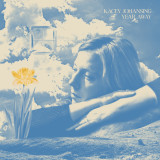
In March of 2020, after learning that a dear friend’s life was coming to an end, Johansing sat down and in one sitting wrote the song “Daffodils”. An elegiac tribute to someone facing death with grace and curiosity, the lyrics confront Johansing’s own mortality by observing the brief lifespan of a Hlower. Only a week later when the world came to an abrupt standstill, she soon found herself processing this recent loss while trying to make sense of a new global reality. Across the ensuing months, Johansing found herself increasingly untethered by a world of isolation and political upheaval.
Having been a frequent touring member of bands like Hand Habits and Fruit Bats, and often being called into the studio to lend her harmonies and multi-instrumental talents to records, Johansing’s phone no longer rang. Living in Los Angeles she feared her musical community was vanishing, as friends and collaborators continually announced they were leaving the city. It was in returning to her piano nightly that she found the greatest solace, feverishly writing the songs that would be collected on her next album. Resulting from this new sense of time and focus was a deepening of her songwriting. As Johansing recalls, “I felt like a metamorphosis happened during that time. There was a lot of personal growth and healing.”
Throughout Year Away Johansing traverses uncharted emotional landscapes brought upon by the changes occurring all around her. The forced self-reflection of the moment is aptly captured by “Old Friend”, featuring an aching melody and swooning production that recalls the best of Harry Nilsson. The epic piano and saxophone-driven “Smile with My Eyes” addresses the loss of community as friends became distant and political divides between family grew. On “Smile” Johansing pushes her vocals further than ever, expanding her range and using her peerless voice as the singular instrument it is. Facing the loss of a family home due to environmental destruction, “Shifting Sands” is marked by soaring Hlutes, Hield recordings and glassy synthesizers that nod to Japanese New Age.
“Daffodils”, the stunning album centerpiece, is built from a pastiche of looping samples, swirling Mellotron and dazzling vibraphone. “Keep your heart open wide, you never know your time / Keep your heart wild, true Hlower child”, Johansing sings as she says goodbye to an elder, while the band reaches a grief-stricken crescendo of woodwinds and chiming bells. On the title track, Johansing takes listeners on an eerily meditative journey of collective experiences. “I wanted to keep the progression simple and repetitive so that musically we could add new elements little by little, while the emotional tone of the lyrics becomes increasingly more strained and expressive”. The song grows to a fever pitch as Johansing sings higher than she thought possible; the tension of the repeating chords Hinally resolving into a hopeful coda as multiple soloists weave around each other.
Amidst heavier themes, Johansing still leaves room for her love of irresistible pop melodies and lush production. The driving “Last Drop” and mid-tempo “Valley Green” are two of her catchiest songs to date. On the former Johansing sings the anthemic chorus, “As if it were the last drop, and nothing ever lasts forever / As if it were the last stop, too far out to come back ever”, longing for a love that she’ll never take for granted, while also admitting that she doesn’t always know how good she has it. “Valley Green” features shimmering layers of 12- string guitars, stacked horns and an impeccable solo by co-producer and multi- instrumentalist Tim Ramsey (Vetiver, Fruit Bats), hinting at a love for bands like NRBQ.
Having been eager to capture the initial spark of songwriting, Johansing booked time at Highland Park’s 64 Sound Studio the week that it reopened. Over the course of three days, she and her band gathered basic tracks for 10 songs, before returning home to Hinish the record with Ramsey. Setting forth to make an album that paid homage to the music that kept them company during the months spent alone together, the duo pulled inspiration from a wide net including Burt Bacharach, John Carroll Kirby & Haruomi Hosono. Ramsey’s newfound love of early digital synthesizers dovetailed effortlessly with Johansing’s fondness for classic 70’s horn and string arrangements, creating a sound that is distinctly modern yet warm and familiar.
Once again Johansing called upon some of the Hinest players of Northeast Los Angeles’ vibrant music community to lend a hand with the record. The 70s R&B-folk of “Watch It Like a Show” features an electric guitar solo from Hand Habits’ Meg Duffy, while album closer “Endless Sound” boasts backing vocals from electronic musician Kaitlyn Aurelia Smith and swooping Indian-inspired violins from Amir Yaghmai (HAIM, The Voidz). The record shines brightly thanks to an ace mix from veteran producer Rob Schnapf (Beck, Elliott Smith, Cat Power), woodwinds from Logan Hone (John Carroll Kirby, Eddie Chacon), and a featured rhythm section of drummer Josh Adams (Jenny Lewis, Bedouine) and bassist Todd Dahlhoff (Feist, Devendra Banhart). Recorded across multiple studios including LA’s famed Sunset Sound, the album remains steadfastly buoyed by the adept engineering of Tyler Karmen (MGMT, Alvvays).
Though born of turbulent times, Year Away is ultimately interested in moving forward. The album ends with “Endless Sound,” where Johansing laments seismic global changes, (“The water is hotter, the mighty thaw / The current’s reversing, the last are lost”) but vows to keep going (“No storm can take me down / Endless light, endless sound”). It’s Year Away’s resilience that shines through despite the darkness. It’s a sound all her own and Johansing’s most cohesive set of songs yet.
Originally released in January 1962 and simply titled 'Howlin' Wolf (aka The Rockin' Chair Album), this is one of the blues legend's best-loved LPs and widely recognized as one of the all-time cornerstones of Chicago Blues and named the third greatest guitar album of all time by Mojo magazine in 2004.
Now reissued as 'Little Red Rooster', the first side features iconic singles like 'The Red Rooster, (aka Little Red Rooster). However, it is on the second side that Wolf really steps into the light and delivers his dynamic and unique voice like never before, with songs such as Back Door Man and his variation on Willie Dixon's Spoonful, one of the finest blues songs ever recorded.
"One of the pinnacles of early electric blues and an essential album for any quality blues collection." - AllMusic
- 01: Subterraean Futari Botchi - Nanako Sato
- 02: Silhouette - You & The Explosion Band
- 03: I Wish You Love - Hatsumi Shibata
- 04: Kirameku Inner Space - Yuji Ohno & Galaxy
- 05: Speak Low - Ann Young & Yuji Ohno Trio
- 06: Lilac-Gai No Aki - Ken Tanaki
- 07: I Want To Be Happy - Mieko Hirota
- 08: The Soaring Seagull - Electric Keyboard Orchestra
- 09: Mouchido Kikasete - Hatusmi Shibata
Wewantsounds is delighted to announce the release of "TOUCH," a selection of sought-after tracks produced by Yuji Ohno, one of the most revered producers and arrangers on the Nippon music scene. His blend of Jazz, Space Funk and Disco have long been highly sought-after by DJs around the world and we've been given unique access to the Nippon Columbia vaults and to Mr. Ohno himself to come with a versatile selection from his 70s body of work, all bearing his uniquely recognisable sound. The set includes works with singers Nanako Sato, Hatsumi Shibata and Ken Tanaka alongside tracks from his cult anime soundtracks for "Lupin III" and "Captain Future." Approved by Yuji Ohno himself, "Touch" was remastered in Tokyo by Nippon Columbia and features liner notes by Nick Luscombe in conversation with the maestro and artwork by Optigram's Manuel Sepulveda.
Born in Atami in 1941, Yuji Ohno started learning the piano at a young age and formed his own band during his teenage years, getting into Jazz in the process. After high school, he entered the prestigious Keio University in Tokyo and played in the revered university big band alongside two other pianists, Masahiko Sato and Hirosama Suzuki, who would have an illustrious career in their own right. After University, Ohno became a professional musician and started playing with the new wave of Japanese Jazz musicians forming his own trio and recording with the likes of Hideo Shiraki, Terumasa Hino and Masahiko Togashi from 1967 onwards.
At the turn of the 60s, Ohno started to veer away from the Jazz scene as he realised, as told to Nick Luscombe that "the jazz music being played by the Japanese at the time was only chasing the cutting edge, and was ignoring the roots and origins of jazz." Ohno therefore shifted his efforts to film and TV and also to producing artists for various Japanese labels, becoming one of the most in-demand composers, arrangers and producers in Japan. This is when Ohno developed his unique sound across a wide variety of styles. More than anything else, he got renowned for his anime soundtracks, particularly with the Lupin III series - represented here by the superbly funky "Silhouette" - which made his fame in Japan
Whether it's jazz, funk, disco or Pop, the "Ohno Sound" is unmissable both in terms of melodies and arrangements, on a par with those of such legends as Quincy Jones and Michel Legrand. Ohno's melodies are sophisticated yet accessible and there's a great sense of space in his productions especially when it comes to slow-burning grooves as heard on "Kirameku Inner Space" from the cult anime soundtrack "Captain Future" or "The Soaring Seagull" from the sought-after 1975 album "Electro Keyboard Orchestra." This album was recorded with seven fellow musicians including Kentaro Haneda and Ohno's old friend, Masahiko Sato and using twenty Korg synths to create a unique blend of futuristic jazz funk. "The Soaring Seagull" could be the perfect embodiment of Ohno's signature sound when it comes to instrumentals. The producer was however equally at ease with producing lush disco extravaganzas such as "Subterranean Futari Botchi" by Nanako Sato or "I Wish You Love" by Hatsumi Shibata, a revamp of Charles Trenet classic, both colourful and glitzy.
Ohno's versatility is on display here with a couple of jazz vocal tracks, "Speak Low" by Ann Young accompanied by the Yuji Ohno Trio and Mieko Hirota's fast and furious "I Want to Be Happy" while he also excelled at crafting gorgeous mellow songs such as Ken Tanaka's "Lilac-gai No Aki" and Hatsumi Shibata's "Mouichido Kikasete" closing the selection on a perfect note. "Touch" is just a tiny selection from Yuji Ohno's immense body of work and it will hopefully open the ears of Japanese music lovers to one of the most important musician, producer and arrangers of his generation.
Seit 2015 vergriffen, kehrt diese EP nun auf 12"-Vinyl zurück!
Ursprünglich für Big Stars kultige "Third" (1978) aufgenommen, ist "Jesus Christ" zu einem ein Grundnahrungsmittel geworden. Was gibt es Besseres, um diese Zeit des Jahres zu feiern, als als diesen Klassiker auf Vinyl zu erleben - zusammen mit dem Geschenk von seltenem Material! Diese 12"-EP zeigt das Artwork der Heiligen Drei Könige von einem Promo-Plakat von 1973 Big Star-Promo-Poster. Zusätzlich zur originalen Albumversion, enthält die LP ein Demo von "Jesus Christ", das erstmals auf der Grammy®-prämierten Box-Set Keep An Eye On The Sky erschien, sowie sowie 5 seltene Tracks. Die Fans warten schon seit Jahrzehnten auf eine offizielle Veröffentlichung von "Another Time Another Place & You", das auf dieser EP erstmals als Record Store Day EP 2015 veröffentlicht wurde.
Zwei weitere unveröffentlichte Instrumentals kamen hinzu. Eine Demoversion von "Big Black Car" vervollständigt die Playlist. Das Vermächtnis von Big Star leuchtet weiterhin, und die Jesus Christ EP wird nicht nur nicht nur eine glänzende Ergänzung für die Sammlung eines jeden Fans sein, sondern ihnen auch nicht nur das, wonach sie gesucht haben, sondern lässt sie sich auch über das freuen was sie gefunden haben.
Wer die Dawn Brothers bei der Arbeit sieht, wird unwiderruflich in den musikalischen Wirbelwind gesogen, der über die Bühne rast. Hier werden Rock, Folk, Blues und Soul scheinbar mühelos zu einem unwiderstehlichen Cocktail vermischt. Es ist dieses quälende
'was ist hier los'-Gefühl, das den Wunsch weckt, selbst Teil dieser Rotterdamer Band zu sein. Das neue Album der Dawn Brothers, das auf den Namen 'Alpine Gold' hört, ist eine Rückkehr zur Energie des Debüts 'Stayin' Out Late' und enthält einen erzählenden Song,
in dem Sheryl Crow, Eddie Vedder und Cat Stevens zu hören sind - ihr wisst, wie es geht. Die Songs, die auf "Alpine Gold" landeten, wurden innerhalb von zwei Monaten geschrieben und dann im Electric Monkey Studio in Zaandam aufgenommen, wohin sich
die Band mit dem Produzenten Paul Willemsen zurückzog. Die so entstandenen Songs sind eine authentische Sammlung von Liedern mit einem Hauch von Mystik, bei denen Intuition und Instinkt im Vordergrund stehen. "Kein Bullshit, einfach eine gute Platte mit
starken Songs machen", sagt die Band. Im Alltag mögen sie bescheiden sein, aber auf 'Alpine Gold' haben die Dawn Brothers keine Angst, die Büchse der Pandora zu öffnen.