Eléctrico Magnetico opens a new catalog series dedicated to the under-underground. A punk approach to electronic music—raw, physical, and proudly non-conformist.
Across four tracks, distorted pressure and subtle 90s sampling collide, revealing a rough side of dancefloor culture that refuses polish or compromise.
This release ain’t for everyone—and that’s the point.
Поиск:electrico
Все
- 1
Fast-rising Irish techno star Doug Cooney joins Bastardo Electrico with a killer 4 track EP of expertly crafted and powerful techno grooves. The release opens up with “Pansperman” which hypnotises with its cyclical synth riff that rises & falls over a pounding low end. Next up German producer Krenzlin gives “Pansperman” the remix treatment keeping the hypnotic vibe of the original whilst bringing things in a deeper direction and upping the funk levels.
On the flip are two dancefloor/festival arena destroyers with “Higher Self” and “Parralel Reality” both going straight for the jugular.
Bastardo Electrico is a techno night and label based in Cork, Ireland. It's run by Jamie Behan, a veteran of the scene and one half of Flexure alongside Stephen Mahoney. Both have been DJing since the mid-'90s, but Flexure is a relatively new hardware-based project that sounds like a mashup of techno, acid, electro and Chicago house. Shadow Puppets is Flexure's debut EP, a collection of unhinged machine bangers fans of Tinfoil's and On The Hoof's weirdness will likely appreciate.
Modulated noise drills through the centre of "Blizz," getting more rancorous as the track steams on. "Callmecrazeey" is less abrasive but boisterous and more energetic, like a mound of Mexican jumping beans, complete with cartoonish xylophone notes that give it a cheeky twist. The cheekiness continues on "703 39flr," which teems with homemade sounds between the kicks, giving you plenty to home in on even if the track doesn't make you want to dance. The hypnotic "Piltrafiltra" is more likely to get you moving with its slender '90s trance hook. It's the most functional track on the record, but who needs functionality when you can be ricocheting off the walls with "Callmecrazeey'"s oddball jive.
- A1: Ella Usó Mi Cabeza Como Un Revólver
- A2: Disco Eterno
- A3: Zoom
- B1: Ojo De La Tormenta
- B2: Efecto Doppler
- B3: Paseando Por Roma
- C1: Pasos
- C2: Ángel Eléctrico
- C3: Crema De Estrellas
- D1: Planta
- D2: X-Playo
- D3: Moiré
Sueño Stereo is the final album recorded by Argentine rock band Soda Stereo. By 1995, it was clear that the band was the most important Argentinian group of the decade. The album went platinum in 15 days and Rolling Stone considered it the fourth-best album in Latin rock history.
The album is a true reflection of the times, blending Britpop, dream pop and electronic music. Next to that the band named The Beatles as a major influence on the album's structure. Inspired by The Beatles did the band end the album with a medley on the D-side. This gives the album a strong conceptual feel.|
Sueño Stereo is available as a limited edition of 2000 individually numbered copies on transparent vinyl, is packaged in a gatefold sleeve, and includes an insert.
- A1: Un Misil En Mi Placard
- A2: En La Ciudad De La Furia
- A3: Entre Canibales
- B1: Pasos
- B2: Zoom
- B3: Cuando Pase El Temblor
- B4: Te Para 3
- C1: Terapia De Amor Intensiva
- C2: Disco Eterno
- C3: Angel Electrico
- D1: Ella Uso Mi Cabeza Como Un Revolver
- D2: Paseando Por Roma
- D3: Génesis
Comfort y Música Para Volar is the result of Soda Stereo's beloved 1996 MTV Unplugged session. The sessions provided a fascinating overview of the band's discography, offering unique new (un)plugged renditions of their songs. For example, the 1980s hit "En la Ciudad de la Furia" which sounds like a complete reinterpretation, stretching to eight minutes and featuring the powerful vocals of Colombian artist Andrea Echeverri. This gives the song a new life and adding something special to the original version. Because of this, the album is much more than just a collection of hits; it really feels like a unique milestone in the band's career and a must hear for all their fans.
This version of the album also includes the Vox Dei cover "Genesis", which was not included in the original release.
Acerbic returns after 2 killer EPs of forward thinking Acid Techno for Acid Artists In Action (aaa011) and Stay Up Forever (suf112) which have literally torn the roof of DJ sets from Perc, Choci, Chris Liberator and dozens more. This time he ditches the 303's for throbbing, wiry techno grooves, 4 trax of fast and scuzzy warehouse techno of the highest quality - already being caned by those lucky enough to have a test pressing!
Paul Hammock es el artista por todos conocido como Cignol, sin lugar a dudas uno de los genuinos revolucionarios dentro del sonido electro de la última década y media. Sus trabajos llevan surcando nuestros Technics desde 2008 a través de los sellos de vanguardia electrónica del nuevo milenio.
En su decimocuarta referencia en vinilo, el sello Valenciano HC Records, tras una imparable y ecléctica línea editorial, publica el nuevo trabajo del genio de Dublín titulado Binary Choices. Un maxi en el que nos domina un profundo sentimiento de melancolía cósmica a través de cuatro cortes que nos sumergen en una odisea espacial.
Adentrarse en cada corte del vinilo es como viajar hasta diferentes cuerpos celestes y dejarse sorprender por su atmósfera ensoñadora, y es que solo es necesario que transcurran 58 segundos de Binary Choices, primer corte de la cara A, para sentirnos arropados por un sentimiento de suma nostalgia, alegría y futurismo. Una inteligente combinación de pads, sintes y brillantes percusiones que nos adentran en un astro inexplorado repleto de extrañas vegetaciones, increíbles seres multicolores y horizontes infinitos que activan nuestra sinestesia.
Un emocionante, decidido y contundente ritmo 4x4 a baja velocidad nos traspasa el alma al surcar la superficie de Broken Circle. Un recuerdo olvidado en forma de aterciopelado sonido se crea frente a nuestros ojos en la consecución del compendio de melodías intimistas que componen sus 4:14 minutos, en los que encuentra sosiego nuestra mente y bálsamo nuestro alma.
La cara B del vinilo regresa al cristalino, eléctrico y veloz ritmo roto con Momentum Gateway, track en el que sus dominantes y ácidas cadenas de bajos se enrollan y juegan en sincronía perfecta con sus diferentes capas de teclados y su vibrante e iridiscente pad.
En el último planeta al que nos transporta Cignol, suena en cada uno de sus parajes Validity Movement, track con el que nos dejamos guiar por su grueso y áspero bajo principal, que contrasta con los delicados sintes y atmósferas que lo rodean. Una experiencia sónica tan delicada, íntima y eficiente que podría servir tanto como banda sonora en la creación de un nuevo universo como en la contemplación de su ocaso final.
Finalmente, por un lado, el trabajo de master del lanzamiento ha sido llevado a cabo por Steve Voidloss en Black Monolith Studios en Londres y, por otro, Dani Requeni completa esta obra con la dirección del arte gráfico de la misma.
‘Mormaço Queima’ is where it all began for Ana Frango Eléctrico. Raw, quirky and lo-fi, it’s a debut album brimming with attitude and youthful energy, characteristics that would go on to define their sound. Previously released digitally in Brazil in 2018, with a private press CD version in 2020 and later a Brazilian vinyl version in 2022, here at Mr Bongo we felt it deserved a much-needed worldwide edition for all of us to savour.
A charming, idiosyncratic blend of MPB, Tropicália, and indie from a talented singer-songwriter, multi-instrumentalist and producer who would later become one of Brazil’s brightest international stars. ‘Mormaço Queima’ has a cool, laidback, swagger channelling ‘90s bands such as Pavement. The arrangements feel loose and easy, the opener, 'Farelos' (Crumbs), seems to ebb and flow on a razor's edge before the percussion and Antonio Neves' trombone draws the song into a structure. Another highlight is 'No Bico Do Mamilo', which has a free-flowing vibe, Ana pushing, pulling, and playing with the song's energy, keeping listeners constantly on their toes. Tracks such as 'Roxo' lean more into a punk attitude, with the pendulum swinging from easy-going to frenetic. The longest song on the album 'Picles', continues to sway the pendulum this time moving from DIY punk-funk into a psychedelic workout
Co-produced by friends and fellow future collaborators Guilherme Lirio, Gustavo Benjão, Marcelo Callado, and Thiago Nassif, ‘Mormaço Queima’ is a playful showcase of Ana Frango Eléctrico’s distinctive style. Plotting Ana's musical career, it's clear they are not one to be pigeon-holed, nor to be confined to a single genre. Instead, they are ever evolving and this captivating debut album was the building block for a career that has already seen them gain multiple Latin-Grammy awards and tour the world with their music.
While Chicha Libre's second album, Canibalismo was inspired by the Peruvian Chicha explosion of the 70's, it also looked back to the cultural Cannibalism dear to Os Mutantes and other Brazilian tropicalists, as well as the production values of late 1960’s rock bands.
The group still pays homage to amazonian legends Los Wembler's de Iquitos, Los Mirlos and Manzanita, but mixes it up even more by combining mellotron and vintage synths with West African guitars, treated percussion, fuzztone and some R.D Burman-inspired arrangements. Originally released in 2012, this the first european re-release on vinyl.
Daga Voladora's last album came out in 2016. To alleviate such a long wait, only a couple of celebrated singles. Now, finally, Cristina Plaza (identity gracefully hidden under the Daga Voladora name that was before Gran Aparato Eléctrico and also a quarter of Los Eterno and half of Clovis) releases an album and does it, for the first time, in vinyl format. "Los manantiales" is the title of the happy and long-awaited return of an artist that never completely left.
"Los manantiales" ("The Springs") refers to all those sources from which I drink to make my songs: Stereolab, Broadcast, Galaxie 500, Cate Le Bon... And also some of the flamenco language. Flamenco in my own way, of course," explains Plaza. "Los manantiales" will also bring echoes of acts that the artist has not practiced as much such as Esclarecidos, Vainica Doble, Ana D or Kikí d'Akí. Deep voices for songs with substance.
But there is also that other idea of the spring that gushes forth when it can no longer be contained. "It has taken me so many years to make this album because I had a prejudice related to the previous one "Primer segundo" in which there was a coherence. Not finding that concept or thinking that this or that wasn't Daga Voladora, I couldn't get into it. Until I decided that maybe I didn't have to impose such a rigid direction on myself..."
Sketched in a town bordering Ávila where Plaza decided to get lost in the summer of 2022 and then finished off in a basement in Madrid for several months, the nine songs of "Los manantiales" make up a short album, premeditatedly short ("I don't like the songs to be longer than 2:50") but, above all, varied. Because, as can be sensed in the song Quise ser ( "I wanted to be a fictional hero, an expressionist painter, a promising actress"), here are all the imagined Cristinas and their different lives ("The song Lejos de la multitud is that longing of mine to be a vagabond"), an unmistakable sign that, as the artist confesses, "I am my own spring". And all this joyful dispersion comes from the premise with which Plaza approached the album: "I said to myself: 'Let's play'. I set out to have a good time. Suddenly, I wanted to do a dub track and I came up with Fosforito or a rock song like Lou Reed in the 80s and there was 'Me vi penando'. I wanted a rock record, an experimental record, something like Broadcast, and a musical! I wanted to do a thousand things!"
The result is a playful album, very enjoyable; but above all elegant and extremely precise. In both form and substance. Thus, the melodies are so rounded at first listen; the music would work perfectly on its own, stripped of lyrics that respond to the maxim, so often ignored, that there is really only one way to say things. "I have tried to refine the texts a lot. There are some phrases taken from Steinbeck, other things that emerge in a somewhat magical way. There's also Gary Snyder, Kerouac and his Dharma Bums, echoes of California..."
It's an album made, as usual with her, in the most absolute solitude (except for the collaboration of Andrés Arregui on sax and the final mix by Fino Oyonarte). Bareback. "I recorded everything with my computer, with my instruments, my analog keyboards, my rhythm boxes, little noises I make around... I don't make demos. I just do it. In a rough way. What I do do is repeat. The good thing about this method is that many things happen spontaneously and that's where they stay".
An album that, for all of the above, responds to the best notion of caprice. A whimsical whim, signed and finished off by the splendid cover designed by Beatriz Lobo, which feartures a painting ('La chica del King Creole') by the legendary artist Javier de Juan.
In "Los manantiales" there are many possible worlds, as many dreamed ones. Of course, those of Daga Voladora (not in vain, the album opens with a song titled Cristinópolis), but also those of any curious and sensitive listener who, by the way, will find more than one musical wink along the way. You just have to be attentive.
- A1: Bem Vindo (Feat Dj Satelite)
- A2: Hmmm (Feat Bonga)
- A3: Bom Bom (Feat Mayra Andrade)
- A4: Ah (Feat Pote)
- A5: Farramenta (Feat Nastio Mosquito)
- B1: Sr Mandao (Feat Ikonoklasta, Octa Push & Dj Dolores)
- B2: Tem Dor (Africa De Itamaraca) (Africa De Itamaraca)
- B3: Sou Eu (Feat Joao Morgado)
- B4: Batida Botto (Feat Botto Trindade & Pedro Da Linha)
- B5: Electrico (Feat Branko)
- 1: Bem Vindo Feat. Dj Satelite
- 2: Hmmm Feat. Bonga
- 3: Bom Bom Feat. Mayra Andrade
- 4: Ah! Feat. Poté
- 5: Farramenta Feat. Nastio Mosquito
- 6: Sr Mandao Feat. Ikonoklasta, Octa Push & Dj Dolores
- 7: Tem Dor (Africa De Itamaraca) Feat. Lia De Itamaraca &
- 8: Sou Eu! Feat. Joao Morgado
- 9: Batida Botto Feat. Botto Trindade & Pedro Da Linha
- 10: Eléctrico Feat. Branko
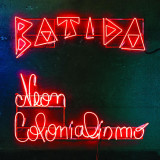
'Neon Colonialismo' is the new album -the first under his name since 2014- by musical agitator Batida, aka Pedro Coquenao, one of the main catalysts of the Afro-electronic scene. Carried by a subtle and refined electronic production, the eleven tracks (equally divided between songs and instrumentals), travel through the Portuguese-speaking world, from Portugal to Angola through Cape Verde and Brazil. They feature the presence of many distinguished guests: Mayra Andrade, Branko, DJ Satelite, Poté, Botto Trindade, Bonga, Ikonoklasta, Octa Push, Lia de Itamaracá, DJ Dolores, Joao Morgado, Pedro da Linha & Nástio Mosquito.
Repress
clear blue + black marbled vinyl
For its seventh release, Rave Or Die proudly welcomes Irish superstar Sunil Sharpe. Hailing from Dublin, this producer and DJ has gain within a few years a solid reputation of merciless techno purveyor in Europe with uncompromising re-leases on structures such like On The Hoof, Sheworks, Black Sun Records, Trensmat, Mord, Inner Surface Music, Komisch, Bastardo Electrico, and many more.
Half of the Tinfoil duo along with DeFekt offers to the French Rave label a great slab of bastard-heavy material in his typical signature: hard and fast Loose (Burn Down)' supported by metallic sorities and ruff modulations over a pounding bass line in a pure, raw style.
On the flipside, ROD mastermind Umwelt (Boidae, Shipwrec, New Flesh Records) serves up another milestone of a cabalistic anthem dedicated to industrial ware-houses: mechanic Slave To The Rave' signs an ode to the dancefloor thanks to its implacable and hammering beat. Harder, faster, higher seems to be the motto of Rave Or Die seventh chapter! Rush on it.
Former member of Rodolfo Alchourrón and Gato Barbieri's bands, Cevasco's first solo effort is a combination of fusion jazz with a pinch of unexpected Brazilian flavours and electronic sounds that now, more than 30 years after the original release of the album, still evoke a refreshing feel of modernity in the same vein as many other experimental Argentine and Uruguayan artists from the same era. Includes guest appearances from artists such as Litto Nebbia or Ruben Rada. Reissued on vinyl for the first time, including insert with liner notes and previously unseen photos. Details: Few musicians can boast of having played with "the greatest" without some eyebrows to be raised. The bass of Adalberto Cevasco has been heard in multiple concerts and recording sessions of artists as diverse as the Spanish divas Rocío Jurado and Isabel Pantoja, tango genius Astor Piazzolla or the cream of the Argentine jazz scene -from Pocho Lapouble, Gustavo Kerestezachi, Rubén López Furst or Andrés Boiarsky to the great Gato Barbieri- With the latter, as part of a dream band that included artists like Nana Vasconcelos as well as other Argentines such as Lapouble or Domingo Cura, he recorded two fundamental pieces in the Impulse! label catalogue in sessions held in Argentina and Los Angeles and also toured across various countries. The daily sold-out shows at the Regina Theater in Buenos Aires and their overwhelming performance at Montreux Festival are still well remembered. It is therefore out of question that Adalberto Cevasco belongs to that top-level league of musicians whose talent has also contributed to enhance those who accompany them. The history of this album begins with an encounter. Adalberto Cevasco joins Rodolfo Alchurrón's jazz-funk project Sanata y Clarificación as bassist and meets Litto Nebbia, who is invited to sing along. Some years on, when Nebbia's Melopea record company was developing, he would receive a cassette with a collection of demos recorded by Cevasco over the years. Some of the songs dated back to 1981 while others were made well into the decade and included such outstanding collaborations as that of the Uruguayan Rubén Rada, whom Adalberto Cevasco had met playing in a group of fusion candombe called Candonga. In addition to producing the complete album, Nebbia would also collaborate in a special way in one of the most outstanding tracks (Reencuentros Nº2) by adding to Cevasco's fusion jazz some unexpected Brazilian flavours and electronic sounds that now, more than 30 years after the original release of the album, they still evoke a refreshing feel of modernity. As the Argentine press of the moment highlighted, it'd seem as if the influences received and developed by the bassist during his career as a freelance musician - from post-Piazzolla tango to proyección folclórica (a movement of revision and modernization of the Argentinian musical roots) - had been added to their superb rhythmic work in this album. "Pájaros Eléctricos" was never presented live and has remained as the only published work by Cevasco as a soloist since the date of its release.
Lloyd Miller, Jahrgang 1938, ist ein US-amerikanischer Musikethnologe, Arrangeur, Komponist und Multiinstrumentalist. Millers Karriere begann in den 1950ern mit Dixieland. Aufenthalte im Nahen und Mittleren Osten weckten sein Interesse an orientalischer und speziell persischer Musik. Das machte aus Miller einen Pionier des Oriental-Jazz. Während der Siebziger hatte er als Kurosh Ali Khan sogar eine eigene Fernsehshow im Iran. Die Sendung lief sieben Jahre und brachte dem Musiker eine große Popularität ein Neben diversen erkussionsinstrumenten spielt Miller Bass, Flöten, Kamantsche, Klarinette, Oud, Piano, Santur, Sehtar, Tabla und Zarb. 2010 veröffentlichte Miller mit der britischen, vom Afrofuturismus angehauchten Spiritual-Jazz-Band The Heliocentrics ein gemeinsames Album, das Strut nun in einer limitierten Auflage von 1000 Exemplaren als Doppel-LP neu auflegt. Hier beweist das Londoner Musikerkollektiv, das im Jahr zuvor (2009) mit Mulatu Astatke, dem großen Ethio-Jazz-Veteran aus Äthiopien, ein viel beachtetes Werk in Umlauf gebracht hatte, einmal mehr seine musikalische und instrumentale Vielseitigkeit
- A1: Ana Maria E Maurício - Figa De Guiné
- B1: Novos Baianos - Alibabá Alibabou
'Figa de Guiné' is an uptempo jazzy bossa groove, laden with percussion and drums taken from the 'Semideus' soap opera. Originally released on 'Semideus' soundtrack by Som Livre in 1973. 'Alibabá Alibabou' - uptempo funky samba from the legendary Novos Baianos, big on the horns and chorus vocals. Originally released on a 4-track 7' EP in 1979, entitled 'Trio Electrico'.
- 1