Re-mastered by Kramer in 2022. Recommend If You Like: Raymond Scott, Mort Garson, Joe Meek, Robert Moog, Perrey and Kingsley, John Cage, Brian Eno, Sun Ra, Karlheinz Stockhausen, Hawkwind, Pete Seeger, William Shanter, Fred Rogers. An electro-surrealist musical journey from the mind of Bruce Haack "The Captain" - capturing his inventive genius musically in tandem with tapping into the voice of his inner child, innovative story songs inspired by Bruce Haack's diverse musical interests and a love of Science and explorations of the Natural World, songs to excite the imaginations of listeners, both young and old. Ahead of his time and beyond categorization- Haack continued to create trying to find new platforms in order to promote his electronic music. He scored many commercials during the 1960s and promoted electronic music on TV, even demonstrating his inventions on Mister Rogers' Neighborhood in 1968. He self-released his first children's music album later that year. Haack constantly added new genres and inspirations to his compositions and was greatly influenced by the psychedelic rock of the era. He constantly created new work that reflected not only his varied interests, but his shifting musical horizons. He created multiple youth oriented albums, dipping into science fiction, psychedelia and electronica, using traditional song structures in order to capture children's attention to educate them, while wrapped in one of his many personas. Bruce Haack wanted people to know him through his medium: music. He dedicated his life to exploring, inventing and sharing his eclectic brand of humor and many musical points of view. In failing health, he never stopped pursuing his distinctive musical dreams.
quête:electro one
Following the success of Hiroshi Sato's reissue, Wewantsounds is proud to announce an ambitious programme to release Akiko Yano's albums outside of Japan starting with her 1981 synth-pop masterpiece 'Tadaima.', co-produced by Ryuichi Sakamoto and featuring YMO. The reissue includes original artwork by cult illustrator King Terry, a 2 page insert and OBI Strip (LP) plus a new introduction by renowned Electro DJ Joakim. Japan's best kept secret, Akiko Yano is one of the most ground-breaking artists to come out of the 70s Japanese music scene along with HaruomiHosono, Ryuichi Sakamoto. A piano child prodigy, Yano started her solo recording career in 1976 at just 21, recording her debut album "Japanese Girl" with no less than Little Feat as the backing band. This album created a stir on the Japanese scene and Yano was on the map. She went on to record a series of superb albums mixing Funk, Electro and City Pop featuring the cream of Japanese (and sometimes American and English) musicians; The fact she was producing, writing and composing herself made her a true maverick in a very male-dominated industry. These albums, incredibly, have never been released outside of Japan to this day. "Tadaima." ("I'm home" in Japanese) recorded in 1981 is Yano's fith studio album co-produced by her then husband Ryuichi Sakamoto and featuring all the musicians from YMO (HaruomiHosono, Yukihiro Takahashi and Sakamoto), the group she was touring with at the time. "Tadaima." is Yano's first attempt to leave the acoustic piano aside and delve into the synth sounds of the early 80s. The result is a fascinating electro pop masterpiece showcasing her talent as a writer, musician and singer, creating her own unique universe. Mixing Japanese and English lyrics, Yano crafts perfect pop songs such as "Tadaima" "I Sing", "HarusakiKobeni" (which became one of her most famous songs after its use in a Japanese cosmetics ad), while "Taiyo No Onara" is a suite composed of nine short stories written by Children. Contributors on Tadaima also include ShigesatoItoi, one of Japan's most famous copywriters (for Studio Ghibli among others) who wrote two tracks on the album and his friend legendary illustrator TeruhikoYumura - aka King Terry - who revolutionised underground manga in the 70s with his 'heta-uma' (bad-good) style, as showcased on the album's striking artwork. 'Tadaima.' is the perfect entry point to Akiko Yano's unique body or work.
The reissue comes with the original obi strip artwork, extensive liner notes and a new introduction from Joakim
Pierre-Alain Dahan & Slim Pezin's Neo Rythmiques is an absolute KILLER Tele Music library classic from 1976. It's absolutely sensational throughout, all scorching, uptempo jazzy soul funk that Mr James Brown himself would've been envious of. This is serious business with breaks for days. French drummer, percussionist and composer Pierre-Alain Dahan was a key member of the legendary Arpadys, Disco & Co, Voyage, Tumblack (with Wally Badarou, Mallia et al!) and Jef Gilson Septet. With Neo Rhythmiques, he's joined by his eternal guitar colleague Slim Pezin (Voyage, Manu Dibango, Nino Ferrer), so you know this Be With reissue is fundamentally vital.
Opener "Soul Car" is a swaggering, horn-drenched jazz-funk beast whilst the slick JBs funk of "Happy Penalty" is just plain irresistible. Definitely influenced by American funk flavours, it stands alone on its own right as a brilliant piece of music, no question about that. The blazing "Kuzi-Kuza" is again horn-fuelled but has a more exotic, Latino feel, all loose grooves and bastard blues with funky organ and shredding guitars. The stomping, proto-disco of "Mercy Boa" is a guitar-sizzled Bohannon-esque hypno-groove for adventurous dance floors the world over. Outstanding. And if all that wasn't enough from one half of a 70s French library LP, the A side ends with the monumental, stratospheric "Slim Bertha"! I mean, what can you even say about this absolute monster?! Slo-motion, deep drama funk breaks with jazzy guitar and gleaming percussion. Just sensational.
Side B opens with "Country + Country", a rather forgettable slice of piano driven bluegrass funk (?!) Aaaaannyway, "Super Airship" follows and is a driving fuzz-guitar psych-rock workout of the highest order. We're back on track now. The brilliantly titled "Electronic Mutation" is a total highlight, the funk most definitely returning and, indeed, strong in this one with its deep clean breaks (with some particularly ace hi-hats), echoey effects and funky clavs. "Africa Semper" follows, all funky percussion, trippy echo and distorted, psychy guitar licks. To close out the set, "Neo Rythmiques 1 and 2" form a great salvo of top-tier, percussion-heavy synthy-funk-fusion. For our money, the bugged-out echoey space-soul of "N° 2" just about edges it.
One of the very best French drummers ever, Pierre-Alain Dahan began his career at the Blue Note in Paris with Sonny Stitt, Dexter Gordon and Daniel Humair. Some start, eh?! He also participated in the recording of Serge Gainsbourg's cult album 'La Ballade de Melody Nelson' before going on to make countless KILLER library funk records and be a key member - alongside his partner here, Slim Pezin - in the legendary Arpadys, Disco & Co and Voyage. Dahan also featured in Tumblack (with Wally Badarou, Sauveur Mallia et al) and Jef Gilson Septet (alongside Henri Texier), whilst the CCCP Pezin backed, among others, Manu Dibango and Nino Ferrer. Some pedigree.
The audio for Neo Rythmiques has been remastered by Be With regular Simon Francis, ensuring this release sounds better than ever. Cicely Balston's expert skills have made sure nothing is lost in the cut whilst the original, iconic Tele Music house sleeve has been restored here at Be With HQ as the finishing touch to this long overdue re-issue.
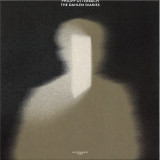
The new LP by Krefeld-born, Berlin-based artist Philipp Otterbach entitled 'The Dahlem Diaries'.
Recorded in a little-visited corner of the German capital, 'The Dahlem Diaries' is a convergence of ideas, sketches and tracks, both old and new, most of which were produced between 2020-2022. Whilst eerie atmospheres, electronics and drums have played a pivotal role in Philipp’s earlier releases, his latest is a rather more introspective affair, in which the guitar takes a leading role. A role Otterbach uses to quietly bring light and hope to his music.
Speaking about his writing process, Philipp explains that, based around his original compositions, “Friends were nice enough to contribute additional parts on their instruments which I then reworked, put together and re-contextualized. The recordings encapsulate a very specific moment in time, one that would have sounded perhaps very different the day before or after.”
Combined with a strong use of effects and field recordings, 'The Dahlem Diaries' feels somewhat like a scene or fragment from a story, in which the narrative remains undefined. It is a playful album that is something of a blurred underwater adventure, sounding as bright as it is hazy, even psychedelic at times, yet with an almost melancholic positivity. In Philipp’s own words: “It could be an album about friendship and being at one with myself, whilst at the same time bringing a certain seriousness to my music, but not necessarily to myself; there is also a playful humour hidden in there. ”
Raw Energy by JD Twitch showing Petersen's Trance (Not Trance) the way to the dancefloor.
Synths and sitars for eternal bliss on the flipside. Another pin glowing!
Back in 2017, Basso delved into his micro-press cassette collection to treat us to the first retrospective of kosmische wizard Trance. Spanning both the bucolic and galactic, ‚Tapes' (GBR010) suspended time and space, enveloping us in the nebulous beauty of Jürgen Petersen's misty ambience.
Among the appreciative audience for this mind expanding release was one JD Twitch aka Keith McIvor, one half of the mighty Optimo. Keith's vision of remixing Jurgen's ‚Purification' for the club was embraced by both the artist and the label guy with glowing eyes. Charting a course through progressive house, ambient techno and the weirder bits of the solar system, McIvor combines the celestial synthesis of the original with some tough and tracky drum programming, turning the intensity up to 11 in pursuit of early morning ascension. A sensitive arrangement allows space for Peterson's waveforms to work their magic, while laser fire and additional fx abuse unlock evolutionary abilities buried deep in your unconscious mind.
The previously unreleased, largely unheard ‚Contemplation' was originally intended to feature on the ‚Tapes' compilation, but fell off the edge of that flat Earth thanks to its maximal runtime. Too good to remain a secret, this crepuscular creation enjoys the entirety of the B-side, drifting through the eons via meditative electronics, delicate sitar and a touch of tapey flutter.
Embrace the almost 40 year old tape's flaws and imperfections that could not be restorated and dive into the immersive and unparalleled.
This is music for higher beings.
Repress
Tresor Records is fortunate enough to be sitting on a catalogue of past releases that no other label in electronic music would turn down.
Three of the finest in this collection were contributed by Surgeon; "Basictonalvocabulary", "Balance" and "Force + Form" all originally came out on the Berlin institution between 1997 and 1999.
Surgeon's inimitable combination of Detroit techno and post-industrial sounds emanating from his British homeland found its fullest expression in these masterful trio of releases on Tresor.
RYUICHI SAKAMOTO'S LANDMARK 1981 ALBUM REISSUED FOR THE FIRST TIME IN DECADES OUTSIDE OF JAPAN. THE ALBUM WILL BE REISSUED IN ITS RARE JAPANESE EDITION TOGETHER WITH A 2-LP LIMITED EDITION FEATURING THE ALBUM PLUS A 2ND LP FEATURING ITS NEVER-RELEASED FULL INSTRUMENTAL MIX, ALL REMASTERED BY BERNIE GRUNDMAN.
Wewantsounds is proud to announce the reissue of Ryuichi Sakamoto's third solo album "Hidari Ude No Yume" (Left Handed Dream), originally released in 1981 on the Alfa label. Save for a small-scale Dutch vinyl release in 1981, it is the first time the album's original Japanese edition is released outside of Japan (the European release on Epic Records included significantly different tracks and mixes). Newly remastered from the original tapes by renowned engineer Bernie Grundman, this LP edition comes with original artwork featuring a striking cover shot by famous photographer Masayoshi Sukita (sourced from the original negative), OBI strip and 4-page insert with new introduction by journalist Anton Spice. The album will also be released as a 2-LP limited edition gatefold including the album's full instrumental mix.
Ryuichi Sakamoto's third album, "Hidari Ude No Yume" was recorded at the legendary Alfa Studio 'A' in Tokyo during the Summer of 1981. it came after "B-2 Unit" in 1980 and his debut album "Thousand Knives Of" in 1978, the very year Sakamoto was invited by Haruomi Hosono to join Yellow Magic Orchestra alongside Yukihiro Takahashi. In the process, they became global stars as the group rewrote the rules of electronic pop and toured around the world, yet Sakamoto was keen to remain active as a solo artist.
?In 1981, the musician decided to record an album rooted in Pop, following "B-2 Unit" which had a more of an experimental edge and his landmark electro debut from 1978. For this new album entitled "Hidari Ude No Yume," Sakamoto invited British producer Robin Scott, who had had huge hit with 'Pop Muzik,' to co-produce. They entered the Alfa studio in July 1981, accompanied by a handful of musicians. These included his fellow YMO musicians Haruomi Hosono and Yukihiro Takahashi, keyboard programmer extraordinaire Hideki Matsutake who'd been on Sakamoto's first two albums and became YMO's unofficial fourth member, violinist Kaoru Sato, saxophonist Satoshi Nakamura and American guitarist Adrian Belew who'd played with David Bowie, The Talking Heads' "Remain In Light" and more recently, Tom Tom Club’s debut (co-writing 'Genius Of Love').
?Together, they created a fascinating mix of pop, ambient and electronic music with elements of avant garde and traditional Japanese music, the whole firmly rooted in a solid groove. Sakamoto wanted to give the album a spontaneous feel and decided to let ideas flow and evolve organically during the sessions as musicians would develop them together. From the funk of 'Relâché' to the new wave feel of 'Venezia' and the ambient minimalism of 'Slat Dance,' the album is remarkably consistent while displaying a wealth of global influences as shown by the diversity of instruments featured on the credits: Marimba, didgeridu, traditional Japanese instruments such as the Sho and Hichiriki flutes.
?The album was released in Japan in 1981 and Epic Records picked it up for Europe a year later but decided to release it in a significantly altered version. The sequencing was completely reshuffled and two tracks, 'Saru No Ie' and 'Living In The Dark' were completely dropped while three others, ‘Relâché’, ‘Tell 'em To Me’, ‘Venezia’ were heavily remodelled with english lyrics and became 'Just About Enough', 'Once In A Lifetime' and 'The Left Bank'. Last but not least, a new English-sung track, 'The Arrangement,' was added, making the album nine tracks instead of ten for the Japanese edition.
Altogether this International version called "Left-Handed Dream" was a very different album from the Japanese one and although both were successful at the time and further established Ryuichi Sakamoto as a global solo artist, the Japanese edition of "Hidari Ude No Yume" remains largely unknown to international ears.
Wewantsounds is now delighted to release this original Japanese edition for the first time in decades as a single LP together with a 2-LP limited-edition set adding, as a bonus, its fascinating instrumental mix, discovered in the label's vaults a few years ago (Note that 'The Garden Of Poppies', 'Slat Dance' and 'Saru No Ie' are instrumentals but for the consistency of the album we kept them on the Instrumental Mix). "Hidari Ude No Yume" is an essential album in Ryuichi Sakamoto's rich discography. It is now available in its purest original Japanese form.
Originally released on tape in 1982, »Maraccaba« is the second solo album from electronic wizard Klaus Wiese. Member of the krautrock band Popol Vuh in the early 1970s – Voice, Zither, Tambura, Harmonium, Singing Bowls – Klaus Wiese (1942 – 2009) was a veteran musician, minimalist, and multi-instrumentalist. A master of the Tibetan singing bowl, he created an extensive series of albums using them, alongside zither, Persian stringed instruments, and chimes. Wiese is considered by some as one of the great ambient or space music artists alongside Robert Rich, Steve Roach, Michael Stearns, Constance Demby, and Jonn Serrie. His musical style is much more appropriately compared to the organic soundscapes of drone and dark ambient music, such as Oöphoi, Alio Die, Mathias Grassow, and Tau Ceti.
In the 1990s he founded the Nono Orchestra to play the giant sheetmetal instruments of Robert Rutman. Wiese is known also for his collaborations with Al Gromer Khan, Mathias Grassow, Oöphoi, Tau Ceti, Saam Schlamminger, and Ted de Jong. He collaborated with Deuter on his Silence is the Answer album in 1980 and East of the Full Moon in 2005
A pop record for tired times. Sugared with bits of shatterproof glass to put more crack in your strap. At long last, verse / chorus. A weathered thesaurus. This is OSEES bookend sound. Early grade garage pop meets protosynth punk suicide-repellant. Have a whack at the grass or listen while flat on your ass. Heaps of electronic whirling accelerants to gum up your cheapskate broadband. Social media toilet scrapers unite! Allow your 24-hour news cycle eyes to squint at this smiling abattoir doorman. You can find your place here at long last. All are welcome from the get go to the finale…a distant crackling transmission of 80s synth last-dance-of-the-night tune for your lost loves. Suffering from Politic amnesia? Bored of AI-generated pop slop? Then this one is for you, our friends. Wasteland wanderer, stick around. Love y’all. For fans of Teutonic synth punk and Thee Oh Sees (who the fuck are they?)” — John Dwyer
- A1: We Crossed The Atlantic
- A2: The Love You Bring
- A3: When I Was Howard Hughes
- A4: Failed Adventure
- B1: Stars (Twilight Mix)
- B2: Grand Central
- B3: International Exiles
- B4: Merry-Go-Round
- B5: Radios Appear
- C1: City Terminus
- C2: Min Min Light
- C3: Oregon Snow
- C4: Cherry Lake
- C5: Blackout
- D1: Please Don’t Say Goodbye
- D2: Museum Station
- D3: Blue Train
- D4: You Were There
- D5: Something Better Beginning
Selected Songs 1997-2003 compiles some of the finest moments in the recording history of Hydroplane, the Melbourne-based indie-pop three-piece that operated alongside The Cat’s Miaow through the second half of the nineties. It’s the third release in what feels, now, like a loosely planned series by World Of Echo, documenting the music made by this group of friends in Melbourne sharehouses (The Cat’s Miaow’s Songs ’94-’98, 2022), or in the case of The Shapiros (Gone By Fall, 2023), while traversing the International Pop Underground.
Hydroplane would be familiar to anyone already following these breadcrumb trails – Andrew Withycombe, Bart Cummings and Kerrie Bolton were the group’s core, all members of The Cat’s Miaow. With Cat’s Miaow drummer Cameron Smith itinerant, having moved to London, the trio used this opportunity to expand their music. It’s a subtle, but important shift. If The Cat’s Miaow was about the perfect, minimalist, two-minute pop song, Hydroplane’s music was far more open-ended, embracing the loops and drones, sampled house-y shuffle beats, the burbling of a Roland Jupiter-4 synth, all of which the trio joined, effortlessly, to their endless capacity for moving, elegant melodicism.
They may have only planned to release one seven-inch single, but the sound Hydroplane created was so bewitching, so compelling, that the project’s lifespan ran for around half a decade, and they ended up releasing three albums, including a self-titled debut recently reissued by Efficient Space, and seven singles. There are all kinds of compelling things happening in the music compiled here – the hazy repetition of the gentler side of Krautrock is in here, somewhere, which also suggests Stereolab at their most intimate and disarmed; the gently drifting guitars, gauzy and oneiric, set the songs adrift and floating, each one lost in its own imagined, distracted world. Songs like “The Love You Bring” set indistinct tonal floats across dance rhythms, in a way not quite heard since My Bloody Valentine’s “Instrumental” – but with the added gift of Bolton’s gorgeous voice.
This loose coalition with dance music, and the quiet experimentalism at the heart of Hydroplane, also gestures towards peers like Hood, Acetate Zero and Other People’s Children, and releases on renegade labels like Wurlitzer Jukebox and Enraptured. Like those groups and labels, The Cat’s Miaow were reconciling independent pop music’s past – sweet melody and melancholy, chiming and droning guitars – with the futures promised by DIY electronics and nascent digitalia, the interface of indie and IDM that led to some of the underground’s most blissful, texturally swoonsome music. All that is here, but also, the poise of the melodies is pure Cat’s Miaow, though, with Bolton’s voice sailing, pacifically, over some of the most pared-down, gorgeous music made during their decade.
It was a time, too, when such music could make waves – “We Crossed The Atlantic”, one of their early singles, was picked up by John Peel, who played it repeatedly on his legendary radio show, the song reaching #13 on his 1997 Festive 50. That the song itself was a cover of a tune by 1960s Australian beatnik-pop-poet Pip Proud felt even more perfect – a group of outsiders paying tribute to another outsider, played on the radio one of the few broadcasters brave and human enough to take a chance on this music. But it was a time where everything was up for grabs, and genres were flowing into each other: folk songs went drone; indie re-discovered noise; ambient pop floated, again, out onto the dancefloor. And while they may have been sequestered away in Melbourne, Australia, Hydroplane felt core to that scene, a quietly driving force.
Compiling material from across their brief but mercurial career, this double album perfectly captures the magic and mystery of Hydroplane’s dreamlike, perfect pop songs.

Born out of an indefinite lockdown in 2021, LSS is a joint project from Naarm-based artists JXTPS and Edward Richards. Drawing on their shared love of complex rhythms, melancholic soundscapes and analog hardware, LSS blurs the lines between hypnotic techno, ambient dub and futuristic electro with Oneiric and EVJT, with transformative remixes provided by Sam KDC and Viels.
JAUZAS THE SHINING - MECHATRONICA, BROKNTOYS, SHIPWREC , SPECIMEN.
Jauzas the Shining was known as Adjust before taking that new alias - which is a salute to Kubrick's movie and the telepathy of his young character.
Since 2001, he's one of the most active electro producers in France, with several solid EPs released on Shipwrec, Last Known Trajectory, Transient Force, New Flesh, Minimum Syndicat, Mechatronica or Brokntoys and collaborate with iconic artists like Heinrich Mueller, Orgue Electronique, Ekman, Shemale, Faceless Mind, Specimen, and Ultradyne. He shared the decks with the hall of fame of electro music.
From the 90s IDM influences, Jauzas The Shining is a deep odyssey into the cold groove of electro sounds, using his sickness on skyzophrenic beats from his electronic dark side.
Hidden in the shadow of this room, Jauzas looks himself in a broken mirror but he doesn't recognise himself, he doesn't remember..the only thing he knowns is that he's now on board the nautilus ship, deeper and deeper is an ocean of sounds ...Artificial lights, mechanical noise and metallic walls..He starts hearing these voices but he doesn't know who they belong to? Utilising his sickness on skyzophrenic beats and abstract electronic dark side, he became "Jauzas the shining" The mysterious and miraculous journey of Jauzas who spent his nights and days on Formentera.
Here he conjures up a concoction of deep ocean meanderings and spellbound nights, underneath the shooting stars and radiant waters. Images of the past merged with future, becoming a collage of voices across projected shapes which make presence in their ghostlike form. This is another outing which explores the surreal and the abstract, which expressed though Jauzas's electro-musicalities with Specimen.
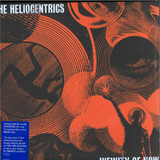
The UK’s cosmic, psychedelic-funk ensemble issue their first album on maverick producer Madlib’s label, Madlib Invazion. The Heliocentrics’ albums are all confounding pieces of work. Drawing equally from the funk universe of James Brown, the disorienting asymmetry of Sun Ra, the cinematic scope of Ennio Morricone, the sublime fusion of David Axelrod, Pierre Henry’s turned-on musique concrète, and Can’s beat-heavy Krautrock, they have – regardless of the label on which they’ve released their music - pointed the way towards a brand new kind of psychedelia, one that could only come from a band of accomplished musicians who were also obsessive music fans. Drummer Malcolm Catto and bassist Jake Ferguson are the Heliocentrics’ masterminds and producers, and they are obsessive weirdos in today’s musical climate, searching, progressive humans who are often out-of-time with current trends. They have been playing together for nearly two decades and their collective drive is to find an individual voice. The Heliocentrics search for it in an alternate galaxy where the orbits of funk, jazz, psychedelic, electronic, avant-garde and “ethnic” music all revolve around “The One.” With Madilb’s label Madlib Invazion for Infinity of Now, the Heliocentrics have returned to develop their epic vision of psychedelic funk, while exploring the possibilities created by their myriad influences, Latin, African, and more.
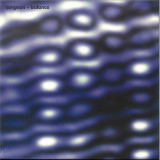
Sucesiones is a compilation of studies written for 53 equal divisions of the octave (53 EDO). This tuning temperament was selected after analyzing the work of Mexican researcher and visionary Augusto Novaro, one of the microtonal and just intonation pioneer theorists. Novaro claims that 53 EDO is one of rich musical qualities, which has good approximations to the harmonic series.
The use of simple textures such as sine waves was a conscious decision, this in order to maintain the focus on the relationship between the frequencies and the possibilities this tuning allows, that fluctuate from aggressive beat frequencies to pure intervals. These four compositions serve as an introduction and familiarization to the tuning’.
Recorded, mixed and mastered by José Orozco Mora in his studio (Mexico City)
José Orozco Mora (Chapala, México) has worked with different aspects of sound creation, such as composition, sound design, recording and production. His work mainly explores the fundamental aspects of the sonic spectrum, implementing alternate tunings and temperaments, exploring their harmonic content through the combination of frequencies, using both acoustic and electronic sources. These explorations had led Orozco to utilize different artistic mediums such as quadraphonic compositions, sound installations, and others.
Orozco has released his work in labels such as Debacle Records (USA), Constellation Tatsu (USA), Hole Records (MEX). He has performed and presented his work in Austria, Germany, Greece, Italy, México, Netherlands, New Zealand, Switzerland, etc.
As time moves forward, it becomes increasingly clear that the need for emotional expression through artistry is more important than ever, especially in the wake of emerging AI technology that threatens to replace human creativity. Minus & MRDolly's new album, "Giant Stops," is a testament to the enduring power of art to connect with audiences on a deep emotional level.
Named in direct reference to arguably one of the greatest albums ever created, "Giant Steps" by John Coltrane, "Giant Stops" pays homage to the rich legacy of jazz while pushing the boundaries of the genre with a contemporary twist. The album seamlessly blends jazz, hip-hop, and electronic elements to create a unique sonic landscape that is both nostalgic and modern.
For Minus & MRDolly, "Giant Stops" represents a new chapter in his evolution as a musician, showcasing his growth and commitment to pushing boundaries in his genre-bending style. Taking inspiration from the creative process of Makaya McCraven, the album features dynamic instrumentals backed by a live band, with Minus & MRDolly's signature lyricism and storytelling shining through both the instrumentals and the lended work of guest musician such as Meta_ or Luca Argel. By using this production method the album takes a bold stand for the importance of sampling as an art form hoping to encourage listeners to appreciate the rich history and evolution of hip hop and to recognize the essential role that sampling has played in shaping the genre.
As a nod to his Portuguese roots, "Giant Stops" represents a deeper exploration of the artist's identity and a commitment to looking inward to find creative inspiration. With this album, Minus & MRDolly hopes to inspire others to embrace their own unique perspectives and use them to create art that connects with audiences on a deeply emotional level.
In a world where technology threatens to replace human creativity, "Giant Stops" is a reminder that the power of art to connect with people on a fundamental level is enduring and will continue to shape our world for generations to come.
The recent find of four Joe Graham recordings in the GRC/Aware tapes has shown there was much more to Joe’s talents than the southern soul of his 60s Chant recordings and the synthesiser, electro pop he recorded for various Atlanta labels in the 80s. ‘Higher Than High’ is a soulful disco number featuring a relentless beat. The track already has a strong following, thanks to advance plays in Europe and the UK from DJ Dave Thorley. This track, along with three other numbers, were recorded around 1976 for the GRC stable – just as the company was floundering so badly that the songs were left as unmixed multi-track tapes. Now mixed the demand for this one will be high.
We’ve taken the opportunity of including another excellent, unreleased at the time, recording from the revered John Edwards. ‘It’s Got To Be The Real Thing For Me This Time’ is an uptempo Sam Dees song, unheard until the 1990s release of the first batch of GRC/Aware tapes
In the late 2000s a sprawling catalog of what is now genre-defining music was emanating from an unlikely place. Cleveland, Ohio has a broad reputation for many things, but in the aughts, psyche-expanding Kosmische wasn’t necessarily Cleveland’s calling card… until Emeralds. The trio of John Elliott, Steve Hauschildt, and Mark McGuire had released a profusion of limited-run cassettes, CD-Rs, and vinyl titles that had been passed around basement shows and then migrated to niche music communities online, creating a unique kind of murmur, even in the height of the DIY blog era. Three kids from the rust belt were crafting a distinctive and truly far-out strain of music on their own terms in the Midwest. They were flipping lids in wood-paneled basements and circulating around the underground with soaring sounds stylistically indebted to deep German electronic music pioneers and released with the ethos and twisted fervor of renegade Midwestern noise freaks. After several releases garnered a die-hard fandom in niche circles of internet/music culture, and then catching the attention of the late Peter Rehberg, the renowned artist and curator of the Editions Mego label, an expectation was set that the next Emeralds record was going to be a big one. And in 2010, Does it Look Like I’m Here? was it.
mp3s of this album; they can finally get a fresh copy on vinyl. Does It Look Like I’m Here? became a hallmark that would carve a path for an entire scene. Ghostly International is thrilled to reissue the album, remastered by Heba Kadry, including 7 bonus tracks exclusive to the digital album and CD. The limited edition 2xLP includes extensive liner notes by Chris Madak (Bee Mask).
Wewantsounds continues its Akiko Yano reissue programme with the release of "Iroha Ni Konpeitou," another superb Akiko Yano album and one of her funkiest, highlighting her unmissable singing and songwriting talents. Recorded in Tokyo and New York City, the album features a superb line up of the best musicians from both cities and sees Yano mixing Japanese pop with funk and a touch of electronics, playing a wide array of keyboards programmed by YMO synth wizard Hideki Matsutake. This is the first time the album is released outside of Japan and this deluxe LP edition includes remastered sound, download card plus the original 4-page insert with poster, lyrics and full line-up.