With this album, Heleen Van Haegenborgh returns to her roots as a pianist.
In recent years, she has primarily composed works on commission for a diverse range of ensembles, from recorders to foghorns.
On this solo album, her entire journey of musical encounters and compositions comes together subtly.
Van Haegenborgh doesn't think in terms of stories or boxes, but rather in colours, energy, and texture - without drifting into the abstract.
She remains true to her personal inside piano world, including the use of wires she has been experimenting with since 2008. These are given a place here as fully-fledged musical elements, communicating on different levels, in various contexts and forms.
The electronics sometimes become completely one with the piano, but often follow an entirely different path: at times calm, subtle and refined; at other times nervous and under the surface. Always within specific atmospheres and with precise timing.
Van Haegenborgh took charge of every detail from start to finish - electronics, composition, and performance.
Buscar:electronic world
“Oh damn I got fired suddenly, replaced by a hydraulic pump with life long guarantee”.
The undefinable Kaboom Karavan returns to the dusty Belgian roads with a total Fiasko! - or a full blown disaster if you will (seen from a minimalist perspective), although one that might be the antidote to the sterilised and scattered world that increasingly surrounds us. Fiasko! represents a musical chaos that feels both ecstatic, fun, as well as deeply melancholic. Like an overwhelming moment where the world seems to touch you on all senses. This is music for a new underground of black tie workers raising up to the dullness of societal norms by connecting to their inner child. It’s protest music towards the new normal, where the rules are thrown out of the window and unpredictable sense of joy prevails. Shortly said, Fiasko! Is contemporary exotica made by a madman with too much time on his hands.
As usual, Kaboom Karavan releases contains a conglomerate of strange, mostly home made instrumentation, which will be too long to list here. To shorten it down… Bram Bosteels himself, the captain of the ship, plays all kinds of acoustic instruments, guitars, electronics and uses his voice. Additionally we have Bart Maris on trumpet, tuba and trombone. Stefaan Smagghe plays violin and sarangi. Lastly we have Raphael de Cock on such typical instruments as igir, jadagan and uillean pipes. All that remains to be said is: Bring your neighbour, let yourself loose and have some fun. Listen to Fiasko!
Returning with its final instalments, Die Schachtel's Decay Music series extends its explorations of inspired contemporary experimental efforts of the ambient, ethereal, and emotively abstract with Luigi Turra and Elio Martusciello’s “Liminale” and Sergio Armaroli and David Toop’s “And I Entered Into Sleep”, two astounding electroacoustic gestures of blurred space and time, plumbing complexity of meaning bound to sonority. Creatively groundbreaking and inspired, radically rethinking the terms of what ambient music can be perceived to be, they stand among the most striking efforts to appear within the series to date.
Reconfiguring the notion of bridge building on a multitude of terms, it feels fitting that the tenth and final installment of Die Schachtel’s Decay Music series, Sergio Armaroli and David Toop’s “And I Entered Into Sleep”, was co-created by an artist whose work featured in the first suite of LPs issued by Brian Eno’s Obscure Records in 1975, the groundwork toward which Decay Music’s own efforts nod. Since that auspicious debut, “New and Rediscovered Musical Instruments” — his split with Max Eastley — David Toop has been regarded as a pioneer in British experimental and improvised music: a sonic voyager who has continuously challenged the sources and materiality of sound through rigorously thoughtful performances, a vast catalog of recordings, and a steady flow of highly influential texts. Be it as a member of Alterations, his group breaking group with Peter Cusack, Terry Day, and Steve Beresford that ran between 1977 to 1986, or through is noteworthy work with artists like Rie Nakajima, Thurston Moore, Paul Burwell, Rhodri Davies, Lee Patterson, Ryuichi Sakamoto, Akio Suzuki, Elaine Mitchener, and numerous others, collaboration has always played a central role within Toop’s singular practice, but few can claim the sprawling sense of beauty and intimacy that’s achieved by “And I Entered Into Sleep”, his first recorded outing with Sergio Armaroli.
A composer, percussionist, vibraphonist, and multidisciplinary artist, Armaroli has been issuing radical and forward-thinking musical gestures for decades, working as one of Italy’s most noteworthy interpreters of composer’s like Giacinto Scelsi, John Cage, Franco Evangelisti, Giancarlo Schiaffini, and Walter Branchi, as both a solo performer and member of the highly regarded Rib Trio, as well as forging a singular practice as a composer, intertwining his efforts as a painter, concrete percussionist, fragmentary poet and sound artist, within a total art, rooted “within the language of jazz and improvisation” as an “extension of the concept of art”. Like Toop, Armaroli’s career has been populated by many collaborators, notably with Riccardo Sinigaglia, Alvin Curran, and Walter Prati, among others, setting the stage for a remarkable meeting between the pair.
Featuring Armaroli on vibraphone and prepared vibraphone and Toop on electronics, “And I Entered Into Sleep” is “a sonic journey, a Proustian suggestion à la Recherche, into the unconscious between electronic and acoustic sounds”. Using a bell that sounds at the beginning of Proust’s “À la Recherché du Temps Perdu”, which reappears more than 3,000 pages later — signaling a transition of phases, as well an auditory trigger of memory — as a departure point, as an association to the percussive vibraphone pulses that thread the album’s two sides, the pair weave a striking interior world of immersive psychological depth. Feeling almost subaquatic at times, like captured glimpses of rumbling, shadowy ecosystems lost within murky ambiences, before washing ashore in a series of pointillistic, highly detailed alien landscapes of the mind, each artist’s markedly different sound-sources, and treatment of the subsequent material elements, dance in abstract grace, incorporating subtle nods to minimalism, free jazz, and musique concrète within its seamless total form of sparse texture and tone.
Easily one of the most striking and memorable releases by either artist to appear in recent years, Sergio Armaroli and David Toop’s “And I Entered Into Sleep” traverses uncharted realms at the borders of literary reference, sound art, ambience and abstraction through delicately musical sounds, revealing new depths at every turn. Issued as the tenth and final album in Die Schachtel’s Decay Music series, highlighting inspired contemporary experimental efforts of the ambient, ethereal, and emotively abstract.
After bending boundaries on the acclaimed labels Optimo Music and Höga Nord, Rudolf Abramov resurfaces with a fierce new statement – inaugurating Aquasonic Records, the freshly minted label founded by one half of the duo.
They unveil a sweeping collection of rare recordings, drawn from the shadows of their enigmatic Berlin studio.
This debut full-length album unfolds like a sonic tapestry, threading krautrock, new wave, dub, psychedelia, experimental electronics, ambient, and jazz into a singular, genre-bending experience.
True to form, the duo assembles a diverse ensemble of guest collaborators, fusing layered musical worlds into a cohesive, concept-driven whole.
At its core, the album captures a dynamic interplay: acoustic instruments recorded with raw intimacy and spatial breath meet the hypnotic churn of modular synths, samplers, and analog machines. A vivid document of process, presence, and unfiltered sound, resisting definition, yet wholly their own.
A hill repeating its own name.
Ben Beinn — mountain mountain — an imagined summit, recursive and unstable.
Poole’s new album Ben Beinn follows 2024’s In a River Shadow, and deepens his exploration of environment, voice, and abstraction. If the previous record moved with flowing water and submerged hymns, Ben Beinn climbs into elemental instability: passing storms, coded skies, and sodden ground.
Across ten tracks, Poole entangles the Celtic New Age sound world — traditional instrumentation (flute, low whistle, bagpipe, piano, strings) — with synthesis, environmental recordings, and abstracted voice. The sound palette is tactile — marked by microtonal harmony, swelling dissonance, and a breathy naïvety. Voices in Gaelic, Norwegian, and English surface and dissolve, stretched beyond recognition — more weather than word.
The album’s title refers to a tautological hill — Ben Beinn, or “mountain mountain” — a recursive site where motifs surface, fracture, and re-emerge. On 365 Days of Rain, rainfall data becomes a rhythmic lattice that slips from metrical order. 1000 opens the record in cinematic emergence: mountain icicles and frozen streams swell into strings and breathy melodic weight. Pulling from the connective folktales of hill and mountain trolls — “Dance for a thousand years,” Poole writes, “for jeg har sovet tidlig så lenge.”
Recorded in Scotland between 2024–2025, Ben Beinn draws from environmental recordings of frozen hill passes, storm drains, and peat bogs using contact mics and hydrophones. Rather than simply reflecting place, these recordings press against it — layering the sonic materiality of landscape with synthesis and song. An inflection point between fabrication — folk music as performed identity, a carrier of story — and its obfuscation through digital networks, where tradition is refracted into plural forms.
Musical reference points include the emotionally saturated textures of Inoyama Land, the folk-electronic hybrids of Eli Storbekken, the hyperrealist collage practices of Noah Creshevsky, and the disquieting sonic simulations of James Ferraro. While Ferraro captures the uncanny surfaces of networked life, Ben Beinn turns inward — toward a located listening, shaped by weather, memory, and terrain.
The second in a triptych that began with In a River Shadow, Ben Beinn continues Poole’s excavation of environmental and folk material through contemporary methods. If the first record submerged itself in flowing water and submerged hymns, this one is shaped by the slow pressures of land and sky — a music of erosion, recurrence, and elemental presence.
The Argentine-born producer, now based in Munich, presents his long-awaited
debut album Bleeps Don't Cry, born out of a period of emotional upheaval in the
artist's life, and marks an immersive sonic journey through bw's evolving inner
world.
The record blends hypnotic, dub-infused rhythms with haunting atmospheres and
introspective ambient explorations. With this release, bw presents a raw, strippeddown aesthetic and a deeply personal approach to modern electronic music.
Both the artist and his self-titled label, bw, exist as a refined underground entity
with a keen ear for quality and contemporary techno. His tracks are crafted with
minimal yet vital elements, each sound added like a crucial ingredient, emotionally
expressive and essential to the whole.
- Somewhere, Nowhere
- Angles Mortz
- False Prophet
- Fluoride Stare
- The Void
- Ascension
- Just A Kid
- Host
- Landslide
- Renaissance
- 7: Am
- Blue In Grey
A Dark, Cinematic Soundtrack for Urban Life! UK duo Nightbus release their debut album Passenger, blending trip-hop, indie sleaze, and electronica into a hypnotic exploration of identity, addiction, and emotional tension. Produced by Alex Greaves (Working Men"s Club), the album features standout tracks like the pulsating "Ascension", the dub-heavy "Host", and the haunting "Angles Mortz". With roots in Manchester"s underground scene, Nightbus combine immersive soundscapes with introspective lyrics, crafting a sonic world that"s both unsettling and deeply relatable. Passengeris more than an album - it"s a multi-sensory experience, extending into club nights, fashion, and visual storytelling.
In a changing, unpredictable and turbulent world, something we can always rely on is a new Orb album, with the next holiday-for-the-head never far away. On what is quite possibly the millionth longplayer helmed by electronic lifer Alex Paterson; partnered with the now firmly-entrenched boy wonder Michael Rendall; the inspirationally productive outfit yet again deliver the goods, with one of their best yet.
- A1: From Darkness 01 18
- A2: Disappearance 04 34
- A3: Past Into Presence 02 32
- A4: Search Party 02 58
- A5: Forest Manipulations 03 22
- A6: Miscarriage 01 17
- A7: Who’s There? 00 59
- A8: The Pond 02 02
- A9: Mindfuck 01 20
- A10: I'll Take Noah 00 55
- A11: Wall Paintings 02 45
- B1: Death And Confusion 04 23
- B2: Visions 01 20
- B3: The House 03 55
- B4: What Have You Become? 01 41
- B5: Alone In The Dark 01 50
- B6: Ritual 02 07
- B7: Theo 02 29
- B8: Reunification 03 58
- B9: Open Eyes 02 25
- B10: Past Darkness 04 11
Erik K Skodvin summons his alter ego Svarte Greiner for a dive into the dark, wintery Swedish forest with the score to the psychological thriller/horror film “From Darkness” (orig: Ur Mörkret).
The film is director Philip W. Da Silva's debut and is set largely at night, deep in a Swedish nature reserve where mining used to take place. Loss, mental health and Nordic mythology come together in a story that revolves around the search for a missing woman. The score follows an eclectic and atmospherical path throughout the narrative with an uneasy underlaying vibe; although one with occasional points of refuge in the otherwise vast darkness. There is a gloomy, barely tangible sound of Nordic folk tradition buried in the music, even if it comes across in a different, more abstract way, where the various instruments are often used more as sound sources that are improvised (and abused) into becoming their own element. Skodvin performed and recorded the majority himself. In addition, he commissioned free improviser Axel Dörner to participate with his unique, custom-built electro-acoustic interface, which, along with Claudio Puntin's processed reeds and additional electronics, has been built into the elaborate backdrops to create an entire world that balances on the border between the approachable and the elusive - not unlike the journey of the protagonists. Skodvin's partner in Deaf Center, Otto A Totland, appears on piano in the stand out piece “What have you become?”.
The result is a harrowing yet deeply melancholic journey through the human psyche. One that echoes through the dark forests, cabins and lost mines of the desolate Swedish woodlands.
“It is presumed that as humans mined ore in the 1800s, they had many mishaps and dug too deep, leading them to assume they had unleashed some evil spirit that was guarding the ore. She was referred to as "Cave Wraith". It was said that she employed darkness to lure miners to their deaths. They prohibited villagers from visiting during the darkest months of the year. Some used sacrifices to subdue the evil entity.”
The vinyl is released in an edition of 150 numbered copies, with screenprinted artwork on black cardboard inside a screenprinted PVC sleeve, incl. Riso-printed insert with liner notes by Mike Lazarev, 180g vinyl.
Swedish trio Death And Vanilla follow their much-praised re-imagined soundtracks to `Vampyr' (2017) and `The Tenant' (2018) with their interpretation of the soundtrack to cult 1968 TV show `Whistle And I'll Come To You'. Ltd White Vinyl LP, Soundtrack / Electronic / Indie At a time when post-ambient electronica and bedevilled folk music are co-habiting, and the public's interest in Pagan rites and rituals has been sparked by a new generation of fans. The bizarre storyline of Whistle And I'll Come To You seems even more pertinent_ and strangely haunting. The Jonathan Miller-adapted 1968 ghost story was originally part of BBC's Omnibus series and featured Michael Horden as a fussy professor who discovers an ancient whistle which summons up the spirits. A black and white folkloric tale in the style of The Wicker Man, the original TV programme received rave reviews. The esoteric live score was recorded at the Hypnos Theatre in Malmö. The 42-minute soundtrack utilises stuttering tape loops on `Intro' before breathing new life into the primitive John Carpenter-like drum machine on `Supernatural Breakfast', while `Walk On The Beach 2' sounds like a hauntological rendition of a Broadcast classic. Indeed, that effect is amplified on `Nightmares', with its swirling wind and other-worldly choral effect, before the feeling of some supernatural presence is suggested on the penultimate cut `Evidence Of Spiritualism'.
- A1: La Muchacha Y Santiago Navas – No Me Toques Mal
- A2: Gato 'E Monte – Cumbia Fumanchera
- A3: Conjunto Media Luna – Cumbia Providencia
- A4: Felipe Orjuela – Manos Limpias (Cuentas Claras)
- A5: Mau Gatiyo – Telekinea
- A6: Las Hermanas – Laura Palmer
- A7: Karen Nerak Y Cristal Prodigia – Pa La Calle
- B1: Briela Ojeda – Doña Justicia
- B2: Julián Mayorga – La Gente Que Yo Conocía Toda Se Está Muriendo
- B3: Mariscos - Garotinha
- B4: Buha 2030 – Dolor Internacional
- B5: Los Clamores – Insectos De La Asamblea
- B6: Zarigüeya – El Arriendo
- B7: Ana Mariía Vahos – Los Días
In-Correcto 15–25 marks the first vinyl compilation by Bogotá’s independent label InCorrecto, created in collaboration with Austrian imprint discos elgozo. Celebrating ten years of sonic exploration and creative resistance from the Global South, this special edition brings together a vibrant constellation of artists that define the label’s sound: La Muchacha, Ana María Vahos, Felipe Orjuela, Mau Gatiyo, Conjunto Media Luna, Briela Ojeda, Zarigüeya, Buha 2030, and many more. Between mutant cumbia, Latin American folk, introspective electronics, and borderless sonic experiments, 15–25 is both a party and a statement: a manifesto of the in-correct as an artistic and collective force.
Since 2015, In-Correcto has grown from a cultural magazine into one of Latin America’s most vital independent hubs, operating as a record label, publishing house, and creative collective. With more than 160 releases ranging from punk and ambient to trip-hop and experimental cumbia, the label has supported a generation of artists whose work is as socially engaged as it is sonically daring. Through compilations, anniversary concerts, and political projects, In-Correcto has solidified its reputation as a catalyst for collaboration, solidarity, and cultural cross-pollination in Bogotá and beyond. Based in Vienna with roots on Colombia’s Caribbean coast, discos elgozo shares this vision. Founded in 2024, the label works with Colombian artists and their diaspora, releasing music that fuses ancestral knowledge, queer-feminist expression, sonic experimentation, and joy as a political force—as a way to resist cultural erasure, reactivate traditions, and recover collective vitality. Its catalog spans salsa brava, bullerengue, psychedelic cumbia, and experimental jazz, with a strong focus on vinyl as an act of listening, memory, and resistance.
Carefully pressed, In-Correcto 15–25 is more than a record: it is a bridge between Bogotá’s underground and a global network of listeners. A sonic archive and an invitation to dance, it reaffirms that joy, experimentation, and community remain powerful tools to imagine the world otherwise.
- A1: Lotus - Within Or Without You (Mr Sam's Travel To New York Remix)
- A2: Madrid Inc - My Sunday's Love
- B1: Delerium Feat. Leigh Nash - Innocente (Mr Sam's The Space Between Us Remix)
- B2: Mr Sam Vs Human Resource - Dominator
- A1: D*Note - Shed My Skin (Mr Sam's One Night In San Francisco Remix)
- A2: Mojado Feat. Mr Sam - Naranja (Dimitri Andreas Vision)
- B1: Y-Traxx - Mystery Land (Fred Baker Vs Mr Sam's Magical Mystery Vocal Mix)
- B2: Mr Sam - Lyteo (Rank 1 Remix)
- A1: Jam & Spoon - Odyssey To Anyoona (Mr Sam Return Of The Phoenix Club Remix)
- A2: Red Screen - Friday Sickness
- B1: Catapila - Void (I Need You) (Mr Sam's The Heart Of Trance Remix)
- B2: Deadmau5 - Clockwork (Mr Sam Remix)
- A1: Timo Maas Presents Mad Dogs - Better Make Room (Mr Sam's Berlin Cookies Remix)
- A2: Mr Sam Feat. Crash Course In Science - Flying Around (Michael Forzza Remix)
- B1: Yellow Screen - Out Of Time
- B2: Mr Sam Vs T99 - Anasthasia
- A1: Urban Electro Squad - Ex Girlfriends (Mr Sam Sunset Remix)
- A2: Mojado - Kaktus
- B1: Mr Sam Vs Fred Baker Present As One - Forever Waiting
- B2: Mr Sam Feat. Kirsty Hawkshaw - One Day
- A1: Miro - Spaceman (Mr Sam & Marko's 'Definition Of Weird Minds' Remix)
- A2: Mr Sam Feat. T4L - Rydem Koba
- B1: Dillinger & Capone - Trysting Fields (Mr Sam & Mikka Maffia Remix)
- B2: Mr Sam - Tantra
- A1: Mr Sam Feat. Claud9 - Cygnes
- A2: Bt - Suddenly (Mr Sam Pop Model Remix)
- B1: Mr Sam - This Is Cocaine Speaking
- B2: Mojado - El Toro
- B3: Mr Sam - Alegrya
- A1: Mr Sam With Bt - Thegreat Opus
- A2: Mr Sam - Radar
- B1: Mr Sam Feat. Kirsty Hawkshaw - Split (Jonas Steur Remix)
- B2: Mr Sam Feat. Kirsty Hawkshaw - Insight (Acoustic For Sam)
- A1: Blue Screen - You & Me
- B1: A Split Second - Flesh (Mr Sam Vs Fred Baker's Back To The Neo Punk Attitude Remix)
- B2: Corvin Dalek - Pounds & Penz (Mr Sam's Wet&Hard Remix)
- A1: Laysia - With Or Without You (Mr Sam Vs Fred Baker Always By Your Side Mix)
- A2: Mr Sam - Seven 7 Seven
- B1: 2 Flying Stones - Maybe Tomorrow (Mr Sam's French Sinatra Remix)
- B2: Blank & Jones Feat. Claudia Brücken - Unknown Treasure (Mr Sam Beyond The Grace Of God Remix)
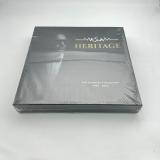
Mr Sam - HERITAGE (1995-2025)
HERITAGE celebrates 30 years of Mr Sam's career in a world-first collector's edition: a monumental best-of gathering 40 tracks across 10 vinyls. Never before has an electronic DJ and producer released such a project - an unprecedented box set that stands as a unique, sincere and intimate journey, blending emotion, innovation and musical memory.
Each track has been carefully selected, remastered, and placed as part of a personal narrative. More than just a compilation, HERITAGE is a musical journey - the story of an artist who has shaped the trance and progressive scene worldwide since 1995, and who continues to write history, with this release sealing his legacy forever.
The album features his most iconic productions (Lotus, the Screen series, Forever Waiting, Lyteo...) alongside timeless contributions from artists who influenced a generation, including D*Note, Timo Maas, Jam & Spoon...
This is more than a retrospective - with HERITAGE, Mr Sam permanently engraves his legacy in the history of electronic music.
Unknown Waveforms is the forthcoming album from Belgian trio KAU, set for release on October 10, 2025. Marking an evolution since their 2023 release The Cycle Repeats, this new record captures a more personal, immediate, and unfiltered version of the band's sound. In an increasingly digital world, KAU takes a different route, with an album rooted in human connection, live energy, and creative spontaneity. Here, the trio reflect their take on instrumental music, drawing heavily fromjazz, hip hop, and electronic influences.
At the heart of Unknown Waveforms lies the starting point of three musicians in a room, writing and composing music on the spot. For KAU, this idea mirrors their working method: long jam sessions, free-flowing experimentation, and shared moments of inspiration. Songs often take shape slowly, unfolding over hours or days, but always built collaboratively as a trio.
The album's title reflects the mystery behind how music comes together, but is also both literal and symbolic. Unknown waveforms are the sounds that arise when machines and people interact in unpredictable ways. Whether you're an experienced musician or just starting out, the creative process often feels elusive and hard to fully understand. But there are also certain moments: creative sparks that can't be planned or programmed. It ends up being more than notes, gear, or structure, it's about the process, the tension and energy that builds when people connect and create in the same room.
The title track, Unknown Waveforms, captures that exact process. It opens with a quote from synth pioneer Wendy Carlos: "I'm just trying to show you how we get some of these sounds", inviting listeners directly into the creative space. The track focuses less on a polished outcome and more on the moment before a song is "finished": it's a portrait of experimentation, feeling, and raw expression.
This commitment to honesty permeates the entire album. KAU kept overdubs to a minimum, avoided excessive editing, and prioritized spontaneous choices over calculated ones. In a time when the future of live, improvised music feels uncertain, they double down on the physical, the real, and the immediate. The album resists the pristine polish of modern production, favoring the warmth and imperfection of analog synthesis. The band embraces the character of their instruments, particularly vintage gear, where subtle flaws add beauty, depth, and personality.
One standout track, cr_eye, is driven by the Moog Subphatty-a key instrument in the band's toolkit for its analog warmth and powerful sub-bass. The track centers around the conversation between bass and drums, allowing the keyboards to recede and create space. It draws emotional threads from earlier KAU tracks like Kampala and Kautokeino, bridging past and present with a shared atmosphere and rhythmic interplay.
Another highlight, Stratford, finds inspiration in London's transport system and the UK jazz scene that has long influenced KAU. A field recording snippet of the London Underground kicks off the track, connecting it to the rhythm of everyday commutes. Built around a hypnotic sequencer line from the Roland JX-3P, the track evokes the motion of a metro journey. Artists like Nubya Garcia, Yussef Dayes, and Alfa Mist, giants of the scenethat the band has admired for years, resonate subtly throughout.
Above all, Unknown Waveforms is a statement of intent from KAU: a celebration of imperfection, creative honesty and an insight in the process.
This EP takes you deep into a world of cinematic soundscapes, a haunting symphony of desire and despair, hypnotic rhythms, and ethereal vocals. Blending dark wave, and gothic electronic elements, it unfolds like a forgotten opera—sensual, melancholic, and strangely tragic.
This is only the beginning. “Opera of Lust & The Art of Sorrow” is envisioned as a multipart journey—Part 1 is here, with the next part to follow.
- 1: Scene 0 - Xyl, Tiz And Ore
- 2: Scene 0 - In The Mouth A Desert
- 3: Scene 0 - Animal Gathering
- 4: Scene 0 - Prospector Left
- 5: Scene 0 - Image Superstition
- 6: Scene 0 - Second Abandoned Highway
- 7: Scene 0 - First Abandoned Highway
- 8: Scene 0 - First Time Realising The Clock Is Absent
- 9: Scene 0 - First Encounter - The Future Is Yellow
- 10: Scene - Good Calamity
- 11: Scene - Tzama As Animal
World of Echo unites with the confounding genius of TRii for a highly limited first time vinyl run of 2020's Music For Desert Reboot tape, first released as TRj on the TRjj Musik label and then again as a second cassette by Mascarpone earlier this year.
As with all the sounds produced within the TRjj/TRii /TRj/TRi universe, strange illusion is part of the process, and this is certainly music that befits such smoke and mirror nomenclature, a kind of gamelan Werkbund re-programmed via the isolationist sounds of DIY home electronics conceived for a film that might or might not actually exist. Consider this time-dilation rug-pulling that's well in touch with its own mythology, so much so that it's hard to think of any obvious contemporaries, but if you've ever enjoyed the minimalist murk of Civlistijavel, the private quarters confessionals of Thomas Bush's first LP or any one of Guy Gormley's projects, you'll not got too far wrong here. Is further clarification required? That perhaps misses the point, though there is a track that features around two-thirds in entitled 'First Time Realizing the Clock Was Absent' that might function as a form of instruction to the listener. Namely, where does the time go? Music For Desert Reboot might not provide the answer, but it certainly knows how to ask the question.
- Combination #1 ( • | 6 | 4 | 3 | 2 | 6 )
- Combination #2 ( 4 | 2 | 1 | 4 | • | 1 )
- Combination #3 ( 7 | 7 | 2 | 1 | 6 | 1 )
- Combination #4 ( 7 & 3 | 3 | 7 | 6 & 2 | 1 | 2 & 6 )
- Combination #5 ( • | 6 | 6 | 3 | 4 | 7 )
- Combination #6 ( 5 | 3 & 7 | • | 5 | 3 | 3 )
- Combination #7 ( • | 6 | • | 2 | 4 | 5 )
- Combination #8 ( 1 | 5 | 3 | • | 7 | • )
- Combination #9 ( 6 | 7 & 4 | 6 | 2 | 5 | 4 & 7 )
- Combination #10 ( 2 | 1 & 3 | 4 & 5 | 7 | 4 | 4 )
frozen reeds presents Mark Fell’s ‘Psychic Resynthesis’, an instrumental work performed by Explore Ensemble. This double LP is the label’s 8th release, arriving 13 years after its foundation.
Fell is a multidisciplinary artist, composer, and theorist based in Rotherham, UK. Renowned for his rigorous and conceptual approach to electronic music and sound art, his work explores the limits of structure, rhythm, and perception through a blend of computational systems, philosophical inquiry, and cultural critique.
Over the last decade, Fell’s practice has visibly shifted from a world of technical intricacy and myopic microdetail to one of collaboration and community. He has purposefully sought out diverse musical partners from a wide variety of traditions and disciplines and found equally diverse ways to work and create together – not to integrate their playing into a musical fusion, but rather to discover how such combinations of approaches and experience can stimulate unique and heretofore unheard results.
The music here emerges from a commission for contemporary chamber group Explore Ensemble, situating Fell’s work in a new context entirely. Having been a notable critic of classical music’s slavish adherence to traditional musical notation, “the score”, and its associated issues of control and hierarchy, one might expect a provocative or abrasive approach. Instead, a work of deep, tonal introspection unfolds - an elegant structure navigating the artist’s antipathy for linear or timeline-based musical approaches.
In Fell’s selection of timbres and events, the dynamic of composer and performer is interrupted by his twin adoption of system and flexibility. Mathematical determination and sonic fixation vie for dominance. The conflict governing combinations. Upsetting preconceived strategies.
Published in an edition of 777 double LPs, with included digital download, the result, ‘Psychic Resynthesis’, represents both a prismatic object for repeated examination and an abstruse table of musical correspondences.
Living in the present is an album built around the work of American minimalist poet, Robert Lax (1915-2000) who is widely praised for his artistic concept of reduction, in which a pause becomes as important as the things said.
The album brings together the sound of Robert Lax reading his poetry, narrative field recordings by Nicolas Humbert and subtle yet imaginative timbres by Carina Khorkhordina (trumpet) and Miki Yui (electronics) who is also behind the final mixing of the album.
Living in the present is drawing from an archive of audio recordings originally made by film maker Nicolas Humbert while shooting a film on Robert Lax entitled Why Should I Buy A Bed When All That I Want Is Sleep?, ( Nicolas Humbert and Werner Penzel, Germany, 1999) The film was made on the Greek island of Patmos where Lax has lived withdrawn for 3 decades.
More than 25 years after the premiere of Why Should I Buy A Bed When All That I Want Is Sleep?, Humbert, Khorkhordina and Yui are revisiting the original audio material and patiently open worlds within worlds, pointing to new harmonic textures and isolating timbres, synchronizing different layers of time and traces of various locations into a new composition in its own right.
In some ways this album feels like an expansion of the work Humbert and Penzel did with Lax across six years, between 1993 and 1999, where they developed a unique intimacy in their textual-visual collaboration. On two long pieces, for each side of the album, “Where do i begin” and “One moment passes, another comes on” respectively – Yui’s electronics and Khorkhordina’s trumpet interweave beautifully with Humbert’s field recordings, in a manner that shadows the reflective reduction of Lax’s poetry. Indeed, it's no surprise that Lax’s poetry draws musicians into its orbit; it offers the curious a welcoming reduction in which only individual words and syllables represent the essence of language.
Lax’s poetry is notable for its qualities of near-stillness and its capacity to pause the reader’s thought, asking them to hold the sensuality of language for an extended, quietly revelatory moment. His readings on this album share a similar cadence, interested in settling with syllables, with single or several words, for an extended time.
Ultimately, Living in the present unfolds with unforced grace and poetics – one moment passes, then another comes on. (Jon Dale)
- A1: Echoes Of Disintegration
- A2: Language Of Beings
- A3: Static Meditation
- A4: Irreversible Flow
- A5: Scattered Information
- A6: Crystalline Dissolution
- A7: Closed System
- B1: The Observer’s Dance
- B2: Animistic Resonance
- B3: The Assemblage
- B4: Living Systems
- B5: Sentient Horizons
- B6: Patterns Of Reciprocity
- B7: Stillness Beneath
Animistic Resonance marks a new stage for artist and electronic musician Leslie García, as it is her first album under her own name, following several releases as Microhm and her parallel work as founder of the contemporary art studio Interspecifics, where she has developed an extensive body of sonic projects presented in major museums and programs around the world. The album is the culmination of a profound and extended exploration of sound as language. It is also a statement against the classicism of long-form ambient pieces. Narratively, each track is conceived as a finely detailed work that functions as a condensed temporal fragment, each with its own individuality while simultaneously forming part of a broader universe.
The compositional language of the album draws on minimalist structures, deep listening strategies, and experimental approaches to electronic sound. Each track offers a meditation on repetition, density, and micro-variation, unfolding like a sonic landscape shaped by temporal tension and perceptual ambiguity. Animistic Resonance resists categorization, situating itself between ambient, noise, and abstract rhythm, while grounding its aesthetic in a Latin American sensibility that embraces technological poetics, affective depth, and critical imagination.
The album invites listeners to move beyond the surface and inhabit a world of vibrational and animistic temporalities. It offers a refuge in sound, a suspended space where calm can emerge. In the midst of contemporary turbulence, Animistic Resonance opens the door to imagining new ways of listening and feeling, demanding an embodied and visceral form of engagement.
Composition sound synthesis and programming by Leslie García. Composed between 2022—2024 in Mexico City.
Mastered by Rafael Anton Irisarri at Black Knoll Studio, NY. Artwork by Daniel Castrejón.
»Chitin« captures Berlin-based duo Narval (Peter Strickmann and Evgenija Wassilew) in a series of recordings made during a 2025 residency in the village of Schöppingen, Münsterland. Known for their use of everyday objects, self-built wind and percussion instruments, feedback systems, and small-scale electronics, Narval treat the performance space itself as a collaborator. In Schöppingen, this meant farmhouses, a parish church, a sculptor’s studio, and surrounding cornfields — each site imprinting its acoustics and atmosphere onto the performances. The result is a set of recordings where birds, insects, and ambient traces of rural life seep into the music, blurring the boundary between intentional gesture and environmental chance.
The title refers to chitin: the hard-yet-flexible material that forms insect shells, fungal walls, and crustacean exoskeletons. Like tape or rural matter, it is at once protective and permeable, tactile and intimate — qualities mirrored in the album’s sound world. By working with a deliberately limited palette of tools, Narval allow small sonic details to accumulate into shifting durations, giving each piece the strange, layered texture of surfaces both organic and mechanical. Chitin offers a portrait of site-specific listening where the line between instrument and environment continually dissolves.
Peter Strickmann – objects, smartphone, ceramophone, cornfield, iron bar Evgenija Wassilew – AM radio, prepared Stylophone, feedback, smartphone, Bastl Kastle, iron bar Recorded by Peter Strickmann and Evgenija Wassilew Mastered by Jacob Calland
Tauche ein in die magische Klangwelt von Olafur Arnalds: Found Songs kehrt zurück - erstmals als transparente Vinyl-Edition! Ursprünglich 2009 auf schwarzem Vinyl veröffentlicht und lange vergriffen, erscheint dieses intime Meisterwerk nun in einer streng limitierten Neuauflage. Die sieben Stücke entstanden in einem außergewöhnlichen Projekt: ein Song pro Tag, sieben Tage lang - direkt geteilt mit der Welt. Zwischen zarten Klaviermotiven, subtilen Elektronik-Elementen und kammermusikalischer Tiefe entfaltet sich ein eindrucksvolles Porträt eines jungen Komponisten, der die Grenzen zwischen Klassik, Pop und Ambient neu definiert. Found Songs ist ein poetisches Zeitdokument - roh, ehrlich und voller Gefühl. Ein Muss für alle, die Musik als Kunstform erleben. Step into the delicate sound world of Olafur Arnalds: Found Songs returns - for the first time ever on clear vinyl! Originally released in 2009 on black vinyl and long sold out, this intimate masterpiece is now reissued in a strictly limited edition. Born from a unique project - one song per day for seven days, shared instantly with the world - these seven pieces blend fragile piano, subtle electronics, and chamber textures into a deeply personal portrait of a young composer redefining the boundaries between classical, pop, and ambient. Found Songs is a poetic time capsule - raw, honest, and profoundly moving. A must-have for those who experience music as art.