Scruscru dives into "the modern Yerevan bubble of music" with a new various artists outing that takes a look at the Armenian take on jazz, hip hop and house. It's utterly refreshing right off the bat with Vahagn M & Ycrow layering up jazzy keys with nice contemporary deep house swing, UNDO takes things into a vibey live jazz lounge and Your Friend Daao lays down shuffling and broken drum patterns that are effervescent with Neo-soul and nu-jazz energy. Elsewhere, Yerevan Calling's 'Next Step' brings stuttering jazz swagger and Shhau & Mesrop sink into a deep and soulful late-night sound on 'Andset'. There is a great deal of musical charm and originality to all of these fresh fusions, which makes this is vital LP.
Cerca:elsewhere
When they performed a handful of concerts as a duo in the summer of 1998, Kristen Noguès and John Surman had already worked a lot on the interweaving of genres: Noguès had confronted traditional Breton music with contemporary music and Surman had changed his jazz into atmospheric numbers that would be amongst the finest recording on the ECM label. As a duo, the harpist and the saxophonist would go on to invent something different: free folk, traditional ambient, modal ‘fest- noz’ … it is difficult to label, because the duo Noguès / Surman is one of a kind.
Diriaou, means “Thursday” in Breton. It is also the title of the first piece that Kristen Noguès and John Surman played together in 1991. Noguès learned the Breton language as a child, at the same time as the Celtic harp, – taking lessons with Denise Mégevand, who would go on to teach others, notably Alan Stivell. At the beginning of the 1970s, Noguès discovered Breton singing (soniou and gwerziou) At the beginning of the 1970s, she discovered the Breton song tradition (soniou and gwerziou) and became involved in Névénoé, a cooperative of traditional expression founded by Gérard Delahaye and Patrick Ewen. She recorded a single with the two musicians in 1974, then her first album, two years later.
Everyone who has listened to Kristen Noguès debut Marc’h Gouez, is now aware of her mysterious plucked strings. Her art, leaving Brittany, would go on to take in all landscapes and folklores, in the same as that of John Surman, conceived a little further north including vernacular jazz, international fusion with Chris McGregor or Miroslav Vitouš, and exploring more personal territory. Remember the Cornish landscapes in one of the best albums on the ECM label : Road To Saint Ives.
Kristen Noguès and John Surman thus shared an ‘extra-Celtic’ inspiration infused with free improvisation. On this recording, made in 1998 by Tanguy Le Doré at the Dre Ar Wenojenn festival, the duo uses original compositions which refer back to traditional songs (Maro Pontkalek, Le Scorff). The musicians then create fantastic impressions: Baz Valan, on which Noguès and Surman have a heavenly exchange; Kernow, on which the shared theme slowing disappears into the mist; Maro Pontkalek and Diriaou which move from the storm to the calm. Elsewhere, there is singing, first with Surman (Kleier) and then moving on to Noguès (Kerzhadenn and her signature song Berceuse). On a canvas of traditional music, the two musicians weave countless memorable landscapes.
- But I Did Not
- Shiver
- Warm Storm
- Happenstance
- Center Of The Universe
- Forever And A Day
- The Golden Dregs
- New River
- A Hard Man To Get To Know
- Who Am I?
Delving into the Great American Songbook of Howe Gelb, Sandworms is a new collection that rephrases and rephases the legacy of Giant Sand acrossgenerations. This release offers bold reinterpretations from Water From Your Eyes, Deradoorian, Jesca Hoop & John Parish, Lily Konigsberg, Holiday Ghosts, Ella Raphael, Monde UFO, The Golden Dregs, and Gently Tender. The ever-present Giant Sand and their one-man cerebral traveller, Howe Gelb, are anchored by a reputation for idiosyncratic storytelling. A "natural storyteller," Gelb's multifarious musical delivery adds an enduring sense of wonder as he extols the virtues of happenstance. This collection celebrates the esoteric and singular journey Giant Sand have taken, through alt-country, jazz, lo-fi experiments, and beyond, while their legacy is reimagined here by a new generation of artists paying tribute to their lasting influence. Brooklyn duo Water From Your Eyes, known for their stoner humour, fatalistic undercurrents, and art-pop flair, bring a delicate balance of punk riffing and dream-pop escapism to Warm Storm, first heard on Giant Sand's Ramp (1991). Whitney K takes on Happenstance (from 1994's Glum), unravelling its existential puzzles with a whispering baritone that recalls the hushed intensity of Leonard Cohen. Drifting further into orbit, Angel Deradoorian reinterprets Center Of The Universe, the title track from the band's 1992 album, transforming its desert-fried rock into a spaced-out Sun Ra-paced drama. Elsewhere, Yer Ropes, a jaw-dropping highlight from Glum, is taken on by The Golden Dregs, blurring sentimentality and relationship mismanagement into something truly strange and moving. A special collection for both long-time fans and the newly curious, Sandworms: The Songs of Howe Gelb and Giant Sand is released via Fire Records and includes liner notes from Dave Henderson (Mojo).
- I'm | Getting Sick
- Evicted | 05 24
- We've | Made It This Far
- Undercurrent
- King | Of Swords
- Omw
- Happy | Is Hard
- Tired
- Keep | Driving
- I'll | Be Here 03 56
Vines, the solo project of New York-based multi-instrumentalist and composer Cassie Wieland, offers a window into her inner world through expansive swaths of sound. She pieces together a celestial mix of synths, percussion, strings, and vocoded voice, making music that is at once deeply personal and cinematic in scope. This diaristic approach first took shape with her 2023 EP Birthday Party, and is crystallized on her debut LP, I’ll be here. With the sweeping and vulnerable I’ll be here, Vines arrives fully formed as an artist who crafts deeply resonant and open music–the kind that invites listeners in to listen, reflect, and share in the journey of learning through living.
“It was through making music that I was able to meet myself,” Wieland said. “Anything I’m going through or feeling is something that somebody else out there can relate to, and that’s really special to me.”
I’ll be here is both a culmination of years spent creating gossamer soundscapes and an opening to a new journey for Wieland as an artist. The album grew out of her years as a composer and songwriter, and builds on the language she developed on Birthday Party, which transformed the tumultuous feelings of the passing of time into minimalist meditations. It was just a start, though–a prologue, a development of the kind of language and ideas she wanted to express. With I’ll be here, she digs deeper and writes music that feels more sprawling, further solidifying her singular voice.
Wieland’s musical composition process is similar to journaling, lending itself to the music’s honesty. When she writes, she makes room for all the ideas she has; in these sessions, there are no wrong ideas, and she allows the music to be attuned to the experiences she’s having at the time. With I’ll be here, Wieland zeroes in on themes of anxiety, loneliness, navigating human connection, and having to grow up from a young age, ultimately coming to a place of acceptance. And though it began as a journal written in solitude, her collaborators shape the music with her.
Working with friends, in fact, was a crucial part of bringing the record to life. “Everything that was supposed to happen came together so easily because of the people involved,” Wieland said. I’ll be here was co-produced and recorded with Wieland’s longtime collaborator Mike Tierney, a four time Grammy-nominated engineer who has worked with artists across the contemporary classical and experimental scene like minimalist pioneer Steve Reich, LA’s preeminent classical ensemble Wild Up, and various bands on Bang on a Can’s Cantaloupe Music label. Percussionist and composer Adam Holmes and violinist Adrianne Munden-Dixon are two other longtime collaborators who are frequent fixtures of her live show. Holmes plays synths, drums, and banjo; in live settings, his kit is loaded with elements of the songs that are then triggered by MIDI, making the music an interactive, evolving experience. The album’s gentle, filamented edges are colored by Munden-Dixon, whose poignant string melodies elevate Wieland’s introspective compositions, as well as cellist Helen Newby, saxophonists Julian Velasco and Jordan Lulloff, and bassist Pat Swoboda.
Wieland takes an economic approach to writing music, building the swirling and immersive landscapes of Vines through short melodies, lyrics, and phrases. As each element layers and interweaves, they grow into sprawling webs of ghostly sound. Prior to Vines, Wieland composed pieces for other people to play using a minimalist’s sensibility, writing slowly unfolding melodies for instruments like violin and saxophone. In recent years, she sharpened her solo style across a variety of singles and covers which have garnered significant attention on social media for their emotional resonance (“being loved isn't the same as being understood” in particular went massively viral on TikTok in 2024). Birthday Party, her debut as Vines, brought her writing to a much more intimate space, centering on her vocoded voice cloaked in feathery reverb. A series of recent singles, meanwhile, including “I am my home,” showcase the way that Wieland’s music is born from the story of her innermost feelings, extending far beyond just the self.
Though Wieland’s music often deals with dark themes, it unfolds with tender melancholy, the kind that feels like a warm embrace. On “Evicted,” Wieland wonders if she’s getting sick or moving on, if she’s lost or found. Her vocals expand with each lyrical repetition, as the instrumentals slowly encircle and the music’s rhythm grows and bursts into a heart-wrenching, yet radiant wave reminiscent of post-rock bands like Explosions in the Sky. “Tired” follows a similar trajectory, building from a looping, melancholy rhythm and floating lyrics into a solemn resignation. Elsewhere, Wieland takes a more ruminative approach: “Omw” begins with twinkling piano and melancholy strings that gradually transform into an undulating mass. It is a song born out of the warm feeling of reminiscence, the slight return of hope that comes with nostalgia.
With any searching journey, there is also a point of understanding. The title track closes the album with the freedom of acceptance. A marching drum beats steadily beneath Wieland’s open vocals, moving forward, ever onward as it flies into the ether. In Wieland’s delicately textured music, there is room to come into yourself, and learn to love whomever that is. I’ll be here is a special space that can be all your own, one in which to feel what needs to be felt. “This is music for your story,” Wieland said. “I want you to use it how you need it.”
Fünf lange, meditative Titel zwischen Jazz, Ambient und World Music präsentiert „Openness Trio“, das
Blue-Note-Debüt eines einzigartigen musikalischen Kollektivs, bestehend aus Gitarrist und Produzent Nate
Mercereau, Saxophonist Josh Johnson und Schlagzeuger Carlos Niño. Die drei Künstler bringen umfassende
Erfahrungen aus der Zusammenarbeit mit Künstlern wie André 3000, Meshell Ndegeocello, Kamasi Washington, Shabaka, Jeff Parker, Makaya McCraven und vielen anderen in das gemeinsame Projekt ein.
Die Musik von Nate Mercereau, Josh Johnson und Carlos Niño ist mal überwältigend und bildhaft („Hawk
Dreams“), mal abstrakt und voll subtiler Stimmungen („Elsewhere“). Alle Titel verbindet die intensive
Kommunikation der drei Künstler, die eindringliche Emotionalität und die Faszination gemeinsamer Erkundungen und Entdeckungen. Die Aufnahmen entstanden in fünf verschiedenen Sessions in Los Angeles und
Ventura County – unter freiem Himmel in den Hügeln von Ojai mit Blick auf die Topatopa Mountains, in
einem stimmungsvollen Wohnzimmer im Elysian Park, in einer „Oak Tree Cathedral“ im Churchill Orchard
in Ojai, inmitten einer Sammlung elektronischer Instrumente im Hof eines Hauses in Echo Park und unter
einem Pfefferbaum in Elsewhere / Topanga Canyon
- Beyond Compare
- Step On Up
- Meant To Be
- Possibilities
- Things
- That's Fate
- Adventure
- The Summer Of Love
- Stars Don't Lie
- Lemonade Sunset
- Magnificent
- Blame It On Your Smile
Legendary indie travellers Half Japanese return with their new album Adventure. The prolific outsider combo, helmed by the ever-optimistic Jad Fair, delivers a heartwarming set of upbeat sonnets celebrating the power of love, affection, and maturity. More than 50 years since Jad and his brother David emerged from their lo-fi bedroom in Uniontown, Maryland, USA, Adventure takes the latest incarnation of the band down new and more refined avenues. Recorded in London at Vacant TV and produced by Jason Willett and Jad, Adventure presents a more pristine and polished canvas for Jad to expand upon. The addition of Euan Hinshelwood to the sonic palette, with saxophone, harmonica, and piano, creates a smoother backdrop for the band's less lubricated sound. Lemonade Sunset is an ode to the world of wonder, a spacious overture built with melancholy in mind but relishing the positivity of life. By contrast, Step On Up revolves around a glorious rising piano motif that hints at Steely Dan if they were high on energy drinks and spinach rather than their usual tipple. It's a light-hearted evocation of the good times. Magnificent is a homage to living in the present tense, powered by the bittersweet saxophone, with a glorious piano-led sub-melody offsetting Jad's positivity: "magnificently magnificent," no less. Elsewhere, ringing percussion and sharp arrangements provide Jad with a sturdy and far reaching soundtrack to lament over. Adventure sees Half Japanese covering new ground, with Jad's considered soliloquies set in a sumptuous setting. The lineup for Half Japanese on Adventure includes Jason Willett (bass, keyboards), Gilles-Vincent Rieder (drums, percussion), John Sluggett (guitar, piano, bass), Mick Hobbs (guitar), Euan Hinshelwood (guitar, saxophone, piano, harmonica), and Jad Fair (vocals, percussion). Sadly, longstanding member Mick Hobbs passed away last year. "Absurdly underrated art-rockers" - Record Collector. * "Fair's ability to bang out music behind him is matched perhaps only by Mark E Smith" - The Wire.
For her second full-length as Plume Girl, Sowmya Somanath crafts a space where boundaries of language, feeling, and sound start to dissolve. ‘Unnameable Glory’ ruminates on the limits of expression, and the luminous freedom that emerges when we let go of the need to name. Elaborating on the exploratory songs of her debut, Plume Girl continues to bring together Hindustani classical improvisation, ambient soundscapes, and experimental pop.
Somanath’s voice—from gentle murmur to radiant call—guides the listener through dreamlike arrangements: sunrise guitar arpeggios, humming choirs, heartbeat kickdrums, and synths tremble. Elsewhere field sounds and old family recordings are collaged, a woman’s giggle transposed into a piano melody, a sloshing body of water mirrored by synth bleeps. Plume Girl conjures moments of revelation, drawing from the natural beauty and intuition, that unnameable glory.
Is there a divinity or a wholeness that exists beyond language, belief, or tradition? Unnameable Glory both celebrates and gently challenges the notion: Can we honour the creative richness of culture while also seeing through the divisions it creates? Can we meet the world—and each other—without assumption, without fear, with eyes made new? In these songs, the sacred is found not in grand gestures, but in the anonymous freedom of simply being: the iridescence of oil and water on a street, the smile of a stranger, the hush that settles by a creek.
At the heart of the album is a sense of curiosity and surrender—a willingness to listen without judgment, to let the moment be unnameable, to allow wonder to arise and dissolve. And yet, as Somanath notes, there’s an impulse to capture that’s tough to ignore; a need to replicate and remember. Unnameable Glory dwells in this tension: between holding and letting go, between the urge to define and the beauty of what cannot be contained. There is a quiet, revolutionary joy in simply living and sensing together. Music becomes a meeting place for the whole, the holy, and the unnamable.
- Ete
- Kharita
- Baynana
- Mudun
- Haigazian (October 22)
- Burj Al Murr (October 25 To 27)
- Markaz Azraq (December 6)
- Markaz Ahmar (December 6 Suite)
- Al Hisar (December 8)
- Holiday Inn (January To March)
- Holiday Inn (March 21 To 29)
- Al Irth
Mayssa Jallad is a Beirut-based bilingual singer-songwriter, architectural researcher and teacher. Her work deals with the highly personal as well as the political, as with her first solo album "Marjaa: The Battle of the Hotels", which explores the histories of urban battles that occurred before she was born, during the Lebanese Civil War, through a collaborative musical and architectural lens. "(Marjaa) is, as one might expect, a sombre affair largely comprised of Jallad's delicate vocals backed by acoustic guitar and ethereal synthesizer. Elsewhere, co-composer and producer Fadi Tabbal adds the crackle of distant artillery and a ghostly wind between the high-rise blocks." - Daniel Spicer, Songlines, April 2023 "Historical trauma, strings, drones, metallophones and buzuks wrap around powerful stories and gossamer vocals on Lebanese singer's tender, intimate debut. With shades of Nico, Jarboe and Elizabeth Fraser, '80s' 4AD fans will rejoice." - Andy Cowan, MOJO `Marjaa_' (tr. `reference') combined Mayssa Jallad's two main vocations: music and urban research/architectural history. The album was co-written with Fadi Tabbal and based on Mayssa's Historic Preservation master's thesis (`Beirut's Civil War Hotel District: Preserving the World's First High-Rise Urban Battlefield'). The thesis examined a 5-month conflict that took place within Beirut's skyscraper-laden luxury hotel district of Minet El Husn near the start of the Lebanese Civil War. Addressing a post-war generation who have never been taught this difficult history, `Marjaa_' was an attempt to process trauma, and "a call to protest for the renewal, rather than the recycling of the political class that once destroyed the country and holds us, to this day, hostage of its violence". In 2013, Mayssa founded indie-pop band Safar with guitarist Elie Abdelnour, releasing debut album In Transit with Lebanese indie label Ruptured in 2017, and follow-up EP Studies of an Unknown Lover in 2019. Both albums were produced by Lebanese producer Fadi Tabbal at Tunefork Studios in Beirut. Mayssa's most recent multi-genre collaborations include "Madina min Baeed" (2022) with electronic musician/producer Khaled Allaf; "Bi Kheir" and "Fil Aatma" (2022) with indie supergroup Baada Ab (Dani Shukri, Ezra Tenenbaum and Omaya Malaeb), released by Thawra records and Found Sound Nation. Next is the Versions version of Marjaa, which sees Civilistjävel! (aka Swedish producer Tomas Bodén) apply a stripped, dub methodology to Mayssa's original rich stems, refracting the Arabic source through the hazy prism of Northern European electronica. 140gsm vinyl, jacket printed on 20pt board with aqueous gloss coating, with a 3.5mm spine and a black paper inner dust sleeve.
- 1: King Of The Grass
- 2: L.a
- 3: Inject Your Blood
- 4: Wires
- 5: My Girl
Following on from last year's acclaimed ‘R.O.I.’ album, Manchester’s favourite sons Aerial Salad are set to return to the fray with a brand new 5-track EP titled ‘Roi de l’herb’ to be released June 27th via Venn Records.
Having released their ‘Dirt Mall’ album during lockdown, which was a pretty grim time to put an album out, the release still eventually opened up some exciting doors for the band and captured Aerial Salad at their most Aerial Salad; loud, brash, silly and emotive.
This led swiftly to 2024’s ‘R.O.I.’ album that marked a real evolution in the band’s sound and songwriting.
“R.O.I. is a concept album but rather than being about a band, it’s from the perspective of an individual pushed to the brink of insanity by the ever-present quest from commercial success,” explains singer and guitarist Jamie Munro. “The idea came from my job; I’ve been working in the tech industry in ‘sales’. ‘Return on investment’ was probably my most uttered phrase for a few years, I was sick of it, sick of having no positive impact on the world and sick of the tech bro, double espresso, thirsty thursdays, work hard - play hard bollocks culture that comes with it. ‘R.O.I.’ is me saying ‘know what, you can actually earn a lot of money in life, even without the fallacy of educational infrastructure and financial privilege, however, it comes at the cost of your soul, time and energy. ‘R.O.I.’ is called such because it’s in the opposite pursuit, it’s not about a return on a financial investment, it’s about doing something with your life that’s enjoyable.”
This brings us crashing into 2025, no longer in the same line of spirit destroying work, with some seriously exciting gigs on the horizon, Aerial Salad wanted to kick off the next era of the band with a short, fast and hard EP and have served up 5 absolute bangers that sit somewhere between ‘Dirt Mall’ and ‘R.O.I.’ The EP is called ‘Roi de l’herb’ because of the track ‘King Of The Grass’: “We tour and play a lot in France, we’ve played most of our “best” gigs in France, so out of curiosity I wanted to see if the title would translate well, naturally, when the translation contained both “ROI” and l’herbe” - I though, fuck it, that’s about as spot on a title for this EP as we can possibly muster.”
‘King of The Grass’ is about the band’s bassist Mike Wimbo who works for Rochdale council on the greens team, which means he spends his life in the pouring rain chopping down overgrown hedges and mowing lawns. Elsewhere on the EP, ‘Inject Your Blood’ is another romantic love song inspired by the TV series ‘True Blood’ (“I’d inject your blood, into mine just to feel you close”), ‘Wires’ rages against the world of AI and GPT, whilst the EP’s opening track ‘My Girl’ is a chaotic, high energy catchy punk song, nothing profound, nothing complicated. It’s a punk song as god intended, a few chords and a load of shouting.
“The EP is like the teaser for what’s next,” summarises Jamie. “The overall hook for this EP is one of hope, that by sticking to what you believe in you can do anything.”
2025 Repress
Growing up on the north Atlantic island of Iceland bestows one with an unusual and often intense relationship with light and colour: Summers come with endless days, Winters with scant sunlight yet increased sightings of the Aurora Borealis; the mysterious and awe-inspiring glow across the sky. Channelling these energies, Exos
comes to Tresor with his Green Light EP, a five-track collection of the sort of spectrally rich techno synonymous with the Northman’s 27-year career.
Across the EP, the five tracks fizz and pulsate driving ever forward, making the release’s title a three-way play on words referencing the continuous travelling of photons, the verdant warping of the Northern Lights, and the universal colour for Go, for forward propulsion. Smart wordplay can also be found in titles like Grátt Silfur, a term in Íslenska (literally “grey sliver”) which signifies a tension between two parties, further extending the colour metaphor and dark/light dichotomy found elsewhere.
The digital release comes with three extra tracks that continue the dynamic energy, pushed along by the same shifting, mutating force where the music often feels like voices calling out from the darkness or the shimmer of light as the sun rises across the horizon.
Green Light EP continues this year’s blazing return from an artist who, similar to his output, is never stagnant: ever changing form yet ever moving forward.
New Environments & Rhythm Studies finds Andrew Pekler returning to the humid zones he explored on previous albums such as Sounds From Phantom Islands and Tristes Tropiques. Split between longer immersive compositions and shorter glimpse-like sketches, these 12 tracks feature new juxtapositions of Pekler's familiar palette of synthetic field recordings, warm, undulating electronic textures, shifting percussion patterns and serene melodies.
As with much of his recent work, Pekler's compositions here are structured around the beguiling effect of synthetic and non-synthetic sounds mirroring, mimicking and modulating one another. The teeming atmospheres within tracks such as Globestructures, Cymbals In The Mist or Globestructures: Option II are, despite their seemingly anthropogenic nature, entirely synthetic. Elsewhere, the lopsided grooves of Cumbia Para Los Grillos or Fabulation For K are derived from recordings of crickets and other insects which Pekler loops and uses to trigger electronic percussion – producing a pleasantly skewed rhythmic base for the fragments of melody which are layered on top. The six Rhythm Studies also follow the same principle – a playful interweaving of the organic and synthetic.
New Environments & Rhythm Studies is a further attempt to re-describe past tropes which laid claims to authentically represent music and sound from beyond the Western world (exotica, ethnomusicology, field recording) as undertakings of the imaginary.
Written and produced by Andrew Pekler, mastered by Giuseppe Ielasi, artwork by Morgan Cuinet, graphic design by Dmytro Nikolaienko.
2023 Repress
It's the quiet ones we should watch, they always say. Which is particularly astute advice right now, when loud, constant self-declaration and saturated 'brand' visibility have become the norm. But above the babble and brightness, some voices will always speak quiet volumes - with calm eloquence and the kind of certitude that comes from valuing the playing out, not just the prize.
Sweden's José González is just such a voice. He first charmed his way into the UK's earshot via the murmurous and elegant, classically finger-picked folk pop of his 2005 album, Veneer, which has since sold over a staggering 430, 000 copies in UK alone. Two years later came In Our Nature, a further exploration of José's influences (Argentinian Folklore, the '60s US folk tradition and the British pastoral folk-pop style of the same era), on which he resisted the temptation to beef up his alluringly introvert aesthetic. The albums made the UK Top 10 and Top 20 respectively.
Conceived as the natural third part in an acoustic trilogy, Vestiges & Claws is a(nother) hushed and delicate solo set that forefronts the artist and guitarist's compellingly intimate vocal style and intricate playing technique, but it's often strikingly rhythmic in nature and cohere's perfectly, with hand claps and taps on the body of his instrument underlining the songs' mantric rise-and-fall pattern, while elsewhere, over-dubbed guitar parts and multi-tracked vocal harmonies entwine to sweetly immersive effect.
The title refers to both cultural practices and biological features that survive despite having lost their original function, and to currently useful tools, ie the 'claws' of modern life.
Vestiges & Claws was recorded almost entirely by José and self-produced, mostly in his Gothenburg home, using computer plug-ins to achieve a warm, analogue sound. He prefers working alone, mainly for artistic reasons. 'There were a couple of things that enabled me to complete this record: one was curiosity, to be able to play percussion and do a lot of harmonies and also to produce and mix the album; the other was aesthetics. I love to listen to Arthur Russell and Shuggie Otis, to music that has been done mostly by one person in their solitary state.'
As José sees it, the record is his personal, 'zoomed-out eye on humanity on a small, pale blue dot in a cold, sparse and unfriendly space. The amazing fact that we are all here, an attempt at encouraging us to understand ourselves and to make the best of the one life we know we have - after birth and before death.
Matching vivid world-building with a full house of kinetic rhythms, Polygonia delivers her latest album to Dekmantel as an invitation to experience 12 different dream scenarios.
As Polygonia, Munich-based Lindsey Wang has established herself as a constantly inventive, omnipresent operator within the modern electronic landscape, exploring varying shades of ambient and deep techno while increasingly spreading into downtempo and leftfield electronica with a playful yet mysterious spirit.
Dream Horizons is an instructive title — Wang approached her new album as a collection of different dream scenarios, with all the creative freedom the concept implies. From oceanic calm to artful propulsion, she was free to shift gears from track to track while relishing the strange and beautiful atmospheres her inspiration pointed towards. A multi-instrumentalist as well as a producer, Wang recorded her own voice, saxophone, flute, violin and percussion to inject organic, human vibrancy into the surreal spaces she was shaping out, capturing the uncanny sensation of alien and familiar that hangs over the places we visit when we sleep.
There are pointedly direct techno workouts on the album, from deft beatdown 'Soul Reflections' to shimmering ear worm 'Set Me Free', and 'Twisted Colours' relishes shifting blocks of flute around a sprightly, footwork-tickled framework. Elsewhere, there's space for softer expressions on pearlescent opus 'Crystal Valley' while elastic rhythms and tactile textures slither around at a lower tempo on 'Flakes Flying Upwards'. In between, Wang plays with fractured beat patterns and sharply sculpted sonic matter with a staggering level of detail and intention. 'Gate To Amygdala' is the perfect example of the bold scope of her expression — the midpoint track thrives on nervous tension and a dislocated sense of momentum without anything like a conventional techno trope. 'Mindfunk' equally pushes and pulls at sensory perception with an off-kilter, awkwardly looped synth phrase that relishes the opportunity to skew dance music conventions within the flexible rules of the dream world.
For all the smart production and knowingly experimental approaches that form the basis of the album's sound, it's also a record charged with the full range of emotions you might expect to experience on a break away from consciousness. Whether it's the melancholic impressions that smudge into incidental pauses on 'Metaphysical Scribbles' or the mantra-like breath and sax combination of 'Essential Breath' that closes the record, Polygonia's heart bursts out of the album's vibrant form as brilliantly as her exacting, studio-synced mind.
- A1: Charity Case
- A2: Who’s Gonna Save My Soul
- A3: Going On
- A4: Run (I’m A Natural Disaster)
- A5: Would Be Killer
- A6: Open Book
- A7: Whatever
- B1: Surprise
- B2: No Time Soon
- B3: She Knows
- B4: Blind Mary
- B5: Neighbors
- B6: A Little Better
With its cinematic origins The Odd Couple is the natural title for the second album by a pair who seem to spend as much time in wardrobe as the studio and whose recordings are often compared to film scores. Their greatest hit, 2006's "Crazy" was even built around a chunk of a spaghetti western soundtrack. Yet after the success of 2006's excellent St Elsewhere, the collaboration of singer Thomas "Cee-Lo Green" Callaway and producer Brian "Danger Mouse" Burton has become a permanent institution.
Two years on, The Odd Couple stands up proudly alongside its predecessor. The basic recipe hasn't been drastically altered--Danger Mouse's skittering beats and snap-crackle-pop production still provide the perfect platform for Cee-Lo's mighty, soulful wail. If anything, the pair have refined and sharpened their approach to a razor's edge. The key is the way the musical flavors intersect: the Arthur Lee-meets-N.E.R.D. stroll of "Surprise," the jubilant jumble of gospel/soul/synthpop on "Going On," the Otis Redding-shares-a-treadmill-with-Outkast feel of the single "Run (I'm a Natural Disaster)." The cumulative effect is one of a group whose trick-bag has a never-ending supply of happy surprises.
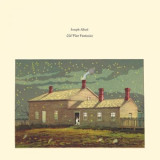
The songwriter Joseph Allred is always prolific, but breaks up their string of solo releases for one of the most orchestrated offerings since the excellent Branches And Trees. Allred’s often monastic guitar works are fleshed out here on Old Time Fantasias, turning them towards ensemble visions of country, Americana, and Appalachia. Album opener, “The Groundhog,” features the distinctive piano of Hans Chew, with bass from Daniel Kimbro and brass from Mikey Allred. Elsewhere the new album features Kelby Clark, Courtney Werner (Magic Tuber String Band), Evan Morgan (Magic Tuber String Band), Lydian Bramblia, and Jack Bird in the mix. “I started recording this album in Spring ‘23, thinking I might be making a mostly solo acoustic album with a couple of duets thrown in for good measure. I met Hans Chew at a Nashville show a few months earlier and sent him a few tracks to see if he wanted to add anything to them. Before long the ‘solo acoustic album’ had given way to what’s probably the most involved and densely orchestrated album I’ve made to date. “I enjoyed following some threads of influence that aren’t as easily discernible in my solo playing—I hear some classic country and psychedelic flourishes, baroque pop glockenspiel and horns, percussion ideas that may be cribbed from Danny Elfman and Tom Waits albums, nods to post-rock-filtered western guitar twang, and a little Cocteau Twins dreaminess. “All in all this was a satisfying record to make. I’m especially grateful to the collaborators for adding their touches and making it a less solipsistic affair than it would have been otherwise. The political climate has changed so much over the last two years that I find it hard to imagine I could make a record with this kind of fantastic mood if I started now. I hope that it can maybe re-enchant those of us who are felling disillusioned.” —Joseph Allred
Under the right conditions, half-remembered dreams can meld seamlessly into hazy present moments. Time spent alone can be an emotional blank canvas, and an opportunity to deconstruct sense and feeling; a patchwork of snippets both rooted in memory and abstracted from reality. The title of ‘quilted lament’ perfectly captures the way Gretchen Korsmo and claire rousay’s overlapping missions come together to do just this. Worn polaroid melodies and snatched everyday noises seem overheard through windows onto the street. They feel emotionally twinned, claire and Gretchen, it’s not always possible to tell where one ends and the other begins. Their musical thoughts and DNA are sewn together into a mini symphony of warmly embracing movements.
Built remotely between pre-existing friends in the underground music scene, the duo layered ideas onto audio files, and sent them back (and forth). And these luscious instrumentals truly do feel assembled by intuition, casually crafted with little need for guidance. “claire and I are both emo,” explains Korsmo. “We are both former texas-dwellers too and relate over both the woes and beauties of being in the American DIY experimental music scene.” Buoyant piano keys and hushed layer vocals tracks sit alongside a humming field-recorded scrapbook; a neighbour caught in a moment of private inspiration while street noise elevates; a private hymnal in the bathroom while the washing machine ends its cycle. Both artists take field sounds from a wealth of Zoom and Tascam recordings made in the last half-decade in Santa Fe, San Antonio, Los Angeles, Kamakura, Japan and elsewhere – from a baseball game announcer in Santa Fe, to the sound of a friend eating a juicy peach. At times, the bedroom walls seem to grow thin amid atmospheric creaks and disembodied whispers. Despite its very emo core, this is a recording engulfed in an intense sense of bliss, more at peace than we’ve heard either artist before.
- Like Clay
- Night Window (Part One)
- Night Window (Part Two)
- Keep Pulling Me In
- Jack Hare
- Clouds
- Our Relativity
- Desert Window
WHITE VINYL[26,68 €]
On her debut album, Lucy Gooch stays true to her electronic foundations, while incorporating more acoustic instrumentation and digging deeper into her folk roots through songwriting. But at the heart of Lucy's music is her rapturous vocal, with which she has experimented more than ever over the course of her first full-length. Many of the pieces on 'Desert Window' started out as vocal improvisations from which she pulled a narrative. Taking cues from the incantatory chanting found in middle English poetry such as 'The Names of the Hare', as well as the prescient imagery in contemporary works like 'The Hearing Trumpet' by Leonora Carrington (1974). "To a larger extent, this became an experiment in placing my voice in a more narrative way, while remaining oblique," Gooch explains. While her previous work could be compared to drawn-out landscapes punctuated with moments of romance and radiance, this album feels grounded in materiality and the everyday. Gooch's voice is at times strident, while elsewhere restrained and broken. "I lost connection to my voice and then had to rediscover it, which was exhilarating. There were these bursts of energy where I'd be messing around and occasionally stumble upon something". There are hushed melodies and exhausted squalls, creating dissonance and space. The result is an atmospheric balance between Kate Bush and Cocteau Twins harmonies, Vangelis major chords, and a juxtaposition of folk ambience reminiscent of the offset madrigals of The Third Ear Band and Italian cult film composers Goblin. It is a complex and elegant album, an all-consuming series of songs that reach into jazz, electronica and classical song construction.
- Who This World Is Made For
- Thickskinpeel
- Tenterhooks
- Elsewhere
- The Bad Dream
- Sad Chord
- Spellbound
- Problem Child
- Kingsway Bouquet
- Sweet Twenty-Three
Weisheit, Disziplin und unbändige Kreativität prägen den smarten Electro-Soul von Ellen Beth Abdi. Die renommierte Livemusikerin wird mit ihrem Debütalbum auf dem eigenen Label zur überragenden Solovirtuosin. Poppige Synth-Sounds, sich langsam steigernde Backgroundklänge und feinfühlige Worte von kraftvoller und persönlicher Bedeutung: Manchesters am schlechtesten gehütetes, genreübergreifendes Multiinstrumentalisten-Geheimnis steigt aus dem Schatten ins Licht. Vor fast einem Jahrzehnt wurde ihr aussergewöhnliches Talent entdeckt, was zahlreiche Support-Slots für u.a. Lady Blackbird, Courtney Pine und Angelique Kidjo einleitete. Diese Live-Erfahrung fliesst nun in die Konzerte zur Feier des lang erwarteten Soloreleases von Ellen Beth Abdi ein.
- "Something of a masterclass." - Louder Than War
- "Sharp lyrical insight with a distinctive sonic identity." – Backseat Mafia
Mr Bongo proudly presents the third album by Melbourne/Naarm multi-instrumentalist, Don Glori, entitled ‘Paper Can’t Wrap Fire’. A kaleidoscopic genre-surfing odyssey that brings together the worlds of jazz, soul and funk. Feeling both contemporary and classic, familiar yet novel, it’s an assured third release that sees an artist in full flight, showcasing their creative prowess and the uniqueness of their musical voice.
Steering in a new direction, Don Glori (aka Gordon Li) has delved headfirst into his songwriting with ‘Paper Can’t Wrap Fire’. Deftly showcasing his talents as a writer and bandleader, he brings with him a whole host of friends from the creative crossroads that is Naarm. It’s an album enriched with more soul, R&B, and funk-oriented songs than his previous jazz-rooted productions, yet there’s still plenty of jazz material for those familiar fans of Don's earlier works.
The album’s title is an old Chinese proverb, roughly translated as 'you can’t deny the truth'. This underlying thread is woven between the songs. “A lot of them are in some way about truth-seeking, observations and the masks you put on to deal with life (hence the cover art)”, Don mentions. Take, for instance, the sensational soul single 'Brown Eyes' featuring silky lead vocals by ML Hall. A dissection of the minority experience, and the power and comfort in building those communities. Elsewhere, 'Disaster' is a satirical take on the structures serving everyone but the artists, and 'Flicker' tackles notations of truth and clarity after introspection.
To marry that meaning with the level of musicianship on these tracks is what really stands out. Don has set out his stall here as an artist who can write songs that hit home in the heart, as much as they do in the head. It’s a journey infused with a glistening jazz finesse, layered with nourishing vocal harmonies and powered by an instantly relatable human soul.
Recorded over two hot summer days in Rolling Stock Studios in Collingwood, Naarm, the lineup of musicians is built up of Don's friends and family. Featuring the backbone team of Tim Cox, Al Kennedy, Joel Trigg, Robyn Cummins and Lachlan Thompson, who were part of Don's touring band before he relocated to London, and a stunning selection of vocalists in the form of ML Hall, Ruby Dargaville, Isadora Lauritz, and Bianca Kyriacou. Also gracing the album are trumpeter extraordinaire Audrey Powne, saxophonist Joshua Moshe, and Alcides Neto who sprinkles some Brazilian magic into the record.
Taking influence from artists including Azymuth, SAULT, Jordan Rakei and Lynda Dawn, as well as from London musical beacons such as NTS and Total Refreshment Centre, Don has run with this, leaned in and come out with a record truly unique to himself and his distinctive core, with no mask necessary.