Debut solo album from Julia Kugel (The Coathangers). Limited edition first LP pressing on heartbeat pink color vinyl, includes DL (1500 copies). If you can’t trust yourself, who can you trust? This is the crucial question at the core of Julia, Julia, the moniker for Julia Kugel, founding member of garage punk icons The Coathangers and the dream pop duo Soft Palms. On her first solo full-length album Derealization, Kugel shifts her focus from collaboration and band dynamics towards a singular artistic vision and private self-discovery. Steeped in the beguiling pop elements of her past work, Derealization is a meditative deep dive into the mind of a person struggling to understand a crumbling internal and external world. The album traverses a landscape of ethereal folk, atmospheric deconstructed pop, and dubbed-out country ballads, all centered around straight forward and direct lyrics. This juxtaposition of nebulousness and lucidity gives the album a sense of clarity emerging from the haze, an apt refection of Kugel's personal growth and journey toward self-acceptance. Derealization is based on weaving the unreal, unsaid, and unknown into an undulating sonic fabric. Vocal layering and abstract instrumentation convey a blurred desperation to connect to an emotional and psychological focal point. Moody, dark, and sumptuous, the record is a flow chart of Julia Kugel coming into herself as an artist and songwriter. The album finds Julia playing almost all the instruments and taking her first stab at engineering at COMA, her and her husband's home recording studio in Long Beach, CA. “You know how touring musicians often speak of whether home is real or tour is real? Well, it can lead you to lose grasp on ‘reality,’ especially when touring is taken away and you are left to wonder if anything was ever real, including yourself. Like you we're just playing a character,” Kugel says of her headspace leading up to the creation of Derealization. “Honestly, I kinda lost it, and through making this record I made peace with it and reconciled myself as a real person. I forgave myself and in turn forgave those around me. The song ‘Forgive Me’ is the apology I wanted to say and to hear. I wrote every song from that place and gained the confidence I was pretending to possess.” This raw and personal approach to the lyrics is present throughout Derealization. On the opening track "I Want You," Kugel creates a woozy sense of space with reverb-soaked drums and spaghetti western guitars while she lists off her desires for a mysterious “you.” Is she actually listing off her desires for herself? For the people around her? As she repeats "do you feel it?" in the song’s chorus, it feels as if she’s conjuring a magical thread by which we are all connected, showing us how our desires are all the same. On "Fever In My Heart" the listener is treated to a lush, acoustic techno track detailing the exhilarating madness of an emotional breakdown. Simple truths percolate to the surface on "Words Don't Mean Much,” as if clearing away the murk of platitudes and empty gestures. The journey continues on the detached and conflicted "Do It Or Don't,” an alluring walk through the winding road of lonely choices. The name for the project Julia, Julia is a look in the mirror, a reflection of what is hidden and unanswered, of what is real and what is transient. The experience of living life not as you planned it but as it unfolded, and the mysterious, magical pain that creates meaning.
Tracklisting 1. I Want You 2. Forgive Me 3. Impromptu 4. Fever In My Heart 5. Words Don’t Mean Much 6. Do It Or Don't 7. No Hard Feelings 8. Big Talkin' 9. Paper Cutout 10. Where Did You Go 11. Corner Town
Search:empty vision
“Total Terror” is the second of two self-released cassette tapes by EBM-industrial act Front Line Assembly. At this point, Bill Leeb was the band's only dedicated member, with some help from Rhys Fulber. Most of the original cassette was remixed and remastered to be commercially released on CD in 1993 as “Total Terror 1”. This edition added three previously-unreleased bonus tracks from other old sessions: "Freedom", "Distorted Vision" and "Cleanser”. The original recordings of these songs were done in 1986 using nothing more than a four track recording system. This would be quite primitive for today's standards and sound quality will not be so effective, however the ideas are all there letting us enjoy some of the first songs created by Front Line Assembly.
Deluxe re-release including all tracks from “Total Terror 1” plus the rare song “Eternal” and some bonus taken from old compilations. Limited pressing of 500 copies with double vinyl record, deluxe gatefold sleeve and new vintage artwork.
Two years after his Debut EP Bloodline OTN 01, Umo returns to OpenTheNext with another 5 #neodancefloor killer tracks.
The sound of Umo is the result of almost two decades of studying frequencies, vibrations, sequences of movements, plants and ascetic substances, seeking to recover the Music & Dance´s sacred and transcendental vision to ascend and sustain higher states of consciousness.
His new EP is a slow motion rework of the Raves in the 90s´ original sounds & vibrations. Traveling to a time when the dancefloors were true places of healing , authentic liturgies where people danced in community for days with eyes closed – before the internet, smartphones and globalization would corrupt everything.
#slowravers is a sonic journey that encourages conscious breathing and movement, and allows you to empty, dilute and connect in perfect resonance with the void that binds everything together.
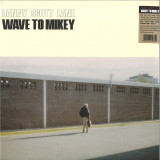
Wave to Mikey, the fourth album from the Los Angeles-based actor, musician and photographer Danny Lane is a nocturnal, neon-lit ode to the friendships that shape us. “I made this album for my friend Mikey from back home,” Danny explains. “We were pretty much inseparable for a large part of our lives, and our musical and social minds were always in sync in a special way. Then with age, we drifted apart, especially since I moved to Los Angeles. This album is just a little wave hello to an old friend and a kindred spirit.”
Equal parts avant-garde composition, instrumental city-pop, ambient, Kankyō Ongaku (environmental music) and Fourth World music, Wave to Mikey is an impressionistic and reflective cycle of eleven richly detailed memory portraits. Throughout the album, the influence of Jon Hassell, Arthur Russell, Hiroshi Yoshimura and Yellow Magic Orchestra hangs in the air like late-night mist, adding character but never overshadowing the rhythmic ambience of Danny’s musical visions.
Wave To Mikey began as a series of sketches on analog synthesisers, guitar, sample and found percussion sketches, initially recorded in Danny’s home studio. Once he’d located the vibe, Danny called on his friends E Talley II, Solange collaborator John Carroll Kirby and Destroyer session musician Joseph Shabason, who respectively added flute, spiritual synth textures and saxophone to the record.
For Glossy Mistakes founder Mario G.R., who originally discovered Danny through his photography, Wave To Mikey captures a vivid feeling of melancholy and peace. “He's able to encapsulate emotions in a very straightforward way, either in his portrait or songs,” Mario says. “I think that's a kind of virtue or skill given to talented artists, no matter the field.”
Born and raised in Staten Island, New York, Danny began playing music with his friends when he was thirteen, before putting that passion on pause to study Fine Arts (Theatre) at Rider University in Lawrence Township in pursuit of an acting career. Acting led him to photography, after playing a photographer in a film, he was inspired to pursue the medium. Danny began shooting photos on film for magazines and lifestyle brands, spent a stint living in New York’s Chinatown neighbourhood, and eventually relocated to Los Angeles in 2017.
Four years ago, Danny started recording and releasing music under his own name, leading to the trilogy of releases that preceded Wave To Mikey, How To Empty A Cup (2019), Memory Record (2019) and CAPUT (2021). Over the course of these releases, he’s revealed himself to be a sophisticated composer and producer with a studied ear from years spent digging through record bins for ambient, experimental, new age, jazz and electronica records from around the globe, with a particular emphasis on Japan.
“Music is something that’s always been involuntary for me,” Danny reflects. “It’s unconditional, always there. It’s something I just have to do. I’ve taken breaks and it’s always gloomy when I’m not playing. I just want to get better and better and understand more and more.”
Here at Glossy Mistakes, Wave To Mikey marks our second contemporary album release, following on from Evenings by Japanese composer Metoronori. We’re proud to be able to present Danny, Metoronori and other modern musicians' work alongside reissues of classic works from Stevia aka Susumu Yokota, Akira Ito, Yuji Toriyama & Ken Morimura, and Takashi Kokubo.
Mastered by Damian Schwartz, Wave To Mikey will be released on Vinyl LP Glossy Mistakes on June 27 2022. Besides the regular black vinyl, a limited clear vinyl will be available in an edition of 100 copies. Both editions come packaged with original cover art photography shot by Danny.
The music world is most fortunate that the past two decades have witnessed the rediscovery of mind-opening music that went under-recognized when originally released, and the wellspring of musical content produced by a generation of brilliant musicians. One such musician was the late great drummer Steve Reid, whose reissued eclectic recordings on his own Mustevic Sound label gave his career a second wind.
Though teased on a well-received compilation, one Mustevic release never saw reissue: New Life Trio’s Visions Of The Third Eye, a tremendous collaborative effort between Reid, guitarist Brandon Ross and bassist David Wertman.
Due to overwhelming demand, Early Future Records and Finders Keepers Records are proud to announce a second limited edition pressing of the classic and final Mustevic recording. The release also includes a 20-page written zine featuring an in-depth testimonial and interview with Brandon Ross, and an explorative essay by Finders Keepers’ Andy Votel, as well as a wealth of archival photos, scores and reviews.
Reid’s long and varied career began in his native New York City, where he was involved early on as a member of the Apollo Theater House Band and the R&B scene of the 1960s, including recordings with Martha Reeves and James Brown. In the late 1960s, Reid spent three years in West Africa absorbing musical traditions and experimenting with artists such as Fela Kuti, Guy Warren and Randy Weston. After a stint in prison for dodging the draft as a conscientious objector, the drummer came out swinging in the 1970s. He worked regularly as a session and Broadway musician even while immersing himself into the jazz world, from the straight-ahead styles of Freddie Hubbard and Horace Silver to the otherworldly sounds of Sun Ra and Charles Tyler.
The do-it-yourself ethos of the New York Loft Scene inspired Reid to create his own label, Mustevic Sound, on which he began releasing his own recordings and those of a couple of friends. One of these trusted friends was David Wertman, a young bassist from New York who released his own Kara Suite on Mustevic in 1976.
New Life Trio’s story began when Wertman moved from New York to the more sedate but creatively vibrant town of Northampton, Massachusetts. Here Wertman met Brandon Ross, a young guitarist from New Jersey who had relocated there with his brother to join a coterie of New York expats who had found a comfortable, collaborative environment amidst the liberal college towns in the area, including avant-garde legends Archie Shepp and Marion Brown. Wertman and Ross became friends and began to perform together regularly, both formally and informally.
A string trio of Wertman, Ross and violinist Terry Jenoure was set to record, but Jenoure dropped out just prior to the date. This led Wertman to call his friend Steve Reid to come join the two at the Tin Pan Hollow Studios in Vermont to record what would become Visions Of The Third Eye on December 6, 1978. Originally conceived as an all-acoustic date, the recording would morph slightly when Ross added electric guitar muscle on a number of pieces. Reid would then take the helm and release the recording in 1980, giving a very auspicious birth to what has now become a classic spiritual jazz recording.
Fast forward to 1995…..New Life Trio gets a belated second wind from Stuart Baker’s inclusion of the Ross-voiced “Empty Streets” on his Universal Sounds of America compilation. The brief, haunting lead track just hinted at what the full Visions Of The Third Eye album had to offer. Audience awareness resulted in the pursuit of out-of-print original LPs, thus the rarity of Visions Of The Third Eye led to it becoming a kind of “holy grail” record for collectors of jazz and creative music. The album’s cover image was even incorporated into the cover of Freedom, Rhythm & Sound (SJB, 2009), a wonderful coffee table book presenting album covers from those revolutionary decades in Black creative music. The recording’s legend was cemented.
New Life Trio’s legend continues to grow partly due to the brevity of its existence. The triumvirate of Reid, Ross and Wertman would never work together again. Each member would continue along his own path, finding success in numerous projects. Reid’s career was reinvigorated with the reissue of the bulk of his Mustevic Sound recordings in the early 2000s, which led him to a rewarding partnership with Four Tet’s Kieran Hebden until Reid’s untimely passing in 2010. Wertman balanced life between Florida and Massachusetts as a regular in the local jazz scene, recording numerous projects with his wife, Lynne Meryl, before passing away in 2013. The fantastically creative Ross has remained active in the New York creative music scene with a number of projects, most notably with Henry Threadgill, Cassandra Wilson and Harriet Tubman, a wildly eclectic co-led band with underpinnings of rock, dub and free jazz.
Remastered Reissue des Debütalbums 'Mind Games' des schwedischen Jazzdrummers Sjunne Ferger, das 1984 ein eigenes Hinterland der elektronisch-progressiven Musikszene Skandinaviens besiedelte, indem es Jazz-Fusion-Wurzeln und ungewollt balearische Anleihen in einem New-Wave-Kontext zu einem einzigartig klingenden Werk fliessen liess, das vielfältig und kreativ zwischen Meditation und Ekstase meandriert. Fergers persönliche Vision einer 'Polymood Music'.
Summer at Land’s End is not an interlude or tangent for The Reds, Pinks & Purples but rather a perfect fourth movement following the albums Anxiety Art, You Might Be Happy Someday, and Uncommon Weather. As with these self-recorded records (the primary work of songwriter Glenn Donaldson), the songs on Summer at Land’s End were crafted slowly and then drawn together to make a unified statement. But here, and more than before, Summer at Land’s End combines Donaldson’s rueful pop sensibility with a parallel musical universe, one composed of pictures, dreams, and feelings without words. Even if the underlying theme of this collection is one of conflict or unhappiness, the vision of the music presents an escape to a new world, always fading in and out of sight.
For listeners who may not be familiar with Donaldson’s corner of San Francisco––the Richmond district––or the current wave of hazy, melodic DIY pop groups performing in the city, Summer at Land’s End pulls in images and scenes that feel like a collision of the mundane and the sublime of this present landscape. But settings such as these are the backdrop for personal narratives, expressed as a struggle with love, with companionship and the conflicts of home. With this record, The Reds, Pinks & Purples give less focus to the vanities of a subculture and more to the challenge of connecting with someone, to the ordinary goals of being human and finding harmony with others.
This deliberate saturation in drama and ambiance, along with some of Donaldson’s best songwriting to date, is what gives Summer at Land’s End its special class in the project’s discography. Of the album’s cinematic mood, Donaldson refers to films like Summer of ‘42 and the influence of the classic 4AD catalogue of the 1990s. This style informs much of Donaldson’s prior and current ventures of course (The Ivytree, Vacant Gardens, and a dozen projects in between) but now The Reds, Pinks & Purples have taken the mantle, embracing this instinct for instrumental or dreamier modes of pop songwriting. It’s a pleasure to experience Summer at Land’s End, as this record finds a thrilling balance between songs and sounds, instruments and voices, and the ironic twin poles of art and life.
‘In Free Fall’ is composer and electronic musician Maya
Shendfeld’s debut album. Guests include James Ginzburg
(Emptyset), Kelly Odonighue and The Bethenian youth
Choir.
Berlin composer Maya Shenfeld’s music is as powerfully
evocative as it is strikingly intimate. Through a mastery of
sound sculpting and visionary approach to composition,
Shenfeld has established herself as one of the most vital
voices in Berlin’s New Music scene. Her work exists in
liminal spaces, collapsing the boundaries between
electronic synthesis and organic sound as it draws equally
from classical tradition and underground experimentalism.
Shenfeld is also in demand for her technical knowledge,
working with electronic music innovators Ableton in music
education and research.
Shenfeld is a rising star in the active Berlin music scene.
Her numerous commissions range from largescale
orchestral to site-specific sound installations, performing in
venues such as the KW Berlin, in collaboration with Berlinbased artist Richard Frater, leading a performance of
Julius Eastman’s ‘Gay Guerrila’ by an ensemble of sixteen
women playing bass and guitar for the opening event of
the Disappearing Berlin festival or writing for the Bethanien
youth choir, who performed at Baerwald bad, an
abandoned 1902 swimming pool in the heart of Berlin.
Deluxe LP package artwork is designed by fashion
designer, and Maya’s sister, Gal Shenfeld. LP includes
digital download card.
Mastered by Rashad Becker (Matmos, Laurie Spiegel,
Black To Comm, Clipping., Alvin Lucier, Félicia Atkinson).
Aeon Station’s ‘Observatory’ is an epic statement more
than a decade in the making, with miles of timeless
melodies and the kind of overpowering songwriting
that will reaffirm your belief in life itself.
Band leader Kevin Whelan co-founded and was a key
songwriter for New Jersey indie-rock legends The
Wrens. The Wrens’ landmark 2003 album, ‘The
Meadowlands’, received a 9.5 Pitchfork review and
made Pitchfork’s Albums Of The Year list. Since that
album, fans and press have been eagerly awaiting
new material from The Wrens members.
Whelan’s scope of musical vision on ‘Observatory’ is
wide open and free with possibilities - at once recalling
the reflective wisdom of Bruce Springsteen, Broken
Social Scene’s huge anthemic burn, and the Wrens’
own pulsing-with-life take on rock music. Above all,
this is music not only for dreamers but for those who
realize and appreciate the enormity of every moment.
“It’s about never letting go about those dreams and
your passion,” he states. “The album starts from a
place of realizing that everything is temporary, what we
love eventually changes or leaves us, and regardless
we continue to search and find our way back home.”
If you’ve ever caught air in your lungs or felt your heart
beating in your chest, there’s no doubt that you’ll find
some level of connection with ‘Observatory’’s openhearted, instantly classic-sounding rock.
LP pressed on cloudy blue vinyl.
Bristol experimental jazz collective Ishmael Ensemble reveal their expansive new album Visions of Light. The follow-up to their critically acclaimed 2019 debut A State of Flow, praised by the likes of The Guardian, Mojo, The Wire and tastemakers across BBC 6Music, this sophomore record sees the group reimagine what an ‘ensemble’ can do; expanding into a shifting collective, where human relationships between artists underpin far-ranging, stunningly ambitious and emotionally heavyweight compositions.
Helmed by producer and saxophonist Pete Cunningham, Ishmael Ensemble’s richly inventive 2019 debut A State Of Flow marked them out as an explosive new force in UK jazz, imbuing lush cinematic compositions with left-field dub and electronic sensibilities
redolent of Bristol’s vital musical landscape. NamedThe Guardian’s ‘Contemporary Album Of The Month’ and Mojo’s ‘Jazz Album of The Month’, it saw the group perform Maida Valesessions for both Gilles Peterson and Tom Ravenscroft, as well as feature on compilations for Brownswood Recordings and Soul Jazz Records. Cunningham’s rise as an in-demand producer led to remixes for the likes of techno royalty Carl Craig,as well as legendary jazz label Blue Note Records alongside a plethora of the UK’s finest musical talent on Blue Note Re:Imagined.
Ishmael Ensemble has since become a platform for Cunningham to subvert the conventional notions of producer/artist relationships, unsettling genre tags, and transcending the familiar landscape of UK jazz itself. Across the album’s 10 tracks, Cunningham practices a holistic approach with a long list of collaborators. Together, they explore vast new sonic terrain with an honesty, intimacy and emotional heft impossible for a conventional band.
Visions Of Light tells the story of Ishmael Ensemble’s development across its two sides. The first draws from the energy Cunningham and his bandmates discovered whilst extensively touring A State Of Flow.
A maelstrom, the chaos, a vortex, a turmoil. These are appropriate words to describe the hard work of the prolific French producer.
With a cryptic history incorporating nearly two decades of aliases and side projects born out of free parties in warehouses, fields and basements, it is under this moniker that the artist has truly come into his own.
His skill and vision spanning from 135 bpm wave powerful to a pensive and subtle ambient track, Maelstrom's sonic universe is both precise and limitless, described better by feeling ('approaching storm over river/horse with the bit in its teeth/sliver of moon') than genre. Maelstrom cofounded the label RAAR in 2015 with frequent collaborator Louisahhh where he released his debut album «Her Empty Eyes» in 2017. Throughout the next 2 years, he has delivered exciting collaborations with cutting edge electro imprints such as CPU and Cultivated Electronics in the UK, Private Persons in Moscow, or Mechatronica in Berlin, while playing an all electro live set in clubs and raves, from Paris to London or Tokyo.
2021 will see the release of his second album, Rhizome, with a focus on the concepts of interdependence and creative ecosystems
The fifth album from Oklahoma-bred singer/songwriter Parker Millsap, Be Here Instead emerged from a wild alchemy of instinct, ingenuity, and joyfully determined rule-breaking. In a departure from the guitar-and-notebook-based approach to songwriting that shaped his earlier work, the Nashville-based artist followed his curiosity to countless other modes of expression, experimenting with everything from piano to effects pedals to old-school drum machines (a fascination partly inspired by the early-’70s innovations of Sly Stone and J.J. Cale). As those explorations deepened and broadened his musical vision, Millsap soon arrived at a body of work touched with both unbridled imagination and lucid insight into the search for presence in a chaotic world. Produced by John Agnello (Kurt Vile, Sonic Youth, Waxahatchee) and mainly recorded live with Millsap’s full band, Be Here Instead marks a stylistic shift from the gritty and high-energy folk of his previous output, including 2018’s acclaimed Other Arrangements and 2016’s The Very Last Day (an Americana Music Association Awards nominee for Album of the Year). With its adventurous yet immaculately detailed sonic palette, the album warps genres to glorious effect, at one point offering up what Millsap aptly refers to as a “disco-Americana showtune.” In another creative breakthrough, Be Here Instead forgoes the character-driven storytelling of his past in favor of a more introspective and endlessly revelatory form of lyricism, an element he traces back to the charmed nature of his songwriting process. “Because the lyrics were appearing seemingly out of nowhere and with no prior intent, some of them started to feel like transmissions from my subconscious, rather than the preconceived linear stories or waking thoughts of my earlier songs,” says Millsap. “They feel like words I needed to hear from myself, and not just things I wanted to say to someone else.”
- A1: Various Artists - I Remember All My Lovers
- A2: Aeox - Gruft
- A3: Rouage - Rush Hour
- A4: Aeox - Fragile
- B1: Aeox - Kesseltreiben
- B2: Aeox - Bekifft
- B3: Various Artists - Dreierlei Fickblick
- B4: Cnm - Deform (Rmx)
- C1: Aeox - Guitarmad
- C2: Aeox - Culture Houze
- C3: Rouage - Fierce
- C4: Aeox - Ficken
- D1: Rouage - Touch It (Stellwerk Rmx)
- D2: Aeox - Denksport
- D3: Rouage - Syrinx (In Öl)
First released by Cazzo Film in 2001, ebo hill’s Bonking Berlin Bastards has long achieved the status of an underground punk porn classic. Like the Cazzo productions of director Bruce LaBruce, hill’s vision was both ahead of its time and a playful distillation of 90s and early-2000s Berlin Zeitgeist: queer, industrial, hypersexual, exhibitionist and fueled by electronic music. The story is told in large part by the soundtrack, to be released for the first time on Ostgut Ton sublabel A-TON. The music follows a group of squatters, punks and drag queens as they fuck, party and stumble their way through an empty city at the turn of the millennium. Approaching these themes more through location than plot, the film’s narrative freedom is also a narrative of freedom; between chance encounters and sex in public, atop the maze of roofs in the city’s former East, bent over bridges and moaning in ecstasy at oncoming traffic, pants down in telephone booths, packed into sex clubs, in the shadows of abandoned factories and techno clubs lost in time. Composed by improvisational techno trio AeoX and noise / industrial producer Rouage aka CNM (respectively), the music spans a broad range of appropriately pounding industrial, weird techno, noise, ultra-stoned ambient, improvised dub and electro. It’s a sonic spectrum that connects Berlin’s queer hardcore techno and squatter party scenes from which AeoX and Rouage emerged, drawing a direct line between the likes of Berghain-forerunner OstGut (a primary meeting point for the film’s cast & crew) to the more industrial, breakcore and noise- oriented independent party collectives and locations who provided multiple settings for the film, including Grüne Hölle and Stellwerk.
*Artists:* CNM / Rouage (Kathinka): Born in 1975 and raised in East Berlin. Co-organization of subcultural events since 1998 in Berlin, Potsdam, Leipzig and Barcelona. Experimental music, collaborations, exhibitions and audiovisual shows since 2000.
AeoX: Active between 2001 and 2007. Originally a quartet, then a trio, the group eventually shrank to two permanent members: Alex.E and Hanno Hinkelbein. The latter founded Null Records, where AeoX released two album and numerous EPs. They also released on Mental.Ind.Records founded by former OstGut resident Cora S. Musically, the group experimented with combining improvisational hardware techno, breaks, traditional instruments (guitar, clarinet, piano) industrial and metal.
Ursprünglich 2001 von Cazzo Film veröffentlicht, hat Bonking Berlin Bastards von ebo hill längst den Status eines Underground-Punk-Pornoklassikers erreicht. Wie die Cazzo- Produktionen von Regisseur Bruce LaBruce, war auch hills Vision seiner Zeit voraus und ein spielerisches Destillat des 90er- und Anfang-2000er Berlin-Zeitgeists: queer, industriell, hypersexuell, exhibitionistisch, angetrieben von elektronischer Musik. Die Geschichte wird größtenteils über den Soundtrack erzählt, der auf Ostgut Tons Sublabel A-TON zum ersten Mal veröffentlicht wird. Die Musik folgt einer Gruppe von Hausbesetzern, Punks und Drags, die ficken, feiern und durch die leere Stadt um die Jahrtausendwende streifen. Bonking Berlin Bastards erzählt diese Themen mehr über die Drehorte als über die Handlung. Die erzählerische Freiheit des filmischen Narrativs ist gleichzeitig eine Erzählung von Freiheit: Von zufälligen Begegnungen bis hin zu Sex in der Öffentlichkeit, auf Dächern im früheren Osten Berlins, sich über die Brüstungen von Straßenbrücken beugen, trotz und wegen des Verkehrs stöhnen, mit heruntergelassenen Hosen in Telefonzellen, in überfüllten Sexclubs, im Schatten aufgegebener Fabriken, zeitverloren in Technoclubs. Der Soundtrack wurde sowohl vom Improvisationstechnotrio AeoX als auch von Noise-/Industrial-Producer Rouage aka CNM komponiert und spannt einen weiten Bogen von explizit pumpendem Industrial, schräg klingendem Techno, Noise, ultra-stoned Ambient, improvisiertem Dub und Electro. Das musikalische Spektrum verbindet Berlins queere Hardcore-, Techno- und Hausbesetzer-Party-Szenen, aus denen AeoX und Rouage selbst hervorgingen und zieht dabei eine direkte Linie zwischen dem Berghain- Vorgängerclub OstGut (ein wichtiger Treffpunkt für die Darsteller und Crew des Films) und den eher Industrial-, Breakcore- und Noise-orientierten Independent-Partykollektiven und -Locations wie Grüne Hölle und Stellwerk, welche mehrfach als Drehort und Kulisse des Films auftauchen.
CNM / Rouage (Kathinka): 1975 geboren nd aufgewachsen in Ost- Berlin. Co-Organisation subkultureller Events seit 1998 in Berlin, Potsdam, Leipzig und Barcelona. Experimentelle Musik, Kollaborationen, Ausstellungen und audiovisuelle Shows seit 2000.
AeoX: Aktiv zwischen 2001 und 2007. Ursprünglich ein Quartett, dann ein Trio, dann verkleinerte sich die Gruppe auf zwei permanente Mitglieder: Alex.E und Hanno Hinkelbein. Letzterer gründete Null Records, auf dem AeoX zwei Alben und zahlreiche EPs veröffentlichte. Ebenfalls Veröffentlichungen auf Mental.Ind.Records, welches von der ehemaligen OstGut resident Cora S. gegründet wurde. Musikalisch kombiniert die Gruppe improvisierten Hardware- Techno mit Breaks, traditionellen Instrumenten (Gitarre, Klarinette, Klavier), Industrial und Metal.
Dukes of Chutney, the transcontinental trio of Dustin Lynn, John Paul Jones, and Petra, explore the different spaces and places, between nothingness and nature, that nurture inner and outer peace for their debut full-length Hazel. Cosmic yet intimate, long-gestating and free-flowing, diffuse and centered, Dukes turned toward their immediate sanctum, and a network of friends and colleagues, to realize the vision of Hazel. “Pretty much everything we do is without purpose,” the Dukes admit, in line with their pursuit of joy. But it’s not empty hedonism or passivity at play on Hazel, so much as an expression of freedom. “Why not?” was scribbled on the white frame of the Polaroid documenting their first appearance on Tim Sweeney’s Beats in Space many years ago, and it remains their motto, their mantra.
Germany's rising newcomer DJ and producer Desroi will deliver his debut album on Semantica by early November. He has gained wide attention with his Dwell in Motion EP on Avian in 2018. Each artist has a special story to tell about their musicianship. Techno producer Desroi, who in every day life goes under the name Frederic Lindemann, has a relatively no-nonsense one. Observing from the outside, his production process seems to be one of tight structure and focus, holding great modernistic vision. Desroi studied Composition at Folkwang University of Arts - parallel to his already ongoing career as a DJ, producer and label owner - having graduated in 2018. His craftsmanship combined with a more theoretical academic view gives him a distinguished position on the scene. Desroi is curious about exploring the bridges between contemporary music and techno, and he recently said he is less interested in arrangement, melodies and harmony, and much rather focuses strongly on textures, rhythms and new sounds. Listening to his compositions these quotes makes nothing but sense; Desroi's techno is entrancing and layered but holds no unnecessary clutter.
Consisting Neither Of One Lone Woman, Nor Hailing From Either The Eurasian Country Or The North American State, This Georgia Is In Fact Comprised Of Two Human Males Working Out Of China Town, N.y.c., Namely Brian Close And Justin Tripp. Together They Form A Creative Partnership Responsible For Not Just A Slew Of Output Upon Such Highly Regarded Imprints As Meakusma, Palto Flats And Emotional Response, But Also For A Kaleidoscopic Variety Of Multimedia Work With A Whole Host Of Clients, From The Corporate To The Counter Cultural. With An All Embracing, Freeform And In Some Ways Contradictory Approach To Production, Their Sound Is At Turns Stimulating, Terrifying, Comforting And Confounding. Separated From Any Visual Representation, The Audio On Its Own Becomes A Soundtrack For The Listeners' Own Intense Internal Projection Screen.
With 'time', Georgia's Vision Is Especially Well Realised As Here, In Collaboration With Fellow Intuitionists Firecracker Recordings, They Release Into This World An Album Which, With Any Luck, Shall Help You Unlock Your Inner Portals - Should They Need Assistance In That Regard Anyway. Unquantisable Polyrhythms Knock Against One Another In An Uncannily Externalised, Conflicting Collage Of Half Remembered Dance Ritual Memories. Fragmented Melodies, Disembodied Vocal Snippets, A Hint Of Ethnomusicality In Places All Give Deep Nods Simultaneously To Ancient Experience And To Post Human Intelligence, Condensing Past Present And Future Into One Eternal Instant.
'time' The Album Asks Us: What Happens When One Removes Ones Expectations Of Where In Time A Piece Of Music Or Art Must Sit And What Of Time Itself As A Construct, Now That We Have Myriad Ways Of Measuring It, Even At The Atomic Level; But Still Its Passing Is Completely Relative According To The Observer, And Indeed May All Be In Our Minds Anyway Equally, You Can Always Just Put It On - Again, And Again - Empty Your Mind Of Such Thoughts Completely, And Allow All Of Your Particles To Move Around Freely To This Joyful Noise... After All, That's The Point, Isn't It We're Gonna Have To Stop Asking Questions Eventually.
They expect me to write something informative about the tracks on this EP here but I find it really difficult to express music in words. On top of it I went out last night, to Club Der Visionäre, and I feel hungover and empty inside my head. So now I'm sitting here and all I can think of is, can't you just take a listen to the music!' The EP contains 5 tracks all made in the last couple of lousy summer months here in Berlin in nostalgia for the better days. It's about house and a bit of electro, no gimmicks.
Summer has not officially kicked in yet but Antinote's new addition to its roster will sure soundtrack perfectly its upcoming warm nights: encapsulating the teenage dream of an endless summer, 18 RAYS is the moniker behind which some of the label's most steady fixtures gave a try at recording music together, somewhere straight in the heart of Paris' 18th arrondissement.
.
Nico Motte, Zaltan & Raphaël Top-Secret have been friends way before each of them occasionally played his part in the Parisian label and it is mainly out of this friendship that they conceived 18 RAYS, a vessel to finally give life to the band they dreamed of in their teenage years. It is safe to say that 18 RAYS has been in their mind for quite a while, but it was only last winter, after a couple of bottles of natural wine on a hazy evening, that they decided that it was time to give it a real go and to pick up the instrument each learned years ago: the guitar, the bass and
the drums.
Produced by Nico Motte - the man behind all the artworks of the label - the trio spent 5 weeks between Synth City (Motte's studio) and Red Bull Studio in Paris working on these 4 songs, each sitting somewhere between some sort of timeless and somehow aquatic dream pop and blurred visions of an eerie grunge sound, that probably
never was.
That being said, the genesis of 18 RAYS might explain why their debut EP turns out to be such an intimate affair: while it took its members down memory lane, the listener will embark on an ethereal trip, taking him to a parallel universe in which the sounds of Cocteau Twins,
From Paris with Techno! Taapion records is back with a second compilation: Four tracks made in the French Capital city with Shlomo, Francois X, PVNV & Birth Of Frequency. Fisrt come Radioactive Sin from one of the label owner: Shlomo. The track has an uptight rythm, giving a feeling of pressure with hopless pads on top. Like an empty landscape after a nuclear war. Francois X is standing on A2 with Dreaming Of The Tesseract. He is building up a hudge loop with the Devil's tension and driving the cinematics Leads as an Horror movie director. Just flip the record and you'll find an other Taapion records owner on B1 : PVNV. He's travelling again In a deep and atmospheric techno with a track called Pace Chemistry. An amazing journey into the center of a dream where techno is a religion. Birth Of Frequency is closing the record on B2. With this track named Child, he decided to recreate his own vision of Taapion records. With that amazing Pad, wich is almost there all the time in the track, Simon aka Birth Frequency catch you on the Techno highway and gives you strong emotions.