Search:enc

Styles
All
The Mighty Mocambos - Scenarios LP

A unique longplayer by Germany's Funk champions The Mighty Mocambos: 'Scénarios' is a wild journey through iconic performances captured on 8-track tape, including celebrated versions of breakdance favourites like 'Axel F.' And 'Let The Music Play' as well as brand new original material composed especially for recordings in unusual settings.

Hamburg's deep funk chefs are known for their intuitive recordings that capture the energy of a live performance, and with this record they go all the way.

Just before the pandemic, the group recorded an in-store live session at legendary Hamburg record shop Groove City and taped an impromptu performance at JAM PDM! breakdance battle in Potsdam. Both were released on vinyl 45s, quickly sold out and became secret weapons for DJs. While most bands shifted their stage to the studio in 2020, producing an abundance of isolated lockdown-inspired material, the Mighty Mocambos – never shy of an antidote - took the mobile version of their recording studio on the road.

With no audience allowed at the Pitt Hopkins Music Session charity concert, the group used the occasion to compose meditative folk-soul instrumentals to be performed exclusively on stringed instruments. Sweaty funk does not work via video stream, but the format provided a welcome opportunity to create something entirely different. Even without electricity and drums, the cinematic "Four Two Three" and "Silent Heroes" are unmistakably recognizable as Mocambo themes.

When you follow Nina Simone's credo that an "artist's duty is to reflect the times", it became evident that once the world slowly started opening up again, further concerts would be captured on the group's portable Fostex R-8 tape machine. Luckily, restrictions fell on the very evening that the band hit the open air stage at the Import Export in Munich on September 11th 2021. The extended afrobeat-inspired jam on J.J. Cale's "Carry On" witnesses people celebrating and dancing together again for the first time after a year and the manic "Munich Psycholympics" unleashes all bottled-up energies that had being lying dormant.

The slightly kafka-esque "Ghost Walk" was taped during a soundcheck for a concert that was eventually called off for safety reasons, reflecting once more the uncertainty of the time. The last scénario sees the Mighty Mocambos returning to a packed indoor venue, playing "Let The Music Play" to a audience of b-boys and -girls – a testament to the sheer power of music. Featured as an encore here, an acoustic version of "Where Do We Go From Here?" (originally recorded with Lee Fields) closes the record and its restless voyage through unusual recording situations.

"Scénarios" differs drastically from other live albums as it does not seek to replicate existing material from studio albums. All songs were written or arranged especially for the live recordings in order to combine the group's DJ-friendly trademark sound with added vibes and momentum from the audience. Most of them were recorded while they were performed in public for the first time ever.

Comes in gatefold sleeve & includes download voucher.


d 04: Theme from Beverly Hills Cop (Axel F) Live

out of Stock

Order now and we will order the item for you at our supplier.

17,61

Last In: 2 years ago
Gallowstreet, Shamis & Rebiere - 52 North (Soul Supreme Remix) / Backpack (Soul Supreme Remix)

The Amsterdam-based producer, keyboardist, and music-lover Soul Supreme, known for his covers of classic cuts by the likes of A Tribe Called Quest, Mos Def or MF DOOM steps away from the cover format for a moment, and channels his fresh take into remixes of two INI Movement releases.

Leaving out the brass, both remixes eloquently underline the low-end essence of the compositions and explore new realms in a special way. The upbeat remix of '52 North' by Gallowstreet and LYMA on the A-side brings a percussion-heavy instrumentation & layers of signature keys to an ode to the city of Amsterdam. Staying close to the original composition, the remix expands the richness and depth, bringing the tune even closer to the dancefloor crowd.

On the flipside of the 45, the luscious rework of Shamis & Rebiere's track 'Backpack' brings a laid-back, soulful production to a personal story of co-parenting. We're immersed in a wistful hip hop bounce with a reference to Common, stunning Rhodes solo and an extra guitar layer by Johnny Biner. The vulnerable theme of the original song is accentuated with an alternative ending, leaving us with a feeling of reassurance, love and encouragement. All of that on a limited 7'' with artwork by Dase Boogie, released on Soul Supreme Records in collaboration with INI Movement label.

out of Stock

Order now and we will order the item for you at our supplier.

11,98

Last In: 3 years ago
Lady Blackbird - Black Acid Soul LP (Deluxe Edition) 2x12"

Set for release on 28th October, the deluxe edition of Lady Blackbird’s debut album ‘Black Acid Soul’ comes with a staggering 11 additional songs, encompassing brand new material such as stunning single ‘Feel It Comin’ and remixes commissioned by the likes of electronic, jazz, funk luminaries Emma-Jean Thackray, Colleen 'Cosmo' Murphy and Greg Foat.

Originally released in 2021, ‘Black Acid Soul’ received enormous critical acclaim; The Sunday Times named her their Breaking Act, stating that she “brings a singing voice of extraordinary nuance and immaculate phrasing to a selection of covers/reworkings and pindrop originals” in a 4* review. The Guardian awarded the album a 5* review, remarking that Blackbird “finds her calling with an extraordinary collection of songs and performances that burn deep into you”.

out of Stock

Order now and we will order the item for you at our supplier.

33,19

Last In: 3 years ago
Yuta Matsumura - Red Ribbon LP

Low Company presents Yuta Matsumura’s Red Ribbon, a sequence of introspective, lavishly melodic dream-songs and amphibian atmospheres recorded in scattered periods over 2018-21. Having played in bands like Low Life, M.O.B. and Orion, and the duo Jay & Yuta (with Jay Cruikshank), Red Ribbon is Matsumura’s first solo outing, and represents a conscious effort to move away from guitar-based songwriting. He composed its nine tracks mostly on piano - layering vocals, bass, keyboards, flute (courtesy of Maeve Parker), violin/cello (Laurence Quinn) and clacking drumbox rhythms into dynamic, dubwise avant-pop structures which are supple and spacious but fizzing with detail and vivid inner life. The laconic 4/4 pulse, heat-warped synth-tones and haunting vaporous melodica of opener ‘Box Garden’ set the tone: its surreal psychedelic patternings barely concealing a deep sting of longing and regret. The cryptic lyrics suggest chance encounters, hidden logic, missed opportunities, fatalism, serendipity. A city submerged: everyone else paused mid-movement, while you’re allowed to swim free and fish-like through the streets, over the rooftops...‘Tangled Orchid’ is a tense night-drive through dry desert heat and into the unknown, running away from your old life, chased down by dust-devils of half-baked schemes and abandoned plans, while ‘Myth Machine’ drops the tempo and something mind-altering, guiding us on a tripped-out dub-disco scuba among alien flora and fauna, a world of impossible shapes and sensations. At which point, the mood of the album decisively shifts, firstly with ‘Sake No Otoh’, sung in Japanese by Haruka Sato: an instant-classic, breathtakingly intimate lover's lament that sounds like it got lost on its way to heaven and is now doomed to orbit the earth forever. The songs that follow continue in this more confessional, imploring mode. As if the travelling's done, the baggage has been cast off, and we’ve arrived at our destination, where the real process of rebirth and repair can begin. The music’s textures become less overtly dubby and electronic, with more of an organic, earthy, chamber-pop/avant-folk feel, at once sad and hopeful-sounding. Three songs in particular bear the influence of Eno’s 70s work (and its mutant bedsit offspring Lifetones, Flaming Tunes, etc): ‘‘E. Potential’, where baroquely chorused vocals - half-agonised, half-beatific - teeter on top of simple oscillating piano loops, and the stately, dawntreading ballads ‘Tabula Rasa’ and ‘No Sleep For Birds’. The bulk of the album was made prior to lockdowns and all of that; its themes of reset, self-examination, the need to f**k it all off and take spiritual stock, are timeless. Though they perhaps have a more bittersweet resonance now the world has returned pretty much to how it was, only worse. Track list: 1. Box Garden 2. Tangled Orchid 3. Myth Machine 4. Red Ribbon 5. Soko No Ato 6. Tabula Rasa 7. E. Potential 8. No Sleep For Birds 9. Zookeeper's Trial

out of Stock

Order now and we will order the item for you at our supplier.

20,97

Last In: 3 years ago
Thylacine - 9 Pieces LP

Thylacine

9 Pieces LP

12inchINT01G301LP
Intuitive Records
26.10.2022

Since his debut album “Transsiberian”, Thylacine has developed a taste for composing through travel, an initiatory project that led him to compose during his journey on the Trans-Siberian Railway. A seminal album that allowed the young electro prodigy to make a name for himself on the electronic scene.

With the aim to combine music and image and to make us discover his world through travel, Thylacine has continued to climb the ladder and has racked up no less than 121 million streams. Whether it's "Anatolia", "Olatu", or "War Dance", Thylacine has made a name for himself by writing real hits.

Through "9 Pieces », Thylacine wanted to pay tribute to some iconic tracks that are currently only released digitally and independently and to let us discover his new compositions, all of which are just as transporting and refreshing. His new opus “9 Pieces” will contain unreleased tracks from his latest travels and encounters, pieces to be assembled in order to reconstitute a puzzle and immerse oneself in the universe of Thylacine.

Like this object, each musical piece will find its place alongside his greatest hits. "9 Pieces" will be released the 21st of October on Intuitive Records.

out of Stock

Order now and we will order the item for you at our supplier.

29,79

Last In: 3 years ago
RAVIN/BUDDHA BAR PRESENTS - BUDDHA BAR - BEST OF 1996 - 2013 LP (3x12")
out of Stock

Order now and we will order the item for you at our supplier.

48,32

Last In: 2 years ago
Feldermelder - Euphoric Attempts LP 2x12"

"While focusing on the current conditions we find ourselves in and bracing for what seems like the collapse of humanity, I made this collection of music in an attempt to ignite the essential remnants of my inner euphoria, and perhaps yours too" - Feldermelder

Euphoric Attempts is a finespun, voluminous manifestation of euphoria, a testimony to creativity, produced at a time when the outside world seems to be slowly disintegrating. The musical language is pure, vast, resilient, and vulnerable. The compositions of Feldermelder have a tonality both strange and familiar, intensified and influenced by classical music, yet distinguished by the coalescence of contrasting styles.

Euphoric Attempts relates to the state of our external surroundings but also refers to our inner life: it passes through our memories — through our organism — through our stories, and intends to elude the cold grip of analytical listening, instead retrieving intrinsic truths. The track titles signify a form of homage to our inner individuality, existing in parallel with the severities of the tangible, the external.

For this album, Feldermelder draws together compositions from his extensive archives, focussing on material that reflects the simple joy of making music. As a counterpoint to the abstract complexities and intricate rhythms of his live performances, here Feldermelder creates candid compositions of purity and minimalism, finding a sense of elegance in the details. Euphoric Attempts discovers the prospect of liberation and vitality in concealed intimacies, capturing their resemblance in gentle, elaborate, and prodigious movements of sound.

Feldermelder is a Swiss musician, sound designer, producer, and installation artist. He is co-founder of -OUS and part of the audio-visual collective Encor.studio. He has previously released several releases on -OUS, both as a solo artist, and in collaboration with Sara Oswald and Julian Sartorius. Feldermelder's influences range from pioneering early electronic music to contemporary analogue electronics to classic jazz and beyond. The diversity of the music that inspires him is mirrored in his own work, which illustrates an ever-evolving sound, and indicates that influence is seen as both map and compass, guiding divergent inclinations.

out of Stock

Order now and we will order the item for you at our supplier.

20,13

Last In: 3 years ago
Daft Punk - Alive 2007 (2x12")

Daft Punk

Alive 2007 (2x12")

2x12inch190296611964
Warner UK
21.10.2022

Daft Punk's 'ALIVE 2007' set, which won 2 Grammy Awards in 2009 (Best Electronic Album and Best Electronic Single categories) and was previously only available on CD and digital, will be released for the first time as a double vinyl with a triple gatefold sleeve.

Derived from their live performance at Bercy on 14 June 2007, this album was originally published the same year on November 19th. Through this amazing live experience, Daft Punk manipulated and reworked their established material, transposing and deconstructing the structures of their studio tracks.

A limited edition of 'ALIVE 2007' will be released at the same time, in a special box including the album on 2 solid white vinyls, plus a vinyl bonus (Side A: the show's encore (human after all / together / one more time (reprise) / music sounds better with you) /Side B : 'ALIVE 2007' pyramid logo etched), a 52 pages book (pictures taken during the shows), a slipmat and a download card.

'ALIVE 1997' is also being reissued separately. Recorded in 1997 in Birmingham during their first European tour, a few months after the release of 'Homework', this first live testimony was released in 2001. 45 minutes of non-stop live mixing, featuring the band's first standard tracks (Da Funk, Rollin' & Scratchin'...) along with those techno-electronic explosions unique to Daft Punk!

out of Stock

Order now and we will order the item for you at our supplier.

23,95

Last In: 4 months ago
Giveon - Give Or Take

Giveon

Give Or Take

12inch19439917651
Epic Records Group
21.10.2022

Der 26-jährige Sänger Giveon wurde zu einem der aufstrebenden Stars der internationalen Hip-Hop-Szene, indem er mit seiner einzigartigen Baritonstimme Herz und Tiefe in seine Musik zurückbrachte. Diese Stimme ist es auch, die ihn regelmässig an die Spitze der Charts bringt. Zuerst in Drakes "Chicago Freestyle", dann in Justin Biebers "Peaches" und schließlich auch solo mit "Heartbreak Anniversary", das heute weltweit 670 Millionen Streams hat und in den USA mit Platin ausgezeichnet wurde (400 Millionen Streams). Sein Debütalbum "Give or Take" - mit den Singles "For Tonight" und "Lie Again" - ist eines der am meisten erwarteten internationalen Projekte.Cette année fut celle de l'ascension pour Giveon. Le jeune chanteur de 26 ans est devenu une des stars en devenir de la scène Hip-Hop internationale en ramenant du coeur et de la profondeur à sa musique grâce à une voix baryton unique. Cette voix est celle qui enchaîne les apparitions en haut des charts. D'abord sur le « Chicago Freestyle » de Drake puis sur « Peaches » de Justin Bieber tout en marquant le coup en solo avec « Heartbreak Anniversary » qui cumule aujourd'hui 670M de streams dans le monde et certifié platine aux USA (400M streams). « Give or Take », son tout premier album inclus les singles « For Tonight » et « Lie Again », est l'un des projets les plus attendus à l'international.

pre-order now21.10.2022

expected to be published on 21.10.2022

27,69
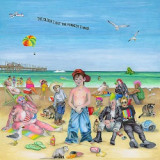
WHITMER THOMAS - THE OLDER I GET, THE FUNNIER I WAS

The Older I Get, the Funnier I Was, which follows Thomas’ brilliant 2020 HBO special The Golden One and his Can't Believe You're Happy Here EP released earlier this year, surveys a range of emotion and offers a broad sonic palette, moving between pop punk, electro, and the obvious influence of the singer-songwriters he grew up listening to in early childhood. It conjures the ennui of Bright Eyes alongside the barefaced storytelling of John Prine, the overstuffed lists of Fred Thomas with the lackadaisical humor of Colleen Green, among many others.

Thomas attributes the dexterity of the record to Duterte, who recorded and engineered most of it in addition to serving up plenty of encouragement when Thomas got down on the process. “As a comic, I used to test out new songs during sets to see if the funny bits were hitting, but since I wrote this in isolation I ended up writing lyrics and worrying less about making jokes,” Thomas says. That said, the album’s plenty funny. Stand-out and lead single “Rigamarole” opens with a Thomas-voiced infomercial that recalls his oft-cited lookalike Jim Carrey as the Grinch, before launching into a buoyant pop song about being depressed.

Whitmer Thomas will admit that when he traveled home to small town Gulf Shores, Alabama to record his HBO stand-up special, The Golden One, he expected to be greeted as a returning hero, a conquering king, or at minimum, a guy with a moderately successful career as an entertainer in Los Angeles. “I expected a big welcome home, open arms, but when I went back I realized: nobody fucking knows me. Nobody remembers me,” Thomas says. “In the years I’d been performing that show, I’d been romanticizing my childhood in this mythologized place, but the visit made me see that I’m not really from there anymore.”

The sense of alienation compounded when Thomas recognized how few people in town remembered his mom, to whom The Golden One is dedicated and largely about. Thomas grew up watching her perform with her twin sister at the legendary Flora-Bama Lounge, where he set the special, and still counts her as one of his musical influences. His new album, The Older I Get, the Funnier I Was, isn’t overtly about his mom, her presence is deeply felt throughout. While in Gulf Shores, Thomas discovered dozens of her old recordings, all of which had been wrecked by Katrina, but upon returning to LA, Thomas paid “a fancy place in Hollywood” to fix the tapes and hired Melina Duterte (Jay Som, Bachelor, Routine) to mix them. The two struck up a collaborative friendship, and Thomas had the sound of his mom’s voice back. “I was listening to songs she recorded when she was about my age, just these heartfelt, sweet Americana songs,” he says. “I decided then that I wanted to lose the Ian Curtis voice I always sing with; I wanted to do what came naturally, because my mom always sounded like herself, even when she was singing some cheesy reggae song about, like, Jamaica.”

Thus he went into The Older I Get, the Funnier I Was knowing it was time to retire his darkwave persona, and leaning into his natural, chirpier voice, which he says sounds “like a 12-year-old’s.” It makes sense: much of the album chronicles what Thomas calls “being a kid and feeling like you have no control and overcompensating by being annoying.” “So much of the album is about witnessing drug and alcohol addiction as a kid and seeing what it does to people, but also realizing that there's nothing you can do about it,” Thomas says. It’s familiar territory (see: “Partied to Death”) but the methodology is different this time around; true to its title, The Older I Get, the Funnier I Was isn’t always looking for laughs. Thomas might’ve left his hometown behind, but his kid self is still tagging along, a Peter Pan shadow he can’t untether himself from. The first line he sings on The Older I Get, the Funnier I Was is: “There should be a room at every party where you can just sit and watch a movie.” Find a 12-year-old who wouldn’t say the same.

pre-order now21.10.2022

expected to be published on 21.10.2022

27,10
What Are People For? - What Are People For?

What Are People For? make the perfect kind of dystopic dance music for our times. Born from a collaboration between artist Anna McCarthy and musician/producer Manuela Rzytki, the band could be the illicit lovechild of Tom Tom Club and Throbbing Gristle, displaying the ideal balance of hip shaking vibes and dark provocative content.

On their collaborative debut, McCarthy and Rzytki share songwriting duties. The album was produced by Rzytki herself. They are joined by Paulina Nolte on backing vocals and Tom Wu on drums, while Keith Tenniswood mastered the record.

The whole project stems from a publication and exhibition by McCarthy laying the foundations for the content and lyrics of the album, which is humorous, poetic and political. As a lyricist, McCarthy uses her storytelling ability to explore anxieties and desires, digging into free surreal word associations reminiscent of Su Tissues’ tongue in cheek experiments with Suburban Lawns, but also explosive and gripping like a Kae Tempest rap.
Rzytki’s precise sonic palette and talent at penning structured bangers perfectly complement McCarthy’s playful and subversive language manipulations. Rzytki's beats are rooted in old school Hiphop loop principles and an authentic love for the analog. Her use of an array of synthesizers and other "real" instruments adds to WAPF's depth, soul and sincerity.

The album opens with a joyful anthem, full of energy and melodic hooks. The audience is confronted with the quintessential titular question What Are People For? and told that they are just a mere disposable commodity. Throughout the album, lyrical themes revolve around underground aspects of society, violence, political ideologies, sexuality and mysticism. The content is deep but the album is as danceable as it is biting.

73, with its drum machine hysteria and hypnotic synth basses is a a text collage written on the 73 bus through London, consisting of situations and conversation snippets encountered along the way. Drones indulges in the narrator’s paranoia as they feel they are being watched by cigarette machines, whilst the haunting choir is half spoken, half sung, ending on the orgasmic chanting of the word “mummy”. Nursery Rhyme brings more soothing incantations. There is definitely an affinity for fairytales, albeit adult ones and especially the anarchistic ones such as The Moomins, who were a consistent influence on the band. The artwork for the record, created by McCarthy, is a beautiful children's book-style painting of the group in a forest, seemingly about to engage in a magical encounter to which we are invited.

WAPF? have absorbed and digested a variety of influences. Trip hop, Punk and Techno are rubbing shoulders on Party Time. 1977 was coined “Summer of Hate” in the UK and unsurprisingly in WAPF?’s Summer of War, ethereal singing alternates with a powerful marching Garage/Grime chorus reminiscent of street protests and UK culture.

Mz. Lazy starts like an invitation to meditation and references Gertrude Stein’s book Ida in which she develops the idea that publicity is a new religion and people are now famous for being famous. Repressed anger explodes into violence and freedom at the end of the song as our heroine eventually grabs an axe to destroy her oppressors.
Fantasize, on its part, is raw, sexual and liberating while the closing track Bring Back the Dirt is a welcome hymn into a world that is becoming more and more sanitised.

While exploring deep subject matters throughout their album, WAPF? manage to remain satirical, exciting and funny. Each and everyone of their songs have a cathartic quality.

The visual identity of the band is intrinsic to their appeal. Live, they are eccentric, wild and unapologetic, wearing see-through costumes, bright miniskirts and intricate headpieces while delivering their songs with sharp intensity. Their performances radiate queer sexiness and transcend B52's thrift store aesthetics, creating a space for collective dreaming.

WAPF? is a rare combination of contemporary punk energy, irresistible groove, absurdist dry humour and astounding depth of field. They have the mighty power to create a party with their music and soon you will find yourself lifting your arms as if controlled by an external force, to chant: WAPF? WAPF? WAPF?

– Marie Merlet (Malphino, Little Trouble Girls, London)

pre-order now21.10.2022

expected to be published on 21.10.2022

18,45
Soyuz - Force Of The Wind LP

Soyuz

Force Of The Wind LP

12inchMRBLP262
Mr Bongo
21.10.2022

Some records just stop you in your tracks. They resonate with you and feel instantly familiar like an old friend, even on the first listen. SOYUZ's third album ‘Force of the Wind’ is one of those records. It holds all the trademarks, beauty, and eccentricities of classic Brazilian recordings, from the 60s and 70s, that we have come to love. Think artists such as Milton Nascimento, Lô Borges, Burnier e Cartier, Arthur Verocai et al. But this record wasn’t made in Brazil and is in fact a brand-new release.

SOYUZ (which translates as 'union') is a creative collective from Minsk, Belarus, led by composer, arranger, and singer, Alex Chumak, multi-instrumentalist, Mikita Arlou, and drummer, Anton Nemahai. SOYUZ's previous albums explored and reimagined the legacy of jazz-oriented, non-English-language pop music of the 20th century. For their third album, there is a stronger focus, and it is influenced by 70s Música popular Brasileira and building bridges from it to present-day Belarus. Alex notes that from the moment he first encountered Brazilian music, he found in it a kind of concentrated emotion that felt as if it were familiar to him from his childhood. This non-verbal emotion and connection between the listener and musician echoes in the music, regardless of understanding of the language the album is recorded in.

‘Force of the Wind’ includes songs sung in Russian and Portuguese as well as instrumental compositions. Its musical palette is both acoustic and electroacoustic: rich warm Rhodes piano, soaring string arrangements, and a controlled drum swagger sounding both relaxed yet super tight. Alongside Alex's sublime vocals, that grace the majority of the tracks, the album features guest performances by multi-talented musician and vocalist Kate NV and rising Brazilian star, Sessa. Alex also recently arranged a number of tracks on Sessa's highly praised 2022 album 'Estrela Acesa'.

On the album, the trio is joined by a cast of friends; NY-based musician of Turkish origin percussionist, Cem Mısırlıoğlu, classically trained composer, Simon Hanes, who aided with string arrangements and conducting the string players, Netherlands-based Brazilian multi-instrumentalist, Gabriel Milliet, on flutes. With the collaboration of these friends SOYUZ have created nine songs/suites that are subtle and plenitude and like the best albums, leave you aching for more.

‘Force of the Wind’ is an enigma, Brazilian yet not Brazilian, vintage yet still contemporary, out of sync with modern culture yet completely relevant and necessary.

out of Stock

Order now and we will order the item for you at our supplier.

25,42

Last In: 40 days ago
Quinzequinze - Varua EP

Quinzequinze

Varua EP

12inchS7604
S76 Records
21.10.2022

The meaning of Vārua, soul or spirit in Tahitian, is also the root of the word Vārua'ino, designating both evil spirits and celestial phenomena (thunder, rain, meteorites and rainbows), and helps shed a new light on the true essence of this new EP. Its changing nature naturally encourages the connection between the tracks and the variety of genres they conjure. The whole project articulates itself around a DNA formed by traditional percussive instruments, Ori deck, a bravado carried by the young Tahitian underground scene, and ancestral ōrero (Polynesian oratory art).

Often swaying between stellar coherence and astral wandering, the seven tracks of the EP see QuinzeQuinze highlighting personal feelings and paradoxes which make for the backbone of human experience through an archipelago of fables with mystical allegories.

pre-order now21.10.2022

expected to be published on 21.10.2022

14,50
Simple Minds - Direction of the Heart LP

Simple Minds return with eighteenth studio album Direction of the Heart, set for release on 21st October 2022 and including lead single ‘Vision Thing’.

Direction of the Heart is Simple Minds’ first album of new material since 2018’s outstanding UK Top 5 album Walk Between Worlds. Throughout its nine tracks, Direction of the Heart finds the band at their most confident, anthemic best on an inspired celebration of life, and which manages to perfectly encapsulate the essence of past and present Simple Minds, a band whose reascent over the past 10 years has seen them, once again, capture the magic and critical praise of their early days

pre-order now21.10.2022

expected to be published on 21.10.2022

26,01
Makaya McCraven - In These Times LP

Today Chicago-based percussionist, composer and producer Makaya McCraven announces the details of his new album In These Times, which is set for release on September 23rd via International Anthem / Nonesuch / XL Recordings. The first offering from the new album is a song tiled "Seventh String," which encapsulates the various musical dimensions present on McCraven's new album, a career-defining body of work that is a remarkable new peak for the already-soaring McCraven. In These Times is a collection of polytemporal compositions inspired as much by broader cultural struggles as McCraven's personal experience as a product of a multinational, working class musician community. It's the recording that he's been trying to create for 7+ years, as it's been consistently in process in the background while he's put forth a prolific run of releases including: In The Moment (2015), Highly Rare (2017), Where We Come From (2018), Universal Beings (2018), We're New Again (2020), Universal Beings E&F Sides (2020), and Deciphering the Message (2021). With contributions from over a dozen musicians and creative partners from his tight-knit circle of collaborators - including Jeff Parker, Junius Paul, Brandee Younger, Joel Ross, and Marquis Hill - the music was recorded in five different studios and four live performance spaces while McCraven engaged in extensive post-production work at home. Featuring orchestral, large ensemble arrangements interwoven with the signature "organic beat music" sound that's become his signature, the album is an evolution and a milestone for McCraven, the producer. But moreover, it's the strongest and clearest statement we've yet to hear from McCraven, the composer. Profiled in the New York Times, Vice, Pitchfork, Rolling Stone, the Guardian, and NPR, among other publications, Makaya and the music he makes today is what Passion of Weiss explains, "is part of a necessary conversation about the next evolution of the Black improvised music known colloquially as 'jazz.' He's found the threads connecting the past with the present, and is either wrapping them with new colors and textures, or he's plucking them gleefully like the strings of a grand instrument." McCraven, who has been aptly called a "cultural synthesizer" and "beat scientist," has a unique gift for collapsing space, destroying borders and blending past, present, and future into poly-textural arrangements of post-genre, jazz-rooted 21st century folk music. In These Times encompasses his artistic ethos, his experiences, identity and lineage, while pushing his music to new heights.

pre-order now20.10.2022

expected to be published on 20.10.2022

23,07
Isokratisses - Cry With Tears: Greek-Albanian Songs of Many Voices

Isokratisses (Greek for "women who sing the "iso" or "drone") is a vocal ensemble comprised of eight women who carry the ancient tradition of polyphonic songs from Epirus: a region in northern Greece and southern Albania. Born and reared in the Greek speaking villages around Deropoli and Politsani in Albania, the women of Isokratisses have sung these songs since childhood. The group ranges in age from 19 to 56 with some sisters in the group as well as an aunt. They were nurtured by this archaic music, listening and singing it with their family and friends. The songs were passed down from generation to generation. The group started its artistic activity in 2015, after the singer Anna Katsi took the initiative to encourage the younger members to perform regularly. The communal nature of polyphonic singing is a way of revitalizing an art that has declined in recent years and to reassert the primacy of female voices in the southern Balkans. Singing these songs builds an invisible bridge that connects the present with the past, the memories of childhood travel with the immediacy of daily life. On Oct 14, 2022, Third Man Records will release a full album of these solo polyphonic songs, with Grammy-winning producer Christopher King. "It is social music, woven into the fabric of poor, marginalized, and disenfranchised communities. Many of the songs are variations of mirologia (songs of fate, songs of morning) that used to be sung throughout the southern Balkans but have largely disappeared on an informal cultural level except for Epirus. Structurally, the songs are pentatonic (five notes with no semitones) and are composed of three or four distinct melodic voices that weave together in an organic yet unexpected way. The remaining members of the group provide the iso or “drone” that is the low tonic note of the melody." - Chris King.

out of Stock

Order now and we will order the item for you at our supplier.

17,61

Last In: 3 years ago
Lee Tracy & Isaac Manning - Is it What You Want

As the sun sets on a quaint East Nashville house, a young man bares a piece of his soul. Facing the camera, sporting a silky suit jacket/shirt/slacks/fingerless gloves ensemble that announces "singer" before he's even opened his mouth, Lee Tracy Johnson settles onto his stage, the front yard. He sways to the dirge-like drum machine pulse of a synth-soaked slow jam, extends his arms as if gaining his balance, and croons in affecting, fragile earnest, "I need your love… oh baby…"

Dogs in the yard next door begin barking. A mysterious cardboard robot figure, beamed in from galaxies unknown and affixed to a tree, is less vocal. Lee doesn't acknowledge either's presence. He's busy feeling it, arms and hands gesticulating. His voice rises in falsetto over the now-quiet dogs, over the ambient noise from the street that seeps into the handheld camcorder's microphone, over the recording of his own voice played back from a boombox off-camera. After six minutes the single, continuous shot ends. In this intimate creative universe there are no re-takes. There are many more music videos to shoot, and as Lee later puts it, "The first time you do it is actually the best. Because you can never get that again. You expressing yourself from within."

"I Need Your Love" dates from a lost heyday. From some time in the '80s or early '90s, when Lee Tracy (as he was known in performance) and his music partner/producer/manager Isaac Manning committed hours upon hours of their sonic and visual ideas to tape. Embracing drum machines and synthesizers – electronics that made their personal futurism palpable – they recorded exclusively at home, live in a room into a simple cassette deck. Soul, funk, electro and new wave informed their songs, yet Lee and Isaac eschewed the confinement of conventional categories and genres, preferring to let experimentation guide them.

"Anytime somebody put out a new record they had the same instruments or the same sound," explains Isaac. "So I basically wanted to find something that's really gonna stand out away from all of the rest of 'em." Their ethos meant that every idea they came up with was at least worth trying: echoed out half-rapped exhortations over frantic techno-style beats, gospel synth soul, modal electro-funk, oddball pop reinterpretations, emo AOR balladry, nods to Prince and the Fat Boys, or arrangements that might collapse mid-song into a mess of arcade game-ish blips before rallying to reach the finish line. All of it conjoined by consistent tape hiss, and most vitally, Lee's chameleonic voice, which managed to wildly shape shift and still evoke something sincere – whether toggling between falsetto and tenor exalting Jesus's return, or punctuating a melismatic romantic adlib with a succinct, "We all know how it feels to be alone."

"People think we went to a studio," says Isaac derisively. "We never went to no studio. We didn't have the money to go to no studio! We did this stuff at home. I shot videos in my front yard with whatever we could to get things together." Sometimes Isaac would just put on an instrumental record, be it "Planet Rock" or "Don't Cry For Me Argentina" (from Evita), press "record," and let Lee improvise over it, yielding peculiar love songs, would-be patriotic anthems, or Elvis Presley or Marilyn Monroe tributes. Technical limitations and a lack of professional polish never dissuaded them. They believed they were onto something.

"That struggle," Isaac says, "made that sound sound good to me."

In the parlance of modern music criticism Lee and Isaac's dizzying DIY efforts would inevitably be described as "outsider." But "outsider" carries the burden of untold additional layers of meaning if you're Black and from the South, creating on a budget, and trying to get someone, anyone within the country music capital of the world to take your vision seriously. "What category should we put it in?" Isaac asks rhetorically. "I don't know. All I know is feeling. I ain't gonna name it nothing. It's music. If it grabs your soul and touch your heart that's what it basically is supposed to do."

=

Born in 1963, the baby boy of nine siblings, Lee Tracy spent his earliest years living amidst the shotgun houses on Nashville's south side. "We was poor, man!" he says, recalling the outhouse his family used for a bathroom and the blocks of ice they kept in the kitchen to chill perishables. "But I actually don't think I really realized I was in poverty until I got grown and started thinking about it." Lee's mom worked at the Holiday Inn; his dad did whatever he had to do, from selling fruit from a horse drawn cart to bootlegging. "We didn't have much," Lee continues, "but my mother and my father got us the things we needed, the clothes on our back." By the end of the decade with the city's urban renewal programs razing entire neighborhoods to accommodate construction of the Interstate, the family moved to Edgehill Projects. Lee remembers music and art as a constant source of inspiration for he and his brothers and sisters – especially after seeing the Jackson 5 perform on Ed Sullivan. "As a small child I just knew that was what I wanted to do."

His older brother Don began musically mentoring him, introducing Lee to a variety of instruments and sounds. "He would never play one particular type of music, like R&B," says Lee. "I was surrounded by jazz, hard rock and roll, easy listening, gospel, reggae, country music; I mean I was a sponge absorbing all of that." Lee taught himself to play drums by beating on cardboard boxes, gaining a rep around the way for his timekeeping, and his singing voice. Emulating his favorites, Earth Wind & Fire and Cameo, he formed groups with other kids with era-evocative band names like Concept and TNT Connection, and emerged as the leader of disciplined rehearsals. "I made them practice," says Lee. "We practiced and practiced and practiced. Because I wanted that perfection." By high school the most accomplished of these bands would take top prize in a prominent local talent show. It was a big moment for Lee, and he felt ready to take things to the next level. But his band-mates had other ideas.

"I don't know what happened," he says, still miffed at the memory. "It must have blew they mind after we won and people started showing notice, because it's like everybody quit! I was like, where the hell did everybody go?" Lee had always made a point of interrogating prospective musicians about their intentions before joining his groups: were they really serious or just looking for a way to pick up girls? Now he understood even more the importance of finding a collaborator just as committed to the music as he was.

=

Isaac Manning had spent much of his life immersed in music and the arts – singing in the church choir with his family on Nashville's north side, writing, painting, dancing, and working various gigs within the entertainment industry. After serving in the armed forces, in the early '70s he ran The Teenage Place, a music and performance venue that catered to the local youth. But he was forced out of town when word of one of his recreational routines created a stir beyond the safe haven of his bohemian circles.

"I was growing marijuana," Isaac explains. "It wasn't no business, I was smoking it myself… I would put marijuana in scrambled eggs, cornbread and stuff." His weed use originated as a form of self-medication to combat severe tooth pain. But when he began sharing it with some of the other young people he hung out with, some of who just so happened to be the kids of Nashville politicians, the cops came calling. "When I got busted," he remembers, "they were talking about how they were gonna get rid of me because they didn't want me saying nothing about they children because of the politics and stuff. So I got my family, took two raggedy cars, and left Nashville and went to Vegas."

Out in the desert, Isaac happened to meet Chubby Checker of "The Twist" fame while the singer was gigging at The Flamingo. Impressed by Isaac's zeal, Checker invited him to go on the road with him as his tour manager/roadie/valet. The experience gave Isaac a window into a part of the entertainment world he'd never encountered – a glimpse of what a true pop act's audience looked like. "Chubby Checker, none of his shows were played for Black folks," he remembers. "All his gigs were done at high-class white people areas." Returning home after a few years with Chubby, Isaac was properly motivated to make it in Music City. He began writing songs and scouting around Nashville for local talent anywhere he could find it with an expressed goal: "Find someone who can deliver your songs the way you want 'em delivered and make people feel what you want them to feel."

One day while walking through Edgehill Projects Isaac heard someone playing the drums in a way that made him stop and take notice. "The music was so tight, just the drums made me feel like, oh I'm-a find this person," he recalls. "So I circled through the projects until I found who it was.

"That's how I met him – Lee Tracy. When I found him and he started singing and stuff, I said, ohhh, this is somebody different."

=

Theirs was a true complementary partnership: young Lee possessed the raw talent, the older Isaac the belief. "He's really the only one besides my brother and my family that really seen the potential in me," says Lee. "He made me see that I could do it."

Isaac long being a night owl, his house also made for a fertile collaborative environment – a space where there always seemed to be a new piece of his visual art on display: paintings, illustrations, and dolls and figures (including an enigmatic cardboard robot). Lee and Issac would hang out together and talk, listen to music, conjure ideas, and smoke the herb Isaac had resumed growing in his yard. "It got to where I could trust him, he could trust me," Isaac says of their bond. They also worked together for hours on drawings, spreading larges rolls of paper on the walls and sketching faces with abstract patterns and imagery: alien-like beings, tri-horned horse heads, inverted Janus-like characters where one visage blurred into the other.

Soon it became apparent that they didn't need other collaborators; self-sufficiency was the natural way forward. At Isaac's behest Lee, already fed up with dealing with band musicians, began playing around with a poly-sonic Yamaha keyboard at the local music store. "It had everything on it – trumpet, bass, drums, organ," remembers Lee. "And that's when I started recording my own stuff."

The technology afforded Lee the flexibility and independence he craved, setting him on a path other bedroom musicians and producers around the world were simultaneously following through the '80s into the early '90s. Saving up money from day jobs, he eventually supplemented the Yamaha Isaac had gotten him with Roland and Casio drum machines and a Moog. Lee was living in an apartment in Hillside at that point caring for his dad, who'd been partially paralyzed since early in life. In the evenings up in his second floor room, the music put him in a zone where he could tune out everything and lose himself in his ideas.

"Oh I loved it," he recalls. "I would really experiment with the instruments and use a lot of different sound effects. I was looking for something nobody else had. I wanted something totally different. And once I found the sound I was looking for, I would just smoke me a good joint and just let it go, hit the record button." More potent a creative stimulant than even Isaac's weed was the holistic flow and spontaneity of recording. Between sessions at Isaac's place and Lee's apartment, their volume of output quickly ballooned.

"We was always recording," says Lee. "That's why we have so much music. Even when I went to Isaac's and we start creating, I get home, my mind is racing, I gotta start creating, creating, creating. I remember there were times when I took a 90-minute tape from front to back and just filled it up."

"We never practiced," says Isaac. "See, that was just so odd about the whole thing. I could relate to him, and tell him about the songs I had ideas for and everything and stuff. And then he would bring it back or whatever, and we'd get together and put it down." Once the taskmaster hell bent on rehearsing, Lee had flipped a full 180. Perfection was no longer an aspiration, but the enemy of inspiration.

"I seen where practicing and practicing got me," says Lee. "A lot of musicians you get to playing and they gotta stop, they have to analyze the music. But while you analyzing you losing a lot of the greatness of what you creating. Stop analyzing what you play, just play! And it'll all take shape."

=

"I hope you understood the beginning of the record because this was invented from a dream I had today… (You tell me, I'll tell you, we'll figure it out together)" – Lee Tracy and Isaac Manning, "Hope You Understand"

Lee lets loose a maniacal cackle when he acknowledges that the material that he and Isaac recorded was by anyone's estimation pretty out there. It's the same laugh that commences "Hope You Understand" – a chaotic transmission that encapsulates the duality at the heart of their music: a stated desire to reach people and a compulsion to go as leftfield as they saw fit.

"We just did it," says Lee. "We cut the music on and cut loose. I don't sit around and write. I do it by listening, get a feeling, play the music, and the lyrics and stuff just come out of me."

The approach proved adaptable to interpreting other artists' material. While recording a cover of Whitney Houston's pop ballad "Saving All My Love For You," Lee played Whitney's version in his headphones as he laid down his own vocals – partially following the lyrics, partially using them as a departure point. The end result is barely recognizable compared with the original, Lee and Isaac having switched up the time signature and reinvented the melody along the way towards morphing a slick mainstream radio standard into something that sounds solely their own.

"I really used that song to get me started," says Lee. "Then I said, well I need something else, something is missing. Something just came over me. That's when I came up with 'Is It What You Want.'"

The song would become the centerpiece of Lee and Isaac's repertoire. Pushed along by a percolating metronomic Rhythm King style beat somewhere between a military march and a samba, "Is It What You Want" finds Lee pleading the sincerity of his commitment to a potential love interest embellished by vocal tics and hiccups subtlely reminiscent of his childhood hero MJ. Absent chord changes, only synth riffs gliding in and out like apparitions, the song achieves a lingering lo-fi power that leaves you feeling like it's still playing, somewhere, even after the fade out.

"I don't know, it's like a real spiritual song," Lee reflects. "But it's not just spiritual. To me the more I listen to it it's like about everything that you do in your everyday life, period. Is it what you want? Do you want a car or you don't want a car? Do you want Jesus or do you want the Devil? It's basically asking you the question. Can't nobody answer the question but you yourself."

In 1989 Lee won a lawsuit stemming from injuries sustained from a fight he'd gotten into. He took part of the settlement money and with Isaac pressed up "Saving All My Love For You" b/w "Is It What You Want" as a 45 single. Isaac christened the label One Chance Records. "Because that's all we wanted," he says with a laugh, "one chance."

Isaac sent the record out to radio stations and major labels, hoping for it to make enough noise to get picked up nationally. But the response he and Lee were hoping for never materialized. According to Isaac the closest the single got to getting played on the radio is when a disk jock from a local station made a highly unusual announcement on air: "The dude said on the radio, 107.5 – 'We are not gonna play 'Is It What You Want.' We cracked up! Wow, that's deep.

"It was a whole racist thing that was going on," he reflects. "So we just looked over and kept on going. That was it. That was about the way it goes… If you were Black and you were living in Nashville and stuff, that's the way you got treated." Isaac already knew as much from all the times he'd brought he and Lee's tapes (even their cache of country music tunes) over to Music Row to try to drum up interest to no avail.

"Isaac, he really worked his ass off," says Lee. "He probably been to every record place down on Music Row." Nashville's famed recording and music business corridor wasn't but a few blocks from where Lee grew up. Close enough, he remembers, for him to ride his bike along its back alleys and stumble upon the occasional random treasure, like a discarded box of harmonicas. Getting in through the front door, however, still felt a world away.

"I just don't think at the time our music fell into a category for them," he concedes. "It was before its time."

=

Lee stopped making music some time in the latter part of the '90s, around the time his mom passed away and life became increasingly tough to manage. "When my mother died I had a nervous breakdown," he says, "So I shut down for a long time. I was in such a sadness frame of mind. That's why nobody seen me. I had just disappeared off the map." He fell out of touch with Isaac, and in an indication of just how bad things had gotten for him, lost track of all the recordings they'd made together. Music became a distant memory.

Fortunately, Isaac kept the faith. In a self-published collection of his poetry – paeans to some of his favorite entertainment and public figures entitled Friends and Dick Clark – he'd written that he believed "music has a life of its own." But his prescience and presence of mind were truly manifested in the fact that he kept an archive of he and Lee's work. As perfectly imperfect as "Is It What You Want" now sounds in a post-Personal Space world, Lee and Isaac's lone official release was in fact just a taste. The bulk of the Is It What You Want album is culled from the pair's essentially unheard home recordings – complete songs, half-realized experiments, Isaac's blue monologues and pronouncements et al – compiled, mixed and programmed in the loose and impulsive creative spirit of their regular get-togethers from decades ago. The rest of us, it seems, may have finally caught up to them.

On the prospect of at long last reaching a wider audience, Isaac says simply, "I been trying for a long time, it feels good." Ever the survivor, he adds, "The only way I know how to make it to the top is to keep climbing. If one leg break on the ladder, hey, you gotta fix it and keep on going… That's where I be at. I'll kill death to make it out there."

For Lee it all feels akin to a personal resurrection: "It's like I was in a tomb and the tomb was opened and I'm back… Man, it feels so great. I feel like I'm gonna jump out of my skin." Success at this stage of his life, he realizes, probably means something different than what it did back when he was singing and dancing in Isaac's front yard. "What I really mean by 'making it,'" he explains isn't just the music being heard but, "the story being told."

Occasionally Lee will pull up "Is It What You Want" on YouTube on his phone, put on his headphones, and listen. He remembers the first time he heard his recorded voice. How surreal it was, how he thought to himself, "Is that really me?" What would he say to that younger version of himself now?

"I would probably tell myself, hang in there, don't give up. Keep striving for the goal. And everything will work out."

Despite what's printed on the record label, sometimes you do get more than one chance.

out of Stock

Order now and we will order the item for you at our supplier.

11,72

Last In: 3 years ago
Dr. John - Things Happen That Way
  • A1: Funny How Time Slips Away
  • A2: Ramblin’ Man
  • A3: Gimme That Old Time Religion
  • A4: I Walk On Guilded Splinters
  • A5: I’m So Lonesome I Could Cry
  • B1: End Of The Line
  • B2: Holy Water
  • B3: Sleeping Dogs Best Left Alone
  • B4: Give Myself A Good Talkin’ To
  • B5: Guess Things Happen That Way

Over the course of his six-decade-long career, Dr. John embodied a near-mythic multitude of musical identities: global ambassador of New Orleans funk and jazz and R&B, visionary bluesman, rock and roll innovator, one-time top 10 hitmaker, self-anointed and massively revered high priest of psychedelic voodoo. On Things Happen That Way, the six-time Grammy-winning Rock & Roll Hall of Famer otherwise known as Malcolm John “Mac” Rebennack Jr. reveals yet another dimension of his cosmically vast musicality: a lifelong affinity for classic country & western, whose songs he first encountered via the 78 rpm records frequently spun at his father’s electronics shop. Things Happen That Way arrives as the latest and final studio album from an artist who remained wholly unpredictable, alchemizing the charmed simplicity of traditional country into a wildly enchanting body of work.


Things Happen That Way marks the fulfillment of a longtime goal of the legendary singer/songwriter/pianist, who first began plotting a country inspired album decades ago. In bringing his album’s songs to life, Dr. John drew on a lineup of musicians befitting of a universally beloved luminary who worked with the likes of Van Morrison, the Rolling Stones, B.B. King, Etta James, and artists as diverse as Aretha Franklin, Ringo Starr, and Eric Clapton. Along with an elite cadre of New Orleans session players, the album’s personnel include icons Willie Nelson and Aaron Neville, as well as label mate singer/songwriter Katie Pruitt and country-rock powerhouse Lukas Nelson & Promise Of The Real. True to an artist whose music “transcended race and cultural divides”—as Black Keys frontman Dan Auerbach proclaimed in presenting Dr. John his lifetime achievement award at the Americana Music Association Honors and Awards in 2013—Things Happen That Way reflects both a rich sense of history and a boundless passion for defying expectation.

pre-order now14.10.2022

expected to be published on 14.10.2022

12,56
Various - Too Slow to Disco Vol. 4 2x12"

mp3 Download PostCard

After smooth detours into Soul covers, French Neo-Disco, modern Sunset Disco and Brazilian AOR, in 2022 DJ Supermarkt's Too Slow to Disco series makes a joyous return to its original Westcoast AOR/Yacht roots. Celebrating the 10th TSTD compilation. Who would have thought….
The Berlin curator releases a killer 4th edition of the original compilation art form, "Too Slow to Disco", featuring forgotten and overseen gems from the mid 70s to the early 80s from a global world of smooth, brilliant lost and overproduced tracks from Finland via London and L.A. to Trinidad and beyond.
The great 'un-vanisher' of lost lazy classics, DJ Supermarkt once again unearthed some incredible music that labels, publishers (in many cases also those, who actually own the rights to those tracks…) and streaming services have often long overlooked. You're welcome, world!

out of Stock

Order now and we will order the item for you at our supplier.

25,17

Last In: 10 months ago
Items per Page:
N/ABPM
Vinyl