In the midst of the pandemic, Enjoy Jazz Festival has developed a musical project whose members will be recruited new every year and then debut at a concert on UNESCO International Jazz Day, April 30. The members come from the jazz scene of the German state of Baden-Württemberg. "We wanted," festival director Rainer Kern stresses, "not only to revitalize the fragile network of outstanding creative minds, but also to rethink it artistically as a rolling system." Two experienced and renowned band leaders, Alexandra Lehmler and Erwin Ditzner, now curate an annually changing ensemble of outstanding artists of the most diverse provenance. As part of a voluntary commitment, the ensemble is to be organized in a sustainable, diverse, and, in three years at the latest, completely gender-equal
and climate-fair manner. Thus, as a commitment to the goals of the "European/Local Green Deal" (and with reference to the jazz standard "On Green Dolphin Street"), the name Green Dolphin Orchestra was created. Another special feature: The renowned Oriental Music Academy Mannheim (OMM), a long-standing partner of the Enjoy Jazz Festival, receives a white card, so that musicians with a migration background or protagonists from other musical cultures are always part of this "orchestra of many" and constantly expand its sound language.
The project has a free improvisation approach with changing personnel. "We actually even thought of drawing lots for the different formats within the band pool," explains saxophonist Alexandra Lehmler. "We decided against it in the case of the first concert and instead put together curated formations." And drummer Erwin Ditzner adds, "In principle, however, this procedure remains an option." It was important to the two of them to also mix the genres represented by the individual musicians in such a way that free space for something truly new could emerge. "We wanted to challenge ourselves," Lehmler sums it up. The only restriction: a time code was assigned to each sub-project. "Each formation was given a time limit, although it was possible to virtually override this limit by spontaneous
reshuffling," says Ditzner, explaining one central of the few rules. "In concrete terms, this meant that after eight minutes, the improvisation in progress was either ended or new musicians simply joined in the ongoing creative process, while others took themselves out of the game."
Alexandra Lehmler summarizes the artistic impact of the ensemble as follows: "We really cross-fertilize each other. In order to push this process even further, we forced ourselves when putting together the ensemble not to fall back on our 'favorite playing partners', i.e. musicians with whom one feels particularly at home. In other words, we consciously wanted to step out of our comfort zone with this project." The present pieces were recorded live in Heidelberg during the ensemble's premiere concert on the occasion of International Jazz Day on April 30, 2022.
Cerca:equal i
The concept of naught (Ø) has challenged Salvatore Mercatante throughout his musical career, specifically, trying to understand how the idea of ‘nothing’ fits into the realm of sound, and at the same time, exist in a world of influence at every turn. In the absence of everything, are we able to create something truly free?
As a lifelong New York-based musician, Mercatante’s influences and productions run a wide spectrum. Just as happy producing 80s-inspired horror soundtracks as he is refining acute drum patterns over and over again, Salvatore is the first to ask himself, where next? When a musician’s output can be influenced today by so much, and there is no self-defined or perceived artistic goal in mind, how do you start from a place of nothingness, again and again?
This approach has born many minimal and experimental albums of note in the past, but with Ø, Salvatore ended up with an almost controlled maximalist approach. Beginning with open spaces and allowing sonic textures to live and evolve past where you may expect, Ø allows the space between notes to become equally as important as the notes themselves. Walls of noise, soaring soundtracks, dense techno, glittering IDM, and minimal glitch, sit side-by-side to present an all-encompassing palette of sonic possibility.
Often, even without any intent, what can be born from nothing will somehow transpire back into something more recognizable. It’s human nature after all. A subtle fingerprint, as a sequence, melody, pattern, or drum kick. Whether Salvatore intended for this record to represent his defining sound or not, only time will tell.
Mastered by Giuseppe Tillieci @Enisslab, Rome, Italy.
Artwork by Brandon Locher
Written and produced by Salvatore Mercatante
Emmavie is one of the London R&B's scene most exciting talents - equally shining as both a leading vocalist and a one-of-a-kind producer. Known for her collaborations with Alfa Mist, Soulection, The Alchemist, IAMNOBODI, ROMderful and an outpouring of public support from respected names the like DJ Jazzy Jeff, Phonte, and Knxwledge - Emmavie has quickly become the talk of the town in many music circles at the moment, with her refreshingly unique original production (think late 90's Timbaland meets neo-soul era J Dilla), sharp writing skills, and a voice that instantly pulls you in.
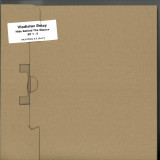
Vladislav Delay's complete "Hide Behind The Silence" series. Intuitive and raw music, momentary and reflective, released on Ripatti's own label Rajaton.
Stillness is a myth. Consider concepts such as ”still water”, or ”still air” for that matter. Go to a restaurant, ask them for a glass of still water, hold it against the light and see where we’re at. Even though the water itself has been captured and imprisoned in the glass, it never stops breathing. It’s filled with tiny particles, dancing. Everything can be explained on a molecular level, but since we’re not scientists – and even if you happen to be – it’s the natural world of perception that moves me.
Still air is very similar. A hot summer’s day with zero wind feels completely still. It’s the closest I have felt to complete stillness. Or for a more urban adaptation, imagine the same vibe inside a normal apartment. In those moments, revelations and mind- blowing experiences can be had with experiments in stillness.
Try this: Just sit down for a minute on a sunny day, making sure there’s enough natural light. Do absolutely nothing. Try not to breathe for a bit. (If you need a mental anchor, you can play Cage’s 4’33” in your head but nothing else.) Watch the tiny dots of dust dancing :..’ ̈.:; ́ ́*°.,’:,. ̈ ̈ ̈ ̈:,.’
The movement is crazy, but the feeling of stillness comes from witnessing how subtle it is. In (perceived) complete stillness, every act of microscopic mobility seems to speak volumes. Yet, it feels both reassuring and oddly threatening that the stillness is never complete. What if we would need absolute stillness? Or is it just enough that we can perceive something as such? Extremes attract, so for both water and air, extraordinary movement is equally fascinating. That is also a luxury item of sorts. For us to enjoy a very ”loud” body of water or air, we need to be safe, in enough control of the situation. So when you are, it’s worthwhile to pay attention and take it all in.
A rapid flowing free with extreme strength and just barely in control. Look at that water go! No still water on this one, only ”sparkling”. A windy day when birds seem surprised how hard it is to fly, but in the end they make it. Trees bend but don’t break. The wind shows you its movement but doesn’t hurt you. It feels friendly, like a big clumsy dog that doesn’t quite understand its size.
It’s beautiful to be a guest of the elements, but not at the mercy of them. A new kind of dialogue forms.
Q&A with Sasu Ripatti:
1) Tell us something about the EP series ”Hide Behind the Silence”, what’s the idea and what can we expect?
Exploration of inaction. Of many kinds. In arts and in personal life, or at bigger and more serious levels. Questioning myself as a human being as well as an artist. Acknowledging the growing activism all around, and the very clear need for it, and how it reflects my own inaction.
Musically speaking, after Rakka, Isoviha and Speed Demon, I finally found some relief, but more importantly lost the need to go musically ever more outward and intensive. I felt quite strongly certain periods/moods from the past and they made me revisit some musical ideas or states of mind I was exploring early on.
It’s about live moments being captured, not much premeditation or editing. More intuitive and raw, even though the end result (to me) feels and sounds quite introspective and calm. It’s not very ambitious. Momentary and reflective.
2) Your music doesn’t sound very silent. Does it come from somewhere behind the silence?
Oh, this time to me it sounds quite quiet and playing with space if not silence. I don’t know what’s actually behind silence, but I think silence is the source of everything. We just don’t understand it yet.
3) What kind of thoughts or experiences gave inspiration to this series?
Writing this in Nov ’22, it’s not a stretch to say the world has been really unwell. Sometimes, like Mika Vainio put it, the world eats you up. I feel a bit like that. And I try to hide in my studio and stay away from it all, but it’s getting harder by the day. I’ve been questioning myself and thinking if what us artists are doing is worth anything, and whether it’s just a selfish thing I’ve been doing for the past 25 years, running away from everything. I haven’t come to a conclusion yet.
4) Is it easy for you to be in silence, or around silence?
Absolutely. I not only hide behind silence but I also love silence. It’s only since I started going back to nature as a grown-up person that I sensed and was enveloped by silence, true silence. I have begun to appreciate it a lot. I think all the people should spend more time in silence.
All tracks composed and produced by Sasu Ripatti.
Artwork by Marc Hohmann, photography by Shinnosuke Yoshimori.
Mastering by Stephan Mathieu for Schwebung Mastering.
Vinyl cut by SST Brueggemann.
Publishing by WARP Music Ltd.
Divino Nino's new album Foam feels like catching up with a lifelong friend. There's undeniable songwriting chemistry between guitarist Camilo Medina and bassist Javier Forero, who met as kids in Bogota, Colombia and years later reconnected by sheer happenstance after their families had both moved to Miami. Both studied at the School of the Art Institute of Chicago where they met guitarist Guillermo Rodriguez and eventually Drummer Pierce Codina. Now Chicagoans, their rhythmic, soulful - and at times bilingual - Latinx punk songs are a reflection of their continent-spanning bond and proof that Divino Nino couldn't have formed without unlikely but happy coincidences.The ten tracks on Foam feature wistfully romantic lyrics like the yearning plea on the title track ("I really wanna run away with you"), and sunny, honeyed arrangements. Songs like "Quiero" trade-off between English and Spanish with woozy guitars and harmonies anchoring the sweetness of the lyrics. The quartet's Latin American roots seep in throughout the LP's silky psychedelic flourishes but especially on single "Maria," which is sung entirely in Spanish. Inspired in equal parts by Argentine punk and the narratives of Mexican telenovelas, the personality-filled track is one of the most memorable on the record.
A Bad Diana is a project from Diana Rogerson, someone I first became aware of aged 12 when I read about Nurse With Wound and their United Dairies label in Smash Hits magazine. I was confused, mystified and intrigued in equal measure, and a couple of years later as a result I bought my first Nurse With Wound album. This led to an interest in all things NWW related. I guess Diana could be described as the matriarch of the Nurse With Wound world but she also had her own very distinguished pre-history with Fistfuck, an early-80s extreme noise outfit. She then made two mid 80s cult classic albums as Chrystal Belle Scrodd, both far out there rollercoaster rides of audio wildness, highly recommended to anyone with wide open ears. She then moved to rural Ireland and raised a family. There was the odd collaboration and then in 2007 A Bad Diana’s “The Lights Are On But No-One’s Home” was released on CD. I feel this is her meisterwerk and it has become something of a cult favourite over the years. Now for the first time, almost two decades later it is available on vinyl on Optimo Music Archiv. Produced in association with Steven Stapleton and Colin Potter from Nurse With Wound and irr. app. (ext.)’s Matt Waldron this is some seriously beautiful and strange listening. Next level sound design means this is an incredible headphone record but it is also a deeply warm and engaging home listening gem. Beautiful, magical, ultra hypno, soulful reverberations with the deep emotion of Diana’s voice tones and bio-vibrations.
Dutch lute player and composer Jozef Van Wissem's new album The Night Dwells in the Day out 19th January 2024. “It's like a part of my body,” says Jozef Van Wissem of the relationship he has to his chosen instrument, the lute. “The complexity of it is what keeps me going because you can always find something new.” The ability to constantly extract something different and explore fresh terrain is evident throughout Van Wissem’s sprawling back catalogue and up to his latest album, ‘The Night Dwells in the Day’. Over the years he’s released countless solo albums stretching into double figures, there’s been collaborations with Jim Jarmusch and Tilda Swinton, award-winning computer game soundtracks, along with award-winning film soundtracks, from Jarmusch’s Only Lovers Left Alive to Pierre Creton’s 2023 film A Prince. Since studying the lute in New York with Patrick O'Brien in the 1990s, Van Wissem has gone on to create works equally as rooted in classical Renaissance and Baroque forms of lute music, as contemporary sounds spanning drones, electronics and field recordings. Throw in some of his formative influences from the no wave and industrial scenes, alongside a dedicated approach to minimalism and this has resulted in Van Wissem producing distinct and singular work whose sound is often a marriage of opposites; meditative and intense, forward thinking but with a sense of the arcane. The Quietus has called him “probably the most famous lutenist in the world”. The genesis for his latest album began during lockdown in Warsaw, where Van Wissem splits his time between Rotterdam. “The Call of the Deathbird” was the first song he wrote from the album and is the first to be shared, along with an accompanying video today. Over a hypnotic yet beautifully fluid and plucked melody - captures scenes of deserted streets, death and the intense isolation that gripped us all. One of the relatively rare tracks that Van Wissem sings on - along with some stirring and enveloping guest vocals from Hilary Woods (who will tour with Van Wissem later this year – details below) - his towering voice circles above the music much like the swooping deathbird he sings of. Normally Van Wissem writes all the music for one album within a confined period but this one song from a few years ago stuck around and took on a new lease of life and so joined a bunch of freshly written songs for the album. While one song written during, and about, the pandemic came to be the album’s centerpiece, the rest of the album grapples with the world as it moved on and all the dualism and dichotomies that followed. “It has to do with darkness and light,” Van Wissem says of the album. “The title can mean different things to people but sometimes people say that if I play a happy piece of music that it still sounds sad. So this is why I came up with that title.”
Almost two years on from his last EP offering, Veerus returns for another double shot of groove-inflected techno power.
The Italian artist has been a stellar contributor to Drumcode since his debut in 2019 with the outstanding ‘Hypnosis’ EP. From the ‘System’, to ‘Recovery’ and his most recent EP offering ‘Yard’ in early 2022, we’ve been given a sense of his deft touch for crafting dramatic techno, that’s equal parts exquisite and dynamic.
His latest work ‘Cycle’ reinforces the passion he imbues each production with. “These two tracks perfectly express my vision of techno nowadays,” he shares. “Not fast, groovy, with researched sounds and a crazy impact on the dancefloor.”
The title track balances tension and release on a knife’s edge, as it builds deliciously via a menacing array of synths, before dropping down into an all-out laser-focused march. A powerful cut that’s been a go-to for Adam Beyer at Awakenings, Loveland and Resistance Ultra in Croatia, among others.
‘It’s Funky’ was two months in the making and bring bags of energy and atmosphere as it explores funky terrain, not in the bottom end, but rather Veerus’ colourful approach to writing melodies. A great track for building excitement throughout a set.
Matthew Herbert and Goldsmiths University's in-house record label NX Records presents the latest in their series of experimental electronic vinyl 12"s.
NX14X showcases the work of two boundary pushing Goldsmiths students: first, UK born and South Africa raised composer Galina Juritz, whose chopped and spliced RnB doused in lush string arrangements enduces a fidgety unease and zero gravity lushness in equal measure.
And second, rising DJ and producer Harry Rodger, with two cuts of organic, summery techno that would sound perfectly at home pumping out of the NTS Radio speakers into a sun-baked Gillett Square.
Sun Ra is better known to most as a musician than a poet, but he identified equally as both. My Words Are Music provides direct access to the sentiments of a poet who never called Earth home. The spoken word album hosts an inspired array of artists who personally chose their favorite Sun Ra poems to recite. Freed from the page, his poetry acquires an unexpected simplicity and poignance it possessed all along.
This all-star and intergenerational lineup of artists conjure wisdom from his words: spoken word elder Abiodun Oweyole of The Last Poets; rapper, and singer-songwriter Saul Williams; jazz experimentalist Melanie Charles; British-Trinidadian poet, novelist and musician Anthony Joseph; poet Mahogany L. Browne; poet, playwright, and conceptual artist Carl Hancock Rux; musician/digital composer L’Rain; singer, actor, and director Tunde Adibempe of TV on the Radio singer; British DJ and BBC radio host Zakia Sewell; ballistic hip-hop poet Jive Poetic; and longtime members of the Sun Ra Arkestra, Marshall Allen, Knoel Scott, and Tara Middleton.
Punctuated by impish electronic interludes composed and played by Marshall Allen, these voices bless Sun Ra’s poetry with new life My Words Are Music offers the opportunity to follow Sun Ra into a
better future. “Prepare for the journey,” he writes in his poem “The Cosmic Age”, “You have a rendezvous / With the living wisdom.” My Words Are Music is a project developed in conjunction with Living Sky, the all-instrumental Sun Ra Arkestra album released on Omni Sound in 2022
This album was originally only released for the Japanese market and is now
available worldwide for the first time.
In the early 1990s, Makoto Kimata repeatedly asked Eugen to record the lullaby
"Berceuse" by the French composer Benjamin Godard (1849-1895) for his
grandson. This is how the 'Lullabies' project started. Since it was not possible to
record in Japan, Eugen Cicero rented the radio studio of the former SWF in Mainz,
Germany.
Here, he recorded twelve lullabies within three days together with Ringo Hirth on
drums and Decebal Badila on bass. It was to become the last studio recording of
his career. However, the 'Lullabies' were only produced for the Japanese market.
Eugen Cicero enjoyed cult status in Japan. The Japanese love jazz and classical
music equally, and do not tend to differentiate, as is the case in Europe, especially
in Germany.
When one speaks of lullabies, jazz enthusiasts immediately think of "Lullaby Of
Birdland" by George Shearing. The classically educated music lover, however, will
have the songs of Brahms, Mozart and Schubert in mind. Well, you may find both
genres combined on this album.
While many people do find their nightly rest with sleeping pills, head phones or
iPhone in hand these days, this music gives you an attractive alternative.
There are two versions of the vinyl - classic black and triple-color limited Indie Shop edition.
Both have special insert inside with the bands bio and photos.
Generacja JAZZ is a project showing a fragment of the new wave of Polish jazz, treading its own path, creating, touring and jamming across Europe. Borders don't exist - especially musical - the new generation is engaging with nightclubs, festivals and playlists. The time has now come to show its broader perspective. We created a project which involves a handful of groups that have already racked up debut albums and festival wins, as they set out on their musical odyssey. The groups also have other things in common, like their passion, originality and, for the needs of the project, age - all the artists during the recording of this album were under 30 years old. This is the new generation - the Jazz Generation.
For the Jazz Generation record we invited five bands who had already released debut albums: Immortal Onion, Klawo, Rejoin, Twoosty Mayonez and USO 9001. We also reserved two spots on the compilation for the winners of our open call competition, whereby on the basis of the jury's choice (jury: Monika Borzym, Paulina Przybysz, Envee, Wojtek Mazolewski i Marcin Groh Grośkiewicz) we met the winning bands: Kosmos and quietet.
The sleeve artist is Kornelia Nowak, who won our open call for young designers and graphic artists. Here once again we could rely on the opinion of a prestigious jury comprised of: Beata Śliwińska Barrakuz, Bovska, Maciej Animisiewasz Grochot, Grzegorz Forin Piwnicki i Marcin Groh Grośkiewicz.
Generacja JAZZ LP is also a start of the new imprint - U JAZZ ME, which will be focused on jazz from Poland.
And here are the bands from the album:
1. Immortal Onion - A band from the Tri-City playing a broad spectrum of instrumental music.
Band members: Wojtek Warmijak (percussion), Tomir Śpiołek (piano, synths), Ziemowit Klimek (Upright Bass, synths).
The band Immortal Onion has already established itself as one of the most interesting projects of the new wave of Polish jazz, and is consistently being labelled as such abroad. After two well received albums ("Ocelot of Salvation" (2017) and"XD Experience Design" (2020) U Know Me Records) they released their third album "Screens" in 2022, which was recorded with the well known Tri-City composer and saxophonist - Michał Jan Ciesielski.
The inspiration behind the band's formation were such artists as: Esbjörn Svensson, Hiromi Uehara, Tigran Hamasyan and Tosin Abasi.
The group's guiding principle from the very beginning was the fusion of often disparate musical styles, which bore "post instrumental aggressive gay pop". Despite the stylistic discrepancies, between which they swim, the group has forged its own identifiable language, characterised by complicated rhythmical structures, energetic riffs and trance beats with lyrical melodies.
The trio has performed its original material at many venues and festivals around Europe and Asia.
2. Klawo - seven adventurous adventurers from Gdańsk, who were brought together by their love for music, halvah and throwing Frisbee. Their self-named début album, released in 2022 on the local label Coastline Northern Cuts, is an amalgam of the inspirations of each of the team members and played backwards contains tips on how to reach the Kashubian pyramids. After a win at the international competition Jazz in the Park, held in Cluj-Napoca in Romania, the band began work on their second album. Meanwhile, they were also travelling the length and breadth of Poland on a mission to infect people with the idea of Baltic Funk.
3. Kosmos is a Łódż based jazz quintet. It was formed in 2020 by Pianist Stanisław Szmigero, Saxophonist Iwo Tylman and Trumpeter Jan Ostalski. However, it wasn't until 2022 that Kosmos found its true form when Kamil Gużniczak (Upright bass) and Kacper Kuta (Percussion) joined the line-up.
Their compositions are influenced by Polish yass bands, electronic music and hip-hop. Kosmos music is a mix of lyricism, space, intensity and elements of experiment.
The band members are all eccentric characters possessing different means of musical expression - looking at them, one could even argue they are a group of oddballs. Despite this, for reasons unbeknownst to themselves, the members of Kosmos complement each other on stage and form a unified artistic vision of the world around them.
Kosmos officially released their début single "Ja" in June 2023. They regularly play concerts across Poland and recently were selected as distinguished artists at JAZZiNSPIRACJE (JAZZiNSPIRATION) - a competition held during the 13th Lublin Jazz Festival.
4. Quietet (formed at the beginning of 2023) is the result of meetings between five talented musicians with a deep passion for musical creation. Its sound is a unique blend of Jazz and classical music with a hint of hard rock. The band is inspired by the Scandinavian approach to making music, which brings a characteristic atmosphere and melodies to their work. Their music captivates listeners with its originality, refined improvisations and flawless technique. Both classical and modern musical trends feed their inspiration when creating passionate and emotional compositions.
Their works are full of sound experimentation, which equally surprise and expose new musical horizons. Through their compositions, "Quietet" aims to share their emotions evoked during performances, creating a musical journey that affects and inspires.
5. Connecting jazz with electronic music in fresh interpretations, six young musicians make up the group Rejoin. The group re-formed in 2020 after a four-year break, playing their debut concert at Lotos Jazz Festival Bielska Zadymka Jazzowa. The musicians in Rejoin have performed alongside such artists as: Urszula Dudziak, Krystyna Prońko, Marcin Masecki, Szczyl, Kuba Więcek and Paulina Przybysz.
Most of the members of Rejoin are students from the Katowice Music Academy, where they also develop their own projects. Rejoin was a recipient of the Fabryki Norblin Music Masterclass Foundation scholarship.
6. Twoosty Mayonez is something your grandad would listen to with his younger sister. The non-standard approach to jazz alongside a pursuit of strange sounds, culminated in the conceptual album entitled "Carmin". The material was created by Bartosz Wolerta (percussion) and Dominik Kaniewski (bass guitar/synths). "Triceradiplodocus" tells the story of a mechanical dinosaur that lives on the yet undiscovered planet Carmin.
LA BUSH TEAM SERIES
Let's dive straight into the heart of the matter: we're discussing a rare and unique series. A series that has made its mark not only on dance floors but also in people's minds. The La Bush Team, as its name implies, is connected to the legendary club LA BUSH and consists of three equally legendary members: Marino Stephano (CM - Dream Universe), Mauro Crisci (Hand's Burn - Good Shot), and Frédéric Dourlens.
This 4-vinyl release, launched in 1999 alongside a CD album (equally rare to find), indelibly etched its place in the history of Belgian Trance. Its collection of hits and a distinctive, instantly recognizable sound left an enduring impact. The vinyl records were an instant sell-out upon release, and in 25 years, they've never been re-released, remaining subjects of speculation.
Now, it's time to bring this series back into the spotlight. In celebration of the 25th anniversary of this iconic release, we've chosen to present you with a collection of the best tracks from the four vinyls of that era, along with exclusive bonus tracks from the CD album never before released on vinyl. All tracks have been remastered for this occasion, making these two samplers an absolute "must-have" for trance connoisseurs and vinyl collectors of all kinds.
You'll rediscover the famous Flanger (Vocal Mix), Renaissance, Backspace, First Day, and many others. Each sampler is a limited edition, so order before it's too late once again.
#40 ON ROLLING STONE'S 500 GREATEST ALBUMS OF ALL TIME: ANTICIPATES LATE 1960S TURBULENCE VIA PROPHETIC SONGS AND DARK THEMES
1/4" / 15 IPS analogue master to DSD 256 to analogue console to lathe
Any discussion about the finest psychedelic rock record ever recorded is incomplete if it doesn't grant consideration to Love's Forever Changes. Ranked by Rolling Stone as the 40th greatest album ever made, and named by Mojo the second-greatest psychedelic set in history, the effort is an internationally recognized seminal work of art. Transcending language and convention, its magnitude and magnificence need to be heard again and again. For here is an effort whose mind-boggling acoustic complexities and kaleidoscopic nuances are tailored for high-fidelity playback.
Nearly unlimited headroom, vast instrumental separation, transparent clarity, artifact-free atmospherics, and faithful balances appear out of jet-black backgrounds. Turn it up as loud as you want; the sole limitation will be your system's potential.
Commercially ignored upon release in November 1967, Forever Changes confronts the alienation, paranoia, violence, and strife that would soon plague the countercultural movement and send the Summer of Love into a tailspin. Apart from its lyrical themes and prescient malaise, the record's enduring nature equally owes to intertwined arrangements sewn together with Latin guitar-picked lines, finessed folk harmonies, mariachi-inspired horn charts, and subdued strings.
The seemingly opposing combination – ominous, dark reflections situated amidst lush, light melodic beds – affords Forever Changes a distinguished tension of claustrophobia and openness, dourness and ecstasy, ugliness and elegance enjoyed by no other record in the rock canon. Much of the contrast owes to leader Arthur Lee's mental state and pertinent observations. Lee, whose suppressed romanticism often surfaces even amidst the blackest shadows and most cynical moments, believed he would soon die, and hence channeled everything from lasting hopes to acid-addled decay to the chilling testimony of a Vietnam veteran in his narratives.
Alternatively sad and beautiful, the album-opening and flamenco-inspired "Alone Again Or" establishes the mood for what follows. Vocals overlap and soar; tempos rise and fall; surrealism trades places with reality.Forever Changes thrives both because of and in spite of a surfeit of labyrinthine chords and difficult notes that never repeat. Its ambitious construction almost forced the already fractured band to cede responsibilities to session musicians, which appear on two tracks. The quintet's resolve to not only complete the album, but to do so with such poignancy and curiosity, further enhances Forever Changes' standing.
No wonder that, in the twilight of his troubled career, Lee performed the record in its entirely during concerts met with overwhelming critical acclaim. It was, and will always be, a personal manifesto of timeless relevance and appeal.
- A1: The Lamb Lies Down On Broadway
- A2: Fly On A Windshield
- A3: Broadway Melody Of 1974
- A4: Cuckoo Cocoon
- B1: In The Cage
- B2: The Grand Parade Of Lifeless Packaging
- C1: Back In N.y.c
- C2: Hairless Heart
- C3: Counting Out Time
- D1: Carpet Crawlers
- D2: The Chamber Of 32 Doors
- E1: Lilywhite Lilith
- E2: The Waiting Room
- E3: Anyway
- F1: Here Comes The Supernatural Anaesthetist
- F2: The Lamia
- F3: Silent Sorrow In Empty Boats
- G1: The Colony Of Slippermen
- A) The Arrival
- B) A Visit To The Doktor
- C) The Raven
- G2: Ravine
- G3: The Light Dies Down On Broadway
- H1: Riding The Scree
- H2: In The Rapids
- H3: It
Analogue Productions (Atlantic 75 Series)
Celebrating the 75th Anniversary of Atlantic Records!
The Lamb Lies Down On Broadway — Genesis' gold-selling sixth studio album!
180-gram 45 RPM 4LP
Mastered directly from the original master tape by Chris Bellman at Bernie Grundman Mastering
Pressed at Quality Record Pressings and RTI
Tip-on old style gatefold double pocket jackets with film lamination by Stoughton Printing
Genesis' sixth studio album was released as a double album in November 1974 by Charisma Records and is the last to feature original frontman Peter Gabriel. The group's longest album to date, The Lamb Lies Down on Broadway peaked at No. 10 on the U.K. Albums Chart and No. 41 on the Billboard 200 in the U.S..
The album is a concept album and tells the surreal story, devised by Gabriel, of a young Puerto Rican named Rael who embarks on a journey through a series of strange and bizarre events in New York City.
Musically, the album is a departure from the band's previous works, incorporating a wide range of styles including progressive rock, art rock, funk, and jazz fusion. The album features complex rhythms, intricate melodies, and dense layers of instrumentation, showcasing the band's virtuosic musicianship.
The album is notable for its use of storytelling, with each track contributing to the larger narrative of Rael's journey. The lyrics are often cryptic and abstract, and the album's surreal imagery has been interpreted in a variety of ways by listeners and critics.
The Lamb Lies Down On Broadway gained acclaim in the years after its release, reaching gold certification for sales in the U.K. and U.S.. In 1978, Nick Kent wrote for NME that it "had a compelling appeal that often transcended the hoary weightiness of the mammoth concept that held the equally mammoth four sides of vinyl together." In a special edition of Q and Mojo magazines titled Pink Floyd & The Story of Prog Rock, The Lamb ranked at No. 14 in its 40 Cosmic Rock Albums list. The album came third in a list of the 10 best concept albums by Uncut magazine, where it was described as an "impressionistic, intense album" and "pure theatre (in a good way) and still Gabriel's best work." A Rolling Stone poll to rank readers' favourite progressive rock albums of all time placed The Lamb fifth in the list.
The Lamb Lies Down On Broadway is widely regarded as one of Genesis's most important and influential works, inspiring generations of progressive rock musicians.
James Ray kickstarted his career as a teenager in 1959 after he left Washington DC for New York, but debut single ‘Make Her Mine’ flopped. Two years later, songwriter Rudy Clark discovered Ray and got him signed to the Caprice label, the resultant ‘If You Gotta Make A Fool Of Somebody’ a top-30 hit that the Beatles covered in early live sets. Ray’s self-titled debut album had that hit and the equally appealing follow-up, ‘Itty Bitty Pieces,’ as well as ‘I’ve Got My Mind Set On You,’ later successfully covered by George Harrison. An overdose would tragically cut short Ray’s career, this sole LP a testament to his enduring talent.
- Maximum Respect
- Promise To Be True
- Murder In The Dancehall
- The First One To Start
- In The Heart Of The City
- Me Nah Leggo
- Brother Don't Give Up
- No One Is To Blame
- She Is Not My Kind
- My Heart Is Bleeding
A bona fide legend from the ghettos of western Kingston, Gregory Isaacs was a true reggae original whose voice is one of the greatest of the idiom. His ballads made him a favourite with the ladies, but Gregory addressed social issues with equal conviction, and tales of rude boy life were sung firsthand. Maximum Respect is a digital killer from the early 1990s, cut for the pioneering sound system owner Count Shelley, the durable rhythms provided by Steelie and Clevie and the Firehouse Crew. With love ballads, reality tunes and songs praising the dancehall, Gregory covers all the bases and more. This is a must for all true Gregory fans!
In 2006, THE DRAFT was formed by Hot Water Music members Jason Black, George Rebelo, and Chris Wollard shortly after singer/guitarist Chuck Ragan's departure. The three remaining members of the band wanted to continue making music together but chose not to continue under the Hot Water Music name, opting for a fresh start instead. The initial writing and demo sessions included the legendary punk rock guitarist Brian Baker (known for Minor Threat, Dag Nasty, Bad Religion). However, due to conflicting schedules, Baker couldn't commit as a full-time member, leading fellow Florida resident and former Discount member Todd Rockhill to join the band. After releasing their debut album "In a Million Pieces" (produced by the esteemed Brian McTernan) on Epitaph Records in 2006, the band embarked on extensive tours with acts like Samiam, The Gaslight Anthem, and Paint It Black. They also released several singles on the renowned No Idea Label before disbanding in 2008. With both "In a Million Pieces" and all 7" records being out of print for years, THE DRAFT has now teamed up with End Hits Records and Equal Vision Records to release a deluxe vinyl version on double vinyl. For the first time, you can find every track ever recorded by THE DRAFT: Included are the twelve album tracks, six songs featured on three 7" records, two unreleased demo versions, as well as four songs recorded during a radio session in the UK that have never been released before. Not only were all songs remastered specifically for vinyl by Brian McTernan, and detailed liner notes have been added to tell the band's history from beginning to end, but the packaging has also been completely overhauled. A special feature for collectors: the European and American versions come in different gatefold covers, which together form a complete work of art.
- A1: I (Intro)
- A2: Me At The Zoo (Feat Abase)
- A3: Mixed Signals (Feat Ndo)
- A4: Love International Inc (Feat Bluestaeb & Melodiesinfonie)
- A5: Backseats Cheat
- A6: Ii - James' Joint
- A7: Something Good
- A8: Iii - Yagi Uda
- B1: Presumably Broccoli (Feat Suff Dadd)
- B2: Temptations
- B3: Iv - Trippin' (Feat K & Le Maestro)
- B4: Higher (Feat Abase & Saint Ezekiel)
- B5: Members Only
- B6: V - Extra Dobro (Feat Noa Erni)
- B7: Tiara St (Feat Aspene, K, Le Maestro & Zae)
2023 Reissue
Berlin based HipHop producer S. Fidelity presents his sophomore and full packaged concept album “Fidelity Radio Club” via Jakarta Records.
Four years after his Jakarta Records debut “A Safe Place to Be Naked” S. Fidelity has matured as a producer and as an artist: working and recording in London, Los Angeles, Paris and Johannesburg while building up his Manolo Purple Studios in Berlin with longtime collaborator, labelmate and soul brother Bluestaeb.
In 2021 S. Fidelity finally returns to the main program with his brand new solo album “Fidelity Radio Club” shaped in form of a genre crossing radio show exploring HipHop, R&B, Jazz, House and Funk in all their depths, creating the multi-layered album he always dreamt to do as he orchestrates a stoking line-up of equally talented friends and fellows like Bluestaeb, Melodiesinfonie, Suff Daddy, K, Le Maestro, Àbáse and many more while still delivering that very personal note every classic producer album needs and comes with. Or as the artist himself would put it: “17 different artists, producers and instrumentalists from all over the world helped me to bring this vision to life.”
According to that the albums 1st single features Singer NDO from Florida, giving life to the hard hitting R&B gem “Mixed Signals” where warm neo soul harmonies meet with classic R&B vibes of early 2000. The song made it to Spotify’s Butter Playlist right away and was picked for Deezer’s “Date Night” Playlist and Apple Music’s New Music Daily as well and received shout outs and further Playlist-placements by music blogs like Stereofox or MOW Mag.
The 2nd single comes as a double single featuring pianist, producer and main protagonist of Berlin’s prog-jazz scene Àbáse on “Me At The Zoo” (reminding its listeners of London’s new wave of jazz around Kamaal Williams or Yussef Dayes) on one side and the energetic, funk influenced disco tune “Something Good” on the other side.
The 3rd and final single “Love International Inc.” then comes with a bumpy up tempo drum beat, which develops into an energetic and jazzy lo-fi house/deep house loop, featuring none other than Zürich’s finest Melodiesinfonie as well as Paris-based Bluestaeb, marking this supergroup’s 2nd appearance and giving a glimpse of what’s yet to come.
Each of the album’s single cuts comes with a visual treatment by HipHop’s favorite photographer Robert Winter and his team (The Ottos), matching sound and artwork accordingly while the record’s amazing and unique artwork comes from the Swiss based creative studio HOMI. The record itself contains a sticker sheet with customized S. Fidelity and “Fidelity Radio Club” stickers as well.
The whole album campaign is further accompanied by the Fidelity Radio Show hosted by S. Fidelity himself, sitting down with his featured guests talking about the music they love and they draw inspiration from – broadcasted via S. Fidelity’s own youtube channel releasing its episodes in between the album’s single drops.
Seven Steps to Heaven arrived at a crucial junction in Miles Davis' career. Recorded at two separate locations in spring 1963, it served as Davis' first release in more than a year – a layoff that was then unprecedented for the jazz visionary who had issued at least one LP a year since debuting in the early '50s. Equally notable, Seven Steps to Heaven marks the point at which the core of Davis' Second Great Quintet started to assemble. The twice Grammy-nominated effort is also Davis' final studio record to blend standards with originals. And it happens to be one of the expressive, well-played albums in the jazz canon.
Sourced from the original master tapes, pressed at RTI, and housed in a Stoughton gatefold jacket, Mobile Fidelity's 180g SuperVinyl LP of Seven Steps to Heaven adds yet another step (or more) towards the bliss suggested by the album title. Playing with standout clarity, detail, tone, and balance, this audiophile reissue pulls back the curtain on the instrumentalists. Afforded the tremendous advantages of SuperVinyl – including a nearly inaudible noise floor, dead-quiet surfaces, and superb groove definition – this numbered-edition version presents Davis and Co. amid a wide, deep soundstage whose dimensions and solidity help bring the record's historical importance and musical merit into focus. Warm, organic, and present, the SuperVinyl LP of Seven Steps to Heaven is what great-sounding hi-fi is all about.
And there's nary a passage on this 1963 landmark that isn't great. That Davis manages to make it feel so cohesive and seamless is a testament to the inspired performances and engaging compositions. Davis didn't draw it up the way it unfolded. No matter. He held trump cards that stayed up his sleeve for the next three decades: A drive to be nothing less than superb, a refusal to settle for mediocrity, and standards to which nearly no other composer or player could match. "The toughest critic I got, and the only one I worry about, is myself," Davis wrote in the liner notes. "The music has to get past me."
Davis' demanding approach partly explains why he switched up his band between the first and second sessions – and underscores how fast his mind was racing with new ideas. Seven Steps to Heaven acts as the stable bridge between the transitional period that followed the dissolution of his First Great Quintet and formation of the Second; without it, Davis perhaps doesn't invite then-23-year-old Herbie Hancock and a still-teenage Tony Williams into the fold. The trumpeter not only got his men – he preserved in amber for the only time (well, magnetic tape anyway) the chemistry and vibe he achieved with pianist Victor Feldman, drummer Frank Butler, tenor saxophonist George Coleman, and bassist Ron Carter.
That line-up gels for half of the six songs on Seven Steps to Heaven. Captured in Los Angeles April '63, the quintet stretches out on a luxurious reading of the late '20s New Orleans staple "Basin Street Blues"; lays on the romance for a candlelit stroll through the '40s standard "I Fall in Love Too Easily"; and explores the rounded contours and melodic crevices of the early blues "Baby Won't You Please Come Home." The performances are refined, elegant, emotional; the band lets the feelings linger and gives the listener time to absorb the colours and textures.
A month later, Davis returned to New York City with Coleman and Carter, and partnered them with Hancock and Williams. Tellingly, the quintet tried its collective hand at the title track and "Joshua" – Feldman-penned songs already recorded in Los Angeles – as well as the yearning "So Near, So Far." Those are the tunes that comprise the other piece of Seven Steps to Heaven, with the revised quintet's liquid pulse, articulate dynamics, and timing shifts a harbinger of things to come.
It's also worth mentioning that the interpretations of the bounding "Seven Steps to Heaven" – a showcase for Davis' trumpet – and interlocking "Joshua" netted considerable radio airplay and attracted the attention of other contemporaries who covered the songs. Keeping Carter and Williams as the rhythmic engine, and Hancock as the anchor between solo flights and structural motifs, Davis would soon soon welcome Wayne Shorter into the family and transform jazz. Again. The aptly – and, in hindsight, perhaps prophetically titled Seven Steps to Heaven – is how he got there.