Disponible
En el almacen y preparando para el envío
Ültimo hace: 5 Meses
28,99 €
En el almacen y preparando para el envío
In 2016, with the blessing of David Lynch and Angelo Badalamenti, Xiu Xiu released and toured the surprisingly successful album and concert, Plays the Music of Twin Peaks. Out of respect and deference to the beloved series, the band decided to put the concert to rest in 2018. After the recent and untimely passing of David Lynch, Xiu Xiu began to receive several high-profile requests to revive their interpretation of this iconic music. However, in wanting to always try to follow, honor, and continue to be inspired by the incredibly high bar of artistic challenge set by Lynch, Xiu Xiu is instead going deeper. Eraserhead Xiu Xiu is a new live concert with an accompanying film and full-length album that uses field recordings, concert-specific homemade instruments, organ, modular synths, vocals, flashlights, electrical interference, and elements of musique concrète to express the bizarre emotionality, conflicted sexuality, relentless darkness, and singularly unsettled moonscape of this most incredible of midnight masterpieces. The album itself is a masterpiece in sound collage and experimentation, with tracks like “Tetra” and “Sleep Synth” shifting from minimal auditory sensations to a clobbering, grotesque cacophony. The album’s closing track, “In Heaven,” is a beautiful rendition of Peter Ivers’ original composition, with Stewart’s delicate and soft vocals showcasing the elegance and wonder found in Lynch’s directorial debut, Eraserhead. Eraserhead’s original sound design and score by Alan Splet and Lynch guide Xiu Xiu’s expanded interpretation, reflecting their influence as fans and musicians. The original film gives birth to Xiu Xiu’s visual lens, through which audiences are baffled and pummeled by the band’s imaginary unused auxiliary footage.
Is it a short-term art installation, an exploded tribute to a cinematic triumph, an epitaph to an idol via an entirely new work? Yes. Is it intense, odd, curious, and shrouded in the gloomiest of nights? Of course. After all, it is Eraserhead.
debe ser publicado en 17.07.2026

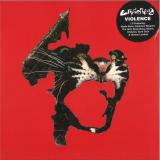
Longtime friend of the label Eraserhead returns after over a decade away from producing music due to his surreal MS Paint work as 'Jim'll Paint It' becoming an unexpected cultural phenomenon. With his debut full-length, 'Violence', Eraserhead presents a truly eclectic electronic LP featuring collaborations with established producers such as Om Unit, Enduser, and Brain Rays, as well as the vocal talents of Nadia Rose, Beans (of Antipop Consortium), and Cadence Weapon. An album held together by theme and tone rather than style or tempo, 'Violence' is the culmination of a bitter wave of inspiration, initially conceived in the wake of a personal tragedy that quickly grew into a broader polemic about the state of the world.
Originally linking up with Love Love in its breakcore netlabel infancy with his refined, breaks-heavy breakcore/gabba, Eraserhead's flair for tight, intricate productions was evident in his finely tuned tracks of controlled chaos. This time around, his work is a darker, more expansive evolution of his sound, with the scale upsized and the stylistic scope massively broadened, remaining unfaithful to any single genre, but with firm nods to Breakcore, Grime, Drum & Bass, Techno, Rave, Dubstep, and Footwork, all chewed up with a hard industrial edge and cinematically framed by a backdrop of apocalyptic synths.
Opening with the cold tech-noir of 'Shining Brainless Beacon' to set the tone, the album quickly locks in with the blistering spoken-word headrush of 'Hurricane With Teeth' alongside rapper Beans, before Om Unit lends his expertise on the sharp groove and clinical bass blasts of 'Operation Hardtack'. The album shifts and morphs constantly throughout the runtime, moving from the raw and urgent acid techno of 'Crowd Control' to the crunching military march of the Gore Tech collaboration 'No More Worlds' and the tribal sci-fi footwork of the Brain Rays collaboration 'Night Visions'. 'Monolith' provides a final burst of catharsis, channelling Underworld by way of Nine Inch Nails, complete with writhing screams from Amée Chanter of sludge-punk-noise-rock duo Human Leather, before the heart of the album is laid bare with the painfully bleak closing dirge of 'Animal'. In its final moments, 'Violence' leaves the listener suspended between devastation and awe - an unflinching portrait of an uncaring world.
Haga su pedido ahora y le encargaremos el artículo en nuestro proveedor.

Longtime friend of the label Eraserhead returns after over a decade away from producing music due to his surreal MS Paint work as 'Jim'll Paint It' becoming an unexpected cultural phenomenon. With his debut full-length, 'Violence', Eraserhead presents a truly eclectic electronic LP featuring collaborations with established producers such as Om Unit, Enduser, and Brain Rays, as well as the vocal talents of Nadia Rose, Beans (of Antipop Consortium), and Cadence Weapon. An album held together by theme and tone rather than style or tempo, 'Violence' is the culmination of a bitter wave of inspiration, initially conceived in the wake of a personal tragedy that quickly grew into a broader polemic about the state of the world.
Originally linking up with Love Love in its breakcore netlabel infancy with his refined, breaks-heavy breakcore/gabba, Eraserhead's flair for tight, intricate productions was evident in his finely tuned tracks of controlled chaos. This time around, his work is a darker, more expansive evolution of his sound, with the scale upsized and the stylistic scope massively broadened, remaining unfaithful to any single genre, but with firm nods to Breakcore, Grime, Drum & Bass, Techno, Rave, Dubstep, and Footwork, all chewed up with a hard industrial edge and cinematically framed by a backdrop of apocalyptic synths.
Opening with the cold tech-noir of 'Shining Brainless Beacon' to set the tone, the album quickly locks in with the blistering spoken-word headrush of 'Hurricane With Teeth' alongside rapper Beans, before Om Unit lends his expertise on the sharp groove and clinical bass blasts of 'Operation Hardtack'. The album shifts and morphs constantly throughout the runtime, moving from the raw and urgent acid techno of 'Crowd Control' to the crunching military march of the Gore Tech collaboration 'No More Worlds' and the tribal sci-fi footwork of the Brain Rays collaboration 'Night Visions'. 'Monolith' provides a final burst of catharsis, channelling Underworld by way of Nine Inch Nails, complete with writhing screams from Amée Chanter of sludge-punk-noise-rock duo Human Leather, before the heart of the album is laid bare with the painfully bleak closing dirge of 'Animal'. In its final moments, 'Violence' leaves the listener suspended between devastation and awe - an unflinching portrait of an uncaring world.
debe ser publicado en 03.04.2026

Cindy Lee is the diva alter-ego of singer / guitarist / drag queen Patrick Flegel, the one-time captain of heralded Canadian experimental guitar pop act, Women. In Flegel's working on / as Cindy Lee exclusively over recent years, their songwriting makes a move toward high atmospherics, often achieving a mysterious sweetness rooted equally in beauty and ache.
As Cindy Lee's first long-form statement, Act Of Tenderness makes use of antipodal themes to create a living sound: static with grace, distortion and sugar, all masterfully arranged with crooked nods toward pop classicism. The layered vocal on "Power And Possession" creates a palpable haunt, bringing historical girl-group lament to choir-esque heights. The feedback shriek and industrial grind of "Bonsai Garden" provides near-operatic damage, yet never stumbles into the irrevocably grave. These snowy pieces give the album a decidedly cinematic feel, albeit one bent more towards Eraserhead.
Originally released in a scant private edition in 2015, Superior Viaduct's imprint W.25TH is pleased to give Act Of Tenderness its deserving wide release.
debe ser publicado en 31.10.2025

Flat Duo Jets: White Trees 2024 Remaster Fronted by the late Dex Romweber. The duo’s fourth album was the first album of all original material. Produced by Caleb Southern, White Trees is a Jets’ masterpiece that proved that Romweber could diversify his band’s material without losing his recklessness and urgency.
Dex passed away earlier this year on February 16th and this reissue is dedicated to his memory and legacy. Jack White from the White Stripes has called Dex and the Flat Duo Jets a major influence when starting out. White declared that seeing the Jets for the first time “opened up a whole new inspiration for me about the guitar.” And he was downright effusive in the 2006 cult-classic Romweber documentary ""Two Headed Cow"", calling Romweber “a huge influence on my music… one of the best-kept secrets of the rock & roll underground.” In 2009, White recorded a seven-inch with Romweber, and in 2011 he reissued the Jets’ long-out-of-print 1991 album Go Go Harlem Baby on his Third Man Records imprint.
“[White Trees] by North Carolina’s Jets is a tarnished neo-rockabilly gem. Dexter Romweber’s battered honk is the perfect voice to wrap around these twisted tales about Charlie Dick (Patsy Cline’s hubby), UFOs, and dining with Van Gogh. It’s as if the ”Eraserhead” soundtrack were recorded at Sun Studios and sent to Weekly World News for editing.”- Entertainment Weekly Arguably the busy Duo’s most accomplished set, ‘93s handily diversified White Trees jumbled stylistically antiquated originals in a cohesively dignified manner. -Beermelodies"
debe ser publicado en 22.11.2024

SANZ sind zurück! Nach dem Debütalbum „Let Us Die“ von 2022, welches ein Jahr später als Rock-Edition „We Are Lost“ neu aufgelegt wurde, sowie
ausgedehnten Touren mit Szenegrößen wie u.a. MONO INC. und Hell Boulevard, läutet die Band um Frontmann Sandro Geissler nun endgültig die
nächste Ära ein.
Das neue Album „Ending Things“, welches am 04.10.24 erscheint, entwickelt den Modern Dark Rock Sound des Vorgängers konsequent weiter und
etabliert SANZ eindrucksvoll als neue Hoffnung am Szenehimmel.
debe ser publicado en 04.10.2024

Black Truffle is thrilled to announce a major archival release from legendary American composer and live electronics innovator Richard Teitelbaum, centred around his soundtrack for Suzan Pitt’s cult 1978 animation Asparagus. Best known to some listeners for introducing Europe to the Moog synthesizer as a founding member of Musica Elettronica Viva in Rome, Teitelbaum’s extensive and radically experimental body of work includes collaborative recordings with master improvisers like Anthony Braxton, Andrew Cyrille and George Lewis, intercultural experiments combining electronics with non-Western instruments such as the shakuhachi, works for computer controlled piano, and large-scale multi-media operas. Recorded at York University, Toronto in 1975–1976, ‘Asparagus (European Version)’ sprawls across both sides of the first LP. Discovered by composer Matt Sargent in Teitelbaum’s tape archive, this is a previously unheard major work for Moog modular and Polymoog synthesizers, unique in Teitelbaum’s oeuvre for its lushness and gently melodic quality. The music unfolds slowly, submerging lyrical melodies and burbling arpeggios into uneasy, glacially shifting harmonic swells, the luscious texture thickened with subtle changes of modulation and phase, calling up the shifting layers of Costin Miereanu’s classic Derives or the kosmische Musik tradition more than any academic synthesizer exercise. Teitelbaum incorporated much of this material into his soundtrack for Suzan Pitt’s Asparagus, which receives its first official release here. Asparagus, famously paired with David Lynch’s Eraserhead for a two-year run of midnight screenings at New York’s Waverly Theatre, uses hand-drawn and stop animation to unfurl an oneiric succession of images, beginning with a sequence in which the female protagonist defecates two stalks of asparagus, which multiply and float out of the toilet bowl to form the letters of the title. Teitelbaum’s soundtrack interweaves delicate drifting tones from the ‘European Version’ with contributions from Steve Lacy and Steve Potts on saxophones, George Lewis on trombone and Takehisa Kosugi on violin. Edited closely to the film, even without images the soundtrack proposes a surreal journey through floating synth tones, squealing horns, propulsive arpeggios, distant chatter, and an old-timey waltz. The final side of the set presents a new realisation of Teitelbaum’s text score ‘Threshold Music’, performed at a memorial concert at Roulette, New York in 2022 by Leila Bourreuil (cello), Alvin Curran (sampler and objects), Daniel Fishkin (daxophone), Miguel Frasconi (glass objects) and Matt Sargent (lap steel). The piece asks musicians to match their instrumental volume to that of the sounds of the environment in which they play, sometimes with the addition of recorded environmental sounds, reinforcing frequencies they encounter in listening deeply to their surroundings. Here the players use a field recording taken at Teitelbaum’s home in Bearsville, New York, their long tones and shimmering, glassy textures delicately emerging from the white noise of the location recording. Released with the full approval of both Richard Teitelbaum and Suzan Pitt’s estates, Asparagus is illustrated with striking images from Pitt’s film and accompanied by detailed liner notes by Francis Plagne. These previously unheard pieces shed new light on the work of a key composer in the American experimental tradition, offering up some of Teitelbaum’s most beautiful and engaging music.
Haga su pedido ahora y le encargaremos el artículo en nuestro proveedor.

Puce Moment is part of the French contemporary music scene. Their music is climatic, often inhabited by a strong emotional power. A procession of harmonic structures organized in a ritual way, sometimes close to trance. It can be written or improvised, vocal or instrumental. The electronic and electroacoustic arrangements summon new spaces and abstract landscapes, which can go from the purest sound to the most raw distortions. Vast, slower, deeper - distant echoes of half-faded things - and when we are lost, voices appear. Voices whose only reference would be the timeless SeeFeel.
Nicolas Devos and Pénélope Michel are visual and sound artists, one trained at the Beaux-Arts and the Fresnoy studio national des arts contemporains and the other a classically trained cellist, singer and multiinstrumentalist. They created Puce Moment, envisaged as a sound research laboratory open to experimentation, to multi-disciplinary encounters and to decompartmentalization. Their work is akin to a fictional ethnology expressed through protean projects and mutant visual, sound and musical creations.
»Epic Ellipses« is their 4th album.
They have composed the original soundtracks of more than a dozen dance performance, fiction or documentary films, virtual reality in variable formats (Christian Rizzo, Mylène Benoit, Vania Vaneau, Benjamin Nuel, Laurent Pernot, Carolina Gonçalves). Or in the form of film-concerts including David Lynch's cult film 'Eraserhead' with which they have toured intensively since 2012 in France and Europe, and since 2019 »Koyaanisqatsi«, the cult experimental documentary by Godfrey Reggio.
debe ser publicado en 28.04.2023

In the late 90’s and early aughts, internet video capabilities like Real Video and Quicktime were expanding, proving the early prophecy that ‘anyone would be able to have their own television channel on the internet’ was indeed coming true. After the critical success of Mulholland Drive, director David Lynch doubled down on the medium, funneling virtually all of his time into personally animating, filming, and scoring content for his own internet destination: davidlynch.cm. It was fertile and limitless ground for a creative like Lynch, allowing him to return to the days of his experimental film roots, where it was actually possible for him to have his hands on every element of the process.
It was out of this newfound digital freedom that the early seeds of Inland Empire were born, evolving and fissuring from an internet-bound experiment itself, into something much more expansive. The film collated a variety of ideas and working methods that the recent web paradigm had nurtured in Lynch, one of which was an increased frequency of his own solo music productions. Having finished constructing his own personal recording studio in 1998, he was no longer tethered to the scheduling and high premiums of rented studio time and was free to accelerate his musical experimentation without constraint. As a direct result of this was a unique shift in Lynch’s musical trajectory; a shift that would eventually bear multiple albums and a short film featuring a lounge-crooning monkey. In the first weeks of 2005, Lynch would record a blues instrumental and instead of getting someone else to sing on the song, he would sing, via a formant and pitch-altering piece of equipment known as the Boss VT-1. It was because of the davidlynch animated series “Dumbland” that the director had discovered the device that would enable him to be ‘any character he needed.’ With “Ghost of Love,” Lynch was experimenting with bringing those ‘characters’ into his own musical compositions. Intrue Lynch fashion, it’s difficult to know which inspired which: did “Ghost of Love” birth a scene in Inland Empire, or did the film’s ideas birth the song? Just as “In Heaven” had served to encapsulate Eraserhead, “Ghost of Love” managed to encapsulate Inland Empire allowing its listener to close their eyes and immediately channel the film’s images and mood onto the screen of the mind.
“Ghost of Love” is backed with “Imaginary Girl,” originally released via CD single in 2006 are now finally seeing their vinyl and digital release for the first time in celebration of Inland Empire’s 2022 theatrical re-release. Both are signature cinematic Lynchian classics that feature Lynch on guitar and vocals, accompanied by his long-time collaborator and Sacred Bones staple Dean Hurley on bass.
Haga su pedido ahora y le encargaremos el artículo en nuestro proveedor.

Cindytalk is the mercurial, expressionist outlet of Scottish artist Cinder. An evolution of her early 1980's Edinburgh-based punk band The Freeze, she launched the project upon moving to London, inspired by the crossroads of exploratory UK post-punk and early European industrial. Her work thrives on chance and transformation, collaging elements of noise, balladry, soundtrack, catharsis, and improvisation. After a series of celebrated albums for the Midnight Music label as well as collaborations with This Mortal Coil and Cocteau Twins, Cinder migrated to the United States, becoming involved with various underground techno collectives around the Midwest and West Coast. Subsequent relocations to Hong Kong and Japan further expanded Cindytalk's horizons, resulting in a fruitful partnership with Viennese experimental institution Editions Mego, for whom she released five full-lengths of swooning, granular atmosphere. 2021 finds her as engaged as ever, at the precipice of long-awaited back catalog reissues alongside multiple new works, guided by her lasting love of discovery and deviation: “new pathways always being uncovered.”
The 3rd album by Scottish industrial enigma Cinder aka Cindytalk began life as the soundtrack to an experimental film by English director Ivan Unnwin entitled Eclipse (The Amateur Enthusiast's Guide To Virus Deployment), and was originally slated for release via Factory Records' video division, Ikon. Inspired heavily by Alan Splet's eerily disembodied sound design in David Lynch's Eraserhead, the collection's 15 pieces seethe between field recordings, wistful piano vignettes, and lurking metallic haze – a hybrid palette Cinder characterized at the time as “ambi-dustrial.” Unfortunately Ikon collapsed on the eve of the project's completion so the film was never distributed, but the Midnight Music imprint repackaged Cindytalk's score as an LP in 1990 under the name The Wind Is Strong... (full title: The Wind Is Strong - A Sparrow Dances, Piercing Holes in Our Sky).
debe ser publicado en 30.07.2021
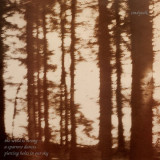
Cindytalk is the mercurial, expressionist outlet of Scottish artist Cinder. An evolution of her early 1980's Edinburgh-based punk band The Freeze, she launched the project upon moving to London, inspired by the crossroads of exploratory UK post-punk and early European industrial. Her work thrives on chance and transformation, collaging elements of noise, balladry, soundtrack, catharsis, and improvisation. After a series of celebrated albums for the Midnight Music label as well as collaborations with This Mortal Coil and Cocteau Twins, Cinder migrated to the United States, becoming involved with various underground techno collectives around the Midwest and West Coast. Subsequent relocations to Hong Kong and Japan further expanded Cindytalk's horizons, resulting in a fruitful partnership with Viennese experimental institution Editions Mego, for whom she released five full-lengths of swooning, granular atmosphere. 2021 finds her as engaged as ever, at the precipice of long-awaited back catalog reissues alongside multiple new works, guided by her lasting love of discovery and deviation: “new pathways always being uncovered.”
The 3rd album by Scottish industrial enigma Cinder aka Cindytalk began life as the soundtrack to an experimental film by English director Ivan Unnwin entitled Eclipse (The Amateur Enthusiast's Guide To Virus Deployment), and was originally slated for release via Factory Records' video division, Ikon. Inspired heavily by Alan Splet's eerily disembodied sound design in David Lynch's Eraserhead, the collection's 15 pieces seethe between field recordings, wistful piano vignettes, and lurking metallic haze – a hybrid palette Cinder characterized at the time as “ambi-dustrial.” Unfortunately Ikon collapsed on the eve of the project's completion so the film was never distributed, but the Midnight Music imprint repackaged Cindytalk's score as an LP in 1990 under the name The Wind Is Strong... (full title: The Wind Is Strong - A Sparrow Dances, Piercing Holes in Our Sky).
debe ser publicado en 30.07.2021

