Zak Olsen, the creative force behind the guitar riffs of Australian doom psych band Orb, is set to release his highly
anticipated solo album, Ghost Notes, under his Traffik Island moniker. 12 Esoteric Instrumentals for Ethereal Beings
feels like going on an acid trip through a haunted house, where folk melodies merge seamlessly with jazz rhythms and
psychedelic textures. Creating freakout moments such as the track ‘Pandemoniom!’ featuring Kenny Ambrose-Smith of
King Gizzard and haunting folk horror moments on ‘winds’ Fans of esoteric instrumentals and spooky soundscapes alike
will find much to love in this haunting collection. Frank Maston of Maston captures the essence of Ghost Notes perfectly:
“Olsen has created a monster - channeling Joe Meek, Goblin, and Broadcast in this cursed disc of groovy fugues. Traffik
Island may be alive and well in these tracks, delivering premium melodies with ease, but the undead certainly had their
say. Mixing terrifyingly sick beats with warped organs, sinister synths, and spooky found sounds, this is the horror movie
soundtrack we deserve. An instant Halloween classic.”
quête:eso es
Heiko Maile und Julian Demarre, vertraut mit dem Schreiben von Popsongs und Filmmusik, arbeiten seit dem Album-Klassiker "MEANWHILE" von Camouflage Mitte der 90er Jahre zusammen. Während Heiko seine Arbeit am perfekten Popsong kontinuierlich weiterführte, kam es bei Julian und Heiko unabhängig voneinander zu ersten Engagements im Bereich Filmmusik. Seit die beiden begannen, auch gemeinsam an Spielfilmen zu arbeiten, wuchs in ihnen stetig das Bedürfnis, eine Liebeserklärung an die elektronische Musik der 70er und 80er Jahre zu schreiben. Mit manch esoterischen japanischen Keyboards aus den 70er Jahren, die für den Klang von morgen entwickelt wurden, entstand so ein Werk für alle Tage danach - das genreübergreifende Album NEOSTALGIA, eine einzigartige und facettenreiche Mischung elektronischer Stile, verbunden mit einer Prise Krautrock. So finden sich dann auch auf so manchen Stücken Intros/Outros, Flöten, Flanger-Gitarren oder Vocoder, und sogar solche, die die Sechs-Minuten-Marke spielend erreichen.
ercury Rev take you on a swan dive into the mystic: a rapture of ballad-dreams and emotional memoir at the crossroads of The Dharma Bums, Pet Sounds and Side Three of Electric Ladyland. A profound, transcendant trip from the psychedelic explorers who brought you Deserter's Songs.
David Fricke In upstate New York, deep in the seam between the Catskills mountains and the Hudson Valley, a richly swelling, spellbound sound emerges, eddying and flowing like the local Esopus Creek, or in the slipstream of the grander Hudson river, carrying the flotsam and jetsam of our hopes, dreams, fears. A sound composed of organic and electronic; guitars, keys, brass, strings, woodwind, drums - and a voice of incantations, tapping streams of consciousness that similarly eddy and flow.
Spiritually, literally, psycho-geographically: where else does Mercury Rev’s ninth album Born Horses spring from? This cascade of gleaming, glistening psych-jazz-folk-baroque-ambient quest that searches its soul but can never truly know the answer? A sound and vision linked to their exalted past whilst quite unlike anything they have created before?
The answer is somewhere between the homes of founder members Jonathan Donahue (the hamlet of Mt Tremper) and Grasshopper (the town of Kingston), in their veins and brains of their now-legendary tapping of musical cosmology, and the vital presence of new permanent member Marion Genser (keys), plus long-term ally Jesse Chandler (keys) and guests Jeff Lipstein (drums), Martin Keith (double bass) and Jim Burgess (trumpet). A place that feeds off the levitating mood of their last album, 2019’s expansive tribute Bobbie Gentry's The Delta Sweete Revisited, and the instrumental psych explorations under the names of Harmony Rockets and Mercury Rev’s Clear Light Ensemble, and the spiritual guidance of avant-garde artist Tony Conrad and Beat poet Robert Creeley, to whom Born Horses is
dedicated.
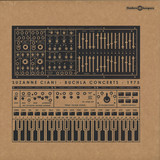
The very first Buchla synthesiser performance by revolutionary composer Suzanne Ciani finally makes its fifty year journey from its switch-on New York art gallery to its long deserved and discerning global phonographic audience.
With this previously unheard vinyl pressing, Finders Keepers Records are proud to present an archival project of ‘art music’ that not only redefines musical history but lays genuine claim to the overused buzzwords such as pioneering, maverick, experimental, groundbreaking and esoteric, while questioning social politics and the evolution of music technology as we have come to understand it. To describe Italian-American composer Suzanne Ciani’s resurrected Buchla concert records as genuine gamechangers would be a gross understatement. These records represent a musical revolution, an artistic revelation, a scientific benchmark and a trophy in the cabinet of counterculture creativity. This sonic installation album, alongside her recently liberated WBAI/Phill Niblock 1975 sessions (FKR082), are triumphant yardsticks in the synthesiser space race and the untold story of the first woman on the proverbial musical moon. While pondering the early accolades attached to these golden era New York recordings it’s daunting to learn that these records were in fact not even records at all.
What exists on this disc now was a manifesto and a one-time gateway to a new world, which somehow was only partially pushed ajar. Captured here is a genuine live act exploring new territories with a fully performable music instrument. If the unfamiliar, modernistic, melodic pulses, tones and harmonics found on these 1970’s artistic gallery collaborations/ live presentations (then soon to be followed by academic grant applications and educational demonstrations) had been placed in a phonographic context alongside the widely marketed work of Morton Subotnick, Walter Carlos or Tomita, then the name Suzanne Ciani and her infectious influence would have already radically changed the shape, sound and gender of our record.
With the light of Buchla and Ciani’s initial flame Finders Keepers continues the journey through the vaults of this increasingly celebrated music legacy, illuminating these ‘non-records’ that evaded the limelight for almost half a century. You can’t write history when you are too busy making it. With fresh ink in the bottomless well, let’s start at the beginning. Again
Two years after the stunning AFRICA OSCURA, Four Flies Records is back with another gem from Giuliano Sorgini's secret archives, this time one which unearths some of his darkest, eeriest music – that is, pieces he composed in the mid-70s for some of the most infamous, low-budget horror movies ever made in Italy.
This collection brings together a selection of original recordings from those movies, which were directed by "Italian Kings of the B's" Angelo Pannacciò, Salvatore Bugnatelli, Luigi Batzella, and Guido Zurli, with whom the Roman composer worked intensively throughout the 70s. Due to the very low-budget nature of the films, Sorgini recorded the soundtracks entirely on his own, in his Cat & Fox Studio in Rome. He played drums and percussions and added overlapping layers of analogue synths to create a superbly sinister soundscape, thus turning a constraint into an opportunity.
The result is a journey into the mysterious atmospheres of the Italian occult-sounding music of the time, something very close to the dark electronic masterpieces that made Sorgini famous, such as ZOO FOLLE or THE LIVING DEAD AT MANCHESTER MORGUE.
OCCULTO features ten previously unreleased tracks characterized by enigmatic moods, obscure beats and esoteric themes. All tracks are taken from original master tapes that remained buried in the composer's archives for decades.
The LP comes in a deluxe jacket and inner sleeve designed by Luca Barcellona. Also available in digital format with three previously unreleased bonus tracks.
It’s abundantly clear from the first bars of their 5th studio album Through Other Reflection, that this is, and could only ever be, The Soundcarriers. From the enchanting vocal duets of folk-bidden Chanteuses Leonore Wheatley and Dorian Conway; to the precise bass lines of Paul Isherwood and the limber, jazz-cool, Hal Blaine-esque drums of his his co-songwriter Adam Cann; from the fairy-like flutes, 60s-garage guitars and organ sounds pilfered from the archives of exotica - listening to the Soundcarriers resembles a rediscovery of all the most prized, esoteric corners of the 1960s, all bundled up, warped and refracted through the quartet’s astutely modern cultural lens. Channelling Tropicalia, Middle Eastern psychedelic Jazz/Funk, The French Library sounds of Nino Nardini, and a whole host of lavish obscurites beside, Through Other Reflection delivers another sonic adventure from one of the most unique and distinctive voices of British Psychedelia. After an 8 year wait for their album 4 - 2022’s Wilds - it thankfully didn’t take so long for the follow-up this time round. In many ways, this feels like a companion to Wilds; recording again at their Nottingham warehouse studio, Through Other Reflection retains that same organic glow, all the passions and imperfections of a tightly clipped unit jamming out these living, breathing pop-art nuggets as if straight onto the acetate.”We wanted to keep an air of spontaneity with this album and not get too bogged with the recording process”, explains Cann, “It was more a case of getting the songs as tightly written and arranged as possible first so we could get them down quickly in the studio. It always takes longer than you think” Less packed with strident pop hooks as its predecessor however, the music of Through… has been given extra licence to breathe, stretch out, and wander more uncharted terrains. While gleaming psych-pop of tracks like ‘The City Was’, or ‘Already Over’ confidently carry on from where they left off, from the album’s 2nd track ‘Always’, the trip becomes a little less predictable. Starting out as a smoky Procol Harum-meets-French-Psych organ ballad, the music drifts, as if of its own accord into an eerie, garage trance that lingers, cycles, and hypnotises, growing ever stranger, reaching ever-further away from its point of conception. And almost every track on Through Other Reflections holds that outer-body moment, where the band fix themselves on a limber, lysergic groove, lose all grip on time and reality, and melt themselves away into a liquid state of blind euphoria. There are sequences on this record that feel more like rituals than songs, built upon a single hypnotic rhythm which, like the centre of a vortex, pulling everything under its beatific command. Take the finale to ‘What We Found’ for instance, sounding like a ghostly march across the psychedelic moors, or ‘Feel The Way’, where a single athletic drum-loop rises and rises, growing ever more urgent and suspenseful underneath its frantic harpsichords and rasping flutes. Full of such rich stylisms as these, The Soundcarriers showcase themselves as abstract storytellers par excellence by virtue of their textures and arrangements alone. Resembling Romantic composer Maurice Ravel, but if he had just a four-piece rock band at his disposal, Through Other Reflects is rich with detail; there’s shakers, rattles, clarinets, booming drums; there’s synthesiser swarms, chiming xylophones, vintage organs and experimental Cluster & Eno-esque ambiences. Within all this nuance the music flows like some undisclosed narrative swathed in a magnetic secrecy. “It almost comes across like a story in some ways”, says Cann of the album, “the music is quite sectional with elements of exotica and cinematic type layers, it's a good balance of grooves, tunes and weirdness”. No more is this “epic cinematic feel” heard more proudly than on short instrumental ‘Sonya’s Lament” - its innate, hauntological atmospheres befitting a Peter Strickland soundtrack, or the classics of Lex Baxter, the so-called ‘Founder of Exotica’ himself. On the other hand, providing a greasier undercurrent to all these bucolic sounds is a leaning towards a more “direct” lyricism referencing more “external concerns. Laying down the first tracks for the album in the wintry gloom of pre-lockdown 2020, and drawing inspiration from time spent in Berlin, Through Other Reflections returns to some of the post-apocalyptic futurism explored in 2014’s Entropicalia - a loose concept album inspired by J.G Ballard’s The Drowned World. “The songs explore a disillusionment with the way things are going particularly after 40 years of neoliberalism”, says Cann, “They follow that folk-song tradition of wanting to escape to an imagined time, but here it’s more urban than pastoral. The first couple of ideas I came up with when doing some music in Berlin and had some time to wander aimlessly. And think the atmosphere seeped in, particularly on The City Was and Already Over. He continues, “One aspect of the title, ‘Through Other Reflections’ is about synthesis and layers of influence. How things can be filtered through other things and change the perspective. This is something you get in cities as well.” Though, as with everything The Soundcarriers make, “It can mean anything. It also just sounds kind of cool.”
Fåntratt’s “Ångerstupa” navigates the mystical expanse of Nordic folklore and seafaring legends, casting an experimental sound that intertwines the haunting melodies of dungeon synth with avant-garde innovation. With contributions from talents like Jovana Ćuk, the album transcends traditional genre boundaries. Fåntratt’s unique sound pays homage to influences like Bo Hansson, Örnatorpet, Paysage d'Hiver and Ildjarn while charting a new course in the realm of esoteric music.
2024 Repress
Finders Keepers invite you to witness the incredible first ever Buchla synthesiser concerts/demonstrations providing a distinctive feminine alternative to The Silver Apples Of The Moon if they had ever been presented in phonographic form. This is history in the remaking.
This spring Finders Keepers Records are proud to release an archival project that not only redefines musical history but boasts genuine claim to the overused buzzwords such as pioneering, maverick, experimental, groundbreaking and esoteric, while questioning social politics and the evolution of music technology as we've come to understand it. To describe this records as a game-changer is an understatement. This record represents a musical revolution, a scientific benchmark and a trophy in the cabinet of counter culture creativity. This record is a triumphant yardstick in the synthesiser space race and the untold story of the first woman on the proverbial moon. While pondering the early accolades of this record it's daunting to learn that this record was in fact not a record at all... It was a manifesto and a gateway to a new world, that somehow never quite opened. If the unfamiliar, modernistic, melodic, pulses, tones and harmonics found on this 1975 live presentation/grant application/educational demonstration had been placed in a phonographic context alongside the promoted work of Morton Subotnick, Walter Carlos or Tomita then the name Suzanne Ciani and her influence would have already radically changed the shape, sound and gender of our record collections. Hopefully there is still chance.
In short, Suzanne was a self-imposed twenty-year-old employee of the Buchla modular synthesiser company, San Francisco's neck and neck contender to New York's Moog. Buchla was run by a community of festival freaks and academic acid eaters whose roots in new age lifestyles and the reinvention of art and music replaced the business acumen enjoyed by its likeminded East Coasters. In the eyes of the consumer the creative refusal to adopt rudimentary facets like a piano keyboard controller rendered the Buchla synthesiser the more obscure stubborn sister of the synth marathon, steering these incredible units away from the mainstream into the homes and studios of free music aficionados, art house composers and die-hard revolutionaries. Championed and semi-showcased by composer Morton Subotnick on his albums The Bull and Silver Apples Of The Moon, Buchla's versatility began to open the minds of a new generation, but the high-end design features and no-compromise modus operandi was often confused with incompatibility and, in the pulsating shadow of Moog's marketing, the revolution would not be televised nor patronised. Suzanne Ciani, as one of the very few female composers on the frontline (and also providing the back line) did not lose faith.
These concerts' are the epitome of rare music technology historic documents, performed by a real musician whose skills and academic education in classical composition already outweighed her male synthesiser contemporaries of twice her age. At the very start of her fragile career these recordings are nothing short of sacrificial ode to her mentor and machine, sonic pickets of the revolution and love letters to an absolutely genuine vision of and 'alternative' musical future. In denouncing her own precocious polymathmatic past in a bid to persuade the world to sing from a new hymn sheet, Suzanne Ciani created a bi-product of never before heard music that would render the pigeon holes ambient' and futuristic' utterly inadequate. Providing nothing short of an entirely different feminine take on the experimental records' of Morton Subotnick and proving to a small, judgmental audience and jury the true versatility of one of the most radical and idiosyncratic musical instruments of the 20th century. These recordings have not been heard since then.
The importance of these genuinely lost pieces of electronic musics puzzle almost eclipses the glaring detail of Suzanne's gender as a distinct minority in an almost exclusively male dominated, faceless, coldly scientific landscape. Those familiar with Suzanne's work, a vast vault of previously unpublished non-records', will already know how the creative politics in her art of being' simultaneously reshaped the worlds of synth design, advertising and film composition before anyone had even dropped a stylus in her groove. Needless to say this record, finally commanding the archival format of choice, courtesy of the Ciani and Finders Keepers longstanding unison, was not the last first' with which this hugely important composer would gift society, and the future of a wide range of exciting evolving creative disciplines.
You have found a holy grail of electronic music and a female musical pioneer who was too proactive to take the trophies. With the light of Buchla and Ciani's initial flame Finders Keepers continues to take a torch through the vaults of this lesser-celebrated music legacy shining a beam on these non-records' that evaded the limelight for almost half a century. You can't write history when you are too busy making it. With fresh ink in the bottomless well, let's start at the beginning. Again. You, are invited!
Das neue Album von Alex Izenberg - ein Sound von King Crimson bis zu Fleet Foxes!
Alex Izenberg veröffentlicht sein viertes Album "Alex Izenberg & The Exiles" am 26. Juli über Weird World / Domino. Der in Los Angeles lebende Izenberg arbeitet auf dem Album erstmals mit fester Band zusamme und hat sich auf ein einfaches Ziel konzentriert: etwas zu schaffen, das Bestand hat. Die Melodien sind romantisch und warm, die Arrangements sind einladend und ausladend, wobei das neues Ensemble, das sich um die stärksten Songs seiner Karriere formiert hat, gekonnt eingesetzt wird. Passend zu einem Album erweiterte Izenberg seinen Prozess weiter, indem er den erfahrenen Produzenten Phil Ek (Fleet Foxes, Father John Misty, Built to Spill) für den Mix des Albums verpflichtete. Der daraus resultierende Sound ist genauso intim wie Izenbergs eher hermetisches Material und strahlt gleichzeitig ein mystisches, gemeinschaftliches Leuchten aus, das sich in seinem Gesamtwerk ganz neu anfühlt. Das Herzstück von Alex Izenberg & The Exiles sind kühne Ideen, die von den kopflastigen Gedanken des Philosophen Alan Watts, den vielschichtigen Erzählungen von King Crimson und den imaginären Visionen von Fleet Foxes inspiriert sind. Auch wenn die Thematik esoterisch anmutet, lassen Izenberg und seine Band die Musik auf angenehme Art und Weise auf die Erde driften. Zum ersten Mal in Izenbergs Karriere passt der umwerfende Sound zur Größe seiner Vision.The
"Moving Ahead" by Gerardo Frisina is a double LP worth of new material that gathers together the various sounds that have characterized his entire production. A multiform album whose stylistic components are easily identifiable (Latin jazz, nu-jazz, Afro-Cuban, dub, electronic music) but that transcends any possible classification as a whole. As the title suggests, "Moving Ahead" is the mature continuation of a 20-year long solo career that once again demonstrates how Gerardo's creativity still manifests itself today at very high levels. Available as a 2LP-set and as a digipack CD with the exclusive bonus track "Mwanga".
Das ist schon ein historischer Moment: Exile On Mainstream bringt erstmalig eine Wiederveröffentlichung einer Platte, die seit Jahren restlos ausverkauft ist und am 25. April 2008 nur auf CD erschien. Erstmalig auf Vinyl, remastered: Heavy Zooo von BEEHOOVER. Die Band schreibt dazu: "Endlich! Oft gewünscht, drüber nachgedacht und wieder verworfen. Aber jetzt, endlich, kann mit Hilfe unseres Lieblingslabels Heavy Zooo so kommen, wie wir uns das die letzten 15 Jahre gewünscht haben: auf Vinyl!" Ist es Metal? Ist es Stoner Rock? Ist es Jazz oder gar Avantgarde? Weißt du was? Vergiss doch einfach mal die ganzen Schubladen in deinem Kopf und beantworte folgende Frage: Wann hat das letzte Mal jemand versucht, die Melvins zu klassifizieren? Oder Primus? Siehst du! Ladies & Gentlemen - der Heavy Zooo öffnet seine Tore! Treten sie ein und bestaunen sie eine Sammlung der unglaublichsten Geschöpfe dieses Planeten. Schimären aus Groove und Intelligenz. Sounds, so vertraut und doch so neu. Nichts hier ist eindimensional. Nur mit Bass und Drums schaffen Beehoover die Quadratur des Kreises - verrückte Arrangements mit Arsch, die dir das Tanzbein zucken lassen, dich aber trotzdem große Augen machen lassen. Damit sind die Eckpfeiler gemauert, zwischen denen sich die Sounds einer der wohl außergewöhnlichsten deutschen Bands dieser Tage spannen. Eine Kategorisierung erscheint unmöglich, wenn auch Beehoover Einflüsse aus traditionellen Stilen miteinander verweben. Im wahrsten Sinne des Wortes - das Ergebnis ist ein Teppich aus Bass und Drums, aus emotionalen Ausbrüchen und psychotischer Melancholie. Claus-Peter Hamisch (Drums) und Ingmar Peterson (Bass) versuchen dabei konsequent herkömmliche Strukturen zu vermeiden und neue Wege zu gehen, ohne jedoch den Song aus dem Auge zu verlieren. Ihre Herangehensweise ist avantgardistisch, das Ergebnis aber trotzdem melodisch. Ihre Auseinandersetzung mit Sounds ist intelligent und Kopf-betont. Das Resultat hingegen geht direkt in den Bauch - eine Wirkung, die heute nicht viele Bands erzielen können. Die Presse schrieb im April 2008: Dieses Duo ist ein echter Geheimtipp! ... ein echtes Original! ... Einfach nur großartig! (Eclipsed) Ein erneut bärenstarkes Album! (Rock Hard) Amtlicher Irrendoom, nur mit Ballerbass und Drums fabriziert. Ein herrlicher, fachmännisch fröhlicher Krach. Funktioniert eins a, absolut nicht zu klassifizieren.(Intro) ... die schwäbische Antwort auf die Melvins ... brachial-tighte Riffmaschine unter Dampf ... fette Prog-Schwarte, nie affektiert oder klugscheißend, sondern immer mitreißend komplex. (VISIONS) _ eine Mischung aus der Verrücktheit und technischen Brillianz von Primus, dem feinsinnigen Humor und der Vielseitigkeit der Melvins, der Heaviness und Brachialität von Neurosis und der Rhythmik von Kyuss (METAL HAMMER) Beehoover sind sie der lebende Beweis dafür, dass ein Bass, ein Schlagzeug und ein gepflegter Testosteronüberhang ausreichen, um die Musikgeschichte auf Lightning Bolt, Led Zeppelin, Melvins und Unsane einzudampfen und dein Trommelfell inklusive allem was dahinter liegt in die ewigen Jagdgründe zu schicken. (VICE) _ Es grenzt an ein Wunder ... Heavy Zooo steht als untrüglicher Beweis dafür, dass musikalischer Minimalismus tatsächlich maximale Brachialität und Wirkung erzielen kann (Legacy)
Ausgehend von esoterischen und mythischen Traditionen, in denen das Land der Träume in der Dunkelheit der Unterwelt angesiedelt ist, entsteht das "House of the Black Geminus". Durch labyrinthische Hallen, schattige Korridore, Keller des Grauens und Dachböden der Epiphanie, wo sich Tortur und Ekstase an den Scheitelpunkten treffen, wo jeder seinen eigenen Dämon erblickt.
AKHLYS sind jetzt eine monumentale Live-Band und die Kraft der Bühne zeigt sich in der bisher umfassendsten, zerstörerischsten und diabolischsten Platte der Band.
"House of The Black Geminus" ist eine Darbietung von beängstigender Dominanz. Indem sie intensiven Black Metal mit Elementen von Dark Ambient und Death Industrial kombinieren, vereinen AKHLYS psychologischen Horror, unbarmherzige Brutalität und unheimliche Vorahnungen auf einer erschütternden Reise in pandemonische Anbetung. #
FFO: EMPEROR, BLUT AUS NORD, NIGHTBRINGER, DARKSPACE
- Legendäre experimentelle Jazz-Aufnahmen von David Lynch und Angelo Badalamenti von Anfang der 90er Jahre. - die Musik wurde versatzweise in David Lynchs Film- und Fernseharbeiten verwendet, ist aber nie als richtige Veröffentlichung erschienen. Thought Gang wurde nach der Ausstrahlung der zweiten Staffel von ,Twin Peaks" geboren, als die Hauptproduktion des Kinofilms ,Fire Walk With Me" gerade erst begonnen hatte. Das esoterische Jazz-Side-Projekt von David Lynch und Angelo Badalamenti entwickelte sich ursprünglich aus dem Slow Cool Jazz, der die ,Twin Peaks" TV Serie mitgeprägt hatte. Thought Gang erblühte zu einem experimentelleren Sound: horizontlose Aussichten auf LSD-getränkten Freejazz, geschnürt mit gesprochenen Wortnarrativen und ausgedehnten Geräuschkulissen. Der Soundtrack zu ,Fire Walk With Me" präsentierte zwei vorläufige Tracks ("A Real Indication" und "The Black Dog Runs at Night") von einem Album, das von Mai 1992 bis 1993 stückweise aufgenommen und zweieinhalb Jahrzehnte lang nicht veröffentlicht wurde. In den folgenden Jahren tauchten Fragmente und Arbeitsversionen von Thought Gang-Material immer wieder auf: in einem von Lynch geführten Adidas-Werbespot; in Szenen in ,Hotel Room", ,Mulholland Drive" und ,Inland Empire"; in gelöschten Szenen von ,Fire Walk With Me" und am meisten in Showtimes dritter Staffel von ,Twin Peaks". "Frank 2000" und "Summer Night Noise" sowie ein alternativer Instrumental-Mix von "Logic and Common Sense" unterlegen Szenen der dritten Staffel und helfen, den ausgesprochen experimentellen, rauschhaften Soundtrack der Serie zu definieren. David Lynch über Thought Gang: "It's sort of like jet-fueled jazz in a weird way, but it's all based on stories. It's Modern Music."
After the resounding success of their last album "Garden Island," released in 2021, the octet hailing from Tenerife is back with a new album titled "Ganzfeld."
While "Garden Island" drew inspiration from the philosophy of César Manrique and his groundbreaking ecological work on the island of Lanzarote, for this new album, Gaf & The Love Supreme Arkestra turn their creative gaze to the lowland areas of northern Tenerife aka Isla Baja (the low island). Here, they envision a retro-futuristic soundtrack for a misty coastal drive, filled with humid atmospherics and expansive jams featuring their trademark blend of avant-jazz, psychedelia, and freestyle rock.
Evoking a natural synergy to the proceedings, this new work presents the octet in a more ethereal tip than its predecessor. Saxophones, trumpet, bass, guitar, synths and marimba come together with added winds (Herreño and Vietnamese flutes) to create a wide spectrum of auditory escapism that, were it not for the band’s aforementioned natural instincts could result into a nightmarish vision. Instead they create an holistic esoteric sound where sea and earth come together in ecstatic ways conjuring images of peace and menace whilst never letting their raw, explosive energy go unchecked.
Another standalone work from a band that rejects banality, constant in their pursue of experimentation at the edge of the Atlantic ocean. Drive on!
The 23rd 12” from Seba & Paradox lands in the form of Thinking & Perceiving / Unfold.
Thinking & Perceiving is a fast-pace jungle episode with spinning breaks, wobble subs, occult vocals and bouncing fx. Classic Seba & Paradox on a Source Direct trip.
On the flipside the duo step sideways with Unfold. A foot shuffle of breakbeats switch back and forth with growling subs, esoteric samples and metallic stabs. A dream unfolds.
SP005’s jacket features original art by Konie, commissioned by Seba & Paradox.
"Strawberry Seed, Big Bill’s third full-length LP, represents evolutionary growth for the Austin rock band. While the album includes some of the snide anthems they’re known for in songs like “Poverty of Wires,” “Throw it Away,” and “Political Meat,” much of the album feels warmer, with layers of acoustic guitar, synthesizers, piano, and background singers adding texture to their esoteric sound. Even when they go for the familiar angular riffs and propulsive drums—provided by former White Denim drummer Jeff Olson, who joined the band in 2020 and produced most of this record—the topics are more relatable than ever before, and more political, too. “Poverty of Wires” hits directly with post-punk fervor and a lyric about how rich people are always sick of talking about the poor, and “Political Meat” rails against a depressingly familiar cycle: “politely critique; get spit out like mouthwash and rinse and repeat.”
On Strawberry Seed, Big Bill is more mature and more self-assured, but you’ll never take the anxious energy out of the punk."
At the frayed bottom-edge of Indiana - just a moderate bike ride north of Louisville, Kentucky - multi-instrumentalist, artist and songwriter Ryan Davis' Americana-noir soundwaves have been emanating for years in a myriad of forms. As driving force for the lauded State Champion, long-running member of Tropical Trash, administrator of the esoteric and excellent Cropped Out festival, and lone proprietor of the Sophomore Lounge label, Davis lays down his first proper 'solo' release with Dancing On The Edge, a rich, 2LP tapestry of tunes that absolutely glows over seven expansive cuts. It's a pure collage of modernity and heritage. Recorded in early 2023 with help both in-studio and remotely from peers like Joan Shelley, Catherine Irwin (Freakwater), Will Lawrence (Felice Brothers, Gun Outfit, John Early), Jenny Rose (Giving Up), Christopher May (Mail the Horse), Elisabeth Fuchsia (Footings, Bonnie "Prince" Billy), and Aaron Rosenblum (Son of Earth, Sapat), the results herein are melancholic, gentle, minimal yet colorful in mood: a lilting highway accompaniment of crisp instrumentation and a relaxed, amiable approach to vocals with rhapsodic wordsmithery. Fans of the aforementioned artists as well as those of Souled American, David Berman, Kurt Vile and 'Comes A Time'-era Neil should all easily find bounty. While bare-boned and uncluttered in presentation, many of these pieces track over 6 minutes allowing a fair amount of expansiveness. Dancing On The Edge stares down into the navel of the American Experience underbelly with a fair amount of outward reach. Besides the Kosmische-synth and violin stabs reaching into a European element, stately organ swells build a musical bridge between 1969 Southern California and Felt's latter era smooth moves, with layers of intelligent gesture taking this well beyond the realm of its archetypal indie troubadour/acoustic songwriter tag. Music and mint juleps never went down so well together." Originally released via Ryan's own label, Sophomore Lounge, in the US late 2023, it picked up some incredible reviews: best of 2023 in both Pitchfork and Rolling Stone, 9/10 lead review in Uncut, and a raft of other notable publications. "This is the sound of someone bearing a torch." - Bill Callahan (Smog) - RIYL Silver Jews, BPB, Lambchop, Cass McCoombs, Sparklehorse.
U.S. Cinematic outfit Whatitdo Archive Group returns to explore the worlds of Mid-Century Exotica and Library Music with "Palace Of A Thousand Sounds," out on May 5th.
From the instrumental cinematic-soul outfit behind 2021's critically acclaimed The Black Stone Affair comes Whatitdo Archive Group's most recent foray into the realms of the esoteric and arcane, and their most adventurous album to date: Palace Of A Thousand Sounds, available May 5th, 2023 on Record Kicks on limited edition LP, CD and digital platforms.
After The Black Stone Affair enthralled record collectors by traversing the cinematic landscape of an imagined 1970s Spaghetti Western, Palace Of A Thousand Sounds finds Whatitdo Archive Group entrenched deeper in the worlds of mid-century exotica and library music—from the Tropicalia-steeped Amazon to the minor key tonalities of the far-out Near East.
When the dust finally settled from their debut album, composer and tireless sound scientist Alexander Korostinsky set out to discover the band's new direction, with the ultimate goal to breathe new life into the mid-century era sound with the compass of modernity as his guide.
From its conception in 2021, Palace has sought to carry on a legacy set in motion by the likes of Martin Denny, Les Baxter and Juan García Esquivel. Korostinsky, guitarist Mark Sexton, and drummer Aaron Chiazza recorded the album in marathon sessions from Korostinsky's Studio "A," in Reno, Nevada—a mysterious sonic laboratory where the year 1970 has yet to happen, and vintage analog equipment interfaces with modern musical perspectives and experimental recording techniques to produce era-defining sounds.
Not content to appeal to the sensibilities of armchair anthropologists, Palace Of A Thousand Sounds finds the band interrogating the genre itself while making studious tributes to the real places and times it draws from. It's in this tension between here and there, fantasy and reality, that Whatitdo Archive Group find their groove.
Drawing from a century of pop and folk sounds from around the world the way only 21st-century crate-diggers can, Palace is rooted in an undercurrent of heavy funk that is decidedly here and now. Whatitdo Archive Group showcase the breadth of their influences with disarming confidence, equally at home behind sweeping harp, loungey vibraphone or Turkish bağlama saz. A lush seventeen-piece orchestra commanded by award-winning composer Louis King (Janelle Monáe, Monophonics) completes the instrumental mélange, enticing listeners to imagine a borderless planet unified by melody and rhythm.
The album is unafraid to explore the strange and uncomfortable in pursuit of an authentic musical identity, subverting expectations in pursuit of forwarding the genre while paying homage to its past. Fans will appreciate the architectural complexity of the record accessible only through multiple listens—each visit to the palace yielding new details to marvel at, curiosities to ponder, grand mysteries to explore.
Once the needle drops, W.A.G carefully guides you from room to room, sound to sound within the walls of the album's sonic palace. Listening becomes an aural journey providing glimpses into different worlds both real and imagined; you are everywhere and nowhere all at once—a guest in the grand halls and hanging gardens of time and sound.
Steeped in obscurity, a cult following of crate-diggers and musical oddity collectors has been brewing over the mysterious releases of the Whatitdo Archive Group. Surfacing in 2009 from the high deserts of Reno, NV USA, this three-piece recording collective(Alexander Korostinsky, Mark Sexton and Aaron Chiazza) focuses solely on curating, performing and preserving esoteric soundtrack, library and deep-groove collections. As an onlooker, it's hard to tell whether the music they are procuring is actually archival, music of their own creation, or both. Their debut LP The Black Stone Affair, the formerly lost soundtrack music of a once-shelved Italian cinematic masterpiece, was released in 2021 and received praise from the likes of Wall Street Journal, Mojo Magazine, Uncut, Shindig, Blues & Soul Magazine, BBC 6, FIP Radio (FR), KCRW (US), JazzFM (UK) and more. Two years later, the Whatitdo Archive Group is back. Get ready for an exotic adventure with their sophomore full-length effort: Palace of a Thousand Sounds.