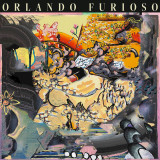
“Orlando Furioso is a haunting, one-of-a-kind statement, from an important new voice in improvised music.” - Steve Lehman
“…imagining instruments that haven’t been invented yet: space harps, cosmic gamelan, Venusian banjo. It’s the purest distillation of Atria’s musical language, simultaneously grounded and unearthly.” - Stewart Smith for The Wire (November 2022)
“Making liberal use of microtonal harmony and hypnotic, ostinato rhythms – as well as the occasional stylistic smash-cut, reminiscent of John Zorn – Orlando Furioso announced itself on Wednesday as a punchy, creative force on the New York scene. (…) Atria’s rhythms had a welcoming, social propulsion, and the microtonality of his writing for keyboard proposed an individual – even insular – language.” - Seth Colter Walls for The New York Times.
Early European composers felt that their work reflected in its structure the divine nature of the material world. Via tuning, form, and contrapuntal alchemy, these musicians sought to illuminate and edify the complex and perfect order of existence. The music recorded here also reflects the contours of an ordered world, but it is no place any of us has ever visited. By assembling far-flung building blocks from the detritus of a 21st-century musical vocabulary, Orlando Furioso brings the listener into a bizarre new cosmos. The result is deeply expressive music that speaks not with the voice of a narrator or memoirist, but with that of a cartographer.
Like a science-fiction Dante, the listener is taken on a tour of many diverse and colorful provinces of an alien world. Though each composition references its own set of real-world musical locales (from the Andes to Indonesia to Italy to New Orleans), they are bound by stylistic consistency into a coherent, continuous geography. Permeating this world is an uncompromising commitment to microtonal harmony, rhythmic intensity, and an ability to deploy the esoteric (Nicola Vicentino's notorious 31-tone temperament) and the head-smackingly obvious (a surprise djent breakdown) with equal conviction. Though Vicente's compositions are steering the ship, serious recognition is due to all the players on the record for their ability to meet these demands.
Our omnivorous musical diets offer real abundance. They enrich our craft by providing access to limitless approaches from which to choose - more masters to study, traditions to absorb, and techniques to hone than is possible in multiple lifetimes. They can also inflict heavy and often contradictory burdens of influence. When every corner of the map has been charted, it becomes difficult to find a new direction in which to travel. One solution I hope to see more often is the one pursued on this record: breaking down distinct musical worlds into component parts and reassembling them into a language. When completed with precision and with no stone left unturned, the seams between the pieces vanish and the listener is deposited somewhere beautiful and strange, left to assign their sensations meanings of their own. - Mat Muntz
Orlando Furioso is led by Vicente and features David Acevedo, David Leon, Andrew Boudreau, Alec Goldfarb, Daniel Hass, Simón Willson, and Niña Tormenta. Orlando Furioso celebrated its release at Roulette Intermedium in Brooklyn, NY, as a part of Wet Ink Ensemble's 24th Season opening concert, a performance which The New York Times heralded as "virtuosic", "punchy, creative" and "even revelatory."
Winner of the Deutscher Jazz Preis: Best International Debut Album 2023

Buscar:eso es
"Die Dunkelheit wimmelte immer von unerklärlichen Geräuschen..." (HPL)
Mit "Nahab" - dem zweiten Teil des Disharmonium-Zyklus - kehren BLUT AUS NORD wie getrieben in die unheimlichen, alptraumhaften Jenseitswelten von H.P. Lovecraft zurück, um sie in einem Spiegel erschreckenden Black Metal-Wahnsinns zu reflektieren.
Ähnlich wie die beiden dunklen Kammern des 2022 erschienenen Erstlings "Disharmonium - Undreamable Abysses" und der dazugehörigen Kompilation "Lovecraftian Echoes" ist diese neueste Emanation ähnlich gebärmutterartig, detailreich, verstört und transformativ.
Musikalisch nur durch das umfangreiche Oeuvre der Band beeinflusst, hat "Nahab" im Vergleich zu BANs jüngsten Lovecraft'schen Erkundungen einen erhöhten Anteil an derangierter Vokalmanie, die unheimliche Dynamik ist besser umgesetzt, die unverwechselbare melodische Kraft der Band verstärkt, die Gitarren - tiefer gestimmt für zusätzliche Resonanz - fließen im Tandem mit taumelnden Grooves wie ein stygianischer Tsunami.
In der totäugigen Trance eines dämonisch Beschworenen haben BLUT AUS NORD einmal mehr esoterische Folklore und moderne Gewalt in ein weiteres phänomenales Stück Außenseiterkunst kanalisiert, das ihrem eigenen Mythos und ihrer Monstrosität mehr als gerecht wird. In der Tat ein krönender Abschluss des Grauens.
- A1: Ennio Morricone - Mio Caro Assassino (From Mio Caro Assassino/My Dear Killer (1971)
- A2: Bruno Nicolai - La Notte Che Evelyn Uscì Dalla Tomba (Feat Edda Dell'orso - Long Version - From La Notte Che Evelyn Uscì Dalla Tomba/The Night Evelyn Came Out Of The Grave (1971)
- A3: Bruno Nicolai - La Dama Rossa Uccide Sette Volte (Edit - From La Dama Rossa Uccide Sette Volte/The Red Queen Kills Seven Times (1972)
- A4: Stelvio Cipriani - Tribal Shake (From Reazione A Catena/A Bay Of Blood (1971)
- A5: Stelvio Cipriani - Il Sesso Del Diavolo (Finale) (Finale)
- A6: Stelvio Cipriani - Deviation-M1 (From Deviation (1971)
- B1: Riz Ortolani - L'etrusco Uccide Ancora (Titoli) (Titoli)
- B2: Daniele Patucchi - Giallo In Tensione (From Frankenstein '80 (1972)
- B3: Ennio Morricone - Ansimando (Feat Edda Dell'orso - From Macchie Solari/Autopsy (1975)
- B4: Manuel De Sica - Black Dream (From Mystery Tour (1985)
- B5: Paolo Gatti & Alfonso Zenga - Cerro Torre (From Cesare Maestri: Il Ragno Delle Dolomiti (1980)
- B6: Berto Pisano - Greta (From La Morte Ha Sorriso All'assassino/Death Smiles On A Murderer (1973)
- B7: Sante Maria Romitelli - Bambola Sensuale (From La Rossa Dalla Pelle Che Scotta/The Sensuous Doll (1972)
- C1: Adolfo Waitzman - Languidamente (From Pensione Paura/Hotel Fear (1978)
- C2: Nico Fidenco - Il Demonio In Convento (From Immagini Di Un Convento/Images In A Convent (1979)
- C3: Ettore De Carolis - Flavour Of Death (From Il Cavaliere, La Morte E Il Diavolo (1983)
- C4: Marcello Giombini - Un Gioco Per Eveline-M11 (From Un Gioco Per Eveline (1971)
- C5: Carlo Maria Cordio - Absurd (From Rosso Sangue/Absurd (1981)
- C6: Stelvio Cipriani - Devil Dance (Performed By Goblin - From Un'ombra Nell'ombra/Ring Of Darkness (1979)
- C7: Daniele Patucchi - E Tanta Paura-M2 (From E Tanta Paura/Plot Of Fear (1976)
- C8: Marcello Giombini - Orinoco: Prigioniere Del Sesso-M19 (From Orinoco: Prigioniere Del Sesso (1980)
- D1: Franco Micalizzi - Bargain With The Devil #3 (From Chi Sei?/Beyond The Door (1974)
- D2: Stefano Liberati - The Prophecy (Version A - From I Pensieri Dell'occhio (1978)
- D3: Luigi Ceccarelli - Walking Through The Shadows (From Difendimi Dalla Notte (1981)
- D4: Daniele Patucchi - Minaccia Sulla Citta (From Belve Feroci/Wild Beasts (1984)
Red vinyl[28,53 €]
PAURA explores the horror repertoire from the precious CAM Sugar archives taking us on a hypnotic journey into the labyrinths of fear, through the different variations that Italian horror took on from the esoteric and supernatural to the slasher films of the early 1970s; to reinterpretations of Romantic literature and gothic fiction to the splatter films of the ‘80s; and from witchcraft to metropolitan horror. This is not a real “best of” but an eclectic menu full of mysterious voices, childlike lullabies, sweet melodies, obsessive music boxes, obstinate harpsichords, crazy distortions and threatening synthesizers, conceived as a succession of sequences, as if a film edit. The new collection includes some of the most creative music ever written and strives to do justice not only to some of the best known composers in this genre, but also to many great unsung composers: From celebrated composers like Ennio Morricone, Riz Ortolani & Stelvio Cipriani to long-forgotten personalities who fed the industrial backbone of Italian cinema such as Daniele Patucchi, Marcelo Giombini & Berto Pisano. The collection includes 6 previously unreleased tracks plus 3 tracks released on vinyl for the first time and 5 tracks available commercially for the first time (originally released only as a limited promo item).
Galcher Lustwerk has put together a collection of 10 ambient cuts here that he wrote to score a film by Josh Kline, a fine artist whose solo exhibition "Project for a New American Century" recently opened at the Whitey Museum of American Art in New York. It is a dystopic science fiction movie that details what happens after the climate crisis really takes hold. The music is an esoteric mix of free jazz, drones and bleeped-out ambient that is alive with busy, fizzing frequencies. It's a dense, textural brew that collides synth and sax sounds into a new sort of tribute to Ridley Scott's Blade Runner score.
SUPERB NEW ALBUM BY STRAWBS. FEATURING DAVID
COUSINS, BLUE WEAVER AND JOHN FORD.
• RADIO COVERAGE, REVIEWS IN NATIONAL PRESS, CLASSIC
ROCK, UNCUT, MOJO, RECORD COLLECTOR AND PROG
MAGAZINES PLUS WEBSITES AND FANZINES.
Vinyl LP edition of ‘The Magic Of It All’ by Strawbs,
recorded in Cape Town and featuring David Cousins, Blue
Weaver, and John Ford from classic 1970s line up joined by
some of the finest musicians and singers in South Africa.
Strawbs were high in the charts with ‘Grave New World’ and
‘Bursting At The Seams’ 50 years ago which coincided with a pivotal
moment in the struggle for freedom in South Africa, when students
and workers launched a new wave of resistance against so-called
“resettlement”. The resistance in South Africa identified with
Strawbs songs, especially ‘Part Of The Union’, ‘Lay Down’, and
‘New World’.
Recognising this, South Africa documentary maker, Niel van
Deventer, approached David Cousins with the idea of producing a
documentary about Strawbs and the band’s influence around the
world. Niel wanted to film while new songs were being recorded in
a Cape Town studio. David Cousins came up with a bunch of his
finest songs; Blue Weaver flew over to produce the sessions and cowrite some of the material, while John Ford joined in with his
contribution to the songs from New York.
Featuring brand-new songs recorded at the Academy Of Sound
Engineering in Cape Town, with engineer Peter Pearlson worked
with Paul Simon when he was recording South African musicians for
the ‘Graceland’ album. The South African musicians on this album
include Mauritz Lotz, Schalk Joubert, Kevin Gibson, Byron
Abrahams, Simangele Mashazi, Marzia Barry and Luna Paige.
Cathryn Craig and Nicole Tee joined the singers from the UK. The
documentary The Magic Of It All will be released later this year.
- A1: Greetings From Planet Love
- A2: Rainbow People
- A3: Love Tonight
- A4: Chasing My Tail
- A5: Swirl
- B1: Tuba Rye And Will’s Son / Balloon In The Sky
- B2: King Of Showbiz
- B3: Whirl
- B4: Freelove Baby
- B5: Groovy Party At Jimmy’s Magic
- C1: It’s Beautiful
- C2: Wink Of The Third Eye
- C3: It Has No Eyes But Sight
- C4: Twirl
- C5: Space And Time
- C6: Time Is Standing Still
- D1: Ride The Snake
- D2: Mr Plastic Business Man
- D3: Ccosmicc Ccarnivall
- D4: Tomorrow Drop Dead
The very first vinyl edition of Andrew Gold’s pastiche
psychedelic masterpiece ‘The Fraternal Order of the All –
Greetings from Planet Love’.
Initially released in 1997, the album was conceived by
Andrew Gold as a tribute to late 60s psychedelic rock. His
remarkable compositions were wonderful stylistic
evocations of artists such as The Beatles, The Beach
Boys, The Byrds and The Doors.
The project saw Gold create the fictitious band The
Fraternal Order of the All, in reality Andrew playing
most of the instrumentation and singing, along with guest
musicians such as Graham Gouldman.
This Esoteric Recordings limited edition double LP is
pressed on 10-inch coloured splatter vinyl and features a
newly designed lavish gatefold sleeve.
Der finnische Musikveteran Jesse Heikkinen und seine Co-Leadsängerin Natalie Koskinen (Shape of Despair) ließen sich von esoterischen Organisationen, ihrem Glauben und ihren eigenen Praktiken lyrisch inspirieren und verwoben rituelle Geschichten aus den dunkelsten Ecken ihrer selbst mit Musik, die ein provokantes, verführerisches Kaleidoskop aus dunklem, schwerem Rock ergibt. Das Ergebnis ist das mystische "Word of Sin", das neun-track-Debütalbum von The Abbey. Mit dem ehemaligen Sentenced- und The Man-Eating Tree-Schlagzeuger Vesa Ranta, Janne Markus (Gitarre, ebenfalls von The Man-Eating Tree) und Henri Arvola (Bass) wird das Debütalbum der aufstrebenden Progressive-Doom-Rock-Band die Hörer mit Sicherheit in seinen Bann ziehen.
Another Piero Umiliani classic gets its first-ever release on 7" vinyl! Shortly after 'Sweden: Heaven and Hell', in 1969 'Angeli Bianchi, Angeli Neri' continued the collaboration between Umiliani and director Luigi Scattini, this time in the direction of magic and esotericism, as the English title of the film, "Witchcraft '70", makes abundantly clear.
The two tracks included in this release reflect that direction, which informs more or less the entire score written by the Florentine composer. On side A, the wonderful "Saudade" features Brazilian singer Maria da Penha Silva, whose hypnotic and sensual voice soars over soft percussion, as if casting a spell.
On side B, the irresistible "Macumba" sounds almost like an Amazonian ritual, something halfway between capoeira and batucada, with its driving percussion over which the mysterious wordless vocalizing of Edda Dell'Orso creates a wildly fascinating theme. This limited edition 7" is a genius combination of groove and magic. Don't miss out!
Der finnische Musikveteran Jesse Heikkinen und seine Co-Leadsängerin Natalie Koskinen (Shape of Despair) ließen sich von esoterischen Organisationen, ihrem Glauben und ihren eigenen Praktiken lyrisch inspirieren und verwoben rituelle Geschichten aus den dunkelsten Ecken ihrer selbst mit Musik, die ein provokantes, verführerisches Kaleidoskop aus dunklem, schwerem Rock ergibt. Das Ergebnis ist das mystische "Word of Sin", das neun-track-Debütalbum von The Abbey. Mit dem ehemaligen Sentenced- und The Man-Eating Tree-Schlagzeuger Vesa Ranta, Janne Markus (Gitarre, ebenfalls von The Man-Eating Tree) und Henri Arvola (Bass) wird das Debütalbum der aufstrebenden Progressive-Doom-Rock-Band die Hörer mit Sicherheit in seinen Bann ziehen.
Lewis II was the follow up to Lewis Taylor's epochal, self-titled debut album. It was initially released in 2000 and this double LP release, its first ever vinyl edition, has been heavily anticipated for nearly a quarter of a century. It's often years before most listeners catch up with an album's breathtaking vision and devastating execution, and so it has proved with Lewis II; it stands up exceptionally well today.
After Island rejected Lewis Taylor's second release (later released as The Lost Album), he returned to the studio to record Lewis II. Less esoteric than Lewis Taylor, Lewis II is a more polished, sophisticated funk and mature uptempo soul than the dark psych-soul of his debut. The production, whilst slicker, is a bit tougher, with more crisp, R&B-flavoured grooves and head-nod beats and more bass pumping up his voice. The vocal intensity present on album number one doesn't abate. Indeed, as Lewis himself noted, "my voice is better on Lewis II and the vocals are high in the mix."
The moody funk of "Party" sounds like a mad blend of Riot-era Sly Stone and Brian Wilson. It rides a stuttering drum machine groove with acapella harmony vocals arriving halfway through to stay for the duration. "My Aching Heart", with its clean, slick, late 90s R&B drums, could surely have been a single. Perhaps Lewis's idiosyncratic melodies would've been too challenging for the charts. Lewis *had hoped* "You Make Me Wanna" would be a single but the dank, organ-drenched groove, coupled with the growling eroticism of Lewis's vocals would've, again, made this beyond the pale for most mainstream music fans. Somewhat incongruous acidic synths and bleeps give way to a laconic summertime groove on breezy highlight "The Way You Done Me", all funky acoustic guitars and stunning, good-time vocals. Sumptuous ballad "Satisfied", a real fan favourite, marries unusual instrumentation with classic soul-ballad structure and closes with a monster guitar solo which almost out-Princes Prince in its gritty melodicism, set against sweeping strings of real majesty. Prog-Funk-Rock!
The dubbed-out, spaced-out "Never Gonna Be My Woman" is the closest the album comes to classic D’Angeloesque neo-soul, with echoes of the esoteric funk featured across Maxwell's contemporaneous Embrya. But what follows is on some next level business. As Lewis's biggest fan, Geoffrey Scull, noted, "the "I'm On The Floor" / "Lewis II" / "Into You" song cycle stacks up against any other consecutive 15 minutes of recorded music, ever!" And who are we to argue with that? These could've been hits for Justin Timberlake during his fascinating Timbaland-collaborating days, such is the sonic and textural pop experimentation at play here. The extraordinary title track sounds like an outtake from Marvin Gaye’s Trouble Man and spends its last third as a searingly dark piano-led psychedelic-guitar-crunching soul instrumental. Just astounding. And then. AND THEN! The way it segues into, er, "Into You" is just straight up genius. Goosebumps galore on this one, no words can describe its celestial brilliance. Just kick back and be beguiled by the "Let me come on over again" refrain that ornately adorns its sensational coda. Phew.
The swoonsome, lovelorn ballad "Blue Eyes", apparently written in the spirit of Marvin’s "Vulnerable", is a lush, slow swinger with some gorgeous noir touches. To close, Lewis completely retools Jeff Buckley’s beloved, beautiful "Everybody Here Wants You" and, while talking some liberties, even manages to surpass the original. Yes, really! With soaring, fiery vocals set against icy piano and psychedelic guitars, Lewis recasts Buckley's effort as dramatic, ethereal soul.
When it came to translating the original CD booklet into a 12 inch LP sleeve, thanks to some suggestions from Cally Callomon (head of Island’s art department, who designed all the sleeves for Lewis’s two Island albums and their singles) and his trusting us with his “Lewis Taylor” folder full of various negatives, test prints and whatever else he was able to salvage from the old Island art department, we’ve gotten pretty close to what the original LP sleeve would’ve looked like if it existed. Simon Francis’s vinyl mastering, presents the eleven tracks over a double LP so, as ever, the record sounds outstandingly good. The records have been cut by Cicely Balston at Air Studios and pressed at Record Industry.
A wild and funky collection of Afro grooves that was ahead of its time in 1977 and has become a collector’s item in recent years, especially due to the growing international interest in Colombian picó sound system culture. Fruko and his studio bands Wganda Kenya and Kammpala Grupo treat us to a diverse set of African and Caribbean styles, laced with crazy synths, psychedelic guitar and infectious pan-African polyrhythms. By the time Discos Fuentes released the album “Wganda Kenya Kammpala Grupo” in 1977, Wganda Kenya’s discography was expanding with many 45 singles and appearances in various artists collections. The group’s 1975 debut record “África 5.000” was a full length LP in the U.S. and a various artists compilation in Colombia, which was followed by the self-titled long player the following year. However, Kammpala Grupo, which shared the album’s title and was credited to three songs on the record, had never appeared before, yet was basically the same studio group as Wganda Kenya. Most likely the creation of this short-lived studio band was just a ploy by the label to make it seem like there were more groups playing the type of exotic afro tracks favored by the picotero DJs of Colombia’s Caribbean coast (especially in Barranquilla and Cartagena). 1974 Discos Fuentes’ management had sent musician, band leader and producer Julio Ernesto “Fruko” Estrada to the coast on an A&R mission to discover what people were dancing to in the verbenas (communal open air neighborhood parties) run by the owners of picó sound systems (decorated mobile DJ rigs). Always game for an adventure, Fruko was tasked with bringing some popular examples of these esoteric, hard-to-find African, French and Dutch Antillean records back to Medellín to serve as inspiration (or to outright copy) so that the label could enter into the growing regional market and spread its popularity to the interior of Colombia and other Latin American countries via its own studio creation, Wganda Kenya. Fuentes was always returning to exploit the rich African-rooted culture of the coast as it had with the cumbia and other regional genres before, so in a way it was not surprising that they were attuned to this particular niche phenomenon from a marginalized sector of the population. The most popular genres with the champeta dancers in the 70’s and 80’s were styles like Congolese rumba, highlife, afrobeat, juju, mbaqanga and soukous as well as the music of Haiti, Guadeloupe, Martinique, Curaçao and Dominica, all of which were fiercely guarded by the DJs who had managed to acquire them often through extreme means of travel, barter and intense digging. The record kicks off with the joyful ‘El Gallo Africano’ which features exquisite interplay between Sepúlveda’s highlife style guitar and an authentic-sounding African style saxophone, perhaps played by Carlos Piña. In reality it was ‘Go Call Police Chief’ by prolific Nigerian highlife guitarist Chief Oliver Sunday Akanite, aka Oliver De Coque. Next up is Kammpala Grupo’s ‘La Yuca Rayá’ (‘Grated Yuca’), written by Isaac Villanueva in a style he termed son haitiano which sounds much more like Zimbabwe Shona mbira music. Wganda Kenya’s ‘Caimito’ (star apple, a type of tropical fruit), on the other hand, is actually a cover of a relatively well-known Haitian merengue song. Kammpala Grupo then takes us from the French Antilles to the multi-cultural discotheques of Paris, where a cover version of Black Soul’s Afro-boogie anthem ‘Black Soul Music’ is retooled and renamed ‘King Kong’, perhaps in a nod to the 1976 remake of the monster flick of the same name. Side two introduces us to the infectious merengue rebita of Angola via ‘La riphyta’ with “Paparí”, aka Mariano Sepúlveda, doing the vocals and faithfully replicating the Angolan guitar style. ‘La Trompeta Loca’ (‘The Crazy Trumpet’), probably the nuttiest track on the album, is an ingenious cover of ‘Ye Gbawa Oo Baba (Tribute To Nigeria)’ by Joe Mensah of Ghana. As with all their covers of African tunes, this rendition tightens up the original with some pop sheen, more consistent drumming and higher production values, remaking it into a powerful slow-burning dance floor filler. This is followed by one of the most powerfully original songs to come out of the entire Wganda Kenya project, Mike Char’s reggae anthem ‘El Nativo’ with Joe Arroyo on vocals. The record ends on a more authentically Caribbean sounding note with the instrumental ‘El testamento’, a cheerful islands banger with bright brass, syncopated calypso beats and chunky cuatro guitar (or ukulele). The original was in the mento genre and titled ‘Sweet meat’, written and recorded by Jamaican trumpeter Bobby Ellis. First time reissue. 180g vinyl.
Bobby's 2019 tour ended in New York City and he had two days off before flying home to Finland. Leon invited him to the Diamond Mine to record some music. Bobby had been talking about wanting to stretch out lyrically and write about more esoteric subject matter, Leon was game. They recorded "Reasons" in one session which put the chemistry between the two on the world stage and sparked the idea of doing a full length album together. More than halfway through the recording process, they have decided to treat us to another two-sider of the new material. On the A side, "Whatcha Know" Bobby explores death and the human experience, putting his philosophical ponderings into his music. Michels' production and overall ethos is the perfect complement to Bobby's desire to stretch out his sound. EMA provides a gorgeous backing track that compliments Bobby's style and simultaneously broadens its scope. The B side "Losing It" is a dramatic and moving number that Bobby sings in Spanish and English. A gorgeous guitar riff is countered with eerie sound effects that crescendo when the drums come in. Bobby professes he's "Losing It" over a love too strong and El Michels Affair's production turns the whole affair into a saga that thunders through speakers.
- A1: Egoclapper
- A2: Watch The Pro
- A3: Warlords
- A4: Mind On Fire
- A5: Tranquilizer
- A6: Typhoons In Japan
- A7: Street Stigma
- B1: Incredible Hurk Rap
- B2: Ego Empire
- B3: Zombie Combat
- B4: Really Fly
- B5: Boston Garden Rap
- B6: Eso's Father Finds The Chosen Ones
- B7: Frank Miller Tank Killer
- B8: First Of A New Breed
- B9: Spidey Jail Break
Along with Wu-Tang Clan's Inspectah Deck and 7L, MC Esoteric is probably best known as 1/3rd of the acclaimed trio CZARFACE. Before creating the comic friendly hip-hop supervillain, Eso developed and unleashed another fictional anti-hero that bolstered his music, and that character was dubbed EGOCLAPPER. You could view Egoclapper as Czarface's predecessor. Esoteric's legacy as a leading vanguard of Boston's underground rap scene extends far beyond CZARFACE, AOTP, and recent collaborations with MF DOOM, it leaps across multiple decades of records both solo and in collaboration with 7L. So now, Eso's imprint Fly Casual Records is proud to present this sterling reissue of his 2007 solo debut; the twitchy, punchy, eccentric Egoclapper. Not only has this record never previously been released on vinyl, but it is now presented on exclusive transparent blue wax.
Take part in the sound of Bogota's eclectic cumbia scene that permeates the ritual sonido of 'Noches de Medialuna', the latest album by Conjunto Medialuna out now on Little Beat More!
Enter the labyrinth that transcends the danceable and psychedelic, guided by the Colombian accordion and ecstatic percussion of their slow-pitched beat. A tribute to the power of guacharaca, and the street parrandas where each song becomes a discovery of new archetypes of what has always been traditional but today makes part of the urban tribes of Latin America and the world.
Collaborations with artists such as N. Hardem, Mismo Perro, Son Rompe Pera, MC Hydro, or the Japanese-Latin connection with percussionist Muupy elevate this musical journey to a universal level that transcends cultural boundaries.
Weekend Recovery are back with a brand-new album ‘Esoteric’. Mixing equal measures of in-yer-face vox, overdriven guitars and straight-talking lyrics, it’s this mix that’s seeing the Sheffield indie-pop trio into editorial playlists on Apple, Deezer and YouTube alongside shows at Kendal Calling, Bingley Weekender and sell out dates including Corporation Sheffield. The first cuts from the record ‘Chemtrails’ and ‘No Guts All The Glory’ hit the airwaves with a bang, amassing plays on BBC Radio 1 Introducing (Gemma Bradley, Nels Hylton), BBC 6 Music (Steve Lamacq, Chris Hawkins, Fresh on the Net), Radio X (John Kennedy), Kerrang! Radio (Johnny Doom), Amazing Radio (Charlie Ashcroft, Shell Zenner, Frankie Francis), Absolute Radio (Frank Skinner), Planet Rock (Wyatt Wendels), BBC Sheffield (Christian Carlisle, Ellie Colton), BBC York (Jericho Keys), RTE 2 Ireland and as far as KEXP, Seattle and national USA station Sirius XM (Rodney Bingenheimer). The latest single ‘No Saint’ features Joel Arthur from local bandmates Hydeout and represents the harder edge in their third studio album.
Andrius Arutiunian’s debut album »Seven Common Ways of Disappearing« was first conceived as an installation for the Armenia Pavilion at the Venice Biennale in 2022. The Armenian/Lithuanian artist and composer uses hybrid forms of music, focusing on sonic vernaculars, hypnotic musical forms, and aural cosmologies. Arutiunian is known to work with installations, sound objects, and time-based collaborations with ensembles and performers. The piece on this record was written for two musicians, a retuned piano and analogue electronics, and it borrows an enneagram as its score—the world-ordering model introduced by the controversial Armenian-Greek mystic and composer G.I. Gurdjieff. The result is an album that is both aesthetically and spiritually intoxicating music of the spheres, at once reminiscent of the masterpieces of minimal music and improvised, if not stochastic music. G.I. Gurdjieff was one of the first thinkers and (quite possibly charlatans) to introduce a syncretic idea of Eastern philosophy into the West. His unique way of teaching was based on an esoteric blend of Middle Eastern, Buddhist, and Dervish philosophies, and oscillated between a genuine search for enlightenment and a complex form of trickery. Borrowing from Gurdjieff’s writing on the world ordering and musical tuning, Arutiunian used the enneagram to organise the musical and structural matter of the piece that was originally conceived as a live performance.»Seven Common Ways of Disappearing« is written for a grand piano—the epitome of Western composition and musical production—and follows a simple set of rules: the two musicians have to navigate the topography of the score, rendering the piece in a different configuration each time. In a sense, this gripping recording is thus only one of the potentially infinite versions of how it could be played, but also seems to take on different shapes and forms with each new listen. It documents a truly mystical composition that follows its own logic
Gacha Bakradze releases his third album on Lapsus entitled "Pancakes", and while the name may appear conventional at first glance, it actually contains esoteric philosophical concepts.
The Georgian producer perceives the making of pancakes -a transformative and healing parental activity that he loves to partake in with his son- as a metaphor for alteration, metamorphosis and change. A reflection that also accentuates the importance of balance during each process of preparing a simple recipe, which in turn highlights key human attributes such as patience, attention to detail and willingness to adapt to shifting circumstances.
On a sonic level, Gacha’s new album embodies precisely that: the contextual reworking of his music, while maintaining the essence of his previous work. "Pancakes" provides the typically melancholic yet vibrant genetics already recognisable in his music, but also embraces new genres, including his unique and personal take on hyper-pop and trance. It is an album of contrasting elements, where bucolic interludes make way for heavier tracks that are more suited to a club environment, an aural universe that hybridises IDM, electro, bass music and cutting edge techno, and once again demonstrates that trying to pigeonhole Gacha Bakradze's sound is a somewhat fruitless task.
Fuzz is Ty Segall (drums/vocals), Charlie Moothart (guitar/vocals)
and Roland Cosio (bass). They’re heavy rock lifers—three Californiabred dudes who have been refining their riffs and getting weird together since high school (which wasn’t that long ago, actually). If you are not already aware of Segall, well, what’s up? He’s one of garage rock’s most prolific sons. He said he was going to take it easy this year, but by the time you finish reading this, the onesheet for his next record will have already arrived in your inbox. Moothart
plays guitar in The Ty Segall Band and was also a member of The Moonhearts, which included Cosio on guitar.
Way back in the early ’00s, all three played in the Epsilons. Fuzz was formed a couple years ago as a collaboration between Segall and Moothart, but only recently did the pair have sufficient time to guide
the band out of side-project limbo and into a recording studio. Since then, they have released two singles, “This Time I Got a Reason” (Trouble In Mind) and “Sleigh Ride” (In The Red). Around the time of the latter, Cosio joined on bass.
They are not dabblers or dilettantes. Fuzz flipped through used bins,
hard drives and record collections of the world, seeking out the finest
weirdo cuts. The band’s self-titled debut LP, which was recorded by Chris Woodhouse (Thee Oh Sees, The Intelligence), dives deep, drawing inspiration from the more esoteric reaches of heavy metal pre-history. There are Sabbath and Hendrix nods, obviously, but on “Sleigh Bells” you might also catch a whiff of UK progressive blues business like The Groundhogs, particularly when the song quits its 10/4-time intro and reboots into fullbore choogle.
Maybe you’ll even glimpse the ghost of Australian guitar legend/sharpie guru Lobby Lloyde sniffing around “Raise.”
The mood is not light. The songs project a state of perpetual paranoia
and eroding mental health. And as it should be, you know? It’s a record for the burners.