The album follows Stevenson’s 2019 career milestone The Big Freeze,
celebrated for its ‘finely detailed, wrenchingly intimate songwriting’
(All Songs Considered), and a 2020 NPR Tiny Desk
(counted as one of the year’s 20 Best).
Produced by John Agnello (Sonic Youth, Dinosaur Jr., Kurt Vile,) at The Building in Marlboro, NY, Laura Stevenson is an altogether beautiful record, a sincere portrait of a human heart in all its vibrant colors.
More than anything, it is about bearing one’s whole self in the face of those you love’uncomfortable, and exposed, but vital, present. Here.
Cerca:expose
»Dog Mountain« is the second release by the Zurich-based producer and composer Laurin Huber on Hallow Ground. After last year’s »Juncture« saw the Edipo Re co-founder work mostly with synthesizers and programmed rhythms, the four tracks are much more restrained, drawing on tape loops and feedback, recordings of acoustic guitar and synthesizers such as the Korg MS-10 as well as field recordings that relate to the overarching topic that informed the making of the record. While »Juncture« had previously aimed at deconstructing the binaries and dualities that shape our lives and thinking, »Dog Mountain« is dedicated to geographical divisions that result from political processes and social constructions. »›Here‹ means one nation, ›there‹ another,« writes Huber in a literary piece that accompanies the record. »Being in sound, such a separation seems odd.«
While treating the metaphor of the border as a »membrane, registering and translating the vibrations of its surroundings« and thus as something that is constantly (re-)defined, maintained and defended however, the artist also takes into consideration that »one cannot escape one’s standpoint,« as he puts it. The music on »Dog Mountain« may transcend and overcome certain borders, but it does not deny the realities that they impose on each and every one of us – whether in our political lives or in the realm of sound. This is mirrored in Huber’s engaging in the structural and sonic interplay of repetition and difference. Working with slowly evolving and modulating elements that are exposed to slight shifts, »Dog Mountain« puts a focus on the interaction between small elements that together form a bigger whole which is marked by constant evolution and change.
Opener »Raja« (»border« in Northern Sami and Finnish) starts off with a two-note melody played on an out-of-tune guitar. Different field recordings and synthesizer sounds drop in and out of the mix until the dynamic shifts and Huber starts playing more notes on his instrument, thus increasing the tension. It’s a meditation on minimalism, but also a piece that mediates between notions of what constitutes the difference between noise and music or referentiality and abstraction in sound. After »Nickel« (named after a Russian monotown near the border to Norway) dedicates itself to explore the friction between hissing white noise and melancholic tape loops, »A Town Is Not a Town« (a phrase taken from the documentary »Kiruna – Rymdvägen«) structurally mirrors the experiment of »Raja« with very different sonic means.
Closing the record, »Storskog-Borisoglebsk« (the title refers to the northernmost land border between Schengen-Europe and Russia) is the longest and most challenging piece, working with both long-form drones and musique concrète elements. It proposes a synthesis of the opposites that are explored patiently and with much attention to detail throughout this record.
Thomas Köner is one of the most influential modernist minimal composers. Alongside Wolfgang Voigt's "Gas" project, Köner has been centrally responsible for electronic music's fascination with depth and reduction. His signature sound is vast, seemingly endless, which at first seems homogenous and infinite, but once exposed to it, when our senses calibrate to the fine nuances of changes, we discover and immerse into abundance of textures, richness of modulations and almost infinite range of sonic titilations. Köner's work was inspired by his frequent travels in the Arctic, and listeners feel his music as a journey to mysterious worlds of the Arctic region. The experience of being exposed to the extreme cold, the hightening of our senses and ability to notice even the slightest changes in color, sound, light or density that creates this dangerously reductive environment, is like an immersion in the sonic world of this German artist, where masterfully crafted layers of sound open into colossal spaces, teeming with aural life, waiting to be discovered by those who venture into it. The titles of Köner's highly regarded albums from the 90's ever so often play with this affinity - Nunatak, Permafrost, Teimo - all reference to the world of the Artic region, just as his album Nuuk that points us to the capital of Greenland. Subdued and minimal at first glance, this album is brimming with low-end frequences, shadowy resonances and boreal ambience, but at the same time, constant fluctuation and vulnerability of sonic events, makes it very organic, human and almost comforting, like the tiny harbour existing in the sea of ice, it is named after.
The prolific MC, producer and musician Oddisee’s album ‘The Iceberg’ is a plea for humanity to dig deeper in search of understanding and common ground. ‘The Iceberg’ is a distillation of stereotypical tropes in hip-hop and beyond, 12 tracks about money, sex, politics, race and religion that appear superficial until his multi-dimensional lyrics unfurl to expose the complexities of individuality and identity; how we see ourselves and how others see us. Deeply soulful, and shot through with jazz, Go-go, gospel, thick R&B and hard beats, the album is a timely, poetic statement. Oddisee has released two studio albums, several EP’s, mixtapes, and instrumental albums, and has over 30 million plays on Spotify. He’s been profiled by NPR, the Washington Post, praised by Pitchfork and Stereogum, performed on NPR’s Tiny Desk, Red Bull Sound Select, and at festivals including Glastonbury and Sasquatch. ‘The Iceberg’ follows two releases in 2016, the ‘Alwasta EP’ and the instrumentals album ‘The Odd Tape.’ His 2015 full-length ‘The Good Fight’ was a top five album on the iTunes Hip Hop/Rap chart and he was #5 on Billboard’s Next Big Sound Chart.
DJ Sotofett and LNS have teamed up with Tresor Records for Sputters. The double-vinyl album with 15 cuts spans a hybrid of warped electro and psychedelic hypnosis, all the while remaining fixed in an unmistakable dance release. Recorded between 2017 – 2020, and bookmarked throughout by intros and interludes dug out from archival material, it's a deconstructed yet classic compound of techno-sonics.
LNS from Calgary, Canada, is rooted in braindance, electro and acid. Releasing 12inches on both her self-titled imprint LNS and Sotofett’s Wania - LNS, whilst in the studio, has often pointed out “the lacking blend of dub and electro in dance music”.
DJ Sotofett, hailing from Moss, Norway, is among a myriad of things commonly known for the extended work of his Sex Tags Mania and Wania labels, without forgetting his afro, dub and jazz releases on Honest Jon's London.
Together both artists give space to a guest appearance by E-GZR, a fellow Wania artist, to open the Sputters journey. The sinus bending drum stutter of K.O. by E-GZR collisions flanging basses and chronic-inducing synth pads to blueprint the technoid atmosphere to come. LNS & DJ Sotofett take control with El Dubbing, evoking an effect-heavy demeanour, typical of the Sex Tags Mania soundworld that DJ Sotofett is responsible for, this time rubbing up against solid electrified rhythms. The hypnotic moods carry over to Dúnn Dubbing's deep delays, freely running over a surprisingly minimal skeleton retaining a solid direction. Crafting a warmly emotive end of Side-A with sparse rhythms to perfection.
A meaner turn introduces Side-B. Hints of electro are scattered everywhere, fat basslines, ricocheting drums and synths that mourn and drift in and out of harmony. Vitri-Oil exposes a tumbling sound design, fog-lit chords of material fragility and nosedives - with an alive mix that wallows and grows in equal measures. The side closes with Shim, a classic drift between house and techno releasing sensual euphoria with the albums first big surprise – grand strings.
“LNS wanted to sell her TR-606, while my reply was for us to make a track with the 606 sounding so fresh that she'd never even think about selling it again” Sotofett states. Side-C proves the artists to be some of the most singular producers around with album centrepiece The 606. Clocking in over 10 minutes, it kicks off as a driving techno banger, chugging bass and big chords. Midway through everything falls away, and out of the void enter scattered drums and improv piano lines emerge, while twisted dubs lead us back in an enduringly warm groove.
Side-D sets the clock back to the original electroid foundation of the album, casting fires with alien vibrations. Synchronic Bass Blort is a hard-hitting electro track, steaming sonics and thrills, its melodic hook diving in subterranean motions. On Sputtering the duo raspily beams into outer space, with fizzy motives that disfigure and dazzle while the harmonies of the closing track is for yourself to experience.
DJ Sotofett and LNS deliver an album inhabiting a world full of sci-fi sonics and fierce groove. Their sound is free and live, simultaneously wondrous and sharp.
- A1: Wolfgang Dauner - Output
- A2: My Solid Ground - The Executioner
- A3: Association Pc - Scorpion
- B1: Fritz Muller - Fritz Muller Traum
- B2: Exmagma - It's So Nice
- B3: Anima-Sound - It Loves Want To Have Done It
- C1: Tomorrow's Gift - Jazzi Jazzi
- C2: Out Of Focus - See How A White Negro Flies
- C3: Brainstorm - Snakeskin Tango
- C4: Thirsty Moon - Big City
- D1: Gomorrha - Trauma
- D2: Brainticket - Black Sand
With his ongoing commitment to like-minded archivist label Finders Keepers Records, industrial music pioneer Steven Stapleton further entrusts us to lift the veil and expose “the right tracks” from his uber-legendary and oft misinterpreted psych/prog/punk peculiarity shopping list known as The Nurse With Wound List.
Following the critically lauded first instalment and it’s exclusively French tracklisting both parties now combine their vinyl-vulturous penchants to bring you the next ‘Strain Crack & Break’ edition which consists of twelve lesser-known German records that played a hugely important part in the initial foundations of the list which began to unfold when Stapleton was just thirteen years old.
From the perspective of a schoolboy Amon Düül (ONE) victim, at the start of a journey that commenced before phrases like kosmische and the xeno-ignant Krautrock tag had become mag hack currency, this compendium is devoid of the tropes that united what many would accurately argue to be the greatest progressive pop bands in Europe
(namely CAN, Neu! and Kraftwerk) and rather shatters the ingredients across a ground zero landscape for both inquisitive fans and socially rehabbing musos to begin to assemble a unique self-styled identity. If Krautrock was the music that journalist told us lurked behind schlager (German pop) in the 1970s, then this record includes the music that skulked behind Krautrock and perhaps refused to polish its backhanded name belt.
Including lesser-known artists like the late Wolfgang Dauner, whose career proceeded and outlived the kosmische movement while consistently informing and outsmarting them whenever they got stuck in their metronomic ruts, or how about Fritz Müller, the man who
was to Kraftwerk what Stuart Sutcliffe was to The Beatles but had more in common with Yoko and quite rightly couldn’t give a stuff about the Fab Four’s Hamburg roots.
Elsewhere we have a plethora of German bands made for German audiences as they try and shed secondhand flower power Americanisms and feel the benefits of much harder drugs and the realisations of difficult second album budgets while Kommune 1
newsflashes wipe smiles from everybody’s faces and replace them with opioid chic or acid-sarcastic grins. Bonzo Cockettes show us their Big Muffs and drummers ask for extra mics while Conny Plank goes for parliamentary office and gives babies good firm handshakes for the camera.
‘Strain Crack & Break: Volume Two’ is the sound of Steve Stapleton’s sponge-like mind and the dividends of anyone who was brave enough to even peek inside those brick-thick gatefold covers never mind drop the needle.
Over forty years since Nurse With Wound’s first album was released, Finders Keepers Records and Steve Stapleton take connoisseurs of our kind of music back to the disused elevator shaft towards ground zero. Arriving at the same checkout from different departments, Finders Keepers and Nurse With Wound continue to sing from the same hymnal with this ongoing collaborative attempt to officially, authentically and legally compile the best tracks from Steve’s list, where many overzealous erds have faltered (or simply, got the wrong end of the stick).
After ‘Strain Crack & Break: Volume One’ merely scratched the surface of this DIY dossier of elongated punk-prog peculiarities, this second lavish metallic gatefold double vinyl compendium drives a much deeper groove which, in accordance with Steve’s wishes, focusses exclusively on individual tracks of German origin - the country whose music forged the prototype of the NWW inventory in the form of his secondary school vinyl wantlist in the early 1970s, comprised of disassembled free jazz, unshowered stoner psych, hypnotic prog, deranged monk funk and fuzzed out Deutschmark bin bonzo beats.
Tape
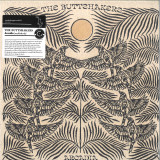
Tekanan is the full-length debut of Melbourne-based Indonesian-Australian drummer and sound artist, Rama Parwata. A thorough exploration of rhythmic capabilities and percussive improvisation under ever-shifting timbral and stylistic environments, Tekanan is Parwata’s examination and documentation of his vast musical influences in electro-acoustic improvisation, Indonesian gamelan music, free jazz, electronic music, R&B, and noise music, whilst still maintaining an entirely unique non-idiomatic musical voice. Tekanan sees Parwata experimenting with not only the drum kit, but additionally implementing no-input mixing boards, musique-concréte sampling techniques, junk percussion, electric guitar, and computer music production to create a relentlessly metamorphosing soundscape that abruptly, yet seamlessly oscillates between ethereal ambiances to turbulent barrages of rhythm and noise through five unique movements.
Aptly named after the Indonesian word for pressure and stress, Tekanan was composed by Parwata with the intent of it being a listening experience which would pressure the listener to have no clear indication of the direction of the music and where it will ultimately settle, leading the listener on a sinuous, yet intriguing aural journey. This title additionally applies to the pressure of the challenging nature of the music, in a performative sense, which pushed Parwata to his physical and mental limits to perform and compose.
“As cliche or banal this might sound, I tried to make a record that was purposely made to be hard to put into a box. I didn’t want to make a “drumming” record or a noise record or anything of the type, but a record that just contained "good” music (or what I constitute as being good). Many aspects of my musical life were injected into this release: gamelan music (the first music I was exposed to), noise, hip-hop, free-improvisation, Xenakis, jazz, electronic music. Ultimately this record is a homage to those musical influences.” - Rama Parwata
-
An active figure in Australia’s experimental music and art scenes, Parwata has worked with the likes of Marco Fusinato, Robin Fox, and Robbie Avenaim, and choreographers Stephanie Lake, Juliet Burnett, and Melanie Lane. He is also a member of seminal long-running Melbourne Doom Metal band, Whitehorse.
As of 2019, Parwata has been a co-curator and committee member of Melbourne’s legendary concert series, Make It Up Club, which has been presenting weekly avant-garde improvised performances since 1998.
MEMO
TDC INC. (non-hierarchical/non-liable)
DATE 15 APRIL 2021
Dear visitor,
We are excited that you have developed an interest in our product "Corporate Offering 1". Ownership of this product will place you at the helm of corporate culture. All your friends will be in awe by your consumption. Trust us.
"Corporate Offering 1" was exposed to an artificial scarcity treatment, as guided by principal marketing regulations that The Organisation celebrates. It hence comes with a numbered, signed and stamped Statement of Purchase (SoP), in addition to sound on both sides of the product. Without the SoP, the
product is invalid. There is no other way.
Needless to say, your future ownership of "Corporate Offering 1" is unconditional. This is important.
If you wish to become a Cog in The Organisation, please type tdc-inc.org in your browsing device and fill out the paperwork. It is not a lot, but it is important.
Thank you for your expectations, which will be justified.
Corporate.
Kojaque follows his critically acclaimed cult concept record, ‘Deli Daydreams’, with an
expansive, urgent debut album. In this landmark debut, Kojaque mines both his
emotional interior as an artist, and the external forces of a love triangle barrelling
towards chaos. ‘Town’s Dead’ is a mind-bending, explosive and expansive trip,
documenting a tumultuous love triangle that unfolds across New Year’s Eve in a
place where gentrification poses as much a threat as the violence of street dealers.
Sonically, the record smashes any previous expectations, stretching an aural palate
that leaps from rage to solace, from clattering musical combustions to tender
ruminations. The tremendous scope and scale of ‘Town’s Dead’ demonstrates an
artist utterly untethered to assumptions about what a particular voice or genre should
be, and instead explores radical musical territory. Dark corners of parks, bedrooms,
clubs, streets and psyches are excavated and pouring over the rubble is an artist
who refuses to conform, unafraid of the vulnerabilities that are exposed when the
voice rings true, because there’s just no point in being anything else.
Kojaque is part of a new wave of Irish artists flooding the world with blistering and
sophisticated literature, film and music - ideas and work that emerged from a social
revolution stonewalled by late-stage capitalism. Welcome to that state of mind, where
the path less travelled is the only one worth taking.
On the announcement of his debut album Kojaque has said: “‘Town’s Dead’ comes
from the potential that I see in Dublin and in the people I’m surrounded by day in and
day out. There’s nothing but talent and ambition among young people, I’m constantly
reminded of that through the art and music that I see being made but I think so often
the city grinds you down, it takes your hope and your ambition. I know that it can
change because so many of my friends express the exact same wants, desires and
frustrations with living in Ireland. If so many of us are on the same page then I know
that things can change, there just needs to be some sort of catalyst to kick start that
change and for me that’s always been art and music. Time and time again, amazing
art continues to be made in spite of the struggles and setbacks that are presented
when living here. The title track and the album is a fight against what can sometimes
feel inevitable, it’s a rejection of what people tell you is your destiny as a young
person in the city, Town’s NOT dead it’s just Dormant.”
CD housed in digisleeve containing 12-page lyric and photo booklet.
Black double vinyl housed in 5mm wide spine single sleeve with 12-page lyric and
photo booklet.
“Hints of Odd Future and its offspring... Kojaque is not your average rapper” - i-D
“Dublin’s hip-hop community are making waves right now... an intimate introduction
to the world this bold artist inhabits” - Clash
“Social realist rhymes set to silky hip-hop” - NME
“Likeable and funny” - Trench
“The Dublin MC forcing us to face real life; both the gory and the glory” - Wonderland
“Ireland’s freshest hip-hop hope, Kojaque, serves ‘soft hip hop’ with a side order of
poetry and performance art” - Notion
A few months ago, Dj Schwa & Name Does Not Matter rumbled through the timbers with their latest EP on RFR Records. For all of you, who like to get physical, we are now offering two Tracks of the digital EP including two brand-new Remixes on Vinyl.
Follow the “Ape King” and jump into the frying acid pan! Straight forward stomping on the beat section, pretty classic when it comes to the bassline. And whilst the 303 is continuously marching towards our cortex, shit kicks in with a nonchalant melody part. Wait, are the old Djax Up days back?
London’s Posthuman is delivering the perfect Remix for “Ape King” qua musical self-definition. His analogue machine park powers the Original with an even deeper drilling bass line, reduces the melody to its essence and nonchalantly sets the groove between classic Chicago and UK Hardcore influences.
“Obsolete” is a true feast for lovers of classic Electro. And despite of the title, all its ingredients are perfectly well balanced. Sounds like Aril Brikha, Nitzer Ebb and Clarence G. (RIP) joined forces in the studio and filtered the essence of one of our favorite genres.
We stay in London. Jerome Hill lays hands on “Obsolete” and proves from the very first second that there is absolutely no space for compromise. This is all about straight Techno and the feeling of being exposed to a stroboscope in a dark basement while the first rays of sunlight are already penetrating through the crack of the door.
RNXRX returns to VEYL for his debut album, 'Impreciso'. No stranger to the label, the artist first made an appearance on 'Previously Undisclosed Rituals' and then again with 'Sigil', a collection of B-sides which act as the perfect prelude to this offering.
Derived from an alchemy of inspiration, the album is the result of endless nights unearthing samples, vinyl oddities, effects databases from a bygone era and the artist’s own post-processed vocals - imprecise components which all combine perfectly to form this LP.
Unconstrained by genre, 'Impreciso' journeys through strains of body music, psychedelic rock, soundtrack and more, delivering electronic experimentations which expose the artist’s darkest tendencies while
revealing a long admiration of post-punk, hip hop and science fiction’s finest.
Twelve tracks falling somewhere between homage and reinvention, 'Impreciso' operates with 80’s circuitry, throws back to 90’s beat nostalgia and drills into a cyber-verse for a familiar yet unexpected trip perfect for this moment.
Repress
After breaking into techno's big league in 2017, Belgium's Amelie Lens' career has been maintaining the same impelling tempo as her music releases - this time with the launch of her own label: LENSKE. Catapulting from her intimate vinyl only studio sets onto the world stage, Lens has maintained an unwavering commitment to techno's dark acidic grooves. After proving her skills in her Belgian back yard, Amelie Lens' name became one to watch out for on worldwide festival stages. Anyone who's caught one of her Exhale take over nights at Labyrinth knows the caliber of her curation, with past guests like Marcel Dettmann, Ellen Alien, Rødhad and Kobosil, a skill she's solidified in her production and DJing. Never one to miss a beat, Amelie Lens is coming off a big year with big plans for LENSKE. The idea for Lenske was born naturally out of Lens sitting down to produce a track with collaborator Sam Farrago. When Kobosil offered to do a remix, the idea of a fresh platform to release her own and friends' music started to make sense. Aimed at the deeper underground of Amelie's techno spectrum, Lenske is also built to expose younger emerging artists. With the second release by Milo Spykers already in the pipes, Lens sees her imprint beginning as a carefully selected vinyl only platform, which will expand into digital releases to ensure affordability for the scene she wants to inspire and support. Lenske is also intended to continue the strains addictively dark stabs and hooks that Lens established with her releases on Lyase Recordings, ARTS and Second State.LENSKE's first release by Farrago, "Risin", comes packing high velocity punches, including a collaboration with Amelie Lens and a remix from Kobosil. The EP's A side is packed near 12 minutes of crisp machine driven techno with Farrago's rattling peak-time "The Riddler" being the first to puncture. The title track, "Risin", will only be released as the Kobosil remix, a titanium tour of auditory horrors, which also borrows from the EP's other tracks. Lens' signature sultry vocal samples on the B side's "Jealousy" draw the contours of a jaw grinding banger, while "Hidden Power" rounds out the release with a blaring dance floor siren encased in exquisitely unpredictable arrangement.
Throughout his vast career, the New York based Australian composer JG Thirlwell has adopted many masks as a means of infiltrating and subsequently subverting a wide range of pop cultural forms. His work under the Foetus moniker has taken on everything from big band to opera to noise-rock. Steroid Maximus embraced exotica and the world of soundtracks, while his Manorexia project continued his quest to the outer limits of contemporary composition and musique concrete. Thirlwell has also carved out a significant output in the field of the soundtrack via the large body of work created for the animated television shows Archer and The Venture Bros. In addition he has been commissioned to create compositions by such notables as Kronos Quartet, Bang On A Can, Alarm Will Sound, String Orchestra of Brooklyn and many others.
Now we have ‘Omniverse’, the second release under the moniker Xordox. Xordox is a synthesizer-based project, and on this evocative album we see the project branch into many new avenues. The science fiction element brushes up against crime noir, even veering into areas that could well fit in the video game soundtrack genre. With an audacious attitude and an arsenal of machines Thirlwell serves up a selection of thrilling retro-future mind capsules. This is music made from a life saturated in culture, both underground and mainstream, high and low. Tense sequencing and noir tinged keyboard lines invoke a powerful visual image of films and memory, of screens and speakers, of sound and space, all entering the cosmos and the subsequent galactic race. Thirlwell’s decades long exploration of sampling and sequencing, composing and ingesting a daunting amount of audio and visual artworks speaks volumes for the bold assimilations exposed here. ‘Between Dimensions’ lays out a tense theme which starts off like a score to a a crime thriller before morphing into a simulacra of Kraftwerk scoring a video game. The living ghosts of Giorgio Moroder and John Carpenter haunt ‘Oil Slick’ as it permeates wormholes, updating lifeforms with its stealth sequencing and tense momentum.
‘Omniverse' is a synthesised soundtrack journey, one which embraces past forms whilst reshaping them for the new unknown. ‘Omniverse' is a thrilling liquid ride through fear and hope, and like all the best of Thirlwell’s output, is simply one hell of an enjoyable journey to take.
Buzzing new Glasgow five-piece VLURE release their hotly anticipated
debut 7” ‘Shattered Faith’ via London-based label Permanent Creeps
Records.
Bursting onto the scene at the dawn of 2020, VLURE introduced
themselves to the world with a live audio/visual performance of their
phenomenal track ‘Desire’, captured in beautiful cinematography from
the loading bay of their Glasgow studio space. Blurring the lines between
live electronics, jarring guitars and the performance sensibilities of their
post-punk contemporaries, the video offered a keyhole view into their
captivating live shows.
Combining synth laden hooks, heavy club influenced rhythms and
emotionally confronting lyrics, VLURE have already seen support from
the likes of So Young and Wax Music praising their life affirming, intense
and enigmatic live performances.
Recorded between the halls of a deconsecrated church in the heart of
the Scottish Borders, the self-produced ‘Shattered Faith’ is an indulgent,
genre bending coming of age anthem influenced by the rhythms,
repetitions and euphoric hooks of Glasgow’s thriving afterparty and club
scene with an angular post-punk foundation. Speaking on the track the
band explain: “We wanted to create something that felt at home on the
dancefloors that we all found ourselves on growing up, yet still equally at
home in the sweat-filled venues that the band was conceived in. At its
crux, ‘Shattered Faith’ is about self-empowerment. It’s the
disillusionment with where you are and what you’ve been given. It’s lying
on your kitchen floor at 3am realising who you truly are and finding
power in that - it’s a new lease of life. We believe that, if they want to find
it, there is something for everyone in this song.”
“There is nothing comparable - this is a new era of musically skeletal
human showmanship” - So Young Magazine
“Urgent, destructive and completely absorbing. Brutalist in form -
unyielding, massive-sounding, distinctive - their atmospheric, yearning
mood is overflowing with inclination and exposed tenderness -
vulnerable and exasperated. They pound the door down with every inch
of blood, sweat and tears in their vessels” - Wax Music
“This is post-punk, but not as you might familiarly expect” - Little Indie
Blogs
“One of Scotland’s most exciting new bands” - Tenement TV
Following recent super-deluxe editions and multi-format releases of classic Who albums – ‘My Generation’, ‘Tommy’ and ‘Quadrophenia’, and the success of ‘Live at Fillmore’, we follow with The Who Sell Out – this set shaping up to be the most superlative of all…!!
Released in December 1967 – the album reflected a remarkable year in popular culture. As well as being forever immortalised as the moment when the counterculture and the ‘Love Generation’ went global, 1967 produced tremendous musical upheavals as “pop” metamorphosed to “rock”.
Originally planned by Pete Townshend and the band’s managers, as a loose concept album including jingles and commercials linking the songs styled as a Radio London broadcast – born out of necessity as the band’s managers wanted a new album and there weren’t enough songs.
The original plan was to sell advertising space on the album – Jaguar cars, Coca-Cola etc. The jingles pay tribute to the pirate radio stations and expose the myths of ‘pop-culture’ and mock consumer society – way ahead of their time…
The homage to pop-art is evident in both the advertising jingles and the iconic sleeve design – created by David King (art director at the Sunday Times) and Roger Law (who invented Spitting Image) producing four giant images for each band member – Odorono deodorant, Medac spot cream, Charles Atlas and Heinz baked beans (Roger apparently caught pneumonia from sitting in the cold beans for too long).
Photography by renowned portrait photographer David Montgomery (rare out-takes included)
The album is a bold depiction of the period in which it was made – the tail-end of the ‘swinging-60s’ meets pop-art mixed with psychedelia and straight-ahead pop craft. It’s glorious blend of classic powerful Who instrumentation, melodic harmonies, satirical lyrical imagery crystallised for what was only the group’s third album – the ambition and scope is unrivalled by the Who, or any others from that period.
Within the bold concept, were a batch of fabulous and diverse songs – I Can See for Miles (a Top Ten hit) is a Who classic, Rael, a Townshend ‘mini-opera’ with musical motifs that reappeared in Tommy and the psychedelic blast of Armenia City in the Sky and Relax are among the very best material of the 1960s.
One of the most extraordinary albums of any era – it’s The Who’s last ‘pop’ album. Two years later came Tommy – a double concept album about a deaf, dumb and blind kid…
“We were hoping to get free Jaguars. We got fifty tins of free Baked Beans”
Pete Townshend
Needle Paw is the first solo album by Nai Palm, the lead singer and composer of R&B future soul outfit Hiatus Kaiyote. A two-time Grammy nominated singer, songwriter and musician from Melbourne, Australia, Nai Palm is a composer, instrumentalist, producer, vocalist and poet who approaches all of these self-taught disciplines with an intuitive, infectious grace. This gift has sent her and her band Hiatus Kaiyote on a journey to sculpt songs that have been received and treasured across the globe. Their success set the stage for Nai’s first solo effort.
Comprised almost entirely of her guitar playing and vocal arrangements, Needle Paw is Nai Palm’s self-imposed challenge to explore the potential for immortality and timelessness within her music by stripping away the produced layers to focus on the element that is closest to the source of the human soul: the voice.
Needle Paw is the rawest glimpse into Nai Palm’s musical world. It is dreamlike, honest, and beautifully transparent, revealing her musical ruminations to listeners with a courageous vulnerability and artistic generosity. Nai sees this album as a reminder to musicians that they don’t have to rely on production to expose their gifts.
Needle Paw features acoustic versions of Hiatus Kaiyote favorites “Atari,” “Mobius,” “When The Knife,” “Molasses,” and “Borderline With My Atoms”, as well as covers of songs by David Bowie (“Blackstar”), Radiohead (“Pyramid Song”) and Jimi Hendrix (“Have You Ever Been (To Electric Ladyland)”).
- 1: Just Imagine (Remix) :06
- 2: On A Summer's Day (Remix) 05:58
- 3: Tick Tock (Remix) 04:21
- 4: Things Like This (A Little Bit Deeper) (Remix) 0:58
- 5: I Can See Light Bend (Remix) 0:12
- 6: Tawkin Tekno (Remix) 04:59
- 7: Almost Nothing Is Nearly Enough (Remix) 0:58
- 8: Make It About (The Way That You Live) (Remix) 06:51
neon candy vinyl incl. 24"x12" poster
To Sonic Boom’s Pete Kember, re-imagining the past can lead to ways forward on life’s natural, interconnected path. In April of 2020, he released his first album in over 20 years called All Things Being Equal, a lush and psychedelic record full of interwoven synthesizers and droning vocal melodies, concerned with the state of humanity and the natural world. An entire year later, Kember has re-imagined his last release and created an album of self-remixed tracks called Almost Nothing Is Nearly Enough, inspired by the spirit of late 70s, early 80s records by artists like Kraftwerk, Blondie and Eddy Grant. His new album is hypnotic and moody, holding onto the existential framework of the original, but exposes a fresh, beating realm of possibility.
In his last album, All Things Being Equal, Kember told regenerative stories backwards and forwards as he explored dichotomies zen and fearsome, reverential of his analog toolkit and protective of the plants and trees that support our lives. His work is always complex, both in its instrumentation built using modular synthesizers, and with his attempts to observe the many variables that exist in the universe that are intrinsically connected. Kember takes his existential and musical curiosity even further in Almost Nothing Is Nearly Enough, explaining “how we interact now is especially critical.” Written while the world endures many environmental and human crises, the album is both a balm and a reminder to nurture our own relationships, both natural and personal.
Almost Nothing Is Nearly Enough includes remixes of six tracks from All Things Being Equaland two tracks previously released exclusively in Japan. The album opens just like the original, with “Just Imagine”in its remixed form. The modular synthesizer at its foundation sounds familiar, but as the song progresses it branches out into various veins of sparkling embellishments and deep humming to truly expand the world that the song attempts to envision. On the albums’title track “Almost Nothing Is Nearly Enough,” Kember’s instrumentation mirrors the interactions he wishes to inspire; synthesizers responding and building on one another, a conversation of sorts that the human world currently seems to avoid.
Almost Nothing Is Nearly Enough sets itself up to be a grooving, night-time record, while carrying on Sonic Boom’s sense of urgency to assess our relationship with the world. As Sonic Boom revisits his last album, he exposes the arteries and bones of his past work and shares its raw, exciting potential. The result is a re-textured and re-colored new set of songs, emphasizing Sonic Boom’s ability to make a sonically expansive album feel distinctly impactful for anyone who listens closely.
- A1: Height/Dismay - Mother's Footsteps
- A2: The Frenzied Bricks - Vicious Circle
- A3: Modern Jazz - Zoom Dub
- A4: Mr Knott - Poor Galileo (He Has Gone Mad)
- A5: Aeroplane Footsteps - Arabia
- B1: Shanghai Au Go-Go - I Cried All Winter
- B2: Matt Mawson - Open The Goddam Door
- B3: The Horse He's Sick - Terminal Rebound
- B4: Wrong Kind Of Stone Age - Ravi Dubbi
- B5: Les Trois Etrangers - Luna
Oz Echoes peels away another layer of Australia's '80s DIY hive mind. The Oz Waves successor exposes a deeper circuit of micro-run cassettes, community radio archives and irrationally abandoned studio sessions, as Steele Bonus sequences a 10-track compendium of drone pop, psyche-electronics and agitated tape cut-ups.
From the Sydney cassette network, The Horse He's Sick returns with an industrial car crash, alongside Wrong Kind of Stone Age's pagan cacophony and primal riddims. M Squared dynamo Patrick Gibson appears in both Height/Dismay and Mr Knott, his respective studio-as-an-instrument collaborations with Dru Jones (Scattered Order) and ex-Slugfucker Gordon Renouf - the former's worn out apparition hails from an instantly deleted 1981 7", while Mr Knott entrust one of the compilation's five previously unreleased tracks.
Matt Mawson represents Brisbane music media-printed matter collective ZIP, as Adelaide's Three D Radio grants access to their vaults of live-to-air recordings and aspiring demo submissions, rescuing the slap-happy punk-funk of The Frenzied Bricks and Jandy Rainbow's prodigious beginnings in Les Trois Etrangers and Aeroplane Footsteps. Synchronously in Melbourne, Ash Wednesday (Karen Marks, The Metronomes) leads Modern Jazz' improvised proto-techno and EBM pioneers Shanghai Au Go-Go home record their sardonic synth-wave.
A cherry-picked cast of unusual suspects, Oz Echoes' unfamed artist and non-band narratives are detailed by track-by-track liner notes with rarely published archival visions and artwork from Video Synth, prompting further rabbit hole ventures into this golden era of creative risk-taking and instant action.
"Essential techno, essentially militant. A collection of pioneering electronic club hits and classic tech funk cuts with highly eco-political lyrics, produced by Michelle Grinser, DJ Naughty and featuring by Chicks On Speed. Chris Korda, is a transgender artist and tireless environmental activist who denounced 21 years ago the excess of capitalism and consumerism ("Buy", "Buy More"), exposed social inequalities and warned of the dangers of climate change".
Enter, ANGST a series of musical ‘essays on the ephemeral being’ by Portuguese pianist and composer Tiago Sousa.
After 2015’s Um Piano nas Barricadas (Discrepant, CREP23) Sousa expands his compositional chops by writing and performing along with a trio made of clarinet, percussion and vibraphone adding a magical realism aura to the music.
It was fate that the releasing of these compositions would arrive in one of the most troubled passages of recent memory, just as a new decade begins. If it was already established that anguish is one of the hallmarks haunting our modern era, these last few years expose this existential feeling with even greater urgency.
The album that Tiago now presents, part angst part nostalgic escapism addresses this very modern concern as well as other themes dear to the so-called existentialist thinkers such as Heidegger, Camus or Kierkegaard, who among others, seek to directly challenge the Being with various concepts such as Repetition, Temporality, Interiority, Despair…
Throughout the 8 themes here presented, a delicate attempt is made to sketch a phenomenological cartography through its content and form, loosely describing the feeling of being launched into the wide world and the discovery of one self. In other words, the artist’s aim here is to convey the growing pains that the whole question about the meaning of life throws at us.
In an approach that is difficult to catalogue, the album tries to avoid genres and crystallizations in which music presents itself as a vehicle to express the ineffable and the incommunicable, expressing instead a magical world of wonder and enchantment.
Kiwi Jr. is a phenomenal "rock" and/or "punk" and/or "indie-rock" (whichever you like more) band from Canada, made up of Jeremy Gaudet (mic, guitar), Brohan Moore (drums), Mike Walker (bass), and Brian Murphy (guitar). Cooler Returns is their second album, and their first for Sub Pop. Despite being a snapshot of the pandemic-infused beginnings of this decade, Cooler Returns is truly a whole lot of fun. RIYL indie-pop from down under, things that are smart/exuberant/catchy all at once. Buildings burning in every direction; macabre unknowns in your friendly neighbor's basement; undecided voters sharpening their pencils: under pressure we could call Kiwi Jr.'s Cooler Returns "timely." But what year is it, again? On Cooler Returns, Kiwi Jr. cycle through the recent zigs & looming zags of the new decade, squinting anew at New Year's parties forgotten and under-investigated small town diner fires, piecing together low-stakes conspiracy theories on what's coming down the pike in 2021. Put together like a thousand-piece puzzle, assembled in flow state through the first dull stretch of quarantine, sanitized singer shuffling to sanitized studio by streetcar, masked like it's the kind of work where getting recognized means getting killed, Cooler Returns materializes as a sprawling survey from the first few bites of the terrible twenties, an investigative exposé of recent history buried under the headlines & ancient kings buried under parking lots. Not so long since their debut Football Money in archaeological time, unending gray eons later in the dog years of quaran-time, spiritually antipodean Canadians Kiwi Jr return to disseminate this year's annual report to the shareholders, burying the incriminating numbers in the endless appendices of a longform narrative record, a 3,000 word tract for stakeholders to pore over. These stories - memories of Augusts past, unrepressed & transcribed fast - go down easier thanks to meaningful changes enacted in 2019's KiwiCares Pledge: delivering on a promise to transition from Crunchy to Smooth by 2021, the caveman chug of Football Money has been steamed & pressed with the purifying air of a saloon piano - operated with bow-tie untied - and a spring green side-salad of tentatively up-tempo organ taps & freshly fluted harmonica. A chronically detuned spin of the dial through swivel-chair distractions & WFH daydreams, an immersive ctrl-tab deluge cycling through popular listicle distractions like the unentombing of Richard III, or the deja vu destruction of the Glasgow School of Art, Kiwi Jr. sing this song to an indoor audience, crisscrossing canceled, every other prestige distraction source wrung dry, only songwriting remaining to deliver engrossing tales to the populace, just how I imagine it worked in the old days. Fixing loose ingredients into a sturdy whip, Kiwi Jr. beam in live from the 9-5, striding into 2021 with a mastered brainwave that comes equally from the back room of the record store as the penalty box. And how do we, left holding this box of deliberate entanglements, sign off to those as yet uninitiated, undecided, uncertain, unseen, absent return coordinates - Best Wishes, Warm Regards, Good Luck? Cooler Returns, Cooler Returns, C o o l e r R e t u r n s ! Cooler Returns was produced by Kiwi Jr., mixed and engineered by Graham Walsh (METZ, Bully) in Toronto, and mastered by Phillip Shaw Bova at Bova Labs in Ottawa, Ontario.
LTD. LOSER EDITION
Kiwi Jr. is a phenomenal "rock" and/or "punk" and/or "indie-rock" (whichever you like more) band from Canada, made up of Jeremy Gaudet (mic, guitar), Brohan Moore (drums), Mike Walker (bass), and Brian Murphy (guitar). Cooler Returns is their second album, and their first for Sub Pop. Despite being a snapshot of the pandemic-infused beginnings of this decade, Cooler Returns is truly a whole lot of fun. RIYL indie-pop from down under, things that are smart/exuberant/catchy all at once. Buildings burning in every direction; macabre unknowns in your friendly neighbor's basement; undecided voters sharpening their pencils: under pressure we could call Kiwi Jr.'s Cooler Returns "timely." But what year is it, again? On Cooler Returns, Kiwi Jr. cycle through the recent zigs & looming zags of the new decade, squinting anew at New Year's parties forgotten and under-investigated small town diner fires, piecing together low-stakes conspiracy theories on what's coming down the pike in 2021. Put together like a thousand-piece puzzle, assembled in flow state through the first dull stretch of quarantine, sanitized singer shuffling to sanitized studio by streetcar, masked like it's the kind of work where getting recognized means getting killed, Cooler Returns materializes as a sprawling survey from the first few bites of the terrible twenties, an investigative exposé of recent history buried under the headlines & ancient kings buried under parking lots. Not so long since their debut Football Money in archaeological time, unending gray eons later in the dog years of quaran-time, spiritually antipodean Canadians Kiwi Jr return to disseminate this year's annual report to the shareholders, burying the incriminating numbers in the endless appendices of a longform narrative record, a 3,000 word tract for stakeholders to pore over. These stories - memories of Augusts past, unrepressed & transcribed fast - go down easier thanks to meaningful changes enacted in 2019's KiwiCares Pledge: delivering on a promise to transition from Crunchy to Smooth by 2021, the caveman chug of Football Money has been steamed & pressed with the purifying air of a saloon piano - operated with bow-tie untied - and a spring green side-salad of tentatively up-tempo organ taps & freshly fluted harmonica. A chronically detuned spin of the dial through swivel-chair distractions & WFH daydreams, an immersive ctrl-tab deluge cycling through popular listicle distractions like the unentombing of Richard III, or the deja vu destruction of the Glasgow School of Art, Kiwi Jr. sing this song to an indoor audience, crisscrossing canceled, every other prestige distraction source wrung dry, only songwriting remaining to deliver engrossing tales to the populace, just how I imagine it worked in the old days. Fixing loose ingredients into a sturdy whip, Kiwi Jr. beam in live from the 9-5, striding into 2021 with a mastered brainwave that comes equally from the back room of the record store as the penalty box. And how do we, left holding this box of deliberate entanglements, sign off to those as yet uninitiated, undecided, uncertain, unseen, absent return coordinates - Best Wishes, Warm Regards, Good Luck? Cooler Returns, Cooler Returns, C o o l e r R e t u r n s ! Cooler Returns was produced by Kiwi Jr., mixed and engineered by Graham Walsh (METZ, Bully) in Toronto, and mastered by Phillip Shaw Bova at Bova Labs in Ottawa, Ontario.
Music For Nations release - the Norwegian music constellation Wardruna are renowned for their innovative and genrecreating renditions of older Nordic traditions. Composer Einar Selvik initiated the group in the early 2000s. Since the debut album in 2009, Wardruna have had vast worldwide success, transcending music genres, cultures and languages. The group has previously charted in both Germany and the UK and topped the North American Billboard World music chart for several consecutive weeks. The group's massive musical contributions to History Channel's TV series 'Vikings' has exposed their music to a broad audience worldwide.
- A1: Le Grand Néon À Roulettes
- A2: Deviationist Muzak (Version 2)
- A3: Dancing Le Mômo
- A4: Unicazzz
- A5: L’horizon Perdu Du Cornet À Gidouille
- A6: Leviens Vendledi
- B1: Roll Over Fuzmanchu
- B2: Stigmates De La Ligne Crade
- B3: Flip-Side Of Sophism
- B4: Last Ghost Train To Nothing
- B5: Sardana Dels Desemparats (Version 7)
- B6: Vals Burlesco (Version 4)
- C1: Coucher De Soleil Sur L’adriatique
- C2: Des Rails En Mou De Veau
- C3: Despintura Fonica
- C4: Evaporisme Sonor
- C5: Ze Orthopedic Doo-Wop
- C6: Alzina Muntanera
- D1: Élévation De Marie-Madeleine
- D2: Don’t Touch My Blue Oyster Shoes (Version 2)
- D3: (Mc) 5 Pianos In Detroit
- D4: No Sympathy For Symphony
- D5: Le Cut-Up Populaire
- D6: Ha Passat Un Angel (Version 3)
Le nouvel album de Pascal Comelade, dont la réalisation court sur 3 ans , expose avec frénésie ses éternelles obsessions pour la Muzak dégénérée, la répétition combinée aux rhizomes, les guitares bruitistes,les trompettes en plastique, les boites de conserves,les pianos désaccordés (qui sonnent comme un orchestre),l’auto-réduction de jouets sonores, les orgues à piles et à distorsion intégrée,les déviations chromatiques, la mélodie degenre, le Riff conducteur et le grand trémolométaphysique. On y retrouve entre autre Richard Pinhas (pionnier de l’électronique en France et compagnon de route depuis 1974, des figures historiques du Bel Canto Orquestra, et pour la 1ère fois en 45 ans de production : la présence d’un quatuor à cordes et d’ un « assez long solo de piano ».
Pascal Comelade has been working for 3 years to achieve his brand new album. Not only it features all of his musical obsessions & trademarks , some long time partners and friends such as Richard Pinhas & members of his former backing band Bel Canto Orquestra but for the very time in 45 years, ladies and gentlemen there is “quite a long piano solo” and a string quartet in the album.
2024 Repress
KMRU is the moniker of Joseph Kamaru, a sound artist, and producer based in Nairobi. One of the leading exponents of the burgeoning experimental music scene in Nairobi and beyond he was listed by Resident Advisor as one of '15 East African Artists You Need To Hear' in 2018 and is a regular performer at the fabled Nyegenyege Festival having also presented live performances at CTM festival and Gamma Festival. Peel is KMRU's first release for Editions Mego. exquisite mix of field recordings and electronics unravelling at a repetitive and leisurely pace to expose a rich tapestry of sound that has been revered for it's ability to cross bordear with the sheer undertow of emotional content. The subtle calming atmosphere within Peel belies the compositional prowess as layers of delicate sounds wrap around each other creating a hybrid new form ambient musics both captivating through it's textural depth and kaleidoscopic patterns. The track titles lend themselves to the themes and mood set within: Why are you here, Well, Solace, Klang, Insubstantial and the title track. This is a deep heartfelt journey with a new strong voice being expressed through the means of organically presented electronic ambient sounds, one which reveals further layers on repeat listens.
A new colossal star rises in the twilight of funky soul jazz as Ernie Hawks releases his debut album "Scorpio Man" on Timmion Records. The impressive trombonist/flutist, is known to hold no punches, when performing live in the ranks of The Soul Investigators. Here he delivers a fierce selection of S.O.U.L. and Cymande flavored instrumentals that also bring to mind some of the finest sample-fodder library music.
The album's name, "Scorpio Man" might come from the stinging and slightly intimidating style Hawks handles the trombone slide, known to pierce the hearts and souls of the ladies in the front row during his live performances. On this album, Ernie rides to battle equipped only with the flute, but this does not mean we will be exposed to some smooth jazz snooze fest. Rather Ernie handles his instrument with muscular rawness at times and moody ambiance at others, sliding with ease into any groove that the extended Soul Investigators band lays down.
"Scorpio Man" is no one trick pony, and the listener will be shifted around from the exhilarating psych funk of "Scorpio Walk" all the way to the airy moods of "Street of Tears". Take a chance with the Scorpio Man, his sting will give you a funky high much better than what they sell in the streets.
‘Life Guarding’ offers a first glance into an upcoming album by Wolfgang Tillmans. The song finds Tillmans in open waters, lyrically exploring wor(l)ds as they appear like undertows and tie in the listeners by his candid approach to accept whatever the drift throws at him and leaving him exposed at his most vulnerable. It seems no coincidence that the video Tillmans’ shot and directed for the song finds a similar approach to ‘liquidity’ in visual language. Shifting the lens between micro and macrocosms, collages of body parts, fruit and insects, we find him equally paying attention to the waves of the Atlantic Ocean as well as to the ’same’ water in the form of drops, evaporating on a hot kitchen plate. This current shape of ‘Life Guarding’, in equal measures upbeat and melancholic, emerged in sessions with Tillmans’ long term musical collaborators Tim Knapp and Jay Pluck in early 2019 at Trixx Studios in Berlin, that were further developed and produced by Tim Knapp and Bruno Breitzke. ‘Growing’ was originally part of Wolfgang Tillmans’ sound, light and video installation ‘South Tank’ at Tate Modern in 2017. This summer finally sees the independent release of this collaboration with the L.A.-based duo Wreck and Reference. The song also features excerpts of Fred Weyrich’s lyrics for German singer Alexandra’s 1968 hit ‘Sehnsucht’ (Longing). ‘Growing’ involved the band placing samples of Tillmans’ singing and spoken word over a kick drum-driven techno track made with synthesizers, acoustic drum recordings converted to digital drums, and noisy samples of jangling keys. ‘Wreck and Reference’ are an experimental music project from California by Felix Skinner and Ignat Frege. Drawing upon the blown-out intensity of black metal and noise rock, they eschew traditional guitar-centric instrumentation to construct songs with digital samples, drums, and voice. To date, the band has released four EPs and four full-length albums, and has contributed to the producti
- A1: Save Yourself First
- A2: Not In Love
- A3: Slowdiving (Feat Lossapardo)
- A4: Hundred Fifty Roses
- A5: Your Fruit (Feat Gracy Hopkins)
- A6: Flowers & Honey (Interlude)
- B1: Invisible (Feat Aurelie Saada)
- B2: Pointless (Feat Ichon)
- B3: Polterguest
- B4: Vicious Cycle (Feat Gracy Hopkins)
- B5: Ps (Feat Swing & Ph Trigano)
- B6: The One
- B7: Ten Years
Duñe and Crayon have been working together for a few years now. Crayon, discovered by Kitsuné is a close relative of FKJ and Kartell. Duñe, on the other hand, has evolved with the duo Saje.
It was within the Roche Musique family that they met and naturally started working on a joint-EP in 2016, soberly entitled Duñe x Crayon. Both self-taught producers, Crayon and Duñe, former inhabitants of Parisian suburbs located at opposite positions, yet quickly found each other.
For their first album, they lock themselves in their studio day and night, until they choke. It would take them several years - interspersed with a few solo projects - for the two artists to give birth to Hundred Fifty Roses. An album through which they expose themselves, both in production and in writing but also in interpretation. On rhythms sometimes inspired by Anglo-Saxon sensuality, but with a production that is indie enough to infuse more warmth. A groove with a soft pop feel to which Thomas Clairice, former bass player of HER, also contributes. To accompany Duñe, bright voices were invited on six of the album's thirteen tracks : We hear French singer and rapper Ichon‘s velvet voice (whom Crayon also produces) on "Pointless"; Gracy Hopkins brings his soul on "Your fruit". Ph Trigano - another artist who produces Ichon - participates in "PS" along with Swing.
Lossapardo - with whom Crayon had already recorded on his solo projects - close the album with "Slowdiving". On the English side, we discover Jadu Heart, a duet signed on Anchor Point, Mura Masa's label, giving the replica on "Invisible". More than perfection, Hundred Fifty Roses resolutely seeks emotion. The album is the musical result of an open discussion in an intimate context, halfway between the live experience and the digital exercise.
2x12"
since long, chilean/swiss producer and dj luciano is a prominent figure in the global electron-ic club music circle. already from a young age on he was exposed to music profoundly, as his father worked as a jukebox repairman and possessed a large record collection.
when he was twelve, his mother gifted him a guitar, that turned luciano shortly into a mem-ber of a school punk rock band. soon after, his passion for electronic music rose. infected by detroit techno and engaged by close friends like producer dandy jack, he started to play rec-ords in local santiago de chile dance clubs and became involved in the minimal techno scene around friends like ricardo villalobos.
when luciano moved back from chile to switzerland in 2000, he established a residency at weetamix club in geneva, started releasing his own productions on labels like mental groove and joining the cocoon team in ibiza to play at the famous monday night at club amnesia.
since then he is a regular on the balearic island, holding residencies at clubs like dc10 or, with his “vagabundos” serial, at ushuaïa. besides playing around the globe with the likes of carl craig, richie hawtin or loco dice, he is releasing groundbreaking minimal techno and house on his label cadenza since 2003, featuring music by artists like nsi, ricardo villalobos, pikaya, reboot, maayan nidam and himself.
his very own music, so far issued on three albums and countless eps, was always ambiguous. there is his club leaning creativity that can dance slightly into pop spheres while never for-getting the power of precise sliced rhythms and subtle bass sensations.
and then there is a calmer luciano, that displays his love for “music to listen at home, done for a spiritual travel, an inner universe and a moment paralyzed in ether”, as he describes it.
on his first ever mule musiq album release “luci neu house”, luciano now delivers meditative journey music full of repetitive patterns that slowly playing tricks on the listeners subcon-sciousness. “i love music that has a dimension more than music designed for the radio or tv format. mu-sic, that is designed to bring you a higher level of energy and creativity.
so, there is no pretentious things in it ... more just sounds and dimension that will lead your head into the fall of jupiter” he reveals about the one-hour long composition “luci neu house”, whose esoteric deepness reminds on the intensely meditative class of his older pro-ductions like “behind my soul” from 2010.
an epic tune cut on vinyl into four 15-minute long pieces, who shift slowly, almost unper-ceived, whilst absorbing the mind of close observers into a micro-sliced world of moving gen-tleness.
maelstrom magnetism against the gravity of time, that also can be found on the additional mule musiq 257 12inch, which functions as a soothing footnote to luciano’s album.
the almost 13 minutes long trip “flags of himalaya” opens with restful percussions that unhur-riedly start to dance with soft string, piano and horn melodies. on the opposite, the nine-minute long “the evasion of the spiritual soldier” grooves laidback with jazzy rhythms and italo leaning melodies.
a perfect tune for slow dance sensations and endless sunset seaside drives. at a total length of almost 90 minutes, all new mule musiq music composed by luciano distributes a mesmer-izing healing spirit, that grounds organically, even if it is totally rooted in the digital, soft-ware driven world of composing music. “check your buddha” tunes, that somehow sound novel during each new listening circle.
In the deepest hour of nightfall, an explosion occurs on the horizon. An explosion so bright that daylight shows, just for a moment.
For the brief second, the landscape is exposed, vulnerable, like the alb of a high priest. 4 figures stand on a stand of gold leaf, staring out into a slow sea of crude oil. Invoke a violence from the sea, they say. The light goes out, and stays out. She Luv It carries in them an energy similar to a ritual of violence that can be heard in the music of Northern Europe as well.
The recording quality is bright with vocals that chug through an almost cassette-like sound. Bent notes harken back to Northern European scenery of "woods" and "darkness", but where they waded into shit politics rather than better music, She Luv It begins on a sturdy foundation of technical skill and intentional sound. Invoke the violence in yourself, stare into the black sea, and scream until your throat bleeds. This is 'She Luv It'.
Following her 2019 debut Womanhood, Klein Zage makes a triumphant return with new EP Tip Me Baby One More Time. With plaudits and endorsements from Pitchfork, Resident Advisor, Bradley Zero, DJ Python, Mr. Mitch, Femme Culture and more in tow, she presents a record inspired by her beloved service industry. Her cut-throat lyrics, razor-sharp beats and wry humor carry through from the housey menstruations of Womanhood to Tip Me Baby's anthemic exposé of the server/guest dynamic.
Zage sees the restaurant as club, the service floor as a dance floor - a place for performance one in the same. If the A-side presents Zage 'clocked in', on the B-side, she's 'clocked out' - transporting the listener to the inner workings of her mind with the help of Joey G ii on 'I'm (Almost Certain That I'm) Here’ -- hailed by Tip Me Baby remixer Facta as 'one of my favorite songs this year'.
In light of the impact that the Covid-19 crisis is having on the restaurant industry, all profit from this release will benefit Restaurant Worker's Community Foundation Covid-19 Emergency Relief Fund as well as New York's 'Service Worker's Coalition'. Now more than ever this industry needs you to 'Tip! Baby One More Time'.
New Zealand/Aotearoa is an island known for its lush nature and unique geographical positioning: at the centre of the Water Hemisphere, its surreal blend of beauty and isolation has a distinctive effect on its inhabitants and the art that they create.
With NZ ELECTRO, INDEX:Records brings to the fore one of the genre mutations caused by this unique environment, hoping to expose the people pushing dance music deep in the Pacific.
250 limited edition 12" vinyl in white polylined inner sleeve and purple card outer sleeve.
'CYAN’ is the third full length LP from San Francisco Bay Area-based band The Seshen. Taking its name from a colour that is both strong and soft, the LP unravels the progression that has been made since 2016’s ‘Flames and Figures’, both as a band and as individuals; “Since ‘Flames and Figures’, a lot has been taking place both internally and externally.” Lyricist and vocalist Lalin St. Juste recollects, “we were on tour for the last album during the 2016 US election. There was an intense heaviness, a familiar one, one that extends generations and it just sunk in even further.”
The battle to overcome this heaviness, felt as a result of political and social issues and through Lalin’s own experiences with combating depression, fuels ‘CYAN’. “I was at the edge of myself,” she confesses. “This album is about pulling back the layers of who I am in order to push through sadness and grab onto what’s underneath”. From the opening lines of the LP on “Take It All Away”, these ideas are displayed - “I think it’s been too long that I’ve been your puppet / Cut these strings, I don’t want any of it”, she sings. Led by exposed yet bold musical endeavours from bassist/producer Akiyoshi Ehara, the album sees The Seshen delve into uncharted eclectic realms; “I think that there’s a lot more rawness on this record” Aki muses.
Anchored by Lalin’s sly, silvery vocals (which draw frequent comparisons to Erykah Badu) and cerebral yet playful rhythms from producer- bassist Aki, The Seshen’s music pulls from a deep well of electronic influences, R&B, and indie rock. Drummer Chris Thalmann, keyboard/synth player Mahesh Rao, percussionist Mirza Kopelman and sequencer Kumar Butler make the music three-dimensional, blending live and digital instrumentation for a mercurial, transportive sound. Since 2012, the Seshen’s live show has earned them critical acclaim and a dedicated fanbase on multiple continents, as they’ve shared stages with the likes of Hiatus Kaiyote, Petite Noir, tUnE-yArDs, and Thundercat.
- A1: Why Spend The Dark Night With You?
- A10: On & Off The Beat
- A11: Chant
- A12: From One To Nine
- A2: Moondog Nocturne Suite (Part 1)
- A3: Moondog Nocturne Suite (Part 2)
- A4: Moondog Nocturne Suite (Part 3)
- A5: Avenue Of The Americas (51St Street)
- A6: 2 West 46Th Street
- A7: Lullaby (2 West 6Th Street)
- A8: Fog On The Hudson
- A9: Utsu
- B1: Untitled Chant #1
- B2: Untitled Chant #2
- B3: Untitled Chant #3
- B4: Untitled Percussion Solo #1
- B5: Untitled Percussion Solo #2
- B6: Untitled Percussion Solo #3
- B7: Untitled Chant #4
- B8: Untitled Percussion Solo In Traffic #1
- B9: Untitled Percussion Solo In Traffic #2
Stap me! When you think you've heard it all, someone comes up with more earth shattering music, restoring your faith in humanity (well, almost). Back in the early 2000s, after locating those first Moondog 78s, and adding them to the mix at Honest Jons, assembling the compilation that became The Viking of Sixth Avenue, was a kind of musical cloud nine - a voyage of discovery, attempting to chart the worlds that Moondog had created. Now it's Spring again - as winter encroaches - and Mississippi expose us to some never before heard material. It's killer grade, recorded by yet another genius, Tony Schwartz, the pioneering Folkways field recordist, the first man to record Louis Hardin, aka Moondog, who in the 1950s also recorded a day in the life of a dog canine variety and a New York cab driver, among many others.
Behold! A survey of Moondog’s earliest recorded works - many of them unreleased until now - through a collaboration by Mississippi Records and Lucia Records. From 1954 - 1962 field recordist Tony Schwartz frequently checked in with Moondog, his favorite street musician. Tony Schwartz made recordings of Moondog’s earliest compositions as they were coming into focus. Sometimes these recordings were made right on the street as Moondog busked, sometimes they were made in Schwartz’s studio, and sometimes they were made on NYC rooftops. The resulting recordings, many of which had never been released, were deposited at the Library Of Congress as part of the Tony Schwartz Collection in 2006 when Schwartz passed away, and this record was culled straight from these original tapes.
Side one kicks off with an unreleased version of Moondog’s classic composition “Why Spend The Dark Night With You?” followed by the first ever complete recording of his “Nocturne Suite,” a beautiful piece of classical music performed with members of the Royal Philharmonic. The side ends with the complete “On The Streets Of New York” 7” EP, which was released on Mars records in 1955 and subsequently re-released by Honest Jon’s Records in 2004 on their excellent Moondog anthology. Side B features sketches of Moondog compositions never released, many with the man himself howling and chanting over his homemade percussion set.
Moondog’s music is as universal as it gets - part classical music, part Native American, part European folk, and part something completely unique. Moondog is one of the towering figures of 20th century music. This record comes with liner notes featuring never before released interviews with Moodog by Tony Schwartz and is housed in an old school “tip on” cover. All tracks fully licensed from the Library of Congress.
Colored LP
'CYAN’ is the third full length LP from San Francisco Bay Area-based band The Seshen. Taking its name from a colour that is both strong and soft, the LP unravels the progression that has been made since 2016’s ‘Flames and Figures’, both as a band and as individuals; “Since ‘Flames and Figures’, a lot has been taking place both internally and externally.” Lyricist and vocalist Lalin St. Juste recollects, “we were on tour for the last album during the 2016 US election. There was an intense heaviness, a familiar one, one that extends generations and it just sunk in even further.”
The battle to overcome this heaviness, felt as a result of political and social issues and through Lalin’s own experiences with combating depression, fuels ‘CYAN’. “I was at the edge of myself,” she confesses. “This album is about pulling back the layers of who I am in order to push through sadness and grab onto what’s underneath”. From the opening lines of the LP on “Take It All Away”, these ideas are displayed - “I think it’s been too long that I’ve been your puppet / Cut these strings, I don’t want any of it”, she sings. Led by exposed yet bold musical endeavours from bassist/producer Akiyoshi Ehara, the album sees The Seshen delve into uncharted eclectic realms; “I think that there’s a lot more rawness on this record” Aki muses.
Anchored by Lalin’s sly, silvery vocals (which draw frequent comparisons to Erykah Badu) and cerebral yet playful rhythms from producer- bassist Aki, The Seshen’s music pulls from a deep well of electronic influences, R&B, and indie rock. Drummer Chris Thalmann, keyboard/synth player Mahesh Rao, percussionist Mirza Kopelman and sequencer Kumar Butler make the music three-dimensional, blending live and digital instrumentation for a mercurial, transportive sound. Since 2012, the Seshen’s live show has earned them critical acclaim and a dedicated fanbase on multiple continents, as they’ve shared stages with the likes of Hiatus Kaiyote, Petite Noir, tUnE-yArDs, and Thundercat.
States of Fugue SF02 is the adventurous & uncompromising new record from Zoë Mc Pherson. It follows the success of her critically acclaimed 2018 album String Figures SF01, an audiovisual project that earned her invitations to perform around the world.
States of Fugue SF02 also inaugurates her new hybrid label SFX, a collaborative project with fellow multimedia artist Alessandra Leone. The label presents an opportunity for the pair to fully embody their creative vision whilst building bridges between, and for practitioners working at the intersection of different creative fields.
Zoë Mc Pherson's recent recorded work includes collaborations with Rupert Clervaux and Christina Vantzou, and a remix for Contagious, which was released on Rabih Beaini's Morphine imprint. SoF features collaborations with Elvin Brandi and dutch free improv scene singer Greetje Bijma, a cast which reveals Zoë's punkish & deviant taste and who's vocal work provides moments of both ballistic & mystic power.
Brandi features on Learn Ur Language with a rabid diatribe, somehow flowing through Zoë's staccato barricades. On album closer Bug, Greetje's alien annunciations are neatly vaporised into the year 3000.
The album relentlessly toys with typical dance music meter, creating complex organic structures that activate forgotten muscles in those exposed at sufficient volume, puppeteering the obedient dancer into new patterns of movement. Tenace is the prime example, where wormhole rhythms pull you in with the gravity of an unknown planet.
The album within it's singular feeling for electro-naturalism is rich in humanity and personality, aided throughout by the diverse terrain of Zoë's voice - a tool she uses for full spectrum expression, from whispers to screams. With the launch of SFX and a clutch of multimedia collaborations alongside, we are witnessing her evolve in all directions.
SFX is a new hybrid label from Zoë Mc Pherson and Alessandra Leone. After collaborating for three years on their multimedia String Figures project, the label will build on this foundation, continuing to develop and release objects and experiences across various mediums.
The labels first release will be Zoë Mc Pherson's sophomore LP
States of Fugue, released February 20th 2020.
Second phantasmagorical audio outing from former Seefeel andLoops Haunt members, Mark Clifford and Scott Gordon. 'Two' expands the duo's unique take on spectral synthesis incorporating a diverse amount of approaches to experimental sound. Twoexpoundsa hybrid mix of acoustic based audio design, ambient tonality, sound effects, music, abstraction and world's hybrid video game soundtrack.
There is something of an onomatopoeia quality to the release as the six tracks take on the character of their individual title. Silt, Dapple, Overcurve, Scutter, Strain and Plates appear as extremely well executed versions of the inferred intent of their namesake. This inquisitive approach will appeal to those interested in the more exploratory end of sound production providing hope as newly formed methods and colours are exposed from the duo's contemporary audio tactics.
Seasoned veterans can lie in a bed of laurels whereas 'Two' is an exemplary release revelling in the enthusiasm that comes from the joy of unabated exploration.
Hot off the heels of Aluxes, his 2018 Lumière Noire debut EP, young Mexican DJ/producer Iñigo
Vontier is inviting Chloé's label on a trip to the far corners of the body & mind with an album of
demented grooves, psychedelic take-offs and imaginary comic strips of mystical rituals. A
bewitching debut full-length. Mexicans may never possess the sonic science of the Germans,
the hedonistic madness of the English or the gift for synthesis of the French, but, as proven by
Iñigo Vontier's first full-length for Lumière Noire, their universe is much more exciting than
anyone would have ever thought.
The DJ/producer fully asserts his origins by brandishing the album’s title "El Hijo del Maiz" ("the
son of the corn") almost as an emblem: "in Mexico, corn is eaten daily. It has long been defined
as 'the gold of America', and I consider all Mexicans as children of corn". A spiritual and
embodied vision Iñigo's first Lumière Noire release, the four-track Aluxes, set the tone of the
young talent's distinctive interpretation of dark disco, which creeps up on the dancefloor from its
iconoclastic side. The two tracks and two remixes (one by Flügel, the other by Inigo himself)
featured on the 12" for lead single "Xu Xu" (featuring Red Axes-affiliate Xen's irrelevant vocals)
was a full-bodied confirmation that Vontier sees the dancefloor as an arena for the occult –
whether from the peoples of the equatorial jungle, the Middle East or, even from indocile
machines. But, while the spiritual element seems part and parcel of the Jalisco native’s output, it
is in no way the only ingredient of this first long-player: "this album best reflects my own vision
and spirituality, and the way I feel it" he says.
Whether contemplative or frenetic, the collection of tracks that make up “El Hijo Del Maiz” takes
the kitchen sink and throws it out the window: languid rhythms, haunted vocals, and mysterious
percussion fuel a discombobulated house set that scrambles the listener's five senses, leaving
one disoriented and exposed to the vagaries of vertigo. Following the demented, dystopian “Xu
Xu” EP, which explored an imaginary jungle that harbored Mayan and Egyptian pyramids,
Middle Eastern accents are once more present in the off-kilter “Bo Ni Ke” and its Japaneseinfluenced vocal trickery, which Moroccan flutes à la Jajouka transform into a feverish trance.
With the following three tracks, Iñigo Vontier raises himself to the same level of excellence as
the Pachanga duo (of which pride of the Mexican scene Rebolledo, is also known as a prolific
artisan of deconstruction): “Awaken”'s slumbering voice, heard as through the veil of hypnosis,
slowly introduces a techno beat which, as in follow-up “Time”, literally brings the listener to a
levitative state. In a housier vein, yet continuing in the same psychedelic, 90s-infused spirit,
“Don’t Go Back” disrupts the genre’s usual signatures with an out-of-tune keyboard that is
becoming the artist's trademark, destabilizing the listener into a drunken vertigo, with a good
helping of sexiness: "I think the sexy dimension definitely brings a kind of magic to music," says
Vontier. “I'm sure I felt this magic during my DJ sets, and I like to think that sorcerers use this
element in their practices. I might consider myself a bit of a sorcerer when I take over the DJ
booth, by the way." A mood and sound that can once again be found – in a quieter, more
bucolic version – on “Chiquitita” (feat. the flute stylings of pioneer DJ Rocca, now a partner of
cosmic disco legend Daniele Baldelli). The more cinematic, fast-paced and dreamy beat of the
no less captivating “Little Monster” might evoke the mischievous spirit of the Mayas' minor
mythological creatures, while ode to the magical herb Marijuana (feat Thomass Jackson)
proudly tramples into the debate that such a provocative title inevitably provokes: "psychedelic
drugs are powerful tools to reach a higher level of consciousness about what surrounds us, but
we must learn how to complete this psychic journey by ourselves, notably through meditation
and love.
In the end, El Hijo del Maiz is an album-length confirmation of Iñigo Vontier's uniqueness, and
his adherence to Lumière Noire's policy of letting artists fully express their vision – while letting
their passions guide their idiosyncrasies and explorations of innovative electronic signatures


![Christian Wünsch - Sadistic Rituals [C/D disc]](https://www.deejay.de/images/l/3/9/953539.jpg)