If you ever wondered what ambient music of the 21st century could sound like, then you should explore the musical spheres of "ifsonever". This colorful debut-album draws a blueprint of an urban ambient club record of a parallel universe. A collage of beautifully improvised pieces, strictly recorded in "one takes". A gripping fusion that brings together the warm analog textures of classic vintage synthesizers and electronic urban ambiences.
Trying to appreciate the recent times of silence and deceleration, Daniel Helmer aka ifsonever has quickly developed a tonal language as a solo artist. With a non-compromising approach he would visit his studio, a cozy garden shed, to record one new track a day in strictly analog fashion as "one takes". His aim for this project was to capture the innocence and instinctive creative energy of the present moment. These 9 timeless pieces invite the listener to explore hypnotic and meditative atmospheres such as on the opener "transpose" or on "jonesy dreams of birds", as well as gloomy and almost mystical sounding tracks such as "total global" or "an unexpected error has occurred". ifsonever is a wonderful amalgamation of organic, laid-back sounds and electronic, club oriented elements.
Recorded at a time when social contact was forbidden and culture was at a standstill, many professional musicians felt challenged not to feel useless when performances and sessions in public were cancelled, while the need for expression, participation and communication persisted. What happens when you've read all your books, when you're tired of looking at screens, and when you're digitally saturated? Then the unbearable lightness of being will begin. Daniel Helmer decided to let his creativity flow into a picture depicting that moment in time. He gave himself the opportunity to reflect this period through the creation of music. Not always an easy thing to do when the only social interactions would be cats passing by or the sound of children playing nearby. However that can be exactly the perfect tranquil surrounding to ground oneself in the here and now and draw inspiration from the inside. This self titled album reflects a peaceful journey from start to finish.
Two old friends have been invited to contribute overdubs in hindsight. MillianX is a film composer and noise artist, a colleague from the viennese filmacademy. Both worked together on the film score for the science fiction movie "Rubikon" while the album was in its final stages. So a collaboration was an obvious choice. The creamy arpeggiated synthline created for "jonesy dreams of birds"' was extended by Millianx with some field recordings and a big cloudy synthwave that dips into a vast sea of noise.
Guido Spannocchi is a london based jazz musician. Both knew each other for several years but never had the chance to work together. When Daniel Helmer wrote "an unknown error has occured" he imagined a saxophone layer to accompany the existing synthline. But when the two musicians finally got together to record in the legendary jazz club "Porgy & Bess", Guido just let his creativity flow and jammed freely to the track with a totally unique jazz vibe.
Between film, music & sound Daniel Helmer is continuously searching for a spot to call his own. Expanding boundaries, pursuing the unheard and breaking genre definitions are byproducts of his curiosity and his drive to avoid repetition. Daniel Helmer resides in Vienna where he studied at the local film academy. He became one of the founding members of the techno-punk band "Gudrun von Laxenburg" with album releases on the legendary Skint label, collaborated with Sam Irl on "International Major Label" as the production duo "Mantra Mantra" and released an album as "Yogtze" on Gerd Janson's imprint "Running Back Incantations", together with Feater. At the moment he is focusing on his work as a film composer and is currently working on two feature films in Austria.
"ifsonever" offers a timeless ambience to help you slow down, reflect and enjoy the beauty of nothingness. It might help us to learn and accept a state of being unutilized without feeling futile and benefit from this rare silence.
The cover artwork is a collaboration between Jazz & Milk graphic designer Tim Schmitt and photographer Frank Hulsbömer. A scan of the artist's head, hand and foot was 3D printed, photographed and transformed into an otherworldly scenery that visualizes the musical atmosphere.
quête:expression sessions
As a teen Kim Salmon blew his mind on the fusion of Miles Davis' Bitches Brew, the stellar freakout of Sun Ra's 'Space is the Place' and the generally unhinged groove of Can's Ege Bamyasi. They showed him an alternative to just 'playin the blooze'. Then Punk Rock came along! The earlier inspirations, however, where not idealistically opposed to the free expression espoused by the punk movement. Some of the freeform freakout fusion can be heard in Kim's seminal band the Scientists on tracks like Nitro, Revhead and Human Jukebox, in fact most of what the band played throughout the nineteen eighties. As that band and decade came to a close Kim resolved to give free reign to that avant garde, jazz, in fact, downright weird streak, on his 'solo' venture The Surrealists. Their debut 'Hit Me with the Surreal Feel' is soaked in it all! Alas, as the nineties progressed, so did this band into a highly respected but conventional indie rock band. It did much successful touring around Europe, the USA and Australia on its own and with the likes of, U2, The Bad Seeds, Jon Spencer and the Cramps. It's best known and best selling album was 1993's Sin Factory. With the 2006 reunion of the Surrealists, for the Spanish Azkena Festival, Kim was re-acquainted with the free jazz/noise/ fusion bug and resolved to get the band back together for at least long enough to work through what it started back in the late 1980s. Recorded throughout 2008 and 2009 over a series of live sessions, 'Grand Unifying Theory' has the band given some framework compositions by Kim. The band - Kim, Stu Thomas and Phil Collings - then takes these ideas to the outer limits of punk/jazz/ thrash freakout!. The results are taken by Kim and producer Mike Stranges and assembled into the most far out music Kim Salmon has been responsible for to date! 'Grand Unifying Theory' with its polyrhythmic beats, its atonal keys, its heavy funk/punk grooves, its spaced out use of equipment buzz and Dictaphone.
HOAXED unveil their captivating and catchy debut full-length, Two Shadows! Comprised of vocalist/guitarist Kat Keo and drummer Kim Coffel, HOAXED's superlative blend of styles—heavy melodic rock with captivating hooks, gothic undertones, undeniable metal, and tinges of americana - pave the way for a singular expression that’s entirely their own. Two Shadows is as unique as it is memorable and catchy. The record thrusts, retreats, and beguiles across its melody-powered and hook-driven expanse, with earworms “The Call,” “Guilty Ones,” and “The Knowing” serving as the album’s crucial lighthouses. Formed in Portland, Oregon, in 2020, HOAXED's initial songwriting plan casts a wide net. The breach opened up considerably as Coffel and Keo explored the outer edges of their musical influences and artistic aspirations. After fruitful songwriting sessions, the twosome self-released their eponymous four- song EP in February 2021. Signaled by the whirring, diaphanous spell of video single "Candle Master", HOAXED caught the attention of Relapse Records, who signed the outfit in 2021. As a live act, the pair has already hit the ground running, rocking the stage with Unto Others, Blackwater Holylight, and Amorphis, and hailed as an “absolute riot on stage.” (Metal Insider) Shortform: HOAXED unveil their captivating and catchy debut full-length, Two Shadows! Comprised of vocalist/guitarist Kat Keo and drummer Kim Coffel, HOAXED’s superlative blend of styles— heavy melodic rock with captivating hooks, gothic undertones, undeniable metal, and tinges of americana —paves the way for a singular expression that’s entirely their own. FFO: (Early) Ghost, Black Sabbath, Tribulation, My Dying Bride, Unto Others, Blood Ceremony, Katatonia
- A1: Enslaved - Eon
- A2: Mono - Er Eb Os
- A3: Ihsahn - Dark Awakening
- B1: Jo Quail - Prime
- B2: Bohren & Der Club Of Gore - Plateau
- C1: Hackedepicciotto - Trinity Past
- C2: Ulver - Godeater
- D1: Jonas Renkse - Er Eb Os
- D2: Zola Jesus - Prime
- D3: Spotlights - Of Eons
- E1: The Ocean - Primal (State Of Being) (State Of Being)
- E2: Crown - Element
- E3: Jaye Jayle - Er Eb Es
- F1: Godflesh - Ashen
- F2: Steve Von Till Aka Harvestman - Testament
- F3: Arabrot - The Last Days (See The Light) (See The Light)
The Others (Lustmord Deconstructed) is a celebration of the fearless attitude of being different and the expression of unique ideas which have never existed before. Over 13 years after the release of O T H E R , Pelagic Records has gathered 16 bands and solo artists to record their own unique takes on tracks from the Other-sessions. The result is an album that is more than a compilation, and more than the sum of its parts; covering a wide range of musical niches and directions, but sharing the same underlying mood and vibe defined by Lustmord's timeless soundscapes: from the ambient solo performances provided by IHSAHN, ENSLAVED or JONAS RENKSE to the subdued voice of ZOLA JESUS woven into Lustmord's sombre fabric to the industrial carnage that is GODFLESH's version of `Ashen'. LUSTMORD is the artistic moniker of Brian Williams. Born in North Wales, he started his musical career in 1980 and soon became a pioneer in the early industrial music scene in the UK. He was a former member of SPK during arguably their most crucial era, and went on to work with THROBBING GRISTLE members Chris & Cosey as well as appearing on early albums by CURRENT 93, NURSE WITH WOUND and others. After relocating to Los Angeles in 1993, Williams worked on dozens of motion picture soundtracks including The Crow, Underworld and Paul Schrader's First Reformed. Additionally he created several video game soundtracks, television scores and solo albums, as well as collaborating with artists as varied as THE MELVINS, CLOCK DVA, JARBOE, John Balance of COIL, Paul Haslinger (TANGERINE DREAM), PUSCIFER, Wes Borland and more, including Grammy Award-winners TOOL on their much acclaimed effort Fear Inoculum. To this day, Lustmord is actively recording and releasing music, his latest release being the collaborative album Alter with Karin Park of A°RABROT, and he is considered to be the founding father of the dark ambient music genre. The original O T H E R was released by independent record label Hydra Head Records, founded by ISIS frontman Aaron Turner and former home of bands such as CONVERGE, PELICAN, JESU, SUN O))) or BORIS. As one journalist put it at the time, O T H E R is a "grim example of a consummate artist who is working frmly within the parameters that he has laid out for himself over the years." This album shows Lustmord at his most characteristic, and the icy, ominous guitar playing of Jones, Turner and Ozborne resonates perfectly within the deep soundscapes that make up this frightening yet inspiring journey. What demonstrates the profound influence of Lustmord on this contemporary music underground showcased here is that artists from disparate ends of the sonic spectrum all feel inspired to explore the essence of his idiosyncratic sounds within their own realm: experimental electronica icons ULVER excel on a stunning, hazy rendition of `Godeater', while Japanese post-rock act MONO deliver a crushing version of `Er Eb Os', and THE OCEAN take us on a cathartically heavy mindtrip back to our `Primal State of Being'. In the end, each of these 16 artists delivers an interpretation that pays the deepest respect to this pivotal artist, while also standing out as a new track of its own.
After the 2021 Re-Release of “Schwingungen” (MG.ART612) and together with “Seven Up” (MG.ART613) we proudly announce “JOIN INN” as Part3 of the authorised 50th Anniversary “A.R.T.” Re-Edition Series.
“JOIN INN” is the fourth album by Ash Ra Tempel. It was recorded at Studio Dierks and originally released on LP by Ohr Musik-Produktion, catalogue number OMM 556032. Each side of the LP comprises one long track.
In 1972 ASH RA TEMPEL teamed up again with Klaus Schulze during the recording of Walter Wegmüller's Tarot album, and after one of the recording sessions, ASH RA TEMPEL members: Enke, Göttsching and Rosi, together with Klaus decided to "play it again" in a late night session. This recording led to the birth of the “JOIN INN” album, as well as two legendary last concerts in February 1973 in Paris and Cologne.
Manuel Göttsching recalls Hartmut Enke on bass and Klaus Schulze on drums being a dream-team rhythm section for him to play his guitar, especially here to hear on “Freak'n' Roll”, that was ingenious and not to replace ever since.
It was the last recording ever where Klaus Schulze (who sadly passed away this Year) played the Drums and also Hartmut (the Hawk) Enke soon after quit the Bass and music forever.
Join Inn marks the end of the collaboration with Klaus Schulze.
However, together with Ash Ra Tempel, their eponymous first album, which will be released in 2023 as the final edition of our Series, it is considered a highlight of the Krautrock movement.
As for the music itself we again refer to Julian Cope´s review from his book “Krautrocksampler” (published by Head Heritage, 1st ed. 1995):
""Freak’n’roll” fades in like it never started - just was always there from the beginning of time, a dry wah-guitar freerock riff-out unlike any of the other Ash Ra Tempel LPs, and not much like any other music. Yes, there are bluesy riff but none of them have a blues context. Manuel Gottsching’s guitar is so confident that he sometimes drops down to a simple major chord groove, whilst the Hawk pushes that round woody bass into strange overlapping rumbling melody. And ... it’s the return of Klaus Schulze on drums which propels “Freak’n’roll” to its height. No-one but Klaus has the ability to
transcend rock’n’roll in such an on-the-beat non-groove-y way and still send sparks of light into the cosmos as he does it.
-> continued on page 2“Freak’n’roll” is so egoless that it even works at a quiet volume as meditational music. Themes rise from the high tempo pulse beat, then are carried along the muscles of the song into the main area where the riff actually becomes real and expressionist for just long enough before slipping back into the musical fabric of the song.
As usual with Ash Ra Tempel, the other side is an enormous drift piece called “Jenseits (The Next World)”, a beautiful Klaus Schultze meditation of haunting synthesizer chords over which Rosi Muller tells the story of the Cosmic Couriers’ meeting with Timothy Leary. Gradually, the pulsing guitar becomes increasingly intense and turbulent, but Rosi never sounds less than freaked out. Essentially, “Jenseits” is a precursor to Klaus Schulze’s later spacey minor-key grooves.
Unfortunately, this was the last Ash Ra Tempel album in its particular ‘series.
(…) After “JOIN INN”, Manuel Gottsching took over the Ash Ra Tempel mantle alone.”
Note price increase and cat number change from last time around. In 1968, Don Cherry had already established himself as one of the leading voices of the avant-garde. Having pioneered free jazz as a member of Ornette Coleman's classic quartet, and with a high profile collaboration with John Coltrane under his belt, the globetrotting jazz trumpeter settled in Sweden with his partner Moki and her daughter Neneh. There, he assembled a group of Swedish musicians and led a series of weekly workshops at the ABF, or Workers' Educational Association, from February to April of 1968, with lessons on extended forms of improvisation including breathing, drones, Turkish rhythms, overtones, silence, natural voices, and Indian scales. That summer, saxophonist and recording engineer Göran Freese who later recorded Don's classic Organic Music Society and Eternal Now LPs invited Don, members of his two working bands, and a Turkish drummer to his summer house in Kummelnäs, just outside of Stockholm, for a series of rehearsals and jam sessions that put the prior months' workshops into practice. Long relegated to the status of a mysterious footnote in Don's sessionography, tapes from this session, as well as one professionally mixed tape intended for release, were recently found in the vaults of the Swedish Jazz Archive, and the lost Summer House Sessions are finally available over fifty years after they were recorded. On July 20, the musicians gathered at Freese's summer house included Bernt Rosengren (tenor saxophone, flutes, clarinet), Tommy Koverhult (tenor saxophone, flutes), Leif Wennerström (drums), and Torbjörn Hultcrantz (bass) from Don's Swedish group; Jacques Thollot (drums) and Kent Carter (bass) from his newly formed international band New York Total Music Company; Bülent Ates (hand drum, drums), who was visiting from Turkey; and Don (pocket trumpet, flutes, percussion) himself. Lacking a common language, the players used music as their common means of communication. In this way, these frenetic and freewheeling sessions anticipate Don's turn to more explicitly pan-ethnic expression, preceding his epochal Eternal Rhythm dates by four months. The octet, comprising musicians from America, France, Sweden, and Turkey, was a perfect vehicle for Don's budding pursuit of "collage music," a concept inspired in part by the shortwave radio on which Don listened to sounds from around the world. Using the collage metaphor, Don eliminated solos and the introduction of tunes, transforming a wealth of melodies, sounds, and rhythms into poetic suites of different moods and changing forms. The Summer House Sessions ensemble joyously layers manifold cultural idioms, traversing the airy peaks and serene valleys of Cherry's earthly vision. In the Swedish Jazz Archive quite a few other recordings from the same day were to be found. Some of the highlights are heard as bonus material on the CD edition of this album. The octet is augmented by producer and saxophone player Gunnar Lindqvist, who led the Swedish free jazz orchestra G.L. Unit on the album Orangutang, and drummer Sune Spångberg, who recorded with Albert Ayler in 1962. The bonus CD also includes a track without Cherry featuring Jacques Thollot joined by five Swedes including Lindqvist, Tommy Koverhult, Sune Spångberg, and others. With liner notes by Magnus Nygren and album art featuring a cover painting by Moki Cherry: Untitled, ca. 1967-68. Track list: 1. Summer House Sessions 2. Summer House Sessions.
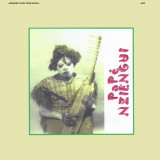
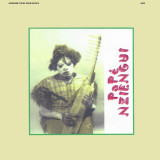
Kadi Yombo, published in 1989, is the most successful album in the quest for a fusion between tradition and modernity in Bwiti harp music of the Tsogho people of Gabon. Combining beating rattles with a layer of synthesizers, Papé Nziengui blends in a contrapuntal dialogue characteristic of harp playing: male song in appeal and female choir in response, male voice of the musical arc and rhythms of female worship. But above all it’s Tsogho ritual music and modern studio orchestration. The result is an initiatory itinerary of 10 musical pieces which are all milestones likely to be simultaneously listened to, danced, meditated on, and soon acclaimed. In the years since, Nziengui has traveled he world from Lagos to Paris, from Tokyo to Cordoba, from Brussels to Mexico City to become a true icon, the emblem of Gabonese music.
Like Bob Dylan, "electrifying" folk and Bob Marley mixing rock with reggae, some purists have criticized Nziengui for having distorted the music of harp by imposing a cross with modern instruments. They even went so far as to claim that Nziengui was just an average harpist covering his shortcomings with stunts that were only good for impressing neophytes; like playing a harp placed upside down behind his back or playing two or three harps simultaneously. Sincere convictions or venomous defamations, in any case, Nziengui never gave in to such attacks, imposing himself on the contrary to pay homage to the elders (Yves Mouenga, Jean Honoré Miabé, Vickoss Ekondo) while instructing the maximum of young people. He is thus the promoter of many young talents, the most prominent of which is certainly his nephew Jean Pierre Mingongué. In a conservative society where the sacred is confused with secrecy, exposing the mysteries of Bwiti in broad daylight can be punished by exclusion or even execution.
Papé Nziengui has always claimed that he faces such risks because he never felt enslaved to a community that governs his life, that regulates his conduct, that has a right of censorship over his activities. Like Ravi Shankar, the famous sitarist, Papé Nziengui is a man of rupture but also of openness, a transmitter of culture. As proof, he has established himself in Libreville, Gabo’s capital, as the main harpist for sessions and concerts, accompanying the greatest national artists (Akendengué, Rompavè, Annie-Flore Batchiellilys, Les Champs sur la Lowé, etc.) as well as foreign artists (Papa Wemba, Manu Dibango, Kassav', Toups Bebey, etc.). In 1988, he was the first harpist to release an album in the form of a cassette produced by the French Cultural Center (Papé Nziengui, Chants et Musiques Tsogho). At the same time, he created his own group (Bovenga), combining traditional music instruments (musical bow, drums, various percussion instruments, etc.) in the framework of a true national orchestra, which gave the first concert and the first tours of a traditional music that was both modern and dynamic, thus "democratizing" the harp, to the dismay of certain purists.
On the other hand, in modern music, dominated by the logic of profit or even commercialism, artistic creation must often be adjusted for a specific audience based on reason rather than heart. But instead of allowing himself to be distorted, Papé Nziengui has always tried to produce music that is not a caricature, worthy in its expression as in its content, of the sacredness and transcendence of the music of the Origins. This is what makes Nziengui not only the musician, but the man someone whose age hasn’t altered any of his freshness or authenticity
Kadi Yombo, published in 1989, is the most successful album in the quest for a fusion between tradition and modernity in Bwiti harp music of the Tsogho people of Gabon. Combining beating rattles with a layer of synthesizers, Papé Nziengui blends in a contrapuntal dialogue characteristic of harp playing: male song in appeal and female choir in response, male voice of the musical arc and rhythms of female worship. But above all it’s Tsogho ritual music and modern studio orchestration. The result is an initiatory itinerary of 10 musical pieces which are all milestones likely to be simultaneously listened to, danced, meditated on, and soon acclaimed. In the years since, Nziengui has traveled he world from Lagos to Paris, from Tokyo to Cordoba, from Brussels to Mexico City to become a true icon, the emblem of Gabonese music.
Like Bob Dylan, "electrifying" folk and Bob Marley mixing rock with reggae, some purists have criticized Nziengui for having distorted the music of harp by imposing a cross with modern instruments. They even went so far as to claim that Nziengui was just an average harpist covering his shortcomings with stunts that were only good for impressing neophytes; like playing a harp placed upside down behind his back or playing two or three harps simultaneously. Sincere convictions or venomous defamations, in any case, Nziengui never gave in to such attacks, imposing himself on the contrary to pay homage to the elders (Yves Mouenga, Jean Honoré Miabé, Vickoss Ekondo) while instructing the maximum of young people. He is thus the promoter of many young talents, the most prominent of which is certainly his nephew Jean Pierre Mingongué. In a conservative society where the sacred is confused with secrecy, exposing the mysteries of Bwiti in broad daylight can be punished by exclusion or even execution.
Papé Nziengui has always claimed that he faces such risks because he never felt enslaved to a community that governs his life, that regulates his conduct, that has a right of censorship over his activities. Like Ravi Shankar, the famous sitarist, Papé Nziengui is a man of rupture but also of openness, a transmitter of culture. As proof, he has established himself in Libreville, Gabo’s capital, as the main harpist for sessions and concerts, accompanying the greatest national artists (Akendengué, Rompavè, Annie-Flore Batchiellilys, Les Champs sur la Lowé, etc.) as well as foreign artists (Papa Wemba, Manu Dibango, Kassav', Toups Bebey, etc.). In 1988, he was the first harpist to release an album in the form of a cassette produced by the French Cultural Center (Papé Nziengui, Chants et Musiques Tsogho). At the same time, he created his own group (Bovenga), combining traditional music instruments (musical bow, drums, various percussion instruments, etc.) in the framework of a true national orchestra, which gave the first concert and the first tours of a traditional music that was both modern and dynamic, thus "democratizing" the harp, to the dismay of certain purists.
On the other hand, in modern music, dominated by the logic of profit or even commercialism, artistic creation must often be adjusted for a specific audience based on reason rather than heart. But instead of allowing himself to be distorted, Papé Nziengui has always tried to produce music that is not a caricature, worthy in its expression as in its content, of the sacredness and transcendence of the music of the Origins. This is what makes Nziengui not only the musician, but the man someone whose age hasn’t altered any of his freshness or authenticity
Kadi Yombo, published in 1989, is the most successful album in the quest for a fusion between tradition and modernity in Bwiti harp music of the Tsogho people of Gabon. Combining beating rattles with a layer of synthesizers, Papé Nziengui blends in a contrapuntal dialogue characteristic of harp playing: male song in appeal and female choir in response, male voice of the musical arc and rhythms of female worship. But above all it’s Tsogho ritual music and modern studio orchestration. The result is an initiatory itinerary of 10 musical pieces which are all milestones likely to be simultaneously listened to, danced, meditated on, and soon acclaimed. In the years since, Nziengui has traveled he world from Lagos to Paris, from Tokyo to Cordoba, from Brussels to Mexico City to become a true icon, the emblem of Gabonese music.
Like Bob Dylan, "electrifying" folk and Bob Marley mixing rock with reggae, some purists have criticized Nziengui for having distorted the music of harp by imposing a cross with modern instruments. They even went so far as to claim that Nziengui was just an average harpist covering his shortcomings with stunts that were only good for impressing neophytes; like playing a harp placed upside down behind his back or playing two or three harps simultaneously. Sincere convictions or venomous defamations, in any case, Nziengui never gave in to such attacks, imposing himself on the contrary to pay homage to the elders (Yves Mouenga, Jean Honoré Miabé, Vickoss Ekondo) while instructing the maximum of young people. He is thus the promoter of many young talents, the most prominent of which is certainly his nephew Jean Pierre Mingongué. In a conservative society where the sacred is confused with secrecy, exposing the mysteries of Bwiti in broad daylight can be punished by exclusion or even execution.
Papé Nziengui has always claimed that he faces such risks because he never felt enslaved to a community that governs his life, that regulates his conduct, that has a right of censorship over his activities. Like Ravi Shankar, the famous sitarist, Papé Nziengui is a man of rupture but also of openness, a transmitter of culture. As proof, he has established himself in Libreville, Gabo’s capital, as the main harpist for sessions and concerts, accompanying the greatest national artists (Akendengué, Rompavè, Annie-Flore Batchiellilys, Les Champs sur la Lowé, etc.) as well as foreign artists (Papa Wemba, Manu Dibango, Kassav', Toups Bebey, etc.). In 1988, he was the first harpist to release an album in the form of a cassette produced by the French Cultural Center (Papé Nziengui, Chants et Musiques Tsogho). At the same time, he created his own group (Bovenga), combining traditional music instruments (musical bow, drums, various percussion instruments, etc.) in the framework of a true national orchestra, which gave the first concert and the first tours of a traditional music that was both modern and dynamic, thus "democratizing" the harp, to the dismay of certain purists.
On the other hand, in modern music, dominated by the logic of profit or even commercialism, artistic creation must often be adjusted for a specific audience based on reason rather than heart. But instead of allowing himself to be distorted, Papé Nziengui has always tried to produce music that is not a caricature, worthy in its expression as in its content, of the sacredness and transcendence of the music of the Origins. This is what makes Nziengui not only the musician, but the man someone whose age hasn’t altered any of his freshness or authenticity
Old Souls Carnival is the most accomplished Medline's album so far, presenting his new direction in composition and his multi-instrumentalist approach. The project is driven by a strong spiritual background with a deep 70's soul jazz fusion influence, raised into a movie soundtrack dimension.
Each piece reveals a facet of Medline's music, origins, tastes and character. Playing with shamanic and exotic harmonies, hybridized with distorded psych funk sound and solidely pulsed by unique polyrythmic drum beats.
The natural flows of his expression speaks deeply and truely to the senses, traducing 6 months of gathering emotions, traducing feelings, during meditative recordings sessions on the world evolution and reality. The entire album was produced, mixed and mastered by Medline at the family's house, in Messac, offering a perfect immersion in his spiritual and material universe.
The fabulous and mysterious handmade drawings of Stéphane Carricondo, are the perfect rendition of Medline's mestized artwork. Rich with a wide variety of colors and influences, channeled by Medline's own hands, this first 12" record released on his label My Bags lives up to expectation. This French-Chilean producer always works outside of boundaries and styles frames, and with this LP shows that extraordinary projects can be expected from him for years to come.
Released in 1983 on a miniscule run of 300-self-financed LP’s, Dennis Taylor’s ‘Dayspring’ remains a lost masterwork of transcendental instrumental guitar. An important missing link between the 60’s folkloric experimentalism of John Fahey and Robbie Basho, and the new age atmospherics mined by William Ackerman and Michael Hedges in the early 80’s. Though Taylor’s guitar playing remains crisply unadorned on these 10 tracks, his technique and his compositions stretch beyond the folk roots of the genre. He crafts a soundworld that is both immersive and familiar. His pastoralism has a spaciousness - a pianistic drift - that feels truly timeless.
Taylor cut his musical teeth through the 60’s and 70’s playing with garage rock bands, and later finding his footing in the world of jazz/folk fusion. Sometime in the early 70’s, Taylor found his most profound inspiration to date when he witnessed a live performance from Takoma Records luminary, Leo Kottke. Enraptured by Kottke’s ability to fill the room so completely, with the sound of just one instrument, Taylor was determined to follow a similar path. Thus, he began composing music for solo guitar. He spent nearly a decade writing and honing his pieces, finally entering a studio in 1982 to commit them to tape. Taylor likened the recording experience to “a living room concert.” He recorded each song in a single take, in the order they appear on the album. Paying out of pocket for the recording sessions, studio time was at a premium, so Taylor had arrived prepared. And the results speak for themselves.
Dennis Taylor’s guitar playing is clean, precise, and masterfully proficient. And yet, ‘Dayspring’ is not merely a document of technical ability. His compositions are deeply
expressive. Taylor’s deft fingerpicking is married to achingly beautiful melodicism. His arpeggios chime and roll with painterly expression. Across the breadth of ‘Dayspring’, Dennis Taylor strikes a perfect balance between wistful nostalgia and bold expansion. Though Taylor initially hoped to release his album with new age progenitors Windham Hill, he ultimately decided to release the album on his own. He self-financed a pressing of 300 LP’s, which were largely distributed locally in his hometown of Lincoln, Nebraska. And now, Morning Trip is supremely proud to bring this album back to light. An important missing piece in the expansive tapestry of instrumental guitar music, finally restored.
Released in conjunction with the reissue of the Raintears EP, Quindi is proud to present further archival finds from Italian experimental project Cabaret du Ciel. Like a Fool / Inside Loneliness is a single shining a light on the brief collaboration between Andrea Desidera, Gian Luigi Morosin and singer Barbara Volpato.
After years working as an instrumental outfit, the sessions with Volpato from 1991 were the first time Desidera and Morosin's project had welcomed in a vocalist. Of the many tracks written and recorded at that time, the best two were selected and carefully restored from the original tapes, now immortalised on vinyl and expanding the public impression of Cabaret du Ciel.
'Like A Fool' re-imagines the hazy serenity of Cabaret du Ciel in a dream pop context, injecting the soft-focus synth work with the energy of bold drums to provide a suitable framework for Volpato's voice. The crisp twang of new wave guitar completes the picture, while the trademark progression intrinsic to Cabaret du Ciel lends itself to the traditional song structures of pop.
'Inside Loneliness' is a natural companion to the A side, redolent with the heavy-hearted synth-pop romanticism of the late 80s and early 90s. The DIY sound on the track conveys an intimacy that can only come from artists recording in their own private environment, pouring their hearts and souls into a four-track recorder without a conceit other than pure, honest expression.
Joseph Carvell returns to Karaoke Kalk with his sophomore album under the Pink Shabab moniker. »Never Stopped Loving You« was for the most part written between Spring and late Summer 2020 in his Camberwell home and like his 2019 debut »Ema by the Sea« recorded in the South of France together with Emmanuel Mario, better known as Astrobal. It’s a record informed by feelings of nostalgia, love, longing, romance and loss and, much like his previous album, displays Carvell's knack for making introversion sound extroverted. As a bassist, his approach to songwriting is both rhythmic and melodic, making the resulting music just as visceral as it is emotive. Much like the record’s title can be understood as both a lament or an expression of joyful dedication, the music on »Never Stopped Loving You« is profoundly ambiguous.
»I was lucky with the timing for this record,« says Carvell and at first that may sound counterintuitive: managing to play only one show in Zurich in early 2020, he had to cancel his planned European tour and go back to the United Kingdom, which soon went into lockdown. He made the best out of the situation, recording electric and upright bass for Nick Krgovich, Daniel O’Sullivan and Zooey’s new records while also working on tracks and demos by himself. »The world seemed to have stopped and I had more time to think about the past and find the best grooves, the suitable keyboard touches and the right words,« says Carvell. Everything came together slowly before he boarded a train to France with his keyboard: »The pace of life completely dropped and between takes Ema and I were going swimming and taking walks,« he says of the sessions.
»Never Stopped Loving You« is notably more electronic than its predecessor, but also full of the small melodic and harmonic details that made »Ema by the Sea« such an outstanding record. »I was listening to more 1990s dance and house music and 1980s pop and also a healthy amount of ambient music,« explains Carvell. These influences are clearly audible on songs like the Chicago House-esque beats of »Show Your Love« or »Why Did I Leave You that Morning«, the skittish rhythms on »Let Go« and the near-Balearic »San Junipero«. Especially the latter makes it clear that Carvell spent much time devoting himself to movies and TV shows, but also incorporated more piano sounds in his songs—he learnt the instrument by playing along to classic Beatles and Beach Boys songs.
Despite being more upbeat on a rhythmic level than before, Carvell’s use of texture and his peculiar voice add another note to the music. Even an anthemic song like »Run Away«, his first composition to follow a classic verse/chorus structure, is profoundly ambivalent, both overjoyed and deeply melancholic. By the same token however, even a torch song like »You Stepped Out of My Life« is enormously consoling. This, after all, has always been Carvell’s strength: creating music that will cheer you up when you’re down while also injecting a sense of futility into every moment of euphoria. It never shone more brightly than on »Never Stopped Loving You.«
‘Expressions of Interest’ is the debut album from Melbourne/Naarm post-punk group screensaver.
Sonically, the 10 track album is rich and detailed, and pays homage to its era of inspiration (late 70s-mid 80s post-punk and new wave) with gripping vocals, dissonant guitar, melodic basslines, washes of synths and motorik drumming. Engineered by Julian Cue alongside band member Chris Stephenson and recorded over multiple studio sessions between 2020-2021
The album opens with the ominously titled ‘Body Parts’, an immediately arresting song that showcases the bands penchant for blending classic post-punk elements, leaning into a sound somewhere between the Banshees and Protomartyr.
Maynard doubles down on these themes in the frenetic second track, ‘No Movement’. Guttural organ tones swim under overdriven guitar, jagged and intense. Additional textures and sound effects are used percussively to embellish the dynamics, creating a feverish atmosphere with some Martin Hannett like flourishes.
The album takes a surprising turn into electronic driven krautrock on track three with 'Buy, Sell, Trade' - a rollicking piece of danceable ephemera, dominated by swirling synth sounds and punctuated with electronics reminiscent of Sparks/Moroder collaborations. Chris Stephenson's masterful guitar work begins with Greg Sage-esque determination before a crescendo into a lush Frippertronics outro.
'MEDS' transports us back to the foundation established on 'Body Parts', a gothy piece, full of tribal toms and dirge-y synths. Industrial punk rock nearly swallowed whole by the keys in the middle and slowly building back to complimentary guitar and vocal hooks.
It's from this point in the album that the band let's their other influences rise to the surface, as they explore touches of EDM on 'Static State' - a brutal, death-disco style track, Krystal Maynard's lead synth and gloomy vocal complimenting the pounding drums and dub-esque bass line culminating in a track worthy of the dancefloor.
Opening side two we have 'Skin', beginning with a solid and simple backbeat, James Beck’s post-punk percussion provides a steady and minimal framework for the rest of the band to colour in with great depth and detail. Giles Fielke’s bass guitar wobbles brilliantly leading the verse melody, whilst Chris Stephenson’s guitar drives the chorus that folds neatly in on itself.
In ‘Attention Economy’, Krystal Maynard is flexible with her lyrical style, and knows how and when to lend her voice to the greater backdrop of the composition. ‘Attention Economy’ has an almost Kraftwerkian structure - repetitious, but engaging with its constant tom driven beat, lush synth lines and minimal bass tones.
Just when you thought things had slowed down, screensaver ramp things right back up again with ‘Overnight Low’ - a no holds barred thumper. Giles Fielke underpins the hard-edged sound with his bassline, keeping things smooth and tight. It brings to mind a hybrid of PiL’s ‘Annalisa’ and Wire’s ‘Two People In a Room.’
Before you can catch your breath, we have ‘Regular Hours’ - another industrial track, and perhaps the sister song to ‘Static State’ heard earlier on side one. Seething electronic drum samples cut through an abyss of growling synths, Giles Fielke hanging up the bass temporarily to accompany Krystal Maynard on synth duties.
The album closes with the fittingly titled ‘Soft Landing’, literally bringing the listener back down...softly. The song is heavy on atmos, and resembles the aesthetics previously encountered on ‘Attention Economy’ a few tracks earlier.
‘Expressions of Interest” was recorded at various locations across Melbourne, with a handful of songs being captured before the start of the Covid pandemic in January 2020. With the recording timeline being drastically altered, the band shifted focus to work on what would become their first single ‘Strange Anxiety’, throughout the first months of the Melbourne 2020 lockdown.
- Living Proof
- Harmonia’s Dream
- Change
- I Don’t Wanna Wait
- Victim
- I Don’t Live Here Anymore
- Old Skin
- Wasted
- Rings Around My Father’s Eyes
- Occasional Rain
The War On Drugs first studio album in four years, ‘I Don’t Live Here Anymore’. Over the last 15 years, The War on Drugs have steadily emerged as one of this century’s great rock and roll synthesists, removing the gaps between the underground and the mainstream, between the obtuse and the anthemic, making records that wrestle a fractured past into a unified and engrossing present. The War On Drugs have never done that as well as they do with their fifth studio album, ‘I Don’t Live Here Anymore’, an uncommon rock album about one of our most common but daunting processes—resilience in the face of despair.
Just a month after The War On Drugs’ ‘A Deeper Understanding’ received the 2018 Grammy for Best Rock Album, the core of Granduciel, bassist Dave Hartley, and multi-instrumentalist Anthony LaMarca retreated to upstate New York to jam and cut new demos, working outside of the predetermined roles each member plays in the live setting. These sessions proved highly productive, turning out early versions of some of the most immediate songs on ‘I Don’t Live Here Anymore’. It was the start of a dozen-plus session odyssey that spanned three years and seven studios, including some of rock’s greatest sonic workshops like Electric Lady in New York and Los Angeles’ Sound City. Band leader Adam Granduciel and trusted co-producer/engineer Shawn Everett spent untold hours peeling back every piece of these songs and rebuilding them.
One of the most memorable sessions occurred in May 2019 at Electro-Vox, in which the band’s entire line-up — rounded out by keyboardist Robbie Bennett, drummer Charlie Hall, and saxophonist Jon Natchez — convened to record the affecting album opener “Living Proof.” Typically, Granduciel assembles The War On Drugs records from reams of overdubs, like a kind of rock ‘n’ roll jigsaw puzzle. But for “Living Proof,” the track came together in real time, as the musicians drew on their chemistry as a live unit to summon some extemporaneous magic. The immediacy of the performance was appropriate for one of the most personal songs Granduciel has ever written.
The War On Drugs’ particular combination of intricacy and imagination animates the 10 songs of ‘I Don’t Live Here Anymore’, buttressing the feelings of Granduciel’s personal odyssey. It’s an expression of rock ’n’ roll’s power to translate our own experience into songs we can share and words that direct our gaze toward the possibility of what is to come.
- 1: I Will Be Your Only One (Monika Werkstatt Version) Monika Werkstatt 03:42
- 1: 2 Paradise (Monika Werkstatt Version) Monika Werkstatt 04:55
- 1: 3 Radiator (Monika Werkstatt Version) Monika Werkstatt 03:26
- 1: 4 Komm Darling Lass Uns Tanzen Gehen (Monika Werkstatt Version) Monika Werkstatt 03:32
- 1: 5 You You (Monika Werkstatt Version) Monika Werkstatt 03:28
- 1: 6 Schreiender Tag (Monika Werkstatt Version) Monika Werkstatt 03:50
- 1: 7 Geld (Monika Werkstatt Version) Monika Werkstatt 03:27
- 1: 8 Mother (Monika Werkstatt Version) Monika Werkstatt 03:35
- 1: 9 White Sky White Sea (Monika Werkstatt Version) Monika Werkstatt 03:46
- 1: 0 Herzschlag (Monika Werkstatt Version) Monika Werkstatt 03:53
- 1: Zukunft (Monika Werkstatt Version) Monika Werkstatt 02:42
- 1: 2 Nite Time (Monika Werkstatt Version) Monika Werkstatt 04:02
- 2: 1 Zukunft (Sender Freies Berlin) Mania D. 0:18
- 2: Radiator (Zossener Straße Cute Version) Mania D. 56
- 2: 3 I Will Be Your Only One („Malaria!“ Ep) Malaria! 03:09
- 2: 4 Nite Time („A Touch Bcl“ Album Version) Matador 04:46
- 2: 5 Herzschlag (7Inch Single, Monogam) Mania D. 0:56
- 2: 6 Paradise (Demo Version) Matador 03:04
- 2: 7 White Sky White Sea (Edit, „Weisses Wasser“ Ep) Malaria! 04:5
- 2: 8 Zukunft (Live In Düsseldorf) Mania D. 0:56
- 2: 9 Komm Darling Lass Uns Tanzen Gehen (Live In Düsseldorf) Mania D. 01:54
- 2: 10 Mädels Sind Toll (Live Berlin) Malaria! 04:35
- 2: 11 You You (Live In Washington D.c., 9:30 Club, 1983) Malaria! 05:37
- 2: 1 Schreiender Tag Matador 04:13
- 2: 13 Mother (Demo Version) Matador 03:00
M_SESSIONS - THE PROCESS
"M_Sessions" is offering a contemporary version of Mania D., Malaria and Matador’s music for the 40th anniversary plus the rare originals. Bringing the past into the now and into the future.
Monika Werkstatt seemed the perfect choice for new interpretations. Founded in 2015, comprising female electronic musicians and producers from the entourage of Monika Enterprise and Moabit Musik. The loose collective played dozens of improvised concerts around Europe and released a studio album and live recordings in everchanging artist constellations.
The M_Sessions involved Pilocka Krach, Beate Bartel, Midori Hirano, Mommo G, Lucrecia Dalt, Antye Greie-Ripatti, Natalie Beridze, Annika Henderson and myself. Here the form of interpretation is focussing on keeping the freedom of their improvised work and adapting it to the collective appropriation of songs. I cannot imagine a better reinterpretation of the material with its real life ups and downs and with its enthusiasm.
The original core team of Beate Bartel, Bettina Köster, Manon P. Duursma and myself selected "Rare Originals" from the repertoire of the 3 bands where we saw special relevance and beauty - these tracks are on LP2. We rediscovered live tracks, living room recordings and demo versions from our times long gone. (G.Gut)
M_DOKUMENTE // THE BOOK - THE RECORDS - THE EXHIBITION
The project M_Dokumente focuses on the All Female bands Mania D., Malaria! and Matador in the West Berlin music and art scene of the late 1970s and 1980s. We celebrate this 40 years retrospetive with a big festival weekend from 21.-24.10.2021 at Silent Green from a explicitly female perspective.
The three bands around their members Beate Bartel, Bettina Köster and Gudrun Gut played concerts in different formations from 1979 on, released records and toured around the world. The self-determined appearance of the musicians was new, raised some eyebrows and was reflected both in the music and the lyrics, but also in their unique style and the genre-crossing approach of "more art in the music, more music in the art". To this day, the bands are considered visionary, they shaped a new image of women in pop culture and are pioneers and role models for the still important and necessary emancipatory movement in the music industry. Far beyond the borders of Berlin.
3Ms
The three, reunited: Malaria, Matador and Mania D, unter einem Dach, but gutted, replaced with electronic hearts, new beats, new beasts, the time has changed, yet the politics, the problems, the heartache remains the same. 2021 sees the anniversary of the 3 M’s and therewith the production of an album of songs, covering a selection of the bands’ finest output, this time assembled by a new set of feminist misfits; producers, fangirls, instrumentalists, under the strict guidance of original members Gudrun Gut and Beate Bartel. M-Sessions features: AGF, Lucrecia Dalt, Sonae, Midori Hirano, Islaja, Natalie Beridze, Pilocka Krach, Annika Henderson (Anika), Lupe, Gudrun Gut and Beate Bartel. Beginning in West Berlin, in 1979, with the inception of Mania D, spawning Malaria! and later Matador; in a time when music was essential to movement, to escape, to space, to the scene and to the rebellion of the people; three bands stood for trial and error, trial and terror, anti- conformity, and anti-consumerism, for girl power and sticking it to the man, and for just doing whatever the hell they wanted. The three, their existence slightly staggered, with different members, different grudges, different heartbreaks, different instrumental expressions, were joined by a string of barbed wire, piecing pigeon hearts, within the playground that was the desolate ex-capital, now again capital, Berlin; a place where artists and freaks could run free amongst the wrinklies and army dodgers; no microscopes, no rules, no property developers. (ANNIKA HENDERSON)
Already renowned for a ball-tearing live show, The Sniffers
made their international debut as one of the hottest tipped
acts at The Great Escape in 2018. Soon afterwards, they
signed deals with both Rough Trade Records and ATO
Records, made a massively hyped appearance at SXSW,
and finally released their self-titled debut album in 2019,
landing them an ARIA (Australian Recording Industry
Association) Award for Best Rock Album, capping off a wild
year for the lunatic, likeable punks.
Late in 2020, Amyl and The Sniffers went into the studio with
producer Dan Luscombe to record their sophomore album,
‘Comfort To Me’. Written over a long year of lockdown, the
album was influenced by and expanded on a heavier pool of
references - old-school rock’n’roll (AC/DC, Rose Tattoo,
Motörhead and Wendy O Williams), modern hardcore
(Warthog and Power Trip) and the steady homeland heroes
(Coloured Balls and Cosmic Psychos).
Lyrically, the album was influenced by Taylor’s rap idols and
countless garage bands and, in her words, “I had all this
energy inside of me and nowhere to put it, because I couldn’t
perform, and it had a hectic effect on my brain. My brain
evolved and warped and my way of thinking about the world
completely changed.”
Seventeen songs were recorded in the ‘Comfort To Me’
sessions and the top thirteen made the cut. They were mixed
long distance by Nick Launay (Nick Cave, IDLES, Yeah Yeah
Yeahs) and mastered by Bernie Grundman (Michael
Jackson, Prince, Dr Dre).
‘Comfort To Me’ demonstrates the same irrepressible smarts,
integrity and fearless candour as their debut but, as you’d
expect of any young band five years on, their sound has
evolved - in Amy’s words, it’s “raw self-expression, defiant
energy and unapologetic vulnerability.”
in winter 2016, taumel and the ensemble adapter met for several improvisational sessions to develop an evening of music in which the contrasts and boundaries between composition and improvisation, freedom and determination, chaos and structure were to blur or collide. the sessions focused on the development of a specific, sound-gestural musical language. in a way, each musician developed kind of a character on his instrument and its own specific soundgesture. we recorded these sessions and used them as a basis for "in pieces". "in pieces" consists of the remixes of these sessions, as well as additional studio material produced by taumel. "in pieces" can be understood as a sureal sound poem, an abstract sound story that wanders through the most different states - from greatest happiness to frenzy and madness. in the 2 mutating sound fields, the associative story revolves around the theme of linguistic inalienability and thus also around the theme of 'chaos and order'. this ambiguity, the attempt at beauty and its overturning into destruction and failure. attempts at writing, attempts at speaking, stammering, stuttering, screaming, constriction, drifting away, humming... in the mutation of states, heterogeneous sound events meet or are mixed to a new kind of soundmash between song, voices, melody, harmony, instruments, noise, beats, riffs, words, electronics and alienation. the action of the instrumentalists (the instrument playing) is on the same level as any other sound producing action or vocal expression as well as any electronic sound production and is always meant gesturally, performatively, as action, as acoustic dance. "volume one" is the first part of a musical context planned as a two-part work (in pieces - volume two). in two sound parts (side a, side b) "in pieces - volume one" is not a song cycle like our other series, e.g. TRAUM, but rather a musical 2-act, later altogether 4-act. here the overall form of the musical series is not divided into albums and songs, but into albums and their a+b sides, like act 1, 2, 3 and 4. perhaps, therefore, "in pieces" can also be heard as an acoustic theater, or as a radio play without words, or as a soundtrack without a film, or as a film without a picture, or simply as an order of changing sound events . "off the record" in "off the record" taumel meets other musicians and develops albums in collaboration. here different forms of musical interaction can be tried out. in this case of "in pieces" the collaboration with the ensemble adapter consisted in these sessions, which form the basic framework and skeleton for the whole album.
Luca Yupanqui was not yet born when she recorded her debut album. The music on the aptly titled Sounds of the Unborn is the expression of life in its cosmic state _ pre-mind, pre-speculation, pre-influence, and pre-human. It is the first album created by a person while they were still inside the womb, the expression of a soul that hasn't yet seen the light of day nor taken a single breath of air. It is a message that comes from a different realm, a sublayer of our existence. Sounds of the Unborn was made with biosonic MIDI technology, which translated Luca's in utero movements into sound. With the help of her parents, Psychic Ills bassist Elizabeth Hart and Lee Scratch Perry collaborator Iván Diaz Mathé, Luca's prenatal essence was captured in audio. They designed a ritual, a kind of joint meditation for the three of them, with the MIDI devices hooked to Elizabeth's stomach, transcribing its vibrations into Iván's synthesizers. They let the free-form meditations flow without much interference, just falling deeper into trance and feeling the unity. After five hour-long sessions, the shape of an album began to emerge. Elizabeth and Iván then edited and mixed the results of the sessions, respecting the sounds as they were produced, trying to intervene as little as possible, allowing Luca's message to exist in its raw form. This cosmic soul summoning created new sounds, striking into uncharted territory for Elizabeth and Iván as musicians. A new language was being created, a new form of communication. It was a music without intellect or intentionality behind it, with no preconception or attempt to create any specific sound or melody. Every note on Sounds of the Unborn occurred naturally. It is human nature to wonder what life is like inside another human being's consciousness. How does it feel? What does it sound like? All these questions became stronger and more important to Elizabeth and Iván while they were waiting for Luca to come into the world. At a certain point the questions turned into, What would she say if she could speak? How would she react to the outer world? And ultimately, What kind of music would she play if she was able to? This album is an attempt to answer those questions. RIYL: Brian Eno, Mort Garson, Kaitlyn Aurelia-Smith