¡NO PASARAN! is the extension to Extrawelt's DYSTORTION, from brooding tension to playful relief, the album took listeners on a six-year-crafted exploration. Their next EP picks up where this epic chapter left off and is clearly related. It's a hypnotic dive into shadow and dream, darkness and melancholy with subtle flashes of light.
The title track of the EP, already known from the album (D1 - Extrawelt - ¡No Pasaran!) carries a commanding presence, pulses with a rolling, insistent bassline that anchors shifting rhythmic currents and evolving sonic layers. Between tension and release, shadows and melody, it's a track that moves like a living entity.
Arctic Dead Run hits like a surge of raw energy. Acid lines roll relentlessly, building tension that feels alive. Then a melody sneaks in - soft, almost fragile - cutting through the intensity, until hi-hats erupt and the groove snaps into full focus. Maximal yet controlled, every element finds its place.
Clipping Me Softly dissolves the pressure with a dark, playful groove. Precise rhythms meet spacious pads, opening into a dreamlike state where night slowly gives way to warmth and light.
A focused and uncompromising continuation of Extrawelt's sonic language: Dense grooves, acid pressure, and dreamlike relief collide in a release built for deep listening and late-night floors.
Поиск:extra extra
Все
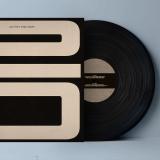
(Extrawelt Remix) The second vinyl installment of 20 shifts focus toward cinematic structure, melodic depth, and genre-crossing reinterpretations. Collaborations and remixes involving Extrawelt, Noga Erez, Perfect Stranger, PRZ, and A. Balter underline Eitan Reiter's refined and flexible production approach.
20 (Part 2) is a 12-inch vinyl release featuring exclusive vinyl cuts that are not available digitally, offering collectors insight into Reiter's evolving sonic language.
LS003 completes the vinyl-only snapshot of 20, presenting carefully selected collaborations adapted for the physical format.
- A1: Dj Ski's Intro
- A2: Nineteen Seventy Something
- A3: Son Of Yvonne
- B1: Da' Pro
- B2: Store Frontin
- B3: Me & My Gang
- B4: Crush Hour (Feat Pav Bundy)
- C1: Think I Am (Feat Big Daddy Kane & Mf Doom)
- C2: Fresh Fest Reggie B
- C3: Hoe-Tel-Leftovers
- C4: Slow Down
- D1: Home Sweet Home (Feat Pav Bundy)
- D2: Dedication
- D3: I Did It
- D4: Outtakes
Repress incoming!
Following the success of two collaborative releases (EMC “The Show”/2008 and Ace & Edo G “Arts & Entertainment” /2009), Masta Ace joins forces with the metal faced MF Doom for Son of Yvonne, a highly personal concept album that celebrates the life and legacy of Ace’s recently departed Mother. Like his 2004 landmark Disposable Arts, Son of Yvonne is meticulously constructed with stories, settings, and characters that resonate with flesh and bone humanity. Interstitial vignettes provide a thematic backbone to the experience, and each track complements and completes the previous to form a narrative whole: a sometimes visceral, sometimes nostalgic slice of Ace’s young life in Brownsville, Brooklyn. Entirely underscored by MF Doom’s iconic Special Herbs instrumentals, Son of Yvonne features the Juice Crew general Big Daddy Kane, new comers Pav Bundy (The Bundies), Reggie B and even MF Doom on the mic. It’s Masta Ace’s no frills flow, however, that looms largest above the dusty samples and digger loops that define Doom’s production. Ace’s photo-realistic rhymes about stick-up kids, spraycan artists and wack emcees add extra gravity to his already celebrated reputation as “truly an under-appreciated rap veteran and underground luminary” (Allmusic Guide). Like Eminem recalls in his 2008 autobiography The Way I Am, “Masta Ace had amazing storytelling skills. His thoughts were so vivid.” TRACKLIST: A1. DJ Ski's Intro A2. Ninteen Seventy Something A3. Son Of Yvonne B1. Da Pro B2. Store Frontin B3. Me & My Gang B4. Crush Hour feat Pav Bundy C1. Think I Am feat Big Daddy Kane & Mf Doom C2. Fresh Fest Reggie B C3. Hoe-Tel-leftovers C4. Slow Down D1. Home Sweet Home feat Pav Bundy D2. Dedication D3. I Did It D4. In Da Spot feat Milani The Artis D5. Outtakes
‘Call To Arms & Angels’ is the title of the twelfth studio album from South London collective Archive.
A 17-track double CD / triple LP recorded at RAK studios in London and released on
Dangervisit/PIAS.
Deluxe editions of the album also include a bonus ‘Super8’ album of new and
exclusive instrumentals, as featured in the band’s ‘Super8’ documentary that will
accompany the release of the album.
Produced by Archive and long-time collaborator Jérome Devoise, ‘Call To Arms &
Angels’ is the band’s first studio set since 2016’s ‘The False Foundation’.
Talking about the new album, Darius Keeler says, “Writing our twelfth studio album
was an extraordinary time for the band. The song writing became an unfolding
narrative as the world got stranger and more disturbing every day. With people’s
freedoms being pushed to the brink, the suffering Covid caused and the terrible
events in the US lead by Trump and the rise of the Right, anything seemed possible.
“To reflect on these times as artists brought up a darkness and an anger, but also a
strange kind of inspiration that was at times unsettling. It really made us appreciate
the power of music and how lucky we are to be able to express our feelings in this
way.
“It seems there is light at the end of the tunnel, but there are always shadows within
that light.”
Deluxe 2CD album plus ‘Super8’ bonus CD in 40-page casebound Polaroid
bookpack.
2CD album.
Deluxe vinyl box set with white coloured vinyl 3LP (exclusive to this box set), ‘Super8’
bonus LP on white vinyl (exclusive to this box set), deluxe 3CD with Polaroid booklet
and 12” x 12” art print.
Triple LP on gold vinyl in triple gatefold sleeve.
Triple LP on green vinyl in triple gatefold sleeve.
Triple LP on black vinyl in triple gatefold sleeve.
- Data - Ja Nisam Kao Ti
- Data - Izumi
- Data - España
- Data - Damage In My Head
- Data - France
- Data - Strahovi
- Data - Ne Želim Da Tako Žive
- The Master Scratch Band - Break War (The First Version)
- The Master Scratch Band - Jailbreak (The First Version)
- The Master Scratch Band - Computer Break (The First Version)
- The Master Scratch Band - Mad Scratch
Despite its tragic breakup, Yugoslavia as a political, social and cultural phenomenon still inspires generations, especially those who were born or lived at the time of this utopian land of South Slavs. Those who didn’t enjoy the privilege are still amazed by its 1970s and ’80s music scene and the number of very modern, high quality acts that were so often ahead of their time. Two such acts were Data and The Master Scratch Band, both founded by Zoran Jevtic and Zoran Vracevic, who introduced synth-pop, breakbeat, and hip-hop music in Yugoslavia in 1984 with their releases: SP Neka Ti Se Dese Prave Stvari/Ne Zovi To Ljubavlju and miniLP Deogut (Jugoton). Our latest release, “It Was Ridiculous, It Was Amazing!” gathers their earliest unreleased material from 1981-1983, showcasing a broader range of genres – alongside synth-pop and breakbeat/hip-hop, they also experimented with industrial, EBM, minimal synth, and electro-funk!
The whole record is divided into two parts: on A side there are 7 previously unpublished songs by group DATA, and on B side there are 4 previously unreleased recordings by The Master Scratch Band.
The Data side opens with two unexpected “shocker” tracks: Ja Nisam Kao Ti” (eng. I am Not Like You) and “Izumi” (eng. “Inventions”) from 1981, where they sound like early Deutsch-Amerikanische Freundschaft with unusual vocal pan sound effects on Serbian lyrics and uncompromising synth-based sound. Equally unpredictable are the next two songs: atmospheric “España” and dusty “Damage In My Head,” where Zoran Jevtić boldly steps into the lead vocal role. But the surprises don’t end there. The next two songs, France and Strahovi (eng. “Fears”), bring a mysterious and nostalgic atmosphere, elevated by the irreplaceable sound of the modular Roland System-100M. At the end comes the greatest surprise of all: Data covers YMO-Ballet in a song called Ne Zelim Da Tako Zive (eng, I Don’t Want Them Living Like That) and puts some extra energy in rhythm without losing the original song’s sensibility. Like in the original, the lyrics are tender and yet mysterious and provocative.
The Master Scratch Band side contains the very first versions of the songs Break War, Jailbreak, and Computer Break, originally recorded in studio Druga Maca in Belgrade in 1983. These versions were not released on their mini-LP album Dégout (Jugoton, 1984), and they are actually the first ever hip-hop/Breakbeat recordings in Yugoslavia. With great enthusiasm, every sound was uniquely crafted from scratch using the finest analog gear available in the early ’80s. The two young artists, aiming for international success, chose to write their lyrics in English. The album’s final track, “Mad Scratch,” showcases their talent for creating impressive sound effects, which would be a delight for contemporary DJs and producers who specialize in sampling and scratching old-school hip-hop.
This release is truly a “100% digger’s gem” – 11 previously unreleased tracks from legendary pioneers of electronic, hip-hop, and breakbeat. A collection to discover, enjoy, play, and treasure forever!
Even in these most turbulent of times, dub musician and fatigued onlooker Elijah Minnelli remains an inexplicable stalwart on the lower rungs of the Breadminster County Council.
His latest record ‘Clams As A Main Meal’ continues his astute siphoning of council funds, this time with help from the Breadminster Board of Abstinence. As a further mark of respect, the original head of the Board, Dr. K'houldoux, graces the cover art in his infamous ‘Looming Moon of Desire’ guise.*
As fine a backdrop as any for Minneli’s off-brand dub experiments, and ‘Clams...’ is the truest representation of his varied wheelhouse yet...
We find vocal appearances from dub goliath Dennis Bovell and Welsh-language singer Carwyn Ellis. A pair of tracks which build on 2024’s acclaimed ‘Perpetual Musket’, a collection of folk songs reworked alongside reggae vocalists, released by FatCat Records. It garnered glowing reviews, with nods from The Guardian and The Quietus concluding with prominent appearances on their respective yearly round-up lists.
Elsewhere, the album finds Minnelli in a more experimental mode, all wheezing contraptions and cockeyed bass, creaking with the weight of creation, a satisfying tactility laid seam-side up.
As well as ‘Perpetual Musket’, the new album follows years of sold out 7" singles, handmade and self-released. Online, the tracks have amassed global streams numbering in the millions. His tracks have found play across an eclectic range of radio mixes and dance floors, most notably the likes of Andrew Weatherall, Batu, Optimo and Zakia Sewell (BBC6Music).
It is perhaps worth mentioning that this everbuilding interest in his work is at great odds with the growing suspicions amongst his fellow townsfolk, who see his Breadminster County Council Music Initiative as nothing more than an empty cash-grab.
Further Reading on the Breadminster Board of Abstinence
In the late 70s, Breadminster was awash with the last vestiges of the hippy era. Though the flared silhouette of the lower leg remained, the utopian ideals that had once flowed merrily around the youth's shaded ankles had begun to wane. LSD and free love had led to a sharp spike in population and a generation of children raised by air-headed psychonauts unprepared for the bleary-eyed strictures of parenthood.
Aware of the crisis, the County Council entrusted Dr. Paulinque K'houldoux to spearhead a pushback, and it was his pro-abstinence movement - a mixture of education initiatives and radical renutrition campaigns - that came to impact Breadminster's census deep into the new millennium.
Being a pseudo-archipelago Breadminster has fundamentally limited resources, however deep-seated ties to distant coastal villages meant that oysters were a regular part of the local diet. K'houldoux pinpointed this as a factor in the town's overpopulation, and believed that simply replacing these with clams (a “lesser mollusk”) would help lower the erotic urges of the people. It was his “anti-aphrodesia” movement that first championed the idea of “Clams As A Main Meal,” and the slogan “Consider Abstinence” carried the message yet further.
The Breadminster Board of Abstinence soon became involved in all cultural happenings in the area, with K'houldoux MCing at prominent festivals and performances, sometimes dressed as the “Looming Moon of Desire” - an idea of his relating to the tide, seafood, menstrual cycles, and his privately held celestial predilections.
It was in 1981 that it was revealed Dr. K'houldoux had never fully qualified as a doctor and was seeking exile in Breadminster due to a series of botched bracelet heists in which he had previously been involved. K'houldoux was subsequently extradited to Basingstoke, where he served 3 of a 12-year sentence, owing to the lunar-oriented prisoner health campaigns he helped implement.
It has been a strange twist of bureaucratic fate that the Breadminster Board of Abstinence has never stopped receiving public funding, despite its lack of clear utility. And while its roots are tied to a rose-tinted past, the Board continues to sponsor cultural events and projects to this day.
An extract from: Eugeniq Schooner's article in Sydney Parishioner: “Clams, Breadminster and Countercultural Abstinence Trends” (2008)
- A1: Les Masques - Il Faut Tenir (1969)
- A2: Isabelle Aubret - Casa Forte (1971)
- A3: Christianne Legrand - Hlm Et Ciné Roman (1972)
- A4: Jean Constantin - Pas Tant D'chichi Ponpon (1972)
- A5: Billy Nencioli & Baden Powell - Si Rien Ne Va (1969)
- B1-: Marpessa Dawn - Le Petit Cuica (1963)
- B2: Jean-Pierre Sabar - Vai Vai (1974)
- B3: Sophia Loren - De Jour En Jour (1963)
- B4: Isabelle - Jusqu’à La Tombée Du Jour (1969)
- B5: Sylvia Fels - Corto Maltesse (1974)
- C1: Frank Gérard - Comme Une Samba (1972)
- C2: Ann Sorel - La Poupée Des Favellas (1971)
- C3: Charles Level - Un Enfant Café Au Lait (1971)
- C4: Andrea Parisy - Les Mains Qui Font Du Bien (1970)
- C5: Audrey Arno - Quand Jean-Paul Rentrera (1969)
- C6: Aldo Frank - T’as Vu Ce Printemps (1970)
- D1: Christianne Legrand - Cent Mille Poissons Dans Ton Filet (1972)
- D2: Clarinha - Lemenja (1970)
- D3: Hit Parade Des Enfants - Aquarela (1976)
- D4: Jean-Pierre Lang - Tendresse (1965)
- D5: Magalie Noël - Une Énorme Samba (1970)
- D6: Françoise Legrand - La Lune
Ever since the late 1950s bossa-nova revolution, Brazil’s influence on French music has been undeniable. Pierre Barouh, Georges Moustaki and a vast array of lesser known artists, all made the Musica Popular Brasileira (MPB) an axis of promotion at the service of a cool and metaphysical, modern and mixed Brazilian lifestyle. Some were seduced by the poetic languors of the bossa, some were looking for fun, and others just loved the American hybridization of jazz-bossa, jazz-samba.
What is bossa nova? One of its creators, Joao Gilberto said: "Its style, cadence, everything is samba. At the very start, we didn't call it bossa nova, we sang a little samba made up of a single note - Samba de uma nota so .... The discussion around the origins of bossa nova is therefore useless”. It is nevertheless useful to remember that these magnificent Brazilian songs, which the guitarist describes as samba, were shifted and balanced around improbable chords. "I like things that lean, the in-betweens that limp with grace," said Pierre Barrouh, quoting Jean Cocteau.
With emotion, arrangements for violin and supple guitar licks, bossa nova rapidly changed. A transformation that can be heard in the Tchic, tchic, French Bossa Nova 1963-1974 compilation, the result of a cultural reappropriation, which traveled through the United States and supplemented itself in France.
A musical revolution that has remained significant, bossa nova was born in Rio. From 1956 to 1961, Brazil lived through its golden years. In five years, the country had invented its modernist style. Elected president in 1956, Juscelino Kubitschek de Oliveira, an elegant man with a broad forehead, brandished a promising slogan: "Fifty years of progress in five years". He quickly got to work. Not worried about increasing debt, he launched the project for a new federal capital, Brasilia, designed by the communist architect Oscar Niemeyer. Volkswagen opened state-of-the-art factories and created the “fusquinha”, the Beetle. In Rio, the Vespa made its first appearance. The Arpoador Surf Club crew run into the “girl” from Ipanema, Helô Pinheiro - the tanned garota ("chick"), between a flower and mermaid, who at 17 walked by the Veloso bar, where the fiery author and composer, Tom Jobim and Vinicius de Moraes, were getting drunk on whiskey. From then on, bossa symbolized cool.
In 1958, Joao Gilberto recorded Chega de Saudade, which the directors of Philips denied, calling it "music for fagots". The marketing director, who believed in it, secretly pressed 3000 78-inch vinyls and distributed them at schools around Rio, creating a tidal wave.
American jazzmen then took over. In particular, trumpeter Dizzy Gillespie and guitarist Charlie Byrd. In November 1962, the Brazilian Ministry of Foreign Affairs funded a "Bossa-Nova" concert at Carnegie Hall in New York, inviting the genre’s pioneers. Unprepared, the show soon turned to disaster. But the troupe was invited to the White House by Jackie Kennedy. The first lady loved "the new beat" and in particular Maria Ninguem, a song by Carlos Lyra, later covered by Brigitte Bardot.
In Brazil, the 1964 military coup quickly ended this euphoria. The destructive atmosphere that ensued pushed many Brazilian musicians to leave, if not to exile. Thus, Tom Jobim, Sergio Mendes and Joao Gilberto arrived to the United States. In New York, Joao Gilberto met saxophonist Stan Getz. At the time, he was married to the Bahianese Astrud Weinert Gilberto, who had a German father. She had never sung before, but she knew how to speak English. Getz therefore asked her to replace her husband on The Girl From Ipanema. The Getz/Gilberto record with Tom Jobim on piano, was released in March 1964. Phil Ramone, the "pope of pop" was in charge of sound.
Bossa nova arrived in Paris through the classic “guitar-voice” channel (Pierre Barouh, Baden Powell, Moustaki…) But France loved jazz and Paris had already welcomed its American contributors. All these good people were to pass through Saint-Germain-des-Prés. The cabaret l'Escale became the Mecca of Latin American sound where one could find Pierre Barrouh and his friends, such as the Camara Trio, samba-jazz aces, whose only record was published by the Saravah label. With a band strangely called Les Masques (a band that included Nicole Croisille and Pierre Vassiliu, among others), the Camara Trio recorded an interesting Brazilian Sound, including the track Il faut tenir which is present on this tasty compilation of rarities.
Other enlightened musicians can also be found on the compilation, such as Jean-Pierre Sabar (songwriter for Hardy, Auffray, Leforestier ...) and the French pop rock organist Balthazar. In 1975, Sabar recorded Aurinkoinen Musiikkimatka on a Finnish label, which featured the crazy Vai, Vai, included on this record. We are now following the footsteps of Brazilian electronic musicians such as Sergio Mendes, Eumir Deodato or Marcos Valle who created funk and disco sounds on their keyboards and synthesizers. A style that influenced Véronique Sanson when she wrote Jusqu’à la Tombée de la nuit in 1969 for Isabelle de Funès, the niece of Louis and a great friend of Michel Berger - Sanson did end up singing this track on her 1992 Sans Regret record.
The pinnacle of exoticism and travel, Sylvia Fels’ Corto Maltese includes bongos, sea mist and ocean sounds. The title was taken from Jacky Chalard’s concept album written in 1974, Je suis vivant, mais j’ai peur (I am alive, but I am scared), based on Gilbert Deflez’s science fiction novel.
However, bossa nova extended the scope of popularity. "In the 1970s, I was a fan of Sergio Mendes, Getz / Gilberto. I fell in love with this music that I knew because I had been an orchestral singer, " explained Isabelle Aubret, who in 1971 delivered a composite record of covers by the very funky Jorge Ben, Orfeu Negro, Tom Jobim, Vinicius de Morais and Jean Ferrat. "I recorded this album for Meys Records in Paris, far from Brazil, with wonderful musicians, François Raubert, Roland Vincent, Alain Goraguer...". The latter wrote the arrangements for Casa Forte, a very percussive title borrowed from Edu Lobo, one of the initiators of the bossa who spent time in California. "Jazz and bossa came together and produced very rhythmic music. I love singing, it allows me to dream, to have fun, to feel a high on stage, and these songs brought me joy, made me swing, my singing felt like a dance.”
The world tours of French singers and their desire for the tropics, often brought them to Rio with its hills, forests, caipirinhas and tanned bodies. There are surprises though, like this Iemenja (Iemenja is the goddess of the sea in the Afro-Brazilian candomblé religion). Not unlike the composer and musician Jean-Pierre Lang, based in Sao Paulo, Claire Chevalier taught Brazil to Brazil. In 1970, the singer and painter published a 45-inch vinyl, Mon mari et mes amants (My husband and my lovers), under the improbable pseudonym of Clarinha (little Claire). She was then living in Rio, with her husband, Joël Leibovitz, who founded a band called Azimuth, and who owned a record label specialized in "sambas enredos" songs for samba school parades.
For its B side, she asked Pierre Perret to come up with lyrics for a song composed by Carlos Imperial: "Oh goddess of the sea, o goddess Iemenja, I bring a white rose to adorn your long hair ..." . "Perret came to see us, and we had fun, remembers Joël Leibovitz. We wrote Lemenja for fun, we recorded it at the Havaí studio, behind the Central do Brasil the central station. Erlon Chaves, the arranger who worked with Elis Regina, joined us" adding his share of Afro-Brazilian percussions and funky brass to the mix.
There is a common misunderstanding in Franco-Brazilian history: that bossa, admittedly hedonistic, is perceived as funny, even though the poets who wrote the texts are often philosophizing on the human condition. Its French interpreters pull it towards a carnival inspired universe, far removed from its fundamental essence. Thus, Jean Constantin covered the famous Samba da minha terra, an ode to the art of samba written by the classic Bahian composer Dorival Caymmi, renaming it with the enticing title of Pas tant de tchi tchi pompon: "On your pier there is no tchi tchi / when you arch your back, you know everything is alright ”(lyrics by Gérard Calvi). This expedited bossa aims for the absurd, but retains a certain elegance.
Indeed, Jean Constantin was not an idiot, the rather large man had a huge mustache and liked fantasy, (Les pantoufles à papa, Le pacha, inspired by cha-cha-cha-cha, salsa and jazz) but he was also the lyricist of Mon manège à moi interpreted by Edith Piaf, the composer of Mon Truc en plume by Zizi Jeanmaire and the soundtrack of François Truffaut’s 400 Blows. Le Poulpe, published in 1970, from which this bossa is extract, was arranged by Jean-Claude Vannier, an accomplice of Serge Gainsbourg’s Melody Nelson. In short: "There is enough of samba / By looking at the parasol / Because my poor cabeza / Is going to die in the sun".
Even the American actress Marpessa Down, who was at the heart of the bossa nova revolution with her role as Euridyce in Marcel Camus’ film Orfeu Negro, winner of the 1959 Cannes Palme d'or, fed the clichée with Je voudrais parler au petit cuica - "Tell me how you manage to always make people want to dance / It's true, I must admit that I cannot resist your magic" - in consequence, once can hear the cuica, a little drum inherited from the Bantu.
But bossa nova had many angles. Societal, of course, pushing actresses who were symbols of women's liberation like Brigitte Bardot, Jeanne Moreau, or Sophia Loren to engage in the exercise of accelerated bossa. In February of 1963, Sophia Loren made a record in French in Rome, Je ne t'aime plus, featuring the song De jour en jour, a bossa written by two Italians, Armando Trovajoli and Tino Fornai, which was released a little later by Barclay. Bossa accompanied the 1960s, a decade of moral liberation. Ann Sorel, who interpreted La Poupée des favellas, caused a sensation with L’amour à plusieurs, a provocative song written by Frédéric Bottom and Jean-Claude Vannier. As for the actress Andrea Parisy, she displayed her bourgeois cheekiness in Marcel Carné's Les Tricheurs before interpreting Les mains qui font du bien. And Magalie Noël, the friend of Boris Vian, who sung Johnny fais-moi mal, was hired to sing Une énorme Samba, composed by Alain Goraguer (arranger to Gainsbourg, Bobby Lapointe and Jean Ferrat) with lyrics by Frédéric Botton.
But in the end, of what wood is bossa nova made of? The answer is given by Christianne Legrand, daughter of Raymond the conductor, and sister to Michel the composer: "With me, with jà" - jà means "immediately" in Portuguese. In 1972, the singer, an expert in vocal jazz and a member of the Double Six, published Le Brésil de Christianne Legrand. Two songs included on the Tchic Tchic compilation that demonstrate how bossa, jazz, funk, rock, etc. work like a swiss army knife: the music is used to denounce broken systems, or miracles, HLM et ciné roman, Cent mille poissons dans ton filet, two songs from the O Cafona soundtrack, a successful telenovela broadcast, at the time in black and white, on TV Globo. The first was adapted in French by the fighter and friend of the Legrand tribe, Agnès Varda. The second is content with a play on words, jostling them into a summer fun.
Véronique Mortaigne
Deeply rooted in Japanese culture, Tanoshii Crew returns with an extraordinary new musical connection from Yamato, released through Tanoshii Records. In the summer of ’24, the label made its debut with the City Pop 1994 EP by Rukatama — marking Tama-chan’s very first vinyl release outside Japan. Now, the Italian collective presents something truly distinctive: a carefully curated vinyl compilation celebrating a wide spectrum of musical styles, designed to delight devoted record collectors and adventurous listeners alike — perfectly embodied by the Japanese word Tanoshikatta (“it was fun” / “a joyful experience”).
The Bluebeaters enjoyed a revival with their 2025 album Everybody Knows, released by Record Kicks. In 2023, to be included in a compilation created by Freedom Sounds Festival in Cologne (Germany), we reworked an extra track entitled TRINITY that had been left off the album. In addition to being included in the compilation, it became the first single on 7-inch vinyl released by the newly formed Caribb Roots.
Although we played it live, the recording of the song had been left half-finished, so we picked it up again, recorded the horns and vocals, and finished mixing it.
The song is linked to the very Italian tradition of Western film soundtracks, and Trinity is a seminal song in this sense.
Last year, following the special vinyl 45 release of Samba De Flora - the Romero Bros from Argentina presented a full LP of Latin and Brazilian club flavours to be exclusively distributed worldwide on vinyl by Echo Chamber Recordings.
It received brilliant feedback from a wide range of DJs across the planet and the full version of Samba De Flora was licensed to Acid Jazz Records for their legendary Totally Wired Compilation LP - so it was a natural idea for a couple of those people to be involved in this next release on a vinyl 45 - with the two tracks that gained the biggest feedback
Side A - “Cravo E Canela” with the Romero’s great take on the classic Brazilian anthem from Milton Nascimento originally on their LP from last year which gained a lot of airplay at the time. This 45 release this has been given an extra special remix / update from the legendary Chris Bangs. He adds more bass bounce to the ounce and a funky shuffle to make it even more club friendly
Side B - “Gabriel” - their Latinized version of Roy Davis Jr’s 90s club smash. LA based DJ Greg Belson was such a fan after he got the LP, that he immediately made an exclusive edit to put on a 45 dubplate - to pack on his 2025 UK Tour - dropping it to devastating effect in place like Glastonbury and club dates across the country. So it was a natural choice to include this version on the flip of the 45 - under his Preacher monicker to align with his other releases on the sister label - Echo Edits
- 1: Through Darkened Glass
- 2: Very Heavy Greening
- 3: Wet Skull
- 4: The Magus
- 5: Exodus
- 6: Music For Mandrax
- 7: Return To Earth
- 8: The Middle Way
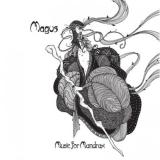
A magus is a wizard…a sorcerer. Magus, the band, is certainly interested in such things (who isn’t), but the name is especially apt due to the band’s approach to alchemy, the blending of rock, gothic, proto metal, and psychedelic styles to create a sound that is, ultimately, unique. Part of that uniqueness comes from the instrumentation. While guitar is often a dominant instrument of the rock oeuvre, the Fender Rhodes generally plays a supportive role. Not so here, where Jessica Weeks’ deft use of the keyboard dovetails with Greg Weeks’ more standard six-string approach. Not standard is the band’s sound. Doomy yet inspirational, dour yet vibrant, the duo’s tunes map sinister realms whose subjects span metaphysical creatures to enigmatic portals. You know, the typical stuff that rubs elbows with a magus.
Formed in late 2024, Magus sprung from a desire by both artists to experiment with darker, heavier sounds. Long enamored of artists like Flower Travelling Band,, Black Sabbath, and Deep Purple, the duo delved deeply into trance like riffs and euphoric solos to create the backbone of what has become their debut album, Music for Mandrax. This thirteenth Language of Stone offering features grounded, metronomic grooves, organic, lugubrious synth lines, and tandem vocals (supplied by both Weekses) that, in total, weave a heavy, trancelike spell sure to entice fans of bands as disparate as Sabbath is to Pink Floyd. Recorded at Weeks’ Hexham Head studio (to analog tape, of course), the band enlisted long-time counterparts Jesse Sparhawk (bass) and Ben McConnell (drums) to round out their sound and lock down the grooves that propel the album.
Mixed by Brian McTear and Amy Morrisey at Miner Street in Philadelphia, the band’s fully realized vision came to fruition, which left only the album art to contemplate. The band, wishing to further the gothic aesthetic of their sound, enlisted fashion designer and artist extraordinaire Hogan McLaughlin (Game of Thrones) to create the starkly beautiful line drawings of the front and back covers. The duo travelled to Salem, MA to complete the package with Courtney Brooke Hall, who shot the moody and evocative photographs that grace the gatefold release’s inner panels.
- 1: Guernica
- 2: Gilmore 77
- 3: Deberias Tener Cuidado
- 4: Nadsat
- 5198: 4
- 6: Sin Futuro
- 7: Cucarahas
- 8: Todo Esta Bien
- 9: Radio Crimen
- 10: Wild Angel S Night
- 11: El Jardin Extranjero
- 12: Habitación 101
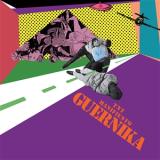
Reissue of the essential album by Granada's TNT. "Manifiesto Guernika" is an essential piece of Spanish punk & post-punk history, originally released in 1983 by the legendary DRO label. One of the pillars and most important records of Spanish punk, "Manifiesto Guernika" remains a fresh, powerful and intense classic of the genre. An exciting mix of '77 punk, post-punk and "Combat Rock"-era Clash with smart and profound lyrics that elevated them to cult status. Original artwork & insert and extra fold out insert.
- 1: Intro
- 2: Arepa 3000
- 3: La Vecina
- 4: Qué Rico
- 5: Cuchi-Cuchi
- 6: Si Estuvieras Aquí
- 7: Masturbation Session
- 8: Mami Te Extraño
- 9: Mujer Policía
- 1: No Le Metas Mano
- 2: Amor
- 3: Pipi
- 4: El Barro
- 5: Domingo Echao
- 6: Piazo E' Perra
- 7: El Baile Del Sobon
- 8: Fonnovo
- 9: Caliente
- 10: Llegaste Tarde
Since their ground-breaking US debut the Amigos have lived a double life. In their hometown of Caracas, Venezuela, they"ve hosted underground club nights for years (the most recent called "Super Sancocho Variety"). Then, insouciant single-entendre songs like "Sexy" and the doggy-style anthem "Ponerte En Cuatro" landed them on MTV and radio, and before long, the six young men found themselves pop idols. It wasn"t hard, but their hearts remain on the dance floor and in the clubs. AREPA 3000 is live instruments, start to finish. "Electronic music tries to simulate human sounds," says the guitarist. "It"s really easy to buy a groove box or an 808 to make us sound like techno. So we try to get those sounds from our instruments, to go the other way. Make the human sounds sound electronic. When we do our club shows, I"ll spin before our set and we"ll add live instrumentation. We can play four, five hours like that.
- Vent D'aether
- Réville V
- Levast Ill
- Le Vast Iv
- Le Vast Xiii
- Montfarville V
»Vents d’aether« is the first collaborative album by sound artist Jérôme Bouve and composer-performer Delphine Dora. The six pieces are based on live improvisations on organ and harmonium. They were recorded in different churches on the Cotentin peninsula in France’s Normandy region and later enriched with additional field recordings by SA~RA. This adds an extra layer to compositions which were created both in and out of the moment and which quite literally resonate with the histories of the instruments and the buildings that were so integral to their emergence. »Vents d’aether« is to be understood as a dialogue between sound and space that takes place across time and place.
Bouve carried the idea of working with the organs and harmoniums that can be found in the churches and chapels in the Val de Saire in the Northeast of Cotentin around with him for years. When he got to know Dora, he found the perfect musical partner with whom to finally make a record »about the wind, the wood, the stones of the Val de Saire.« In September 2024, the duo embarked on a short but fruitful journey during which they stopped by at several different churches. They recorded hours-long improvised sessions dedicated to »capturing the moment, letting space and time shape gestures and sound, seizing fleeting epiphanies in their greatest simplicity,« as Dora notes in the album’s linernotes.
She took the lead behind the instruments, however Bouve assisted her on drawbars for the last two pieces on »Vents d’aether,« thus adding an even more unusual touch to the recordings. They formed the basis for an album that Dora calls »the testimony of a sensory quest, a collection of memories suspended in time.« Indeed, starting with the epic 20-minute-long titular piece up until the ringing of church bells near the end of the closing piece »Montfarville V,« this overwhelming yet intimate record blurs the boundaries between different times and spaces altogether.
- 01: Kogut
- 02: Och! Proste : Trudne
- 03: Almodowar Z Małym
- 04: Sieka
- 05: Tabaluga
- 06: Ostatni 2.0
- 07: Koniec Tego
- 08: Dla Zuzy
- 09: Siła Przyjaźni
Black Vinyl LP[33,57 €]
"Brudna - Bielizna" is the second album by the boy band KOSMONAUCI. This album consists of original compositions by the band members, which were created over the past two years and evolved together with the artists during concerts. The Kosmonauts' music is rooted in jazz and improvisation, but over time, the musicians have developed many new paths and ways of drawing from many other, seemingly disparate musical genres. On the album "Brudna - Bielizna" the Kosmonauts continue to explore various genre and stylistic combinations. However, the second album is more focused and connected to the band members' jazz inspirations. KOSMONAUCI have been playing together since high school, and this is clearly audible.
***After very quick SOLD OUT of the U JAZZ ME vinyl - we are adding new version of the album - 200 copies extra of white and blue galaxy vinyl in collaborationn with U Know Me Records - 180g wax with insert ***
Reissued for the first time on vinyl here’s the debut album of mancunian band Ludus (originally released on New Hormones in 1981). Led by famous visual artist, performer and musician Linder Sterling and guitarist Ian Devine, Ludus moved all along the lines of post-punk and art-rock with their strictly original mix. Includes one extra track.
- A - Ricardo Eddy Martínez Y Expreso Rítmico - La 132
- B - Juan Pablo Torres Y Algo Nuevo - Rompe Cocorioco
- C - Farah María - Ámame Y No Pienses Mas
- D - Grupo Ismaelillo - Amanecer - Dj Koco Edit
- E - Fa-5 - Muévete Con Las Fuerzas Del Corazón - Dj Koco Edit
- F - Grupo Los Yoyi - Paco La Calle
- G - Juan Pablo Torres Y Algo Nuevo - Y Viva La Felicidad
- H - Orquesta Riverside - En Casa Del Trompo No Bailes
- I - Grupo Fa-5 - Ya Tengo Un Amor Verdadero
- J - Rembert Egües - Tema Para Un Amanecer
Two years since DJ KOCO aka SHIMOKITA curated his sold-out Mr Bongo Brazil 45 boxset, he is back with another Record Store Day special, this time turning his attention to Cuba. Following a meteoric rise to the top, the Japanese DJ / turntablist extraordinaire has won the world over with his unquestionable humility, refreshing positivity, and flawless skills. The DJ’s DJ, it’s as much about taste as it is technicality for one of the world’s best showmen.
When the idea arose for a Cuban Classics 45 Boxset to mark RSD 2026, DJ KOCO was top of the list. With a deep-seated passion for Cuban music, its melting pot of cultures, its focus on rhythm, and its undeniable groove, DJ KOCO presents a selection of his favourite Cuban cuts, as well as two exclusive edits for the boxset.
It kicks off with the Latin funk sounds of Ricardo Eddy Martínez y Expreso Rítmico’s ‘La 132’ from 1978, before rolling into one of two spellbinding Juan Pablo Torres y Algo Nuevo cuts found on the boxset. Elsewhere, you’ll hear Farah María’s slow disco ‘Ámame Y No pienses Mas’, an unusual American-leaning production for Cuba at the time, given the state of US-Cuban political relations in that period. Other highlights include Orquesta Riverside’s ‘En Casa Del Trompo No Bailes’, taken from a rare collectable 7”, channelling a low-slung Latin bounce which explodes into an Afro-Cuban dancer as the track progresses.
In signature style, DJ KOCO has also served up two exclusive edits for the boxset. These include a reworking of the Cuban children's band Grupo Ismaelillo’s quirky ‘Amanecer’, giving it a more DJ-friendly structure. You’ll also find DJ KOCO’s take on FA-5’s much-loved funky dancer ‘Muévete Con Las Fuerzas Del Corazón’ with its heavy b-boy/girl break from 1976.
Testament to Cuba’s vast and vibrant musical landscape, DJ KOCO has cherry-picked some of the finest recordings to emanate from the country, spanning a wide range of styles and rhythms. Yet what ties all the tracks on this boxset together, is a hip hop sensibility and thirst for a breaks-heavy, danceable energy which radiates through DJ KOCO’s masterful DJ sets.
- 1: Ibo Lele 3:57
- 2: Seychelles Coconut :56
- 3: Janine :0
- 4: Full Moon Dance 2:19
- 5: Mahea 3:08
- 6: Ibo Lele (Reprise - Short Version) 2:31 *
- 7: Janine (Orchestral Reprise) 1:54 *
- 8: Mahea (Version With Organ) 4:15 *
- 1: Kalù 4:46
- 2: Coconut :5
- 3: My Sweet Brown Sister 1:47
- 4: Ibo Lele At Night 2:5
- 5: Jungle Hevea 3:08
- 6: Full Moon Dance (Wild Take) 3:30 *
- 7: Kalù (String Version) 5:11 *
- * Bonus Tracks
Amore Libero – Free Love marks the first film score composed by Fabio Frizzi, written in 1974 for the movie of the same name directed by Pier Ludovico Pavoni. Set against the exotic backdrop of the Seychelles, the film tells the story of Simo, a free-spirited young woman played by Laura Gemser in her cinematic debut, blending sensuality and the spirit of liberation so typical of the 1970s.
Frizzi’s score perfectly captures the film’s atmosphere, weaving together evocative melodies, funky grooves, and progressive textures — an elegant, psychedelic soundscape that reflects both the tropical setting and the film’s themes of freedom and desire. The recording features the Goblin in their classic line-up: Fabio Pignatelli (bass), Massimo Morante (guitar), Walter Martino (drums), and Claudio Simonetti (keyboards), with Vince Tempera handling arrangements and orchestral direction.
Long regarded as a true holy grail for collectors, now, for the first time ever, it is officially reissued on vinyl, bringing back to light a fundamental chapter in Italian film music and progressive sound. An essential record that merges Frizzi’s melodic genius with the visionary energy of the Goblin, Amore Libero – Free Love stands as a timeless document of an extraordinary era in Italian cinema and its music.
A Record Store Day 2026 exclusive / Pearly light blue vinyl edition / 30x30cm insert with extensive liner notes
AN INSTANT CLASSIC FROM ANORAX.
GARDEN OF EDEN becane an instant sensation via white label promotion copy plays,
It instantly picked up support from radio stations Mi-Soul (instant playlist), Panacea, Solar and Starpoint, became Terry Jones breakout record at the recent Southport Soul Weekender and had Modern Soul DJs begging for a copy,
A special reaction to a very special record. Produced by veteran House Heads Phil Hooton and Mark Gamble, the duo have created a monster track that straddles Soul, Jazz and House. Commentator Yogi Haughton highlighted the “ambiguous nature” of GARDEN OF EDEN as it merges Soul and Jazzy House.
The bedrock of the track is a newly recorded (with ace musos lured into the recording studio) version of Mezzoforte’s Iceland jazz-funk classic GARDEN PARTY.
Phil and Mark then composed a brand new composition to go over the top of the track,and to regally complete their new concoction got UK Soulful House royalty vocalist extraordinaire Pete Simpson to sing it. And what a performance Pete delivers!
There’s two equally beguiling mixes - on the a side the 4.37 Vocal Edit V.3 With Horns edit and flip it over for the 4.34 Vocal Trombone Mix - on this 7” single.
First press is 300 copies only.
Xerrox Vol. 2 is the sixth studio album, released in 2009 by German electronic artist Alva Noto. It is the second installment of the Xerrox penthalogy, based on the concept of digital replication of source material.
As with the first Xerrox album, the starting point is a set of samples culled from external sources. This time, snippets and recordings from Sunn O))) collaborator Stephen O'Malley and composer Michael Nyman are featured, as is an excerpt from the 2004 Insen tour with Ryuichi Sakamoto.
While Alva Noto's oeuvre is predominantly affiliated with pristine sound design, the Xerrox series holds more intimate gestures and emotional sensibility. This volume moves further from the conceptualism and orderliness of prior musical outputs, ranging from heart-warming elegies to mind-bending sci-fi projections in extrasolar territories.
This remastered version will be reissued on NOTON in 2026
Tracklisting
---------------------------------------------------------
Medium: 1 // Side: A // Track: 1
Artist: Alva Noto
Title: Xerrox Phaser Acat 1
Playtime: 00:12:11
Explicit Lyrics: No
ISRC: DE1N62500015
(P): 2025 NOTON
Country: Germany
Composer: Carsten Nicolai
---------------------------------------------------------
Medium: 1 // Side: A // Track: 2
Artist: Alva Noto
Title: Xerrox Rin
Playtime: 00:00:51
Explicit Lyrics: No
ISRC: DE1N62500016
(P): 2025 NOTON
Country: Germany
Composer: Carsten Nicolai
---------------------------------------------------------
Medium: 1 // Side: A // Track: 3
Artist: Alva Noto
Title: Xerrox Soma
Playtime: 00:07:11
Explicit Lyrics: No
ISRC: DE1N62500017
(P): 2025 NOTON
Country: Germany
Composer: Carsten Nicolai
---------------------------------------------------------
Medium: 1 // Side: B // Track: 4
Artist: Alva Noto
Title: Xerrox Meta Phaser
Playtime: 00:06:23
Explicit Lyrics: No
ISRC: DE1N62500018
(P): 2025 NOTON
Country: Germany
Composer: Carsten Nicolai
---------------------------------------------------------
Medium: 1 // Side: B // Track: 5
Artist: Alva Noto
Title: Xerrox Sora 1
Playtime: 00:06:54
Explicit Lyrics: No
ISRC: DE1N62500019
(P): 2025 NOTON
Country: Germany
Composer: Carsten Nicolai
---------------------------------------------------------
Medium: 2 // Side: C // Track: 6
Artist: Alva Noto
Title: Xerrox Monophaser 1
Playtime: 00:08:04
Explicit Lyrics: No
ISRC: DE1N62500020
(P): 2025 NOTON
Country: Germany
Composer: Carsten Nicolai
---------------------------------------------------------
Medium: 2 // Side: C // Track: 7
Artist: Alva Noto
Title: Xerrox Monophaser 2
Playtime: 00:05:31
Explicit Lyrics: No
ISRC: DE1N62500021
(P): 2025 NOTON
Country: Germany
Composer: Carsten Nicolai
---------------------------------------------------------
Medium: 2 // Side: D // Track: 8
Artist: Alva Noto
Title: Xerrox Teion
Playtime: 00:02:03
Explicit Lyrics: No
ISRC: DE1N62500022
(P): 2025 NOTON
Country: Germany
Composer: Carsten Nicolai
---------------------------------------------------------
Medium: 2 // Side: D // Track: 9
Artist: Alva Noto
Title: Xerrox Teion Acat
Playtime: 00:05:26
Explicit Lyrics: No
ISRC: DE1N62500023
(P): 2025 NOTON
Country: Germany
Composer: Carsten Nicolai
---------------------------------------------------------
Medium: 2 // Side: D // Track: 10
Artist: Alva Noto
Title: Xerrox Tek Part 1
Playtime: 00:05:27
Explicit Lyrics: No
ISRC: DE1N62500024
(P): 2025 NOTON
Country: Germany
Composer: Carsten Nicolai
---------------------------------------------------------
Medium: 2 // Side: D // Track: 11
Artist: Alva Noto
Title: Xerrox Monophaser 3
Playtime: 00:06:14
Explicit Lyrics: No
ISRC: DE1N62500025
(P): 2025 NOTON
Country: Germany
Composer: Carsten Nicolai