Linda “Babe” Majika’s insanely brilliant Don’t Treat Me So Bad is a tight six tracks of blistering electro-flavoured bubblegum and synth-drizzled solar-powered machine-funk. It has become increasingly hard to find, with copies currently moving for over £200. But this is definitely a case of eye-watering price equalling heart-thumping quality.
Once of the Hot Soul Singers, Don’t Treat Me So Bad was Linda’s debut LP as a solo artist. It was produced by Ace Mbuyisa of boogie-funk maestros Freeway and was originally released on Umkhonto Records in South Africa in 1988.
The enormous “Let’s Make A Deal” is probably the best known track here, and it’s definitely the best one if you ask us. Linda’s vocals drip with attitude over warm, breezy synths and an urgent, edgy electro beat to create a timeless club-ready bomb that sounds as fresh as ever. But the rest of the album is far from filler.
Opening track “Kunzima (Tabalaza Mjita)” instantly brings the sunshine vibes, strutting out the gate with that unmistakable South African steppers groove. It’s a deceptively simple song, with multiple instrumental elements arriving and taking leave with admirable restraint.
“It’s Our Home” is a powerful showcase for Linda’s vocals, enhanced by some life-affirming call and response backing vocals throughout. In fact they’re a joyous presence on the whole album. The insistent pipes and swirling, bubbling synths of title track “Don’t Treat Me So Bad” follow. A spacious proto-piano house banger that closes out the first side in phenomenal fashion.
Arriving as track two on the second side, “Unga B’Omthemba Umuntu” has the unenviable task of following the huge “Let’s Make A Deal”. It does the job with class, bringing the tempo down to a mid-paced tropical bounce with lilting harmonies and welcome traces of hi-life guitar. Wonderful stuff. “Playboy” is is another unbeatable head-nod groover rounds out the set wonderfully. That bassline high in the mix is to die for, and the chorus will make any dancefloor smile.
As ever, Simon Francis on mastering duties elevates this release, adding heft and elegance in all the right places with his customary deft touch. The memorable cover art, in which Linda appears straight out of the 1950s with her polka dot skirt and butter-wouldn't-melt pose, has been faithfully restored. But don’t let the innocent styling fool you - Don’t Treat Me So Bad is the work of one badass woman who can hold her own, and then some.
Cerca:eye one
- A1: Curiouser And Curiouser
- A2: Better For Us Never
- A3: Wanderlust
- A4: Plain Song
- A5: Ribbons And Tie
- B1: Descent
- B2: Paper Dolls
- B3: Silent Society
- B4: The Boy With The Stars In His Eyes
- B5: Fail To Bloom
- C1: Anais Lullaby
- C2: The Boy (Reprise)
- C3: Dew
- C4: Run
- C5: Fail To Bloom Part Ii
- D1: Obsessed
- D2: Reason
- D3: Tinkerwish
- D4: Wanderlust (Direct Action Remix)
Lamunai Records presents Curiouser and Curiouser, a treasure trove of millennial music era from a duo pop group called Santamonica from Jakarta, Indonesia.
The concept of this album is making music from a trip to the adventures of Alice In Wonderland, an eclectic mix of pop, bossanova, electronics, waltz and shoegaze. From Astrud Gilberto and Antonio Jobim, Pizzicato Five meets My Bloody Valentine or Stereolab's 60s sensitivity to Broadcast. A collection of multi-layered analog audio sets, the noise of Joseph Iyup's noisy guitar combined with Anindita's fairy voice melodious lines of strange lyrics wrapped in curling beats, very dynamic, very rich. Listening to the album, on several tracks, we can hear French Pop's acrobatic 5/4 beats until the roar of the wall of
sound becomes a combination that is difficult to imagine at the time and is still very relevant to listen to now.
Now, for the first time ever, one of the phenomenal albums of the 2000's Indonesia wave is now available in a limited format in 2xLP-Gatefold-Marble colors vinyl with an additional 1 song that has never been released before.
Digging deep into the annals of Gospel now, the name Pastor TL Barrett should be familiar to the eagle eyed crate diggers amongst you. An extremely "colourful" character from Chicago's Southside neighbourhood who found himself on the wrong side of the law for his involvement in some activities of a dubiously illegal nature, more importantly, besides this the pastor was widely known for his community activism and positive sermons preaching love and responsibility. Shady past aside, this fantastic 1976 LP entitled "Do Not Pass Me By" is a real Gospel beauty and features 8 tracks of resplendent hands in the air rejoicement. Having never been reissued before this rare as gem is finally back out in the open, complete with it's incredible untampered with sleeve artwork and design. Barrett's unique voice and message is timeless and instantly recognisable, you can't help but become one of the congregation whilst listening to these wonderfully rousing and positive paeans to the lord almighty. Saying that, even if you find yourself to be a non-believer, the soul, funk and jazz stylings (with the odd flourish of synth!) the good pastor is laying down will be equally as alluring to those of you who dig those particular sounds. "Do Not Pass Me By" was originally released on Miami's TK Disco offshoot Gospel Roots, it's the Pastor's second release on the label and is a beautiful snapshot of how things might have gone down at his "Mount Zion Baptist Church of Universal Awareness". A unique LP with with a somewhat lo-fi charm, the tracks contained run the gamut from slow, downtempo ballads to roof raising, danceable Disco-esque anthems.
This is the first time that "Do Not Pass Me By" has been reissued on vinyl, fully remastered from Gospel Roots/TK's original tapes, represented the way the the LP was issued in 1976 with all original cover and label artworks intact. Now, almost 40 years after it's original release the album has now been made available again for 2016, fully licensed in conjunction and with the full permission of Henry Stone music / TK Disco, Miami, FL.
- A1: Oops… I Did It Again
- A2: Stronger
- A3: Don’t Go Knockin’ On My Door
- A4: (I Can’t Get No) Satisfaction
- A5: Don’t Let Me Be The Last To Know
- A6: What U See (Is What U Get)
- A7: Lucky
- B1: One Kiss From You
- B2: Where Are You Now
- B3: Can’t Make You Love Me
- B4: When Your Eyes Say It
- B5: Dear Diary
Sublime, unique, sexy and peculiar unreleased scores by electronic and jazz pioneer Ron Geesin, made for the sublime, unique, sexy and peculiar films by maverick director Stephen Dwoskin. There. we’ve said it. And if you have not heard of one or either of these two dudes it doesn’t really matter. Geesin made great music and worked with Pink Floyd. Dwoskin made odd films, most of them are in the BFI permanent collection. They are great and a bit strange.
These superb unreleased soundtracks come from a fascinating, progressive and important period in British film history. They represent an intriguing collaboration between the lively Ron Geesin from Scotland and the American Stephen Dwoskin, who both met in London.
Musically they are minimal, charismatic and quite groundbreaking. Here is the story…
HISTORY:
Steve Dwoskin arrived in London in 1964, aged 25, with several 16mm films in his trunk, shot in the cold-water flats of Greenwich Village. He had been on the fringe of the Factory scene, and some of his films starred Beverly Grant, ‘the queen of the underground’. But they had scarcely been seen, and they didn’t have soundtracks. For almost a year they stayed in the trunk, and stayed silent. Then he met Ron Geesin, somewhere around Portobello Road.
‘Slept last night, completely dressed after working over 12 hours on sound tracks at Ron’s,’ wrote Dwoskin in his diary for 29 July 1965. ‘My films are not anywhere near being anything. I need more energy, more concise and positive ideas and less inhibition. And of course space, money and people.’ Dwoskin, who taught and practised graphic design by day, had recently decided to stay in London beyond the term of the Fulbright scholarship that had brought him there.
Ron, living with Frankie in a basement flat in Elgin Crescent – they would marry the next year, with Dwoskin as best man – was about to leave the Original Downtown Syncopators, the trad jazz band he had joined aged seventeen-and-a-half, and was trying to go solo. On stage he would make vigorous use of piano and banjo; at home Frankie had bought him a new kind of instrument – a tape recorder. ‘Soon I had one tape recorder, two tape recorders, three tape recorders.’
Ron, wrote Dwoskin in his unpublished autobiography, ‘loved to record, and to cut and splice the quarter-inch recording tape to make new sounds. This triggered in me the idea of getting back to my films and finishing them’. Soon he was living in a dank basement in Denbigh Road, a few minutes’ walk from Elgin Crescent. Ron’s soundtracks for Dwoskin’ films, recorded in the Geesins’ flat, encompassed Ron’s very eclectic range of styles – madcap piano and fretted banjo as well as tape manipulation.
Aside from Ron’s soundtracks, some of which belong to films that no longer exist (including Pot Boiler), Frankie would act in one of the films that Dwoskin either lost or never finished during these years. He was disabled, having contracted polio as a child, and Ron and Frankie were both carers and collaborators; Ron had met him when he was struggling into his car.
There was no London equivalent to the underground film scene that Dwoskin had known in New York, and his films remained unseen until such a scene began to come into being, in the autumn of 1966. Some of them made their debut at the Mercury Theatre, near Notting Hill Gate, that September. Dwoskin wrote that Alone, starring Zelda Nelson (from Ron Rice’s Chumlum), and Chinese Checkers, with Beverly Grant and Dwoskin’s friend Joan Adler, went over best.
Soon both Dwoskin and Geesin became involved in the nascent London Film-Makers’ Co-op, which put on screenings in Better Books on Charing Cross Road – ‘if you can call them screenings,’ Ron recalls; ‘I’d call it fifteen blokes in various stages of disarray, peering through the smoke’. One or more of the films had been ‘striped’ with magnetic audiotape; with others ‘we had no means of direct syncing to the picture, so he started the film and I started the tape recorder’.
In the same autumn, Dwoskin moved into a flat almost opposite the Geesins on Elgin Crescent. More collaborations followed, including Naissant, on which Gavin Bryars, whom Geesin had met during a stint on the northern club circuit with novelty act Dr Crock and His Crackpots, played double bass.
Around the end of 1967 Geesin released his first solo LP, A Raise of Eyebrows, and Dwoskin won recognition the Fourth Experimental Film Competition, aka EXPRMNTL 4, an occasional film festival staged at Knokke-le-Zoute in Belgium. By now the films had optical soundtracks.
It was only after this that Dwoskin completed his first ‘British’ films, including Me Myself and I, with Barbara Gladstone, an American dancer who had appeared in Barbara Rubin’s Christmas on Earth, and with whom Dwoskin and Geesin had at one point devised a stage show, never produced. For Moment, a single-shot film, Geesin provided his most experimental score yet. At the time of its debut in 1970, Dwoskin and the Geesins were sharing a house in Ladbroke Grove.
By then, Ron was working with Pink Floyd, and soon afterwards he and Frankie moved out to the country, to be replaced by Bryars both in the house and as Dwoskin’s principal collaborator.
Until now these scores have remained part of the Geesin Archive and have never been issued.
- A1: Johnny O - Fantasy Girl (Radio Edit)
- A2: Johnny O - Fantasy Girl (Club Mix)
- A3: Johnny O - Fantasy Girl (Remix '97)
- B1: Johnny O - Fantasy Girl '98 (Snapshot Radio Edit)
- B2: Johnny O - Fantasy Girl '98 (Tank-Mix)
- B3: Johnny O - Fantasy Girl '98 (Snapshot Mix)
- C1: Stevie B - Party Your Body
- C2: Stevie B - Funky Melody
- C3: Stevie B - Come With Me
- C4: Stevie B - Dreaming Of Love
- C5: Stevie B - Girl I Love Ya
- D1: Stevie B - In My Eyes
- D2: Stevie B - I Wanna Be The One
- D3: Stevie B - For You
- D4: Stevie B - Pump That Body
- D5: Stevie B - Spring Love
- E1: Stevie B - Because I Love You
- E2: Stevie B - Children Of Tomorrow
- E3: Stevie B - You're The One I Think About
- E4: Stevie B - I'll Be By Your Side
- E5: Stevie B - Broken Hearted
- F1: Stevie B - I'm Not Crazy
- F2: Stevie B - Kiss The Tears Away
- F3: Stevie B - Love Me For Life
- F4: Stevie B - Quireme Por Vida
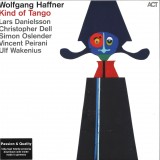
‘Kind of Tango’ is a kaleidoscope of shifting emotions. Wolfgang Haffner’s conception of tango has drama and propulsion in it but also melancholy and longing, with room for frenetic outbursts too. All this is unified by his inimitable groove and feel that commentators have called “an absolute dream,” “magical” and “profoundly relaxed.” Alongside trusted co-protagonists Christopher Dell and Lars Danielsson, he has two guests with him who defy all the clichés associated with tango: guitarist Ulf Wakenius cut his teeth musically in Oscar Peterson’s band and his Swedish heritage always shines through in his playing; Vincent Peirani is one of the leading innovators on the accordion and he finds new ways to define the instrument’s role in the tango. Also, young pianist Simon Oslender makes a first appearance with the band. Jazz and tango find a natural yet constantly shifting equilibrium - to be heard particularly effectively on ‘Close Your Eyes And Listen’ by Astor Piazzolla. In addition to compositions by Haffner himself and by his band members, pieces by the celebrated Argentinian bandoneon player and composer are the focal point of the album. Piazzolla’s innovations with the tango, such as bringing jazz into it, date from around 1955. Haffner and the tango
seem perfectly matched to each other. Tango is no longer a fixed style nowadays, it is above all an attitude to playing and an attitude to life. Wolfgang Haffner’s approach to tango is both authentic and new. It is his and his alone and it is irresistible.
- A1: Walkin' My Baby Back Home (Nat King Cole With Orchestra)
- A2: What Does It Take
- A3: Walkin
- A4: I'm Hurtin
- A5: Where Were You
- A6: Angel Eyes
- A7: Nature Boy
- B1: I'd Rather Have The Blues (Nat King Cole In The Charts)
- B2: Unforgettable
- B3: Autumn Leaves
- B4: Pretend
- B5: Mona Lisa
- B6: Too Young
- B7: Smile
- C1: Hit That Jive Jack (The Nat King Cole Trio)
- C2: (Get Your Kicks On) Route 66 (Get Your Kicks On)
- C3: Sweet Georgia Brown
- C4: Straighten Up & Fly Right
- C5: Laura
- C6: Embraceable You
- C7: Dream A Little Dream Of Me
- D1: Besame Mucho (Nat King Cole Goes Latin)
- D2: Rex Rhumba
- D3: Rhumba Azul
- D4: Calypso Blues
- D5: Boulevard Of Broken Dreams
- D6: Rhumba Blues
- D7: Papa Loves Mambo
With the sole exception of Louis Armstrong, Nat "King" Cole was one of therare black artists to enjoy such celebrity in the Forties and Fifties. He began his career as a pianist, forming a trio in 1937 with guitarist Oscar Moore and bassist Wesley Prince, but he was so successful as a singer that he went on to make many recordings as a vocalist.
Capitol, his record label, was quick to capitalize on Nat Cole's velvet tones. The hits came one after another: Straighten Up and Fly Right (1943) sold a million copies, and Nature Boy (1948) and Mona Lisa (1950) sold over three 3 million each. Some of his other (numerous) popular hits can be found on Side B.
Nat Cole's popular songs, however — some were so sentimental they were even slushy — should never conceal his talents as a pianist and musician, which he displayed with the best jazz orchestras around (Side A), his own trio (Side C) or in outings with Latin rhythms (Side D).
His fame earned him his own NBC television show in 1956, while Presidents Truman andKennedy would consult Nat on complex racial issues. He also appeared in some fifty films, and continued to record profusely (at least a hundred of his titles entered the sales charts). Nat "King" Cole deserved his title: not only did he sell over fifty million albums, but he also belongs to those artists who wrote jazz history.
Finally being back on his Exhibition imprint, Rico Puestel - without any detours - delivers some intensively uplifting moods within two melodic exhibits that have been circulating here and there over two years now. After ongoing requests about those tracks, these two ultimately join forces and go public on a hand-painted flip design, making this record a wholesome experience again.
Side A discovers the emotional magnitude, circulating and growing around the beauty of redundancy throughout a deeply immersive flute loop, nestled into a bouncing, analogue, almost archaic drum computer setting. Slowly building up over the course of half the track, Exhibit 3.1 emerges into a sphere of multi-layered synth harmonies and an oldschool bass arpeggio.
On the flipside, things suddenly become clear that Side A has just been the build-up to something even larger and stronger: A mechanical marrow-and-bone drum groove (one might not hear everyday) stomps away to spread the bed for one of Rico's possibly most captivating and flourishing synth melodies, spreading some blurry mysteries and clear sun-drenched bliss at the same time.
A vast scenery, unfurling in front of your ears and eyes, almost like smelling blossoms and fresh air
2LP: Gatefold with colored vinyl, Side AB: translucent Purple / Side CD: translucent Green. 12x24 inch fold out insert
Velvet is Adam Lambert's ode to 70's, guitar driven rock and funk music done with a modern twist and accentuated by his distinct and incredible voice. Best known as an international superstar who blew the world away on the eighth season of American Idol. Since then he's gone on to have a fully-fledged solo career, and tour the world with Queen. In addition to his musical achievements, he became the first openly gay artist to chart with a number one album in the US and Canada.
Belgian psychedelic jazz collective Compro Oro are pleased to announce a new collaboration with Murat Ertel, co-founder and frontman of Istanbul's cult psychedelic folk band BaBa ZuLa and his singer partner Esma Ertel. Entitled 'Simurg', the album is set for release on the 19th June via Sdban Ultra and follows Compro Oro's critically acclaimed sophomore album 'Suburban Exotica', released last year.
Compro Oro's introduction to Turkish psychedelics came off the back of a live performance between guitarist Bart Vervaeck and Murat Ertel at Istanbul Express in 2016. Connecting both musically and spiritually, they headed into the studio and under the watchful eye of producer and multi-instrumentalist Dijf Sanders, Compro Oro and Murat recorded several tracks during an intense recording session that would make up 'Simurg'. "The new music is entirely based on improvisation. In contrast to 'Suburban Exotica', which is built more from song structures and where there was more overdubs," explains frontman Wim Segers.
The story of Simurg is a story of attraction, existential research, purification and rebirth. In a mysterious search for fulfilment, millions of birds embark on a journey, crossing several valleys, each representing a human characteristic. While some yield to the attractions of love, ego or grow ignorant and faithless, others remain curious and continue their expedition. Slowly but surely this murmuration of birds thins out and a selection of 30 birds reach Mountain Kaf and the nest of the Simurg. There and then they become one, they are reborn and reincarnated in an almighty and omniscient phoenix.
The strength of Simurg as a result of its power to resurrect from its own ashes reflects the resilience of every human being. We all have the power to strengthen and improve ourselves, not in the least in our contact with others, and this is exactly what this project is about: a spontaneous dialogue, a quest for new musical horizons, a gathering of liberal spirits to reach for the unknown. From the Anatolian rhythms and reverb-smothered funk rock of 'Ben', to the mystical atmospherics of 'Ignorance Is Bliss (Valley Of Ignorance)' and the dark, dub-infused grooves of 'Valley Of Disbelief', 'Simurg' is an allegory about the noise that you can create as a person.
Repress
First up is a reinvention from Coby Sey - the Lewisham, South London musician who's founded the Curl collective alongside Mica Levi and Brother May and collaborated with Babyfather, Klein and Tirzah, noted as one of the 50 best new artists of 2019 by the guardian. The tone and atmospherics of the original’s combination of synthesiser and woodwind are sliced into ghostly, mesmeric fragments and refitted in layers around loping, propulsive rhythms with something like UKG's steppiness - languid despite being uptempo, bright and almost gleeful despite the inescapable mournfulness of the source material.
Who’s The Technician? of Ireland's Wah Wah Wino label - turns in a remix that wrestles with the original over seven- and-a-half-minutes of relentlessly captivating deep digi-dancehall, less of a remix than a rebirth cycle, with the latent soul-splitting lament of Kolida Babo’s duduk copy-pasted onto a delirious mercurial lead rotating through hedonistic ecstasy and burnout, a snake-eating-its-own-tail of a version cracking open the third eye with a crowbar, plus a post- apocalyptic, ruthlessly space-invading dub that blasts the remix’s scale out to the starkest retreats of the universe in search of...
2x12"
Parisian label Another Moon are pleased to announce the imminent release of the second collaborative album by Scott Monteith aka Deadbeat and Paul St Hilaire aka Tikiman entitled 4 Quarters of Love and Modern Lash. When asked about about the album's motivations and production process, Monteith had the following to say: “I first heard Paul's voice back in 1996 when I stumbled upon the first Burial Mix 10 inch in a local shop, and it would be no exaggeration to say it has echoed in my mind ever since. We began working together in 2008, and it's fair to say the experience of performing and learning from him has left an indelible mark on my artistic process and my outlook on life in general. He is possessed of a truly electrifying spirit. I’ve had a folder on my hard drive called “For Tiki” for 14 years now, for those more often than not late night studio moments when I stumble upon a rhythmic or musical phrase and hear that unmistakable voice bubbling up in my mind. When that folder fills up with enough of those little magic moments I know it's time to call him, though strangely enough, he more often than not ends up calling me around those times. Such is his deep universal awareness.” “I wrote the initial sketches for what would eventually become this new album over the course of last year to a large extent as a way of trying to process what I perceived as a creeping darkness and sickness in both my own life and the world in general that desperately needed exorcising. When I received his initial responses I nearly fell off my chair. It goes without saying that Paul is a lyricist and poet second to none, and anyone familiar with his enormous body of work can attest to that. And yet, there was something in these latest pieces that hammered the proverbial nail clean through the wood. They perfectly captured this sense of rising tension, of a world that was getting almost psychedelically weirder and darker by the day, and both held a mirror up to this and offered some much needed release. Little did we know, nor could we possibly have imagined, that by the time the record actually hit the shelves, things would get exponentially weirder and darker still.” “It is my great hope that at some point in the coming months we will be able to get back on the road and share these new pieces with people in a live setting, as performing with Tiki is truly one of my greatest joys, and I think it’s where the fire in our work together truly burns brightest. In the meantime, it is my great hope that these 4 long form meditations might provide a little solace for people in their isolation, be it quietly, eyes closed lying on the coach, or cranked up, full on raving in their living rooms.”
Since making his debut as 96 Back in 2018, Evan Majumdar-Swift has become one of underground electronic music's genuine rising stars. To date, the Sheffield-born producer has released two acclaimed albums for labels such as Hypercolour and CPU as well as a string of singles and collaborations. His EP for Happy Skull showcases his growing versatility as a producer and marks the labels return following a brief hiatus.
"143 Connections", is a rapidly unfurling club cut that sees him pepper a weighty 140 rhythm track with crispy arpeggios and rolling acid motifs . The track increases in intensity as it progresses, with Rob Gordon's immaculate mastering work bringing out the cut's inherent weight, sharpness and subtle Bleep influences.
Elsewhere across the EP, 96 Back takes the opportunity to expand his trademark sound a little further. "Set Science" is a colourful slab of electro machine funk, full of fizzing sci-fi melodies and brain dance era synth work while "In The Trunk, Belting Down The Highway" drops the tempo but turns the intensity up to red with a slow motion chunk of mutant electronica complete with misty eyed breakdown.
Various Artists: Lisene, Hartta, Sourpuss & Interplanetary Criminal
"Banoffee Pies Records" drop the 13th release in the original series. This VA aptly entitled "Common Ground" is a crossover of influences from 4 artists with a selection of tracks all above 150 bpm from producers of a similar generation giving a nod to their youth and early musical journeys, largely inspired by Drum & Bass and Jungle raves across the UK.
The release divided in two with a Dark A side and Light B side offering parallel moods of depth and liquidity. The opening track "Class Of '92" from Lisene, one half of the Space Cadets duo, with previous releases on Seven Hill Records and an EP lined up with Planet Euphorique later this year, pushes complex drum patterns and pulsing synths evolving in energy levels throughout. The A2 from Bristol based Hartta offers a more spooked out bass heavy cut with "Hauntology", ready for powerful system rumbling.
The B side begins with title track "Common Ground", an ode to dusted jungle and liquid drum & bass from Leeds based Sourpuss, known for running the Stretchy Dance Supply parties, - this track serving hedonistic eye rolling gurner euphoria, sounding more like an og 90's prodcution. The last track on the disc "Vapour" comes from Manchester's Interplanetary Criminal. With his UKG EP "Move Tools" on BP010 landing on the label and many dance floors at the end of 2019, this nostalgic drum scattered jungle cut stylishly closes off the compilation. Ltd. Press. BP x
Mastered: Optimum, Pressed: MPO & Distributed by KUDOS.
Pleamar(Spanish for high tide) is the first collaborative release between Chancha Vía Circuito and El Búho for Wonderwheel Recordings, and stands as one of the most refreshing EP's within the Latin American downtempo electronic genre.
On this release the vision of both artists is united as one. This unity is reflected through "Real Fun, Wow!"'s artwork, presenting an image of a centered eye, reminiscent of historic drawings from tide studies. The representation of Earth, with a central circle surrounded by two ellipsoids that rotate and align in perfect harmony, mirrors the meeting of the two producers, the moment when the seawater reaches its apex andPleamaroccurs.
Like a metamorphosis that - without knowing it - we had been waiting a long time for, the EP reconstructs Pedro and Robin's encounters over the years. It transports us into the history of migrant sounds, the salvaged sound of floral jungles, high mountain forests and the ocean deep. We hear a sonic beauty filled out by deep personal stories - four humble and honest tracks that demonstrate the fusion of these artists and both them and the genre into new territory.
Starting with "Oruga"'s deep ambience, dub atmospheres and space echo reverberations, the album follows this line of reverberated rhythms and relaxed percussion lines throughout, carrying us along with a pulsating, deep, natural tempo. "El Mago Georges", perhaps the Pleamar'sjewel, is bursting with life - impactful depth and perfectly tuned melodies yet tribal and delicate at the same time. "Murga del Viento'' recalls another meeting of these two minds: El Búho's much-loved remix of "Sueño en Paraguay" a beautiful track from Chancha Vía Circuito ("Amansará" 2014). Here the whistle meets the owl from the previous track and the two birds take us a step forward in this collaboration with chords superimposed on a haunting bass. The release ends with "Una Pulgada de Silencio", a track of cosmic synthesizers, trickling water samples and the voice of argentine folk singer Gus Goncalves. Through Pleamar we come to find a much needed peace and clarity hidden beneath the rolling waves, a deep-sound escape to get lost in.
- A1: Shika 5' 04
- A2: Korin 6' 16
- A3: Ratanka 8' 13
- A4: 4 Gen Ga Nai 5' 07
- A5: Furura 3' 58
- B1: Mochi 3' 10
- B2: Shonen 4' 51
- B3: Tsuchi No Ue 6' 01
- B4: Biton 5' 36
- B5: Heritage 2' 25
- 1: Kyoku Wa Mirai 8' 25
- 2: Trampoline 5' 06
- 3: Toki No Uta 4' 59
- 4: Umiuta ' 50
- 5: New New Penopion 3' 26
- 6: Furo 3' 58
- 7: Yuki Yu 3' 25
- 8: Nana Hongi 4' 52
- 9: Saihate 8' 53
- 1: Iso (Phase) 7' 34
- 2: Music Exists 6' 41
- 3: Monki 5' 06
- 4: Papa 6
- 5: Yoru Wa Nagame ' 13
- A4: Riku No Hate, Mizu No Shiro 7' 03
- B1: Sanma 7' 21
- B2: Nitamono Doushi 3' 23
- B3: Wataridori 7' 28
- B1: Onjuku 4' 13
- 1: Budo No Arika 3' 43
- 2: Choe 4' 1
- 3: Korin (Instrumental) 6' 16
- 4: Jingreel 6' 17
- 5: Kick Out The Ass! 3' 01
- 6: Fururano 1 3' 58
- 7: Guitar 3' 41
- 8: Ten To Ten 7' 03
- 6: Nanja Nronja 4' 08
- 7: Tomas Azarahi 2' 4
- 8: Doble Andreas 3' 25
- 9: Johan No Gohan 3' 20
- 10: Sukkarakaan 5' 33
- A1: Eyes 6' 30
- A2: Ende 3' 22
- A3: Tsuki No Oto 7' 29
Now finally, the great "Music Exists"-series by Tokyo-based duo the Tenniscoats is completed. Apart from the regular 4 volumes, there is a heavy cardboard box, beautifully screenprinted and hand-numbered by senorburns, in 12 different color-combinations. Inside you'll find an extra-LP of bonus-tracks and alternative versions, "Music Exists disc 5", which only comes exclusively with this box. Like on the other LPs, you’ll hear heartbreaking songs, beautifully arranged with acoustic guitar, melodica, psychedelic keyboards and soundexperiments. Also included is a A3-Poster with a drawing by Ueno not used within the previous album-artworks.
Limited one-time pressing of only 500 copies worldwide. There is a small amount of full boxes with all 5 LPs and Poster available, for those, who don‘t have any of the albums so far.
Tenniscoats have devoted followers allover the world, but their releases were always hard to find outside of Japan. Except for their album "Tokinouta", which saw a very limited run on vinyl, and the seminal "Two Sunsets", their collaboration with the Pastels (and a small handfull of 7"s), there were never any vinyl-releases, and also the CDs were hard to get for any-one, who doesn't speak or read japanese.
So, this is the chance to dive deep into the beautiful, unique world of the Tenniscoats and their opus magnum "music exists".
"It may even be their greatest ever music, essential plus" Monorail Music, Glasgow
"Whatever's ailing you, Tokyo's Tenniscoats have got something for that" Boomkat, Manchester
At last, another chance to get a classic soul masterpiece on 7” vinyl, even if you can score an original copy for about £800.
Timeless Legend were Jackie Hogg, Allen B. Burney, Donald Harmon, and Michael Harmon from Columbus, Ohio. Their music is among the most elusive on the rare funk/soul scene with the 7” of “I Was Born To Love You” a huge crossover club. Few have actually ever set eyes on this album either, and those who own one have paid £2,000 for the privilege.
In 1981, Nick Robson wrote Stars. The song can pretty much be described as a slow, cosmic disco song. It has an unusual feel, and it comes as Oslo-based Neppås third release. This 12" holds the 12" mix, the 7" mix, and the original B-side Eye To Eye. The original 12" is as rare as they come, and here you get the original material, fully licenced, and remastered. The process of recording the material back in 1981 was not an easy one, as Nick Robson recalls:
"Fame by David Bowie is one of my favourite songs, period. I was 18 when i wrote Stars and i wanted to write something that was my version of Fame and quite honestly, as a tribute to the song. If you listen to the bass lines, there is a hint of similarity in the two. Even the lyric of Stars has a passing reference to Fame.
Stars was one of four songs recorded at Gary's Rock City studio to supply the first two singles and form the basis of the first album. The other three tracks were Eye To Eye, Boys and She'a Like Ice. Although all four tracks were finished, for one reason or another, Boys never made it to pressing and i walked away from the business to pursue a career in film.
Stars itself, was the most ardous and problematic track that i've ever recorded. It took around 14 days to finally get an agreed mix when the budget probably only ran to three days. Part of the reason for this is the enormous quantity of music tracks recorded in the song. In those days, we only had 24 recordable tracks available on the Otari, so once you had recorded 23 or less actually, you had to bounce down sub-mixes to a single track to free up another batch of tracks. I think that there are around 46 tracks of instruments alone on Stars so although that kind of track usage is not uncommon now, back then it was rare. It remains the single most expensive song i ever recorded. The B-side Eye To Eye, on the other hand, was written, recorded and mixed in one day."
It goes without saying that the global metal scene would not be the same without Sepultura. For 35 years now, the Brazilian icons are not only a band revered worldwide; they have been, are and forever will be at the very forefront of Thrash Metal, trailblazing ever since they released their long-since legendary debut album “Morbid Visions” in 1986.
While quickly establishing themselves as leaders of the second wave of Thrash already in the late eighties, to this day they never came even close to stagnation. “Quadra”, their mighty new undertaking, is proof of a will unbroken, a thirst unquenched and a quality so staggeringly high it’s a wonder this band doesn’t implode. Now three albums deep into what may very well be their strongest incarnation yet – uniting the talents of old-school members Andreas Kisser (guitars, vocals) and Paulo Xisto Pinto Jr. (bass), vocal force of nature Derrick Leon Green (vocals) and drummer Eloy Casagrande – Sepultura are an unleashed power to be reckoned with, uniting bucketloads of experience and youthful vigour in a totally revived way.
“On ‘Quadra’, we felt the urge to revisit that old thrash feeling of ‘Beneath the Remains’ or ‘Arise“,’ only seen through the eyes of today,” Andreas Kisser utters the magic words. “Add to that the tribal percussion, the orchestral elements, the choirs, the melodies and the clean vocals and you get a thorough run-through of our entire career, backed by a very contemporary approach.” Fuelled by an energy almost uncanny for a band that has been active for so long, Sepultura storm through a contemporary thrash monument, backed by sublime melodies, a very eerie atmosphere and a fiendishly high level of technicality. Kisser is appreciating these compliments, still maintaining his very down to earth approach. “We don’t heed the past and we don’t try to be preoccupied by the future too much,” he shrugs. “We’re in the now, trying every day to make Sepultura a little bit better. That’s what keeping us strong.”
And that’s what they have been doing for the last 30+ years. Album after album, tour after tour, no gap in between records longer than three years. “Music is all we do,” Kisser states matter-of-factly. “If it wouldn’t be for Sepultura,” he laughs, “I would be a sad and lonely guy. Sepultura is what we are.” And “Quadra” is living testimony to that. The old Sepultura echo through the very fibre of the songs in all its raw and morbid splendour, but yet it’s the present, the experienced and refined beast that is Sepultura in 2020 that’s blasting out thrash metal anthems for a fucked-up age.
With now 15 albums under their belts, Sepultura are the work horses of the metal world, always ready to attack. In many ways, “Quadra” broadens the vision the Brazilian thrash troopers had on “Machine Messiah” (2017), again relying on the impeccable talent of Swedish producing giant Jens Bogren and his Fascination Street Studios. “He is so full of passion, it’s unbelievable, man,” Kisser raves. “He’s really there, he really cares about the projects he’s doing. For Sepultura, he’s like the fifth member of the band. The chemistry was so amazing, 99 percent of what we were trying do to actually worked. That was insane!” Even after more than 30 years at the forefront of international thrash, guitarist Kisser sounds positively baffled by working with Bogren. “We felt like we were in our rehearsal room.”
Bringing together a monumental grandeur and a wild, untamed ferocity, Sepultura stepped up their game musically – and conceptually as well. “We were possessed by the number four, by the numerology of it”, Kisser starts to explain. “I divided the album into four parts as if we were doing a double vinyl. Side one is the pure and raw thrash side. Side two brings in the rhythms and percussion from our ‘Roots’ era. Three is getting a bit experimental and four brings forth the melodies and the acoustic guitars.” With John North’s book “Quadrivium” as a further source of inspiration, Sepultura dive deep into a mystical world full of hidden meanings. “You have four seasons and twelve month in a year just to pick one example. A lot of stuff in our culture is divided like that.”
Plus, Quadra also is the Portuguese word for ‘sport court’ that by definition is a limited area of land, with regulatory demarcations, where according to a set of rules the game takes place,” he adds. “We all come from different Quadras. The countries, all nations with their borders and traditions; culture, religions, laws, education and a set of rules where life takes place.” In the Quadra of thrash, however, we all are the same. And we bow our heads in unison to the mighty leader that is Sepultura.