Repress!
PRINCE PHILLIP MITCHELL has been performing, writing and producing since the early sixties and even spent a little time with Alvin Cash's backing group the Cash Registers. He wrote hits for Mel And Tim and Millie Jackson but is best known on the Northern Soul scene for his 'Shout' recording Free For All' and our chosen side, the crossover soul anthem I'm So Happy'.
LOU RAGLAND shot to fame on the Northern Soul scene with his 4-figure rarity I Travel Alone', recorded for 'Amy' Records in May 1967. It was his home town buddy, Edwin Starr, that helped Ragland secure the deal and although a flop at the time it cemented his popularity in England. When Starr came to the UK in 1983 with his Ric-Tic Revue Ragland was invited along and, at last, got the recognition he deserved.
Поиск:f free
Все
- 01: Soulstance - Lead The Way
- 02: Jukka Eskola - 1974
- 03: Luis Ferri - My Love Samba
- 04: Dalindèo - Solifer-Lento
- 05: S-Tone Inc. - Some Kind Of Blues (Jazz Mood Instrumental)
- 06: The Invisible Session - Heroes Of The Conquest
- 07: Paolo Fedreghini And Marco Bianchi - Stars
- 08: Quartetto Moderno - Mr. Bond
- 09: Quintetto Lo Greco - Yes And No
Repress!
Extending the heritage left from the first chapter of the homonymous collection, Schema Records presents "Freedom Jazz Dance Book II". The concept comes from an idea of Luciano Cantone aiming at offering "New Standards" that can be understood and responsively absorbed by young generations. The title deriving from a composition from Eddie Harris describes precisely the project's essence: the intuition of something overcoming hurdles laid by rigid market rules. From this, the artistic meaning of "Freedom", solid funded in "Jazz", from which spawns subsequently the natural impulse to movement, manifesting in "Dance" in fact. With "swing" setting the right pathway without hesitations, the objective of the project remains capturing younger people inside the magic of Jazz. The only possible way it's organic: by leaving the music to free up the spirit within themselves.
Repress
Dry mix only single LP edition, reverb mix of 2LP edition excluded.
Issued in 1975, this is the articulation of Zambia’s Zamrock ethos. Its' musicians were anti-colonial freedom fighters, it envelops Zambian folk music traditions, and it rocks - hard. Amanaz were serious, and they made a serious stab at an album. They titled their album Africa, according to original band member Keith Kabwe, “because of how it was shared and how its inhabitants were butchered and enslaved, its resources stolen... all the atrocities slave drivers committed. “ Thus, their “Kale,” a blues sung in Nyanja, that traced the continent’s arc from slavery to Zambia’s independence closes the album. Kabwe and rhythm guitarist John Kanyepa have a winsome softness to their vocals, which sit politely aside the feral growl of drummer Watson Baldwin Lungu, bassist Jerry Mausala and bandleader/lead guitarist Isaac Mpofu. Africa’s vibe ranges from anxious (“Amanaz”) to escapist (“Easy Street”) to straight-up pissed-off. On the “History of Man,” his voice whiskey-burned, his distorted guitar buzzing like swarming hornets, Mpofu indicts his species. There’s a darkness to Africa not found on any other Zamrock records, and a melancholy drifts throughout, specifically on Mpofu’s more restrained “Khala My Friend,” which stands as an effective, bleak situation for the Zambian everyman, the average citizen of a struggling, new nation, who might have had relatives in conflict-torn countries on the horizon, who might have been struggling to find his next meal, who might have seen a bleaker future than his president promised. Then there’s the clear Velvet Underground-influence on the nostalgic “Sunday Morning,” which, as Kabwe recalls, was the first song written for the album, back in 1968, when Velvet Undergound and Nico was a new release - and the underground funk of “Making The Scene.” The album also tackles traditional Zambian music and early-‘60s rock – punctuated, of course by Kanyepa’s wah-wah and Mpofu’s fuzz guitars. But every time Amanaz get too deep, too violent, they come back with an accessible song and woo their listener back to the groove. “Green Apple” is a civil song, featuring Kanyepa’s sighing guitar.
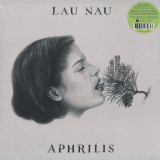
The title of the Lau Nau's 10th album, Aphrilis, derives from the Latin word aperire, meaning "to open." A fitting verb for the month of the year it is closely associated with — April. And while the images of plants and blossoms coming back to colorful life after a long, cold winter feels appropriate when listening to the rich and lustrous bloom of music on Aphrilis, another definition of open feels even more apt. For under the abundance lies the memory of times of austerity, the friction of hard choices, the acceptance that nothing is fixed and the future is unknown. This literal and metaphorical exploration of complexity and contradiction makes Aphrilis a multi-dimensional antidote for our troubled times, one that emphasizes the quiet and communal over noise and spectacle. Laura Naukkarinen, the Finnish artist behind this project, has long kept her mind and spirit open to whatever sounds and creative ideas felt appropriate for the moment. For the past six years that has meant primarily working with modular synthesis — learning how to build modules and releasing acclaimed work centered on its sounds like 5x4 (2023) or Puutarhassa (2022). Running parallel to this work, however, has been a continued exploration of acoustic instruments and group performances with her trio Lau Nau ja Seitsemäs Taivas. Aphrilis arrives then like fresh growth in a creative season cycle. A companion to her brilliant 2017 release Poseidon, the album, says Naukkarinen, "felt like a needed moment to embrace songs with lyrics again." And through the creation of this work, she remained open not only to her own creative muse, but also the input of her chosen collaborators. Each player on Aphrilis — Matti Bye on celesta and synths, Pekko Käppi on jouhikko, Hermanni Yli-Tepsa on violin and contrabass, Topias Tiheäsalo on electric guitar, Samuli Kosminen (Múm) on various instruments — was given free reign to arrange their own parts to accompany Naukkarinen's compositions. Kosminen’s lush fingerprint can also be heard in the mixing and production of the album, as with Poseidon six years ago. The moniker of this project may be taken from Naukkarinen’s own name, but Lau Nau feels more like a band than ever before. The delicacy and softness of the music is reflected in Naukkarinen’s lyrics. Each song is rife with imagery and creatures from the natural world. The spiders in the forest. The animals that keep a young woman company in her refuge in the woods. Wet grass. The feeling of the music is almost tactile, as if listening to the album will leave a bit of dew or sap on your fingers. The theme of this material, says Naukkarinen, runs even deeper. “The songs tell about cracks and changes of direction in different histories: personal, societal, planetary,” she says. “About moments when a yes can become a no and vice versa. The album wants to propose that at the moment of a crisis there is a possibility to influence the histories by our choices.” That may feel like a lot for such a fragile sounding collection of songs to bear. But Aphrilis is an album of surprising strength and resilience
Nick Llobet (they/them) was ready to throw in the towel. Llobet, who grew up in South Florida, learned to play guitar at a very young age, dabbling in everything from classical, blues, classic rock, and flamenco. They'd spent much of their early 20s searching for their voice as an artist and as an individual, as well as for a musical community Llobet would eventually move to Brooklyn, but after three years of looking for a hopeful artistic breakthrough, they spent much of their time in seclusion, consumed by social anxiety and imposter syndrome-and they were considering abandoning songwriting completely. One day, while commuting through Penn Station en route to their partner's family home in Virginia (that would also lead to the crucial purchase of a secondhand Tascam cassette recorder), they noticed Patti Smith sitting alone, waiting for a train. The typically shy Llobet decided to approach the icon, who was, in turn, delighted to see that Llobet was carrying a guitar. At the end of their interaction, Smith offered some parting wisdom: "She wished me luck and said, 'Practice hard, Nick.'" Llobet took her advice to heart, and this chance encounter kicked off a personal and artistic rebirth. They started performing as youbet, a play on their last name, and began "changing their vision for what a song could be." youbet's debut, Compare & Despair, a delightful gem of a record that showcases Llobet's propensity for freewheeling whimsy and emotional intensity. In May 2019, inspired by a song-a-week writing group that produced Compare & Despair, Llobet started a second club in which contributors would upload that week's song to a private Bandcamp. Invigorated by this small musical collaboration, the feedback, and the accountability, Llobet wrote 18 songs throughout the duration of the club, twelve of which became Way To Be. After this songwriting marathon, Llobet spent 2020 focusing on instrumental guitar work and political engagement. By the summer of 2021, they were ready to revisit the Way To Be tracks. Over the next year-and-a-half, Llobet worked on the record relentlessly, refining the lyrics, recording, and arrangements from their apartment. Llobet self-produced Way To Be and describes the process as an enormous, labor-intensive undertaking that felt akin to "making a whole film." Along the way, Llobet was joined by collaborators, including Julian Fader (Ava Luna), Adam Brisbin (Buck Meek), and Daniel Siles. Across Way To Be's 12 delightfully off-kilter tunes, Llobet uses wordplay and tongue-in-cheek humor to obliquely explore dysfunctional relationships, regret, self-confidence or the lack thereof, queerness, and self-discovery. Fuzzy at the edges and filled with playful, kinetic arrangements, Way To Be is a bridge into the entrancing world of youbet. You won't want to leave.
Electro duo Human Rebellion delves into the timeless conflict between light and darkness. As our world gradually descends into shadow, they emerge as advocates of free will. Their mission: to infuse the digital landscape with a distinctly human essence, like flowers growing in a digital wasteland. Their latest creation, the "Light and Shadow" EP (LDI012), is not just an electro release. It is a sonic manifesto. A testament to their vision. As their story unfolds, American artist Terrestrial Access Network provides the final twist: A remix that echoes across the binary expanse.
Vol. 2[26,01 €]
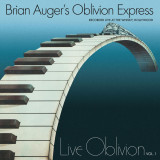
Live albums are often a ‘hit or miss’ affair but ‘Live Oblivion’ 1 & 2 buck that trend, Recorded across 2 nights in 1974 at the Hollywood venue The Whisky A Go Go. The group were finishing off a huge US tour that had roared down the east coast then across the Midwest and by the time they hit LA, as Brian recalls “we were all absolutely performing at our height. So I decided that I really needed to record the band live at that point”. Utilising the Wally Heider Mobile Truck, the scene was set for one of the greatest jazz-fusion live recordings to be made. The show opens with a hyper fast version of Beginning Again due to drummer Steve Ferrone being almost an hour late and running high on adrenaline, Brian remembers thinking “I don’t even know if I can play it that fast!” Fortunately, he and the Oblivion Express including stellar vocalist Alex Ligertwood rise to the challenge and the result is akin to some frenetic jazzy drum & bass but also pushes the group onto another level altogether for the rest of the show. Across both volumes there are no fillers and the highlights are many - Bumpin’ On Sunset, Freedom Jazz Dance, and Inner City Blues are all stunning, but especially the epic version of Maiden Voyage which Mos Def sampled on his 1997 'If You Can Huh! You Can Hear', and both DJ Mitsu in 2004 and 2017 Crimeapple both dipped into Live Oblivion to sample that fire for their own projects.
Nachdem er zig Millionen Alben verkauft, Milliarden von Streams generiert, die Charts gestürmt und Arenen und Amphitheater auf der ganzen Welt gefüllt hat, kehrt Sebastian Bach auf seinem lang erwarteten sechsten Album Child Within the Man mit neuer Musik zurück. Sebastians Rückkehr ist, gelinde gesagt, längst überfällig. Sein letztes Soloalbum, Give 'Em Hell, erschien 2014. "'Child Within the Man' klingt wie ein Album aus den 70ern in einem Video aus den 80ern im Internet im Jahr 2024", lässt er verlauten. "Es wurde von echten Musikern und einem echten Produzenten gemacht und mit echter Dynamik gemastert. Es soll groß klingen".
Mit seiner unnachahmlichen Präsenz, die so laut ist wie seine unverkennbare Stimme, hat Sebastian Bach in Musik, Theater, Film, Fernsehen und Kultur einen Abdruck in der Größenordnung der San-Andreas-Verwerfung hinterlassen. Er hat, unter anderem als Sänger von Skid Row, einige der kultigsten Hymnen der Rockgeschichte geschrieben und eingesungen mit Hits wie "18 and Life", "I Remember You", "Youth Gone Wild" und "Monkey Business". Mit seiner inzwischen legendären Rolle in Jekyll & Hyde: The Musical und seinen Hauptrollen in The Rocky Horror Picture Show und Jesus
Christ Superstar hat er Geschichte geschrieben als "der erste Heavy-Metal-Sänger am Broadway". Er hat in Dutzenden von Fernsehserien und Filmen mitgewirkt, von Trailer Park Boys und Robot Chicken bis hin zu Spongebob Schwammkopf, The Masked Singer und Hell's Kitchen. Was seine Vielseitigkeit betrifft, so ist er die seltene Naturgewalt, die mit Axl Rose im Duett singen kann und eine wiederkehrende Rolle in Gilmore Girls übernehmen kann.
Aural Imbalance has enjoyed a colourful and celebrated journey through music over the years, taking in ambient soundscapes, deep house and of course, a pioneering role in atmospheric drum & bass. With Spatial, he has unearthed a pure, varied musical prowess seldom seen, with the ability to control both the lighter aspects of the mix as well as expert breakbeat craft. Infinity Spectrum showcases the breadth of talent Aural Imbalance possesses in one incredible package, not to be missed.
A1 - Aurealis
Opening the album with a wonderfully serene track, Aural Imbalance delicately rolls out his trademark smooth ambience with building cymbals and an energetic break merging perfectly in the mix - along with a great, pounding undertone of bass. Riddled with old-school sensibilities, Aurealis layers the building blocks until the track opens up further through a superbly lush breakdown, blooming like a flower in the summer sun before the breaks return.
A2 - Glistening Stars
Washing strings and the chitter-chatter of playful effects introduce Glistening Stars, before familiar, crisp old school breaks steal the limelight. A happy earworm melody soon reveals itself, and the breaks are gradually filtered back in following an other amazing breakdown before the melody takes on new life. Packed with detail and soul, this track will repeat on you long after you've moved on.
B1 - Alpha
Curious, apprehensive tones punctuate a fascinating intro, with a deep old school bassline creeping out first to greet us, before the hi-hat laden break loses its inhibitions and roams free.
Crafting a deliciously textured atmosphere, Aural Imbalance continues to showcase the breadth of his production techniques in his Spatial form, flecking the track with sumptuous melodies to create yet another gem.
B2 - Stargazers
This piece opens with a special blend of quiet, epic serenity, evoking hope and wonder as amen cymbal work and a stabbing snare-heavy break pattern rise and fall in the surrounding symphony. The quietly musical bassline plays a key role in the aural world-building here, complementing the breaks it harmonises with superbly. Aural Imbalance allows the composition to breathe and flourish for a superbly executed final act. Delightful.
C1 - Slow Motion
Introduced with quietly filtered breaks, Slow Motion dials back the pace with a break pattern which relaxes the snare while still maintaining a playful energy as the kicks and bass bumble along below. A uniquely atmospheric yet eccentric melody takes shape with dreamy pads filling the backdrop, and calming scatterings of echoing effects colliding and combining to generate a blissful collage of sound.
C2 - Apparition
Switching up the vibe we have Apparition, which boldly utilises long, tranquil yet purposeful pad work before an immense break pattern riddled with stark snares and a jumpy bassline which rides the smothered kickdrums so well, they appear to be fused as one. The breaks on this are truly special and will move the discerning dancefloor for sure, Aural Imbalance continuing to reveal a never-ending depth to his sound.
D1 - Artificial Satellite
Introduced with smooth synths and DJ-friendly hi hats, Artificial Satellite sees Aural Imbalance laying down a fresh showcase of old-school breakbeats, laced with that inimitable Spatial flavour. A swirling low-key sci-fi vibe punctuates the breakdown before the beats re-emerge. A deep, brooding bassline pulses beneath throughout, while the perfectly executed breaks enjoy their final flourish.
D2 - Unknown Forces
Finally, up steps Unknown Forces for a blistering finale to the LP. Aural Imbalance is at his amen-editing best here with a truly superb showcase of analogue break patterns to nourish the ears and set pulses racing on the dancefloor. Deep bass elevates the gentle intro before thumping kicks begin an epic workout, chopped to perfection with synths and strings flying gracefully above. We couldn't have a Spatial LP without an amen banger could we? What a way to end
Words by Chris Hayes (Spatial/Red Mist)
Nachdem er zig Millionen Alben verkauft, Milliarden von Streams generiert, die Charts gestürmt und Arenen und Amphitheater auf der ganzen Welt gefüllt hat, kehrt Sebastian Bach auf seinem lang erwarteten sechsten Album Child Within the Man mit neuer Musik zurück. Sebastians Rückkehr ist, gelinde gesagt, längst überfällig. Sein letztes Soloalbum, Give 'Em Hell, erschien 2014. "'Child Within the Man' klingt wie ein Album aus den 70ern in einem Video aus den 80ern im Internet im Jahr 2024", lässt er verlauten. "Es wurde von echten Musikern und einem echten Produzenten gemacht und mit echter Dynamik gemastert. Es soll groß klingen".
Mit seiner unnachahmlichen Präsenz, die so laut ist wie seine unverkennbare Stimme, hat Sebastian Bach in Musik, Theater, Film, Fernsehen und Kultur einen Abdruck in der Größenordnung der San-Andreas-Verwerfung hinterlassen. Er hat, unter anderem als Sänger von Skid Row, einige der kultigsten Hymnen der Rockgeschichte geschrieben und eingesungen mit Hits wie "18 and Life", "I Remember You", "Youth Gone Wild" und "Monkey Business". Mit seiner inzwischen legendären Rolle in Jekyll & Hyde: The Musical und seinen Hauptrollen in The Rocky Horror Picture Show und Jesus
Christ Superstar hat er Geschichte geschrieben als "der erste Heavy-Metal-Sänger am Broadway". Er hat in Dutzenden von Fernsehserien und Filmen mitgewirkt, von Trailer Park Boys und Robot Chicken bis hin zu Spongebob Schwammkopf, The Masked Singer und Hell's Kitchen. Was seine Vielseitigkeit betrifft, so ist er die seltene Naturgewalt, die mit Axl Rose im Duett singen kann und eine wiederkehrende Rolle in Gilmore Girls übernehmen kann.
Nachdem er zig Millionen Alben verkauft, Milliarden von Streams generiert, die Charts gestürmt und Arenen und Amphitheater auf der ganzen Welt gefüllt hat, kehrt Sebastian Bach auf seinem lang erwarteten sechsten Album Child Within the Man mit neuer Musik zurück. Sebastians Rückkehr ist, gelinde gesagt, längst überfällig. Sein letztes Soloalbum, Give 'Em Hell, erschien 2014. "'Child Within the Man' klingt wie ein Album aus den 70ern in einem Video aus den 80ern im Internet im Jahr 2024", lässt er verlauten. "Es wurde von echten Musikern und einem echten Produzenten gemacht und mit echter Dynamik gemastert. Es soll groß klingen".
Mit seiner unnachahmlichen Präsenz, die so laut ist wie seine unverkennbare Stimme, hat Sebastian Bach in Musik, Theater, Film, Fernsehen und Kultur einen Abdruck in der Größenordnung der San-Andreas-Verwerfung hinterlassen. Er hat, unter anderem als Sänger von Skid Row, einige der kultigsten Hymnen der Rockgeschichte geschrieben und eingesungen mit Hits wie "18 and Life", "I Remember You", "Youth Gone Wild" und "Monkey Business". Mit seiner inzwischen legendären Rolle in Jekyll & Hyde: The Musical und seinen Hauptrollen in The Rocky Horror Picture Show und Jesus
Christ Superstar hat er Geschichte geschrieben als "der erste Heavy-Metal-Sänger am Broadway". Er hat in Dutzenden von Fernsehserien und Filmen mitgewirkt, von Trailer Park Boys und Robot Chicken bis hin zu Spongebob Schwammkopf, The Masked Singer und Hell's Kitchen. Was seine Vielseitigkeit betrifft, so ist er die seltene Naturgewalt, die mit Axl Rose im Duett singen kann und eine wiederkehrende Rolle in Gilmore Girls übernehmen kann.
1981, the leaden years are over, the socialist left is in power in France and the first wave of punk seems a long way off. However, the youth of the day had not said its last word, and bands were springing up all over the place, free radio stations were opening up, fanzines were being published, concerts were being staged on the fly and little by little a scene was forming, a motley crew of kids in revolt, radical activists and just plain old folk passing through.
After having cut their teeth in a variety of more or less confidential bands, in which you'd come across a good number of players from this up-and-coming alternative scene, the members of Guernica moved up a gear, determined to blow on the still-glowing embers of rebel rock. With the shortage of venues the rule at the time, they began by scouring the suburban MJCs, putting on wild concerts and eventually meeting up with the squatters of the Couronnes commune and the members of V.I.S.A., with whom they played an active part in organising concerts in squatted buildings in these relegated areas of the capital.
In February 1983, the V.I.S.A. association and the Abattoir art collective (which included some members of Guernica) organised a concert at the Usine Pali-Kao. That evening, two groups took to the stage in succession: Guernica and a fledgling duo, Bérurier Noir. The evening will go down in the history of alternative rock as one of the key turning points of the period. After the departure of Loran, who played guitar with both bands, Fabrice Benoît joined Guernica on guitar, and the gang continued for a few more months, ending on a high note with a chaotic concert at the Eldorado in Paris.
Until now, it's been impossible to get your hands on any of the band's recordings unless you're lucky enough to own the Paris Mix compilation, the Guernica/Bérurier Noir split or the V.I.S.A. Usine Cascades 1982 cassette. This vinyl, a perfect record of the era, brings together the six tracks recorded by the band at the time.
Nick Llobet (they/them) was ready to throw in the towel. Llobet, who grew up in South Florida, learned to play guitar at a very young age, dabbling in everything from classical, blues, classic rock, and flamenco. They’d spent much of their early 20s searching for their voice as an artist and as an individual, as well as for a musical community. Llobet would eventually move to Brooklyn, but after three years of looking for a hopeful artistic breakthrough, they spent much of their time in seclusion, consumed by social anxiety and imposter syndrome—and they were considering abandoning songwriting completely. One day, while commuting through Penn Station en route to their partner’s family home in Virginia (that would also lead to the crucial purchase of a secondhand Tascam cassette recorder), they noticed Patti Smith sitting alone, waiting for a train. The typically shy Llobet decided to approach the icon, who was, in turn, delighted to see that Llobet was carrying a guitar. At the end of their interaction, Smith offered some parting wisdom: “She wished me luck and said, ‘Practice hard, Nick.’” Llobet took her advice to heart, and this chance encounter kicked off a personal and artistic rebirth. They started performing as youbet, a play on their last name, and began “changing their vision for what a song could be.” youbet’s debut, Compare & Despair, a delightful gem of a record that showcases Llobet’s propensity for freewheeling whimsy and emotional intensity. In May 2019, inspired by a song-a-week writing group that produced Compare & Despair, Llobet started a second club in which contributors would upload that week’s song to a private Bandcamp. Invigorated by this small musical collaboration, the feedback, and the accountability, Llobet wrote 18 songs throughout the duration of the club, twelve of which became Way To Be. After this songwriting marathon, Llobet spent 2020 focusing on instrumental guitar work and political engagement. By the summer of 2021, they were ready to revisit the Way To Be tracks. Over the next year-and-a-half, Llobet worked on the record relentlessly, refining the lyrics, recording, and arrangements from their apartment. Llobet self-produced Way To Be and describes the process as an enormous, labor-intensive undertaking that felt akin to “making a whole film.” Along the way, Llobet was joined by collaborators, including Julian Fader (Ava Luna), Adam Brisbin (Buck Meek), and Daniel Siles. Across Way To Be’s 12 delightfully off-kilter tunes, Llobet uses wordplay and tongue-in-cheek humor to obliquely explore dysfunctional relationships, regret, self-confidence or the lack thereof, queerness, and self-discovery. Fuzzy at the edges and filled with playful, kinetic arrangements, Way To Be is a bridge into the entrancing world of youbet. You won’t want to leave.
- A1: Reloaded (Feat. Action Bronson, Big Body Bes, Pain In Da Ass, Termanology, Tony Touch)
- A2: Bird Eye's View (Feat. Black Thought, Joey Bada$$, Raekwon)
- A3: East Coast (Feat. Lil' Fame, Noreaga)
- A4: 21 & Over (Feat. Mac Miller, Sean Price)
- A5: The Spark (Feat. Action Bronson, Joey Bada$$, Mike Posner)
- B1: Make Believe (Feat. Ea$Y Money, Freddie Gibbs, Termanology)
- B2: Pinky Ring (Feat. Prodigy)
- B3: Funeral Season (Feat. Bun B, Hit Boy, Styles P)
- B4: Bring Em' Up Dead (Feat. Joell Ortiz)
- B5: Camouflage Dons (Feat. Flatbush Zombies, Smif N Wessun)
- C1: Big City Of Dreams (Feat. Ag Da Coroner, Meyhem Lauren, Push!)
- C2: Gz, Pimps, Hustlers (Feat. Slaine, Wais P)
- C3: My Hoe (Feat. Blu, Evidence, Reks)
- C4: Love & War (Feat. Ea$Y Money, Freeway)
- D1: 100 Stacks (Feat. Jfk, Strong Arm Steady)
- D2: Live From The Era (Feat. Pro Era)
- D3: Game Break (Feat. Lecrae, Posdnuos, Termanology)
- D4: Home (Feat. Talib Kweli)
Celebrating a decade of hip-hop excellence with the 10th Anniversary Vinyl Reissue of Statik Selektah's groundbreaking album, Extended Play. Pressed onto high-quality vinyl and housed in a silver laminated jacket, this limited edition reissue pays homage to the timeless collaboration between the legendary producer and some of the finest wordsmiths in the game.
Extended Play showcases the essence of authentic hip-hop, seamlessly blending old-school vibes with innovative production. Featuring an all-star lineup of rap luminaries, including Action Bronson, Mac Miller, Joey Bada$$, Sean Price, Raekwon, Black Thought, Prodigy, Evidence, Termanology, Posdnous of De La Soul and Talib Kweli amongs several others, this album is a masterclass in lyrical prowess and beatsmithing finesse.
Immerse yourself in the artistry of Statik Selektah as he crafts intricate beats that serve as the canvas for the lyrical dexterity of hip-hop's finest. Each track is a testament to the genre's evolution, capturing the essence of both its roots and its future. From the gritty realism of Sean Price's verses to the introspective musings of Mac Miller, every moment on this album is a revelation.
This commemorative vinyl reissue not only offers listeners a chance to experience the album in its purest form but also provides a glimpse into the collaborative spirit that defines hip-hop culture. The album cover artwork has been meticulously restored and printed onto a silver laminated jacket. Join us in celebrating the legacy of Extended Play and the everlasting impact of Statik Selektah's musical vision!
The collaboration between renowned drummer Jim White and acclaimed guitarist Marisa Anderson is a natural union of two of the most intuitive players and listeners working in music. Jim White is known for his groundbreaking trio, Dirty Three, as well as duo, Xylouris White. His list of collaborations is vast and include artists such as Nick Cave, Bill Callahan, Cat Power, Marnie Stern and Warren Ellis. Jim just released his debut solo album, All Hits: Memories. Marisa Anderson, known primarily for her solo work, in demand collaborator who has worked with Tashi Dorji, Sharon Van Etten, Yasmine Williams and Michael Hurley. She has released records with William Tyler and Tara Jane O"neal. White and Anderson are each highly sought after collaborators in no small part because of their mastery, versatility and highly expressive playing. Their sophomore album, Swallowtail, finds the duo completely attuned to each other, fluidly moving as wind and water. They avoid preconceived movements, instead focusing on their musical conversation. As Anderson puts it: "The ideas aren"t the music, they are the pathway into the musical possibilities." Their skillful interplay creates an effervescence throughout the album. The ebb and flow to the duo"s motions bring a sense of serenity and ease to spontaneous transitions, each swell and retraction sounding as free as it does inevitable. White and Anderson"s preternatural alchemy as a duo allows each fleeting gesture to feel featherlight and stirring while maintaining an inquisitive spirit. Their music is an enchanting and illuminating.
On 'Mirror, Reflect,' Amy O returns to form as she documents her transition into motherhood in the early days of the pandemic. Initially conceived as a lo-fi endeavor to record songs made with friends in those days of uncertainty, 'Mirror, Reflect' is an intimate and exploratory work that weaves collected home and field recordings with shimmering synths and Oelsner's playful lyricism. A stalwart presence in the indie-pop underground since 2012, Oelsner shifted her approach to record making on 'Mirror, Reflect' to emphasize process over product, with the resulting songs born out of a myriad of home sessions, song-a-day projects, songwriting workshops and online collaborations. This kind of patchwork, home-spun approach was familiar to Oelsner, who made her name with her sparkling, homemade pop songs before releasing three studio albums, including her most recent album, 2019's Shell. 'Mirror, Reflect' gently shrugs off the sheen of those studio albums, as an early prenatal recording of Oelsner's daughter's heartbeat opens the record in the near-ambient instrumental prelude of "Honey" -- a wonderfully nuanced dispatch from the dog days of summer that's under-bellied by both the precarity and beauty of the early months of infancy and new motherhood. Oelsner's knack for finding magic in the mundane is also deeply apparent on "Dribble Dribble," where the stick-with-you nature of the playful rhyme schemes of the children's books that became a regular part of her literary intake are worked into a lilting reflection on resilience, destruction and loss. Oelsner's initiation into motherhood is inseparable from the poetic heart of 'Mirror, Reflect', but the album is also largely informed by the shifts in Oelsner's relationship to herself. Through playful and emotionally acute observations, Amy O turns the potentially contractive experiences of motherhood, isolation, family and aging into a freewheeling work where ephemerality and humor collide over her deft lyrical phrasing, musicality and her keen observations turned poetic revelations.
The collaboration between renowned drummer Jim White and acclaimed guitarist Marisa Anderson is a natural union of two of the most intuitive players and listeners working in music. Jim White is known for his groundbreaking trio, Dirty Three, as well as duo, Xylouris White. His list of collaborations is vast and include artists such as Nick Cave, Bill Callahan, Cat Power, Marnie Stern and Warren Ellis. Jim just released his debut solo album, All Hits: Memories. Marisa Anderson, known primarily for her solo work, in demand collaborator who has worked with Tashi Dorji, Sharon Van Etten, Yasmine Williams and Michael Hurley. She has released records with William Tyler and Tara Jane O"neal. White and Anderson are each highly sought after collaborators in no small part because of their mastery, versatility and highly expressive playing. Their sophomore album, Swallowtail, finds the duo completely attuned to each other, fluidly moving as wind and water. They avoid preconceived movements, instead focusing on their musical conversation. As Anderson puts it: "The ideas aren"t the music, they are the pathway into the musical possibilities." Their skillful interplay creates an effervescence throughout the album. The ebb and flow to the duo"s motions bring a sense of serenity and ease to spontaneous transitions, each swell and retraction sounding as free as it does inevitable. White and Anderson"s preternatural alchemy as a duo allows each fleeting gesture to feel featherlight and stirring while maintaining an inquisitive spirit. Their music is an enchanting and illuminating.
Mayday is the third LP by Montreal-based artist, Myriam Gendron. It follows her earlier, critically acclaimed albums, Not So Deep As A Well (2014) and Ma délire - Songs of love, lost & found (2021). Myriam began exploring the complex folk traditions of Quebec (and beyond), with Ma délire, which combines traditional and original songs with arrangements that make space for avant-garde musical interludes by such folks as guitarist Bill Nace (Body/Head) and renowned jazz percussionist Chris Corsano. Mayday presents an even more syncretic fusion of the elements Myriam uses to create her sound. Most of the songs are original, sung in both English and French, and they blend traditional and avant elements with abandon. She is often accompanied on this album by the guitarist Marisa Anderson and drummer Jim White (Dirty Three, Xylouris White), whose work provides a quietly aggressive sort of free-rock base. Additional players include Montreal bassist Cédric Dind-Lavoie, Bill Nace and saxophonist Zoh Amba. Mayday is a thoroughly thrilling effort that manages to create new vistas of sound while maintaining a feel that is both intimate and familiar. The music here certainly possesses a richly serious tone, but Myriam Gendron (like Leonard Cohen) is able to infuse her darkness with a subtle, powerful light that reminds us that even the most pitch-black night is but a transitional state. Beautiful work.
Oakland, CA mainstays Lunchbox are back with "Pop and Circumstance," an explosive new album draws on influences from both sides of the Atlantic. Besides its obvious debt to the hard end of the 1970s UK mod-revival and the jangle of 1980s British indie pop, the record proclaims Lunchbox’s continued allegiance to the 1960s/70s Southern California pop sensibility and love for the classic AM radio pop single. From the bubblegum mod pop of "Dinner for Two" to the junkshop soul of "Love for Free," the Who-adjacent power pop of "Summer’s Calling" to the horn-driven grooves of "Is this Real?," "Pop and Circumstance" transposes Lunchbox’s unique blend of influences into a transcendent new key.