Поиск:fab 5 freddy

Стили
Все
  • 1
Featuring Fab 5 Freddy, Jonzun Crew, Yoko Ono, Class Action, Johnny Dynell, Art Zoyd and more - Soul Jazz Records presents KEITH HARING: The World of Keith Haring

Soul Jazz Records are releasing this stunning new collection, The World of Keith Haring, featuring
music influential to the artist Keith Haring.
The art of Keith Haring is today one of the most recognisable of any visual artists of his generation,
defining 1980s New York during an intense period when downtown artists and musicians collaborated
like never before. Haring’s musical inspiration took in the punk/dance downtown sounds of clubs like
The Mudd Club, underground disco at Larry Levan’s Paradise Garage, as well the early days of hip-hop
and electro.
The album is released to coincide with the opening of the first major exhibition in the UK of Keith
Haring’s work at Tate Liverpool and which runs for the next six months.
Haring’s many friends included Jean-Michel Basquiat, Andy Warhol, Madonna, Fab Five Freddy,
William Burroughs, Jenny Holzer, Yoko Ono, Grace Jones, Larry Levan, Futura 2000.
If you were looking for a person to guide you through the wide variety of nightclub scenes of
downtown New York in the 1980s, then Keith Haring would have been your man.
This album comes in deluxe artwork and three formats – Double CD + 48-page book, a deluxe 3xLP +
bonus 7” + download code vinyl version, and a standard 3xLP + download standard vinyl version. All
formats of the album feature stunning photography, extensive sleevenotes and interviews.
The music here includes the work of a number of Haring’s close friends, including Jean-Michel
Basquiat, Yoko Ono, Larry Levan, John Sex and George Condo (The Girls), as well as healthy dose of
rare disco, early electro and New York punk/dance tracks.

нет на складе

Закажите сейчас, и мы закажем товар для вас у нашего поставщика.

41,39

Последний логин: 5 г. назад
Max Herre - Mtv Unpluged Kahedi Radio Show 4x12"
 
42

Max Herre hat ein MTV Unplugged aufgenommen. Das rückt ihn in eine Tradition mit Udo Lindenberg, Eric Clapton, Lauryn Hill, Jay Z. Mehr noch als ein konsequenter Karriereschritt und popkultureller Ritterschlag aber ist das Konzert eine Rückkehr zu seinen Wurzeln. Denn lange bevor er als Texter und MC einer ganzen Generation eine neue Stimme geben sollte, war er vor allem der Junge mit der Gitarre, der einfach nur spielen wollte. Das Gefühl, das er als 15-Jähriger im Proberaum suchte, hat er nun im 'Großen Saal'des altehrwürdigen Funkhaus Berlin Nalepastraße wiedergefunden.

Die Geschichte dieses besonderen Abends beginnt vor knapp 25 Jahren in einem Keller in Stuttgart-West. Dort jammte er mit Freunden zu dem Funk, Soul und Reggae, den er liebte - und legte, ohne es zu wissen, den Grundstein für das, was da kommen sollte. Zwei klassische Alben mit Don Philippe und DJ Friction als Freundeskreis zum Beispiel, die sich nicht nur weit über 500.000 mal verkauften, sondern eine ungehörte Musikalität in die deutsche Rap-Landschaft einführten. Drei Soloplatten, die den Bogen spannten von der '1sten Liebe' HipHop zu fragilem Folk im Stile eines Singer-Songwriters (und zurück). Eine Zweitkarriere als Labelbetreiber und Produzent. Und dazwischen immer wieder Auftritte, bei denen all diese Erfahrungen und Einflüsse auf fast magische Weise zusammenliefen.

Max Herre hat Rap immer in einem Bandkontext gedacht, HipHop stets in einem Kollektivgedanken gelebt. Das war Anfang der Neunziger so, als er als Kind der Kolchose seine ersten Live-Auftritte in süddeutschen Jazzclubs hatte. Das war später so, als er aus Freundeskreis die FK Allstars erwachsen ließ und mit ihnen über die größten Festivalbühnen des Landes tourte. Und das ist heute nicht anders, wenn er wie 2012 auf seinem fulminanten Gold-Album Hallo Welt! alte wie neue Inspirationen zu seelenvoller Rapmusik mit Ewigkeitsanspruch bündelt.

So ist es nur konsequent, dass für MTV Unplugged / KAHEDI Radio Show zahlreiche Featuregäste und Freunde nach Berlin gekommen sind: wichtige Weggefährten wie Joy Denalane, Afrob, Sékou, Gentleman, Samy Deluxe, Patrice, Sophie Hunger, Philipp Poisel oder US-Ausnahmesänger Gregory Porter, aber auch das 26-köpfige, eigens für den Abend zusammengestellte KAHEDI RADIO ORCHESTRA. Unter der Führung des musikalischen Leiters Lillo Scrimali kommen so mehr als 40 Musiker aus drei Generationen zusammen. Produzent Samon Kawamura und Host Fab 5 Freddy, einst erster Moderator der wegweisenden HipHop-Sendung Yo! MTV Raps, ziehen im Regieraum zusätzlich dramaturgische Fäden.

'Ich bin sehr dankbar und glücklich, dass ich für dieses Projekt mit einigen der besten arbeiten durfte: viele davon langjährige Freunde und Wegbegleiter', so Max über das mehr als zweistündige, komplett akustische Konzert. 'Sie alle haben nicht nur ihr Spiel und ihre Fähigkeiten eingebracht, sondern ihr Herz und ihre musikalische Vision.'

Den passenden Rahmen bietet das Funkhaus Berlin Nalepastraße am Köpenicker Spreeufer. In dem ehemaligen Hauptsitz des DDR-Hörfunks, in dem schon Barenboim und die Bartoli, aber auch Portishead und Sting gearbeitet haben, vereinen sich Feierlichkeit und funktionelle Strenge auf ganz erstaunliche Weise. Max Herre hat diesen geschichtsträchtigen Ort für MTV Unplugged / KAHEDI Radio Show neu erdacht, indem er seine ursprüngliche Funktion als Aufnahmeraum unterstrichen hat. Vom Publikum umgeben spielen die Musiker in einer 360°-Konstellation zueinander und empfinden gemeinsam nach, wie in den siebziger Jahren Soulmusik gemacht wurde.

MTV Unplugged / KAHEDI Radio Show ist ein erlebtes Experiment mit offenem Ausgang und maximaler künstlerischer Freiheit. Eine kollektive Verneigung vor Soul, Jazz, Funk, Reggae und Rap. Und die in Musik gefasste Botschaft, dass Zukunft stets auch ein Stück Vergangenheit in sich trägt.

Zumindest, wenn sie so klingt wie die Musik von Max Herre.

нет на складе

Закажите сейчас, и мы закажем товар для вас у нашего поставщика.

26,04

Последний логин: 6 г. назад
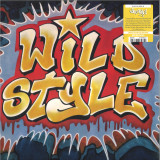
Various - Wild Style (Special Edition) (2x12")

GATEFOLD VINYL 2LP - TRANSPARENT BLUE + ORANGE, A2 Colour Poster, 5x Film Set Photos, Flexi Disc, Sticker Sheet

Blurring the lines between fiction and documentary, the seminal film Wild Style, directed by Charlie Ahearn and developed alongside Fred Braithwaite aka Fab Five Freddy, offered an iconic snapshot of the emerging New York hip hop scene in the early ‘80s. Considered one of the first hip hop films, it documents the styles, culture, attitudes, and most importantly, the music of this evolving era. The accompanying soundtrack remains one of the most influential in hip hop history, featuring a who’s who of artists who stood out during the movement’s nascent block party days.

“Making hip hop’s first and most beloved feature film, Wild Style, with Charlie Ahearn and creating the original music is one of my proudest accomplishments.” - Fab 5 Freddy

In celebration of Arrow Films restoring the original Wild Style film in 4K, Mr Bongo is proud to present this special-edition reissue package. The release comes as a double LP pressed on transparent blue and orange vinyl, offering a freshly curated tracklist that brings together the finest songs from previous editions, the full sought-after instrumental album, and Kenny Dope’s top edits. Also included are an A2 colour poster, five film set photos, a flexi disc containing Fantastic Freaks Live at the Dixie, and a Wild Style sticker sheet.

Originally released on Animal Records, founded by Chris Stein of Blondie fame, the soundtrack focuses on the hip hop scene as it evolved from the streets to the recording studio. Co-produced by Stein and Braithwaite, it features the Double Trouble pairing of Rodney Cee and KK Rockwell, The Chief Rocker himself Busy Bee, and the mighty line-ups of both The Cold Crush Brothers and The Fantastic Freaks, to name but a few. The music offers a transportive glimpse into the streets of the South Bronx, capturing the free-form, roaming nature of the film - it’s rough around the edges, but utterly absorbing.

Behind those foundational voices of hip hop’s first wave was a selection of backing beats that have underpinned and influenced the genre ever since. Easily mistaken for lifted breakbeats from old records, the songs on the Wild Style soundtrack are all unique creations. Overseen by Braithwaite and Stein, with Stein also on guitar and effects, they were intended as a homage to those early breakbeats. Drummer Lenny “Ferrari” Ferraro, who played for Aretha Franklin before emerging on the punk scene, and bassist David Harper laid down many of the iconic grooves, two somewhat forgotten participants in shaping a legendary sound.

Over time, the Wild Style soundtrack, with its Charlie Chase and Grand Wizard Theodore scratches, recurring sounds and motifs, and indelible lyrics, has become a hip hop touchstone: endlessly sampled and referenced, the bedrock of so much music to follow. It perfectly encapsulated the essence of the film, the scene, and hip hop’s emergence from the Bronx to the attention of the wider world. It was, and remains, the blueprint.

В наличии на складе

Есть у нас в наличии и готов к отправке

38,45
CLIPPING. - DEAD CHANNEL SKY LP 2x12"

Clipping.

DEAD CHANNEL SKY LP 2x12"

2x12inchSP1575LPX
Sub Pop
14.03.2025

Because of their mix of hellified gangster shit and progressive compositions, I once jokingly called Clipping "Deathrow Tull." Well, it's not a joke anymore. While Clipping's last few projects have been record-long concepts like classic prog rock, their cyberpunk-infused new album Dead Channel Sky is mixtape-like, a carefully curated collection in which every track is a love letter to a possible present. It sounds crisp and classic at the same time. When something strikes us as retrospective and futuristic at the same time, it's a reminder of how slipshod our present moment truly is. Juxtaposing high-tech, corporate command-and-control systems (the "cyber") with the lo-fi, D.I.Y. underground (the "punk"), cyberpunk proper starts in 1982 and ends in 1999, from Blade Runner to The Matrix. Concurrently, hip-hop matured, went through its Golden Era, then melted into further forms: it went from from Fab 5 Freddy to Public Enemy to Missy Elliott. While other genres flirted with it, hip-hop was fickle and fey. Rap and rock birthed mutant offspring maligned by most, and hip-hop's relations with electronica rarely fared any better. What if someone explicitly merged hip-hop and cyberpunk - those twin suns of the '80s and '90s - into one set and sound? After all, both movements are the result of hacking the haunted leftovers of a war-torn culture that's long since moved on. On Dead Channel Sky, Clipping texture-map the twin histories of hip-hop and cyberpunk onto an alternate present where Rammellzee and Bambaataa are the superheroes of old; where Cybotron and Mantronix are the reigning legends; where Egyptian Lover and Freestyle are debated endlessly, and Ultramag and Public Enemy are the undeniable forefathers; where the lost movements of 1980s and the 1990s are still happening: rave, trip-hop, hip-house, acid house, drum & bass, big beat-the detritus of a different timeline, the survivors of armed audio warfare. Clipping are no strangers to sci-fi: two of their records were nominated for Hugo Awards (one of science fiction's top literary prizes), and a novella spun-off from their music was nominated for a third. On Dead Channel Sky, Clipping's co-conspirators include everyone from the guitarist Nels Cline, to their labelmates Cartel Madras, rapper/actor Tia Nomore, and wordsmith Aesop Rock. Diggs is known for intricate lyrics and rapid-fire rapping, and the tracks that Snipes and Hutson build in the background are no less complex. All of the above serves to give us a glimpse of an adjacent possible present, where hip-hop and cyberpunk are one culture. Binary stars are often perceived as one object when viewed with the naked eye. Like those twin sun systems, it'll take some special equipment and some discerning attention to pull the stars apart on this record. As Diggs barks on the fire-starting "Change the Channel": Everything is very important!

В наличии на складе

Есть у нас в наличии и готов к отправке

28,53
Various - Dolores: Salsa & Guaracha From 70's French West Indies

In Guadeloupe, many people think that jazz and ka music are like a ring and a finger. To some extent, the same could be said about so called Latin music and the music played in the French West Indies.

Both aesthetics were born in the Caribbean and bear so many connections that they can easily be considered cousins. In constant dialogue, there are lots of examples of their fruitful alliance and have been for a while. The English country dance that used to be practiced in European lounges came to be called kadrille in Martinique and contradanza in Cuba. They both featured additional percussion instruments inherited from the transatlantic deportation. Drawing from shared feelings about the same traumatized identity – later to be creolized – it would be hard not to assume that they were meant to inspire each other. The golden age of the orchestras that graced the Pigalle nights during the interwar period further proves the point. As soon as the 1930s, Havana-born Don Barreto naturally mixed danzón and biguine music in a combo based at Melody's Bar. In the following decade, Félix Valvert, a conductor who was born and raised in Basse-Terre in Guadelupe, also worked wonders in Montparnasse with La Coupole, which was an orchestra made up of eclectic musicians. Afro- Caribbean performers of various origins were often hired on rhythm and brass sections in jazz bands, which used to enliven the typical French balls of the capital. In the 1930s and onwards, Rico’s Creole Band was one of them.


Martinican violinist-clarinettist Ernest Léardée, who would become the king of biguine music as well as the main figure of French Uncle Ben's TV commercials (a dark stigma of post-colonial stereotypes), had musicians from the whole Caribbean sphere play at his Bal Blomet – and they all enchanted "ces Zazous-là" (according the words of Léardée's biguine-calypso piece). In les Antilles (French for French West Indies), music history started to speed up in the 1950s, when trade expanded and radio stations grew bigger. The Guadelupean and Martiniquais youth tuned in their old galena radio sets to South American and Caribbean music. As for the women traders, les pacotilleuses, they bought and sold goods across different islands (the "passing of items through various hands" was thought to be most pleasurable) and brought back countless sounds in their luggage. Such was the case of Madame Balthazar, who once returned from Puerto Rico with the first 45rpm and 33rpm to ever enter Martinique.

Out of this adventure was created the famous Martinican label La Maison des Merengues, a music business she opened and undertook with her husband and which proved to be a major landmark. At the end of the 1950s, in Puerto Rico, Marius Cultier competed in the Piano International Contest playing a version of Monk's Round 'Midnight. He won the first prize and this distinction foreshadowed everything that was to come. Cultier, the heretic Monk of jazz, was quickly praised for writing superb melodies, always tinged with a twist that conferred a unique sound to his music. It didn't take long for the gifted self-taught musician to get to play with Los Cubanos, making a name for himself thanks to his impressive maestria on merengues.

The rest is history. Besides, in the late 1950s, Frantz Charles-Denis, born into the upper middle class in Saint-Pierre and better known by his first name Francisco, went back home after working at La Cabane Cubaine – a club located rue Fontaine where he had caught the Latin fever. Francisco's music was therefore heavily marked by his Cuban cousins' influence, which gave the combos he led a specific style and also led to renewal. Things were swinging hard in La Savane, located in the main square in Fort-de-France. He set up the Shango club close by and tested out the biguine lélé there, a new music formula spiced up with Latin rhythms. Soon afterwards, fate had him fly to Puerto Rico and Venezuela.

As for percussionist Henri Guédon (percussions were only a part of his many talents), he was born in Fort-de-France in May 22nd 1944, the day marking the celebration of the abolition of slavery. As an old man, he could remember that in " his father's Teppaz, a lot of hectic 6/8 music was constantly playing...". In the opening lines of his Lettre à Dizzy, a small illustrated collection of writings published by Del Arco, he highlighted the huge impact that cubop had on him as a teenage boy, around 1960. He eventually turned out to be the lider maximo in La Contesta, a big band steeped in Latin jazz. He was also the one who originated the word zouk to describe music which brought the sound of the New York barrio to Paris. It was the culmination of a journey that started in Sainte-Marie: "a mythical place for bélé, the equivalent of Cuban guaguancó". In the early 1960s, the tertiary economy developed to the detriment of agriculture. Yet rural life was where roots music emerged in Martinique and in Guadeloupe.

Record companies played a major part in the process of Latin versions sweeping across the islands – before reaching everywhere else. Producer Célini, boss of the great Aux Ondes label, and Marcel Mavounzy, both the head of Émeraude records - a firm which was founded in 1953 - as well as the brother of famous saxophonist Robert Mavounzy, were big names to bear in mind. Although there were many of them - all of whom are featured on this record - Henri Debs was definitely the major figure in the recording adventure. He proved to be so influential that he even got compared to Berry Gordy. In the mid 1950s, when he acquired his first Teppaz, he worked on his first compositions: a bolero and a chachacha. Then, he became the one man who made people discover Caribbean music, from calypso to merengue. He was among the first ones to rush out to San Juan, Puerto Rico, to buy records and distribute them through a store run by one of his brothers in Fort-de-France. He had members of the Fania All Star come and perform there, which he was madly proud about. He was also the first one to pay attention to Haitian music, such as compas direct and various other rhythms which would soon flood the market. As a result, many of the combos hitting his legendary studio would end up boosted by widespread "Afro-Latin" rhythms. However, he never denied his identity: gwo ka drums were given a major role, although they were instruments which had long been banned from the "official" music spheres. The present selection bears witness to such a creative swarming. Here are fourteen tracks of untimely yet unprecedented cross-fertilization: all types of music rooted in the Creole archipelago have found their way, whatsoever, to the tracklisting. Whether originating from the city or being more rural, they all go back to what Edouard Glissant, in an interview about the place of West Indian music in the Afro-American scope, called "the trace of singing, the one which got erased by slavery." "It is so in jazz, but also in reggae, calypso, biguine, salsa... This trace also manifests through the drums, whether Guadelupean, Dominican, Jamaican or Cuban... None of them being quite the same. They all point to the idea of a trace, seeking it out and connecting to each other through it. This is the hallmark of the African diaspora: its ability to create something new, in relation to itself, out of a trace. It may be the memory of a rhythm, the crafting of a drum, a means of expression which doesn't resort to an old language but to the modalities of it." The opening track features one of the emblematic orchestras of this aesthetic identity, criscrossing many music types from the archipelago. The 1974 Ray Barretto guajira – Ray Barretto was a major New York drummer influenced by Charlie Parker and Chano Pozzo – is magnificently performed by Malavoi, a legendary Fayolais group (i.e from Fort-de-France). Additionally, the compilation ends on a piece by Los Martiniqueños de Francisco. It symbolically closes the circle as it is a genuine potomitan of Martinique culture which also functions as a tireless campaigner for Afro-Caribbean music. Practicing the danmyé rounds (a kind of capoeiria) to the rhythm of the bèlè drum, it delivers a terrific Caterete, a kind of champeta of Afro- Colombian obedience which was originally composed by Colombian Fabián Ramón Veloz Fernández for the group Wgenda Kenya. The icing on the cake is Brazilian Marku Ribas, who found refuge in Martinique in the early 1970s, bringing his singing to the last trance-inducing track. These two "versions" convey the whole tone of a selection composed of rarities and classics of the tropicalized genre, swarming with tonic accents and convoluted rhythms. It is the sort of cocktail that the West Indians never failed to spice up with their own ingredients. For instance, the Los Caraïbes cover of Dónde, a famous Cuban theme composed by producer Ernesto Duarte Brito, has a typical violin and features renowned Martinique singer Joby Valente and his piquant voice.


The track used to be – or so we think – their only existing 45rpm. The meaningful Amor en chachachá by L'Ensemble Tropicana, a band which included Haitian musicians among whom was composer and leader Michel Desgrotte, also recalls how Latin music was pervasive in the tropics in the mid-1960s. They were the ones keeping people dancing at Le Cocoteraie in Guadelupe and La Bananeraie in Martinique. Around the same time, another "foreign" band, Congolese Freddy Mars N'Kounkou's Ryco Jazz, achieved some success on both islands by covering Latin jazz classics – such as their adaptation of Wachi Wara, a "soul sauce" by Dizzy Gillespie and Chano Pozo whose interweaving of strings and percussions can have anyone hit the dancefloor. How can you resist Dap Pinian indeed, a powerful guaguancó by Eugene Balthazar, performed by the Tropicana Orchestra and published by the Martinique-founded La Maison des Merengues? It also acts as a symbol of the maelstrom at work. Going by the name Paco et L'orchestre Cachunga, Roger Jaffory used to play guaguancó too: his Fania-inspired Oye mi consejo is one example of his style. Baila!!!!! Dancing was also one of the Kings' focus points. Oriza is a Puerto Rican bomba and a "classic" originally composed by Nuevayorquino trumpeter Ernie Agosto, which reserves major space for brasses, giving it a special sheen.

Emerging from the New York barrios crucible was also La Perfecta, a Martinique group originating from Trinidad, whose name directly references the totemic Eddie Palmieri figure as well as his own band, also called La Perfecta. Here they borrow Toumbadora from Colombian producer and composer Efraín Lancheros and interpret it by emphasizing percussions, which set fire to the track even more than the wind instruments. The same goes for Martinique's Super Jaguars, who use Tatalibaba – a composition by Cuban guitarist Florencio "Picolo" Santana which was made famous by Celia Cruz & La Sonora Matencera – as a pretext for sending their cadences into a frenzy. In a more typically salsa vein, the Super Combo, a famous Guadelupean orchestra from Pointe-Noire that was formed around the Desplan family and had Roger Plonquitte and Elie Bianay on board, adapt Serana, a theme by Roberto Angleró Pepín, a Puerto Rican composer, singer and musician also known for his song Soy Boricua. Here again, their vision comes close to surpassing the original. In the 1970s, L'Ensemble Abricot provided a handful of tracks of different syles, hence reaching the pinnacle of the art of achieving variety and giving pleasure. They played boleros, biguines, compas direct, guaguancó and even a good old boogaloo - the type they wanted to keep close to their hearts for ever, "pour toujours", as they sang along together in one of their songs. Léon Bertide's Martinican ensemble excelled at the boogaloo which had been composed by Puerto Rican saxophonist Hector Santos for the legendary El Gran Combo.


Three years later, in 1972, Henri Guédon, with the help of Paul Rosine on the vibraphone, tackled the Bilongo made famous by Eddie Palmieri. Such a classic!!!!! And so were the Aiglons, the band from Guadelupe: choosing to execute Pensando en tí, a composition by Dominican Aniceto Batista, on a cooler tempo than the original, they noticeably used a wonderfully (un)tuned keyboard in place of the accordion. On the high-value collectible single – the first one released by Les Aiglons under the Duli Disc label – there is a sticker classifying the track under the generic name "Afro". Now that is what we call a symbol. Jacques Denis

нет на складе

Закажите сейчас, и мы закажем товар для вас у нашего поставщика.

21,43

Последний логин: 29 дн. назад
Snoop Doggy Dogg - Murder Was The Case: The Soundtrack 2x12"

Now celebrating its 30th anniversary, and arriving as a specially expanded edition to mark the occasion, the Murder Was The Case soundtrack remains an iconic work in hip-hop history. Originally accompanying the short film directed by Dr. Dre and Fab Five Freddy, this album embodies the essence of West Coast gangsta rap of the 90s. Featuring tracks from legends of the game like Snoop Dogg, Tha Dogg Pound, and more, it captures the gritty realities of street life with raw lyricism and infectious beats. From the haunting title track to the catchy grooves of 'Natural Born Killaz,' each song immerses you in the vivid world of the film and the era's burgeoning rap scene.

нет на складе

Закажите сейчас, и мы закажем товар для вас у нашего поставщика.

42,65

Последний логин: 13 мес. назад
VARIOUS - HIP-HOP ALLSTARS 3x12"

Various

HIP-HOP ALLSTARS 3x12"

3x12inch3442246
Wagram
20.10.2023
нет на складе

Закажите сейчас, и мы закажем товар для вас у нашего поставщика.

34,41

Последний логин: 14 мес. назад
ALRICK BAINTON - THE NEW WE$T

Mix a producer obsessed with 1970's Euro-Glam singles with a Los Angeles MC who's only about now & you get the freshest sound since 1988! Street smart/hood muthafukka MC meets a beat-smart/ill-informed muthafukka producer. A conscious melding of Trap Rap & Boom Bap, staying original, precise & exact. Whether you are 15 or 50, this sound will survive any fad's that will be. Special guests include Double Dee (of Double Dee & Steinski) & Don Bolles (Germs, 45 Grave). For fans of : Publilc Enemy, Gary Glitter, Jungle Bros. Roxy Music & James Brown, Twenty Dollar bills, 45 R.P.M. adapters, Fab 5 Freddy, American Muscle, Melvin Van Peebles, dogs, turntable #1 & turntable #2, Dave Lombardo (from Slayer), God & the Devil.

Сделать предзаказ06.10.2023

он должен быть опубликован на 06.10.2023

29,62
Zepiss - Natibel LP

Zepiss

Natibel LP

12inchBM2309
BeauMonde Records
03.05.2023

Edmony Krater grew up on the side of Morne Rouge in Sainte-Rose, north of Guadeloupe. His mother sang in church, but Edmony was drawn to the sound of Gwo Ka, which was frowned upon but very present in ceremonies or funeral vigils.

As both a fashion designer for the theater and a musician (percussion, trumpet, vocals) in the group Gwakasonné, formed by Robert Oumaou and Georges Troupé, Edmony left Guadeloupe in 1983 to settle in mainland France just after recording their first album.

Upon his arrival in Paris, with the desire to give his own version of Gwo Ka, he founded the group Zepiss with Eddy Lebouin, Freddy Tisseur, Philippe Augusty, and Rico Toto and immediately recorded a first album, Natibel.

In a singular way, Natibel perpetuates Gwo Ka Modèn, a movement initiated by the iconic jazz guitarist Gérard Lockel, who was the first to theorize and politicize this music previously transmitted only orally. In just six tracks, Natibel combines the sophistication and roughness of its root music, as Gwo Ka combines an intense rhythmic section with intoxicating melodies.

In the tradition of other Gwo Ka musicians who took the music further such as Guy Conquet, Fabriano Fuzion, Gwakasonné, Erick Cosaque, and above all legendary drummer Marcel Lollia aka Vélo, Edmony Krater and his group Zepiss have contributed to preserving its heritage and bringing an obvious touch of modernity.

нет на складе

Закажите сейчас, и мы закажем товар для вас у нашего поставщика.

22,65

Последний логин: 2 г. назад
Lightnin' Rod - Hustler’s Convention LP

In 1973, a fast-talking hustler by the name of Sport played a huge part in the birth of Hip-Hop. Brought to life by Lightnin’ Rod a.k.a Jalal of The Last Poets and backed by music from Kool & The Gang, Buddy Miles, Billy Preston and more, ‘Hustlers' Convention’ is a concept album documenting the rise and fall of Sport, a street gambler who ends up in jail after a shoot-out with the police. His street tales of card games, throwing dice and chasing women influenced the Wu Tang Clan, Ice T, Public Enemy, Jungle Brothers and many more while also playing a key role in establishing rap as an accepted modern musical art form. A documentary about the album and its pivotal role in the evolution of hip hop is currently being made. The film features interviews with Chuck D, Melle Mel, KRS One, Fab 5 Freddy and more. This remastered vinyl edition is pressed on 180-gram vinyl and is packaged in a facsimile gatefold sleeve and also reproduces the illustrated inner booklet from original pressings. “this is a masterpiece of jailhouse blues and cinematic street rap... it deserves its growing reputation as a lost classic.” * * * * Uncut “a cornerstone in the development of what is now a part of global culture” Fab 5 Freddy “a verbal bible” Chuck D (Public Enemy)

Сделать предзаказ14.10.2022

он должен быть опубликован на 14.10.2022

26,26
Various - Wild Style (OST)

Various

Wild Style (OST)

12inchMRBLP247
Mr Bongo
24.06.2022
 
12

Animal Records – founded by Chris Stein of Blondie fame – only ever released one album in its brief early-80s history, but what an album that was. Wild Style remains the most seminal soundtrack in hip-hop history, a snapshot of the scene as it evolved from the streets to the recording studio. But it’s not just a vital document, it’s also a damn good listen.

The line-up is a who’s who of those who stood out from hip-hop’s nascent block party days. The Double Trouble pairing of Rodney Cee and KK Rockwell, The Chief Rocker himself, Busy Bee, the mighty line-ups of both The Cold Crush Brothers and The Fantastic Freaks. The music captures the free-form, roaming nature of the film – it’s rough at the edges, it’s occasionally amateurish, but it’s completely, utterly glorious.

The original Animal tracklisting, of which this is a reissue, is full of recurring sounds and motifs, all of them co-produced by Chris Stein and Fab Five Freddy, stepping away from breakbeats to produce a sound that reminds you of them, while being totally unique. The epic drums are courtesy of Lenny ‘Ferrari’ Ferraro, a Vietnam vet and punk drummer whose career spanned stints backing Aretha Franklin and Lou Reed.

Over time, those sounds – the Charlie Chase and Grand Wizard Theodore scratches, the indelible lyrics - have become hip-hop touchstones, endlessly sampled and referenced, the bedrock of so much music to follow. That’s because the soundtrack perfectly encapsulated the essence of the film, the scene and hip-hop’s emergence from The Bronx to the attention of the wider world. Presented in this reissue with the original artwork, it remains the blueprint.

нет на складе

Закажите сейчас, и мы закажем товар для вас у нашего поставщика.

25,00

Последний логин: 3 г. назад
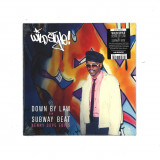
Wild Style - Down By Law / Subway Beat (Kenny Dope Edits)

As pieces of musical curation go, Kenny Dope’s reimagining and reediting of the Wild Style breakbeats is outstanding. While the music from the ‘Wild Style’ OST is truly seminal, the story behind it is even more fascinating.

Underneath the voices of important rappers from hip-hop’s first wave – Cold Crush Brothers, Double Trouble, Rammellzee, Busy Bee and more – were a selection of backing beats that have underpinned and influenced a whole lot of hip-hop ever since.

It would be easy to mistake them for genuine breakbeats dug out of crates, but they’re not. Overseen by hip-hop impresario Freddie Braithwaite – better known as Fab 5 Freddy – in collaboration with Blondie’s Chris Stein – the songs from the Wild Style soundtrack are all unique creations intended as a homage to the early breakbeats.

Drummer Lenny Ferrari – who had played for Aretha Franklin before emerging on the punk scene – and bassist David Harper played many of the iconic grooves, two somewhat forgotten participants in shaping a legendary sound. They – and Chris Stein – weren’t even in the same studio at the same time.

Kenny Dope, a long-time fan of the music, later acquired the original reel-to-reel tapes from Charlie Ahearn, the film’s director. Using the Wild Style breakbeats – many just a minute or so long – he transformed them into longer edits that give them more room to breathe. ‘Down by Law’ and ‘Subway Beat’ are two of the most famous, breakdance classics that summon up visions of graffiti’d trains speeding through the South Bronx.

нет на складе

Закажите сейчас, и мы закажем товар для вас у нашего поставщика.

16,60

Последний логин: 6 мес. назад
GOLDEN DRAGON - GOLDEN DRAGON

Golden Dragon

GOLDEN DRAGON

12inchLPSUB139LE
Subliminal
15.10.2021

First-time limited-edition reissue of this mega super-crazy rare US hard
rock/metal heavy psych private press LP from 1981, Limited deluxe
edition of 499 copies.
Includes an insert with line notes and photos. Golden Dragon were a wild Filipino-American quartet from the Bay Area lead by Freddy Mabuhay. The album
is filled with heavy blazing psyched out metallic rock, blistering guitar solos
loaded with fuzz and wah, heavy riffs and stoned vocals.
Freddy was the bass player in the legendary band Dakila who had a fantastic album out on Epic in 1972. Later in 1978, after playing the Diamond Head Crater
Festival in Hawaii, Freddy formed his own group; Golden Dragon.
In 1981 he and his band; consisting of his brother and two musicians from the
legendary Bay Area punk band VKTMS, recorded the amazing Golden Dragon
album. The album was only pressed in a few copies to be sent out as a demo to
secure a record deal. Unfortunately, the deal never happened, and the album
stayed unreleased and pretty much unobtainable for all these years.
The short lived, but lethal, Golden Dragon band performed live at the legendary venue Mabuhay Gardens, aka The Fab Mab, in San Francisco. Sadly, Freddy
passed away shortly thereafter, and the mighty Golden Dragon’s music stayed
obscure growing to mythical status among hard rock and psych rock aficionados. Subliminal Sounds has now put together this release in cooperation with
the surviving musicians. It’s finally time for the world to experience the mighty
sound of Golden Dragon!

Сделать предзаказ15.10.2021

он должен быть опубликован на 15.10.2021

47,19
VARIOUS SOUL JAZZ RECORDS PRESENTS - TWO SYNTHS, A GUITAR (AND) A DRUM MACHINE

Soul Jazz Records new 'Two Synths, A Guitar (and) A Drum Machine' is a new collection of current D-I-Y post-punk bands shaped by the mutant sounds of no wave, punk funk and New York Noise bands from the late 70s and early 80s that collided with the world of underground dance music found at the Paradise Garage, Mudd Club in New York City (ESG, Arthur Russell, Bush Tetras, Talking Heads, Suicide, Liquid Liquid). Other influences cited here include Manchester and Sheffield's industrial post-punk sounds of the 1980s (Joy Division, Cabaret Voltaire, Gang of Four) as well as the 1970s German electronic experimentalism of Cluster, Neu!, Harmonia and Can. Featured artists from around the globe include Los Angeles D-I-Y band Automatic, New Fries from Toronto, artist/music collaborators Toresch from Germany, Susumu Makai from Japan/UK, VexRuffin from the Philippines/California and Madmadmad, Gramme, Tom of England and other UK groups. That all the bands featured here manage to make distinctive contemporary music out of these 80s roots is testament to the wide range of other musics that are seamlessly absorbed into a modern melting pot of sound - hip-hop, the electronic European avant-garde, rave culture, and more.

нет на складе

Закажите сейчас, и мы закажем товар для вас у нашего поставщика.

34,24

Последний логин: 4 г. назад
Placebo (marc Moulin) - Live 1971

Placebo(Marc Moulin)

Live 1971

12inchWRJ005LTD
EXCEPT LIVE
23.04.2019

Info We Release Jazz is ecstatic to present its fifth release (following Ryo Fukui's Scenery and Mellow Dream, Le Cercle Rouge's soundtrack by Eric Demarsan and Stuff Combe 5 + Percussion), the first ever live performance and recording by Marc Moulin's sought-after jazz-funk band Placebo, captured at Casino Kursaal during the Montreux Jazz Festival in 1971 and never released before. Placebo's Live 1971 is available in a limited edition 180g vinyl mastered at half speed, housed in a 350gsm sleeve with UV coating and an obi strip. June 17th, 1971, the Montreux Riviera, its delightful microclimate and postcard scenery, its fabled music history and the luscious wines of the region. A dream setting for Marc Moulin to lead his ensemble on a 26 minutes+ jazz adventure - Nick Kletchkovsky on bass, Freddy Rottier on drums, Johnny Dover on bass clarinet, Alex Scorier on soprano saxophone, and Richard Rousselet on flugelhorn. The magic of that night is dripping through Placebo's sumptuous 'Showbiz Suite", a soulful piece in two parts in which every instrument gets enough room to shine, smoothly navigating between cozy cognac-by-the-fireplace funk and heartfelt grittiness, served with a pinch of Soft Machine vibes. It's the night Placebo was born, when foundations were laid for three classic albums: Ball of Eyes (on which you can hear a shorter studio version of 'Showbiz Suite"), 1973, and their final self-titled album. Born in 1942 in Ixell

нет на складе

Закажите сейчас, и мы закажем товар для вас у нашего поставщика.

26,51

Последний логин: 5 г. назад
  • 1
Продуктов на странице:
N/ABPM
Vinyl