For over six decades, Charlemagne Palestine (b. 1947, New York) has been a pioneering composer, performer, and multimedia artist, celebrated for his ecstatic sonic explorations and ritualistic, metaphysical performances. Emerging from the cross-disciplinary New York art scene of the 1960s and ’70s, he helped shape a heretical edge of minimalism alongside figures like Conrad, Riley, Niblock, and Glass. Trained as a Jewish cantor and later as the carillonneur at St. Thomas Church, Palestine cultivated a deep fascination with resonance and overtone—an obsession that evolved through his use of percussion, early synthesizers, and monumental piano works, influencing artists from John Cale to Nick Cave.
Animated by a spirit of ecstatic play and what he calls his »meschugge« (Yiddish for »crazy«) sensibility, Palestine’s universe blends the sacred and the absurd, filled with soft toys, ritual gestures, and immersive sound environments. Rejecting the »minimalist« label in favor of a maximalist, »spontanimalist« approach, he creates long-form, resonant performances that transform spaces into vibrating, living organisms—opening portals into the nature of time, sound, and devotion.
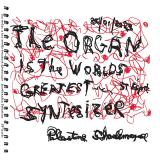
In the same vein, the aptly titled live record »The Organ is the World’s Greatest Synthesizer« – performed during the Sonic Acts Festival at Amsterdam’s Oude Kerk in 2025, and taking its title and cover art from a drawing realized by Palestine himself during the concert – adds to his opaque yet vibrant personal mythology and intimate transcendence, marking a return to the Staalplaat catalog after »Fffroggssichorddd« (2020) and »Music for Big Ears« (2001).
Beginning with a resonating bell and his falsetto overtone singing, then surrendering to the endless, wild soundscapes of tone-feeling and beat frequencies generated by the church’s organ, across 40+ minutes, single sound sources evolve into clusters, entangle fully with one another, and establish their own spatial existence and aural architectures. We witness the traces of something that can be described as a perpetual performance, a test for the ever-changing interaction between artist, instrument, space and, ultimately, us.
Since Palestine has always defined his execution as a form of anti-composition - of simply »being in the music« as if inhabiting a space - the true power of »The Organ is the World’s Greatest Synthesizer« lies in encapsulating a moment of Palestine’s practice in its most authentic, live dimension. Sound becomes at once subtle substance and strange telluric force, animating physical forms from some unknown channel beyond and within, accessible only through our sensorium. The point in this liminal temple of tone, timbre and frequency is not to learn anything but to simply enter. Palestine earns once again his self-given title of contemporary shaman by keeping this sonic portal open, allowing us to witness and make it last.
»I have always felt and heard and mixed the sounds in my world as liquids not as solids. Sonic liquids are material that is endlessly transformable. But I’m not crazy about people who go around defining stuff.«
quête:false
Eddie Kendricks was the falsetto voice of The Temptations during the group’s heyday years at Motown Records. Signed as a solo artist with the Tamla label he achieved further success with an array of hits (including the No.1 single “Keep On Truckin’”) and popular album tracks that remain in demand today. “Date With The Rain” was originally released in 1972 (from the album “People…Hold On”), “Intimate Friends” later in 1977 (from the album “Slick”), a song written by Garry Glen who would go on to write for Al Hudson (“Spread Love”), Phyllis Hyman (“Be Careful How You Treat My Love”) and Anita Baker (“Caught Up In The Rapture”) among many. More. “Intimate Friends” has also been sampled over 80 times by artists including Alicia Keys (in “Unbreakable”), Erykah Badu and a significant number or r&b/hip hop artists. “Date With The Rain” has also been much sampled and covered most notably by Jamie Principle in 1990.
- 1: Tião Carreiro & Pardinho - Bully 02 4
- 2: Lambarí & Laranjinha - I Was Called To A Party 0 47
- 3: Nhô Pires & Pirangueiro - Product Of The Cane 02 5
- 4: Xerém & Bentinho - Little White Hawk 02 32
- 5: Flauzino & Florêncio - Orange Fashion 02 8
- 6: Mandi & Sorocabinha - What A Beautiful Girl 02 5
- 7: Raul Torres & João Pacífico - Festival Of Bugs 02 41
- 8: Irmãos Kurimori - Burned Horse 02 5
- 9: Retrato & Retrói - New Love 03 13
- 10: Irmãos Falsetti - Disappointment 01 57
- 11: João Goiano & Goiazinho - Heartless Son 02 48
- 12: Riachão & Riachinho - The Life Of Aleijadinho 03 15
- 13: Nizio & Nézio - Lady Of Aparecida 02 35
- 14: Zé Carreiro & Carreirinho - Canoeist 02 50
- 15: Laranjinha & Zequinha - Ugly Boy 03 01
- 16: Leôncio & Leonel - Saying Goodbye 02 42
The second volume in Death Is Not The End's survey of a form of Brazilian country music known as música caipira ("hillbilly music") - a stripped-back forerunner to música sertaneja, the Brazilian equivalent to US country & western which in it's contemporary form has come to dominate the domestic music industry in recent decades. This collection covers some of the earliest recordings made by the pioneering folklorist Cornélio Pires at the end of the 1920s, through to records from the 30s, 40s & 50s and the beginning of the 60s.
Somewhat rooted in Portuguese troubadour folk traditions, música caipira is typically performed by a duo singing in parallel thirds and sixths, drawing upon a Portuguese-Brazilian style known as moda de viola - with the viola being the viola caipira, a Brazilian-style ten-string guitar that is the core instrument of the music. Born out of the "outback"-style region in north-eastern Brazil, these songs tell stories of pain, love, loss & betrayal - often backed by homemade guitars using invented tunings. Away from the polished pop country & western-stylings of the sertaneja, these recordings could be viewed as the Brazilian equivalent to the roots music of the American dustbowl or Appalachia.
- Somewhere, Nowhere
- Angles Mortz
- False Prophet
- Fluoride Stare
- The Void
- Ascension
- Just A Kid
- Host
- Landslide
- Renaissance
- 7: Am
- Blue In Grey
2026 Repress
Flickering in ultraviolet, there is an elusive place where blue pill meets red, ups become downs, and day merges with night. Those liminal spaces where anything is possible is where you’ll find Nightbus and their hypnotic debut album Passenger. Doom, uncertainty, and opportunity lurk in the shadowy corners of their murky existence with stops at disassociation, co-dependency, and addiction before reaching its final destination - a glimmer of hope.
The in-between of Nightbus’ own Gotham lies where Manchester’s city pulse meets Stockport’s outer realm. An audio-visual entity formed among a musical family of friends, freaks, and foes in messy mills and after hours on dancefloors alike, their sound bleeds from tension where collective creative forces are bound together and collide with the fallout of being torn apart. Before even playing a show, their So Young released single ‘Mirrors’ – a knowing nod of respect to some well-known gloomy Northerners - may have made old school indie heads shimmy at shows in Salford’s The White Hotel but also signalled the duo’s knack for offering listeners a Bandersnatch approach to hitchhiking their own personal Nightbus in whatever direction they choose to take. “Everyone can have their moment with our songs; the music is our response to who we are as young people, living in the city full of this energy right now,” they say.
Whilst reverb hefty melodies and dread-filled loops embody isolation from writing at each of their home studio set-ups, magic happens in the ether across 90s trip-hop, indie sleaze and electronica; Jake’s production layers Olive’s pop sentimentality with drums and samples whilst tales of a cast of faceless characters place Olive as puppet master; her severed self’s perspective manipulating their stringed limbs at arm’s length to see how their stories play out when scenes reflecting her own lie close to the bone. “It’s a bit fucked; like having this out of body experience with a made-up movie running through my head,” she says. “As I write I can see they’re all from a similar world, but they allow me to explore different feelings without giving away part of myself.”
Recorded at The Nave in Leeds with producer-engineer Alex Greaves (Heavy Lungs, Working Men’s Club), surprise and danger lies in every crevice. Brooding whispers turn to chants on 6-minute opus ‘Host.’ Improvised when performed live, its immersive shift in tempo leads to hefty dub courtesy of Jake’s pedals. Even then, you won’t know shit’s hit the fan until its mid-point reveal when ominous bass blasts a thunderous soundtrack as its protagonist defiantly walks away after committing the perfect crime. “It makes you wait, and more songs should have sirens,” Olive grins.
Leaning deeper into alter-egos via the video game-psychological horror of a Silent Hill dystopia, the band’s Fight Club moment ‘Angles Mortz’ turns its literal translation of death angles on its head as it reflects upon kink and internalised shame reincarnated as pride. Elsewhere the ice cool ‘Landslide’ is a Requiem for a Dream about the addiction of being in a band; ‘The Void’ explores co-dependency and estranged relationships; and carefully selected samples revive house track ‘Just A Kid’ from the band’s early incarnation. Passenger’s every direction is to face challenges head on. “That is what’s so great about horror; you can see through predictable patterns so when the unexpected occurs it's more realistic and uncomfortable… I want to own the dark stuff!”
As for Passenger’s first single, the pulsating ‘Ascension’ is a spiralling deep dive into death, suicide, and legacy around who or what we leave behind. A noughties club banger by way of NYC beats - ergonomically designed for those who like to stay out a little too often and too late - it throbs like a house party’s partition wall as the literal levelling up undergoes a neon transformation; blue glitching to pink, diffusing the white construct of the Nightbus Matrix. “It really does feel like the end of something and was purposely written that way,” they say, “the ascension is like a firework going off!”
With wheels in motion, Nightbus has become a movement surpassing sonic realms. Between shows from Porto to Brighton taking in The Great Escape, Rotterdam’s Left Of The Dial and Paris’ Supersonic; DJing; remixing; guesting (BDRMM’s Microtonic album); and even enlisting talented like-minds to craft a 3-part queer coming-of-age music video series which ties in with a new ‘hyperpop’ phase in the evolution of their popular Nightbus Soundsystem club night, heads are now being turned from sports brands to high-end fashion designers. “There are things we can’t reveal just yet,” tells Olive, “but we’re excited about the direction this beast we’ve created is heading.” As the album philosophises and asks one ultimate question; what does it truly mean to be ‘Passenger’? Nightbus may not claim to offer a definitive answer, but it might make you feel a bit better about those demons.
Collecting orders for Repress
The Detroit Party Train shows no signs of slowing down. After last year's Let's Rock All Night, Maaco brings four more bangers to the table that go all the way up to make you get down. True Detroit electro for those not afraid to rock it. Real recognize real, ya know.
Queer communities have long transformed parties into something powerful: spaces where care flourishes, injustice gets challenged, and new worlds are danced into being. But today, DJs command huge fees while behind-the-scenes workers earn below minimum wage. Corporations profit from our culture while communities that created these spaces are displaced. As venues shut and workers burn out, it’s clear that something has gone deeply wrong.
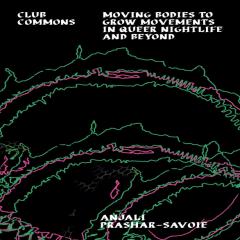
Club Commons: Moving Bodies to Grow Movements in Queer Nightlife & Beyond by Anjali Prashar-Savoie takes you inside hidden stories of resistance and reinvention. We meet the people reshaping nightlife from below: abolitionist security teams creating safety without police, sober raves doubling as mental health support, radical childcare at parties, venues becoming worker cooperatives, and free party crews reclaiming public space. Through their work, we see how party-throwing skills build movements, how refusing to play changes everything, and why protecting queer nightlife means transforming who owns it.
Quotes
“When Anjali shines her perceptive light on dancefloor culture, everything is better illuminated. I can’t wait to read this book. It’s one we need.” Emma Warren (author of Dance Your Way Home/Up the Youth Club)
“Anjali’s one of the most exciting and insightful voices writing about dance music today, bringing fresh perspectives, intellectual rigour and emotive power to a conversation that’s too often homogenous, superficial or cynically commercial. Club Commons promises to be an essential and overdue book: a chance to reexamine the queer history of club culture, celebrate and critique its present, and map out radical possibilities for its future.” Ed Gillett (author of Party Lines)
“Beautifully written and unique, Anjali Prashar-Savoie’s behind-the-scenes journey through queer nightlife is as thorough as it is fascinating. Documenting a world that commercial interests are rapidly destroying, Club Commons is proof that queer culture holds the key to a better future for the dancefloor and beyond.” Professor Sam Parsley (author of Minor Keys, coach, DJ and founder of In the Key, a directory and platform championing the careers of women, trans and non-binary electronic music producers)
“Club Commons: Moving Bodies to Grow Movements in Queer Nightlife & Beyond is a vital reminder of how important the dance floor is to connect, unfurl and envision new futures. The text highlights the historic and existing care work entangled with the club space, particularly in providing temporary sites of refuge and embodied joy for Black and LGBTQIA+ communities. This is juxtaposed with research on the corporate and carceral commodification of nightlife in recent years, which exposes the false premise that club spaces are always radical. This book affirms my belief that the non-commercial nightlife ecosystem is an essential part of our social change infrastructure, rather than a luxury. Club Commons is a call to action to reclaim this space on our own terms and revive the underground.” Camille Sapara Barton, (author of Tending Grief: An Embodied Guide to Being with Grief Individually and in Community)
- Thinking Of You
- Into The Blue
- Fly Away
- Payback
- Dime Feat. Cancamusa
- Perfect Strangers
- Time Will Tell
- I Don't Wanna Stay
- Play On
- Easy To Love
- The Fool
Aaron Frazer - der in Los Angeles lebende Sänger, Songwriter, Multi-Instrumentalist und Mitglied der gefeierten Gruppe Durand Jones & the Indications - lässt mit "Into the Blue" eine gewagte Mischung aus Soul, Psychedelia, Spaghetti-Western, Disco, Gospel und Hip-Hop auf sein hochgelobtes Debütalbum "Introducing_" aus dem Jahr 2021 folgen. "Into The Blue" repräsentiert die beeindruckende Bandbreite von Frazers klanglichen Talenten. "Es ist das klarste Porträt dessen, was ich als Künstler bin", sagt Frazer über sein zweites Solo-Album, auf dem er die unverwechselbare Falsettstimme und das klassische Songwriting beibehält, für das er bekannt ist, aber mit einer Hip Hop inspirierten Mentalität im Kern, die Genres und Produktionstechniken miteinander verwebt und "Into The Blue" somit fest im Hier und Jetzt verankert. "Into The Blue" ist das Ergebnis eines gebrochenen Herzens. Nach dem Ende einer langen Beziehung zog Frazer quer durchs Land von Brooklyn nach Los Angeles und begab sich auf eine Reise, die sich in den Themen des Albums widerspiegelt: Trauer, Einsamkeit und die Suche nach Heilung. "Into The Blue" enthält Momente mit überragenden Arrangements, die an David Axelrod und Ennio Morricone erinnern, wird aber durch die Rohheit von iPhone-Aufnahmen und One-Take-Vocals ausgeglichen. Als Co-Produzent für das Album konnte Frazer den Grammy-Gewinner Alex Goose gewinnen, der für seine Crate-Digging-Samples und die Zusammenarbeit mit Hip-Hop-Künstler*innen wie Freddie Gibbs, Madlib und Brockhampton bekannt ist. Frazer experimentierte auch zum ersten Mal mit Samples, die er aus unerwarteten Quellen wie der R&B-Gruppe Hi-Five aus den 90ern bezog. Und Obwohl "Into the Blue" aus Herzschmerz entstanden ist, hofft Frazer, dass es die Zuhörer*innen mit einem Gefühl des Optimismus zurücklässt. "Weißt du, man kann auch an einem Tag, an dem man trauert, lachen", sagt er, "es gibt keine Gipfel ohne Täler" - aber mit "Into The Blue" erreicht Aaron Frazer neue Höhen.
French artist based in Brussels, Che Vuoi presents her first album Cinecittàx, a nod to the great Italian studio, and a tribute to false dreams.
A theatre at the back of a run-down piano bar, where surreal and intimate scenes unfold; words and stories drawn from disparate sources: Fellini, G. Réal, Diderot... or written by herself, spoken, shouted or barely whispered by an altered voice.
Noises, samples, a drum machine, a brush on a snare drum, a piano spinning round and round until it reaches delirium and its own abolition, leaving us suspended in a constant in-between or a time that never truly existed.
« This voice, gentle, mad, with lightning verve, tells between the lines and the echoes the presence of threatening shadows and ghosts. And it is Che Vuoi, her character, her world of images, that haunts us. It is a strange bewitchment that carries us beyond the words she has freed from "the stationery I stole from Bellavista the other night" ("le papier à lettre que j’ai chipé au Bellavista l’autre soir") into the lair of her universe, as whimsical as it is silky in which we let ourselves slip, as one would slip over the rock of an esoteric river, in the heart of a forest that makes music and has delirious things to tell us. »
**Includes double sided insert with liner notes and photos*
Al Mati was the pseudonym of eccentric Portuguese-born, Dutch-based artist Alberto Mesquita. The name translates to ‘Alberto Friend’, with ‘Al’ short for Alberto and ‘Mati’ meaning ‘friend’ in Surinamese.
Alberto’s story comes across like a mythical character from a European Kerouac novel, but instead of writing it down, he poured those adventures and characters into his record. The music and the comic-style artwork, drawn by his friend Bruno Scoriels, work as one, with Alberto himself becoming both the story and the character within it.
Raised under Salazar’s regime in Lisbon, where all men were conscripted to Africa, he refused, a pacifist. This put him at odds with his father, born in Angola and a prominent lawyer tied to the dictatorship. Unable to accept his son’s stance, the rift forced Alberto to flee Portugal as a deserter, leaving everything behind.
He sought a new life in Paris, where he met Bruno Scoriels. The pair busked to get by, and young and broke, set off on adventures across Europe. On one trip to Barcelona, they crossed the Pyrenees on foot through a five-kilometre train tunnel, not knowing if they would make it out alive. The train later featured on the cover of Some Shit, a nod to that hazardous journey and the strange turns of his life.
From there he moved to Belgium, where he met Jolanda, his future wife who also features on the album. They lived in The Netherlands, then back in Belgium where they married, before returning to Portugal under false pretences. The regime promised deserters immunity, but it proved untrue, and Alberto was forced to flee again — this time with a young family, using Bruno’s passport to escape to The Netherlands.
They settled in the Gliphoeve flats in Amsterdam’s Bijlmermeer, a vibrant immigrant community. This melting pot of cultures inspired Alberto musically. He started a studio in their flat where musicians from Suriname, Angola, the Antilles, Brazil, Mozambique and Portugal came and went, jamming, rehearsing, recording and forming bands including Albatros, Comoção and Mati Africa, performing internationally and at iconic Amsterdam venues like De Melkweg and Paradiso.
Being an immigrant was tough. Alberto was stateless for years, drifting across countries. Some songs voiced his frustration with the Portuguese regime, others were playful or simply love notes to his wife and kids. He passed away in the Netherlands in 2021, leaving Some Shit open to interpretation. But when you picture Europe in the 1970s — the politics, the upheaval, and his need to connect people across cultures — you can hear an artist shaped by contrast, who poured his experiences, feelings and love into music.
Everybody loves a disco gram or two, wink wink, but Spanish label DiscoGram is also a sign of a good time. The main label has put out more than 30 juicy tunes but here they launch a new sub-series, again with the in-house production team at the helm. 'Linda' kicks it off with bright, extroverted and slightly camp disco energy and diva vocals. 'Pages' is a slinky strider with a pained vocal bringing the soulful heat and offering a hugely impressive falsetto crescendo. 'Tabaco Y Ron' gets more florid with its Latin flutes and rhythmic vocal coos, then 'Xulipa' ends with swooning strings and a graceful air of disco cool with some recognisable vocal hooks.
Mit "Tourist History" veröffentlicht die britisch-irische Indieband Two Door Cinema Club eines der einflussreichsten Debütalben der 2010er Jahre in einer besonderen 15th Anniversary Edition. Das Album, das 2010 erschien, gewann den Choice Music Prize als Irish Album of the Year und markierte den Start einer Weltkarriere, die von Festival-Headliner-Shows bis zu über 1 Milliarde Streams von "What You Know" führte.
Zur Feier des Jubiläums erscheint Tourist History in drei liebevoll gestalteten Formaten - inklusive bisher unveröffentlichter Remixe und Raritäten.
Seit dem Garageprojekt in Bangor haben Alex Trimble, Sam Halliday und Kevin Baird eine beeindruckende Karriere hingelegt - mit Top-10-Alben wie Beacon, Gameshow, False Alarm und Keep On Smiling und ausverkauften Touren weltweit. Diese Jubiläumsausgabe ist ein Muss für Indie-Fans und Sammler - ein Meilenstein moderner Gitarrenmusik.
Downwards present Alexander Tucker in metamorphosis from psych folk to techgnostic bard, aided by notable guests – Justin K Broadrick, Regis, Phew, Karl D’Silva, JJOWDY, and Elvin Brandhi – in a quest for disordered convention and new thrills. One up to Tucker’s outings for Alter and The Tapeworm, and spiritual successor to his »Nonexistant« trio on Downwards, »Clear Vortex Chamber« is an enigmatic take on the brownfield edgelands where the eldritch intersects electronic heck. Decades of work spread between hardcore punk, psych rock, folk, and drone — including work with Stephen O’Malley (Ginnungap) and Neil Campbell (Astral Social Club, ESP Kinetic) — feed forward into this album’s unsteady machine rhythms and cranky junkyard atonalities, where Tucker panel-beats aspects of his previous sound with a newfound industrial thrust and cyber-punky lust that suits him dead well.
A crafty example of how to mutate without losing sight of yourself, the album’s eight parts feel like a cyborg patching itself into modernity. On opener »Udug« Tucker’s signature falsetto peals from a A Scanner Darkly-style scramble suit of stereo-strobing electronics, setting a melodramatic, neo-gothic tension that riddles the album thru the knotted, fractured industrial dancehall bullishness of »Mallets« with Yeah You’s feral gob Elvin Brandhi, via a pair of standout »Fedbck« parts with Tucker’s personal idol, Justin K Broadrick (Godflesh, Jesu, and the rest), featuring the Brum deity’s claw-handed riffs and howl on the first, and smeared with Karl D’Silva’s brass in its noctilucent second part.
Regis also proves a staunch foil for the album’s most robust, club-ready cut »Zona«, hammered out from buzzing metallic drums and monotone bass drones, and pitting his severed vox against Tucker’s own androgynous harmonies to recall aspects of The Ephemeron Loop via British Murder Boys, whilst scene legend, Can and Ryuichi Sakamoto spar Phew (aka Aunt Sally) ideally tempers the flow in a relatively soothing »Sansu«, sharing more cyber-romantic, recombinant sentiments with the channelling of Robert Wyatt gone Funk Bruxaria on »Folded«.
Following the release of their universally acclaimed, Mercury and Ivor Novello Award Nominated fourth studio album ‘False Lankum’, which collected Album Of The Year honours from UNCUT magazine, The Guardian, Loud & Quiet, The Quietus, as well as very high rankings from MOJO, NPR, DIY, Crack, Songlines, Music OMH, The Line Of Best Fit, Louder Than War, The Skinny and numerous other media worldwide. Rough Trade Records are excited to announce the release of ‘Live in Dublin’ by Lankum. Recorded across three sold out nights at Dublin's Vicar Street, the album features Lankum performing songs from across their catalogue including ‘The Rocky Road to Dublin’, which up until now has never been officially released.
- A1: That Musician Thats Dead
- A2: Preference Is A Good Friend, Mind
- A3: No One Can Sing That Well
- B1: Last Herald
- B2: Mo**Real
- B3: Things Keep Happening
OOOOH! by Alex Bad Baby Lukashevsky with Cocoa Corner (2025)
Celebrated veteran of Toronto’s music scene, known for his boundary-pushing approach to folk and avant-garde music, twists rock music into strange and brilliant new shapes with the help of young jazz players, U.S. Girls, and his own immensely talented son.
OOOOH! is hard on the outside and soft on the inside. Made in the spirit of unity,
humanity, and poetry — disobediently renouncing the glory of personal triumph for the
generosity of an honest experiment. On the last track of the album you’ll hear “Or do you only ever never want to make a single enemy? / That’s not freedom or humility / It’s nothing, honestly.” Oooh, that's a bad baby!
A celebrated Toronto songwriter and performer, Alex Lukashevsky has always been disobedient. Which simply means, nothing is off the table when he’s looking for his
poetic voice; when trying to find the realest I of the teller. As he sings on the lead track “that musician that’s dead” The musician is radical/ it’s the world that’s demented/ listening with their eyes, the music looks dented/ they’re over-represented.
OOOOH! was recorded in January 2024 at Sound Department in Toronto, engineered by Patrick Lefler (ROY), mixed by Grammy-nominated producer Matt Smith. All the songs were tracked live off the floor in two days, with one extra day for recording vocals, to keep the recording fully alive and breathing. As leader of Deep Dark United, as a solo performer, and a sideman in Brodie Wests’ Eucalyptus and Luka Kuplowsky’s Ryokan Band, Alex has been an outsized influence on the Toronto music scene that spawned acts like Broken Social Scene and Owen Pallett. (Pallett, who has toured with Lukashevsky, went so far as to record an entire album’s worth of Alex’s songs, backed
by a full orchestra.)
Lukashevsky has approached each of his albums and projects as something completely new, using only the musical boundaries he creates with each song. Even when he
has recorded songs with nothing but his voice and his own acoustic guitar accompaniment, the results are never “stripped down” or “back to basics,”
Gong! How do you get to heaven / have fun! have fun!
It’s cool to approach music as a game of “spot the influence”; Burt Bacharach-meets-Black Flag; Lana Del Rey-meets-LCD Soundsystem etc. Glorified mash-ups are promising because of their conversational nature. But they can turn us into hyperboreans; blowing cold air beyond ourselves while doing what we can to remain warm. To devise a game or a narrative is to have a winner and a loser, but we all know that just as you win/ so you lose. And does anything really change? Alex Lukashevsky and Cocoa Corner are more at ease drawing blind contours or playing an old game like consequences. They let things add up without knowing particularly how. Cognition is recognition.
Lukashevsky, in addition to writing all the songs, plays guitar and sings on OOOOH!, doing both in ways that are soulful and spikey at the same time. Joining him on guitar and vocals is his oldest child, Charlie Lukashevsky, who, at 23, is already a talented performer and songwriter in his own right. Cocoa Corner also includes Aidan McConnell, an in-demand drummer and composer, Jack Johnston, a jazz bassist and Barry Harris acolyte, and percussionist Evan Cartwright (The Weather Station, U.S. Girls, Cola, Tasseomancy), who plays steel pan and marching drum.
Working with his son and with other younger musicians is central to the album’s
unpredictable aesthetic. It reinvigorated the sound in unexpected ways. Lukashevsky says, “I had to reconsider my own instincts. I had to deal with being 99 years old.”
In addition to these performers, the album includes a tasty contribution from Meg
Remy, the visionary musician and producer who is the leader of the critically acclaimed
project U.S. Girls. Remy duets with Lukashevsky on the imagistic and sprawling album
closer “things keep happening.”
About that album title: OOOOH! is taken straight from “that musician that’s dead” an
arch and unhinged comment on the exertion required to navigate a lifetime of music making.
Lukashevsky’s delivery of that one emotive word is a kind of cultural posture, but also a
hundred percent primitive expression. The impact is never less than visceral. His vocal
delivery ranges through rich baritone blues to keening falsettos to a kind of sprechstimme that periodically steps out from the music to grab the listener’s shirt. He
doesn’t sound too nice, but he is sincere. When life gives you lemons lament.
For OOOOH! his first official full-length album since 2012’s Too Late Blues, (a collection of knotty-yet-effervescent tunes built upon the enchantingly serpentine harmonies of Lukashevsky and his vocal collaborators, Felicity Williams (Bahamas, Bernice) and Daniela Gesundheit (Snowblink, HYDRA)), Alex has once again broken apart and rebuilt his own approach to music. Or rather (because that sounds too over-determined), he
has allowed his music to build itself into strange new shapes that only fleetingly and
coincidentally, but happily, resemble anything that might be called rock and roll. There is some editorializing within the song’s lyrics— Lukashevsky even cheekily contributes to the “spot the influence” game with the line “Muddy Waters, Rite of Spring!” a funny preemptive strike against anyone already reaching for some variation of avant-blues to describe what the song is up to here. In fact there are many names checked on this record (literally and in spirit); they are the lily pads that trace the path of this expression! Palestrina, Peter Pears and Benjamin Brittain, Andrés Segovia, Stravinsky, Lotte Lenya, Alice Coltrane, Skip James, Chuck Berry, D’Gary, Betty Carter, Mukhtiyar Ali, Chuck D, Yoko Ono, Hailu Mergia, David Bowie, Jane Siberry. rhythm is a skeleton mansion / haunted by melody / feckless prodigy / the world is under a spell / cast by some demon angel / Practice day and night / Try as hard as hell / no one can sing that well Musicians are often worried by the way in which they are prepared to fail rather
than how they would like to succeed; it’s such a deep concern that it tempers their creativity and shackles their process. Current cultural proclivities, tend to comfort a certain kind of artistic failure and abnegate another kind. How many testimonials, full of heartfelt care and investment, have you heard for Taylor Swift, and yet a craftsman like Chris Weisman is often dismissed easily as though he’s doing something anti-social. what’s throwing itself in my ears and my eyes / arrogant devil ad hominem christ.
The music you will hear on this recording veers off in multiple directions at once,
and features a rock and roll spirit with a divergent heart. This is no sclerotic clomp of the Average Rock Song, but in fact a flood of humanity in all its darkness and moodiness and unpredictability. If most performers make songs that are like sports cars or pickup trucks to drive around, Lukashevsky has built something more akin to a rowboat in a tree: it’s weird and beautiful.
Innitial pressing soul out at once, now repress in neon green vinyl colour available! Ride bassist Steve Queralt's debut solo album Swallow is a beautifully brooding nine-track collection that combines the darkly textured soundscapes of early M83 and Sigur Rós with an electronic sheen reminiscent of Boards Of Canada. It also features guest vocals from Sonic Cathedral labelmate Emma Anderson (formerly of Lush and Sing-Sing) and Verity Susman (Electrelane, MEMORIALS).Swallow has been slowly but surely pieced together between Ride albums and tours over the past five years and, perhaps as a result, has a slightly dystopian, Blade Runner feel that reflects the liminal spaces in which it was created. Despite the fact that the majority of the album is instrumental, there is plenty of power and emotion poured into these moody, moonlit soundtracks. When words do appear, an underlying anger and political slant emerges and amplifies the album's dark intensity. This is most notable on the closing track, `Motor Boats', where he overlays words from Julie Sheldon's polemic poem The Same Boat ("We're all in the same boat they say, but I would disagree"). According to Steve, these simple words of rejection "capture the reality of our times perfectly". However, it was the collaborations with the two guest vocalists that tied the whole thing together and paved the way to the finished album. "After a few false starts, I had started to doubt the project altogether. It was going nowhere," says Steve. "Then, out of the darkness, Emma got in touch to tell me that she'd found her voice and could I send her some tracks. A few files back and forth and an afternoon in the studio later and we had `Lonely Town' and `Swiss Air'."In the meantime, Verity from Electrelane had added vocals to the song `Messengers' and transformed the track. Matthew Simms, now her bandmate in MEMORIALS, would go on to mix the finished album."Swallow has turned out so much better than I had hoped," enthuses Steve. "I'd fallen out of love with it so many times I was thinking of calling it Loveless. But then, that wouldn't be the whole story...
Soulwax 's first new album in 8 years, entitled "All Systems Are Lying" and set for October 17th release. Available on CD & various 2LP fromats . The campaign will kick off July 9th with a double single “All Systems Are Lying / Run Free”, album announcement + pre-order launch. Since 1995, David and Stephen Dewaele have consistently pushed the boundaries of music into new and innovative territory by diversifying into many different guises. They are a band (Soulwax), djs (2manydjs), a record label (DEEWEE) and a sound system (Despacio, created along with James Murphy from LCD Soundsystem).
They are also widely renowned as one of the most innovative remix and producer teams around. They have released 7 studio albums to date, including the critically acclaimed ‘Any Minute Now’ and ‘Nite Versions’. Some of their already cult remix credits include the Grammy nominated “Work It” by Marie Davidson, as well as Peggy Gou, Fontaines DC, Roisin Murphy, Robyn, Arcade Fire, The Rolling Stones, Tame Impala, Metronomy, Daft Punk, The Gossip, Hot Chip, MGMT and Warpaint, among many others.
Stephen and David Dewaele are familiar to millions as 2manydjs, a project which undoubtedly moved the needle for modern DJing. Alongside like-minded allies such as Erol Alkan, Tiga and Jacques lu Cont, 2manydjs swept international dancefloors into delirium, gifting a rock ‘n roll attitude to club culture.
- A1: Slaughter 03 20
- A2: Dusk 01 50
- A3: Winter Clouds 01 28
- A4: Hollow Tree 01 56
- A5: Still Alive 01 11
- A6: The Cave 02 13
- A7: In Court 01 37
- A8: Hope Through Confusion 01 49
- A9: Not Guilty 51
- A10: Village Ceremony 51
- A11: Road Tension 01 22
- B1: Kneipe 01 18
- B2: Hunt Introduction 01 30
- B3: Rifle, Second Attempt 38
- B4: Hunt Epilogue 01 01
- B5: Confrontation 02 21
- B6: Judenfreund 01 19
- B7: Flashback 41
- B8: A True Friend 57
- B9: False Promises 01 39
- B10: How Do You Suffocate Weeds 01 55
- B11: Under The Masks We All Look The Same 02 58
- B12: Dream 01 32
- B13: Freedom 01 08
Erik K Skodvin's feature-length score to Thomas Roth's thriller "Schächten" feels like the epitome of all his musical projects, conjuring a dark cinematic trip through 1960's post-WWII Vienna in a film that touches on topics such as law, justice & revenge.
Releasing a soundtrack as a stand-alone album can be challenging; and "Schächten" is by no means a typical listening experience. The record contains 24 more or less short pieces evolving through dramatic movements, underlaying menace and deep emotive scenes. One thing that stands out is the linear atmosphere throughout the story which creates a wholeness that keeps your attention to the very end. Set in wintery Austrian landscapes in dimly saturated colours, the film's dramatic events with dark political undertones feels like a perfect situation for Skodvin's atmospheric collages - perhaps sounding closer than ever to his early works as Svarte Greiner or Deaf Center. Cello, violin, piano, analogue synth and plenty of hardly recognizable instrumentation come together in a record that feels very organic in its subdued tones. The score also features percussion by Andrea Belfi as well as a Chopin piano interpretation by Kelly Wyse to the bizarrely schizophrenic piece "Judenfreund".
With the contemporary world sliding into darkness again, listening to the soundtrack feels like coming to terms with ones own anxieties - something that in the end comes through as a cleansing experience. As quoted in the film "Everyone is their own devil. And we make this world our hell".
Short synopsis : "Vienna 1960s - The young Jewish business man Victor has to witness how the prosecution of a Nazi crime against his family fails. The political and legal system is still virtually run by former Nazis with large parts of society being entangled in the past. When Victor also loses his grief ridden father and his girlfriend’s family opposes their relationship and his identity, Victor begins to loose faith in formal justice and takes matters in his own hands."
- A1: You Can Never Tell
- A.your Imagination
- A3: Puzzled Into Pieces
- A4: Lattershed
- A5: When Things Come Falling
- B1: In Between And After
- B2: False From Above
- B3: Snowflake Eye
- B4: Emergency Turn Off
- B5: Paradigm Somehow
★Japanese obi-strip
★First time reissued on vinyl
Turning Into Small, the second album by shoegaze band All Natural Lemon & Lime Flavors from New Jersey, originally released in 1998 on local label Gern Blandsten,
is now being reissued on both CD and vinyl.
Formed in the mid-90s, All Natural Lemon & Lime Flavors were deeply influenced by UK shoegaze and alternative rock—most notably My Bloody Valentine—while
pursuing a uniquely experimental sound within the US emo and indie scenes. Their innovative spirit reached full bloom on Turning Into Small, which remains their
final album to date.
One of the standout tracks is the nearly eight-minute-long “Your Imagination,” a spacious sonic landscape that draws listeners into deep immersion.
It has become a signature song for the band, heralding a new wave of shoegaze that emerged in the late '90s and beyond. Even more noteworthy, however, are
tracks like “Puzzled Into Pieces” and “In Between And After,” which showcase the band's layered, synth-driven electronic textures, dynamic collage-like structures,
and occasionally buoyant melodies. These elements come together to create a strange and otherworldly sense of weightlessness—something rarely found even
within the shoegaze genre.
While resonating with the likes of My Bloody Valentine, Stereolab, and The Flaming Lips, the band's mutant-like blend of styles also draws parallels with acts like
Swirlies, Serena-Maneesh, and contemporary shoegaze innovators such as They Are Gutting a Body of Water.
This is a groundbreaking album in US shoegaze—one that still feels fresh and vital thanks to its timeless experimental spirit and originality. Now is the perfect time
to (re)discover it.
Jessica93, prodigal bastard of our glorious french squat scene, relocated on Born Bad : this is no picnic. Geoffroy Laporte, alone against all odds, alternates bass and guitar to build harsh loops with a drum machine spitting pre-Gulf War patterns. That’s where it gets tricky : every musical posse claims him. Grunge, sure, but Jessica doesn’t indulge in necrophilia. His circuit is punk, he doesn’t dress the part though. Cold wave, the atmosphere fits somehow, but the gear does not. The self-confident rock horde saw him playing with hair in his eyes… but he never joined the Party. Metal had something to say but sadly, nobody listened. Maybe it's time to give it a rest and let Jessica93 cook his great misery broth on her own, called « 666 tours de périph’ » (666 laps on the beltway). Witnessing Jessica93 live makes you dread that he'll get up the next morning, drive 200 miles and one nap later kick it again, when it takes us a good week to recover from the bad half of that same evening. Like so many other unknown soldiers during our very own world war of music, he patrols small venues relentlessly.
At the heart of this cultural pentacle painted by french weirdos Bryan's Magic Tears, and Carine Krinator, Jessica93 has built a sound validated by years of chosen vagrancy, birthing bands with joyously stupid monikers, in the humid jungle of small labels. Jessica93's debut album had a track celebrating Omar Little, HBO’s gay bandit from Baltimore. This story begins on the beltway, where Florence Rey, accidental copkiller turned to political icon of the 90’s. Geoffroy offers his brilliant analysis : " C’est la police qui nous tire d’ssus / C’est mon trou d’balle qui leur chie d’ssus « (Police shoots us down / my dripping asshole gets the job done).
A previous album was haunted by bedbugs, this one is essentially about love, a delicious scourge just as hard to eradicate. Two black diamonds peek out of the LP : ’’La colline du crack’’, heartbreak song about the ultimate temptation of violent delights, located on crackhead central in Paris. The brilliant chorus, ‘Take my hand and come with me to Crack Hill’ will put an end to the rumours, almost everything was really false. And Bébé Requin, alternative obituary that’ll make you shiver, where our nice couple states ‘’on kiffe la drogue dure et les ptits chiens’ (‘we love hard drugs and little dogs’). And that is the reason we face the wall of sound jostled by unnecessary shoulder thrusts: those nice fat chunks of charcoal poetry, hidden under light sarcasm.
The rest of the record demonstrates the know-how acquired in loop-by-loop construction of ruins that are pleasant to squat in together. There’s your classic doom delicatessen, with bits of heavy metal inside, crafted with the manic care typical of hard wankers. Arthur Satàn, who produced and mixed the album at home in Bordeaux, helped him get his head out of the reverb safe house. And Jessica93 took the opportunity to switch to the dark side of the language : french at last. Worth the wait ! Sing along : « nique sa mère / nique sa grosse mère » (translate that yourself).