Cerca:false
180g black vinyl Star Birth and downloadcode for "Star Birth" and "Star Death". Gatefold.
'Star Birth' is a flung fisherman's net, mighty in scope, irrevocable as looking up from the stone floor of a cathedral – there is space, yet there is profound intimacy from the immediacy of the lyrics, our thoughts rattling around like panicky goldfish. Race has taken aspects of areas
previously explored, and made a quantum leap into the unknowable. With opening track Can't Make This Up, the gauntlet is flung down – 'what is need, what is greed / it's a new crush, the brain trust/ hive mind rewrite rewind/ falsehood streaming'
'Star Birth' is international maverick and music icon Hugo Race's 15th album with his band of True Spirits. It's a double album and the twin album's name is 'Star Death'. Star Birth was recorded during Australia's bushfire summer apocalypse of 2019 and mixed as the 2020 covid-19 pandemic hit. When the stars align it all makes sense, Hugo explains, adding that one oceanic evening while writing the album a bright star exploded right before his eyes, the sign of a sudden end and a new beginning...
Hugo's writes of trials, tribulations, hopes, fears, heartaches, loves, losses, highs and lows – 'everyday I die a little bit more, in a thousand ways I fight my little wars – and he sings with exquisite pathos and depth, like he's singing just for you about the times in which we live –
political disasters, our planet, the absence and the presence of spiritual values, broken promises, cracked hearts and if any of it really matters anyway. With hell raising lyrics like,Expendable, you'd have to wonder if anyone of us will make it through alive – 'hey sister, are
we all expendable? nobody wins, but so many of you think they do / don't try to fool yourself people, deep down you know the truth - everybody gets their one hot shot but no one's bullet proof'. But then The Rapture reminds us that there will always be stars dying in the glory of
new life – 'give us this day comfort and bread / implant in us the living word / empower us with divine love and deliver us from evil / for you are the one true light / the power and the glory / forever /amen'
Hugo's True Spirit deliver a lush, sonic love letter of rock, electronica and dramatic orchestration, based in blues, hypnotic repetition and sonic exhilaration. Michelangelo Russo is a huge part of this atmosphere; his approach to music is that of an artist with a palette of
mysterious implements and machinery, but the entire band and production is incredible from start to finish. Star Birth is 48 minutes of mind expanding, mind blowing, heel tapping tunes, with its sister album 'Star Death', a dub version of remixes that will send you searching for
your own exploding star somewhere in the sky…
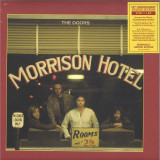
The Doors returned to their roots and were reborn a rock ’n’ roll band on Morrison Hotel, the group’s fifth studio album. Completed in only a few weeks and released in February 1970, the hard-charging album took its name from the Skid Row hotel in downtown Los Angeles that’s featured in the iconic cover photo taken by Henry Diltz.
Morrison Hotel: 50th Anniversary Deluxe Edition includes the original album newly remastered by The Doors’ longtime engineer and mixer Bruce Botnick, plus a bonus disc of unreleased studio outtakes, and the original album on 180-gram virgin vinyl. The music will also be available from digital and streaming services the same day.
For this new collection, the original album has been expanded with more than an hour of unreleased recordings taken from the sessions for Morrison Hotel. These 19 outtakes transport listeners into the studio with Jim Morrison, John Densmore, Robby Krieger, and Ray Manzarek for an unprecedented perspective on the making of the album. Botnick says: “There are many takes, different arrangements, false starts, and insightful studio conversations between the band – who were in the studio – and producer Paul Rothchild – who was in the control room. It’s like being a fly on the wall.”
Several of these unheard recordings spotlight how Queen Of The Highway and Roadhouse Blues evolved across multiple sessions. It’s especially interesting to hear how the band played with different bass players on Roadhouse Blues. Early versions include Harvey Brooks, who played on the band’s previous album, The Soft Parade. Later takes feature guitar legend Lonnie Mack on bass along with The Lovin’ Spoonful’s John Sebastian on harmonica who, due to contractual restrictions at the time, had to be credited as G. Puglese.
Among the treasure trove of unreleased outtakes are also rough versions of Morrison Hotel tracks Peace Frog and Blue Sunday, as well as The Doors rarity I Will Never Be Untrue. The collection also captures some incredible session outtakes of the band jamming on cover versions of the Motown classic Money (That’s What I Want) and B.B. King’s Rock Me.
(25th Anniversary Edition) Originally released on F Communications 1997. Opack premier Ep on F Communications had already stood out for its unique programming and production. It had traced a furrow for French electronica "and established Readymade as an essential composer / producer / arranger, developing a falsely crazy and deeply melancholy universe fed by hip-hop, pop, electronica, dub, house and techno.
Matthew Dear has unveiled a new alias, Brain, which will debut with a double-EP called The World on Planet E. It’s the latest in a long line of trackier Matthew Dear aliases, including False, Jabberjaw and Audion, whose 2006 classic “Mouth To Mouth” came in at number 20 on Resident Advisor’s Top 100 Tracks Of The ’00s feature. The lead-off cut on the inaugural Brain release, “Boss,” was first heard on Carl Craig’s Detroit Love Vol. 2 compilation.
NYC's legendary West End record label has contributed a fair few classics to the disco cannon and continues to influence dance music today with it's forward looking releases. 'When you touch me' is no exception, recorded and released in the golden year of 1979 and featuring the breathy, sensual vocals of a young Tanaa Gardner who had previously worked as a backing vocalist for numerous other projects until the label released her (other) stone cold solo classic 'Work that body' the same year on 12".
Both cuts featured on her self titled debut LP and boasted the combined production and studio talents of Kenton Nix, Bob Blank and of course - Larry Levan. Now, that's a serious line-up to have behind the boards (& in the clubs!) and of course 'When you touch me' was a classic with it's slow, elongated intro that calls to mind a sleazier version of Donna Summer's 'Love hangover' before launching into a full-on disco assault that you won't forget in a hurry! Yes, the record surprises you, Tanaa leads us into a false sense of a 'slow jam' and then - Boom - We're off!
Backed with the incredible instrumental version the 12" is repressed here in it's original 1979 glory, an essential classic that has stood the test of time for the last 30+ years & is now available again, remastered & repressed for 2017 in conjunction with West End Records, NYC.
Following January’s acclaimed vinyl debut from Exterior and summer’s much-loved Kota Motomura EP, Edinburgh’s Hobbes Music label ends 2019 with its first album release, also a debut, from GAMING, a fresh new braindance electronica project straight outta Glasgow, from producer and musician Alan Bryden.
GAMING is a new solo outing that brings together a lifelong love of music and technology and creating left field, rhythmic electronica. It’s the sound of IDM, nineties techno and mensch maschine computer music that is as spontaneous as it is programmed.
“Scenes From A Deserted City is a collection of tracks that started as a set of riffs, loops, rhythms and grooves and unfurled around a sense of growing unease about the future of the urban environment around me.
It’s an album that started out as sound…and ended up as a way of telling stories about the age of anxiety we live in, how our world is changing, and how we find a way through that.
This is DIY electronica from Glasgow – it was made on a growing collection of digital and analogue synths and FX units, including a bunch of modular racks, each with its own idiosyncrasies and character that belies the assumption of the binary.
The studio where it was recorded – an abandoned, and often very cold, school building reclaimed by the community some twenty years ago – offered up stories of resilience, even when all seems lost. (I’m not sure what the mice contributed but they definitely climbed in and out of some synths).
This album is ultimately about my changing relationship with Glasgow, a city I’ve lived in for more than 25 years. It’s about how I feel now about the increasing sense of urban decay and how the city can be a very isolating place. It’s about how I reflect on my younger creative self trying to find a direction but mainly feeling a sense of dislocation and not fitting in. And it’s about the questions I have about how that relationship is changing, how it will be forced to move forward.
The result is a soundtrack for walking home on your own, in that headphone bubble when it’s just you focusing on that music that makes sense to you alone. It’s for early in the morning, after the night before, or going to work with the memories of that slipping and sliding inside your head. It’s about how it feels to be both elated and lonely, to be lost in the familiar, despairingly hopeful.”
ALAN BRYDEN (Glasgow, August ‘19)
We left them to take over,
to brake hopes,
to snatch any desire.
As distorted images on a screen,
They changed the balances of our lives.
They imposed false myths in our believes,
In our most intimate thoughts,
In the semantics of our meditations.
They chose the path of everyone,
As androids, they conducted us to the implosion,
Of souls, of rigid sentiments,
Of vitreous look.
They took the control of each decision,
Changing the order of priorities,
Changing the given meaning,
The significant and the significance.
They left us weak
In the bodies, in the spirits
On a slimy ground,
Sliding towards the loss of consciousness
Towards the end of our existences.
We pass away in our silent souls,
In a hibernation without return
- UTOPIAN SOUL -
M Parent brings us a soundtrack of American dystopia, one that gives a pointed sonic voice to the bubbling frustrations and anxieties of our time. While American politics play out like a circus on the world stage, M Parent responds to the question of what it means to be American through dirty acid riffs
and eerie electro synth stabs. The album opens up with the title track where a deep voice bellows, “The American Dream was a lie,” setting the stage for what comes next. A warped sense of reality bubbles over in Lose Your Mind, as a wailing electric guitar plays a distorted rendition of the Star Spangled Banner. On the track They Gave You What, a glitched out 808 breakbeat unwinds as
psychedelic paranoia sets in over a stiff melodic hook.
But it’s not all doom and gloom, as it wouldn’t be a complete encapsulation of the American dream without a sense of hope. Balancing the LP out are playful tracks and aural details that keep the American tradition of funk alive. Fucked Acid offers a bright acid track with a funky falsetto synth line.
At the album’s cheeky climax, Electric Snake, a reptilian beast is lured out with 808 toms and beat back by unrelenting snare rolls. Maniacal laughter and an acidic bubbly lead race towards the album’s conclusion in the track Get In. The LP finishes with Groovy, an uplifting track that adds a fragile sense
of optimism.
You Carved Your Soul To Shreds In Servitude To An Evil Entity, But False Promises And Betrayal Were Your Only Reward. Now You've Got A Score To Settle And It Will Be Measure In Blood.
Comprising producer-engineer Joel Krozer ((Clark (Warp), Smerz (XL Recordings), When Saints Go Machine (Escho)) and Brian Della Valle (singer-songwriter of Of The Valley) the Copenhagen based duo got together when Joel heard Brian recording in the studio below his. Their encounter led to a series of late-night recording sessions, together with collaborator Søren Holme, that quickly became the cornerstone of their partnership and the formation of Fluqx. Monolith is the exceptional debut album of Fluqx and offers state of the art production and highly creative Electronica tracks with that special something. The sound of Fluqx is distinct - a merging of deeply warped synthesizers, swirling textures and Brian’s affecting vocals. There is a versatile range of sounds and atmospheres across these twelve tracks - from the delicate arpeggios of ‘Carvings’ and ‘Ephemeral Objects’, to the massive drum sounds and cutting synth leads of ‘Monolith’ and ‘Hanami’. Della Valle’s warm falsetto navigates through this dynamic landscape with ease and hooks the listener in on tracks like ‘Feather’ and ‘Staring At The Sun’, whilst providing space to breathe on tracks like ‘Here‘ and ‘Golden Hour‘. Elsewhere, ambient, droney textures are at the forefront on ‘Mojave Booth’ and ‘Diamond Dust’, maintaining the dreamy, otherworldly nature of the Fluqx sound
'Renée van Trier' is a transdisciplinary artist that mourns the loss of the comfort of disconnected life. Her songs will soothe our anxieties, heal our torments and make us smile for weeks. The fifth CAF? release is skipping between genres such as songwriting, punk, breakcore, jungle, hardcore, and parody.
After a false start or two, Ess O Ess have finally joined the Kinfolk stable with a thunderous release featuring Laura Lee of Khruangbin fame.
Totem is the name and four versions is the game.
Starting off, the original mix is a wailing guitar-heavy psyche rock out that sees Laura Lee's vocals carrying it across a peyote-filled landscape.
Saul's Swamp Crawl version sees the slow 'n' heavy rock elements kept in the mix but with added electronic flourishes. Head nodding is an optional extra.
The Hardway Brothers decided to tune in with the spirit of Johnny Jenkins and haul it through New Orleans via a pit stop at John Carpenter's desert holiday home.
Otologic bring up the rear with an altogether different take by donning their finest digi dub garb and take it as far away as they can from it's psyche out beginnings
“Andy Bey is one of those few jazz vocalists who are so singularly personal and distinctive in style that they communicate the material they choose more in the manner of an instrumentalist than a vocalist. On these recordings from 1995, his first after 1974’s “Experience And Judgment”, he sings and accompanies himself on piano on a series of standards, including four by Duke Ellington (including “I Let A Song Go Our Of My Heart” and “In A Sentimental Mood”), two by George & Ira Gershwin (“Someone To Watch Over Me” and “Embraceable You”), Cole Porter’s “You’d Be So Nice To Come Home To”, Jerome Kern’s “Yesterdays”, and others by Ann Ronnell and Tadd Dameron. The setting is intimate and showcases his broad range from baritone to falsetto and his angular and often sparse piano accompaniment. This is the first time these recordings have been issued on vinyl.”
* "The Longest Sleep Through The Darkest Days" is the sophomore album from Plymouth shoegaze post-pop electronic project Winterlight. The project was originally a solo endeavor started by Tim Ingham back in the mid-oughts but now sees his daughter Isabel taking on bass guitar duties.
* This new album is the culmination of nearly seven years of on and off creative spurts, false starts, and second guesses reflecting the turmoil hinted at in the album's title. Yet those that follow Winterlight know Tim's been making music pretty much all along and releasing occasional demos via his Soundcloud.
* This lengthy process has yielded one resounding result: If it ain't broke, don't fix it. "The Longest Sleep Through The Darkest Days" has all the Winterlight earmarks: divine organs, thoughtfully constructed drums, the occasional electronic flourish and, Oh... Those immaculately soaring guitars! While Ingham considers Winterlight to be post-pop, and for the most part the duo still brings those melodies to the table in spades, there are some unique changes happening under the surface in the album's bookends that move way beyond simple ear candy. This shows The Inghams are starting to take risks while still staying true to the original vision for the project.
- A1: Concrete & Glass
- A2: Back To Your Heart (Feat Kate Nv)
- A3: We Forgot To Love (Feat Kadhja Bonet)
- A4: What Makes Me Think About You
- A5: Time On My Hands (Feat Kirin J Callinan)
- B1: The Foundation (Feat Cola Boyy)
- B2: Catch Yourself Falling (Feat Alexis Taylor)
- B3: The Border
- B4: Turn Right, Turn Left
- B5: Cite Radieuse
- C1: Concrete & Glass
- C2: Back To Your Heart (Feat Kate Nv)
- C3: We Forgot To Love (Feat Kadhja Bonet)
- C4: What Makes Me Think About You
- C5: Time On My Hands (Feat Kirin J Callinan)
- C6: The Foundation (Feat Cola Boyy)
- C7: Catch Yourself Falling (Feat Alexis Taylor)
- C8: The Border
- C9: Turn Right, Turn Left
- C10: Cite Radieuse
When Air’s Nicolas Godin released his debut solo album, Contrepoint (2015), he channelled the influence of Bach into a rich, resonant and hugely rewarding spread of musical explorations. One soundtrack (A Very Secret Service) later, Godin builds on equally fertile conceptual foundations for the follow-up. Released through Because Music on 24th January, Concrete and Glass is an exquisitely crafted set of variations on architectural reference points: mounted with minimalist precision and delivered with an abundance of pop warmth, it finds Godin in his element, working seductive wonders with poise and style to spare.
For Godin, the album circles back to his formative work as half of ground-breaking French electronic group Air. Revered modern architect Le Corbusier was an influence on the young architecture graduate’s music, notably on his 1997 debut “Modular Mix”. Twenty-plus years later, Le Corbusier featured on a list of modernist architects Godin was invited to compose tributes for, tributes intended to be heard as the soundtrack to site-specific installations around the world.
In its soft ambient pulse and melting minimalism, lead track “The Border” is a perfect entry-point to Godin’s hymns to buildings, arranged and co-produced with Pierre Rousseau. Its levitating synths, vocoder vocals and scudding bass hove into view with understated elegance, all the better to accommodate the discreet slow-build of delicate details within. As with Air, Godin makes gorgeously light work of every angle: this is music that seems entirely unperturbed by gravity, occupying an elevated atmosphere of its own.
Elsewhere, the title-track’s clean synth lines, crisply apportioned arrangements and tender timpani offer another inviting entry-point, sculpted with architectural clarity. While Godin’s vocoder vocals also hark back to Air’s early work, the album accommodates a diverse spread of guest vocalists elsewhere. Hot Chip’s Alexis Taylor guests on the falsetto-soul dream-pop of “Catch Yourself Falling”, one of Godin’s sweetest melodies yet. Oxnard singer/activist Cola Boyy brings soul to the righteously engaged “The Foundation”; the squelchy synths and buoyant grooves burn slow, allowing the stealthy arrangements and message room to resonate. Psychedelic soul singer Kadhja Bonet sings with measured serenity over tremulous synths on “We Forgot Love”, while Russian experi-pop artist Kate NV brings a gracefully aching romanticism to the blissful swoon-pop of “Back to Your Heart”.
Additionally, Australian conceptual provocateur Kirin J Callinan contributes a vocal of restrained drama to “Time on My Hands”, a midnight-drift soft-pop ballad with a silky allure. One of the quickest tracks to record for the album, it emerged in collaborations between Los Angeles (”During some lively sessions in Mac DeMarco’s studio,” notes Godin) and Paris. After he missed his flight home, Callinan stayed in France for a day as the guitar solos were recorded, complementing the song's air of sleek luxuriousness.
Between its title-track and the sultry, smoky jazz stylings of closer “Cité Radieuse”, Concrete and Glass is an album that truly travels, in tune with its global pitch. For Godin, it marks another milestone in a musical journey that began when Air’s 1998 debut album, Moon Safari, became the sublimely weightless soundtrack of its time. For Concrete and Glass, Godin builds on his storied past with tremendous finesse, charm and fluency, opening fresh windows of perspective at every lovingly executed turn.
A frustration with trends, hype and the system itself that permeates our current society has influenced LDWG to create ‘Hyperidiocracy’, an in-depth, aural analysis on the modern world in the form of a frenzied, fractured recollection of club influences from the past 20 years.
An angry dozen of tracks that shift genres and form, LDWG switches from mangled 80's to jungle-era drops to what sounds like porn heard through a walkie talkie faster than you can like a selfie on Instagram.
Future Ethics’ first release is an eight-track compilation on a special USB stick with an accompanying zine. The label wanted to foster a spirit of collaboration with an unusual compilation-building structure. Artists gradually added to the compilation as it grew: each artist received the existing tracks and was asked to contribute or remix a track from the compilation. This took time, but resulted in a cohesive and beautiful compilation, rich in emotion, ranging from a vintage club rant from tati au miel; disoriented housy jams from Bergsonist, Beta Librae, and Violet; tense experimental compositions from Englesia and Odete; a 139 BPM banger from softcoresoft; to a dancefloor-melting System of a Down edit from Estoc & Bored Lord.
The zine features an interview from Discwoman’s Frankie Decaiza Hutchinson, writing on off-Facebook event organizing from Adwoa Afful, a beautiful cover from collage artist Fenna Fiction, and a guide to recognizing opioid overdoses and administering Naloxone from Liz Singh and Sara Martin in Toronto. It also features a comic from Berlin-based artist @juicycomics and a poem from Wafa Ktaech.
Following January’s acclaimed vinyl debut from Exterior and summer’s much-loved Kota Motomura EP, Edinburgh’s Hobbes Music label ends 2019 with its first album release, also a debut, from GAMING, a fresh new braindance electronica project straight outta Glasgow.
GAMING is a new solo outing that brings together a lifelong love of music and technology and creating left field, rhythmic electronica. It’s the sound of IDM, nineties techno and mensch maschine computer music that is as spontaneous as it is programmed. It's a bit of a grower and may take time to get under your skin....
“Scenes From A Deserted City is a collection of tracks that started as a set of riffs, loops, rhythms and grooves and unfurled around a sense of growing unease about the future of the urban environment around me.
It’s an album that started out as sound…and ended up as a way of telling stories about the age of anxiety we live in, how our world is changing, and how we find a way through that.
This is DIY electronica from Glasgow – it was made on a growing collection of digital and analogue synths and FX units, including a bunch of modular racks, each with its own idiosyncrasies and character that belies the assumption of the binary.
The studio where it was recorded – an abandoned, and often very cold, school building reclaimed by the community some twenty years ago – offered up stories of resilience, even when all seems lost. (I’m not sure what the mice contributed but they definitely climbed in and out of some synths).
This album is ultimately about my changing relationship with Glasgow, a city I’ve lived in for more than 25 years. It’s about how I feel now about the increasing sense of urban decay and how the city can be a very isolating place. It’s about how I reflect on my younger creative self trying to find a direction but mainly feeling a sense of dislocation and not fitting in. And it’s about the questions I have about how that relationship is changing, how it will be forced to move forward.
The result is a soundtrack for walking home on your own, in that headphone bubble when it’s just you focusing on that music that makes sense to you alone. It’s for early in the morning, after the night before, or going to work with the memories of that slipping and sliding inside your head. It’s about how it feels to be both elated and lonely, to be lost in the familiar, despairingly hopeful.”