The record is both a wonderful evolution in Tom's songwriting, and perhaps his most personal, heartfelt work so far. Inspired by pivotal moments, the album examines everything from family strife to heartbreak and abandonment, and exhibits some of the most confident, refined songwriting of his career. Set against lush soundscapes of beautifully textured guitars, agile strings and bright piano notes, these songs delve into the wonders of new love; reach out to a beloved sister; celebrate a close friend's good news. "I've touched on things in this record that I've never spoken about before," he says. "It's without doubt my most personal to date."Title track 'Love & Light' is dedicated to Speight's older sister, Cathy. Like "Tomorrow", it reaches out to a loved one with an emotional acuity that is startling for its candour. "My sister was the one who gave me my first guitar," he explains. "She used to pick me up from school... sometimes she'd forget and be a bit late, but I didn't mind." The song (like the album) is full of unconditional love, powerful enough that it stays with you long after the final note.
Cerca:family of eve
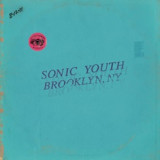
The final U.S. show, a triumphant and blistering bookend to the storied career of one of the most influential bands in rock music, featuring a unique and expansive eighty-five minute set list that spans Sonic Youth’s nearly three decade catalog. Mixed from multitrack by longtime live engineer Aaron Mullan and mastered and cut by Carl Saff. On August 12, 2011 Sonic Youth played their final US show on an outdoor stage overlooking the East River at the Williamsburg Waterfront in Brooklyn. Fitting that their storied career would bookend with a panoramic view of New York City where it all began 30 years before, having left in their wake one of one of the most powerfully influential careers in rock music. Following incredible sets from Kurt Vile and Wild Flag, the band took the stage. As the sun went down over the city, Sonic Youth ripped through a 17 song set that spanned from deep cuts off their first studio album and highlighting many other albums all the way through to their last, like a band with everything to prove. Or as Brooklyn Vegan’s Andrew Sacher said at the time: “While most bands who are thirty years into their career are either fading away or living off of the nostalgia of their older material, Sonic Youth continue to sound and perform as fresh as ever.” Steve Shelley explains the uniquely career spanning set list of Live in Brooklyn 2011 and how it came to be, as well as the importance of outdoor NYC summer shows in Sonic Youth’s legacy: “This show was a culmination of a run of really special outdoor summertime shows in New York City for us, starting in ’92 with Summerstage in Central Park when we played with Sun Ra. For the Williamsburg Waterfront show I wrote out the set list to present to the band and it was a lot of material we hadn’t played in a while, a lot of deep cuts, so I wasn’t sure if everybody would feel like doing it. After worrying about which songs the band might say yes or no to, I threw those concerns out the window and I just made a list of songs that I thought would be a great set. We practiced the week of the show at our space in Hoboken and put the set together. First we’d try and make sure we had a guitar in the song’s tuning, then we’d try to remember the arrangement and try and put it together, sometimes re-learning bar by bar. In the end I think the whole song list made it through. Even as early as ’86 and ’87 we stopped playing ‘Death Valley 69’ and ‘Brave Men Run’ with any regularity. We’d just get excited about new material coming into the set and songs would get ‘retired’ and wouldn’t get played again for years. So on this particular night in Brooklyn a lot of those retired songs and deep cuts got dusted off and played for this show. It turned out to be a pretty special event with a really special song list.” The band would go on to fulfill a contracted festival run in South America a few months later but, by then, the group’s center was severed beyond repair and the festival appearances didn’t hold the same kind of weight. “The stage was facing the East River from the Williamsburg, Brooklyn waterfront, and I recall the sun going down in the west during our set. It was a pretty magical, if kinda weird day. Fitting, somehow, that our ‘last show’ should be in New York City, our home and where it all began…” Lee Ranaldo The Williamsburg Waterfront show would fondly become referred to as ‘The Last Show’ by fans and band alike, equally for its triumphant high energy performance, its unique and expansive set list and locale. Newly remixed and remastered, Live in Brooklyn 2011 is presented for the first time on 2xLP, 2Xcd, August 18, 2023.
The issue was always: How could I transport my work as a producer and beatmaker on to a stage? How can something, that is happening behind locked doors in the studio, emerge into a live experience?" With this vivacious live quartet, he has found his answer.
Songs from a productive solo career spanning a period of over 10 years, Sepalot has a wide variety of songs to pick and choose from. Even in the live set up, his ove for electronic music remains unaffected and the subtle influence of Hip Hop is un- deniable. Despite this being the initial state of the project, a distinctive sound has evolved from jamming together in dark rehearsal rooms. The different characters compliment each other like a puzzle on stage, though Sepalot's part as producer and svengali is undisputable.
FABIAN FU?SS on the drums - longtime partner on the drum set and the voice behind Sepalot's unmistakable radio hit "Rainbows". ANGELA AUX on the bass and mostly the voice of the quartet is a writer and solo artist in his own right. Having released albums on Millaphone his roots are undeniably in hip hop with a heavy tinge of folk. MATTHIAS LINDERMAYR on the trumpet, who originated from a family of musicians, is highly decorated jazz virtuoso. His very own releases grace modern jazz specialist label Enja Records. ... and finally SEPALOT, bringing them together and making them more than the sum of its parts.
The electronic beats, the pulsating bass, Sepalot's enthusiasm for ambient sound design - all this remains unchanged and is garnished with the element of jazz. A unique, unequalled sound that strives for higher ideals and has immense international potential.
- A1: Dreams
- A2: Linger
- A3: Zombie
- A4: Ode To My Family
- A5: I Can't Be With You
- B1: Ridiculous Thoughts
- B2: Salvation
- B3: Free To Decide
- B4: When You're Gone
- B5: Hollywood
- C1: Promises
- C2: Animal Instinct
- C3: Just My Imagination
- C4: You & Me
- C5: Analyse
- D1: Time Is Ticking Out
- D2: This Is The Day
- D3: Daffodil Lament
- D4: New New York
- D5: Stars
Nach den Wiederveröffentlichungen von „Everybody Else is Doing it...“ und „No Need to Argue“, und 30 Jahre nach ihrem Debüt, veröffentlicht die Band am 27. Mai die Greatest-Hits Sammlung „Stars: The Best of 1992-2002“ auf Vinyl!
Die Cranberries erlangten in den 1990er Jahren mit Hits wie „Zombie“, „Dreams“ und „Linger“ internationalen Erfolg. Auf diesem Album befinden sich außerdem „New New York“’ und „Stars“, Songs die so zuvor noch nicht erhältlich waren.
Featuring contributions from Brittany Howard, Daniel Tashian (Kacey Musgraves, Demi Lovato), Julien Baker + more. Since moving to Nashville to start their music career in 2012, Becca Mancari has been lauded for their dextrous songwriting and prodigious guitar playing. Their sophomore album The Greatest Part, released in 2020, was an indie rock opus that garnered acclaim from The New York Times, NPR, and more. After its release, however, Mancari was despairing. An illness in their family, coupled with a realization that their alcohol dependency had become untenable, led Mancari to begin the hard work of taking ownership of their existence by mending broken relationships and investing in their mental health. "I didn't realize it then, but looking back, I was a passenger in my own life," Mancari says. The transformative period of self-reckoning was the catalyst that ultimately steered Mancari to write and produce their triumphant new album, Left Hand. After a disheartening studio session with an outside producer, Becca became convinced that they were capable of rendering their vision independently. Close friend and musical ally Juan Solorzano, who has played on all of Mancari's albums since the debut of Good Woman in 2017, joined them in the studio to co-produce the majority of the record. In addition, Daniel Tashian (Kacey Musgraves, Demi Lovato) co-wrote and co-produced the song "Don't Close Your Eyes," encouraging Mancari to track every instrument on the initial demos. As much as self-producing this album was an act of resilience and growth in one's own craft, Mancari brought trusted friends like Brittany Howard, who they play with in Bermuda Triangle, Julien Baker and Zac Farro into the process. Insecurities that had dogged Mancari since childhood couldn't weather the force of energy in that studio, where they executed decisions with newfound certainty. The title track, "Left Hand," is named for the Mancari family crest. After a lifetime spent feeling like they didn't belong, Mancari unlocked a perfect metaphor in the crest: "In many cultures children born with a dominant left hand were taught not to use that hand, and were told that using the right hand was `normal' and `correct.' Similarly, queer children are often times told that it's not `normal' for them to love who they love and that they need to `change.'" On Left Hand, Mancari offers the listener a collection of songs that should be played in moments when we are in need of reassurance and encouragement. No song exemplifies this better than the ebullient track "Over and Over," which is a reminder to friends that happiness doesn't need to be fleeting. "I wanted to write a queer pop song that has meat on its bones," they say. Inspired by one of many reckless and joyful hangs with dear friends in Nashville, the enlivening pop song makes a promise to them, and to the greater community Mancari embraces on this album. "There is something to the feeling/ Head hanging out of the window/ Being ok that we don't know," sung on the chorus over a beat replete with congas and shakers. What follows is a promise to anyone who ever feels like the greatest moments of their life are disappearing in the rearview: "We can have it like we used to, over and over and over and over again." For Fans of boygenius, Phoebe Bridgers, Julien Baker, Julia Jacklin, Caroline Rose, Miya Folick, Molly Burch, Widowspeak.
new music in nearly 30 years Includes 11 brand new songs written by the band The Cowsills will be on the road through 2023 supporting the new record Some of the best music made in the last 60 years has been delivered by musical families. Think about it . . . The Everly Brothers, The Beach Boys, Bee Gees, The Jackson 5, The Staple Singers, Pointer Sisters, Kings Of Leon, Oasis . . . and The Cowsills! Starting in 1965, The Cowsills was composed of six siblings, performing their instruments and singing those glorious harmonies as only families can. Originally starting as a regional act (from Newport, Rhode Island), the group was “founded” by Joda Records owners Danny Sims and reggae/pop singer Johnny Nash (“I Can See Clearly Now”) in the mid-’60s for whom they recorded a handful of singles before turning towards more national recognition when they were signed to MGM Records in 1967. At this point, the group’s mother Barbara and young sister Susan joined the act and they were awarded a Gold record for over one million copies sold of their very first single for MGM, the sublime, “The Rain, The Park & Other Things.” This began a series of chart records that dominated the Top 40 for the next three years. Among the classic Cowsills recordings are “We Can Fly,” “Indian Lake,” “Hair” (from the rock musical Hair), and “Love American Style” (the theme song from the popular ABC-TV show of the same name). The group also recorded and charted with five successful albums during this time period. The band and their story were even the inspiration for the popular 1970s sitcom The Partridge Family. The group was also a prosperous touring attraction up through 1972, spreading their harmonious hope and love to an adoring fan base. They even had their own comic book published in 1968. As all families do, the group went through a series of changes, disbanding in 1972. But music never left the soul of this tuneful and melodic kin. Over the years, the group, as individuals, continued to make music and even reunited in 1978 and 1993 to make historic records that are woefully out of print. Now, nearly 30 years after their last recordings as a group, The Cowsills are returning with new music for the new world! Omnivore Recordings is proud to announce the release of Rhythm Of The World. Eleven brand new songs written by the band. The ambassadors of goodwill and love will be on the road through 2023 thrilling fans with their classic hits and soon to be new favorites!
2024 BLACK VINYL REPRESS.
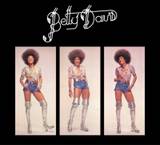
One can hardly imagine the genre-busting, culture-crossing musical magic of Outkast, Prince, Erykah Badu, Rick James, The Roots, or even the early Red Hot Chili Peppers without the influence of R&B pioneer Betty Davis. Her style of raw and revelatory punk-funk defies any notions that women can’t be visionaries in the worlds of rock and pop. In recent years, rappers from Ice Cube to Talib Kweli to Ludacris have rhymed over her intensely strong but sensual music.
There is one testimonial about Betty Davis that is universal: she was a woman ahead of her time. In our contemporary moment, this may not be as self-evident as it was thirty years ago – we live in an age that’s been profoundly changed by flamboyant flaunting of female sexuality: from Parlet to Madonna, Lil Kim to Kelis. Yet, back in 1973 when Betty Davis first showed up in her silver go-go boots, dazzling smile and towering Afro, who could you possibly have compared her to? Marva Whitney had the voice but not the independence. Labelle wouldn’t get sexy with their “Lady Marmalade” for another year while Millie Jackson wasn’t “Feelin’ Bitchy” until 1977. Even Tina Turner, the most obvious predecessor to Betty’s fierce style wasn’t completely out of Ike’s shadow until later in the decade.
Ms. Davis’s unique story, still sadly mostly unknown, is unlike any other in popular music. Betty wrote the song “Uptown” for the Chambers Brothers before marrying Miles Davis in the late ‘60s, influencing him with psychedelic rock, and introducing him to Jimi Hendrix — personally inspiring the classic album ’Bitches Brew.’
But her songwriting ability was way ahead of its time as well. Betty not only wrote every song she ever recorded and produced every album after her first, but the young woman penned the tunes that got The Commodores signed to Motown. The Detroit label soon came calling, pitching a Motown songwriting deal, which Betty turned down. Motown wanted to own everything. Heading to the UK, Marc Bolan of T. Rex urged the creative dynamo to start writing for herself. A common thread throughout Betty’s career would be her unbending Do-It-Yourself ethic, which made her quickly turn down anyone who didn’t fit with the vision. She would eventually say no to Eric Clapton as her album producer, seeing him as too banal.
In 1973, Davis would finally kick off her cosmic career with an amazingly progressive hard funk and sweet soul self-titled debut. Davis showcased her fiercely unique talent and features such gems as “If I’m In Luck I Might Get Picked Up” and “Game Is My Middle Name.” The album Betty Davis was recorded with Sly & The Family Stone’s rhythm section, sharply produced by Sly Stone drummer Greg Errico, and featured backing vocals from Sylvester and the Pointer Sisters.
- 1: Spectacular
- 2: Best Believe
- 3: Vibe Check (Ft. Cadence Weapon)
- 4: Baby Boy (Ft. Paul Wall)
- 5: Loosen Up (Ft. B.k. Habermehl)
- 6: Alexis (Ft. Harriet Brown)
- 7: We Still Here (Ft. Harriet Brown)
- 8: Opportunist Convention
- 9: Kickin’ In
- 10: Don’t Tap In / Contusion (Feat. B L A C K I E)
- 11: Boss Up
- 12: Make A Baby
- 13: Jasper, Tx
With I Will Make a Baby in this Damn Economy, Fat Tony embodies the kind of quixotic figure he would rap about; a singular entity who’s motivated, confident, and hungry; a perpetual-motion-machine locked in a staring contest with his country. It’s the latest album in his catalog produced entirely by L.A-based producer Taydex since 2020’s Wake Up. Later that same year Fat Tony released Exotica, and ever since he’s demonstrated he is in his own lane as a professional rapper with the mind of a magician, as quick to conjure an image as pull it out from under you, deftly manoeuvring through so many details and references a listener feels as if they have witnessed the work of an illusionist. He paints these canvases inside of songs that rarely spill past three minutes; they’re pocket-sized diaries replete with acute observations, character studies, microdoses of storytelling, and single-minded ruminations on a topic that bud, blossom, and fade before too long. Fat Tony & Taydex’s I Will Make a Baby in this Damn Economy cements Tony’s status as someone whose albums are not so much lyrically-lyrical as they are picaresque.
As with any Fat Tony project, the bars are tight as ever, but are so fluid for the 34-year-old it’s almost easy to take for granted the details, warmth, and humanity inside his free-associative tales of day-one friends who’ve passed, edgelord grifters who want to spit game, and nights on ketamine. Taydex’s production sprints through disparate yet simpatico styles, dipping its toes into Pi’erre Bourne-esque bass (see lead single “Spectacular”), house (“Loosen Up”), and even hyperpop. Meditations on loss and grief are woven throughout, but Tony throws a few curveballs as well: Consider “Alexis,” which sweetly reflects on a long-term platonic friendship. Taydex finds a Teddy Riley-indebted New Jack Swing groove just deep enough for the feeling to land and underlines the song’s sincere candor. This is the appeal of Fat Tony writ-large: his boisterous voice and genial personality invite you to the party, then you stick around to hear what he’s saying, which is frequently more introspective and complex than one assumes.
Written and recorded in Taydex’s new studio in North Hollywood, Tony says, “We had much more freedom and flexibility in making this album and you can hear it. It felt like a family project.” If the album is comfortable and loose, it is also dense and substantial. The album’s final two tracks contextualize the immediacy of what came before it—the mezcal with ices drank, Paul Wall swangin’ through to drop knowledge, the Polaris Prize-winning rapper Cadence Weapon providing a vibe check. “Make a Baby” accounts for Tony who’s seen everything, and knows he’s met the one to be a father with, and yet chooses to take his time to get it done. Taydex’s beat recalls turn-of-the-century R&B and the millennial promise of an endless good time. Sombre closer “Jasper, TX” is Tony coming to grips with the story of James Byrd, Jr., a Black man from East Texas dragged to his death by three white supremacists in 1998. These songs are not only trademarks of Tony’s fastidious rapping—they are deeply personal examples of his approach to artistry and life itself, where every decision is made in the shadow of history.
It’s here the mission statement of I Will Make a Baby in this Damn Economy comes into focus—you get the sense he means it, he’s ready for it, he’ll fight for it. He’s waiting to take the world at its word.
The band’s upcoming 8th studio album will be full of the trademark blend of catchy pop melodies, witty lyrics, and infectious energy. Songs about hating your life, loving your life, Norwegian families, coconut crabs, 90s television shows, feeling like a loser, not trusting the government and Peppa pig. There is something for everyone.
Earlier this year, Subwax Bcn made an important contribution to the electronic music community by having the timeless dub techno compilation Vibrant Forms II by Fluxion remastered and reissued. First released in the year 2000 on Chain Reaction, Earlier this year, Subwax Bcn made an important contribution to the electronic music community by having the timeless dub techno compilation Vibrant Forms II by Fluxion remastered and reissued. First released in the year 2000 on Chain Reaction, Vibrant Forms II is widely considered to be one of the greatest achievements in the genre. As it turned out, Vibrant Forms II became one of the last records to be released on Mark Ernestus and Moritz von Oswald's classic label - a suitable swan song if there ever was one. And that's it, right
Well not quite.
If one would search for Fluxion - Vibrant Forms III, Discogs would come up empty and Google would treat it as a misspelling. Until now.
Konstantinos Soublis, aka Fluxion, and Subwax Bcn have decided to pick up the banner and release Vibrant Forms III as a CD as well as four individual 12" records under 2016. It contains everything you could hope for and more: The massive, booming basses, the clicks and hisses, the atmospheric thunderstorms, the opium smoke-scented streaks of reverb and dub echoes. The warmth. Yes, above all else the warmth: Sometimes moist and dripping as in Safe Harbour, sometimes blisteringly dry as in Variant. It's no easy task, giving cold, dead machines warm breaths. And no-one quite does it like Fluxion.
The Reissue of Vibrant Forms II was an act of cultural preservation. It reminded us about the legacy of the Basic Channel label family, in which Chain Reaction played an important part. Without this legacy, the contemporary body of electronic music would look different and make very different sounds. With the Release of Vibrant Forms III, Subwax Bcn takes it one step further. Fluxion's Vibrant Forms III album remind us of the timelessness of truly great music, never mind the genre.
Close your eyes and merge into Benedikt Frey’s 'Fastlane'. Imagine sitting in the driver’s seat of a an automobile, one with exceptional horsepower and torque, as you stare out the windshield at the red light, warping in fata-morgana a mile down the road. It’s a straight-away, a black top with two lanes, and against your better judgment you decide to floor the gas. No hesitation in your muscle, your ankle or the ball of your foot, which you now realize is some kind of universal pivot, the first point of contact fusing your body with the will of machine. In this moment you’re in awe that you, a human, an animal, grew from pond scum into something so advanced as to engineer this thing, a mechanical beast capable of overwhelming power and exhilaration. But you also feel a seductive dread, an outside force diverting you from caution toward a dangling carrot of curiosity, asking yourself, ‘How far can I take this thing?’ The dread, now a constant, is numbed, equalized by an adverse intoxicating gratification. You feel both sensations in real time, however, rather than take responsibility for yourself, friends, family and innocent bystanders, you cement your foot to the floor and lean your head back. Noise around you fades to mute. Smell the benzene-scented air, feel the wind on your face, the menacing vibration of the vessel you control beneath you and every grain of asphalt under its tires. This mile has now lasted an eternity and you’ve left your body for some objective view, as if watching climax of a film. Past the point of no return, you embrace abandon and lean into fate. The film becomes slow motion, a crawling pace so mesmerizing you convince yourself of an option to eject yourself from this madness, but as you finally let go of your last morsel of fear, you run the red light head-on into the nucleus of a fantastic glistening sculpture of torn metal, glass, oil, broken dreams and heartache. 'Fastlane' may be just drum machines and synthesizers if you’re timid, but listen harder and know the catastrophic reality of existence, a wreckage so gruesome we dare not rubberneck, but afterall it is our nature to stare.
Repress!
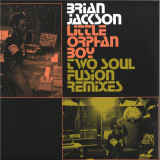
‘Little Orphan Boy’ is the second single taken from album ‘This Is Brian Jackson’, presented with remixes by Two Soul Fusion, a.k.a. Louie Vega and Josh Milan.
The veteran artist’s first true solo LP in over 20 years, ‘This Is Brian Jackson’ is produced by Phenomenal Handclap Band founder Daniel Collás. Collás lovingly re-frames and updates ideas and demos that Jackson first laid down back in 1976, right around the time he recorded ‘Bridges’ with Gil Scott-Heron, for a solo project that never saw the light of day… until now.
Alongside his ‘Two Soul Fusion’ partner Josh Milan, Louie Vega gives the album’s closing track ‘Little Orphan Boy’ two truly vintage remix treatments, taking the song on an eclectic, soul-stirring, timeless journey. The extended ‘Two Soul Fusion’ mix calls to mind the golden era of Masters at Work productions, featuring a Latin-infused percussion groove, shimmering organs and in-the-cut funky guitar lines. The ‘Downtempo’ remix lets Brian Jackson’s vocals ride over a head-nodding, stripped back, yet equally soulful arrangement.
“A dream to work with Brian Jackson” says Louie Vega. “I mean, he’s a big part of our musical landscape and has been a huge inspiration in our lives. From way back to my early years in the Bronx, through to my DJing and producing career, into productions like Nuyorican Soul, Elements of Life, Kenlou, Brian and Gil have always been with us! Now to work on such an amazing song with Brian’s keyboard work and lead vocal, it made it so much easier for Two Soul Fusion (Josh and I) to find that pocket and groove. We had to create an epic piece and take you on a trip through several styles, it was calling for it. That’s due to the original work of Brian Jackson, a true Master at Work & Two Soul Fusion hero!!! I’m looking forward to seeing what’s next on the horizon with us and the one & only Brian Jackson.
Brian Jackson: “I have always loved the musicality and the rhythmic power that surges through the artistry of Louie Vega since I first heard him in Masters at Work. I made a silent wish that one day I would hear one of my songs given that special treatment. Imagine my elation to know that it would finally happen – with a song I wrote and recorded 45 years ago for a solo project that might have never happened if not for producer Daniel Collás and BBE chief Peter Adarkwah! Louie, along with Two Soul Fusion partner Josh Milan and I are alike in so many ways, I knew that if we ever got together, magic would happen and well… here’s to magic! My love and gratitude to Louie, Josh, Daniel, Peter and the beautiful BBE family.”
Attarazat Addahabia & Faradjallah's album came to us as quite a mystery. Our friends from Radio Martiko got access to the studio archive of the Boussiphone label and a reel labeled “Faradjallah” was among the items they had found there. After listening to the selection of reels they borrowed, Radio Martiko felt it was not a fit for their label and helped us licensing it from Mr. Boussiphone instead. We knew nothing about the band. We just had the reel with the music but very little information. What we knew was that the music was incredible and very unique. Gnawa sounds were combined with funky electronic guitars, very dense layers of percussions and female backing vocals more reminiscent of musical styles further south than Morocco. We started asking around whether anyone knew the band with no immediate success until we asked Tony Day, a musician from Morocco who helped us during our search for Fadoul’s family. His sharp memory came through once again, remembering all the names of the Attarazat Addahabia band members and even how to contact the bands singer and leader Abdelakabir Faradjallah. After visiting him at his home in Casablanca with our Moroccan colleague Sabrina multiple times, he shared his personal story. His father arrived in Casablanca from Aqqa at the age of six and his mother came from Essaouira. Abdelakabir was born in the neighbourhood of Benjdia in 1942. Abdelakabir Faradjallah studied fine arts in Casablanca, graduating in 1962. He also played soccer in the second team of "Jeunesse Societe One". His brother-in-law Ibrahim Sadr worked for one of the biggest football teams of the time in Morocco called "Moroco Sportive Union", which allowed him to travel to France occasionally. While Ibrahim was never part of the band he brought along a few instruments from trips.
Yet the majority of the instruments they could not afford to buy were build by Faradjallah and Abderrazak, Faradjallah's brother who passed away early. For instance they had built a Spanish guitar and a drum made of wood barrel and sheepskin by themselves.During the 1950s Faradjallah was booked as a singer for surprise parties with friends. He started to write his first songs including "L’gnawi" in 1967 and wanted to make people discover Gnawa culture, or maybe rather his take on the culture to be more exact. Faradjallah recalls his first interaction with the genre in the streets of the Dern neighbourhood, where he used to go to elementary school. Gnawa is one of the essential musical genres of Morocco. It combines ritual poetry with traditional dances and music linked with a spiritual foundation. Musically a lot of influences originated from West Africa as well as Sudan. Gnawa is usually played by a selection of specific instruments such as the qaraqab (large iron castanets centrally associated with the music), the hajhouj (a three string lute), guembri loudaâ (a three stringed bass instrument) and the tbel (large drums). People would put shells on their clothes and instruments and use incense at their parties. "Sidi darbo lalla - lala derbo khadem..." came from Gnawa verses Faradjallah used to sing when he was 14. The lyrics tackle a global (im)balance of power and the question of social status in this course. The band Attarazat Addahabia was formed in 1968. The original line-up included 14 members, all from the same family. They played their first small concerts here and there starting in 1969. Later in 1973 they performed bigger shows for instance at the Municipal Theatre followed by the "Al Massira Show" at Velodrome Stadium in downtown Casablanca. Their first album "Al Hadaoui" (the one you are listening to) was recorded at Boussiphone studios in 1972 and was never released before. Nobody seems to remember the exact reason why Boussiphone ended up deciding not to put the album out. The album's title track also served as the basis for Fadoul's "Maktoub Lah", who frequented the same circles as the band for some time.
Their shows sometimes could go as long as 12 hours, starting at 5pm in the afternoon, with an occasional break here and there. In the 1980s the band took a brief break. Faradjallah recalled the reason for that break like this: "Zaki, the bands drummer, had fallen in love with a young girl from Mohammedia. Soon after, he fell very ill. The group members were convinced that the girl had given him ‘s'hor’ (a kind of local Moroccan version of "black magic"). For four years, the whole group stopped playing. It was unthinkable to find another drummer to replace Zaki, even temporarily." So they waited four years for Zaki to "get back on his feet" before going back on stage. Apart from very few gigs here and there Faradjallah stopped playing music in the mid 1990s. Some members from the younger generations formed a new band and still play frequently to this day. Faradjallah runs a television repair shop coupled offerings beverages and snacks in the Belevedere /Ains Sbaa district of Casablanca. While Faradjallah was primarily a musician, he would work for the local cinema and paint their posters for new movies by hand and he designed all artworks and cover posters of the band.
And this eventually led to him participating actively in our first exhibition dealing with Habibi Funk’s work in Dubai 2018. He helped us by creating calligraphic complementations on large photo prints for that show.
- 1: History (Extended Version) 03:37
- 2: Then You Run 01:7
- 3: The Pool 01:0
- 4: Daydream 01:56
- 5: Stink's Dream 01:41
- 6: Uncle Reagan 01:17
- 7: Teamwork 01:45
- 8: Stand Off 01:31
- 9: A Great Artist Knows When To Stop 02:01
- 10: For Mirko 01:25
- 11: Herd 02:57
- 12: Two Minds 04:09
- 13: Closer 02:15
- 14: Fingertip 01:25
- 15: The Hotel 03:55
- 16: I Know Him 01:51
- 17: Death Drive 02:12
- 18: In The Blood 02:02
- 19: Summer's Not Over 03:31
GAZELLE TWIN - aka composer, producer, singer, and visual artist Elizabeth Bernholz - has scored Sky's brand new TV series "Then You Run".
Created for television by Ben Chanan (The Capture), based on the novel YOU by Zoran Drvenkar, Then You Run follows four rebellious London teenagers on a city getaway to Rotterdam. This contemporary eight-part series boasts an incredible cast of rising stars; Leah McNamara (Normal People) as Tara, Vivian Oparah (Rye Lane) as Stink, Yasmin Monet Prince (Hanna) as Ruth and newcomer Isidora Fairhurst as Nessi.
The four friends embark on what should have been the perfect summer break which soon spirals into a dark and perilous adventure. When their attempt to take on some of the most dangerous people in Europe doesn’t quite go to plan, they find themselves on the run with three kilos of heroin, more questions than answers about Tara’s family, and a gang of deadly criminals tracking their every move.
Invada Records have previously released two recent Gazelle Twin scores (2020’s Nocturne and 2021’s The Power).
Her 2018 acclaimed album Pastoral was described by Pitchfork as “...belonging to a proud tradition of English satire, plumbing the depths of the nation’s psyche and twisting it to wryly discomforting ends”.
- 1: Frownland
- 2: The Dust Blows Forward 'N The Dust Blows Back
- 3: Dachau Blues
- 4: Ella Guru
- 5: Hair Pie: Bake 1
- 6: Moonlight On Vermont
- 7: Pachuco Cadaver
- 8: Bills Corpse
- 9: Sweet Sweet Bulbs
- 10: Neon Meate Dream Of A Octafish
- 11: China Pig
- 12: My Human Gets Me Blues
- 13: Dali's Car
- 14: Hair Pie: Bake 2
- 15: Pena
- 16: Well
- 17: When Big Joan Sets Up
- 18: Fallin' Ditch
- 19: Sugar 'N Spikes
- 20: Ant Man Bee
- 21: Orange Claw Hammer
- 22: Wild Life
- 23: She's Too Much For My Mirror
- 24: Hobo Chang Ba
- 25: The Blimp (Mousetrapreplica)
- 26: Steal Softly Thru Snow
- 27: Old Fart At Play
- 28: Veteran's Day Poppy
Trout Mask Replica is a touchstone in the history of recorded music. The mix of dada absurdist blues and previously unexplored experimental avenues has long been praised as one of the greatest albums of all time. As so eloquently put by John Peel, "If there has been anything in the history of popular music which could be described as a work of art in a way that people who are involved in other areas of art would understand, then Trout Mask Replica is probably that work.” In full partnership with the Zappa Family Trust and to celebrate the relaunch of the seminal Bizarre label imprint, Third Man Records is proud to announce Captain Beefheart and the Magic Band's Trout Mask Replica. Out of print on vinyl for nearly ten years, this remaster was helmed by industry legend Bob Ludwig and cut by the estimable Chris Bellman at Bernie Grundman Mastering. Utilizing crystalline-quality safety masters kept in the Zappa family vault for decades by the trustworthy Joe Travers, the audio here is positively glorious. Every last skronk breathes full life into the room. Every twisted guitar figure uncurls onto paths previously unpaved. Every last bark and howl shines resolute through the vast emptiness of your mind. Previous countless Trout Mask Replica repressings used scans of scans of scans of the cover image, but the original Cal Schenkel cover photo has been tracked down and reproduced here at its clearest — its resolution from the original release in 1969. If you’ve only ever seen a jpg online or fuzzy, smeared-looking CD issues from the 90’s, be prepared to be wowed by the fully engaging spectrum this iconic image casts. This 2xLP is pressed on heavyweight 180-gram black vinyl for that full-on frenetic feeling.
Back when Eddie Bond recorded Talkin' Off The Wall for his first ever disc
in 1955, he was indeed caught up in a musical moment that was 'off the
wall' – in other words seen as highly unusual, strange, eccentric, bizarre
It was the time of the emergence of rockabilly and white rock and roll. Briefly, the
'rockin daddy from ding dong Tennessee' was hot stuff, playing shows with
Presley, Perkins, Cash and all the other singers from Memphis whose music
talked off the wall to a whole new generation. Today, it does so again.
• A rocking 14-track LP on Bear Family Records® from one of the original
Memphis rockabillies, Eddie Bond, backed up by a 25-track CD featuring original
and cover versions of some of Eddie's songs.
• Mostly from the mid-1950s, these tracks sparkle with the life and excitement of
the new rocking music.
• Eddie started and finished as a country singer, but he embraced the new
rockabilly music and he soon became the Rockin' Daddy described in his bestselling disc from 1956.
• Eddie's backing bands include two of the best guitarists of all time – Reggie
Young and Hank Garland – and they don't disappoint.
• The ten-inch LP contains one song from Eddie's first label, Ekko, six from his
rockabilly heyday on Mercury, two from his originally unissued sessions at Sun in
1958, and five tracks from local Memphis labels in the 1960s.
• The bonus CD contains also a further 11 tracks by other artists, providing
fascinating other versions of songs Eddie recorded. Artists include Sonny Fisher,
Lattie Moore, Ray Charles, and Elvis Presley.
Today, powerhouse mande jazz ensemble Balimaya Project announce
their second album When The Dust Settles to be released by New Soil in partnership with Jazz re:freshed on July 21, 2023
A dynamic maturation of the group's thrilling big band sound, When The Dust Settles is a personal and cathartic expression of grief, rage, love and joy.
Fusing West African rhythmic tradition with the energy of London's jazz continuum, the album celebrates the restorative power of Black male brotherhood among diaspora communities in London.
Led by composer/arranger and UK-based Djembe player Yahael Camara Onono, Balimaya Project have established themselves as one of the most exciting and forward-thinking ensembles in Britain.
Enlisting guest vocalists Afronaut Zu, Obongjayar and Fassara Sacko across ten groove- laden and punchily percussive tracks, each song on When The Dust Settles engages intentionally with the significance of folkloric rhythms to illuminate themes that include the death of Camara Onono's older brother, losing a child, becoming a father, migration, survival and a search for truth.
As Camara
Onono describes: "One thing that's really linking us is that concept of family and the bonds are getting stronger every time ... It was important to me to go deeper and address not just tradition and culture, but also address emotion."
"Hi there, I'm really happy to present my new EP "Kernel Panic" released on one of my favorite labels "Yuku". I've been discovering a lot of great music and new artists thanks to Yuku and I'm really happy to join the family.
My first release ever was a footwork release 8 years ago, and I wanted to experiment with this 160 bpm vibe again and merge it with a lot of different personal influences. I've been experimenting a lot with crazy polyrhythm sequencers and Euclidean algorithms for this EP. It was a lot of fun but my laptop didn't like it at all. During the whole process, I experimented a huge amount and experienced loads of bugs and laptop freezes, so I decided to dedicate this EP to "Kernel Panics".
It might be the most hybrid EP I've done. You can hear breaks, electro, footwork, grime, percussive, and dub ingredient within. I also had the pleasure to collaborate with the very talented Kenyan rapper, Nah Eeto, for Piga Makofi, and I can't wait to play this one live with her.
I asked my friend Vica Pacheco to create the artwork and she built this psychedelic 3d world based on "the hypnotic and dynamic energy" of the EP.
Big thanks to Yuku for following me into these new areas of experimentation."
- Le Motel
Raised on Colombia's Caribbean coast and united by its capital, Bogota, Ghetto Kumbé combines the rich musical heritage of their home, to invoke the spirit of digital rumba in audiences all over the world. The secret behind their irresistible electronic ritual lies in their powerful percussion base; Caribbean house beats and traditional afro-Colombian rhythms inherited from West Africa. The album's co-producer, The Busy Twist, adds all the legacy of UK's Bass scene to the Afrofuturistic sounds of the 3 Colombians. Inspired by the different revolutionary movements emerging all over the world, Ghetto Kumbé will release their first full-length album in July 2020 on pioneering Latin Ameri-can electronic label ZZK. Their self-titled debut is visceral, committed, and rebellious, denouncing through frantic rhythms the inequalities and abuses imposed by corrupt governments, while simultaneously enticing listeners to join in the fight. Dance mingles with awareness to create a global community, where family, friends, and strangers come together through our shared love of music and activate change amongst themselves. Using musical motifs from Africa and Colombia's Caribbean coast such as the gaita, call-and-response vocals, and an array of hand drums and rhythms, coupled with the elegant electronic production of Tech/House, Ghetto Kumbé creates an Afro-futurist soundscape with lyrics to motivate, elevate, and inspire. Their first single to come out, `Vamo a Dale Duro', is a fluorescent criticism of the unjust divide between the poor and the rich, the rising prominence of dirty politicians, and the ethics of the capitalist sys-tem while encouraging people to stand up and fight for a dignified existence. The al-bum's tone fluctuates fluidly between tracks that include ancestral chants, voices both deep and resounding, and anthems to uplift and inspire, as well as features by up-and-coming Réunion island artist Melanie and the Palenque-based folk/hip-hop band Kombilesa Mi. In the Americas, Ghetto Kumbé has become one of the most important alternative groups to come out of Colombia. They've played Barranquilla's world famous Carnival, Bogotá's recent Boiler Room, and have even opened for Radiohead. The ancient yet modern sound of the three powerful musicians has made them a legitimate representative of the new Afrohouse scene burgeoning all over the world.
Lori McKenna titled her album 1988 after the year she married her husband, Gene, yet the 10 songs within also serve as a love letter to lifelong friendships, people she’s lost, and her family. Recorded with producer Dave Cobb in Savannah, Georgia, 1988 naturally has its nostalgic moments, even if not every ending is a happy one. With more of an electric edge than her past projects, 1988 feels in step with classic ‘90s albums by Sheryl Crow or Gin Blossoms, where the lyrics pulled you in as much as the melody or production. Playing together on acoustic guitars while facing one another in the studio, McKenna and Cobb tracked the album live, giving it a feeling of immediacy and authenticity.