Etceteral are a Slovenian experimental trio (saxophone & electronics, drums, visuals) who create a propulsive, polyrhythmic futurist jazz. It is a sound marked by abstract modular explorations, hypnotic drumming, ricocheted horn textures and crystalline production. Interzones between Dub, Krautrock, Afro-rhythms, free improvisation and quantized electronic music are brightly lit on this thrilling second album. The idea of musical elasticity is central to Rhizome, the sophomore album of the Slovenian audio-visual electronic jazz trio Etceteral, the newest member of the Glitterbeat family, who debuted in 2020 with the album Ama Gi for Kapa Records. Following a series of domestic and international gigs, the band consisting of Bostjan Simon (saxophone, synth, electronics), Marek Fakuc (drums) and Lina Rica (visuals) returned to the studio, taking their ambition to meld audio and visuals to a whole new level on their debut for the tak:til imprint. On Rhizome, the band explores the interzone between groove-driven contemporary jazz, quantized electronic music, abstract modular explorations and free improvisation. Like rubber that is able to stretch and be returned to its original shape, Etceteral expands its arrangements to the point of no return, pushing its sonic architecture to the maximum without ever letting it collapse onto itself. "I like to think in terms of sonic rubber bands. We can stretch our music both rhythmically and harmonically, change tonality and return to the main theme through a different key. This process opens up new space for discovery. We recently listened a lot to Joshua Abrams and Evan Parker, musicians who know how to make their music airy and spacious," says saxophonist Simon
quête:family of eve
Rare Italo disco pop project Galvanica gets a beautiful re-issue! This is what the label writes about the release; "Galvanica, a voice with unusual qualities, refined, balanced, also high-pitched, sensual, embellished by an orgasmic inspiration with fluid and spaced solo's in hypnotic rhythms that often change scenery. 'Nightlights in Japan': an extraordinary piece of pure and profound creativity where each version seems to have been built apart and where the West meets the East. A splendid interpreter for a truly stunning piece, as fresh and far-sighted as the day it was recorded in Calenzano at Studio Emme by Marzio Benelli with the Yamaha DX7 synth and Linn 9000 drum sequencer that are at the base of the piece, made and re-interpreted in the four original versions, all sung in the Eastern Asian pentatonic scale. 'Nightlights in Japan' was also written by Massimiliano Orfei, at the time collaborator in the advertising projects from label Smash One Music of Pino Toma, the producer who drew new inspiration to venture into the record market which in 1987 became every day more difficult and this song was considered out of fashion, even if each version of this song was expertly arranged by the talented Giorgio Costantini. We've clarified as to whom Galvanica's velopendulus belongs, in order to be able to rightly consider this artist as a contributive voice of disco music, despite being part of the "second wave" of the Italo-Disco scene, has strongly contributed to it as Otero, Belen Thomas, Angelby and previously with the disco-project Plustwo creating 'Melody' (which after 40 years gets a new extraordinary success with over 134 million plays on TikTok and around 18 million streaming). However, it's clear as day that the gorgeous artist behind Galvanica was Antonella Bianchi and that Giorgio Costantini was not only her producer and composer - as in 1985 for 'I Know', a sweet synth-pop ballad sung with her stage name 'Angel', but above all her ... 'guardian angel'. For many artists using a stage name is a custom. The absolute record of pseudonyms as a true equalizer of identity is held by Stendhal having used 350 throughout his career. This multifaceted artist who, until now has never used so many 'a.k.a.', in a wonderful game of musical mirrors, has represented an opportunity to challenge the market, a trait of non-acceptance of the role that the discography attributes to certain artists. So also Galvanica was an invitation to reflect, with a pinch of provocation, a behavior that Antonella Bianchi has in the DNA of her family. Ultimately, Best Record is not at all worried about the modernization that surrounds it, sure that 'Nightlights in Japan' will be one of the most coveted vinyl reissues in the second half of 2022.
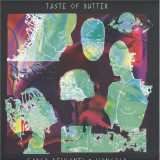
For their 18th vinyl release, Hard Fist welcomes Guadalajara-based producers Vongold and Fargo Devianti in the family, including an impressive remix by Jennifer Cardini and Damon Jee.
Dj, producers and performers, the Mexican duo releases collabs on Correspondant, Hard Fist, Rotten City, Her Majesty’s Ship and more. Vongold is all about low-tempo dark disco, anxious lyrics over bass lines and hundred vocal gems ; while Fargo Devianti is a magician mixing guitars, synthesizers, drums and voodoo percussion.
“Taste of Butter” is their first full EP together. Vongold’s haunted vocals stress Fargo Devianti hypnotic percussion. Together they create a psychedelic journey into mind landscapes with eclectic influences like avant-garde rock, post-punk, krautrock and darkwave sprinkled by psych folk eastern melodies and ritual percussions. This EP is probably the most rock and new-wave oriented ever released on Hard Fist.
To conclude, Jennifer Cardini and Damon Jee brought a powerful remix influenced by Detroit’s electro and breakbeat roots. Once mixed with the trippy sounds of the original version, it opens a fresh new door into the field of “dancefloor killer” music.
- A1: No Way Out (Intro)
- A2: Victory (Feat The Notorious Big & Busta Rhymes)
- A3: Been Around The World (Feat The Notorious Big & Mase)
- A4: What You Gonna Do?
- B1: Don't Stop What You're Doing (Feat Lil' Kim)
- B2: If I Should Die Tonight (Feat Carl Thomas - Interlude)
- B3: Do You Know?
- B4: Young G's (Feat The Notorious Big & Jay-Z)
- C1: I Love You Baby (Feat Black Rob)
- C2: It's All About The Benjamins (Feat The Notorious Big, Lil' Kim & The Lox - Remix)
- C3: Pain
- C4: Is This The End? (Feat Ginuwine, Twista & Carl Thomas)
- D1: I Got The Power (Feat The Lox)
- D2: Friend (Feat Foxy Brown)
- D3: Senorita
- D4: I'll Be Missing You (Feat Faith Evans & 112)
- D5: Can't Nobody Hold Me Down (Feat Mase)
No Way Out is the classic rap album helmed by Puff Daddy and featuring his Family of labelmates and trusted collaborators from across the Bad Boy universe and the music industry at large. Debuting in the Summer of 1997, the Grammy Award winning album sold well over half a million copies in its first week of release—securing the Number One spot on the Billboard 200 chart. It also spawned several Billboard Hot 100 singles, including the international chart-topping Biggie tribute “I’ll Be Missing You” which sat in the top spot for 11 consecutive weeks and has the distinction of being the first ever rap song to debut at Number One on the Hot 100 chart.
Originally conceived as an ode to Harlem and a nod to the mob narratives of Scorsese and Puzzo, Puff changed course (and album titles!) following the death of his friend and fellow Bad Boy artist The Notorious BIG. Assembling a powerhouse production team of rotating talent known collectively as “The Hitmen” and stowing away to Trinidad, they spent weeks expanding on the project. What came of those sessions were not only major hit records for No Way Out, but also tracks that appear on Life After Death and various other Bad Boy releases throughout the late 90’s.
Since his debut 25 years ago as a bona fide solo artist, Diddy has gone on to develop countless other talented performers and produce a myriad of projects that reach beyond music into fashion, film and television. Yet and still, No Way Out—which has been RIAA certified 7x Platinum—remains one of Puffy’s most successful, highest grossing albums to date.
2022 limited edition of this Japanese no wave gem from 1982. With extended liner notes and interviews with band members about the recordings of the album, as well as unpublished photographs from 1981 by Jibiki Yuichi.
The Japanese punk rock movement known as Tokyo Rockers began in the summer of 1978. It incubated an independent music culture as well as a host of fascinating, individualistic musicians. One of the more striking units was the male-female duo Maria 023. NON played bass for them, and it was here that she first attracted attention. However, Maria 023 was short-lived, and NON would not reappear until the following year, August 1979, on stage at the legendary concert event "Drive to 80s". Her unbilled performance at the event consisted of several songs for solo bass and vocals, and her combination of intensity and a distinctly female emotionality made a striking impression. In the months that followed, NON continued to play solo and she became a pivotal presence among the female rockers on the scene at the time.
Finally she shifted from solo to group performance, and formed NON BAND. After several member changes, the line-up stabilized into a unique trio with Kinosuke Yamagishi on violin and clarinet, and Mitsuru Tamagaki on drums. It was with this line-up that the group reached a musical peak. At the same time, the Japanese punk and new wave rock scene was moving in a new direction, as a second generation of artists appeared and mushrooming independent labels began to play an increasingly important role. I myself started a label called Telegraph Records in 1981 and worked hard on record releases and building a distribution network.
Since starting the label, I had wanted to release a record by NON BAND. There were many vicissitudes before it could happen, but in February 1982 NON BAND's first album was released as a 10-inch LP on Telegraph Records, the label's fifth release. In the early Japanese indies scene, if a release sold 1000 copies it was counted as a significant success. The NON BAND album went through several repressing and sold 2000 copies. The album was a hit and the band's critical reception and popularity suddenly took off.
The shows that followed the release of the album were given a boost by the addition of two female rockers, the guitarist Kummy and keyboard player Mitsuwa. The group was reaching a real musical peak and everyone expected more great developments, but just six months after the release of the album the group would grind to a halt. Members quit the band one after another, and with no possible replacements to be found, NON herself faded away from the scene.
NON BAND's career in the early Japanese indies scene was thus short-lived. But their sole album was reissued twice on CD, and remained popular with listeners. However, the group's history was to have a second chapter.
NON ended up returning to her hometown, snowy Hirosaki in the far northern prefecture Aomori. There she raised two children and took over the running of the family business, an arts supplies store. Her thoughts turned once again towards music, and in 1999 she took up her bass again and began to sing. She invited two fabulous musicians, Keiji Haino and Tatsuya Yoshida, to Hirosaki, and performed together with them as well as solo. This marked the beginning of a new phase for her, and she played live in Tokyo and released a solo album, "ie". She got back in touch with Yamagishi and Tamagaki and reformed NON BAND. They added Emi Sasaki on accordion and began to play a handful of gigs each year, bringing a mature depth to their undiminished power and dazzling a new generation of fans. In 2012 the group released an album of recent live performances entitled " NON BAND Liven' 2009-2012". I released the album on the newly reanimated Telegraph Records.
NON still lives in the north, in Hirosaki. The city is famous for its summer Neputa festival. The first track on this album, "Duncan Dancin'" is almost a theme song for NON BAND, but its rhythm is taken from the ohayashi music that is performed in this festival, as large floats and troupes of dancers wind their way through the streets. The title refers to the legendary dancer, Isadora Duncan. The image perfectly represents NON herself: Isadora Duncan dancing to the earthy rhythms bubbling up out of the north land.
Nov 9, 2016 Jibiky Yuichi (Telegraph Factory)
In order to achieve a meticulous sound quality the reissue version is cut on 12" vinyl instead of the original 10" format. The original cover artwork has been reproduced and there are liner notes by Jibiky Yuichi with unpublished photos of NON BAND.
Reissue of the oud / viola virtuoso SIMON SHAHEEN's interpretations of pieces by one of the Middle East's most important 20th Century composers, MOHAMED ABDEL WAHAB. Produced by BILL LASWELL, remastered for vinyl at D&M Berlin.
MOHAMED ABDEL WAHAB (1902-1991) was "a giant in the world of Middle Eastern entertainment" (Al Jadid Magazine) - as singer, actor and composer – and is commonly considered "the father of modern Egyptian song". After a visit to Paris, he revolutionized the film industry by introducing the genre "musical film" to the Arabic world, the movie "The White Rose" in which he starred broke all records and to this day is frequently presented in Cairo's cinemas. But in 1950, WAHAB left the film industry to focus on singing and composing – he wrote over 1800 songs (among others for Umm Kalthoum, an iconic artist in the Arabic music in her own right) that were deeply rooted in classical Arabic music but also laid the foundation for a new era of Egyptian music as WAHAB was open to Western elements such as waltz rhythms or even rock'n'roll in Abdel Halim Hafez's song "Ya Albi Ya Khali". He also composed several national anthems (Tunisia, Oman, Libya, United Arabic Emirates) and re-composed the Egyptian national anthem "Belady Belady Belady", based on the original by Sayed Darwish. WAHAB received several decorations of Arabic states, and at his death in 1991, Egypt honored its famous son with a huge military funeral at the Rabia al-Adawiya Mosque in Cairo, the six-horse carriage procession carrying his coffin was actually led by the prime and foreign ministers, followed by the ministers of defense, interior and culture!
SIMON SHAHEEN (born 1955) is the perfect choice for WAHAB's compositions. Born into a family of gifted musicians, he learned playing the oud at the age of 5 and the violin shortly thereafter. He earned degrees in Arabic literature and music performance at the Tel Aviv University, and later pursued further studies at Hebrew University of Jerusalem and after his emigration to the USA (in 1980) at the Manhattan School of Music and Columbia University. SHAHEEN lives in New York where he founded the Near Eastern Music Ensemble and Qantara, a formation that blends traditional Arabic Music with elements of Jazz and classical music, and he also has been organizing the Annual Arab Festival of Arts called Mahrajan al-Fan since 1994. The same year he received a National Heritage Fellowship from the National Endowment for the Arts at the White House. Solo albums like Saltanah (Water Lily Acoustics), Turath (CMP) or Taqasim (Lyrichord) underline his importance as one of the most significant Arab musicians, performers, and composers of his generation. His work incorporates and reflects a legacy of Arabic music, while it forges ahead to new frontiers, embracing many different styles in the process. SHAHEEN has participated in many cross-cultural musical projects with artists as diverse as Henry Threadgill, Vishwa Mohan Bhatt, or the Jewish klezmer ensemble The Klezmatics, contributed to the soundtracks for The Sheltering Sky and Malcolm X and composed the entire score for the United Nations sponsored documentary, For Everyone Everywhere, celebrating the 50th anniversary of the United Nations Human Rights Charter. SHAHEENS biggest success was the Qantara album Blue Flame (2001) which has been nominated for eleven Grammy Awards.
Besides all his activities as performer, he dedicates a good part of his time to working with schools and universities, including Julliard, Columbia, Cornell, Princeton, Brown, Harvard, Yale, University of California in San Diego, University of Michigan in Ann Arbor and many others.
The Music Of Mohamed Abdel Wahab was originally released in 1990 on Axiom, the record label curated by iconic producer and bass player Bill Laswell, and has been carefully remastered for this vinyl reissue at D&M, Berlin.
Press quotes:
"Master oud player and composer Simon Shaheen finds the perfect mix on this collection of Mohammed Abdel Wahab's pieces … seven wonderful interpretations sparkling with oud and strings interplay." Stephen Cook / AllMusic
"Shaheen's violin soars over a slicing string section and a bed of percolating percussion, while accordion, oud, finger cymbals and a chorus of singers weave in and out. Produced with sparkling clarity by Bill Laswell … this record opens a new world of harmonic and melodic possibilities to ears accustomed to Western pop." Greg Kot / Chicago Tribune
Musicians:
Simon Shaheen: Oud, Violin, Viola
Najib Shaheen: Oud
Sheikh Taha: Accordion
Anton Hajjar: Ney
Paula Bing: Flute
Ramzi Bisharat: Tabla
Hanna Mirhige: Mizhar
Michael Baklouk: Daff
Bobby Farah: Sagat
Ibrahim Salman: Quanoun
Artemis Theodos, Gabriel Palka, Nessim Dakwar, Kamil Shajrawi: Violin
Mike Richmond: Double Bass
Michael Finkel, Vladimir Greenberg: Cello
Laura Shaheen, Louise Salman, Maurice Chedid, Nermine Rawi,
Simon Shaheen, Youssef Kassab: Chorus
The Dangerous Summer signed their first record deal as high school seniors and quickly established themselves among the alt-rock world’s elite. Passionate delivery, confessional authenticity, and deeply resonant musical storytelling define their sound. The band writes hooks that serve as soundtracks for important life moments for a diverse group of listeners spread across the globe. The audience is more family than a fanbase. The community feeling is apparent at every gig, from Slam Dunk to Riot Fest, from touring with State Champs to headlining shows. Reach for the Sun is the record that “shot them into the pop-punk pantheon” (Kerrang!). Powered by unshakeable, enduring alt-rock anthems, the Ellicott City, Maryland band’s debut album made them heroes of the Warped Tour world, all while they carved their own unique path. 2011’s War Paint was a sophomore-slump-smashing follow-up. Grantland likened the “tall and wide” riffs of 2013’s Golden Record to The Hold Steady and U2. (“Catholic Girls” even earned The Danger Summer praise from the famously discerning Pitchfork.) Alternative Press saluted The Dangerous Summer as a group that stayed true to their sound, praising the songs on their 2018 self-titled comeback album as equal parts charismatic and addictive. 2019’s Mother Nature conjured an emotional storm, with an uplifting bent. Underoath’s Aaron Gillespie appeared on the 2020 EP, All That Is Left Of The Blue Sky. Produced by Will Beasley (Turnstile, Asking Alexandria), 2022’s Coming Home ushers in a new era for TDS. The Dangerous Summer never sacrificed their unique, diverse sonic identity, one that appeals to fans of everything from Kings Of Leon and Coldplay to Jimmy Eat World and Bright Eyes. Coming Home is a triumphant summary of what The Dangerous Summer is all about, past, present, and future.
Pedro Lima was certainly the most iconic singer from Sao Tomé Island. Born in 1944, his career began at teenage, with his faithful band Os Leonenses, who were mostly members of his family and shared most of his musical life; and lasted until his death on January 31st, 2019. Until the very end, he kept performing big events all around the country, and was among the very few singers and bands from Sao Tomé & Principe that recorded in Luanda Angola for N'Gola and Merengue labels in the 70's, and in Lisbon for the essential IEFE imprint in the 80's.
repress
Levon Vincent returns with his fourth full-length studio album Silent Cities a striking departure from his previous records. This, his first release experimenting with the cassette format, Silent Cities is a kind of mixtape through more private moods and personal pitches (literally given Levon’s non-standard tunings).
While Levon has always pro
duced dance floor jams with the intention of raising people’s heart rates, Silent Cities began with 72 bpm: his average resting heart rate, and the concept of tuning the music he was making to his own body rather than increasing anything. This brought the tempos down to 72 bpm or even half of that, at 36bpm. Programming the record during the empty cityscape of Berlin lockdowns, this is the first time Levon’s created an album for the home stereo or for headphone listening whilst navigating through a city. A mixtape specialist in his youth; he was always wanted to play with the cassette format. The results are sure to delight any listener, with the ever-present ambient, krautrock, shoegaze, hip-hop and electro influences coming to the foreground on this work.
“I was expanding further along the lines of a surprise favourite from my previous LP, a song called She Likes To Wave To Passing Boats which was not a 4 on-the-floor piece to play in clubs but a more impressionistic piece of music that I wrote to expound some emotions one day” says Levon. “It was a song written using just intonation. I really love how warm the pure 4ths sound, so when working on the new LP Silent Cities I decided to use my own tunings”.
Historically, the use of just intonation has meant that such instruments could sound "in tune" in one key but at the expense of more dissonance in the other keys. None of the songs on Silent Cities use standard Western equal temperament, Levon created his own scale designs coupled with the ancient ratios found in just intonation.
Born in Houston in 1975, Levon’s life changed dramatically when his parents moved their family to New York in 1981, uprooted from what he knew, the shock, the change from Houston to New York at 6 years old, is referred to constantly in Levon’s Musical output over the years. Levon's family moved houses in and around NYC from 1981 -2010, never more than a mile or two from the WTC. He lived on the Lower East Side during his teenage years and early 20s. This time period and this locale are also a big theme recurrent in his music as he tries to convey how the "downtown" lifestyle and culture-melding affected him so much at a tender age. He cut his teeth working in record shops around lower Manhattan, and while working at the Halcyon Record shop in Brooklyn he (alongside DJ Jus-Ed) was instrumental in creating the wave that came to be known as the "NYC House Renaissance" circa 2010. During the Y2K years he studied 20th C post-minimalism at Purchase college of New York under James McElwaine (who tangentially produced Man Parrish’s Self-Titled proto-hip-hop debt LP). Levon was fortunate to study theory with avant-garde composer Dary John Mizelle and orchestration under conductor Joel Thome. He undertook masterclasses with Philip Glass and also served as intern for John Kilgore, engineer for Steve Reich, where he was present for notable mix sessions such as “Violin Phase.”
Post-minimalism clearly remains an influence not to mention the early sampler stars of 80s freestyle and synth pop. Mixing such far-reaching influences is something Levon executes tremendously well. The first track Everlasting Joy moves at a head nodding 96 BPM tempo, reflecting formative influences like Paul Hardcastle’s Rainforest or Art Of Noise’s Moments in Love. “Those types of songs were a big eye opener for me as a youth, because it was where I realised songs in popular culture didn’t have to be kept to just 3 minutes, and they didn’t require vocals either. So, Everlasting Joy is a song with that intention, one that might be radio-friendly, despite the long arrangement and without vocals. You could say it was inspired by 107.5 in NY because that was a station I listened to a lot in the 1980’s.”
The majority of demos on Silent Cities were recorded before Covid-19 hit the world - when Levon had found a studio space outside of home in his adopted city of Berlin. It was a career first - working on music outside the bedroom. This riding the train or bicycling ‘going to work’ in Berlin opened up a new mood in his music, using the time back and forth to be inspired - commuting as an NYC transplant who still feels as a tourist in Berlin, with a pair of headphones, looking out the window on the train, or stopping on bridges and parking his bike to enjoy Berlin's skyline and horizon. Then, the pandemic struck and “work” came to a halt. Levon had recorded so much material during that year in the studio out of house it seemed like an inflection point for him to lighten the burden of the possessions he was carrying.
“People close to me have watched me give away synths and hardware regularly and I have given away my record collection every few years for my whole life. As a struggling artist in my 20s who had worked in record stores that whole time, I learned that moving constantly with 12k records just wasn't the way to live. So, in light of the pandemic, I set up a shop online, and sold all my music equipment. I also created a separate shop for all my sneakers and clothes. Easy come, Easy go. This provided me with a slow drip type of income that carried me quite well through the pandemic and it allowed me to focus on my own art and music. Getting rid of all my possessions felt like a weight being lifted from my shoulders and I was able to stay the course and remain committed to the music. I needed a further 2 years to mix and arrange the LP. If it weren’t for the pandemic, I would not been able to make this type of LP, so in light of everything, I was able to turn a depressing time in to something lasting and musically very positive.”
You can hear how his approach to a cassette release retains the "Medium is the Message." ethos. Silent Cities is a spooling, warm piece about life memories and embodiment.
Opaque pink vinyl LP. For fans of: Tirzah, Caroline Polachek, Erika de Casier, Oklou, Smerz. Between the ages of 2 and 18, Cora Gilroy-Ware lived in a haunted place. On the outside, this small edge of Connecticut coastline was a quintessential New England town. Yet beneath its quaint surface was a netherworld that got steadily darker over the course of those sixteen years. From a serious drug problem to environmental pollution leading to deadly illnesses, frequent suicides and an above average number of fatal accidents, something about this place was cursed. Amid this world Cora was an outsider, someone who preferred pop and RnB to the music of her peers, who mostly subscribed to the dregs of a Deadhead culture that was more nihilistic than utopian. Still, she found herself on weekends drinking in the woods with the rest of them, playing along until it was time to leave. Christmas breaks and summer months were spent across the Atlantic in a completely antithetical environment. In London, the city of her birth, Cora spent her teen years taking the bus home at dawn after raves under the railroad arches, or riding the tube to her cousin’s house in Camden. For a long time, Cora’s life was composed of these two strands—ghostly East Coast suburbia and inner-city London—which she was forced to fold in and out of one another like a two-strand French braid. She quickly learned to adapt and be whoever the particular moment demanded. Her outsider status was intensified by the fact that, being of mixed Afro-Caribbean and European descent, her family didn’t look like the others in Connecticut. In the 2000s, this meant Cora had to contend with a deeply ingrained kind of folk-racism, both conscious and unconsciously expressed. Nobody talked about these things back then, and she internalized a lot of shame. The ability to shape-shift became integral to Cora’s artistic practice. Her survival mechanism at school was to carve out her own worlds through visual art and dance. Music was less of a creative outlet than a way of life, something like a form of religion for her family, who all played instruments and saw music as the form to which all art aspires. She studied violin and learned enough guitar chords to write her first songs. Cora always wanted to be a performer, but, having moved around constantly, craved stability and independence. Eager to make her own way in the world, she began to write about painting and sculpture, which eventually led to time spent working in Naples, Italy and a day job teaching the History of Art at university level. It wasn’t until 2018 that Cora first shared her first songs with the wider world. Having collaborated and played live with Jam City (Jack Latham, who has co-produced each of her releases), she finally embarked on a solo career, which for her felt inevitable, only a matter of time. Following four acclaimed EPs—Toxic Femininity (2018), Lashes in a Landfill (2019), Dreamcatcher (2020) and Maiden No More (2021), this year will see the release of her debut album The Golden Ass. For her artist name she chose, “Fauness”: a play on the Latin faunus, a woodland god with the body of a man and the horns, ears, and legs of a goat. The feminine equivalent—fauness—is a modern invention, made up by rococo sculptors in 18th century France. Cora was drawn to this pseudonym because of its temporal layers and amalgamation of beauty and beast, which, for her, captures something of her complex personal story. an utterly individual voice in underground pop music" - The FADER // "a sparkling sweet pop ride" – NYLON // “It is hard to write a perfect pop song. It’s even harder to make it look as easy as London artist Fauness” - GUARDIAN GUIDE // Tracks 01. Lonely 02. Mystery 03. Peaches 04. Hours 05. Siena 06. Grape & Grain 07. Laura 08. High 09. Cinnamon 10. Girl In The Moon
Talkbox is multidisciplinary artist Michael O’Mahony’s third album and his first for 33-33. It’s his most complete and cohesive music project to date, a culmination of ideas, happy accidents and compositions that have been cut up and re-arranged over many years. The album’s sonic signature is the Vocaloid software synthesizer – the titular ‘talkbox’ – famously by Japanese cartoon Hatsune Miku. O’Mahony became aware of Vocaloid in 2015 through the popular Nyan Cat meme, which em marketed ploys the software. Excited by the emotive potential and realism of Vocaloid’s voice synthesis, he began to imagine an album that combined its capabilities with italo disco- and UK garage-inflected sounds. As the version of Vocaloid O’Mahony had access to sang only in Japanese, O’Mahony relied on Google Translate to obtain the required characters to enter into the software. In early experiments with the software, the north Londoner translated BBC match reports from his beloved Arsenal FC. Eventually, he amassed a library of syllables and phonetic sounds, from which he created the melodies crystallised on the record. As far as we know, these vocal lines have no meaning in lyrical terms. O’Mahony works largely in an iterative way; song ideas are reworked over and over in different styles, sometimes over a period of years. Multiple versions of a song might appear on an album, each one with its own particular nuances in feeling. Music perhaps does not always flow out of O’Mahony, but emerges over time. O’Mahony’s album forms part of his wider project: an analysis of his subjectivity through art and psychotherapy. The music complements his writing and video work, which feature in his performances. He writes in chains of association, speculating on topics such as family dynamics, or the meaning of recurring dreams about a childhood game console. His video practice features footage of objects found in his parents’ house, such as his sister’s childhood My Little Pony toy and his retired psychiatrist father’s lecture tapes. The music, at once synthetic and heartfelt, imbues the writing and video work with a strange tenderness. Taken together, these various aspects of O’Mahony’s work form a meditation on the emotional attachments we make to consumer objects and the role of early life in character formation. Tracklist 1/Talkbox 2/More Succinct 3/Electricity 4/Not Giving Up 5/Dinosaur 6/Trumpet 7/Electricity (Rock Version) 8/Aliss 9/Be Good 10/Not Giving Up (Slow Version)
Storyville Records is proud to present Michel Petrucciani – Solo in
Denmark
This album features French piano prodigy Michel Petrucciani in a solo recording
from Silkeborg Church, 1990. MP was one of the most popular pianists in the
1990’s due to his extraordinary technique, his astounding musical outlook and
extremely dynamic playing style. His music is simply timeless and magical,
seemingly coming straight from his soul. As he is often quoted: “I’m not playing
to your head, but to your soul. When I play, I’m like a bird flying over the landscape,
and I can land anywhere.” Recorded on June 23, 1990 at the Riverboat Jazz
Festival in Silkeborg, Denmark, this album is a tour de force that leads the listener
through a series of the most iconic motifs in jazz, all of which are deconstructed
and transformed by an outstanding craftsman and embellished along the way by
a true master. And he also allows himself to insert unexpected twists and turns
that are guaranteed to make the listener smile. Pay special attention to his small
rhythmic and melodic tags, little hints for the well- trained ear. They reveal a
musician who never grows complacent or takes himself too seriously. Here, the
totality of MP’s talents are exhibited in an intimate setting, where he stuns the
crowd with his inventive and blindingly rapid playing. The music emanating from
the man simply grabs everybody’s attention. Arrangements by jazz legends like
Duke Ellington, Thelonious Monk and Miles Davis gets the cheeky Petrucciani
treatment with his rather audacious approach to ‘established’ jazz standards. MP
had the ability to effortlessly travel through the history of jazz on his piano,
fascinating his audience in the process. This church concert clearly displays why
MP quickly developed into a truly exceptional member of the international jazz
scene. For MP, joyful playing with the music was a necessity of life. He lived and
breathed for the opportunity to show it his love and respect. And all we have to do
is open our ears, mind and soul and accept the gems from a musical individualist,
who has made an indelible impression on millions of jazz listeners around the
world. Solo in Denmark is simply another chapter in the remarkable story of a
man, who perceived himself as a servant of the music. BIOGRAPHY Michel
Petrucciani was a highly charismatic and high- spirited character, despite being
hindered by a genetic disease called osteogenesis imperfecta or brittle bone
disease. He was extremely short, standing at three feet. Luckily, his hands were
perfectly normal, but he had special modifications to reach the piano’s pedals. He
started playing in the family band with his guitarist father and bassist brother. At
the age of 15, he had the opportunity to play with Kenny Clarke and Clark Terry,
and at 17 he made his first recording. MP moved to the US in 1982, where he
convinced Charles Lloyd to get out on the road again, and tour with his quartet.
Behind the grand piano, MP was a giant with h
Originally released in 1965 and unavailable on vinyl since 1967, Frost and
Fire, A Calendar Of Ritual and Magical Songs,was the debut album from
the then new group on the folk scene
Originally from Hull, two sisters, Norma and Elaine (or 'Lal'), their brother, Mike
and cousin, John Harrison, had been singing family songs all their lives and as a
new folk group had been attracting attention for their powerful and exciting
performances. They were taken into the studio by Bill Leader to record an album
for Topic Records and what came out of the sessions was incredible. Frost and
Fire was essentially a concept album, the songs following the passage of the
year. It's effect was seismic, standing the folk scene on it's head and influencing
not just folkies but the ever growing and eclectic rock scene as well, particularly
Traffic whose magnificent "John Barleycorn Must Die" came directly from Frost
and Fire.
Sympathetically and carefully re- mastered from the original master and cut at
45rpm for optimal quality, the resulting sound on this new release of Frost and
Fire is nothing short of a revelation. Belying it's years, the power and sonority of
he voices hits the listener just as hard now as it did in 1965.
Ground Zero for anyone discovering English folk song and culture" - Tradfolk.co
This what we call a Killer Modern Soul Dancer!
Curtis Lee, real name Curtis Lee Lindsey of Canton OH, sadly passed away much too young at the age of 58 in June 2012. He was a really special man & a really talented singer and musician. Curt worked for Canton City Schools as a crossing guard. He was also a social member of VFW Post #3747 (Military Veteran organisation). He loved to sing and was runner-up for Canton Idol in 2007, and he also sang at the Fair Grounds and for some Hall of Fame events. We’ve managed to track down his family and licensed those two amazing songs that he recorded in 1979 on his own label Spade Record recorded at Kopperhead studio North Canton OH for your pleasure. One in every home!
Double Black vinyl LP. The first album from Twain released via Keeled Scales In 3 years and Twain’s first-ever double album. Major Guest in Big Thief’s Massive Double LP “Dragon New Warm Mountain I Believe In You”. Matthew Davidson is a prolific contributor to beloved projects including Big Thief, whose latest album Dragon New Warm Mountain I Believe in You features Davidson’s distinct contributions on six songs, as well as a current member of Buck Meek’s band. Davidson is also a former member of The Low Anthem, Spirit Family Reunion, and Deslondes and has toured with the likes of Langhorne Slim, Courtney Marie Andrews and more. He made his label debut as Twain with Rare Feeling in 2017. Twain's music resonates a transcendental weight, his performances reliably noted as raw and intensely emotional. The long-awaited album from Twain released via Keeled Scales is his first-ever double LP titled Noon. Twain’s first album in three years, Noon looks to explore the balancing exercise between soul-fantasy and self-scrutiny. The songs on Noon try to sit in the liminal state between the spirit’s ambition for itself and the often harsh truth of the present. The hope is to erode the barrier between those two states. ‘Twain’ is Mat Davidson’s approach to reconcile those two states, and to forget that they could ever exist in opposition.
As three souls plunge down from the heavens, death and destruction can be felt hanging in the air like a foul stench. Red clouds swirl around a black sun that never sets and an erratic clock ticks off-tempo, moving faster and slower before rewinding and starting anew.
“Let me paint you a picture…” vocalist Mikey Arthur sings, welcoming listeners with a dramatic opening scene. It takes a skillful guide to navigate the darkest depths of hell. And, as The Gloom In The Corner depict in their second full-length album Trinity, death is merely the beginning of the series of chilling adventures
Purposefully aligning their song count with unlucky number thirteen – a reoccurring symbol in the ever-unfolding Gloom Cinematic Universe or GCU – it comes as little surprise to longtime fans that each of the Australian quartet’s enticing tracks intertwine to form an interlocking tale; this time centered around the appropriately labeled unholy trinity.
Comprised of previously deceased characters Rachel Barker, Ethan Hardy, and Clara Carne, the group’s bloody battle is woven throughout the album as the anti-heroes determinedly claw their way back to Earth from the Rabbit Hole dimension, slashing, shooting, and extinguishing anyone who dares to oppose their quest. Yet, for the Girl of Glass, Ronin, and Queen of Misanthropy, there is clearly more to the story than what can be contained within a single package.
Projecting a wide and complex web of lore, plot twists, and tongue and cheek humor, frontman Mikey Arthur, guitarist Matt Stevens, bassist Paul Musolino, and drummer Nic Haberle, have been producing highly detailed concept releases since their formation. And, consistently filling in more missing pieces of the puzzle with every body of work, the band equate each new record to a fresh season of The Umbrella Academy dropping on the streaming service of your choice. Because, just as a great TV series captivates viewers with its music and storytelling, the quartet’s work provides a complete experience designed to allow fans to check in with their favorite characters, all the while enjoying a cinematic new soundtrack.
For those just joining the GCU, as well as those looking for a quick refresh, 2016 debut album Fear Me introduced listeners to main protagonists Julian “Jay” Hardy, a Section 13 agent consumed by anger over his girlfriend Rachel’s death, and Jay’s gloom (later known as Sherlock Adaliah Bones), a demonic entity who at times takes over Jay’s body as a host vessel. 2017 EP Homecoming tells the tale of Jay’s brother Ethan, a war veteran suffering from PTSD, who upon discovering his brother’s struggle, kills himself as part of a Dante-style rescue mission to bring Rachel back to life. In 2019 EP Flesh and Bones, we’re introduced to Clara Carne, a past witness to one of Jay and Sherlock’s crimes, who instead of taking revenge, began a twisted love story with Sherlock, only to be murdered by his forced hand. And 2020’s Ultima Pluvia EP where we finally learn of Sherlock’s past as an ancient warlord under the tyrannical King Baphicho, and see Sherlock and Jay’s deaths ushered in by Section 13 opponent and New Order leader Elias DeGraver and his gloom Atticus Encey.
After 2016’s Fear Me, the band admit that their original intention was to jump straight into the events of Trinity before pivoting to create Homecoming, Flesh and Bones, and Ultima Pluvia. However, upon reflection, primary storywriter Mikey Arthur believes that pushing the timeline back actually provided greater opportunity for the group to properly flesh out the songs and plotlines for their sophomore studio record.
Indeed, while Trinity re-introduces the three central “heroes” of this new arc, it’s important to understand that while familiar, the characters are not carbon copies of who they were earlier in the story. And neither is the band who brought them to life.
Fully embracing the weird and whacky has never been a struggle for The Gloom In The Corner. Rather, it’s together with this attitude that the group come away with special moments such as the fascinating old and new dynamic between neighboring tracks “Red Clouds” – a song whose initial version predates the formation of The Gloom In The Corner as an official band – and “Gravity” in which a demo intended for future material was adjusted to fit the sonic drop.
Mirroring this evolution in the band’s musical approach, a sense of growth can also be seen projected in the characters and story that the quartet chronicle across the thirteen tracks.
Classifying their individual sound as an intricate form of “cinema or theater-core” due to the depth and breadth of their musical approach, features, samples, symphonic elements, and conceptual nature, The Gloom In The Corner continue to prove that they’re more than just a simple concept band.
In fact, similar to character theme music in movies and video games, the group seamlessly play off their diverse sonic story in a variety of ways. Continuing to breathe new life into older staples from their catalog, the quartet reworked their infamous “Oxymøron” breakdown from Fear Me into an impactful moment in Trinity’s “Nor Hell A Fury” and sprinkled audio easter eggs of this sort all throughout their new music for fans to discover.
Listeners are also brought further into the world of the GCU with the help of what The Gloom In The Corner call their “casting process.” Like picking actors for a musical, the band meticulously selected eleven different vocal features and several additional voice actors to bring the album and characters to life. Described as a 50/50 split between notable talents such as Ryo Kinoshita (Crystal Lake), Joe Badolato (Fit For An Autopsy), and Lauren Babic (Red Handed Denial), as well as talented friends and family like Elijah Witt (Cane Hill) and Mikey’s sister Amelia Duffield, each featured artist brought their own touch and realistic spark to the characters they portrayed.
For in the end, as much as Trinity and it’s cast live within the confines of their own supernatural worlds, themes such as falling out of love (Gatekeeper), battling depression (Obliteration Imminent), and standing behind women’s empowerment (Nor Hell A Fury), are ones that many can relate to or understand. And, while most individuals may avoid drowning their woes by way of transforming into full-on egotistical murderers like the Queen and King of Misanthropy and the gang, The Gloom In The Corner have illustrated that time and time again, life’s a little more fun when you can crack a smile. Taking a page from the trinity’s playbook: try to avoid the end of the world. But if you can’t…at least spend it with a killer soundtrack.
“Home” is a tough thing to pinpoint for someone who’s constantly in motion. Scout Gillett knows this well, but since relocating from Kansas City in 2017, she’s found one in Brooklyn’s DIY scene, playing in multiple live bands and even starting her own booking company to organize local shows. Her intrepid nature results from a childhood spent running barefoot through rural Missouri and coming of age in Kansas City’s punk scene. Her debut solo album no roof no floor is a bold and spirited yet warm, intimate meditation on trust, surrender, and what makes a home.
Following the sudden overdose of a lover in 2018 and the onset of the 2020 quarantine, Scout returned to Missouri in search of reprieve. Instead, she was dismayed to find that her hometown was suffering; friends and family members were caught in the grips of drug and alcohol addiction. Overcome by grief and helplessness, she retreated inward, channeling her fears and frustrations, as she always had, into songwriting. The resulting songs were more vulnerable than any of her prior work
To celebrate the 10th anniversary of Recital, we present Autumn Fair: A group LP comprised of 44 guest players (full list below), curated and edited together by Sean McCann.
Autumn Fair aptly embodies the feeling of Recital as a record label; the infusion of abstract sound art and sentimental beauty – performed by both younger and older generations of artists.
Oren Ambarchi - guitar, Ed Atkins - paper shredder, Jason Bannon - family, Derek Baron - keyboard, Karla Borecky - upright piano, Andrew Chalk - guitar, crys cole - birds, Loren Connors - guitar, Philip Corner - grand piano, Maxwell August Croy - whistle, Sarah Davachi - electronics, Aaron Dilloway - SFX, Delphine Dora - voice, Giovanni Fontana - voice, Scott Foust - trumpet, Peter Friel - impression, Malcolm Green - camera, Judith Hamann - cello / voice, Mark Harwood - speech, Forest Juziuk - voice, Johnny Kay - tapping, Kajsa Lindgren - hydrophone, Rob Magill - guitar, Lia Mazzari - whip, Molly McCann - flute, Sean McCann - editing / voice, Nour Mobarak - voice sampler, Azikiwe Mohammed - interview, Charlie Morrow - MIDI piano, Kiera Mulhern - SFX, Zachary Paul - violin, claire rousay - SFX, Michel Samson - violin, Troy Schafer - strings, Eric Schmid - tone generator, Ben Schumacher - SFX, Tom James Scott - keyboard / SFX, Asha Sheshadri - reading, Patrick Shiroishi - winds, Sydney Spann - voice, Matthew Sullivan - instruments, Flora Sullivan-Kelly - percussion, Connor Tomaka - SFX / synth, Alex Twomey - upright piano.
I won't go into too much detail on the album itself, but after many twists and turns, the album concludes with “Recital Program,” an intense track that manically collages two-second excerpts from every Recital album to date.
I extend a sincere ‘thank you’ for all the incredible support for Recital over the past decade.
Ltd. LP Edition of 350 copies on 175gram black vinyl, gold foil printing, incl. program notes, comes with printed ticket, mechanically numbered.
Trauma and tragedy transfer from one generation to the next. As difficult as it may be, we still possess the power to break the cycle and start anew. Fit For A King ponder the pain of these cycles and the possibility to end them on their seventh full-length offering, The Hell We Create Solid State. The Texas quintet—Ryan Kirby [vocals], Bobby Lynge [guitar], Daniel Gailey [guitar], Ryan “Tuck” O’Leary [bass], and Trey Celaya [drums]—explore this ebb and flow with a deft, yet delicate balance of sharp metallic intensity and soaring melodic energy. Drawing on real-life experiences, the band members collectively rallied around Ryan and his family as they endured seemingly unending turbulence… “The album is a reflection of the events that happened throughout the pandemic,” recalls Ryan. “In short, my wife and I adopted children and had to homeschool them. She almost died from a stroke. The Hell We Create is by far the deepest and most personal record we’ve ever written.” “Falling Through the Sky" represents the mental struggles I had dealt with during the pandemic, and how little my upbringing prepared me to deal with it. Between adopting two children, my wife having constant health issues, and me losing almost 70% of my income, I was an absolute wreck. I thought my religious upbringing and faith would be enough to help me when adversity struck, but when the tidal wave came, I struggled immensely. So many think just having faith is enough to pull you through anything life throws at you, but the reality is, it makes a lot of us complacent in our personal growth.
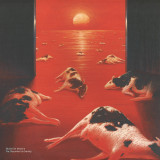
The Discomfort Of Evening is the incredible and original soundtrack by prolific Belgian composer Michiel de Malsche to 2020 International Booker Prize winner The Discomfort of Evening by Marieke Lucas Rijneveld. Visceral and virtuosic, Rijneveld's novel follows Jas, a girl growing up in a devout Christian family that runs a Dutch dairy farm, whose brother dies in an accident after she wishes he would die instead of her rabbit. Lost in grief, her family falls apart as she becomes consumed by increasingly dangerous fantasies.
Michiel de Malsche has captured the atmosphere and spirit of Rijneveld's book perfectly, moving through moments of confrontation and introspection, sinking into spirals of despair, stasis and subtle hope and change. Brooding ambient basslines, driven by droning murmurs, are offset with melismatic electro-acoustic pieces that embody the novel's haunting and dissonant world, whilst also incorporating manipulated field recordings such as animal sounds and a church service, allowing for a full manifestation of Jas’s world in a completely new way.
De Malsche achieves this by rallying an unusual combination of acoustic instruments (16 in total) played by top-of-their-field musicians, creating a truly unique sound world and tonal palette, including an Ondes Martenot, a 7-stringed Chinese instrument called a guqin, a marimba, a string 6-tet, a toy piano and a bass flute.
De Malsche always confronts all emotional levels of his source material head-on, making his soundtrack into much more than just a fever dream. It is a precise description of, and accompaniment to, a devastatingly impactful book.
Michiel De Malsche is a Belgian composer, multi-instrumentalist and sound designer. He studied classical composition at the conservatories of Rotterdam and Ghent. His music has been performed all over the world and he has composed and produced dozens of soundtracks for contemporary dance, theatre, movies and documentaries.
Besides his work as a contemporary classical composer, he is active as a studio musician and producer in the world of electronic music.