REPENTANCE wurde 2018 vom ehemaligen SOIL- und DIRGE WITHIN-Gitarristen Shaun Glass aus Chicago, Illinois gegründet und ist eine primitive, aggressive Metal-Band. Im Frühjahr 2018 veröffentlichte die Band ihre ersten beiden Demo-Tracks, gefolgt von einem von der Kritik gefeierten Debütalbum ("God For A Day", 2020) und zahlreichen Shows mit hochkarätigen Acts wie TRIVIUM, DEVILDRIVER, JINJER, SKULL FIST, TOXIC HOLOCAUST, SACRED REICH und anderen.
"REUE kam ganz natürlich zusammen, was eine sehr reinigende Erfahrung war. An diesem Punkt in meinem Leben hatte ich gehofft, mit einer fast völlig neuen Gruppe von Menschen zu arbeiten und neue Musik zu machen -- und diese Crew war organisch eingesperrt. " Shaun Glas
Im September 2021 kündigten REPENTANCE ihren weltweiten Vertrag beim deutschen Label Noble Demon an und veröffentlichten ihre brandneue Single "Reborn". Ausgehend von der nächsten EP der Band und mit Corey Beaulieu vom mächtigen TRIVIUM an der Gitarre für ein Gast-Solo, war "Reborn" ein beeindruckender erster Blick auf das, was in naher Zukunft von REPENTANCE zu erwarten ist! Aber nicht nur mit einer neuen Single, sondern auch mit einer erneuerten Besetzung ist dieser Track der perfekte Einstieg in die Wiedergeburt des aggressiven, modernen Metal Sounds der Band. Die Ankunft der wilden Stimme von Adam Gilley setzt die Messlatte hoch und macht deutlich, dass es sich hier um eine wahrhaftige Reinigung des Sounds der Band auf allen Ebenen handelt.
Im Mai 2023 kehrt die Band mit einer weiteren Ohrfeige zurück, die in der Metal-Szene Wellen schlagen wird, indem sie die erste Single des kommenden Albums auf den Markt bringt, die Gesangsaufgaben von MILO SILVESTRO, dem neuen Sänger von FEAR FACTORY, beinhaltet!
Das neue Album "The Process of Human Demise" erscheint am 4. August 2023.
quête:fear factory
Auf "Amongst the Low & Empty" wird der wütende Deathcore von SIGNS OF THE SWARM mit einer gehörigen Portion Groove und Industrial-Impulsen angereichert, die Vergleiche mit Meshuggah, Deftones und Fear Factory nahelegen. Die Band aus Pittsburgh, Pennsylvania, erreicht damit eine neue Ebene der Düsternis - der Soundtrack zu einer nicht allzu fernen dystopischen Zukunft, während ihre eigene heller denn je brennt. Das Feuer wurde von Co-Produzent und Mixer Josh Schroeder (Lorna Shore, King 810, Tallah) entfacht, der über einen Monat lang im Studio an dem Album arbeitete, wobei Schlagzeuger Bobby Crow das Fundament legte, auf dem alles aufgebaut wurde. "Amongst the Low & Empty" beginnt mit einer Bulldozer-Note - kein mäanderndes Intro - mit einem Titeltrack, der so schwer ist, dass ein später Ausbruch der Double Bass den Manager der Band buchstäblich zum Lachen brachte. Danach geht es mit "Tower of Torsos", "DREAMKILLER" oder "The Witch Beckons" weiter, bei dem Trivium-Sänger Matt Heafy neben dem animalischen Growl von Sänger David Simonich zu hören ist.Unermüdliches Touren mit Bands wie Lorna Shore, Whitechapel, Fit for an Autopsy, Born of Osiris, Archspire und VIELEN anderen hat es Signs of the Swarm ermöglicht, ihr Handwerk zu verfeinern, aber auf "Amongst the Low & Empty" haben sie es wirklich gemeistert und sind bereit, in der Welt des extremen Metal auszubrechen.Einfach gesagt ist dies der Sound von Kunst, die bis zum Äußersten getrieben wird.
- A1: Biohazard "Punishment
- A2: Madball "Set It Off
- A3: Stormtroopers Of Death "March Of The S.o.d
- A4: Life Of Agony "River Runs Red
- A5: Obituary "The End Complete
- B1: Mercyful Fate "Curse Pf The Pharaohs
- B2: King Diamond ''Abigail”
- B3: Annihilator "Alison Hell
- B4: Deicide "Dead By Dawn
- C1: Trivium "Pull Harder On The Strings Of Your Martyr
- C2: Killswitch Engage "My Last Serenade
- C3: Chimaira “Pure Hatred
- C4: Fear Factory "Replica
- D1: Type O Negative "Black No. 1
- D2: Roadrunner United “Tired ‘N Lonely
- D3: Stone Sour "Brother
- D4: Roadrunner United "The Rich Man
- E1: Roadrunner United "The Dagger
- E2: Roadrunner United "The End
- E3: Soulfly "Eye For An Eye
- E4: Sepultura "Refuse/Resist
- F1: Slipknot "Surfacing
- F2: Machine Head "Davidian
- F3: Slipknot "(Sic)
- F4: Sepultura "Roots Bloody Roots
We have opened the vault to bring to you for the first time on a 2CD set Roadrunner United ‘The Concert (Live at the Nokia Theatre, New York, NY, 12/15/2005)’, featuring members of Slipknot, Anthrax, Trivium, Machine Head, Fear Factory, Sepultura & more. Roadrunner United was a project organized by the heavy metal record label Roadrunner Records to celebrate its 25th anniversary. On December 15th, 2005, in New York City, the label produced the Metal Concert to end all Metal Concerts: 39 musicians, representing 25 different Roadrunner bands, performed 25 songs from 19 different bands’ repertoire. This unique and unprecedented aggregation of musicians was no jam session. Each song was studiously rehearsed and arranged, coming together with exuberant perfection, to produce a concert that can only be called “Legend.”
Conceived as a follow-up to the Roadrunner United All-Star recording sessions, the label recruited the core team of musicians (Dino Cazares, Adam Duce, Paul Gray, Joey Jordison, Andreas Kisser and Roy Mayorga) as the backbone of the performance. Sure enough, as they fine-tuned the songs and rehearsed them tirelessly, dozens of other musicians came on board.
This 3LP set represents the gathering of a community of musicians that spans the heavy metal history of the first 25 years of Roadrunner Records: from King Diamond to Slipknot and beyond. Those who were lucky enough to be there experienced a night they will never forget. For the first time as a live concert album, this 3LP set on red, white and black coloured vinyl is a chance to relive that special night again and again.
- A1: Biohazard' // "Punishment
- A2: Madball // "Set It Off
- A3: Stormtroopers Of Death // "March Of The S.o.d
- A4: Life Of Agony // "River Runs Red
- A5: Obituary // "The End Complete
- B1: Mercyful Fate // "Curse Pf The Pharaohs
- B2: King Diamond "'Abigail
- B3: Annihilator // "Alison Hell
- B4: Deicide // "Dead By Dawn
- C1: Trivium // "Pull Harder On The
- C2: Strings Of Your Martyr
- C3: Killswitch Engage // "My Last Serenade
- C4: Chimaira // "Pure Hatred
- C5: Fear Factory // "Replica
- D1: Type O Negative // "Black No. 1
- D2: Roadrunner United // "Tired ?N Lonely
- D3: Stone Sour // "Brother
- D4: Roadrunner United // "The Rich Man
- E1: Roadrunner United // "The Dagger
- E2: Roadrunner United // "The End
- E3: Soulfly // "Eye For An Eye
- E4: Sepultura // "Refuse/Resist
- F1: Slipknot // "Surfacing
- F2: Machine Head // "Davidian
- F3: Slipknot // "(Sic)
- F4: Sepultura // "Roots Bloody Roots
Roadrunner United war ein Projekt des berühmten
Hardrock-Labels Roadrunner Records, das 2005 zur Feier
des 25-jährigen Bestehens organisiert wurde und seinen
Höhepunkt in den "All-Star Sessions" fand, einem Album,
das für Chart-Platzierungen in Deutschland, den USA,
Großbritannien und weiteren Ländern sorgte. Vier
"Spielführer" (Joey Jordison von Slipknot, Robb
Flynn von Machine Head, Dino Cazares von Fear
Factory und Matthew K. Heafy von Trivium) wurden
auserkoren, sich mit 57 Artists aus 45 ehemaligen und
aktuellen Roadrunner-Bands einzufinden. Ein
Metal-Familientreffen der besonderen Art!
Ab dem 10. März 2023 sind sowohl das Original-Album
der "All-Star Sessions" als auch das Konzert selbst in
Vinyl wieder erhältlich.
- A1: Main Title (From The Terminator)
- A2: Reese Dreams Of Future War (From The Terminator)
- A3: Love Scene (From The Terminator)
- A4: Main Title (From Terminator 2 Judgment Day)
- A5: Escapefromthe Hospital (From Terminator 2 Judgment Day)
- A6: It's Over (From Terminator 2 Judgment Day)
- B1: T3 (From Terminator 3 Rise Of The Machines)
- B2: Radio (From Terminator 3 Rise Of The Machines)
- B3: The Terminator (From Terminator 3 Rise Of The Machines)
- C1: Opening (From Terminator Salvation)
- C2: Farewell (From Terminator Salvation)
- C3: Salvation (From Terminator Salvation)
- C4: Fate And Hope (From Terminator Genisys)
- C5: Sacrifice (From Terminator Genisys)
- D1: Terminated(From Terminator Dark Fate)
- D2: My Name Is Dani (From Terminator Dark Fate)
- D3: Epilogue (From Terminator Dark Fate)
In the Year of Darkness, 2029, the rulers of this planet devised the ultimate plan. They would reshape the Future by changing the Past. The plan required something that felt no pity. No pain. No fear. Something unstoppable. They created the Terminator.
THE NEW STUDIO ALBUM FROM THE JAPANESE LEGENDS - AN OPUS
OF DARK & ECLECTIC BLACKENED HEAVY METAL, SHROUDED IN
TRADITIONAL EASTERN INFLUENCES..
Cult Japanese black metal legends Sigh formed in 1989/90, featuring
mainman Mirai Kawashima, Satoshi Fujinami & Kazuki Ozeki
Following initial demos, Shinichi Ishikawa was brought in & Sigh set about
recording the masterpiece debut 'Scorn Defeat' for Euronymous' Deathlike Silence
Productions, going on to become one of the country's greatest & most revered
metal exports. With a journey through the strange & the psychedelic,
incorporating a whole eclectic mix of genre styles & experimentation throughout
their career, Sigh has remained a vital creative force in the avantgarde field whilst
maintaining their old school roots.
'Shiki' marks the latest chapter in the Sigh legacy & includes some of the band's
heaviest & darkest material for some years; a fine hybrid of at times primitive
black metal akin to early influences such as Celtic Frost amid more epic melodic
heavy metal riffing & solos. The album also utilises a whole host of instruments
to give further texture & dynamics to the compositions & eerie atmosphere,
incorporating traditional oriental instruments such as the Shakuhachi & Sinobue
flutes.
The word "Shiki" itself has various meanings in Japanese such as four seasons,
time to die, conducting an orchestra, ceremony, motivation, colour. The two
primary themes for the album are "four seasons" & "time to die".
The concept & artwork is based around a traditional Japanese poem & on 'Shiki'
Mirai explores how at this stage of life he himself is going through Autumn, with
Winter coming soon & so empathises with the contrasting sentimental feelings
from watching cherry blossoms (a symbol of spring) in full bloom.
Joining Mirai & Dr Mikannibal for this release are Frédéric Leclercq of Kreator,
plus US drummer extraordinaire, Mike Heller of Fear Factory, along with an
appearance by long-time member Satoshi Fujinami on bass. 'Shiki' was recorded
across multiple studios & mixed & mastered by Lasse Lammert at LSD studios in
Germany.
"Layers Of Lies", aufgenommen im Winter 2004/2005, war das erste selbst produzierte DARKANE-Album. Ein neues Studio war gebaut worden und die Band verbrachte Abende und Wochenenden dort, um ihr viertes Album fertigzustellen.
Das Ziel war es, eine Mischung aus den früheren drei Alben mit einem brutaleren und futuristischeren Sound zu schaffen. "Wir wollten unseren Sound weiterentwickeln und dabei unserem Stil treu bleiben", erklärte Christofer in vielen Interviews.
Es wurde viel Arbeit in die Gesangsarrangements gesteckt und Andreas Sydow klang mit seinem aggressiven Gebrüll besser als je zuvor. Für das bombastische und doch eindringliche Intro "Amnesia Of The Wildoerian Apocalypse" wurden wieder einmal ein Chor und ein Orchester engagiert.
Blabbermouth schrieb in einem Review zu "Layers Of Lies":
"Songwriting-mäßig hält DARKANE die Dinge relativ einfach im Sinne von Strophe-Refrain-Verse, lässt aber nicht die Intensität für irgendwelche Flüster/Crooner-Strophen oder Crossover-Tracks sinken. Songs wie "Fading Dimensions" und "Secondary Effects" enthalten rasante Thrash-Tempi und einprägsame Refrains in diesem völlig synthetischen, aber seltsam ansprechenden melodischen Robotergeschrei... Letztendlich ist "Layers Of Lies" ein eingängiger, ansteckender, unwiderstehlicher, charismatischer Arschtritt von einem Album!"
Nach der Veröffentlichung von "Layers Of Lies" im Herbst 2005 produzierten DARKANE ein Video für den Track "Secondary Effects" und gingen anschließend auf ihre erste abendfüllende US-Tournee mit Fear Factory, Strapping Young lad und Soilwork, die für die Band sehr erfolgreich war.
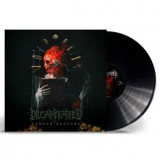
Across eight studio albums, DECAPITATED grew from the adolescent dream of teenagers from a small Central European town to one of the leaders of the metal genre. Each successive album further expands the band’s sound with genre-bending authenticity and integrity. As Metal Injection rightfully observed, “any self-respecting death metalhead knows the name well.”
DECAPITATED’s music is a weapon forged by four young men from a historic medieval-fortified town in Poland, which catapulted them to the top of a worldwide subculture. Like a rose in the devil’s garden, the DECAPITATED story builds triumph from tragedy. The gleeful grotesquery of extreme metal imagery and rifftastic bludgeoning beckons listeners to uncover broader truths.Upon the release of 2017’s Anticult, Metal Hammer declared DECAPITATED “a serious successor to the likes of Pantera and Lamb Of God – a band who can draw new legions into the metal world as its new champions.” Their diverse follow-up, 2022’s Cancer Culture, delivers on that promise.
Instantly recognizable devastation and deceptively sinister hooks abound. Freshly minted DECAPITATED anthems like “Last Supper,” “Hello Death,” “Just Cigarette,” “No Cure,” “Iconoclast,” and “Cancer Culture” shimmer with sonically sharp production and unrelenting bombast. There’s also a newly increased emphasis on melody, even venturing into darkly romantic territory. Wacław "Vogg" Kiełtyka (guitar), Rafał "Rasta" Piotrowski (vocals), Paweł Pasek (bass), and James Stewart (drums) are at the top of their game, delivering the goods at peak performance. Jinjer vocalist Tatiana Shmayluk and Machine Head frontman Robb Flynn make guest appearances.
Set on the descending plains of a mountain range amid a dense forest, Krosno boasts a 14th-century Gothic church, a Subcarpathian museum, and stunning artisan glassware. In this Polish town, teenage music student Wacław "Vogg" Kiełtyka discovered records from bands like Morbid Angel, Cannibal Corpse, Metallica, and Machine Head. The guitarist and his younger brother, drummer Witold “Vitek” Kiełtyka, cofounded DECAPITATED in 1996, inspired by a wide range of technical death, blackened thrash, and local heroes, like KAT and the world-renowned Vader. Death and black metal reigned supreme in the Polish scene of the 1990s, where Behemoth originated as well. In fact, a Vader song called “Decapitated Saints” inspired the band’s moniker.
The organic musical chemistry between the Kiełtykas was akin to the brotherly connectivity and vibe driving Pantera, Gojira, and the classic era of Sepultura. In 2006, Kerrang! praised the first three DECAPITATED albums - Winds of Creation (2000), Nihility (2002), and The Negation (2004) – as “superbly conceived and executed eruptions of technical brilliance and razor-sharp songwriting that turned these youthful Poles into one of the genre’s most widely respected bands.” That year’s Organic Hallucinosis further perfected Vogg’s penchant for blending extremity with catchy hooks.
The rule-breaking ferocity and invention of the first four albums reinvigorated death metal, as DECAPITATED inspired a new generation of bands who followed suit. Sadly, this era came to a shocking end in late 2007. While touring Russia, the band’s bus collided with a large truck near the border with Belarus. Both Vitak and then-singer Adrian “Covan” Kowanek sustained severe head injuries. Tragically, Vitak passed away in a Russian hospital a few days later. He was just 23.Vogg summoned the courage to continue, in honor of his brother and what they created, and returned with a new incarnation of DECAPITATED and the fiercely adventurous comeback album, Carnival is Forever (2011) featuring new vocalist Rafał "Rasta" Piotrowski. Blood Mantra (2014) introduced bassist, Paweł Pasek. Blabbermouth declared it “perhaps the most poised and gutsy” DECAPITATED album, adding “its courageous bends make it a turbulent but pleasurable ride.”
Cancer Culture sounds brilliant, modern, and tasty. “There is no place for any fake, plastic, bullshit drum machine or anything like that,” Vogg insists. “It’s all organic, pure, and clear, showing the true face of the band. Vogg and company entrusted the Cancer Culture mix to David Castillo at Sweden’s Fascination Street Studios / Studio Gröndahl (Sepultura, Carcass, Opeth, Katatonia), and legendary American producer Ted Jensen (Metallica, Slipknot, Pantera, Machine Head, Korn).
The devoted supporters who traveled to see DECAPITATED on international tours with the likes of Lamb Of God, Meshuggah, Soulfly, Fear Factory, and Suffocation over the years will recognize the ever-present pummeling backbone. Longtime fans and newcomers alike will connect to the variety of atmospheric depth throughout Cancer Culture’s ten boundlessly energetic and creative tracks.
“If you told me 25 years ago, in my neighborhood in the South of Poland, that I would be in Machine Head, sharing riffs with Robb Flynn,” Vogg marvels. “It’s simply incredible. It means that everything is possible in your life. That gives me the faith to believe that I can achieve even more in my career. The dreams we have when we are kids, things we can barely imagine, can happen.” Flynn contributes a hauntingly beautiful vocal to the Cancer Culture track “Iconoclast.” “Clean vocal singing is a really new thing in DECAPITATED,” Vogg notes. “It’s really unique and amazing.”
Driven by Vogg’s passion and integrity, the dual emphasis on creative invention and technical prowess maintains DECAPITATED’s stature as genre-leaders in 2022 and beyond. The band’s supporters continually demonstrate confidence and absolute certainty DECAPITATED will deliver.
Across eight studio albums, DECAPITATED grew from the adolescent dream of teenagers from a small Central European town to one of the leaders of the metal genre. Each successive album further expands the band’s sound with genre-bending authenticity and integrity. As Metal Injection rightfully observed, “any self-respecting death metalhead knows the name well.”
DECAPITATED’s music is a weapon forged by four young men from a historic medieval-fortified town in Poland, which catapulted them to the top of a worldwide subculture. Like a rose in the devil’s garden, the DECAPITATED story builds triumph from tragedy. The gleeful grotesquery of extreme metal imagery and rifftastic bludgeoning beckons listeners to uncover broader truths.Upon the release of 2017’s Anticult, Metal Hammer declared DECAPITATED “a serious successor to the likes of Pantera and Lamb Of God – a band who can draw new legions into the metal world as its new champions.” Their diverse follow-up, 2022’s Cancer Culture, delivers on that promise.
Instantly recognizable devastation and deceptively sinister hooks abound. Freshly minted DECAPITATED anthems like “Last Supper,” “Hello Death,” “Just Cigarette,” “No Cure,” “Iconoclast,” and “Cancer Culture” shimmer with sonically sharp production and unrelenting bombast. There’s also a newly increased emphasis on melody, even venturing into darkly romantic territory. Wacław "Vogg" Kiełtyka (guitar), Rafał "Rasta" Piotrowski (vocals), Paweł Pasek (bass), and James Stewart (drums) are at the top of their game, delivering the goods at peak performance. Jinjer vocalist Tatiana Shmayluk and Machine Head frontman Robb Flynn make guest appearances.
Set on the descending plains of a mountain range amid a dense forest, Krosno boasts a 14th-century Gothic church, a Subcarpathian museum, and stunning artisan glassware. In this Polish town, teenage music student Wacław "Vogg" Kiełtyka discovered records from bands like Morbid Angel, Cannibal Corpse, Metallica, and Machine Head. The guitarist and his younger brother, drummer Witold “Vitek” Kiełtyka, cofounded DECAPITATED in 1996, inspired by a wide range of technical death, blackened thrash, and local heroes, like KAT and the world-renowned Vader. Death and black metal reigned supreme in the Polish scene of the 1990s, where Behemoth originated as well. In fact, a Vader song called “Decapitated Saints” inspired the band’s moniker.
The organic musical chemistry between the Kiełtykas was akin to the brotherly connectivity and vibe driving Pantera, Gojira, and the classic era of Sepultura. In 2006, Kerrang! praised the first three DECAPITATED albums - Winds of Creation (2000), Nihility (2002), and The Negation (2004) – as “superbly conceived and executed eruptions of technical brilliance and razor-sharp songwriting that turned these youthful Poles into one of the genre’s most widely respected bands.” That year’s Organic Hallucinosis further perfected Vogg’s penchant for blending extremity with catchy hooks.
The rule-breaking ferocity and invention of the first four albums reinvigorated death metal, as DECAPITATED inspired a new generation of bands who followed suit. Sadly, this era came to a shocking end in late 2007. While touring Russia, the band’s bus collided with a large truck near the border with Belarus. Both Vitak and then-singer Adrian “Covan” Kowanek sustained severe head injuries. Tragically, Vitak passed away in a Russian hospital a few days later. He was just 23.Vogg summoned the courage to continue, in honor of his brother and what they created, and returned with a new incarnation of DECAPITATED and the fiercely adventurous comeback album, Carnival is Forever (2011) featuring new vocalist Rafał "Rasta" Piotrowski. Blood Mantra (2014) introduced bassist, Paweł Pasek. Blabbermouth declared it “perhaps the most poised and gutsy” DECAPITATED album, adding “its courageous bends make it a turbulent but pleasurable ride.”
Cancer Culture sounds brilliant, modern, and tasty. “There is no place for any fake, plastic, bullshit drum machine or anything like that,” Vogg insists. “It’s all organic, pure, and clear, showing the true face of the band. Vogg and company entrusted the Cancer Culture mix to David Castillo at Sweden’s Fascination Street Studios / Studio Gröndahl (Sepultura, Carcass, Opeth, Katatonia), and legendary American producer Ted Jensen (Metallica, Slipknot, Pantera, Machine Head, Korn).
The devoted supporters who traveled to see DECAPITATED on international tours with the likes of Lamb Of God, Meshuggah, Soulfly, Fear Factory, and Suffocation over the years will recognize the ever-present pummeling backbone. Longtime fans and newcomers alike will connect to the variety of atmospheric depth throughout Cancer Culture’s ten boundlessly energetic and creative tracks.
“If you told me 25 years ago, in my neighborhood in the South of Poland, that I would be in Machine Head, sharing riffs with Robb Flynn,” Vogg marvels. “It’s simply incredible. It means that everything is possible in your life. That gives me the faith to believe that I can achieve even more in my career. The dreams we have when we are kids, things we can barely imagine, can happen.” Flynn contributes a hauntingly beautiful vocal to the Cancer Culture track “Iconoclast.” “Clean vocal singing is a really new thing in DECAPITATED,” Vogg notes. “It’s really unique and amazing.”
Driven by Vogg’s passion and integrity, the dual emphasis on creative invention and technical prowess maintains DECAPITATED’s stature as genre-leaders in 2022 and beyond. The band’s supporters continually demonstrate confidence and absolute certainty DECAPITATED will deliver.
2023 Repress
"banging piece of sound art" - The Observer
"...a fascinating piece of Brutalist techno that pivots between crisp machine-like minimalism and granulated noise." - Clash
"A piece of immediately engaging techno it reveals more of itself with each listen." - CMU Daily
Nik Colk Void is well established with her work as one half of Factory Floor, one third of Carter Tutti Void (alongside Chris Carter and Cosey Fanni Tutti) and with the late Peter Rehberg as NPVR, but perhaps surprisingly, "Bucked up Space" is her first solo album release.
Void explains, "When Peter Rehberg initially asked me to produce a record for Editions Mego, I didn't feel quite ready and asked if we could make a record together instead. Collaboration is so ingrained into what I do, I only felt ready to make this album after working through ideas live, using the audience in place of the collaborator."
Bucked Up Space combines Void's love of improvisation with the driving force of beat-driven music absorbed from performing in galleries, residencies and clubs across the UK and Europe. She goes on to say, "You find out more about yourself when you explain your ideas to others, and that's how I felt the live performance worked for me."
The process steadily teased out a language and Void employed a variety of tactics in the recording process including a methodical approach of collecting data at her home studio in a manner not dissimilar to keeping a diary. Her microscopic focus on raw instrumental noise, layered and reformulated, resulted in a sound catalogue that Void divided into groups for their tone, density and texture.
These initial pieces were taken to a studio in Margate to put them into a more cohesive compositional context. Something that pragmatically started as cold and detached was given warmth, unity and emotion in the studio. Via improvised repetition co-existing alongside organised production, Void conjures new sonic muscle with tracks such as 'Interruption Is Good' and 'FlatTime'. Initial recordings are rendered into sequences initiating the organic rhythms, triggering awkward jerks of high hats and percussion, or used to activate the margins of post effects detectable in the tracks like 'Demna', 'Big Breather' and 'Oversized'.
Void explains: "It was important to me that the simplicity in the work disguised a lot of complexity, I want this work to be absorbed instinctively."
The sleeve image, a still from We Are City by Brazilian artist Maria de Lima, was chosen to illustrate Bucked Up Space, which Void describes as "a distorted reality, the space that lives at start of an idea, then floats in public view, before returning to inform my understanding of the idea. Once the idea is out in the world, it moves and morphs into something else entirely."
Written, performed and produced by Nik Colk Void, the album was engineered by James Greenwood, mastered by Rashad Becker and tracks 1, 4, 5, 7 and 9 were mixed by Marta Salogni.
Bucked up Space is the result of the ideas and resulting sounds of free exploration morphing into a personal structured album that fearlessly moulds patience, listening and restraint. It's a sharp focussed work embracing collective action through the lens of the self. All this, and also one of the best abstract dance records you will hear in some time!
nothing,nowhere. commented on the new album detailing, “TRAUMA FACTORY is an accumulation of songs written during a confusing time. it is about accepting the present and following your true north through the pain and suffering of human life. I wanted to make an album that was truly genreless and inspire others to challenge themselves artistically. I believe the most inspiring art is unpredictable and unrestrictive. to me that’s what TRAUMA FACTORY is.”
Over the course of 15 tracks, TRAUMA FACTORY cuts deep and finds nothing,nowhere. once again emerging from darkness, shedding external expectation, and moving forward into the glow of pure creation. Whether it be the anesthetized beats and intoxicating lull of “love or chemistry,” the cold piano-laden longing of “crave,” or the emotional immediacy of “upside down,” nothing,nowhere. paints from a wide palette of pain.
nothing,nowhere. is the musical endeavor of Vermont songwriter, singer and guitarist Joe Mulherin. For Mulherin, nothing,nowhere. is about a connection. It’s one he finds with fans around the world, who gather to see him play on tour and to listen to his songs online. It’s that connection that urges the singer to place his fears aside and step onstage each night to share his art. He sees the potential to help, to make a change, however small it may be and that is why he brings his music out of the Vermont wildness.
Dutch symphonic metal band Delain released their third studio album We Are the Others in 2012 to positive reviews from music critics. The album title was inspired by the murder of 20-year-old Sophie Lancaster, whose murder was likely a hate crime due to her being part of the goth subculture. The album spawned two single releases: “Get The Devil Out of Me” and the title track, for which the band shot a music video that included many well-known people from the metal scene, including George Oosthoek, Sharon den Adel, Robert Westerholt and Rob van der Loo. The album features guest contributions by the likes of Burton C. Bell (Fear Factory) and Marko Hietala (Nightwish) and was produced by Jacob Hellner (aka Tripod), who is best known for producing most of Rammstein’s albums.
- A1: Chamber Spins Three
- A2: Punishment
- A3: Shades Of Grey
- A4: Business
- A5: Black And White And Red All Over
- B1: Man With A Promise
- B2: Disease
- B3: Urban Discipline
- B4: Loss
- C1: Wrong Side Of The Tracks
- C2: Mistaken Identity 4
- C3: We’re Only Gonna Die (From Our Own Arrogance)
- C4: Tears Of Blood
- C5: Hold My Own
- D1: Business (Demo)
- D2: Urban Discipline (Demo)
- D3: Loss (Demo)
- D4: Black And White And Red All Over (Demo)
BIOHAZARD formed in Brooklyn in 1988 and soon after released their first demo. The band consisted of founding members Billy Graziadei (vocals, guitar), Bobby Hambel (lead guitar) and Evan Seinfeld (vocals, bass). After the release of their second demo in 1989, drummer Anthony Meo left the band and drummer Danny Schuler replaced him. BIOHAZARD released their combined the urban sounds of hard-core, metal and rap with scorching lyrics describing the forces at work in our modern urban lives. With an impressive career spanning over 20 years with 10 albums (on both indie and major labels), the band sold over 5 million records. In 1990, Biohazard signed a recording contract with Maze Records. The band's self-titled debut album was poorly promoted by the label and sold approximately 40,000 copies. The album's subject matter revolved around Brooklyn, gang-wars, drugs, and violence.
In 1992, Biohazard signed with Roadrunner Records and released Urban Discipline, which gave the band national and worldwide attention in both the heavy metal and hardcore communities. The video for the song "Punishment" became the most played video in the history of MTV's Headbanger's Ball, and the album sold over one million copies. The band also began opening for larger acts such as Pantera, Suicidal Tendencies, House of Pain, Fishbone, and The Cro-Mags. In 1993, the hardcore rap group Onyx brought on Billy Graziadei for an alternate "Bionyx" version of their hit single "Slam" with Biohazard as their backup band. This led to a collaboration on the title track of the Judgment Night soundtrack. The soundtrack would go on to sell over two million copies in the United States. Months later, the band left Roadrunner Records and signed with Warner Bros. Records Inc. who released their third studio LP, State of the World Address. The album was produced by Ed Stasium in Los Angeles and contained the single "How It Is" featuring Sen Dog of Cypress Hill, for which a video was also shot. During their 1994 tour, the band made an appearance on the second stage at the Monsters of Rock festival held at Castle Donington. State of the World Address went on to sell over one million copies, and Rolling Stone magazine selected the Biohazard logo as the best logo of the year.
This was the last Biohazard album with Bobby Hambel, who left due to differences with the rest of the band. The band recorded their fourth studio album, Mata Leao, as a three piece in 1996. It was produced with the help of Dave Jerden. For the 1996-97 Mata Leao Tour, former Helmet guitarist Rob Echeverria joined the band. The band also played on the Ozzfest mainstage alongside Ozzy Osbourne, Slayer, Danzig, Fear Factory, and Sepultura. While touring Europe in support of the Mata Leao album, the band recorded their Hamburg, Germany, show for their first live album, No Holds Barred (Live in Europe), which was released in 1997 through their former label, Roadrunner Records. The band signed to Mercury Records and released their fifth studio album, New World Disorder, in 1999, once again with Ed Stasium as a producer.
The relationship with Mercury Records soured quickly as the band felt betrayed and misunderstood by the label. They severed their ties with the label amidst the merger of Mercury Records, Island Records, Def Jam Records, and Polygram into the Universal Music Group. The following year, Biohazard signed two new record deals with SPV/Steamhammer in Europe and Sanctuary Records for the remainder of the world. Despite the new record deals, the band took some personal time in order to work on other projects. Graziadei and Schuler also collaborated in transforming the band's rehearsal Brooklyn studio into a digital recording studio, known as Rat Piss Studios and soon after changed the name to Underground Sound Studios. Re-investing into the band, Graziadei and Schuler honed their engineering and productions skills while recording and producing local acts and new Biohazard demos. The band then undertook the process of writing, recording, and producing their own music. Their studio work led to the band's sixth studio album, Uncivilization, released in September 2001.
The album featured several guest appearances by members of bands such as Agnostic Front, Hatebreed, Pantera, Slipknot, Sepultura, Cypress Hill, Skarhead, and Type O Negative. Shortly after the release of Uncivilization, guitarist Leo Curley left the band and was replaced by former Nucleus member Carmine Vincent, who had previously toured with Biohazard as part of their road crew. The band had to cancel scheduled European festival dates when Carmine Vincent underwent major surgery. The band did manage to find a temporary guitarist, Scott Roberts, formerly of the Cro-Mags and the Spudmonsters, in time to join the Eastpak Resistance Tour with Agnostic Front, Hatebreed, Discipline, Death Threat, Born From Pain and All Boro Kings. Biohazard completed their seventh studio album in seventeen days; Kill Or Be Killed was released in 2003. While touring North America with Kittie, Brand New Sin and Eighteen Visions, Biohazard announced that Roberts would remain as their permanent lead guitarist. The tour was curtailed when it was announced that Seinfeld had fallen ill. With more downtime due to Seinfeld's illness, Graziadei and Schuler collaborated to mix Life of Agony's live comeback album, River Runs Again: Live 2003. Once Seinfeld was healthy again, the band toured Japan and North America, headlining over bands such as Hatebreed, Agnostic Front, Throwdown, and Full Blown Chaos.
By the end of 2003, the band had begun recording its eighth studio album, Means To An End. The completed album was lost in a studio disaster, forcing the band to completely re-record the album, which was finally released in August 2005. In October 2004, Graziadei announced that Means To An End had been the final Biohazard album and that he would continue playing with his new band Suicide City as his main focus. One month later, on the Biohazard website, it was announced that there would in fact be a 2005 Biohazard tour. On December 15, 2005, Seinfeld and Graziadei participated in the Roadrunner United conglomerate event at the Nokia Theater in New York for an all-star event. The show opened with Biohazard's "Punishment," performed by Seinfeld, Graziadei, Sepultura's Andreas Kisser, former Fear Factory member Dino Cazares, and Slipknot's Joey Jordison. Graziadei and Schuler relocated their recording studio to South Amboy, New Jersey and renamed it Underground Sound Studios. The studio was renovated to include a live room with 20-foot (6.1 m) ceilings and 4,000 square feet (370 m2) of studio space. After Schuler's departure from the studio business, Graziadei relocated the studio to Los Angeles and changed the name to Firewater Studios. In January 2008, the classic lineup of Evan Seinfeld, Billy Graziadei, Danny Schuler and Bobby Hambel made the announcement that rehearsals had begun for a 2008 summer tour to commemorate the band's 20th anniversary. They toured Australia and New Zealand in April with Chimaira, Throwdown, Bloodsimple and headliners Korn to celebrate their newly declared reunion. The band also took part in Persistence Tour 2009, and announced at one of their shows that they were working on a new record. Biohazard brought in producer Toby Wright to work on the album and after several months at Graziadei's Firewater Studios in Los Angeles, the band completed their recording sessions. In June 2011, Biohazard announced that Evan Seinfeld had quit the band and Scott Roberts returned to replace Seinfeld for two UK dates but no decision regarding a permanent replacement was made. In January 2012, the band decided that Scott Roberts would remain with the band as a permanent member. The new album, Reborn In Defiance, was released worldwide, with the exception of North America, on January 20, 2012 through the Nuclear Blast label. In support of the album, Biohazard embarked on a short co-headlining tour of Europe with Suicidal Tendencies in the latter half of January 2012. After touring the world in support of Reborn in Defiance, the band entered the studio to work on a new release and after a falling out, Roberts departed the band.
Biohazard remains as it’s core founding members of Graziadei, Shuler and Hambel. Graziadei has since ventured off onto a solo career as BillyBio and teamed up with Cypress Hill frontman Sendog to start Powerflo. Both groups are working on their second releases due out late 2021 and early 2022.
- A1: Siebetvsenderjazzappen
- A2: Lonely Paris
- A3: Taksim Olağanüstü Hal
- B1: Fears Disappear
- B2: Mariposas Mambo
- B3: Invitation Au Voyage
- C1: Donde Vamos Luego
- C2: Crepuskle Van A Svart Nacht
- C3: Champagne Is To Blame
- D1: Turbo Shot
- D2: Mille Arrivederci
Luigi Grasso rubbed shoulders, when he was twenty, in New York. He then fed on all those artistic possibilities that thrive in the big apple, and bit into it with full teeth, with fierce greed. Jazz was already flowing in his veins, and he was going to enrich this impetuous river of multiple confluences, which he discovered in the prolix underground of the city universe. Meetings, musicians, friends, artists, approaches, differences, additions, mergers, the Italian had found his America for the best and for the sake of it. In words and music. As in Greenwich Village, where he would find a refuge nest in 2O14. In the heart of Manhattan between Soho, Broadway, Chelsea, Hudson. This once bohemian neighborhood, where trees thrive at the foot of red brick buildings, is more often called "the village". Here the young saxophonist from the south of Italy will pose his audacity and his appetite. He will quickly fraternize with the best, in this refuge for artists where gospel, rock, rap, soul and, above all, reign supreme, reign in gospel, rock, rap, soul.
- 1: Advertensia
- 2: Regresando Odio
- 3: Maldito
- 4: Rituales Salvajes
- 5: Yo No Fui
- 6: Padre Pedofilo
- 7: Enterrado Vivo
- 8: Puta Con Pito?
- 9: Adelitas
- 10: Twiquiado
- 11: Perro Primero
- 12: Sadistico
- 13: Batalla Final
- 14: Cristo Satanico
- 15: Y Tu Mama Tambien
- 16: Misas Negras
- 17: Matando Gueros
- 18: Regresando Odio (Live)
- 19: Padre Pedofilo (Live)
- 20: Enterrado Vivo (Live)
- 21: Adelitas (Live)
- 22: Y Tu Mama Tambien (Live)
- 23: Puta Con Pito (Live)
- 24: Angel Of Death (Live)
ASESINO (Spanish for "assassin" or "murderer") is an American deathgrind supergroup and a side project of Fear Factory guitarist Dino Cazares. The band has featured members of Brujeria, Fear Factory, Sepultura, Sadistic Intent, Possessed, Ministry, and Static-X. ASESINO sometimes play Slayer covers live, most notably "Angel of Death" and "Raining Blood". As with Brujeria, the lyrics are sung entirely in Spanish and with the same subject matter of death, violence and perversion. Guitarist Asesino describes the band as "the new Brujeria." Asesino also has the tendency of making satirical comments during the show, and when playing Brujeria songs, change the original lyrics to something more fitting. ASESINO made a guest appearance as a group of Mexican doctors in episode 57 of ‘Metalocalypse' on 'Adult Swim'. ASESINO : ‘Cristo Satanico’ is the band most incisive, uncompromisingly horrific piece of work, now available with plenty of Exclusive studio and live bonus tracks. The band has been working on a new album for a 2022 release date.
MILKY CLEAR VINYL.
''The lightness of the C86 Sarah Records guitars come with the significant counterweight of more ominous Factory Records basslines.The lyrics and vocals are stark, sandpapery and sardonic, akin to Jonathan Richman, Kiwi Jr and, Bodega.'' Ducks Ltd. - EP Review - God Is In The TV
Toronto’s Ducks Ltd. (formerly Ducks Unlimited), the bright jangle-pop duo of Tom McGreevy (lead vocal, guitar, bass, keyboards) and Evan Lewis (guitar, bass, drum programming), accomplish the impossible. The pair craft songs that play to very specific inspirations without drowning underneath them—immediately evidenced on their critically acclaimed EP, Get Bleak, and sharpened on Modern Fiction, their debut LP. “The Servants, The Clean, The Chills, The Bats, Television Personalities, Felt,” Evan rattles off. “Look Blue Go Purple is one I reference a lot with our production.” Echoes of ‘80s indiepop abound, but they never overwhelm. This is not a nostalgic record, after all, nor is it a derivative one. Instead, across 10 cheery-sounding songs, Ducks Ltd. explore contemporary society in decline, examining large scale human disaster through personal turmoil (hence the title, taken from a university course called Gnosticism and Nihilism in Modern Fiction, influenced by Graham Greene novels. Bookish indie fans, look no further.)
Writing the album was intimate. Tom drafted the nucleus of a song on an unplugged electric guitar and brought it over to Evan’s apartment, where the pair sat in his bedroom, placing percussive beats from a drum machine under nascent melodies, passing a bass back and forth, adding organs and bridges where necessary. “It’s computer music trying extremely hard not to sound like computer music,” Tom jokes. Fearful that limited and expensive studio time would kneecap the project creatively, eroding their charming naivete, the pair re-recorded the album in a storage space owned by Evan’s boss. Ornamentation through collaboration followed: there’s Aaron Goldstein on Pedal Steel in the Go-Betweens’ “Cattle and Cane”-channeling interlude “Patience Wearing Thin,” Eliza Niemi on cello (“18 Cigarettes,” a song loosely inspired by a 1997 Oasis performance of “Don’t Go Away”), and backing harmonies from Carpark labelmates The Beths (on an ode to friendship at a distance, “How Lonely Are You?,” “Always There,” and on the sped-up Syd Barrett stylings of “Under The Rolling Moon.”) While in his native Australia due to covid-19, Evan worked closely with producer James Cecil (The Goon Sax, Architecture in Helsinki) on Modern Fiction’s finishing touches—at one point, in the mountains of the Macedon Ranges in Victoria, recorded a string quartet (featured on “Fit to Burst,” “Always There,” “Sullen Leering Hope,” “Twere Ever Thus,” “Grand Final Day.”)
It’s danceable, depressive fun, with some relief: in “Always There” and “Sullen Leering Hope,” Modern Fiction’s faithful heart. “There’s a tendency in my writing, because of my world view, to be very bleak.” Tom explains. “A quality I don’t always see in myself and really appreciate in others is the courage to go on.” And yet, the record manages resiliency—enough for pop fans to fall in love with.
Dutch symphonic metal band Delain released their third studio album We Are the Others in 2012 to positive reviews from music critics. The album title was inspired by the murder of 20-year-old Sophie Lancaster, whose murder was likely a hate crime due to her being part of the goth subculture. The album spawned two single releases: “Get The Devil Out of Me” and the title track, for which the band shot a music video that included many well-known people from the metal scene, including George Oosthoek, Sharon den Adel, Robert Westerholt and Rob van der Loo. The album features guest contributions by the likes of Burton C. Bell (Fear Factory) and Marko Hietala (Nightwish) and was produced by Jacob Hellner (aka Tripod), who is best known for producing most of Rammstein’s albums.
Comes with POSTER and digi dowload
Destruction by IND (Artist) - English version below.
Ce morceau est une tentative d'allégorie de la situation actuelle, entre confinement collectif et confinement individuel, ou comment en etant seul l'on peut se retrouver confiné en nous meme, et comment ce regard sur soi peut se transformer en catharsis si on ose le soutenir.
C'est un peu expérimental, j'espere que ça vous parlera!
C'est l'histoire de quelqu'un posé chez lui, seul.Dans sa solitude l'anxiété monte, et pour tenter d'attenuer cela, il décide de sortir à l'extérieur.il passe la porte de chez lui, se retrouve dans la rue, sous la pluie, dans l'orage.Les rues sont vides, vides comme son intérieur à lui, et ce vide ne fais que grandir cette anxiété qui le prend.Il marche, explore, pense, se perd, et finit par trouver un batiment dont il ne connait pas vraiment l'origine ni le but. Ca ressemble à une usine abandonnée, mais l'est ce vraiment?il décide d'entrer, se retrouve a l'intérieur, il fait sombre, l'angoisse grandit en lui.Pour retrouver un peu de lumière, il entrouvre une porte qu'il avait aperçu en entrant, au fond de la salle principale, et sort dans une petite court intérieur, quelques plantes ont poussé. Au fond de cette cours, et bien qu'il sache pertinemment, à l'image de son intérieur a lui, que certaines portes ne doivent pas,ne doivent plus être ouverte, il trouve une lourde porte de metal et l'ouvre.
Devant lui des escaliers, qui le mènent dans la cave, dans sa cave, a l'intérieur de lui meme, là ou la lumière n'arrive plu.Et attiré par la noirceur il descend.
Ses pas résonnent , et arrivé en bas, il découvre ce qu'il n'aurait pas du voir.alors l'instinc de survie reprends ses droits, et il court, il court et s'enfui, remonte les escaliers, ressort du batiment et revient dans la rue, vide, mais en sécurité, l'angoisse a disparue, car des fois, se confronter a notre noirceur la plus enfoui, permet de la mettre en lumière, et ainsi la dompter.
his track is a kind of allegory, a trial to express the feeling of these weird times , the lockdown we live ,wich is as external as its internal...How the anxiety grow and how our internal vibe could be felt as empty as the streets around us while seeing nobody all day long.
This is the story of someone, at home.He feel the anxiety grow in him, and decide to go outside, but all the streets are empty,like himself. he walk and as he walk the anxiety continue to grow.Finally he find a building, unknowing if its a factory or what but its abandonned, ,he goes inside to explore, arrive in an indoor course, and see a door...being intrigued, he decide to open this door and to go down the stairs he have in front of him...The more he descend, the more the fear and anxiety grow, as he goes down inside his mental.Finally he arrive in the basement, and what he see is too rude for him, and so he decide to run and escape from this, from himslef.
he run run run, go upstaris, open the doors and arrive in the street, safe.And without any anxiety, because sometimes, to go face to face with our deepest dark side, let us put light on it, and so let us tame it.
SUMMER OF SEVENTEEN are MONIKA KHOT (NORDRA, ZEN MOTHER), WILLIAM FOWLER COLLINS, DANIEL MENCHE, FAITH COLOCCIA (MAMIFFER), and AARON TURNER. (SUMAC, SPLIT CRANIUM).
Wildfires plagued Washington state during the summer of 2017, their smoke drifting westward toward the Seattle area and toxifying the air. Shortly before that trauma, MONIKA KHOT, WILLIAM FOWLER COLLINS, DANIEL MENCHE, FAITH COLOCCIA, and AARON TURNER had gathered at the latter two musicians' House Of Low Culture studio on idyllic Vashon Island with revered producer RANDALL DUNN. There they cut eight songs that capture the makeshift band's feelings of what COLOCCIA calls "a kind of doomsday lurking in the background." It's as if these highly attuned players had a premonition.
"Summer Of Seventeen" -which was edited and arranged by MONIKA KHOT, who records apocalyptic music solo as NORDRA and plays in the avant-rock band ZEN MOTHER—is a nuanced admixture of these musicians' sounds and a culmination of all of their previous collaborations. COLOCCIA and TURNER have created eldritch folk and chamber rock for over a decade in MAMIFFER while engaging in various solo and group projects that explore their profound spirituality in sound. MENCHE has been a fixture on the abstract composition scene for 31 years and COLLINS is a savvy explorer of drone and ambient forms. Their ephemeral summit meeting has yielded a masterwork for the ages.
A heaven/hell and beauty/beastliness dichotomy pervades the album—as if a titanic struggle was transpiring in that small studio. The fearsome trumpet fanfare that starts "Chorus Of The Innocents" heralds a baleful fate. With a subliminal industrial rhythm bristling beneath the eerie exhalations, the song submerges us in a slow-motion maelstrom, a horror-film facsimile of MILES DAVIS' "Bitches Brew". "Perceived Slight" threads death-metal screams through a stark, suspenseful atmosphere, with austere glints of guitar and beats like fists on a casket lid intensifying the dread.
Angelic chants and celestial drones perfume the air in several of the songs on "Summer Of Seventeen", countered with muted blast beats, serrated hums, jagged glitches, simulacra of grinding gears and lightning. It's as if no good deed goes unpunished. "Spirits Of Redeemer" could be an elegy for the human race while "Cultural Orphan" sounds like a symphony for a malfunctioning factory. The album ends with "Theatre Needs An Audience," a harrowing ballad somewhere between EINSTÜRZENDE NEUBAUTEN and MERZBOW; it's a savage rent in the space-time continuum.
"Thinking about this record now," COLOCCIA recalls, "it seems like we were all sort of anticipating something like this current pandemic happening, although we were thinking about it as fire in the hands of man (literal fire, and also gunfire) that would overturn the normal running of things and reveal the current false beliefs systems holding up most of America."
That grave aura infiltrates "Summer Of Seventeen", However, a hopefulness bubbles beneath the foreboding architecture of sound and noise summoned here. The bunker is the new penthouse.
-Dave Segal, April 2020
Factory Benelux presents a limited edition vinyl album by Tunnelvision, the youthful Blackpool band who released cult single Watching the Hydroplanes on Factory Records in 1981. Just 500 copies of have been pressed on clear vinyl, matching the original Factory release.
Formed in 1980, the sombre post-punk quartet were mentored by Section 25 before impressing Rob Gretton and Tony Wilson at an early New Order gig in Blackpool in September 1980. Two songs from their first demo were mixed by Martin Hannett at Britannia Row and released as a 7-inch single (Fac 39) in June 1981, sleeved by Martyn Atkins in an opulent sleeve referencing dictionaries and leather-bound books. After several more gigs with New Order and other Factory artists Tunnelvision taped a second strong demo, mixed for release by Peter Hook. However the turbulent teenage band disintegrated before a second single emerged.
Newly remastered from the original analogue reels, Watching the Hydroplanes features includes all 8 tracks from their two Cargo demos, including the Hannett mixes of the title track and Morbid Fear. The set also features Emotionless, recorded live at Bristol Trinity Hall in March 1981.
The outer sleeve is printed using silver PMS with a matt varnish. The printed inner bag features new liner notes and an attractive facsimile flyer for a gig with New Order at the Forum, London, in May 1981.
Third studio album from French kraut / experimental / psychedelic act Le Réveil des Tropiques after two opus on Music Fear Satan. LP with obi-strip.
After almost 10 years of existence, two studio albums and a series of live recordings, the exploration by Le Réveil Des Tropiques of the psychedelic worlds takes this time the form of a hybrid record mixing recordings from different eras and contexts: scenes, studios, abandoned factory or even in the middle of nature.
Conceived as an experience of multiple lives, the arrangement of these elements by superimpositions or contrasts echoes the different experiences of the soul as well as the encounters that each makes (or re-made) during his passage on Earth and that does not not only due to chance ...
Named in reference to this mechanical device to synchronize several displacements, and illustrated by Valentin Pinel through the reinterpretation of an engraving of alchemists of the seventeenth century, "L'Arbre à Cames" will lead the listener between several grids of readings that he will be free to interpret and apprehend both as a heterogeneous entity and as a single piece.
An LP of tracks, taken from various cassette releases, by Belgian synthwave luminaries The Misz (Jan Van den Broeke and Dries Dekocker)! 600 copies on 180 grams vinyl.
The Misz formed in Gent in 1983 by Jan Van den Broeke and Dries Dekocker at a time when they had both just relocated from the country. They lived on the same street and collaborated freely with the limited equipment they had, which always centered around the Fostex 250 4-track tape recorder. They used an unknown monophonic synthesizer, casio synths, roland drum machines, hand drums and guitars through effects pedals, improvising with their voices and often and included friends for additional voices and sounds. They captured these sonic experiments and sometimes released them on cassette in editions of 100-200. They were also included on numerous cassette compilations throughout the 1980s on labels like Mad In Belgium, The Cassette Factory, 3RIO Tapes, Minimart production, Fraction Studio, Cauchy Productions, Home Product, R.R. products, ZNS Tapes, and Body Records. They described themselves as young, immature and bit strange yet totally bold and fearless. They sang about what surrounded them from world politics and environmental catastrophes to love and lust. The songs on The Lonely Crowd span from various cassette releases and have been remastered from their original reel to reel tapes.
With Recent Appearances On Boiler Room And The Groove Magazine Podcast Plus Sets Across Asia And Europe, Jamaica Suk's Fearsome Techno Sounds Are Winning Fans Far And Wide. A Year On From Her Debut Release On Her Own Gradient Label Comes This Stunning Second Volume.
A1 Stinger Ray Kicks Off The Ep With Zingy Modular-style Synth Sounds Pulsing Over A Bubbling, Murky Bassline. Sheet Metal Snares Punctuate The Beat, With A Switch-up Halfway Through Into Gnarled, Distorted Synth Crunches Catching You Unaware. These Brutalised Rhythms Morph In And Out Of Hypnotic Arpeggiated Pulses To Make For A Hallucinatory Ride With Ample Dashes Of Psychedelia Throughout.
A2 Fallen Sets It Outs Stall Immediately, With Filtered Down Acidic Bass Playing Out A Jagged Groove. A Manic Counterpart Mimics Its Rhythm But Dizzyingly Delayed Off The Beat To Create A Rugged, Funk-fuelled Feel. Cymbal Rides Pitch Up And Down, Unidentified Snarls Of Fx Mutate Around The Edges, All The While The Sharp Hi-hats Keep The Metronomic Heartbeat Going.
B1 Whispers Ups The Intensity. Delicate, Arpeggiated Chime Sounds Set A Crystalline Mood Before Swathes Of Intense, Darkly-tinged Synths Swell In And Out Of Focus Atop The Throbbing Kick Drums. The Effect Is That Of A Factory Full Of Machines Growing A Mind Of Their Own, Malfunctioning In A Pleasing Harmonic Dissonance.
B2 Twilight Rain (vinyl Only) Completes The Set With Infectious Triple Kick Drum Patterns Underpinning Dramatic Drum Hits And Warped Atmospheric Shivers That Create A Spooky Feel As Droning Bass Tones Carve A Path Through Your Speakers.
- A1: A Min We Vo Nou We - Les Sympathics De Porto Novo
- A2: Asaw Fofor - Ignace De Souza & The Melody Aces
- A3: Dja Dja Dja - Stanislas Tohon
- B1: L´enfance - Elias Akadiri & Sunny Black´s Band
- B2: Mé Adomina - Picoby Band D´abomey
- B3: Nounignon Ma Klon Midji - Antoine Dougbé
- B4: Moulon Devia - Orch. Poly-Rythmo De Cotonou
- C1: Paulina - Black Santiago
- C2: Glenon Ho Akue - Lokonon André Et Les Volcans
- C3: Sadé - Sebastien Pynasco And L´orchestre Black Santiago
- C4: Baba L´oke Ba´wagbe - Super Borgou De Parakou
- D1: Gangnidodo - Cornaire Salifou Michel Et L´orchestre El Rego & Ses Commandos
- D2: How Much Love Naturally Cost - Gnonnas Pedro And His Dadjes Band
- D3: Idavi - Orchestre Poly-Rythmo De Cotonou
African Scream Contest 2
A great compilation can open the gate to another world. Who knew that some of the most exciting Afro-funk records of all time were actually made in the small West African country of Benin Once Analog Africa released the first African Scream Contest in 2008, the proof was there for all to hear, gut-busting yelps, lethally well- drilled horn sections and irresistibly insistent rhythms added up to a record that took you into its own space with the same electrifying sureness as any favourite blues or soul or funk or punk sampler you might care to mention.
Ten years on, intrepid crate-digger Samy Ben Redjeb unveils a new treasure- trove of Vodoun-inspired Afrobeat heavy funk crossover greatness. Right from the laceratingly raw guitar fanfare which kicks o Les Sympathics' pile-driving opener, it's clear that African Scream Contest II is going to be every bit as joyous a voyage of discovery as its predecessor. And just as you're trying to get o the canvas after this one-punch knock out, an irresistible Afro-ska romp with a more than subliminal echo of the Batman theme puts you right back there. Ignace De Souza and the Melody Aces' Asaw Fofor" would've been a killer instrumental but once you've factored in the improbably-rich-to-the-point-of-being-Nat-King-Cole-influenced lead vocal, it's a total revelation.
The screaming does not stop there, in fact it's only just beginning. But the
strange thing about African Scream Contest II's celebration of unfettered Beninese creativity is that it would not have been possible without the assistance of a musician who had been trained by the Russian secret services to "search and destroy" enemies of the country's (then) Marxist-Leninist president Mathieu Kerekou.
Already familiar to fans of the first African Scream Contest as a mainstay of ruthlessly disciplined military band Les Volcans de la Capitale, Lokonon André vanished in a cloud of dust at Ben Redjeb's behest with a list of names and some petrol money, only to return a few days later having miraculously tracked down every single name he'd been given. The source of this Afrobeat bounty-hunter's impressive people-finding skills - his training with the KGB - highlights the tension between encroaching authoritarian politics and fearless expressions of personal creative freedom which is the back-story of so much great African music of the 60s and 70s. Happily, in this instance, Lokonon was tracking the artists down to oer them licensing deals, rather than to arrest them.
Where some purveyors of vintage African sounds seem to be strip-mining the
continent's musical heritage with no less rapacious intent than the mining companies and colonial authorities who previously extracted its mineral wealth, Samy Ben Redjeb's determination to track this amazing music to its human sources pays huge karmic dividends.
Like every other Analog Africa release, African Scream Contest II is illuminated by meticulously researched text and eortlessly fashion-forward photography supplied by the artists themselves. Looming large - alongside Lokonon André - in the cast of biopic-worthy characters to emerge from this seductive tropical miasma is visionary space-nerd Bernard Dohounso, who laid the foundations for Benin's vinyl predominance by importing and assembling the turntables that would play the products of his Bond villain-acronymed pressing plant SATEL, a factory that would revolutionise the music industry in the whole region.
The scene documented here couldn't have been born anywhere else but in the Benin Republic , and the prime reason for that is Vodoun. It's one of the world's most complex religions, involving the worship of some 250 divinities, where each divinity has its own specific set of rhythms, and the bands introduced on the African Scream Contest series and other compilations from that country were no less diverse than that army of dierent Gods. At once restless pioneers and masters of the art of modernising their own folklore, the mystic sound of Vodoun was their prime source of inspiration.
One especially irascible Vodoun-adept was Antoine Dougbe, who styled himself The devil's prime minister' while turning ancestral rhythms into satanically alluring modern beats. As Orchestre Poly-Rythmo songwriter Pynasco has observed sagely, Evil is not elsewhere, evil extends into the house'. And African Scream Contest II is a gloriously cinematic road-trip through an undiscovered realm of music lore whose familiarity is every bit as thrilling as its otherness.
Written by Ben Thomson, March 2018
ESHU, the production collective and record label from Nijmegen are back with their next offering. Their 12th release is a various artists release that features BLM, Jburg and Steven Siwalette alongside label members Ivano Tetelepta and Jocelyn Abell. It comes on the heels of Tetelepta's absorbing dub techno album, Senang, and is another high class offering. Nijmegen based Siwalette is first, previously contributed to the label as part of SYS. His Stragglers is a sparse but atmospheric track with industrial drones and slowly turning drums taking you through a desolate factory late at night. His second offering is Alien Encounter which is just as it sounds - a spooky, unsettling bit of cinematic sound design with menacing bass and icy pads all growing in loudness until they eventually consume your mind. Lastly on the A-side, UK producer and Fear of Flying label boss BLM lays down a skeletal groove that's embellished with beautiful, yawning synths. Scattered little details and fx making this a cavernous piece that encourages your mind to wander and get lost. On the flip, Jocelyn Abell and Ivano Tetelepta cook up a heavyweight, mid tempo bit of dub techno with sharp hits and rolling kicks lulling you into a trance. Last of all, the emerging Jburg picks up the pace with a perfectly chiselled bit of rock solid dub with looping drums and icy hi hats sinking you deep into its midst. This is an excellent EP that packs in a range of fascinating sounds for both the home and the club.
Recorded in 2014, Stranger Than You marks a conscious return to the sounds and styles explored on their debut album Swimming in 1982. There's a strong element of reconnection,' explains singer/songwriter (and bassist) Michel Sordinia. Yet at the same time it's also about developing your own legitimate strangeness, just as the great Surrealist poet Rene Char invited his readers to do. A new mystery singing in your bones.'
Michel and guitarist Marc Deprez are joined by new members Laurent Loddewyckx (drums) and Christophe Boulenger (keyboards and piano). Stand-out tracks include the dynamic title track, Kids On Fire and quickfire Boy With A Gun, as well as more contemplative, elegiac numbers such as Lights and My Angel of Death.
The cover art is an original painting by long term Names associate Benoit Hennebert, celebrated for his work as design director for Les Disques du Crepuscule, with portrait photography by Peter Staessens. The double vinyl edition is housed in a deluxe gatefold sleeve and includes a free digital download code.